
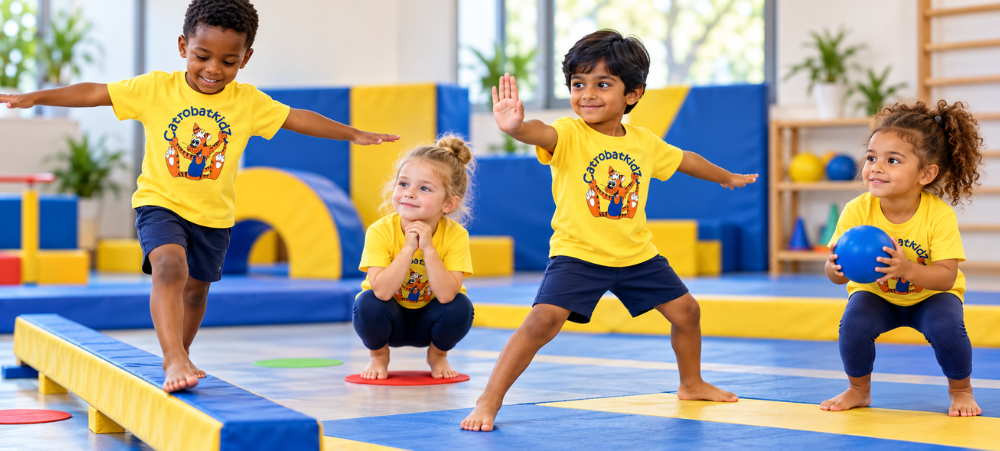
There are days when young children seem to have two settings.
Full speed and completely overwhelmed.
One minute they are racing through the house, climbing on the furniture and talking at top volume. The next, something small goes wrong and suddenly there are tears, frustration or a full meltdown.
For parents, it can be exhausting.
But for young children, managing energy, emotions and impulses is still a work in progress. They are learning how to stop, wait, listen, cope with disappointment and adjust their behaviour – and those skills take time.
This is where movement can help.
Not because exercise magically makes difficult feelings disappear, but because structured movement gives children repeated opportunities to practise self-control in ways that feel natural and playful.
Self-Regulation Starts Small
Self-regulation is the ability to manage our behaviour, emotions and energy in a way that fits the situation.
For a young child, that can mean waiting for a turn, stopping when asked, listening to an instruction, calming down after excitement or resisting the urge to grab something immediately.
These are big jobs for little brains.
Children are not born knowing how to manage themselves. They learn through experience, repetition and support from the adults around them.
And movement creates plenty of those experiences.
Stop, Start, Wait, Go
Think about a simple movement game.
“Run!”
“Stop!”
“Jump!”
“Freeze!”
To an adult, it looks like fun.
To a child, it is a mini lesson in self-control.
They have to listen for the instruction, hold back when they want to keep moving, change what their body is doing and respond at the right moment.
Games such as musical statues, follow-the-leader and “Simon Says” all help children practise starting and stopping on cue.
That ability to pause and respond instead of simply reacting is one of the foundations of self-regulation.
Waiting Is a Skill Too
Young children are not famous for loving to wait.
If something is exciting, they want to do it now.
That is perfectly normal.
But structured movement activities often require children to wait for a turn, watch someone else, listen for their name or stay in place until it is their moment to go.
At first, even a few seconds can feel difficult.
Over time, children begin to learn that waiting does not mean missing out. Their turn is still coming.
That builds patience and trust.
And the more often children practise these little moments successfully, the easier waiting becomes in other parts of life too.
Listening While the Body Is Busy
Listening is more than hearing words.
Children need to pay attention, understand what is being asked and then control their bodies well enough to respond.
A movement sequence such as “jump twice, crawl to the mat, then sit down” asks a child to do all three.
They must listen, remember and act.
The challenge is even greater when they are excited.
That is why movement-based activities can be so useful. Children are learning to manage themselves while they are active, not only when they are sitting quietly.
Movement Can Help Children Manage Energy
Some children seem to carry a motor inside them.
They need to move.
Trying to make a highly active child sit still for long periods can sometimes make regulation harder, not easier.
Movement gives children an appropriate outlet for physical energy.
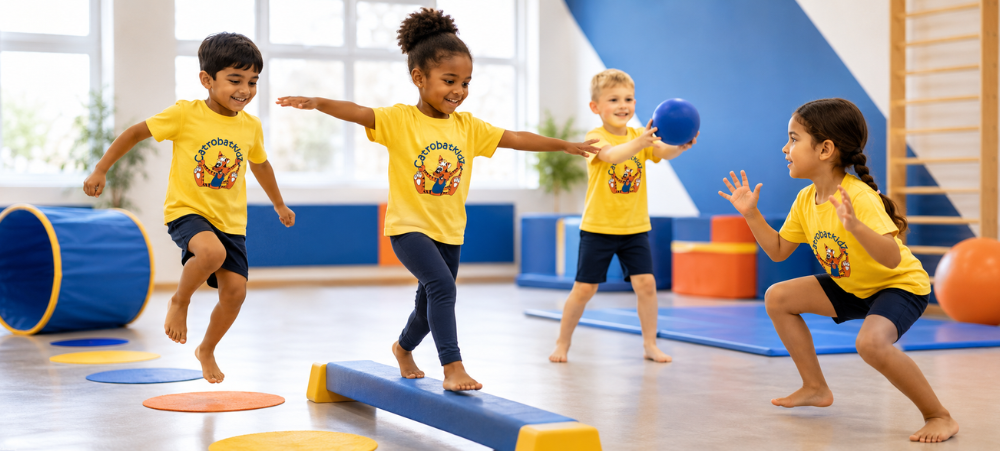
Running, jumping, crawling, balancing, climbing, pushing and pulling all give the body something productive to do.
Afterwards, many children are better able to settle into a calmer activity because their bodies have had the movement they needed.
This does not mean every child will become quiet after ten-star jumps. If only parenting were that simple. 😊
But regular opportunities for movement can help children feel more organised in their bodies.
Learning to Cope When Things Do Not Go Perfectly
Movement also gives children practice in dealing with frustration.
They miss the ball.
They fall off the balance beam.
Someone else gets a turn first.
The obstacle is harder than they expected.
These moments may seem small, but they are important.
Children learn that frustration can be uncomfortable without being unbearable.
With support, they can pause, try again, ask for help or choose a different approach.
That is emotional regulation in action.
Calm Does Not Always Mean Still
We sometimes think a “regulated” child should be quiet and still.
But calm does not necessarily mean motionless.
A child can be happily running, jumping and laughing while still being organised, responsive and in control.
The real goal is not to remove energy.
It is to help children learn how to manage it.
There is a big difference between a child who is active and engaged and a child who feels completely out of control.
Movement can help children recognise that difference in their own bodies.
Parents Can Build These Skills at Home
You do not need special equipment.
Try simple stop-and-go games, dancing and freezing when the music stops, animal walks, follow-the-leader, ball games or taking turns through a small obstacle course.
Give short movement instructions and let your child practise waiting before they begin.
Most importantly, keep it playful.
Children learn self-regulation best through repeated experiences, not lectures.
Strong Bodies Help Build Steady Minds
Self-regulation develops gradually.
There will still be tears, impatience, impulsive moments and difficult days. That is part of childhood.
But every time a child waits, listens, stops, starts again or recovers from frustration, they are practising an important life skill.
At Catrobatkidz, we see movement as far more than physical exercise. It gives children a safe, active space to practise controlling their bodies, managing their energy and responding to the world around them.
Because sometimes the road to a calmer mind begins with a body that has been given the chance to move.

- Strong Bodies, Calm Minds: How Movement Supports Self-Regulation - November 11, 2026
- The Screen-Time Swap: What Real-World Movement Gives Children That Screens Cannot - October 13, 2026
- Confidence Starts in the Body: How Physical Skills Help Children Believe “I Can” - September 7, 2026


2 thoughts on “Strong Bodies, Calm Minds: How Movement Supports Self-Regulation”
It’s so true kids bodies need to always be well taken care of i have a 9 year old, 5 year old, 2 year old and one that’s due in January nd to ensure that they are fit i give them scotts emulsion which seems to be so good for everything
Thank you for sharing this article, and its true children need structure, they need to be taught all these lessons. Thank you so much, truly was insightful.