Parents are often surrounded by milestones.
When did your child sit? Walk? Talk? Count? Recognise colours? Write their name?
These milestones matter, of course. But before many of the “school-ready” skills can truly settle, children need something wonderfully simple and often overlooked: they need to move.
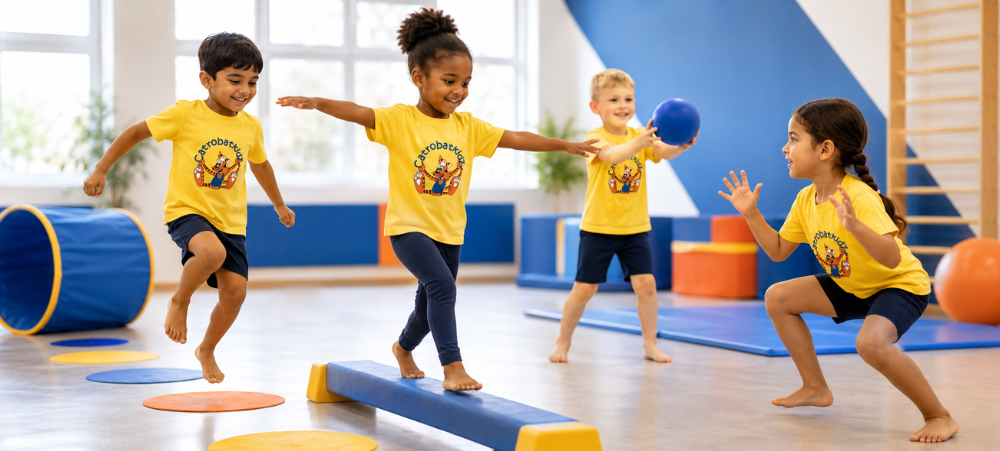
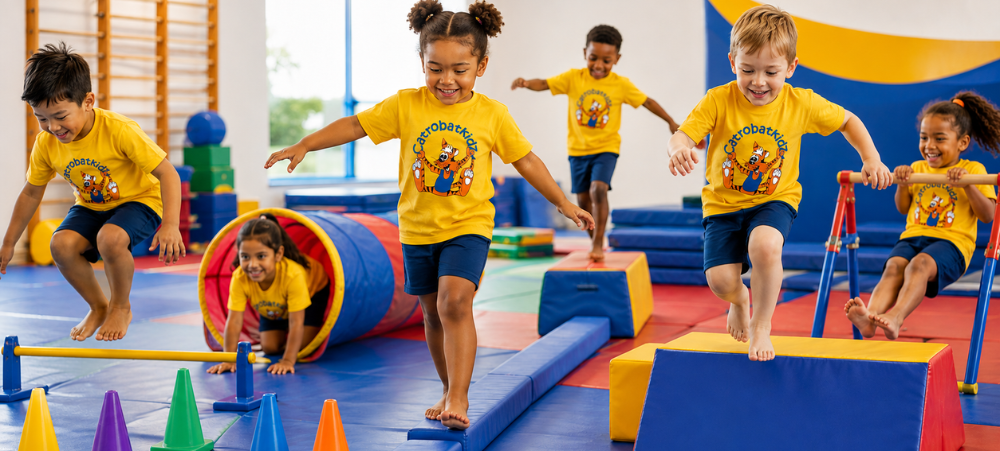
They need to climb, roll, balance, jump, crawl, stretch, throw, catch, twist, turn, hop, run and sometimes wobble their way through the world.
And no, this is not just about “getting the energy out” before bedtime — although, let’s be honest, that part is not exactly a tragedy. Movement is one of the most important ways young children learn about their bodies, their surroundings, their confidence and their own capabilities.
The body is a child’s first classroom
Before a child learns with a pencil, they learn with their whole body.
When a toddler climbs onto a low step, they are learning about height, balance and risk. When a preschooler rolls across a mat, they are learning body awareness and direction. When a child jumps with two feet together, they are practising strength, coordination, timing and courage — all in one little leap.
These early physical experiences help children understand where their body is in space. This is known as body awareness, and it plays a big role in everyday life. A child who understands their body better is more likely to move confidently through a busy classroom, sit with better control, avoid bumping into others, and take part in games and group activities.
In other words, movement helps children feel at home in their own bodies.
Big movements support little skills
Many parents are understandably focused on fine motor skills: pencil grip, cutting, colouring, drawing, buttoning clothes and opening lunchboxes.
But those “small” skills do not develop in isolation. They are supported by bigger muscles first.
A child needs core strength to sit upright. Shoulder stability helps with arm control. Stronger arms and hands make fine motor tasks easier. Balance and posture support concentration. When the body is working too hard just to stay upright, there is less energy available for listening, learning and participating.
This is why climbing, crawling, hanging, rolling and balancing are not just play activities. They help build the physical foundation children need for many later tasks.
The path to confident pencil control may begin long before a pencil is even in the picture.
Movement builds confidence from the inside out
One of the most beautiful things about physical development is that children can feel their own progress.
They know when they have managed to jump a little further. They know when they can balance for longer than last time. They know when they were brave enough to try the activity that looked a little tricky at first.
These small victories matter.
Each time a child tries, practises and improves, they are not only building a physical skill. They are also building the belief that says, “I can do hard things.”
That confidence often carries into other areas of life. A child who feels capable in movement may be more willing to join a game, speak up in a group, try something new or keep going when something does not work the first time.
Confidence is not built by avoiding every wobble. Sometimes it starts with wobbling safely, laughing, trying again and discovering, “I’ve got this.”
Children need safe challenge
Modern parenting can feel like a constant balancing act between protecting children and allowing them to explore.
Of course, children need safe environments. But they also need opportunities to test their bodies in age-appropriate ways. Safe challenge helps children learn judgement. They begin to understand how high they can climb, how far they can jump, how to land, how to stop, how to wait their turn and how to recover when something does not go perfectly.
A child who never has the chance to practise these skills may become unsure of their own body. A child who is gently guided through physical challenges learns how to manage movement, space and risk with growing confidence.
The goal is not reckless play. The goal is purposeful movement in a safe, encouraging space.
Movement also supports the brain
Movement is physical, but it is not only physical.
When children follow instructions during an activity, remember a sequence, change direction, copy a movement pattern, respond to rhythm or wait for a signal, their brains are working too.
They are practising attention, memory, listening, self-control and problem-solving. These are important skills for learning — and they develop beautifully when children are active, interested and having fun.
This is one reason movement-based learning can be so powerful for young children. They are not sitting still while trying to absorb information. They are learning through action, repetition and experience.
For many children, the body opens the door for the brain.
It does not have to be complicated
Parents do not need fancy equipment or a perfect programme at home to support movement development.
Simple activities count: walking on a line, jumping over a cushion, rolling on a blanket, throwing socks into a basket, balancing on one foot, dancing to a favourite song, crawling under a chair, kicking a soft ball or playing “follow the leader” in the lounge.
What matters most is variety, encouragement and regular opportunity.
Children need to experience different types of movement: balance, strength, coordination, rhythm, body control, ball skills and spatial awareness. The more varied their movement experiences, the more confident and adaptable they become.
A foundation for life
Not every child will become a gymnast, dancer, athlete or sports star — and that is not the point.
The real goal is much bigger than that.
The goal is to help children feel capable in their bodies. To help them enjoy movement. To give them the physical foundation that supports confidence, learning, social participation and healthy habits as they grow.
Because movement in early childhood is not just about what children can do today.
It is about helping them step into tomorrow with stronger bodies, braver hearts and the quiet confidence that says, “I am ready to try.”