

Advice from the experts
Toptots Head Office

My toddler has a short attention span – is he hyperactive?

Toddlers typically have a very short attention span. Time means nothing and a few minutes can seem like forever to a toddler.  They are meant to flit from one activity to the next, building up as many experiences as possible. Remember they have a lot of ground to cover.  Don’t expect an 18 month old to sit still and build a puzzle, read, post etc. for more than a few minutes. Life’s experiences are taken in small bites and as often as possible. This is one of the reasons you should offer a variety of activities and often don’t spend too many minutes on one in particular. You might find that your toddler surprises you and gets involved in an activity for more than a few minutes. If we manage seven minutes we are ecstatic. That’s good going, but don’t expect that every time. For your little toddler to focus on an activity for more than a few minutes he has to find it interesting, it has to be new to him and he must be able to master the skill. If it’s too difficult he will get frustrated and move on. Being able to master a skill and then repeat it gives them a sense of accomplishment. I can do this, and I can do it well. Challenge your toddler. They might not grasp the activity straight away but practice makes perfect. Varied experiences with different activities will give them many opportunities to learn about life and how things work. When posting a ping pong ball through a swimming pool tube, you learn that the ball comes out the other side. When making holes in play dough you are strengthening your finger muscles. Pouring from one container to another teaches you about full and empty. The lessons are endless. Research has shown that toddlers need to be on the move taking in as much of life as they possibly can so that they have references to refer back to later. Give your toddler as many opportunities as possible to explore the world around them. Remember learning has to be FUN!

DIBBER SA

Calm Is a Superpower in the Early Years

Walk into a calm room, and something in the body settles: shoulders drop, breathing slows, and thoughts find space. Dibber International Preschools says a calm environment is not a nice-to-have, but one of the most powerful developmental tools in the early years. “The world is stimulating enough,” says Ursula Assis, Country Director of Dibber International Preschools South Africa. “A child needs a place to land – somewhere that feels safe and steady. When children feel calm, they become more available for learning, connection, and confidence.” Dibber notes well-designed environments do more than keep children safe. They shape children’s feelings, their willingness to explore, their ability to recover, and the depth of their learning. Calm is foundational, not an afterthought. Dibber explains that young children are not miniature adults. Their developing nervous systems make them sensitive to sensory and emotional tones. Noise, clutter, unpredictability, and tension can tax their brains. When children feel overwhelmed, the brain enters alert mode. The child spends energy on self-protection rather than on curiosity or connection. Deep learning becomes difficult because the brain manages the environment instead of exploring it. “At Dibber, calm is not about control or silence,” says Assis. “It’s about creating an emotional and physical space where children can breathe, belong, and build capability at their own pace.” Dibber emphasises calm does not mean sterile or joyless. Nurturing spaces include gentle movement, soft conversation, and laughter. Each element is intentional. At Dibber South Africa, classrooms are designed with purpose, not just decorated. Each choice answers one question: Does this help each child feel at home and at ease? Dibber says calm environments create ripple effects across every area of development: 1) Emotional security and regulationChildren who feel safe begin to internalise calm. Over time, they learn to self-regulate, manage big feelings, recover from disappointment, and settle quickly. Dibber calls this one of the most transferable life skills. 2) Deeper focus and concentrationA child who is not managing environmental stress is freer to focus on what is in front of them. Even short periods of sustained attention in early years build the foundation for future learning, reading, problem-solving, and creativity. A calm environment lets children try challenges, make a mess, and feel comfortable when they don’t yet know the answer, allowing confidence to take root. 4) Stronger relationships with educators and peersWhen children feel settled, they can connect more easily. Friendships form naturally, trust in educators grows, and children open to guidance and support. Simple measures, such as a consistent bedtime routine, quiet spaces for play, lowering adult voices during transitions, and reducing background noise when focusing, support a child’s nervous system and emotional well-being. Dibber’s approach, rooted in Nordic pedagogy, recognises how a child feels shapes how they learn. Educators maintain calm, supportive spaces that help each child thrive.

Dalza

73% Better Outcomes. Not From More Therapy. From Connection

Why the people already in your child’s life might just need a way to work together You find the right OT. You get a great teacher. The speech therapist has a plan. On paper, everything’s in place. But in practice? The OT doesn’t know what the teacher is doing. The teacher hasn’t seen the speech therapist’s report. And you’re the only person connecting the dots, relaying messages, re-explaining, holding the whole picture in your head because nobody else is. It’s exhausting. And the research says it’s also the thing most likely to be limiting your child’s progress. 73% Better Outcomes. Not From More Therapy. From Connection. A major meta-analysis in JAMA Pediatrics found that when a child’s support team actively coordinates (sharing strategies, aligning goals, tracking progress together) the chance of meaningful improvement rises to 73%. Not from new interventions. Just from making sure the people already involved are actually working together. This matters especially for children with learning differences. A skill practised in the therapy room doesn’t automatically transfer to the classroom. If the teacher doesn’t know the strategy exists, or is using different cues, even excellent therapy can stall. That’s not your child failing. That’s a gap in the system around them. And it cuts both ways. Teachers often want to involve parents more closely, but the mechanisms just aren’t there. Contact ends up being a rushed chat at pickup or a termly report. The willingness exists on both sides. What’s missing is a simple way to make it happen. What You Can Do Ask your child’s team one question: do you have a way to share information with each other, not just at annual reviews, but week to week? Can the OT’s recommendations actually reach the classroom? Does the teacher know what the therapist is working toward? If the answer is no, that’s the gap to close. You need the people already in your child’s life to be connected. If you’re tired of being the go-between, Dalza gives your child’s whole support team (teachers, therapists, and you) one shared space to stay aligned. No more re-explaining. No more lost reports. Teachers and therapists join for free. We spend so much energy finding the right people for our children. The next step is making sure those people can actually talk to each other. That’s where the real gains are. Asarnow, J. R., Rozenman, M., Wiblin, J., & Zeltzer, L. (2015). Integrated medical-behavioral care compared with usual primary care for child and adolescent behavioral health. JAMA Pediatrics, 169(10), 929–937.

Wriggle and Rhyme

Memory – Take Note of the Role of Music!

Have you ever heard a song and it has brought back a memory? That memory may include the place where you heard the song, what you were doing at the time, how you felt and sometimes even a sensory trigger, like the memory of a certain taste or smell. The effect is so profound that a heart-warming movement called “Music and Memory” (http://www.musicandmemory.org) creates personalised playlists for residents with dementia in nursing homes. Apparently, the response is incredible!  Eyes light up and bodies start to move with the rhythm, as the music awakens memories of forgotten lives. All this from a piece of music! So why does music impact memory so profoundly? Neuroscientists have analysed the brain mechanisms related to memory, finding that words set to music are the easiest to remember.  We can all relate to that – just try and remember anything set to a tune and your powers of recall will be stronger! Apparently, the hippocampus and the frontal cortex are two large areas in the brain associated with memory and they take in a great deal of information every minute. But, we all know from experience, that retrieving all that information is not always easy. However, the structure of a song helps us to remember, because it provides a rhythm, rhyme and sometimes alliteration, which helps to unlock that information with cues.  The cues can also include things like the melody, emotions or images that the song lyrics evoke. Neuroscientists are constantly discovering more and more about how music affects memory. A 2009 study done by cognitive neuroscientist Dr. Petr Janata at the University of California, found a potential explanation for the link between music and memory by mapping the brain activity of a group of subjects while they listened to music.  Dr. Janata found that songs linked to strong emotions and memories corresponded with fMRI images that had greater activity in the upper part of the pre-frontal cortex, which sits right behind the forehead. This suggests that this area of the brain, which is also responsible for supporting and retrieving long-term memories, acts as a “hub” that links together music, emotions, and memories. The soundtrack of our lives … Janata explains that listening to a piece of familiar music “serves as a soundtrack for a mental movie that starts playing in our head,” calling back memories of a particular person or place. What about music in the brains of children? Over the past 14 years of using music as a catalyst for learning at our Wriggle and Rhyme music classes, we’ve seen, first hand, how music-based activities affect children’s brains. The responsibility to fill children’s brains with positive, learning experiences is not one that we take lightly.  We recognize that because our programs are set to music, we are building memories that may last a lifetime. Music education is therefore both a privilege and an exquisite burden! Whether you’re a parent, caregiver or educator, bear that in mind!  When it comes to music, everything that you expose your child/ren to needs to be done intentionally, with purpose.  You could be impacting your child’s memory for the rest of their lives! So, can I encourage you to build musical memories that evoke rich, joyful experiences for years to come? Because, when it comes to memory, we need to take note of the role of music! Musical resources

DIBBER SA

5 Things Children Learn Outdoors That Classrooms Can’t Teach

Some of childhood’s most powerful lessons begin outdoors, where curiosity leads, and growth flourishes beyond any classroom’s four walls. While classrooms offer structure, routine, and guidance, outdoor environments offer something different. They offer real-world experiences that spark curiosity and build confident problem-solvers. Dibber International Preschools says that the advantages of learning outdoors go far beyond fresh air and playtime. They support cognitive, emotional, social, and physical development in ways that are difficult to replicate indoors. “Outdoor learning gives children permission to explore the world as it is – unpredictable, fascinating, and full of opportunity,” says Ursula Assis, Country Director of Dibber International Preschools South Africa. “When children climb, dig, observe, build, and imagine outdoors, they develop confidence, independence, and the kind of real-life problem-solving skills that stay with them.” Outdoor spaces invite children to notice what’s around them and follow their natural interests. A short walk through a garden or park can become a moment of discovery; for example, insects moving beneath a leaf, stones of different shapes and textures, changing clouds, or a trail of ants carrying food. These observations often lead to questions that come from genuine wonder: why leaves fall, how birds build nests, or where rainwater goes. Unlike structured indoor activities, outdoor learning gives children control to learn through direct experience—developing observation, attention, and deeper curiosity about the world in ways that structured classrooms alone cannot achieve. A key advantage of outdoor learning is that children face challenges and must respond creatively. Balancing, building, or crossing a puddle requires quick thinking and adaptation. These moments develop perseverance and flexibility—skills that support learning and coping after preschool. “When the environment is real, the learning becomes real,” adds Assis. “Children learn to try, to adapt, and to keep going — and those are powerful foundations for life.” Outdoor learning encourages children to take small, age-appropriate risks in a supported environment. Climbing a low hill, navigating playground equipment, or exploring a new path can feel like a major accomplishment to a young child. Every success helps children trust their own abilities. Over time, these experiences build independence and self-belief. Children begin to feel capable, not because they have been told they are, but because they have experienced it for themselves. Being outdoors creates calming, sensory-rich experiences that support emotional regulation and well-being. Listening to birds, feeling the wind, or standing in the shade grounds children in wonder. These experiences help children develop empathy for nature and living things, while forming early values around caring for and being responsible for the environment. Children who spend time outdoors often carry a stronger appreciation for the natural world into later childhood. Outdoor environments naturally encourage cooperation and communication. Whether children are building something together, inventing a group game, or investigating a shared space such as a park or playground at your local restaurant. They practise key social skills: taking turns, listening, negotiating, supporting each other, and solving small conflicts. Outdoor play often encourages teamwork without forcing it. Children learn to join in, lead, follow, and connect, building social confidence through lived experience. At Dibber, outdoor play and exploration form part of the daily rhythm. Carefully designed outdoor spaces support movement, discovery, and imagination while ensuring children feel safe, supported, and free to learn through any and all experiences. “The outdoors invites children to be active learners,” says Assis. “These are the moments where children discover what they can do — and who they are becoming.”

DIBBER SA

The First Six Years Shape Everything That Follows

The early years can feel like a blur: routines, small decisions, and constant adjustment. Yet research across neuroscience, psychology, and education highlights one truth. Early childhood development is not just another phase. It shapes how all future learning and well-being take root. Dibber International Preschools says experiences, relationships, and environments from birth to age six do more than influence development. They help build the brain’s foundation for language, emotional regulation, social intelligence, curiosity, and resilience. “The first six years are when children build the ‘how’ behind everything; how they cope, how they connect, and how they learn,” says Ursula Assis, Country Director of Dibber International Preschools South Africa. These years are not a waiting room for ‘real school’. They are the most developmentally intensive window of childhood, and they deserve thoughtful, heart-led care.” Dibber notes that the brain grows fastest in the first five years. By primary school, about 90% of brain structure is in place, forming the foundation that shapes how children learn and approach life for years ahead. This period is often called a sensitive developmental window. During these years, the brain is highly responsive to experience. It stays capable of change throughout life but is never again as open or influenced by everyday interactions as it is between birth and age six. Early development is not only about skills and knowledge. It is also about learning to feel safe. Dibber explains that when young children experience chronic stress, the brain shifts into an alert state. It starts to prioritise threat detection over exploration. Over time, this can affect attention, memory, and emotional regulation. The opposite is also true: steady warmth, care that responds to the child, and safe feelings help children stay calm and ready to learn. Dibber says it is common to think that what children do not learn now can simply be taught later, just as easily. While growth is always possible, some skills develop best within early windows. Language is a clear example. The brain absorbs language – its sounds and structure – most strongly in the early years. Children in language-rich environments usually develop more confident communication, comprehension, and expression. The same applies to life skills that support learning and relationships: focus, impulse control, cognitive flexibility, empathy, and a healthy sense of self. These are part of a child’s lifelong toolkit, shaped through daily interactions. Dibber emphasises that quality in early childhood development is not about pressure or academic acceleration. The best environments share a few key qualities: warm relationships with trusted adults; open-ended, child-led play; language-rich conversations where questions matter; calm, inviting spaces for exploration; and freedom to try, fail, try again, and feel quiet pride in I can. “The early years lay the deep structure of how a child thinks, feels, relates and learns,” says Assis. “When childhood is respected, when play is protected, and relationships are steady, children don’t just get ready for school. They get ready for life.”

Dalza

Autism Awareness Month: What Acceptance Actually Looks Like at Home

Every April, the world turns its attention to autism. The blue lights come on. The social media posts go up. Schools run assemblies. Companies share infographics. And somewhere in the middle of it all, you’re still trying to get your child’s shoes on before the school run. Autism Awareness Month matters. But for the parents living it every day, awareness was never really the problem. You’re aware. You’ve been aware since the first sleepless Google search, the first assessment, the first time someone said “have you considered…”. What you actually need is acceptance. And not the hashtag kind. The kind that shows up in the small, unglamorous moments of daily life. Awareness vs. Acceptance: What’s the Difference? Awareness says: “I know autism exists.” Acceptance says: “I’m going to make space for what that actually means – for your child, in your home, in your school, in your life.” Awareness is a poster on a wall. Acceptance is the teacher who reads your child’s profile before the first day of term and adjusts without being asked. It’s the family member who stops saying “but they look so normal” and starts asking “how can I help?” It’s the therapist who listens to what’s working at home, not just what’s in the textbook. Acceptance lives in the detail. And it starts at home. What Acceptance Looks Like in Your House Here’s the thing nobody tells you: acceptance isn’t a moment. It’s not a switch you flip after diagnosis. It’s something you build, bit by bit, on the hard days and the good ones. It’s letting go of the timeline. Your child’s milestones won’t always match the chart on the paediatrician’s wall. That’s not failure, that’s their story unfolding at their pace. The comparison trap is real, and stepping out of it is one of the most powerful things you can do. It’s trusting your instincts. You know your child better than any report can capture. When something feels off, or when something is working, that knowledge matters. Don’t let it get drowned out by professional opinions that only see a slice of who your child is. It’s being honest about the hard stuff. Acceptance doesn’t mean pretending everything is fine. Some days are brutal. Meltdowns are exhausting. Admin is relentless. Saying “this is hard” isn’t the opposite of acceptance, it’s part of it. It’s celebrating what others might miss. The first time they made eye contact with the waiter. The sentence that came out of nowhere after months of silence. The fact that they tried the new food, even if they spat it out. These moments are enormous, and you don’t need anyone’s permission to treat them that way. What Acceptance Looks Like Beyond Your Front Door Home is one thing. But your child doesn’t exist in a bubble — they move through schools, therapy rooms, family gatherings, and a care system that doesn’t always join the dots. Real acceptance means the people around your child see the full picture, not just a diagnosis or a set of challenges. It means their teacher knows what lights them up, not just what triggers a meltdown. It means the occupational therapist knows what happened at school last week before the session starts. It means you’re not the only person carrying all of that context in your head. That’s exhausting work. And too often, it falls entirely on you. The Invisible Load of “Awareness” Here’s what Autism Awareness Month rarely talks about: the sheer weight of being the person who holds everything together. You’re the translator between the school and the speech therapist. The administrator who files every report, chases every referral, remembers every medication change. The advocate who has explained your child’s needs so many times you could do it in your sleep, and sometimes you practically do, at 11pm, drafting yet another email. That load is invisible. And in a month dedicated to awareness, it deserves to be seen. Small Shifts That Make a Real Difference You don’t need to overhaul your life this April. But here are a few things worth considering: Share the context, not just the crisis. The people supporting your child do better work when they can see beyond the appointment or the classroom. A short note about what’s changed at home — sleep patterns, a new anxiety, a breakthrough — can shift the quality of support your child receives. Let people in. Not everyone, and not all at once. But the right people — the teacher who cares, the therapist who gets it, the family member who’s willing to learn. Give them the information they need to show up properly. Stop carrying it alone. This one is easier said than done. But if there’s one thing this month could mean for you, let it be this: you were never supposed to be the only one holding the full picture of your child’s world. Your Child’s Story Deserves More Than a Month Autism Awareness Month will end. The blue lights will switch off. The social media posts will slow down. But your child’s story keeps going. It unfolds every single day — at home, at school, in therapy, in the car, at bedtime, in all the places that don’t fit neatly into an awareness campaign. That story deserves to be seen, understood, and supported all year round. Not just by you, but by everyone who plays a part in your child’s life. Dalza gives peace of mind to parents of children who learn, think, move, or communicate a little differently. One shared space where your child’s care team can see the full picture — so you’re not the only one holding it all together. Find out more at dalza.com

Parenting Hub

Panado®’s New Pocket-Sized Power Sachets, Keep Parents Prepared for Pain Or Fever Anytime, Anywhere

Panado® understands that even with the best planning, pain or fever in children can still catch you by surprise.  A fever can spike late at night. Teething pain can strike on a weekend away. A temperature can creep up mid-shop, a headache can hit halfway through a long car trip, or a small burn can turn a relaxed afternoon into a stressful one. Readiness means having a plan in place for when children don’t feel well, wherever they happen to be. Being pain and fever ready isn’t about expecting the worst. It is about knowing that common childhood symptoms are part of growing up, and that understanding how to manage them can take much of the fear and anxiety out of the moment1a. When parents feel calmer and more in control, children feel safer too1b. The calm spreads, easing stress and helping everyone cope better until your little one feels well again1c. To support readiness in everyday family life, Panado® has introduced the perfect backup every parent needs, offering a practical way to manage pain and fever anytime, anywhere – Panado® Strawberry 5 ml Sachets2. Each sachet contains a single 5 ml dose of Panado® Strawberry Syrup2, powered by paracetamol, an ingredient with more than 150 years of clinical experience3. The sachets are sealed, hygienic, compact, simple to store and easy to carry, making them ideal for travel and day-to-day outings.  Containing the same trusted4 formulation, strength and berry nice flavour parents are familiar with, the Panado® Strawberry 5 ml Sachets2 are ready to work immediately5 and are suitable for babies and children from three months and older.   Slip one into a pocket, handbag, nappy bag, backpack, pram organiser, or car console and you’re always prepared. There is no bottle to pack and no risk of spills. When needed, a sachet is torn or cut open, the correct dose is measured using a syringe or medicine measure, and any remaining liquid is discarded.  To help parents feel confident, dosing is based on a child’s age and weight. Clear guidance is available via the panado.co.za/dosage-calculator online or by scanning the QR code on the pack, reducing guesswork at moments when you want reassurance. The sachets are part of the Panado® paediatric range, which includes Panado® Strawberry Syrup2, Panado® Peppermint6, suitable from Day 1 and Panado® Infant Drops7. Panado® Infant Drops were named a Product of the Year 2025 winner in the Child Health category8, based on votes from 2,000 South African consumers in a Kantar survey. When a child has pain or fever, readiness is about having something familiar you can rely on, without scrambling or second guessing. Panado® Strawberry 5 ml Sachets2 supports that peace of mind by fitting into real family life, not just the medicine cupboard at home, so you can focus less on the moment of panic and more on comforting your child. Panado® products are available from Baby City, Pick n Pay, Checkers including Hypers, Shoprite, Clicks, Dis-Chem and independent pharmacies. For more information, visit: https://panado.co.za/ and join the conversations on Facebook.  For references and legal disclaimers, visit https://panado.co.za/references. Approval ticket # 02.20261000004930. February 2026.

DIBBER SA

Understanding Attention Levels in the Early Stages of Childhood

Parents often worry when a toddler doesn’t listen or seems distracted. Dibber International Preschools reminds families that attention and listening skills develop gradually, and that what appears to be inattention is often a normal part of early childhood development. “Attention is not something children either have or don’t have, it’s a skill that grows with time, practice and the right environment,” says Ursula Assis, Country Director at Dibber International Preschools South Africa. “When adults understand what attention looks like at different ages, they can respond with more patience and less pressure, and children feel safer and more capable.” Attention is a child’s ability to focus on an activity, sound, object, or instruction for a period. In the early years, attention and listening form the foundation for everyday learning – from following simple instructions and taking turns, to participating in play and engaging in classroom routines. At Dibber, educators see attention as part of holistic development, supported by a stable rhythm, calm transitions, language-rich interactions, and play-based learning. 0–12 months: brief focus and quick shifts Babies are learning to process the world for the first time. Their attention is naturally short and easily redirected by a new sound, bright object, or familiar voice. They may quieten, turn towards a caregiver’s voice, or track movement, but not for long. Dibber encourages caregivers and parents to support this stage with calm, close connections, slow speech, expressive facial cues, and quieter spaces where babies can notice sounds without feeling too overwhelmed. For families in busy homes, even small changes can make a difference. This is called 60-second quiet rituals – micro-habits that are simple to try each day. For example, try turning down the television or music for just one minute, setting aside a single minute for quiet play or reading in a cosy spot, or creating a brief routine where you connect without background distractions. These quick and intentional pauses help babies notice sounds and faces, even when the environment is lively, making it easy for parents to experiment and see what works for their family. 1–2 years: deep focus on what matters to them Toddlers often become intensely absorbed in play and may not respond immediately when called. This is not defiance, it’s concentration. At this age, switching attention between activities can be difficult. “Calling a child’s name, pausing, and waiting for eye contact before giving instructions can make a remarkable difference,” says Assis. “This small habit helps children learn how to shift their focus without feeling rushed.” 2–3 years: growing flexibility and early listening routines As toddlers approach three, they begin to show more flexibility – they can pause play, listen briefly, and return to what they were doing. However, they still struggle to hold multiple instructions in mind at once. Simple, single-step instructions work best, especially when paired with actions, routines, or visual cues. Songs, short stories, and listening games can also strengthen attention in gentle, enjoyable ways. 3+ years: stronger focus and decision-making From age three onwards, children typically become more able to sustain attention and follow brief instructions, even with some distractions around them. They also start making small decisions about where to direct their attention, which supports independence and confidence. There will still be moments that require reminders, but encouragement and positive reinforcement support growth far more effectively than repeated correction. “At Dibber, the message to parents is reassuring,” Assis adds. “Every child develops at their own pace. With warmth, consistency, and supportive environments, children learn to focus, listen, and engage with the world with growing confidence.” To learn more about Dibber’s play-based approach and family support, visit www.dibber.co.za.

Playstation by Rush

March/April Holiday Fun: Safe and Stimulating Activities for Young Explorers

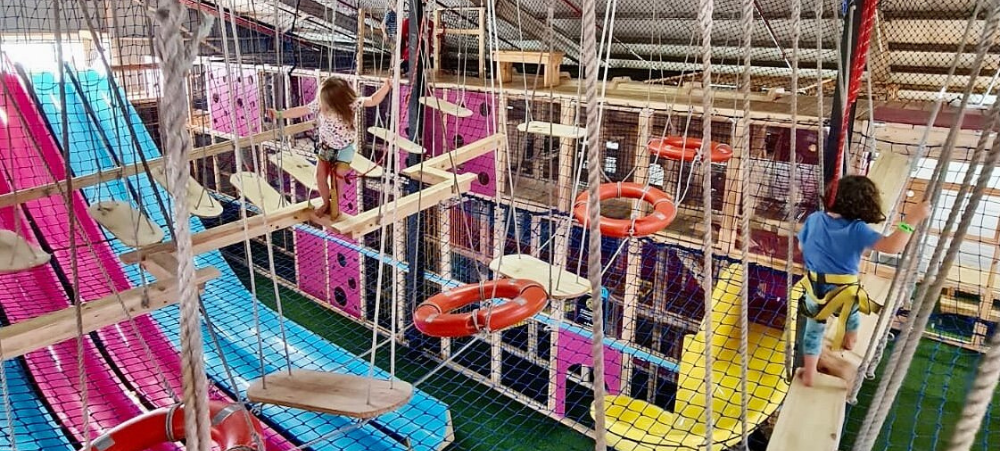
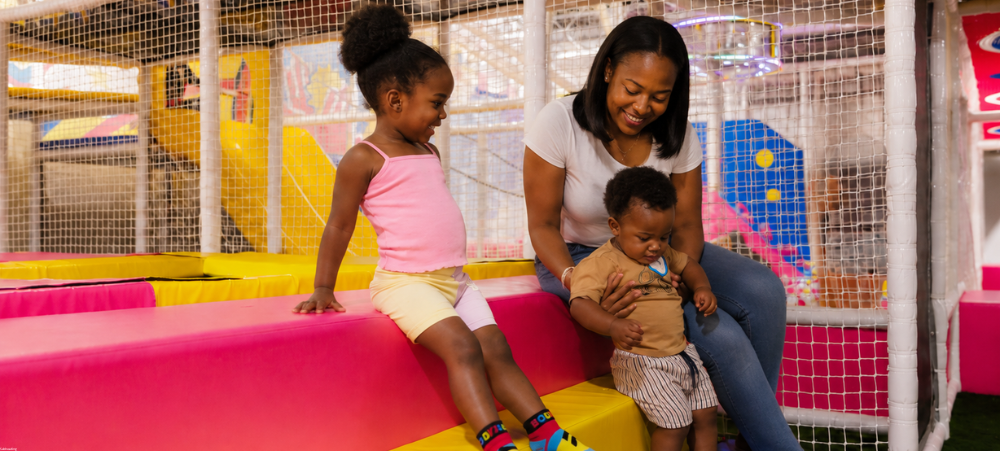
As the South African autumn settles in and the first term of 2026 draws to a close, parents across the Western Cape asking the same question! “How am i going to entertain my kids this year?” With the official 2026 school calendar scheduling the break from 27 March to 8 April, the window for adventure is perfectly timed for young explorers. At PlayStation by Rush in Kirstenhof, we’ve designed a world where safety meets stimulation, offering the premier destination for indoor activities 2–9 yrs. Why Structured Indoor Play Is Vital For Development  For toddlers and foundation-phase learners, play is a full-time job. It is the primary way they process the world around them. According to the Thrive by Five Index, a leading South African study on preschool outcomes, only about 45% of children in early learning programmes are meeting the expected standards for their age. This highlights a critical need for environments that support gross motor development and executive function outside the classroom. Choosing the right toddler play venues isn’t just about burning off energy; it’s about providing a “metaphoric multivitamin” for the brain. Structured indoor environments allow children to test their physical limits-like climbing, sliding, and balancing- in a space where “falling” is just part of the learning process  Imaginative Play Activities: More Than Just “Make-Believe” At PlayStation by Rush, we believe that a cardboard box can be a spaceship, and our high-line course can be a mountain peak. These imaginative play activities are essential for building cognitive flexibility. When a child engages in role-play, they aren’t just “pretending”; they are practicing social scripts, developing empathy, and sharpening their language skills. The Adventure Maze: A Masterclass in Problem Solving Our custom-built Adventure Maze—the largest of its kind in South Africa—is designed specifically to challenge the “little person” logic. As children navigate swing bridges and hidden tunnels, they are working on spatial awareness and sequencing. “How do I get to the yellow slide from here?” is a complex engineering problem for a four-year-old. By solving it, they build the confidence needed for more formal academic challenges later in life. Stress-Free Parenting During the School Holidays We know that for many South African parents, the school holidays don’t always mean a break from work. While the kids are off enjoying the holidays, the “real world” for parents keeps spinning. Most parents in SA do not get time off when school holidays are in play. This is why we have prioritised a “Play like it should be” philosophy that includes the grown-ups too. Secure Your Spot for the March/April Break The upcoming holiday period, including the Easter long weekend (3–6 April), is one of our busiest times of the year. To ensure a high-quality experience for every child, we limit our intake to avoid overcrowding. This means our peak slots fill up fast! Don’t let the school holidays catch you off guard. Whether you’re looking for a single-hour session or a full morning of adventure, we recommend booking your tickets in advance. Ready to give your young explorer an unforgettable holiday? View our holiday specials and book your playtime today! CTA: Book Stimulating Activities For Toddlers today

be.UP Park

Rediscover Play: March Holiday Fun at be.UP Park

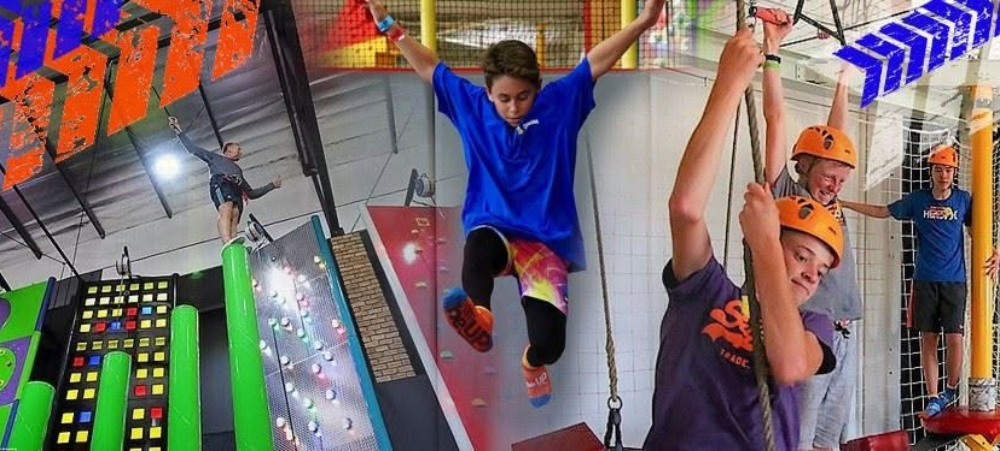
The first term of 2026 has been a marathon of lunchboxes and early mornings, but the break is finally here! While the kids rev up with excitement, parents often feel a sense of “holiday burnout,” wondering how they will find the right school holiday activities to keep everyone engaged. The mental load is heavy. However, as the March holidays approach, there is a shift in the air. We don’t just need a break from school; we need a break from the consistent “no.” No, don’t jump on the couch. No more screen time. No, stay inside. At be.UP Park, we strive to create a space for “yes”—where a family adventure replaces discipline with discovery. We want parents to feel that same sense of confidence and calm that their children find through movement. Read on to see how you can take your kids on a family adventure this holiday. The Hero’s Journey: Discover Shared Bravery  In every great adventure, the hero must leave their “ordinary world” to find their strength. At be.UP, that journey is built into the very architecture of our park. When you watch your child stand at the edge of the zipline, nervously shuffling toward the drop, you are witnessing a transformation. In that moment, they move from fearful and hesitant to the realisation that they can accomplish something that once scared them. As a parent, you are not just a spectator; you are the Mentor. You are the safe guide who allows them to test their limits so they can eventually fly. Consider the impact of your role: This is the heart of March holiday fun: the bridge of trust, connection, and pure joy built between you and your child. The Science Of Play  So why is physical activity, like our March holiday fun, so much better than screen time? Rather than spending the break tethered to a screen, engaging in a family adventure helps your child’s development in the long run. According to the Child Mind Institute, physical play is a primary driver for developing executive function and emotional regulation. When children engage in the “heavy work” of navigating a giant maze or the weightlessness of a trampoline, their brains release a powerful cocktail of endorphins and dopamine. This leads to what we call the “Post-Play Glow,” where: By choosing a high-quality kids holiday program or an active afternoon out, you are investing in your family’s well-being. A Sanctuary for the “Quiet Hero”  But don’t worry, we haven’t forgotten about you, the hero behind the scenes. Every explorer needs a base camp, and the be.UP Café is yours. While the kids are busy conquering peaks and navigating labyrinths, you can decompress in your base camp. At Be.UP Cafe thats why we’ve designed a space where you can transition from “Chaos Manager” to “Quiet Observer.” Find our Menu for some fuel while the kids refuel  Capture The Light Before the New Terms Starts  The 2026 school calendar is short, and the autumn sun will dip lower before we know it. Public schools close on 27 March and reopen on 8 April, with Human Rights Day and the Easter weekend falling right in the mix. These moments of connection are the ones that stick—the stories they will tell at the dinner table aren’t about the levels they reached in a game, but the time they raced you down the slide. Don’t let these holidays slip away into a blur of domestic chores and screen time. Choose a family adventure that leaves you with more than just a receipt; leave with a core memory of triumph and a family that feels truly connected. Your family adventure is waiting, and our sessions fill up faster than a kid down on a zip line. Check our holiday hours and gift your family a day of “Yes” by booking your session here.

Dalza

Medication, Supplements & Big Decisions: Moving from Anecdotes to Evidence – What to Consider for Your Neurodivergent Child

This article is adapted, with permission, from content originally published by Tamra and Jules, co-founders of The Neuroverse (theneuroverse.co.za), two South African mums building a supportive neurodivergent community. How to observe what matters, share it responsibly, and build a balanced picture with your care team When families begin exploring medication or supplements for a neurodivergent child, the process can feel overwhelming. Opinions come from everywhere — WhatsApp groups, school gates, family chats, and social media. But big decisions shouldn’t rest on anecdotes alone. A calmer, more grounded approach is to gather real-world observations from home and school, understand what professionals look for, and share information in a way that protects your child’s privacy. 1. Know What Professionals Actually Look At Across ADHD, autism, anxiety, and sensory regulation differences, clinicians focus on patterns over time, not isolated moments. Common areas they monitor include: These are the kinds of signals paediatric and mental-health professionals typically use to understand whether a child is coping, struggling, or responding to an intervention. 2. Supplements & Nutrition: Helpful Context, Not a Standalone Answer Many families explore supplements or nutritional support alongside (or before) medication. These can influence energy, mood, and regulation — but they still require the same principle: track what changes, when, and how much. Nutrition can support regulation, but it doesn’t replace structured observation or professional guidance. 3. Build a Shared Picture with the School Teachers often see patterns parents don’t — focus during lessons, transitions, sensory overload moments, social fatigue, appetite dips. A balanced view comes from combining home and school signals.Dalza makes this easier: teachers, therapists, and co-parents can see the same context (with your permission), so you’re not rewriting the same story in every meeting. 4. Log First, Decide Later Before making any decision — medication, supplements, or both — capture one to two weeks of simple notes: Dalza keeps these logs, reports, and observations in one secure place, so you’re not piecing things together from memory or multiple apps. 5. Share Only with the Right People Medication and supplement decisions are sensitive. Dalza’s parent-controlled sharing means you choose exactly who sees what — your paediatrician, therapist, teacher, or no one at all. Big decisions feel less daunting when they’re based on patterns, not pressure.With clear logs, shared context, and a connected care team, you can move forward with confidence — whatever path you choose for your child. Dalza is free for 30 days, so you can try it out risk-free. To get started today, simply add your name and email here. 

Rush Extreme Sports

Beyond the Gym: Discover the High-Flying Fitness Benefits of Trampolining

For many South African teenagers, the word “exercise” often conjures images of fluorescent lights and the repetitive hum of a treadmill. While staying active is a top priority, the traditional gym environment doesn’t always ignite the spark of excitement that young adults crave. At Rush South Africa, we are redefining what it means to get fit. Through high-energy play, we offer a vibrant, social, and incredibly effective alternative to the standard workout—one where “takkies” are optional, but fun is guaranteed. A Fresh Perspective on Fitness: Why Movement Should Feel Like Play The teenage years are a critical time for developing a lifelong relationship with physical health. Unfortunately, when exercise feels like a chore or a high-pressure performance—a phenomenon often called “gymtimidation”-it’s easy to lose motivation. In our busy cities like Johannesburg and Cape Town, teens spend hours navigating “robots” on the way to school and sitting at desks. By the time the afternoon rolls around, the last thing the brain wants is more rigid structure. This is where high-energy recreation changes the game. Trampolining removes the “work” from working out by tapping into a natural, instinctive joy. Teen fitness trends 2026 show a massive shift toward “social wellness” and “JOMO” (the Joy of Missing Out) on stressful gym culture in favour of movement that resets the nervous system. Instead of counting down the minutes on a stationary bike, jumpers at Rush are too busy mastering a new tuck-jump or competing in a friendly game of dodgeball to notice they are getting a full-body workout. The Science of the Bounce: NASA-Proven Efficiency It might look like simple fun, but every bounce is a powerhouse for the body. In a landmark study, NASA researchers discovered that “rebounding” is actually the most efficient and effective form of exercise yet devised. They found that for similar levels of heart rate and oxygen uptake, the biomechanical stimuli (the actual work your muscles and bones do) is significantly greater on a trampoline than on a treadmill. Choosing high-energy play over a standard gym circuit offers several unique, science-backed benefits: Master the Air: Elevate Your Skills with Professional Training While the freedom of a freestyle jump is liberating, many teens find they want to take their “flips” to the next level. This is where the transition from recreation to formal training begins. Unlike a gym, where the end goal is often purely aesthetic, our park activities build functional “agility” and “air awareness.” For those looking to turn their weekend energy into a disciplined craft, we offer specialized gymnastics training in Cape Town.  These one on one  ‘flip out’ classes aren’t just about looking “cool” in a Reel; they are about building the cognitive focus, core stability, and discipline required for competitive sport. By mastering technical maneuvers in a safe, foam-padded environment, build a sense of physical competence that translates into psychological confidence. You can explore our structured programs and sign up for a trial session on our Rush Classes page. Jump Into Action: Secure Your March 2026 School Holiday Spot The school year moves fast. According to the official Department of Basic Education 2026 School Calendar, Term 1 is set to conclude on 27 March 2026. This marks the perfect window to break the cycle of academic stress and sedentary habits. Instead of spending the holidays behind a desk or a gaming console, why not master the art of flight? Our holiday passes and special event nights are designed to keep the energy high and the boredom low. For the truly ambitious jumpers who want to mirror the stamina of a pro cyclist, we offer Rush Unlimited,  a promotion is designed specifically for active families who want more than just a quick jump. For just R215, kids can enjoy extended jump time on weekdays, giving them hours of social, screen-free fun.  Ready to fly? Don’t wait until the school holidays begin—our sessions fill up fast! Book your spot now at Rush South Africa and discover why the best way to get fit is to simply start jumping.

DIBBER SA

Seven NASA-Inspired Activities That Make Space Real for Little Learners

Outer space has a unique way of capturing a child’s imagination – from glittering stars and distant planets to powerful rockets exploring the unknown. Dibber International Preschools encourage parents and caregivers to lean into that curiosity, using simple, hands-on activities that introduce early science concepts in ways young children can understand and enjoy. “Children are naturally wired for wonder,” says Ursula Assis, Country Director of Dibber International Preschools South Africa. “When we follow their curiosity and turn big ideas into playful experiences, we’re not only teaching them about space – but we’re also building confidence, problem-solving, language, and a love of learning that lasts.” At Dibber, we use play-based learning to make complex ideas approachable. Space-themed activities support key early learning areas such as fine motor development, collaboration, early maths and sequencing, and cause-and-effect thinking, all while keeping learning joyful and pressure-free. Seven easy, low-cost ideas help teach outer space to children using everyday materials and a spirit of exploration: 1. Build a balloon-powered rocket Using paper, tape, a straw and a balloon, children create a rocket that shoots forward when released. It’s a simple, exciting way to introduce early physics. This activity can elicit cause-and-effect, motion, curiosity, and experimentation. 2. Make planet masks Children choose a planet, decorate it using colours and textures, then become the planet through role-play. This blends creativity with early astronomy knowledge.This can build imagination, confidence, storytelling and most importantly, planet recognition. 3. Explore gravity with a rocket launch activity Through safe, simple demonstrations, such as launching lightweight objects or testing different launch methods. Children begin to grasp that rockets need energy to lift off.This creates observation, early science language and problem-solving in young children. 4. Play a solar system matching game Match planets to pictures, colours, rings, or simple clues. Turn it into a cooperative game with turn-taking and shared discovery.Activities such as this will help the little ones strengthen their memory, sequencing, and cognitive development. 5. Go on a space-themed scavenger hunt Hide stars, planets, astronaut symbols or space words around the home. Children hunt for clues while learning new vocabulary in motion, slowly building language, teamwork, and active learning. 6. Express space through art Invite children to draw galaxies, rockets, moons or imaginary planets. Ask questions about their artwork to deepen understanding and encourage communication. This will enhance their visual thinking, self-expression, creativity and imagination. 7. Learn with interactive space games Puzzles, mazes, and simple mission games help children practice logical thinking and focus while reinforcing spatial concepts and increasing concentration, reasoning, and persistence. Dibber’s approach to early education encourages children to explore big ideas through play, creativity, and gentle guidance. Space-themed learning becomes an opportunity to nurture curiosity, independence, and joy while supporting key foundational skills that help children thrive in later learning. All effort parents make, no matter how small, contributes to this journey and makes a meaningful difference in their child’s educational experience. “Space is a wonderful theme because it invites children to ask questions and imagine possibilities,” adds Ursula. “And when children learn that their questions matter, they develop the confidence to keep exploring – not only the universe, but the world around them

DIBBER SA

Language Diversity at Home: How Everyday Moments Shape Confident Communicators

Language is more than words. It’s how children express feelings, understand the world, and connect with others. Dibber International Preschools says a home that embraces language diversity powerfully supports a child’s development. “Children are naturally curious about words, sounds and meaning,” says Ursula Assis, Country Director for Dibber International Preschools South Africa. “When families nurture language diversity at home—through storytelling, songs, or simple conversation—children grow up more confident, empathetic, and open to the world around them.” Homes are often a child’s first classroom, and supporting language diversity doesn’t require formal lessons or fluency. Rather, it happens through small, meaningful moments interlaced into daily life. From chatting in multiple languages during routines to reading bilingual books or singing nursery rhymes from different cultures, these everyday practices help children develop flexibility in thinking, stronger memory, and an expanded emotional vocabulary. According to Dibber, the goal is not perfection but exposure – and joyful engagement. “Using your home languages freely and naturally helps children make important brain connections,” Assis explains. “And it also tells them: who you are, where you come from, and how you express yourself matters deeply.” Play-based approaches work especially well. Labelling household items in different languages, using pretend play to introduce new vocabulary, and turning learning into games or songs keep the process fun and pressure-free. Dibber’s Nordic-rooted philosophy encourages families to celebrate their cultural roots and make language a shared, emotional experience – whether it’s counting in isiXhosa, singing in Afrikaans, or reading bedtime stories in English. Dibber also highlights the importance of patience. “Children develop at their own pace. Some might mix languages or pause before responding, and that’s absolutely normal,” Assis reassures. “The key is to stay supportive and engaged without rushing them.” Parents and caregivers play a crucial role in shaping how children experience language. By modelling curiosity and respect – greeting neighbours in their home language, learning a few new words together, or showing interest in other cultures – families can help children develop a lifelong love of language. “Nurturing language diversity is about far more than communication,” says Assis. “It’s about raising confident children who can connect with others, understand different perspectives, and thrive in a multicultural world.” With more than 600 high-quality preschools across nine countries, Dibber is a global leader in early childhood education. In South Africa, its campuses in Gauteng and the Western Cape offer holistic, heart-led learning environments that reflect and celebrate diversity, including language and culture. For parents wondering where to start, Dibber’s advice is simple: talk, read, sing, and play. Children may not remember every word, but they will remember how language made them feel: curious, connected, and seen.

Blessing Mhlanga

Why Today’s Children Need Faith-Based Stories More Than Ever

Parents have a powerful influence in shaping who their children become. Research and lived experience consistently show that children raised in supportive, value-centred homes are more likely to grow into confident, resilient, and purpose-driven adults. When guidance is absent, however, young people can struggle with identity, direction, and self-worth. In today’s world, children are surrounded by stories. Bookstores and streaming platforms overflow with fantasy adventures, fairy tales, and magical worlds. While these stories entertain, far fewer children’s books intentionally nurture faith-based values in a way that feels engaging and accessible. Bible stories are foundational and essential. However, for some young readers, the language and historical context can feel complex. Christian fiction offers a gentle bridge; transforming timeless biblical principles into relatable adventures that children can understand, enjoy, and remember long after the last page is turned. When faith-based values are woven naturally into storytelling, children are not only entertained; they are equipped. Regular reading strengthens literacy, imagination, and emotional intelligence. At the same time, it quietly plants seeds of honesty, courage, kindness, forgiveness, responsibility, and hope. The biblical wisdom of “training a child in the way he should go” reminds us that character is not built overnight. It is formed through repetition, conversation, and consistent guidance. Stories can reinforce those conversations in a way that feels safe and engaging. Even when children face challenges later in life, a strong moral foundation gives them something steady to return to. One of the most powerful moments of influence happens during shared reading time. When a parent sits with a child and turns pages together, something deeper than literacy is happening. Emotional bonds are strengthened. Questions are asked. Values are discussed. Children feel seen, heard, and valued. Teachers and schools play an important role in academic development, but lasting moral and spiritual foundations are primarily shaped at home. Children’s Christian fiction is not designed to replace Bible study; it is meant to support it, translating principles into stories that resonate with young hearts. Mora: The Fall of Darkness, the children’s book I’ve written, targets kids 7 – 12 years old, and explores these ideas through adventure. The story follows Betty, a brave brown bear chosen to save her village from a spreading curse of darkness. Along her journey, she discovers that true victory is not found in strength alone, but in faith, courage, obedience, and wise choices. Through stories like these, children can grow in both imagination and character; helping to build a generation grounded in truth, confidence, and hope. Where to buy:  Mora: The Fall of Darkness is available as a hardcopy on WhatsApp on 064 689 0372 for R200 (excluding shipping).  It is also available internationally as a paperback on Amazon. 

Lotus Preschool and Aftercare

Welcome to a New Year at Lotus Preschool | A Nurturing Montessori Preschool in Gallo Manor, Sandton 

As we begin a beautiful new year, we extend the warmest welcome to all our returning families and a very special greeting to new families who are considering or joining our community. At Lotus Preschool, we are truly honoured to walk alongside you during these important early years of your child’s life.  Choosing the right Sandton is one of the most meaningful decisions a family makes. It is not only about academics, it is about finding a place where your child will feel safe, seen, loved, and inspired to grow. As a trusted Montessori preschool in Sandton, we hold this responsibility close to our hearts every single day.  Lotus Preschool proudly serves families in Sandton and surrounding areas, providing a calm, nurturing environment where little learners can truly thrive.  A Gentle and Nurturing Beginning  The start of a new school year can bring many emotions excitement, curiosity, and sometimes uncertainty, especially for first-time parents searching for a safe preschool. Please know that at Lotus Preschool, every child’s transition is handled with patience, empathy, and deep care.  Our environments are thoughtfully prepared to be calm, welcoming, and engaging. As a leading nursery school in Sandton, our educators take time to build trusting relationships with each child, supporting them gently as they settle into their new routine and begin to feel confident and secure.  We understand that when children feel emotionally safe, meaningful learning begins to flourish. Our Montessori-Inspired Approach  At Lotus Preschool, we follow authentic Montessori principles that honour the whole child. Families looking for the best Montessori preschool often choose our school because we recognise that children are naturally curious, capable, and eager to learn when given the right environment and gentle guidance.  Throughout the year, your child will be supported in developing:  Our interactive environments ensures that each child is given the time and space to grow at their own pace, without pressure, while still being lovingly guided toward important developmental milestones. A Place Where Families Belong  For families who are new or exploring preschools in the area, we want you to know that Lotus Preschool is more than just a quality preschool in Sandton — it is a caring community built on respect, communication, and partnership.  We value strong relationships with our parents and believe that when home and school work together, children flourish. Throughout the year, families can look forward to:  Parents searching for a nurturing preschool environment in Sandton often tell us that this strong sense of community is what makes Lotus Preschool feel like home. Looking Ahead With Joy and Purpose  As we step into this new year, we look forward to many meaningful moments — new friendships forming, confidence growing, and joyful discoveries happening each day in our classrooms.  To our returning families: thank you for your continued trust.  To families searching for the best Sandton, we warmly invite you to visit and experience the Lotus Preschool difference, where every child is nurtured with intention, patience, and love.  Here’s to a year filled with growth, happiness, and beautiful learning journeys.

DIBBER SA

Why Independence, Responsibility, and Curiosity Are the Magic Ingredients for Child Development

Besieged in a society that often focuses on outcomes, deadlines, and test scores, children still need time and space to explore what sparks joy, wonder, and imagination. According to Dibber International Preschools, hobbies are more than fun; they are an essential part of a child’s development. “When children are allowed to follow their curiosity and explore what they love, we see their confidence grow,” says Ursula Assis, Country Director for Dibber South Africa. “Hobbies provide children with something deeply personal, something that is theirs to create, nurture, and enjoy.” Whether it’s painting, gardening or baking, hobbies for children help cultivate critical life skills. They encourage emotional growth, social development, and self-awareness. But beyond that, Dibber highlights three key skills that form the foundation of meaningful hobbies: independence, responsibility, and curiosity. Independence allows children to take the lead. One of the most valuable aspects of hobbies is the chance for children to make their own choices. When children are supported to follow their interests – without the pressure of adult expectations – they naturally take ownership of the activity. “Independence doesn’t mean children are left to manage alone,” Assis explains. “It means they’re offered time, space, and tools, while being trusted to explore at their own pace.” From organising collections to crafting or music-making, children thrive when they are allowed to learn through trial and error, guided by their own motivation. Responsibility opens opportunities for gentle growth, even if it’s only one step at a time.Hobbies also introduce small but powerful lessons in responsibility. Looking after art materials, remembering to water a plant, or returning to an ongoing puzzle teaches children the value of consistency and care. However, it’s natural for children to sometimes lose interest or forget their responsibilities. In such cases, parents can gently guide their children by setting reminders or turning the activity into a shared experience. This approach helps maintain engagement without creating pressure. At Dibber, educators encourage children to complete tasks they start, without pressure or judgment. These habits gradually take root, helping young learners build a sense of discipline that extends into other areas of life. “When children experience the joy of following through, they begin to value effort,” says Assis. “That’s something that stays with them far beyond the classroom.” Curiosity creates the spark behind every hobby. It fuels creativity. When children are encouraged to ask questions, explore new activities, and try new tools or materials, they develop open minds and flexible thinking. Hobbies offer a safe space for this kind of exploration without the pressure to be perfect. At Dibber, the focus is always on process rather than outcome, ensuring that children can dabble, dream, and discover what truly excites them. “Supporting curiosity means making space for mess, trial, and wonder,” adds Assis. Beyond the Classroom Dibber believes that nurturing hobbies for children is not about creating ‘talents’ – it’s about nurturing joyful, well-rounded humans who are confident in expressing themselves. These small, everyday moments- painting after breakfast, tending to a pot plant, writing a song – all build the foundation for lifelong learning.

DIBBER SA

Fostering Resilience in Young Children Is Vital to Their Healthy Development

Nurturing resilience in young children is paramount for their growth and development in a country and world filled with challenges. Ursula Assis, Country Director of Dibber International Preschools, sheds light on this crucial aspect of parenting, teaching, and early childhood education and development. As Assis explains, resilience refers to a child’s ability to respond positively to adverse events. While some may perceive resilience as an innate trait, she stresses that it can also be cultivated through cognitive, emotional, and social skills. “Resilience is not just about bouncing back from setbacks; it’s also about equipping children with the tools to navigate life’s uncertainties with confidence and adaptability,” says Assis. Here are nine practical ways parents can foster resilience in their young children, according to Assis: In conclusion, Assis reiterates that parents play a crucial role in modelling resilient behaviour for their children. By incorporating these strategies into parenting practices, parents can empower their children to thrive in the face of adversity. Dibber International Preschools is dedicated to supporting parents in this journey of fostering resilience and nurturing the next generation of confident, resilient individuals.

be.UP Park

Beyond the Screen: Why a Family Adventure is the Antidote to the School Year Stress

The Silent Sigh of the School Run  The first term of 2026 has been a marathon of lunchboxes and early mornings, but the break is finally here! While the kids rev up with excitement, parents often feel a sense of “holiday burnout,” wondering how they will find the right school holiday activities to keep everyone engaged. The mental load is heavy. However, as the March holidays approach, there is a shift in the air. We don’t just need a break from school; we need a break from the consistent “no.” No, don’t jump on the couch. No more screen time. No, stay inside. At be.UP Park, we strive to create a space for “yes”—where a family adventure replaces discipline with discovery. We want parents to feel that same sense of confidence and calm that their children find through movement. Read on to see how you can take your kids on a family adventure this holiday. The Hero’s Journey: Discover Shared Bravery  In every great adventure, the hero must leave their “ordinary world” to find their strength. At be.UP, that journey is built into the very architecture of our park. When you watch your child stand at the edge of the zipline, nervously shuffling toward the drop, you are witnessing a transformation. In that moment, they move from fearful and hesitant to the realisation that they can accomplish something that once scared them. As a parent, you are not just a spectator; you are the Mentor. You are the safe guide who allows them to test their limits so they can eventually fly. Consider the impact of your role: This is the heart of March holiday fun: the bridge of trust, connection, and pure joy built between you and your child. The Science Of Play  So why is physical activity, like our March holiday fun, so much better than screen time? Rather than spending the break tethered to a screen, engaging in a family adventure helps your child’s development in the long run. According to the Child Mind Institute, physical play is a primary driver for developing executive function and emotional regulation. When children engage in the “heavy work” of navigating a giant maze or the weightlessness of a trampoline, their brains release a powerful cocktail of endorphins and dopamine. This leads to what we call the “Post-Play Glow,” where: By choosing a high-quality kids holiday program or an active afternoon out, you are investing in your family’s well-being. A Sanctuary for the “Quiet Hero”  But don’t worry, we haven’t forgotten about you, the hero behind the scenes. Every explorer needs a base camp, and the be.UP Café is yours. While the kids are busy conquering peaks and navigating labyrinths, you can decompress in your base camp. At Be.UP Cafe thats why we’ve designed a space where you can transition from “Chaos Manager” to “Quiet Observer.” Find our Menu for some fuel while the kids refuel  Capture The Light Before the New Terms Starts  The 2026 school calendar is short, and the autumn sun will dip lower before we know it. Public schools close on 27 March and reopen on 8 April, with Human Rights Day and the Easter weekend falling right in the mix. These moments of connection are the ones that stick—the stories they will tell at the dinner table aren’t about the levels they reached in a game, but the time they raced you down the slide. Don’t let these holidays slip away into a blur of domestic chores and screen time. Choose a family adventure that leaves you with more than just a receipt; leave with a core memory of triumph and a family that feels truly connected. Your family adventure is waiting, and our sessions fill up faster than a kid down on a zip line. Check our holiday hours and gift your family a day of “Yes” by booking your session here.

Playstation by Rush

Holiday Fun: Safe and Stimulating Activities for Young Explorers

As the South African autumn settles in and the first term of 2026 draws to a close, parents across the Western Cape asking the same question! “How am i going to entertain my kids this year?” With the official 2026 school calendar scheduling the break from 27 March to 8 April, the window for adventure is perfectly timed for young explorers. At PlayStation by Rush in Kirstenhof, we’ve designed a world where safety meets stimulation, offering the premier destination for indoor activities 2–9 yrs. Why Structured Indoor Play Is Vital For Development  For toddlers and foundation-phase learners, play is a full-time job. It is the primary way they process the world around them. According to the Thrive by Five Index, a leading South African study on preschool outcomes, only about 45% of children in early learning programmes are meeting the expected standards for their age. This highlights a critical need for environments that support gross motor development and executive function outside the classroom. Choosing the right toddler play venues isn’t just about burning off energy; it’s about providing a “metaphoric multivitamin” for the brain. Structured indoor environments allow children to test their physical limits-like climbing, sliding, and balancing- in a space where “falling” is just part of the learning process on our padded floors. Imaginative Play Activities: More Than Just “Make-Believe” At PlayStation by Rush, we believe that a cardboard box can be a spaceship, and our high-line course can be a mountain peak. These imaginative play activities are essential for building cognitive flexibility. When a child engages in role-play, they aren’t just “pretending”; they are practicing social scripts, developing empathy, and sharpening their language skills. The Adventure Maze: A Masterclass in Problem Solving Our custom-built Adventure Maze—the largest of its kind in South Africa—is designed specifically to challenge the “little person” logic. As children navigate swing bridges and hidden tunnels, they are working on spatial awareness and sequencing. “How do I get to the yellow slide from here?” is a complex engineering problem for a four-year-old. By solving it, they build the confidence needed for more formal academic challenges later in life. Stress-Free Parenting During the School Holidays We know that for many South African parents, the school holidays don’t always mean a break from work. While the kids are off enjoying the holidays, the “real world” for parents keeps spinning. Most parents in SA do not get time off when school holidays are in play. This is why we have prioritised a “Play like it should be” philosophy that includes the grown-ups too. Secure Your Spot for the March/April Break The upcoming holiday period, including the Easter long weekend (3–6 April), is one of our busiest times of the year. To ensure a high-quality experience for every child, we limit our intake to avoid overcrowding. This means our peak slots fill up fast! Don’t let the school holidays catch you off guard. Whether you’re looking for a single-hour session or a full morning of adventure, we recommend booking your tickets in advance. Ready to give your young explorer an unforgettable holiday? View our holiday specials and book your playtime today! Book Stimulating Activities For Toddlers today

Rush Extreme Sports

Beyond the Gym: Discover the High-Flying Fitness Benefits of Trampolining

For many South African teenagers, the word “exercise” often conjures images of fluorescent lights and the repetitive hum of a treadmill. While staying active is a top priority, the traditional gym environment doesn’t always ignite the spark of excitement that young adults crave. At Rush South Africa, we are redefining what it means to get fit. Through high-energy play, we offer a vibrant, social, and incredibly effective alternative to the standard workout—one where “takkies” are optional, but fun is guaranteed. A Fresh Perspective on Fitness: Why Movement Should Feel Like Play The teenage years are a critical time for developing a lifelong relationship with physical health. Unfortunately, when exercise feels like a chore or a high-pressure performance—a phenomenon often called “gymtimidation”-it’s easy to lose motivation. In our busy cities like Johannesburg and Cape Town, teens spend hours navigating “robots” on the way to school and sitting at desks. By the time the afternoon rolls around, the last thing the brain wants is more rigid structure. This is where high-energy recreation changes the game. Trampolining removes the “work” from working out by tapping into a natural, instinctive joy. Teen fitness trends 2026 show a massive shift toward “social wellness” and “JOMO” (the Joy of Missing Out) on stressful gym culture in favour of movement that resets the nervous system. Instead of counting down the minutes on a stationary bike, jumpers at Rush are too busy mastering a new tuck-jump or competing in a friendly game of dodgeball to notice they are getting a full-body workout. The Science of the Bounce: NASA-Proven Efficiency It might look like simple fun, but every bounce is a powerhouse for the body. In a landmark study, NASA researchers discovered that “rebounding” is actually the most efficient and effective form of exercise yet devised. They found that for similar levels of heart rate and oxygen uptake, the biomechanical stimuli (the actual work your muscles and bones do) is significantly greater on a trampoline than on a treadmill. Choosing high-energy play over a standard gym circuit offers several unique, science-backed benefits: Master the Air: Elevate Your Skills with Professional Training While the freedom of a freestyle jump is liberating, many teens find they want to take their “flips” to the next level. This is where the transition from recreation to formal training begins. Unlike a gym, where the end goal is often purely aesthetic, our park activities build functional “agility” and “air awareness.” For those looking to turn their weekend energy into a disciplined craft, we offer specialized gymnastics training in Cape Town.  These one on one  ‘flip out’ classes aren’t just about looking “cool” in a Reel; they are about building the cognitive focus, core stability, and discipline required for competitive sport. By mastering technical maneuvers in a safe, foam-padded environment, build a sense of physical competence that translates into psychological confidence. You can explore our structured programs and sign up for a trial session on our Rush Classes page. Jump Into Action: Secure Your March 2026 School Holiday Spot The school year moves fast. According to the official Department of Basic Education 2026 School Calendar, Term 1 is set to conclude on 27 March 2026. This marks the perfect window to break the cycle of academic stress and sedentary habits. Instead of spending the holidays behind a desk or a gaming console, why not master the art of flight? Our holiday passes and special event nights are designed to keep the energy high and the boredom low. For the truly ambitious jumpers who want to mirror the stamina of a pro cyclist, we offer Rush Unlimited,  a promotion is designed specifically for active families who want more than just a quick jump. For just R215, kids can enjoy extended jump time on weekdays, giving them hours of social, screen-free fun.  Ready to fly? Don’t wait until the school holidays begin—our sessions fill up fast! Book your spot now at Rush South Africa and discover why the best way to get fit is to simply start jumping.

DIBBER SA

The Lasting Impact of Early Childhood Development: How Early Learning Lays the Foundation for Lifelong Success

“Early childhood education may look like play and simple routines, but its influence runs deep. It shapes who children become and how they see the world,” says Ursula Assis, Country Director of Dibber International Preschools South Africa. As the new academic year begins, Dibber is inviting families to reflect on the lifelong value of early childhood education – not just as preparation for school, but as preparation for life. In the first five years, a child’s brain forms more than a million neural connections every second. These formative experiences shape emotional well-being, social skills, confidence, communication, and a child’s relationship with learning itself. It is during these early years that the foundations are laid for how children grow, connect, and adapt in an ever-changing world. “At Dibber, we don’t just teach children to learn- we teach them to love learning,” says Assis. “Our educators nurture curiosity, confidence, and emotional resilience through a blend of structured rhythm, free play, and heart-led care.” The long-term impact of high-quality early education reaches far beyond letters and numbers: Dibber’s unique approach to early learning blends global best practice with local cultural richness. Each child is seen and celebrated for who they are, with values like respect, kindness, curiosity, and responsibility deeply embedded in everyday interactions. “Children are the most important people in the world. When we honour that, we raise individuals who are confident, capable and compassionate—ready not only for school, but for life,” adds Assis. Dibber operates 17 schools across Gauteng and the Western Cape, with new campuses and a franchise model expanding access to its values-driven, play-based education. To learn more about Dibber’s approach to early childhood education and how it prepares children for long-term success, visit www.dibber.co.za or follow @dibber_southafrica on Instagram.

Dalza

Your Child’s First Support Team: A Simple Guide for Newly Diagnosed Families

This article is adapted, with permission, from content originally published by Tamra and Jules, co-founders of Neuroverse (Neuroverse.co.za), two South African mums building a supportive neurodivergent community. A new diagnosis rarely arrives quietly. It comes with a stack of leaflets, a handful of referrals, well-meaning advice from every direction. And a growing sense that you’re suddenly responsible for coordinating an entire team, while still being a parent. If you’re feeling overwhelmed, this guide will help you make sense of who’s who on your child’s support team, when to involve them, and (just as importantly) how to keep everyone aligned, so you don’t become the permanent go-between. Start with what’s most pressing (hint: it’s not everything) When your child is newly diagnosed, it can feel like you need to do everything at once. You don’t. A gentler rule of thumb: You can build the team gradually. Progress comes from doing the right next thing. Who’s Who on Your Child’s Support Team Developmental Paediatrician A medical doctor specialising in child development. When to see them: If you’re looking for a developmental assessment or diagnostic clarity for conditions such as autism, ADHD, anxiety, or developmental delays. What to expect: A holistic assessment drawing on medical history, observations, and often input from teachers and therapists. Their role: Diagnosis, guidance, care coordination, and referrals. They may prescribe medication and recommend follow-ups. Occupational Therapist (OT) Supports sensory processing, motor skills, and daily functioning. When to see them: If your child struggles with sensory overload, regulation, handwriting, coordination, or everyday tasks. What to expect: Play-based assessments and weekly sessions tailored to your child’s sensory profile. Their role: Practical strategies, sensory diets, and home or school adaptations. Speech and Language Therapist (SLT) Supports communication, language, and social interaction. When to see them: For delayed speech, language comprehension challenges, social communication differences, or articulation issues. What to expect: Assessment of expressive and receptive language, followed by individualised therapy. Their role: Building communication skills and helping teachers and parents support language across settings. Educational Psychologist Focuses on learning, emotions, and school functioning. When to see them: If your child is struggling academically, emotionally, or socially at school, or needs learning accommodations. What to expect: Formal assessments (e.g. cognitive and educational testing) and ongoing therapeutic support. Their role: School recommendations, accommodation reports, and collaboration with educators. Child / Paediatric Psychiatrist A medical specialist in child mental health. When to see them: For diagnosis or treatment of ADHD, autism, anxiety, mood disorders, sleep difficulties, or when medication is being considered. What to expect: Detailed developmental history, assessments, and ongoing reviews. Their role: Medication management and coordination with therapists and schools. Paediatric Neurologist Specialist in the brain and nervous system. When to see them: For seizures, significant developmental delays, neurological symptoms, or diagnostic clarification. What to expect: Medical investigations such as EEGs or scans, alongside assessments. Their role: Rule-outs, diagnosis, and medical treatment where needed. Psychologist / Play Therapist Supports emotional wellbeing and regulation. When to see them: For anxiety, trauma, behavioural challenges, or emotional processing.What to expect:Play-based or talk therapy, often weekly. Their role: Helping children develop coping skills and emotional insight, in partnership with parents and teachers. Dietitian Supports nutrition and feeding challenges. When to see them: For restrictive eating, ARFID, allergies, weight concerns, or special diets. What to expect: Dietary assessments and personalised plans. Their role: Practical nutrition strategies that support growth and regulation. The part no one prepares you for: coordination Here’s the piece parents often find hardest: keeping everyone in the loop. Teachers ask for updates. Therapists want feedback. Doctors need reports. And suddenly, you’re translating, forwarding, summarising, and trying not to forget anything important. You are not meant to hold this alone. Simple micro-routines help: Dalza is an award-winning app that exists for exactly this reason: to give parents one secure place to keep and share their child’s information, notes, and reports, so the team sees the same picture, and you can step out of the middle. Every practitioner brings something valuable. But progress for your child doesn’t come from collecting specialists; it comes from the collaboration between them. When home, school, and clinicians can see the same evolving picture, support becomes more consistent, decisions become clearer, and you get to return to your most important role: being your child’s parent. You don’t have to do this all at once. And you don’t have to do it alone. Dalza is free for 30 days, so you can try it out risk-free. To get started today, simply add your name and email here. 

DIBBER SA

Sun Smart from the Start: Keeping Toddlers Happy and Healthy in South Africa’s Sun

“Keeping children safe doesn’t mean keeping them indoors—it means helping them enjoy the sunshine with confidence, comfort, and care,” says Ursula Assis, Country Director of Dibber International Preschools South Africa. Dibber International Preschools encourages parents to embrace the joy of outdoor play while being mindful of heat-related risks. With toddlers particularly vulnerable to heat and sun exposure, the early years are an ideal time to establish healthy habits that last a lifetime. “Sun safety becomes second nature when it’s introduced gently and consistently from a young age,” explains Assis. “At Dibber, we teach children to enjoy the outdoors while learning how to take care of their bodies – just as they see adults doing.” Here are Dibber’s essential sun-smart tips to help parents keep toddlers cool, protected, and happy during South Africa’s sunny months: At Dibber schools, sun safety is woven into the daily rhythm – through conversations, routines, and gentle role-modelling. From applying sunscreen to choosing shade during play, children begin to understand how to care for their bodies while still experiencing the joy and wonder of the outdoors. “South Africa’s sunshine is part of what makes our childhoods magical,” says Assis. “Our role is to make sure that magic happens safely—so every child can play, explore and grow under the sun.” To learn more about Dibber’s early childhood approach and how it supports whole-child wellbeing, visit www.dibber.co.za or follow @dibber_southafrica.

DIBBER SA

Language Diversity at Home: How Everyday Moments Shape Confident Communicators

Language is more than words. It’s how children express feelings, understand the world, and connect with others. Dibber International Preschools says a home that embraces language diversity powerfully supports a child’s development. “Children are naturally curious about words, sounds and meaning,” says Ursula Assis, Country Director for Dibber International Preschools South Africa. “When families nurture language diversity at home—through storytelling, songs, or simple conversation—children grow up more confident, empathetic, and open to the world around them.” Homes are often a child’s first classroom, and supporting language diversity doesn’t require formal lessons or fluency. Rather, it happens through small, meaningful moments interlaced into daily life. From chatting in multiple languages during routines to reading bilingual books or singing nursery rhymes from different cultures, these everyday practices help children develop flexibility in thinking, stronger memory, and an expanded emotional vocabulary. According to Dibber, the goal is not perfection but exposure – and joyful engagement. “Using your home languages freely and naturally helps children make important brain connections,” Assis explains. “And it also tells them: who you are, where you come from, and how you express yourself matters deeply.” Play-based approaches work especially well. Labelling household items in different languages, using pretend play to introduce new vocabulary, and turning learning into games or songs keep the process fun and pressure-free. Dibber’s Nordic-rooted philosophy encourages families to celebrate their cultural roots and make language a shared, emotional experience – whether it’s counting in isiXhosa, singing in Afrikaans, or reading bedtime stories in English. Dibber also highlights the importance of patience. “Children develop at their own pace. Some might mix languages or pause before responding, and that’s absolutely normal,” Assis reassures. “The key is to stay supportive and engaged without rushing them.” Parents and caregivers play a crucial role in shaping how children experience language. By modelling curiosity and respect – greeting neighbours in their home language, learning a few new words together, or showing interest in other cultures – families can help children develop a lifelong love of language. “Nurturing language diversity is about far more than communication,” says Assis. “It’s about raising confident children who can connect with others, understand different perspectives, and thrive in a multicultural world.” With more than 600 high-quality preschools across nine countries, Dibber is a global leader in early childhood education. In South Africa, its campuses in Gauteng and the Western Cape offer holistic, heart-led learning environments that reflect and celebrate diversity, including language and culture. For parents wondering where to start, Dibber’s advice is simple: talk, read, sing, and play. Children may not remember every word, but they will remember how language made them feel: curious, connected, and seen.

Wriggle and Rhyme

Ready, steady, music!

Music stimulates movement! Have you ever thought about the fact that our bodies are naturally rhythmical?  Our hearts have beats and so, a rhythmic pulse is built right into the fabric of our lives. So, what’s happening in our brains when we want to move to music? The answer is, the process of making music, argued by Molnar-Szakacs and Overy (2006).  https://www.ncbi.nlm.nih.gov/pubmed/18985111 Conventional, non-digital music is made with physical vibrations, through various actions. For example, we move the muscle of our vocal cords to sing, we shake our maracas, we hit our drum with a drumstick, etc. These actions activate the pre-motor areas of our brain, specifically the MIRROR NEURON SYSTEM. Mirror neurons fire when we initiate certain actions AND when we see the behaviour performed by someone else. So when we listen to music, our “audio-visual” mirror neurons are activated.  They fire as if we are playing the instruments, and this general activation in pre-motor areas, triggers our desire to move and dance. The existence of “audio-visual” mirror neurons indicates that we are not only in-built dancers, but we are also in-built musicians! Of course, music also stimulates our emotions … the ability to make us feel happy, sad, soulful, joyful, excited, scared etc.  Getting up and moving, stimulates the oxygen supply to our brains and can also trigger the release of endorphins … which in turn contribute to us feeling positive about the experience. At Wriggle and Rhyme, we use music as a catalyst for learning and development.  Some of the ways that we do this, are by encouraging rhythmic movement, actions in our singing and dramatic expression. Rhythmic Movement We actively encourage the children to feel the underlying rhythms and move in time to them.  In the baby classes, this starts with the simple rhythm of a ticking clock. Singing with Actions When singing with children, often the tendency is to think of adding actions to words, only in a way that reinforces the vocabulary of the song.  This can be very effective – for example, in a song like “Head, shoulders, knees and toes”.  By touching the head, when the word “head” is sung, there is an easy association made and the word is reinforced. However, actions to songs can be much broader than that. By adding movement in the form of gentle exercise, we can also stimulate co-ordination, crossing the midline and so much more. Dramatic Expression In our pre-school programmes, we give children the opportunity to express themselves in music – sometimes dramatically, sometimes emotionally. This kind of movement adds another layer of depth too. But, whatever movement is stimulated, there’s no denying it … Music makes us want to move! Whether it’s tapping a foot, swaying along to a rhythm or really getting our groove on, and dancing like no-one’s watching … Musical resources With that in mind, we have some wonderful, uniquely SOUTH AFRICAN musical stories for your little people to enjoy. These are accessible on your favourite streaming platform (Apple music, Spotify etc.) and are a great alternative to screens.  Just go onto the platform for search for “Wriggle and Rhyme”.  There are 4 different albums available. For more info about the W&R musical stories and online resources, have a look at www.wriggleandrhyme.co.za/our-music  Find us on Facebook and Instagram @wrigglerhyme Our Cape Town-based music classes for BABIES and TODDLERS are situated in Claremont, Crawford, Fish Hoek, Meadowridge and Melkbos.   Find out loads more info here – www.wriggleandrhyme.co.za

DIBBER SA

Every Moment Matters: The Power of Meaningful Time with Children

Today parents balance work, home and countless responsibilities, and many probably ask themselves : “Am I spending enough time with my child?” According to Dibber International Preschools, the real magic lies not in how much time we spend, but how we spend it. It’s about quality, not quantity and creating intentional, emotionally rich moments that help children feel seen, heard, and valued. “Children don’t measure love in hours,” says Ursula Assis, Country Director at Dibber South Africa. “They notice your presence.  Warm, focused attention can strengthen a child’s sense of belonging and confidence.” At Dibber, the emphasis is on building connections through everyday routines. Whether it’s greeting a child by name at the door, sharing a story under a tree, or inviting them to help set the lunch table, these simple moments become the building blocks of emotional security and self-worth. Parents often feel pressured to carve out large chunks of time, plan elaborate outings, or feel guilty when they can’t do it all. But Dibber encourages a different approach. “We believe quality time can happen while peeling vegetables, folding socks, or walking around the block,” adds Assis adds. “What matters is being emotionally present, engaging with warmth, and inviting children to be part of our daily rhythms.” Integrating children into family life by encouraging independence, curiosity, and conversation – parents create consistent opportunities for bonding. Tools like toddler-friendly step stools, learning towers, or child-sized utensils not only support independence, but also spark joyful participation in shared tasks. The Dibber approach mirrors this at home and in the classroom. Teachers use open-ended materials, self-help stations, and collaborative rituals to promote agency and connection. At home, parents can recreate this spirit through mini rituals like singing a favourite song during bath time or naming the colours of the jacaranda trees on the way to school.  For those wrestling with guilt, Assis offers a gentle reminder: “Connection isn’t measured in hours. It’s measured in presence. When you show up with attention and warmth – even briefly – it matters deeply”. According to Dibber, children thrive in environments where they feel trusted and included. Involving them in age-appropriate tasks, allowing space for exploration, and offering undivided attention during small moments contributes to long-term emotional wellbeing and resilience. “From our classrooms to your homes, we encourage families to let go of perfection and instead embrace presence. You’re likely already creating the moments that matter – and with just a little intention, they become memories children carry for life,” concludes Assis,

PowerPlastics Pool Covers

Pool covers have evolved over the years and in particular automatic pool covers

Pool covers have evolved over the years and in particular automatic pool covers, have completely changed the way we use our pools. A PowerPlastics Fully Automatic Roldeck Slatted Cover is driven by design excellence and innovation. These exceptional covers are aligned with the demand for sleek, effortless, beautiful outdoor living in South Africa. “PowerPlastics Roldeck Covers are a real game changer. High-end property owners and establishments require high-end solutions that reflect the style of their surroundings and this range ticks all the boxes. Furthermore, it is a smart investment in the property,” says Roger Bester of PowerPlastics Pool Covers, the sole distributor of Roldeck in South Africa. The cover can be easily incorporated into new pools or approached as a retrofit. It is made up of a series of slats that roll open or closed over a stainless-steel roller. One can choose from a range of quality slats in various colours and materials, each one offering different aesthetics and performance. There is also an option for a solar-powered above-ground installation. Other benefits include PowerPlastics Pool Covers has been covering pools for over 30 years and offers one of the most comprehensive ranges of pool covers. In addition to automatic covers, the range offers child safety covers and thermal covers, as well as a range of accessories. The company has dedicated teams in Sandton and Cape Town, servicing Southern Africa. It has over 50 staff members with corporate structures and governance in place, ensuring a property developer or architectural team has access to our full team and skills, from installers, import expertise, building law contracting, insurance, banking references etc. It is a privately owned Pty company known for excellence in the pool cover marketplace. Learn more at www.powerplastics.co.za

DIBBER SA

Why Free Play, Gentle Guidance, and Community Matter More Than Ever 

In a world of packed schedules, rising anxieties, and digital distractions, the way we parent has never been more complex, or more important. Children don’t need perfect childhoods, they need real ones. Ones filled with play, protection and participation to grow. “Today’s parenting styles often come from a place of deep love,” says Ursula Assis, Country Director for Dibber International Preschools in South Africa. “But when we hover too closely or clear every obstacle before our children reach it, we can unintentionally rob them of the small struggles that help them thrive.” Modern terms like ‘helicopter parenting’ and ‘lawnmower parenting’ describe well-intentioned behaviours. ‘hovering’ to protect and help or smoothing every path to prevent discomfort. While these approaches are rooted in care, they often overlook what child development experts call the ‘just-right challenge’. Dibber’s approach, built on Nordic pedagogical principles, embraces this balanced philosophy which gives children the support they need while encouraging and maintaining independence. “Children build confidence by trying, failing, and trying again. That’s where resilience begins”, explains Assis. “When we pair warmth with boundaries, and love with opportunity, we see incredible growth -not just academically, but socially and emotionally.” Free play remains one of the most powerful developmental tools in early childhood. Whether it’s climbing, balancing, or imaginative playing, these experiences help children build executive function, manage emotions, and understand social dynamics. With adult support close by – but not overbearing – these activities become safe and enriching opportunities to learn. In South Africa, Dibber believes parents have a unique advantage: community. Grandparents, neighbours, and extended families as they often play a vital role in raising children. “That village of support is our strength,” Assis adds. “We encourage families to use it -plan outdoor playdates, invite cousins to join, share learning spaces. There’s no app that can replace the value of human connection.” At Dibber’s campuses across Gauteng, the Western Cape, and KwaZulu-Natal, the focus is on nurturing not just cognitive skills, but the whole child. Teachers act as gentle guides, helping children navigate early life’s hurdles with empathy, patience, and clear structure. The result? Children who feel seen, heard, and confident enough to explore the world. “Resilience doesn’t come from a perfectly smooth path. It comes from knowing that when life gets bumpy, someone is there to support you while you take the wheel,” says Assis. “At Dibber, we’re not raising perfectionists—we’re helping raise capable, compassionate human beings.” For parents wondering whether they’re doing it ‘right’, Dibber offers this reassurance: there is no single perfect parenting style. What matters most is balance. Guide, protect, listen, and most importantly let children play, explore, and grow into who they want to be.

Sidebar Image

Scroll to Top