

Cartoon Network Africa

Why Pokémon Horizons Is the Perfect Weekend Family Adventure

Weekend family time does not always need to mean outings, expensive activities, or packed schedules. Sometimes the best moments happen together on the couch, snacks in hand, sharing in an adventure that everyone in the family can enjoy. This June, families can jump into an exciting new chapter with Pokémon Horizons Season 3: Rising Hope on Cartoon Network Channel 301. Premiering on Saturday, 6 June 2026, the newest season brings even more action, friendship, and discovery as Liko and Roy continue growing alongside Floragato, Crocalor, Captain Pikachu, and an exciting new friend named Ult. Together, they set out to rebuild the Rising Volt Tacklers while investigating a mysterious pink mist affecting Pokémon across different regions. For many parents, Pokémon is also a nostalgic part of their own childhoods, making it the perfect series to enjoy together with a new generation. It creates a shared viewing experience where parents and children can bond over favourite characters, exciting battles, teamwork, and meaningful life lessons. What makes Pokémon Horizons especially engaging for families is the strong focus on perseverance, friendship, courage, and personal growth. The characters each develop in their own unique ways, showing children that everyone grows at their own pace and that teamwork often matters more than perfection. The series also sparks imagination and conversation long after the episode ends. Whether children are debating their favourite Pokémon, talking about adventures they would love to go on, or simply laughing together during the action-packed moments, shared entertainment like this helps create connection within the home. As family routines become busier, having something special to look forward to together each weekend can become a meaningful ritual. Pokémon Horizons: Season 3 – Rising Hope offers the perfect opportunity for families to slow down, reconnect, and enjoy a little adventure together. Tune-In Details 📺 Channel: Cartoon Network (Channel 301)📅 Premiere: Saturday, 6 June 2026⏰ Tune-In: Weekends at 13:10 CAT✨ Two new episodes per day

EduHelp

Local Young Innovators to represent South Africa in New York

Two Grade 8 learners from Pretoria are taking the local STEM field by storm. Johan Vorster and Gustav Heesen were the first grade 7 learners to be crowned Overall Winners of the Gauteng North Imbewu Science Fair in 2025, beating older competitors across several grades. Their innovative project is a smartphone-based application that uses AI to mark tests and assignments, relieving the burden on teachers and allowing them more time to focus on teaching. Johan and Gustav designed, tested and tweaked their model independently, ending up with a cost-effective and accessible solution for overworked teachers. Their system is called Advanced Mark-Allocation System (AMAS), and was built using large language models and N8N flow-gramming software to alleviate the test and assignment-marking burden on teachers. Bigger classes mean more tests and assignments for teachers to grade. This AI system is designed to mark tests and provide feedback to learners based off smart phone photos of the learners’ test papers. The software was tested rigorously, and was able to interpret the information on the photograph even when cursive writing was used. It was also able to correctly interpret very untidy and illegible handwriting, as well as writing with a lot of spelling mistakes. The data from the tests were then used to provide feedback to learners and the teacher. AMAS generates personalised feedback to each learner based on their test or assignment information and results. It goes a step further by identifying areas for improvement and suggesting supplementary activities that could help strengthen the learner’s knowledge in that area. It also provides feedback to the teacher based on the class’s performance and overall strengths and weaknesses. After winning the Gauteng North Imbewu Science Fair this year, Gustav and Johan were crowned as second runners-up in the National Imbewu SAYESS (South African Youth Environmental and Science Symposium) competition and were subsequently invited to participate in the Genius Olympiad in Rochester, New York, USA, in June of this year. The boys and their families are, of course, very proud and excited about this fantastic opportunity to represent the future of South African STEM fields abroad. However, the cost of sending the two learners and a chaperone to the USA is significant. As a result, the families have started a crowdfunding campaign to help them cover the costs. They are almost halfway to their goal, with many individuals and companies pitching in to help get Johan and Gustav to New York for the Olympiad. If you would like to contribute, click on this link to their Back-a-buddy campaign. For more information on their application, AMAS, watch this YouTube presentation the boys made to explain their invention. EduHelp and Holistic Awareness wish Gustav and Johan all the best on their travels and the Olympiad, and we cannot wait to see what the future holds for these two bright young South African innovators! Written By Loudine Heunis This article originally appeared in the EduHelp/ Holistic Awareness newsletter.  Johan Voster and Gustav Heessen with the presentation of their innovative AI test-marking app. Image supplied by the Heessen family.

Sugar Bay Holiday Camp

A Mom’s Look Inside Sugar Bay Holiday Camp With Actor Lunathi Mampofu

When actor & mom Lunathi Mampofu visited Sugar Bay Holiday Camp in Zinkwazi Beach, it was more than a quick stop at a children’s camp. It was a mom getting to see the place her daughter, Skye, had been talking about long after coming home. Like many parents, Lunathi had felt the nerves that come with sending a child away to sleepover camp. It is one thing to know your child is going somewhere fun. It is another thing to let them go without being able to check in every few minutes, fix every small problem, or know exactly what they are doing throughout the day. That is why her visit to Sugar Bay mattered. Skye was already comfortable there. Lunathi got to see her daughter in the camp environment, moving around with confidence, proud to show her cabin, happy around the pool, and clearly at home in a place that had become special to her. For a parent, that says more than any brochure could. Sugar Bay is a children-only sleepover holiday camp on the KwaZulu-Natal North Coast, based in Zinkwazi Beach. Children and teens come for school holiday camps filled with activities, beach and pool time, cabin life, evening events, friendships and 24/7 supervision. But what stood out in Lunathi’s visit was not just the activities. It was the feeling that Skye had been given space to grow, while still being cared for. She spoke about the value of independence, and how important it is for children to have experiences outside their everyday home routine. At Sugar Bay, Skye gets to make choices, manage small responsibilities, spend time with other children, and enjoy a holiday that feels like her own. That is something many parents want for their children, even if the first step feels emotional. Lunathi’s visit gave a real look at what that can mean. A child who settles in. A child who feels safe enough to enjoy herself. A child who comes home with stories, confidence and a genuine connection to the people and place. For parents who are still unsure about sleepover camp, her experience is reassuring because it is honest. The nerves are normal. Letting go is not always easy. But seeing your child happy, confident and cared for can change the way you look at camp completely. Sugar Bay has been welcoming children and teens since 2001, with over 100 activities, trained counselors, cabin accommodation and a full camp programme designed for fun, friendship and independence. About Sugar Bay Holiday Camp Sugar Bay is a children-only sleepover holiday camp in Zinkwazi Beach on the KwaZulu-Natal North Coast. The camp welcomes children and teens aged 7 to 17 during the school holidays, with over 100 activities, 24/7 supervision, trained counselors, beach and pool experiences, cabin accommodation and a full camp programme built around fun, confidence and independence. Explore upcoming Sugar Bay school holiday camp dates:https://www.sugarbay.co.za/2026-school-holiday-camp-dates Learn more about Sugar Bay:https://www.sugarbay.co.za/about-sugar-bay-holiday-camp Find answers to common parent questions:https://www.sugarbay.co.za/parent-faq Book a Sugar Bay holiday camp:https://www.sugarbay.co.za/book-a-holiday Call: 032 485 3778WhatsApp: 082 525 9503

Koa Academy

Alumni Spotlight: Mia Stuart (Class of 2025) | Building a Future Through Structure, Problem-Solving & Practical Experience

Mia Stuart is part of Koa’s Class of 2025, and she’s already building real momentum in the field she’s working towards. She’s currently studying towards a Bachelor of Engineering Technology in Electrical and Electronic Engineering through an online college, where she attends campus for practical assessments. Alongside this, she’s working as a draughtsman intern and beginning a mentorship under an ECSA-registered professional. Her work involves observing projects, sitting in on meetings, and learning the basics of technical drawings used in real projects. Mia says what she enjoys most is seeing how it all connects – “how these drawings and plans translate into the real world and how everything comes together beyond just theory.” What drew Mia to this path? | Mia was drawn to a career that’s rooted in structure and problem-solving – something hands-on, where she could actively build and contribute to something tangible. She says her parents helped her recognise a pattern that’s always been there: her love of art and building things (LEGO especially). They described this career direction as similar,  taking different pieces and putting them together to create a solution, and it stuck. Since then, Mia has realised she’s naturally more hands-on. While she did enjoy both theory and practical work at school, being in a field where she can build and see the outcome in the real world feels like the right fit. How did Koa help Mia get here? | Mia joined Koa in Grade 11, and she says her time here played “one of the most important roles” in getting her to where she is now. She made a significant shift in her subjects, including moving into Physical Sciences while working to improve her Maths – a change that felt challenging at the time. She explains that she didn’t think she’d be able to pursue a degree like this, but with the support and structure at Koa, she was able to improve her marks and put herself in a position to apply. Independence, discipline, and support when it mattered | For Mia, one of the most valuable parts of online schooling was learning personal responsibility – keeping up with deadlines, managing her time, and staying consistent even when it wasn’t easy. She explains that Koa helped her develop discipline and independence, while still feeling supported. “What made the difference was the consistent support from my teachers,” Mia says. “They were always encouraging, and if I started falling behind, they would notice and reach out to help.” That balance stood out to her – independence, paired with teachers who stayed close enough to step in when needed. And because higher education requires the same level of self-management, Mia says Koa helped her build those habits early on. What’s next for Mia? | Looking ahead, Mia is most excited about continuing to grow in the field and working towards a systems-focused engineering role, where she can help integrate and manage complex technical systems across projects. She says she likes “the idea of managing my own time while continuing to develop my practical skills,” and her current combination of study, mentorship, and hands-on work is helping her build towards that goal. Discover Koa Academy here. 

Educ8 SA

GED Programs: A Second Chance for Success

Not every learner completes traditional schooling on the first attempt. The GED program at Educ8 SA offers a second chance for adult learners and students who wish to earn a Grade 12 equivalent, opening doors to higher education and career advancement. What is the GED Program? The GED program covers essential subjects such as: At just R500 per month, it provides an affordable pathway for learners to earn a recognised qualification and pursue future opportunities. Flexible, Computer-Based Learning GED learners can study from home, at times that fit their schedules. The program’s computer-based structure allows self-paced progression, giving students the flexibility to focus on areas that require additional practice. Achieving Academic and Career Goals Completing the GED provides learners with credentials equivalent to a traditional Grade 12 certificate. This opens doors to: Independent and Personalised Learning The GED program’s interactive platform adapts to the learner’s pace. Quizzes, exercises, and assessments provide instant feedback, ensuring a structured yet flexible learning experience. Getting Started Start your GED journey today: Phone: 021 431 9258 WhatsApp: 084 685 2138 Email: [email protected] Visit: www.educ8sa.com With Educ8 SA’s GED program, learners of all ages can achieve their educational goals and take meaningful steps toward a successful future.

Parenting Hub

Panado® Expands Access with New 5 ml Sachets Available at Everyday Shopping Spots

Panado® knows that when a child develops pain or a fever, timing matters. Relief can’t wait for a planned pharmacy visit or a trip across town. For many families, especially those balancing work, transport and childcare, access is just as important as trust1. That is the thinking behind the launch of the new Panado® Strawberry 5 ml Sachets2 and why they will be available far beyond the pharmacy shelf. Pain and fever are part of childhood, often showing up as a sore throat3a, earache3b, growing pains in young children and tweens4, teething trouble in babies5, bumps, knocks and bruises6, or a fever7 linked to everyday infections like colds, and when they do, parents need solutions that are close at hand. If you live in a busy city, you might pass a forecourt or convenience store on your daily route. In smaller towns or rural areas, the local spaza shop is often the go to for essentials. Parents don’t only shop for healthcare during office hours or planned outings either. They buy what they need on the way home from work, during a quick stop for bread and milk, or from the shop down the road.  By making Panado® Strawberry 5 ml Sachets2 available to parents where they live, commute and shop, Panado® is widening access to a medicine parents already know and trust1 so parents can respond sooner, rather than waiting until symptoms worsen or stress builds.  Each sachet contains a single 5 ml dose of Panado® Strawberry Syrup2, sealed, hygienic and easy to store. The compact size makes it practical for parents who need something they can carry easily. It also helps reduce waste, as only one dose is opened at a time, with no bulky bottle to manage and no risk of spills. Slip one into a pocket, handbag, nappy bag, backpack or car console and you’re always prepared.  The formulation inside each 5 ml sachet remains the same, with unchanged strength, powered by paracetamol – an ingredient backed by more than 150 years of clinical experience8. It’s the same berry nice flavour parents know, is ready to work immediately9 when pain or fever strikes and is suitable for babies and children from three months and older. When needed, the pocket-sized sachet is torn or cut open, the correct dose is measured using a syringe or medicine measure, and any remaining liquid is discarded.  To help parents feel confident, dosing is based on a child’s age and weight. Clear guidance is available via the panado.co.za/dosage-calculator online or by scanning the QR code on the pack, reducing guesswork at moments when you want reassurance. The sachets are part of Panado® paediatric range, which includes Panado® Strawberry Syrup2, Panado® Peppermint10, suitable from Day 1 and Panado® Infant Drops11. Panado® Infant Drops were named a Product of the Year 2025 winner in the Child Health category12, based on votes from 2,000 South African consumers in a Kantar survey. Panado® is meeting parents where they already are. At home. On the road. At the local spaza. By expanding distribution of the Panado® Strawberry 5 ml Sachets2 into everyday retail spaces, Panado® gives parents the power to fight their children’s pain and fever confidently.  Panado® products are available from Baby City, Pick n Pay, Checkers including Hypers, Shoprite, Clicks, Dis-Chem and independent pharmacies. For more information, visit: https://panado.co.za/ and join the conversations on Facebook.  For references and legal disclaimers, visit https://panado.co.za/references. Approval ticket #03.20261000004932. March 2026.

Sugar Bay Holiday Camp

June and July Holiday Camps That Give Kids More Than Just a Break

School holidays can be tricky for parents. You want your child to rest, have fun and enjoy their break, but you also want them to do something meaningful with their time. Something away from screens. Something active. Something social. Something that helps them grow. For many parents, the question is not just, “How do I keep my child busy during the holidays?” It is also, “How do I give my child the kind of holiday they will actually remember?” That is where a sleepover holiday camp can be so powerful. A good camp gives children the chance to make new friends, try new activities, spend time outdoors, build independence and come home with stories they cannot wait to share. At Sugar Bay, a kids-only sleepover holiday camp in Zinkwazi Beach on the KwaZulu-Natal North Coast, children and teenagers aged 7 to 17 enjoy a safe, supervised, screen-free camp experience filled with adventure, friendship and fun. June and July 2026 Holiday Camps at Sugar Bay This June and July, Sugar Bay is hosting three themed holiday camp weeks for children and teenagers aged 7 to 17: Wicked Week: 28 June to 5 July 2026FIFA Week: 5 to 12 July 2026Come Dine With Me Week: 12 to 19 July 2026 Each camp has its own theme, energy and activities, but every week includes the full Sugar Bay experience: over 100 free-choice activities, 24/7 supervision, trained staff, beach and lagoon adventures, creative sessions, sports, evening entertainment and a safe sleepover camp environment. Parents can view the full June and July 2026 holiday camp lineup at Sugar Bay, including dates, themes, costs and booking details. A School Holiday That Feels Like a Real Adventure June and July may be winter in South Africa, but Sugar Bay is based on the tropical North Coast of KwaZulu-Natal, where the weather is much milder than many parts of the country. Campers can still enjoy outdoor activities, beach time, lagoon adventures, creative workshops, sports, themed programmes and evening entertainment. Sugar Bay’s location makes it a year-round camp destination, with plenty for children to do in every season. Why Parents Choose Sugar Bay Sugar Bay is more than a place to keep children busy during the holidays. It is a place where children can build confidence, independence and friendships in a safe, structured environment. Campers choose from over 100 free-choice activities, which means they are not pushed through one fixed programme all day. One child may choose beach games, swimming and surfing. Another may prefer arts and crafts, drama, climbing, skating, sports or creative activities. This freedom of choice helps children discover what they enjoy, try new things at their own pace and experience camp in a way that feels exciting to them. For parents, safety and supervision matter just as much as fun. At Sugar Bay, campers are supervised 24/7 by trained staff, with a dedicated 1:3 staff-to-camper ratio. Parents can read more about safety and supervision at Sugar Bay. Wicked Week: For Creative and Imaginative Campers Sugar Bay’s Wicked-inspired theatre holiday camp runs from 28 June to 5 July 2026. This week is ideal for creative children, musical theatre fans, imaginative thinkers and campers who enjoy stories, costumes, fantasy, art and performance. The benefit of a theatre-inspired camp week is that it gives children a safe space to express themselves. Some campers may step onto a stage for the first time. Others may prefer helping with costumes, props, art, movement or behind-the-scenes creativity. Either way, the theme encourages confidence, teamwork, self-expression and the courage to try something new. Read More: https://www.sugarbay.co.za/post/wicked-inspired-holiday-camp-2026 FIFA Week: For Sporty, Energetic and Team-Spirited Campers Sugar Bay’s football-themed FIFA Week camp runs from 5 to 12 July 2026. With football excitement building in 2026, this camp gives children their own chance to be part of the energy. Campers can enjoy soccer-inspired challenges, friendly competition, cheering, poster making, team spirit activities, themed dining and classic Sugar Bay adventure. It is not only for serious soccer players. Sporty children can get involved on the field, while creative and social campers can take part through cheering, team challenges, cabin spirit and themed activities. The focus is on fun, friendship, confidence, teamwork and adventure. Read More: https://www.sugarbay.co.za/post/fifa-week-camp-july-2026 Come Dine With Me Week: For Social, Creative and Team-Focused Campers Sugar Bay’s Come Dine With Me themed holiday camp runs from 12 to 19 July 2026. This week turns mealtimes into a creative camp-wide challenge. Campers work together on menu ideas, table décor, presentation, entertainment and hosting, while still enjoying the full Sugar Bay sleepover camp experience. The theme encourages communication, cooperation, creativity, confidence and teamwork. It is not only for children who enjoy cooking. Every camper can find a role, whether they enjoy planning, decorating, performing, organising, encouraging others or simply being part of the group. Read More: https://www.sugarbay.co.za/post/come-dine-with-me-camp-july-2026 More Than a Camp Theme The themes make each week exciting, but Sugar Bay is about far more than the theme. For many children, camp is where they make new friends, try something they were nervous to do, spend time away from home, become more independent and enjoy a screen-free holiday filled with real-world connection. Camp gives children the space to grow in ways that feel natural: through play, activity, friendship, choice and shared experiences. Parents often tell us their children come home more confident, more independent and full of stories about the people they met and the things they tried. A Safe, Supervised Sleepover Camp Experience Sending your child away to sleepover camp is a big decision. That is why Sugar Bay places such a strong focus on safety, structure and supervision. Campers are supported throughout their stay by trained staff, clear routines and carefully managed activities. Water activities, excursions, evening programmes and general camp routines are supervised by the Sugar Bay team, giving children room to enjoy independence while parents have peace of mind. You can learn more about Sugar Bay’s safety and supervision on our website. Give Your Child a Holiday They Will Remember Children

Cambrilearn Online School

British Curriculum, Pearson Edexcel or US K-12: choosing the right international pathway

Once a family has decided that an international curriculum is the right direction, the next question is which one. The three options most South African parents will encounter are the International British Curriculum (based on the Cambridge framework), Pearson Edexcel (a sister system also originating in the UK), and US K-12 (the American high school pathway). On paper they look similar. In practice they suit different children, lead to different university destinations and run on different rhythms. This piece walks through each, then puts them side by side, and ends with the scenarios where CAPS or IEB still makes the most sense. How does the International British Curriculum work? The International British Curriculum is the largest international school system in the world. It is structured in four stages from Primary through to A Level, with two major examination points: International GCSE around Year 11 (the equivalent of Grade 10) and A Level around Year 13 (the equivalent of Grade 12). The hallmark of the Cambridge system is breadth followed by depth. Children take eight or nine GCSE subjects across humanities, sciences, mathematics and languages, then specialise into three or four A Level subjects for the final two years. The A Level grades are what universities use for admission worldwide. Assessment is almost entirely external. Examinations are sat in November or June, marked in the UK and reported back. Coursework is minimal in most subjects. This makes the qualification highly portable but places more weight on examination performance. Subject choice at A Level is genuinely deep. A student aiming for engineering can take Mathematics, Further Mathematics, Physics and a fourth subject. A student aiming for law can take English Literature, History, Politics and a Modern Language. The university-ready specialisation begins two years earlier than in the South African system. How does Pearson Edexcel differ? The Pearson Edexcel curriculum follows a similar structure to the Cambridge system, with International GCSEs at Year 11 and A Levels at Year 13. The grades, year structure and university recognition are essentially the same. The differences are subtle. Edexcel runs more frequent examination sessions, which gives a child a second chance more easily if they miss a paper or want to resit. The question style on some Edexcel papers is slightly more application-focused. Subject content overlaps significantly with Cambridge, but in subjects like Mathematics and the Sciences the order of topics differs, and the exam paper structure has its own conventions. Edexcel is owned by Pearson, which also runs major examination boards in the UK. Many South African parents will have encountered Edexcel through Pearson textbooks. The two systems are interchangeable for university admission purposes, but a child should pick one board and stick with it rather than mix subjects across boards. How does US K-12 differ? The US K-12 curriculum follows the American school structure, with twelve grades culminating in a US high school diploma. There is no equivalent of the GCSE or the A Level in the strict sense. Instead, the diploma is awarded on the basis of cumulative grade-point average (GPA) across high school years, with additional standardised tests (SAT and Advanced Placement) sat alongside. The rhythm of a US K-12 year is different. Children take five or six subjects each year, with continuous assessment, regular tests, project work and a final examination. The grade in each subject contributes to the GPA. There is no single high-stakes examination at the end of school. Instead, the entire high school transcript carries weight, supplemented by SAT or AP scores. This structure suits children who perform steadily across the year and find a single year-end examination stressful. It also suits children whose families have a US destination in mind, either through relocation or because they intend to apply to a US university. For South African students considering US K-12, the diploma is recognised by Universities South Africa when paired with the right college admission tests. The pathway is well-established, particularly through Score Academy Online, the sister brand to CambriLearn that runs US K-12 in this region. How do the three compare? Structure. Cambridge and Edexcel run on the British model: GCSE then A Level. US K-12 runs on cumulative grades and a high school diploma. Different rhythms. Assessment. Cambridge and Edexcel weight everything on external examinations. US K-12 weights continuous assessment, coursework and a single set of college admission tests. A child who thrives on examination days suits Cambridge or Edexcel. A child who builds quietly across the year suits US K-12. Subject choice. All three offer wide choice. Cambridge and Edexcel allow deeper specialisation in the final two years. US K-12 keeps a broader subject load throughout. University destination. Cambridge and Edexcel are the most widely recognised, particularly for UK, EU, Commonwealth and South African universities. US K-12 is the strongest fit for US university applications. All three are accepted across the major destinations, with some preference shifts. Cost. Cambridge and Edexcel examination fees are similar, per subject in foreign currency, paid annually for the senior phase. US K-12 has lower examination spend overall, though SAT and AP fees add up. Geographic strength. Cambridge is the strongest brand in Africa, Asia and the Middle East. Edexcel has equivalent recognition with a slightly different international footprint. US K-12 is strongest in the Americas and increasingly in the Gulf states. Which curriculum suits which child? Choose the International British Curriculum (Cambridge) if: your child performs well on year-end examinations, knows roughly what they want to study by the end of Year 11, and may apply to universities in South Africa, the UK, the EU or the Commonwealth. This is the default for most South African parents moving into international curricula. Choose Pearson Edexcel if: your child suits a slightly more application-focused question style, or you want the option of more frequent examination sessions in case of resits or scheduling around sport or travel. The university recognition is equivalent to Cambridge. Choose US K-12 if: you have a US destination in mind, your child prefers continuous assessment

Rush Extreme Sports

Trampoline Therapy for Autism: Why Bouncing Builds Balance at Rush

Trampoline therapy for autism is one of the most effective and accessible sensory interventions available to South African families — and at Rush, it happens naturally, joyfully, every single session. For a child on the autism spectrum, the world can feel like a constant stream of overwhelming signals: the glare of mall lighting, the unpredictable sounds of a public playground, the sensory chaos of a busy robot intersection. But inside a Rush trampoline park, something measurably different occurs. The rhythmic, predictable bounce of a trampoline mat is not just fun — for many neurodivergent children, it is a form of neurological liberation. Our latest article explains exactly why, and how to make the most of the April 2026 school holidays for your child’s sensory wellbeing. The Science of the Bounce: Proprioception and Vestibular Regulation Trampolining directly stimulates the two sensory systems that children with autism most commonly struggle to regulate: the proprioceptive system, which maps body position, and the vestibular system, which governs balance — making it one of the most neurologically targeted forms of sensory-friendly indoor play available. To understand why a trampoline works so well, we need to look at the hidden sensesthat underpin daily functioning for children with Autism Spectrum Disorder (ASD). The Proprioceptive System: Your Child’s Internal Map The proprioceptive system relies on receptors in joints and muscles to tell the brain where the body is in space — without the eyes needing to check. For children who feel chronically clumsy, bump into furniture, or struggle with personal space, this system is under-regulated. The deep-pressure impact of landing repeatedly on a trampoline provides intense, grounding proprioceptive feedback. In practical terms: children who enter our parks feeling frazzled and dysregulated frequently leave visibly calmer, because their nervous system has finally received the high-intensity input it was craving. The Vestibular System: Balance, Focus, and Calm Located in the inner ear, the vestibular system controls balance, spatial orientation, and the ability to filter out irrelevant sensory information. The repetitive up-and-down motion of jumping organises these signals in a way few other activities can match. A 2025 study published in the Multidisciplinary Science Journal found that even short-term trampoline interventions significantly reduced anxiety — measured through heart rate variability — and improved motor proficiency in children with ASD. These are the Rush trampoline park benefits that parents at our Claremont location see every week. A Safe Space for Self-Expression and Stimming At Rush, stimming is not just tolerated — it is the default mode of the activity, which is precisely why trampoline parks are one of the most genuinely neurodivergent-friendly activities in South Africa. “Stimming” — self-stimulatory behaviour such as rocking, flapping, or spinning — is a natural and necessary self-regulation strategy for many neurodivergent individuals. In most public environments, these movements attract unwanted attention or correction. On a trampoline, however, repetitive jumping is the activity. There is no masking required. This matters more than it might initially seem. Chronic masking – the suppression of natural autistic behaviours to conform to neurotypical expectations — is associated with significantly elevated rates of anxiety, burnout, and depression. An environment where a child can stim freely, within a safe padded space, is not a luxury. It is a mental health intervention. The physical intensity of jumping also provides “heavy work”input-  the kind of full-body exertion that lowers cortisol levels, reduces post-session meltdowns, and –  as many parents report — supports better sleep and improved focus once the takkies are back on and it is time for homework or dinner. Social Interaction Without the Social Pressure A visit to Rush trampoline park offers something rare for autistic children: genuine peer connection without the exhausting demands of direct social performance. One of the most overlooked aspects of autism is the sheer cognitive and emotional cost of conventional social interaction. The complex unspoken rules of team sports, the nuance of conversation, the unpredictability of group play — these can be genuinely exhausting for a neurologically different child. Trampoline parks offer a powerful alternative through what developmental psychologists call parallel play. On our wall-to-wall trampolines, children can jump alongsidepeers without any demand for verbal exchange. They share the same space, the same rhythm, and the same physical joy — each within their own defined section of the mat. This builds a genuine sense of belonging and community without the social overwhelm that traditional environments impose. This is what makes Rush the perfect place for trampoline therapy for autism. Over repeated sessions, parallel play often evolves organically into interaction: a shared laugh, a friendly wave, an impromptu synchronised bounce. These micro-connections, built on shared physical experience rather than verbal performance, are developmentally significant and authentic. Sensory-Friendly Session Planning General Timing Guidance For Families: Booking to Visit to Rush To check session times and pricing, visit the Rush holiday pricing and bookings page. Easter and Family Day slots — particularly sensory-friendly sessions — fill well in advance. Frequently Asked Questions About Trampoline Therapy For Autism Is trampoline therapy evidence-based? Yes. Research published in peer-reviewed journals, including a a study by Malque Publishing, has demonstrated measurable reductions in anxiety and improvements in motor proficiency in children with ASD following trampoline-based interventions. While Rush is not a clinical therapy provider, the sensory input provided by trampolining closely mirrors the mechanisms used in occupational therapy settings. What age is trampoline play suitable for children with autism? Rush caters for a wide age range, though suitability depends on the individual child rather than age alone. Toddlers and younger children benefit from smaller jump zones with lower trampoline tension, while older children and teens often respond well to the full park experience. We recommend contacting your nearest Rush park to discuss your child’s specific needs before a first visit. How is Rush different from a regular playground for autistic children? Rush indoor trampoline park offers several structural advantages over conventional playgrounds: Are there any organisations you are involved with? Absolutely. We work closely with Western Cape Autism where we have hosted special play days for kids on the spectrum. Which we will be hosting again this year! See our socials for more information! Our staff is also fully trained to support children with autism, making sure they feel safe, secure, and ready to have a blast at our park. Give Your Child

Educ8 SA

Cost-Effective Education Solutions for International Students

Education knows no borders, and neither does Educ8 SA. International students seeking flexible, affordable, and high-quality programs can now access world-class education from anywhere in the world. Affordable Learning Paths for Global Learners Educ8 SA provides multiple pathways for international students: These programs offer cost-effective solutions without compromising quality, making education accessible to students globally. Flexibility for Diverse Schedules International students often juggle different time zones, work, or personal commitments. Educ8 SA’s online, computer-based programs allow students to study at their own pace, anytime and anywhere, ensuring education fits into their lives rather than dictating it. Global Recognition and Opportunity Programs such as the American High School Diploma and GED are recognised internationally, providing students with credentials that open doors to higher education and career opportunities worldwide. Self-Paced, Interactive Learning Interactive modules, quizzes, and assessments allow students to engage with material effectively. Self-paced learning ensures students grasp concepts thoroughly and advance when ready, making the platform ideal for learners from diverse educational backgrounds. Getting Started International students can easily enroll and begin their studies with Educ8 SA: Educ8 SA provides cost-effective, flexible, and high-quality online education, empowering international students to achieve their academic goals without leaving home.

Wingu Academy

Why Online Education Has Become a Permanent Global Standard

The conversation around online education has changed significantly in recent years. What was once seen as an alternative option is now a recognised and respected part of global education. Families, universities, and employers increasingly acknowledge that high-quality online schooling can deliver strong academic results, flexibility, and future-ready skills when built on the right foundations. Modern online education is no longer defined by isolation or compromise. Leading institutions now combine live teaching, structured curriculum pathways, digital resources, personalised support, and meaningful learner engagement. Students are not simply accessing content—they are participating in a connected, interactive learning experience designed for today’s world. This shift is especially important for families seeking a more responsive education model. Traditional systems may not always meet the diverse needs of modern learners. Some students need flexibility, others need greater academic challenge, and many benefit from a safer, more supportive environment. Online education allows for greater personalisation and adaptability than standardised systems often can. Wingu Academy is at the forefront of this evolution. As an internationally recognised Top 10 online school, Wingu combines academic rigour with learner-centred support. Through qualified teachers, live classes, formal assessments, and accessible lesson recordings, students benefit from both structure and flexibility. Learning remains purposeful, measurable, and high-quality. Just as important is the human element. Effective online education is built on relationships, communication, and trust. Wingu Academy’s direct parent-teacher communication, responsive support teams, and Student Success Advisers ensure that families remain informed, supported, and actively involved in their child’s progress. The future of education is not about choosing between tradition and innovation—it is about combining excellence with adaptability. Online education has become a permanent global standard because it achieves both.

Playstation by Rush

Development Through Play: PlayStation by Rush – Your Top Developmental Hub

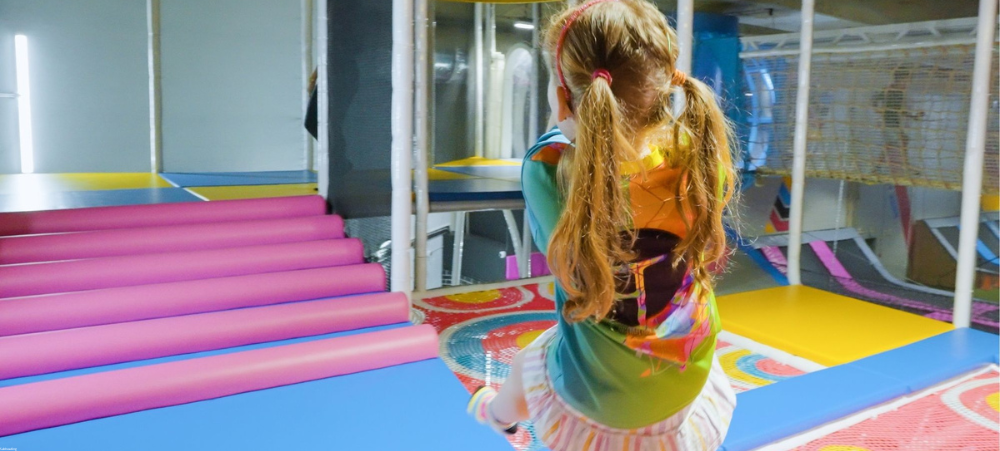
Development through play is not a catchphrase –  it is the most powerful cognitive and physical tool available to children under eight. At our toddler indoor park, every climbing frame, tunnel, and soft-fall surface has been designed around this single principle. As the June 2026 School Holidays approach, parents across the Southern Suburbs are asking: where can my child actually grow during the break? The answer is in the heart of Kirstenhof — and it starts with movement. The Science of Active Play: How Movement Builds the Brain Active physical play directly stimulates the neural pathways children need for reading, writing, and emotional regulation — making a visit to a quality indoor playpark one of the most developmentally valuable activities of the school holidays. At Playstation, the benefits extend far beyond basic fitness. When children engage in multi-level exploration on our structures, they are simultaneously fine-tuning two critical sensory systems that underpin all future learning: the vestibular and proprioceptive systems. Vestibular System: Balance and Spatial Awareness The vestibular system, located in the inner ear, governs balance and spatial orientation. When children navigate our multi-level climbing structures –  shifting weight, changing direction, reading height — they are directly training this system. Research shows that a well-developed vestibular system improves a child’s ability to sit still and focus in a classroom environment, making holiday play a genuine investment in Term 2 readiness. Cross-Lateral Movement: The Reading and Writing Connection Our tunnels and obstacle courses require cross-lateral movement — where a limb crosses the body’s midline. This seemingly simple physical act stimulates communication between the brain’s left and right hemispheres. Neurologically, this is the same cross-hemisphere coordination that underlies reading fluency and handwriting. In short: crawling through a tunnel at our indoor funpark is quietly preparing your child for literacy. Proprioceptive Input: From Climbing Walls to Fine Motor Skills Scaling a climbing wall gives the body constant feedback about its own position and the force required to move. This proprioceptive input — what parents might describe as takkie-to-eye coordination — directly informs the fine motor control needed for holding a pencil, cutting with scissors, or kicking a ball accurately. Every grip on a climbing hold is, in effect, a handwriting lesson. Parent Insight A 2023 position statement from the American Academy of Pediatrics confirmed that unstructured active play is essential for healthy brain development in children under eight — and that the benefits cannot be replicated by screen time or structured academic prep. Social and Emotional Milestones: Building the Bravery Muscle Playstation is where children develop confidence, resilience, and social skills — not through instruction, but through the natural challenges of active, child-led play. There is a specific magic that happens when a child faces a new climbing challenge. It is the moment they decide to try anyway — building what developmental psychologists call self-efficacy, or what we simply call the bravery muscle. Every facilitator is trained to encourage rather than direct, the fear of failure is replaced by the thrill of resilience. Children learn, viscerally, that challenge is survivable — a lesson that transfers directly to the classroom and beyond. The park also functions as a miniature society. In a single afternoon, a child will practise: How to parent Stress free? The Playstation experience is designed to be as restorative for parents as it is energising for children. For South African parents, sourcing quality, stimulating activities during school holidays can feel like full time job. PlayStation by Rush removes that friction entirely. Our Kirstenhof venue features a full-service café with barista-made artisan coffee, freshly prepared light meals, and free Wi-Fi — all with clear sightlines to every play zone. This “park-and-recharge” design means you are not stuck on a hard plastic bench watching the clock. You can catch up on work emails, have a real conversation, or simply sit with a warm cup of coffee while your child builds skills you cannot teach from a worksheet. Parent Tip Aim for the first session of the day during school holidays. Earlier sessions are quieter, giving younger toddlers more room to explore at their own pace — and giving parents the most peaceful café experience of the week. Frequently Asked Questions What is the best clothes to wear to an indoor playpark?  Stick to lightweight, breathable fabrics like cotton or moisture-wicking athletic gear. You’ll want clothes that allow for a full range of motion – and don’t forget grip  socks. Do parents have to pay?  No. Parents enjoy free entry at our park! We only charge for the little ones who are using the equipment, so feel free to come in, relax, and supervise without an extra ticket. Is there high-speed Wi-Fi and a workspace for parents?” Yes! Our café is fully equipped with complimentary high-speed Wi-Fi and a dedicated, comfortable seating area designed for those who need to catch up on emails or finish a project. What are Playstations opening hours? Monday- Friday 9:00am – 6:00pm Saturday, Sunday9:00am – 5:00pm Have more questions about development through play? Reach out to us on social media! How Movement Can Help Your Kids The June 2026 school holidays are a genuine opportunity to invest in your child’s development — not just fill time. Whether you are looking for a once-off holiday treat or a weekly ritual that builds long-term skills, our indoor playpark is ready to welcome your family. Let development through play be the best decision you make these holidays. Your child gets confidence, coordination, and pure joy. You get barista coffee and breathing room. Book Now To Secure Your Sessions

Cambrilearn Online School

Will my child get into university with an international qualification?

Every parent considering an international curriculum for their child eventually asks the same anxious question. Will this affect their university chances? In South Africa, where so much rides on the right university and the right degree, this question deserves a careful answer. The short answer is that the major South African universities admit students with the International British Curriculum and US K-12 qualifications every year, on a published and well-established basis. So do major international universities. The remainder of this article walks through how each route works in practice. Do South African universities accept the International British Curriculum? Yes. All major South African public universities recognise the International British Curriculum and US K-12. None of them require South African candidates to write Matric in order to qualify for admission. What they do require is that the international qualification meets the equivalent standard. For Cambridge and Pearson Edexcel A Levels, that standard is well established. Universities South Africa (USAf) publishes a conversion that maps A Level grades to equivalent NSC points. Each university then applies its own faculty-specific requirements. UCT, Wits, Stellenbosch, UP, UJ, Rhodes and other major institutions have admitted A Level applicants every year for more than a decade. The same is true for US K-12 graduates with a high school diploma and the relevant college admission tests. What is USAf exemption and how does it work? USAf is the body that determines university exemption status for any school-leaver applying to a South African public university with a non-NSC qualification. The exemption is not a separate examination. It is a recognition of the qualification your child already has. For International British Curriculum students, USAf exemption is granted on the basis of A Level results that meet a published scoring threshold. The minimum standard for a complete certificate of exemption is typically a set number of points across a specific subject combination, including a language and Mathematics. Your school can tell you exactly what grades your child needs to qualify, and an accredited school will plan the subject load with this in mind from the start. For US K-12 students, the pathway is similar. A US high school diploma combined with a set of College Board examinations (SAT or AP) leads to USAf exemption. Worth knowing: USAf exemption is a one-off process at the end of Year 13 or Grade 12. The qualification then becomes your child’s permanent record. They do not need to write anything extra in South Africa. Can my child apply to UCT, Wits or Stellenbosch with A Levels? Yes. The application is made through the standard undergraduate admissions portal of the relevant university. Your child submits their predicted A Level grades (or final results, if available) alongside the application. The admissions office assesses the application against the same faculty-specific minimum requirements applied to NSC candidates, using the published conversion. Examples of how this works in practice: UCT Medicine. An applicant with A Levels would typically need strong grades in Chemistry, Biology and Mathematics, alongside English. The faculty has admitted A Level applicants every year for more than a decade. Wits Engineering. Mathematics and Physics at A Level form the core requirement, plus a third subject. The published conversion gives the equivalent points needed. Stellenbosch BCom. Mathematics, English and one other A Level subject typically meet the requirement, with subject-specific minimums set by the faculty. The application process is the same as for any Matric applicant. No separate route. No additional examinations. The CAPS curriculum at CambriLearn follows the same NBT and admission portal route, so parents weighing the two paths can see they sit alongside each other rather than in different systems. What about UK universities? UK universities admit A Level applicants as a default category. UCAS, the central admissions service, lists A Level grade requirements for every undergraduate programme in the UK. Oxford, Cambridge and the Russell Group universities make conditional offers based on predicted A Level grades, the same way they do for British students. This is the cleanest part of the international qualification advantage. A South African child with A Levels applies to a UK university on the same terms as a British student. What about US universities? US universities accept both A Level and US K-12 applicants. A Level applicants typically apply through the Common App, submitting predicted or final grades alongside SAT or ACT scores where required. Many US universities offer advanced standing or course credit for strong A Level results. This can sometimes shorten a four-year degree by one or two semesters. What about Canada, Australia, New Zealand and Europe? Canadian, Australian, New Zealand, Irish, Dutch, German (English-medium programmes), and Hong Kong universities all accept A Levels directly. So do most European universities offering English-language degrees. The university admission pages list A Level requirements explicitly. There is no foundation year required, no equivalency examination, no additional process. Are there cases where Matric is still the simpler route? Yes, and it is worth saying clearly. If your child intends to study at a South African university and stay in South Africa, the CAPS Matric route is the most direct admission qualification. There is no advantage to taking the international route. If cost is a real factor, CAPS examination fees are significantly lower. Across five years of senior phase, the saving is meaningful. If your child performs strongly with continuous school-based assessment counting toward the final mark, the South African system rewards that. A useful direct comparison is AS Level and CAPS matric results sat by students at the same school. Common parent questions Does my child need to write the NBT? Some South African universities require the National Benchmark Test for specific programmes (Medicine, Engineering, certain BCom programmes). The requirement is the same for international and NSC applicants. Check the specific faculty. Does my child still need an Afrikaans subject for some universities? Not anymore. South African universities removed the second-language requirement some years ago. Most students keep an Afrikaans or African language subject anyway, which is offered through the

be.UP Park

Where Did All the Good Places Go? A Study of “Third Places”

May drags on. Every parent knows the feeling. Kids are locked in study mode with June exams looming. They spend their afternoons hunched over textbooks instead of running around like they’re supposed to. The weather is turning; the days feel shorter. Everyone is a little grumpy and cooped up. Nobody says it out loud, but the whole house has that end-of-term energy—restless and tired all at once. And the worst part? There is nowhere obvious to go. With the colder, rainy weather keeping everyone away from parks and beaches, the options are slim. In Joburg, Durban, and even Cape Town, “other” places to go are few, far between, and generally expensive. You’ve got the mall. You’ve got restaurants that technically allow children. You’ve got a park if you’re lucky, though it probably doesn’t have much going on. What you don’t have is that one place—the place where you can just pitch up as a family, decompress, and actually enjoy an afternoon without planning it three weeks in advance. That place has a name: The Third Place. And we’ve somehow built entire suburbs without them. The Concept of the Third Place Sociologist Ray Oldenburg named it back in 1989, but the concept is ancient. It’s simple: It’s the corner café, the public square, the library that doesn’t shush you, or the park that actually has soul. Third places are where community happens by accident. You aren’t there for a meeting or to tick off a checklist; you’re just there, and so is everyone else, and somehow that’s enough. Most of the world’s great cities are built around them. Joburg and Cape Town? Not so much. We built the highways first, then the estates, then the shopping centres. The third place was left out of the blueprint entirely, costing us that vital sense of community. What That Actually Costs Us Kids aged 8 to 14 are spending roughly 6 hours a day on their screens. Before we complain about TikTok, we have to realize that’s what happens when there is nowhere else to be. The phone isn’t the sole problem; the absence of alternatives is. May makes it worse because the pressure to be “productive” takes over. Study. Revise. Prepare. Kids who should be outside figuring out the world are instead being asked to sit still and perform. There is no release valve—no place to just be a kid for an hour before dinner. Parents feel it too. You’re managing the studying, the moods, the screen-time negotiations, and the guilt about those negotiations. You could use somewhere to sit with a coffee or a good book that doesn’t require you to be “on” the entire time. That isn’t a luxury; it’s what a functioning neighbourhood should provide. The Urban Gap As our society has urbanised, there has been an intrinsic loss of easy, cost-effective third spaces. In cities like Durban, Cape Town, and Joburg, spaces are becoming increasingly inaccessible. Our cities are no longer walkable, and any sort of activity has be.Up – Your preferred third place Indoor playparks are the perfect third space for you and your child. Our indoor facilities are designed for screen-free fun, featuring a dedicated giant maze, soft play area, multi-court, trampoline zone, and more. It is a “kids’ fun zone” that has it all. Here, children have the space to breathe, run, chat with friends, and let their imaginations run wild. Meanwhile, parents finally have a space where they can grab a coffee, have a snack at our café, or read a book—all with the peace of mind that their young ones are safe and active. Book Now Visit any of our be.UP parks today in Cresta, Gateway, or the Waterfront.

DIBBER SA

Why Emotional Safety in Young Children Is the New Literacy

A child who feels safe learns differently. Before letters, numbers, and formal instruction can truly take root, children need something more fundamental: the emotional security to explore, question, connect and participate with confidence. According to Dibber International Preschools, emotional safety is becoming one of the most important foundations of early childhood development. When children feel seen and heard, they can engage with learning and develop the confidence needed to navigate the world around them. “At Dibber, we believe emotional safety is not separate from learning – it is what makes learning possible,” says Ursula Assis, Country Director of Dibber International Preschools South Africa. “When children feel secure, they are more open to trying, speaking, listening, exploring and growing. That sense of safety shapes not only how they learn, but how they experience themselves in the learning environment.” Dibber notes that literacy in the early years cannot be viewed solely through the traditional lens of reading and writing. It also includes the ability to understand and regulate emotions, and to form healthy connections with others. In this sense, emotional literacy is becoming just as important as academic literacy in laying the foundation for later success. In a preschool environment, emotional safety is often built through small but meaningful daily experiences. A calm response to a child’s distress, routines that create predictability, and spaces where feelings are acknowledged rather than dismissed all help children feel secure. These seemingly ordinary interactions have a profound impact on how children absorb and respond to new information. “When children know they are safe, something shifts,” adds Assis. “They begin to participate more freely. They ask more questions. They recover more easily from frustration. They become more able to focus and more willing to engage. This is why emotional safety deserves to be treated as a core part of early education.” Dibber believes emotional literacy must be nurtured with intention. Children are not born knowing how to name, manage or work through feelings. They learn this through steady guidance. When children are assisted in understanding what they feel, they can communicate their needs, relate to peers, and remain engaged in learning much more easily. This is particularly important because emotional and cognitive development are closely connected. When children experience emotional insecurity or ongoing stress, their ability to focus, remember, and process information can be affected. By contrast, when they begin to understand and express their emotions, they are often better able to manage reactions, resolve conflict and participate meaningfully in group settings. For Dibber, this understanding aligns strongly with the Nordic approach to early childhood education, which places emotional development at the centre of learning rather than treating it as an added extra. Through play, storytelling, shared routines, and guided interaction, children are supported in building self-awareness, empathy, and confidence, as well as in other crucial areas of development. In the South African context, Dibber also sees a natural connection between emotional safety and the philosophy of Ubuntu. Based on the understanding that people grow through connection, care and shared respect, Ubuntu reinforces the idea that children thrive best within environments where belonging is actively nurtured. This strengthens emotional safety not as an individual achievement, but as a shared responsibility between educators, families and communities. At Dibber, this feeling of belonging is intentionally woven through daily learning experiences. Children are encouraged to care for one another, express themselves, work through conflict with support and experience their learning environment as a place where they are valued. Creating emotional safety does not require complicated systems. It begins with consistency, presence and emotionally responsive adults. When educators take time to acknowledge feelings and create space for expression through play and conversation, children begin to trust both the environment and themselves. Over time, this trust becomes the base for deeper learning, stronger relationships and more confident participation. “Emotional well-being is not a soft add-on to education,” says Assis. “It is part of the foundation. When children feel emotionally safe, they are better able to become curious, capable and connected learners. Without that foundation, learning can remain shallow and inconsistent.” Emotional safety is not simply an added advantage in the early years. It is one of the conditions that allows meaningful learning to happen at all.

Parenting Hub

Inside the Magical World of Baby Lemmings on Cartoonito

Introducing an unforgettable adventure, the craziest show in the wilderness, Baby Lemmings! Cartoonito Africa presents a show that encourages a life of wonder, adventure, and navigating a toddler’s life through each episode. Bringing comfort and excitement right into your living room! Parenting Hub has had the privilege to interview some of the key people involved in creating such a magical series, helping us to travel into the mind of the series for the afternoon.  The creators, and all involved in the making of Baby Lemmings were a lovely and inviting group of people to speak with. And together, have created a beautifully crafted series, dedicated to the younger audience of preschoolers. This show offers not only insight and familiar feelings for preschoolers to navigate through and relate to, but something that parents might also connect with. We asked Josselin Charier, one of the brilliant creators, “Grizzy and the Lemmings is loved worldwide. What made you feel that exploring the Lemmings’ early years was the right next step for a preschool audience?”  To which Josselin was very keen and insightful, explaining that, “It was really intended to be a show for ages 6 – 9/10. The Lemmings weren’t meant for preschoolers because they are pushing boundaries, and doing crazy things. Things that aren’t aligned completely with a preschool audience. So we thought it would be a good idea to make a show for preschoolers. But to be transparent, for a long time we thought it wouldn’t be possible because the Lemmings are so crazy. We thought we couldn’t make a show without portraying them for preschoolers. And so we just put this idea in a drawer…and then one day we woke up and said that in the true DNA of the Lemmings, it’s not to be crazy or taking risks — it’s to be creative and playful. And if we stick to this core DNA of the Lemmings we could do preschool shows, which is aligned with preschool expectations, and for it to be totally okay. We had this idea, and we worked on that. We started writing, it was there. And I think it would very cool for an audience to have a first, kind of, introduction unto a safer environment, with takeaways. So this is really meant for them. ”  We loved the way he spoke of the show; that it was something more than just entertainment for your children. That it was introducing a way of life.  Cedric Lachenaud, a wonderful writer, had his welcoming opinion to add, “We tried this concept in the first season. There is an episode with a flashback, and when they were little they (the Lemmings) found their way back to the house. And it was a very beloved episode, so we had decided to be here for a long time. We knew it could be fun, but there was some time before where we had to figure out how to do it.”  We also had the honour to speak with the talented character designer, Bertrand Gatignol. We asked, “The Baby Lemmings are instantly lovable. How did you approach designing characters that preschoolers could recognise and emotionally connect with at a glance?” “At first, the job of creating characters is about creating emotion. So, even for adults, you find that it’s a bit of the same problem. The big difference is only the age because you are projecting. The audience is projecting themselves into the character. So you have to adapt the age in function of the audience. The real difficult point was that at first the Lemmings was designed for the ‘Grizzy and the Lemmings’ show. They were designed as squish balls, because they are acting together. So then they are not just one character. So first it was created to be very, very cute and very, very simple. The problem was to make it more cute, and more simple. We worked a lot with the 3D department to adapt because, of course, when you are drawing something it always works because it’s flat. So most of the time you have to also find a solution just by modelling the character. ‘Cause you cannot really find the solution just by drawing it. You have to work together — so it really is team work. And finally, what is very interesting for the preschooler aspect was that the emotions are very simple like happiness / fear, so everything is in the eyes — most of the things are in the eyes. Most of the part was to make expressions that are just instantly readable by the young audience to feel alike.”  The hardworking art director, Constance David had liked to add, “The character scale is smaller than a lemming. A lemming is 7cm, its really small. So all the nature is bigger, it gives a magical vibe, and I think that children can identify with it also.” Which encouraged our follow-up question, “Constance, the forest feels warm, safe, and full of wonder. What guided your team in creating an environment that parents would feel comfortable letting their children “live in” for a few minutes each day?” Constance replied, “Thank you. First of all, it wasn’t with a team, it was Josselin, Antoine, who gave me lines, which helped me to work it out but I did it alone. And I was inside books from my childhood, because it has very strong images that are infused in you, with many details — and water colour. We wanted to have it back. For example, there are different colours on the different elements, it gives this special water colour look. Then we played with all the textures, very soft materials and the atmosphere was very important. So with the 3D team and the composite team, we worked on the warm light to give this atmosphere, like a little bubble. To be really safe.”  Josselin included, “For the comfort and to feel safe. A Baby Lemmings wouldn’t hurt itself because everything is soft.” Constance added, “And

Cartoonito

Baby Lemmings Hop Into Action on Cartoonito with Brand-New Exclusive Series

Get ready for a burst of fun and adventure as Baby Lemmings makes its exclusive debut on Cartoonito! In this brand-new series, the world is one big playground for the Baby Lemmings, who see every moment as an opportunity for fun, friendship, and discovery. Living in the beautiful Canadian forest, these playful little characters share their joyful outlook with their animal neighbours, turning everyday situations into exciting adventures. With their curious nature and positive spirit, the Baby Lemmings show that no challenge is too big when approached with teamwork, creativity, and a sense of fun. From solving problems in the forest to exploring new ideas, every episode is filled with laughter, learning, and light-hearted adventure. Through their unique “Lemming eyes,” children are encouraged to see the world differently—embracing imagination, resilience, and the joy of working together. It’s all about finding fun in the everyday and discovering that even small characters can take on big challenges. Perfect for younger viewers, Baby Lemmings delivers playful storytelling, colourful animation, and heartwarming moments that the whole family can enjoy. Premiere: Monday, 25 May 2026Tune-In: Monday to Friday at 17:00 CAT (2 new episodes per day)

Parenting Hub

Debunking Common Myths About Baby Fevers

When your baby feels a bit warmer than usual, it’s natural to worry. But most fevers aren’t something to panic about. Trusted1 by parents to fight their little one’s pain and provide relief when needed most, Panado®’s Paediatric Range of syrups are ready to work immediately.2  What Causes A Mild Temperature? A fever can feel worrying, but it’s usually a sign that your baby’s body is working just as it should to fight off infection. Remember, a fever isn’t an illness on its own.3a When your tot’s temperature rises, it usually means their immune system has sprung into action and is sending out white blood cells to fight off and destroy invading bacteria and viruses.3b Your baby’s temperature can rise for all sorts of harmless reasons. Most of the time, it’s down to common bugs like colds,4a flu,4b or ear infections.4c Sometimes it happens after the administration of a vaccine4d or simply from being a bit too warm from hot weather or too much clothing.4e Teething can also make babies feel slightly hotter than usual.4d Of course, when your little one feels uncomfortable, all you want is to help them feel better, quickly and safely. The Power To Fight Their Pain Panado®  Paediatric Range contains paracetamol, 5a one of the world’s trusted medicines for relieving pain and fever and backed by over 150 years of clinical use.5b Syrups are a reliable and convenient solution for pain and fever relief, eliminating the challenges associated with suspensions.2b The medicine is already dissolved, so there’s no need to worry about uneven doses.2c  This ensures accuracy every time, making life just that little bit easier for parents. For the tiniest family members, Panado®  Peppermint Syrup,6 suitable from birth, combines effective relief with an improved taste7 which makes dosing smoother and more pleasant. Panado®’s paracetamol-based Strawberry Paediatric Syrup10 now in convenient single-serve sachets, offers on-the-go relief for unexpected pain and fever in babies and children. Newly launched, each sachet contains a 5 ml dose, making it easy to dose and is small enough to carry in your pocket.   And for babies from three months old, Panado® Infant Drops8 – recognised as Product of the Year 2025 in the Child Health category9 – provide precise dosing and easy administration, helping parents deliver the right amount every time. For added peace of mind, parents can scan the QR code or use the online Panado® Dosage Calculator at https://panado.co.za/dosage-calculator, which adjusts the dosage based on a child’s age and weight. This extra step helps ensure the right dose every time. New Look, Same Trusted1 Relief The Panado® Strawberry Syrup10 pack makes life easier for parents, with clear pain relief guidance. It helps you spot the right option in seconds, because when your child isn’t feeling well, you want to act fast and with confidence. Part of South African Family Life for Generations Panado® works fast11 and has been passed down through generations and is trusted1 by families across the country. So next time your baby feels warm to the touch, try not to panic. WithPanado®, you’ve got trusted1 pain relief on your side, helping you comfort your baby confidently – from day one. Panado® products are available from Baby City, Pick n Pay, Checkers including Hypers, Shoprite, Clicks, Dis-Chem and independent pharmacies. For more information, visit:https://panado.co.za/ and join the conversations on Facebook.  For references and legal disclaimers, visit https://panado.co.za/references. Embrace the Winter Warrior within, with Panado® As we brace ourselves for the winter months, it’s wise to be prepared. Adcock Ingram’s Winter Warriors 2026 Campaign offers a range of products aimed at combating common cold and flu symptoms. With trusted brands like Cepacol®, Panado®, Compral®, ProbiFlora™, Gummy® Vites and ViralGuard™, you can arm yourself and your loved ones against the seasonal sniffles. Approval ticket #02.20261000004802. February 2026.

Parenting Hub

Understanding sports injuries: The role of radiology in diagnosis and recovery

Sports injuries are common at all levels, from recreational athletes to elite professionals. Radiology not only helps diagnose injuries but also assists in monitoring recovery, identifying complications early and helping determine when it is safe to return to sport. Dr Ewoudt van der Linde, a radiologist at SCP Radiology specialising in musculoskeletal (MSK) imaging and sports injuries, discusses common injuries, imaging techniques and the role radiology plays in modern sports medicine. What is the role of a radiologist in sports injuries? Radiologists work as part of a multidisciplinary medical team. Imaging helps distinguish between minor and more significant injuries, such as differentiating a low-grade muscle strain from a major tear or identifying ligament injuries that may require surgery. Imaging also guides treatment decisions and, in selected cases, can be used to monitor healing and recovery, particularly in high-performance athletes. Are there specific sports that produce distinctive injury patterns? Yes. Running and field sports commonly result in muscle strains, ligament injuries and stress fractures. Sports involving rapid changes in direction, such as rugby or football, are often associated with knee ligament injuries and ankle sprains. Padel, tennis and golf frequently produce overuse injuries involving tendons around the shoulder, elbow and wrist, while running and jumping sports commonly affect the Achilles tendon. Are there particular sports injuries commonly seen in practice? Common injuries include muscle strains, ligament sprains, tendon injuries and stress-related bone injuries. In the lower limb, ankle sprains, Achilles tendon pathology and knee ligament injuries are frequently encountered. In the upper limb, shoulder and elbow tendon injuries are common, particularly in throwing or racquet sports. What imaging is used in sports injuries and why? Different imaging techniques are used depending on the suspected injury: Is imaging important even if an injury does not seem serious? Yes. Some injuries may appear minor but can involve underlying damage such as stress fractures, small ligament tears or early cartilage injury. Early detection may prevent worsening injury and reduce long-term complications. Is pain a good indicator of injury severity? Not always. Some serious injuries may initially cause only mild discomfort, while relatively minor conditions can be very painful. How do stress fractures differ from acute or occult fractures? Can imaging distinguish between inflammation, overuse injuries and structural damage? Yes. Imaging can help differentiate between low-grade inflammation or overuse changes and more significant injuries such as tendon tears, ligament ruptures or cartilage damage. This distinction is important because treatment and recovery timelines differ significantly. Can imaging help predict recovery time and return to sport? Imaging cannot provide an exact recovery timeline but does provide valuable information about the severity and extent of injury. In selected cases, imaging may also be used to monitor healing and assist with return-to-play decisions. Can you discuss concussion briefly? Concussions are common in sports such as rugby and are primarily a clinical diagnosis. Imaging is usually not required in mild cases. However, CT scans may be performed when there are concerning symptoms to exclude more serious injuries such as a brain bleed or skull fracture. What role does Interventional Radiology play in sports injuries? Interventional Radiology involves minimally invasive procedures performed under imaging guidance. In sports medicine, this may include image-guided injections for pain relief or aspiration of fluid collections. These procedures are typically performed using ultrasound or CT guidance and are generally less invasive than surgery. Are there any new imaging techniques particularly useful in sports medicine? Modern MRI techniques continue to improve and provide increasingly detailed evaluation of soft tissues, allowing earlier detection of subtle injuries. Ultrasound technology has also advanced significantly, with higher-resolution imaging and expanded use in both diagnosis and image-guided procedures. Why is specialised MSK imaging important? Sports injuries often involve complex anatomy and subtle findings. Subspecialised MSK radiologists develop expertise in recognising injury patterns and understanding sport-specific demands, helping provide more accurate diagnoses and clinically relevant reporting.

Cambrilearn Online School

International British Curriculum vs South African Matric: what parents need to know

Almost every parent considering an international qualification asks the same first questions. Will my child still be able to apply to a South African university? How does it actually compare to Matric? Is it harder, easier or just different? This piece walks through the real differences between the International British Curriculum (the Cambridge framework that leads to International GCSE and A Level) and the South African Matric (CAPS or IEB, both leading to the National Senior Certificate). By the end you should know which questions to ask, how each year is structured, and which qualification fits which child. Two different qualifications, two different systems Start with the basic shape of each. The South African Matric is a school-leaving certificate awarded after Grade 12. There are two routes to it. The CAPS curriculum is the national curriculum, assessed by the Department of Basic Education through SACAI for private candidates. The IEB is a private examining body that also awards the National Senior Certificate, with slightly different content and a stronger emphasis on application-style questioning. A child taking the IEB curriculum at an online school and a child taking CAPS both leave school with the same qualification: NSC Matric. The exam papers and pedagogy differ. For Afrikaans-medium families, KABV-kurrikulum mirrors CAPS in Afrikaans. The International British Curriculum is offered globally by either Cambridge International or Pearson Edexcel. It is layered. International GCSE is sat at the equivalent of Grade 10. After that, students move to AS Levels (Grade 11 equivalent) and A Levels (Grade 12 equivalent). The A Level result is what universities use for admission, much the way they use the final NSC mark. So the structures are not directly comparable. Matric is one set of examinations at the end of Grade 12. The British system is layered: GCSE, then AS, then A Level. That difference matters when you plan subjects. Are International GCSE and IGCSE the same thing? Yes. The qualification was originally launched as the IGCSE (International General Certificate of Secondary Education). It is now formally called the International GCSE. The two terms refer to the same examination. The shorter version is still in everyday use, but the official name on certificates and university applications is International GCSE. How do the year structures compare? South African Matric (CAPS or IEB). Grade 8 and 9 are general. Grade 10: choose seven subjects, including four compulsory ones (two languages, Mathematics or Mathematical Literacy, and Life Orientation). Grade 11 and 12: continue with those same seven. NSC examinations sit at the end of Grade 12. International British Curriculum. Year 7, 8 and 9 (Grade 6 to 9 equivalent): Lower Secondary, working through Checkpoint assessments. Year 10 and 11 (Grade 9 and 10 equivalent): International GCSE, typically with eight or nine subjects. Year 12 and 13 (Grade 11 and 12 equivalent): AS and A Levels, with specialisation into three or four subjects. The British system gives more subjects through to the GCSE point, then deeper specialisation afterwards. The South African system asks children to commit to seven subjects at Grade 10 subject choices and carry all of them to the end. How is subject choice different in practice? Take a child who wants to study medicine. In the South African system, they will need Mathematics, Physical Sciences and Life Sciences in their senior-phase package. The other four CAPS Matric subjects are negotiable but get carried through to the end. In the British system, the same child can take eight or nine GCSE subjects including all three sciences, then specialise into Chemistry, Biology and Mathematics at A Level, optionally adding Physics. The depth is greater at the top end. The breadth is greater earlier. Neither approach is inherently better. A child who knows what they want at fourteen often does well in the British system because they can specialise. A child who needs more time to find their direction sometimes does better with Matric because the broad subject load stays open longer. How are exams written and marked? This is where the practical differences show up. NSC examinations are sat at the end of Grade 12. The result is influenced by school-based assessment (SBA) marks which count toward the final aggregate. IEB and CAPS schools both run these. A child with strong term-by-term work has a buffer before the final examinations. International GCSE and A Level results are determined almost entirely by external examinations. There is little SBA component. Coursework counts for very little in most subjects. This makes the qualification highly portable, because a Cambridge or Edexcel paper sat in Johannesburg is marked the same way as one sat in Singapore, but it places more weight on examination performance. For a child who performs well under examination conditions, the British system rewards that. For a child who builds steadily across the year and needs continuous assessment, Matric tends to suit better. How is each qualification recognised by universities? South African universities recognise both. A child with NSC Matric meets the National Senior Certificate requirements for university exemption directly. A child with A Levels applies through what the universities call the ‘foreign qualification’ route, which is well established. UCT, Wits, Stellenbosch, UP and UJ all admit International British Curriculum students annually. The conversion from A Levels to South African admission points is published by Universities South Africa. Internationally, A Levels are accepted at universities in the UK, the US, Canada, Australia, New Zealand and most of Europe as a default category. NSC Matric is also accepted at many of these universities, often with a foundation year or additional admission requirements. Article 3 in this series covers the university acceptance process in detail. What does each pathway cost? Matric is sat in rand. Examination fees are modest. Tuition through an established private school sits anywhere from R60,000 to R200,000 per year depending on the school. An online school in South Africa running CAPS or IEB typically costs less than a physical private school. International GCSE and A Level examinations are sat per subject in

Impaq

From study plans to support sessions: helping learners become exam fit

As South African learners are about to start the half year exam, families are shifting their focus from daily lessons to assessment readiness. It calls for structure, routine, the right support, and a clear understanding of how to prepare effectively. Being “exam fit” is much like preparing for a sporting event. Learners can expect strong results if they begin preparing early, focusing on steady revision, continuous practice, with consistent support from parents and subject-specialist teachers. One of the most effective starting points is to work through past papers. Past papers help learners become familiar with the format of questions, the way marks are allocated, and the level of detail expected in different types of answers. Impaq learners can access past papers and memorandums on the Optimi Learning Portal (OLP), which gives them an opportunity to practise, check their understanding, and identify weaker sections to focus their attention and prioritise what they need to gain a deeper understanding of. Time management is key to being prepared and addressing exam anxiety. Learners should practise completing questions under timed conditions to understand how long they spend on each section. This can help them avoid spending too much time on questions they find difficult, while also teaching them how to move strategically through a paper. “Learners need to understand that exams test both knowledge and technique,” says Louise Schoonwinkel, Chief Commercial Officer of Optimi of which Impaq is a registered trademark. “Knowing the work is important, but learners also need to know how to read a question properly, manage their time, respond according to the mark allocation, and stay calm when they face a challenging section.” For Impaq learners, the exam preparation sessions available on the OLP provides focused revision whilst Grade 12 learners benefits from the additional support through Impaq’s Winter School aimed at preparing learners for the preliminary and final National Senior Certificate examinations. These sessions are designed to help learners engage with subject specialists, ask questions, and focus on key areas that often require additional attention. Parents play an important role in managing their learner’s anxiety and knowing when they feel overwhelmed. Learners needs to be encouraged to ask constructive questions: Which subjects feel manageable? Which sections are more difficult? What kind of support would help most? Further, creating the right study environment is equally important. Some learners work best at a clear desk in a quiet room, while others prefer a more flexible setup. The key is for parents to help learners find what works for them, while reducing distractions and encouraging a routine that includes breaks, sleep, healthy eating, hydration, and movement. Successful learners also tend to develop habits that extend beyond exam season. These include setting up a timetable, using a dedicated study space, avoiding procrastination, finding additional resources for difficult subjects, and learning which study methods work best for them. Some learners benefit from teaching the work to someone else, while others use summaries, quizzes, colour-coded notes, or study partners. As the assessment season approaches, Impaq encourages families to take a balanced approach. Exam readiness is built through preparation, support, reflection, and access to the right tools. To all learners: start early, practise often, ask for help when needed, and use every available resource. And good luck!

Cambrilearn Online School

Why more South African parents are exploring international curricula

Most South African parents grew up with one curriculum: CAPS, leading to the National Senior Certificate. Some had the IEB option through private schools. Both led to a South African Matric. Both were widely recognised. The question of curriculum was rarely on the table when choosing a school. That conversation has shifted. A growing number of parents are now weighing the International British Curriculum, Pearson Edexcel and US K-12 alongside CAPS and IEB. Not always because they want to leave South Africa. Often because they want their child to have more options when the time comes to apply to university, or because the family travels, or because the child suits a different rhythm of learning. This piece walks through what is actually on offer, why some families are choosing international, and why others are right to stay with CAPS or IEB. What is an international curriculum? In South Africa, the term refers to a school-leaving programme designed and assessed outside the country. The three you are most likely to encounter locally are the International British Curriculum (built on the Cambridge framework), Pearson Edexcel (a sister system also based in the UK), and US K-12, which leads to a US high school diploma. Each has its own subject list, its own examinations and its own university recognition pathway. By contrast, the South African options are the CAPS curriculum, which is the national curriculum assessed through SACAI or the Department of Basic Education, and IEB, which is a private examining body. Both lead to the National Senior Certificate. For Afrikaans-medium families, KABV-kurrikulum mirrors CAPS in Afrikaans. Which international curricula are available in South Africa? Three, in practical terms. The International British Curriculum (Cambridge). The largest international school system globally. Structured in stages from Primary through to A Level, with two major examination points: International GCSE around Year 11 and A Level around Year 13. Pearson Edexcel. A sister system to Cambridge, also UK-originated. Same year structure. Slightly different question style on some papers, and more frequent examination sessions. US K-12. The American school structure. Twelve grades culminating in a US high school diploma, with continuous assessment and a final GPA, supplemented by SAT or Advanced Placement examinations for university admission. Each is offered in South Africa by a small number of registered private schools, including online providers. The qualification is exactly the same whether sat in Johannesburg, London, Singapore or Dubai. Why are more parents considering international curricula? The qualification travels. Cambridge, Edexcel and US K-12 qualifications are recognised at universities in the UK, the US, Canada, Australia, New Zealand, much of the EU, the UAE and South Africa. South African Matric is also recognised at many of these, but the international qualifications are accepted as a default category rather than a foreign one. If your child might study outside South Africa, this removes a step. Subject choice broadens at GCSE level. CAPS and IEB lock students into seven subjects in the senior phase. The International British Curriculum allows children to study eight or nine subjects through to GCSE level, then specialise into three or four at A Level. This depth matters for medicine, engineering, finance and other competitive fields. Online delivery is now genuinely viable. An accredited online school in South Africa can deliver an international curriculum with timetabled live lessons, qualified subject teachers, parent reporting and structured assessment. For families who travel, train sport seriously, live in smaller towns or want a school that fits a different rhythm, this is now a real option rather than a workaround. Smaller class sizes. South African classrooms typically run at thirty to one. International curricula delivered through an online private school tend to run far smaller. The teacher actually knows your child. That difference compounds across five or six years. When does CAPS still make the most sense? There are clear reasons many South African families stay with CAPS, and they are not reasons to be apologetic about. If your child wants to study at a South African university and stay in South Africa for their career, CAPS leads to the National Senior Certificate, which is the direct admission qualification. There is no advantage to taking the longer route. If you want a curriculum that is steeped in South African history, geography, literature and life-orientation content, CAPS is built around it. International curricula are designed to be portable, which means they are less locally rooted. If cost is a real constraint, CAPS examination fees are paid in rand and are significantly lower than the foreign-currency examination fees of Cambridge or Edexcel. A child completing CAPS through an online CAPS option can finish school with a recognised Matric at a fraction of the cost of an international route. If your child performs strongly with continuous assessment and school-based marks counting toward the final result, the South African system suits that. International GCSE and A Level results are determined almost entirely by external examinations. The detailed Cambridge curriculum vs CAPS comparison walks through every difference if you want to read further. For families weighing CAPS against IEB, the IEB online school route is also worth understanding. What does CambriLearn offer? CambriLearn is an accredited online private school based in South Africa. It is accredited by Cognia and Pearson Edexcel, and registered with SACAI and IEB. The school runs five curricula and six pathways: CAPS, KABV, IEB, the International British Curriculum, Pearson Edexcel and US K-12 through Score Academy Online. Over the past two decades, more than 80,000 students have been educated through the school across over 100 countries. The decision a family makes about curriculum is the same decision whether they choose CambriLearn or any other school. The advantage of choosing CambriLearn is that the curriculum decision is not locked in by the school. A child can start in CAPS in Grade 7, switch to International GCSE in Year 10, or move back if circumstances change. The school accommodates the curriculum decision instead of forcing it. If you would like to walk through which

Cartoon Network Africa

CARTOON NETWORK INTRODUCES INTERNATIONAL AUDIENCES TO ADVENTURE TIME: SIDE QUESTS

Cartoon Network has announced the international premiere date of its brand-new animated series,Adventure Time: Side Quests, produced by Cartoon Network Studios, launching on Monday, 5 October. A companion to the beloved original, Emmy®, Peabody, and Annie Award-winning series Adventure Time, the new series follows young hero Finn and his magical dog best friend Jake as they embark on adventures across the fantastical land of Ooo — partying with cloud people and punching evil in the butt along the way. One of Cartoon Network’s most beloved and imaginative franchises, Adventure Time captivated audiences with its heartfelt storytelling, playful humour, and richly creative world. Adventure Time: Side Quests builds on the spirit of the early seasons, delivering lighter, self-contained adventures. Designed to introduce a new generation of fans to the land of Ooo, whilst giving existing fans more of what they love. The series brings standalone, silly quests and playful challenges – celebrating the joyful chaos of Finn and Jake’s adventures. Adventure Time: Side Quests is executive produced by Nate Cash, who is the Showrunner, with Darrick Bachman serving as Story Editor.  Victor Courtright and Niki Yang direct, Nick Cross is the Art Director, and Matthew Janszen is the Composer.  Finn the Human is voiced by Sasha Knight, and John DiMaggio returns as the voice of Jake the Dog. The series will also reunite fan-favourite characters, including Ice King (Tom Kenny), Princess Bubblegum (Hynden Walch), Marceline (Olivia Olson), and BMO (Niki Yang). Warner Bros. Discovery GM, International Kids, Animation and Franchise Vanessa Brookman said: “With its wit, originality and unpredictability, Adventure Time has always been quintessential Cartoon Network.  In Side Quests, Nate and the team have crafted the perfect entry point for new audiences discovering the Land of Ooo for the first time, while offering a heartfelt love letter to fans who have been on the extraordinary journey from the very beginning.” Showrunner and Executive Producer, Nate Cash, said: “Making Side Quests felt like making the original Adventure Time, which felt like hanging out with art school buddies making professional cartoons. That sounds like a big sandwich of feelings, and it was! You’re going to love these NEW adventures with Finn & Jake!” Adventure Time: Side Quests will premiere internationally, including on Cartoon Network Africa on Monday, 5 October.

Wingu Academy

The Human Side of Digital Learning – Why Support Matters More Than Ever

In conversations about online education, attention often goes to platforms, devices, and digital tools. While these are important, research consistently shows that the most decisive factor in learner success remains human support. Students perform better when they are guided by capable teachers, encouraged by caring adults, and part of a system that actively tracks both progress and challenges. Motivation, confidence, and resilience grow when learners feel seen, supported, and connected. Not all online schools operate in the same way. Some rely heavily on automation or self-directed learning models that can leave families without enough guidance. Effective online education requires more than content delivery—it requires presence, expertise, and responsiveness. Wingu Academy is built around meaningful human support. Families engage with real consultants, qualified teachers, and direct communication channels that foster clarity and trust. Questions are answered by people who understand education and are invested in learner outcomes. A key part of this support system is the Student Success Adviser. These advisers work closely with families to guide academic pathways, identify learner needs, and maintain consistent progress throughout the school journey. This reflects a modern approach to education: success is actively supported, not left to chance. For learners, this support can reduce anxiety, improve organisation, strengthen accountability, and increase engagement. For parents, it provides reassurance that they are not navigating education alone. Technology may enable learning, but people create impact. The strongest online schools understand that innovation must enhance human connection—not replace it.

DIBBER SA

Are We Preparing Children for School – or for Life?

A child tying their shoelaces for the first time may seem like a small, everyday moment. Yet for Dibber International Preschools, moments like these reflect something far more meaningful than simply completing a task. They reveal how young children begin to build patience, independence, resilience, and confidence; qualities that matter not only in school, but throughout life. As conversations around school readiness continue to shape early childhood education, Dibber is encouraging parents and caregivers to look beyond academic milestones alone. While recognising letters, counting numbers, and following instructions remain important, the preschool years play an important critical role in helping children develop the life skills that affect how they will learn, relate, adapt, and grow – creating the perfect foundation for their future. “At Dibber, we believe early childhood education should prepare children for life as much as it prepares them for school,” says Ursula Assis, Country Director of Dibber International Preschools South Africa. “A child who learns how to cope with frustration, ask questions, try again, solve problems and trust their own abilities is building a foundation that reaches way beyond the classroom.” Dibber’s Nordic-inspired approach to early learning emphasises the whole child. This means recognising that some of the most valuable learning happens in ordinary, everyday moments; when children are given time to try, space to struggle and support working things out for themselves. In practice, this can be as simple as allowing a child to persist with tying their shoelaces instead of stepping in too quickly. While the task may take longer, the learning runs deeper. In that one experience, the child develops an increasing sense of independence. This same principle can be seen throughout preschool days. When children learn to share, they are not simply being taught manners; they are developing empathy and cooperation. When they are encouraged to ask questions, they build confidence and enhance critical thinking skills. When they engage in creative play, they begin to imagine possibilities, experiment with ideas and, most importantly, find their own solutions. Even moments of conflict, when guided with care, can help children develop emotional self-regulation and negotiation skills. “These are not extras to learning,” adds Assis. “They are the building blocks of it. Children need more than academic knowledge to thrive. They need emotional strength, curiosity, adaptability and the confidence to communicate with the world around them.” Dibber believes emotional development is particularly important during the early years. Preschool is often one of the first spaces where children begin learning how to understand and express feelings beyond the home environment. When educators acknowledge emotions rather than dismiss them, children begin to understand that feelings are manageable and that they can move through disappointment, frustration and uncertainty with support. Over time, this helps build resilience, an essential life skill that influences a child’s ability to navigate future challenges. Technology also forms part of this broader conversation. Dibber recognises that digital tools are now part of children’s world but believes they should strengthen learning rather than replace play, movement or human connection. When used meaningfully, technology can support storytelling, guided exploration and digital awareness, while still protecting the rich, hands-on experiences children need most in their early years. For Dibber, the educator’s role is central to all of this. In a life-focused learning environment, educators are not simply delivering content. They are creating conditions for growth. They understand when to step in, when to step back, and how to guide children through a challenge without removing the opportunity to learn from it. “Children learn not only from what adults teach, but from how adults respond,” says Assis. “When educators create warm, supportive environments where mistakes are part of learning and effort is recognised, children begin to see themselves as capable. That sense of self matters deeply.” Dibber believes the real purpose of preschool is not to rush children towards performance, but to help them become confident, connected and capable individuals. When early education focuses only on preparing children for the next grade, it risks narrowing their potential to what can be measured. But when it prepares them for life, children gain something significantly more lasting. That is the heart of meaningful early childhood education: recognising that the best preparation for school is, ultimately, preparation for life.

Bonitas – innovation, life stages and quality care

Supporting the next generation of doctors: Bonitas and Gift of the Givers award medical bursaries at Wits University

Bonitas Medical Fund, in partnership with humanitarian organisation Gift of the Givers, recently awarded bursaries to three medical students: Keikantse Swaratlhe (23), Blake Delroy Pierce Green (28) and Singita Manganye (24) at Wits University. The students are among some of the top performers at the university, looking to specialise in various fields including dermatology, paediatrics and internal medicine. As they look forward to learning and growing their knowledge in medicine, the bursaries come at a crucial time, providing financial support and easing the burden of university fees. In addition to financial assistance, the bursary programme aims to help address some of the challenges facing the medical fraternity in South Africa, including overloaded public hospitals, understaffed clinics and a shortage of medical professionals.

Cartoon Network Africa

Pokémon Ultimate Journeys Arrives on Cartoon Network – The Final Chapter Begins

Get ready for an epic adventure as Pokémon Ultimate Journeys makes its debut on Cartoon Network! This exciting new season marks the culmination of Ash Ketchum and Goh’s incredible journeys, as they travel across all eight regions in pursuit of their biggest goals yet. Packed with action, emotion, and unforgettable battles, this season brings their stories to an epic conclusion. For Ash, the stakes have never been higher. As he competes in the World Coronation Series, he faces off against the strongest trainers from around the globe. His journey builds toward a historic final showdown against Leon, the undefeated Champion—an intense battle that fans won’t want to miss. Meanwhile, Goh continues his mission with Project Mew, taking on challenging tasks and adventures as he moves closer to discovering the mythical Pokémon Mew. His determination and growth make for a compelling storyline filled with discovery and excitement. With powerful battles, emotional moments, and long-awaited milestones, Pokémon Ultimate Journeys delivers everything fans love about the series—and more. Whether you’ve followed Ash and Goh from the beginning or are jumping in for the adventure, this is a season that truly brings it all together. Premiere: Monday, 18 May 2026Tune-In: Monday to Friday at 08:05 CAT

Bonitas – innovation, life stages and quality care

Millennials can now add hypertension to their list of potential health risks

Just when it feels like there are already enough things on the millennial worry list, from student debt and rising living costs to burnout and trying to maintain some semblance of work-life balance, experts say hypertension may be another issue quietly joining that list.  Ahead of World Hypertension Day on 17 May, health experts are drawing attention to a concerning shift in high blood pressure diagnoses, where the disease is no longer confined to older adults and is increasingly affecting younger South Africans. Hypertension, also known as high blood pressure, has long been associated with older adults, but research increasingly shows that younger adults are being affected far more than previously thought. A 2025 study published in the Journal of Human Hypertension found that 24% of South Africans aged between 24 and 40 reported having hypertension, yet only 16.8% had good knowledge of the condition. This gap highlights a growing concern that many young adults may be living with elevated blood pressure without realising it. Several modern lifestyle factors are contributing to this shift. Long working hours, financial pressure, highly processed convenience foods, limited time for exercise and the constant mental load that often comes with balancing careers, families and daily responsibilities can all contribute to rising blood pressure levels. “One of the biggest challenges with hypertension in younger adults is that it often goes unnoticed. People may feel healthy and assume their risk is low, yet elevated blood pressure can already be placing strain on the heart and blood vessels,” says Dr Themba Hadebe, Clinical Executive at Bonitas Medical Fund. “The reality is that high blood pressure can develop silently for years and may only be detected during routine screening.” The good news, says Hadebe, is that hypertension is one of the most manageable chronic health conditions when it is detected early. With proper monitoring, lifestyle adjustments and, where necessary, medication, many people can control it and significantly reduce the risk of serious complications later in life. What you need to know about hypertension Hypertension occurs when the force of blood pushing against artery walls remains consistently too high. Over time, this increased pressure can damage blood vessels and strain major organs. However, things get a bit trickier when we start asking how to spot hypertension and its symptoms. Often called a “silent condition”, hypertension for many people results in experiencing no symptoms at all, especially in the early stages. When symptoms do appear, they may include: Because these symptoms can easily be dismissed as stress or fatigue from dehydration, many people only discover they have high blood pressure during a routine medical check. But, if left unmanaged, hypertension can have serious long-term health consequences, significantly increasing the risk of heart disease and heart failure. It is also one of the leading causes of stroke. High blood pressure can also damage the kidneys, affect vision by damaging the small blood vessels in the eyes and weaken arteries throughout the body, increasing the risk of circulation problems and aneurysms. “The challenge with hypertension is that damage can occur long before a person feels unwell,” explains Hadebe. “This is why early detection and consistent management are critical.” What young adults can do about it now For young adults juggling careers and families, preventative healthcare can easily fall down the priority list, but all it takes is only a few minutes and a simple blood pressure check to get important insight into your overall health. Blood pressure screenings can be done during routine GP visits, at many pharmacies or through workplace wellness programmes. They’re even more important for those with a family history of hypertension and who have other risk factors present, like smoking, obesity, diabetes, high stress levels or sedentary lifestyles. You can also play a proactive role in keeping blood pressure in check by making a few lifestyle adjustments. Reducing your salt intake, doing your best to maintain a healthy weight, moving and exercising regularly, keep alcohol intake to a minimum and cutting out smoking completely are all a good start. “Hypertension is not something that should cause panic, but it is something that should be taken seriously,” says Hadebe. “Depending on their benefit option, Bonitas Medical Fund members have access to preventative screening benefits, GP consultations and chronic condition management support that assists with the diagnosis and ongoing management of conditions such as hypertension.”

Educ8 SA

Online Learning vs Traditional Schools: Which is Better for Your Child?

Choosing the right educational path for your child is a critical decision. Traditional schools offer structure and face-to-face interaction, but they may not suit every learner. Online schools like Educ8 SA offer flexibility, affordability, and personalised learning that can benefit children in ways traditional classrooms cannot. Flexibility in Learning Educ8 SA allows children to learn at their own pace. Students can revisit challenging concepts, accelerate through material they understand, and study according to a schedule that fits family life. This flexibility ensures that learning is effective, stress-free, and tailored to the child’s needs. Affordable Education Traditional schools often come with high fees, transport costs, and additional expenses. Educ8 SA offers affordable learning paths: These options make high-quality education accessible to more families, allowing them to invest in learning without financial strain. Computer-Based Interactive Learning Educ8 SA programs are designed for engagement and interaction. Computer-based modules provide instant feedback, fun activities, and interactive assessments that reinforce learning. This approach ensures students stay motivated while developing critical skills for the digital age. Accessibility for All Learners Educ8 SA caters to preschoolers, high school students, international learners, and students with special needs. The platform ensures education is inclusive, providing access regardless of location or ability. Preparing for Future Opportunities Online learning equips students with digital literacy, independence, and time management skills. Programs like the American High School Diploma and GED also prepare students for higher education and global career opportunities. Starting Your Child’s Online Learning Journey Getting started is simple: Choosing between online learning and traditional schools depends on your child’s needs. Educ8 SA provides a flexible, affordable, and effective alternative, helping children thrive academically and personally.

Parenting Hub

Don’t blame the iodine if you react to a contrast scan

What is a contrast scan? ‘A contrast scan is a medical imaging test, such as a CT scan or MRI,’ says Dr Jean de Villiers, a radiologist and director of SCP Radiology, ‘that uses a special dye called a ‘contrast agent’ to make certain areas of the body easier to see. The contrast helps highlight blood vessels, organs or abnormal tissues, providing clearer and more detailed images. Dr de Villiers talks about the dye, what it is used for and debunks the myth that it is the iodine that causes allergic reactions in some people.  For MRI scans, a different type of contrast is used, which is gadolinium-based and, while allergic reactions are possible, they are extremely rare. Why is it used? The contrast agent shows the blood flow through arteries and veins, blockages, bleeding or abnormal growths and detailed organ structure (such as the brain, liver or kidneys). In short, contrast helps to highlight differences between normal and abnormal tissue, improving diagnosis and treatment planning. How is the dye administered? The contrast agent is usually injected into a vein but, in some cases it can be swallowed or given as a rectal enema, depending on the area being examined. It temporarily changes the way radiation or magnetic fields interact with the body’s internal structures. Is there an iodine allergy risk in a contrast scan? This is a common concern, but it’s a bit misunderstood. People often believe they are allergic to iodine because they may have reacted to contrast dye in the past or to shellfish, which contain iodine. However, iodine itself is not an allergen. According to radiologists and allergists, the body doesn’t mount an allergic immune response to iodine as it’s a basic element, essential to human health, particularly for thyroid function. What causes allergic reactions in contrast scans? The culprits are usually one of the other compounds, not iodine. Most contrast agents used in CT scans are iodinated contrast agents however, reactions tend to be linked to the chemical structure of the compound, not its iodine content. Reactions may range from mild (nausea, itching, flushing) to more serious (difficulty breathing or anaphylactoid reactions), which mimic allergies but do not involve the immune system in the same way. These reactions are typically caused by: Advancements in the type of contrast agent used have significantly reduced the rate of reactions in patients. To confirm: It’s not the iodine, it’s the other compounds attached to the iodine in the dye and the body’s unique response to them. That is why patients are always asked about any previous contrast reactions, asthma or other allergies before being given the contrast injection.  ‘Whether you are asked or not,’ says Dr de Villiers, it’s always best to inform the radiology team if you have had any previous allergic contrast reactions.’

Scroll to Top