

Preparing for a baby comes with a long list of expenses, from the cot and car seat to nappies and everything in between. Medical costs can also add up quickly. What many parents don’t realise is that their medical aid may include maternity and newborn benefits they aren’t fully using.
Benefits differ between medical aid schemes and plans, but understanding what’s available before your baby arrives can help you get more value from your cover and avoid some unexpected expenses.
According to Adriaan Schoeman from MedicalAid.com, one of the biggest mistakes expecting parents make is assuming that all pregnancy-related expenses will automatically be paid from their normal medical aid benefits.
“Parents should contact their medical aid as early as possible in the pregnancy and ask for a full breakdown of their maternity benefits. Some benefits may only become available once you register for the scheme’s maternity programme, while others have specific limits, networks or authorisation requirements. Knowing this upfront can make a big difference when it comes to unexpected medical bills.”
Here are seven benefits worth checking.
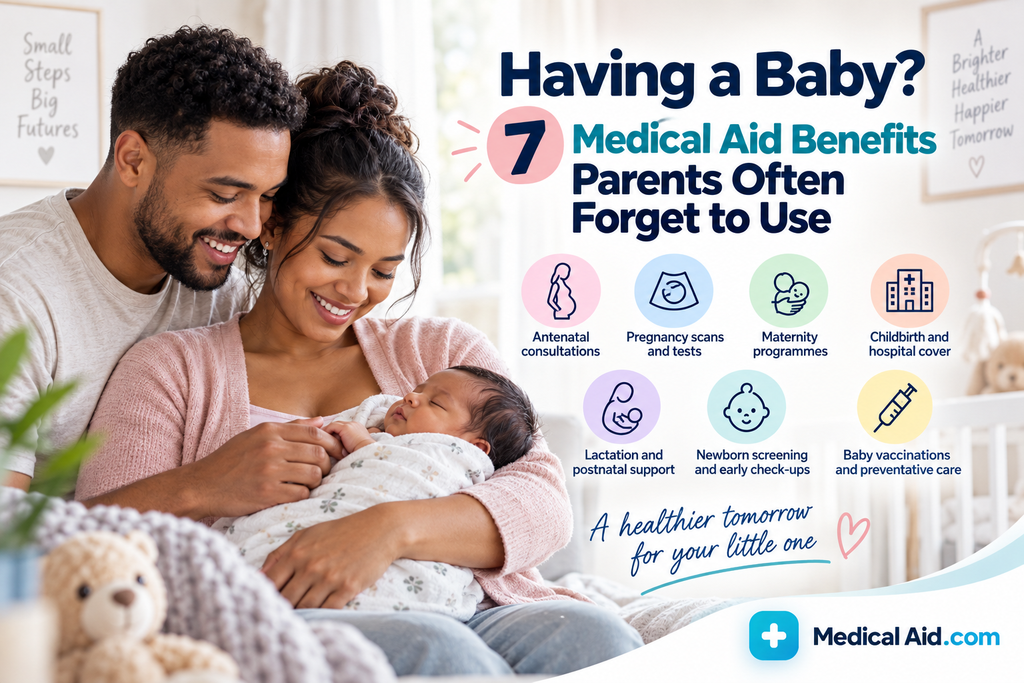
1. Antenatal Consultations
Regular antenatal check-ups are an important part of monitoring the health of both mother and baby.
Depending on your medical aid plan, some antenatal consultations with a GP, midwife or gynaecologist may be covered through a maternity benefit rather than your normal day-to-day benefits.
There may be limits on the number of consultations covered, and some schemes require you to use healthcare providers within their network.
Ask your medical aid exactly how many consultations are included and whether you need to register your pregnancy before accessing the benefit.
2. Pregnancy Scans and Blood Tests
Ultrasounds are often one of the highlights of pregnancy, but they also play an important medical role in monitoring your baby’s development.
Some maternity benefits include specified ultrasound scans as well as certain routine blood tests.
Depending on your plan, tests may include blood group and Rh testing, haemoglobin levels and other pregnancy-related screening. More specialised tests may not automatically be covered.
Before having additional scans or tests, check whether your medical aid requires a referral or pre-authorisation.
3. Maternity Programmes
One benefit that’s particularly easy to overlook is the maternity programme offered by some medical aid schemes.
These programmes can provide pregnancy-related information and support throughout the different stages of pregnancy. Depending on the scheme, members may have access to educational resources, advice from healthcare professionals and additional maternity benefits.
Registration isn’t necessarily automatic.
Once your pregnancy has been confirmed, contact your scheme and ask whether you need to register for its maternity programme.
4. Childbirth and Hospital Benefits
Whether you’re planning a vaginal delivery or Caesarean section, it’s important to understand your hospital benefits well before your due date.
Your medical aid may cover the hospital admission, but that doesn’t necessarily mean every account will be paid in full.
The hospital, gynaecologist, anaesthetist and paediatrician can submit separate accounts, and specialists may charge more than your scheme’s tariff.
Check your hospital network, obtain pre-authorisation and ask how your medical aid will cover the different healthcare providers involved in the birth.
5. Lactation and Postnatal Support
Going home with a newborn can bring an entirely new set of questions.
Some medical aid maternity programmes provide postnatal support, which may include access to nurses, midwives or lactation advice. Certain plans may also contribute towards consultations with a lactation specialist.
These benefits can be particularly useful if you’re struggling with breastfeeding or adjusting during the first few weeks after birth.
Don’t assume the benefit isn’t available. Ask your scheme what postnatal services are included.
6. Newborn Screening and Early Check-ups
Your baby’s first medical checks start almost immediately.
Depending on your medical aid and plan, newborn benefits may include certain screenings, paediatric consultations or follow-up checks.
One important administrative task is adding your baby to your medical aid within the scheme’s required timeframe.
According to medicalaid.com, this is something parents should understand before going into hospital.
“Ask your medical aid before the birth exactly how and when your baby must be registered. You don’t want to be trying to understand the rules for newborn cover while you’re dealing with hospital accounts and looking after a new baby.”
Have the required documents ready and confirm the registration requirements with your scheme.
7. Baby Vaccinations and Preventative Care
The medical expenses don’t stop once you leave hospital.
Your baby will need vaccinations and routine healthcare as they grow. Some medical aid options provide preventative-care benefits that cover specified vaccinations or childhood health checks, subject to the scheme’s rules and benefit limits.
Find out whether vaccinations are paid from a separate preventative benefit, your medical savings account or normal day-to-day benefits.
Check Your Benefits Before Baby Arrives
Every medical aid plan works differently. Two people belonging to the same medical aid scheme can have very different maternity benefits because they’re on different options.
Ideally, contact your scheme early in the pregnancy and ask for a detailed breakdown of your maternity and newborn benefits.
As Schoeman explains, “The important thing isn’t simply having medical aid. It’s understanding what your particular plan will pay for, what you need to register for and where you could still face out-of-pocket costs.”
A few questions early in your pregnancy could help you avoid unexpected bills later – and make sure you’re actually using the benefits you’re already paying for.
Adriaan Schoeman is from MedicalAid.com, a South African medical aid comparison website that helps consumers compare medical aid options and understand their healthcare cover.

- Having a Baby? 7 Medical Aid Benefits Parents Often Forget to Use - October 2, 2026
- What Parents Should Know About Medical Aid and ADHD Cover - June 9, 2026
- Alternative to Medical Aid for Parents - December 5, 2025