leading expert advice from Impaq
Impaq

School Placement Pressures Spark Growing Interest in Home and Online Education

With the 2026 school placement season now underway, many South African parents are once again faced with tough decisions about their child’s education journey. While traditional mainstream schools remain the preferred option for many families, the rising pressure around placement timelines has opened the door for serious consideration of alternative models – especially home and online education. Online applications for Grade 1 and Grade 8 placements opened on 24 July 2025 and will close on 29 August 2025. In areas with high population growth and limited school infrastructure, competition for space in public schools continues to intensify. At the same time, independent schools often operate at full capacity or come with higher costs, leading families to explore other accredited options. “Families want reassurance that their children will have access to quality education – whether that’s in a traditional classroom or at home,” says Louise Schoonwinkel, Managing Director at Optimi Schoolinge of which Impaq is a registered trademark. “We’ve seen a noticeable increase in early registrations and queries from parents who are planning ahead and considering distance education as a long-term solution.” Impaq is South Africa’s largest provider of structured home and online education, supporting over 30,000 learners each year. Learners who enrol with Impaq follow the national CAPS curriculum and complete assessments through SACAI, one of three Umalusi-accredited assessment bodies for the Further Education and Training (FET) phase, which covers Grades 10 to 12. “Distance education is fully recognised in South Africa. Learners who complete their National Senior Certificate (NSC) through Impaq do so under the same curriculum and quality standards as their peers in public and independent schools,” Schoonwinkel explains. A key benefit of the model is flexibility. Learners can study from home, on the road, or even while managing other responsibilities – something that is increasingly important for families navigating unique schedules or health needs. Impaq’s offering includes self-paced learning, live online classes, tutor support, and interactive learning materials across all grades. “We often hear from parents that they initially considered distance education as a short-term option,” Schoonwinkel says. “But once they experience the structure, support, and flexibility, many choose to remain with us right through to matric.” As more parents become aware of these pathways, Schoonwinkel encourages them to start exploring early. “The sooner you plan, the more options you’ll have. Don’t wait until placement lists are full. Whether you choose a public school, an independent school, or a distance education model, understanding the requirements and timelines helps you make an informed choice.” Impaq also offers guidance to families transitioning from traditional schooling to distance learning. From registration to resource delivery and ongoing support, the platform is designed to remove complexity for parents while keeping learners motivated and on track. “Education today is not about one-size-fits-all,” Schoonwinkel adds. “What matters is choosing a path that supports your child’s growth, goals, and wellbeing. For many families, that path is now home or online education.” Registrations for the 2026 academic year at Impaq open in September 2025. To learn more about the programmes and support services available, visit www.impaq.co.za. 

Impaq

Homeschooling as a Lifeline

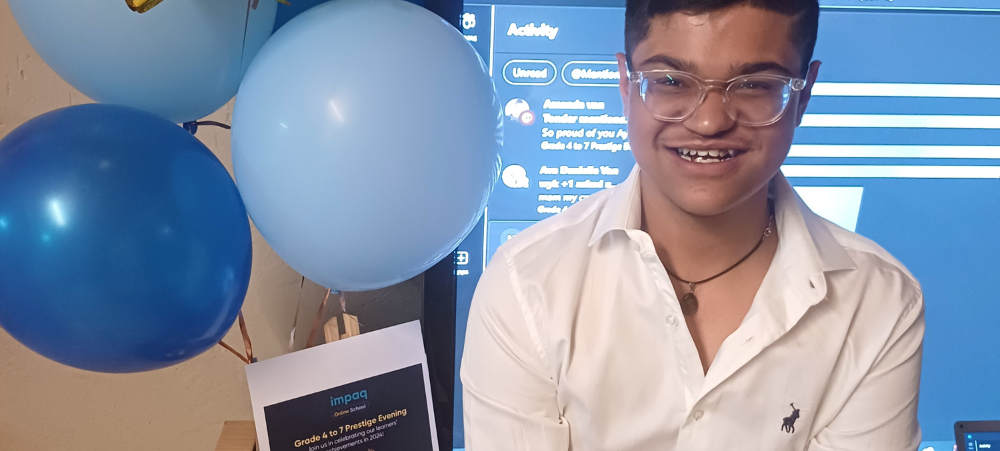
Education is fundamental to a child’s development, but for learners with medical challenges, traditional schooling can present significant barriers. The rigid structure of conventional schools often cannot accommodate the complex needs of children who require medical equipment, frequent treatments, or extended recovery periods. For Ayaan Bhoopal, a 15-year-old Grade 8 learner from Buccleuch with a compromised immune system and complex heart and lung conditions, traditional schooling simply could not accommodate his needs. Instead, homeschooling emerged as a practical solution. Ayaan is living with Tricuspid Atresia Type 2C and Pulmonary Vein Stenosis and has endured six open-heart surgeries, requiring 24-hour oxygen support and ongoing medical care. Since the global Covid-19 pandemic, and in response to escalating health challenges, Ayaan transitioned from traditional education to homeschooling, and later to a full online programme with Impaq Online School, learning from home in a structured, CAPS-aligned environment supported by a team of dedicated teachers. “Homeschooling gave Ayaan a sense of purpose and motivation,” his mother, Seshma, shares. “It allowed him to continue learning while managing his health safely and flexibly. His online classroom is a space where he feels seen, supported, and inspired.” A Learning Model That Adapts to Medical Realities For learners like Ayaan, flexibility in his daily or weekly routine is essential. Ayaan’s day-to-day life includes managing a home oxygen concentrator, saturation monitor, medication, and therapies. His learning environment must therefore adapt accordingly. The online format allows his family to structure lessons around medical appointments, rest, and therapy, without losing academic momentum. “The structure and support from Impaq have been phenomenal,” says Seshma. “Even when Ayaan was in ICU last year, he tried to log in for classes whenever possible. His teachers showed incredible empathy and adaptability, modifying content to help him stay on track without pressure.” Beyond academics, Ayaan’s learning experience has been holistic and joyful. Impaq Online School incorporates co-curricular activities such as Art Exhibitions, Talent Shows, Friday Dress-Up Days, Prestige Evenings, and E-sports Gaming, allowing learners like Ayaan to feel included, creative, and connected. He also benefits emotionally from having his support dog with him during lessons, helping him maintain calm, focus, and emotional well-being throughout the day. The Challenges and Commitments of Homeschooling Homeschooling has not come without its challenges. The model requires a high level of self-discipline, structure, and support at home. But Ayaan’s determination, combined with his family’s commitment and Impaq’s responsive academic team, makes this system work. “Ayaan is a self-disciplined learner,” his mother says. “He follows the CAPS curriculum closely, sets his own goals, and shows pride in his progress. Impaq has helped make this a lifestyle that suits him, removing unnecessary social pressures while keeping him academically engaged.” A System That Listens, Supports, and Encourages Impaq’s success lies not only in the digital infrastructure and curriculum but in the quality of its teacher and learner support systems. According to Seshma, communication with the teaching and support team is open and encouraging, and feedback is meaningful. “Every small achievement is acknowledged,” she explains. “Teachers know their learners, offer encouragement, and adapt where necessary. It’s not just about marks, it’s about perseverance, and Impaq understands that.” Even during one of Ayaan’s most medically difficult years, he remained connected to his schoolwork, driven by a strong desire to keep learning. His teachers provided flexibility without compromise, adjusting expectations while maintaining quality. This balance allowed Ayaan to feel part of something bigger, despite the isolation that can come with severe medical conditions. “Ayaan’s education is not just about academic progress,” says Seshma. “It’s about empowerment, identity, and being part of a community that values his contribution, no matter his limitations.”

Impaq

Why Homeschooling Could Be the Ultimate Family Bonding Experience

When parents think about home and online schooling, the first thing that often comes to mind is academics: lesson plans, assessments, and schedules. But what’s often overlooked is one of its most powerful and lasting outcomes: the opportunity to strengthen family bonds through shared learning experiences. In an age of increasingly busy routines, tight schedules, and time spent apart, home and online schooling offers families something invaluable – the chance to grow and learn together. At Impaq, we’ve seen firsthand how the homeschooling journey becomes a way for families to reconnect, collaborate, and support one another in meaningful ways. Learning Together, Growing Together Unlike traditional schooling, where parents and children spend most of the day apart, home and online schooling allows families to take a more active role in one another’s daily lives. Parents now also become facilitators, mentors, and motivators. This creates space for meaningful conversations, collaborative problem-solving, and mutual support. “Homeschooling isn’t just about working through a syllabus at home,” says Louise Schoonwinkel, Managing Director at Optimi Schooling, of which Impaq is a registered trademark. “It’s about learning as a unit – celebrating progress, overcoming challenges together, and creating a shared educational journey that brings families closer.” A great example of this is Inge Thompson, a mother of three who is currently completing her Visual Arts course through Impaq’s homeschooling programme. Having returned to formal education later in life, Inge’s story is a reminder that learning doesn’t end after school, and that the home schooling model allows individuals and families to embrace lifelong learning together. “For these three years, I’ve told myself I just want to learn as much as I can and get this input for myself. It’s an enriching experience, and I want to give it my best,” says Inge. A Flexible Model That Adapts to Your Life Every family is different. That’s why flexibility in learning is so important. With Impaq’s structured curriculum, families can maintain academic progress while still creating space for real-life learning and everyday experiences. Whether it’s exploring nature, working on a science experiment in the kitchen, or reading together as a group, families can turn ordinary moments into valuable educational opportunities. “Our curriculum is designed to provide structure and guidance while giving families the flexibility to make learning personal and relevant,” says Schoonwinkel.  Even for adults returning to learning, this structure provides focus and momentum. Inge shares how the Impaq curriculum has helped her stay on track, “Impaq’s curriculum is really well set up. Even as a mom of three and an entrepreneur, the structure and deadlines help me stay focused and finish what I start – something I’ve struggled with in the past.” Support Every Step of the Way We understand that starting a home or online schooling journey can feel overwhelming, especially for families new to the experience. That’s why Impaq provides ongoing support, from subject specialists and tutors to easy-to-use online platforms and tools. This allows parents to focus on what matters most – supporting their children and creating a positive learning environment at home. “What makes home and online schooling work is not just the curriculum, but the confidence parents feel when they know they’re not doing it alone,” adds Schoonwinkel. “We walk the path with families, providing the structure and the support they need to succeed.” For learners like Inge, this support has been crucial. “I’m not just learning how to create a pretty picture – I’m learning to make art with meaning. That’s the real value of this journey.”

Impaq

Autism Awareness Month: Autism Spectrum Disorder and the Need for Effective School Alternatives

Autism spectrum disorder. It’s a complex topic, to say the least, and one that presents countless challenges to the parents, caregivers and teachers of affected children. While designated days like World Autism Awareness Day in April is an important part of creating awareness about autism, the challenges remain plentiful. Not least among the challenges is finding a suitable school for the child on the spectrum. The reality for many hundreds of children on the spectrum is that they simply have to cope in a mainstream environment, due to the lack of options. One alternative in this regard is home and online learning as it provides structured, curriculum-aligned education that can simply and effectively be tailored to meet the individual needs of the learner in question.  Education today is about putting the needs of the learner first, which starts with the acknowledgement that the days of a one-size-fits-all approach are both outdated and simply no longer necessary. Alternative options, like homeschooling, bear exploring if we are serious about ensuring our children get a relevant education, while taking the needs of the learner and his/her family into consideration.  A common concern for parents considering homeschooling is whether their child will miss out on social experiences. The reality is that home and online schooled learners often have more flexibility to engage in activities outside of a school setting. Joining homeschooling groups, sports clubs, or online communities can help learners build strong social connections.  For families with children involved in sports, music, or other demanding activities, home and online schooling provides the flexibility to balance education with personal passions. It also allows for real-life learning experiences that bring lessons to life in ways that textbooks cannot. Importantly, homeschooling does not mean children need to be formally educated by their parents. Parents, or caregivers, play a supporting role in homeschooling, and do not need to take on the role of teacher.  One of the biggest challenges in traditional schooling is that every child is expected to learn at the same speed. Some children grasp concepts quickly and feel unchallenged, while others need more time and may fall behind. Homeschooling removes these pressures, allowing learners to master subjects at their own pace. This creates a deeper understanding of the material and fosters a love for learning, rather than just studying to pass exams. Unlike in a traditional school where subject choices can be limited by resources, home and online schooling offers learners more flexibility to explore their interests. Whether it’s advanced mathematics, coding, creative arts, or entrepreneurship, learners have the freedom to shape their education in a way that aligns with their future aspirations. This personalised approach makes learning more meaningful and engaging. Ultimately, parents know what’s best for their child. If homeschooling aligns with your family’s needs, trust your decision and embrace the flexibility, quality, and opportunity it offers. By Louise Schoonwinkel, MD at Optimi Schooling of which Impaq is a registered trademark

Impaq

Bela Bill: What it means for parents and how Impaq stays unshaken by the shift

The Basic Education Laws Amendment (BELA) Bill stays a hot topic for South African parents. But more so for those who homeschool their children. With its recent progress through Parliament, parents are asking: What does this mean for homeschooling? How will it affect my child’s education? Impaq stands firm in guiding parents and learners through this evolving landscape. So, let’s dive into what you need to know and how we’re staying ahead of the shift. Home education is here to stay Homeschooling is still a legal and valid alternative to traditional schooling. Despite concerns, the BELA Bill does not change this right. However, it does reinforce a few registration requirements for homeschooled learners. Parents of learners in Grades 1 to 9 must now register their children with their Provincial Department of Education. Although this rule has existed for years, the government now strongly emphasises it. While this may seem like an extra step, registration ensures: Curriculum and assessments: what stays the same? The biggest concern about the BELA Bill is the department’s oversight of home education curriculums. This regulation is not new. South Africa’s national curriculum (CAPS) has always provided a clear learning framework for schools and parents. Parents still have the freedom to structure their child’s education if their curriculum aligns with CAPs. Impaq ensures that all learning materials and assessments exceed these benchmarks, giving parents peace of mind. The BELA Bill also confirms that FET learners (Grades 10–12) must register with a credible assessment body to earn their National Senior Certificate (NSC). Impaq learners are registered with SACAI, a Umalusi-accredited body. This ensures their qualifications stay credible, both nationally and internationally. The role of tutors and support systems The BELA Bill also clarifies the role of tutors. While tutors stay an important support system for homeschooling families, they cannot function as independent schools. They must not present themselves as institutions or independently issue report cards. Impaq ensures tutors work with parents. The goal is to ease learning rather than replace the home-educating parent. The Optimi Learning Portal (OLP) stays the digital platform that helps parents in many ways. It allows parents to keep the learning journey structured and compliant by allowing them to: How Impaq stays unshaken While the BELA Bill introduces procedural changes, Impaq has been running within these guidelines for years. Our structured homeschooling approach ensures that learners: We empower parents and learners by removing obstacles rather than creating them. That’s why we continue to streamline the registration process, provide clear guidance, and ensure our resources meet all legal and quality assurance requirements. What should parents do now? If you are currently homeschooling—or considering it—here’s how you can stay ahead: The future of home education Change can be unsettling, but home education stays a thriving and credible choice with the right information and support. Impaq is still committed to walking this journey with parents, ensuring that learners receive a high-quality education that is recognized and respected. The BELA Bill is not the end of homeschooling—it’s another chapter in its evolution. With Impaq by your side, you can confidently move forward, knowing your child’s education is in good hands.

Impaq

Making the Switch: A Practical Guide to Home & Online Schooling An Alternative to Education

Every year, thousands of parents face uncertainty when it comes to school placements. With limited space in schools, many families find themselves in limbo, waiting for a placement that may not align with their child’s needs.  The good news is that parents don’t have to compromise on their child’s education. Home and online learning offer a structured, high-quality alternative that ensures continuity in learning without the stress of waiting lists, overcrowded classrooms, or placement delays.  If you are considering this route, here’s a practical guide to transitioning from traditional schooling to homeschooling. 1. Understand the Reasons and Benefits of Homeschooling Before making the transition, it’s essential to understand why homeschooling might be the right choice for your family. Some of the key benefits include: 2. Choose the Right Curriculum The first step in homeschooling is selecting the right curriculum. This decision should align with your child’s learning needs, future aspirations, and local education regulations. Impaq offers a CAPS-aligned curriculum, ensuring that homeschooled learners remain on par with their peers in mainstream schools. 3. Set Up a Learning-Friendly Space A dedicated, quiet, and well-equipped learning space at home can help learners focus and stay engaged. Ensure the area has all necessary learning materials, including a computer, internet access, and stationery. 4. Establish Clear Routines and Boundaries One of the biggest adjustments when moving from a traditional school setting to homeschooling is defining a clear structure. Create a daily schedule that includes learning time, breaks, and extracurricular activities to maintain balance. 5. Maintain Social Interaction A common concern for parents considering homeschooling is whether their child will miss out on social experiences. The reality is that home and online schooled learners often have more flexibility to engage in activities outside of a school setting. Joining homeschooling groups, sports clubs, or online communities can help learners build strong social connections. 6. Monitor Progress and Adapt as Needed Assessing your child’s progress regularly is key to ensuring they stay on track. Whether through formal tests, projects, or discussions, keep track of their learning and adjust teaching methods where necessary. 7. Understand the Legal Requirements Parents must ensure they comply with local homeschooling regulations, including registering their child as a homeschooler where required. 8. Prepare for Challenges Like any change, transitioning to homeschooling comes with its challenges. It may take time to find the right rhythm, and learners may initially resist the change. However, with patience, support, and access to experienced subject specialists, homeschooling can become an effective and rewarding education model. 9. Foster Independence in Learning Homeschooling encourages learners to take responsibility for their own education. Encourage self-directed projects and independent learning to help build confidence and a love for learning. 10. Trust the Process Ultimately, parents know what’s best for their child. If homeschooling aligns with your family’s needs, trust your decision and embrace the flexibility, quality, and opportunity it offers. Education Without Compromise With school placements remaining a challenge, home and online schooling presents a viable and structured alternative. No child should have to put their education on hold while waiting for a placement. By making the switch, parents can ensure that their child receives a consistent, high-quality education tailored to their needs. The choice is clear – education should work for the learner, not the other way around.  #EducationTheWayYouWantIt

Advice from the experts
DIBBER SA

Understanding Attention Levels in the Early Stages of Childhood

Parents often worry when a toddler doesn’t listen or seems distracted. Dibber International Preschools reminds families that attention and listening skills develop gradually, and that what appears to be inattention is often a normal part of early childhood development. “Attention is not something children either have or don’t have, it’s a skill that grows with time, practice and the right environment,” says Ursula Assis, Country Director at Dibber International Preschools South Africa. “When adults understand what attention looks like at different ages, they can respond with more patience and less pressure, and children feel safer and more capable.” Attention is a child’s ability to focus on an activity, sound, object, or instruction for a period. In the early years, attention and listening form the foundation for everyday learning – from following simple instructions and taking turns, to participating in play and engaging in classroom routines. At Dibber, educators see attention as part of holistic development, supported by a stable rhythm, calm transitions, language-rich interactions, and play-based learning. 0–12 months: brief focus and quick shifts Babies are learning to process the world for the first time. Their attention is naturally short and easily redirected by a new sound, bright object, or familiar voice. They may quieten, turn towards a caregiver’s voice, or track movement, but not for long. Dibber encourages caregivers and parents to support this stage with calm, close connections, slow speech, expressive facial cues, and quieter spaces where babies can notice sounds without feeling too overwhelmed. For families in busy homes, even small changes can make a difference. This is called 60-second quiet rituals – micro-habits that are simple to try each day. For example, try turning down the television or music for just one minute, setting aside a single minute for quiet play or reading in a cosy spot, or creating a brief routine where you connect without background distractions. These quick and intentional pauses help babies notice sounds and faces, even when the environment is lively, making it easy for parents to experiment and see what works for their family. 1–2 years: deep focus on what matters to them Toddlers often become intensely absorbed in play and may not respond immediately when called. This is not defiance, it’s concentration. At this age, switching attention between activities can be difficult. “Calling a child’s name, pausing, and waiting for eye contact before giving instructions can make a remarkable difference,” says Assis. “This small habit helps children learn how to shift their focus without feeling rushed.” 2–3 years: growing flexibility and early listening routines As toddlers approach three, they begin to show more flexibility – they can pause play, listen briefly, and return to what they were doing. However, they still struggle to hold multiple instructions in mind at once. Simple, single-step instructions work best, especially when paired with actions, routines, or visual cues. Songs, short stories, and listening games can also strengthen attention in gentle, enjoyable ways. 3+ years: stronger focus and decision-making From age three onwards, children typically become more able to sustain attention and follow brief instructions, even with some distractions around them. They also start making small decisions about where to direct their attention, which supports independence and confidence. There will still be moments that require reminders, but encouragement and positive reinforcement support growth far more effectively than repeated correction. “At Dibber, the message to parents is reassuring,” Assis adds. “Every child develops at their own pace. With warmth, consistency, and supportive environments, children learn to focus, listen, and engage with the world with growing confidence.” To learn more about Dibber’s play-based approach and family support, visit www.dibber.co.za.

Playstation by Rush

March/April Holiday Fun: Safe and Stimulating Activities for Young Explorers

As the South African autumn settles in and the first term of 2026 draws to a close, parents across the Western Cape asking the same question! “How am i going to entertain my kids this year?” With the official 2026 school calendar scheduling the break from 27 March to 8 April, the window for adventure is perfectly timed for young explorers. At PlayStation by Rush in Kirstenhof, we’ve designed a world where safety meets stimulation, offering the premier destination for indoor activities 2–9 yrs. Why Structured Indoor Play Is Vital For Development  For toddlers and foundation-phase learners, play is a full-time job. It is the primary way they process the world around them. According to the Thrive by Five Index, a leading South African study on preschool outcomes, only about 45% of children in early learning programmes are meeting the expected standards for their age. This highlights a critical need for environments that support gross motor development and executive function outside the classroom. Choosing the right toddler play venues isn’t just about burning off energy; it’s about providing a “metaphoric multivitamin” for the brain. Structured indoor environments allow children to test their physical limits-like climbing, sliding, and balancing- in a space where “falling” is just part of the learning process  Imaginative Play Activities: More Than Just “Make-Believe” At PlayStation by Rush, we believe that a cardboard box can be a spaceship, and our high-line course can be a mountain peak. These imaginative play activities are essential for building cognitive flexibility. When a child engages in role-play, they aren’t just “pretending”; they are practicing social scripts, developing empathy, and sharpening their language skills. The Adventure Maze: A Masterclass in Problem Solving Our custom-built Adventure Maze—the largest of its kind in South Africa—is designed specifically to challenge the “little person” logic. As children navigate swing bridges and hidden tunnels, they are working on spatial awareness and sequencing. “How do I get to the yellow slide from here?” is a complex engineering problem for a four-year-old. By solving it, they build the confidence needed for more formal academic challenges later in life. Stress-Free Parenting During the School Holidays We know that for many South African parents, the school holidays don’t always mean a break from work. While the kids are off enjoying the holidays, the “real world” for parents keeps spinning. Most parents in SA do not get time off when school holidays are in play. This is why we have prioritised a “Play like it should be” philosophy that includes the grown-ups too. Secure Your Spot for the March/April Break The upcoming holiday period, including the Easter long weekend (3–6 April), is one of our busiest times of the year. To ensure a high-quality experience for every child, we limit our intake to avoid overcrowding. This means our peak slots fill up fast! Don’t let the school holidays catch you off guard. Whether you’re looking for a single-hour session or a full morning of adventure, we recommend booking your tickets in advance. Ready to give your young explorer an unforgettable holiday? View our holiday specials and book your playtime today! CTA: Book Stimulating Activities For Toddlers today

Educ8 SA

How Educ8 SA Supports Diverse Learning Styles

No two students learn the same way. Some thrive on visual learning, others on reading, and some on interactive exercises. Educ8 SA recognises these differences and provides online programs that accommodate diverse learning styles. Interactive, Computer-Based Learning The platform features: By offering multiple ways to learn, Educ8 SA ensures students of all abilities can grasp concepts effectively. Programs for Every Learner These programs allow students to engage in learning that suits their preferred style, improving retention and overall academic performance. Flexibility Enhances Learning The self-paced structure means learners can take the time they need on challenging topics or accelerate through subjects they find easy. This reduces stress and helps maintain motivation. Getting Started Enrol your child in a program that supports their learning style: With Educ8 SA, education adapts to your child—not the other way around.

Impaq

Why the Foundation Phase matters more than most parents realise, and how to support learning at home

Recent literacy findings have reignited a national concern: too many learners reach the Intermediate Phase without the reading skills they need to cope with the curriculum. The PIRLS 2021 results found that 81% of South African Grade 4 learners could not read for meaning in any language. The Department of Basic Education has echoed this urgency in its own reporting, noting that learners who cannot read with meaning “will struggle in every other subject” and referencing evidence that 8 in 10 children cannot read for meaning by Grade 4. For homeschooling parents and families, it helps to choose a provider like Impaq that supports you through the early grades with a clear CAPS-aligned plan, structured materials, regular assessments, and accessible guidance, so you’re not left to figure it out alone.  The Foundation Phase (Grade R – Gr 3) built at home, day by day, using the resources and routines you choose, is where the core building blocks are formed: listening and comprehension, vocabulary, phonics, handwriting, early numeracy, attention and learning habits. When these foundations are not secure, gaps tend to compound from Grade 4 onwards, because the learner must suddenly “read to learn” across every subject. “Foundation Phase is not a soft start, in fact, it’s the platform everything else stands on,” says Louise Schoonwinkel, Managing Director at Optimi Schooling of which Impaq is a registered trademark. “If reading and basic numeracy aren’t solid by the end of Grade 3, children often spend the rest of their schooling trying to catch up while the curriculum keeps moving.” Free resources help, but structure is what makes them work There is no shortage of material online. Parents can find worksheets, videos, printable readers, and even DBE resources such as CAPS documentation and Rainbow Workbooks, which provide weekly worksheets aligned to CAPS. These tools can be extremely valuable, especially for extra practice. However, the challenge is that “more” does not automatically mean “better.” Without a clear weekly plan, a progression of skills, and assessment checkpoints, families may end up with scattered activities that don’t build mastery. That matters most in the early grades, where learning depends on sequence: sounds before words, words before sentences, sentences before comprehension. “Parents need confidence that the material follows the right order, covers what it must, and gives them a clear way to track progress. In the early years, the sequence matters as much as the content,” Schoonwinkel says. A quick checklist: what your home materials should include Your programme should include these essentials, and by year-end your child should show these outcomes: When these elements are missing, families often only discover problems later, when the curriculum demands increase and the learner feels behind. “Children don’t fall behind in Grade 10, they usually fall behind in Grade 1 to Grade 3,” Schoonwinkel adds. “That’s why the Foundation Phase deserves the most deliberate attention from parents and providers.” What Impaq offers for Grades R–3 For families who want a structured home-learning option in the early grades, Impaq provides CAPS-aligned lesson material and assessments, clear weekly planning, and support that helps parents teach with confidence. In the Foundation Phase, families also have access to weekly live, interactive sessions and recorded support lessons (used as additional reinforcement for homeschool learners), as well as progress tracking and report information through the learning platform. Teacher guidance is available so parents don’t feel they are navigating the early years alone. “In the Foundation Phase, parents shouldn’t have to guess what comes next,” says Schoonwinkel. “The right support gives you a clear plan, quality resources, and the reassurance that your child is building the literacy and numeracy foundations needed for the years ahead.” Note for parents choosing home education: DBE (provincial) registration is required for homeschoolers in Grades R–9.

be.UP Park

Rediscover Play: March Holiday Fun at be.UP Park

The first term of 2026 has been a marathon of lunchboxes and early mornings, but the break is finally here! While the kids rev up with excitement, parents often feel a sense of “holiday burnout,” wondering how they will find the right school holiday activities to keep everyone engaged. The mental load is heavy. However, as the March holidays approach, there is a shift in the air. We don’t just need a break from school; we need a break from the consistent “no.” No, don’t jump on the couch. No more screen time. No, stay inside. At be.UP Park, we strive to create a space for “yes”—where a family adventure replaces discipline with discovery. We want parents to feel that same sense of confidence and calm that their children find through movement. Read on to see how you can take your kids on a family adventure this holiday. The Hero’s Journey: Discover Shared Bravery  In every great adventure, the hero must leave their “ordinary world” to find their strength. At be.UP, that journey is built into the very architecture of our park. When you watch your child stand at the edge of the zipline, nervously shuffling toward the drop, you are witnessing a transformation. In that moment, they move from fearful and hesitant to the realisation that they can accomplish something that once scared them. As a parent, you are not just a spectator; you are the Mentor. You are the safe guide who allows them to test their limits so they can eventually fly. Consider the impact of your role: This is the heart of March holiday fun: the bridge of trust, connection, and pure joy built between you and your child. The Science Of Play  So why is physical activity, like our March holiday fun, so much better than screen time? Rather than spending the break tethered to a screen, engaging in a family adventure helps your child’s development in the long run. According to the Child Mind Institute, physical play is a primary driver for developing executive function and emotional regulation. When children engage in the “heavy work” of navigating a giant maze or the weightlessness of a trampoline, their brains release a powerful cocktail of endorphins and dopamine. This leads to what we call the “Post-Play Glow,” where: By choosing a high-quality kids holiday program or an active afternoon out, you are investing in your family’s well-being. A Sanctuary for the “Quiet Hero”  But don’t worry, we haven’t forgotten about you, the hero behind the scenes. Every explorer needs a base camp, and the be.UP Café is yours. While the kids are busy conquering peaks and navigating labyrinths, you can decompress in your base camp. At Be.UP Cafe thats why we’ve designed a space where you can transition from “Chaos Manager” to “Quiet Observer.” Find our Menu for some fuel while the kids refuel  Capture The Light Before the New Terms Starts  The 2026 school calendar is short, and the autumn sun will dip lower before we know it. Public schools close on 27 March and reopen on 8 April, with Human Rights Day and the Easter weekend falling right in the mix. These moments of connection are the ones that stick—the stories they will tell at the dinner table aren’t about the levels they reached in a game, but the time they raced you down the slide. Don’t let these holidays slip away into a blur of domestic chores and screen time. Choose a family adventure that leaves you with more than just a receipt; leave with a core memory of triumph and a family that feels truly connected. Your family adventure is waiting, and our sessions fill up faster than a kid down on a zip line. Check our holiday hours and gift your family a day of “Yes” by booking your session here.

Dalza

Medication, Supplements & Big Decisions: Moving from Anecdotes to Evidence – What to Consider for Your Neurodivergent Child

This article is adapted, with permission, from content originally published by Tamra and Jules, co-founders of The Neuroverse (theneuroverse.co.za), two South African mums building a supportive neurodivergent community. How to observe what matters, share it responsibly, and build a balanced picture with your care team When families begin exploring medication or supplements for a neurodivergent child, the process can feel overwhelming. Opinions come from everywhere — WhatsApp groups, school gates, family chats, and social media. But big decisions shouldn’t rest on anecdotes alone. A calmer, more grounded approach is to gather real-world observations from home and school, understand what professionals look for, and share information in a way that protects your child’s privacy. 1. Know What Professionals Actually Look At Across ADHD, autism, anxiety, and sensory regulation differences, clinicians focus on patterns over time, not isolated moments. Common areas they monitor include: These are the kinds of signals paediatric and mental-health professionals typically use to understand whether a child is coping, struggling, or responding to an intervention. 2. Supplements & Nutrition: Helpful Context, Not a Standalone Answer Many families explore supplements or nutritional support alongside (or before) medication. These can influence energy, mood, and regulation — but they still require the same principle: track what changes, when, and how much. Nutrition can support regulation, but it doesn’t replace structured observation or professional guidance. 3. Build a Shared Picture with the School Teachers often see patterns parents don’t — focus during lessons, transitions, sensory overload moments, social fatigue, appetite dips. A balanced view comes from combining home and school signals.Dalza makes this easier: teachers, therapists, and co-parents can see the same context (with your permission), so you’re not rewriting the same story in every meeting. 4. Log First, Decide Later Before making any decision — medication, supplements, or both — capture one to two weeks of simple notes: Dalza keeps these logs, reports, and observations in one secure place, so you’re not piecing things together from memory or multiple apps. 5. Share Only with the Right People Medication and supplement decisions are sensitive. Dalza’s parent-controlled sharing means you choose exactly who sees what — your paediatrician, therapist, teacher, or no one at all. Big decisions feel less daunting when they’re based on patterns, not pressure.With clear logs, shared context, and a connected care team, you can move forward with confidence — whatever path you choose for your child. Dalza is free for 30 days, so you can try it out risk-free. To get started today, simply add your name and email here. 

Rush Extreme Sports

Beyond the Gym: Discover the High-Flying Fitness Benefits of Trampolining

For many South African teenagers, the word “exercise” often conjures images of fluorescent lights and the repetitive hum of a treadmill. While staying active is a top priority, the traditional gym environment doesn’t always ignite the spark of excitement that young adults crave. At Rush South Africa, we are redefining what it means to get fit. Through high-energy play, we offer a vibrant, social, and incredibly effective alternative to the standard workout—one where “takkies” are optional, but fun is guaranteed. A Fresh Perspective on Fitness: Why Movement Should Feel Like Play The teenage years are a critical time for developing a lifelong relationship with physical health. Unfortunately, when exercise feels like a chore or a high-pressure performance—a phenomenon often called “gymtimidation”-it’s easy to lose motivation. In our busy cities like Johannesburg and Cape Town, teens spend hours navigating “robots” on the way to school and sitting at desks. By the time the afternoon rolls around, the last thing the brain wants is more rigid structure. This is where high-energy recreation changes the game. Trampolining removes the “work” from working out by tapping into a natural, instinctive joy. Teen fitness trends 2026 show a massive shift toward “social wellness” and “JOMO” (the Joy of Missing Out) on stressful gym culture in favour of movement that resets the nervous system. Instead of counting down the minutes on a stationary bike, jumpers at Rush are too busy mastering a new tuck-jump or competing in a friendly game of dodgeball to notice they are getting a full-body workout. The Science of the Bounce: NASA-Proven Efficiency It might look like simple fun, but every bounce is a powerhouse for the body. In a landmark study, NASA researchers discovered that “rebounding” is actually the most efficient and effective form of exercise yet devised. They found that for similar levels of heart rate and oxygen uptake, the biomechanical stimuli (the actual work your muscles and bones do) is significantly greater on a trampoline than on a treadmill. Choosing high-energy play over a standard gym circuit offers several unique, science-backed benefits: Master the Air: Elevate Your Skills with Professional Training While the freedom of a freestyle jump is liberating, many teens find they want to take their “flips” to the next level. This is where the transition from recreation to formal training begins. Unlike a gym, where the end goal is often purely aesthetic, our park activities build functional “agility” and “air awareness.” For those looking to turn their weekend energy into a disciplined craft, we offer specialized gymnastics training in Cape Town.  These one on one  ‘flip out’ classes aren’t just about looking “cool” in a Reel; they are about building the cognitive focus, core stability, and discipline required for competitive sport. By mastering technical maneuvers in a safe, foam-padded environment, build a sense of physical competence that translates into psychological confidence. You can explore our structured programs and sign up for a trial session on our Rush Classes page. Jump Into Action: Secure Your March 2026 School Holiday Spot The school year moves fast. According to the official Department of Basic Education 2026 School Calendar, Term 1 is set to conclude on 27 March 2026. This marks the perfect window to break the cycle of academic stress and sedentary habits. Instead of spending the holidays behind a desk or a gaming console, why not master the art of flight? Our holiday passes and special event nights are designed to keep the energy high and the boredom low. For the truly ambitious jumpers who want to mirror the stamina of a pro cyclist, we offer Rush Unlimited,  a promotion is designed specifically for active families who want more than just a quick jump. For just R215, kids can enjoy extended jump time on weekdays, giving them hours of social, screen-free fun.  Ready to fly? Don’t wait until the school holidays begin—our sessions fill up fast! Book your spot now at Rush South Africa and discover why the best way to get fit is to simply start jumping.

Wingu Academy

Personalised Learning That Puts Your Child First

Every learner is unique — and their education should reflect that. At Wingu Academy, personalised learning is not a buzzword; it is a carefully designed system led by Student Success Advisers (SAAs) who work closely with learners and families. SAAs create custom-made educational pathways based on each learner’s academic needs, learning style, pace, and long-term goals. This personalised approach allows learners to thrive without the pressure of one-size-fits-all schooling. Through ongoing monitoring, regular feedback, and structured guidance, SAAs ensure learners stay engaged, motivated, and supported throughout the year. This work is done in close collaboration with qualified human teachers who guide lessons, assess progress, and prepare learners for real exams and recognised academic outcomes. Parents gain peace of mind knowing there is a dedicated professional overseeing their child’s academic journey. Wingu’s personalised model also supports learners who are transitioning from traditional schooling, returning to education after disruption, or preparing for international opportunities. It is education designed around the learner — not the system.

DIBBER SA

Seven NASA-Inspired Activities That Make Space Real for Little Learners

Outer space has a unique way of capturing a child’s imagination – from glittering stars and distant planets to powerful rockets exploring the unknown. Dibber International Preschools encourage parents and caregivers to lean into that curiosity, using simple, hands-on activities that introduce early science concepts in ways young children can understand and enjoy. “Children are naturally wired for wonder,” says Ursula Assis, Country Director of Dibber International Preschools South Africa. “When we follow their curiosity and turn big ideas into playful experiences, we’re not only teaching them about space – but we’re also building confidence, problem-solving, language, and a love of learning that lasts.” At Dibber, we use play-based learning to make complex ideas approachable. Space-themed activities support key early learning areas such as fine motor development, collaboration, early maths and sequencing, and cause-and-effect thinking, all while keeping learning joyful and pressure-free. Seven easy, low-cost ideas help teach outer space to children using everyday materials and a spirit of exploration: 1. Build a balloon-powered rocket Using paper, tape, a straw and a balloon, children create a rocket that shoots forward when released. It’s a simple, exciting way to introduce early physics. This activity can elicit cause-and-effect, motion, curiosity, and experimentation. 2. Make planet masks Children choose a planet, decorate it using colours and textures, then become the planet through role-play. This blends creativity with early astronomy knowledge.This can build imagination, confidence, storytelling and most importantly, planet recognition. 3. Explore gravity with a rocket launch activity Through safe, simple demonstrations, such as launching lightweight objects or testing different launch methods. Children begin to grasp that rockets need energy to lift off.This creates observation, early science language and problem-solving in young children. 4. Play a solar system matching game Match planets to pictures, colours, rings, or simple clues. Turn it into a cooperative game with turn-taking and shared discovery.Activities such as this will help the little ones strengthen their memory, sequencing, and cognitive development. 5. Go on a space-themed scavenger hunt Hide stars, planets, astronaut symbols or space words around the home. Children hunt for clues while learning new vocabulary in motion, slowly building language, teamwork, and active learning. 6. Express space through art Invite children to draw galaxies, rockets, moons or imaginary planets. Ask questions about their artwork to deepen understanding and encourage communication. This will enhance their visual thinking, self-expression, creativity and imagination. 7. Learn with interactive space games Puzzles, mazes, and simple mission games help children practice logical thinking and focus while reinforcing spatial concepts and increasing concentration, reasoning, and persistence. Dibber’s approach to early education encourages children to explore big ideas through play, creativity, and gentle guidance. Space-themed learning becomes an opportunity to nurture curiosity, independence, and joy while supporting key foundational skills that help children thrive in later learning. All effort parents make, no matter how small, contributes to this journey and makes a meaningful difference in their child’s educational experience. “Space is a wonderful theme because it invites children to ask questions and imagine possibilities,” adds Ursula. “And when children learn that their questions matter, they develop the confidence to keep exploring – not only the universe, but the world around them

Educ8 SA

Preparing Your Child for Success With the Fundamental Pathway

The transition from basic foundational learning to more advanced subjects is a critical stage in education. Educ8 SA’s Fundamental Pathway supports learners from preschool through Grade 8, providing comprehensive, structured, and engaging online programs. What is the Fundamental Pathway? The Fundamental Pathway builds on foundational knowledge and prepares students for higher-level learning with a focus on: The program is offered at R1,800 per month, providing a comprehensive education that balances affordability with depth. Engaging, Computer-Based Curriculum Students interact with a dynamic online platform featuring: These tools keep learners motivated while promoting independent learning, critical thinking, and practical skills. Flexibility That Fits Your Family The Fundamental Pathway allows students to study at times that suit their schedules. Parents can easily integrate lessons into their family routine without the stress of rigid school timetables or commuting. Preparing Students for the Future By strengthening academic skills, fostering independence, and introducing technology-based learning, the Fundamental Pathway equips students for middle school, high school, and beyond. Students also gain digital literacy skills crucial for modern education and careers. Getting Started Enrol your child in the Fundamental Pathway today: The Fundamental Pathway ensures learners build confidence, competence, and curiosity—preparing them for long-term academic success.

Advtech Group

Turning Pages, Sparking Magic: Why Ages 10–12 Is the Make-or-Break Stage for Cultivating a Love of Reading

Children between ages 10 and 12 are at a fascinating stage of life. They’re no longer little kids, but they’re not yet teenagers. They’re starting to ask bigger questions, push boundaries, and search for who they are becoming. Amid all these changes, reading plays a powerful role, and schools and parents should strongly encourage students to build their reading muscle during this time, an education expert says. “In contrast to content on devices, books give children a safe space to explore new ideas, test out possibilities, and imagine life through someone else’s eyes. They also strengthen critical thinking, boost vocabulary, and build empathy – all skills that help pre-teens navigate school and friendships with more confidence,” says Nalani Singarum, Academic Advisor at ADvTECH Schools. “Most importantly, reading at this age lays the foundation for a lifelong habit. A child who enjoys books at ages 10 to 12 is far more likely to carry that love into their teenage years, when the pull of social media and other distractions becomes stronger,” she says. A 2024 study of children aged 10 to 12, by neuroscientists at Columbia University’s Teachers College, found that reading on paper promoted “deeper reading” with better comprehension and processing of complex texts. It was noted that this age group is pivotal for transitioning from “learning to read” to “reading to learn”, making physical books ideal for exploring ideas and imagining others’ perspectives without digital distractions. “Even where children at this age did not previously enjoy reading books, it is not too late to develop a regular and enjoyable reading habit,” says Singarum. “Regular reading during this key developmental period will support stronger understanding across subjects, better information absorption, and clearer expression of ideas throughout the child’s life.” Creating a Reading-Rich Home Pre-teens crave independence, yet they still look to their parents for cues. The best way to nurture reading at this age is to show that it’s valued at home – not as a school task, but as part of family life. Practical ways to create a reading-rich environment include: Bedtime shifts: Before bedtime, spend some time reading side by side. You each choose your own book, then share a favourite line or moment. It shows that reading is for everyone, not just a chore for children. (And no, reading on devices do not count).Reading in everyday life: Invite your child to read maps while travelling, menus at restaurants, or DIY instructions at home. These moments prove that reading has value beyond the classroom.Word of the day challenge: Let your child pick an unusual word from a book and challenge the family to use it naturally in conversation. Older children enjoy the playful competition and sense of mastery.Treasure hunts with riddles: Write riddles or codes your child must solve to find the next clue. Link some clues to favourite books for an extra spark.Peer power: Encourage your child to swap books with a friend or start a mini book club, to make reading become a social, not a solitary activity. The Role of Schools Beyond the curriculum, schools play a key role in creating an environment where reading is valued and enjoyable, which helps students build positive associations with books and learning.  “Schools offer social and collaborative opportunities that enhance reading motivation and enjoyment. By fostering a love of reading within a communal and supportive learning environment, schools complement and extend the encouragement children receive at home, making the development of reading habits more comprehensive and durable,” says Singarum.  She adds that it is valuable to have structured programmes, rather than just ad hoc reading opportunities. “At ADvTECH, we have a reading programme called Booktacular, which is specifically designed to make reading meaningful and magical again. Through activities like Book Clubs that spark lively conversations, creative ‘Book review in a bag’ projects, Literature Circles where every child takes on a role, and Visual literacy tasks that bring pictures to life, children discover that stories are adventures to be explored, not assignments to be completed.” Parents can extend this spirit into their homes with small, joyful habits like these. When reading feels playful and purposeful, children are far more likely to carry that joy into their teenage years and beyond, Singarum says. “Between ages 10 and 12, children are shaping their identities. They’re learning who they are, who they want to be, and how they see the world. Books offer them mirrors to see themselves and windows to step into lives very different from their own. “As parents and teachers, when we nurture a love of stories, we’re not only supporting school success, we’re giving our young people tools for life.

The Collective Genius Centre

Supporting Learners with Chronic Illness: Why Flexible Education Matters

For many South African families, the high school years are a season of hope and preparation. However, for learners navigating autoimmune diseases or chronic illnesses like lupus, juvenile arthritis, or diabetes, the rigid structure of traditional schooling can become an insurmountable barrier. The unpredictable nature of these conditions—characterised by “flare-ups” and debilitating fatigue—means a student might be top of their class one week and bedridden the next. Without a flexible system, these learners risk falling behind, leading to a cycle of anxiety and academic gaps. Tailored Support: Turning Challenges into Strengths Educational flexibility isn’t about lowering standards; it’s about leveling the playing field. In specialised learning environments like The Collective Genius, the “one-size-fits-all” model is replaced with adaptive strategies that cater to the specific needs of the individual. 1. Managing Physical Limitations For students with autoimmune challenges affecting heart health, a traditional school day is physically exhausting. A flexible approach allows them to: 2. Balancing Physical & Neurodivergent Needs Conditions like POTS (Postural Orthostatic Tachycardia Syndrome) are often exacerbated by anxiety. For a student on the spectrum dealing with POTS, a support system acts as a buffer. By prioritising workloads and advocating for the learner when they are overwhelmed, educators can prevent the sensory or emotional dysregulation that triggers physical symptoms. 3. Real-Time Health Monitoring In smaller, more intimate classroom settings, educators can provide a level of observation impossible in crowded schools. For a student with diabetes, this means teachers are trained to spot the subtle behavioural cues of fluctuating blood sugar levels before they become a medical emergency. 4. Overcoming Motor and Sensory Hurdles Learners with Cerebral Palsy or neuro developmental conditions like ADHD and Autism require a sensory-sensitive environment. Bridging the Gap to Graduation The ultimate goal for any South African learner is the National Senior Certificate (NSC). Flexibility extends into the exam room through formal accommodations. By advocating for separate venues, extra time, prompters, and readers, we ensure that a student’s grade reflects their intellect, not their illness. At The Collective Genius, we believe that a medical diagnosis should never be the end of an academic journey. By embracing online, blended, and adaptive learning, we empower students to thrive on their own terms.

Advtech Group

IEB CAPS vs Cambridge: How to Choose the Right Curriculum for Your Child

Choosing the right academic path for your child is one of the most important decisions you will ever make, and parents torn between IEB CAPS and Cambridge International often do not know what they need to consider before making the call. Both of them are two strong, well-regarded curricula offering unique benefits and structures, however deciding which one is the best fit for your child is not a straightforward consideration. “Each track has unique characteristics which need to be matched to a child’s strengths, learning style, and long-term goals,” says Colin Northmore, Executive Head at ADvTECH’s Evolve Online School.  Northmore, who is in a unique position to offer unbiased insights into the benefits and challenges of both paths, as Evolve offers both the Cambridge International and the IEB CAPS curricula, says parents should take heed of the below factors and considerations when determining which curriculum is best suited to their child: Local vs Global If you are looking at IEB CAPS, you are looking at a proudly South African curriculum. It is overseen by the Independent Examinations Board (IEB) and based on the CAPS framework – the Curriculum and Assessment Policy Statement. It is built with South African learners and contexts in mind. On the other hand, Cambridge International is a British-born curriculum developed by the University of Cambridge. It is offered in across 160 countries and is widely accepted by universities worldwide, from the UK and USA to South Africa, Australia, and beyond. Content and Method The IEB CAPS curriculum offers a broad and consistent subject range, with learning that is often more teacher-led and structured. Everything is outlined by national policy, meaning learners are typically working through the same topics at the same pace across the country. Cambridge, in contrast, allows for greater subject choice and flexibility, especially from the IGCSE stage (around Grade 10). It encourages students to think critically, research independently, and take ownership of their learning. It is ideal for learners who enjoy diving deep into topics and working with autonomy. Assessments Assessment styles are where the two curricula diverge substantially. IEB CAPS strongly emphasises continuous assessment, things like projects, practicals, orals, and classwork all count toward the final result. It is a more “all-year-round” picture of how your child is doing. Final matric marks are what universities look at when deciding on admissions in South Africa. Cambridge leans heavily into formal exams, especially in the IGCSE, AS, and A Level years. These exams are set and marked externally and follow an international standard. While there are internal assessments in some subjects, exam success is key. The exams are typically written in phases: IGCSE around Grade 11, AS Levels in Grade 12, and A Levels in Grade 13. Curriculum Fit Determining which curriculum best suits your child will, to a great degree, depend on their personality and learning style. IEB CAPS tends to suit students who do well in a structured and guided environment, with steady support and a clear path forward. If your child aims to study in South Africa, this is a solid, widely recognised choice. Cambridge International works well for independent, inquisitive learners who flourish when critical thinking is called for. It is also the ideal curriculum if your child is considering studying abroad or wants to develop globally transferable skills. Cost and Accessibility IEB CAPS is generally more affordable than Cambridge International, especially in South African private schools. Being locally developed, it also aligns well with existing public infrastructure, making it more accessible to a broader range of families.  In contrast, Cambridge schools may have higher tuition fees due to international accreditation, additional examination fees, and the extended Grade 13 (A-Level) year. Textbook and Resource Availability IEB CAPS textbooks and teaching materials are widely available through local publishers and bookstores, often at a lower cost. Resources are tailored to South African contexts and align directly with CAPS topics. While high-quality and globally relevant, Cambridge resources can be more expensive and harder to source locally, especially in print. However, digital resources and international publishers offer increasing accessibility. Availability of Schools IEB CAPS is widely implemented across South African independent schools and recognised by the South African Council for Quality Assurance in General and Further Education and Training (Umalusi). While growing in popularity, Cambridge International is offered in fewer schools nationally. That said, the number of registered Cambridge schools and online learning providers is increasing rapidly across South Africa and the continent. With this rapid increase, parents should however be warned to ensure that their school is well equipped to teach the curriculum and provide the logistical and other support required to be successful. Support for Special Educational Needs IEB CAPS offers structured support through assessment, accommodations, and the involvement of educational psychologists, particularly for learners with documented barriers to learning. Cambridge International also provides support mechanisms, including access arrangements and modified papers for learners with special educational needs. However, implementation depends significantly on the school’s policies and capacity to support diverse learning needs. University Considerations Both curricula open doors, but in different ways. IEB results are used to calculate the APS scores required for South African university applications. Cambridge qualifications, particularly AS and A Levels, are accepted locally and internationally, including at top universities in the UK, USA, Europe, and South Africa. For global opportunities, Cambridge provides a more familiar format to international admissions offices. “When considering which curriculum to choose for your child, there is no right or wrong answer. However it is important to consider learning style, future aspirations and the level of support a student might need. Whether aiming for local strength or global reach, IEB CAPS and Cambridge International both offer robust academic preparation, so the key is finding the fit that empowers your child to thrive,” Northmore says.

Dalza

Joining the Dots Between Home, School and Therapy

It’s easy to think of school as the main stage.  The classroom. The teacher. The timetable. The report. But your child only spends about 17% of their year in the classroom. The other 83% happens at home, on weekends, during holidays, in therapy rooms, and in the quiet moments before bed. That 83% doesn’t disappear when the school bell rings. It walks straight into the classroom with them. For neurodivergent children especially, regulation doesn’t reset at 8am. Sleep, routine, anxiety, sensory load, family changes, therapy goals — all of it shapes how a child shows up to learn. When we join those dots, support becomes clearer.  1. Home Rhythms Shape School Days A late night.A tough morning.A sibling argument before school.A week of poor sleep. None of these are “school issues”, but they absolutely affect school behaviour. A tired brain struggles to regulate. An overstimulated nervous system struggles to focus. Without context, teachers see the behaviour,  but not always the cause. What to do: Keep it simple. Once a week, ask yourself: Share only what’s relevant. A short note to the teacher like:  “Sleep has been disrupted this week — we’re working on getting back into routine.” is often enough. Context changes interpretation. Instead of:  “He’s not coping.” It becomes:  “His nervous system is tired.” That shift moves the response from correction to support – and support is what helps regulation rebuild. 2. Therapy Goals Need to Travel Your child works hard in therapy. They practise: But if those strategies stay inside the therapy room, progress slows.  Teachers may not know what’s being practised.Therapists may not know what’s happening at school. Children end up navigating three different systems:One for home.One for school.One for therapy. What to do: When a therapist introduces a new strategy, ask: “How can this be reinforced at school?” Share the simple version with the teacher:“We’re working on a ‘pause and breathe’ strategy before overwhelming tasks.” Likewise, if school identifies a recurring challenge, loop that back to the therapist. This helps because consistency builds safety. When the same language and tools show up across environments, children don’t have to relearn expectations in every room. Progress becomes steadier. 3. Holidays and Breaks Matter More Than We Think Holidays shift structure. Bedtimes drift.Screen time increases.Social demands change.Routines loosen. For some children, this is restorative. For others, it’s dysregulating. Returning to school can feel overwhelming, not because a child has regressed, but because their nervous system is adjusting. What to do: Before a new term or after a long weekend, consider a brief heads-up to the teacher:“Routine has been different over the break — we may see some transition wobble this week.” You don’t need a long explanation. Just context. Context reduces misinterpretation. Instead of assuming defiance, adults recognise adjustment. And when expectations are softened temporarily, regulation returns faster. The Invisible Load of Coordination Here’s the part parents rarely talk about. The constant updating.The forwarding of reports.The retelling of history.The remembering of medication changes.The summarising before every meeting. You become the go-between for teachers, therapists, and doctors. It’s not just emotional labour. It’s administrative labour. And it’s exhausting. Information lives in emails, WhatsApp threads, notebooks, portals, memory.Patterns get lost.Details slip through cracks.You lie awake wondering if you forgot to mention something important. You’re trying to hold the 83% and the 17% in your head at the same time. No parent should have to manage support this way alone. Join the Dots with Dalza Dalza was built to make coordination simpler. It gives you one secure, central place to: Instead of repeating the same story, you build on it.Instead of scattered updates, everyone sees the same evolving picture.Instead of carrying the load alone, the team shares it. Your child is one whole person moving between environments. Their support system should reflect that. Dalza is free for 30 days, so you can try it out risk-free. To get started today, simply add your name and email here. 

Wingu Academy

Human-Centred Online Learning: Social Development, Safety, and Wellbeing

One of the greatest concerns parents have about online schooling is social development. Wingu Academy addresses this head-on through intentional, research-driven systems that prioritise connection, safety, and wellbeing. Wingu uses advanced sociometry to understand social connections within its learner community. This allows the school to identify learners who may be at risk of isolation and intervene early with structured support. Social engagement is actively nurtured through virtual events, collaborative projects, and dedicated social weeks. Safety is embedded into every layer of the Wingu experience — from moderated digital environments to clear safeguarding protocols and continuous wellbeing monitoring. Learners engage daily with real teachers and peers, ensuring accountability, structure, and meaningful human interaction. Learners are not anonymous faces on a screen; they are known, supported individuals. This humanised approach ensures that learners develop confidence, communication skills, and a strong sense of belonging — essential foundations for both academic success and personal growth.

DIBBER SA

Language Diversity at Home: How Everyday Moments Shape Confident Communicators

Language is more than words. It’s how children express feelings, understand the world, and connect with others. Dibber International Preschools says a home that embraces language diversity powerfully supports a child’s development. “Children are naturally curious about words, sounds and meaning,” says Ursula Assis, Country Director for Dibber International Preschools South Africa. “When families nurture language diversity at home—through storytelling, songs, or simple conversation—children grow up more confident, empathetic, and open to the world around them.” Homes are often a child’s first classroom, and supporting language diversity doesn’t require formal lessons or fluency. Rather, it happens through small, meaningful moments interlaced into daily life. From chatting in multiple languages during routines to reading bilingual books or singing nursery rhymes from different cultures, these everyday practices help children develop flexibility in thinking, stronger memory, and an expanded emotional vocabulary. According to Dibber, the goal is not perfection but exposure – and joyful engagement. “Using your home languages freely and naturally helps children make important brain connections,” Assis explains. “And it also tells them: who you are, where you come from, and how you express yourself matters deeply.” Play-based approaches work especially well. Labelling household items in different languages, using pretend play to introduce new vocabulary, and turning learning into games or songs keep the process fun and pressure-free. Dibber’s Nordic-rooted philosophy encourages families to celebrate their cultural roots and make language a shared, emotional experience – whether it’s counting in isiXhosa, singing in Afrikaans, or reading bedtime stories in English. Dibber also highlights the importance of patience. “Children develop at their own pace. Some might mix languages or pause before responding, and that’s absolutely normal,” Assis reassures. “The key is to stay supportive and engaged without rushing them.” Parents and caregivers play a crucial role in shaping how children experience language. By modelling curiosity and respect – greeting neighbours in their home language, learning a few new words together, or showing interest in other cultures – families can help children develop a lifelong love of language. “Nurturing language diversity is about far more than communication,” says Assis. “It’s about raising confident children who can connect with others, understand different perspectives, and thrive in a multicultural world.” With more than 600 high-quality preschools across nine countries, Dibber is a global leader in early childhood education. In South Africa, its campuses in Gauteng and the Western Cape offer holistic, heart-led learning environments that reflect and celebrate diversity, including language and culture. For parents wondering where to start, Dibber’s advice is simple: talk, read, sing, and play. Children may not remember every word, but they will remember how language made them feel: curious, connected, and seen.

Educ8 SA

Understanding the Cost of Education: Are You Overpaying?

Parents and adult learners alike often wonder if the cost of schooling matches the value received. Many traditional schools come with high fees, hidden costs, and long-term commitments that can strain family budgets. Educ8 SA provides a modern alternative that is not only affordable but also flexible, accessible, and highly effective. The True Cost of Traditional Schools In addition to tuition, parents often pay for: These expenses quickly add up, making quality education financially challenging. Educ8 SA: Affordable Learning Without Compromise Educ8 SA eliminates many of these costs by providing an entirely online, computer-based learning experience. Transparent pricing ensures that families know exactly what they are paying for: Students have access to engaging modules, assessments, and interactive learning materials without additional hidden fees. Affordable Does Not Mean Limited Low-cost education does not mean sacrificing quality. Educ8 SA’s programs are comprehensive and structured, providing learners with the tools to succeed academically. From foundational skills in pre-school to advanced high school programs and GED certification, every student can achieve measurable progress. Flexible Payment Options for Every Budget The platform’s different learning paths cater to diverse financial situations. Families can select a program that aligns with their budget and educational goals. Adult learners, in particular, benefit from affordable options like the GED, which allow them to complete their education without financial strain. Value Beyond the Price Investing in online education with Educ8 SA is not just about affordability—it’s about value. Learners gain: This combination ensures that learners are not overpaying—they are investing in their future. Start Your Cost-Effective Education Today For more information or to enrol:

Advtech Group

Strong Academic Foundations: The Future Starts in the Early Years

As South Africa grapples with persistent challenges in Early Childhood Development, the conversation must move beyond access alone to impact, because the country’s future is being shaped long before children start school.  The Early Childhood Development (ECD) stage, spanning from birth to five years old and extending into Grade R, is more than just playtime – it’s the foundational phase where a child’s brain, social skills, and learning habits are shaped. Investing in this period sets the stage for lifelong academic success, and schools and parents have a crucial role to play, an academic expert says. According to Harvard University’s Center on the Developing Child:  “The early years are a golden window for building cognitive, emotional, and physical skills that influence future success in school and beyond. Igniting curiosity in children and supporting their optimal development during these years have a lifelong impact,” says Desiree Hugo, Executive: ADvTECH Schools Academics. Hugo says it was encouraging to see recent pronouncements by both the Ministers of Basic and Higher Education, Ministers Siviwe Gwarube (SA needs to focus more on early learning) and Buti Manamela (Renewed emphasis on ECD and foundational learning not just welcome, but essential), highlighting the importance of the early years on future academic performance. “We support the position of the ministers, which aligns with ADvTECH’s commitment to lifelong learning and early intervention, by offering our children opportunities to explore, create and consistently inquire,” she says. Hugo says while parents often direct their focus to finding the best possible high school for their child, greater attention should be given to a child’s early years’ experience – both in terms of accessing the best possible education, as well as providing support at home. “During early childhood, children develop essential building blocks such as inquiry, language, problem-solving, and self-regulation through play-based activities. High-quality ECD schools foster curiosity, creativity, and social interaction, which translate into better reading, math, and critical thinking skills later on,” she says.  “We have empirical evidence to support this by considering our MAP results which highlight that children who attend our programmes have shown a significant higher performance later on, than those who have not been in our early years programs. “Children who receive strong ECD support are more likely to perform well academically, exhibit positive behavior, and perform well throughout their academic journey. Conversely, gaps in early development can lead to learning and other challenges that persist into adulthood. By prioritising ECD, parents and educators lay a robust foundation, helping children thrive in an increasingly competitive world.” How Parents and Schools Can Support Early Childhood Development Encourage play-based learning and develop creativity: Provide items such as blocks, puzzles, and art supplies to spark imagination and fine motor skills – aim for 30 minutes of unstructured play daily. Let children do observational drawings, by drawing items placed in front of them, rather than colouring in templates, this builds planning and skills that ensure observing and noticing detail in items. Read together regularly and allow children to create their own stories: Share books every day to build vocabulary and listening skills; make it fun by using different voices or build comprehension skills by asking  questions about the story. Give children three items to create a story based on the items, encourage the use of exciting adjectives in their descriptions. Foster social interactions: Arrange playdates or group activities to help children learn sharing, empathy, and communication. Start with short, supervised sessions. Establish routines: Create consistent daily schedules for meals, naps, and bedtime to promote self-regulation and a sense of security. Build these schedules with your child, and invite them to tick off completed tasks. Limit screen time: Keep digital exposure (including television) to under one hour per day, opting for educational content when used, and prioritise real-world experiences instead. Promote physical activity: Encourage outdoor play, like running or climbing, to develop gross motor skills and overall health – at least 60 minutes of active play each day. Talk and listen actively: Engage in conversations about their day or feelings to enhance language development and emotional intelligence. Here, parents must ensure they themselves are fully present and responsive. Listen to your children’s theories rather than just giving answers and responses – ask them what they are thinking that makes them say what their theory is. Encourage questioning and let them provide answers, which builds cognition and deepens learning. Monitor milestones: Keep track of developmental progress, and consult professionals if concerns arise. 

Dalza

Preparing for Your Next Parent–Teacher Meeting in Under 20 Minutes: A simple pre-meeting pack to make parent-teacher reviews calmer, clearer, and more productive

Parent–teacher meetings can feel high-stakes, especially when your child has additional learning or support needs. But a productive meeting doesn’t require hours of prep. With a few focused notes—and a quick tidy of the information you already have—you can walk in feeling confident, organised, and ready to advocate for your child without re-explaining their whole story. Here’s a simple 20-minute plan. 1. Capture the “Last Two Weeks in a Nutshell” (6 minutes) Instead of trying to summarise everything, zoom in on the most recent stretch of daily life. Teachers find this far more useful than long histories. These don’t need to be polished. Teachers appreciate real-life context—especially when it’s concise. Jot down: This gives the teacher a quick, whole-child snapshot. If you’ve been using Dalza, these notes are already there—no need to reconstruct the past two weeks from memory. 2. Gather Quick Evidence (7 minutes) You don’t need a folder of documents—just a few examples that show patterns. Look for: With Dalza, your reports, notes, and teacher feedback sit together, so you’re not digging through text messages or email chains at 11pm. 3. Prepare Five Questions (5 minutes) This is your chance to understand the school-side of the picture. These questions shift the meeting from a download to a partnership. Try: These questions help you avoid re-explaining and instead focus on shared understanding. 4. End With One Clear Next Step (2 minutes) A great meeting ends with clarity, not overwhelm. Choose one next action—something small, doable, and shared between home and school. With a few notes, a handful of questions, and a single next step, you can walk into any meeting prepared.And when your child’s information lives in one secure place, the story doesn’t need to be retold—just built on. Dalza helps make that possible. Dalza is free for 30 days, so you can try it out risk-free. To get started today, simply add your name and email here. 

Wingu Academy

Academic Excellence You Can Trust – A Fresh Start with Wingu Academy

A new academic year represents a fresh start — and with Wingu Academy, it is a start built on certainty, credibility, and forward-thinking education. Wingu Academy is internationally recognised, SACAI Top 10 rated, and committed to continuous improvement through its ISO journey. These standards reflect a school that values accountability, consistency, and long-term excellence. Learners benefit from qualified human teachers, structured lessons, continuous assessment, and real examinations aligned to recognised academic standards and internationally accepted pathways. This balance between innovation and rigour prepares learners not only for exams, but for life beyond school. For families considering a change, switching to Wingu Academy is simple and supported. The admissions team and SAAs guide parents through every step, ensuring a smooth transition with minimal disruption. Choosing Wingu Academy means starting the year with confidence — knowing your child is enrolled in a school that delivers personalised learning, academic integrity, social safety, and future-ready education. 2026 placements are limited. Secure your child’s place at Wingu Academy and invest in an education designed for tomorrow.

Lotus Preschool and Aftercare

Welcome to a New Year at Lotus Preschool | A Nurturing Montessori Preschool in Gallo Manor, Sandton 

As we begin a beautiful new year, we extend the warmest welcome to all our returning families and a very special greeting to new families who are considering or joining our community. At Lotus Preschool, we are truly honoured to walk alongside you during these important early years of your child’s life.  Choosing the right Sandton is one of the most meaningful decisions a family makes. It is not only about academics, it is about finding a place where your child will feel safe, seen, loved, and inspired to grow. As a trusted Montessori preschool in Sandton, we hold this responsibility close to our hearts every single day.  Lotus Preschool proudly serves families in Sandton and surrounding areas, providing a calm, nurturing environment where little learners can truly thrive.  A Gentle and Nurturing Beginning  The start of a new school year can bring many emotions excitement, curiosity, and sometimes uncertainty, especially for first-time parents searching for a safe preschool. Please know that at Lotus Preschool, every child’s transition is handled with patience, empathy, and deep care.  Our environments are thoughtfully prepared to be calm, welcoming, and engaging. As a leading nursery school in Sandton, our educators take time to build trusting relationships with each child, supporting them gently as they settle into their new routine and begin to feel confident and secure.  We understand that when children feel emotionally safe, meaningful learning begins to flourish. Our Montessori-Inspired Approach  At Lotus Preschool, we follow authentic Montessori principles that honour the whole child. Families looking for the best Montessori preschool often choose our school because we recognise that children are naturally curious, capable, and eager to learn when given the right environment and gentle guidance.  Throughout the year, your child will be supported in developing:  Our interactive environments ensures that each child is given the time and space to grow at their own pace, without pressure, while still being lovingly guided toward important developmental milestones. A Place Where Families Belong  For families who are new or exploring preschools in the area, we want you to know that Lotus Preschool is more than just a quality preschool in Sandton — it is a caring community built on respect, communication, and partnership.  We value strong relationships with our parents and believe that when home and school work together, children flourish. Throughout the year, families can look forward to:  Parents searching for a nurturing preschool environment in Sandton often tell us that this strong sense of community is what makes Lotus Preschool feel like home. Looking Ahead With Joy and Purpose  As we step into this new year, we look forward to many meaningful moments — new friendships forming, confidence growing, and joyful discoveries happening each day in our classrooms.  To our returning families: thank you for your continued trust.  To families searching for the best Sandton, we warmly invite you to visit and experience the Lotus Preschool difference, where every child is nurtured with intention, patience, and love.  Here’s to a year filled with growth, happiness, and beautiful learning journeys.

Educ8 SA

The Benefits of Learning From Home for Students of All Ages

Education is no longer confined to the four walls of a traditional classroom. With the rise of online learning platforms like Educ8 SA, students of all ages can experience the freedom, flexibility, and efficiency of studying from home. Whether you are a parent seeking the best options for your child or an adult returning to complete your education, learning from home provides unique advantages that can shape your academic and personal growth. Flexibility That Fits Your Lifestyle One of the most significant benefits of learning from home is the ability to tailor your education around your life. At Educ8 SA, students can access lessons, assignments, and interactive materials at any time, which means you are not bound by rigid school hours. For adult learners balancing work or family responsibilities, this flexibility is invaluable. It allows you to plan your study sessions around your schedule, ensuring you can progress academically without sacrificing other commitments. Younger learners also benefit by studying at a pace that suits their individual learning style, avoiding the pressure of keeping up with a class schedule. Cost-Effective Education Learning from home eliminates many of the costs associated with traditional schooling, such as transportation, uniforms, and daily meals. At Educ8 SA, the online platform provides affordable learning paths: These options make it easier for families and adult learners to invest in education without financial stress, giving everyone access to quality learning opportunities. Customised Learning Experience Learning from home allows students to work at their own pace. Programs like those offered by Educ8 SA are computer-based and interactive, designed to adapt to each student’s progress. Whether your child needs extra practice in a subject or you want to accelerate your learning in specific areas, the platform accommodates individual needs. Interactive modules, quizzes, and assessments provide instant feedback, helping learners understand concepts thoroughly. This personalised approach ensures that students are not left behind and can focus on areas that require additional attention. Developing Independence and Responsibility Studying from home encourages students to take ownership of their learning. With a structured yet flexible online program, students develop valuable skills such as self-discipline, time management, and goal-setting. These skills are not only essential for academic success but also critical in the professional world. For young learners, learning independently builds confidence and motivation. Adult learners gain a sense of accomplishment by managing their education while handling other responsibilities. Accessibility for Everyone Educ8 SA caters to a diverse range of learners: By learning from home, students are no longer limited by location or physical accessibility, ensuring that quality education reaches everyone. Preparing for a Digital World Learning from home also equips students with digital literacy skills essential for modern life. Navigating an online platform, completing computer-based modules, and using interactive learning tools prepares students for higher education and careers in a digital-first world. These skills are particularly important for students pursuing an American High School Diploma or a GED, as they often require self-guided study and computer-based assessments. Getting Started is Easy With Educ8 SA, learning from home is straightforward. Students and parents can choose a program that suits their goals, enrol online, and immediately gain access to all course materials. For more information, contact Educ8 SA: Learning from home is no longer just an option; it’s a modern solution for effective, flexible, and affordable education. Educ8 SA empowers students of all ages to take control of their learning journey and achieve their academic goals without compromise.

DIBBER SA

Why Independence, Responsibility, and Curiosity Are the Magic Ingredients for Child Development

Besieged in a society that often focuses on outcomes, deadlines, and test scores, children still need time and space to explore what sparks joy, wonder, and imagination. According to Dibber International Preschools, hobbies are more than fun; they are an essential part of a child’s development. “When children are allowed to follow their curiosity and explore what they love, we see their confidence grow,” says Ursula Assis, Country Director for Dibber South Africa. “Hobbies provide children with something deeply personal, something that is theirs to create, nurture, and enjoy.” Whether it’s painting, gardening or baking, hobbies for children help cultivate critical life skills. They encourage emotional growth, social development, and self-awareness. But beyond that, Dibber highlights three key skills that form the foundation of meaningful hobbies: independence, responsibility, and curiosity. Independence allows children to take the lead. One of the most valuable aspects of hobbies is the chance for children to make their own choices. When children are supported to follow their interests – without the pressure of adult expectations – they naturally take ownership of the activity. “Independence doesn’t mean children are left to manage alone,” Assis explains. “It means they’re offered time, space, and tools, while being trusted to explore at their own pace.” From organising collections to crafting or music-making, children thrive when they are allowed to learn through trial and error, guided by their own motivation. Responsibility opens opportunities for gentle growth, even if it’s only one step at a time.Hobbies also introduce small but powerful lessons in responsibility. Looking after art materials, remembering to water a plant, or returning to an ongoing puzzle teaches children the value of consistency and care. However, it’s natural for children to sometimes lose interest or forget their responsibilities. In such cases, parents can gently guide their children by setting reminders or turning the activity into a shared experience. This approach helps maintain engagement without creating pressure. At Dibber, educators encourage children to complete tasks they start, without pressure or judgment. These habits gradually take root, helping young learners build a sense of discipline that extends into other areas of life. “When children experience the joy of following through, they begin to value effort,” says Assis. “That’s something that stays with them far beyond the classroom.” Curiosity creates the spark behind every hobby. It fuels creativity. When children are encouraged to ask questions, explore new activities, and try new tools or materials, they develop open minds and flexible thinking. Hobbies offer a safe space for this kind of exploration without the pressure to be perfect. At Dibber, the focus is always on process rather than outcome, ensuring that children can dabble, dream, and discover what truly excites them. “Supporting curiosity means making space for mess, trial, and wonder,” adds Assis. Beyond the Classroom Dibber believes that nurturing hobbies for children is not about creating ‘talents’ – it’s about nurturing joyful, well-rounded humans who are confident in expressing themselves. These small, everyday moments- painting after breakfast, tending to a pot plant, writing a song – all build the foundation for lifelong learning.

Advtech Group

Matric Class of 2026: The Time to Build for Success Is Now

With all the start-of-the-year activities, ceremonies and celebrations now out of the way, the serious business of the Matric Class of 2026’s journey towards their final exams has now arrived. This year can feel overwhelming, not just for students, but for parents too, who often feel as though they are writing matric alongside their children.  “Whether students are aiming for university entrance, considering a gap year, or simply focused on finishing strong, the culmination of twelve years of education comes down to the NSC results for which they will sit later this year,” says Darren Purdon, Academic Project Manager: Academic Centre of Excellence at ADvTECH and The IIE. “Matric is a year filled with excitement and responsibility. Many students take on leadership roles, plan their matric farewells, and prepare for valediction services. These events are memorable, but they also add to the pressure of maintaining strong academic performance. Mental health becomes a crucial factor, as students juggle multiple responsibilities and expectations,” he says. But, to start the year on the right foot, it is imperative for students to set clear academic goals.  “APS scores are vital for university entrance, so students must understand the requirements and track their progress consistently. Parents can support this by creating a tracking sheet and having regular discussions with their child about their marks. These conversations should be constructive, offering motivation and support where needed,” says Purdon. Planning is essential to avoid burnout, he adds. “A monthly planner that includes all assessments and portfolio deadlines helps students stay organised. Establishing a study routine early in the year, with consistent daily habits, is far more effective than last-minute cramming. Using a wall planner or digital app to mark exam dates and assignment deadlines can make a big difference.” Portfolio pieces play a significant role in the final NSC mark.  Students should aim to submit their best work and take advantage of opportunities to revise and resubmit tasks. Engaging with teachers for feedback is key. However, students must be cautious of plagiarism. While tools like ChatGPT and Microsoft Copilot are excellent for research, they should not be used to generate final submissions. Plagiarised work will be discarded and penalised, which can negatively impact results. “Many subjects allow students to select their highest-scoring portfolio pieces. This flexibility can be a strategic advantage if assessments are approached with preparation and effort. Starting assignments early allows time for reflection and improvement, leading to better outcomes. Students should reach out to teachers for guidance and use feedback to refine their work,” Purdon says. Very importantly, mental wellbeing must be prioritised throughout the year.  Encourage short, focused study blocks followed by breaks, and promote healthy habits like regular exercise, balanced nutrition, and sufficient sleep. Stress management techniques such as journaling, breathing exercises, or short walks can help students stay grounded. Pressure is normal, the key is learning to manage it effectively. Thought Life Orientation is an after-thought? Think again. “Life Orientation is often overlooked, yet it can influence university residence applications. It’s a task-driven subject, making it easier to excel with proper planning and effort. Aim for a distinction, it’s achievable,” says Purdon. Active learning strategies such as summarising notes, teaching concepts aloud, using flashcards, and practising with past papers are highly effective.  “Previous NSC papers are invaluable for understanding question formats and expectations. These resources are freely available online and should be printed and organised in subject-specific folders for easy access. “After each test, students should reflect on their performance: What went well? What needs improvement? This feedback loop is essential for growth. Taking notes in class and creating study summaries from day one will make exam preparation easier. Avoid studying late at night before assessments, and plan ahead to reduce anxiety and improve retention.” Reviewing Grade 11 content in key subjects like Mathematics, Physical Sciences, and Languages is also important. Study groups and peer tutoring can reinforce understanding, and regular check-ins with teachers or mentors can help identify and address challenges early. Focus on now, but also strategise the future. While the Matric year brings countless demands on your time and energy, planning your post-Matric path is equally crucial – especially if you plan to pursue further studies, Purdon says.  “Start exploring your options right from the beginning of the year by thoroughly investigating all available pathways. Attend Open Days at as many public and private universities as possible to gain firsthand insight into campuses, programmes, and facilities. By acting proactively and keeping an open mind to the full range of possibilities, you’ll reduce stress, make more informed decisions, and position yourself for a smoother, more successful transition into higher education.” This final year of school is not just about academics,  it’s about balance, planning, and making the most of every opportunity. With the right support and mindset, students can thrive and finish strong, while hopefully reducing stress and anxiety, says Purdon. “Above all, students should remember to enjoy their final year of school. It’s a year filled with milestones and celebrations, and it passes quickly. Embrace the journey, plan wisely, and make the most of every moment.”

Koa Academy

Alumni Spotlight: Layha Mahomed, Class of 2024 – Finding Confidence and Choosing Your Own Path

Layha Mahomed is a proud member of Koa’s Matric Class of 2024 and joined Koa in 2022 as part of our very first Grade 10 cohort. She made the move from a physical school to online learning because she felt she wasn’t reaching her full potential in her previous environment, but stepping into something new still felt daunting. Layha explains that she was “extremely nervous to start,” and that after COVID, she had become more reserved and less social than before. Like many students, she wasn’t only adjusting academically – she was also figuring out how to feel confident and connected again. She still remembers her first Pod Connect with Simone and her first one-on-one with Jason – early moments that helped her settle in, feel supported, and start gaining clarity. “They reminded me that I don’t have to have everything figured out right now, that it’s okay to take things step by step,” Layha says. How did Koa support Layha? | For Layha, one of the biggest differences at Koa was the sense of comfort and safety she felt in learning – especially when she didn’t understand something straight away. She says she never felt judged for struggling with a concept, and that her teachers were consistently willing to help and offer one-on-one support when she needed it. “No one ever judged you for not knowing an answer or struggling with a concept,” she explains. This kind of steady, personal support gave Layha space to build confidence over time – not just to cope, but to grow. What about the social side of online school? | One of Layha’s initial fears was that moving online would mean missing out socially. “I feared that I wouldn’t have a social life at Koa,” Layha says. But after attending Koa’s in-person events and spending time with the broader community beyond the screen, that worry faded quickly. She describes Koa’s events as being full of “love, laughter, and positive energy,” and says she formed meaningful friendships that she still keeps in contact with today – a reminder that connection at Koa isn’t limited to the classroom. What is Layha doing now? | Today, Layha is working in the logistics field – something she never imagined for herself, even though the industry has always been part of her world (both her parents work in it). She explains that when she first started, she felt intimidated and unsure whether she would enjoy it or even understand the work. A year later, that uncertainty has been replaced with real confidence. “I absolutely love it,” Layha says. “I can’t see myself doing anything else right now.” Layha’s path after matric also didn’t follow the timeline she once assumed was “correct”. In Grade 11, she expected to finish school and start studying immediately. But in the months before receiving her results, she realised she didn’t want to jump straight into studying – she wanted time to breathe, reflect, and figure out what she truly wanted next. After receiving her results, she felt relieved to close the chapter of school, but also admits she felt a bit lost without a set plan – especially while watching friends and family prepare for university. She credits her parents for grounding her during that season. “They reminded me that I know what’s best for myself and that everyone’s journey is different,” Layha says. With time, real-world experience, and the support around her, Layha found her footing, and now she’s ready for the next step. She’ll be pursuing a BBA, majoring in Supply Chain Management, and she’s genuinely excited about the direction she’s chosen. What was Layha’s biggest takeaway? | Looking back, Layha says two decisions stand out as turning points: choosing Koa and giving herself permission to take a gap year and reassess. Her advice is simple and grounded in what she lived: “Work hard. Never be afraid to ask for help. And do what works for you and only you,” Layha says. She also shares a special thank you to the teachers who made the biggest impact on her journey, especially Simone, Jason, and Jessica, and says she’ll always be grateful for what they taught her. As she reflects, Layha adds, “choosing Koa was one of the best decisions I’ve ever made.” We can’t wait to see what this next chapter holds for her. Discover Koa Academy here. 

Dalza

The School Day Doesn’t Start at the Gate (or End at Pickup): How Home Rhythms Shape Regulation, Learning, and Connection

For neurodivergent children, school isn’t something that starts at 8am and ends at pickup. Their nervous systems carry the effects of home into the classroom and bring the weight of the school day back home again. The parts parents can influence are often the ones that make the biggest difference: the morning setup, the after-school decompression window, and the small signals that help teachers understand your child without you re-explaining everything. 1. Before School: Setting the Brain Up for Regulation The first minutes after waking shape the whole day. A calm, predictable rhythm helps a child’s brain shift gently into “school mode.” Keep the start gentle:Soft lighting, minimal talking, and a consistent first step (bathroom → water) reduces early stress. Use sensory anchors:A few minutes of deep pressure, movement, or a familiar song can regulate the body more effectively than reminders or rushing. Preview the day simply:A short script— “Normal school day, PE after break”—reduces uncertainty without overwhelming. Sharing quick morning notes with teachers (sleep, mood, sensory needs) helps them start the day with context, not guesswork. Dalza makes this easy: one secure place for the small signals that shape support. 2. After School: The Decompression Window Pickup isn’t the end of the school day—it’s the beginning of recovery. Many neurodivergent children “hold it together” all day and release only once they’re home. Expect the crash:It’s not misbehaviour; it’s neurological overflow. Create a landing zone:A snack in the same spot, headphones, a quiet corner, or 10 minutes of “no demands” gives the brain space to reset. Let them process in their own time:Some talk immediately; others need hours. “I’m glad you’re home. Tell me when you’re ready,” keeps connection open without pressure. 3. Joining the Dots: Feedback Without Re-Explaining Teachers see the school version of your child; you see the rest. Small notes—sleep, mood, triggers, wins—help them understand the whole child, not just the challenges. Dalza keeps everything in one place, so you’re not rewriting the same story in text messages, emails, and forms.  School is a 24-hour ecosystem. When home rhythms and school understanding align, children feel safer, calmer, and more capable—before, during, and long after the bell rings. Dalza helps make that alignment easier. Dalza is free for 30 days, so you can try it out risk-free. To get started today, simply add your name and email here. 

DIBBER SA

Fostering Resilience in Young Children Is Vital to Their Healthy Development

Nurturing resilience in young children is paramount for their growth and development in a country and world filled with challenges. Ursula Assis, Country Director of Dibber International Preschools, sheds light on this crucial aspect of parenting, teaching, and early childhood education and development. As Assis explains, resilience refers to a child’s ability to respond positively to adverse events. While some may perceive resilience as an innate trait, she stresses that it can also be cultivated through cognitive, emotional, and social skills. “Resilience is not just about bouncing back from setbacks; it’s also about equipping children with the tools to navigate life’s uncertainties with confidence and adaptability,” says Assis. Here are nine practical ways parents can foster resilience in their young children, according to Assis: In conclusion, Assis reiterates that parents play a crucial role in modelling resilient behaviour for their children. By incorporating these strategies into parenting practices, parents can empower their children to thrive in the face of adversity. Dibber International Preschools is dedicated to supporting parents in this journey of fostering resilience and nurturing the next generation of confident, resilient individuals.

Educ8 SA

How Educ8 SA Makes Quality Education Affordable for Everyone

Education is the foundation of personal growth and career success, but for many families, the cost of schooling can be a significant barrier. Educ8 SA is changing that narrative by offering high-quality online programs that are accessible and affordable for learners of all ages. Breaking Down the Cost Barrier Traditional schools often involve fees, uniforms, transport, and other hidden costs. Educ8 SA provides a streamlined, cost-effective alternative, offering transparent and affordable pricing: By providing programs that fit a variety of budgets, Educ8 SA ensures that financial limitations do not hinder learners from pursuing quality education. Affordable Education Without Compromise Many assume lower-cost education compromises quality. Educ8 SA proves otherwise. Our programs are designed to be interactive, engaging, and aligned with international and local standards. Students receive a structured learning experience that supports skill development, critical thinking, and preparation for higher education or career pathways. Flexible Payment Options Educ8 SA understands that families and adult learners have varying financial situations. By offering multiple learning paths at different price points, learners can select a program that meets both their educational and financial goals. Whether a parent wants to enrol a young child or an adult wishes to earn a GED, affordability is prioritised. Investing in Your Future Affordable education is an investment in the future. By choosing Educ8 SA, learners gain access to a platform that prepares them for academic success, career advancement, and lifelong learning. Cost-effective programs mean more families and individuals can pursue their ambitions without financial stress. Accessible for Everyone Educ8 SA programs are designed for diverse learners: This inclusivity ensures that affordability never comes at the expense of accessibility. Getting Started Begin your journey with Educ8 SA today and enjoy affordable, high-quality education: Educ8 SA makes education accessible, flexible, and affordable—empowering learners to reach their full potential regardless of financial constraints.

be.UP Park

Beyond the Screen: Why a Family Adventure is the Antidote to the School Year Stress

The Silent Sigh of the School Run  The first term of 2026 has been a marathon of lunchboxes and early mornings, but the break is finally here! While the kids rev up with excitement, parents often feel a sense of “holiday burnout,” wondering how they will find the right school holiday activities to keep everyone engaged. The mental load is heavy. However, as the March holidays approach, there is a shift in the air. We don’t just need a break from school; we need a break from the consistent “no.” No, don’t jump on the couch. No more screen time. No, stay inside. At be.UP Park, we strive to create a space for “yes”—where a family adventure replaces discipline with discovery. We want parents to feel that same sense of confidence and calm that their children find through movement. Read on to see how you can take your kids on a family adventure this holiday. The Hero’s Journey: Discover Shared Bravery  In every great adventure, the hero must leave their “ordinary world” to find their strength. At be.UP, that journey is built into the very architecture of our park. When you watch your child stand at the edge of the zipline, nervously shuffling toward the drop, you are witnessing a transformation. In that moment, they move from fearful and hesitant to the realisation that they can accomplish something that once scared them. As a parent, you are not just a spectator; you are the Mentor. You are the safe guide who allows them to test their limits so they can eventually fly. Consider the impact of your role: This is the heart of March holiday fun: the bridge of trust, connection, and pure joy built between you and your child. The Science Of Play  So why is physical activity, like our March holiday fun, so much better than screen time? Rather than spending the break tethered to a screen, engaging in a family adventure helps your child’s development in the long run. According to the Child Mind Institute, physical play is a primary driver for developing executive function and emotional regulation. When children engage in the “heavy work” of navigating a giant maze or the weightlessness of a trampoline, their brains release a powerful cocktail of endorphins and dopamine. This leads to what we call the “Post-Play Glow,” where: By choosing a high-quality kids holiday program or an active afternoon out, you are investing in your family’s well-being. A Sanctuary for the “Quiet Hero”  But don’t worry, we haven’t forgotten about you, the hero behind the scenes. Every explorer needs a base camp, and the be.UP Café is yours. While the kids are busy conquering peaks and navigating labyrinths, you can decompress in your base camp. At Be.UP Cafe thats why we’ve designed a space where you can transition from “Chaos Manager” to “Quiet Observer.” Find our Menu for some fuel while the kids refuel  Capture The Light Before the New Terms Starts  The 2026 school calendar is short, and the autumn sun will dip lower before we know it. Public schools close on 27 March and reopen on 8 April, with Human Rights Day and the Easter weekend falling right in the mix. These moments of connection are the ones that stick—the stories they will tell at the dinner table aren’t about the levels they reached in a game, but the time they raced you down the slide. Don’t let these holidays slip away into a blur of domestic chores and screen time. Choose a family adventure that leaves you with more than just a receipt; leave with a core memory of triumph and a family that feels truly connected. Your family adventure is waiting, and our sessions fill up faster than a kid down on a zip line. Check our holiday hours and gift your family a day of “Yes” by booking your session here.

Impaq

SONA 2026 puts early learning, literacy and a “skills revolution” at the centre of education reform

Education was a major focus in the President’s State of the Nation Address (SONA) last week. The priority was clear: strengthen learning foundations early, help more learners stay in the system through the senior years, and rebuild post-school skills training to link education more directly to jobs and economic participation. In his address, the President pointed to strong matric results, emphasising both the overall pass rate and equity wins behind it. He noted that a significant share of bachelor’s passes came from schools in disadvantaged communities. He pointed to this as evidence of progress and as a reason to push further on quality and learner progression. The cohort numbers underline why progress matters. In the Department of Basic Education’s Select Committee briefing/report on the 2024 NSC outcomes, approximately six in ten learners who were registered in Grade 1 in 2013 were still registered for Grade 12 in 2024. Learner stage Number of learners Registered for Grade 1 (2013) 1,222,851 Registered for Grade 10 (2022) 1,148,437 Registered for Grade 12 (2024) 740,876 Wrote NSC exams (2024) 705,291 Passed 615,429 Bachelor’s passes 337,158 Source: DBE Select Committee briefing/report on the 2024 NSC outcomes (18 February 2025). A prominent feature of the speech was early learning, described as the point where long-term educational outcomes are won or lost. Government’s plan includes expanding access to early childhood development (ECD) through mass registration of facilities and increased subsidies. It includes a commitment to keep Grade R compulsory so that all children “get off to a good start.” The shift reinforces a focus on school readiness and the foundational years as a practical way to improve later academic performance. “Starting at Grade R is exactly where the focus should be,” said Louise Schoonwinkel, Managing Director at Optimi Schooling, of which Impaq is a registered trademark. “When children enter formal learning with the right foundations – language development, early numeracy, attention skills, and a love of learning – they cope better in the early grades and carry that confidence forward.” “Grade R isn’t about rushing children; it’s about giving them a structured, age-appropriate start so gaps don’t become barriers later. For some families, homeschooling in the early grades can be especially beneficial because it allows young children to build confidence at their own pace in a calmer environment, while still developing the core skills they need for the years ahead. If we get the foundation phase right, we reduce pressure in the later grades, improve progression, and ultimately give more young people a fair shot at success.” The President also highlighted a renewed drive to “fix” basic education with a more intensive focus on foundational skills, specifically literacy and numeracy. In this context, he referenced mother-tongue-based bilingual education, signalling a continued focus on language as a factor in reading comprehension and early learning progression. The message was not only about curriculum content. It was also about how teaching and learning are structured in the early grades to build competence that carries through to high school. While welcoming improved matric outcomes, the President cautioned that the system must address dropout rates, particularly in the final years of schooling. He argued that more learners should reach matric and take “gateway” subjects such as Mathematics and Science, which expand options into higher education and skills pathways. Schoonwinkel added that the focus on dropouts and gateway subjects should sharpen attention on what happens during the schooling years, not only matric. “It’s not enough to celebrate the pass rate. We need to reduce dropout in the senior grades and ensure learners are genuinely prepared for gateway subjects, because those choices determine the options available after school.” Even as the national system strengthens Grade R and the foundational years, it’s important to recognise that education is not one-size-fits-all. For many South African families, homeschooling and online schooling remain credible, structured options that can support strong outcomes. The need may be a calmer learning environment, a timetable that can accommodate travel or high-performance sport, or a learning pace that suits a child. What matters is that the pathway is aligned to the curriculum, that progress is tracked consistently, and families have access to guidance and support. When those elements are in place, alternative models form part of the practical solutions helping more learners thrive.

Sidebar Image

Sidebar Image

Scroll to Top