
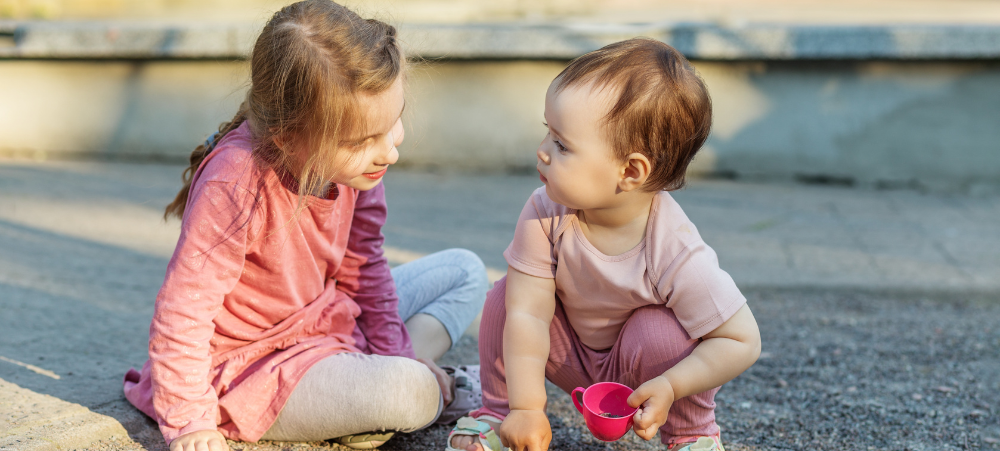
A parent can spend time setting up the perfect toddler activity, stickers, paint, and a carefully planned outcome, only to find their child far more interested in a wooden spoon and a pot.
According to Dibber International Preschools, that moment is not a distraction from learning. Instead, it’s often the learning itself.
The preschool group is drawing attention to the value of unstructured play for toddlers, arguing that some of the most important early development happens when children are given room to play without being directed, corrected, or steered toward a specific outcome.
For Dibber, unstructured play is simple to describe and easy to overlook. It is child-led, open-ended and free from adult instruction. There is no fixed outcome or right answer. The toddler decides what to do, how to do it and when they are finished.
“At Dibber, we see again and again that young children learn deeply when they are given the freedom to explore on their own terms,” says Ursula Assis, Country Director of Dibber International Preschools South Africa. “Adults often feel they need to make play more educational, more organised, more purposeful. But toddlers are already finding meaning, experimenting and learning through the play they lead themselves.”
Dibber notes that this kind of play has long existed naturally in many South African homes and communities, where children have often used gardens, open spaces and everyday household objects in imaginative play. But as family routines become busier and screen time grows, the preschool group believes it is worth protecting space for it.
When toddlers play freely, they are building problem-solving skills, creativity, emotional self-regulation and physical confidence in ways that are difficult to reproduce through adult-led activities. Unstructured play also gives children a rare sense of control at a stage of life when most decisions are made for them.
“At toddler age, so much of life is organised around adults,” says Assis. “What to wear, when to eat, where to go, when to sleep. Unstructured play gives some of that control back. It allows a child to make choices, follow curiosity and discover that their ideas have value.”
Dibber points to several examples of simple, open-ended play that can support this kind of development. Sensory play remains one of the most accessible forms. A container filled with water, dry pasta, sand or lentils, along with cups and spoons, gives toddlers room to pour, scoop, sort and experiment without formal instructions.
Loose play offers a similar kind of freedom. Sticks, stones, leaves, bark, and seed pods collected from a garden or park can serve as tools, ingredients, treasures, or building materials, depending entirely on how a child chooses to use them.
Water play continues to be one of the richest forms of open-ended toddler play, whether it happens with a bucket, a bowl, a sponge or old kitchen utensils in the garden. Cardboard boxes remain a reliable favourite, too. A box can become a car, a cave, a house or something else entirely, with no adult needing to define it first.
Free drawing and mark-making also fall into this category when they are left open. No template. No instructions to draw something recognisable. Just paper, crayons or paint, and the space to make marks that belong entirely to the child.
For Dibber, the point is not that every parent must constantly create special play setups at home. Unstructured play does not need to be expensive or elaborate to be valuable. In many cases, the most effective play materials are the simplest ones.
The harder part, Dibber says, is often the adult response.
Parents and caregivers may feel the urge to improve the play, direct it, ask too many questions or step in when a child appears bored. However, Dibber argues that boredom is not always a problem to solve. It is often the beginning of play.
“The challenge for adults is not usually providing the materials,” says Assis. “It is resisting the urge to take over. Toddlers do not always need us to show them what something is for. Often, they show us.”
This is one reason Dibber continues to place strong value on child-led exploration in the early years. The group believes that toddlers do not need constant entertainment or instruction to learn well. They need time, trust and environments that let their curiosity lead.
For Dibber, that remains one of the quieter truths of early childhood. The play that looks the least impressive to adults often does the most important work.

- When Early Learning Starts Looking Too Much Like School - October 19, 2026
- The Quiet Child in the Room: When Silence Is Temperament and When to Look Closer - October 12, 2026
- Six Simple Science Experiments That Get Preschoolers Asking Questions - October 5, 2026

1 thought on “Why the Best Toddler Play Often Looks Like Nothing Much at All”
Great article!