Generosity in young children rarely begins with a grand gesture or a conversation about values. It’s built through ordinary exchanges, repeated often enough for children to notice that other people have needs, feelings, and wants of their own.
“Adults sometimes think of generosity mainly in terms of giving things away,” says Ursula Assis, Managing Director of Dibber International Preschools South Africa. “For a young child it can be much broader than that. It may be offering someone a turn, helping carry something or noticing that another child is upset and moving closer.”
Those early behaviours are part of what researchers call prosocial behaviour – actions intended to benefit another person.
Research has shown that sharing emerges during the second year of life. However, toddlers do not share consistently, and context, relationships, and whether another person’s need is clear affect their decisions.
A study published in Developmental Science in 2026 went a step further. Researchers observed 134 toddlers aged approximately 17 to 24 months and found that they showed more happiness after giving to someone else than after receiving. The finding echoes earlier work suggesting that prosocial acts can be emotionally rewarding even very early in development.
That does not mean a two-year-old will happily surrender the red truck every time another child wants it.
Anyone who has spent time with toddlers knows otherwise.
“Children are still learning where they end, and another person begins,” Assis says. “They are developing a feeling of ownership at the same time as they are learning about other people. We should expect those two things to bump into one another sometimes.”
Generosity Is Bigger Than Sharing Toys
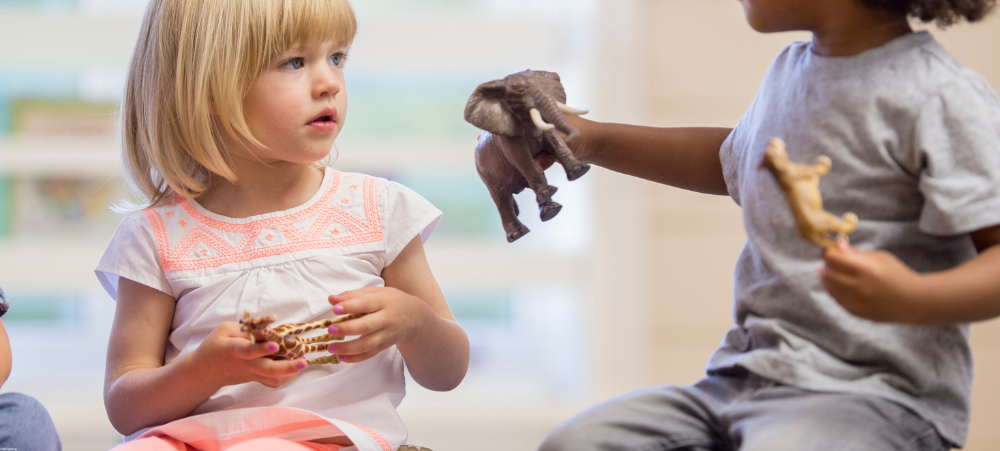
Parents often first encounter the issue when two children want the same object.
“Share with your sister.”
“Give him a turn.”
Those moments matter, but they can make generosity seem like little more than surrendering possessions.
A richer version includes helping.
A child can carry a sibling’s shoes, fetch a tissue for someone who is crying or help put toys back into a basket. They can offer attention, time and company.
These are concrete experiences a young child can understand.
Instead of explaining generosity as “being a giving person”, an adult might say, “Grandma has lots to carry. Shall we help her with one bag?”
The meaning sits inside the action.
Let Children See Generosity Happening
Young children watch adults closely.
They notice the neighbour being offered a lift, the extra plate of food taken to someone who is ill and the parent who stops what they are doing to help another person.
Research also suggests that children’s sharing can be influenced by observing generous behaviour in other people. In one study, seeing several peers share generously increased sharing among four- and six-year-olds.
Parents do not need to announce every good deed. But occasionally putting language around an ordinary act can help children connect what they see with why it happened.
“I’m helping because she has too much to carry.”
“We made extra, so we’re taking some next door.”
Simple. Specific.
“Children learn values through the culture around them,” says Assis. “If kindness and consideration are part of everyday family life, children get repeated opportunities to see what those ideas look like in practice.”
Give Children Some Ownership of Giving
There is a difference between inviting generosity and turning it into a performance.
For example, a parent clearing out toys might ask a child to choose one or two items they no longer use that another child might enjoy.
That choice matters.
It allows the child to participate in giving rather than simply watching an adult remove their belongings in the name of generosity.
The same can happen in smaller ways. Let a child decide which biscuit to offer a visitor or which picture they would like to make for a grandparent.
If they are reluctant to share a treasured possession, that moment does not need to become a verdict on their character.
Young children are still learning.
A South African Idea With Deep Roots
The idea that people become themselves fully through their relationships with others resonates in South Africa through the philosophy of Ubuntu.
Ubuntu has been interpreted in different ways, but a recurring idea is interconnectedness: that personhood is shaped through relationships with other people. Academic work on Ubuntu also associates it with values such as generosity, empathy, sharing, and care.
For children, that idea does not require a philosophy lesson.
It can live in a shared dinner, an older cousin helping a younger one, neighbours looking out for each other or a child learning that being part of a group sometimes means noticing what someone else needs.
“There is something very accessible for children in the idea that we belong to one another,” Assis says. “You do not have to explain Ubuntu in abstract terms to a four-year-old. They can experience community long before they have words for it.”
Notice Generosity Without Making It Transactional
When a child spontaneously gives someone a turn or offers help, noticing the act can reinforce its meaning.
“That was thoughtful. You saw that she needed help.”
The focus stays on what the child noticed and did, rather than on earning a reward for being generous.
This matters because generosity is unlikely to become an enduring value if a prize follows every act of giving.
Sometimes the reward is simply seeing what happened next.
The friend joins the game. The crying child smiles. Grandma says thank you.
Research with toddlers and preschoolers in several cultures has found evidence that helping and sharing can themselves be emotionally rewarding.
There Will Still Be Days When They Refuse
Children who are learning generosity remain children.
A generous four-year-old can still guard a favourite toy fiercely. A child who shared beautifully yesterday may announce today that every crayon on the table belongs to them.
That inconsistency is part of development.
The adult’s task is less about producing a permanently generous preschooler and more about continuing to create opportunities to notice other people.
At Dibber, that idea sits naturally within its Heart Culture, which emphasises children feeling valued themselves while learning to participate in inclusive communities through everyday interaction and play.
“Generosity grows through relationships,” says Assis. “Children need to experience being cared for as well as being asked to care about others. From there, the small moments start adding up.”
That is the most useful way to think about teaching generosity.
It is not one lesson.
It is the offered biscuit. The turn that is eventually given. The small hand helping carry the shopping.
Ordinary moments in which a child slowly discovers that someone else matters too.

- Generosity Starts Small: How Children Learn to Give - October 26, 2026
- When Early Learning Starts Looking Too Much Like School - October 19, 2026
- The Quiet Child in the Room: When Silence Is Temperament and When to Look Closer - October 12, 2026