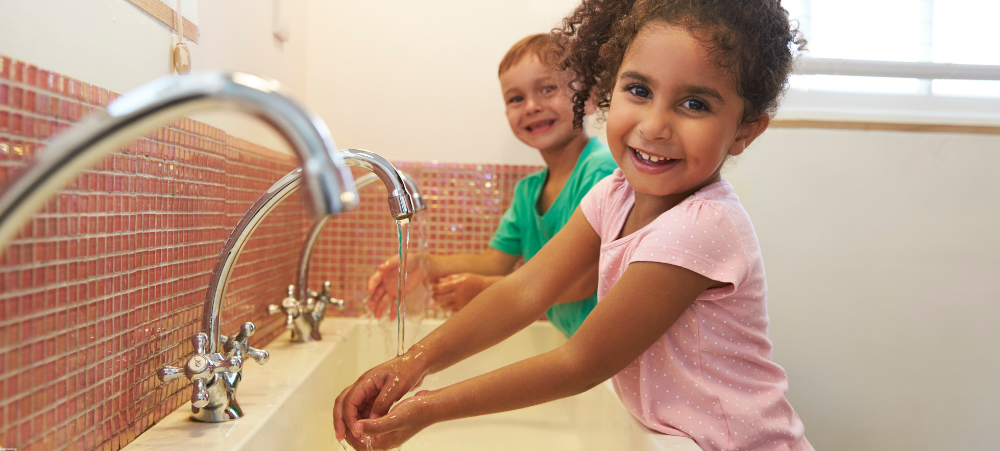
According to Dibber International Preschools South Africa, teaching young children why handwashing matters may be more effective when adults show rather than tell them. By using simple handwashing activities for preschoolers that make the spread of invisible germs easier to see and understand, parents and educators can help children build hygiene habits at home and in early learning settings through regular, hands-on learning.
For a preschooler, being told their hands have germs can feel fairly meaningless. Germs cannot be seen, smelled or felt, yet children are expected to understand that they are there and change their behaviour because of them.
“Preschool children learn through what they can see, touch and experience,” says Ursula Assis, Managing Director of Dibber International Preschools South Africa. “If a child can actually watch something move from their hands onto a toy or table, the idea of germs suddenly becomes much easier to understand.”
One of the simplest activities uses glitter. A small amount rubbed onto a child’s hands quickly appears on toys, tables and other hands as they play, forming a visible picture of how easily germs can move through a shared space.
Another experiment uses a bowl of water sprinkled with pepper. When a fingertip with a little dish soap touches the surface, the pepper moves away. It gives young children something concrete to observe while an adult explains the role soap plays when hands are washed properly.
A short song can help children learn how long to wash their hands, while stories about germs can turn an abstract idea into something they can follow, remember, and talk about afterwards.
“The aim is to help children understand the reason behind the routine,” Assis explains. “A child who has seen how quickly ‘germs’ can travel from one hand to another has a clearer reason to wash than a child who repeatedly hears the instruction without understanding it.”
That understanding matters in preschool environments, where children spend their days sharing toys, tables, books and play spaces.
It also takes repetition. One experiment about germs will not establish a lasting habit on its own.
Handwashing becomes meaningful when it is woven naturally into the day, including before meals, after bathroom visits and when children come inside after outdoor play. Repeating the routine in familiar situations helps young children begin to anticipate it.
Consistency between home and preschool can make the message even clearer.
“When adults respond in a similar way each day, hygiene begins to feel ordinary rather than something children are suddenly told to do when somebody remembers,” says Assis. “Over time, the goal is for the child to recognise the moment and know what comes next.”
There is also value in keeping the explanation simple. Preschoolers do not need a detailed science lesson about bacteria and viruses. They need an idea they can grasp: germs can travel from hands to the things they touch, and washing with soap helps remove them.
This is why visual experiences can stay with children long after an activity is finished. A child who remembers glitter appearing on every toy they touched has something tangible to connect with the next time an adult asks them to wash their hands.
At Dibber, hygiene routines form part of the normal rhythm of the preschool day, alongside play, meals and other everyday activities. Educators use repetition and age-appropriate explanations to help children understand what they are doing and why.
“Healthy habits start very small,” says Assis. “For a young child, understanding might begin with something as simple as glitter on a hand, a bowl of water and the chance to see for themselves what adults have been talking about.”

- Generosity Starts Small: How Children Learn to Give - October 26, 2026
- When Early Learning Starts Looking Too Much Like School - October 19, 2026
- The Quiet Child in the Room: When Silence Is Temperament and When to Look Closer - October 12, 2026