Adult decisions cannot be traced neatly to a single childhood experience. However, many of the underlying abilities involved in making considered choices, including self-regulation, planning, adapting, and thinking ahead, begin to develop early. Dibber International Preschools South Africa encourages parents and educators to recognise how ordinary preschool experiences can give children repeated, age-appropriate opportunities to practise these skills.
Decision-making is not one ability that suddenly appears in adulthood. It draws on several developing capacities.
A child needs to hold information in mind, resist acting on every immediate impulse, consider what might happen next, and change direction when an idea doesn’t work.
Harvard University’s Centre on the Developing Child describes executive function and self-regulation as skills that help people manage information, plan and make decisions. Children are not born with fully developed versions of these skills, but they can build them through interaction and practice.
“Children practise decision-making long before the choices look important to an adult,” says Ursula Assis, Managing Director of Dibber International Preschools South Africa. “Choosing how to build something, deciding whether to join a game or working out what to do after a first attempt fails all require the child to think and respond.”
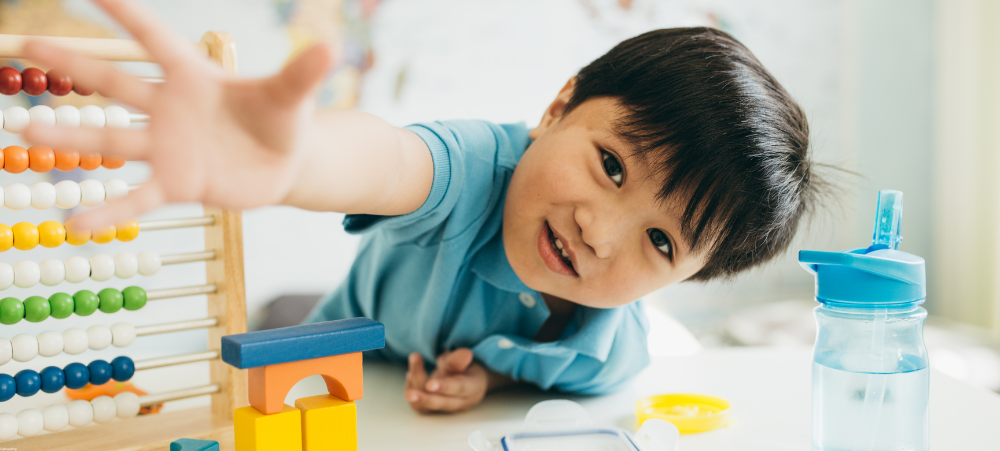
Open-ended play is one place this happens. A pile of blocks with no prescribed outcome asks a child to tolerate a little uncertainty. No single answer exists, and no adult tells them exactly what the finished structure should look like. The child must form an idea, test it and decide what to change.
Natural consequences offer another kind of information. A tower built on an unstable base falls. A game stalls when nobody agrees on the rules. These times help children begin connecting choices with outcomes, without requiring a lengthy explanation from an adult.
Climbing, balancing, or trying something unfamiliar lets a child assess what feels possible while a trusted adult stays nearby. Research on risky outdoor play generally reports positive associations with physical activity and aspects of social development. However, the evidence varies in strength and does not mean young children should be exposed to unmanaged danger.
Waiting for a turn, pausing before grabbing a toy and completing one part of a task before moving to the next all ask children to manage an immediate impulse.
That ability develops gradually. Don’t treat it as a test of character when a preschooler struggles.
“Self-control in a young child is still under construction,” Assis says. “Adults can support it through routines, games and calm guidance instead of expecting a four-year-old to respond like a much older child.”
Research does suggest that early self-regulation is associated with later decision-making. A 2026 study used longitudinal data from 13,240 children, assessing self-regulation at ages three, five, and seven, and reward-related decision-making at 11 and 14. Greater early emotional dysregulation was associated with greater delay aversion and poorer adjustment to risk, while growth in independent self-regulation was associated with better-quality adolescent decision-making. The study notes associations rather than proving direct causation.
Learning to make mistakes without shame matters too. When children treat an unsuccessful attempt as information rather than failure, they can reconsider their approach. They learn that changing one’s mind is not necessarily a weakness. Sometimes it is the sensible response to new evidence.
Affective regulation supports the same process. A child who is gradually learning to recognise disappointment may become better able to pause before reacting. That does not mean emotions disappear from decision-making. Adults do not achieve that either. It means the child is beginning to build another conceivable response between the feeling and the action.
These don’t need to be big decisions. Which activity would they like to begin with? What could they use to repair the broken bridge? How might two children resolve a disagreement over the same toy?
Too much choice can overwhelm a young child, and adults must make some decisions. The value lies in offering manageable choices within safe boundaries.
The OECD’s 2026 work regarding foundational skills places executive function, self-regulation and social-emotional development alongside early literacy, numeracy and motor skills. It describes these as “learning-to-learn” capacities that determine how children engage with learning and other people.
At Dibber, guided independence and play-based learning give children opportunities to choose, test ideas, solve manageable problems and ask for help when they need it.
“The aim is not to produce children who always make the correct choice,” says Assis. “It is to help them become comfortable thinking, reconsidering and trying again.”

- Small Preschool Choices Help Build the Skills Behind Later Decisions - November 18, 2026
- School Readiness Is Bigger Than a Checklist - November 11, 2026
- Generosity Starts Small: How Children Learn to Give - October 26, 2026