
Advice from the experts
Parenting Hub

Barbie® Reveals its First Doll with Behind the Ear Hearing Aids and Ken doll with vitiligo

New dolls are part of the Barbie Fashionistas line where the Barbie brand delivers the most diversity and inclusion, where 175+ looks have been introduced Mattel, Inc. and its iconic Barbie® brand announced its first Barbie doll to be introduced with behind-the-ear hearing aids, as part of its latest offerings in the most diverse and inclusive line of Fashion dolls on the market.  Continuing the brand’s journey to represent global diversity and inclusivity in the fashion doll aisle, and to allow kids to play out even more stories they see in the world around them, the new Fashionistas line-up includes Barbie with behind the ear hearing aids, Ken doll with vitiligo, new Fashionista doll with a prosthetic leg and Ken options with rooted short hair.  The Barbie Fashionistas line is where the Barbie brand delivers the most diversity and inclusion, and since its inception, 175+ looks have been introduced, offering girls a variety of skin tones, eye colours, hair colours, and textures, body types, disabilities, and fashions to choose from. In 2021, eight of the top ten most popular dolls in the line globally were diverse, inspiring girls to tell more stories and find a doll that speaks to and represents them.   Dr. Jen Richardson, a leading authority in educational audiology adds “I’m honored to have worked with Barbie to create an accurate reflection of a doll with behind-the-ear hearing aids. As an educational audiologist with over 18 years of experience working in hearing loss advocacy, it’s inspiring to see those who experience hearing loss reflected in a doll. I’m beyond thrilled for my young patients to see and play with a doll who looks like them.” “Barbie wholeheartedly believes in the power of representation, and as the most diverse doll line on the market, we are committed to continuing to introduce dolls featuring a range of skin tones, body types, and disabilities to reflect the diversity kids see in the world around them. It’s important for kids to see themselves reflected in product and to encourage play with dolls that don’t resemble them to help them understand and celebrate the importance of inclusion.” — Lisa McKnight, Executive Vice President and Global Head of Barbie and Dolls, Mattel. Barbie and Ken Fashionista assortment dolls will be sold in toy stores with SRP of R249.99 starting in June 2022 Barbie Fashionistas 2022 – NEW in the line… Barbie with behind-the-ear hearing aids:   This is the first Barbie doll to be introduced with behind-the-ear hearing aids, further expanding the Fashionistas line to reflect people with disabilities, such as hearing loss.   In addition to the doll with behind-the-ear hearing aids, this year’s Fashionistas lineup includes new dolls in a variety of body types including smaller bust, curvy and original, as well as a new Fashionista doll with a prosthetic leg.  Ken doll with vitiligo:  In 2020, we introduced Barbie with vitiligo into our Fashionistas line to allow kids to play out even more stories they see in the world around them. It was one of the top five Fashionistas’ best sellers in the U.S. that year.   This year, we have expanded the offering to include a Ken doll with vitiligo to allow more storytelling.   In addition to the new Ken doll with vitiligo, this year we are introducing new Ken options with rooted short hair and slender body type.   See full details below on the new Fashionistas dolls and image assets of the 2022 line

Lamelle Research Laboratories

Beat dry skin this winter with Serra by Lamelle Research Laboratories

If there’s one thing Lamelle knows all about it’s how to beat dry skin. After decades of research, we’ve created some of the world’s most innovative moisturisers and no you’re not imagining it – your skin really is drier and “thirstier” in winter. As the cold kicks in, the humidity levels drop and the air attempts to equalize by drawing moisture from whatever it can – including your skin. Indoor heating doesn’t help much either as that also reduces humidity and the result is often skin that doesn’t have enough of the moisture essential to a healthy barrier function. Worse yet, everyone’s favourite winter treat – a long, hot bath or shower with harsh, “strippy” soaps – can cause the type of inflammation that also messes with your skin’s barrier function. The result? Dry skin that, thanks to a damaged barrier, is vulnerable to becoming itchy and inflamed because its damaged “seal” lets irritants in and moisture out. This is why, if you’re prone to inflammatory skin conditions like eczema or psoriasis, winter is a prime time for flare-ups. Get your moisture back If you’d like to beat winter dryness and soothe irritated, inflamed skin, you’ll be glad to know you can do it with just a few clever skincare swaps. The first is to toss any highly fragranced soaps or cleansers that contain a high concentration of sodium lauryl sulfate (SLS), a foaming agent that can irritate dry, sensitive skin. Rather opt for our bestselling Serra Cleansing Gel. Specially created for dry, sensitive skin, it’s a soap- and fragrance-free formula that gently cleanses without drying out your skin. Next, you want to ensure you’re using a cutting-edge moisturiser. Many think beating winter dryness is as simple as switching from a light lotion to a thicker, creamier one is all it takes but they’d be wrong. Heavier doesn’t mean more hydrating. What you really need is the right ingredients – those that mimic the lipids in your skin’s bilayer – and you’ll find them in our skin hydrating hero, Serra Restore Cream. It hydrates and soothes like a boss because it doesn’t just add moisture but helps you lock it thanks to skin barrier-repairing lipids like our patented Ceramide-P. However, if you’ve got exceptionally dry and sensitive skin, we suggest you try Serra Soothing Cream. Some of its ingredients are encapsulated in extra lipids and it contains our unique anti-redness and anti-itch therapy. Ultimately, whichever you choose, to beat winter dryness as they hydrate, soothe and repair a weakened or damaged skin barrier – ensuring your newfound moisture is for keeps. A bit about your body Lastly, let’s not forget about the skin on your body. Just like the skin on your face, it can also become dry and irritated by winter weather. Happily, you’ve got a great weapon of choice in Serra Soothing Body Lotion. It also contains Ceramide-P along with a double whammy of mega hydrators – hyaluronic acid and urea. The latter provides relief from inflammatory skin conditions like eczema because it also gently exfoliates by softening the hard, dry cells on the surface of your skin. This makes it easier for them to naturally shed and reveal fresh, healthy, skin. Ultimately, if you’re wanting to beat winter dryness, switching to Serra by Lamelle is definitely the smartest way to do it. Visit: www.lamelle.co.za for more information Follow us @lamellersa 

Parenting Hub

HOW TO MANAGE YOUR BABY’S PORTION CONTROL

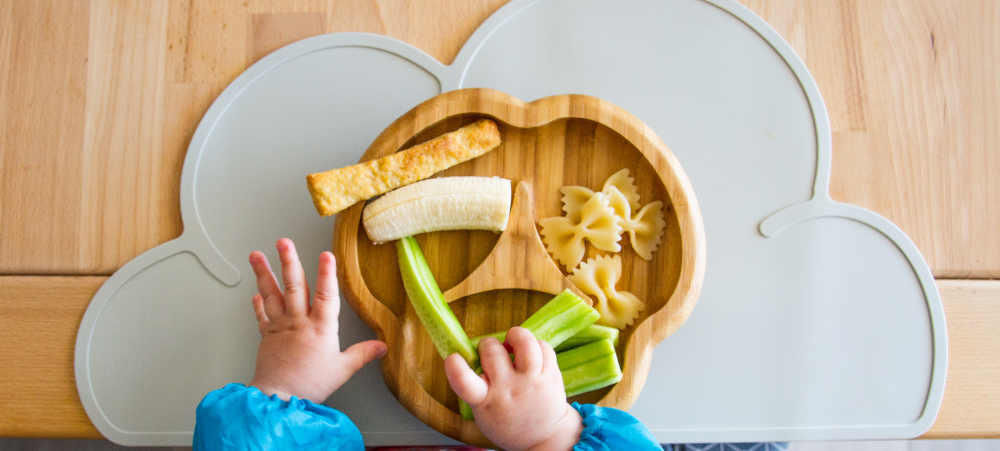
Managing a baby’s portion control can be tricky, especially if you are a new parent. However, this can be made easy if you have the right equipment in your feeding arsenal! Take a look at why portion control is important for your child, and how to get it right with the perfect plate. Developing Healthy Habits Through Baby Portion Control From an early age, your child is picking up on how to interact with the world. Therefore, instilling a healthy relationship with food is vital for your baby. Portion control can help your child avoid: Diabetes Obesity Anorexia Bulimia  All of the above mentioned health problems can be linked to the practice of overeating – which is scary.  The Do’s And Don’ts Of Baby Portion Control Below are a number of suggested habits to get yourself into to strengthen your baby’s portion control: Do Allow Self Feeding: This will help your baby develop not only a good relationship with food, but also the ability to determine when he or she is satisfied. Do Try Various Flavours: This will allow you to suss out which are your little one’s favourites, and will allow your baby to widen their pallet. Do Make Use Of A Divide Plate: If you don’t know the first thing about baby portion size, get something to guide you along the way. Don’t Encourage Plate Completion: This is a grave mistake made by many parents. Encouraging your child to finish a whole plate of food may give them a poor relationship with food, as they are being forced to continue eating even once they are full. Rather ask them if they are satisfied and have had enough. If they say yes, trust them on this.  Don’t Use Food As A Rewards System: This will also deepen an unhealthy relationship with food. Rather than coaxing them into doing something with the promise of a sweetie, reward them in other ways.

Parenting Hub

It’s time to talk – period!

The 28th of May is recognised globally as Menstrual Hygiene Day and encourages people globally to promote good menstrual health and hygiene for all women and girls. As a local business that produces a range of women’s reproductive health products, 3Sixty Biomedicine with their naturally based Salome range is committed to playing an active role in educating and promoting a better understanding about common women’s health issues. Menstrual health issues are among the most common reproductive health issues that women deal with on a regular basis; these can impact their quality of life and act as a barrier to schooling and participation in sports and other activities if not identified and managed properly. It is thus important to discuss menstrual health openly; like if PMS (premenstrual syndrome) is real or a myth, how to know if period pains are normal or not, or if the amount of menstrual blood flow experienced is normal, because these conditions can add further complications to women’s reproductive health. Common Menstrual Health Issues unpacked Menorrhagia or heavy menstrual bleeding is a common condition experienced by many women; this condition is often painful and debilitating for 30% of women who suffer from it on an ongoing basis. Symptoms of menorrhagia include soaking through one or more sanitary pads or tampons every hour for several consecutive hours, needing to use double sanitary protection to control your menstrual flow, needing to wake up to change sanitary protection during the night, bleeding for longer than a 7 days and / or passing large blood clots. Dysmenorrhea, the technical term for period pain, is also a common women’s health issue that affects women of all ages and races. According to the American Academy of Family Physicians; up to 20% of women experience menstrual cramping that is severe enough to interfere with their daily activities. Symptoms that may include lower abdominal or pelvic pain with or without radiation to the back, typically begin in adolescence and may lead to school and work absenteeism, as well as limitations on social, academic, and sports activities.  Premenstrual Syndrome (PMS) is another common problem that is characterised by a set of physical, emotional and behavioural symptoms that start the week leading up to a woman’s menstrual cycle. In a published article on the epidemiology of premenstrual syndrome (PMS), it stated that 23 – 31% of women of reproductive age experience PMS to a degree that affects their quality of life. Some of the psychological symptoms associated with PMS are irritability, mood swings, depressed mood and crying, low self-esteem and anxiety to name a few. To add to this, there are also cognitive symptoms such as forgetfulness and physical symptoms such as bloating, fluid retention, constipation and headaches, all of which can feel debilitating. How to tackle Menstrual Health Issues The Salome product range offers over the counter treatment options to help manage common female reproductive health issues. The range is based on herbal extracts and aims to manage conditions such as primary dysmenorrhea (period pain), menorrhagia (heavy menstrual pain) and premenstrual syndrome (PMS) with minimal to no side effects.  Salome PreMens is the newest addition to the Salome range and contains a natural extract known as vitex agnus-castus which is more commonly known as chaste tree or monk’s pepper. Salome PreMenS is used to help manage psychological and emotional well-being during premenstrual syndrome (PMS). Vitex agnus-castus is considered a progestogenic herb as it encourages ovulation, increases progesterone and helps rebalance oestrogen/progesterone ratios. Vitex agnus-castus assists in alleviating physical symptoms of PMS such as fluid retention, breast tenderness, and premenstrual weight gain.  “Part of building a period positive world is acknowledging that we have a collective responsibility in changing the way society views periods in the 21st century. We have to ensure that young menstruators should be able to talk openly and celebrate their transition into adulthood without having to hide it in secret or manage their period in isolation. After all, menstruating or having a period is NORMAL and occurs as part of a woman’s monthly cycle. At the very least we should be able to talk openly about our menstrual cycles so we can identify when there are abnormalities in order to get the necessary help and treatment when required,” says 3Sixty Biomedicine’s CEO, Boitumelo Sebambo. Visit www.salome-range.co.za for more information about the full Salome range of products that helps to manage menstrual pain, heavy menstrual bleeding, premenstrual syndrome, infertility in women with Polycystic Ovary Syndrome (PCOS), and menopause. Salome Menstrual Pain, Salome Heavy Menstrual Bleeding and Salome PreMens are available to the public from pharmacies nationwide or online at Takealot.com and Salome’s website and can be reimbursed from medical aid savings. Connect with Salome on their social media platforms: Facebook: Salome Range Twitter: @SalomeRange Instagram: SalomeRange

Parenting Hub

Crèche Syndrome, Breaking the Cycle Naturally

You won’t find it in the medical textbooks, but if you’re a parent boomeranging in and out of your paediatrician’s rooms with an endlessly sniffling baby or toddler, chances are you’ve heard of ‘crèche syndrome’.  It’s a colloquial term referring to a cycle of infections, usually upper respiratory, that unfortunately, commonly afflict little ones regularly attending playschool or pre-school.   It’s not hard to guess why.  Babies and toddlers have developing immune systems, and frequent exposure and close contact with a range of other children results in the quick and easy spread of pathogens, no matter how much cleaning happens in the environment.  Infections often get worse in the winter when the children spend more time indoors and the bugs proliferate in the closed environment. Snotty and a bit of a wet cough may not sound like the worst, but the reality is that these ongoing infections take a big toll on parents.  There’s the naturally high levels of stress that parents experience when their children are unwell; there’s lost sleep and more often than not, lost working hours too.  Most parents can take this in their stride when it happens once or twice, but ‘crèche syndrome’ refers to a spate of rolling infections over an extended time, and it can easily become desperately exhausting and costly.  In addition, the symptoms are not always mild, and one seemingly slight sickness can lead to other issues including ear infections, serious chest infections and gastric infections.  With rosy health as an important marker of our parental responsibilities, continuous sickness in our child can make us doubt our abilities. The good news is that you’re not alone; you’re not a bad parent and, according to Michele Carelse, Founder and CEO of online natural health and wellness retailer, Feelgood Health, there are ways to break the debilitating cycle of crèche syndrome.  She says, “Parents can consider the natural treatment route and they will find that there are various easy strategies to help support their little one’s developing immune systems.  Also, for those parents concerned about the efficacy of antibiotics and the impacts of frequent antibiotic use, a holistic approach can be the way to go.” How to prevent and treat creche syndrome naturally  There are many things a parent can do to protect and strengthen their kids’ immune systems. With a strong immune system, infections can be fought better and faster, and the risk of secondary infections developing is much lower. Here are some of the best proven ways to build your child’s immune system:  1) Good nutrition Many kids are fussy eaters, so parents often end up feeding them ‘easy’ meals, which are often highly-processed and nutrient-poor. Nutrition directly impacts health and immunity – a lack of daily nutrient-rich foods can result in susceptibility to a host of infections and increase your child’s risk of nutrient deficiencies and related health conditions. It’s important to know and understand children’s dietary requirements and discover some of the many, easy ways to serve up nutrient-dense foods that your child will happily eat.  If you find that you are still struggling to turn them on to regular healthy meals, then consider a kid-friendly nutritional supplement such as Solgar’s Kangavites Multivitamins, which contains all the vitamins and minerals a child needs for growth, strong immunity and healthy brain functioning in a yummy chewable form.  2) Probiotics There’s a well-researched link between the healthy gut biome and immune functioning.  An increasing number of parents are becoming educated about probiotics and have started giving their kids probiotics on a daily basis, especially before and during flu season.  3) Diffusers and essential oils Essential oils are commonly used for their antiviral and antibacterial properties. Take note that babies and toddlers are especially sensitive to essential oils being applied directly onto their skin, so a diffuser is the best way to get the therapeutic properties of the oils into your little one’s respiratory system.  Some of the best essential oils for respiratory infections are eucalyptus, tea tree oil, peppermint oil and rosemary.  4) Don’t dry out phlegm Contrary to popular belief, drying out a runny nose or a phlegmy respiratory tract may not be a good thing. Mucous and phlegm are appropriate bodily responses in the efforts to rid the respiratory tract of germs. Rather than drying out the respiratory tract, use a Colloidal Silver Nasal Spray which will help loosen mucous without drying anything out. The added benefit of doing this is that colloidal silver contains powerful antimicrobial, anti-fungal, anti-viral and antibiotic properties. 5) Immune-boosting supplements Natural herbal and homeopathic remedies made from plants have been proven effective in boosting immune systems and fighting infection.  Here is Michele’s top selection of immune-boosting natural remedies for children: BaniFlu: This homeopathic ‘flu remedy can be used by the whole family, including children and babies. KiddieBoost: Naturally strengthens immune functioning in children and promotes your child’s natural resistance to illness. This antiviral and antibiotic alternative speeds up recovery from illness and is suitable for little ones over the age of 12 months. Sniffly Sprinkles: Sniffly Sprinkles contains a selection of 100% homeopathic ingredients to relieve sneezing quickly, safely and effectively, as well as runny and blocked noses in babies and children. It can be used for new-borns and children up to the age of 12 years.

Bonitas – innovation, life stages and quality care

NEW PARENTS AND YOUR BABY’S HEALTH

Becoming a parent is a joy but it can also be overwhelming and just a little daunting. There is no degree or diploma, you are simply propelled into it. It’s a steep learning curve. You instantly have a new life depending on you and, combined with sleep deprivation, the challenges of adjusting to being a parent and wanting to do the best for your child, you need all the help you can get.Becoming a parent is a joy but it can also be overwhelming and just a little daunting. There is no degree or diploma, you are simply propelled into it. It’s a steep learning curve. You instantly have a new life depending on you and, combined with sleep deprivation, the challenges of adjusting to being a parent and wanting to do the best for your child, you need all the help you can get.

The Papery

Delia’s 4 Tips On How To Start Learning Calligraphy

Where I Started With Calligraphy My handwriting has changed so much throughout my life, I remember learning how to write in cursive during primary school which was a skill I completely lost during high school as I had to adapt to taking notes as fast as possible – to say the least, my hand writing turned into chicken scratch! Until my last year of school in arts class, we were no longer allowed to write in our own “handwriting” (you can imagine how I panicked) I had to change and learn other styles of writing within a couple of weeks! During my last year of school I completely winged it and I had no real guidance into the strange world of hand lettering, calligraphy and cursive writing. I came to a point where I could skate by, by modifying my own handwriting which was still nowhere near all the beautiful flourishes I saw on the internet. After school, I was sick and tired of everything school-related so I never really continued practicing fancy lettering – until about a year ago. Now, before I dive into the How To’s and What Not’s, lets’ get a clear picture of what calligraphy is. What is Calligraphy In a simple explanation, calligraphy is translated into meaning “beautiful writing”. But calligraphy is very different from cursive writing and lettering, so what is the diffs? Calligraphy: is the art of writing and giving very specific attention and detail to every part of each letter. Calligraphy is done slowly, usually with very specific tools such as nibs and ink, and is marked by variation in the upstrokes and downstrokes of each letter. A lot of thought and time goes into calligraphy and in my opinion is the hardest to learn. Lettering: is the art of drawing letters where each letter is a mini illustration or artwork. Rather than writing in one continuous stroke, like cursive writing, each letter has individual attention. These letters can be plain or very decorative. Cursive: is a style of writing where all the letters in a word are connected, and the word is written without lifting the pen from the paper. Faux-calligraphy: the word faux means imitation. Faux-calligraphy is an imitation of calligraphy. It is a technique, using cursive writing, where downward strokes are duplicated so that they look thicker than the upward strokes, creating a “fake” calligraphy. Now that you are familiar with the ‘technical’ terms, lets dive into why your are really here! 1. Start At The Very Beginning I know this is something EVERYBODY says, but it’s true. When I first made my spur-of-the-moment decision to learn calligraphy, I raced to the nearest stationery outlet and spent 100’s on fountain pens, inks, paper, you name it! This was my biggest mistake because not only did I waste a lot of money, I also caused myself lots of frustration – my first time using an Oblique Calligraphy pen was a disaster, the ink went everywhere, I had no technique and long story short, those expensive tools ended up in the back of a stationery storage bin. So how do you start at the beginning in the right way? Start Simple: This is one of the first pieces of advice I give anyone starting a new hobby. Don’t go buying advanced tools, you most probably already have stationery that you can use! Start with a simple pen or pencil and paper (yes, that is all you need) Practice Simpler Styles: By starting with writing styles that are “easier” you might be saving yourself a lot of frustration. I suggest learning Faux Calligraphy and Cursive writing to get yourself started (especially if you are a total newbie) Study: Yes, you can go buy books on calligraphy, but when I say study, I mean the letters! There are several elements that make up a letter – upstrokes, downstrokes etc. Knowing these elements will give you the technique to really master your writing. Practice Drills: Calligraphy drills are a MUST! These simple drills will help you build a foundation you need for calligraphy, it will also help practice wrist movement and exercise your brain! Where can you get a calligraphy drill sheet you ask? Right here! Fill in the form at the bottom to get your free practice sheet Be Patient: Remember when you were 5 years old and learned how to write? You didn’t pick up a pen and wrote a novel right? No. The same goes for calligraphy, it is a completely new skill and it will take a lot of practice, mistakes and learning – so please be patient with yourself! 2. Get Familiar With The Tools Like I said, you don’t need a whole calligraphy set to get started, a simple pen and paper will do, BUT, as you start getting more advanced, you need to start getting familiar with the right tools because they are not all made equal. One you have the basics down, you might want to start dabbling with other tools, however all pen holders, fountain pens, brush pens, nibs and inks are not the same – each serve a different purpose. It’s very important that you research tools and get familiar with their purpose. 3. Practice Makes Perfect This is probably the best piece of advice that I can give. All the brush pens and calligraphy guides in the world won’t help you get better without practice. Don’t make the same mistakes I did! For a very long time I thought that every pen I saw advertised was going to be my big talent break – the secret sauce is not in the pen, its in you (I know its cheesy!) Oh, and another thing, stop comparing yourself to others. Chances are, that calligraphy account you follow on instagram, that person has had years of practice! I also believe in individual style, you might want to copy a specific look, but chances are, you never will – and that is not a bad thing!

Abbotts Colleges

REPORT CARDS & PARENTS: RESPONSE STRATEGIES GEARED FOR GROWTH

Receiving report cards are one of the major annual milestones at traditional schools, aimed at providing insight into how a child is progressing in a specific year. But as students enter the second term, many parents are receiving the report cards for the first term now and already dreading the next assessments that will be arriving in about 10 weeks’ time. However the report card should not be viewed as a definitive ruling on a child’s academic ability, but rather be used as a guide on the road towards success. There are a few ways in which this can be facilitated by parents, when sitting down with their child to discuss their results. So which principles should guide the discussion that will take place when a child brings home a report card in June?  I believe that the backdrop of any such conversation must be what Dr Carol Dweck calls a “Growth Mindset”.  She coined the term in 2006 in a book entitled Mindset: The New Psychology of Success. Students with a “growth mindset” believe their skills and talents can be developed through effort and persistence. Whereas those with a “fixed mindset” believe their success is determined by natural talent or intelligence. Research shows that the language and actions of parents can have a powerful impact on their children’s mindsets and achievement.  The Growth Mindset theory can be put into practice by parents regardless of a child’s results – whether they be fantastic or concerning: A PARENT’S FIRST RESPONSE Distinctions… Some report cards trigger immediate praise. However, if your child brings home an excellent report card, and you praise your child for being smart, through this a fixed mindset is being promoted. It sends a message that their accomplishments are based on the constant attributes they were born with.   In contrast, praising children for working hard fosters a growth mindset. It sends a message that the child’s effort is what led them to success.  On the Abbotts College report card the effort ratings help parents and students to focus on the process and the level of effort that went into it, because even a student with good marks can get an average effort rating if the student is under-performing. You should reiterate the concept that talent is not going to keep on delivering results if it is not accompanied by the determination to work hard and grow. A “mixed” or disappointing report card If your child (and you!) is discouraged after a disappointing report, you should try to find some form of improvement or effort that you can praise to inspire them to continue developing. When improvement, even if it is just a baby step, is acknowledged, students can feel the work that they did put in, has been seen and validated. It also helps students to understand that the goal of their learning is to make progress and that success can be relative.  These positive comments can serve as a “soft frame” that can help your child to digest the “middle part” where you give constructive feedback on things they struggle with or need to work on. These are the things that have not been mastered “yet”.  By embracing the power of the word “YET” when you communicate with your child, you can help them understand that setbacks are reflection points that must be used to pause and strategise for future success.  You should end the conversation on a positive note.  In the process you are framing the challenges as an opportunity for growth, helping your child to embrace and tackle any obstacles he or she may face.  MORE INGREDIENTS OF A MEANINGFUL CONVERSATION Adding the flexibility of the brain to your conversation By emphasising to your children that they actually have control over growing their brains through the actions they take, parents are empowering their children. They should understand that what strengthens the connections in their brains is practise, asking questions, and actively participating in learning. Increased motivation and achievement will follow if the child understands that the brain physically changes when you put in effort whilst mastering concepts and skills. Accept mistakes as opportunities One of the best ways you can model a growth mindset is to speak openly about your own mistakes and lessons you took from it.  This will show your child that making mistakes is a natural part of the learning process. Your child should know that it is by trying hard things, things that do not fall within our comfort zones, that we are growing, even if it means that the result is not perfect. Understand the role of emotions in learning Our fight or flight response is triggered when we are scared or feel threatened. It is a normal phenomenon and can manifest as stress symptoms such as sweating, stomach cramps, and your mind going blank. Obviously, such symptoms can prevent us from learning or from giving feedback on what we’ve learned. Help your child to identify such responses and to develop strategies that can be used to prevent the fight or flight response to take over when learning or doing assessments. Constantly keep having the conversation  Traditional schools only provide quarterly report cards, which can mean that the constant improvement conversation falls by the wayside until each report comes along. If your child is in this situation, try to check in more regularly to see what is happening academically. At Abbotts College we assist parents and students with this kind of constant feedback by releasing seven report cards per year. These report cards reflect three aspects: The outcome of bigger summative assessments that form part of the “School Based Assessment” which will be used to determine the promotion mark The outcome of different types of smaller assessments which are used to assess whether students mastered the concepts and skills that were taught on a continuous basis The effort ratings a student obtained in the different subjects Obviously, by giving thorough formal feedback on a regular basis, the parent or guardian can

Parenting Hub

How to help your adult kids to become financially independent

Many adult children in South Africa live with their parents, for both cultural and financial reasons. This can suit both parties for a time – but how do you encourage your grown-up kids to become self-sufficient when this is clearly needed? Are there ways to nudge them towards financial independence, both for their sake, and for yours? These are undoubtedly challenging times for young people. Many South Africans lack education, skills and basic means of support. Nearly two-thirds of young adults aged 15-24 years are unemployed, along with close to 43% of those aged 25-34 years. The pandemic and state of disaster have also affected those who were on the first rung of independence. Traditional students’ jobs such as waitering, bar-keeping and babysitting fell away, while young people already in the job market faced retrenchment. Home became a welcoming haven and helped many to cope. While keeping these difficulties in mind, how do you encourage your adult children to leave the family nest when the time comes? JustMoney.co.za gives some advice on how to put adult children on the path to financial independence. 1. Explain your motivation: Clarify that you are encouraging your kids to become self-sufficient because this will ultimately help them in life. You are doing so because you love and care for them. 2. Set a deadline: If your adult child has recently qualified, it helps to set a date for when you will no longer pay for their phone bill or provide a monthly allowance. This gives them time to prepare emotionally and practically and is preferable compared to abruptly cutting off their money supply. 3. Put their skills to work: If your child already has a skill, such as coding, they need to make an active effort to land a job, such as web development. They can build confidence and networks by contributing to open-source projects and joining hackathons, usually hosted by tech companies, to collaborate with other programmers over a short period on a project. 4. Teach budgeting: Involve your adult child in the household planning so that they are fully aware of what it costs to run a home. Young adults are often more technically adept than their parents. There are plenty of free budget calculators and other financial tools online. 5. Pass on basic savings and investment rules: Teach children about key concepts such as compounding, so that they understand how investment earnings are reinvested over time to generate more money. They can also create a mock investment account on an app. Read a JustMoney article about investing in unit trusts. 6. Cultivate positive values: Research shows that fostering an attitude of gratitude helps one to feel more positive and upbeat. Volunteering their time teaches children the benefits of helping other people, and reminds them of the many advantages they enjoy compared to those who are less fortunate. 7. Set goals: Encourage your children to think about their goals and what is important to them. What lifestyle do they aspire to and what practical steps do they need to take to get there? Discuss good role models and how these people have achieved their dreams.  Find out more about saving for a deposit on a car. 8. Prepare for your own retirement: Actions speak louder than words. Discuss your own hopes for the future and how you are preparing for when you are no longer working. Ensure that you have an up-to-date will. Learn how inflation impacts retirement savings. “A parent’s duty to support a child does not stop when they reach a particular age. They may be older than 18 years but still studying and gaining a qualification. A parent is obliged, for example, to pay maintenance until a child is self-sufficient, and we are all aware of the rising cost of living.” says Shafeeka Anthony, Marketing Manager of JustMoney. “Nonetheless, becoming financially independent brings greater confidence and autonomy for the adult child. It also enables the parents to prepare for when they can no longer work. It is never too early to start educating a child about money matters and, in due course, setting boundaries. While it’s acceptable to help adult children occasionally or on a short-term basis, the bank of mom and dad cannot remain open forever.”

Parenting Hub

ABOUT BABY & I MELROSE

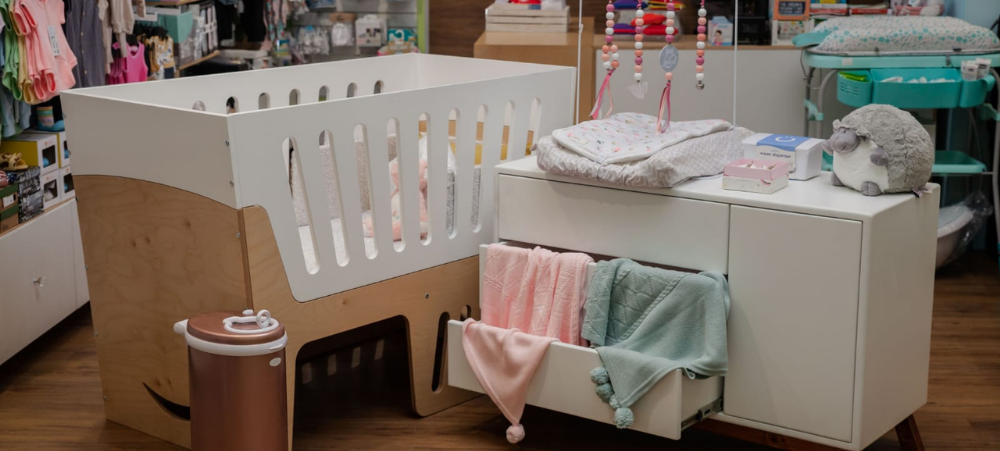
The inspiration for our children’s clothing shop began when I started my 1st job at one of the major SA Retail Head office in the late 90’s. I have experience in the setting of specifications on the technical requirements of the production of garments. And my experience includes the development of innovative standards and methods of solving and managing quality related problems. I have gathered extensive experience in Garment Technology. I was also involved in the effective planning and efficient execution of standards development projects.  With such an experience in the clothing industry came the decision to venture into Retail.  The decision was inspired by an ambition to deliver high quality clothing at a reasonable price. I have a passion and enthusiasm for the baby industry and want to bring innovation in the sector.  In this space we only want to attract business partners (i.e manufactures, suppliers) with the same values, ethics, and will provide the best customer service to. Quality and comfort are paramount in decision making of what we want to offer to our customers. At Baby and I Melrose we want to create a shopping lifestyle to suit both parents and their little angels. We will focus on offering exceptional products with attention to detail and providing quality items. Our product selection and service excellence is motivated by passion to be the best and most valued choice for parents, babies, and toddlers when it comes to quality, price and service.     We will work hard and build a team that will take the brand to reach its milestones of opening more stores into other provinces. Customer satisfaction is what we are all about.  Our friendly staff is always at hand to help. They will find the perfect baby items for your needs. We will help guide you through all the product choices available, making sure you select the right products and brands for your lifestyle.  We want to stock the latest ranges across all departments namely children swear, essentials, travel systems and accessories, nursery furniture and accessories, toys, and gifts. We have launched our website for our customers to be able to shop from the comfort of their own home and for an exclusive shopping experience.   Our Vision  To lead in the children’s industry and strengthen brand recognitionTo be accessible to parents based on trust, quality, and innovation To build a strong and loyal consumer base  To maintain the highest customer service level standards   You can shop for the following with us: Travel system i.e. Pram, strollers & car seat.  Baby essentials i.e. shoes, clothes, baby food and nappies. Nursery décor, essentials and furniture. 

Exigo Care

The importance of choosing the right baby nappies: On the couch with Jessica

As a mother, I only want to put the best baby nappies on my little one’s bottom. As a nurse, I understand the importance thereof. The super absorbent core and extra depth double leak guards feature are the heart and soul of our Hi Baby Premium Nappies and Pull Ups. A super absorbent nappy core ensures a dry nappy surface protecting baby’s sensitive skin from prolonged exposure to moisture. Excess moisture in a nappy is the leading cause of nappy rash and here is why:  It causes maceration of the skin surface. This is caused when the skin gets lighter in colour and goes wrinkly – just like when you sit in the bath for too long – compromising the skin’s integrity. Broken down skin is a free pass for fungal, yeast and bacterial infections which thrive in a warm moist environment. A premium nappy with a super absorbent core can save you on medical bills. Prolonged contact with urine and faeces irritates the skin which can lead to inflammation and skin breakdown. Contact dermatitis is especially common when babies have diarrhoea, often paired with illness or teething. The effects can be minimised by using a premium nappy that has good absorbency, to lock away excess moisture, combined with a good barrier cream to protect the skin.  In addition to protecting baby’s skin, a premium nappy with a super absorbent core is the difference between waking up at night to a crying, cold and wet baby and a good night’s rest, with 12 hours of dryness. It means more time to play with your little one. Time to pay attention to the things that matter, and less time spent washing wet clothing and linen.  As parents we want what is best for our little humans and with Hi Baby Premium Nappies you are giving them just that. Til next time Jessica  (Registered Nurse/Midwife)

My Breastpump

My Breast Milk Storage Bags are super useful

Pumping breast milk to store it for later use is a fantastic way to prolong your breast feeding, specifically for mothers that are going back to work or who need to be separated from their baby. The storage of milk allows you time to be away from your baby and still have breast milk for your baby to drink.  The best time to start building up you milk stash is at least 2 weeks before you will need it. This allows you time to get used to expressing. It may take some time to get used to a pump and find the best settings for you to use. The Mya Joy hospital grade breast pump is an excellent pump. Being able to express both breast at the same time is a great time saver and also having a motor that is able to empty breasts and also last for the 2 year warranty is super important. If you want to find out more about the Ameda Mya Joy breast pump you follow this link: https://www.mybreastpump.co.za/product/MyaJ .  You also have some time available to build up a bit of a stash so that you know that you will have milk for when you need it. If you are exclusively breast feeding, expect to express about half a feed in between the breast feeding. Your body is already making enough milk for your baby and now your body is making extra on top of your baby’s needs. Expressing does also add more to your schedule, so give your self the time to express and slowly work up to the extra sessions that you need. Once you are at work you will need to express in the times that you would normally have feed or pumped.  Having an affordable option to save your breast milk in is a must. The My Breast Milk Storage bags are idea for storing your breast milk on. They are BPA-free and medically sterilized so that you don’t have to do anything to get them ready, just tear open the top seal and pour your milk in to the bag. The bags also have space for you to write with a permanent marker your baby’s name, date that you expressed the milk on and the volume. This information is very important. If you baby goes to creche you need to make sure that the breast milk given to your baby is your milk. When breastmilk freezes it expands which can make it difficult to work out how much milk is in the bag. By having the amount of milk on the bag it makes it easier for you to manage how much milk you need to defrost and can result in less wastage. Lastly by dating the bags you are able to use the older milk first. First in First out is really important in making sure that you use your breast milk within the correct time frames so that it does not expire.  What really sets the My Breast Milk Storage Bags apart is that it has a double ziplock seal so that the bag does not leak. The side seals are very strong so that the bag will not burst in your freezer. There is nothing worst then defrosting your milk only to find that it has all leaked out. The bags has a very useful pouring sprout. This means that you don’t need to pour the milk out of the opening with the Ziplock seal. You have a designed spout that enables you to pour accurately with out messing your milk. The milk can also stand on it own once you have filled it. This makes it so much easier to handle.  Just a little tip when using breast milk storage bags is that you can save a lot more space if you freeze the bags flat. This way they become thin and once frozen are able to stand up in a container so that you can arrange them first in fits out. This make managing the stash so much easier and you can fit so many more bags into your freezer. No need to just buy a breast milk freezer.  If you are not sure how long you can store breast milk for, the CDC guidelines are on the back of the box. This makes it so easy for you, you just have to flip the box around and there is all the information. It also explains how long you can keep thawed breast milk as well as what to do if the baby does not finish the bottle of breast milk. This information is so important, by having it at your fingertips you are able to save more milk y not wasting and also ensure that your baby get the benefits of the breast milk that you have expressed.  You can get the My Breast Milk Storage bags from Takealot (look out for the bulk deals where you can buy 4 bags and save R60) Alternatively you can buy  the bags form the online store www.mybreastpump.co.za

Wingu Academy

Problem Based Learning, why do we need this in schools today?

Researchers have been hypothesizing and theorizing about Problem Based Learning (PBL) for decades. It came to life in the mid 60s when a group of scientists and physicians all had a similarly negative view of their undergraduate degrees and felt they could find a better way to present it. They developed the notion that students will understand their work better if their learning is driven by open-ended problems that challenge their way of thinking. Today, universities across the world implement Problem Based Learning in their courses to encourage students to critically engage with their subject content. Few schools have, however, implemented this learning method and the question begs to be asked, why? With the shift in education from Teacher-centeredness to Learner-centeredness, today’s educational landscape is the ideal place to implement PBL.  What does Problem Based Learning entail? Problem Based Learning is a method of learning where learners are presented with an open-ended problem and they must acquire the knowledge and skills necessary to solve it. It is necessary for the learners to first identify what skills will be needed to solve the problem and thereafter they must learn and use these skills to solve it. They move through a set sequence of in-context problems by acquiring the necessary skills and knowledge. The learners are guided by their learning material and assisted by teachers throughout. They work in small groups and are constantly learning from each other. Group members teach each other, rather than a teacher teaching the content at the front of the class. Why implement Problem Based Learning in schools?  Since many universities have started implementing Problem Based Learning, it may seem unnecessary for schools to implement it as well. That is the exact reason why this method of learning should be more commonly implemented in schools: to prepare learners for their tertiary studies and careers. Learners already face a seemingly insurmountable task of adjusting to university life without having to struggle to adjust to new learning methods as well. Equipping learners with the skills needed to complete a university degree makes the likelihood of learners succeeding in these degrees much larger. Equipping learners with the skills they need to succeed in University and in their careers one day should be paramount to high schools across the world and it should precede content recitation.  Some of the skills acquired through the PBL approach include: Flexible knowledge base: Problem Based Learning teaches learners the subject content in a way that moves beyond merely learning the facts of the subject. They are required to integrate the knowledge gathered from different subjects as well as from their own experiences. They have to use these skills and build upon them to solve the problems they are faced with. These skills and knowledge are organized around the deep principles in a subject. Learners use previous knowledge to evaluate the problem they are faced with and build upon this knowledge when they attempt to solve it. This means that their knowledge is continuously restructured and adjusted. This knowledge is not centred around one single point of reference and this grants learners the chance to adapt and apply it to many different scenarios.  Problem-solving skills: In Problem Based Learning, learners are presented with a scenario and they must evaluate and formulate the problem by studying the facts of the scenario. This helps learners understand the problem better and they can start hypothesising possible solutions. Learners must then identify where they have gaps in their knowledge to solve the problem and acquire these skills through research. These reasoning strategies are fundamental in any problem-solving scenarios learners may be faced within their lives and studies ahead. It builds the meta-cognitive skills that allow learners to executively plan their problems and evaluate their progress and whether their goals have been met. Self-directed learning skills: Learners are forced to identify the gaps in their knowledge in Problem Based Learning. They must identify where they lack the skills necessary to solve the problem they are faced with and must then research these skills. They are required to evaluate and direct their learning themselves, with only the occasional guidance from their teacher. This wakes the natural curiosity in learners to find the answers and skills they are requiring. These self-directed learning skills become an intrinsic part of a learner’s studies and will stay with that learner through his/her life, motivating them to become life-long learners. The curiosity they learn through these problems motivates them to explore and this in turn intrinsically motivates them to learn. This is a crucial skill for the Fourth Industrial Revolution as the learners are internally motivated to discover and this is not a skill that can be replaced by a robot. They do not have to be instructed to study certain things, they will be motivated to do so on their own. Teamwork: To implement PBL effectively, learners must work in teams to solve the problems they are faced with. Learners must learn how to function as part of a team by establishing shared goals, resolving conflict situations, deciding on the actions the group should take and coming to an agreement on the plan of action. These are essential skills for any well-rounded learner that they must acquire for the innumerable tasks that they will have to complete through teamwork. By learning these skills early in life, they have a head start on many colleagues. Conclusion Problem Based Learning prepares learners for their future by equipping them with a flexible knowledge base, life-long learning skills, teamwork skills and self-directed learning skills. They will be able to adapt to life after school much better when they learn these skills early in life as universities and most careers require them to apply the skills every day. These skills are, furthermore, essential for the Fourth Industrial Revolution where artificial intelligence will replace the majority of tasks in the workforce. The intrinsic curiosity to learn will distinguish learners from the competition in the workplace one day, both human and artificial

RediscoverDairy

Have milk, maas or yoghurt every day

There are excellent reasons why the whole family should add milk and other dairy products such as milk, amasi, yoghurt or cheese to their daily diet. They taste great and are packed with a unique combination of many important nutrients, which work together as a team to give you GO throughout the day and help keep your body healthy.  Dairy – a nutrient power pack All dairy products are nutrient rich, giving you many of the important nutrients your body needs.  The good-quality protein in dairy helps children grow and supports bones and muscle building throughout life to keep you strong.  The natural sugar in milk (lactose) is a valuable source of energy, which helps to get you through the day. It can also aid recovery after exercise, to enable you to work just as hard next time.    A single cup of milk gives you a third of your daily calcium needs for strong bones and teeth; almost half your vitamin B12 needs to keep your brain alert; and a quarter of your potassium needs so that your heart stays healthy and your blood pressure in check.  Full-cream milk also delivers vitamin A, which is essential for good eyesight and to help protect you against disease.  Whether you choose milk, amasi or yoghurt, you will get all these nutrients in a single serving – and some vitamin B2, magnesium, phosphorus and zinc – to keep your body healthy.  Get the power of milk on your side The South African food-based dietary guidelines recommend that a healthy diet should include milk and dairy every day. Health authorities all over the world say the same. So, be sure to include MILK and dairy foods such as AMASI, YOGHURT and CHEESE in your daily diet. These foods are tasty, convenient and affordable, and can be used in many different ways so that you can get all the goodness of dairy.    Smart ideas to ‘just add dairy’  Cook oats with milk instead of water or mix milk into instant oats. Whip up a no-fuss breakfast by adding raw oats to yoghurt the night before and then mixing in some fruit, nuts or even a pinch of cinnamon in the morning. Make a fruit smoothie by blending milk, yoghurt or amasi and your favourite fruit together.  Melt a few blocks of chocolate into a cup of hot milk for a special treat or make a milky coffee to keep you warm on a cold winters evening. Bake scones with milk and cheese, using this easy three-ingredient recipe:  Mix 1 cup of milk, 1 cup of grated cheese and 1 cup of self-raising flour together. Spoon the batter into a muffin tin and bake for 15 minutes at 180 °C.  Use milk to make a hearty macaroni and cheese, a rich white sauce or a smooth custard. Prepare melkkos, with cinnamon and sugar, as a comfort food on a cold day. Spoon a dollop of plain cottage cheese or sour cream onto a baked potato. Sprinkle grated cheese over vegetables, omelettes, tacos or pasta. Mix cheese into mashed potatoes or meatballs for a creamy richness.

Panado®

HAPPY TRAVELLING HACKS WITH PANADO® PAEDIATRIC SYRUP, PEPPERMINT 5 ML SACHETS

Even seasoned travellers may find car and plane trips with infants or toddlers daunting. How will you entertain your child while on the road? What if your child experiences earache or a fever during the plane flight? How can you ensure that your entire family arrives safely and in good spirits? Do not fear, fellow parents!  These suggestions for travelling with a baby or toddler will ensure that everyone has a pleasant experience. Headaches Regrettably, airplane travel may be a headache generator, especially for pint-sized passengers.  Airplane Headache (AH) is exclusively related to airplane travels, and although may occur at any time during a flight; there is a higher incidence during the take-off and landing phase.1  Motion Sickness Headaches arising due to motion sickness from riding in cars can also make your child miserable. Symptoms such as nausea, dizziness and headache are common to motion sickness.2 Encourage your child to look outside the window of the car rather than putting their head down and focusing on books, games or screens.  If your child is prone to motion sickness, don’t forget to pack recently launched and conveniently packaged, Panado® Paediatric Syrup, Peppermint 5 ml Sachets, for the symptomatic treatment of pain and fever for kids on the move.  Panado® Paediatric Syrup, Peppermint 5 ml Sachets contain paracetamol, which is included in the List of Essential Medicines for Children of the World Health Organization.3 Avoid Overdoing It Bear in mind that babies and toddlers lack the tolerance that you do for lengthy road trips. If your car trip will take several hours or days, break it up with pauses for playing, eating, and sleeping.  Plan Trips Around Your Child’s Sleep Time Your infant or toddler may slumber during your road trip if you’re fortunate! Some experts encourage driving at night when travelling with toddlers or infants. However, arriving in the middle of the night may rouse your children and disrupt their circadian patterns as well. Provide Lots (and Lots) Of Snacks Pack some nutritious travel snacks for children. Consider whole-grain cereals, fruit chunks, and cheese cubes. To ensure food safety, keep refrigerated items in a cooler bag. If your child is prone to choking, serve snacks and meals at a rest stop, park, or restaurant. Ensure That Your Child Is Properly Secured Make sure children are properly buckled in a car seat, booster seat, or seat belt – whichever is appropriate for their age, height, and weight.4a The Centre for Disease Control and Prevention says that data shows the correct use of a car seat reduces the risk for injuries in crashes by 71% – 82% for children, when compared with seat belt use alone, while booster seats reduce the risk for serious injury by 45% for children aged 4-8, when compared to seat belt use alone.4b  Other Panado® Products Suitable for Your Child  In addition to Panado® Paediatric Syrup, Peppermint 5 ml Sachet, Panado’s range for children include Panado® Paediatric Syrup, Strawberry (50 ml | 100 ml),5 Panado® Paediatric Syrup, Peppermint Alcohol and Sugar-Free (50 ml | 100 ml),6 and Panado® Infant Drops 20 ml.7 Make pain and fever care easy by shopping for Panado products from independent pharmacies and selected Clicks, Dis-Chem, and Pick ‘n Pay stores. For more information, visit https://panado.co.za/and join the conversations on Facebook. #Panado #ADoseOfCare 2022040110194118 References: 1. Headache Classification Committee of the International Headache Society (IHS) (2013) The International Classification of Headache Disorders, 3rd edition (beta version). Cephalalgia 33:629–808. [Cited 2022 March 29]; Available from https://thejournalofheadacheandpain.biomedcentral.com/articles/10.1186/s10194-016-0628-7 2. Cuomo-Granston A, Drummond PD. Migraine and motion sickness: what is the link? Prog Neurobiol. 2010 Aug;91(4):300-12. doi: 10.1016/j.pneurobio.2010.04.001. Epub 2010 Apr 21. PMID: 20416353. [Cited 2022 March 29]; Available from https://pubmed.ncbi.nlm.nih.gov/20416353/ 3. de Martino M, Chiarugi A. Recent Advances in Pediatric Use of Oral Paracetamol in Fever and Pain Management. Pain Ther. 2015;4(2):149-168. doi:10.1007/s40122-015-0040-z. [Cited 2022 March 29]; Available from https://www.ncbi.nlm.nih.gov/pmc/articles/PMC4676765/ 4a,b. Centers for Disease Control and Prevention, National Center for Injury Prevention and Control.  [Cited 2022 March 29]; Available from https://www.cdc.gov/injury/features/child-passenger-safety/index.html 5. Panado® Paediatric Strawberry Approved package insert March 2002. 6. Panado® Paediatric Syrup Alcohol and Sugar-Free & Panado® Paediatric Syrup package insert. April 2010. 7. Panado® Infant Drops (Drops) approved professional information, August 1990.

Parenting Hub

Winter-must haves you’ll need for your baby when the temperature drops

Ask any mom, and she’ll tell you that young children and babies have a list of non-negotiable, crucial must-haves all year round. But winter has a way of turning things up a notch. And we’re not just talking about an increase in clothing and warm layers; like adults, a baby’s skin needs may also change during the colder months, as may their nutritional needs. You’ll probably find that your list of must-haves grows a little longer, as baby needs a few more products to stay healthy and happy.  Here are our winter must-have recommendations for babies and toddlers: Safety first You have a first aid kit in your car, and in your medicine cabinet, so why wouldn’t you have an equivalent kit for baby? We all know that there is nothing predictable about babies, and they can often start to feel unwell at a difficult time, like late at night or over the weekend, which is why it’s essential to have some basic healthcare products available for use at home. And while babies can get sick any time of the year, we all know that winter is notorious for bringing on the sniffles.  Keeping a healthcare kit on-hand means you’ll be able to access a thermometer, nasal aspirator, and other essential items easily and conveniently – no more searching through drawers and cabinets!  Try: Safety 1st Healthcare Kit (R269.95) The Safety 1st Healthcare Kit 11 Pieces comes with all the tools you’ll need to properly see to your newborn’s health needs. It includes a digital thermometer, nasal aspirator, soft toothbrush, medicine dropper, 5 alcohol wipes, an emergency contact card, and a travel case. Immune support As the saying goes, prevention is better than cure. While it’s impossible to prevent babies and children from ever getting sick, it is possible to boost their immune systems by ensuring that they get all the vitamins and minerals their bodies need to function optimally. A healthy and balanced diet goes a long way, but we all know that young children can be picky eaters, which means that they are likely not consuming all the nutrients they need from their food. This is where good quality supplements like NutriPure, which is free from sugar, artificial flavours, colours, and sweeteners make all the difference.  Try: NutriPure Kids Multivitamin Gummies (R109.95). Made with real fruit juice, these delicious gummies help to maintain your child’s immune system and promote overall well-being. It contains vitamins D, B6, B12, & C, as well as Biotin, Pantothenic Acid, and Niacin. NutriPure Kids Probiotics (R164.95) At any age, a balanced intestinal micro-flora is highly important in keeping the body in healthy working order. The healthy bacterial microflora in the gut is a key element for overall well-being.  Each Nutripure Probiotics bear contains 1 billion live cultures to help your child boost his daily culture intake. Nutripure Kids Immune Support Gummies (R109.95) These delicious gummies contain a unique blend of 6 essential vitamins and minerals that all contribute to the normal function of the immune system. Vitamin C, B6, and B12 help to metabolise carbohydrates, fats and proteins and are factors in the maintenance of good health. Preventing and treating dry skin Babies and young children, like adults, are prone to getting dry skin when the temperature drops. Humidity levels are lower in winter, and the water content of the epidermis (the top layer of skin) typically reflects the humidity around it. If left untreated, dry skin may become itchy and uncomfortable, and may flake or even peel. Make sure that babies and children are bathed in warm (not hot) water, as hot water strips the skin of its natural oils and may lead to dryness. We recommend applying a nourishing oil to the skin after every bath, and throughout the day as needed, to lock in moisture. Multipurpose oils, such as those from Jamaican Mango & Lime, are great for softening and moisturizing dry skin. Try: Jamaican Mango & Lime Black Castor Oil Tea Tree (R152.00) has anti-inflammation properties and is made with a blend of pure Jamaican black castor oil and tea tree oil, which softens and moisturizes dry, damaged skin.  Jamaican Mango & Lime Black Castor Oil Vitamins A-D-E (R152.00) promotes hair growth, moisturizes and softens dry skin and treats dry nails and cuticles. Soothe dry lips Dry and chapped lips are common during winter, and you may find that your (and your little ones’) lips need a little extra TLC when the temperature drops. Did you know that nipple cream is a common remedy for dry lips? Multi-purpose, moms can use it, not only to soothe their nipples when breastfeeding but also to protect and treat the whole family’s lips. Try: Medela Purelan™ – Lanolin Cream (R119.95) helps to restore the skin’s natural moisture balance and keeps the skin supple. Purelan is so safe for your baby that it doesn’t need to be removed before breastfeeding. It is dermatologically tested, hypoallergenic and free from artificial additives and preservatives and also gives you fast relief for sore nipples and dry skin. Nappy cream to the rescue Nappy rash can occur any time of the year, but winter poses some extra challenges as baby’s skin is covered in extra layers of clothing and gets less opportunity to breathe. Apply a soothing nappy rash cream after every nappy change to ensure that baby’s skin is soothed and comfortable.  Try: Sudocrem skin and baby care cream, available in 4 tub sizes (400g, 250g, 60g, 125g). The 60g tub (R57.99) is travel-friendly and fits into a handbag with ease. Sudocrem skin and baby care cream heals irritated and sensitive skin so your baby can feel comfortable in their nappy. It is made with a special formulation that contains zinc oxide, is hypo-allergenic, and expertly soothes and restores affected areas. What are some of your baby’s winter essentials?

Lamelle Research Laboratories

Winter sun safety: Why sunscreen is essential during the colder months

As South Africans we are accustomed to the harsh summer sun, and are used to applying SPF before heading down to the beach, or going for a run. But did you know that the sun’s UV rays are equally dangerous during the colder months? While you’re unlikely to experience a sunburn from UVB rays during winter, UVA rays (the ones that accelerate ageing) have the ability to wreak havoc on our skin, particularly on overcast days. “Even when it’s cold or overcast, UV rays that cause skin ageing and skin cancer are reaching your skin,” says Deborah S. Sarnoff, MD, president of The Skin Cancer Foundation. “In the right winter weather conditions, you can sustain sun damage just as easily as during the summer.” UVA rays have the ability to penetrate through clouds and fog, meaning your skin is vulnerable even on days when the sun isn’t shining. Did you know that UVA rays can also penetrate glass? That means it’s possible for the sun’s rays to harm your skin on a bright winters’ day, while you’re indoors!  UVA rays can accelerate ageing, meaning more fine lines and wrinkles, but they also make the skin vulnerable to skin cancer. Enter Lamelle Helase 50 – a broad spectrum sunscreen that offers full protection from UVA, UVB, blue light and infrared light. More than just a sunscreen, this DNA-correcting photo-protection product is in a class of its own.  Most people don’t realise that what we think of as the symptoms of ageing, are actually due to deep-seated damage inside our skin cells caused by years of sun exposure. Sunlight physically damages (breaks apart) or mutates skin DNA over time. To a large degree, preventing this damage is the reason we wear sunscreen.   Conventional sunscreens fall short The problem with currently available sunscreens is they have been developed to protect human skin from the most obvious of solar insults: ultraviolet A and B radiation. But our skin is susceptible to all five radiation subtypes, including visible light (radiation) and Infrared-A, B and C. If the only way to slow down the ageing process is to protect our skin against all these solar onslaughts, and conventional sunscreen is capable of protecting us from only two of the five, the case for more effective protection has never been stronger. That and the fact that the incidence of skin cancer still continues to climb! Recognising this unmet need, Lamelle Research Laboratories developed Helase 50. Unlike so many other cosmetic products available, this truly is a first to market one of a kind cosmetic; a breakthrough in ageing treatment and it’s being heralded as potentially the best photo-protection product available.  Until now, sunscreen and antioxidants have been our only defence against DNA damage; there’s been no means of reversing already existing damage. But now, with Helase 50, it’s possible to not only prevent, but also physically correct damaged DNA (dangerous DNA breaks and “kinks” such as dimers which left untreated, can produce more ‘abnormal’ cells. Correction is therefore essential to return cell function to normal).  Helase 50 – More than just a sunscreen Classified as a photo-protection product, Helase 50 is the only available product that can minimize the harmful effects of the full solar radiation spectrum. It includes several trailblazing technologies that set it apart from conventional sunscreens. The secret weapon in its formulation – that which is responsible for the correction process – is photolyase, a powerful DNA-repairing enzyme that’s missing in humans, but occurs naturally in most animals and plants. While we can’t produce our own photolyase, our body knows what to do with it when it’s introduced topically to the skin and the results are astounding. Another core ingredient often used in Lamelle products is Pycnogenol® (one of the most potent antioxidants available). Very simply, the inclusion of a Pycnogenol blend is what controls the inflammation typical from exposure and sunburn and it plays an important role in protecting the skin from damage.  There are several other enzymes, receptor inhibitors and filters that have been researched, tested, formulated and proven to deliver unprecedented protection.  Helase 50 – How to use it Helase 50 has sunscreen filters and an SPF of 50+.It’s not waterproof and should be applied 10 – 15 minutes before exposure and re-applied 3 – 4 hourly if possible. There is no need to use a “regular” sunscreen if you use Helase 50. It is fragrance free, and anyone over the age of six months is a candidate for Helase 50, but particularly those with fair skin, multiple sun-spots, or a history of skin cancer. It’s the ideal product to use after you have had a moderate peel (once re-epithelialised), and post-laser therapy and IPL.  Quite simply – a revolution in skincare has begun with the introduction of Helase 50! Learn more at www.lamelle.co.za 

Medela South Africa

Medela Relaunches Swing Maxi: Brand’s iconic double electric breast pump gets exciting facelift for proud mothers

In the year of its 60th anniversary, the acclaimed Swiss manufacturer releases the new version of Swing MaxiTM, its iconic double electric breast pump. The updated product has been designed to fit the needs of mums across all aspects of their life, with features that empower them to live life as a mother to the max. Proud Mother and More Medela knows that motherhood – aside from being the greatest gift of all – has its challenges. With a new baby in their life, it may get difficult for some mums to find the time and energy to keep up with the hobbies they had before giving birth. But that’s exactly what science and advanced technology can help with. Be it a refreshing hike in the forest, an afternoon yoga session or whipping up a favourite dish in the evening, mothers should be able to find balance in their new lives. The new Swing MaxiTM has been designed to give them the freedom to be everything they aspire to be: proud mothers and more.  To reinforce this inspiring message, Swing Maxi returns with a campaign that introduces an ensemble cast of real-life mothers and their babies. The characters have been chosen for the launch to inspire mums to see motherhood as it truly can be: an opportunity to find your true self in all walks of life. New Features Designed for Proud Mums The same conceptual thinking and technological innovation manifest in the product’s new design and functional features. With a completely new built-in USB rechargeable battery, Swing MaxiTM allows up to 6 pumping sessions on one full charge, so mums can enjoy more freedom on the go. The combination of 2-phase ExpressionTM technology and PersonalFit Flex™ breast shield, Medela’s signature technologies, offers mothers more comfort and up to 11.8% more milk1.  The smooth, user-friendly product design also focuses on making mums’ lives easier: with only 4 buttons and 9 pre-programmed settings, pumping is simpler and more intuitive. Furthermore, with only a few parts, the new Swing Maxi is really easy to clean and assemble, and, at only 45 dB at Maximum Expression Level, works noticeably quieter than its predecessor. 1 Sakalidis VS et al. Breast shield design impacts milk removal dynamics during pumping: A randomised controlled non-inferiority trial. Acta Obstet Gynecol Scand. 2020:doi: 10.1111/aogs.13897.

Pampers South Africa

Grace Matlhape’s SmartStart partners with Pampers to keep children learning

Access to early childhood learning has a lasting positive impact on educational and life outcomes for children With more than 1 million preschool children from disadvantaged communities in South Africa not having access to quality early childhood learning opportunities, Pampers has committed to supporting access to early learning through its partnership with SmartStart, following its recent R1million donation.  “With our focus on children from disadvantaged homes, SmartStart, with the support of partners such as Pampers, aims to address inequality in education from an early age,” said SmartStart’s CEO, Grace Matlhape. Research has shown that the brain grows most rapidly during the first five years of childhood, together with other significant developmental changes. As a result, learning capabilities are primarily formed during these years, which are critical in laying the foundation for a child’s future. Like so many moms in South Africa, Mpho Zwane is currently an unemployed single mother, struggling to raise her three-year-old daughter, Mpilo, while job hunting and facing economic and social challenges. Being able to provide a good early-childhood education for her child with the help of a Pampers scholarship, means her child can have access to life-changing opportunities.  “At a SmartStart centre, Mpilo is learning skills that are preparing her for future success at school,” said Mpho. “I’ve seen Mpilo develop so quickly since attending the lessons. She is curious and bubbly! At three-years-old she is already counting to 10, says her prayers confidently and knows the different colours. Not only is she learning, but she is in a safe and secure environment too and enjoys making new friends. There is not much support structurally for single mothers, so this Pampers scholarship has really been a godsend to us.” 40% of South African moms are single moms. The extent of the stringent lockdowns hit women badly as they saw an increase in roles and an extra burden of family care, but they fell disproportionately on single mothers, many of whom were already facing hidden challenges – such as unemployment or job stress. The South African Depression and Anxiety Group (SADAG), said parental stress and anxiety increased during the lockdown. The call volume of people seeking help doubled during the lockdown with up to 1 400 calls a day. About 85% of these calls came from women – single mothers making up the majority. This very real stress and unequal share of childcare responsibilities was a crisis that affected almost half of the moms in South Africa is coupled with social stigma and discrimination that only increases the anxiety. Pampers believed that they must play a strong role in alleviating this parental stress and champion the healthy and happy development of South African children through early learning initiatives that support both child and mother. “We are presented with a unique opportunity to come alongside parents to support the holistic development of children by creating greater access to the critical development resources they need to have a brighter future,” said Rajat Gupta, Pampers Senior Marketing Director. Statistics South Africa General Household Survey for 2019 revealed that the proportion of children up to four years old attending an early childhood development programme declined between 2018 and 2019 from 43.9% to 40.7%. Having supported some 5500 playgroups and disadvantaged communities in South Africa since it started in 2015, SmartStart has some skin in the game when it comes to championing childhood learning. The organisation has enabled more than 120 000 preschool children to enjoy the benefits of high-quality early learning programmes, which they would otherwise not have had access to. In addition, it has provided opportunities to unemployed women and men across the country. “Recognising this decline and the lack of access to ECDs, particularly among the poorest, expanding the availability of quality early learning is part of the South African Government’s National Development Plan Vision 2030. We, along with our partners, are keen and proud to be able to support the government in achieving this,” said Grace. SmartStart playgroups and ECD centres follow a structured programme based on South Africa’s National Early Learning Standards (NELDS), and take a holistic approach to child development, covering emotional, social, cognitive, physical and language skills. Emphasis is also placed on partnering with parents and caregivers, providing guidance and the resources, for example reading material, for them to continue their child’s learning experience at home. “We believe in providing a nurturing environment and playful learning opportunities to provide our pre-schoolers, not only with the skills, but also with the enthusiasm, for lifelong learning,” Grace concluded.

Parenting Hub

Positive Encouragement and Engagement for Your Baby

Being a parent is doing the most important job in the world – raising a human being. A life is entrusted to parents and it is expected that they raise a healthy, well-rounded adult. This is no small task! How can we make sure that our precious baby will grow up to be a successful, confident adult? Positive encouragement and engagement are two very important tools that should be in every parenting toolkit. What does positive encouragement entail? The sense of hearing is the most important source of input in your baby’s development. Therefore, whatever parents say to their baby will have a profound impact on their little one. There is a saying that the way we talk to our children becomes their inner voice. Babies already know their parents’ voices while in the womb and from a very young age babies want to please their parents. Research shows that already before birth, we can positively shape our baby’s emotional development by speaking loving and nurturing words to our unborn. Even saying something like: “I hope it is a girl” can make an unborn baby boy feel very unwanted and vice versa. Parents are ultimately responsible for the development of their baby’s sense of self-worth. How do I build my baby’s sense of self-worth? This is where positive encouragement is key. I am talking of going beyond parenting where you respond immediately to your baby’s needs, Responsive parenting is the basis of feelings of love and self-worth in your baby and the pattern of responding on cue hundreds of times, makes your baby feel valued. I have often mentioned the importance of repetition for forming networks in your baby’s brain. A pattern of responsive parenting will store mental images in baby’s brain of what to expect in a certain situation. But… and here is the big BUT, tending to baby’s needs on cue is not enough! Every responsive action needs positive verbal encouragement to build the emotional bond and to develop baby’s EQ. Actions without words to sooth and comfort, to encourage and praise, are like bricks stacked on top of each other without cement. Talk to baby in a loving positive way using every opportunity and situation. Skin-to-skin touching, singing and whispering comforting words are essential for baby. Encourage baby to try something new. Praise baby for every effort and little miracle he masters, A baby who receives encouragement and praise feels loved, appreciated and valuable. These feelings are established and integrated into your baby’s sense of self and your baby is able to draw on these feelings of “I am a worthy, valuable person” in times of challenge, your baby is able to and will always want to apply that which he has learned during his early life, to relationships and situations. Make sure it is positive! Allow your baby to express all emotions – even anger.  Babies usually seem angry when they are frustrated, which is caused by something that is upsetting them. Babies cannot verbalise that which is upsetting them and this leads to frustration and perceived anger.  If this frustration is met with a negative response from a parent, such as frowning, scolding, shushing or ignoring, a baby may suppress the feeling of anger in order to please the parents. If this happens often, the suppressed feelings may later manifest in some other negative way, it can even make your child physically ill. Always use positive words, such as: “It’s OK, my baby.  Mommy/Daddy is here.” Try to avoid “no” as much as possible and replace it with a positive statement. How do I engage with my baby? It is very important that both parents engage with baby. Everything listed below can be done by both Mom and Dad. Talk lovingly or sing to baby in all situations and at every opportunity Read to baby and dramatise all the voices and sounds of the characters Play games with baby, such as peek-a-boo Use puppets and put on a show for baby with different voices and songs Babble with baby and mimic baby’s cooing and gurgles Laugh and giggle with and tickle baby Hold baby skin-to-skin while singing a lullaby Take baby’s hands and encourage baby to explore your face, telling baby what he is touching Encourage baby to do things over and over. Remember, repetition builds networks Explore everyday situations like eating and bath time, by talking about what is happening and make it fun Encourage baby to explore situations and objects and create similar situations or give baby similar objects if baby is very interested in something. You are nurturing a natural interest which may lead to a passion, e.g.: If baby loves to finger paint provide opportunities to do this. Add sponges and brushes as baby gets older Encourage baby to try to do something by himself. As parents we have a natural inclination to help, but encouraging baby to do it all by himself, gives baby a sense of achievement and teaches baby problem-solving, like fitting a puzzle piece into its slot. This builds self-confidence Praise baby when he has put in effort, not only when he has succeeded. This will teach baby that trying is important and not to give up The first 1000 days are the most important in a child’s development. Make it count. Get down to your baby’s level and really engage with your baby. It is so worth it!

Wriggle and Rhyme

MUSIC MATTERS in your little one’s development!

As parents, we want what’s best for our children.  This means that we want them to be healthy and develop holistically.  We want to give them the best possible chance to thrive!   I don’t know about you, but I often feel bombarded with information. It can be quite overwhelming at times! If you’re feeling like that already, I certainly don’t want to add to that as you read this!  But, I do want to share something of my passion for one of the oldest activities known to humanity – MAKING MUSIC. Since the dawn of time Music has been around since the dawn of time.  The oldest piece of evidence for this was discovered by archaeologists in a cave in southern Germany – a 42,000-year-old flute made from the wing of a vulture.  One doesn’t need to be a scientist or educator to know the enormous impact that music has on children.  From a little baby beginning to sway or babble along to music, to a toddler dancing and singing, to a pre-schooler playing a simple instrument … the list goes on!   Music is a phenomenal teaching tool … but what’s going on in a child’s brain when they’re engaged in music-based activities? What does Neuroscience tell us? With significant progress in the field of Neuroscience over the past decade, there is now more and more data available to review. Functional MRI scans allow neuroscientists to see what’s happening in the brain, when engaged in various activities. What they’re learning, is that music is the one activity that lights up all areas of the brain simultaneously – effectively giving the brain the equivalent of a full body workout! (For more reference material or research on this, look at the work of Dr Anita Collins www.anitacollinsmusic.com and the work of Dr Nina Kraus at the Auditory Neuroscience Laboratory www.brainvolts.northwestern.edu, amongst many others). The research is very exciting, because it confirms what parents and educators have witnessed all along – that intentional musical activities are powerful tools for learning and development. There are many, many ways that music exercises the brain – these are my top 5: 1 MEMORY Music has a way of embedding information into our memory in a powerful way – not just the information, but often the circumstances as well.  For example, you may struggle to remember a poem, but as soon as it’s put to music, you can recall it really easily. Music acts like the brain’s search engine!  It connects the dots between experiences, information and emotions. That’s why when you hear a familiar song, you won’t just remember the song itself, you’ll often remember other details too – where you were when you first heard the song, who you were with, and how you felt! This makes music a powerful tool for learning!  It can be used to embed learning and experiences into a child’s brain in a positive and safe way, which the child can then recall at a later stage. 2 LANGUAGE and LISTENING Music connects with the language centre of the brain. It’s also a powerful tool to increase vocabulary, strengthen auditory processing, extend speech and build tools for early literacy – skills needed for learning to read at a later stage. 3 EMOTIONS Music has the ability to make us feel a certain way because it connects us with our emotions.  One poet said that “music is what feelings sound like”. This means that music can be used, not only to help children identify and express their emotions but to give them the tools to help them to regulate their responses. These are the building blocks of developing emotional intelligence. 4 MOVEMENT Music was made for movement. Intentional movement to music promotes fine and gross motor skills, as well as hand-eye co-ordination. All of this stimulates oxygen flow to the brain, setting up the brain to concentrate and learn. 5 SOCIAL SKILLS All team-based activities promote social skills such as working together, sharing, etc. However, music is unique, because we can incorporate emotional awareness into the social aspects – especially sensitivity and consideration to those around us. Just like a group of instruments playing together is full of unique and beautiful sounds, they need to work together with sensitivity and emotional awareness, for the greater good. Some ideas to include more music in your child’s life Music-based learning matters!  Here are some ideas for including music in your child’s daily routine: 1.Wake up your child in the morning by singing a little song / rhyme to them 2.Play music when you’re travelling to listen to together 3.Switch off screens and consider adding audio stories to your child’s “down- / rest-time”.  This stimulates imagination in a way that visual resources cannot.   Wriggle and Rhyme has a range of musical stories which you can access on your favourite streaming service (Apple music, Spotify, iTunes, etc.) or take a look at www.wriggleandrhyme.co.za/our-music  4.Use music to help to set a mood in your home – e.g. at bedtime, play gentle, soothing music but at playtime, play upbeat, energetic music. 5.Make singing together part of your daily time with your child.  Expose them to your favourite music too – it’s not just about them!  6.Consider enrolling them for a music programme at their school, or encourage them to learn a musical instrument.  You don’t have to spend a fortune!  An instrument like a recorder is a cheap and easy way to get started! Whatever your circumstances or resources, make sure that you put music on the map!  Because when it comes to your child’s development, MUSIC MATTERS! Wriggle and Rhyme also offers a host of unique musical stories which can be accessed on your favourite streaming platform.  They also have a YOUTUBE channel where fun episodes called “MUSICAL FUN WITH FROGGY” can be found. @wrigglerhyme  #wrigglerhyme  YOUTUBE – Wriggle & Rhyme SA Article by Kirsty Savides Founder and Programme Director, Wriggle and Rhyme South Africa

Boomerang

Web Phenomenon Lucas the Spider is Coming to Boomerang Africa!

Viral sensation with over 870 million views and 3.6 million subscribers will premiere on Boomerang Africa on Monday, 2 May. Adapted from the famed YouTube shorts, Boomerang Africa’s brand-new show, Lucas the Spider, follows the adventures of an adorable little spider named Lucas as he and his friends try to navigate the big and curious human world around them. The fun-filled animated series features a happy, inquisitive, impossibly cute little jumping spider who is four years old and lives in a big, bright Victorian house in the city across from a park. Lucas’s passions are to spread love, live in the now, and explore his world – and that’s precisely what he does. With the help of his group of friends – a dog, chameleon, fly, bumblebee, owl, and more – Lucas bravely leaps head-first into adventure and discovery and makes the most out of every moment while learning about what it means to be a loving friend. Lucas the Spider was originally created by accomplished animator Joshua Slice as a series of animated shorts (voiced by his nephew), which premiered on YouTube in November 2017.  Currently, Lucas has amassed over 870 million views and over 3.6 million subscribers and has launched a successful line of toys and licensed goods. Retaining the authenticity of the original shorts, the producers of the new 3D computer-generated animated show, Fresh TV, in association with WexWorks Media, will focus on Lucas and his innocent and endearing perspective of the world while introducing longer narratives, new characters and an expanded universe. Join the cutest spider you’ve ever seen as Lucas and his animal friends jump onto Boomerang Africa for their latest adventures every weekday at 07:15 CAT, starting on Monday, 2 May.
Cambrilearn Online School

Future-Proof Education

As adults we often find ourselves asking children, “what do you want to be when you grow up?”. We are usually quite pleased to hear answers like “a vet, a doctor or a teacher”. Years of conditioning and upbringing have led us to believe that these careers are aspirational and that our kids will be “successful” if they finish school, get a degree and work in a respected profession.  What we sometimes forget is that the job landscape in 10 years’ time is going to look quite different to the one that we are used to. As new industries emerge and existing industries start to dwindle there is an entire new pool of occupations that our kids can explore.  In this article, we will take a detailed look at the job landscape of the future in an attempt to understand how parents can better prepare their children for a technology-driven career.  Back to the future From self-driving public transport to customer service chatbots, the world as we know it is developing at a rapid pace. Robots, artificial intelligence and other technologies are poised to radically change the future of work and improve our lives through automation. Staying abreast of these technologies will be of great value for future employability.  A 2017 McKinsey & Company report estimates that AI and robotics could eliminate about 30 percent of the world’s workforce by 2030. The truth is whilst technology could displace 75 million jobs, it will also create 133 million new ones. According to a Dell Technologies report, 85% of the jobs that will exist in 2030 haven’t been invented yet.  It is worth noting that occupations have been coming and going for centuries. We no longer have milkmen or switchboard operators. Around 85% of the job roles from 1900 were obsolete by the year 2000, and the number one cause for these jobs becoming obsolete is technology.  The jobs of the future Let’s take a look at some of the popular jobs of today that didn’t exist 20 years ago. From Digital Marketing Managers to Social Media Content Creators and App Developers, these have fast become highly sort after and well-respected professions, and we can assume that new professions will continue to emerge as society continues to evolve and advance.  Many respected professions will continue to exist but they will morph into new versions of the roles as we know them. For example, we will always need doctors, but instead of these physicians spending days, weeks or months running tests in an attempt to accurately diagnose a patient, a supercomputer can process patient data and provide a diagnosis in seconds.  When it comes to prescribing medications, doctors won’t need to stay abreast of new drugs and advances in medicine, instead, AI will cross-check a patient’s medical records with a pharmaceutical database to come up with a personalised treatment plan.  Preparing your child for an unpredictable future The key to future success is ensuring that our children are equipped with the innovative skills necessary to navigate a disruptive job space. Understanding that the world is constantly changing, evolving and innovating will help our children become adaptable to the unpredictable industries of the future.  More than ever, parents need to be thinking about how and what their kids are being taught and whether schools are adequately preparing children for the future. Schools systems and curricula are very often outdated and the subject matter and course content are no longer relevant.  Robotics, Coding and Artificial Intelligence Courses Courses like Robotics, Coding and Artificial Intelligence are fundamental to a child’s education. Not only do these courses teach children technological foundations and principles, they also teach children important problem-solving skills in a more meaningful and interactive way. CambriLearn offers a range of supplementary learning courses designed to complement a traditional education to provide a child with the necessary skills to better understand these key learning areas.  The benefits of enrolling a child in a Robotics, Coding or Artificial Intelligence course include: Improved creativity and problem-solving abilities: Robotics and Coding promote an environment for children to think freely and creatively. Whilst brainstorming programming concepts children will be faced with obstacles in their creation process that will encourage them to come up with solutions to overcome these challenges. Robotics and coding teach children to work through complex problems, to see things analytically and improve problem-solving abilities. Technological career development: The demand for STEM-related jobs will remain strong in the future. Programmers are required in almost every field and coding is a valuable skill set to introduce children to a digital career pathway. Being computer literate is now mandatory in many job roles and it has become a necessity for children to learn essential computer skills. Science and math concepts: Coding takes a different approach to teaching children science and math concepts that would otherwise be difficult for them to understand. These concepts give children practical examples of lessons that were previously learnt from a textbook and help promote a more hands-on learning environment. Promotes a love of learning: Children learn better when they have an active interest in the subject matter. Coding is FUN and therefore assists in promoting an environment where children want to learn. This helps destigmatise science and math education concepts. Coding isn’t only about the app, software, robot or digital solutions, coding is a multidisciplinary field where students will gain knowledge and tools that go way beyond the pure line of code. Enrolling your child in a robotics or coding course teaches them to become more comfortable and confident in a field of technology. This helps promote critical thinking skills, boosts self-confidence and sets them up to explore a career in technology Social and emotional skills Building a robot is a complex task that takes patience and courage. Coding provides an ideal environment for a child to work through complex puzzles and teaches them how to handle making mistakes. In Coding, mistakes are welcomed as they usually reveal crucial information that is needed to

Wingu Academy

Cyber Wellness – how to protect children in a cyber world

The internet is a vast and expansive space. It allows us to connect, create and become whoever we want to be. It provides unlimited opportunities and freedom one can only imagine. However, within all the space and freedom, there is also danger. This danger could include people with malicious intentions, scams and even bullies.  For this reason, the concept of Cyber Wellness has become an imperative part of our Wingu vocabulary. Cyber Wellness refers to an individual’s feelings of safety and positivity regarding online spaces. It also refers to one’s capacity to be able to protect themselves and others, from internet dangers.  While there is a wide range of tips, tricks and rules that Wingu learners and internet users everywhere should follow; the way individuals engage with others on the internet is constantly changing! “Think about it; one of the main rules of using the internet when I was a child was don’t talk to strangers! However, young people these days, meet most of their friends through social media or gaming platforms. Therefore, just providing learners with a standard, one-size fits all set of rules, is ineffective. We need to teach learners more than how to follow rules. We need to teach them to think on their feet in order to protect and promote their Cyber Wellness,” says Jenna Chetty from the Wingu Wellness Hub. One of the ways we can do this is by helping learners strengthen and enforce their boundaries. A boundary is basically the rule that you set, about how others are allowed to treat you. A learner with strong boundaries can easily identify when behaviour is inappropriate and put a stop to it immediately. Another way to teach learners how to protect themselves, is by helping them foster resilience. Resilience is simply the ability to bounce back, after experiencing something unfavourable or unkind. Due to the freedom the internet allows, it is almost inevitable that children will be exposed to harmful images, language, opinions and people who want to break their confidence. Resilience will allow them to stand up again, after being knocked down by other people’s irresponsible use of online spaces. Lastly, we can promote Cyber Wellness by teaching learners how to be responsible online. If we want to experience positive internet spaces, we need to be an injection of positivity every time we enter an online space. This means that we are always respectful, do not judge and always treat others the way we want to be treated. Of course, the general tips and tricks such as don’t talk to strangers, don’t share your password, don’t engage with bullies etc, are still important! We just want to offer learners more than the standard procedure for Cyber Wellness. Therefore, Wingu Wellness has developed a three-session Cyber Wellness Course for our Wingulians. The sessions focus on the three topics mentioned above. Namely, boundaries, resilience and promoting cyber wellness. It also includes the tips and tricks, as well as an in-depth look into what learners can do if they are being cyber-bullied. If you have any questions about cyber wellness or the course, please don’t hesitate to contact [email protected] The concepts of Cyber Wellness and Cyber Safety are evolving and ever-changing. So, don’t feel discouraged if you don’t have all the answers.  The most important thing is to be there for your child and keep the communication channels open.

The Bridge Assisted Learning School

The impact of poorly developed visual perception skills on reading and learning

Many educators would agree that there is a close connection between vision and learning.  Much of what a child learns is through the visual system, as this is our most influential sense. If we consider that reading and writing, along with using computers and problem solving are all visual tasks that children perform daily, one could agree that much learning takes place through our eyes. Coupled with letter recognition and retention and handwriting, it becomes clear how a poorly developed vision system can impact on what and how a child learns.  Visual processing issues present with life-long challenges; however, it is not considered a “learning disability”.  It not only affects what a child learns, but also the capability to execute commonplace tasks such as sorting a variety of objects or playing a soccer game.  This may lead to socialisation problems or frustration and withdrawal.   Most children are very excited about learning to read.  Visual processing is one of the most important cognitive skills and it includes the ability to discriminate between foreground and background, position in space and size, shape and colour.  Children who have visual processing issues find it difficult to see the difference between letters.  These letters may also appear in the wrong sequence.  Research has found that between 2 and 20 percent of U.S. school going children have some type of reading disorder.  This has been linked to an immature visual system.  When a child is learning to read letters, numbers and words, these are seen through the eyes, but processed through the brain.  So, the visual system does not only refer to the eyes, but includes the brain too.   The vestibular system, which is like an internal GPS system, works hand-in-hand with the visual system.  If the vestibular system is underdeveloped, letters and numbers may appear to dance around on the page or even appear backwards.  This may hamper reading progress and may, initially, be interpreted as a ‘reading problem’. It could also be confused with an eye sight problem, yet the child has perfect 20/20 vision.  The real problem is one of visual processing.  In order to support information recall and retention, visual processing needs to be strengthened.  This would be done by including movement into a child’s daily routine.  Movement builds eye-hand co-ordination, core muscles and gross motor, which in turn supports the vestibular system.  This in turn strengthens their visual memory and visual motor skills. Because a child uses visual processing daily for reading, writing and mathematics, experiencing difficulties may result in poor attention in class or a lack of self-confidence. So what can we as teachers and parents do to help children who have a poorly developed visual system?  Torch Tag can be played at home just before bedtime.  In the dark bedroom, shine a torch light on the wall, moving in haphazard patterns.  The child must follow this pattern, using their own torch.  This activity is fun and will strengthen eye tracking as well as visual motor skills.  Swing Toss is a game played while the child is swinging.  While holding a hula hoop, stand in front of the child a short distance away.  As the child is swinging, they throw a fluffy toy, bean bag or such like toy into the hoop. This will boost balance, core strength, sensory integration and visual motor skills. By Michelle Rowland (Grade 1 Teacher at The Bridge Assisted Learning School in Lonehill)

Cambrilearn Online School

Which learning environment best suits your child?

A child’s learning environment has a direct and lasting impact on the way in which they absorb and retain information. Children learn better when they want to learn… when they have an active interest in the subject matter and when they are self-motivated.  Parents need to consider which learning environment best suits their child’s unique needs in order to harness their love for learning. This liberates them to pursue their own interests and teaches them how to manage themselves throughout their education journey.  We have created this short online quiz to help parents and guardians better understand the different learning environments and to try to shed some light on which environment is better suited to your unique needs.  Knowledge Retention One of the most important factors to consider when deciding on your child’s learning environment is, how does your child best absorb and retain information? And, if they struggle with a particular topic, what is the best way to guide them through these difficulties? Is the child more susceptible to learning in a large classroom environment or are they better able to comprehend difficult topics through one-on-one tutoring and interactive online resources?  Socialisation Many parents opt to send their children to a traditional school as they fear homeschooling may lead them to miss out on key peer interaction. In this instance, parents should consider what kind of social interaction is most valuable to their child. Does your child thrive in a large group setting with children of the same age or are they better suited to a smaller class environment with students of all ages? Whilst traditional schooling does offer great benefits to socialisation, many homeschooling parents feel that the freedom and flexibility of a homeschooling schedule allows their children more time to pursue their passions and extramural activities where they can socialise with children with similar interests.  Key motivators Another important factor to consider is what are your child’s key motivators? Do they thrive in a nurturing one-on-one environment or are they motivated through praise and recognition. The best approach to education is one that teaches a child to be self-motivated through goal setting and goal smashing. By achieving clearly defined objectives, children learn to love the feeling of accomplishment rather than to wait for someone to give them a pat on the back.  Flexible schedules Whilst the Covid-19 pandemic flung us into lounge-wear and at-home working environments, it also opened our eyes to the possibilities of interacting and learning through online resources. Online learning and homeschooling allow families the freedom to structure their schedules according to their unique needs. For families who want to travel or for children who excel in a particular sport or cultural activity, homeschooling provides the ability to structure your day around your unique needs with the opportunity to learn from anywhere in the world.  The different types of learning environments The three main learning environments to consider are; traditional schooling, hybrid learning and homeschooling or online schooling.  Traditional Schooling The traditional schooling environment has been around for centuries and it is the most common schooling environment. Many parents opt to send their child to a traditional school for the mere fact that this is how everyone else does it. A traditional schooling environment involves sending your child to a brick and mortar school where they will be placed in a classroom environment with allocated teachers. In this environment students generally follow a structured lesson timetable and work through the course content according to the planned schedule and school calendar.  A traditional schooling environment is great for students who learn best in a large group setting. In this environment, children are motivated through the recognition of awards and badges. This learning environment is best suited for families who prefer a more disciplined and structured approach to their studies and schedule and who would prefer their child to socialise with peers of the same age group in a traditional classroom environment. Homeschooling or Online Learning Homeschooling or online learning involves educating a child at home, usually through the assistance of an online learning platform, like CambriLearn. In this environment, parents are usually responsible for ensuring the child completes the necessary coursework. Students have teachers, virtual live lessons and an on-demand lesson library. This approach to learning has become a popular alternative for parents who are looking for a more flexible and self-paced education solution.  The onset of the Covid-19 pandemic saw many families in a homeschooling/online learning environment. Whilst pandemic parenting and online learning isn’t necessarily a true reflection of what homeschooling entails, many parents have seen firsthand the benefits of allowing their children the freedom to navigate their coursework at their own pace through the use of online resources.  A homeschooling or online learning environment is great for students who learn best through online resources that they can work through at their own pace. This environment is best suited for families who want to follow a flexible schedule. Homeschooled students generally have more time to pursue their passions and are able to socialise through planned events and extra-curriculum activities like soccer and horse riding. Students who are homeschooled tend to be self-motivated through goal setting and achievement.  Hybrid Learning Hybrid learning involves making use of a tutor or educator to assist in guiding a child’s education, usually with the assistance of an online learning platform. In this instance, students enrol with a particular online learning provider whilst also being able to get one-on-one assistance on their coursework through a tutor. When making use of a local tutor, students are able to gather for in-person support or meet up with other students for events and extramural activities. Hybrid learning combines the freedom and flexibility of online learning with the support and social interactions of studying alongside a group of peers.  A hybrid learning environment is best suited to children who like to get on with their work independently whilst asking for help from a dedicated tutor when required. Students who study through a tutor

The Headache Clinic

Children’s Nightmares and Snoring Can Lead to Headaches

You may want to pay closer attention the next time your child wakes you up after he or she has experienced a nightmare. New research shows children can grind their teeth during a nightmare, or if they snore, and this can lead to them developing headaches. A study published in the Journal of Craniomandibular Practice, aimed to investigate the routine, sleep history and orofacial disorders associated with children aged 3-7 years with nocturnal bruxism (grinding their teeth at night). Data about the child’s routine during the day, during sleep and awakening, headache frequency, temporomandibular joint (TMJ) and hearing impairments was obtained through interviews with the parents and caregivers. An electromyography examination was used to assess the activity of facial muscles. Multiple logistic regression (MLR), chi-square test and t-test analyses were also performed. The results showed an association of nightmares and snoring with bruxism, says Dr Elliot Shevel, South Africa’s pioneer in the field of migraine surgery and the medical director of The Headache Clinic. According to Shevel, it is well documented that bruxism can lead to headaches. The causes of bruxism are largely unknown, but risk factors are anxiety, stress, caffeine, sleep apnoea, snoring and fatigue. “At The Headache Clinic we have found that muscle tension in the jaws, face head and neck are some of the major underlying causes of migraine. This knowledge has resulted in our unique muscle treatment methods that restore and maintain the correct, relaxed posture of the jaws, head and neck. Clenching the jaws and grinding the teeth at night is common in many of our patients, not only children, and the headaches that result are treatable – without the use of medication.” “This study now confirms that nightmares and snoring may also lead to children grinding their teeth. Variables related to awakening revealed an association with bruxism. Parents of the main group (children with nocturnal bruxism) reported more complaints of orofacial pain, facial appearance and headache occurrence amongst their children. Auditory and muscle disorders however, were not significant variables,” explains Shevel. Dr Shevel advises that parents should consider treating the muscle tension to prevent migraine pain and teeth grinding, while addressing the underlying fear and insecurities causing their child’s nightmares.

Wingu Academy

How to achieve deeper learning

Deeper learning is an educational outcome where students develop the ability to apply their knowledge in new contexts, to extend their ideas and to critically and creatively solve problems. Deeper learning should encourage self-directed learning, academic mastery, working collaboratively and communicating effectively. This stands in contrast to learning which focuses on students simply recalling and regurgitating information to pass a standardized series of tests or checkpoints. As an example, when students are presented with a study of World War 2, a student who displays only the ability to reproduce facts, would be able to name dates associated with the war, as well as prominent figures or events, but would fail to answer essay type questions of which the content could not be memorized beforehand. But a student who possesses deeper learning skills, would, for example, be able to argue what the socioeconomic and political circumstances were that led to this war, by critically interpreting the narrative of the events. Unfortunately, through the traditional education system’s standardized and lecture based approach, deeper learning is often not encouraged in the classroom. There are however, numerous ways in which educators can encourage deeper learning in their students, as will be discussed below. Parents who are home schooling their children might also be interested in finding out how they can achieve deeper learning outcomes through their parent-led teaching. And other home schooling parents who make use of a curriculum service provider should ensure that their chosen provider employs strategies that leads to deeper learning outcomes. 1.  Contextualize learning Humans are emotional beings. We remember things better if we can feel some personal connection to it. This explains why we can remember the plots of movies or films even long after we’ve finished watching or reading it, as we relate to the characters and circumstances. But how can we leverage this to enable deeper learning of academic content? The answer is to contextualize the work being learned. For example, instead of just teaching students about the basics of atmospheric pressure, contextualize the learning by asking them to consider why their ears block when an airplane rapidly climbs or descends. As this is something that students may have experienced before, presenting the information in this way allows students to integrate this new-found knowledge into their pre-existing reference framework, which in turn enables them to visualize and understand the underlying principles better. A quote by Dr. David Bilkey explains this well: “Most of the time, when you are presented with new information, you will remember it much better if you can integrate it into your pre-existing scaffold – your knowledge of the world and how it works”. Another wonderful way in which educators contextualize learning, is to demonstrate to students how certain knowledge and skills are applied to real world careers. For example, if you know someone in the field of forensic anthropology, why not invite them to give a presentation on their work, once the students start studying the skeletal system in Biology. 2.  Empower students to take charge of their own learning Inquiry based learning is a great tool to help students reach deeper learning outcomes. Getting students invested in projects, such as to design a crash safety system for an egg dropped from a building, or to redesign an app, allows them to actively participate in the problem solving process and encourages critical thinking. For example, if students are tasked to design an app that can track the energy expenditure of a household, the students will have to think critically and creatively about the different metrics involved, and how these will be monitored. These kind of projects also afford students the opportunity to work in groups, which teaches them essential communication and collaboration skills. These kind of projects can also afford an opportunity to create a community of learning. Older students can act as mentors to younger students, to encourage an environment of collaboration. Furthermore, a clever way to get students invested in their learning, is to personalize the learning according to their age group, or to the individual student themselves. Most upper and lower secondary students know recently popularized superhero movies. Incorporating examples of these characters into the explanation of certain concepts can be the “hook” that gets students invested in the underlying subject matter. For example, when explaining conservation of momentum, sketch a scenario where Ironman and Captain Marvel are involved in a collision, instead of using more generic examples. Want to teach students essay writing skills? Instead of presenting students with a predefined list of topics or prompts, involve students in their learning by having them draw up their own list of prompts from which to choose, in class. 3.  Leverage technology Technology can be a brilliant way through which to encourage deeper learning in students of all ages. However, as with all tools, the power of technology as an educational medium, lies in the way in which it is implemented. By using computer programs such as spreadsheet software to handle complex data, or collaborative cloud computing tools such as shared drives and cloud based software (Google docs, Google slides), students are encouraged to effectively communicate and collaborate, whilst developing research and critical thinking skills. In an online learning management system, interactive games, quizzes and simulations can be used to guide self-directed learning, where incentives such as badges or a gamified leader board can encourage students to attain academic mastery of subject topics. Furthermore, technology associated with the 4th industrial revolution is increasingly shaping the way in which we work, and it is also shaping the future career landscape in which our current students will find themselves upon graduation. Using technology to teach students vital 4IR skills is essential, and can be used to enable a rich, deeper learning experience. For example, additive manufacturing (3D printing) has seen remarkable growth in recent years. Students can be taught Computer Aided Design (CAD) skills, which – if integrated with their knowledge of coding and electronics – can be used to design systems that

Exigo Care

What is a wetness indicator?

What is a wetness indicator? What is its purpose? A wetness indicator is a wonderful feature featured on all the Hi Baby Premium Nappies and Pull Ups.It is a yellow line down the centre of the nappy or pull-up, which changes first to green and then to blue when exposed to moisture or pH change.  Hi Baby Premium Nappies and Pull Ups have a super absorbent core keeping baby’s skin dry and safe from exposure to excess moisture. This is wonderful but can be very stressful for a mother who is trying to monitor her baby’s urinary output, as the nappies are so absorbent that you can’t always tell whether or not baby has passed urine. The wetness indicator will change colour enabling caregivers and parents to know exactly when baby needs a change, before any discomfort is felt. Bearing the above in mind, I would like to encourage parents and caregivers to rather think of the wetness indicator as an “Alert Line”. Be alert to the fact that there has been some action in that nappy, as opposed to immediately changing baby’s nappy the moment you see a hint of colour on the wetness indicator – peek inside and then decide. If baby has soiled the nappy please change it, as prolonged exposure places baby at risk of nappy rash. However, if baby has only passed urine, consider how long has baby been wearing the current nappy? Are you changing the nappy because it needs to be changed or are you changing it out of habit? This a useful feature that can save you time, money, and unnecessary nappy changes. Until next time, Sr Jessica Bredenkamp (Registered Midwife (BCur) & Mom)

Cambrilearn Online School

Social and Emotional Development

The term ‘Social and Emotional Development’ has become a hot parenting topic over the last few years… and quite rightly so! Since the onset of the worldwide COVID-19 pandemic, we have become more attuned to the emotional well-being of not only ourselves but also, and more importantly so, the emotional well-being of our children. If there is one thing that we can thank the pandemic for, it is being more aware of the need to provide our children, and ourselves, with an increased focus on social and emotional development, self-care, listening with empathy, being empathetic to those around us and having perspective. What is social and emotional development? Social and emotional development is a broad umbrella term that encompasses many facets of our general well-being and development areas such as: peer pressure,  how children form friendships and relationships and how they maintain them,  how we interact with one another,  how we express and show emotions. Children growing up today are bombarded with so many messages, some of them conflicting, on how one should behave, speak or dress. Children are exposed to so much information that it is often difficult for them to manage the big emotions and behaviours that accompany society’s expectations. Social and emotional learning at home Social and emotional development starts in the home, where a child’s first and most important role models, their parents, are modelling the behaviours that they want to see in their children. In the home environment, parents should focus on teaching their children sharing, caring, affection and nurture. Children should be encouraged to say how they feel, be respectful, listen for understanding and empathy, caring not only for themselves but for the world around us.  Young children look to their family members as role models. How we speak, how we interact, how we support and listen to our children has an incredible impact on their development, particularly in the key stages of early childhood development (ECD). Underpinning this is helping our children to eventually become independent, solution-driven, thinking adolescents and adults.  Social and emotional development is providing children with a safe, non-confrontational space to express their emotions and unpack the overwhelming feelings they are trying to process. To gently guide and provide opportunities for them to develop positive behaviour and a positive image of themselves so that they grow into well-adjusted, socially conscious human beings. EQ vs. IQ You may have heard the saying, ‘EQ is equally as important as IQ’, if not more so. An unhappy child will struggle to learn. So it is equally as important to attend to the emotional well-being of a learner, as to their academic needs. Social-emotional learning should be integrated into every subject area as it is an integral part of us as human beings – developing self-awareness, self-control and interpersonal skills that are not only important for learning but also vital to succeed as adults in a workplace environment.  Online social emotional learning course CambriLearn offers an in-depth social emotional learning course to help children navigate these key developmental areas. The course is completed online through interactive lessons and group projects to help learners discover constructive ways to process their emotions and interact with others in a respectful way.  In this course, students learn to:  Recognise and practice character strengths, like curiosity, persistence, and collaboration. Understand and manage their emotions, like fear and anger. Work in a team, listen and appreciate each other. Understand the consequences of their actions to others.  Students who have completed the social emotional learning course with CambriLearn have shown improved:  self-esteem and self-awareness attitude and relationships ability to cope with social and peer pressures learning outcomes 16 Habits of Mind The 16 Habits of Mind, originally developed by Art Costa and Bena Kallick, are “thinking dispositions that are committed to growing individuals who are more thoughtful, responsive, and innovative”. These 16 habits encourage students (and adults!) to have a positive growth mindset; to be persistent when faced with challenges; to respond with wonderment and awe to the world around them. When this framework is applied consistently and children are provided with opportunities to link the 16 habits to their everyday life, the habits will soon become second nature. These 16 habits or thinking dispositions essentially, lay the foundation for all social, emotional and cognitive behaviour. Developing social-emotional skills is a crucial task that every person will face at some point in their life. By focusing on these skills as early as possible and systematically continuing learning through the school years, we provide our children with a critical toolset to navigate life successfully, happily, and healthily. 

Sidebar Image

Scroll to Top