Leading expert advice from Wingu Academy
Wingu Academy

Socialisation in Homeschooling: Building a Thriving Community Beyond the Classroom

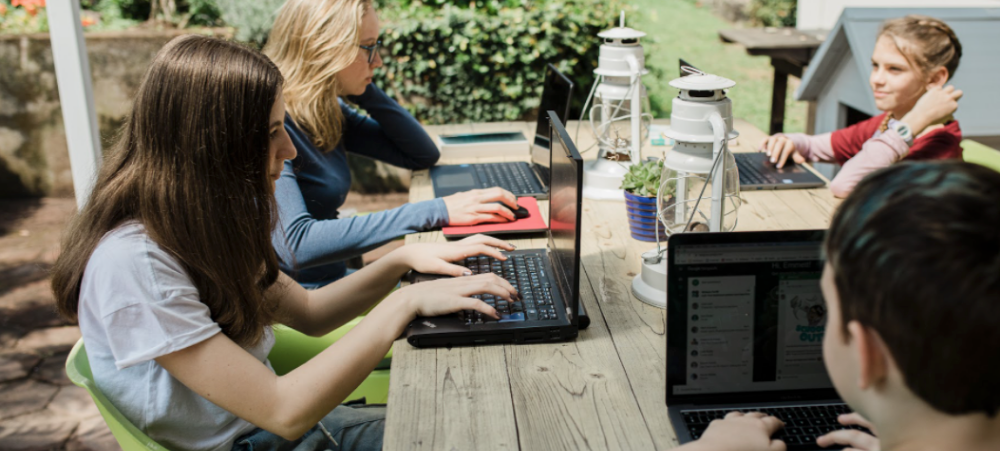
One of the biggest questions parents have about homeschooling is: “How will my child socialise?” At Wingu Academy, we know that building friendships and community is just as important as academic success. That’s why our online school is designed to create meaningful connections and support holistic development. Social Clubs for Every Interest Wingu Academy offers a wide range of social clubs, allowing students to connect with others who share their passions. From book clubs to coding groups, these clubs help students collaborate, share ideas, and build friendships—all while having fun! Extracurricular Activities That Inspire We believe education goes beyond the classroom. Our extracurricular activities are designed to teach essential skills like teamwork, communication, and leadership. These experiences not only support personal growth but also prepare students for future success. Supportive Teachers Who Care Our teachers play a vital role in fostering a sense of community. As one parent shared on Hello Peter:“The teachers are extremely helpful and go out of their way to assist a student in need. Wingu offers many social activities which are fun for the kids to do.” With teachers who care, students feel supported every step of the way. Hybrid Schooling Options For families wanting a mix of online learning and in-person interaction, Wingu Academy offers hybrid schooling in Centurion (Gauteng) and the Southern Suburbs (Western Cape). This option combines the flexibility of online education with the social benefits of a physical school environment. Why Choose Wingu Academy? At Wingu Academy, we make sure students get the best of both worlds: quality education and a strong sense of belonging. Our commitment to building a thriving community ensures every child has the opportunity to grow, connect, and thrive. Explore how Wingu Academy can support your family at Wingu Academy. #OnlineSchooling #HomeschoolingCommunity #StudentLife Learn more about Wingu Academy: Call: 081 147 1668 Email: [email protected] Book a consultation: https://form.jotform.com/203373140162039 Events page and upcoming webinars: https://wingu-academy.com/all-events/

Wingu Academy

Online Schooling vs. Homeschooling: Which is the Better Choice for Your Child in South Africa?

In South Africa, parents seeking alternatives to traditional schooling are often faced with two choices: online schooling and home schooling. While both offer flexibility and a personalised approach to education, the two models are distinctly different. Understanding these differences is crucial in making the best decision for your child’s future. Wingu Academy, as a leading provider of online education, offers an innovative platform that combines the benefits of online schooling with the structure and support many families seek. Let’s explore the key differences and see why Wingu Academy is a game-changer in modern education. What is Home Schooling? Home schooling involves parents taking full responsibility for their child’s education. This means sourcing curricula, teaching lessons, assessing progress, and ensuring compliance with South African education laws. While home schooling offers freedom in pacing and content, it also places significant demands on parents in terms of time, expertise, and resources. What is Online Schooling? Online schooling, on the other hand, leverages digital platforms to provide structured education led by qualified teachers. Students access lessons, assignments, and resources online, often following an established curriculum. Wingu Academy is a prime example of online schooling done right, offering a seamless blend of technology, expertise, and personalised support. Key Differences Between Online Schooling and Home Schooling Curriculum and Structure Role of the Parent Access to Resources Social Interaction Regulatory Compliance Why Choose Wingu Academy for Online Schooling? Wingu Academy combines the flexibility of home schooling with the structure and quality of traditional schools, creating the ultimate educational solution for modern families: What Parents Say About Wingu Academy Our commitment to excellence has earned us the trust of families across South Africa. Here are some testimonials from Hello Peter: While both home schooling and online schooling have their merits, online schooling through Wingu Academy offers a balanced approach that ensures academic excellence, safety, and holistic development. By combining flexibility with expert guidance and innovative tools, Wingu empowers students to achieve their full potential without compromising on quality or support. If you’re ready to take the next step in your child’s education journey, explore Wingu Academy today. Let’s shape a brighter future together! Join the Wingulian community! Online schools like Wingu Academy are redefining what it means to build a community in education. By leveraging technology to break down barriers, fostering inclusivity, and creating opportunities for meaningful connections, Wingu ensures that students not only excel academically but also develop the interpersonal skills and global awareness they need for the future. For families seeking more than just an education, Wingu Academy offers a transformative experience where students are part of a vibrant, supportive community that celebrates diversity and fosters lifelong learning. In the world of online schooling, Wingu isn’t just a platform—it’s a place where connections thrive and barriers disappear. Take the First Step Towards Success: Enroll at Wingu Academy Today and Unlock Your Child’s Potential! Email: [email protected] Call: 087 147 1668 Book a consultation: [Link]

Wingu Academy

Is Online Schooling the Safer Choice for South African Students?

The safety of students is a critical concern for parents and educators alike. Recent reports on “Contact Crimes on Educational Premises” and “Murders on Educational Premises,” published by News24, paint a troubling picture of the safety challenges in South Africa’s brick-and-mortar schools. With incidents of violence, theft, and bullying on the rise, many parents are reconsidering traditional schooling options in favor of safer alternatives. Online schooling, with its controlled and secure learning environment, offers a compelling solution for today’s safety-conscious families. Wingu Academy, a leader in online education, provides not only an innovative learning platform but also a haven of safety and stability for students. Let’s explore how online schooling can redefine safety in education and why Wingu Academy is at the forefront of this transformation. The Reality of Brick-and-Mortar School Safety South Africa’s educational premises are increasingly becoming sites of criminal activity. According to News24: These statistics highlight the need for an urgent re-evaluation of how we ensure student safety. Traditional schools often lack the resources to implement robust safety measures, leaving children vulnerable. Why Online Schooling is the Safer Alternative How Wingu Academy Adds Value Wingu Academy isn’t just an online school—it’s a comprehensive educational solution that prioritizes safety and academic excellence: What Our Families Say Our commitment to safety and quality education has earned us the trust of countless families. Here are some testimonials from Hello Peter: Looking Ahead: The Future of Safe Education As concerns about school safety grow, online schooling offers a forward-thinking solution. Wingu Academy leads the way by combining academic excellence with a steadfast commitment to student safety. Our approach not only addresses the challenges of today but also prepares students for the demands of tomorrow. If you’re ready to provide your child with a safe, supportive, and high-quality education, explore what Wingu Academy has to offer. Let’s build a brighter and safer future for your child, together. Join the Wingulian community! Online schools like Wingu Academy are redefining what it means to build a community in education. By leveraging technology to break down barriers, fostering inclusivity, and creating opportunities for meaningful connections, Wingu ensures that students not only excel academically but also develop the interpersonal skills and global awareness they need for the future. For families seeking more than just an education, Wingu Academy offers a transformative experience where students are part of a vibrant, supportive community that celebrates diversity and fosters lifelong learning. In the world of online schooling, Wingu isn’t just a platform—it’s a place where connections thrive and barriers disappear. Take the First Step Towards Success: Enroll at Wingu Academy Today and Unlock Your Child’s Potential! Email: [email protected] Call: 087 147 1668 Book a consultation: [Link]
Wingu Academy

The Pros and Cons of Online Schooling: Why Wingu Academy Stands Out

In recent years, online schooling has revolutionised education by offering flexibility and accessibility that traditional schools often struggle to match. Whether you’re a parent exploring options for your child’s education or a student seeking a personalised learning journey, understanding the pros and cons of online schooling is crucial. At Wingu Academy, we aim to make your decision easier by highlighting how our unique approach addresses potential challenges while maximising the benefits of online education. The Pros of Online Schooling The Cons of Online Schooling and How Wingu Academy Solves Them What Our Families Say We believe that our success lies in the stories of our students and their families. Here are a few testimonials from satisfied parents and students: Why Choose Wingu Academy for Online Schooling? Wingu Academy isn’t just an online school; it’s a community of learners and educators dedicated to helping students achieve their dreams. Our commitment to personalised education, innovative tools, and unparalleled support sets us apart in the world of online schooling. By addressing the challenges and amplifying the benefits of online education, Wingu Academy ensures that every student is equipped to succeed academically and beyond. If you’re ready to explore the transformative power of online schooling, join the Wingu family today. Let us guide your child on a journey of discovery, growth, and excellence. Join the Wingulian community! Online schools like Wingu Academy are redefining what it means to build a community in education. By leveraging technology to break down barriers, fostering inclusivity, and creating opportunities for meaningful connections, Wingu ensures that students not only excel academically but also develop the interpersonal skills and global awareness they need for the future. For families seeking more than just an education, Wingu Academy offers a transformative experience where students are part of a vibrant, supportive community that celebrates diversity and fosters lifelong learning. In the world of online schooling, Wingu isn’t just a platform—it’s a place where connections thrive and barriers disappear. Take the First Step Towards Success: Enroll at Wingu Academy Today and Unlock Your Child’s Potential! Email: [email protected] Call: 087 147 1668 Book a consultation: [Link]

Wingu Academy

Why Wingu Academy is the Best Online School in South Africa

In a world where education is evolving rapidly, finding the right online school for your child is no small task. As parents and students weigh their options, Wingu Academy consistently emerges as the premier choice for online schooling in South Africa. With its innovative approach, personalised learning pathways, and commitment to excellence, Wingu Academy stands as a beacon of quality education in the digital age. Here’s why Wingu Academy is the best online school in South Africa and how it can transform your child’s educational journey. A Globally Recognised Curriculum Wingu Academy offers a range of internationally acclaimed curricula, including Cambridge and CAPS. These programmes ensure that students receive a rigorous, well-rounded education that opens doors to universities and careers worldwide. Whether your child dreams of excelling in science, technology, or the arts, Wingu’s diverse course offerings cater to every aspiration. Personalised Education for Every Student At Wingu Academy, no two students are treated the same. Our personalised learning pathways adapt to individual strengths, weaknesses, and interests, ensuring every student reaches their full potential. Value Adds: Unmatched Technology and Innovation Wingu Academy leverages cutting-edge technology to deliver an unparalleled online schooling experience. Our user-friendly platforms offer interactive lessons, live tutoring sessions, and access to a wealth of digital resources. From coding courses to career preparation webinars, Wingu equips students with the tools they need to thrive in the 21st century. Safety First: With recent News24reports highlighting safety concerns at traditional schools, Wingu Academy provides a secure, controlled environment where students can focus on learning without fear of bullying or violence. Holistic Development Beyond Academics At Wingu, education goes beyond textbooks. We emphasise the development of essential life skills such as critical thinking, communication, and collaboration. Our programmes include opportunities for: Parent-Friendly Approach Wingu Academy understands the importance of parental involvement in a child’s education. That’s why we provide regular progress reports, open communication channels, and resources to help parents stay informed and engaged. What Parents Love: What Our Families Say Real experiences from Wingu families highlight the transformative power of our online schooling: Why Wingu Academy Stands Out When it comes to online schooling in South Africa, Wingu Academy is the gold standard. Our commitment to academic excellence, innovation, and student well-being sets us apart. We are more than an online school; we are a community dedicated to nurturing the leaders of tomorrow. Ready to give your child the best in online education? Join the Wingu family today and experience the future of learning. Join the Wingulian community! Online schools like Wingu Academy are redefining what it means to build a community in education. By leveraging technology to break down barriers, fostering inclusivity, and creating opportunities for meaningful connections, Wingu ensures that students not only excel academically but also develop the interpersonal skills and global awareness they need for the future. For families seeking more than just an education, Wingu Academy offers a transformative experience where students are part of a vibrant, supportive community that celebrates diversity and fosters lifelong learning. In the world of online schooling, Wingu isn’t just a platform—it’s a place where connections thrive and barriers disappear. Take the First Step Towards Success: Enroll at Wingu Academy Today and Unlock Your Child’s Potential! Email: [email protected] Call: 087 147 1668 Book a consultation: [Link]
Wingu Academy

Building Stronger Communities in Online Schools: How Virtual Learning Breaks Barriers

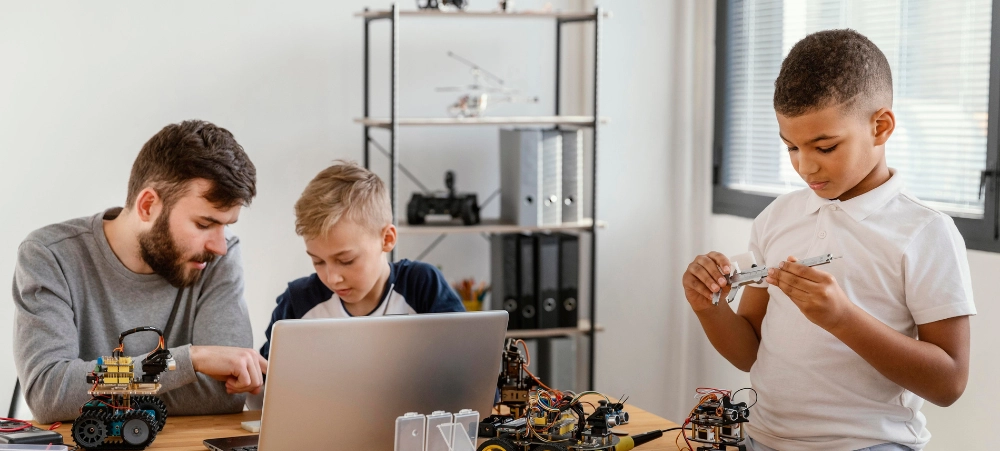
In today’s interconnected world, education is no longer confined to the walls of a classroom or the boundaries of geography. Online schooling has emerged as a transformative force, breaking down barriers and building vibrant, inclusive communities where students from diverse backgrounds can connect, collaborate, and thrive. At the heart of this revolution is Wingu Academy, a pioneer in online learning that fosters a global learning community while supporting collaborative education through cutting-edge technology. Breaking Barriers with Virtual Learning 1. Geographic Boundaries Dissolved Traditional schooling often limits students to their local area, but online education transcends these restrictions. At Wingu Academy, students from across the globe come together in a virtual environment, enriching their learning experience with perspectives from different cultures, countries, and backgrounds. One parent shared, “My child has made friends from South Africa, Zambia, and even Europe throughWingu’sonlineplatform.It’saprivilegetoseehergrowinsuchadiversecommunity.” 2. Accessibility for All Learners For families in remote areas or those with unique scheduling needs, online schooling provides an accessible alternative to traditional schools. Wingu Academy’s intuitive platform ensures that every student, regardless of location or circumstances, has access to world-class education. Moreover, students with physical disabilities or health concerns can learn comfortably from home while still participating fully in classes, clubs, and social events. 3. Cultural Exchange and Global Citizenship By connecting students from different parts of the world, Wingu Academy fosters cultural awareness and global competence. Through collaborative projects, language courses, and virtual meetups, learners gain an appreciation for diversity and develop the skills needed to engage in a globalised society. Creating a Thriving Online Community 1. Collaborative Learning through Technology At Wingu Academy, technology is not just a tool for teaching but a medium for connection. Features like real-time collaboration on projects, group discussions, and interactive platforms ensure students can work together seamlessly, even if they are thousands of kilometres apart. The use of gamification and simulations further enhances this experience, making group work both engaging and effective. For example, in the Junior Robotics Club, students collaborate to design and programme robots, combining creativity and teamwork. 2. Social Programmes and Clubs Understanding that education is about more than academics, Wingu Academy has developed a robust social programme to foster connections. Students can join one of the 11 online clubs, such as Mini Mozarts, Wingu E-sports, or Green Thumbs, where they explore shared interests and build friendships. These clubs change termly to keep activities fresh and exciting, while in-person meetups like the Wingulympics provide opportunities for students to connect face-to-face, reinforcing the sense of belonging. 3. The House System Wingu Academy’s house system, with groups like Duma, Kifaru, and Ndovu, promotes camaraderie and healthy competition. Students participate in house challenges and events, which encourage teamwork and foster school spirit. One student reflected, “BeingpartofHouseKifarumakesmefeellikeIbelongtosomething bigger. I love cheering my teammates on during competitions!” The Role of Teachers and Technology in Community Building 1. Personalised Support and Engagement Wingu Academy’s teachers are more than just educators; they are mentors who actively engage with their students to create a supportive and inclusive environment. With small class sizes and regular one-on-one check-ins, teachers ensure every student feels seen and valued. 2. Interactive and Intuitive Platforms Wingu’s user-friendly learning platform is designed to facilitate interaction. Features like live chat, discussion boards, and collaborative tools allow students to communicate easily with their peers and teachers. Gamified elements make learning fun and encourage participation, creating a dynamic classroom atmosphere. 3. Inclusivity Through Accessibility Wingu Academy prioritises accessibility, incorporating features like dyslexia-friendly fonts and customisable text sizes to support students with learning differences. This commitment ensures that every learner can fully participate in the community, regardless of their needs. The Impact of Stronger Online Communities 1. Academic Success Through Collaboration Research shows that collaborative learning enhances critical thinking and problem-solving skills. At Wingu Academy, group projects and peer feedback are integral to the curriculum, helping students learn from one another and develop a deeper understanding of their subjects. 2. Emotional Wellbeing A sense of belonging is crucial for emotional wellbeing, especially in a virtual setting. Wingu’s Wellness Hub provides counselling and emotional support to students, while its emphasis on social interaction ensures no student feels isolated. 3. Lifelong Friendships Perhaps one of the most rewarding aspects of Wingu Academy’s community is the lifelong friendships it fosters. Students often stay connected long after graduating, forming networks that span continents and cultures. Testimonials from Wingu Families Join the Wingulian community! Online schools like Wingu Academy are redefining what it means to build a community in education. By leveraging technology to break down barriers, fostering inclusivity, and creating opportunities for meaningful connections, Wingu ensures that students not only excel academically but also develop the interpersonal skills and global awareness they need for the future. For families seeking more than just an education, Wingu Academy offers a transformative experience where students are part of a vibrant, supportive community that celebrates diversity and fosters lifelong learning. In the world of online schooling, Wingu isn’t just a platform—it’s a place where connections thrive and barriers disappear. Take the First Step Towards Success: Enrol at Wingu Academy Today and Unlock Your Child’s Potential! Email: [email protected] Call: 087 147 1668 Book a consultation: [Link]
Advice from the experts
Koa Academy

GET TO KNOW MAJOZI, SA MUSO & KOA ACADEMY’S NEW HEAD OF CULTURE

SAMA-nominated hitmaker, Majozi, takes to the stage in SA education this year as Koa Academy’s Head of Culture. Appreciated for his warmth and humanity, we sat down with Majozi so that SA parents can get to know him better: What was your favourite subject in school, and why? “It was history. The other subjects didn’t even come close for me, I’m not sure why. Maybe it was the story-telling aspect, mixed with trying to understand where we’ve come from and how we got here.”  Did you have a teacher that made a huge difference in your life? How? “My history teacher, Mr Van der Bergh. I really enjoyed the subject and he was an interesting character. He shared interesting stories and poems with us all the time.” Looking back, what would you have wanted to change about your own school experience? Tell us more about a song that inspired you when you were at school and why? “I wish I had the opportunity to pursue more of the creative arts in school. We never had music but we did have drama. I wish I had explored that avenue at a younger, school-going age, but to be honest, not many people took it seriously or saw any value in it. I started playing guitar at the beginning of high school, and any song that was fun to play inspired me. I remember playing along with anything from Jimi Hendrix and Metallica, to Blink 182 and Avril Lavigne. As long as it had a few chords and riffs, I would try to play it.” As Koa’s Head of Culture, what are you most looking forward to? “I’m really looking forward to working with the students. In my previous interactions, I found them inspiring and they gave me so much hope for the future. I’m honoured to try and tap into what I’ve already seen and help them explore their creative endeavours in whatever form that may take, in the Koa environment that allows them to grow and feel valued.” Tell us more about your musical journey, and how you got started… “I use to sing in the choir in Grade 1, but I really started being interested in music when I started playing guitar at the age of 13. I was pretty average at most things, but I took to guitar fairly quickly and just had so much fun. Learning to play other songs helped me understand how songs were made, and that inspired me to write my own songs and got me on the path to a creative career.” When you think back to your youth, what did music, arts & culture mean to you? “So many of my favourite memories have songs attached to them, and I’ve been introduced to many of my friends through a mutual love for the same music. My youth is full of those moments. That all turned into important moments like playing music in church, growing spiritually and finding a community that loved me.”   What is your greatest wish or prayer for young South Africans? “I wish all young South Africans knew that they are loved and that they are enough. No matter who they are or what they’ve done.”  What is the best thing about being a professional musician? “I love meeting interesting people. Music has opened many doors for me, and I’ve had the pleasure of engaging with some of the most fascinating people in the world.” If you weren’t a musician, what other career would you like to explore? “Acting, not sure I’d be any good, but I’d have fun.” If you had to give a young, emerging artist just one piece of advice, what would it be? I would quote the incomparable musician, composer, arranger and record producer, Quincy Jones, who said: “Never be a better musician than you are a person’.” Koa Academy is a high-engagement, online school offering an accredited IEB-curriculum for Grades 4 to 12.  Learners, who engage with their teachers in high contact 8-person Pods, get to interact with Majozi in a range of experiential arts and culture projects that aim to develop real-life skills. Majozi also engages with parents through various webinars and school activities. Discover Koa Academy here

Syllabis Learning

Advice to the parent who is undecided on Homeschooling

Are you one of those parents who have been toying with the idea of homeschooling your child? You want to do it…but you don’t want to do it! You find yourself wishing you were a fly on the wall in your colleague or friends’ house to see what homeschooling is really like and how it is done. You must be wondering things like whether it is true that homeschooling takes so few hours a day, do the kids enjoy it more than traditional school? Are they miserable? Do they love the freedom? Do they miss seeing other kids? Are they geniuses? Are they behind in schoolwork compared to other kids their age?  There is no need to wonder, we are able to enlighten you with some valuable knowledge. Answers to All Your Home-schooling Questions: I am a parent and I do not know how Homeschooling works.                                                                                   Conventional home-schooling is essentially doing school-at-home, using similar methods to those used in public or private schools, where a parent, in-home tutor or online tutor take on the role of the teacher. However, in today’s day and age, very few families can afford the luxury of employing personal or online tutors and in most cases both parents are employed to make ends meet. Most SA Home-school curriculum providers, offer a conventional home-schooling curriculum, which even if done ‘online’  is actually already outdated, and of little consequence to today’s learner. Syllabis Learning has taken the Lead in modernising learning and our new Independent Learning curriculum is by far the best solution for the modern-day learner, which requires virtually no input from parents, teachers, or tutors. Independent learning is a modern form of learning. It has been proven to be effective, convenient, and fast, thanks to the rise of the internet. Nowadays, you can learn how to do almost anything through a simple Google search, by watching a YouTube tutorial, or by simply reading instruction manuals. Self-learning is the new form of learning that is equipping people with skills that are relevant to their daily activities. Testimonial of a working Mom- “I will tell you that I was very skeptical of how this was going to work out. I have been so pleasantly surprised to find out how simple the Syllabis Independent Learning curriculum really works with extraordinarily little input from me. My daughter adamantly says she never wants to go back to a public school again!”. How expensive is homeschooling  going to be? You will most probably be surprised at the affordability of such a comprehensive platform! The yearly cost of the Syllabis Independent Learning Curriculum, at the date of this publication, starts from R 3590 for Grade R to R20990 for Grade 12. Discounts are offered for multiple learners from one family. Payment plans are  available on request. Prices quoted are subject to change without notice. How many formal home-school hours should home-schoolers do per day?                                                   Research has shown that on average, home-schoolers study about two to three hours a day. Take away trips to and from school, moving from class to class, taking pre-determined breaks and the delays that slower learners in the class create and what you have is the freedom to work at your own pace and schedule. The Grade 1-3 curriculum can take as little as 2 hours of work per day, Grade 4-9 from 3-5 hours per day and an estimated 7 hours for Grades 10-12. We already battle over homework! How am I going to get them to do all their schoolwork at home? This is the game-changer…when kids get home from school they are exhausted. School is a is a full-time job for a child, 7-8 hours spent concentrating and working, all they want to do when they get home is chill out. Traditional schools demand at least 2-3 hours of homework to be done every single day. With home-schooling there is no homework.  Are my kids going to be weird? This is one of the biggest fears of most parents who are considering home-schooling. The socialisation issue. This is the biggest myth of all about homeschooling. Going to a conventional school does not mean that you are going to be super suave and develop awesome social skills. Going to a conventional school does not make you cool and home-school does not make you weird. There is data to back this up. This amazing paper out of Stetson University examines and compares many studies of social skills of home-schooled children. Here are some striking findings. “Children attending conventional schools showed more than eight times more behavioral problems than home-schooled children. Shyers described the traditionally schooled children as “aggressive, loud, and competitive” (1992b, p. 6). In contrast, the home-schooled children acted infriendly, positive ways. He noted that they introduced themselves, initiated conversation, co-operated with others, invited uninvolved children to join them in play, took turns, let others know it was alright if they lost a game, and even “exchanged addresses and phone numbers for future contact”. The homeschoolers had better social skills? This must be one isolated study, right? Nope. There were many other studies in the paper that showed the home-schooler to be equal to or more advanced than their peers in this area.  How is my child going to make friends? Home-schoolers have more time to spend with friends and get involved in social activities such as sports, scouts, and church etc. Your child will have time to find things they are interested in and sign up and get involved in external activities, in turn they will make friends and meet new people. With Syllabis Learning you child will have the

Koa Academy

UNBUNDLING EDUCATION – WHAT DOES IT MEAN, AND HOW COULD IT BENEFIT YOUR FAMILY?


The traditionally slow-moving education sector has been rocked by the global pandemic, setting in motion changes, that many education professionals believe are long overdue.  There’s been a massive uptake of EdTech tools and online education platforms.  At first, this was in the effort to ensure continuity in learners’ and students’ education during lockdowns.  However, schools, teachers, learners and their families found benefits from their digital explorations and experiences that they want to continue.  There are many families who have post-lockdown, transferred to online schooling, home schooling and hybrid learning solutions. While the concept of ‘unbundling education’ is so far mostly discussed in the context of tertiary education, it can apply just as easily to schooling, and is likely to become popular in the private school, online school and school improvement spaces.  Just as the unbundling option on your TV service offers you tailored choices and cost benefits because you only pay for the channels you actually watch; unbundling education will enable families to choose specific education services relevant to their children at lower costs. Mark Anderson, Principal of Koa Academy which embraces the unbundled education concept explains, “Our COVID lockdown experience has showed us that paying full private school fees for a purely online programme just does not make sense. After all, those fees include the cost of the academic programme, all the teachers, the entire running costs and maintenance of the physical facilities and a myriad of other brick-and-mortar related costs that were irrelevant to families with kids learning online at home for months. This has opened many parents’ eyes to the fact that an unbundled education makes the most sense in the long run where they could pay for different education service providers to suit their child’s individual needs at lower costs.  Unbundled education empowers parents to be more selective with limited resources, accessing the best opportunities for their children across their changing educational and life stages.” Koa Academy puts this into practice by offering families a top quality IEB academic program along with unbundled education options.  In addition to covering the full academic programme for grades 4-12, the Academy helps Koa children explore and identify their unique passions and then offers both in-house enrichment options as well as helping parents to leverage the benefits of the extra time and resources which are freed up by online learning. Koa also partners with third-party service providers in many spheres to offer Koa-partner discount rates.  Mark concludes, “This enables Koa families to access many more options than are typically available at any one school, as well as access the best available options, all at lower costs.” Discover Koa Academy here.

Wingu Academy

Future-proof your child’s employability from an early age with 4IR Skills

The world of work has been changing over the past decade. There were talks of the 4th industrial revolution by many forward thinking individuals, but the trends towards the revolution has become very clear in the workspace. Trends such as remote work which seemed an impossible consideration for many companies, has become centre stage and many will pay the price if an effective remote work policy is not put in place. Most employers had to rapidly change the way they worked, resembling the 4IR trends that have shaped the vision of the Future of Work. The catalysing effect of the COVID-19 pandemic has turned leaders to focus on what the lasting effect of the pandemic will have on their workplace. Leaders in education have turned their focus on what the lasting effect will be on (a) educators and (b) the future leaders – the youth – and they have a responsibility as a transformative element in society to be paving the way to thriving, growth mind-set individuals ready for the 4th and even the 5th industrial revolutions. But how?    According to a report by the World Economic Forum, titled “The Future of Jobs”, the skills that will be most in demand during the fourth industrial revolution are: Complex problem solving Critical thinking Creativity Managing people Coordinating with others Emotional intelligence Judgement and decision making Service orientation Negotiation Cognitive flexibility “Education can no longer be about learning facts. Educational organisations must focus on being transformative experiences, delivering an individual that has gained more than knowledge after completing a program. Central to these future skills is a mindset resembling that of the entrepreneurial-mindset where resilience and personal growth are centre stage in determining success. Education systems and mindsets – striving to master a fixed set of learning outcomes and avoiding failure are outdated viewpoints. Instead, critical and creative thinking, embracing failure as a positive growth opportunity, resilience and collaboration should take centre stage in transformative education strategies. It’s important to future-proof your child to thrive with skills of the future, like lifelong purposeful learning, unlearning and relearning, adaptability and rapid (re)skilling, says Ian Strydom – Managing Director Wingu Academy.  Why is it important to future-proof your child’s employability? The industries tied to the defining 4IR technologies (robotics, artificial intelligence, augmented and virtual reality, nanotechnology, cloud computing, quantum computing, machine learning, additive manufacturing, genetic modification) will birth new areas of work. McKinsey and Company predicts that by 2030, up to 30-40 percent of all workers in the developing world may need to move into new jobs or at the least up- or re-skill significantly.  At Wingu Academy learners are introduced to subjects such as coding, robotics, app development and game development from an early age to build a foundational grasp of these fields.  Learners and parents have a preconceived idea of Robotics and Coding and in general believe it’s for the “smarter” kids or for learners who are doing really well in other subjects. In doing so, they automatically disqualify themselves from enriching their future careers with these skills. We want to challenge this mindset. Every field in the future will incorporate coding and robotics to some extent and having a keen understanding of the underlying principles will set them up for success.   Apart from the hard practical skills learnt, integrated robotics and coding curricula teaches students invaluable soft skills such as  critical thinking, collaboration and solving problems logically and has the added advantage of teaching them to persevere in solving problems. Employers are looking for high-performance individuals – young people and mid-career employees- who are in sync with the demands of a rapidly-changing digital workforce. Learners that have these skills at school will be at an advantage, even if a child doesn’t go on to pursue a career in coding/IT. Even if a learner doesn’t go on to pursue a career in coding/IT, how will this benefit them? The first obvious advantage is the opportunity to be employed directly in the IT industry which offers huge employment potential. Currently SA has 200,000 unfilled positions that require a knowledge of coding.  Coding has emerged as a new literacy that allows us to leverage the power of computers.  At school it is important that children learn to use computational thinking to solve problems as this way of thinking is best developed early on. A keen understanding of computational processes allows team members to collaborate with programmers, to better understand the impact of actions and decisions on enabling digital technological processes (and the teams that develop them) and use design thinking principles to drive innovation effectively.   Coding and IT are becoming prominent in almost all career fields. For instance; artists are using machine learning algorithms to create unique art, acting and entertainment machine learning algorithms are used to write scripts and in medicine or biology it is used for diagnosing diseases and finding new treatments by repurposing medicine. “Our aim is thus that learners who complete these courses will not only be more desirable to employ, but at the same time exceed employers expectations,” Strydom concludes. What will the learners be taught to master with these programmes at Wingu Academy? Learners in the Coding and Robotics programme will use a variety of different programming languages such as Python and JavaScript to solve various problems, some translating into creative solutions in the real world. They will apply their skills in various different fields of interest including music, robotics, science and others to demonstrate the power of coding in various fields. More mature learners enter the Software Development programme where they work on front-end and back-end solutions and build a variety of web applications to develop a portfolio of evidence, equipping them with many entry level skills in the IT industry. Parents who would like to find out more about Wingu Academy’s Kukua Programme can visit https://wingu-academy.com/innovation/. The internationally recognised curriculum at Wingu Academy prepares learners for entering University degrees locally and across the globe, and focuses on building critical and creative thinking skills. The

Koa Academy

LIFELONG LEARNING – IS THIS A SKILL THAT CAN BE TAUGHT AT SCHOOL?

Nowadays, we frequently hear about the importance of ‘lifelong learning’.  But what is this?  Lifelong learning is a self-driven, sustained pursuit of knowledge and experience that inevitably enhances our personal and professional lives.  The mantra of a lifelong learner is that there is always more to learn.   In our personal lives, lifelong learning leads us to new frontiers and into exciting worlds based on the individual interests we pursue in our free time.  In our professional lives, lifelong learning compels us to build on our work skills-sets; helping us to stay relevant in the fast-changing world of work, increasing our competitiveness in the job market and opening up new and better work opportunities.  Across these interconnected spheres, lifelong learning tends to lead to greater fulfilment in life, and often enhances our capacities for personal development, active citizenship, and social cohesion. Should lifelong learning be taught at school? We asked Mark Anderson, Principal of high-engagement online school, Koa Academy, and he says: “Lifelong learning is a skills-set encompassing both ‘hard’ and ‘soft’ skills.  School is where it starts formally.  There are technical, practical skills when it comes to learning such as time management and self-management which can be taught and reinforced in the school environment. There are also ‘soft skills’ which are taught through modelling, coaching, and practicing over time.  Developing these skills rests on the foundation of an essential spark that ignites a desire and an enjoyment of learning which you find in high engagement school environments.  Children are innately curious, and curiosity is the major driver of learning.  The school environment, as well as the home environment, need to keep triggering that curiosity which creates the opportunities to develop the skills and self-motivation to keep learning.  It is this that opens up the pathway to a lifetime of continuous learning.” How do our kids ‘learn to learn’, and how to think about their learning? Mark says, “The best place to start with young people is to help them figure out their individual interests as well as why we learn certain things in school. We also want to develop key skills which make learning easy – like being able to prioritise, organise and manage time effectively. We also want to nurture a high sense of personal investment in learning – the idea that my learning benefits me personally and significantly, which helps develop learners who are highly self-motivated. The last thing you want is your child to finish Grade 12 and still have to be told what to study, when to study, how to study and – especially – why to study!” Lifelong learning is a game changer for our future adults. Some of the many benefits include being able to identify and reach personal goals more easily, increased financial opportunities, healthier brains, higher self-confidence and self-motivation, and improved social skills. Discover Koa Academy here

Syllabis Learning

Syllabis Education iAfrikana – Our annual Short Story and Poetry Contest

Writers love competitions. There’s the creative stimulus of an interesting prompt, the promise of kudos and validation, and of course publication and prizes. The Syllabis iAfrikana contest is a new writing competition, writing short stories and poetry with a focus on the African bushveld. It launches in January 2022 and runs to final submissions with a closing date of 31 May 2022. Syllabis presents its first Poetry /Prose Competition. The aim is to give young people the opportunity to express themselves in a public forum, take part in a poetry slam and a creative writing workshop. Creative writing is any form of writing that breaks the boundaries set by traditional writing techniques such as journalistic or academic writing. Writing, in its earliest form was seen as a form of communication, and to this day that is still one of its main purposes, but over the years people have found such joy in exploring the more creative aspects of writing. People realized that writing does not have to remain a formal means of communication but it could be used to express feelings, emotions, and most importantly creativity! If you are looking to take your writing to the next level, then entering our writing competition will help you to achieve this. The goal of the competition is to help promote the writing aspirations of all school-going students. The panel of judges comprises 3 members, all qualified English / Afrikaans educators with a passion for literature. Who is eligible: All Syllabis Learning Registered Students that are currently registered with our institution. Students from any registered school in South Africa including all students that study from home. Some competitions ask for a story on any topic, up to a set word count. But if your parameters are too broad, comparing stories is very hard: How do you judge a 200-word flash against a 5000-word novella? We will set a 3 000-word limit for short stories and a 36-line limit on poetry Theme – South African Bushveld What do I stand to win? At initial selection, we select 5 semi-finalists from the received submissions. The 5 semi-finalists travel via shuttle (Safarilink) to a beautiful game lodge situated in the gaming region of Hoedspruit and stay at the wonderful Toro Yaka game lodge. If minors, they are accompanied by 1 parent if requested. If over the age of 14, the dedicated teacher will be responsible for their wellbeing. Terms and conditions will be provided beforehand. Semi-finalists and any guardians stay on-site, all expenses paid for 2 nights, attend 2 game drives, recite the meaning of their short story during the evening “Boma” storytelling session, and get judged by 3 specialist English / Afrikaans literature educators. Winners will be announced in August 2022. Prizes:  If the winner is a Syllabis learner, their entire education up to grade 9 is funded by Syllabis learning, grade 10 – 12 students get a R20 000 rebate against their studies with Syllabis Education. If the winner is a non-Syllabis Education student, they win: Prizes to the value of R20 000. How can I Register? For Syllabis Education students, log in to your learning portal and upload your submissions. Submissions are limited to 3. For all other students, please complete the entry form found on this link https://syllabiseducation.com/syllabis-iafrikana/ or simply send your completed work to [email protected] after mentioning the competition on Social Media.  

Wingu Academy

How Wingu Academy changes lives – one Wingulian at a time!

At Wingu Academy we pride ourselves in doing school differently. Schooling is no longer one-size-fits-all and therefore we believe the fundamental purpose of education is to unlock potential. We also have the privilege of schooling learners with different needs and requirements. Following; is one Wingu parent’s account of how Wingu Academy creates an environment for a learner (Wingulian), that’s atypical, to thrive and excel: My husband and I were discussing High School options for our children even before they were of high school age.  The decision to change our children from CAPS to Cambridge, brick-and-mortar to online and then specifically Wingu Academy, were made due to the following factors. Living in Pretoria the options for good, affordable, non-private high schools are many, if your Afrikaans speaking, but options for English speaking children are very few and far between. We also wanted to give them the opportunity to study abroad if they wanted to and Wingu’s British curriculum was the best option for this decision.  When we started researching the different online schools, we kept in mind that both my husband and I must work and needed a platform where we weren’t responsible for teaching, but where we could keep track of classes, homework, assessments, etc. A big concern was that towards the end of 2020 our daughter had become super anxious and started struggling with social interaction at her school, distancing herself from her circle of friends and self-harming.   After researching other platforms, we decided on Wingu Academy, because 1. It has online classes where there is interaction with a teacher, and 2. the support structure that exists for students and parents.  In retrospect we can now see that Wingu’s set-up, teachers, and classmates were the absolute ideal option for our daughter. Changing to online schooling was an easy decision, but when she was diagnosed with Autism Spectrum Disorder (aka ASD or Asperger’s) we chose to register with Wingu. The first part of 2021 was extremely stressful for our girl, not only because Cambridge was new to her and doing online schooling had its own challenges, but I was in hospital with Covid mid- February.  The stress of me not being home and not knowing whether I would leave the hospital alive was a huge burden on my family and our daughter had to try and navigate the new schooling system pretty much alone for almost four months, before I was mentally and physically able to focus on anything other than survival.  ASD has a lot of amazing positive traits which we are encouraging.  One of these traits can also be negative though. It is the propensity to stick to a set routine and intense focus on their interests to the detriment of others.  With CAPS she had gotten into a ‘non-homework’ routine as she was so good at retaining any information she heard in class and regurgitating during exams, which gave her 90+% in almost every subject.  Once I could focus on her schooling, I could help her create a new routine of doing online quizzes, assignments, homework and read questions in a way that she would not just regurgitate information but actually apply the knowledge.  This has taken a while and I still need to encourage the new routine on almost a daily basis, but she has made great strides and we are SO proud of her.  There are so many aspects of her life that have been positively affected by being at Wingu. As for most teenagers, not having to get up at the crack of dawn to get to school on time is a huge bonus. The fact that she doesn’t have to leave home to go to school with throngs of other teenagers has reduced her anxiety levels immensely. The Wingu teachers are aware that being on camera is an issue for her and have been very accommodating.  This has made classes such a safe space for her that she now feels comfortable to engage with her teachers and classmates via audio. She has made friends with some of her classmates and not only hosts online homework sessions (off-camera) but goes ice-skating and has ‘live’ visits with friends she made at Wingu. Yes, there will be social limitations for her going forward, but having a platform where she is accepted as she is, given space to interact when she feels comfortable to do so, whilst getting a world-renowned education, has been an absolute Godsend.   For any parents who are considering online homeschooling, whether they are atypical or typical, this is my advice. Do your homework in researching different platforms. Be honest with yourself about your capacity.  I knew with a full-time job I would not have the capacity to teach my children myself, or research extra resources as many platforms would require you to do. You know your children and their abilities – Even with ASD I know my daughter would not cope with just watching videos day after day, she would stop watching them out of utter boredom.  Although she is socially awkward, she needs the structure that a class environment supplies. I also know my son, who will be joining Wingu for Stage 6 in 2022, would get super bored with videos and so a class environment would be ideal. Set up a time with the Wingu admission specialists and consultants and ask every question you can think of.  The staff are super helpful and patient.  After our daughter was diagnosed with ASD at the end of 2020, we had even more questions for the Wingu consultants, and they were very helpful and informative. If you are looking for quality, internationally recognised schooling, Wingu Academy is your answer as SA’s best-rated online homeschool with education rooted in innovation and excellence. Our Wellness Hub and Learning Coaches can assist both learners and parents with professional academic and wellbeing support and guidance to ensure that learners develop, grow and thrive in the Wingulian environment. Enrolments for 2022 are still open. Book a consultation with

Koa Academy

BUSTING 3 BIG MYTHS ABOUT ONLINE SCHOOL

We are almost two years into the global pandemic with its many restrictions on day-to-day life, and the digital world has played a vital role in ensuring continuity of our work and our kids’ schooling.  Our uptake of digital tools and platforms has been vastly accelerated; we’ve acquired new digital skills and knowledge; we’re far more open to possibilities and options that tech has opened up for us – and, there’s no going back.   Mark Anderson, Principal of high-engagement online school, Koa Academy busts three of the common myths around online school: I will have to teach my child – “When traditional schools were forced to transition to online teaching, many parents were required to pick up some form of teaching role from home. However, when an online school is designed specifically for the online space, learning has a distinct pedagogy and online teachers have particular skills to facilitate learning on the digital platform.  At Koa, it is the professional teacher’s role to guide your child through the school curriculum, freeing parents up to be parents, much as they are in the physical school environment. My child will not get socialization – “Parents need to choose a school, online or physical, that suits their values and aims for their child’s education and school experience.  Socialization at school comes through the intentional creation and maintenance of a high-engagement environment. There are physical schools that do well at this, and others that don’t.  Same applies to online schools.  At Koa, children come together in small 8-person Pods with their teacher which makes socio-emotional development a key part of every school day.  Our kids are learning how to be responsible, sociable digital citizens as well, which is preparing them for a very real world where our activities and work are increasingly digitalized.” The qualification is not equal– “It is true that parents need to be on the lookout for unregistered and underequipped institutions, looking simply to capitalize on opportunity. However, accredited online schools offer the same curricula and recognized qualifications as physical schools.  Like every aspect of our lives in these fast-changing times, schooling and tertiary studies are transforming and being disrupted by better ideas and improved tools.  As parents, we are challenged to keep abreast of these developments and to recognize that our child’s education and further studies will and should be different from what we experienced.  The world has, and continues to change rapidly and dramatically, and it is the role of school to prepare our children for the real world they will encounter as adults. In many ways, a well-designed online school like Koa offers a more robust preparation for the future world of work and life.” Discover Koa Academy here

Boston Online High School

Boston Online Home Education

The pandemic-led digital transformation enabled online learning to provide a seamless school year, keeping learners on track despite the onslaught of the Covid waves. Furthermore, the digital age also created new avenues of possibilities for parents and learners choosing home education as an alternative to the old-style school curricula.  As a pioneer in private education specialising in online and distance learning over the past 30 years, the Boston group is a key player in this environment, extending their educational expertise to support parents and learners embarking on a home education journey with reliable services via Boston Online Home Education, visit https://www.bostonline.co.za  As a registered Cambridge International Associate we create credible online pathways for parents of home educated learners toward the attainment of school-leaving alternatives that are internationally recognised for entry into leading local and global universities. “Our mission is to provide access to global opportunities for home education parents and learners. For this reason we have chosen to support the renowned Cambridge curriculum with strategically designed learning materials and technology.  This uniquely prepares learners for the future, honing higher order skills of comprehension, understanding and application,” says Katz about the Boston group which has become one of only five international associates listed on the Cambridge International website, https://www.cambridgeinternational.org/why-choose-us/find-a-cambridge-school/  Future ready skills:  Critical thinking According to the World Economic Forum critical thinking and problem-solving top the list of skills employers believe will grow in prominence in the next five years.  This is a key competency required in the Fourth Industrial Revolution and a transferable skill that can be used across subjects and careers. “In a world where knowledge has become a vital currency, it is essential that learners are able to think critically about content,” says Eli Katz, executive at Boston Online Home Education (BOHE). A central focus of the Cambridge curriculum is to avoid rote learning and emphasize higher order skills and its application. “Our aim is to support parents and learners so that they gain valuable life skills and competencies including analysis and evaluation of information that can be applied in different contexts, enabling them to problem solve and make meaning of complex issues.  We are excited to support parents and learners who choose the Cambridge curriculum” says Katz. Boston Online Home Education Support includes various Cambridge paths.  The Cambridge International Certificate of Education (ICE) for learners turning 14 in the first year of registration and who have achieved a Grade 7 or 8; the Advanced International Certificate of Education (AICE) stream is for learners turning 16 in the first registration year and who have achieved either a Grade 9 or 10 or the ICE.  Learners also have the option to register for Cambridge examinations in respect of individual Cambridge IGCSE and AS subjects to supplement their existing studies especially for those learners who wish to enter more demanding faculties such as medicine or engineering post school.   Cambridge awards are recognised by universities in South Africa and  globally, including Ivy League institutions. As a registered Cambridge International Associate our staff have access to the Cambridge Support Hub so that we can provide relevant, comprehensive and up to date support to ensure alignment with the Cambridge curriculum and realise your child’s preparedness for these examinations Quality Course Content  As a registered Cambridge International Associate we provide credible support mechanisms and services required to support your child’s home education success in the Cambridge curriculum.  Amongst the challenges faced by parents is ensuring that their children have access to quality content and assessments whilst being able to monitor their progress. The Boston platform provides parents with a specific login feature to co-participate in their learning journey.  Boston has developed a comprehensive offering mapped to Cambridge guidelines. In addition to live lessons and educator support which provide personal attention to each learner, the Boston methodology includes  extensive recorded video lessons, summaries, e-books and assessments with triggers being sent to parents so that they are able to monitor progress and track performance.   This also allows learners to revise material at their own time and their own pace until they fully grasp the content instead of feeling pressurized in a classroom setting.  The live lessons then allow for classroom interaction and facilitates educator-leaner engagement and discussion.  Our personalized learning approach is further enhanced by individual counselling sessions. Advanced technology infrastructure The use of the Boston’s artificial intelligence (AI) model assists with detailed reporting, data analytics and diagnostics for parent to determine strengths and weaknesses throughput the learning experience. Learner progress is further monitored through access to a range of formal and informal assessments, facilitating detailed feedback to parents and learners, enabling relevant academic intervention throughout the learning process. “ It is essential that we harness technology but intertwine with human intervention to create a learning experience focused on the individual”” says Katz. Social Interaction  Boston encourages social interaction through multiple opportunities to engage online with other home educated learners. In this way, learners can enjoy a local and global social network.  A variety of activities such as digital music production, journalism club, app development, public speaking and even online chess tournaments are made available. Parents who require further information and assistance, can  speak to a Boston counsellor or  visit our website: www.bostonline.co.za or send an email to: [email protected]

Koa Academy

Beloved SA muso, Majozi, joins Koa Academy as Head of Culture

High engagement online school, Koa Academy has announced the appointment of proudly South African creative, Majozi as their new Head of Culture.  The SAMA-nominated musician is well-known for ‘wearing his heart on his sleeve’ and for crafting hit songs conveying his inspiring perspectives on life.  Learners at Koa Academy, who engage with their teachers in small 8-person Pods, will get to interact with Majozi in a range of experiential arts and culture projects that aim to develop real-life skills. Koa Academy CEO and Principal, Mark Anderson says, “We’re delighted to warmly welcome Majozi into the Koa family.  As a professional musician, he’s walked the artist’s road himself and has incredible insight into how young people in South Africa can grow life passions, develop meaningful interests and pursue careers in arts and culture fields.  As a successful working creative, Majozi’s appointment as Koa’s Head of Culture represents the unbundling of education and enables Koa to focus on giving our kids more opportunities to discover their talents and pursue future careers which may typically have fallen outside the usual scope of traditional schooling.” For many years, traditional schools have been seen as a sort of ‘one-stop-shop’ for all things related to a child’s learning and future opportunities, often leading to limited resources being stretched thin and a steep rise in school fees. The emergence of online learning has largely enabled the unbundling of education, with parents able to leverage the best options available for each element of their child’s learning. Koa guides parents to take full advantage of those options, with Majozi leading the charge in the creative arts. In his role on the Koa leadership team, Majozi will be responsible for providing strategic and practical direction when it comes to Koa’s approach to arts and culture.  From January 2022, Majozi will feature at parent webinars and give school assembly presentations.  He will provide coaching to Koa staff on how best to identify and grow individual kid’s talents and artistic interests.  Majozi will also be hands-on involved in the design of more Koa Clubs and courses with an arts and culture focus. Majozi says, “Ever since I found my talent in music and started my career, I wished that my education around arts and culture started at an earlier age. When I was growing up, I think arts and culture were misunderstood and often just a side thought in South Africa. I’d love to help change that mind-set and help learners to embrace and value their creativity in whatever form it takes.  Even if a future career in arts and culture is not for them, all learners can gain so much by engaging with experiential arts and culture education.  They can learn appreciation, understanding, creativity, teamwork, history, and so much more. That’s the beauty of arts and culture, it really has many fascinating subjects that can be explored within it. I want the Koa learners to feel like they are enough and their ideas matter. I’d like to boost their confidence and let them know they can do anything they put their mind to. We’re going to break the ceiling that the world may already have put on their creativity.”

Syllabis Learning

Enhanced Learning in Distance School and the Syllabis Education’s iWizard

For those parents out there who’s children are already distance learning, or those of you that are considering distance learning as an answer for your child’s educational needs, we are sharing some insight about the amazing value-added products and platforms that we offer. We can’t deny that homeschooling requires a certain level of independence and initiative from the students to tackle their academic responsibilities. We have found that some students struggle to engage with their academics and often become distracted from their academics or simply want to learn more still.  Other learners might have certain learning areas where they have problems understanding core concepts, while others are willing to go the extra mile and gain an extensive understanding of a topic or core learning area.  Solving these issues was an incentive to create a new technology enhancement, and this is where the Syllabis iWizard was born. Is it abnormal for my child to get distracted easily? Not at all! In general, most students find some academic areas boring and see it as something they are being forced to do, and with so many distractions being made readily available all around them (laptops, phones, TV’s, video games, etc…) who can blame them for being easily distracted.  Do students want to learn more? Many students enjoy all the subjects offered in their grade, but most students start to develop a learning preference for certain subjects, such as accounting or business studies for aspiring entrepreneurs, or science and mathematics for the sciences. Others love art or sports.  Those students who want to go the extra mile and excel in a learning area, often have difficulty finding applicable resources. That’s another reason we developer the iWizard, for each augmentation lesson available, there is an extended lesson, which greatly enhances the understanding of the topic to the student. They become Masters. How does Syllabis plan on solving the above-mentioned problem? For 2022, Syllabis Launched its iWizard in December 2021. Our iWizard takes the vast resources made available to us by the internet and packages them into fun, interactive, lesson-sized educational lessons.  The iWizard is universally applicable to all students. Students who are struggling on a certain topic, students who have found interest in a certain topic, students who want to further their comprehension on certain topics, and even students who want to further their knowledge on topics that are not part of their curriculum (such as the Syllabis iWellness program) will fall in love with the Syllabis iWizard and its many features. How has Syllabis developed the iWizard? We wanted to develop this educational tool to achieve a few outcomes: To develop an innovative educational tool. To allow the creation of quality educational content as an added feature as part of our core offering. To take full advantage of the internet and its endless number of educational resources. The internet is the most powerful educational resource ever known to man, but this resource is extremely unstructured and unfiltered. The Syllabis iWizard is the solution to the above problem as it allows us to create meaningful, interactive educational resources, saving you the trouble of scrolling through endless web pages just to find the same information. Where can you access the Syllabis iWizard? The Syllabis iWizard will be offered as a free educational resource to all Syllabis students who are studying under the Buffalo or Lion package. The iWizard will help these students test their academic progress with the help of built-in quizzes and further their comprehension on topics they might be struggling with or topics that they may simply be interested in and would like to further their knowledge on. How does the Syllabis iWizard help our students? Step by step lesson plans that helps guide the students through the lessons. Built-in quizzes that test your child(ren)’s comprehension of the relevant lesson. Lessons structured per grade and per subject. Educational videos embedded into the lessons. Instructions that guide the student along every step of the lesson. Makes sure your child(ren) stays on track with his/her academics. The lessons are interactive and make sure that your child(ren) stays engaged in his/her academics. Lessons that go beyond traditional education and incorporate life skills. Our iWellness lessons are a perfect example of this. iWIZARD The instructional model is based on thorough research into students’ needs when using the internet as a learning tool, especially from home. The Pre-Quiz provides a measurement stick against which you’re learning during the online lesson can be analysed. Lessons and Quizzes can be done over and over. Students move page by page through several quality, interactive web resources within our learning browser. Students measure their learning progress by partaking in a post quiz. Results are sent electronically to parents and the Syllabis learning team. Most lessons are accompanied by extended learning content as well as excellent project ideas for learners. When do I use Syllabis iWizard? When I have a problem with a topic and need reinforcement. As extra lessons in general for reinforcement. For revision before tests and exams. As part of my tutoring. For non-students of Syllabis, enquire today about adding the iWizard to your set of learning tools.  Once again, Syllabis Education has led the way in educational innovation, and we can’t wait to continue this journey with our students in 2022!

Wingu Academy

Wingu Academy to open its first Learning Hub in Centurion – enrolments now open!

Wingu Academy has ventured into establishing its first Wingu powered Learning Hub in Centurion to provide a future focused, safe, reliable, and social environment for learners from different backgrounds to learn.  The first Learning Hub is currently open for January 2022 enrolment for learners aged 6 – 19. Interested parents can follow this link to book a free consultation here: https://form.jotform.com/203373140162039 Wingu’s Learning Hub will provide the opportunity for a blended approach to allow learners to learn from home or get support in person at the Hub, providing a unique level of flexibility and uninterrupted education. Learners will engage and interact with fellow learners in a safe and friendly environment that promotes learning and personal growth. The Hub will provide support such as learning spaces to attend seminars and tutorials, collaborative learning spaces, learning coaches, science and robotics laboratory access and other extra-curricular support.   Wingu Academy officially launched in July 2020 and soon after joined TuksNovation (The University of Pretoria’s High Tech Incubator and Accelerator) where it has been housed ever since.  Their remote-learning platform offers educational support to schools, tutoring centres and home-schoolers across the globe, with live classes and tutorials, interactive online content that is aligned with British International Curricula (a Pearson Edexcel examinations centre) catering for qualifications such as the General Certificate of Secondary Education (GCSE) and AS/A-levels with a focus on developing fourth industrial revolution skills. After finishing these exams, students are welcome to apply at the leading institutions such as the top 100 Universities in the world.   Developed by teachers, UP alumni and postgraduate students who hold advanced degrees in respective fields, and in collaboration with researchers at the Wits School of Education, Wingu prepares students for an international curriculum that is relevant and accredited globally. There is a focus on blended, student-led learning, gamification and instant constructive feedback and continuous assessments. The Wingu platform has evolved markedly over the past year to provide a unique blended experience for the families allowing to utilise Wingu for either complete online schooling or traditional home-schooling with the ability to take advantage of the benefits of both approaches. The core of the Academy is to develop Fourth Industrial Revolution Skills, including critical thinking, problem solving and emotional intelligence. All learners will also be given access to the Wingu Wellness Hub which will provide physical, mental and emotional support to ensure academic success while supporting holistic learner wellbeing. Wingu Academy further offers a variety of different social clubs that enable learners to identify activities they enjoy. The Fitness Club is one example of this, which promotes a healthy level of physical and mental stimulation to keep learners fit, focused and happy. There are limited spaces available at the Learning Hub in 2022, interested parents can follow this link to book a free consultation here: https://form.jotform.com/203373140162039

Koa Academy

HOW SOCIO-EMOTIONAL LEARNING IMPACTS YOUR CHILD’S ENGAGEMENT AT SCHOOL

A few kids are all-rounders, mostly engaging well in their learning and easily in their school community.  Others may be consistently highly engaged in the classroom and achieve well in academics but may sit on the sidelines socially.  Some are social butterflies and sports stars while their schoolwork suffers.  Others flounder around in a middle ground, achieving enough to get by here and there, shifting from time to time, but finding no sustained place to shine.   All of this has to do with how engaged a child may be in their own learning experience, and how engaged they may be in their relationships in their school environment.  Educational Psychologist, Angela Hough explains that a child’s engagement in school is crucial to their learning, and it is not just about their learning experiences. She says, “Peer relationships and teacher-learner relationships are vital for a child’s sense of self-worth, belonging and well-being. Generally, the more a child feels valued for who they are, and the more they feel included, the happier they are, and the more they are able to contribute and experience in the learning environment.  Therefore, encouraging positive relationship skills in schools is vital for learning. This can be modelled, taught, encouraged and facilitated.”  Mark Anderson, Co-founder and Principal of Koa Academy, a high engagement online school says, “Socio-emotional skills can’t be taught through a curriculum as if they are hard skills like learning long division. They have to be learnt over time through modelling, practice and coaching. The school needs to provide structure for socio-emotional learning, such as we have daily Morning Connect sessions to really focus on this type of learning. We run activities focused on key social, relationship and communication skills and constantly provide opportunities for the kids to interact with each other in a safe, supportive and carefully facilitated environment” Why is socio-emotional learning important? As parents we grew up educated in the industrial era that lionized ‘hard skills’ and competitive attributes while designating communication and interpersonal skills as ‘soft skills’ of much lesser importance.  Times have changed.  For our kids in the 4th Industrial Revolution (4iR), their abilities to build relationships, resolve conflicts, collaborate, be an effective team member and artfully navigate communication roadblocks have become top workplace skills.  Developing these competencies should not only start in school but is essential to facilitating the high engagement learning environment where academic performance also thrives. It’s important to note that socio-emotional learning doesn’t just happen in every school environment as some kind of natural consequence of bringing children together to learn.  This is evident by how widespread bullying remains as an issue in South African schools.  Whether your child attends a physical or an online school, socio-emotional learning needs to be intentional, and to have structure, modelling and coaching. Anderson concludes, “Having positive relationships in school, with friends, peers and teachers helps your child to be more engaged in their community, and high engagement is critical to their learning.” Discover Koa Academy here

Wingu Academy

Surviving year-end academic burnout

Have you ever woken up in the morning and felt less motivated to get going? Maybe even irritable and just plain exhausted, or even frustrated for no reason? You may very well be experiencing Academic Burnout. Academic Burnout is something that affects most learners, especially when you are putting in those extra hours to complete that every growing mountain of assignments and homework throughout the school year, and that prolonged state of stress. It is experienced through an increase in negative emotions, physical and mental reactions due to prolonged studding which can also results in exhaustion, frustration, a lack of motivation and reduced ability in school. It is often caused by the accumulation of weeks of hard studying of the same material and back-to-back classes.  Academic Burnout, however, is not to be confused with a student’s occasional feelings of frustration and fatigue from putting in hours of studying for and upcoming exam or pulling and all-nighter to catch up on missed work.  Academic burnout is far more serious than this. Academic Burnout can severely reduce your productivity, reduces all your energy which leaves you feeling hopeless, helpless, and resentful towards your educators, peers, and parents. These negative consequences from burnout often spills over into other areas of your life, including our personal and social life. Therefore, it is so important to understand what exactly academic burnout is and how to survive it. Constant exhaustion, no matter how much sleep you get; disrupted sleep patterns or insomnia; a serve lack in motivation to either attend classes or complete homework assignments; loss of confidence in your academic abilities, frequently ill or somatic pians are just a few of the common symptoms to look out for that are associated with academic burnout. But it’s not all doom and gloom. “There are ways to help prevent and manage Academic Burnout before it becomes too severe. The first step to treating Academic Burnout is to acknowledge it and understand that a change does need to be made to how you are current way of tackling school tasks and activities,” says Jessica Hart from Wingu Academy’s Wellness Hub. Here are a few changes you can introduce: Make time for the things you enjoy: Its important to remember that there is more to life then school and work. Use your weekends to spend time with friends and family, and to reconnect with the things that make you happy. Up the exercise: Finding the motivation to get up and exercise can be tough. But its always important to remember that a healthy body equals a healthy mind – the two go hand in hand. Try being active at least three times a week and remember to stay hydrated and eat health. Welcome that fresh air: Spending time outside in the fresh air and sunshine, will not only help your body produce that much needed vitamin D, but it will help reduce levels of stress and anxiety, helping you feel more relaxed, improve mental focus and concentration. Set reasonable goals for yourself: Use a calendar or planner and organise what needs to be done in a way that allows you time to rest in between tasks. Trying to get a months’ worth of work done in one week is not going to benefit your grades or mental well-being. Set reasonable goals and stick to them. Wingu Academy’s Wellness Hub offers guidance to all learners and parents on academic, well-being and mental health support. As an online home school we can offer education in a more relaxed environment in the safety of your home. Enrolments are still open for January 2022 at Wingu Acadamy. Book a FREE consultation here: https://wingu-academy.com/book-now/ or visit https://wingu-academy.com/ for more information.

Boston Online High School

Boston Online Home Education to extend its academic support and services

Boston Online Home Education, a registered Cambridge International Associate, is your home education partner.  We create credible online pathways for parents/guardians of home educated learners toward the attainment of school-leaving alternatives that are internationally recognised for entry into leading local and global universities.  As a pioneer in private higher education specialising in online and distance learning over the past 30 years, the Boston group realises the challenges faced by parents who select to home school their children. As a result Boston is extending its educational expertise to support parents and learners via Boston Online Home Education.     Our mission is to create new opportunities for home education parents and learners to choose an aspirational online learning experience by offering support to the Cambridge International single subject, i.e. International General Certificate of Secondary Education (IGCSE) and Advanced Supplementary (AS) Levels, or group awards, i.e. International Certificate of Education (ICE) and Advanced International Certificate of Education (AICE). The Cambridge International Certificate of Education (ICE) is for learners turning 14 in the first year of registration and who have achieved either a Grade 8.  And the Advanced International Certificate of Education (AICE) stream is for learners turning 16 in the first registration year and who have achieved either a Grade 9 or 10 or the ICE.  Learners also have the option to register for Cambridge examinations in respect of individual Cambridge subjects to supplement their existing studies especially for those learners who wish to enter into high stakes faculties such as medicine or engineering after school. Parents of a learner without a grade 9 are required to register their child as a home-school learner with the Provincial Department of Education in the province in which they reside.  “Being a registered Cambridge Associate brings huge advantages to parents and their children. The educators at Boston continually work with the academic and assessment guidelines, which are only made available by Cambridge to registered Cambridge associates and Cambridge schools. This means we have access to the Cambridge curriculum statements which ensure that the support is directed towards the guidelines specified by Cambridge. These guidelines also direct the “how” of the assessment methodology for each topic, thereby ensuring that learners will be well prepared for their exams. It is therefore critical for parents to ensure that they are getting support from a credible source such as a registered Cambridge Associate” says Katz. Amongst the challenges faced by parents is ensuring that their children have access to quality content and assessments whilst being able to monitor this progress.  As a result Boston have developed a comprehensive offering of recorded lessons, summaries, e-books and assessments with triggers being sent to the parent so that the parent is able to monitor the progress of the child throughout the learning journey and track performance. The parent has a specific log in feature to participate in the learning journey.  Forums and discussion groups between peers and educators are also integral support mechanisms with access to experience educators to solve problems is fundamental.  Through strategically designed learning material, learners have the benefit of honing higher order skills of comprehension, understanding and application.   Expert tutors are on standby to ensure personal attention to guide and assist each learner.  Learners also have the advantage to study at their own pace, whilst the use of online technology assists with diagnostics pinpointing what a learner knows and where there are gaps as opposed to getting lost in the classroom because a learner might feel uncomfortable to ask question.  Learners also have access to teachers who provide personal guidance and support.  Learner progress is also monitored through a range of formal and informal assessments, facilitating detailed feedback to parents and learners, enabling relevant academic intervention throughout the learning process.  ”We are not a private or independent school, as we do not enrol learners in any grades or have physical school grounds. We also do not set any curricula, exit exams or issue awards – this is done solely by Cambridge International, and you need to register for this separately. We can however assist you by facilitating this separate registration process”. “We do not replace your legal responsibilities and duties as a parent or guardian of the home education learner.  Our focus is about providing support to parents and learners in the home school journey”. Boston encourages social interaction through multiple opportunities to work and interact online in groups with other learners.    In this way, learners are able to enjoy a local and global social infrastructure.   Boston enhances this further through the many extra curricula activities such as digital music production, journalism club, public speaking and even an online chess tournament. “We aim to assist parents so that their children develop skills and future readiness through a holistic support program of academic excellence, offering learners the opportunity to enjoy an alternative to high school while preparing them for a successful and fulling future”. 

Koa Academy

HOW DOES A HIGH ENGAGEMENT LEARNING ENVIRONMENT WORK?

A high engagement learning environment enables our children to be interested and enthusiastic participants in their own learning, and also empowers them to becoming masters of their own learning experiences and academic achievement.  Mark Anderson, Principal and Co-founder of Koa Academy is adamant that high engagement is not something that you leave to chance.  He says, “You create a high engagement learning environment intentionally.  It comes from an understanding that children learn best when they are involved and have age-appropriate accountability for their learning progress.  It is also based on providing an agile and flexible environment that can cater to children’s diversity when it comes to igniting their engagement.” Educational Psychologist, Angela Hough explains that a child’s engagement is crucial to their learning. She says, “Children can possibly learn facts, but without engaging and having an experience or learning to apply the knowledge – then those facts do not have purpose or meaning. Transformative learning is about the need to create meaning from the learning experience. Therefore, I would encourage learning that involves experiences, embodiment, sharing and communicating learning. Experiential learning is the process of learning through experience. Usually, the more involved a child is in their school and class, and the more that they ‘own’ their learning, then the happier they are and the more they learn.” Learning through doing and learning through reflection Learning is not simply listening to a teacher telling you the facts.  You may remember those facts for some time afterwards, but that’s just remembering. How many of us parents have long forgotten a myriad of facts or mathematical operations even though we might have remembered them well enough at the time to pass our school tests?  There’s a lot we didn’t learn, because we can’t retrieve actual knowledge to answer the questions or do the sums today.  Memory fades, but knowledge grows.   Learning happens differently.  Anderson says, “At Koa Academy, we focus on practical, applied and meaningful use of content. This is why our Grades 4 to 9 do all the content subjects through our Engage programme, which is all about giving real world context to the subject matter.  We love the mastery-based approach, which means that in most of our courses, there are opportunities to loop back until a child has shown mastery. It doesn’t matter whether you get 20% or 80%, you are going to loop back and master that section. And everyone does, building confidence and teaching them the importance of reflecting on their own learning.” Through experiential and reflective learning, our children grow to understand how they learn which is essential in setting them up to be life-long learners in our fast-paced, ever-changing, technology-driven world. Discover Koa Academy here

Syllabis Learning

Leading Local, Going Global… Why Syllabis Education is the best solution for your child

Home-schooling is a progressive movement around the world, in which learners are educated at home instead of in traditional public or private schools where methods have hardly changed in over a century. To give you an idea; in only 2020 was the ‘Chalkboard’ replaced by a ‘Smartboard’ in a few privileged schools only 2021– the ‘Classroom Teacher’ is replaced by an ‘Online Teacher’ using the same old methods which are of little consequence to today’s learners.  In 2022 Syllabis Learning is now leading the way to change this. Researchers worldwide, forecast that home-schooling will balloon over the next decade as families discover that there are vastly better alternatives to public or private schooling such as homeschooling and more importantly as far as we are concerned, independent learning. The core idea of home-schooling/ independent learning is the idea that children need to learn at the speed, and in the style, most appropriate for them.  Families have voiced many reasons for moving away from traditional schooling which has now all been super-ceded by the COVID worldwide pandemic. This unfortunately may be with us for quite some time.  At Syllabis Education We have some amazing developments that we would love to share with you, our valued parents, learners, and potential learners. We have just launched our new WEBSITE  and we will be making our unique and super-enhanced products and breakthrough tools available to our home school families, worldwide as of 2022. How our new global distance school works: We offer a 3-tiered product approach to distance school, with each offering customizable to your unique needs. You are free to upgrade or downgrade at your discretion, which means you are not locked into any one package.  Introducing the Syllabis Education Big 3: The Elephant Strong and peaceful with a great memory, a good concentrator, and a force to be reckoned with – This package includes our basic offering, with great value-added products and features. Fantastic for those starting on this journey.  The Buffalo  Strong and Feisty, always looking for an edge, the great rememberer, whether alone or in a herd, this package includes our enhanced offering, and many great value-added services, products, and features. By far the best value for money in comparison to our competitors. Enhanced offering includes Orientation week, extended progress reporting, call-in help with curriculum planning, study skills course, access to iClass online lessons (2 hours per week), and formal academic feedback to parents. The Lion     On the Hunt, Protective, Happy in groups or alone, the King of the Jungle. This package includes all the bells and whistles (and a few loud ROARS). By far Clearly the best value for money in comparison to our competitors. Enhanced offering includes orientation week, extended progress reporting, call-in help with curriculum planning, study skills course, iWellness, access to iClass (4 hours per week), and formal academic feedback to parents. Our unique curriculum enhancements: PRE-REGISTRATION ASSESSMENTS AND ANALYSIS Free Educational Needs Analysis  Online Assessments Online Examination Concession Assessments Educational Analysis Financial Needs Analysis SPECTACULAR CURRICULUM COMPONENTS AND BREAKTHROUGH TOOLS School-on-a-Tablet – (just press the on-button and get started) or download to your own device Syllabis Learner Portal – Learner’s access to our world of learning and prosperity Syllabis E-Workbooks – Tailored to the needs of the student learning at home Syllabis Printed Workbooks Grade R – 3 – Delivered to your home or nearest Postnet (South Africa only) Syllabis Online Study Guides – Provides the learner with month-to-month guidance on how to approach each subject Orientation Pack – Online orientation pack for our Elephant package Orientation Week – Students that enroll with Syllabis Buffalo or Lion packages can participate in various levels of orientation Progress Reporting – Keeps the Parent and Syllabis up to date with the learner’s progress which is optional Extended Progress Reporting – Links the learners up with a tutor who will guide them through a problem area at affordable rates (South Africa only) Online Help – Professional help with Curriculum Planning Call-in Help – Professional help with Curriculum Planning Syllabis iCLASS – Online Group Class with Educators – for our Buffalo and Lion package only Syllabis iWizard – Extra resource for when a learner need additional help Syllabis iWellness – Additional Children’s Wellness and Life Skills Programme Syllabis iMaster English – Online English Literature Support for Grade 10 – 12 (South Africa only) Syllabis iDrive – Driving Lessons offered in the Johannesburg area only until further notice (South Africa only) Formal Academic Feedback to Parents – Online Graphing Calculators –  Syllabis Learning 8 Pillars – Comprehensive add-on curriculum for Grade R – 12 Tutoring – In-home or online tutor placements at affordable rates, at the click of a button  For more information on our amazing and progressive offering or to register for 2022 contact us today. 

Koa Academy

WHY HIGH ENGAGEMENT IS IMPORTANT FOR YOUR CHILD’S EDUCATION

As parents, we want our children to love their school experiences.  It sets off a host of anxieties, and sometimes sustained stress, when our child is despondent, frustrated, or angry because they are struggling with academics or battling to get along socially at school.  We understand innately that not enjoying school much also means not learning much. This is confirmed by Educational Psychologist, Angela Hough who notes that both disengagement in the classroom and in school social relationships impacts a child’s  ability to learn.  She says, “Usually, the more involved a child is in their school and class, and the more that they ‘own’ their learning, the happier they are and the more they learn.  Peer relationships and teacher-learner relationships are also vital for a child’s sense of self-worth, belonging and wellbeing. Generally, the more a child feels valued for who they are, and the more they feel included, the happier they are, and the more they are able to contribute and experience.” That involvement, ownership and accountability for learning, sense of belonging and social acceptance are the characteristics of a high engagement learning environment.  Our kids can all be involved and enthusiastic in their learning and their school community given a high-engagement context.  As parents who were traditionally schooled, we tend to think we need to choose the same or the opposite of what we went through, depending on whether we loved or hated our schooling experience.  But our kids are going to school in the 4th Industrial Revolution (4iR) and it’s clear we need to be thinking more expansively and differently about their options before we make school choices. Koa Academy Principal, Mark Anderson worked as an award-winning teacher in brick-and-mortar schools before co-founding this intentional high engagement online school.  He says, “Engagement does not happen automatically in any one specific type of school.  There are some physical schools which do a great job of having a highly engaging learning environment, while others don’t. The same is true for online schools, home-schools, and every other type of school in between. Every child is also unique in how they go about engaging with others and their learning.  What might be a great fit for one person might just not work as well for another.  What this means for parents, is that it when it comes to their school choices, they need to not only evaluate the school, its reputation and its values; but do so in the context of what suits their child best.” This means that all parents should be on the lookout for schooling options that truly intend to offer and maintain high engagement for a diversity of learners, no matter whether those schools are physical or online. Discover Koa Academy here

Syllabis Learning

Reasons why homeschooling could be the smartest way to teach kids in the 20th Century.

Will the education of today be the education of tomorrow? Educators must reflect upon current practices and policies and identify ways to transform education to address a myriad of challenges in an increasingly complex world. If we are to prepare pre-primary and primary-aged children for their future, we can no longer rely on traditional education models. When we make rethinking education an ongoing part of our improvement process, we allow for changes to take place that supports dynamic new ways to design and deliver quality teaching and learning. Kids who are homeschooled have the same access to online learning, friendships, and extracurricular activities as the typical traditional school student — but without many of the drawbacks, like standardized lesson plans and bullying to name a few. Here are a handful of reasons homeschooling makes sense in 2021. Personalized learning is a strong method of instruction. The core idea of homeschooling is the idea that kids need to learn at the speed, and in the style, most appropriate for them. In the education world, enthusiasts call the approach “personalized learning.” Bill Gates and Mark Zuckerberg are big fans of personalized learning since it tends to use technology as a way to tailor lesson plans to students. Personalized learning is an educational approach that aims to customize learning for each student’s strengths, needs, skills, and interests. Each student gets a learning plan that’s based on what they know and how they learn best. Students can learn more about what they care about. Without formal curricula to guide their education, homeschoolers get the chance to explore a range of topics that might not be normally offered until high school or university. They can study psychology in Grade six, or finance in Grade 9. While many homeschool families focus on English, math, science, and history, education is by no means limited just to those subjects. Flexible time and the opportunity to work at ones’ own pace allow homeschoolers to put their focus on the subjects that interest them most. Social media gives kids a way to form lasting friendships.  The most common misconception about homeschoolers is that they lack socialization. Before the internet, there was some truth to the stereotype. But today’s students have just as much opportunity to see kids their own age as those in private or public schools, and often without as much distraction. Homeschoolers still use apps like Snapchat, Instagram, and Facebook — which may foster unhealthy and even addictive relationships to tech — but also allow them to meet up with other homeschoolers or those from traditional schools.  Students need not deal with cliques or bullying. Homeschoolers don’t deal with all the downsides of being around kids in a toxic school environment. Plenty of critics argue these downsides are good for toughening kids up, but kids who have experienced bullying first-hand more often face symptoms of depression and anxiety, do worse in class, and show up to school less frequently. Homeschooled kids can learn in a more harmonious and trusting environment. Schooling isn’t set apart from the “real world.” Contrary to the name, homeschooling takes place in an actual home only a fraction of the time. A great deal of instruction happens in the ‘outside world’ in real-life situations and amongst peers of varying ages and backgrounds. These experiences have the effect of maturing kids much more quickly and cultivating a trait of open-mindedness. Since kids spend more time around adults in the “real world,” they rarely come to see school as set apart from other aspects of life. Students may achieve more in the long run. Homeschooling makes sense from an achievement point of view. Research suggests homeschooled children tend to do better on standardized tests stick around longer in university, and do better once they’re enrolled.  The world is changing around us and education needs to evolve at the same pace. We need to prepare our children to be independent, be problem-solvers, and to be able to adapt to their changing environment.

Wingu Academy

Wingu Academy’s online art auction raises R30 000 for Endangered Wildlife Trust’s Canine Conservation Unit

Wingu Academy, online homeschooling curricula provider, raised an amazing R30 000 during a nail-biting one-hour live art auction on Thursday night, 7 October via Zoom. All the money raised will be donated by Wingu Academy towards Endangered Wildlife Trust’s (EWT) Anti-poaching Canine Conservation Unit. This initiative by EWT provides trained detection and tracking canines to the conservation sector to support well-structured security plans. This benefits not only rhinos, but also other species that are targeted by poachers including elephants, pangolins and lions. The overarching aim of this project is to ensure that Conservation Canines are strategically placed across South Africa’s private, provincial and national parks and are contributing to the protection of our wildlife. Wingu learners and teachers created their masterpieces from a variety of recycled material, during September in celebration of Heritage Month. The overall winning art piece, a beautiful mirror was created by Wingu learner, Michaela-Lee Pretorius, and is called “Reflection of the monsters we have become”. Artworks varied from interpretations including rhinos, fish, a protea, the Voortrekker Monument and even a living tree made of moss and flowers,  to capture our beautiful heritage. EWT extended an invitation to all participating artists to enjoy seeing the canines in action at their Conservation Training Centre.  “We are blown away by the generosity of Wingu Academy, all the bidders and of course all the hard work by these talented artists that made this event unforgettable,” says Dr Andrew Taylor who manages EWT’s Wildlife in Trade Programme. Ian Strydom, Managing Director of Wingu Academy, says: “Wingu Academy is immensely proud of all our artists and supporters who made this event possible. What a wonderful showcase of the difference creativity and innovation can make, and all that in aid of an extremely worthy cause; protecting our wildlife for generations to come.” 

Syllabis Learning

How Homeschool prepares Kids For The Real World

A common concern when it comes to homeschooling is whether kids will be ready to navigate the ‘real world’ when it comes time to enter it. People who are uninformed about homeschooling, as well as people who are interested in homeschool as an educational alternative, and even homeschoolers themselves might wonder how they can ensure their kids are ‘real-world ready after being schooled from home.  This is a real and smart question to ask if you are considering homeschooling your child. “Bill Gates recently gave a speech at a High School about 11 things they did not and will not learn in school. He talks about how feel-good, politically correct teachings created a generation of kids with no concept of reality and how this concept set them up for failure in the real world.”   We believe homeschool is great preparation for life as an adult and here are some of the reasons why: They are Independent – Because homeschoolers need to become responsible for their education more than if they were in a traditional school they become able to take over their education more and more. They can decide which topics they want to pursue and which activities they want to engage in. Homeschooling prepares kids to work independently and gives them the ability to make decisions and work toward their own goals. Keep in mind, the evidence consistently shows that qualities employers desire (if the goal is to work for someone else) hardly ever include test scores or the ability to memorize facts, etc. It’s almost always about character, communication skills, and the ability to solve problems–all most easily learned in the real world, where children are free to satisfy their curiosities and find solutions, an amazing trait the Creator gave us all when we were born. Even most highly specialized jobs provide on-the-job training, requiring the capacity for learning, not a specific set of facts already learned (which most students forget anyway). They have a better idea of what they want – Learning from home is so appealing as it provides children with the ability (and time) to explore all of the topics available to them. This is especially true when parents allow the curriculum to be guided by, or at least partially guided by their child’s interests. Homeschool allows for a greater amount of time to be spent on topics that your child is interested in as they can work from anywhere and at any time. Your child can dig deep into the subjects that they find fascinating. In a traditional school, this happens so much later. Homeschool students might be more confident about the direction they would like to take once they graduate from high school.  Developed Life Skills – Another amazing thing about homeschool is that since you and your child have more control over your own curriculum you can include subjects and activities that normally would not be offered in traditional schools. For example, you can teach them how to balance a checkbook, how to develop a budget, how to grow a garden, how to change a tire on their car, how to change the oil in their car, and even how to start a business. You could even have a curriculum that includes a specific focus on life skills. So not only does homeschooling offer more flexibility with curriculum, but homeschooling prepares kids for living on their own. They are Highly Socialized – One common misconception is that homeschooled kids across the board lack socialization. This is untrue. Although it does depend a great deal on the parent and child, homeschoolers have a wide variety of opportunities to socialize. Homeschooled kids are not confined to a single classroom in a single building for 5-8 hours a day. Rather than being limited to interactions with children their own age and most often from their own neighborhood, homeschool children can spend part of their day meeting and interact with children and peers of all ages, through extracurricular and sports activities, as well as with adults. This environment is much more similar to “the real world” than a traditional school setting. So in reality, homeschooling prepares kids better for interacting with people of all ages and backgrounds.

Koa Academy

WHY ONLINE LEARNING POWERS INDIVIDUALISED LEARNING

Many of us parents experience frustrations with the schooling system on behalf of our children.  Sometimes, our child is being left behind as the class moves on before they have mastered a learning milestone.  Sometimes, our child is bored and acting out because the class isn’t moving on yet, and they are ready.  This is because in traditional classroom learning, educators teach to the middle and they are simply, practically, not able to round up all the children on the same page at every time. We can intervene, and we can demand that our child’s learning needs to be individualised, but the entire, conventional education system does not enable this. We all learn somewhat differently; and our capacities to listen, understand and engage with information ebb and flow from time to time, no matter how structured our learning environment.  Just because a teacher stood up in class and gave a lesson doesn’t mean that all the children learned.  Learning deficits can be costly in multiple ways.  They can have long-lasting effects, derailing our child’s positive experience of their education, impacting on their identity and their self-confidence.  If it’s not you, it’s more than likely that you do know someone whose life has been inadvertently shaped by the idea: ‘I couldn’t do this… or follow that path… because at school, I was never any good at Maths.’ Mark Anderson, Koa Academy Principal says, “We all know that individualised learning is the game-changer.  School leaders, teachers and parents have all known this for a long time.  It’s a transformation that has to happen in school systems across the world, and it is turning out that technology is an enabler of this change.”  The advantage of online learning is that children can engage with content at their own pace, and they can access global content in formats that best suit their learning style, creating an individualised learning pathway.   Anderson says, “At Koa Academy, children are highly engaged with their teachers in small Pods of eight learners.  This is the structure that promotes socio-emotional learning and high engagement in our school community.  However, our children are also accessing global educational content and proceeding at their own pace.  They have an individualised dashboard, visible to their teacher and parents, that tracks their content engagement and learning progress.  They are on unique learning pathways in a tech-powered learning environment that enables both structure and individualization.” Discover Koa Academy here

Koa Academy

WHY EDUCATION SHOULD BE DESIGNED FOR THE INDIVIDUAL, NOT THE AVERAGE

Whenever we design one thing for many users, we rationalise that if we ‘design it for the average’, we’ll have a good fit for most users.  An example of this was in 1926, when the US Air Force was coming up with a design for their first fleet of fighter planes. They constructed the cockpits based on the average measurements of over 100 of their prospective Top Gun pilots.   After around 25 years of inexplicable crashes involving highly trained pilots, they decided to revise their cockpit design. They doubled down on their assumption about designing it for the average pilot, and this time they took many more measurements from over 4000 pilots, hoping to have ‘a better average’.  But the plane crashes they put down to ‘human error’ only increased. As Koa Academy CEO and Principal, Mark Anderson tells the story: “Then along came Lieutenant Gilbert S Daniels, a Harvard graduate who had studied the law of averages.  He had a firm belief that if you wanted to design something for an individual human being, the average was useless.  He went on to prove this by studying the data of the 4000 pilots and showing that not one of them fell into the ten most basic average measurements, even with a generous 30% margin of error. In other words, not one of the individual pilots was average in every way, and so none of them fitted into the cockpit with optimal access to all the aircraft’s controls.” Daniels concluded that in designing a cockpit for the average, they had effectively designed ‘a cockpit for no one’.  Anderson maintains that the same is true for our traditional education system. “Teaching to the middle is simply not a good way to educate individual human beings; it’s not a good way for any child to learn.  We’ve known this for a long time, and school leaders, teachers and parents have been yearning for a shift from teaching to the middle to teaching the individual child.” Finding the ways to individualise learning has been a passion for Anderson since his early days of teaching.  Technology has been a key to unlocking how one education system can individualise learning for many.  “We’ve finally solved the dilemma of teaching to the middle, where some are frustrated and bored, and others are frustrated and confused,” he says.  At Koa Academy, a high engagement online school, learners in close-knit Pods are working at their own pace on personalised pathways and engaging with content that is delivered optimally for them. Their progress is tracked and measured against targets that each individual child has set under the guidance of their teacher.   When the US Air Force finally introduced adaptable features in their cockpits and each pilot could fit optimally, crashes due to ‘human error’ became very rare.  In the same way, no child gets left behind, or gets left unattended out ahead, because their learning path is highly adaptable to their unique learning needs. Discover Koa Academy here

SAHomeschoolers

The time is ripe for home education

The past 2 years have brought about a growing interest in home education. The disruption caused by the pandemic along with health concerns and the periodic closure of schools have caused many parents to re-think the education of their children. Crisis-schooling with its flood of worksheets, WhatsApp messages with homework assignments, Zoom lessons, unmotivated learners and parents having to juggle their work responsibilities and school-at-home was exhausting and frustrating. Many parents longed for schools to re-open, but others started looking at educational alternatives. Home education offers up-to-date methods of education that support learning from home, is cost-effective, child-centred, and flexible. Due to the increased demand for alternatives to the standard school-going norm, the home education expo organizers SAHomeschoolers and KragDag created an online home education expo platform www.homeschoolexpo.africa in 2020 as an alternative to the physical expos. It showcases multiple educational options, with workshops and talks. Fortunately, it is possible to again host an in-person expo this year on 6 November in Durbanville, Cape Town. The expo will be held in conjunction with Cape Home Educators (CHE), a volunteer association that promotes home education and supports home educators in the Western Cape. The upcoming Cape Home Education Expo will give parents the opportunity to explore educational solutions and network with other families who are doing the same. Visitors can listen to well-known speakers such as Adv Andre Williams from the Pestalozzi Trust, veteran homeschool moms Linnie Luus and Wendy Young from Footprints on our land, and online providers of the CAPS and Cambridge curriculums like Brainline, Evolve and Wingu academy. Topics ranging from teaching toddlers to matric alternatives will be discussed. More and more families are exploring alternatives and they find support structures that best fit their children’s education irrespective of whether families choose online schooling, a mix-and-match approach, a textbook approach, or natural learning. Home education is about providing one’s child with an education that is flexible and easily adapts to new methods, tools, and approaches as necessary, rather than getting stuck in a one-size-that-doesn’t-fit-all approach. For more info on the upcoming Cape Town Home Education Expo and to book a ticket visit the homeschoolexpo.co.za website. We look forward to seeing you there and helping you find answers to your questions.

Koa Academy

HOW YOUR RELATIONSHIP WITH YOUR CHILD KEEPS THEM SAFER ONLINE


When our children were little, we bought them their first bicycle.  We bought a helmet too.  We didn’t just spend hours training them on how to ride their bike, we told them about the rules of the road, the risks of the road and how to ride safely.  We made our own family rules about when and where they could ride, supervised and unsupervised.  We balanced giving them opportunities to enjoy their freedom on their bike and mitigating the risks.  It was easy, because most of us went through exactly the same thing with our parents when they gave us our first bike. When it comes to our children’s use of social media, online gaming and the Internet, we’re understandably less assured because for most of today’s parents, we have no experience of being a child or a teen immersed in the digital world.  Our experience of the internet, social media and online gaming is rooted in our adulthood; so, we are guessing and assuming when it comes to our children’s reality.  For some parents, this makes us back-off from what we can’t know; for others, it makes us double-down with severe limits and a pervasive atmosphere of distrust and overbearing monitoring.  Both of these tactics make our children more vulnerable to the risks of their inevitable online activity. At a recent Koa Academy webinar, Mark Anderson, CEO and Principal of the high-engagement online school brought together ICT law specialist, attorney Arinda Truter and parent, Rachelle Best who is the founder of FYI Play It Safe, a non-intrusive, consensual family monitoring app. The conversation centres on how critical the parent-child relationship is to ensure that our children’s online interactions are safe and happy. Just like we were the first to teach our small children to look left, right and left again before crossing the road, we need to be the informed and authoritative voice when it comes to rules that govern our children’s forging of a lifelong digital footprint.  As parents, we cannot ignore or avoid that the digital world is as visceral as the physical world.  Like road use, there are laws and consequences if those laws are broken.  Like road use, it is an essential aspect of life with risks and advantages.  If we are to guide and protect our kids effectively, we need to know and understand the digital world as well as we know the road. Luckily for us, there are advanced tools and free access to trustworthy content that does enable parents to leapfrog the disadvantages of not having experienced a childhood in the Digital Age.  We can get up to speed and be empowered.  We can use tech innovations that support our daily mission to safely raise our children.  We can learn the global rules and country laws that govern digital spaces.  We can be agile enough to help our children become not just productive citizens in their geographical space but also positive citizens in a digital world.  At the root of all this, is the quality of our relationship with our children.  Anderson says, “Open engagement and ongoing conversations in the family are the bedrock of keeping children and teens safe online.  Know the risks, know the rules and talk about what’s happening online every day, because it is constantly changing.  Our children are growing up in a world where most people’s work will happen online in the near future.  We need to be raising children who are adept and competent at being positive digital citizens, and from education to family security, there is so much available to support parents.” Watch the Online Safety Webinar with Koa Academy, FYI play it safe and DML inc here

Koa Academy

Bringing School 2.0 to Life at Koa Academy

Koa Academy embraces a high-contact philosophy where children belong to an 8-person Pod guided by a dedicated teacher.  While timetables are individual and terms are flexible for each family, the Pod gathers together each school day providing opportunities to develop collaboration, critical thinking, emotional intelligence and communication skills.  The Academy is a provider of the South African IEB curriculum and lesson content is sourced from top educational resources worldwide.  Age-appropriate feedback and assessment is embedded in the learning experience so that children can adapt in dynamic ways on the pathway to mastery. “There are options opening up for parents that have just never existed when it comes to educating their children,” says Koa Academy Principal, Mark Anderson.  “It’s becoming easier to truly align your family values with a school community because you are no longer limited to the institution available in your physical neighbourhood.  At Koa Academy we prioritise engagement in small group settings so that real relationships are built and maintained more easily than in larger classes where it is often challenging to connect meaningfully with peers and your teacher.  Parents are directly connected to their child’s teacher, in tune with their child’s school activities and more empowered when it comes to their child’s learning, social and emotional development and their progression through school grades.” The pandemic disruption has made us all question priorities, values and how we can better shape our lives to be in alignment with what really matters to us.  “There’s a new openness to doing life differently, to do life better,” says Mark.  “For families, educating our children well for a productive and fulfilling future is a critical concern.  On the one hand, the new choices emerging in education are inevitable as we all know that transformation in education is long overdue.  However, the pandemic has accelerated this and that is a positive consequence.  From education providers and teachers to parents and children, there’s a welcoming when it comes to having more choices, and better choices.” To find out more about Koa Academy, click here. 

Koa Academy

RAISING DIGITALLY SAFE ONLINE SCHOOLERS.

Koa Academy to host free parent webinar The global pandemic has emphasized how important our digital world is to modern life as we pivoted out of necessity to remote working, at-home schooling and online shopping.  Many millions of us got our first experiences of certain digital platforms and applications that have now become part of day-to-day life.  Trends such as online education have been greatly accelerated as many families experienced the benefits of remote learning and noted how successfully their children and teens adapted to learning through well-conceived digital platforms.   This has opened up the opportunities to think about schooling and tertiary studies differently and to take advantage of the greater flexibility and vast choice of high-quality educational programmes that can be accessed online.  As a result, many thousands of South African families have not returned to brick and mortar schools and colleges.  New and better online schools have emerged, and many tertiary institutions have invested in enhancing and expanding their online campuses. If there’s one question that concerns parents more than any other about online education, it’s about the online safety of their children.  While we are adept at identifying threats in the physical world and helping our children reduce those risks, online dangers can be more opaque to parents, and they may worry that more time online might lead to increased vulnerability.  However, CEO and Principal of Koa Academy, Mark Anderson points out that a high-engagement online education platform is specifically designed with safe online spaces which enhance your child’s digital citizenship equipping them to navigate the internet confidently, responsibly and wisely.  This development of digital citizenship is increasingly regarded as a key 21st Century skill for the 4iR world. Parents who want to deepen their understanding of how to keep their kids safe online can join the free one-hour Koa Academy webinar on Tuesday, 2 November from 18h00.  The panel is hosted by Mark Anderson and also features Rachelle Best, founder of FYI play it safe, a non-intrusive, consensual monitoring app that helps parents by adding a layer of security to their child’s online interactions.  They are joined by ICT law specialist, attorney Arinda Truter, an associate at law firm, Dingley Marshall Lewin Inc.  In addition to the presentations there will be a Q&A session enabling parents to present their burning questions to the experts. Across the board, the presenters agree that parent-child communication based on trust is at heart of keeping children safe online.  Just as the issue of safety and awareness of threats in the physical world is an ongoing conversation in families, this needs to happen too in regard to our children’s online interactions.   Best says, “Parents need so see online safety as a holistic concept. Setting up screentime and the relevant age and content restrictions on applications are not enough. Parents need to understand threats and risks in a world where new apps are made available every day, and tech is ever-changing. So, there’s a need for parents to be aware and knowledgeable so that they make good decisions when it comes to keeping their children safe online.  At FYI play it safe, we also believe that keeping your children safer online starts with the relationship with your child. We empower parents with the right level of information to know when their children may need their help. This creates an opportunity to open up conversations with the right information and at exactly the right time.” Attorney, Arinda Truter emphasises that children attending online schools do not face different risks than any other child making use of the internet and engaging with others over social media.  She says, “It’s important for all parents to be aware of the risks presented by online gaming, apps and social media.  It is just part of the modern parenting experience to have knowledge of issues such as cyberbullying, hate speech and sexting, to be aware of privacy concerns and digital footprint, and to understand the law when it comes to the chain of online publishing.” Anderson also points out that positive experiences offered by online schooling give your child the opportunity to build their skills as a literate, responsible digital citizen.  He says, “Koa has thoughtfully designed the online school experience to not only maximise safety but leverage the advantages of being online.  The high engagement of our small Pods with a maximum of eight learners and their teacher gives the kids the perfect environment for healthy relationship-building and online social connection. There is high accountability where people can be themselves and quickly get to know others well. The teacher is also very much in touch with each individual in the Pod.  Parents are encouraged to get to know their child’s teacher and school leadership. We like to keep the channels of communication wide open so that everyone is in the loop.  Live Dashboards show academic progress which keeps the kids accountable to their daily work rhythms and targets, ensuring that they are keeping busy during their school time.  Our SACE- registered teachers undergo regular training and have significant experience in the online space, which is an asset both to the kids and their parents.  Koa has a strong focus on teaching digital literacy which is fed into all of our academic courses, Pod Connect sessions and even online socials. We intentionally teach online socio-emotional skills as well as practical tools for handling potentially unwanted online experiences or content.” Parents who want to learn more about online safety for families, and how to support their children as they gain vital digital literacy and citizenship skills can join the free Koa Academy webinar: Date: Tuesday 2 November Time: 18:00-19:00 Platform: Zoom Host: Koa Academy Panelists from Koa Academy, FYI Play It Safe, Dingley Marshall Lewin Inc To book your spot for this webinar, register here.

Wingu Academy

Wingu Academy – challenging expectations about schooling from home through excellence and innovation.

Due to the global pandemic and the subsequent disruptions in the traditional schooling environment, home-schooling, and specifically online schooling, has seen a significant rise. With the concern for their children’s health, coupled with the flexibility and convenience that online home-schooling offers, it has become a viable option for many parents. Wingu Academy arguably has the most advanced distance and blended learning platform in the online space in Africa. Our platform gives educational support to home-schoolers all over Africa between the ages of 5 – 19 years. Live classes and tutorials are presented along with interactive online content. The platform aims to enrich learners with 4th industrial revolution (4IR) skills such as critical thinking, creativity, complex problem solving and online collaboration. Housed at TuksNovation (University of Pretoria’s High Tech Business Accelerator), it has been developed by teachers, UP alumni, and postgraduate students who are experts in their respective fields with additional collaboration with researchers from the Wits School of Education. The ever-evolving Wingu platform provides the internationally recognised British curricula and as of January 2022 Wingu Academy will extend their high-school offering to include the South African CAPS curriculum.  Enrolments are now open for the January 2022 intake! Wingu Academy focuses on a blended learning approach that includes asynchronous (self-paced, student-led) and synchronous (interactive live classes) learning, enriched with animations, video content, infographics, gamification and simulations to cater for the major types of learning styles (visual, auditory, reading/writing, kinaesthetic learning styles)  and implementing constructive feedback in continuous assessments providing a wide variety of choices to support individual learning at home. The learners are exposed to computation thinking from as early as grade 1, and the coding and robotics courses culminate into industry relevant software development certificates for the high school learners, increasing their employability and readiness for the Future of Work. Wingu is also very proud to announce the launch of WinguNet. “The launch of WinguNet has been much anticipated and serves to address the need of stable, high-speed internet in areas where there is poor or no coverage,” says Ian Strydom, Wingu Academy Managing Director. The introduction of WinguNet to the range of services delivered by Wingu Academy further indicates how in tune we are with the needs of parents and students. “This will be introduced to the existing parents and students first on the platform who struggle with connectivity, thereafter being rolled out with the mission of connecting and educating students in difficult-to-reach, isolated areas. This satellite initiative is the first of its kind – just another way that Wingu stays true to their principles of advancing education and enabling excellence,” Strydom concludes. The platform is well suited for full-time learners, global citizens that travel frequently, star athletes that need to focus on training but still want an internationally recognised education, and students that would like to obtain entrance to university degrees either locally or abroad. ‘’We decided to homeschool four years ago when we were wanting to relocate. Although we did not relocate we continued with homeschooling because of the freedom it gave us. The cost and distance of “good” private schools were extremely high and exhausting. With homeschooling we didn’t have to leave home early and spend hours in traffic, the money we saved on school fees, travel expenses and uniforms were spent on extracurricular activities and family outings”, says Melissa Dhunraj, a Wingu parent. Many parents may be worried that their children will miss out on social interaction, but they still get to meet friends and even form study groups as they are not bound by geographical borders.  In fact, Wingu also offers a variety of Clubs varying from fitness, chess to photography and parents have the opportunity to become involved too. “We have been home schooling for a few years and decided to go a more formal route with our children this year. We have been pleasantly surprised with the support and structure that Wingu Academy has offered us, whilst still allowing us the flexibility of being able to travel, to continue our homeschooling friendships and still allow our kids the time to follow their passions. Our children enjoy the social events offered by the school, the staff who make every effort to ensure lessons are fun and interactive, and the new friends that they are making,” says Marlene van der Colf, another happy Wingu Parent. But what do our students say? “My favourite part about Wingu is that we can do school anywhere and we don’t have to wear a mask. I like the homework and announcements so I can be ready before class,” says Ariana age 8, Stage 3. “I enjoy the fact that we can learn online with less pressure and no unnecessary subjects and inapplicable projects.  It gives me more flexi time during the day,” says Conrad, age 13, Stage 8. Student well-being, particularly mental health, is at the heart of Wingu’s core foundation. Our Wellness Hub is expanding to offer professional guidance to both students and parents in areas of concern, as well as leadership initiatives for the learners. Another addition to the Wingu offering is the establishment of Learning Centres. We have identified that there are certain towns, rural or lower-income areas where there is a need for learning centres. The aim is thus to assist these learning centres with developing and growing their business into small independent schools or becoming registered Cambridge Assessments International Education schools. We do so with a special Incubation Programme which offers business development, management and operational support. Wingu Academy’s innovative strategy is at the forefront of equipping students for the 4IR with a forward-thinking strategy of anywhere, anytime, staying connected and offering the future classroom today! Enrolments to start schooling in January 2022 are officially open. There is limited space, so reach out soon. Go to https://wingu-academy.com/book-now/ to book a FREE consultation now!

Koa Academy

Meet Koa Academy Principal, Mark Anderson

For Mark Anderson, Co-founder and Principal of Koa Academy, the journey as an innovator in the education sector has been deeply rooted in actual teaching experience and brought to life through a visionary drive for better.   A long-time educator who has worked in both South Africa and Zimbabwe, Mark spent years reflecting on a new schooling system for today’s world. His vision, which he tagged as School 2.0, has become the framework for the co-creation of Koa Academy, a unique, highly engaging online school with a focus on the future.  Some aspects are common to learning, no matter where you live, or when you live. Others are contextual and need to be adaptive.  But transformation in the traditionally slow-moving education sector can be painstakingly slow.  In the 21st Century, with its breath-taking pace of innovation, that lack of progress in education can be deeply frustrating to educators, parents and children. Mark says, “I started years ago with a School 2.0 folder on my computer filled with policy-like documents outlining how a better and more relevant school would operate – better staffing structures, flexible timetables, meaningful assessments, and so on.  I let my imagination run beyond the politics, economics and standardisation dogma to create a ‘gold standard’ which I actively used as an educator and school leader to steer my decisions at every possible chance.  I got seriously excited about what kind of transformations became possible as the online space was changing what and how we learn.” In 2020, the global pandemic presented a disruption to education that truly was unprecedented for this traditionally conservative sector.  COVID-19 accelerated the adoption of digital platforms and tools across many aspects of our lives, and education felt that impact with force.  While some parents, teachers and students discovered that simply ‘dumping’ school online was inadequate, the pandemic education experience has opened eyes and minds to the limitless potential of online learning platforms.  Over the past year, there are families who have shifted decisively to home-school, cottage school, digital-tutor hybrids and online schools rather than return to brick and mortar institutions. “Done well, online school gives you global access to the best educational resources and methods available,” says Mark.  “Free from your geography, free from the imposition of others’ time restrictions; your child can learn in their own way, at their own pace and at your family’s convenience.  They can learn in tune with real life, becoming prepared for the actual world of future work.” As an educator, Mark is also excited about what this means for teachers.  “Teachers are no longer merely content experts drumming out facts for rote learners,” he says.  “Instead, they can be learning experts, adept at identifying the diverse needs of children and guiding them as they develop 21st Century skills on their unique learning journeys.  This means they can coach each child as they develop mastery, rather than teach into a middle ground where some get left behind and others feel unchallenged.” To find out more about Koa Academy, click here. 

Koa Academy

Why GenZ and GenAlpha need to do school differently

School is rooted in tradition, and all too often we, as parents, look to nurture our connection with our growing and increasingly independent children through them having a similar educational experience to us.  This might have worked for past generations.  However, the seismic changes in our world accelerated by relentless tech innovation over the recent decades have fundamentally disrupted this particular flow of tradition.   It’s forced us back to basics where we acknowledge that the purpose of education is to prepare our children for their working and civic future, not to provide us with more sought-after parental touchpoints.  The world of work has fundamentally changed.  So much so that we are educating our children today for jobs that don’t yet exist, and they need to be educated in different ways.   Mark Anderson, Principal of Koa Academy, a uniquely high-touch digital school, says, “Content memorisation, with the teacher as the sole content expert, is an outdated notion for our current young generations who live in a world where all content is just a click away.  Top marks should not just be given for memorising the facts.  Instead, being able to evaluate and think critically about an abundance of facts, and the sources of those facts, is one of the vital 21st Century skills.  It’s no longer relevant to remember a one right answer enshrined in one textbook; the next generations need to be able to access a world of information and apply it to real world problems, effectively communicating their ideas to others. ”   For our GenZ and GenAlpha children, understanding how they learn has become more significant than what content they can retain in their memories.  The teacher has transformed from a content provider in front of the class to a learning expert able to coach the students at their side along their unique learning pathways.  The so-called ‘soft skills’ that nobody paid much attention to in a mechanistic, industrial past have now become the top information-age capabilities.  Those who know how to think critically, how to communicate, how to collaborate and how to innovate lead the way.  Literacy has expanded to include media, information, civic and technological literacies.  Qualities such as resilience, emotional intelligence and flexibility help our children win the day.  What this means is that as parents, we should be worried if our child’s educational environment today looks and seems a lot like the one that we experienced. Your kids are – but are you ready for School 2.0? Mark believes it is time for parents to find out more about School 2.0.  He says, “It’s really exciting that parents have more options than ever before when it comes to education. But we also know that it is harder than ever for parents to really understand the different options.  At Koa Academy, our advice is for parents to start by thinking through what you really want for your child. And, I don’t mean which schooling system. I mean, what do you value when it comes to your child’s education? Then, as you investigate the growing number of options, keep an eye out for the schools which are prioritising those same values.” The Koa Academy education model prioritises individualised learning with children grouped in small 8-person pods working every day with a dedicated, specialist teacher who has not only mastered online pedagogy but understands the needs of each child in their Pod.  The platform is registered as a South African IEB curriculum provider leveraging educational resources from all around the world.  With the flexibility that only an online platform can provide, academic progress is mastery based enabling children to speed up or slow down as needed and for families to schedule timetables and terms in ways that suit them best.   Mark says, “Our aim is to prepare children for the real world.  Learning is rooted in real-world issues; tasks give children options, and age-appropriate feedback is ongoing so that children can adapt and grow in dynamic ways as they learn.  In this way assessment is embedded in the learning process, and not a disconnected result that they can’t actually learn from.  Our passionate teachers are curating and facilitating content at the child’s pace. Each child progresses when they have mastered the learning which is the only real way to ensure that no one is left behind.” Like everything else in life, traditional education has been disrupted over the past pandemic months.  Through months of stay-at-home restrictions, parents have had new and different insights into their child’s learning and their schooling system. As we look to a post-pandemic future, there’s more open thinking about what really works for our families, and what doesn’t.  Our GenZ and GenAlpha children face a future that is differently shaped from anything we have known.  If there’s a silver lining to the COVID clouds, it’s the idea that we can create a better reality for our families, community and country.  School 2.0 has become a serious option in how we choose to educate our children for a fast-evolving future that will make different demands on them.

Sidebar Image

Sidebar Image

Scroll to Top