Summer’s back, and while your kids are busy cannonballing into the pool or making mud cakes in the garden, it’s easy to forget just how quickly soaking up those warm sunbeams can burn young skin. A little too much sun now and then is easy to shrug off, but just one blistering sunburn may increase your child’s risk of developing skin cancer later in life.1 Here’s what parents need to know about spotting, treating and preventing sunburn.
What is sunburn?
Sunburn occurs when skin is exposed to more UV radiation than it can cope with.2a How easily this happens depends on skin type,2b UV index,2c time of day,2d weather,2e and surface reflection.2f Mild sunburn can cause red, warm, slightly puffy skin, with soreness, itching and new sensitivity to things that normally wouldn’t bother your child, such as a warm bath or hug.2g Redness usually appears 2 to 6 hours after exposure, peaks at 12 to 24 hours, then settles over 3 to 7 days.2h Severe sunburn can cause blisters and deeper burns, with symptoms including nausea, vomiting, headaches, fever and chills.2i
Why children burn easily
Little skin needs a little extra care in the sun. A child’s outer layer of skin is around 20–30% thinner than adult’s, so UV rays can reach sensitive cells more easily.3a Children also have less developed melanin, the pigment that gives skin some natural sun protection.3b This matters especially for fair-skinned children,3c who can go from happily playing outside to sporting a very pink nose and shoulders in no time.
Keeping your child’s skin safe
Sun safety starts with a few easy habits. Choose a broad-spectrum, child-friendly sunscreen with an SPF of at least 30.4a Apply it generously to your child’s skin before they head outside, and reapply often, especially if they’re swimming.4b When the UV index is high, keep children out of direct sunlight during the strongest part of the day, roughly 10 am to 4 pm,4c and keep them in the shade as much as possible.4d
Lightweight long sleeves, trousers and wide-brimmed hats4e give skin extra protection, while UV-protective sunglasses help shield little eyes.4f And remember, UV rays can still reach your skin on cloudy days, so keep up the sun protection even when the sky looks grey.4g
Treating sunburn at home
First, get your child out of the sun and into a cool place.5a A cool bath or shower can ease hot, uncomfortable skin, while a damp cloth can also help.5b Once skin has cooled, an unperfumed moisturiser or aloe vera gel can help with dryness and discomfort.5d If your child is in pain, Panado®’s Paediatric Range delivers the trusted6 pain relief South African families have relied on for generations. Seek medical advice if your child has extensive blistering, significant swelling, or a burn covering a large portion of their body.5d
The power to fight pain and fever
Sunburn happens even to the most sun-savvy families, and while prevention is always the best protection, having the right relief on hand helps take the sting out of those sunny days that get away from you. That’s why parents trust Panado®’s Paediatric Range.6 It includes Infant Drops,7 named Product of the Year 2025 in the Child – Health category following a Kantar survey of 2,000 South African consumers,8 as well as Peppermint Syrup,9 with improved taste10 and Strawberry Syrup,11 which is also available in handy single-use 5 ml sachets for families on the go.
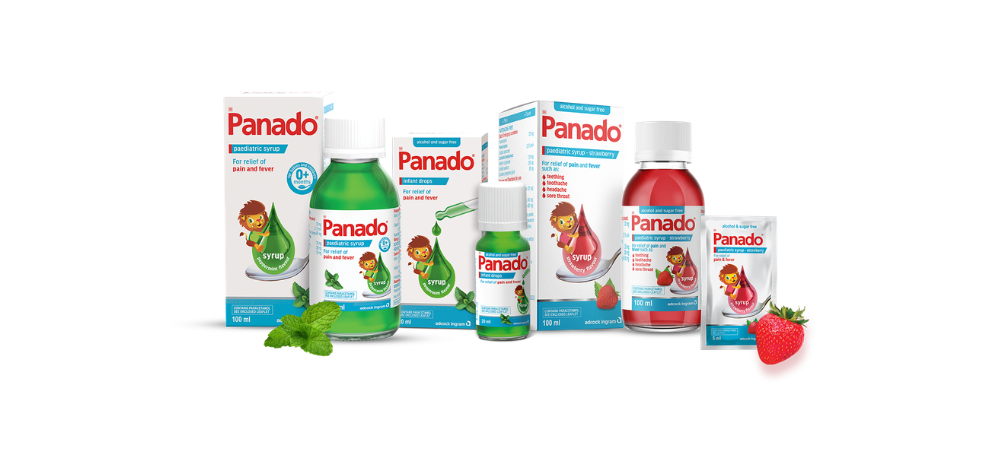
Panado® products are available from Baby City, Pick n Pay, Checkers including Hypers, Shoprite, Clicks, Dis-Chem and independent pharmacies. For more information, visit: https://panado.co.za/ and join the conversations on Facebook and Instagram. For references and legal disclaimers, visit https://panado.co.za/references.
09.29.2026 1000006609. September 2026.

- The hidden reason children struggle to recover from a cold - October 7, 2026
- Managing Bumps, Bruises and Minor Aches as Kids Get Active Outdoors - October 1, 2026
- When tiny teeth cause big trouble - September 2, 2026