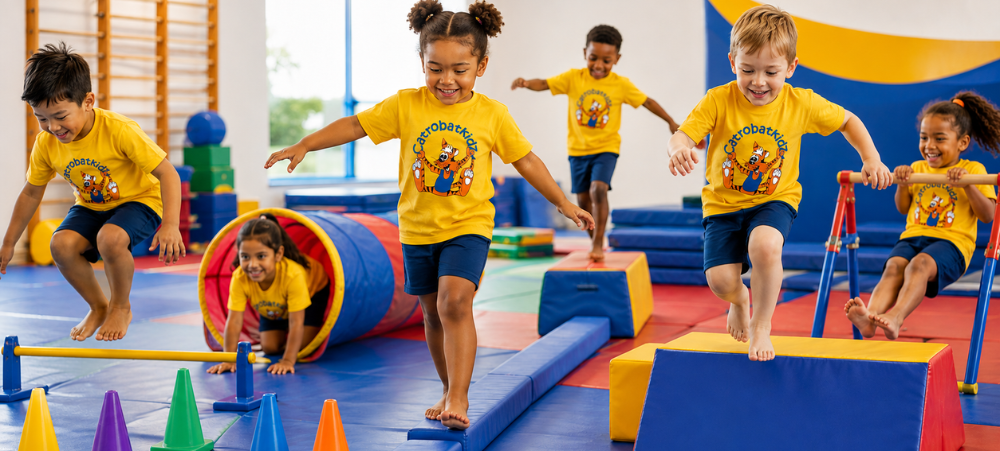
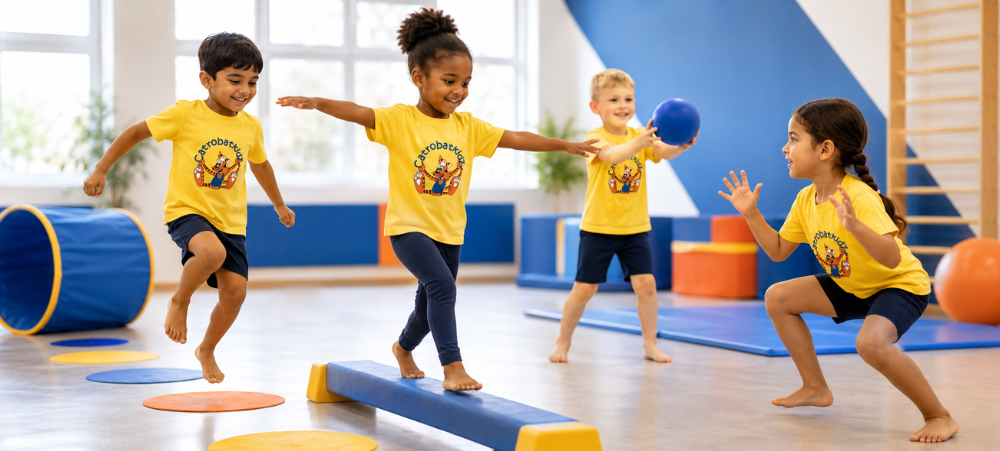
Have you ever noticed that a child who is wriggling, climbing, spinning or bouncing can suddenly settle more easily afterwards?
It may look as though they are simply “getting the energy out”, but something much more interesting is happening. Movement is not separate from learning. For young children, the body is one of the brain’s most important learning tools.
When children run, balance, throw, catch, crawl, jump and follow movement instructions, they are doing far more than building muscles. They are also practising the skills that help them pay attention, remember information, listen, solve problems and manage their behaviour.
The brain does not develop in isolation
A child’s brain and body are in constant conversation. Physical activity increases alertness and engages brain systems involved in attention, memory and decision-making. Research consistently links regular physical activity in children with benefits for brain health, cognitive development, attention and memory.
This does not mean that ten star jumps will magically turn homework into a delight. Wouldn’t that be handy? It means that movement can help create a brain state that is more ready to receive, organise and use information.
Young children are especially dependent on active, hands-on experiences. They learn “under”, “over”, “through”, “fast”, “slow”, “left” and “right” far more meaningfully when they experience those ideas with their bodies rather than only hearing them explained.
Movement supports attention
Attention is not simply the ability to sit still. A child may be perfectly still and mentally somewhere near the moon.
True attention involves noticing what matters, filtering out distractions and staying engaged long enough to complete a task. Active play gives children repeated opportunities to practise this.
Consider a simple movement game: “Jump twice, crawl to the cone, then freeze.”
The child must listen, hold the instruction in mind, complete the actions in order and stop their body at the right moment. That playful activity is also attention training.
Movement can be particularly helpful before activities that require concentration. A few minutes of marching, animal walks, dancing, skipping or outdoor play may help a child return to a quieter task feeling more alert and organised.
Movement strengthens memory
Memory grows through use. When children connect information to actions, rhythm, repetition and sensory experiences, learning has more “hooks” to hold onto.
This is why action songs are so effective. A child must remember the words, match them to movements, keep the sequence going and adjust to the rhythm. The body helps reinforce what the brain is learning.
Movement can also make every day learning more memorable. Children can hop while counting, form letter shapes with their bodies, throw a ball while naming colours or act out a story. The goal is not to turn every lesson into a workout. It is to recognise that learning often sticks better when children can see it, say it, hear it and do it.
Movement builds listening skills
Listening is an active skill. Children need to focus on the speaker, understand the message, remember it and respond appropriately.
Games such as “Simon Says”, follow-the-leader, musical statues and movement sequences practise all of these steps. Children learn to wait, listen for a cue and control the urge to move too soon.
Rhythm activities are especially valuable because they require children to coordinate what they hear with what their bodies do. Clapping patterns, moving to changes in tempo and stopping when the music stops all strengthen the connection between listening and action.
The hidden work of executive function
Executive function is the brain’s management system. It helps children remember instructions, resist impulses, switch between tasks, plan what to do and recover when something does not go according to plan. These abilities are commonly grouped into working memory, self-control and mental flexibility.
These skills are still developing throughout childhood. They are not personality traits, and a child who struggles with them is not necessarily lazy, naughty or “not listening”.
Movement-rich play provides a natural training ground. An obstacle course requires planning and sequencing. A ball game requires timing and self-control. Balancing requires concentration and adjustment. A group activity requires turn-taking, awareness of others and flexible thinking. Movement games and action songs can challenge children’s attention, working memory and inhibitory control in age-appropriate ways.
Even wobbling matters. When a child loses balance, adjusts and tries again, the brain is receiving valuable feedback. Learning is taking place in the correction, not only in the successful result.
Simple ways to use movement at home
Parents do not need expensive equipment or a complicated programme. Small, regular opportunities make a difference.
Try a five-minute movement break before homework or a quiet activity. Give two- or three-step movement instructions. Play stop-and-go games. Create a simple obstacle course using cushions, chairs and a piece of string. Throw and catch while practising words or numbers. Let children climb, carry, push, pull, balance and explore outdoors whenever it is safe to do so.
Most importantly, avoid using movement only as a reward after the “real work” is finished. For children, movement is part of the real work.
Children are built to move
A moving child is not automatically a distracted child. Sometimes movement is exactly what helps the child organise their attention, regulate their body and become ready to learn.
Active play will not solve every learning or behavioural difficulty, and children develop at different rates. But movement gives the developing brain rich, repeated practice in many of the skills learning depends on.
When children move, they are not taking time away from development. They are building the physical, cognitive and emotional foundations that help development happen.
At Catrobatkidz, we believe in Learning to Move – Moving to Learn—because when the brain and body work together, children are better equipped to focus, remember, listen and grow.