
leading breastfeeding advice
Parenting Hub

Only one-third of infants under six months are exclusively breastfed in South Africa

Breast milk is the best food for babies. The World Health Organization (WHO) recommends exclusive breastfeeding for the first six months of an infant’s life, and continued breastfeeding with complementary foods for up to two years of age. Key findings in the most recent World Health Organisation report and South Africa Demographic and Health Survey showed that South Africa has one of the lowest breastfeeding rates in the world, with only 32% of women breastfeeding infants under the age of six months.  While exclusive breastfeeding in the first six months of a baby’s life has steadily increased in South Africa over the past decade, the country still has a long way to reach global targets, according to Health Minister Dr Zwelini Mkhize, who addressed the media and public during World Breastfeeding Awareness Week in 2019. Why not all mothers breastfeed  There are many contributing factors to these statistics. While breastfeeding is beneficial for both mothers and babies, many women in South Africa cannot, should not, or choose not to breastfeed. The reasons might include the following factors:  The mother needs to take certain medication that is incompatible with breastfeeding. The mother has an infectious disease. The mother needs to undergo a medical treatment that isn’t safe while she’s breastfeeding.  The baby is unable to breastfeed (galactosemia). The mother is dependent on illegal drugs. True low breast milk supply, which is usually the result of an underlying condition such as polycystic ovary syndrome, hypothyroidism, breast surgery, radiation treatment or insufficient glandular tissue. The mother needs to return to work. Although breastfeeding provides much more than just nutrition, for women who experience any of the above and cannot breastfeed exclusively, and where donor breast milk is not feasible, infant milk formula is considered an effective alternative. (A registered healthcare professional should always be consulted.)  Why we are what we eat (and drink) All humans have a microbiome, which is a population of trillions of microorganisms, also called microbiota or microbes², bustling inside and outside our bodies. Each person has an entirely unique network of microbiota determined by their DNA. We’re first exposed to microorganisms when we’re babies, during delivery in the birth canal and through breast milk.  In a healthy person, these microbiota live peacefully in large numbers in the small and large intestines (gut), and throughout the body.3 Microbes in our gut influence much more than just digestion: good intestinal bacteria play a crucial role in maintaining our immune systems and fighting off infections and disease.4 The composition of these microbes is shaped mainly by our diet. How goat milk compares with human milk  Breast milk is the best food for babies, but where breastfeeding is not possible, research shows that goat milk measures up well.  The Global Outlook & Forecast 2019–2024 on Goat Milk Powder by Arizton reported that, when comparing nutritional content between human breast milk, powdered goat milk and powdered cow milk, the goat milk is the best alternative to human breast milk. Breast milk contains a fatty acid called ß-palmitate, high levels of which can positively influence gut health, growth and comfort of infants. ß-palmitate is also found in high levels in goat milk-based formula. Human milk also contains an abundant supply and diverse array of oligosaccharides, which have significantly beneficial prebiotic properties for breastfed infants. (Prebiotics help to stimulate, grow and maintain beneficial gut bacteria.5) Oligosaccharides help to establish and maintain healthy intestines, support the immune system and protect against gastrointestinal infections.6  The milk of goats contains the highest amount of oligosaccharides amongst all of the domestic animals. Studies continue to show that oligosaccharides present in goat milk-based infant formula have strong prebiotic and anti-infection properties and may help protect against gastrointestinal infections to the infant7, and enhance immune function.8 Most types of milk contain both A1-type β-casein protein and A2-type β-casein protein. There is evidence that type A1 of β-casein may be more likely to cause digestive issues, inflammatory or allergic reactions, resulting in diarrhoea and abdominal cramping among infants.  Goat milk mostly contains type A2 β-casein, and therefore tends to be more easily digested by infants. It is the relatively low amount of A1 β-casein protein in goats’ milk that helps to form the softer curd in the stomach and makes it more digestible. Furthermore, while the fat content of goat milk is similar to that of cow milk, the fat globules are up to 75% smaller, and this may make them easier to digest. 9,10 For these reasons, goat milk powder solutions are growing in popularity among consumers all over the world.  World Breastfeeding Week is an opportunity to reflect on the challenges faced by mothers when it comes to feeding their babies. Many mothers feel judged and attacked on the subject of breastfeeding, from undergoing scrutiny when breastfeeding in public, to being made to feel ‘less than’ if they can’t or don’t breastfeed. It is vital to bring awareness of this cause to the public, educate about the contributing factors for why some women can’t breastfeed, and provide information on the best milk alternatives. For more information on the nutritional and lifestyle benefits of goat milk powder or to connect with nutritional consultant Megan Pentz-Kluyts RD (SA), send an email to [email protected].  

Parenting Hub

Food security for children starts at the breast – support breastfeeding

South Africa has one of the lowest breastfeeding rates in the world. Not because women do not understand the importance of breastfeeding for their children but because women face a hostile environment to care for their children. This World Breastfeeding Week, observed from 01 to 07 August, the South African Civil Society for Women’s, Adolescents’ and Children’s Health (SACSoWACH) are focusing on creating an environment that enables and supports women to breastfeed successfully. Due to our current global crises, with the engulfing COVID-19 pandemic and the subsequent economic crash, women are bearing the brunt of job losses. Female-headed households, especially, are experiencing a financial shock,1 adding to the burden of finding food for their families and caring for their children. In South Africa, nearly one in two households are headed by women, skewing the need to provide unfairly on mothers. South Africa is known as ‘the fatherless nation’ as it has one of the highest numbers of absent fathers in the world. It is estimated that nine million children in South Africa grow up without fathers.2,3 In a recent media report, even our Springbok captain has had to call on men to support and eradicate the scourge of abuse and violence against women.4 Breastfeeding is excellent for infants and young children as a food source, for immunity and for neurocognitive development, and emotional self-regulation.5 “The first step to creating a supportive and safe environment for women and children is the essential provision of food for pregnant women and breastfeeding mothers. Safety and protection for moms, as the life-carrier and carer of children, is non-negotiable,” explains Dr Tshepo Motsepe, First Lady of South Africa, patron of the Coalition, passionate breastfeeding activist and humanitarian. The high rates of violence in South Africa cannot be ignored. Breastfeeding is associated with less violence in societies.5 Research also shows that 80% of rapists are the product of absent fathers.3 Young men who grow up without involved fathers are more likely to develop ‘hyper-masculine’ behaviours such as aggression and emotional instabilities. In contrast, young women are more likely to develop lower self-esteem and become victims of violence.3 Many hungry and stunted children live in fatherless homes1 where suicide is more likely in these individuals.3 “We need fathers and empowered men to step up and invest in the future of our society. Children are our future; the outcomes we want for tomorrow begins with what we do today. We call on all men to set an example and provide emotional and financial support, as far as possible, for the family and breastfeeding partners. This will help women to breastfeed exclusively and relieve them of the pressure to return to work too early,” explains Patrick Shivuri, Maternal and Child Health Programme Manager from Save the Children and a father himself. “Food security for infants and young children starts at the breast. Breastmilk is a living food; it protects against many infections that include COVID-19. If we want to protect children’s health, we need to protect and support their mothers,” adds Dr Chantell Witten, nutrition lead for SACSoWACH and lecturer at the University of the Free State. This has never been more relevant in a time when food is scarce and financial resources constrained. “Reducing Gender-Based Violence starts with protecting, promoting and supporting breastfeeding mothers at all cost. Paternal presence both emotionally and financially is a long-term investment for a healthy and less violent South Africa,” ends Precious Robinson, SACSOWACH chairperson and health advocate from Right to Care. In celebration of World Breastfeeding Week, SACSoWACH will host a breastfeeding dialogue on Thursday, 06 August 2020. The discussion will be live-streamed on their website; please visit www.sacsowach.org.za to find out more and sign up.

All4Woman

5 Benefits of breastfeeding – for moms and babies

According to the Association for Dietetics in South Africa (ADSA) breastfeeding wherever and whenever a baby gets hungry is perfectly legal and deserves to be fully supported. In contrast, shaming moms into desperately breastfeeding their babies or expressing breastmilk in cold toilet cubicles and cramped cars in parking lots is not supportive of moms or their children.

Vital Baby

What you need to know about combination feeding

During the early days after the birth, parents are faced with many new decisions and experiences.  One of the most important decisions for parents is whether to breast or bottle-feed, and sometimes that is an option they cannot be in control of. For mums who choose to bottle feed because they want to, or because they find it difficult to breast feed, they are then faced with conflicting advice on how to prepare a bottle correctly. The World Health Organisation (WHO) is the ideal place to find the latest guidelines. Many mums, if they can, feel the best option is to combine breast and bottle-feeding. Some mums may decide to offer exclusively breast milk, by expressing, and then giving their partner, carer or grandparent the opportunity to feed baby by bottle; others may choose to combine breastfeeding with formula milk. How much at which stage? A baby can be bottle fed with expressed breast milk, milk formula or a combination of both. If milk formula feeding feels best for mum and baby, start with little and often, spacing out to fewer, bigger bottles as they develop and grow. There is no single answer as to how much milk formula baby will need, as it depends on their appetite. The general recommendation is to feed baby whenever they seem hungry, keeping an eye on wet nappies and weight gain to ensure they are taking on enough milk. How to make up a feed Warm milk is a breeding ground for bacteria, so milk formula should be made up freshly, as and when needed. Breast milk can be stored in the fridge for up to 24 hours or up to 6 months in a freezer. After feeding, always throw any remaining milk away. Never re-heat or re-use it. Combining bottle & breast Some mums may not be able to breastfeed exclusively, or choose to introduce a bottle for some feeds – especially when returning to work. When introducing milk formula, starting gradually gives mum’s body and baby time to adapt. Myth busting At first, bottle feeding may seem complicated, with many confusing messages.  With a bit of planning, the whole process can be stress-free and enjoyable for parents and babies. With bottle feeding, a routine can be established sooner than on-demand breastfeeding, as you can easily tell how much milk a baby is taking on. Although bottle feeding does need more time to sterilise bottles and prepare milk, the main benefit of bottle and combination feeding is that partners or carers can take turns with feeds, allowing for more bonding time with baby and to give mum a rest. Vital Baby’s NURTURE™ range comprises a range of breastfeeding accessories including an electric and manual breast pump, breast pads, sterilisers, breast milk storage bags and bottles.   Follow Vital Baby on social media: @vitalbabysa Vital Baby products are available at Clicks, Babies R Us, Loot, Baby City, Takealot and at www.babiesafrica.com. 

Vital Baby

The wonders of breast milk

We’ve been told it’s the most nutritious fluid on Earth. Some even refer to it as “liquid gold.” But what is it about breast milk that makes it so unique and special? We take a deeper look. The first 1000 days of your baby’s life, from the first day of your pregnancy up to two years of life, represent a critical period of growth and development. It gives us parents an opportunity to provide an environment that will help support life-long health. This includes the nutrition a baby receives during this period, which can have a resounding impact. The most complete form of nutrition for infants – breast milk – offers a range of benefits for health, growth, immunity, and development. The World Health Organization recommends breastfeeding exclusively for at least six months (and even up to two years and beyond) because of the long-lasting benefits of breastfeeding for both you and your baby. Many studies, whether focusing on the properties of the milk itself or its effects on babies’ short and long-term health, confirm the significance of these recommendations. Breast not only is the “best” for both you and baby, but it’s also the norm – it’s how our babies have been fed since the beginning of time. One of the most important decisions you can make during these first 1000 days of your baby’s life is to choose to breastfeed your baby. What exactly is in breastmilk? It’s a unique nutritional source that is easy to digest and provides the perfect balance of protein, fat, carbohydrates, and nutrients to promote the growth and development of your baby.  In the first few days after giving birth, the body produces a special kind of breastmilk known as “colostrum.” Thick and yellowish in colour, colostrum is very nutritious and is rich in antibodies that help baby fight off infections and bacteria. It also helps baby’s digestive tract develop, helping it prepare to digest breast milk. After a few days, mom’s breast milk comes through, which is runnier than colostrum, and whiter in colour.  Breastmilk contains hundreds of invaluable substances in human milk – probably more that have yet to be identified – including: Antibodies and white blood cells Probiotics (as many as 600 different species!) Hormones Growth factors Antibacterial properties Oligosaccharides (special carbohydrates that encourage the growth of friendly bacteria in the digestive system) Long chain polyunsaturated fatty acids (important for the development of their brain, eyes and nervous system) Cytokines (special proteins involved in cell communication and immune system formation) and many, many more. Breastfeeding not only provides your baby with tailored nutrition, but it’s available on demand, day or night, and it’s free of charge! The health benefits go well beyond convenience and cost, however, and will have a far-reaching impact on both you and your baby long after the breastfeeding journey has ended. Health benefits of breastfeeding for your baby Scientific research suggests a substantial number of potential health benefits from breastfeeding.  These benefits include: Decreased rates of sudden infant death syndrome in the first year of life (an effect that becomes even stronger when breastfeeding is exclusive). Lower post neonatal infant mortality rates (a reduction of approximately 21% in the U.S.). Decreased risk of baby developing eczema, asthma, and food allergies later in life. Slightly enhanced performance on tests of cognitive development. Lower incidence of infectious diseases, such as diarrhoea, pneumonia, ear infections, respiratory tract illness bacterial meningitis, urinary tract infection, bacteraemia, necrotizing enterocolitis, and late onset sepsis in preterm infants. Improved dental health with less risk of tooth decay. Reduction of the risk of obesity later in life when exclusively breastfed for at least 4 months. Decreased rates of type 1 and type 2 diabetes mellitus, lymphoma, leukaemia and Hodgkin disease in older children and adults. And if this wasn’t enough, breastfeeding also exposes your baby – through the milk you’re producing – to the varying tastes and flavour profiles of the foods you eat, which can influence food acceptance and preferences when they themselves begin to eat food, and throughout their lifetime as well. Are there any circumstances in which breast milk can be harmful to your baby? Yes, there are a few circumstances in which breast milk may pose a danger to a baby, but these are directly related to the health of the mother. If a mother is taking prescription medication, for example, the medication may affect the baby via the mom’s breast milk. Illegal drugs are extremely harmful to babies, and if a mom is taking them, they can be transmitted to baby via breast milk too. Certain health conditions in the mother may also make her breast milk unsuitable for her baby. These include: HIV / AIDS, active tuberculosis, certain cancers and chemotherapy. Regular colds, flus or minor health problems should not pose any risks. If you are taking medication, or have any serious health conditions, chat to your doctor about the possibility of breastfeeding to ensure the safety of your baby. Health benefits of breastfeeding for you Your baby isn’t the only one who benefits from breastfeeding. The health benefits for the mama (you!) are also significant and include: A unique and powerful physical and emotional connection between you and your baby – breastfeeding is the one parenting behaviour only the mother can do. A non-verbal communication and bond with your baby that only grows to support an ever more intimate and effortless mutual exchange, especially if you stay present while nursing with lots of touching, talking, singing, and eye contact. Stimulation of your body to produce antibodies in your milk which in turn helps your baby stay well or recover faster if sick. Help with your return to your pre-pregnancy weight by increasing your energy requirements, promoting the mobilization of fat stores, and quickens your uterus to contract to its pre-pregnancy size. Decreased risk of breast cancer and ovarian cancer. Possibly decreased risk of hip fractures and osteoporosis in the post-menopausal period. Delay the return of your menstrual

Vital Baby

A simple guide to the basics of breastfeeding

Becoming a mom is one of life’s greatest gifts, and whether it is your first or your third time, the feeling of immense joy you experience when you first lay eyes on your baby, is unbeatable. Having said that, many new moms express that these feelings of joy are quickly pushed aside by feelings of complete panic and helplessness when it comes to breastfeeding for the first time.

Philips Avent

Challenges new moms face in Breastfeeding and how to overcome them

The arrival of a new baby into the family is a time of great joy, excitement and change, and breastfeeding is known to be the best start a family can give their baby in terms of health and wellbeing. However, successfully breastfeeding a baby is not without its challenges, and there are various obstacles a new mother may need to overcome in order to achieve her goal.

Vital Baby

Choosing the right breast pump for you: Manual vs Electric

Newly pregnant moms may be wondering, why invest in a breast pump? Truth is, owning one has endless benefits. A breast pump ensures you have the choice to offer all the benefits of breast milk to your baby at all times, even when you cannot be with them. It also enables your partner and family members to help out with feeding times.

Philips Avent

How to Prevent Common Physical Problems of Breastfeeding

Tip – prepare for successful breastfeeding by learning what to expect and how to do it! Attend a class if possible during pregnancy. Don’t wait for things to get better on their own. Ask for help from a skilled professional in the first few days if you need it.

Philips Avent

Philips Avent Breastfeeding Accessories

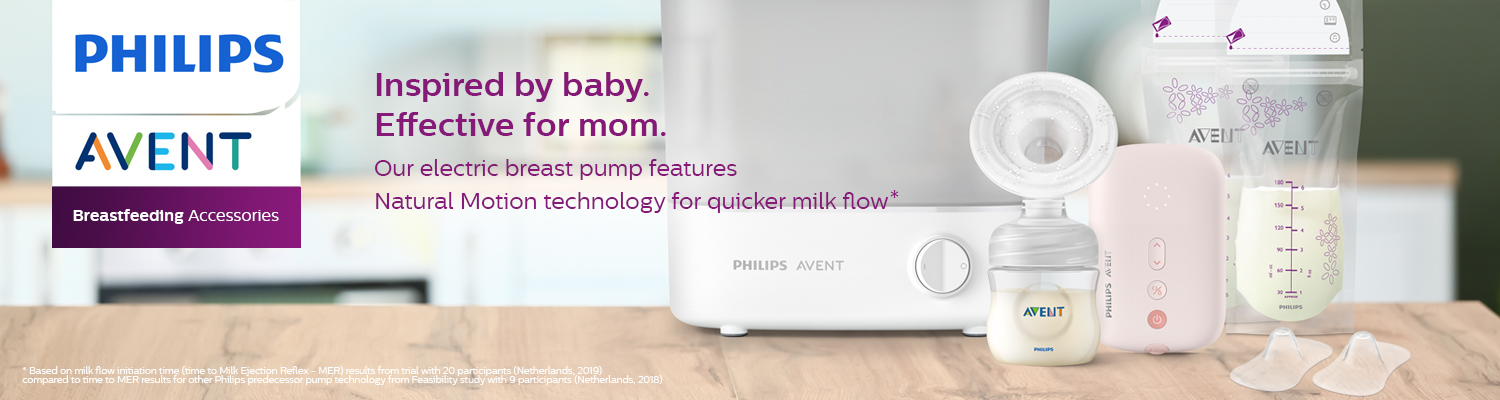
The Philips Avent breastfeeding range is designed to support you through every step of your breastfeeding journey. Whether you want to develop your milk supply, take care of your breasts, or simply fit more into your day, our breast care accessories make breastfeeding easier.

Philips Avent

More comfort, more milk naturally

Recent studies have proven a clear correlation between comfort and milk flow during expressing. Relaxed mothers feel more comfortable and express significantly more milk more easily. Independent research also confirms that infant suckling is a synergistic combination of breast compression and intra-oral vacuum, originating from the peristaltic action of the infants tongue.

Philips Avent

Top Money Saving Tips for New Parents

Prepare in advance for the financial changes a baby will bring. Start saving as soon as you know you are pregnant, so you get used to living on a reduced income

Parenting Hub

Breastmilk reserves critically low

The South African Breastmilk Reserve (SABR) has issued an urgent call for breastmilk donations as reserves run critically low.

OneAid

Shouldn’t It Be “Fed Is Best”?

This post is a little different to my others because it is personal. I want to share more of my momlife journey with you so where better to start than at the beginning, with one of the first challenges I had to deal with when becoming a mom.

Good Night Baby

BREASTFEEDING AND SLEEP

Often breastfeeding and sleep are thought to be part of two different worlds. Many people will tell you that your child won’t be able to sleep through the night until you stop breastfeeding. Tell that to my daughter who was breastfed until she was 12 months old, and slept through from when she was 4 months old!

Parenting Hub

August is breastfeeding month: Relax into breast feeding

Each new mum’s circumstances are different, and they help her decide on whether to breast or bottle feed her newborn. Whatever method she chooses, the hours cuddling her little one while feeding are a most precious part of motherhood.

Breastpumps and Beyond

The Medela Breastmilk Storage Bags Review

If you are planning on storing your breastmilk, then this is a product you definitely want. The Medela Breastmilk Storage Bags are compact, easy to store and incredibly durable. Read on below now to see why you should consider picking up a few of these incredible storage bags and how they will benefit your expression journey.  What Makes The Medela Breastmilk Storage Bag A Must Have? Zero Leakage: Thanks to it’s design, the Medela Storage Bag guarantees you no leakage. This is thanks to the double zip found in the top of the bag. This prevents anything in the bag seeping out. No Tears: Another great plus to this storage bags is not only wont things leak from the stop, but nothing will spill from the sides either. This can be accredited to the construction of the bags. Their seams are all heat sealed, making this an incredibly durable product. Positioning: Your Medela Milk Storage Bags can either stand upright, from when you will be using them, or laid flat, making storage a dream. Storage: As previously mentioned, these bags make storage easy. Thanks to their flat shape when laid flat, you can store numerous bags of breast milk. As opposed to a few cumbersome bottles in your freezer.  Safe Materials: The Medela team are passionate about keeping you and your baby safe. Thus, all of their products are made without the use of any harmful materials. The breastmilk storage bags are no different, being free from BPAs.  Transportable: Building on all of the above mentioned points, it’s plain to see how these bags are easily transported. This makes them a must have for when you travel or pump in the office.  Make The Medela Breastmilk Storage Bags Your Own Now Get your hands on these incredible, much needed breastfeeding products today. Stop over complicating your feeding/ expression process with the help of these storage bags now!

Breastpumps and Beyond

Tips For Pumping On the Road

If you are a pumping mother, and are planning a trip in the near future, you simply must read on below. This blog is dedicated to helping all travelling moms survive a long distance road trip. Get ready for the journey of your life with our help now! Plan Ahead Firstly, you need to consider whether you will need to stop or if you can pump on the go. Some moms may be able to express in their car – obviously only if they are a passenger. however, if you need to feed your baby, we strongly advise against feeding whilst in a moving vehicle.  So, if pumping whilst in the car is not a viable option for you, you will need to plan your trip accordingly. Know which stopping stations will coincide with your pumping schedule. This is important as you do not want to interrupt either your pumping or feeding times. Therefore, plan out your trip, make note of what times you will need to express or feed and ensure there is a good stopping station somewhere in that period. Ensure You Have The Right Equipment When traveling, you will need to ensure you have three things to pump successfully: A portable pump: a breast pump such as the Medela Mini Electric is great for travel. It is small enough to fit into a handbag and is light weight.  Cleaning Supplies: you will need either sterilization spray or cleaning wipes to help you clean your pump on the go. Storage Supplies: these are essential. You will need two sets of storage supplies: Storage for your milk: you will need either transportable milk bottles of something like the Medela storage bags Storage for the stored milk: here you will need a cooler bag. You will need to keep your milk chilled until you reach a fridge. Whilst milk can survive at room temperature for a few hours, it is not wise to risk this whilst travelling in a hot car.

Breastpumps and Beyond

Tips For Flying Whilst Breastfeeding

With the Easter holidays having come and gone, many South Africans may have utilized that time for a much needed break. If you found yourself flying, but had no idea how to handle your breast pumping schedule with that, this is then the blog for you! We will take a look at a few key pointers to keep in mind when flying as a breast feeding mom.  Before You Set Off Know Your Rights: read up on what you’re allowed to carry on whilst flying. As a rule, you should be allowed to transport over the standard 100ml of breastmilk. Get In Touch: contact the airline with whom you will be flying and let them know you are a breastfeeding mother. They may even make special arrangements for you to ensure your pumping or feeding on the flight is made easier. Furthermore, they may be able to give you tips on flying and breastfeeding. Pre-arrangements: If you will be staying in a hotel, ensure that your room comes equipped with a fridge. You will need this to store your pre-pumped milk.  Whilst At The Airport If You’re Travelling With Your Milk: if you have already pre-pumped your milk, and intend on travelling with it, declare It at the security station and agree to let it be inspected. Not Allowed: Please note, not security office may taste your milk, they can ask you to remove the lid of your storage bottle or open the storage bag.  Travelling With Your Pump: if you are travelling with your pump, you may take this with you on-board and stow it in the usual hand luggage section.  Now That You Know How To Get Around Flying Whilst Breastfeeding No that you have your guide to flying whilst breastfeeding, you’re ready to take flight! Having a portable pump such as the Medela Mini Electric, can make pumping whilst traveling that much easier for you.

Breastpumps and Beyond

The Medela Mini Electric Breast Pump Review

If you are in the market for a breast pump, but looking for something that will not break the bank, the Medela Mini Electric is for you! This amazing little pump packs similar innovative technology as the larger pumps but comes at a much smaller fee. Furthermore, you can win this little pump for yourself this month with Parentinghub! Read on below now for features of the Mini Electric and more. Things That Make The Medela Mini Electric Stand Out Compact The Mini Electric is an incredible compact little pump. Its motor is housed on top of the actual breast shield. This makes it incredibly easy to carry and transport. Furthermore, the pump is incredibly light-weight, thus adding to its transportable appeal even more.  Minimal Parts The Medela Mini Electric is only comprised of five various parts. This makes assembly incredibly easy. furthermore, it makes cleaning and maintaining the pump an absolute breeze. Tubeless Another pro of the Mini Electric is the fact that it is tubeless. There are no complicated tubes going from your pump to your bottle. Since the Mini Electric’s pump is located on top of the breast shield, this allows milk to flow from the shield straight into your bottle.  Who Would Benefit From The Medela Mini Electric? There are certain moms who would benefit hugely from the Mini Electric, and others who would find no use for it. There are two main groupd of moms who would find huge use from this little singular pump. Moms Who Travel Mothers who find themselves traveling a lot for work or other reasons will benefit hugely from this pump. Thanks to its size and weight, taking it around with you is easy. The pump is small enough to fit into a conventional handbag and is a dream to use on the go. Moms Who Don’t Pump a Lot If you do not plan on pumping regularly, and mainly feeding your baby by breast, this pump is ideal for you. It will deliver everything you need and expect from a breast pump and allow you to express whenever you have to. 

Breastpumps and Beyond

5 Key Tips For All Moms Who Need To Practice Pumping On the Go

5 Key Tips For All Moms Who Need To Practice Pumping On the Go If you are a busy lady (and let’s admit it, in the 21st century who of us aren’t!) and need to practice pumping on the go, all you need to do is follow these five simple tips. For whatever reason, you may not always be able to express in your place of comfort. Whilst you may feel most at ease on your couch or in the confines of your own home, this isn’t always possible. Therefore, here is a quick guide to how to handle pumping on the go! #1: Get Yourself and Electronic Breast Pump Which Is Portable  The last thing you need is a cumbersome pump with multiple pieces and the need for a plug point. If you travel frequently, finding yourself a compact pump with a rechargeable battery is key. The Medela Mini Electric is perfect for these situations. It is light weight and small enough to fit into a hand bag. #2: Privacy Is Key Even though breastfeeding is a natural, beautiful thing, some moms feel more at ease in a secluded pumping area. If you need to pump in your office, have a chat with your employer before hand and arrange a private room with a door which closes dedicated to you. If you’re out and about, and find yourself in a pinch, a place such as a family change room is great. Another thing to look out for internationally are breastfeeding pods. Many international airports and malls are beginning to place pods for moms to be able to feed their babies/ express. #3 Find Something TO Stimulate Your Senses Let’s be honest. Pumping away from your usual place of comfort can be difficult at first. Therefore, you may need to find a stimulant to encourage your let down. Pictures of their baby have been found to help a mom with this quite easily. Keep a blanket which smells like them, or better yet, record videos of your baby to have their cries and coos encourage your let down! #4: Keep Cleaning Products At Hand You will need to ensure that you have things such as disposable nursing pads, cleaning wipes and even possible a pumping bra available to streamline this process. Anything that will help you during and after your pump is essential for pumping on the go. #5: Make A Plan To Store your Milk After If you will be pumping away from your home, you need to make a plan to store your milk. Firstly, have the right storage materials on hand. Something like a portable milk bottle or the Medela milk storage bags would be ideal in this situation. Be sure that you will have access to a fridge, as well as a cooler bag to transport your milk when you leave your destination.

Breastpumps and Beyond

Medela Breastmilk Storage Bags

The Medela breastmilk storage bags are an excellent product for all parents to use. This product is perfect for all breastfeeding moms, as it will allow you to pre-pump and store any milk which you need to. Read on below for everything you need to know on the Medela breastmilk storage bags now. When You Would Use A Storage Bag A lot of moms begin to pre-pump their milk as they prepare to go back to work. This will allow your creche or care taker to feed your baby when you are not there. It will also allow you to maintain your milk supply, even though you may not be breast feeding.  Milk storage bags give mothers many benefits in use: They are easy to store and do not take up too much space within your fridge They are easy to transport They can be frozen to preserve your milk for longer As you can see, these bags are the dream must haves for all pumping moms! Features Of The Medela Breastmilk Storage Bags The Medela breastmilk storage bags have a lot to offer to moms, however, how do you know you can trust them? Take a look at their full features below: Free From Harmful Materials: all Medela Breastmilk storage bags are made with no BPA in them, making them safe for you and your baby. Capacity: one bag is able to store 180ml of milk Double Zip: the double zipper feature of the bag ensures that it is sealed securely, preventing any leakage Durable: the bags are made from durable materials ensuring that they will last in your freezer Get The Medela Milk Storage Bags Now As you can see, the Medela milk storage bags are a great product for all moms out there. Whether you want to freeze and store your milk long term, or just express and store whatever baby doesn’t drink during a feed, these are the ideal storage products for doing so!

Prima Baby

Chicco Manual and Electric Breast Pumps

With 61 years as global leaders in the world of baby products, Chicco has perfected the art of the quality nursing item.  Whether breast feeding exclusively, or expressing for later feeds, there comes a time in every busy mom’s life when she will need to pump milk.  Nutrition is key and with everyone knows breast milk is ultimately the richest form of nutrition you can give your child – yet sometimes one just needs a break from hungry mouths and little emerging teeth. Chicco has two of the best solutions for expressing moms.  Whether using the high-tech electric breast pump, or the conventional, yet reliable manual pump, both items are essential nursery items – particularly if moms need to start working again.  The electric breast pump is a mother’s best ally.  With ten settings to choose from, there is a pressure that will work best for you. The pump has an LED light that enables night-time pumping without waking co-sleeping partners or children and the pumping mechanism is gentle on breasts, allowing nipple repair and reduced engorgement. The manual pump is an effective, delicate and practical device that is quiet and allows for mom to pump at work or whilst out and about as it is a small and discreet item.  It connects directly to a 150ml milk container which can be popped directly into the fridge. Available at Baby City, selected Kids Emporium stores, Takealot.com, Loot.co.za and other baby retailers.

Prima Baby

Chicco Bottle warmer and milk containers

With 61 years as global leaders in the world of baby products, Chicco has perfected the art of the quality nursing item. We all want convenience when it comes to feeding times, yet it’s not always easy when working, or bringing up other children. Chicco has a great solution for moms of newborn and younger babies when it comes to storing and warming food.  The Chicco bottle warmer is a simple, fast and safe way to warm up feeding containers in a convenient and speedy fashion. The warmer keeps food warm for up to an hour and even comes with its own internal support system to help elevate smaller bottles and feeding containers.   Another way to store food, especially milk, is with the simple Chicco 150ml milk container.  With tight seal lids, food can be stored by expressing directly into the containers.  Pureed foods are also easily store and frozen in these little jars.  They come in packs of 4. Together this combo of convenience makes heating, storing and freezing food one less stress in a busy mom’s life. Available at Baby City, selected Kids Emporium stores, Takealot.com, Loot.co.za and other baby retailers.

Kaboutjie

Can Mom Drink Coffee When Breastfeeding?

Food and drink restrictions while pregnant are normal and expected. But how about after the little one arrives? After 9 good months of deprivation and caution, can you actually go back to your normal eating/drinking life? Most pregnant women pay attention to anything they take; wondering if that tiny bite of sushi or soft cheese will affect their little ones. The worry continues even for any breastfeeding mom. Just as you were restricted to taking certain foods/drinks when pregnant, the same restrictions still prevail even when breastfeeding.  You might have heard some mom say that taking in cabbage made their baby gassy. Others say taking in coffee kept their little ones awake all night. The major question here is can mom drink coffee when breastfeeding? Does the baby sip some coffee through the breast milk? If so, is it safe for her/him? Well, to some degree, it is safe, mostly when the little one is more than 3 months old. Here is what happens when you take a cup of coffee when breastfeeding. Factors Determining The Caffeine Effects On A Baby There are several factors that determine how caffeine will affect a baby. Though it is not recommended for mom to take caffeine when pregnant, some still do it. Well, such babies are likely to have less caffeine reaction after birth. This means that if you are hundred percent sure you did not take caffeine when pregnant, your baby will have more reaction to caffeine after birth. Besides coffee intake, while pregnant, another factor that determines the effects of caffeine is the age of your little one. Babies below six months tend to react more to caffeine than older ones. So, you can skip taking coffee or other caffeine-rich drinks for these first 6 months. This will allow the baby to have a better excreting and processing of caffeine as they grow. According to the Australian Breastfeeding Association, newborn kids take around 160 hours to process caffeine. Those are 6 good days! On the other hand, when a baby is 6 months old, it should take them almost 3 to 7 hours. So, How Much Caffeine Is Too Much? Just 1% of caffeine intake goes into the breast milk through the bloodstream. The caffeine in your breast milk starts to peak almost one hour after consumption. On to the issue of how much caffeine is too much, that really depends on the mother and their little one. Some babies might process caffeine efficiently and quickly. Such a baby will have fewer effects of caffeine. Usually, pregnant or breastfeeding moms should not take more than 300mg of caffeine each day. Those are about two cups of coffee – based on the brew. According to Healthychildren.org, taking three cups of coffee or less throughout the day might show some or no caffeine in the kid’s urine. Can A Baby Be Sensitive To Caffeine Intake? If you consume over 300 mg of caffeine every day, then, the answer to this question is yes. Your baby will show symptoms of caffeine stimulation such as being fussy, irritable and fails to sleep for long. In such a case, a breastfeeding mom should substitute coffee with caffeine-free drinks at least for one or two weeks. Within these two weeks or after, you should notice a significant difference in how your baby behaves.  If indeed caffeine stimulation was the cause, your baby will become less fussy after a few days – that is – when you eliminate caffeine. Can Caffeine Decrease The Supply Of Breast Milk? Fortunately, there is no research pointing out that caffeine can lower milk supply. However, the myth about caffeine and milk decrease is widespread. Most new moms take caffeine and none has stated any diverse impacts of caffeine on breast milk supply. In the light of this, no clinical observation or study that proves caffeine can reduce the supply of breast milk. In fact, a Nehlig & Debry study (1994) shows that caffeine intake can indeed stimulate the production of breast milk. Nonetheless, caffeine stimulation might make a baby jittery and fussy baby.  Such a baby might not nurse properly. As a result, your milk supply can decrease with time. Take note, the mom’s intake of caffeine did not cause a decrease in milk supply. Rather it was caused by the decrease in nursing. Other Caffeine Sources Though coffee is a source of caffeine, it is not the only one. According to Dailycupo.com, Energy/sports drinks, soft drinks, and tea also contain caffeine. More so, some prescription and over-the-counter medications, any food containing chocolate or coffee also have caffeine. Further, green tea, herbal products that have Paullina/guarana cupana and yerba mate are sources of caffeine. Therefore, any mother worried about the caffeine the take should take note of these other caffeine-rich drinks and foods. The Takeaway There is no scientific study that states you should avoid taking a coffee when breastfeeding. However, it would be wise if you enjoyed your cup of hot coffee in moderation. Some of the strategies you can use to control your caffeine intake are: Paying close attention to your baby: some little babies are highly sensitive to caffeine. Thus, they may become restless or fussy in case your breast milk has excessive caffeine. Monitor how any other dietary option affects your baby; not just caffeine. A drink with high sugar concentration, for instance, can have similar effects to the baby as caffeine does. Acknowledge that your health, as a breastfeeding mom, matters as well. Here you should evaluate why you need caffeine in the first place. Do you want it to help you deal with regular nighttime wakeups? Or you want coffee to boosting or maintain your energy level?If your answer to either of these two questions, then you should take coffee in moderation. Take coffee immediately after a pumping session or nursing. This strategy becomes successful when you know how frequent your baby nurses. In doing so, the caffeine in your baby milk will have enough time to drop before your

Breastpumps and Beyond

Tips To Using A Manual Breast Pump

Using a manual breast pump is not as arduous as some moms think it should be. The beauty of manual pumping is that it is actually really simple to master. However, if you are feeling reservations to this type of pump and are unsure of how you will manage to operate it, read on below now. We will give you an easy, step by step guide to using a manual breast pump. Using A Manual Breast Pump – The Steps Every Mom Needs To Know Before pumping, ensure you have thoroughly washed the pump as well as your hands Read the provided instruction manual carefully to familiarize yourself with your pump Always pump in a room which is secluded and leaves you in a state of relaxation Have a picture of your baby on hand – this helps stimulate milk production in most moms Gently begin to pump and find a rhythm which suites you – if you do not express immediately, do not worry, it may take you a few minutes before let down occurs Once you do begin to produce milk, try different pumping tempos to try and best match your baby’s suckle Try to switch breasts consistently to allow each to express – ensure each breast has been pumped for 15 minutes minimum Tips For Using A Manual Pump Know What You’re Looking For: before investing in a breast pump, know what it is you are looking for. Research thoroughly into whether you want an electronic pump, a manual pump or would prefer to rent a hospital grade pump in the beginning. See which will best suit both your lifestyle and your budget. Practice Makes Perfect: try practicing with your pump for a while before you actually plan on pumping regularly. For instance, if you are planning on going back to work, and have mainly been breastfeeding, begin to pump two weeks before you plan on making it a regular routine. This will give you time to familiarize yourself with the machine and how long it will take you to express. Dress For The Occasion – make sure that what you wear is suited to pumping. Generally, more flowy pieces which button down in the front are ideal. 

Breastpumps and Beyond

Everything You Need To Know About The Medela Harmony Manual Breast Pump

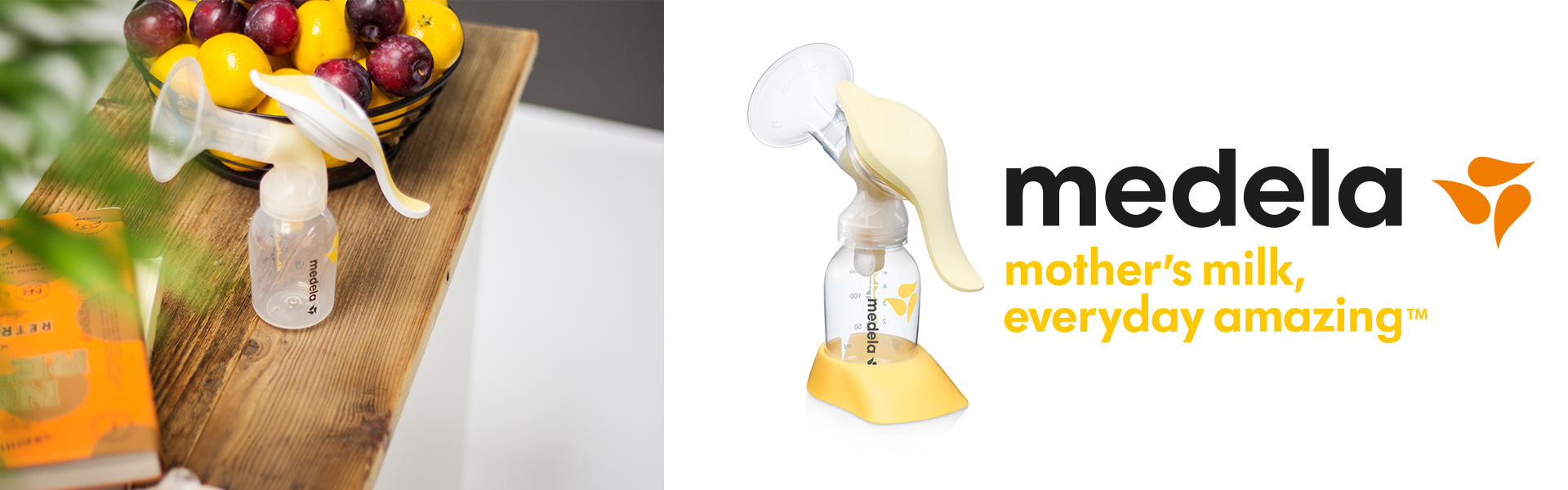
The Medela Harmony is a manual breast pump perfect for every mom. This little breast pump is packed with pros for every woman. Read on below now for everything you need to know about the Medela Harmony pump. About The Medela Harmony The Medela Harmony pump is one of the most innovative manual breast pumps on the market. This can be attributed largely to its 2-phase expression technology. This mimics a baby’s feeding pattern with two different pumping phases: Stimulation – this phase is dedicated to stimulate the breast to begin milk production. Expression – this phase is when you expresss the let down and you begin to express milk. Above this, the Medela Harmony has been designed in a way to be comfortable, safe and easy to use. This pump is small and lightweight, making it easy to transport for all moms on the go. Furthermore, the pump is free from any BPAs, making it safe for you and your baby to use! Features Of The Medela Harmony Breast Pump BPA Free: every part of this pump which come into contact with your breastmilk are completely free from BPAs Swivel Handle: this innovative handle is great for all moms, as it allows you to position the handle in a comfortable position whilst pumping 2-Phase Expression Technology: this incredible type of pumping technology ensures that you get more milk in less time during the expression phase Spill Less: the set comes with a bottle stand, allowing you to easily store your expressed milk upright once pumped to avoid spills Win The Medela Harmony Today! This month, we are bringing you the Medela Harmony as our monthly give away. Be sure to check out our competition page now. You could be walking away with this great, innovative little breast pump so don’t miss out!

Breastpumps and Beyond

Electronic vs. Manual Breast Pumps: Which Works For You?

Many people debate over whether they need an electric or manual breast pump. Truth be told, there is no right side to this discussion. Both manual and electronic breast pumps have their purpose within the breastfeeding world. Knowing which best suits your lifestyle is the key question one should be asking. We shall discuss this below, so read on ow to see which pump best suits your needs. Electric Breast Pumps The electric breast pump has been in production since 1991. This was introduced to the world by the Swiss company, Medela, who managed to produce the first ever electric-powered, vacuum operated breast pump. From then on, the electronic pump has grown exponentially, with hundred of suppliers and models available. But what are the advantages to having an electronic pump? The Pros Of The Electronic Breast Pump It is time efficient – taking less time than a manual pump to express This type of pump requires less effort to use than a manual pump There is a wider variety of models to choose from, including hospital grade pumps Offer you the option of hiring – please note however, only hospital grade pumps can be rented from a professional supplier The Cons Of The Electronic Breast Pump These types of pumps are a lot pricier than any manual The electronic pump is far nosier than a manual pump Some electric models can be intricate to sterilize Generally, these pumps are more difficult to transport than a manual If you buy a mains operated pump, you will be reliant on a plug outlet to do your pumping Manual Breast Pumps The manual pump has been around since the late 19th century, first being patented in the States. There is a reason this magical little appliance has endured through the century – even with the introduction of the electronic breast pump.  The Pros Of The Manual Breast Pump Cost effective – this type of pup is far more affordable for the everyday mum The manual pump is light weight and compact, making it easy to carry on the go The manual pump is incredibly quiet to use The pump is also really simple to operate This pump requires no electricity, meaning you can use it any time, any where The Cons Of The Manual Breast Pump This type of pump operates slower than the electronic counterpart Sometimes finding a regular pumping rhythm can be challenging Manual pumping can tire your hands In Conclusion As you can see, both electronic and manual breast pumps have their pros and cons. If you are a mom pressed for time with a bust schedule, your best bet would be to invest in an electronic pump. However, if you’re looking for an affordable, easy t use and transport breast pump, the manual version will serve you just fine! Stand a chance to win a Medela Harmony Manual Pump this month! See our competition page for more now.

Parenting Hub

BANKING YOUR BREASTMILK SAVES LIVES

The breastmilk bank is probably the most altruistic banking system in the world. Healthy, lactating moms express and donate their excess breastmilk. The milk is tested and pasteurised, and then distributed to neo-natal intensive care units around the country, where it is used to feed the most vulnerable babies. Every year, donated breastmilk saves the lives of thousands of vulnerable babies in South Africa.  Eight out of one hundred babies in the country are born prematurely and, every year, approximately 11 000 premature babies die from preventable infections and complications.   “All babies have immature immune systems,” says Abby Courtenay, a Registered Dietitian and spokesperson for ADSA (The Association for Dietetics in South Africa), “Breastfeeding plays a vital role in transferring not just nutrients but antibodies and other immune-boosting properties to an infant to strengthen the immune system and protect them against infections.  This is why breastmilk is the perfect first food, and why the World Health Organisation recommends exclusive breastfeeding for the first six months of life.” Many mothers giving birth to premature babies in neo-natal intensive care units don’t produce milk immediately, or enough of it. Some mothers experience health complications and cannot breastfeed.  If their babies can be fed donated breastmilk instead of formula, it dramatically increases the baby’s chance of survival and offers greater protection against life-threatening infections such as the intestinal infection – necrotising enterocolitis. Donated breastmilk also helps premmies to gain weight and grow faster. This is why donated breastmilk is the next best option when the mother’s own  milk is not available.   Breastmilk banking was pioneered in South Africa sixteen years ago by the South African Breastmilk Reserve (SABR) and, today, they have a network of 27 banking facilities across the country. The breastmilk movement in South Africa has since grown to include several other initiatives such as ithemba Lethu milk bank and children’s home in Durban, the KZN Breastmilk Bank Initiative and Milk Matters in the Western Cape. Every year, more than a thousand South African moms help save lives by donating their milk. “What we would like to see is breastmilk banking being used far more frequently,” says Executive Director and SABR founder, Stasha Jordan. “Expressing breastmilk has become the norm for many new moms who have to return to work while still breastfeeding. Some women have an abundant supply of breastmilk and can easily express more than their baby needs. That surplus can literally save the life of another child. Our donor moms are real heroes helping the most vulnerable in our society to survive.” SABR and ADSA have partnered to raise awareness of breastmilk banking, which is supported worldwide by both the World Health Organisation and UNICEF. Who can bank their breastmilk? A healthy, lactating mom with an excess of breastmilk can make donations. It’s important that you have not received a blood donation in the past year; that you are a non-smoker; that you do not consume alcohol regularly and that you are not on any medication. Donor mothers do need to undergo blood tests to be screened for HIV and hepatitis B. How does banking my breastmilk work? Donor moms complete an online screening questionnaire  SABR contacts you telephonically to refer you to your nearest sign-up facility.  Arrangements will be made for the necessary blood tests. You will receive all the information you need for the safe storage of your expressed milk, which will be collected from you. Your breastmilk will be screened, pasteurised and distributed to help save the lives of premature babies in neo-natal intensive care units.  Every drop counts and small donations can also be used, so don’t be put off from donating if you don’t have a particularly excessive supply. To find out more visit https://www.sabr.org.za 

Sidebar Image

Scroll to Top