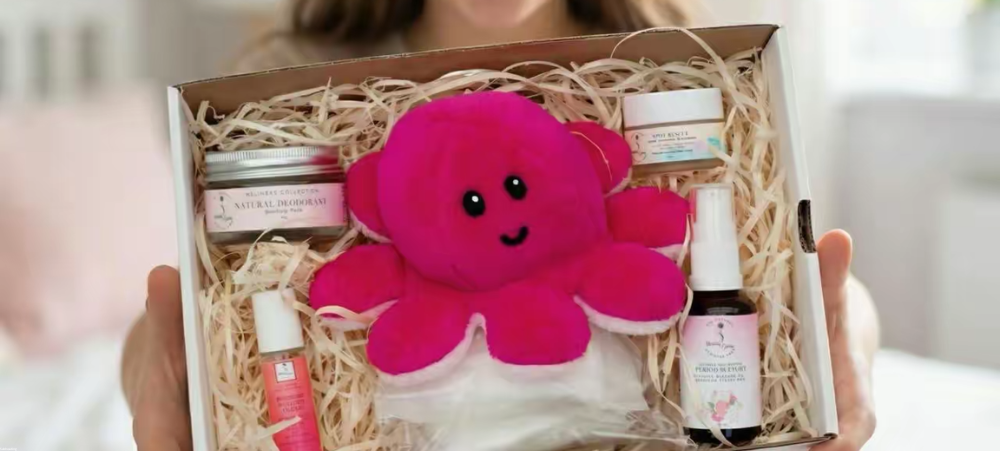

A newborn enters a world full of unfamiliar sights and sounds. Yet, held close to its mother, something already begins to make sense: her warmth, her voice and her scent.
Babies can see, hear and smell from birth, although their vision is still developing. Smell helps them respond to the breast and learn who is close to them. In a Japanese study, early skin-to-skin contact helped newborns recognise the scent of their own mother’s milk. Other research suggests that scent learning may begin before birth and continue through feeding and closeness. A baby does not need words to begin building that bond.
We carry this sensitivity to scent throughout life. The smell of rain on warm ground can return us to childhood. A spice can bring a grandmother’s kitchen to mind. A trace of perfume may remind us of someone we miss. Before we have formed a thought, we have felt something.
Why Does Scent Reach Us So Deeply?
When we breathe in an aroma, scent molecules meet receptors high inside the nose. Signals travel through the olfactory system to brain regions involved in emotion and memory, including the amygdala. This close connection helps explain why a smell can bring back a vivid memory almost at once—and why the same aroma may comfort one person while leaving another unmoved. Japanese research has found that scents linked to positive personal memories can be accompanied by feelings of comfort and happiness.
People often call this the limbic response. It is part of what makes aromatherapy more than enjoying a pleasant fragrance. A scent can call up a memory, change how a moment feels and become a cue to notice what is happening in your body.
Researchers have studied some of these physical responses. In a small Japanese trial involving women with premenstrual symptoms, ten minutes of lavender inhalation increased a measure associated with parasympathetic nervous system activity—the part of the nervous system involved in settling and rest. Participants also reported changes in mood. Our responses will differ, but this research gives us a way to understand why an aromatic ritual may feel meaningful.
A Tradition With Deep Roots
Aromatic plants mattered long before the modern word aromatherapy became familiar. In Unani medicine, inhaling aromas formed part of established approaches to care. Arab and Persian physicians studied plants, their preparations and their uses with great care.
Among the best known was Ibn Sina, the Persian physician whose Canon of Medicine was written in Arabic and influenced medical learning for centuries. His legacy belongs in this story of plant knowledge. So does al-Andalus, or Muslim Spain, where physicians, botanists and pharmacists developed rich traditions of medicinal plants. Ibn al-Baytar’s work on plant remedies is one example of the knowledge that grew from this world. Fragrance and distillation also held an important place in Andalusian culture.
Those traditions did not use today’s language of olfactory pathways and nervous system activity. Modern research offers another way to explore something traditional healers took seriously: aromatic plants can have a place in how we experience comfort, attention and care.
Where Can Aromatherapy Fit Into a Woman’s Day?
Its value often appears in ordinary moments, when you sense that something needs to shift but have little time for yourself.
When you feel stretched thin. You have answered everyone’s questions, handled the work in front of you, and carried a few worries in the background. A calming aroma may invite you to notice the tension in your jaw or shoulders and give yourself room to settle. In a Korean trial, nurses inhaling marjoram essential oil during a demanding intensive care shift reported less perceived stress. Scent cannot remove the demands of the day, but it can be one way of caring for yourself within them.
When your mind feels foggy. A fresh aroma can mark a change of pace. Stand up, drink some water, open a window, and return to what you were doing. That short ritual also gives you a chance to ask whether you need a break, food, or help with the task in front of you.
When it is hard to wind down. An evening scent can become part of a familiar rhythm: put down your phone, wash your face, breathe, and let the day come to a close. Research in Iran has explored inhaled citrus aroma among postmenopausal women with sleep difficulties and reported improved sleep quality in the study group. It is one encouraging reason to explore scent as part of a restful routine.
When your emotions feel changeable. PMS, perimenopause and everyday life can each bring moments when you feel restless, tender or overwhelmed. An aroma you enjoy can give you a familiar point of return. Pause and ask, What am I feeling? What would support me today? Studies involving postmenopausal women have reported improvements in selected mood and quality of life measures with specific aromatic oils.
A Pocket Ritual Through Birth, Postpartum and Beyond
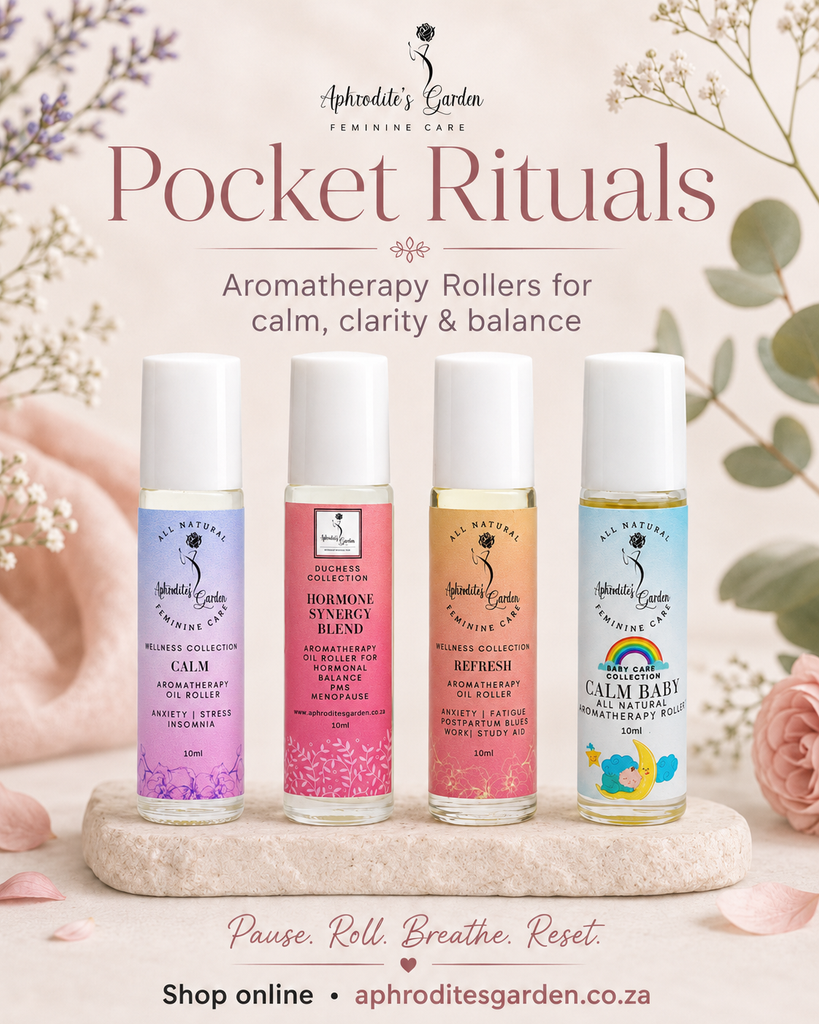
Scents can accompany us through very different stages of womanhood. During birth, the Refresh Aromatherapy Oil Roller offer a familiar, uplifting aroma to return to between contractions or whenever the experience feels intense.
It can travel home with you, too. In the postpartum weeks, when days and nights blur and so much attention goes to the baby, Refresh can mark a small moment of care for you. It is included in Aphrodite’s Garden’s Mama Postpartum Care Gift Set. Later, it may be the roller you reach for during an afternoon slump, a study session, or a day when you want to feel more present. www.aphroditesgarden.co.za
The Calm Aromatherapy Oil Roller offers a different kind of pause when your mind feels busy and you want to slow the pace. The Hormone Synergy Aromatherapy Oil Roller can accompany a personal check-in during PMS or perimenopause; its product guidance says it is not suitable during pregnancy or lactation. Choose the roller that fits your circumstances and follow its directions. www.aphroditesgarden.co.za
And when you are with a newborn, remember where this story began. Your baby is learning your natural scent. Keep aromatic oils away from their face, hands and feeding area so that feeding and closeness remain comfortable.
A pocket ritual need not be impressive to matter. It can happen beside the kettle, at your desk or in the quiet after everyone else has gone to bed. The plant offers its aroma; your memories and body bring their own response. Together, they can create a little space to feel, reflect, and care for yourself.
“A scent may bring you back to a moment. A ritual can help you choose how to live the next one.”

Rooted in South Africa and inspired by the rhythms of womanhood, Aphrodite’s Garden is more than a wellness brand—it’s a heartfelt commitment to women’s holistic care. Whether you’re navigating your first period, embracing motherhood, or moving through menopause, we’re here to walk with you. Every product in our collection is crafted with intention by a qualified woman doctor of complementary and natural medicine. You’ll never find alcohol, synthetic preservatives, or harmful chemicals—just pure, gentle, and effective care designed to honour your body, naturally. Because a woman’s wellbeing is deeply connected to her family, we’ve also lovingly included a baby care and men’s range—crafted with the same purity and care.
- The Power of Scent: From a Mother’s Arms to Your Everyday Ritual - November 6, 2026
- Her First Period Sets the Tone for Her Journey Into Womanhood - July 9, 2026
- How do you measure the worth of a mother? - April 3, 2026