

Parents want their children to become confident and independent, but safe opportunities to practise these skills can be hard to find. A well-run residential holiday camp gives children room to make decisions, form friendships, try unfamiliar activities and manage ordinary challenges, while trusted adults remain close by.
Most parents want their children to become more independent. We want them to remember their belongings, speak up when they need help, cope when plans change and feel comfortable meeting new people.
Then everyday life gets in the way.
We find the missing shoes because school starts in ten minutes. We remind them about the sports bag. We step into disagreements because it is quicker than waiting for everyone to work things out. We keep in regular contact because phones make it possible and because South African parents have understandable concerns about safety, transport and where their children are.
None of this is bad parenting. It is simply how family life often works.
The difficulty is that children become capable through practice. They need safe opportunities to make choices, get things wrong, ask for help and discover that they can handle more than they expected.
This is where the benefits of holiday camp for children become easier to understand.
A residential holiday camp cannot completely change a child in one week. What it can do is create several days of repeated, real-life practice. From breakfast until bedtime, children make decisions, live alongside other people, take part in activities and work through the small challenges that naturally arise when they are away from home.
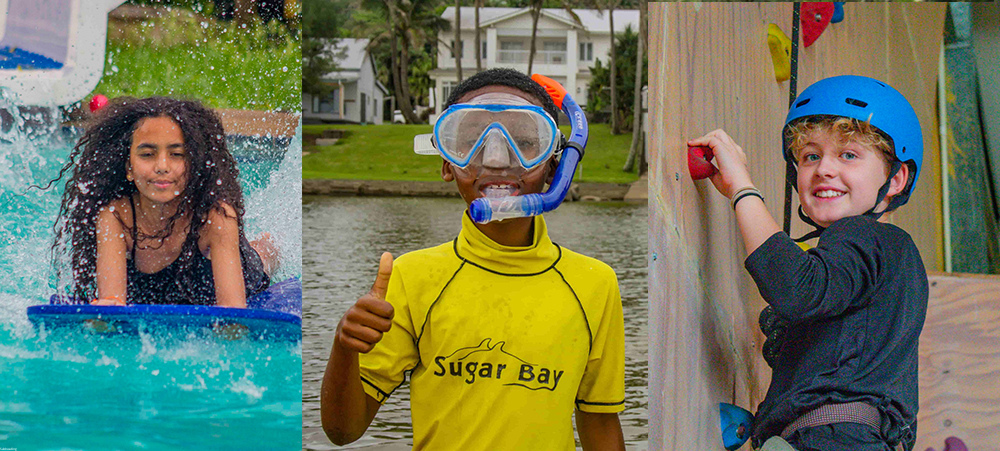
At Sugar Bay Holiday Resort in Zinkwazi Beach on the KwaZulu-Natal North Coast, children and teenagers aged 7 to 17 stay in a supervised residential environment, share cabins with their peers and choose from a wide range of activities.
The fun matters. So do the beach, the games, the themed events and the excitement of camp. But the value parents often notice afterwards comes from what children had to do for themselves while they were there.

1. Children practise real independence
Independence at camp does not mean leaving children to cope alone. It means giving them age-appropriate responsibility inside a safe structure.
At home, a parent usually knows where everything is. At camp, a child has to keep track of a towel, shoes, clothing and personal belongings. They need to get ready for the next activity, listen to instructions and arrive with what they need.
When something goes wrong, they cannot immediately call a parent to solve it. They need to think about the next step.
That may mean looking properly for the missing item, asking their cabin counselor for help or explaining a problem to an unfamiliar adult.
These are small moments, but they matter. A child learns that asking for help is something they can do for themselves. They also learn that a minor problem does not have to become a crisis.
Choice is another important part of independence.
Sugar Bay campers choose from more than 100 activities, including water sports, outdoor adventures, creative activities, team sports and evening entertainment. Activities are not compulsory, so children have to consider what they would like to try rather than simply following a timetable chosen for them.
Making a choice sounds simple. For children who are used to adults organising most of their day, it is useful practice.
They may choose something familiar one morning and take a chance on something completely new that afternoon. They begin to notice their own interests, preferences and limits.
One week at camp will not make every child perfectly organised. The more realistic benefit is that they return home with evidence that they can manage without a parent directing every step.
The next time they face a small problem, there is a better chance they will think, “I handled things at camp. I can handle this too.”
2. They learn how to live with other people
Children today are often in constant contact with friends. They send messages, share videos, play games together online and keep up with one another throughout the day.
Those friendships are real and important. However, living in a cabin with other children asks for a different set of social skills.
There is no mute button when someone is irritating. A misunderstanding cannot always be left unanswered. Children have to read facial expressions, listen to tone, wait their turn and notice how their behaviour affects the group.
They may have to join a conversation when they feel shy. They may need to share space with someone whose habits are different from theirs. At times they will need to apologise, compromise or explain what they meant.
These situations happen naturally at residential camp.
Campers eat together, take part in activities together and spend their evenings as part of a cabin group. Friendships often grow through these shared routines rather than through a carefully arranged social event.
A child may connect with someone during an activity, while waiting for a meal or during a quiet conversation before bed. Because the group spends sustained time together, children have repeated opportunities to get to know one another properly.
Camp does not guarantee that every child will make a lifelong best friend. Group culture and adult supervision matter.
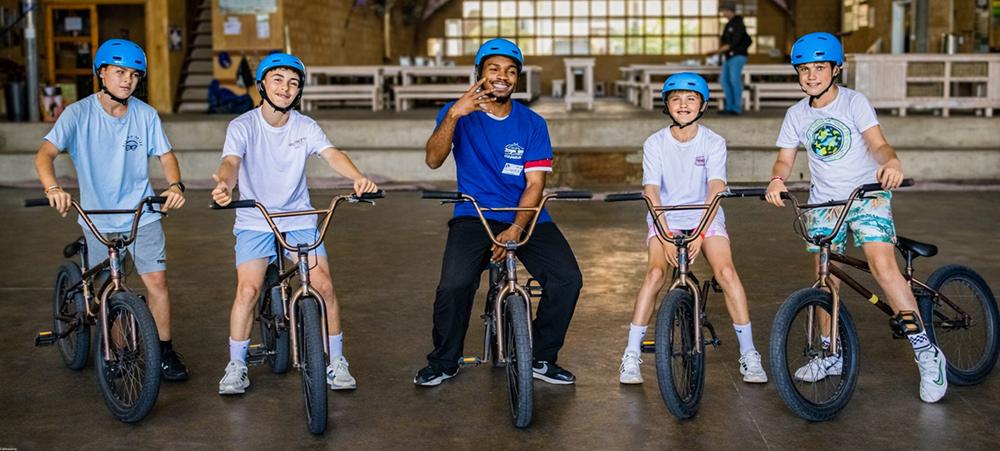
At Sugar Bay, each cabin group has dedicated counselors who live and participate alongside the campers. Their role includes helping children settle in, noticing when someone is being left out and supporting the group when disagreements arise.
The goal is not to remove every uncomfortable social moment. Children need guidance, but they also need opportunities to work things out.
For many campers, one of the most valuable discoveries is that they can enter a group where they know nobody and gradually find their place.
That confidence can make future school changes, sports tours, social events and new environments feel less intimidating.
3. Confidence grows from doing difficult things
Children are often told to believe in themselves. The message is well meant, but confidence becomes far more convincing when it is attached to something the child has actually done.
At camp, that may be climbing higher than they expected, learning a new swimming skill, getting onto a board for the first time or joining an activity they nearly avoided.
The important part is not being brilliant immediately.
It is trying, struggling, receiving guidance, adjusting and trying again.
A child who cannot complete something on the first attempt learns that early difficulty does not always mean they are incapable. They may simply need more practice.
Camp can also give children a break from the labels that follow them at school.
The child who is not usually selected for a sports team may discover that they are steady and determined during an outdoor challenge. The quiet child may become the person who encourages the rest of the cabin. The high achiever may find themselves completely new to an activity and have to accept help.
In a new environment, children are able to see different parts of themselves.
This works best when challenge is offered rather than forced.
Sugar Bay’s free-choice activity programme allows campers to stretch themselves at a level that feels manageable. Counsellors can encourage a nervous child to take one more step, but participation should never depend on embarrassment or pressure.
Camp cannot manufacture confidence in every child. Some children will take longer to settle, and some activities will remain outside their comfort zone.
The benefit lies in collecting small, believable examples of competence.
“I tried that.”
“I improved.”
“I was nervous, but I still took part.”
Those experiences give confidence something solid to stand on.
4. They practise coping when the day is not perfect
Even the happiest camp week will include moments a child did not choose.
They may miss home. They may not like a particular meal. Rain may change the activity plan. Someone else may get the role they wanted. They may lose a game or have to wait longer than they would like.
At home, parents often know how to soften these moments quickly. At camp, children have to sit with ordinary disappointment for a little longer and decide what to do next.
This does not mean distress is automatically good for children. A homesick or overwhelmed child should never be told to simply toughen up.
The value depends on the quality of the adults supporting them.
Experienced counselors need to recognise the difference between a child who needs encouragement to join the next activity and one who needs quiet time, closer support, contact with home or further intervention.
At Sugar Bay, campers have 24-hour supervision, and cabin counselors are responsible for their daily wellbeing. Parents also receive structured communication and can be contacted when there is a genuine concern.
For a child who is ready for camp, manageable discomfort can become useful practice.
They learn that missing home does not mean they cannot enjoy the afternoon. A changed plan does not have to spoil the entire day. Losing once does not mean refusing to play again.
They also learn that coping includes asking for support.
Camp is not therapy and it does not cure anxiety. It may not be suitable for every child at every stage, particularly where there is severe separation anxiety, recent trauma, significant sensory challenges or support needs the programme cannot meet.
Parents should discuss these matters honestly with the camp before booking.
For many children, however, camp offers a safe opportunity to experience an imperfect day and discover that they can still get through it.
5. Children take part without constantly checking a phone
The value of a phone-free camp is not simply that children spend less time on a screen.
It is what fills the space instead.
At Sugar Bay, campers hand in their phones at the beginning of camp and receive them again when they leave. Parents receive updates during the week, while children remain part of the camp programme.
Without a phone in their pocket, a child cannot automatically withdraw from an awkward moment, an unfamiliar activity or a quiet gap in the day.
They have to look up.
They talk during meals. They join games. They take part in evening activities. They spend time outdoors, move their bodies and share experiences with the people around them.
This does not mean phones and social media are entirely harmful. They help children maintain friendships, find support, learn and express themselves. The problems tend to arise when online experiences interfere with sleep, expose children to bullying or comparison, or become difficult to control.
Removing a phone for one week does not cure anxiety or permanently change a child’s habits.
What camp offers is a different rhythm.
Children wake up knowing the day will be filled with real people, physical activity, practical challenges and shared routines. They do not need to document every moment or check how other people are reacting to it.
They are simply there.
For some children, this is one of the few times in the year when their full attention is directed towards the activity, conversation or person in front of them.
What parents are paying for when they choose residential camp
The cost of a high-quality residential camp is substantial, and families are right to consider carefully what the fee includes.
Parents are paying for accommodation, meals, facilities, equipment, programme planning, activities, trained staff, supervision, health support and safety systems.
At Sugar Bay, the camp fee includes accommodation, three meals a day, activities, equipment and 24-hour supervision. Certain transport arrangements and optional excursions may cost extra, depending on the camp.
There is also a less visible part of the cost.
Parents are paying for an immersive environment that continues throughout the day.
A weekly lesson may give a child an hour to practise a skill. At residential camp, the learning does not end when the activity finishes.
The child still has to manage their belongings, join the group for dinner, share a cabin, deal with tiredness, prepare for the next day and ask for help when they need it.
The value comes from repetition.
They make another choice. They meet another person. They try again. They solve another small problem without a parent taking over.
Residential camp will not be affordable or suitable for every family, and choosing another type of school holiday experience does not mean a parent is offering their child less.
For families who can consider it, camp is best viewed as an investment in experience and opportunity rather than a guaranteed outcome.
Is your child ready for camp?
A child does not need to be completely fearless or independent before attending residential camp.
They should, however, be willing to go, even if they feel nervous.
A child may be ready when they can manage basic personal care with reminders, ask an unfamiliar adult for help and cope with sleeping away from home. It also helps if they understand that camp involves group routines, shared spaces and time without a mobile phone.
Parents should tell the camp about medication, sleep difficulties, allergies, sensory needs, bullying concerns and previous separation difficulties.
It is also worth asking how the camp manages homesickness, medical needs, inclusion, parent communication and children who do not settle.
Age is only one part of readiness. Some younger children are eager and comfortable away from home, while some teenagers may need more time.
The right camp experience should stretch a child without leaving them unsupported.
Children do not become capable because adults keep telling them that they are capable. They become capable through safe, age-appropriate opportunities to do things for themselves.
A week at Sugar Bay gives children those opportunities from morning until bedtime. They make choices, live with peers, try activities, solve problems and learn when to ask for help.
They return home with photographs, stories and new friendships. They may also return with something less visible: a growing sense that they can manage more of life for themselves.
For many parents, that is what makes a residential Sugar Bay camp worth considering.

Parents can read more about our August 2026 camps and 25th birthday celebration here: August 2026 Camps at Sugar Bay. (https://www.sugarbay.co.za/post/august-2026-camps-sugar-bay-25th-birthday)
To learn more about Sugar Bay, visit: About Sugar Bay Holiday Camp. (https://www.sugarbay.co.za/about-sugar-bay-holiday-camp)
Parents can book online here: https://www.sugarbay.co.za/book-a-holiday
View all 2026 Sugar Bay camp dates here: https://www.sugarbay.co.za/2026-school-holiday-camp-dates
For booking help or more information, contact the Sugar Bay team:
Call: 032 485 3778
WhatsApp: 082 525 9503
Email: [email protected]

- How Skills Learnt at Sugar Bay Camp Boost Academic Performance - October 6, 2026
- Why the September School Holidays Could Be the Confidence Reset Your Child Needs - September 3, 2026
- 5 benefits of holiday camp for children that go far beyond having fun - August 7, 2026