

Wriggle and Rhyme

Music May Be One of the Greatest Gifts You Can Give Your Baby

The newborn months are unlike any other season of life. They are tender, joyful, messy and, at times, deeply exhausting. Between round-the-clock feeds, interrupted sleep and learning to care for a tiny new person, it’s easy for mothers to become so focused on meeting their baby’s needs that they forget to nurture themselves, too. But what if one of the simplest ways to strengthen your connection with your baby was something you’ve instinctively been doing all along? Singing. Research continues to show that music is far more than entertainment during infancy. It is a powerful tool for mother and baby bonding, helping babies feel secure while supporting their emotional, social and cognitive development. As developmental psychologist Professor Laurel Trainor* notes, “Music is a fundamental part of human interaction from the very beginning of life,” with shared musical experiences helping infants connect, communicate and regulate their emotions. This understanding lies at the heart of Snugglers, an intimate eight-week programme designed specifically for moms and their babies aged two to five months. Snugglers introduces mothers to simple, evidence-informed ways of weaving music for babies into everyday life. Through songs, movement, gentle play, massage and soothing routines, mothers discover how music can naturally become part of sleep times, feeding, play, cuddles and moments of calm—all while supporting early childhood development in a joyful and pressure-free way. Just as importantly, Snugglers recognises that new mothers need connection, too. Each weekly session creates a welcoming space where moms can meet other moms navigating the same beautiful, demanding season of motherhood. Friendships are formed, stories are shared and the reassuring reminder emerges that no one has to do this alone. In a world where many new mothers experience isolation, these moments of community are often just as transformative as the musical activities themselves. Every mom also receives a beautifully curated Snugglers Pack, including a unique prompted journal. Used throughout the eight weeks, it becomes both a practical companion and a treasured keepsake—a place to capture milestones, reflections and the everyday magic that can so easily slip by in the blur of newborn life. The beauty of Snugglers is its simplicity. There is no expectation to be musical, no pressure to “teach” your baby. Instead, mothers are gently reminded that their own voice is already enough. Every lullaby, every gentle sway and every shared smile becomes an opportunity to build trust, comfort and lifelong connection. In a season that passes all too quickly, Snugglers offers something many mothers are searching for: a chance to slow down, savour the moment and discover that some of the most meaningful memories are made, one song at a time. Research Reference Trainor, L. J. (McMaster University) has published extensively on infant musical development and parent–infant musical interaction. Additional evidence from Frontiers in Psychology (Custodero, Harman & colleagues, 2021) demonstrates that shared musical experiences support parent–infant attachment, emotional regulation and parental wellbeing, reinforcing the value of music as an everyday part of early family life. More Information Snugglers classes for moms and their very young babies (2–5 months) are now available in Cape Town at: Find out more about Snugglers at:https://www.wriggleandrhyme.co.za/music-classes-to-bond-you-and-your-very-young-baby/ Or follow Wriggle & Rhyme on Facebook and Instagram: @wrigglerhyme

DIBBER SA

Messy, Yet Easy, Art Activities That Develop Toddlers’ Motor Skills

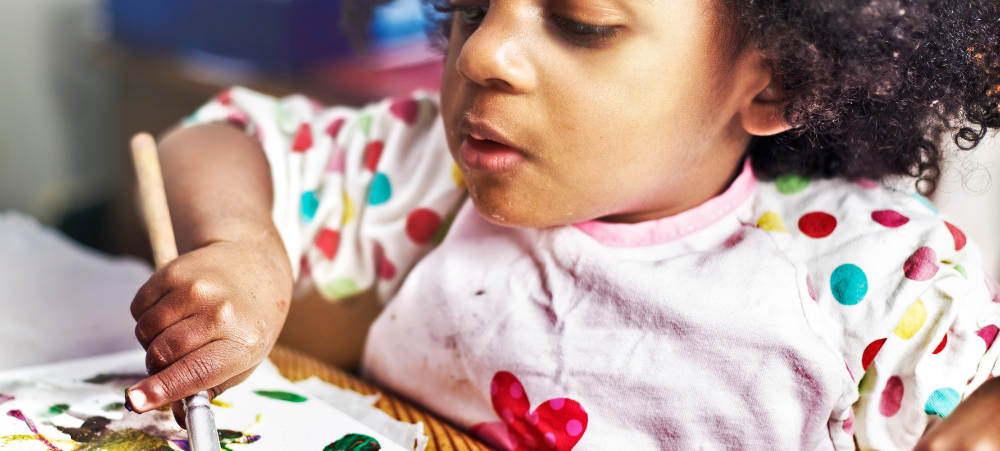
A toddler with paint on their hands, glue on the table and a half-finished piece of paper in front of them may not look especially productive to an adult. But Dibber International Preschools say that these moments are often when some of the most valuable early learning is taking place. Dibber is encouraging parents to look more closely at the role of creative activity in the early years, arguing that art is more than a way to keep children occupied. In practice, simple art activities can help build the fine motor control children later need for writing, dressing, tying shoelaces and managing everyday tasks confidently. That makes art an important part of toddler development rather than a decorative extra around the edges of learning. “At Dibber, we see creative activity as one of the most natural ways young children learn about themselves and the world around them,” says Ursula Assis, Country Director of Dibber International Preschools South Africa. “When toddlers paint, pinch, tear, press, roll or draw, they are doing much more than making something. They are building hand strength, coordination, focus and confidence through experience.” Many of the art activities most useful for toddlers are also the simplest. Finger painting remains one of the clearest examples. Smearing, pressing and spreading paint across paper strengthens the muscles in the hands and fingers while giving children a direct sensory interaction of colour, texture and movement. Playdough works in a similar way. Rolling, pinching, flattening, and shaping dough help toddlers strengthen their grip and control while allowing them to explore their hands freely. Tearing and sticking paper for collages, meanwhile, encourages bilateral coordination by asking both hands to work together purposefully. Dibber also points to the value of less conventional painting tools. A sponge, a cotton wool ball, the bottom of a bottle or an old toothbrush can all invite different grips and movements. That variety matters, especially in the early years, when children are still developing the fine-motor control needed for later tasks. Sticker art offers another form of practice that can look deceptively simple. Peeling and placing stickers asks toddlers to use a pincer grip, the same kind of movement later needed to hold a pencil with control. Chalk drawing outdoors, sponge stamping, and wall or paving water painting all build coordination in slightly different ways while keeping the activity playful and inviting. For older toddlers, child-safe scissors can also become part of that development. Cutting paper or even playdough helps sharpen coordination between both hands and gives children one of the more focused forms of fine motor practice available in everyday play. Dibber’s broader point is that these activities matter because they combine physical development with creativity, experimentation and enjoyment. In the early years, children tend to learn best when these elements are allowed to sit together. “Toddlers do not separate development into neat categories,” says Assis. “For them, creativity, movement, sensory discovery and learning are happening all at once. That is why art can be such a powerful part of early childhood. It reaches the hands, the mind and the emotions together.” This is one reason art remains so useful in both home and school settings. It offers children a way to strengthen practical skills while also expressing themselves, exploring materials and building confidence through open-ended activity. There is no single correct outcome. The process carries much of the value. That can be reassuring for parents who sometimes feel pressure to focus heavily on more visible academic preparation. Dibber’s view is that skills such as grip strength, hand-eye coordination, concentration and confidence often begin developing long before formal learning appears to start. Activities that look playful or messy can still do serious developmental work. At Dibber, these understandings form part of a wider play-based approach to early childhood education, where children are encouraged to explore, create and learn through direct experience. Art is part of that rhythm because it gives children meaningful ways to experiment, communicate and strengthen essential developmental foundations. For Dibber, the message to parents is simple. The next time a toddler covers the table in paint, presses stickers everywhere but the page, or proudly presents a drawing that makes sense only to them, it may be worth looking beyond the mess.

Bonitas – innovation, life stages and quality care

New Dad’s roles

The following information is to be used as a guide to and at the discretion of the end-user and should not replace a doctor’s opinion. Know that it’s normal to have fears – there is no simple way to prepare for parenthood and all new parents (yes Moms too!) have some concerns or fears about their new role. Learn as much as you can about your baby’s daily routine and offer to help out with activities you are comfortable doing. Make “Daddy Time” a special time every day by spending one-on-one time talking, reading or singing to the baby – work with Mom to build these activities into the daily routine. Offer to attend your baby’s doctors’ visits whenever possible – it helps you learn about your baby and provides a second set of ears to hear what the doctor has to say. Be actively involved in providing a safe environment for the baby – help keep an eye out for safety hazards. Make sure your baby is never exposed to second-hand smoke and has a drug free place to live. Be gentle with the baby – never shake your baby or toss them in the air. Be mindful of how you talk and act around the baby – a gentle voice and kind gestures are always best. Support from Mom to Dad The following information is to be used as a guide to and at the discretion of the end-user and should not replace a doctor’s opinion. Ask Mom to teach you to do things you may not know how to do yet – this way you can help out and support her as you learn about your new baby. Once you’re comfortable, offer to watch the baby so Mom can get some extra rest – this gives you time with the baby while supporting Mom as well. Take care of yourself, get regular check-ups and exercise daily – work to stay healthy for the newest member of the family. Set a good example and keep smoking and drugs out of your baby’s home. Talk with Mom about how she feels about herself after her pregnancy – she may need your support and encouragement to resume intimacy and sex since things like her self-image and her body may have changed. Treat Mom to small gifts and simple gestures that tell her that you care about her – these will help her understand that she is still special to you even if she is feeling tired and her self-image has changed. Emotional aspects for Dad The following information is to be used as a guide to and at the discretion of the end-user and should not replace a doctor’s opinion. Especially in the first few weeks after birth, use compassion when dealing with both Mom and baby. They both have just been through a difficult experience and your compassion will go a long way in supporting them as they move into the next part of their journey. You may often find yourself in new and challenging situations where you have the choice to either laugh or cry – choose humour, it helps everyone survive and thrive during challenging times. Life doesn’t always prepare us for our role as a parent so as a new Dad you will often find yourself in new situations with no rulebook – rise to the occasion by using your creativity and imagination to overcome new challenges. Remember that patience is a virtue – this is especially true when you have a newborn, so remember to slow down, take a deep breath and relax before you react to trying situations. Always keep in mind that much of what you are doing in the early days after the birth of your baby is a form of service for both baby and Mom – don’t see it as a negative, rather see it as a time for you to develop a new leadership role as you offer yourself in service to others. Dad comforting a crying baby The following information is to be used as a guide to and at the discretion of the end-user and should not replace a doctor’s opinion. As a first step, always make sure your baby has been fed and changed and that they are comfortable – if so then go on to the next steps to soothe them. Swaddling: holding a baby close can help them feel more secure, so snuggle them in a soft blanket. Side/Stomach: holding your baby on their side or stomach may help calm them. Shhh: making this noise often helps sooth your baby. Sucking: is very comforting for your baby, so if it’s not feeding time, give them a pacifier to suck on. Swinging: gentle movement is often soothing to a baby, so gently rock them in your arms or put them safely in an infant swing. Remember that even though it may be frustrating, it’s important for you to be patient and gentle with your baby. Use this time to bond with your baby and allow Mom a much-needed break from her role as a caregiver. Getting Dad involved The following information is to be used as a guide to and at the discretion of the end-user and should not replace a doctor’s opinion. Talk with Dad about his thoughts, feelings and concerns regarding his role in caring for your newborn – this will help you understand his comfort level. Get Dad involved in your baby’s care – he may need help in learning how to hold the baby or change diapers so include him in as many of the day-to-day activities as you can. Have Dad help with a night feeding when possible – if you are breast feeding consider pumping a feeding ahead so he can take one feeding for you during the night. Have him talk, read or sing to the baby every day – build these activities into your baby’s daily routine. Involve Dad in doctors’ appointments whenever possible. Ask Dad

Curro Online

School That Moves With You: Inside the Curro Online Story

As education continues to evolve, online schooling is becoming an increasingly important part of South Africa’s learning landscape. Offering flexibility, personalised support, and access to quality education regardless of location, online schools are helping more learners thrive in environments that suit their individual needs. In 2025, the local online education market size was reported at USD 493.8 million (around R9 billion), with strong growth expected over the next decade. More than 250 000 South African learners are now part of online learning, a shift that has accelerated since 2020 and is reshaping expectations around access, continuity, and flexibility in education. Online schooling is increasingly seen less as an alternative and more as a practical response to how families now live and learn. A system shaped by access, continuity and lived reality For many families, education decisions are shaped as much by geography and circumstance as by curriculum choice. In South Africa, where distance and relocation remain part of daily life, consistent access to schooling is not always guaranteed by proximity to a school. Families who move frequently, work across regions or live in rural areas often face disruption in traditional schooling pathways. Online learning removes these physical barriers to continuity. Learners can remain in a structured academic environment regardless of location, maintaining consistency even as circumstances change. Digital learning is also now a normalised part of education delivery, embedded in how learning, interaction and assessment take place. Learning shaped for a changing world Education is no longer preparing learners for a fixed environment, but for systems defined by change. The World Economic Forum’s Future of Jobs Report 2025 highlights that nearly 39% of core workplace skills are expected to shift by 2030, with growing emphasis on adaptability, digital fluency, analytical thinking and self-management. In practice, this requires learners to take greater ownership of their progress, manage their time independently and engage confidently in digital platforms within a structured academic framework. These are no longer abstract future skills, but everyday capabilities increasingly expected in tertiary education and the workplace. The Curro Online proposition Curro Online, established in 2020, is part of southern Africa’s leading independent education network and was created with a clear purpose: to extend access to structured, high-quality schooling beyond physical boundaries. The model is built around CAPS-aligned education delivered through live, interactive classes taught by qualified, SACE-registered teachers. Learners from Grade 5 to Grade 12 are taught in small classes capped at 25, ensuring that engagement remains personal, even within a digital environment. The academic programme leads to the IEB examinations at the end of Grade 12, offering a qualification recognised by universities locally and internationally. Recorded lessons and structured academic support ensure continuity and flexibility, particularly for families managing mobility or complex schedules. A broad subject offering – including Information Technology, Engineering Graphics and Design, Visual Arts and French – allows learners to follow pathways aligned with their strengths and future ambitions. Early indicators of success across a wider learner journey The strength of online schooling is reflected not only in participation growth but also in the consistency of learner outcomes and the breadth of achievement beyond the classroom. Learners are increasingly balancing structured academic programmes with achievements in sport, leadership and the arts. These include Chrizmie Mostert (Grade 10), who was crowned Miss Teen Universe South Africa 2025; Yuvhan Govinder (Grade 11), who completed his second Dan grading in Karate; and Mienke Liebenberg (Grade 6), who competes at international golf level and represents the Northwest Girls U.11 provincial team. These examples show a learning environment in which academic progress and personal development are not treated as separate tracks, but as complementary parts of the same journey. A connected school experience, not a remote one A common misconception about online schooling is that it limits social development. In practice, the experience is more layered and interconnected. Learners participate in a wide range of clubs and enrichment activities, including coding, chess, drama, photography, creative writing and language-based clubs such as conversational German and isiZulu, alongside virtual fitness programmes. Interaction is further strengthened through regular in-person meetups, both locally and internationally, enabling learners to build relationships beyond the digital classroom. Importantly, learners are also connected to the broader Curro ecosystem through Curro Sport, Curro Create, and a wider subject offering, extending opportunities across academic, cultural and sporting development. A model built for continuity and future readiness As education continues to evolve, the focus is shifting from access alone to continuity, relevance and long-term readiness. Online schooling now sits within this broader shift, offering a model that aligns with how learners live and how they will ultimately work – flexible, structured and increasingly digital by design. For many families, the decision is no longer framed as traditional versus online, but rather as choosing an approach that can hold both structure and flexibility without compromise. Join the Curro Online information session Curro Online will host an information session on 22 July 2026, offering families an opportunity to explore the model, curriculum and learner experience in more detail. To reserve a place or find out more, visit: Curro Online – Information Session – 22 July 2026. To learn more about Curro Online, visit www.curro.co.za

Wingu Academy

Understanding and Addressing Online Bullying: A Guide for Parents

As education continues to evolve in digital spaces, online safety has become an essential part of learner wellbeing. While online learning offers flexibility and opportunity, it also introduces risks such as online bullying. Online bullying can take many forms, including hurtful messages, exclusion from online groups, impersonation, or inappropriate comments during digital interactions. Unlike traditional bullying, it can occur at any time and may feel more persistent due to constant connectivity. Parents play a vital role in prevention and support. Open communication is the first step — encouraging children to speak freely about their online experiences helps identify issues early. Monitoring device usage appropriately, setting healthy digital boundaries, and teaching learners about respectful online behaviour are also key protective measures. It is equally important to reassure learners that they are not alone. If online bullying occurs, parents should respond calmly, document incidents where possible, and report concerns to the school immediately so that appropriate support can be provided. At Wingu Academy, we prioritise digital wellbeing and maintain structured support systems to help learners navigate online challenges safely. Our educators and support teams work closely with families to ensure a respectful, secure, and positive learning environment. Together, we can build a culture of kindness, responsibility, and safe digital engagement.

Sanosan

Eczema & Dry Skin in Babies: What Parents Need to Know to Keep Little Ones Comfortable

There are few things more distressing for parents than seeing their baby uncomfortable, especially when dry, itchy, irritated skin starts disrupting sleep, feeds, and cuddles. From rough patches on tiny cheeks to persistent dry skin on arms and legs, eczema and skin sensitivity are common concerns among South African families.  While baby eczema (also known as atopic eczema or atopic dermatitis) cannot always be prevented, understanding triggers and creating a gentle skincare routine can help soothe discomfort and support healthier skin. “Baby skin is far thinner and more delicate than adult skin, making it more vulnerable to dryness and irritation,” says Karen Van Rensburg, spokesperson for Sanosan South Africa, a trusted skincare brand developed especially for sensitive baby skin. “The good news is that with the right daily care and awareness of triggers, many babies experience significant relief.” How to Spot the Signs of Eczema and Dry Skin Dry skin in babies often appears as rough, flaky or slightly irritated patches, particularly during colder months or in dry climates. Eczema, however, tends to be more persistent and may include red, inflamed, itchy areas that can become uncomfortable for babies. Common signs include: While some babies experience mild dryness, others may be more prone to eczema because of genetics, allergies, or environmental sensitivities. Identifying Common Triggers Every baby is different, but certain factors can worsen dry skin or trigger eczema flare-ups. Parents may find it helpful to observe patterns and identify possible irritants. Some common triggers include: Harsh soaps or fragranced products – adult skincare products or heavily fragranced washes can strip delicate skin of moisture and aggravate sensitivity. Dry weather and temperature changes – cold air, heaters, and low humidity can contribute to skin dehydration which is something many families experience during winter. Overheating and sweat – babies who become too warm may experience irritation, particularly in skin folds. Certain fabrics or laundry detergents – scratchy clothing or blankets, or strongly fragranced detergents can irritate sensitive skin  Long or overly hot baths – although bath time can be soothing, very warm water or extended baths may dry out the skin further.  Choosing the Right Moisturiser Matters One of the most important ways to support dry or eczema-prone skin is through regular moisturising, but not all products are created equally. Parents should look for moisturisers specifically developed for babies and sensitive skin, ideally those that are dermatologically tested and designed for sensitive or eczema-prone skin. Make sure they are free from harsh ingredients, and are gentle enough for daily use.  “Choose products with natural, soothing and protective ingredients like organic olive oil and chamomile,” advises Van Rensburg.  A Gentle Daily Routine for Relief For babies struggling with dryness or eczema, consistency often matters more than complexity. A simple, soothing routine may help minimise irritation and support skin comfort. Parents can consider the following: Keep baths short and lukewarm – Avoid overly hot water as it rapidly strips away baby skin’s natural oils and damages the already fragile skin barrier. Use gentle cleansers specially formulated for delicate baby skin, such as Sanosan Baby Bath & Shampoo which contains milk protein and organic olive oil, and preserve the natural protective function of the skin. Pat skin dry, don’t rub – After bathing, gently pat the skin dry with a soft towel rather than rubbing. Rubbing causes friction, which can easily lead to irritation, redness, and chafing.  Moisturise generously and regularly – Apply a gentle baby moisturiser after bathing and whenever skin appears dry. Sanosan Baby Care Lotion contains 96% natural ingredients, including milk protein and organic olive oil, as well as soothing panthenol and chamomile – perfect for baby’s sensitive skin.  Dress babies in breathable fabrics – Soft cotton clothing is often more comfortable for sensitive skin than rougher fabrics, and breathability reduces the chances of sweating and rashes forming.  Keep nails short – This may help reduce irritation if babies scratch itchy areas. When to Seek Medical Advice While mild dry skin can often be managed at home, parents should speak to a healthcare professional if eczema becomes severe, painful, infected, or significantly disrupts sleep and comfort. Every baby’s skin journey is different, but with patience, observation, and a gentle approach to skincare, parents can help keep little skin calmer, softer, and more comfortable. Sanosan specialises in baby skincare inspired by the natural nourishing properties of milk protein, formulated to help support the skin’s protective barrier while keeping baby skin soft and healthy. The range is developed specifically for delicate baby skin and dermatologically tested to ensure gentle, effective care. www.sanosan.co.za  

It seems we can't find what you're looking for.
Scroll to Top