
Cambrilearn Online School

The Word on the School Report Was Too Small

Most parents of a square-peg child know the moment by heart. The report arrives, you scan past the marks to the comments, and there it is. Distracted. Does not apply himself. Quiet. One word, chosen by a busy teacher at the end of a long term, and somehow it follows your child from grade to grade like a piece of official record. The uncomfortable part is that the word is rarely a lie. Your son probably was distracted in that classroom. Your daughter probably was quiet in that room. Teachers write what they see, and most write it with care. The problem is what the word cannot hold. It describes a behaviour in one setting, on the days one adult happened to observe it. It says nothing about whether the pace was wrong, whether the subject mix fit, whether the room itself was the obstacle, or what the same child looks like somewhere quieter, somewhere faster, somewhere built differently. The word was never false. It was too small. Why too small, and not wrong It matters that the word is too small rather than wrong, and not only as a courtesy to teachers. A parent who is told the school lied about their child has nowhere to go with that except anger, and anger is a poor basis for a schooling decision. A parent who understands that the school reported honestly from inside its own limits can start asking a sharper question: what would a setting with different limits see? Every report comment is a measurement taken in one place. Distracted, measured in a room of thirty. Quiet, measured in a space where the loudest voices set the terms. Below average, measured against one pace on one route. Change the room, the pace or the route and you are not massaging the numbers. You are measuring something the first setting had no instrument for. What most schooling asks of the child When a child and a school do not fit, nearly every remedy on offer asks the child to do the changing. Extra lessons after a long day. A concentration plan. A seat closer to the front. Some of this helps, some of the time. Notice, though, what stays constant through all of it: the school keeps its shape, and the child is asked to fold themselves into it. For generations that was simply how schooling worked, because a building with one timetable and thirty children to a room has no other option. It cannot reshape itself around one child. Reshaping is exactly what an online school can do, if it is built as a school rather than a video library. What CambriOS is For 20 years, CambriLearn has built school in the other direction: fit the school to the child, rather than the child to the school. In August 2026 that approach got a name. CambriOS is the structure behind CambriLearn, and it brings together four connected school experiences that families have been using in parts for years, now working openly as one school. CambriCampus is the school day itself: live lessons, qualified teachers, and a timetable your child logs into every morning. A real day with a real rhythm, not a folder of videos and good intentions. CambriPathways is the choice: six accredited learning pathways, from CAPS and IEB to the International British Curriculum and Pearson Edexcel, each one ending in a recognised qualification. The point is not variety for its own sake. A child labelled slow on one route is often just a child on the wrong route. CambriCommunity is where your child belongs: clubs, events, study groups and regional meetups, because a school is other people or it is not a school. CambriCommand is the parent view: attendance, progress and standing, visible in one place, so the first you hear of a wobble is a Tuesday in March rather than the end-of-year report. What changes for enrolled families Nothing, which is rather the point. CambriCampus is the school day your child already attends. CambriPathways is the curriculum they already follow. CambriCommunity is the club they already log into on Thursdays. CambriOS is not a separate purchase and carries no extra fee; it is the name for how the school already works, made visible so that parents can finally see the parts and how they connect. What to do with the word you are holding If a report comment has been sitting with you for a term or a decade, the useful move is not to argue with it. Teachers describe honestly what their setting lets them see. The useful move is to ask what the word might be missing. In which settings does my child focus well? Which parts of the work are they ahead on, and does the current route ever show it? What would this child look like in a smaller room, at a different pace, on a different pathway? Accurate and useless: that is what a too-small word produces, year after year. It records a symptom and attaches no way forward, which leaves families circling the same conversation every term while the child quietly concludes the word must be who they are. Breaking that loop rarely starts with the child trying harder. It starts with an adult asking whether the setting, the pace or the pathway is the variable nobody has tested. Those are questions worth taking to someone whose job is answering them. You can book a free consultation with a CambriLearn education consultant and bring the report with you. The word described what one school could see. It never described how your child thinks, and it certainly never decided how the story ends.


Freebees PR

Mid-Year Reset: Why Winter is the Perfect Time to Refresh Your Everyday Habits

As South Africans reach the halfway mark of the year, many people find themselves running on autopilot. The excitement of New Year’s resolutions has faded, workloads have piled up, school schedules are in full swing, and winter’s shorter days often leave us feeling tired and uninspired. Rather than waiting for summer to make positive changes, winter is actually one of the best times to pause, reflect and reset.  A mid-year reset doesn’t have to mean making dramatic lifestyle changes. Instead, it’s about taking stock of your daily routines and asking a few simple questions: What’s working? What’s causing unnecessary stress? What small improvements could make everyday life healthier, easier and more enjoyable? Here are five simple areas worth reviewing this winter. Refresh your daily routine Routines naturally evolve, but we don’t always notice when habits are no longer serving us. Whether it’s spending too much time scrolling before bed, skipping breakfast, or feeling constantly rushed in the mornings, now is an ideal time to make small adjustments. Start with one habit rather than trying to overhaul your entire lifestyle. Going to bed 30 minutes earlier (and actually putting the phone away!), preparing lunches the night before, or scheduling short walks during the day can all have a noticeable impact on energy and wellbeing.  Give your skincare routine a winter update Winter conditions are far harsher on skin than many people realise. Cold air, indoor heating and hot showers can strip away natural moisture, leaving skin dry, tight and irritated. This is the perfect time to reassess the products you’re using. Look for gentle cleansers and richer moisturisers that help support the skin’s natural barrier rather than products that may dry it out further.  SKNLOGIC’s Gentle Cleanse Cream contains Fig Extract that has moisturising properties similar to the skin’s own and is therefore an excellent hydrator providing a gentle tightening effect.  The newly launched Hada Labo Glow Brightening Hydrator is a Japanese water-gel lotion created to tackle hyperpigmentation, uneven tone and dull, dehydrated skin. An innovative blend of Super Hyaluronic Acid (nano + macro), Tranexamic Acid and calming Hatomugi Extract dives deep into the dermis, locks in moisture for 24 hours, brightens sun, hormonal or post-acne marks and restores fresh radiance. The ultra-light texture absorbs in seconds, leaves zero tackiness and works for every skin type, especially from your mid-20s, when the first dark spots and fine lines appear.  Starting your day off with an invigorating Earthsap Citrus & Ginger Body Wash shower is a great option. This zesty citrus-scented body wash is fresh, foamy and made with a mixture of sensational natural ingredients. Coconut hydrates the skin, while grapefruit and ginger stimulate your circulation and get the blood pumping. Plus this is a non-toxic body wash, so it will cleanse, rejuvenate and soften your skin without causing any harm to you or the environment. If you have been indulging in scorching baths or showers, or the aircon has been taking its toll and your skin is super dry, the Bodylab Camphor Complex Soothing Body Cream is rich, calming formula designed for very dry skin. Infused with camphor, it delivers deep moisture while providing a refreshing cooling sensation to soothe and comfort dryness and irritation.  Revisit what’s on your plate Comfort food certainly has its place during colder months, but winter can also be an opportunity to add more nourishing foods to your diet. Think colourful vegetables, seasonal citrus packed with vitamin C, warming soups, legumes and whole grains. Staying hydrated remains just as important during winter, even if you don’t feel as thirsty. Small swaps, rather than restrictive diets, are often easier to maintain over the long term.  Create a healthier home Winter usually means closed windows, more time indoors and increased exposure to dust, germs and allergens. A mid-year reset is the ideal opportunity to declutter living spaces, wash bedding and couch blankets, clean overlooked areas, and choose household cleaning products that are kinder to both your family and the environment. Plant-based cleaning products, such as those from Earthsap, effectively clean the home while reducing exposure to harsh chemicals, making them a practical choice for households looking to embrace healthier everyday living.  Make wellbeing part of everyday life A reset isn’t only about physical health. Taking time to reconnect with family, spending less time on screens, enjoying hobbies or simply creating moments of calm can have a significant effect on emotional wellbeing. Remember, hobbies aren’t about perfection – it’s about finding something you enjoy doing that brings you contentment or fun.  For parents, winter also offers opportunities for quality family time through indoor play, reading together or creative activities. Products designed to make everyday family life simpler, such as Vital Baby’s practical feeding and home essentials, can help reduce some of the small daily stresses that busy families experience. Their Nourish Prep & Wean allows you to steam, cook, and blend healthy homemade meals quickly for your little one all in one machine, helping to cut out clutter and streamline your routine. Simple and easy to use, the Prep & Wean has three distinct functions and a large 900ml jug capacity to help you through every step of weaning – sterilising, steaming, and blending.  Even something as simple as lighting a naturally fragranced candle in the evening, such as those from SoyLites, can help create a calm and welcoming atmosphere after a busy day. The Clarity Tumbler Candle with Bergamot, Patchouli, Lemon and Rosewood  is an antidote for stress and nervous tensions, enhancing and uplifting your mood. Or light the Energise Tumbler Candle with Spearmint, Peppermint, Geranium & Ginger during the day for renewed energy – it’s a cooling scent with stimulating undertones of fresh mint, a perfect pick-me-up. Small Changes Add Up The beauty of a mid-year reset is that it isn’t about perfection. It’s about making thoughtful adjustments that support healthier habits for the months ahead. Whether it’s choosing gentler skincare, eating more nourishing meals, creating a healthier home environment or simply slowing down long enough

Catrobatkidz

The Brain–Body Connection: Why Movement Helps Children Focus, Remember and Learn

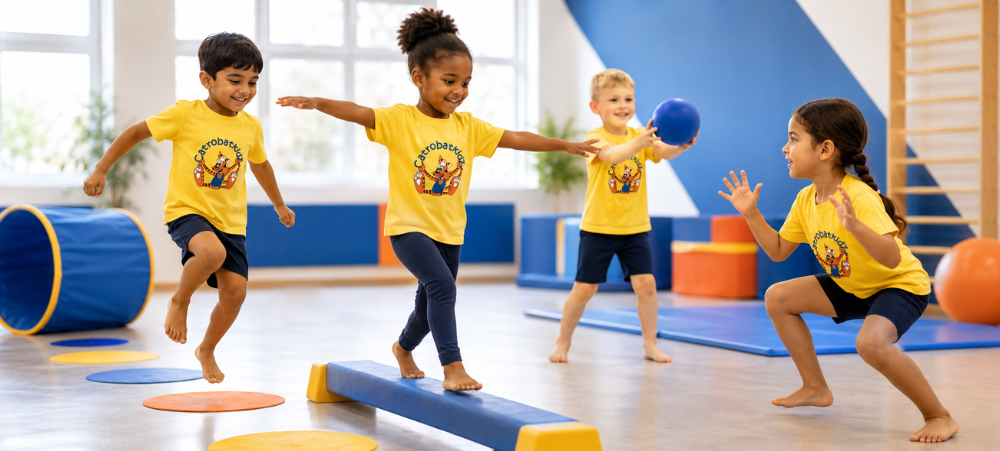
Have you ever noticed that a child who is wriggling, climbing, spinning or bouncing can suddenly settle more easily afterwards? It may look as though they are simply “getting the energy out”, but something much more interesting is happening. Movement is not separate from learning. For young children, the body is one of the brain’s most important learning tools. When children run, balance, throw, catch, crawl, jump and follow movement instructions, they are doing far more than building muscles. They are also practising the skills that help them pay attention, remember information, listen, solve problems and manage their behaviour. The brain does not develop in isolation A child’s brain and body are in constant conversation. Physical activity increases alertness and engages brain systems involved in attention, memory and decision-making. Research consistently links regular physical activity in children with benefits for brain health, cognitive development, attention and memory. This does not mean that ten star jumps will magically turn homework into a delight. Wouldn’t that be handy? It means that movement can help create a brain state that is more ready to receive, organise and use information. Young children are especially dependent on active, hands-on experiences. They learn “under”, “over”, “through”, “fast”, “slow”, “left” and “right” far more meaningfully when they experience those ideas with their bodies rather than only hearing them explained. Movement supports attention Attention is not simply the ability to sit still. A child may be perfectly still and mentally somewhere near the moon. True attention involves noticing what matters, filtering out distractions and staying engaged long enough to complete a task. Active play gives children repeated opportunities to practise this. Consider a simple movement game: “Jump twice, crawl to the cone, then freeze.” The child must listen, hold the instruction in mind, complete the actions in order and stop their body at the right moment. That playful activity is also attention training. Movement can be particularly helpful before activities that require concentration. A few minutes of marching, animal walks, dancing, skipping or outdoor play may help a child return to a quieter task feeling more alert and organised. Movement strengthens memory Memory grows through use. When children connect information to actions, rhythm, repetition and sensory experiences, learning has more “hooks” to hold onto. This is why action songs are so effective. A child must remember the words, match them to movements, keep the sequence going and adjust to the rhythm. The body helps reinforce what the brain is learning. Movement can also make every day learning more memorable. Children can hop while counting, form letter shapes with their bodies, throw a ball while naming colours or act out a story. The goal is not to turn every lesson into a workout. It is to recognise that learning often sticks better when children can see it, say it, hear it and do it. Movement builds listening skills Listening is an active skill. Children need to focus on the speaker, understand the message, remember it and respond appropriately. Games such as “Simon Says”, follow-the-leader, musical statues and movement sequences practise all of these steps. Children learn to wait, listen for a cue and control the urge to move too soon. Rhythm activities are especially valuable because they require children to coordinate what they hear with what their bodies do. Clapping patterns, moving to changes in tempo and stopping when the music stops all strengthen the connection between listening and action. The hidden work of executive function Executive function is the brain’s management system. It helps children remember instructions, resist impulses, switch between tasks, plan what to do and recover when something does not go according to plan. These abilities are commonly grouped into working memory, self-control and mental flexibility. These skills are still developing throughout childhood. They are not personality traits, and a child who struggles with them is not necessarily lazy, naughty or “not listening”. Movement-rich play provides a natural training ground. An obstacle course requires planning and sequencing. A ball game requires timing and self-control. Balancing requires concentration and adjustment. A group activity requires turn-taking, awareness of others and flexible thinking. Movement games and action songs can challenge children’s attention, working memory and inhibitory control in age-appropriate ways. Even wobbling matters. When a child loses balance, adjusts and tries again, the brain is receiving valuable feedback. Learning is taking place in the correction, not only in the successful result. Simple ways to use movement at home Parents do not need expensive equipment or a complicated programme. Small, regular opportunities make a difference. Try a five-minute movement break before homework or a quiet activity. Give two- or three-step movement instructions. Play stop-and-go games. Create a simple obstacle course using cushions, chairs and a piece of string. Throw and catch while practising words or numbers. Let children climb, carry, push, pull, balance and explore outdoors whenever it is safe to do so. Most importantly, avoid using movement only as a reward after the “real work” is finished. For children, movement is part of the real work. Children are built to move A moving child is not automatically a distracted child. Sometimes movement is exactly what helps the child organise their attention, regulate their body and become ready to learn. Active play will not solve every learning or behavioural difficulty, and children develop at different rates. But movement gives the developing brain rich, repeated practice in many of the skills learning depends on. When children move, they are not taking time away from development. They are building the physical, cognitive and emotional foundations that help development happen. At Catrobatkidz, we believe in Learning to Move – Moving to Learn—because when the brain and body work together, children are better equipped to focus, remember, listen and grow.

Koa Academy

Young Entrepreneurs in Action: Koa Academy’s 2026 Online Entrepreneurship Challenge

Following the success of last year’s challenge, Koa Academy’s 2026 Online Entrepreneurship Challenge once again invited students between the ages of 9 and 16 to step into the world of business, creativity, and real-world problem-solving. Over five weeks, students worked through the process of identifying a problem, developing a solution, testing their ideas, refining their business models, and learning how to present their thinking with confidence. Through weekly live coaching sessions, online coursework, and mentor support, students were encouraged to think critically, solve problems creatively, listen to feedback, and take action, even when the process felt challenging. By the end of the challenge, these young entrepreneurs had not only developed business ideas but had also practised the kind of skills that matter far beyond a single project: resilience, communication, problem-solving, collaboration, confidence, and courage. Did you know? The challenge was adapted from the Business Expo project that Koa students take part in each year, giving students beyond Koa the chance to experience a taste of project-based learning in action. It reflects something we care deeply about at Koa: creating opportunities for students to take what they are learning and apply it in meaningful, practical ways. Pitch Day  Pitch Day was a chance for our finalists to share what they had built, reflect on what they had learned, and present their ideas to a panel of judges. From products designed to support children with ADHD, to proudly South African engineering kits, bug education boxes, refurbished e-waste devices, gluten-free treats, and shoe-cleaning services, the range of ideas was both thoughtful and inspiring. What stood out most was not only the creativity of the business ideas, but the growth behind them. These students had taken their ideas seriously. They had spoken to potential customers, tested their thinking, made changes, handled setbacks, and pushed through moments that felt uncomfortable. That is what made this challenge so powerful. Meet the 2026 Winners Junior Category Ryan Wagner: Ryan’s Bug Class Co-op – Junior Winner Ryan’s Bug Class Co-op brought together his love of bugs and his passion for helping others learn. His offering included Bug Fact Cards, Bug Surprise Boxes, and online classes. For Ryan, the challenge helped him realise that something he genuinely loves could become a real business. “The Entrepreneurship Challenge helped me realise that my love for bugs could become a real business. Seeing families buy my Bug Fact Cards and Bug Surprise Boxes gave me the confidence to believe that other kids can learn to love the unloved things too.” Ryan’s idea is a wonderful example of what can happen when students are encouraged to pay attention to their interests and ask, “Could this become something more?” Amani Alli: Busy Bee Pads – Junior Runner-Up Amani created Busy Bee Pads, a business that makes fidget pads for children with ADHD. For Amani, one of the biggest highlights was seeing an idea become something tangible. “The most rewarding part of the challenge was turning an idea into a real product and making my first sale. Knowing that people in my community were willing to support something I created showed me that age should never stop you from pursuing an idea.” This is exactly what real-world learning is about: helping students see that their ideas can move beyond the page and into the world around them. Senior Category Caleb and Simeon de Greef: InventZA – Senior Winners Caleb and Simeon developed InventZA, a proudly South African business offering engineering boxes. Working together came with its own set of challenges, but it also created one of the biggest learning opportunities of the process. Simeon shared: “This challenge taught me the importance of teamwork. We faced many obstacles and didn’t always agree, but in the end, we were able to come to an agreement and work through it together.” For Caleb, the challenge opened up a whole new way of thinking about what is possible. “The most rewarding part of this challenge was making it to the finals and learning something I never thought was possible – starting my own business!” Their experience is such a good reminder that entrepreneurship is rarely just about the idea. It is also about working with others, making decisions, navigating disagreements, and learning as you go. Aiden Getkate: Aiden’s Epic Work – Senior Runner-Up Aiden’s business, Aiden’s Epic Work, focuses on using e-waste to refurbish devices. In a world where technology is constantly changing, Aiden’s idea speaks to both innovation and sustainability. Through the challenge, he began to see the potential of his business more clearly. “I enjoyed learning new things about business. It made me realise my business has big potential.” Sometimes, the most powerful part of a challenge like this is that students begin to see their ideas differently. What may have started as a simple concept becomes something with possibility, purpose, and room to grow. Why This Challenge Matters At Koa, we believe that learning should prepare students for the real world. That does not only mean covering the curriculum or completing tasks. It means giving students opportunities to think, create, test, reflect, collaborate, communicate, and build. The Entrepreneurship Challenge does exactly that. Students are not simply learning about business in theory. They are identifying real problems, speaking to real people, thinking about real customers, and learning how to present their ideas to others. They are also experiencing what it feels like when things do not go exactly as planned, and discovering that setbacks are part of the process. That kind of learning builds confidence in a very different way. It helps students realise that they can take action, solve problems, and contribute meaningfully to the world around them. It also shows what is possible in an online learning environment. Students from different places can come together, learn from experienced coaches and mentors, connect with peers, and take part in a high-quality, practical learning experience without being limited by location. For us, that matters deeply. A Huge Thank You A challenge like this is only possible

Cartoon Network Africa

Goat Girl Returns: Gigi Trades the Mountains for the Classroom

She was raised by goats. Now she has to survive high school. Goat Girl is back with brand-new episodes premiering Monday, 10 August 2026, exclusively on Cartoon Network — and this season takes our favourite mountain-raised teen somewhere she’s never been before: boarding school. Gigi is your typical 13-year-old… except for the small detail that she was raised entirely by mountain goats. She’s spent her whole life scaling cliffs and following her herd, but now her beloved guardians, Nanny and Billy, think it’s time for Gigi to spread her wings (or, well, her horns) and try something new. That “something new” is boarding school — a world of actual humans, actual classrooms, and actual social rules, none of which Gigi has ever had to deal with before. Watching her navigate hallway politics with the same instincts she’d use to navigate a rocky mountain pass is exactly the kind of fish-out-of-water comedy that makes this show so charming. With 13 new episodes (114–126) joining the flock, there’s plenty of goat-meets-girl chaos to look forward to. Quick Facts:

Bonitas – innovation, life stages and quality care

Should I be exercising while pregnant, and if so, how much?

For most exercise is a part of life, so it is natural to want to keep active for as long as possible while pregnant. You may wonder how much exercise you can keep doing as your baby develops, and what routine changes you’ll need to make as your baby grows bigger. If you have a complicated pregnancy or are dealing with a weak cervix, a low placenta or suffering from a heart condition, diabetes or asthma, it is best to consult with a doctor or health professional before putting together a pregnancy exercise plan. What are the benefits of exercise during pregnancy  Improving overall health and wellness, exercise is a vital part of keeping you feeling your best and can help with backache caused by pregnancy, as well as prepare you for labour and delivery. If you were active before your pregnancy, you should be able to keep training with modifications made to your program. Exercises that are low impact and carry small risk of injury are best and you should be able to remain active until birth. Exercising during pregnancy can help boost your mood and energy levels, improve muscle tone, strength and lessen back pain. Exercise can also help reduce fatigue and stress, as well as help improve your sleep, all of which helps make your pregnancy easier on your body and mind. Staying fit can also help shorten your post delivery recovery time, however, getting back into exercise postpartum can be difficult and you should avoid pushing yourself too hard in the beginning. Exercising during pregnancy isn’t only good for your overall wellness, but studies show that it can also improve your baby’s health. What type of exercise should I be doing?  During pregnancy it is important to keep tabs on how your body is feeling. If you have been exercising frequently pre-pregnancy it should be fine to continue to do so in moderation, however, if something feels strange or uncomfortable it is best to consult a health practitioner. Swimming, prenatal yoga and pilates, walking and water aerobics are all exercises that you can focus on during your pregnancy. Water activities are good as they give you buoyancy and put very little strain on your body, especially when you are close to giving birth. If you were an avid runner before, you should be able to continue into pregnancy with some alterations to your program.  Exercise to avoid High impact sports with a risk of falling should be avoided. These include horse riding, mountain biking, downhill skiing. Contact sports, such as rugby, kickboxing and soccer are also preferable to avoid as there is a risk of being hit. Scuba diving is a big no-no as the baby has no protection against decompression sickness.

It seems we can't find what you're looking for.
Scroll to Top