
DIBBER SA

The Quiet Parenting Shift Changing How Children Handle Big Feelings

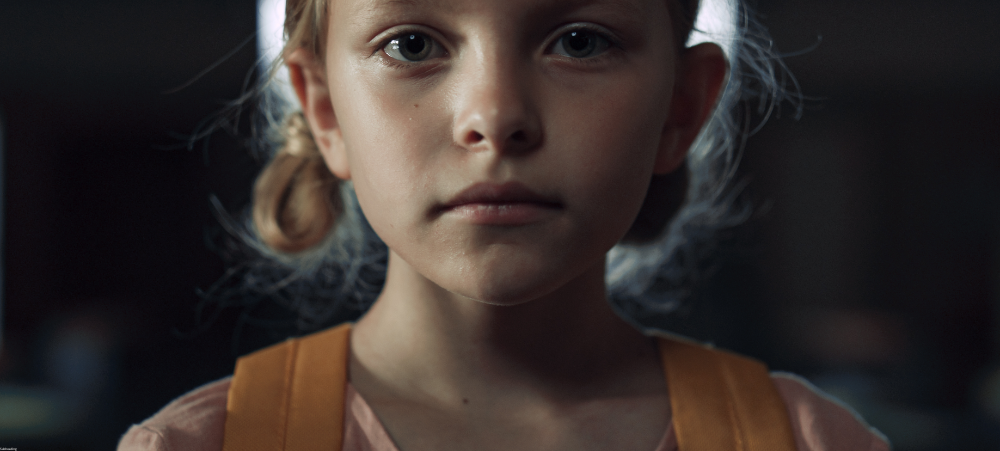
Dibber International Preschools South Africa is drawing attention to a quiet change taking place in family homes as parents increasingly use co-regulation to help young children manage intense emotions. Co-regulation happens when an adult remains calm and emotionally present while a child experiences anger, fear, disappointment or distress. Rather than expecting children to settle themselves, parents provide steadiness while their ability to cope is still developing. “A young child cannot always calm down simply because an adult asks them to,” says Ursula Assis, Managing Director of Dibber International Preschools South Africa. “Children learn emotional regulation through their relationships with trusted adults. When a parent remains close, calm and responsive, the child begins to understand that difficult feelings can be experienced safely and will eventually pass.” According to Dibber, four everyday behaviours suggest that this shift may already be taking place. The first is naming feelings. A parent who says, “I can see that you are angry,” helps the child connect an internal experience with a word. Over time, this can help children recognise and communicate what they are feeling before it spills into behaviour. This does not mean every tantrum will become a calm learning experience. Parents become tired and frustrated too. Sometimes, the shift is simply pausing long enough to acknowledge the feeling before addressing the behaviour. “Validation does not mean that every reaction is acceptable,” Assis explains. “A parent can acknowledge disappointment while still holding a clear boundary.” A second sign is coming down to the child’s eye level. Crouching or sitting during a difficult interaction can change its emotional tone. It communicates safety and attention, even when the words remain firm. Co-regulation also begins with the adult’s emotional state. Taking a breath before responding to screaming, defiance or tears prevents a parent’s frustration from adding to the child’s distress. It also shows children that strong feelings do not have to lead immediately to strong reactions. “The aim is not to create perfectly composed parents,” says Assis. “Children need real adults who can pause, recover and try again. Even when a parent reacts impatiently, returning to the child and repairing the moment carries an important lesson.” The fourth sign is what happens after the crying or resistance has passed. Parents are increasingly returning to the child and acknowledging that the moment was difficult. A simple question such as, “That was hard. Are you feeling better now?” can restore closeness and create space for reflection. This reconnection teaches children that conflict does not threaten the relationship. It also allows parents to explain a boundary once the child is calm enough to listen. The shift reflects a broader awareness of early childhood development. It is also generational, as parents reconsider parts of their own upbringing while carrying forward what felt secure and loving. Co-regulation does not remove structure from family life. Children still need clear limits and adults who are willing to say no. What changes is the way those boundaries are communicated. “A calm no remains a no,” says Assis. “Warmth and firmness can exist together. Children feel safest when adults are emotionally available and clear about what is expected.” At Dibber, educators use co-regulation techniques to support children through frustration, separation anxiety and conflict. The same habits can be used at home without expecting every difficult interaction to unfold perfectly. Parenting growth rarely arrives as one dramatic change. It appears quietly. A parent kneels instead of shouting across the room. A breath is taken. A feeling is named. After a difficult moment, the parent comes back. One calm response at a time, children learn that their feelings can be understood, their relationships remain secure, and, eventually, they will be able to find their own way back to calm.

Wingu Academy

What Makes an Exceptional Online School?

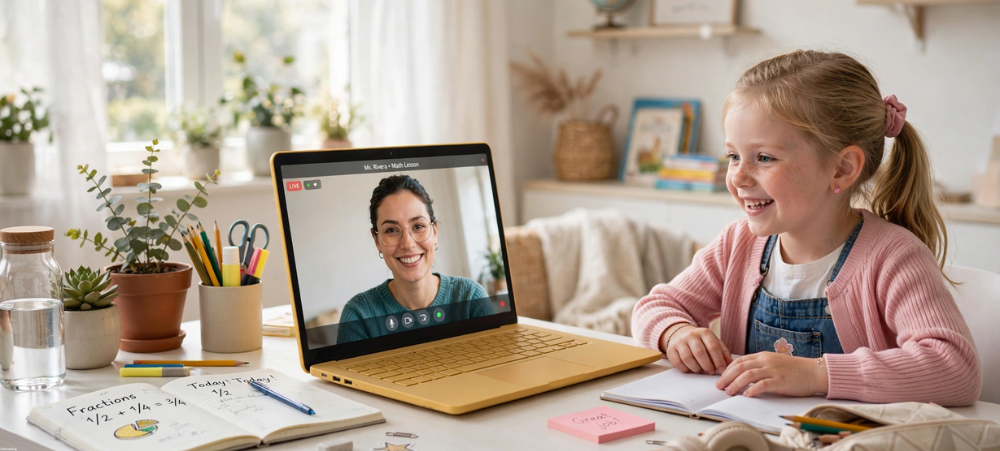
Choosing an online school is one of the most important decisions a parent can make. While every school offers something different, the best learning environments have one thing in common—they put the learner first. Exceptional online schools combine engaging live lessons, experienced teachers and strong academic support with a genuine commitment to student wellbeing. They don’t simply deliver content; they create opportunities for learners to ask questions, collaborate with others and develop confidence in their abilities. Parents should also look for a school that encourages communication, provides regular feedback and builds meaningful partnerships with families. Education is most successful when teachers, learners and parents work together toward the same goal. At Wingu Academy, we believe that every learner deserves an education that is both challenging and supportive. Our flexible learning model, caring educators and personalised approach help students develop the knowledge, skills and confidence they need to succeed—not only in examinations, but in life. A great online school doesn’t just prepare learners for the next test. It prepares them for the future.

Parenting Hub

How to Set Boundaries Without the Guilt

Every parent has been there: you say no to another biscuit before dinner, and within seconds you’re met with tears, a tantrum, or that heart-sinking look of betrayal. It’s tempting to cave, not because you’ve changed your mind, but because the guilt of disappointing your child feels unbearable. Learning to set boundaries without drowning in guilt is one of the most valuable skills you can build as a parent — and it’s entirely learnable. Why Boundaries Feel So Uncomfortable Most of us didn’t grow up with a clear model of healthy boundaries. Many parents were raised in homes where “no” meant conflict, or where compliance was expected without explanation. As adults, saying no to our own children can trigger old feelings of being the “bad guy,” even when the boundary is completely reasonable. It helps to remember: a boundary is not a punishment. It’s information. It tells your child what is and isn’t okay, and it gives them the security of knowing where the edges are. Children, whether they show it or not, actually feel safer with consistent limits than with none at all. Reframe What Guilt Is Telling You Guilt often shows up as a signal that you’ve done something wrong. But when it comes to boundaries, guilt is frequently just discomfort in disguise — the discomfort of watching your child be unhappy, even briefly. Try separating the two feelings: Once you can name it as discomfort rather than guilt, it becomes much easier to hold your ground. Practical Ways to Set Boundaries With Confidence 1. Decide the boundary before the moment arrives. It’s much harder to hold a limit in the heat of the moment than to have already decided on it calmly. If you know screen time ends at 5pm, decide that in advance rather than negotiating it live. 2. Use short, calm language. Over-explaining or justifying a boundary repeatedly can make it feel negotiable. A simple “Bedtime is 7:30, we’ll read two books first” is more effective than a lengthy debate about why. 3. Validate the feeling, hold the limit. “I know you’re disappointed we’re leaving the park. It’s hard to stop having fun.” You can acknowledge emotion without changing the decision. This teaches children that big feelings are allowed, but they don’t dictate outcomes. 4. Expect pushback — and don’t take it as a sign you’re wrong. Children test boundaries because that’s how they learn they’re real. Consistent limits, held with warmth, are far more reassuring long-term than limits that shift under pressure. 5. Repair, don’t rescue. If a boundary led to a tough moment, you can reconnect afterward with a hug or a kind word — without undoing the boundary itself. Comfort and consistency can coexist. The Long-Term Payoff Kids who grow up with clear, warmly-held boundaries tend to develop stronger self-regulation and a better sense of security. They learn that love isn’t conditional on getting their way, and that the adults around them can be trusted to stay steady even when emotions run high. Setting boundaries isn’t about being strict — it’s about being dependable. And the guilt? It fades with practice, replaced by the quiet confidence of knowing you’re parenting with intention.

Cambrilearn Online School

The Word on the School Report Was Too Small

Most parents of a square-peg child know the moment by heart. The report arrives, you scan past the marks to the comments, and there it is. Distracted. Does not apply himself. Quiet. One word, chosen by a busy teacher at the end of a long term, and somehow it follows your child from grade to grade like a piece of official record. The uncomfortable part is that the word is rarely a lie. Your son probably was distracted in that classroom. Your daughter probably was quiet in that room. Teachers write what they see, and most write it with care. The problem is what the word cannot hold. It describes a behaviour in one setting, on the days one adult happened to observe it. It says nothing about whether the pace was wrong, whether the subject mix fit, whether the room itself was the obstacle, or what the same child looks like somewhere quieter, somewhere faster, somewhere built differently. The word was never false. It was too small. Why too small, and not wrong It matters that the word is too small rather than wrong, and not only as a courtesy to teachers. A parent who is told the school lied about their child has nowhere to go with that except anger, and anger is a poor basis for a schooling decision. A parent who understands that the school reported honestly from inside its own limits can start asking a sharper question: what would a setting with different limits see? Every report comment is a measurement taken in one place. Distracted, measured in a room of thirty. Quiet, measured in a space where the loudest voices set the terms. Below average, measured against one pace on one route. Change the room, the pace or the route and you are not massaging the numbers. You are measuring something the first setting had no instrument for. What most schooling asks of the child When a child and a school do not fit, nearly every remedy on offer asks the child to do the changing. Extra lessons after a long day. A concentration plan. A seat closer to the front. Some of this helps, some of the time. Notice, though, what stays constant through all of it: the school keeps its shape, and the child is asked to fold themselves into it. For generations that was simply how schooling worked, because a building with one timetable and thirty children to a room has no other option. It cannot reshape itself around one child. Reshaping is exactly what an online school can do, if it is built as a school rather than a video library. What CambriOS is For 20 years, CambriLearn has built school in the other direction: fit the school to the child, rather than the child to the school. In August 2026 that approach got a name. CambriOS is the structure behind CambriLearn, and it brings together four connected school experiences that families have been using in parts for years, now working openly as one school. CambriCampus is the school day itself: live lessons, qualified teachers, and a timetable your child logs into every morning. A real day with a real rhythm, not a folder of videos and good intentions. CambriPathways is the choice: six accredited learning pathways, from CAPS and IEB to the International British Curriculum and Pearson Edexcel, each one ending in a recognised qualification. The point is not variety for its own sake. A child labelled slow on one route is often just a child on the wrong route. CambriCommunity is where your child belongs: clubs, events, study groups and regional meetups, because a school is other people or it is not a school. CambriCommand is the parent view: attendance, progress and standing, visible in one place, so the first you hear of a wobble is a Tuesday in March rather than the end-of-year report. What changes for enrolled families Nothing, which is rather the point. CambriCampus is the school day your child already attends. CambriPathways is the curriculum they already follow. CambriCommunity is the club they already log into on Thursdays. CambriOS is not a separate purchase and carries no extra fee; it is the name for how the school already works, made visible so that parents can finally see the parts and how they connect. What to do with the word you are holding If a report comment has been sitting with you for a term or a decade, the useful move is not to argue with it. Teachers describe honestly what their setting lets them see. The useful move is to ask what the word might be missing. In which settings does my child focus well? Which parts of the work are they ahead on, and does the current route ever show it? What would this child look like in a smaller room, at a different pace, on a different pathway? Accurate and useless: that is what a too-small word produces, year after year. It records a symptom and attaches no way forward, which leaves families circling the same conversation every term while the child quietly concludes the word must be who they are. Breaking that loop rarely starts with the child trying harder. It starts with an adult asking whether the setting, the pace or the pathway is the variable nobody has tested. Those are questions worth taking to someone whose job is answering them. You can book a free consultation with a CambriLearn education consultant and bring the report with you. The word described what one school could see. It never described how your child thinks, and it certainly never decided how the story ends.

Freebees PR

Mid-Year Reset: Why Winter is the Perfect Time to Refresh Your Everyday Habits

As South Africans reach the halfway mark of the year, many people find themselves running on autopilot. The excitement of New Year’s resolutions has faded, workloads have piled up, school schedules are in full swing, and winter’s shorter days often leave us feeling tired and uninspired. Rather than waiting for summer to make positive changes, winter is actually one of the best times to pause, reflect and reset.  A mid-year reset doesn’t have to mean making dramatic lifestyle changes. Instead, it’s about taking stock of your daily routines and asking a few simple questions: What’s working? What’s causing unnecessary stress? What small improvements could make everyday life healthier, easier and more enjoyable? Here are five simple areas worth reviewing this winter. Refresh your daily routine Routines naturally evolve, but we don’t always notice when habits are no longer serving us. Whether it’s spending too much time scrolling before bed, skipping breakfast, or feeling constantly rushed in the mornings, now is an ideal time to make small adjustments. Start with one habit rather than trying to overhaul your entire lifestyle. Going to bed 30 minutes earlier (and actually putting the phone away!), preparing lunches the night before, or scheduling short walks during the day can all have a noticeable impact on energy and wellbeing.  Give your skincare routine a winter update Winter conditions are far harsher on skin than many people realise. Cold air, indoor heating and hot showers can strip away natural moisture, leaving skin dry, tight and irritated. This is the perfect time to reassess the products you’re using. Look for gentle cleansers and richer moisturisers that help support the skin’s natural barrier rather than products that may dry it out further.  SKNLOGIC’s Gentle Cleanse Cream contains Fig Extract that has moisturising properties similar to the skin’s own and is therefore an excellent hydrator providing a gentle tightening effect.  The newly launched Hada Labo Glow Brightening Hydrator is a Japanese water-gel lotion created to tackle hyperpigmentation, uneven tone and dull, dehydrated skin. An innovative blend of Super Hyaluronic Acid (nano + macro), Tranexamic Acid and calming Hatomugi Extract dives deep into the dermis, locks in moisture for 24 hours, brightens sun, hormonal or post-acne marks and restores fresh radiance. The ultra-light texture absorbs in seconds, leaves zero tackiness and works for every skin type, especially from your mid-20s, when the first dark spots and fine lines appear.  Starting your day off with an invigorating Earthsap Citrus & Ginger Body Wash shower is a great option. This zesty citrus-scented body wash is fresh, foamy and made with a mixture of sensational natural ingredients. Coconut hydrates the skin, while grapefruit and ginger stimulate your circulation and get the blood pumping. Plus this is a non-toxic body wash, so it will cleanse, rejuvenate and soften your skin without causing any harm to you or the environment. If you have been indulging in scorching baths or showers, or the aircon has been taking its toll and your skin is super dry, the Bodylab Camphor Complex Soothing Body Cream is rich, calming formula designed for very dry skin. Infused with camphor, it delivers deep moisture while providing a refreshing cooling sensation to soothe and comfort dryness and irritation.  Revisit what’s on your plate Comfort food certainly has its place during colder months, but winter can also be an opportunity to add more nourishing foods to your diet. Think colourful vegetables, seasonal citrus packed with vitamin C, warming soups, legumes and whole grains. Staying hydrated remains just as important during winter, even if you don’t feel as thirsty. Small swaps, rather than restrictive diets, are often easier to maintain over the long term.  Create a healthier home Winter usually means closed windows, more time indoors and increased exposure to dust, germs and allergens. A mid-year reset is the ideal opportunity to declutter living spaces, wash bedding and couch blankets, clean overlooked areas, and choose household cleaning products that are kinder to both your family and the environment. Plant-based cleaning products, such as those from Earthsap, effectively clean the home while reducing exposure to harsh chemicals, making them a practical choice for households looking to embrace healthier everyday living.  Make wellbeing part of everyday life A reset isn’t only about physical health. Taking time to reconnect with family, spending less time on screens, enjoying hobbies or simply creating moments of calm can have a significant effect on emotional wellbeing. Remember, hobbies aren’t about perfection – it’s about finding something you enjoy doing that brings you contentment or fun.  For parents, winter also offers opportunities for quality family time through indoor play, reading together or creative activities. Products designed to make everyday family life simpler, such as Vital Baby’s practical feeding and home essentials, can help reduce some of the small daily stresses that busy families experience. Their Nourish Prep & Wean allows you to steam, cook, and blend healthy homemade meals quickly for your little one all in one machine, helping to cut out clutter and streamline your routine. Simple and easy to use, the Prep & Wean has three distinct functions and a large 900ml jug capacity to help you through every step of weaning – sterilising, steaming, and blending.  Even something as simple as lighting a naturally fragranced candle in the evening, such as those from SoyLites, can help create a calm and welcoming atmosphere after a busy day. The Clarity Tumbler Candle with Bergamot, Patchouli, Lemon and Rosewood  is an antidote for stress and nervous tensions, enhancing and uplifting your mood. Or light the Energise Tumbler Candle with Spearmint, Peppermint, Geranium & Ginger during the day for renewed energy – it’s a cooling scent with stimulating undertones of fresh mint, a perfect pick-me-up. Small Changes Add Up The beauty of a mid-year reset is that it isn’t about perfection. It’s about making thoughtful adjustments that support healthier habits for the months ahead. Whether it’s choosing gentler skincare, eating more nourishing meals, creating a healthier home environment or simply slowing down long enough

Catrobatkidz

The Brain–Body Connection: Why Movement Helps Children Focus, Remember and Learn

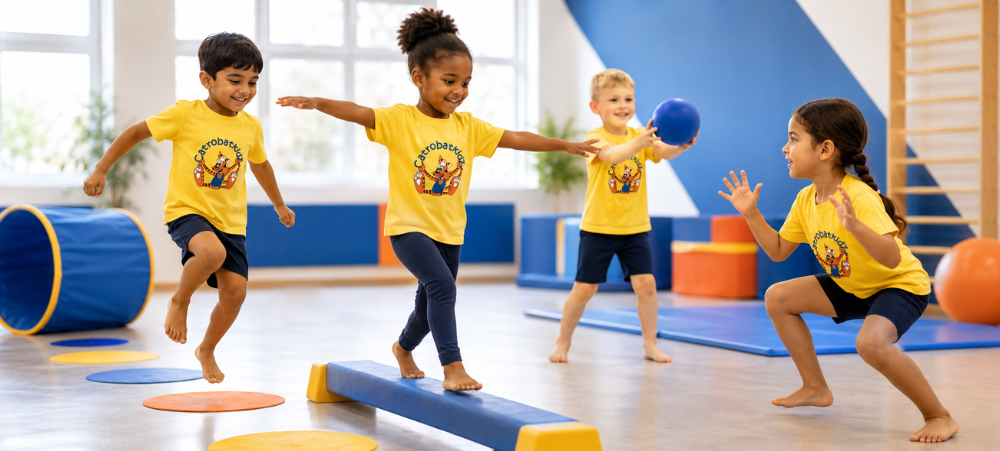
Have you ever noticed that a child who is wriggling, climbing, spinning or bouncing can suddenly settle more easily afterwards? It may look as though they are simply “getting the energy out”, but something much more interesting is happening. Movement is not separate from learning. For young children, the body is one of the brain’s most important learning tools. When children run, balance, throw, catch, crawl, jump and follow movement instructions, they are doing far more than building muscles. They are also practising the skills that help them pay attention, remember information, listen, solve problems and manage their behaviour. The brain does not develop in isolation A child’s brain and body are in constant conversation. Physical activity increases alertness and engages brain systems involved in attention, memory and decision-making. Research consistently links regular physical activity in children with benefits for brain health, cognitive development, attention and memory. This does not mean that ten star jumps will magically turn homework into a delight. Wouldn’t that be handy? It means that movement can help create a brain state that is more ready to receive, organise and use information. Young children are especially dependent on active, hands-on experiences. They learn “under”, “over”, “through”, “fast”, “slow”, “left” and “right” far more meaningfully when they experience those ideas with their bodies rather than only hearing them explained. Movement supports attention Attention is not simply the ability to sit still. A child may be perfectly still and mentally somewhere near the moon. True attention involves noticing what matters, filtering out distractions and staying engaged long enough to complete a task. Active play gives children repeated opportunities to practise this. Consider a simple movement game: “Jump twice, crawl to the cone, then freeze.” The child must listen, hold the instruction in mind, complete the actions in order and stop their body at the right moment. That playful activity is also attention training. Movement can be particularly helpful before activities that require concentration. A few minutes of marching, animal walks, dancing, skipping or outdoor play may help a child return to a quieter task feeling more alert and organised. Movement strengthens memory Memory grows through use. When children connect information to actions, rhythm, repetition and sensory experiences, learning has more “hooks” to hold onto. This is why action songs are so effective. A child must remember the words, match them to movements, keep the sequence going and adjust to the rhythm. The body helps reinforce what the brain is learning. Movement can also make every day learning more memorable. Children can hop while counting, form letter shapes with their bodies, throw a ball while naming colours or act out a story. The goal is not to turn every lesson into a workout. It is to recognise that learning often sticks better when children can see it, say it, hear it and do it. Movement builds listening skills Listening is an active skill. Children need to focus on the speaker, understand the message, remember it and respond appropriately. Games such as “Simon Says”, follow-the-leader, musical statues and movement sequences practise all of these steps. Children learn to wait, listen for a cue and control the urge to move too soon. Rhythm activities are especially valuable because they require children to coordinate what they hear with what their bodies do. Clapping patterns, moving to changes in tempo and stopping when the music stops all strengthen the connection between listening and action. The hidden work of executive function Executive function is the brain’s management system. It helps children remember instructions, resist impulses, switch between tasks, plan what to do and recover when something does not go according to plan. These abilities are commonly grouped into working memory, self-control and mental flexibility. These skills are still developing throughout childhood. They are not personality traits, and a child who struggles with them is not necessarily lazy, naughty or “not listening”. Movement-rich play provides a natural training ground. An obstacle course requires planning and sequencing. A ball game requires timing and self-control. Balancing requires concentration and adjustment. A group activity requires turn-taking, awareness of others and flexible thinking. Movement games and action songs can challenge children’s attention, working memory and inhibitory control in age-appropriate ways. Even wobbling matters. When a child loses balance, adjusts and tries again, the brain is receiving valuable feedback. Learning is taking place in the correction, not only in the successful result. Simple ways to use movement at home Parents do not need expensive equipment or a complicated programme. Small, regular opportunities make a difference. Try a five-minute movement break before homework or a quiet activity. Give two- or three-step movement instructions. Play stop-and-go games. Create a simple obstacle course using cushions, chairs and a piece of string. Throw and catch while practising words or numbers. Let children climb, carry, push, pull, balance and explore outdoors whenever it is safe to do so. Most importantly, avoid using movement only as a reward after the “real work” is finished. For children, movement is part of the real work. Children are built to move A moving child is not automatically a distracted child. Sometimes movement is exactly what helps the child organise their attention, regulate their body and become ready to learn. Active play will not solve every learning or behavioural difficulty, and children develop at different rates. But movement gives the developing brain rich, repeated practice in many of the skills learning depends on. When children move, they are not taking time away from development. They are building the physical, cognitive and emotional foundations that help development happen. At Catrobatkidz, we believe in Learning to Move – Moving to Learn—because when the brain and body work together, children are better equipped to focus, remember, listen and grow.

It seems we can't find what you're looking for.
Scroll to Top