
Bonitas – innovation, life stages and quality care

Millennials can now add hypertension to their list of potential health risks

Just when it feels like there are already enough things on the millennial worry list, from student debt and rising living costs to burnout and trying to maintain some semblance of work-life balance, experts say hypertension may be another issue quietly joining that list.  Ahead of World Hypertension Day on 17 May, health experts are drawing attention to a concerning shift in high blood pressure diagnoses, where the disease is no longer confined to older adults and is increasingly affecting younger South Africans. Hypertension, also known as high blood pressure, has long been associated with older adults, but research increasingly shows that younger adults are being affected far more than previously thought. A 2025 study published in the Journal of Human Hypertension found that 24% of South Africans aged between 24 and 40 reported having hypertension, yet only 16.8% had good knowledge of the condition. This gap highlights a growing concern that many young adults may be living with elevated blood pressure without realising it. Several modern lifestyle factors are contributing to this shift. Long working hours, financial pressure, highly processed convenience foods, limited time for exercise and the constant mental load that often comes with balancing careers, families and daily responsibilities can all contribute to rising blood pressure levels. “One of the biggest challenges with hypertension in younger adults is that it often goes unnoticed. People may feel healthy and assume their risk is low, yet elevated blood pressure can already be placing strain on the heart and blood vessels,” says Dr Themba Hadebe, Clinical Executive at Bonitas Medical Fund. “The reality is that high blood pressure can develop silently for years and may only be detected during routine screening.” The good news, says Hadebe, is that hypertension is one of the most manageable chronic health conditions when it is detected early. With proper monitoring, lifestyle adjustments and, where necessary, medication, many people can control it and significantly reduce the risk of serious complications later in life. What you need to know about hypertension Hypertension occurs when the force of blood pushing against artery walls remains consistently too high. Over time, this increased pressure can damage blood vessels and strain major organs. However, things get a bit trickier when we start asking how to spot hypertension and its symptoms. Often called a “silent condition”, hypertension for many people results in experiencing no symptoms at all, especially in the early stages. When symptoms do appear, they may include: Because these symptoms can easily be dismissed as stress or fatigue from dehydration, many people only discover they have high blood pressure during a routine medical check. But, if left unmanaged, hypertension can have serious long-term health consequences, significantly increasing the risk of heart disease and heart failure. It is also one of the leading causes of stroke. High blood pressure can also damage the kidneys, affect vision by damaging the small blood vessels in the eyes and weaken arteries throughout the body, increasing the risk of circulation problems and aneurysms. “The challenge with hypertension is that damage can occur long before a person feels unwell,” explains Hadebe. “This is why early detection and consistent management are critical.” What young adults can do about it now For young adults juggling careers and families, preventative healthcare can easily fall down the priority list, but all it takes is only a few minutes and a simple blood pressure check to get important insight into your overall health. Blood pressure screenings can be done during routine GP visits, at many pharmacies or through workplace wellness programmes. They’re even more important for those with a family history of hypertension and who have other risk factors present, like smoking, obesity, diabetes, high stress levels or sedentary lifestyles. You can also play a proactive role in keeping blood pressure in check by making a few lifestyle adjustments. Reducing your salt intake, doing your best to maintain a healthy weight, moving and exercising regularly, keep alcohol intake to a minimum and cutting out smoking completely are all a good start. “Hypertension is not something that should cause panic, but it is something that should be taken seriously,” says Hadebe. “Depending on their benefit option, Bonitas Medical Fund members have access to preventative screening benefits, GP consultations and chronic condition management support that assists with the diagnosis and ongoing management of conditions such as hypertension.”


Educ8 SA

Online Learning vs Traditional Schools: Which is Better for Your Child?

Choosing the right educational path for your child is a critical decision. Traditional schools offer structure and face-to-face interaction, but they may not suit every learner. Online schools like Educ8 SA offer flexibility, affordability, and personalised learning that can benefit children in ways traditional classrooms cannot. Flexibility in Learning Educ8 SA allows children to learn at their own pace. Students can revisit challenging concepts, accelerate through material they understand, and study according to a schedule that fits family life. This flexibility ensures that learning is effective, stress-free, and tailored to the child’s needs. Affordable Education Traditional schools often come with high fees, transport costs, and additional expenses. Educ8 SA offers affordable learning paths: These options make high-quality education accessible to more families, allowing them to invest in learning without financial strain. Computer-Based Interactive Learning Educ8 SA programs are designed for engagement and interaction. Computer-based modules provide instant feedback, fun activities, and interactive assessments that reinforce learning. This approach ensures students stay motivated while developing critical skills for the digital age. Accessibility for All Learners Educ8 SA caters to preschoolers, high school students, international learners, and students with special needs. The platform ensures education is inclusive, providing access regardless of location or ability. Preparing for Future Opportunities Online learning equips students with digital literacy, independence, and time management skills. Programs like the American High School Diploma and GED also prepare students for higher education and global career opportunities. Starting Your Child’s Online Learning Journey Getting started is simple: Choosing between online learning and traditional schools depends on your child’s needs. Educ8 SA provides a flexible, affordable, and effective alternative, helping children thrive academically and personally.

Parenting Hub

Don’t blame the iodine if you react to a contrast scan

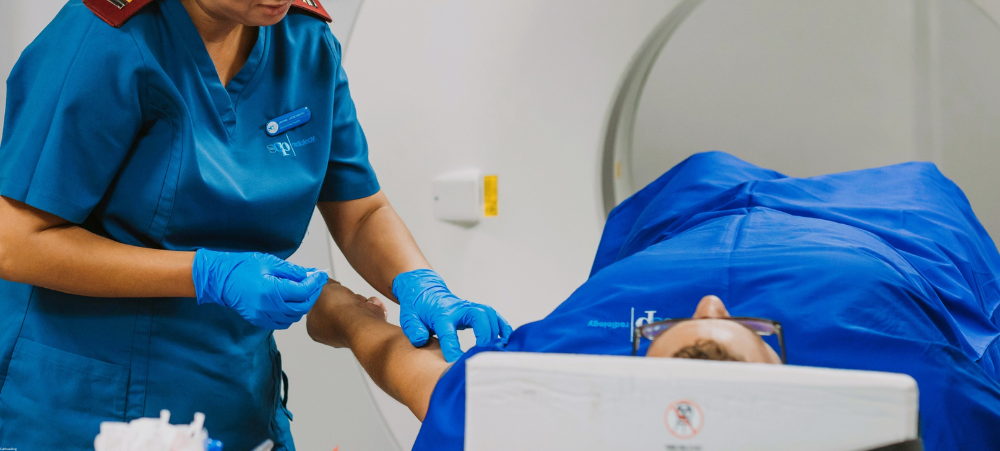
What is a contrast scan? ‘A contrast scan is a medical imaging test, such as a CT scan or MRI,’ says Dr Jean de Villiers, a radiologist and director of SCP Radiology, ‘that uses a special dye called a ‘contrast agent’ to make certain areas of the body easier to see. The contrast helps highlight blood vessels, organs or abnormal tissues, providing clearer and more detailed images. Dr de Villiers talks about the dye, what it is used for and debunks the myth that it is the iodine that causes allergic reactions in some people.  For MRI scans, a different type of contrast is used, which is gadolinium-based and, while allergic reactions are possible, they are extremely rare. Why is it used? The contrast agent shows the blood flow through arteries and veins, blockages, bleeding or abnormal growths and detailed organ structure (such as the brain, liver or kidneys). In short, contrast helps to highlight differences between normal and abnormal tissue, improving diagnosis and treatment planning. How is the dye administered? The contrast agent is usually injected into a vein but, in some cases it can be swallowed or given as a rectal enema, depending on the area being examined. It temporarily changes the way radiation or magnetic fields interact with the body’s internal structures. Is there an iodine allergy risk in a contrast scan? This is a common concern, but it’s a bit misunderstood. People often believe they are allergic to iodine because they may have reacted to contrast dye in the past or to shellfish, which contain iodine. However, iodine itself is not an allergen. According to radiologists and allergists, the body doesn’t mount an allergic immune response to iodine as it’s a basic element, essential to human health, particularly for thyroid function. What causes allergic reactions in contrast scans? The culprits are usually one of the other compounds, not iodine. Most contrast agents used in CT scans are iodinated contrast agents however, reactions tend to be linked to the chemical structure of the compound, not its iodine content. Reactions may range from mild (nausea, itching, flushing) to more serious (difficulty breathing or anaphylactoid reactions), which mimic allergies but do not involve the immune system in the same way. These reactions are typically caused by: Advancements in the type of contrast agent used have significantly reduced the rate of reactions in patients. To confirm: It’s not the iodine, it’s the other compounds attached to the iodine in the dye and the body’s unique response to them. That is why patients are always asked about any previous contrast reactions, asthma or other allergies before being given the contrast injection.  ‘Whether you are asked or not,’ says Dr de Villiers, it’s always best to inform the radiology team if you have had any previous allergic contrast reactions.’

Koa Academy

Learning Designed Around Your Child

Traditional schooling organises the day around a timetable. At Koa, we organise learning around your child. That idea sits at the heart of what we mean when we say learning designed around your child. It means building a strong academic foundation while also creating space for the things that matter deeply to a child outside the classroom. For many families, schooling can feel like the fixed point around which everything else has to bend. The day is structured in a certain way, the timetable is non-negotiable, and children are expected to fit themselves into that system. But life does not always work neatly around a rigid school day. Some students are training seriously in sport. Others are pursuing dance, music, cultural activities, creative work, volunteering, or other meaningful passions. Some simply need a school rhythm that allows them to work well, rest well, and grow into who they are becoming. Learning designed around your child does not mean lowering expectations or treating school casually. It means asking a better question: what kind of learning experience will help this child thrive academically while also making room for the rest of their life? At Koa, we believe school and life do not have to compete. In fact, one of the strengths of our flexible online model is that it frees up time and energy for students to pursue meaningful interests without sacrificing academic outcomes. Why it Matters When learning is designed around your child, time can be used more intentionally. There is less energy lost to commuting and rigid daily logistics, and more opportunity to focus on what matters. Students can still receive a robust academic education while having room in their week for things that stretch them, inspire them, and help shape their future. This matters because some of the most important learning does not only happen inside a lesson. It also happens when a child commits to a goal, keeps showing up, learns discipline, develops confidence, and experiences growth in the real world. A student who is pursuing a sport seriously, working on creative skills, or investing deeply in a passion is not stepping away from learning. In many ways, they are living it. That is what makes this approach so powerful. It gives families the opportunity to think more intentionally about what a child needs and what kind of life they are building alongside school. Instead of squeezing everything else into whatever time is left over, families can shape a week that works more meaningfully for their child. Mark’s Perspective: Building the Cup Well Mark, Principal and Co-founder of Koa Academy, often explains this idea through the image of a cup. When we think about a child’s education, we can imagine a cup that needs to be filled with the things that make for a full learning experience. That includes academics, yes, but also social development, exposure to the world, healthy challenges, and the kinds of opportunities that help a child grow into adulthood. In a traditional schooling model, much of that cup is already filled for you. The timetable is set, the structure is fixed, and there is a standard offering that every child is expected to fit into. Families can try to add things from outside, but often the cup is already full. At Koa, the approach is different. We focus on putting the most important academic pieces in first. We take responsibility for providing a solid academic journey, healthy online socialisation, and the key support students need. But beyond that, families have more freedom to think carefully about what else belongs in their child’s cup. That might be sport, culture, volunteering, creative pursuits, or experiences that begin to shape a future career path. That shift is significant. It allows parents to ask: What kind of child do I have? What are their interests? Where do their strengths lie? What opportunities around us could become part of their growth? Instead of asking a child to adapt to one fixed model, learning becomes something more intentional and more responsive to who that child is. Flexible Doesn’t Mean Unstructured This is an important distinction. Sometimes people hear the word “flexible” and assume it means loose, casual, or lacking accountability. But that is not what we mean at all. Flexible doesn’t mean unstructured. In fact, flexibility works best when there is a strong structure underneath it. At Koa, students still need rhythm, commitment, and support. They still need to show up, engage, complete their work, and stay on track academically. The difference is that the structure serves the child, rather than forcing the whole child to fit into a rigid timetable that may leave little room for the rest of their life. That is what makes this model both freeing and responsible. Families are not simply handed flexibility for flexibility’s sake. They are given the opportunity to use it well – to shape an education that is both academically sound and responsive to their child’s needs. What This Can Look Like in Practice Mark shares the story of Kezia to show what this can look like over time. Kezia joined Koa five years ago and went on to become valedictorian. But what is striking about her story is not only her academic achievement. It is the way Koa made space for another important part of who she was: her passion for dance. Because she was not tied to a traditional school timetable, she was able to pursue dance more intentionally alongside her academics. Over time, that grew into something remarkable. She not only developed as a dancer, but eventually became a dance instructor and completed external dance certifications that are usually only available to adults. Her story is a powerful example of what can happen when a student is given both reliable academic support and the space to develop meaningfully beyond it. We see the same principle clearly in Layla’s story, a Grade 7 student at Koa Academy. Swimming plays a major role in her life. She trains four

NB Hearing & Balance

Protecting Hearing from Newborn to Adulthood 

We live in a country where daily life can include everything from bustling taxi ranks and construction noise to loud music and community events, and protecting your hearing is not just important; it is essential across every stage of life. The reality is that noise-induced hearing loss is permanent but often preventable with appropriate precautions. At NB Hearing and Balance, we believe that building good habits early and maintaining them over time can make a meaningful difference. Why Noise Awareness Matters Sound is measured in decibels (dB), and prolonged exposure to sounds above 85 dB can increase the risk of hearing damage. For context, busy traffic or a minibus taxi ride can reach this level, while concerts, nightclubs, and even some religious services can exceed 100 dB. Other cultural and social environments often celebrate music and community gatherings, both important aspects of life, but they can also increase the risk of long-term hearing damage if precautions are not taken. Protecting Hearing from the Very Beginning: Newborns and Infants Did you know that newborns have highly sensitive auditory systems, and early exposure to loud environments can be harmful? In addition, identifying hearing challenges early is critical for speech and language development. Tips for newborn hearing protection: Early Childhood and Primary School Years Our school environments can sometimes be noisy, and children may also be exposed to loud music through headphones, tablets, or shared devices. At this stage, education and habit-building are key. Tips for protecting young ears: This is also the stage where early signs of hearing or auditory processing difficulties may become noticeable, particularly in classroom settings. Teenagers and Young Adults: High-Risk Years Teenagers and young adults are among the most at-risk groups for noise-induced hearing damage. Social activities often include loud music, whether through headphones, clubs, festivals, or car sound systems. Often, music and nightlife are vibrant parts of youth culture, and awareness becomes especially important. Practical strategies: Temporary ringing in the ears (tinnitus) after a night out is a possible early warning sign and should not be ignored. Adults in the Workplace and Daily Life It is not unusual for many to be exposed to occupational noise, particularly in industries like mining, construction, manufacturing, and transport. Even outside of formal workplaces, daily exposure to traffic, generators during load shedding, and urban noise can add up. Workplace and lifestyle tips: Employers also have a responsibility to implement hearing conservation programmes, but personal awareness remains crucial. Older Adults: Maintaining Hearing Health Hearing changes can naturally occur with age, but lifelong noise exposure can accelerate this process. Untreated hearing loss in older adults is linked to social isolation, reduced quality of life, and even cognitive decline. The good news is that proactive care can help maintain hearing and overall wellbeing. Key considerations: A Lifelong Commitment to Hearing Health Protecting your hearing is not about avoiding sound; it is about managing it wisely. Consistent actions can have a lasting impact. Whether it is lowering the volume, wearing ear protection, or scheduling a hearing check, these steps help preserve one of our most important senses. Hearing connects us to people, to environments, and to experiences. Taking care of it should be part of everyday life. Our audiologists are here to help and have convenient locations across Cape Town. Contact us, we are here to listen.

Wingu Academy

Personalised Pathways – Why One-Size-Fits-All Education Is No Longer Enough

Every learner is different—yet many traditional systems still expect all students to learn at the same pace, in the same way. This can leave some learners unchallenged, others overwhelmed, and many disengaged. Educational research increasingly shows that personalised learning pathways lead to stronger outcomes, higher motivation, and greater ownership of learning. Personalisation is not about lowering expectations; it is about creating more effective routes to reach high standards. Online education is particularly well-suited to this approach. Digital learning environments offer flexibility in pacing, access to recorded lessons, tailored support, and clearer tracking of progress. Students can revisit content, manage their time more effectively, and receive targeted guidance when needed. Wingu Academy places personalised learning pathways at the centre of its model. Rather than applying a one-size-fits-all approach, the school supports individual learning journeys through structured guidance and academic planning. Student Success Advisers work closely with families to identify the most suitable pathway for each learner, ensuring decisions are intentional and future-focused. This is strengthened by live classes with qualified teachers, real assessments, and consistent communication between educators and parents. Students benefit from both flexibility and accountability—key ingredients for long-term academic success. Families are also active partners in the learning process. Open communication allows for early intervention, clearer goal-setting, and shared celebration of progress. Education becomes collaborative, responsive, and supportive. As education continues to evolve, personalised learning is becoming essential rather than optional. Wingu Academy’s approach reflects this shift—offering structured, adaptable pathways designed to help every learner progress with confidence.

It seems we can't find what you're looking for.
Scroll to Top