Recently

The SMILEstones at the heart of every Fisher-Price toy
Parenting Hub

The SMILEstones at the heart of every Fisher-Price toy

The first giggle, the first time they roll over, their first steps… your little one will reach such joy-inducing milestones – or SMILEstones – in the first few years of their lives. To Fisher-Price, these development skills are so important, they sit right at the very heart of the Play Lab child research, where toys are put through their paces by the real experts: the kids! Whether it’s an overhead gym for a newborn, a crawl-with-me toy for a six-month-old, a walker for those first steps at 12 months or characters that spark imaginative play for toddlers. Each toy is designed with Fisher-Price’s Early Childhood Development & Learning (ECDL) Framework at its core, upholding the brand’s commitment to babies’, toddlers’ and preschoolers’ physical, cognitive, social, and emotional development.  It provides development teams with a framework to create products that are fun, engaging, and that also supports children’s learning. And this in turn makes play so much more than play – and toys, so much more than toys. Deborah Weber, PhD, Director of Play and Early Childhood Development Research at Fisher-Price, said: “The reason we created a framework of skills was to provide the development teams with a subset of skills that the children are acquiring at different ages and stages, for the toys they are designing and the ages they are designing for. “We want to have a well-rounded offering of toys for families to help foster children’s development in each area – social, physical and cognitive development. Ensuring we have toys to pick and choose from that can really help foster that whole child in each area.  “We also provide examples of what type of toy features or play patterns help foster and develop those skills, so the designers can incorporate them into their toys.  “So for example a toy suitable for a six-month-old that will grow with them up to 36 months – this framework shows us the types of skills children have to play with the toy and these are the types of features to integrate into that toy to foster that type of skill acquisition. “It’s about providing that foundation for whole child development, it’s also providing an opportunity for children to engage and play and have a great experience and love it, using toys as tools through learning, because as we know children learn through play.    “One of the things that really helps our parents or gift givers is providing that developmentally appropriate age grade on toys, to give them guidance in terms of when to buy the toys for different ages and stages. “We also offer different ways to play with their child. We offer up that play-based experience that also provides that optimal magical moment where they actually encounter a smilestone. “Like their first smile or the first time they clap. “It’s not just about the rolling over, sitting up, walking – the smilestones are all about those magical milestones of clapping their hands, of playing peekaboo, of their first word, of that first vocal connection. “When parents or caregivers experience these little milestones, it makes them smile. And for us, it’s all about celebrating childhood and the milestones, and because every time a child reaches one or shares one, everyone smiles.” Developmental smilestones, and the toys designed for them 0-3 months:  During this time, your little bundle of joy will begin to return emotions, smiles and holding eye contact. They’ll also be able to lift their head, extent their legs and briefly grasp objects. In terms of cognitive ability, babies will be able to look at objects, listen to sounds and recognise smells. How to play: Give your little one objects for watching, about 8-10 inches from their eyes. Choose toys with different textures and shapes for babies to feel, and put them within reach so they can swat with their hands and feet. 3-6 months: You can expect your baby to start giggling around this time, while playing, and they’ll even start to imitate your facial expressions too. Little ones will be able to turn their heads in all directions and begin to roll over. They’ll also imitate sounds and actions, they will like feeling different textures and be curious to examine objects too. How to play: Play peek-a-boo, or use moving objects paired with sounds and/or lights. Choose a variety of textured materials, and look for toys with a high contrast in bright colours. 6-9 months: Around this time, your little one will start to recognise family members, and they may throw kisses to familiar people. Watch them as they begin to clap their hands and sit up without any support. They’ll like repetition, and be able to follow one-step instructions such as smile or wave. How to play: Try objects that move such as balls or toys with wheels. Babies also love pictures of objects or people in book format, or colourful patterns. They love exploring on their own, pushing buttons, pulling objects and touching different textures. 9-12 months: Start to play games such as hide and seek or peek-a-boo – your little one will like it. Around this age, they’ll begin to crawl, cruising along furniture and turning the pages of a book. They’ll be able to point to named objects and understand simple commands. How to play: Opt for busy activity toys with lots to explore, as well as toys that allow and encourage little ones to sit up, cruise, and start walking. Toys that encourage crawling, such as balls, things that move or vehicle play, are also ideal at this stage. As are toys that encourage early role play, hide-and-seek games, and games of give and take. 12+ months: Making their way to toddlerhood, little ones will be able to show affection with hugs, smiles and pats – especially towards parents. You’ll need to keep your camera to hand, as around this age your baby will take their first steps towards becoming a confidence walker. They’re off! Babies at this age love to explore


HOW TO CHOOSE THE BEST MOISTURISER FOR YOUR SKIN
Fundamentals Skincare

HOW TO CHOOSE THE BEST MOISTURISER FOR YOUR SKIN

New generation skincare is smart, well-tested and researched, aimed at improving your skin concerns through using the right active ingredients. Looking like a glazed donut before bed is the new skincare ‘must-do’ with the idea of applying active ingredients on your skin at night letting them seep into your pores overnight leaving you glowing in the morning when you rise. Which is true – but you can get this by using one or even two products instead of your entire skincare vanity. It’s time to practice smart skincare.  A moisturiser by definition is used on the skin to prevent dryness. Then – how do you filter through the million different moisturisers on the market and choose the best one for your skin? The answer is simple – know your skin type and skin concerns. Once you know this, its as easy as hop skip and jump right onto the perfect formulation of moisturiser for you!  The ART of being SMART  There are two active ingredients you need in your moisturiser – Ceramide and Raspberry Extract. Here’s the tea on these two smart ingredients:  Ceramides are a class of fatty acids called lipids. They’re naturally found in skin cells and make up about 40 to 50 percent of the outer layer of your skin (epidermis). Ceramides are important for retaining your skin’s moisture and preventing the entry of germs into your body. Ceramides are produced naturally by the body in the sebaceous glands but sometimes our body can run short of of them – especially as we age. Therefore, we need this ingredient in our creams and moisturisers to help pick us up where needed. It’s a skincare fundamental and suitable for all skin types. Shop the Ultra Hydrating 1% Ceramide Cream. A ceramide cream can be used morning but recommended for night after your serums as a last step in your skincare routine. Remember to cleanse, tone and apply those serums before moisturising.  Raspberry Extract – yes you heard right! Extract from the raspberry plant has been studied and shown to promote skin hydration and cell protection as well as provide anti-oxidnt protection when used in skincare. The red extract from the raspberry plant prevents cells from losing excessive water, therefore providing anti-ageing properies and dryness prevention. It can also alleviate direct photodamage to the skin caused by UVB exposure in turn also protecting against inflammatory responses. Another skincare fundamental that is lightweight, moisturising, suitable for skin types and can be used day or night. Apply before your SPF and after your serums. Shop the 1% Rasberry Extract moisturiser.  Choose these active ingredients in your moisturisers and you won’t go wrong.  Tumi Lehutso at Fundamentals Skincare said: “Smart skincare is vegan, fragrance-free, cruelty-free, cosmeceutical grade and a fraction of the price with absolutely no compromise on formuation and ingredient quality. Skincare is for everyone and should be inclusive. The trick to effective skincare is knowing what type of skin you have and then using the correct products, with the correct ingredients and formulations to accurately treat your skin concerns that is also friendly to your specific skin type. When visiting the Fundamentals Skincare website you will have access to a skincare questionnaire that helps you figure out your skin type and further help is available through the Free consultation booking form. Its all about giving your skin the essentials it needs for good health.”  For more information:  Shop: https://fundamentals-skincare.co.za  Instagram: @fundamentals_skincare Tik Tok: @fundamentals_skincare Facebook: @FundamentalsSkincare

HOW TO APPLY TO UNIVERSITY WITH CAMBRIDGE QUALIFICATIONS
Global Village College

HOW TO APPLY TO UNIVERSITY WITH CAMBRIDGE QUALIFICATIONS

This is an exciting time for South African matriculants as they complete the final stage of their school career and prepare to enter the next phase of their academic life.  We are delighted to see how our students have excelled academically and are now submitting their applications for a place at university next year. GUIDELINES We share here some guidelines to help students and parents with the process of applying for university entrance. 1. Choose a course of study The first step is to select your preferred course of study, and to have a second or third option to include in your application. 2. Choose your university  You will need to check which universities offer your preferred undergraduate degree.  It is a good idea to apply to more than one university to keep your options open and to improve your chances for a successful application. 3. Check the admission requirements 3.1  Check the conditions and requirements to gain exemption for entry to South African public universities and make sure that you meet the requirements.  The Cambridge University Recognition South Africa document provides a summary of the Universities South Africa (USAf) minimum admission requirements for exemption for Bachelor Degree purposes.  You can download this document from:  https://globalvillageint.com/index.php/academics/university-admission. The exemption requirements are also generally stated in the university’s undergraduate prospectus or undergraduate admissions requirements document. 3.2 You also need to check the minimum requirements for your specific degree and make sure that you will meet these minimum requirements.  Each university faculty has different subject and grade requirements.  Cambridge students should check the university’s faculty requirements for international schools/applicants with non-South African school-leaving qualifications.   Contact the university Admissions Office or search the university’s website for admission requirements for undergraduate international curricula/admission criteria for applicants with non-South African school-leaving qualifications.  These requirements are set out in the Undergraduate Prospectus by some universities.   You can view available university faculty requirements for 2023 at:  https://globalvillageint.com/index.php/academics/university-admission 3.3 Certain universities require that students write the National Benchmark Tests (NBT).   Check the requirements of your selected university and faculty to see what is required for your application.   For more information about the National Benchmark Tests: Visit:  https://www.nbt.ac.za/  Call 021 650 3523 4.  Apply for admission Applications for admissions have opened.  It is important that you check the application closing dates and that you apply as early as possible.   The closing dates for applications vary for each university and for different courses.  You should consult your university of choice to find out the closing date for applications.  Applications for some courses and universities close as early as 30th June, so we suggest that you complete your application as soon as possible. Admission to non selection programmes in some university faculties is based on the availability of places and when the available number of places for a specific programme have been filled, the programme is closed for further applications. You will need to submit your GCSE certificates (and AS certificates if already completed) in the application process and should have these available to scan and upload according to the university’s requirements. You will also be required to give the university an indication of the subjects for which you are still expecting results, by uploading some form of official proof of these subjects. Each university has their own requirements, but this can generally be a report, a letter from the school or a Statement of Entry, with the level (GCSE, AS or A-level) on which each subject is taken, clearly indicated.  Once your application has been registered, the university will advise you of the next steps. 5. Apply for financial assistance, scholarships and bursaries You can search your preferred university’s website for funding/financial assistance/aid or call them to find out about available financial assistance, scholarships and bursaries.  Check the application opening and closing dates and the documents required, to allow enough time to get all the documents ready to submit your application in time. NSFAS Students who wish to study or are already studying at a public university or TVET college and come from a family with an income of R350 000 or less, qualify for a government bursary offered via the National Student Financial Aid Scheme (NSFAS). The bursary covers amounts for accommodation, living allowance, transport and learning materials, aligned with the approved latest DHET guidelines. All South African citizens, SASSA grant recipients, applicants whose combined household income is R350 000 or less per annum, persons with disabilities whose household income is R600 000 or less per annum and students who started studying before 2018 whose household income is R122 000 or less per annum, qualify. Applications for 2023 are open 1 September to 30 November 2022.   For more information: Visit:  www.nsfas.org.za Call the toll free number:0860 0067 327 Email:[email protected] You can also search the university’s website for funding/financial assistance for more information. University Financial Assistance, Scholarships and Bursaries Each university has additional funding programmes to assist students.  Merit, sport and other bursaries are administered by each university. Search the university’s website for university managed student funding/financial assistance and university administered bursaries or scholarships or contact the university to find out more.  External Funding Funding is also available from companies and organisations outside of the university.  Information can be obtained through a google search.   Try these websites: 6. Find accommodation Each university offers a variety of housing options such as university residences, rooms, apartments, etc.  Contact the university’s Student Accommodation Office to find out more. Private accommodation is another option.  Students can consider staying in a privately run student housing centre, a student house, an apartment or in a room in a private residence. Most universities assist students to find private accommodation.  Students should contact the university’s Student Accommodation Office for assistance.  Students can also search the internet for private accommodation options or contact local student accommodation agents or estate agents. MATRIC EXEMPTION Students who intend to register at a South African University, need to apply for exemption for degree studies upon receiving their final results. For

Online schooling – how to set your child up for success
Koa Academy

Online schooling – how to set your child up for success

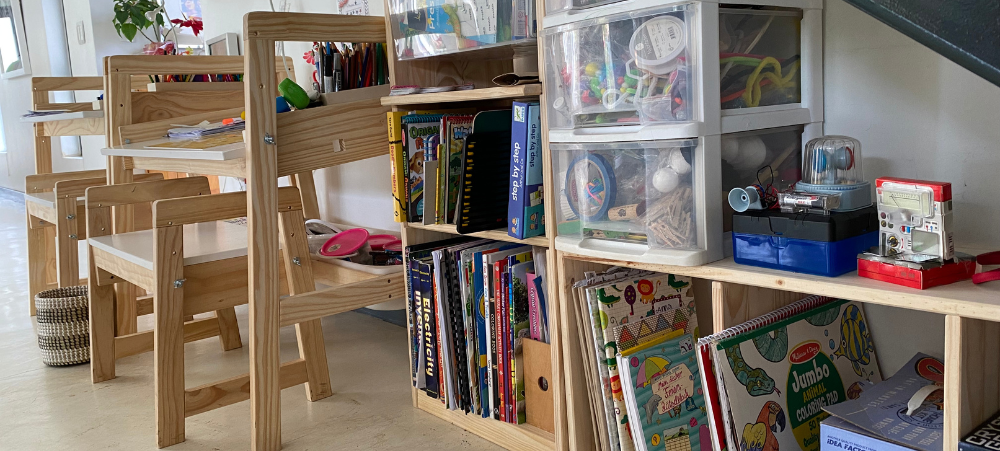
Online schooling is on the rise in South Africa, and more families are opting for the flexibility and other benefits of at-home learning.  However, it’s important for parents to be mindful of providing a child-friendly workspace that is conducive to learning.  A safe, comfortable and well-organised environment is essential for your child to thrive at their online school. When lockdowns in 2020 shut schools down, architect, Henriette Frohlich opted for online school for her son, and saw how fellow parents were struggling to set up suitable workspaces for their children at home.  She realised that there was a great need for affordable child-friendly workspace furniture that was locally made.  Alongside her husband Markus, an engineer, they started work on designing and producing smart and adjustable furniture and launched HF Design.  Henriette says, “Most parents embrace the need to invest in a good curriculum, but few pay attention to their child’s learning environment.  We encourage parents to create workspaces for their children that are accessible. That way your child can control his/her own learning experience and journey, without having to be directed/guided by parents. Also think about improving lighting, reducing noise and ensuring your child is sitting comfortable on workspace furniture that is made for his/her bodysize. That way your child will be set up for a lifetime of learning.” Henriette and Markus will be joining Koa Academy Principal, Mark Anderson as well as Occupational Therapist, Nasreen Cariem for a free parent’s webinar ‘Setting Up for Home Learning Success’ on Tuesday, 14 June from 7:30pm to 8:30pm.  Nasreen says that parents of at-home learners need to be on the lookout for the tell-tale signs that the child’s workspace is not working well for them.  “Be aware if your child is regularly distracted and inattentive, or not completing tasks,” she says.  “It’s also important to hear them if they are complaining about their learning set-up.  It can be easy to assume that children may be acting out or presenting excuses, when in fact their struggles with their learning environment are real and need to be addressed so that they enjoy being in their workspace.” Mark highlights a fundamental for at-home learners – “Emotional safety is key,” he says. “This is the parent’s number one job for a child learning at home and will be the greatest indicator of the child’s academic success. We all learn best when we feel secure and in control. When you are setting up your child’s learning space, consult them! They need to be personally invested in their own workspace. Set your child up in a space that is calm, clean and has good lighting. It doesn’t have to be dead quiet, but it does need to be controlled.  Give them a dedicated space for their learning where they can store everything they need, such as their computer and stationery. It doesn’t have to be big, but it does need to be theirs. This is particularly important for younger learners who are still mastering the practicalities of executive functions like following a schedule and meeting deadlines.” Henriette highlights 3 basics for an at-home learner’s workspace: The most important thing is lighting – “If your child is struggling to absorb the content, they will lose interest quickly. Bad lighting may also contribute towards poor eyesight later in life. Many parents place their child’s desk near the window, which can lead to blinding natural light or overheating of the work area. Best is to position your child’s desk perpendicular to the window, allowing natural light to fall on the desk. Natural light is the best, followed by indirect light. The second most important thing is comfort – “Your child must sit comfortably at their desk. The desk and bench or chair should be set at the right height, so as to strengthen core muscles and prevent slouching and discomfort. If a child is not sitting comfortably, they won’t sit for long.” The third most important thing is noise management – “Is your child’s workspace in an area that is shielded from disruptive noises? You can use room dividers such as plants, bookshelves, screens or curtains to create a private space for your child and make quality headphones available for online sessions if they are sharing space with other members of the family. Ensure that your child can control the noise in their area, so that they can focus and concentrate when necessary.” There is no one size-fits-all when it comes to creating an optimal at-home learner workspace, and solutions are going to differ from home to home, and learner to learner. Nasreen agrees with Henriette’s top priorities.  She says, “For both older and younger learners, a well-organised space with adequate lighting is of utmost importance. An environment which is relatively free of distractions helps to enable concentration, and a comfortable chair and desk with the right ergonomics will allow for prolonged sitting as well as writing comfortably.  The child’s work area doesn’t have to be expansive but there should be adequate space for school materials, stationery and online devices.  In making set-up choices, parents need to consider their children’s particular needs and learning styles.  Some siblings work well sharing the at-home learning space, others may be territorial and do better on their own.  For some children, having the family around in the background promotes accountability and ensures they don’t feel lonely, while other focus better if they are on their own.  Obviously, the family’s resources in terms of space available, furnishings and storage systems also need to be taken into consideration.” Parents of at-home learners have a host of questions when it comes to setting up and organising a workspace for their child.  Should siblings share an at-home learning space?  Is it okay for my child to do their schoolwork on their bed?  Is an entry-level laptop adequate for online school?  What are the best storage hacks for school materials?  I’m working from home, should my children share my workspace so that I can keep an eye on them? Mark, Henriette, Markus and Nasreen will be unpacking the answers at the ‘Setting Up For Home Learning

MEMORY – take note of the role of MUSIC!
Wriggle and Rhyme

MEMORY – take note of the role of MUSIC!

Have you ever heard a song and it has brought back a memory? That memory may include the place where you heard the song, what you were doing at the time, how you felt and sometimes even a sensory trigger, like the memory of a certain taste or smell. The effect is so profound that a heart-warming movement called “Music and Memory” creates personalised playlists for residents with dementia in nursing homes. Apparently, the response is incredible!  Eyes light up and bodies start to move with the rhythm, as the music awakens memories of forgotten lives. All this from a piece of music! So why does music impact memory so profoundly? Neuroscientists have analysed the brain mechanisms related to memory, finding that words set to music are the easiest to remember.  We can all relate to that – just try and remember anything set to a tune and your powers of recall will be stronger! Apparently, the hippocampus and the frontal cortex are two large areas in the brain associated with memory and they take in a great deal of information every minute. But, we all know from experience, that retrieving all that information is not always easy. However, the structure of a song helps us to remember, because it provides a rhythm, rhyme and sometimes alliteration, which helps to unlock that information with cues.  The cues can also include things like the melody, emotions or images that the song lyrics evoke. Neuroscientists are constantly discovering more and more about how music affects memory. A 2009 study done by cognitive neuroscientist Dr. Petr Janata at the University of California, found a potential explanation for the link between music and memory by mapping the brain activity of a group of subjects while they listened to music.  Dr. Janata found that songs linked to strong emotions and memories corresponded with fMRI images that had greater activity in the upper part of the pre-frontal cortex, which sits right behind the forehead. This suggests that this area of the brain, which is also responsible for supporting and retrieving long-term memories, acts as a “hub” that links together music, emotions, and memories. The soundtrack of our lives … Janata explains that listening to a piece of familiar music “serves as a soundtrack for a mental movie that starts playing in our head,” calling back memories of a particular person or place. What about music in the brains of children? Over the past 14 years of using music as a catalyst for learning at our Wriggle and Rhyme music classes, we’ve seen, first hand, how music-based activities affect children’s brains. The responsibility to fill children’s brains with positive, learning experiences is not one that we take lightly.  We recognize that because our programs are set to music, we are building memories that may last a lifetime. Music education is therefore both a privilege and an exquisite burden! Whether you’re a parent, caregiver or educator, bear that in mind!  When it comes to music, everything that you expose your child/ren to needs to be done intentionally, with purpose.  You could be impacting your child’s memory for the rest of their lives! So, can I encourage you to build musical memories that evoke rich, joyful experiences for years to come? Because, when it comes to memory, we need to take note of the role of music! Musical resources Wriggle and Rhyme has a range of musical stories which you can access on your favourite streaming service (Apple music, Spotify, iTunes, etc.) or take a look at www.wriggleandrhyme.co.za/our-music . We also have fun, musical episodes on our YOUTUBE channel “Wriggle & Rhyme SA”. Our baby and toddler music classes are available in Cape Town – RONDEBOSCH, CLAREMONT, MELKBOSSTRAND and MEADOWRIDGE. Our pre-school music classes take place at partner pre-schools across the Mother City.

DISNEY+ UNVEILS KEY ART AND LAUNCH DATE FOR MARVEL STUDIOS’ “I AM GROOT” SHORTS
Disney +

DISNEY+ UNVEILS KEY ART AND LAUNCH DATE FOR MARVEL STUDIOS’ “I AM GROOT” SHORTS

Today, Disney+ announced that the latest Marvel Studios addition to their exciting summer lineup, “I Am Groot,” will launch on August 10. “I Am Groot” is a collection of five original shorts starring Baby Groot, everyone’s favorite little tree, and will feature several new and unusual characters. All five shorts will be available for viewers to watch upon launch.  There’s no guarding the galaxy from this mischievous toddler! So get ready as Baby Groot takes center stage in his very owns series, exploring his glory days growing up—and getting into trouble—among the stars. Vin Diesel, who is the voice of Groot in the “Guardians of the Galaxy” franchise, voices Baby Groot. The writer/director is Kirsten Lepore, and the executive producers are Kevin Feige, Louis D’Esposito, Victoria Alonso, Brad Winderbaum and James Gunn.

STUDYING FROM HOME: HOW TO STAY FOCUSED
Paper Video

STUDYING FROM HOME: HOW TO STAY FOCUSED

Technology and easy access to resources have made studying from anywhere a breeze but choosing a space to bunker down at can be subjective. So, think carefully about the variables involved when considering the library, café a friend’s house or your room. The right space can make all the difference. How does your environment affect your studying? Learning environments play a crucial role and different factors can affect learner’s learning ability. Things like seating, light, sounds and even colour have an impact on the way we study, how much we remember and how efficient we are. Positive environments help learners stay engaged, motivated and give learners an overall higher learning ability. So, when it comes to different environments think of the variables and whether or not they work for you.   The best and worst places to study? What works for some may not work for others and while some learners thrive in a busy café other require the quiet of a library or the comforts of home. Make sure that the spots you settle on are conducive to your method of learning, allow you to concentrate, and are free of distractions. Collaborative learning: you’ll settle for spots like libraries, study groups or revision groups. While effective, be strict when it comes to organising your time and get don’t beat around the bush – it can become easy to lo lose focus if you’re not intentional, especially when you’re a group of friends. Independent: If you prefer making the most of your own study time, spaces that are comfortable and designed for you are more your speed. Places to avoid: Spots that are known and associated with socializing always tend to make students work harder than they need to because they’re so focussed on trying to stay focussed. Your bed (or the couch) are spots that your brain associates with relaxation and can make it incredibly difficult for you to get into the groove of studying.   Benefits of studying at home Benefit 1: Your space Being in your space, surrounded by familiar things and being able to set up your routine can be both freeing and comforting at the same time. A more relaxed environment decreases stress levels which means you absorb information more effectively. Benefit 2: Everything you need Along with comforts, home can come with everything you need; food, pens, papers (thanks mom) and when you have everything at your disposal you spend less time scrambling to find ods and ends and more time behind books. Benefit 3: You can be you The solitude of your room allows you to read aloud, repeat the material constantly, and listen to the music you want to listen to. Plus, you avoid hearing someone’s music escape through their headphones altogether. Your space gives you the freedom to absorb information your way. Benefit 4: On your own time Regardless of the various tell tales that highlight which times are the best for studying, you can implement what your best study time is when you’re in your own space. Unlike a library with closing hours, your home is open any time of day. So being an early bird or night owl can work whenever you want. Benefit 5: Productive Your study breaks can be productive, two birds with one stone as they say. You can complete a few house chores and task an exercise circuit or tick something off of your own to-do list. Sure, going for a run mid-library session is doable, but that might mean getting back to the books in sweaty gym attire – when you’re home you can at least freshen up! Being in your own space and having your own time may require some structure or help and learning and revision platforms can be a great way to help learners stay the course. Paper Video is an online revision platform that focusses on helping grade 8 to 12 learners improve their Maths, Physical Sciences, Life Sciences and Accounting. Learners can access past exam papers and work through the different subject with step-by-step video guides. Try Paper Video for yourself or find out more by visiting www.papervideo.co.za Stay focussed while studying at home Now we’ve managed to build a strong case for studying at home, or at least we’d like to think we did, and while it seems convenient, the home comes with its own set of challenges. Procrastination, distraction, lack of organisation and sharing the space with family members – things can get pretty loud and in your face. So here are a few things to bear in mind when choosing your home as your study safe haven. Tip 1: Remove distractions Homey comforts bring distractions like television, iPads and cell phones. Avoid devices at all cost and find a designated study spot that puts you out of harm’s way. If you know family members are going to be up and about, avoid common areas like the lounge or open dining room areas. Tip 2: Dedicate a space to study in Our brains need structure and a designates study space works as a notice board for your brain that says “hey, we’re sitting down in this spot, which means it must be time to study.” It’s not a good idea to work in your bed or sofa, spots where your body is known to tune out. Check out how you can set up your study space here: Tips for your at home study space. Tip 3: A change of pace Create breaks in your routine and make things interesting for yourself. Go for a run, take a break and play a memory game or get a few chores out of the way. If you give your brain a break it will reward you by working more efficiently. Tip 4: Manage your time Set a timetable for yourself, block out your time and set timers if you have to. Studying at home takes self-discipline and you need to keep yourself accountable. Set reasonable limits for how much time you spend studying each day and break your

Failure to ovulate? Ovaria by Lamelle Pharmaceuticals could be your simple fertility solution
Lamelle Pharmaceuticals

Failure to ovulate? Ovaria by Lamelle Pharmaceuticals could be your simple fertility solution

As the creators of Ovaria, a leading ovarian-health nutritional supplement for women with PCOS, we know your ovaries are an amazing organ. While they’re merely the size of an almond, they can hold up to millions of eggs. Not all of these will mature to become – quite literally – ripe and ready for fertilisation but the average woman can expect to release around 300 to 400 of them. But what happens when you don’t? Many women experience regular periods, but they’re not necessarily producing eggs. It’s only when they start trying to get pregnant – and failing – that they realise they might be dealing with a fertility issue. If this is your situation, your doctor might diagnose you with failure to ovulate. While the term might sound scary, this condition is often reversible. It’s also extremely common. As many as 40% of all women dealing with fertility issues are failing to ovulate and it can be caused by several factors. These include gynaecological conditions like polycystic ovarian syndrome (PCOS), endocrine problems like a thyroid condition and even your weight. The one thing that all these conditions have in common is unregulated hormones. (Yep, it’s true. Having too little or too much body fat can affect your hormone levels to the point that they can’t help your body produce an egg.) Bring back the balance If you suspect you’re simply not ovulating, you should always chat to your doctor. They’ll be able to run a series of simple tests that will give them a clear idea of your hormonal profile and ovarian health. As far as treatment goes, this will always depend on what’s causing your hormonal imbalance. Potential options include taking oral medication or hormone injections. You might also need to make lifestyle changes to help you manage your stress levels and weight – two things that don’t require a prescription pad. However, if you’ve been diagnosed with PCOS, you might also want to consider a cutting-edge supplement like Ovaria. It’s clinically proven to increase the ovulation rate of PCOS sufferers in just 16 weeks! How does it work? Made from naturally-occurring ingredients, Ovaria contains Myo-inositol, a member of the vitamin B-complex vitamin group as well as the mineral Chromium. Together, they can activate the signalling pathways that regulate your thyroid hormones as well as how your body uses insulin. The latter is important as research shows that women with insulin resistance (an impaired response to insulin that results in high blood sugar) are at a much greater risk for fertility challenges. Also, by regulating your insulin levels, you’ll improve your ovaries function and this normalises your androgen carriers, thereby regulating the male hormones in your body. Ultimately, your hormones are always entwined in an intricate ballet. If one of them is off-kilter, it’s always going to have a knock-on effect on the other. This is why, by normalising your insulin, you can reduce your androgen levels. And the result? It’s often the normalisation of the menstrual cycle and enhanced fertility! Spotlight on insulin     For the record – an irregular period and a struggle with fertility – are both symptoms of PCOS, along with weight gain, acne and unwanted hair growth. This makes sense because 80% of women with PCOS also have insulin resistance. Still, even those who don’t have insulin resistance, will struggle with insulin resistant ovaries or ovaries that are challenged by how they use insulin – as well as well as higher than normal androgen levels. As Ovaria addresses all of these things, it’s become a leading supplement to help PCOS sufferers manage their condition.  The bottom line Ultimately, if you’ve been trying to get pregnant and find it to be an unexpected challenge, it’s time to see your doctor. Many things could be causing your problem and it might even be due to your partner’s health, not yours. But if you have been diagnosed with PCOS or insulin resistance, consider taking Ovaria. It’s natural, non-prescription and very safe – and has helped to change the lives of many women around the world. So why not yours?  www.ovaria.co.za 

Infertility – Empower yourself: have the conversation
Parenting Hub

Infertility – Empower yourself: have the conversation

It is estimated that globally, infertility affects 8–12 % of women who are 20–44 years of age.1 Physiological causes in men account for 20–30 % of cases of infertility and physiological causes in women for 20–35 %, while 25–40 % are due to issues in both partners. In 10–20 % of cases, no cause is found.1 Women starting their families at an older age is one of the most common explanations for infertility today.1 It is vital that those facing infertility issues empower themselves by having the necessary conversation about fertility treatment with their partner and doctor, because there are interventions if treatment is sought sooner rather than later. What is infertility? Infertility is defined as failure to establish a clinical pregnancy after 12 months of regular, unprotected sexual intercourse or due to an impairment of a person’s capacity to reproduce, either as an individual or with his/her partner.2 If the woman is older than 35, she and her partner should seek an evaluation if they have not been able to conceive after six months.3 Causes of infertility All of the steps during ovulation and fertilisation need to happen correctly in order to get pregnant. Sometimes, issues that cause infertility in couples are present at birth, and sometimes they develop later in life – they can affect one or both partners. Causes of male infertility may include abnormal sperm production or function, problems with the delivery of sperm, overexposure to certain environmental factors (including cigarette smoking, anabolic steroid use, marijuana, alcohol, and certain medications), and damage related to cancer and its treatment.3 Causes of female infertility may include ovulation disorders, uterine or cervical abnormalities, fallopian tube damage or blockage, endometriosis, early menopause, pelvic adhesions (bands of scar tissue from pelvic infection, appendicitis, endometriosis or abdominal or pelvic surgery), and cancer and its treatment.3  Infertility during the COVID-19 pandemic The COVID-19 pandemic has resulted in increased distress among many people – particularly those already experiencing major stressors in their lives such as problems associated with fertility.4 Dr Sulaiman Heylen, President of the Southern African Society of Reproductive Medicine and Gynaecological Endoscopy (SASREG), says: “Many women who may have been trying to conceive for 3–4 years and needed fertility treatment, but couldn’t access it because of COVID-19 lockdowns, have experienced higher levels of anxiety during the pandemic due to treatment delays. This, in turn, is associated with more negative emotions, lower expectations of future pregnancy, and greater stress and depressive symptoms.” Recent studies on perceptions of the COVID-19 pandemic among women with fertility issues, have showed that although women with fertility problems have perceived the pandemic as negative and disruptive, those who have higher optimism may be less affected.4 Dr Heylen says: “Empowering yourself through gaining knowledge is a great way to boost that optimism. For those facing infertility issues, this entails having the necessary conversation about fertility treatment with their partner and doctor. Fertility starts a slow decline when women are in their twenties – but about half of the women who come to fertility centres are already over 35 years of age. It is at age 35 that one starts to see a more rapid decline in fertility.” “Women would be far better served by investigating fertility options and fertility preservation earlier in their lives. Even if they only plan on having a family later, they can make sure that they are aware of steps that they can take, such as freezing their eggs to try to preserve their ability to have a child later on.” Dr Heylen says that while COVID-19 had a major impact on fertility care through lack of access, the rebound effect is that fertility facilities have never been busier. “Women are feeling more comfortable now to proceed with fertility treatment. Doctors also know more about COVID-19 in terms of impact on pregnancy health and fertility, and that it does not cause abnormalities in pregnancy, nor miscarriage, unless the case of COVID-19 is very severe,” says Dr Heylen. “We have seen many women who have had COVID-19 in the first trimester, and they have been absolutely fine – which is marvellous news. Women may also be safely vaccinated against COVID-19 during fertility treatment, as the vaccine has been proven to have no impact on fertility,” says Dr Heylen.  Treatment options Many people may delay fertility treatment because they fear the costs associated with in vitro fertilisation (IVF); however, there are a number of treatment options other than IVF that can improve the chance of conceiving. The treatment that will be recommended depends on factors like the cause of your fertility issues, your age, and your preferences. Options include fertility drugs to stimulate ovulation; surgery to fix a uterine condition, such as endometriosis, fibroids, or blocked fallopian tubes; intrauterine insemination, where sperm is placed directly into your uterus during ovulation; IVF, where sperm and egg are placed together in a lab until they form an embryo which is then implanted into your uterus; and intrafallopian transfer, where the sperm and egg or a fertilised egg is placed into the fallopian tube.5 “Women and men should continue with their journey towards parenthood – it is absolutely possible despite COVID-19. Time and age are of the essence when it comes to more positive fertility treatment outcomes, so we always encourage people not to delay. The important thing is to have the necessary conversation with your partner and your doctor – and to empower yourself with knowledge about your situation and the options that are available to you,” says Dr Heylen. Visit a fertility clinic near you to speak to a doctor about the options available to you and your partner. For more information, visit www.merckfertilityjourney.co.za #WorldInfertilityMonth #DontDelay #EmpowerYourself #Merck #Havetheconversation

Simple toddler suppers for busy moms
Squish

Simple toddler suppers for busy moms

 Time-saving toddler suppers for busy moms Sometimes the day runs away with you, and before you know it, it is time to put supper on the table for your little one. These easy supper recipes will help you quickly prep and serve a meal that is full of natural goodness – and delicious too! BUTTERNUT AND CARROT MASHED POTATO Get supper sorted in a flash with this tasty supper – if you have leftover mash in the fridge, it can be on the table in minutes! You can serve this on its own, or add a bit of tuna, cooked chicken or mince for some extra protein and flavour. Squish 100% Fruit and Veg Purees are a smart choice for your growing child – they are made with quality fresh fruit and vegetables and are free of nasties like colourants, flavourants and preservatives, and have no added sugar or starch.  Ingredients 1 cup mashed potato 1 x 110 ml Squish 100% Butternut + Carrot Puree Optional: Steamed tenderstem broccoli for dipping Method Heat mash in the microwave and stir through Squish Puree. Steam broccoli and serve alongside mash as dippers TIP: Always double-check the heat of food you have warmed in the microwave and stir before serving. CHEESY MIXED VEGETABLE EGG SCRAMBLE When you’re rushed for time, eggs are always a good option. They’re so versatile and are full of protein. This cheesy scramble is a good way to use up half-full Squish 100% Fruit and Veg Purees you might have in the fridge. Squish pouches come with convenient resealable lids, so you never need to waste a drop. Ingredients 2 eggs 50 ml (½ pouch) Squish 100% Mixed Vegetable Puree (or any flavour you please) 45 ml (3 Tbsp) cheddar cheese, grated Method Crack the eggs into a bowl and whisk. Add Squish Puree and mix well.  Melt a blob of butter in a non-stick pan over medium heat. Add the egg and puree mix and cook, stirring, until just cooked. Stir in the cheese. Serve warm with buttered toast. TIP: Use a cookie cutter to create fun-shaped toast. CHICKEN AND VEG RICE The convenience of Squish 100% Fruit and Veg Puree means you can always serve your child a nutritious meal, no matter how little time you have. This tasty one-bowl supper is super-easy to make – we used Squish 100% Mixed Veg, but you can switch up the taste by using any Squish flavour, including Pear + Sweet Potato Puree, Butternut + Carrot Puree, or Apple, Sweet Potato + Sweetcorn.  Ingredients 1 cup cooked rice 1 chicken breast, steamed and shredded 1 x 110 ml pouch Squish 100% Mixed Veg Method Heat a small saucepan over medium heat, adding a dollop of butter. Add rice and chicken and fry briefly. Add Squish Puree and continue stirring until heated through.  TIP: It’s always a good idea to have a couple of ready-cooked chicken breasts in your fridge to add to leftover rice, mash, or pasta or to stir through a pouch of Squish 100% Veg Puree.   You’ll find a whole range of easy-to-make, nutritious recipes on the Squish website. Click here.

ALICE’S WONDERLAND BAKERY,’ A DELICIOUSLY FANTASTICAL ANIMATED SERIES FOR PRESCHOOLERS, PREMIERES THIS JUNE
Disney Junior

ALICE’S WONDERLAND BAKERY,’ A DELICIOUSLY FANTASTICAL ANIMATED SERIES FOR PRESCHOOLERS, PREMIERES THIS JUNE

Disney Junior’s ‘Alice’s Wonderland Bakery,’ Inspired by the Beloved Classic, Premieres Saturday, 4 June 2022 on Disney Junior Craig Ferguson, Eden Espinosa, Jon Secada, Bobby Moynihan, Ana Gasteyer, Donald Faison, Yvette Nicole Brown and Vanessa Bayer Among All-Star Guest Voice Cast Disney Junior’s “Alice’s Wonderland Bakery,” a fantastical animated series for pre-schoolers and their families inspired by the world of “Alice in Wonderland,” premieres this Saturday, 4 June 2022 on Disney Junior, DStv channel 309 at 08:30.   A vibrant new take on the classic 1951 film, the series centres on Alice, the great-granddaughter of the original heroine and a budding young baker at the enchanted Wonderland Bakery, where her magical treats help bring a new generation of friends and families together. Featuring reimagined versions of familiar iconic characters and introducing memorable new ones, the series stars newcomer Libby Rue as the voice of Alice as well as a slew of celebrity guest stars. See the trailer to the series here. Each episode of “Alice’s Wonderland Bakery,” comprised of two 11-minute stories, centres on Alice’s magical recipe adventures with her best pals, who join her in the bakery to whip up whimsical cakes and treats for friends and neighbours with enchanted kitchen tools and ingredients to help them.  “With so many already familiar with the magic and whimsy of the classic story of Alice in Wonderland – we are sure that this wonderful new series will delight and captivate a new generation of fans,” says Christine Service, Senior Vice President and General Manager of The Walt Disney Company Africa. “Disney Junior is delighted to introduce this series that celebrates the culture and creativity of food, highlights self-expression, and imparts age-appropriate social and emotional lessons about friendship, collaboration, and the importance of community,” she adds.   Geared to kids ages 2-5 and their families, “Alice’s Wonderland Bakery” features Alice’s recipe adventures with her best pals—Fergie, a white rabbit; Hattie, her madcap friend; and Rosa, the Princess of Hearts, as well as her great grandmother’s magical cookbook, Cookie. Alice is inquisitive, persistent and resourceful as she experiments with her baking and invents out-of-the-box solutions for problems that arise. Food is an important part of Alice’s identity, connecting her family from generation to generation and allowing her to discover the distinct family heritages of her friends, each with a wide array of tastes and traditions. In addition to Rue, the lead voice cast includes Abigail Estrella (“How the Grinch Stole Christmas!”) as Princess Rosa, the Princess of Hearts and Alice’s most artistic friend; CJ Uy (“The Ball Method”) as Hattie, a “mad-hatter” boy and Alice’s silliest friend; Jack Stanton (“Outmatched”) as Fergie the White Rabbit, Alice’s best friend and biggest fan; Secunda Wood (“Jurassic World: Camp Cretaceous”) as Cookie, the magical cookbook that once belonged to Alice’s great grandmother; and Audrey Wasilewski (“Mad Men”) as Dinah, Alice’s pet cat who is always at her side. Max Mittelman (“Spider-Man”) recurs as Cheshire Cat, Alice’s mysterious and playful friend and one of the most iconic Wonderland characters. “Alice’s Wonderland Bakery” is produced by Disney Television Animation. Emmy® Award-nominated Chelsea Beyl (Peabody Award-winning “Doc McStuffins”) is executive producer, and Frank Montagna (“Elena of Avalor”) is co-executive producer and art director. Ciara Anderson (“Harley Quinn”) is producer, Lisa Kettle (“Mira, Royal Detective”) is story editor, and Emmy-nominated Nathan Chew (“Elena of Avalor”) is supervising director. The writing team consists of Melinda LaRose (“Vampirina”), Michael Rodriguez (“Sharkdog”), Marisa Evans-Sanden (“Fancy Nancy”), Stuart Friedel (“Clifford the Big Red Dog”) and Sara Karimipour (“Ryan’s Mystery Playdate”), and episodic directors are Steven Umbleby (“Monsters at Work”) and Arielle Yett (“The Chicken Squad”). Emmy winner John Kavanaugh (“Sofia the First,” “Elena of Avalor”) serves as the series’ songwriter/music director and Matthew Margeson (“Rocketman”) is composer.

Alice’s Wonderland Bakery – Episodic Synopsis
Disney Junior

Alice’s Wonderland Bakery – Episodic Synopsis

Episode 1 “Unforgettable Unbirthday” – After presenting a birthday cake for Princess Rosa goes wrong, Alice finds the perfect solution and surprises her with an unforgettable Unbirthday Cake. *Broadway star Eden Espinosa (“Wicked”) guest stars as the Queen of Hearts. “Picnic for One” – The Cheshire Cat puts in a colossal order with Alice for a picnic that he is hosting in the Tulgey Wood, but when Alice and friends come across him in the woods, it seems his party might be a bit lonelier than he let on. Episode 2 “Try Again Tart” – When Hattie wins the Queen’s tastiest tart contest, he needs help with trying to recreate his dish.  “Pie Pressure” – When Alice becomes overwhelmed with orders at the bakery, Fergie offers to help but cuts corners to meet deadlines, and his pies turn into a pie-tastrophy. Episode 3 “No Palace Like Home” – Princess Rosa invites Alice, Hattie and Fergie for a royal sleepover at the Hearts Palace, but when Hattie’s bedtime routine is disrupted, Alice knows just the thing to make him feel better: a taste of home. “A Royal Remembrance” – After an attempt from Rosa and Alice to recreate a beloved recipe for Rosa’s Abuelo, the King of Hearts, doesn’t turn out as planned, Abuelo assures the girls that the most important ingredient was the love they made it with. *Multiple GRAMMY® Award winner Jon Secada guest stars as the King of Hearts. Episode 4 “Alice’s Stormy Afternoon” – Alice makes a treat for Mother Rose’s baby buds but goes overboard with a special ingredient. *Broadway star Mandy Gonzalez (“Hamilton”) guest stars as Mother Rose. “Into the Tulgey Wood” – Rosa’s first camping trip goes awry when the Card Guards insist on accompanying her, and their overprotective nature interferes at every step of the way. Episode 5 “Gallymoggers Granola” – When Hattie eats too much of Cheshire Cat’s granola, he starts to disappear just like Cheshire, so Alice must find the perfect recipe to bring him back. “Sour Grapes” – Rosa attends her first Great Grape Picnic, where she tries new foods with Alice’s and friends’ help. *WATCH ALICE’S WONDERLAND BAKERY ON DISNEY JUNIOR, DSTV CHANNEL 309, EVERY WEEKEND AT 08:30AM

Ms. Marvel
Disney +

Ms. Marvel

Marvel Studios’ “Ms. Marvel” is a new, original series that introduces Kamala Khan, a Muslim American teenager growing up in Jersey City. An avid gamer and a voracious fan-fiction scribe, Kamala is a Super Hero megafan with an oversized imagination—particularly when it comes to Captain Marvel. Yet Kamala feels like she doesn’t fit in at school and sometimes even at home—that is, until she gets superpowers like the heroes she’s always looked up to. Life gets better with superpowers, right? U.S. Premiere: June 8, 2022 Cast: Iman Vellani, Matt Lintz, Yasmeen Fletcher, Zenobia Shroff, Mohan Kapur, Saagar Shaikh, Rish Shah, Fawad Khan, Laurel Marsden, Arian Moayed, Adaku Ononogbo, Alysia Reiner, Azhar Usman, Laith Nakli, Nimra Bucha, Travina Springer, with Aramis Knight Directed by: Adil & Bilall (Adil El Arbi & Bilall Fallah) [Episodes 101 and 106], Meera Menon [Episodes 102 and 103], Sharmeen Obaid-Chinoy [Episodes 104 and 105] Head Writer: Bisha K. Ali Executive Producers: Kevin Feige, Louis D’Esposito, Victoria Alonso, Brad Winderbaum, Adil & Bilall, Bisha K. Ali, Sana Amanat Co-executive Producers: Trevor Waterson, Freddy Syborn Supervising Producer: Jenna Berger Production Company: Marvel Studios

Raising future-proof children with the rise of EduTech
Wingu Academy

Raising future-proof children with the rise of EduTech

“In 1951 we witnessed the birth of television. In 1981, Acorn IBM’s first personal computer was released and in 1999 Wi-Fi, the abbreviated term for “wireless fidelity” was developed. But life as we know it today doesn’t change every 20 – 30 years anymore. It now changes every 20-30 minutes…perhaps without us even knowing it. Traditional Schooling as we knew it If you are reading this there is a 99% chance that you were in a “traditional brick-and-mortar” school. We were dropped off in the morning by a parent, or took the bus to school, or for some of us, even walked to school. Then we joined our friends in a classroom with a teacher, the bell rang for break, we all had our lunch, and then we went back to class. We were lucky if we had a Computer Centre at school that we were exposed to. After school, some of us attended social or sport events. And most of you would agree with me that we did not turn out too bad.  Times have changed Today, every child is exposed to some type of technological device and likely, even more than one. They are exposed to technology at home and at school, and when visiting their friends’ houses. Students in the 21st century need technology to do their schoolwork, their sport activities, and events and even when organising social events. We as adults must raise children with technology as it is the key to their future. Modern universities make use of online assessment tasks, computer-based assignments, software tools and in all careers, a basic computer skill is a requirement. We have the privilege to raise children with the necessary future-focused skills to adapt to a fast-growing technological world.  Forced to online schooling  COVID-19 forced the global community to experience “home-schooling” or “online-schooling”. What a blessing in disguise for many of us. Parents and students had their worlds changed by this. Many of us realised what our children were being taught at school, and in many cases left us with a lot to be desired. We also realised that we could do school from literally anywhere in the world by using web-based tools and online schooling platforms. Together with this, a whole new world opened for children. Students can be managed by an online educator under the supervision of their parents to do research, to write their own coding programme, to experience learning in an immersive way, and be engaged by a variety of tools that bring joy into learning. The possibilities are endless.  Pros and Cons of raising the next generation by use of EduTech solutions such as online schools. This debate can go on for days, but in fact, it all comes down to two main considerations. If my child goes to an online school, how will their social development be impacted? The reality is that social skills can be fostered outside of a brick-and-mortar school. Online schooling and homeschooling families have vibrant communities that have rich social experiences, build lifelong friendships, and have the benefit that it can be forged around your own family values, choosing friends, and avoiding bullying and exposure to bad influences. This does take parental effort and can be a task without tapping into the communities available. Most online schools, such as Wingu Academy have vibrant programmes where students are given a choice of different clubs to be part of. The clubs foster social interaction, connect friends that can meet up in person, build leadership skills, and get exposure to other potential interests. Students who attend an online school know all the ins and outs of technology and how to use it in everyday life, school, and work. Children today are more comfortable with social interactions online than other generations and are developing the crucial skills to safely interact in a connected world. It is important to leverage off the opportunities available to ensure socialisation in person. Globally there are vibrant communities on social media for homeschooling, and veteran homeschooling families that can offer guidance.  As an educator, teaching online changed my whole life. I realised that there was a whole new world outside of my comfort zone waiting for me to discover. When I first started teaching online, I was terrified of using the technology, but now I can’t think of going back to my old way of teaching, experiencing all the possibilities online teaching holds for me and my students. I also can’t wait to see how my son develops using all the technological skills he is about to learn. He has the best of both worlds. I can raise him on a farm in the outdoors with the peace of mind that when entering the workforce of the future he wouldn’t have to stand back for anyone or anything, because of an online school like Wingu Academy he will have all the skills to have a technological advantage in whatever career path he chooses to pursue.” Madeline Kruger, is a wife, mother of a five-year old, and a language teacher at Wingu Academy with true Wingulian blood flowing through her veins. She holds a B.Ed Intermediate Degree from North West University in South Africa. She also received an award from the Golden Key International Society. Madeline is passionate about teaching and believes that all children are special in their own way and should have the opportunity to develop at their own pace.

Rise
Disney +

Rise

Audiences have never seen a story like that of the Antetokounmpos. After emigrating from Nigeria to Greece, Charles and Vera Antetokounmpo (Dayo Okeniyi and Yetide Badaki, respectively) struggled to survive and provide for their five children, while living under the daily threat of deportation. With their oldest son still in Nigeria with relatives, the couple were desperate to obtain Greek citizenship but found themselves undermined by a system that blocked them at every turn. When they weren’t selling items to tourists on the streets of Athens with the rest of the family, the brothers– Giannis (Uche Agada) and Thanasis (Ral Agada)– would play basketball with a local youth team. Latecomers to the sport, they discovered their great abilities on the basketball court and worked hard to become world class athletes, along with brother, Kostas (Jaden Osimuwa). With the help of an agent, Giannis entered the NBA Draft in 2013 in a long shot prospect that would change not only his life but the life of his entire family. And last season, Giannis and Thanasis helped bring the Milwaukee Bucks their first championship ring in 50 years, while Kostas played for the previous season champs, the Los Angeles Lakers. “Rise” stars Dayo Okeniyi, Yetide Badaki, Manish Dayal, Taylor Nichols, introducing Ral Agada and introducing Uche Agada. The film was directed by Akin Omotoso (“Vaya”), written by Arash Amel (“A Private War”) and produced by Bernie Goldmann (“300”). Giannis Antetokounmpo and Douglas S. Jones served as the executive producers. U.S. Premiere: Friday, June 24th Director: Akin Omotoso Written by: Arash Amel Producer: Bernie Goldmann Cast: Dayo Okeniyi, Yetide Badaki, Manish Dayal, Taylor Nichols, introducing Ral Agada and introducing Uche Agada

DISNEY+ WELCOMES MARVEL STUDIOS’ “DOCTOR STRANGE IN THE MULTIVERSE OF MADNESS” ON JUNE 22
Disney +

DISNEY+ WELCOMES MARVEL STUDIOS’ “DOCTOR STRANGE IN THE MULTIVERSE OF MADNESS” ON JUNE 22

Disney+ announced today that Marvel Studios’ “Doctor Strange in the Multiverse of Madness” will begin streaming exclusively on Disney+ June 22. Watch the new online spot to see a special “fan thank you” from Benedict Cumberbatch, Elizabeth Olsen, Benedict Wong and Xochitl Gomez. In Marvel Studios’ “Doctor Strange in the Multiverse of Madness,” the MCU unlocks the Multiverse and pushes its boundaries further than ever before. Journey into the unknown with Doctor Strange, who, with the help of mystical allies both old and new, traverses the mind-bending and dangerous alternate realities of the Multiverse to confront a mysterious new adversary. “Doctor Strange in the Multiverse of Madness” stars Benedict Cumberbatch, Elizabeth Olsen, Chiwetel Ejiofor, Benedict Wong, Xochitl Gomez, with Michael Stühlbarg, and Rachel McAdams.  The film is directed by Sam Raimi, and Kevin Feige is the producer. Louis D’Esposito, Victoria Alonso, Eric Hauserman Carroll, Scott Derrickson and Jamie Christopher serve as executive producers. The screenplay was written by Michael Waldron. “Doctor Strange in the Multiverse of Madness” released in cinemas on May 6, 2022.

Relationship building with home education providers is a priority for the Gauteng Department of Education – Wingu Academy’s invite for in-depth collaboration
Wingu Academy

Relationship building with home education providers is a priority for the Gauteng Department of Education – Wingu Academy’s invite for in-depth collaboration

The Gauteng Department of Education (GDE) conducted a meeting with homeschooling and online school providers on the 2nd of June 2022. This is the first meeting where the GDE reached out to service providers in the home education sector as part of stakeholder engagement and relationship building. Chriselda Mosibudi-Makhubela, the Director for Independent Schools at the Gauteng Department of Education, expressed the objective of amplifying the voices of learners that are home educated, as well as those of the key stakeholders to work towards turning around the prior views on home education.      South Africa has seen a surge of online schools opening in response to the COVID-19 pandemic. Some online schools were already established pre-pandemic due to a natural growth in the home education market inherent in the country, whilst others developed in response to the perceived demand in the market for online schooling.  In the US, online schools have been well attended for a few decades already and have seen mature and well-developed online schools emerge as viable and important alternatives for numerous students across the states. Pre-pandemic there were over 375 000 students between the ages of 6 and 18 attending state-wide full-time online school programmes, a number that has almost doubled for the 2021-2022 school year in the US.  In South Africa, the numbers are not that clear and pre-pandemic estimates of 100 000 homeschoolers have increased dramatically to more than 300 000 according to the Department of Education. Chriselda Mosibudi-Makhubela has previously indicated that up to 4% of learners can be home educated in South Africa. The director also expressed that the GDE is very interested in doing research to learn more about home-based education and to improve on assessment and curriculum provision in Gauteng, especially for home education.   With the growth in the interest in home-based education, accelerated by the pandemic, many online schools have emerged. At the meeting on the 2nd of June it became evident that clearer guidelines and frameworks are required to establish a minimum standard to ensure that all learners get the best possible education from homeschooling providers and online schools. The different curriculum providers and homeschooling providers present at the meeting had varying levels of maturity of internal processes, curriculum delivery, and assessment structures.  Wingu Academy was encouraged to see that our processes and standards are high and aligned to policy and guidelines available and we are excited to share what we have found to be effective in our approach to online distance learning. Wingu Academy is formally inviting collaboration with national and local departments of education and wishes to support the core values that Director Chriselda Mosibudi-Makhubela shared at the meeting of “excellence, compliance and relationship building”.   Wingu Academy is optimistic and welcomes the pending regulatory framework to be approved by the end of October 2022, and the opportunity to forge a strong relationship with the GDE. “At the meeting Wingu Academy extended an offer to support the Gauteng Department of Education with our in-house expertise in curriculum mapping to assist with smoother transitioning of students between International and the CAPS curriculum to make it more accessible for students to transfer between home education and public or independent schools where needed.” explains Ian Strydom, Managing Director of Wingu Academy.  “Wingu Academy has been applying the policy on home education and has simultaneously aligned all internal processes and quality assurance measures with the local and international requirements of traditional independent schools, and are ready to adopt any further recommendations by the Department of Education. The Academy is registered with the South African Comprehensive Assessments Institute (SACAI) as a distance education provider for the CAPS programme it is currently offering, and is a registered Pearson Online Centre for the International British Curriculum. The Academy is also finalising the registration of an independent school in its network awaiting final feedback from the local department of education and as such has comprehensive alignment with the available guidelines from the Department of Basic Education.” Strydom concludes.     

NEW AUTUMN WINTER COLOUR COLLECTIONS – ICONIC & COLOR VIBE WITH ADDED SILICON
Parenting Hub

NEW AUTUMN WINTER COLOUR COLLECTIONS – ICONIC & COLOR VIBE WITH ADDED SILICON

What is silicon (silicium)? Silicon is the chemical element with atomic number 14, symbol Si. It is the 2nd most abundant element in the Earth’s crust, after oxygen (about 26%). It does not exist in nature in a free form, but in the formof silicon dioxide (SiO2) as amorphous silica (in sand), mineral silica (quartz, …) or other silicates (kaolinite, mica, …). Silicon is one of the beneficial minerals specifically absorbed by plants and is essential for their proper growth. It is present in human connective tissues (skin, aorta, bones, hair, tendons, …). The benefits of silicon Silicon plays a major role in the resistance and flexibility of connective tissues. In the skin, it has a protective effect by strengthening the skin barrier, accelerating the healing processes and improving the clinical signs associated with age as well as the quality of nails and hair. In the body, only organic silicon can be assimilated. Organic silicon derivatives are therefore of particular interest in cosmetic products, because they allow the bioavailability of silicon in the skin, hair andnails, in order to strengthen them. As a reminder, inorganic silicon (example: silica, talc, mica, …) only gives a mechanical protective effect as a mineral filler. Silicon at MAVALA Inorganic silicon is found in particular in Mava-White, Color-Matt and Ridge Filler. Organic silicon is now present in the two new nail polish collections – Iconic Color’s and Color Vibe Collection, in the form of an organic silicon derivative (INCI: Dimethyl Oxobenzo Dioxasilane). Byincreasing the level of silicon present in the nails, it thus contributes to improve their quality and resistance. THE ICONIC COLLECTION – R105 ex VAT ICONIC Color’s, iconic and timeless elegance, with a contemporary touch! The fashion of the Autumn/Winter 2022 catwalks gives pride of place to natural,comforting shades that inspire confidence and balance… A peaceful lull after the storm… We wander with delight through a universe of earthy hues. A minimal chromatic palette ofcream, ochre, cho- colate and caramel, mixed with terracotta and sand colour gradients, adds a few touches of light to a range of more neutral mineral shades, inspired by the wonders of nature. Timeless camel, warm and chic, is flirting with everlasting grey, which strikes out as the utmost charming asset of the season, while beige harmonizes this sweet symphony of classic colours. In this natural shelter of generous shades and fabrics, the woman of the moment finds thepower to recharge her batteries. Carried by this deliberately comforting lightness, she canexpress her personality in a chic and slightly sophisticated style, infused by contemporary city life. Like her, you will naturally let yourself be tempted by the ICONIC Color’s collection ofMAVALA, with its immi- nently iconic shades, which fully embodies this desire to combine comfort and elegance: Inverness: A deep slightly pearly grey, everlasting like a shimmering Scottish loch in the starry night  Detroit: An intense blue-grey, softened light through the winter clouds over an American metropolis  Manaus: A sultry deep red, voluptuous like the upbeat energy of a Brazilian night Muscat: A  woodsy tan red, rooted in an untouched nature of the Thousand and One Night’s realm Rangoon: A shiny burnt henna, endless splendour of an Asian treasure Salamanca: A delicate sandy beige, sweet invitation of wandering through the lanes of an Hispanic city THE COLOUR VIBE COLLECTION – R105.00 ex VAT Driven by the desire to challenge the status quo, the beauty artists are turning the runway shows of the Autumn/Winter 2022 into a striking kaleidoscopic firework. On the catwalks, a deluge of pop and colour block creates a fearless rainbow, under which transgression is the rule. Everything is permitted, thus everything is possible. Make way for bright, vibrant, explosive shades that convey an obvious thirst for life. Fiery and electric hues of blue, violet, pink and vermilion are on stage with fluorescent colours. Unusual greens, deep and powerful, invite themselves to this so colourful party and embody self-assurance and poise. Unusual forms and materials fusion with very expressive shades and dispense doses of joy in small dashes of colour, like these ultra-colourful and wacky accessories that add pop to any outfit. This 100% colour trend, emblematic of the digital generation, is divinely instagrammable. Making new experi- ments, daring dissonance, breaking codes: in this pop and clubhouse atmosphere, there is no half-measure. Dream or reality? It doesn’t matter! The lack of freedom and spontaneity during this too-long confined game has given birth to a liberating energy where diversity and positivity merge to metamorphose the world… It is up to you now to play and to invent your own codes, with the COLOR VIBE Collection of MAVALA, with its breathtaking and audacious flashy shades: Red Red: A dazzling red red, incarnation of life in full swing Grass Green: A deep and powerful green, reminiscence of nature saturated with water and light Pushy Purple  A luminous and joyful violet, the happiness of regained liberty Mellow Yellow: A soft mimosa yellow, magnificently sunny Bold Blue: An intense cerulean blue, the energy of wildest dreams Party Pink: A sparkling and luminous pink, euphoria of improvised parties STOCKISTS : Mavala is available online at  www.mavala.co.za, www.takealot.com, Dischem and Clicks stores nationwide

MATRICS: 3 CRUCIAL MID-YEAR FACTS TO KEEP IN MIND
Parenting Hub

MATRICS: 3 CRUCIAL MID-YEAR FACTS TO KEEP IN MIND

As Matric mid-year exams kick into high gear this week, it is important for students to get an eagle’s eye view of the significance and importance of these exams – to provide them with perspective regarding the assessment’s role in the greater scheme of their final year, as well as their prospects post-Matric, an education expert says. “Matric students often tend to look at final NSC exams and think that is the big one on which all attention should be focused, but that is only part of the story,” says Nola Payne, Senior Head of Programme at The Independent Institute of Education, SA’s largest and most accredited private higher education provider. “In fact, Matric mid-year exams have a unique significance in the big picture and should not be viewed as merely a trial run for final exams, because it plays its own medium to long term role – in various ways – in the outcomes and prospects for Grade 12,” Payne says. She says the mid-year exams will be more demanding than any exams written before in one’s school career, and provide a good indication of what will be expected from students in their finals, while also providing valuable insights into how they should approach the rest of the year. “The mid-year exams allow students to hone their skills as well as identify gaps in their knowledge and understanding,” says Payne. She adds that in addition to serving as a dry-run for finals, students writing mid-year exams should also keep the following in mind:  1. YOUR MID-YEAR PERFORMANCE IS IMPORTANT Mid-year marks are important primarily for two reasons: firstly, because they contribute to a student’s year mark and secondly, because they can use these marks to get provisional acceptance when they apply to a university. This means learners must do as well as they possibly can in these exams, to hedge their bets should they face unexpected challenges later in the year. Learners who did well in Grade 11 can already use those marks to apply for higher education, but ultimately an institution will only give final admission based on final marks, and Matric mid-year exam marks contribute to these. Performing well in your mid-years also gives you a confidence boost as you move into the final stretch of the year, because you can focus your effort where it is really needed, rather than having to keep working on parts of the curricula that you should already have mastered. 2. BUT… YOUR MID-YEAR PERFORMANCE IS NOT THE FINAL WORD ON YOUR PROSPECTS Although a good mid-year performance is undoubtedly tremendously beneficial, not doing as well as you hoped does not signal the end of the road. It should be kept in mind that after the mid-years, you still have several months to throw everything at your studies and that with focus and a concerted effort, you can substantially improve your performance towards the end of the year. In this respect, your mid-years will provide valuable insights for you to use when strategising the rest of the year. With the help of your teachers, tutors and school support systems, you can use your performance to develop a framework for the rest of the year to ensure that you address those areas you found challenging and which impacted negatively on your performance. It might also be that your mid-years show definitively that your plans for next year might need some additional consideration. If, for instance, you wanted to do a qualification at an institution for which you are most definitely not going to qualify no matter how much time and effort you put in, you are now able to objectively consider your plans and devise a new strategy by researching your options and speaking to student support services at higher education institutions. This will allow you to take the pressure off yourself if your vision was not aligned with reality, and help you to find a path better suited to your unique skills and strengths. 3. YOUR MID-YEAR EXAM SIGNALS THAT YOUR STUDY APPLICATION DEADLINE IS TICKING With the increased competition for tertiary study space, particularly for popular and respected institutions and qualifications, it is important that learners apply for higher education opportunities as soon as possible. This might not seem like a priority when studying for your exams, but if you are serious about pursuing studies after school it must not be left for much longer. Thousands of Matrics have already applied for higher education, and if you have not yet joined their ranks, you need to do so sooner rather than later. As the year progresses and the final exams start to loom, you will be even less inclined to spend time and energy on investigating your study options. It is therefore ideal for those who have not yet done so, to use their June holidays to go visit higher education institutions – whether online or in person by appointment – to discuss various offerings and their related career paths. When doing so, remember that it is also important to ask institutions about their post-graduate support and work-integrated learning components in their curricula. “This is a really exciting time in the educational journeys of students. Yes, it is challenging and the cause of much nervous excitement at times, but you are truly now putting the finishing touches on your school career as you prepare for the next part of your life and entering adulthood,” says Payne. “As the saying goes, we need to be able to walk and chew gum at the same time, and this holds true for Matrics right now. You need to do your absolute best and focus right to the end during your mid-year exams, but at the same time you need to constantly review your strategy and adjust your path as necessary. You also need to consider how you are now walking towards your future, and put in place the building blocks to get there.”

Nia-Sol by Lamelle: A proven way to reduce your risk of Actinic Keratosis
Lamelle Pharmaceuticals

Nia-Sol by Lamelle: A proven way to reduce your risk of Actinic Keratosis

One of many great things about living in sunny South Africa is the weather. Each year, we get an average of 2 500 hours of sun! Alas, along with the beautiful braai weather comes the bad – a high incidence of actinic keratosis (AK), a pre-cancerous lesion caused by unprotected sun exposure. What makes this type of lesion especially worrisome is its inclination to convert to squamous cell carcinoma (SCC), the second most common form of skin cancer. Within 10 years, as many as 10% of AK will convert to this potentially deadly disease. Know your risk Did you know that the diagnosis or treatment of AK is the third most typical reason people see a dermatologist? While it’s extremely common, those most at risk for an AK that could turn into cancer are fair-skinned and over the age of 50 with existing AKs or a history of a weakened immune system, such as transplant patients. Interestingly, men are more at risk than women.  While being diligent about sunscreen is vital, research has shown this isn’t enough to ensure the very best protection. This is why Lamelle Pharmaceuticals has developed Nia-Sol, an innovative inside-and-out protection system to significantly reduce the risk of actinic keratosis and pre-cancerous lesions. Get two-part protection The result of extensive research regarding sun protection, the Nia-Sol system is a two-part defence. Your first “weapon” is a capsule containing nicotinamide, a powerful antioxidant with anti-inflammatory properties. This is important because both free radicals and inflammation are associated with the progression of AK to SCC. Thus, it’s little wonder that, when taken orally, nicotinamide is associated with a lower incidence of AK. It also helps increase your skin’s cellular energy, giving it the boost it needs to perform essential nucleotide excision repair (NER). While this sounds complicated, it’s a natural process that “snips” out dangerous dimers – kinks in your DNA that can morph into cancer. Another plus? Nicotinamide is proven to inhibit UV-related immunosuppression, essentially damage to your immune system caused by unprotected sun exposure.  The second part of the Nia-Sol system is to be applied topically and you can choose from a light textured Gel or the Lotion which is more suitable for larger areas of skin affected by AK’s and sun damage. It also contains that superstar antioxidant, nicotinamide, along with Photolyase, a DNA-repair enzyme with the ability to seek out and correct dimers by 93%! It also reduces MMP-1, an enzyme that damages your skin’s collagen, by 90% while minimising post-actinic damage. The bottom line At the end of the day, new Nia-Sol Lotion, Gel and Capsules by Lamelle Pharmaceuticals are a proven way to significantly reduce your risk of AK and conversion to nonmelanoma skin cancer. It’ll also improve the appearance of red, flaky, rough patches of skin and help maintain your skin’s elasticity while protecting and improving its internal structure. If you fit the risk profile, have been diagnosed with AK or have had a ‘sun damage’ related rough spot removed from your skin, don’t take a chance that could potentially result in deadly consequences. Rather use the very best protection – and pair it with our world-class sunscreen Lamelle Helase 50+ – so you can get back to making the most of your days in the sun. If you fit the risk profile, have been diagnosed with AK or have had a ‘sun damage’ related rough spot removed from your skin, don’t take a chance that could potentially result in deadly consequences. Rather use the very best protection – and pair it with our world-class sunscreen Lamelle Helase 50+ – so you can get back to making the most of your days in the sun. Available at Clicks and online www.lamellepharmaceuticals.co.za  www.niasol.co.za

LUCASFILM FEATURES NEW ANIMATED SERIES AND MORE AT STAR WARS CELEBRATION
Disney +

LUCASFILM FEATURES NEW ANIMATED SERIES AND MORE AT STAR WARS CELEBRATION

The fun and excitement continued for fans over the long weekend at Star Wars Celebration in Anaheim, where Lucasfilm unveiled two new animated series, “Star Wars: Tales of the Jedi” and “Star Wars: Young Jedi Adventures,” and a new special, “LEGO® Star Wars Summer Vacation.”  Lucasfilm also announced that the animated series “Star  Wars: The Bad Batch” will return this Fall and “Star Wars: Visions” will return in 2023.  “Mando+: A Conversation with Jon Favreau and Dave Filoni” shone a spotlight on “The Mandalorian” and “Ahsoka” with cast appearances and announcements, and the “Light & Magic” panel gave fans an informative look at the new documentary about Lucasfilm’s Industrial Light & Magic. One of the highlights of Star Wars Celebration was the surprise premiere of “Obi-Wan Kenobi” last Thursday night, attended by stars Ewan McGregor, Hayden Christensen, Moses Ingram, Bonnie Piesse, Rupert Friend, Indira Varma, O’Shea Jackson Jr., Simone Kessell, Benny Safdie, Jimmy Smits and Vivien Lyra Blair. Director/executive producer Deborah Chow and executive producers Michelle Rejwan and Joby Harold were also in attendance for the event, which featured the first two episodes of the highly anticipated limited series.  Now streaming exclusively on Disney+,  “Obi-Wan Kenobi” is the most-watched Disney+ Original series premiere globally to date, based on hours streamed in an opening weekend.  Additionally, immediately following the “Obi-Wan Kenobi” series premiere launch, Star Wars title viewership on Disney+ tripled in hours-watched during opening weekend. In celebration of the launch, a new character poster is now available.   Recap of highlights from Friday through Sunday presentations:   “LIGHT & MAGIC” ABC News’ Chris Connelly played host to filmmakers Lawrence Kasdan and Ron Howard, alongside VFX luminaries Joe Johnston, Phil Tippett, Dennis Muren, Rose Duignan and Lynwen Brennan as they engaged in a spirited and informative conversation about the groundbreaking history of Industrial Light & Magic, featured in the upcoming six-part documentary series. Granted unparalleled access, Academy Award®-nominated filmmaker Lawrence Kasdan takes viewers on an adventure behind the curtains of Industrial Light & Magic, the special visual effects, animation and virtual production division of Lucasfilm. Learn what inspired some of the most legendary filmmakers in Hollywood history, and follow their stories from their earliest personal films to bringing George Lucas’ vision to life.  Imagine Documentaries is producing the series, which Lawrence Kasdan directs. The executive producers are Ron Howard, Brian Grazer, Justin Wilkes, Lawrence Kasdan, Kathleen Kennedy and Michelle Rejwan. All episodes of “Light & Magic” premiere on July 27, exclusively on Disney+. “LEGO® STAR WARS SUMMER VACATION”  The Summer of LEGOStar Warspanelists Jill Wilfert, Jason Cosler and Jens Kronvold Frederiksen of LEGO, and Douglas Reilly, Josh Rimes, Leland Chee, David Shayne and Chris Gollaher of Lucasfilm, who represented Consumer Products, Games and Animation, were led in a panel discussion by host Yvette Nicole Brown. The presentation showcased an exciting array of new LEGO products bound to keep everyone busy this summer.  During the panel,  “LEGO® Star Wars Summer Vacation,” an all-new animated special, was announced. Premiering August 5, 2022, exclusively on Disney+,  the special stars “Weird Al” Yankovic and the panel’s host Yvette Nicole Brown, and other returning cast members from previous “LEGO® Star Wars” specials. The crowd was delighted to receive “LEGO® Star Wars Summer Vacation” beach balls to carry home. Following the success of “The LEGO®Star Wars Holiday Special”in 2020 and “LEGO®Star Wars Terrifying Tales” in 2021, the popular signature branded cross-saga storytelling continues with this seasonal special. “LEGO® Star Wars Summer Vacation” is  set shortly after the events of “Star Wars: The Rise of Skywalker.” Looking for a much-needed break from stormtroopers and TIE fighters, Finn arranges a surprise vacation for his friends Rey, Poe, Rose, Chewie, BB-8, R2-D2, and C-3PO, aboard the ultra-luxurious Galactic Starcruiser, the Halcyon. But Finn’s plan to have one last hurrah together quickly goes awry when he’s separated from the group. David Shayne is writer and executive producer, and the director is Ken Cunningham. James Waugh, Josh Rimes, Jacqui Lopez, Jill Wilfert, Keith Malone, Jennifer Twiner Mccarron, and Jason Cosler are executive producers. Produced in collaboration with Atomic Cartoons. “STAR WARS: YOUNG JEDI ADVENTURES” Host Anthony Carboni led panelists executive producer James Waugh, supervising director Elliot Bour, executive producer/showrunner Michael Olson and consulting producer Lamont Magee in a discussion of “Star Wars: Young Jedi Adventures.”  Set during The High Republic era, “Star Wars: Young Jedi Adventures” will follow Younglings as they learn valuable skills needed to study the ways of the Force and become Jedi: compassion, self-discipline, teamwork, patience, and friendship. The series is set to premiere Spring 2023 on Disney+ and Disney Junior. “MANDO+: A CONVERSATION WITH JON FAVREAU AND DAVE FILONI” Amid roars and applause, Jon Favreau and Dave Filoni took the stage for “Mando+: A Conversation with Jon Favreau & Dave Filoni” that was moderated by Ash Crossan, host of Screenrant. Pedro Pascal, Brendan Wayne, Lateef Crowder, Giancarlo Esposito, Emily Swallow, Carl Weathers, Temuera Morrison, Katee Sackhoff, Rick Famuyiwa, Rosario Dawson and Natasha Liu Bordizzo were all on hand to add to the excitement. Special guests Grogu from “The Mandalorian”  and Chopper, a very special droid that will be featured in “Ahsoka,” delighted the crowd with their very first Star Wars Celebration appearances. The audience went wild when Natasha Liu Bordizzo was announced as joining the cast of “Ahsoka” as fan-favorite character Sabine Wren, and fans were treated to early footage from the series, which stars Rosario Dawson.  In addition to his directing duties, it was announced that Rick Famuyiwa will also executive produce “The Mandalorian,” Season 3. The enthusiastic audience was also shown an extended sneak peek of the upcoming season. Both “Ahsoka” and “The Mandalorian,” Season 3 will stream exclusively on Disney+ in 2023. “STAR WARS: TALES OF THE JEDI”  Host Amy Radcliffe conversed with special guest Dave Filoni who announced that  “Star Wars: Tales of the Jedi,” an anthology of six, all-new, animated shorts, will premiere Fall 2022, exclusively on Disney+. Filoni told the audience that the anthology will feature Jedi from the prequel era, including Ahsoka and Count Dooku. To the audience’s delight, Filoni showed a teaser trailer and the premiere short in the series, showcasing a very young Ahsoka Tano and her mother. Janina Gavankar, who voices Ahsoka’s mother in the short, made an appearance and joined the discussion. “STAR WARS: THE BAD BATCH” SEASON 2 Lots of fun was

BEYOND GRADES: THE CRUCIAL SKILLS REQUIRED FOR FUTURE SUCCESS
Advtech Group

BEYOND GRADES: THE CRUCIAL SKILLS REQUIRED FOR FUTURE SUCCESS

When considering the quality of a child’s education, one of the chief motivating factors when choosing schools remains the likelihood that a specific school will allow a child to perform at the highest possible level. One of the best measures to adjudicate this is to see how many As and distinctions the school produces annually in Matric exams. This metric is a vital and objectively verifiable insight into the performance of students at a specific school, and the degree to which a school is committed to academic excellence, helping to tirelessly support students to progress to their best achievement. However, when choosing a school, parents should not only evaluate the school’s academic track record, but also its commitment to instilling and developing those crucial skills which will help students to become empowered and self-actualised in future, an education expert says. “If it wasn’t clear before, it should be abundantly so now: in the knowledge economy, success in education and life requires substantially more than just academic performance,” says Desiree Hugo, Academic Head: Schools Division at ADvTECH, Africa’s leading private education provider. “Schools must also strategically be focused on students’ holistic development, their personal growth, and the degree to which they are able to harness their personal strengths and unique talents – on top of ensuring they perform optimally in their exams.” Hugo says it is imperative that schools focus not only on academic development, but also on global competencies, mastery of which is non-negotiable for future success. These skills can be divided into five categories: Thinking Skills, Research Skills, Communication Skills, Social Skills, and Self-Management Skills.  Each of these key areas are broken down into specific focus areas and age-appropriate outcomes, which are continually revisited from Grade 000 to Matric, thereby progressively developing students’ abilities and enabling them throughout their educational journey. “These skills should not be viewed as an addition to the academic curriculum, but instead as presenting a fundamental change in approach to teaching and learning,” says Hugo. She says under the traditional approach, many students’ potential was not allowed to come to the fore, as too many schools amounted to little more than educational factory operations.  However, by focusing on core global competencies and the development of transferrable skills, young people are being empowered to live up to their unique potential and enter adult life armed with the abilities they will need to conquer life’s challenges. “Consider what the world looked like 12 years ago. We can all agree it does not look like that anymore. Now consider what the world will look like in 12 years’ time when today’s Grade Ones leave school. We simply cannot know. What we do know however, is which skills will equip them to the greatest degree possible, regardless of what that world might look like. “Considering an uncertain future, skills like resilience, empathy, critical thinking, and problem solving are clearly crucial components of a holistic education.” Hugo says it is therefore imperative for all role-players in a child’s education – schools, teachers, parents, and communities – to embrace the need to move forward in the way education is viewed, rather than remain fixed in the old-fashioned paradigm of assessment and reporting as the only measure of a student’s success. “Performing well academically clearly remains essential, in terms of accessing scarce study and employment opportunities locally and globally. However academic success on its own is no longer sufficient to position one successfully for an uncertain future. A holistic education today requires much more than excellent test and exam performances, it also requires preparing children for the future demands, and therefore we need to embrace additional new measurements of excellence in education.”

BARBIE® BRAND UNVEILS DOLL OF HER MAJESTY QUEEN ELIZABETH II  TO COMMEMORATE HISTORIC PLATINUM JUBILEE
Parenting Hub

BARBIE® BRAND UNVEILS DOLL OF HER MAJESTY QUEEN ELIZABETH II TO COMMEMORATE HISTORIC PLATINUM JUBILEE

The limited-edition doll will be available from 21st April 2022 This year in celebration of The Queen’s historic Platinum Jubilee, the Barbie® brand is recognizing Her Majesty Queen Elizabeth II, the longest-reigning monarch in British history, with a Tribute Collection Barbie® doll made in Her Majesty’s likeness.  Celebrating 70 historic years of service, Queen Elizabeth II is the first British monarch to celebrate a Platinum Jubilee. After Her Majesty’s Coronation in 1953, The Queen’s extraordinary reign has seen Her lead with duty, humanitarian efforts and a life of public service, unifying the nation in celebration, reflection, and community. The Queen Elizabeth II Barbie® doll is instantly recognisable in an elegant ivory gown and blue riband adorned with decorations of order. The tiara is based on Queen Mary’s Fringe Tiara – famously worn by The Queen on her wedding day – and miniature medallions on ribbons are inspired by the Royal Family Orders. The pink ribbon was given to The Queen by her father George VI, and the pale blue by her grandfather George V. The silver brooch pinned underneath the sash represents the Garter Star Brooch, the insignia of the highest order of chivalry in the United Kingdom, the Order of the Garter.  “Historian and Professor Kate Williams, author of ‘Our Queen Elizabeth’ says: “Queen Elizabeth II’s reign has been one of extraordinary impact, holding a position that few women have. The longest reigning British monarch, and the first to reach a Platinum Jubilee, The Queen has dedicated herself to service and duty and seen the world change immeasurably. In 1952, when she came to the throne, women were not encouraged to work and politicians expressed doubts about a young female monarch – but she showed them wrong, proved herself an adept leader and diplomat.  As Her Majesty celebrates this milestone jubilee it is wonderful to see an iconic brand like Barbie share important historical female figures impact as leaders, creators and pioneers to new generations” Since 1959, the Barbie® brands purpose has been to inspire the limitless potential in every girl and remind them they can be anything. That message has never been more relevant than it is today. Last year, Barbie® launched the Tribute Collection to celebrate visionaries for their incredible contributions, impact and legacy as trailblazers.  The doll is presented in a box inspired by the styles present in Buckingham Palace, made from a 3D ornate die-cut border which frames the doll, and an inner panel showing a throne and the red carpeting inspired by the Throne Room at Buckingham Palace. The box is printed with a crest-shaped logo and a badge commemorating the 70th anniversary of the Queen’s accession to the throne. The Queen Elizabeth II doll will be sold in toystores with RRP of R1749.90 starting April 21st, 2022 ahead of The Queen’s Platinum Jubilee Central Weekend between 2nd -5th June 2022.

Cartoon Network June Line-up
Cartoon Network Africa

Cartoon Network June Line-up

TEEN TITANS GO! NOW YOU SEE ME… NOW YOU DON’T! This month, Robin, Starfire, Cyborg, Beast Boy and Raven continue the fun in TEEN TITANS GO! with all-new comedic adventures. In the new episodes, when the Titans are not busy saving the world, they are up for some fun and games with our favourite DC Comic characters like Batman, the Joker, and Aquaman! Robin teaches the Titans the art of concealment through a game of hide and seek. The Titans also have some hard lessons to learn about taxes after winning a huge cash prize. With epic contests and a series of quests, one thing is for sure, these Titans will always be ready for an adventure, with or without their capes! PREMIERE:       Monday, 6 June 2022 TUNE-IN:            Monday to Friday @ 17:00 CAT Also available on DStv Catch Up CN MOVIES TIME FOR LEGO DC ADVENTURES! Whether you’re a Superman, Batman, or Justice League fan, we’ve got you covered this month with the LEGO DC Youth Day Movie Stunt. In LEGO DC: Batman – Family Matters, suspicion is high after Batman, Batgirl, Robin, and other DC superheroes receive mysterious invitations. However, family values must remain strong as Batman faces the past to save Gotham City’s future. Then, meet the newest, youngest, and nicest hero in town: Shazam! By shouting one word, 10-year-old Billy Batson transforms into an adult Superhero! It doesn’t take long for the Justice League to notice and invite Billy to join the team in LEGO DC: Shazam – Magic & Monsters. So, join the good fight with this month’s LEGO DC adventures! TUNE-IN: LEGO DC: Batman – Family Matters                    Thursday, 16 June @ 09:55 CAT LEGO DC: Shazam – Magic & Monsters             Friday, 17 June @ 09:55 CAT CN PAPATHON WITH OR WITHOUT CAPES – DADS ARE STILL SUPERHEROES! Who needs a superhero when you have a dad! This month Cartoon Network is paying tribute to fathers across Africa with special episodes with your favourite Cartoon Network dads doing what they do best! Watch as things get insanely funny in The Regular Show, weirdly awkward in Teen Titans Go!, and a little bit weird in The Amazing World of Gumball! Fans can also look forward to even more laughter and adventure in Coach Me If You Can and Craig of the Creek! Are you excited yet? We are! TUNE-IN:            Sunday, 19 June @ 11:25 CAT

HELP YOUR CHILD BOUNCE BACK FROM WINTER COLDS
Panado®

HELP YOUR CHILD BOUNCE BACK FROM WINTER COLDS

While science has taught us never to underestimate the power of germs, sometimes these microscopic critters are simply too crafty, even for the most stringent germ detective. Is Winter To Blame For Childhood Colds? Welcome to winter – the season of snuggles, bear hugs, hot chocolate, colds, and flu! Of course, winter isn’t actually to blame for the spread of pesky viruses, but the cold does seem to shake viruses into action. Some studies have shown that many virus strains replicate better at colder temperatures.1  In addition, when the weather dips, families tend to spend more time huddled indoors with their windows closed, increasing their chances of breathing in the same air as someone who is sick and consequently getting the illness.2  When one child begins sneezing and coughing, a domino effect quickly occurs, and everyone who lives under your roof is hopelessly curled in bed like a bear with a sore head. What Is The Distinction Between Colds And Flu? Colds and the flu are both respiratory diseases caused by different viruses. Rhinoviruses cause 30–50 percent of all colds, and coronaviruses cause 10–15 percent of all colds.3 Influenza viruses are responsible for flu-like illnesses and symptoms are characterized by fever, headache, cough, sore throat, nasal congestion, weakness and loss of appetite.3 What Are the Symptoms and Signs of a Cold? Acute upper respiratory tract viral infections (URTIs) are the most common diseases of human beings, with adults having two to five common colds each year and school children having from seven to ten colds per year.3 A tickling in the throat, a runny or stuffy nose, and sneezing are among the initial symptoms of a cold. Those who have colds may also experience headaches, chills and a cough. Nasal mucus may thicken and turn yellow or green. Generally, the severity of symptoms increases rapidly, peaking 2–3 days after infection and lasting for about 7–10 days.3 How to Treat and Prevent Colds in Children It is possible to protect your child from colds by ensuring that they practice good hand hygiene by washing their hands often with soap and water, avoiding touching their eyes, nose, and mouth with unwashed hands, and avoiding contact with sick children and adults.4 There is no cure for a cold. Colds, like the majority of viral diseases, must run their course. Rest and fluids – juice and water – might help your child feel better while they are recovering.4 If your child does become ill with a cold, some medications can be used to alleviate their symptoms while their body recovers. These include saline nasal sprays or decongestants for a blocked or runny nose, lozenges for a sore throat, and paracetamol for fever and pain, such as the conveniently packaged Panado® Paediatric Syrup, Peppermint 5 ml Sachets. Panado® Paediatric Syrup, Peppermint 5ml Sachets contain paracetamol, an effective option for treatment of pain and fever in children.5 Other Panado® Products Suitable For Your Child*  In addition to Panado® Paediatric Syrup, Peppermint 5 ml Sachets, Panado’s range for children includes Panado® Paediatric Syrup, Strawberry (50 ml | 100 ml),6 Panado® Paediatric Syrup, Peppermint Alcohol and Sugar-Free (50 ml | 100 ml),7 and Panado® Infant Drops 20 ml.8 Make pain and fever care easy by shopping for Panado products from independent pharmacies and selected Clicks, Dis-Chem, and Pick ‘n Pay stores. For more information, visit https://panado.co.za/and join the conversations onFacebook. #Panado #ADoseOfCare *For infants aged 3 months and older. ends 2022042510198726 References: 1. Foxman EF, Dtorer JA, Fitzgerald ME, Wasik BR, Hou L, Zhao et al. Temperature-dependent innate defense against the common cold virus limits viral replication at warm temperature in mouse airway cells. Proc Natl Acad Sci U S A. 2015;112(3):827-832. doi:10.1073/pnas.1411030112. Cited 2022 March 29]; Available from https://www.ncbi.nlm.nih.gov/pmc/articles/PMC4311828/ 2. Acharya B, Thapa K. Indoor staying during winter season makes people more susceptible to flu. J Nepal Health Res Counc. 2016 Jan;14(32):69-70. PMID: 27426715. Cited 2022 March 29]; Available from https://pubmed.ncbi.nlm.nih.gov/27426715/ 3. Eccles R. Understanding the symptoms of the common cold and influenza. Lancet Infect Dis. 2005;5(11):718-725. doi:10.1016/S1473-3099(05)70270-X. [Cited 2022 March 29]; Available from https://www.ncbi.nlm.nih.gov/pmc/articles/PMC7185637/  4. National Center for Immunizations and Respiratory Diseases, Division of Viral Diseases. Common Colds: Protect yourself and others. [Cited 2022 March 29]; Available from https://www.cdc.gov/features/rhinoviruses/index.html 5. De Martino M, Chiarugi A. Recent advances in paediatric use of oral paracetamol in fever and pain management. Pain Ther 2015;4:149–168. DOI 10.1007/s40122-015-0040-z. [Cited 2022 March 29]; Available from https://www.ncbi.nlm.nih.gov/pmc/articles/PMC1971248/ 6. Panado® Paediatric Syrup Strawberry (Syrup). Approved package insert, March 2002. 7. Panado® Paediatric Syrup Alcohol & Sugar-Free / Panado® Paediatric Syrup. Approved package insert, April 2010. 8. Panado® Infant Drops (Drops). Approved package insert, August 1990.

How dairy helps you to provide affordable, nutrient-rich lunchboxes
RediscoverDairy

How dairy helps you to provide affordable, nutrient-rich lunchboxes

The weekday challenge is all about finding the balance between our work, school, home and family demands.  Facing severe time constraints and competing agendas, we have to still find the smart ways to help our kids eat well, avoid unnecessary snacking and be as physically active as possible during the weekdays.  This highlights the importance of starting each day with a healthy, nutrient-rich breakfast – even if that’s breakfast on-the-run, or just popping a yoghurt and a fresh fruit in your handbag for your kids to snack on the way to school.   Planning our kids’ school lunches and snacks for the school week helps to keep healthy eating on track and keeps our focus on providing them with nutrient-rich whole foods, making sure we are including fresh, seasonal produce.  Taking time to prepare for making school lunchboxes at home, using the many good ideas and time-saving hacks that are easy to find, is also far easier on the pocket than giving them money for tuck shop foods, which do not always adhere to healthy eating guidelines. This daily attention to eating well and developing the habit of being physically active every day is critical for South African children. ‘Be active!’ is one of the South African Food-based Dietary Guidelines.  Studies have shown that childhood obesity and overweight are increasing rapidly.  In addition, nutritional deficiencies and the resultant stunting of normal childhood development and growth are still prevalent in South Africa.  Maretha Vermaak, Registered Dietitian at Rediscover Dairy says, “Undernutrition includes protein-energy malnutrition and a number of micronutrient deficiencies. The health consequences of undernutrition include stunted physical growth and delayed mental development. These conditions affect millions of people, especially in the developing world, where approximately 60% of deaths among children under the age of five years are associated with undernutrition.  Like many other parts of the world, South Africa faces a double burden of disease where overweight and obesity as well as undernutrition can occur in the same country, the same communities and even in the same household.” The 11 South African Food-based Dietary Guidelines provides a simple framework to help maintain a healthy diet, assist in keeping weight in check and make nutrient-rich food choices.  They highlight five types of food that should be included in our daily diet – starchy foods as part of most meals; plenty of vegetables and fruit; legumes such as dried beans and lentils; dairy such as milk, maas and yoghurt; lean meat, eggs, fish and chicken.  Too often though, the typical South African diet is found to have little variety of foods and a low intake of vegetables, fruit and dairy, while processed foods, sugary and salty foods as well as drinks high in sugar are consumed all too regularly. The benefits of whole foods Whole foods are foods that are minimally processed or not processed at all, such as fresh vegetables and fruits, milk, eggs, whole grains and legumes.  The benefits of whole foods are that they are naturally complex, nutrient-rich foods providing a spectrum of nutrients that our bodies need to maintain healthy functioning. The health benefits from whole foods are more than the sum of its nutrients.  Taking charge of school-day lunches and snacks Good lunchbox choices for learners in primary school take into consideration both their nutritional needs and their priorities at break time.  Most young kids look forward to the bell because what they most want to do is run out and play.  Therefore, lunchbox foods need to be easy to handle and consume.  Your child’s stage of development is also a factor to think about.  Teens can be weight conscious, and they also often have a big need to fit in and be perceived as cool. Planning healthy options for lunchboxes by shopping for whole food ingredients over the weekend and prepping lunchbox ideas when you have the time avoids last minute decisions, which tend to be less healthy and more costly.  It helps to have a variety of suitable, convenient and nutrient-rich options on hand, and to involve your kids in planning their school lunches and snacks.  Think also about portion control if your child needs to manage their weight or is striving towards a healthier weight.   Keep your focus on both the nutritional value and convenience of your lunch box choices.  For example, adding a dairy component to a lunchbox such as a small full-cream yoghurt or a portion of cheese is easy to do, and it will boost their daily intake of vital nutrients such as calcium and Vitamin A. Flavoured milk is a great alternative to an energy drink after sports practice. It helps to rehydrate, refuel and repair and at the same time provides all the important nutrients provided by milk. Of course, budget is also a big consideration, and making up lunchboxes at home has the advantage of being more cost-effective than providing cash for takeaways and tuck shop snacks.   Cost, convenience and nutritional value – what are the options? Maretha Vermaak and Dr Hester Vermeulen, a specialist in consumer economics at the Bureau for Food and Agricultural Policy (BFAP) have teamed up to give some examples of school lunchboxes that are affordable, easy to prepare at home and nutrient-rich: Cheese, ham, lettuce and mayo sandwich on low GI bread plus an apple and 250ml UHT milk – R22,59 Hester says: “This choice is good nutritional value for money. It’s a top option containing good quantity of energy(3123kJ), protein (32g), fat (43g), and calcium (677mg). It is also high in fibre.” Maretha says: “Make sure you choose full cream milk so your child gets the benefits of Vitamin A as well.” Peanut butter sandwich on brown bread with flavoured milk plus an apple – R14,49 Hester says: “This cost-effective option provides good quality protein and the highest fibre content.” Maretha says: “This lunchbox meals will help your child to sustain their energy levels after break time and also gives them a good boost of calcium (531mg), which is

Exploring male menopause
Bonitas – innovation, life stages and quality care

Exploring male menopause

Recently there has been increased discussions around male menopause.  However, research shows that not all doctors and psychologists agree that there is a definitive male menopause or andropause. Dr Morgan Mkhatshwa, Head of Operations at Bonitas Medical Fund, says this is because not all men experience it and, for those who do, they often don’t express their feelings as freely as women – as a result only a few men exhibit ‘midlife crisis’ symptoms.   What is ‘male menopause’? It is the decline in the levels of the male hormone testosterone in men, just as women’s levels of estrogen begin to decrease, any time from the age of 40+. Some doctors refer to it as low testosterone.  It is normal to experience a decline in the production of the male hormone testosterone with ageing but this also occurs with conditions such as diabetes. This gradual decline of testosterone levels is called late-onset hypogonadism or age-related low testosterone. It is a more gradual than female menopause where ovulation ends and hormone production plummets during a relatively short time. When does ‘male menopause’ start? Andropause or male menopause can begin at about age 40 (but can start earlier) and continue into the 70s.  Why is it not talked about more? There is not much research into the subject, probably because you don’t die from the reduction in gonadal hormones and the withdrawal of hormones is not as dramatic as in women. Together with the reduction in hormones, there are often other factors involved when men experience this. For example, work pressure, marital pressures, life management and lifestyles exacerbate the problem. Many practitioners believe that balanced, youthful levels of human hormones improve the quality of life.  What are some of the symptoms? Decreased mental sharpness (poor concentration, depressed mood) Decreased energy and strength Weight gain, decreased muscle and increased fat Depression and/or loss of eagerness and enthusiasm Irritability Sore body syndrome (feeling stiffness)  Hot flushes or sweats Cold hands and feet Itching Poor sexual function Height loss Dr Mkhatshwa says some men feel the pressing need to make major changes because they feel ‘life is too short’ or have a feeling of dissatisfaction with their career, marriage and health. This can lead to restlessness about changes in appearance and making out of character choices, such as having an affair or a sudden desire for excitement or thrilling experiences. Getting help Men cope with menopause in different ways, it depends largely on their personality. The reduction in hormones often coincides with children leaving home, friends getting sick, marriages in trouble and job horizons narrowing.  Combined with physical, psychological and sexual symptoms it is critical for men to acknowledge the challenges and seek the help of their family doctor, spouse, friends and support groups.  How does one test for male menopause/andropause? It’s best to make an appointment with your GP who will: Perform a physical exam, ask about symptoms, order tests to rule out medical problems that may be contributing to the condition and do blood tests, which may include measuring testosterone level. Helping your body and mind cope with andropause Diet: A healthy diet, which includes a balance of vegetables, fruits, meats, fish and dairy products Fitness: Engage in regular exercise, including aerobic, muscular and flexibility exercises Get regular health check-ups including cardiovascular, prostate and testicular cancer  Check hormone levels as you get older. Generally, between 40 and 55 several important hormones in a man’s body begin to decline Reduce stress in your life.  Exercise and relaxation help to reduce stress, as does talking to your partner, friends and family about your problems Although sex is still important as you go through male menopause, you will start to view sex as a part of a loving relationship which includes friendship, intimacy and sharing  Get plenty of sleep What about Testosterone Replacement Therapy (TRT), does it work? Medical experts are divided on this.  It may improve the sexual function to some extent but there is no evidence that it improves any other symptoms. Are there any dangers or side effects? Men should avoid TRT if they are at high risk of prostate cancer, have severe urinary symptoms from prostate enlargement, have diagnosed heart disease, sleep apnea, a combination of risk factors for a heart attack or are prone to thrombo-embolic events. TRT does have associated risks, including: Worsening sleep apnoea (a potentially serious sleep disorder in which breathing repeatedly stops and starts) Causing acne or other skin reactions Stimulating noncancerous growth of the prostate (benign prostatic hyperplasia) and growth of existing prostate cancer Enlarged breasts Limiting sperm production or causing testicles to shrink Stimulating too much red blood cell production, which contributes to the increased risk of forming a blood clot  Fluid retention, etc. Unlike menopause in women, Dr Mkhatshwa believes more research is needed on andropause or male menopause to completely understand it and determine what can be done to assist men through this phase of their lives.  

Drownings are not seasonal! Cover your pool year-round to avoid accidents
PowerPlastics Pool Covers

Drownings are not seasonal! Cover your pool year-round to avoid accidents

Child drownings happen year-round and PowerPlastics Pool Covers, is on a fresh drive to remind parents that these drownings are entirely preventable with multiple layers of safety applied to the pool. The PowerPlastics Solid Safety Cover and adult supervision at all times should be included in these layers of safety at all times.  The PowerPlastics Solid Safety Cover offers parental peace of mind as it completely seals off the entire pool. The PVC cover is drawn over strong aluminium batons that rest on the coping, and a tamperproof ratchet fastening system makes it impossible for a small child to access the water. Small drainage holes prevent rain or sprinkler water from collecting on the cover as just a few millimetres of water can be fatal to a curious child. The cover withstands up to 220kg and is easily deployed by two people, or it can be semi-automated for single person usage. The PowerPlastics Solid Safety Cover is available in a range of colours, allowing it to blend into the outdoor area.  Importantly, the cover complies with the recommended guidelines (SANS 10134) for pool safety, set by the SABS who oversees pool safety compliance in SA.  Thermal pool covers or ‘bubble’ covers that lie directly on the water should never be considered as child safety pool covers as they do not bear weight.  As part of the education drive, PowerPlastics Pool Covers is reminding parents about its educational resource TopStep, the home of pool safety. This educational website offers great tips and advice on preventing drownings.  Aside from covering the pool, every adult in the home needs to know what a drowning in progress actually looks like as TV has created wide misconceptions around this. There is no noise or splashing nor calls for help. Drowning is quick and silent. Visit www.topstep.co.za to learn more about this. Even if one doesn’t have children, it is still necessary to consider safety for visitors. Families living in residential complexes with a communal pool should insist that their body corporate install a solid safety pool cover.  PowerPlastics Pool Covers has also created a Safety Monitor system. Based on the principle that adult supervision is key to avoiding drownings, it allows children to quickly identify the adult in charge should there be a safety issue among the children in the pool. When there’s a larger number of children in the pool, e.g at pool parties, it is advisable to have two or more supervisors each wearing a tag. A busy pool is high risk. You can download it here here and print at home. Laminate it if possible (to prevent water damage) and then add a lanyard or tie it on a loop of string and wear around the neck. The bottom line is that children need to be supervised around pools, and as long as the pool is covered and other layers of safety are in place, the likelihood of a tragedy occurring in your pool is greatly reduced. To learn more about child drowning prevention and swimming pool safety, visit educational blog TopStep, the home of pool safety. www.topstep.co.za. Your best protection against drowning is to have a PowerPlastics Solid Safety Cover properly secured over the pool at all times.  Practical tips for pool safety Don’t let your pool’s water levels drop. Keeping the pool topped up allows for small arms to easily grab the edge if needed.  For every two children in the pool, have one adult supervising and use the Safety Monitor tag system. The more children, the more supervisors needed. Be aware that children’s pool parties are high risk events.  Turn off fountains and water features. Not only do they waste water and power, they can cause ripples and splashing, making it harder to see when a child has encountered difficulty in the pool or has sunk to the bottom.  Ensure that every adult in the home knows CPR, including domestic workers. Never hire a baby sitter or au pair who can’t swim. Don’t let anyone who has been drinking or on sedative medication supervise children in a pool.  Don’t leave toys in or near an open pool as children will be tempted to retrieve them. Teach your child to swim fully clothed and with shoes on. If your child develops a fear of water, don’t ignore this – a child who panics is at greater risk of drowning. Never allow swimming after dark. Discourage your dogs from swimming. Children and pets in a pool are not a good mix. Never leave the pool without securing it with your PowerPlastics Solid Safety Cover. Never design / build a pool that cannot be secured for child safety. 

THE RISKS AND REWARDS FOR KIDS IN THE DIGITAL WORLD
Parenting Hub

THE RISKS AND REWARDS FOR KIDS IN THE DIGITAL WORLD

Most of our children are online every day.  The number of mobile devices in the hands of South African children rises year on year at almost every age point between 8 and 18 years of age.  None of this is surprising; the digital component of all our lives is ever-increasing and expanding – from work and school to leisure and socialising.  This powerful wave of digitalisation brings enormous potential for improving lives and opening up opportunities; but it is also ushering in significant risks.  As parents, the risks presented to our children can feel overwhelming to manage. One of the greatest challenges of keeping our children safe online is how quickly the digital landscape changes.  There are new games, new apps, new social media platforms targeted at children constantly coming and going.  There are always new ways around parental controls and new trends emerging.  It’s as easy as typing in a false birth year to sign up to any social media account under the parental radar.  Parents cannot rely on age limits on sites and apps anyway, as they are there to ensure the developers are compliant with privacy laws, not to protect children. Yet, the rewards of digital exposure and interactions are great, and parents want to balance protecting their children with giving them space to explore an incredible realm that’s packed with learning, supportive connections and endless opportunities to gain digital experience and proficiency, which is so important to their future.  How to find the sweet spot amidst the risks and rewards is the subject of an upcoming FYI play it safe webinar for parents on 9 June 2022 from 11:00 to 12:00; or 19:30 to 20:30.  FYI play it safe is a South African-developed app for families that’s gone global.  It’s not a parental control but adds an extra layer of security to children’s devices through AI-powered monitoring of all their screens and generating alerts for parents if their children are engaging with inappropriate content or threatening contacts. Mother of a teen daughter and the CEO/Founder of FYI play it safe, Rachelle Best will be updating South African parents on the latest data regarding children’s use of the internet and social media; their exposure to harmful and inappropriate content, and she will be demonstrating some of the dangerous apps families need to avoid.  Rachelle says, “As parents, we need information and tools to help us enable our kids to build online resilience while they are developing their essential digital skills.  There’s no one single action that we can take to keep our kids safe online while they do this.  Parents need up-to-date information, use the resources in the ecosystem of online safety and have open, trusting relationships with their children so that they can help them safely navigate the risks.” All too often, when it comes to risks, parents can unknowingly fall into the trap that’s dubbed the ‘not my child syndrome’.  An example of this is when a parent sees the data showing that sexting has become alarmingly ‘normal’ and super-trendy for teens, and even tweens; they might believe it about other children but assert that their child is ‘more naïve’ or ‘less developed’ or ‘still not interested or even curious’.  “Unfortunately, this kind of knee-jerk denial and disbelief that ‘my child would never do this’, actually raises the risks for the child,” says Rachelle.  “As parents today, more than ever, we have to confront our blind spots when it comes to our beloved children and realise that they are engaging in a world where sexting is pervasive, and pornography is everywhere.  Latest research shows that while 75% of parents say that they believe their child has never been exposed to pornography, 53% of children admit they have.  We can expect there’s a sizeable percentage who also have, but don’t admit it, which is a significant reality check for all parents.” On the positive side, the increasing focus on online safety for kids is igniting the development of improved tools such as the FYI play it safe app.  “What’s important is that parents are active in understanding online risks and the digital spaces that are threats to children’s safety, mental health and well-being,” Rachelle concludes. “It certainly is the case that knowledge is power, and there are solutions that enable our kids to gain the rewards from their digital explorations and connections while mitigating the risks.” Join Rachelle Best for the FYI play it safe webinar – Our Youth and Social Media; Uncensored – What your child is really exposed to online.  Thursday, 9 June 2022 from 11:00 to 12:00 or 19:30 to 20:30.  Tickets are R80 and can be booked via Quicket here

5 signs your baby is ready to start on solids
Squish

5 signs your baby is ready to start on solids

Introducing solids to your baby is an exciting milestone in your little one’s growth. But how do you know when your baby is ready to start enjoying new flavours and textures, especially when everyone from your best friend to your mother-in-law keeps giving you contradictory advice? These developmental signals will let you know that your baby is mature enough to take this exciting – and, be warned, messy! – step.  Don’t be in a rush to introduce solids – if you introduce them to your baby too early, you can put their health at risk. The World Health Organisation and the South African Department of Health recommend that you breastfeed your baby exclusively for the first six months.  But baby’s developmental readiness can’t be determined only by age, to cope with this change in diet their digestive tract needs to be mature enough and they need to be developmentally ready. But how do you know when that is? Fortunately, your baby will show you – from around six months old, they will start giving you signs that they are ready for the introduction of small meals.  Watch out for these developmental signals: Strong, firm neck: Your baby is able to hold their head up unaided when propped in a sitting position. Remember, your baby needs to be able to sit on their own before you introduce non-puree foods.  No more tongue thrust reflex: Your baby no longer automatically uses their tongue to push solids out of their mouth. There is an easy way to test whether your baby still has this reflex or not. Mix a small amount of Squish 100% Fruit or Veggie Puree with a little breastmilk or formula. Dab a small bit onto the end of your finger or a teaspoon and place it in your baby’s mouth. If they push the food out of their mouth with their tongue – you can try a few times to give them a chance to get used to the idea – then they are not yet ready to try solids.  Pincer grasp: Your baby has started to reach out and try to pick up or grab food and objects.  Food interest: Does your baby gaze longingly at you when you’re eating or try to grab food from your plate or fork? If they do, they’re ready to explore new tastes.  Can open wide: Your baby can open their mouth wide to receive a spoon and is able to move their tongue in up and down and back and forth. You’ll need to keep an eye on their tongue movements to determine this.    Once you have noted these signals and assessed that your baby is ready, you can gradually start introducing solids. Squish 100% Fruit and Veggie Purees are made from 100% fruit and vegetables and are ideal as your baby’s first food. Squish Purees offer a wide range of delicious flavours, including Pear + Sweet Potato, Butternut + Carrot, and Banana + Apple, and are preservative free, finely strained, easy to digest – and delicious! They also contain no flavourants and colourants – and have no added sugar or starch.  Squish’s screw-top packaging means you can just use a small amount at a time while your baby gets used to a world of new tastes, textures and flavours – and you don’t need to waste time, money, and effort preparing food that your baby doesn’t eat. You can simply pop the lid back on the pouch and put it in the fridge for later.  To find out more about Squish and how it can benefit your baby or toddler, click here.

Scroll to Top