

Advice Column

Advice from the experts
Preparing your child for the 4IR
Parenting Hub

Preparing your child for the 4IR

The on-going impact of a pandemic, looming price increases and unstable markets might have parents wondering what they can do to prepare their children for an unknown future work environment. Fortunately, it’s not all doom and gloom. There are many new opportunities, and the future is bright if your child is properly equipped to take on the challenge. Where do we start? In this modern and ever-evolving world, careers can be made out of almost anything. The world really is filled with opportunities at every turn, however the first lesson you should probably help your child learn is that a career does not have to be static. You no longer choose one job for life, then retire from that industry 40 years later as was the norm in past generations. There is great value in teaching your child the importance of being flexible, and that the working world is dynamic and changing so they need to be too if they are to survive and thrive. That said, your child, just like you, will sometimes have to do things they don’t like. Help them get used to that concept too from a young age. Like every adult, every child has inclinations, skills and interests that vary. It’s important to teach your child to explore their interests. The ideal time to start encouraging them to do this would be during middle school (Grades 7 to 9). Encourage your child to participate in various extra murals and holiday clubs, to learn and develop their interests in a variety of different things. It’s important to invest in your child this way. By experiencing many different sports, clubs, activities and interests, you’ll give them a better perspective on what the world has to offer. A tip for parents: Take an interest in what your child is interested in. This will help them feel supported and excited (a child who is engaged and excited will learn skills quickly). Remote and international learning/work has opened up exciting opportunities The traditional ‘South African dream’ of leaving school, going to university, getting a job, buying a house, having two kids and retiring is an outdated ideation. Most members of Generation Z (born 1997-2012) and most certainly Generation Alpha kids (born 2013-2025) are unlikely to follow the life path their parents had anticipated or hoped for. What we’re seeing in education is that students are looking at international learning opportunities once they have completed their secondary and, in some instances, tertiary education. They are even considering remote study opportunities where they can receive certifications from the comfort of the sofa in a chosen location around the globe. There are many programs that support South African students and gear them towards applying to international universities. Organizations such as NCUK facilitate these options which mean that students now have more opportunities than ever before to learn in new and exciting parts of the world. Young Generation Z adults who’ve already graduated recognize that traditional jobs aren’t necessarily for them. With remote work opportunities and the ever growing “Gig Economy”, we see skilled individuals choosing to consult and work on a freelance basis over full-time regular positions. It is not uncommon to become your own boss from a young age, work when you need money and prioritize enjoying and experiencing youth. Skills, skills, skills… Although I am tempted to write the word ‘skillz’ as the sort of skills your children should be developing might not necessarily be in line with anything you understand right now, or particularly value as a traditional skill. Digital content creation, editing skills and personal branding are some of the areas where we see young people ‘sharpening their sticks’. With more than one million students enrolled in South African universities in 2022, how does your child stand out from the crowd? While this may only recently have been a thought in your mind, it’s been a thought in their minds for years thanks to social media. Standing out from the crowd, developing unique and sought-after skills, talents and abilities is critical for young people to rise above their peers. Skills for the Fourth Industrial Revolution are often not necessarily learnt at all schools. This is where support from parents is crucial, the need to facilitate, encourage and support unique skill development in the home cannot be stressed enough. Practical things you can do right now One thing that has come up time and time again is the need for young students to develop business savvy and entrepreneurial skills. Help your child start a small business – by doing so they will learn a few harsh lessons such as, how tough it is to make money, managing your money = success, selling and developing a product or service people actually want or need, the importance of reinvesting into your business and saving money rather than spending it. Teach your children to repair things. Now, you yourself might not be so ‘handy’ and that’s okay. Let’s say your fan stops working. Encourage your children to take it apart and watch a few YouTube videos on how to problem-solve and possibly fix the fan. This might be a strange example, but it’s the sort of thing that you may throw out rather than repairing, so if it can be fixed, you just saved the cost of replacing the fan. That’s a valuable lesson for a child. Take risks. Encourage your child to sign up for things they might not have been inclined to do. The thing about risks, is that they are associated with failure. This is not a negative thing; in fact, it is quite positive! When children are making mistakes, it also means they are learning to fix those mistakes as early as possible. Failure and learning to deal with failure are some of the most important lessons young people can learn. The reality is that our children are stepping into an unpredictable world. Failure helps children develop confidence and identity if handled and supported correctly. An old teacher


DINO RANCH
Boomerang

DINO RANCH

Being a rancher is for every-Dino-one Head down to the Dino Ranch and shout your loudest “yee-hah!” to the Cassidy family, where there’s never-stop work to be done to keep your favourite dinosaur sanctuary spick and span. Follow the stories of Clover, the loyal young brontosaurus who learns the value of his work as a dino doctor and how Rebel, a baby stegosaur, struggles to fit in with her peers. You’ll be able to rally with the Ranchers this month as they protect their homestead and dino friends from troublesome prospectors. There are always new and exciting adventures on this ranch so remember to tune in to Boomerang, where you’ll find yourself all kinds of life lessons that are real gems! PREMIERE:        Monday, 01 August 2022 TUNE IN:             Everyday @ 06:45 CAT Also available on DStv Catch Up

Education Vs Teaching – What is the difference?
Mindscape Education

Education Vs Teaching – What is the difference?

In this article, we explore these differences and how both play a role in moulding our children’s learning experience. “A child educated only at school is an uneducated child” – George Santayana 1863 – 1952, philosopher and Harvard Professor.  Ponder that for a while. What about this one – attributed to Albert Einstein (who?) but in fact, its true origins are unknown.  “Education is what remains after one has forgotten what one has learned in school”. These are rather deep statements, and the reason I say this is as follows. I find that many parents often think that if their child is not actively working i.e. reading or writing or learning things off by heart, then they cannot possibly be learning.  We ourselves are products of a schooling system that was one size fits all.  Everybody sat in a classroom, which had been arranged neatly in rows, and the teacher Presented material, and we Practiced the material until it was Perfect.  There is so much more to an education than what a child is taught in the classroom or the space inside your home that you have dedicated to home schooling.  The opportunities for an education are endless and present themselves on a daily basis. An education is something whereby a child is offered far more than only content and material.  An education is also about common sense (although I don’t know why it’s called common sense.  If it was indeed common, more people would have it).  Having self-awareness and awareness of others, being kind to one another.  Having empathy, compassion and respect – that’s an education.  Teaching is the imparting of facts, the transference of subject matter from a teacher to a student after which the student is tested to see how well the teacher delivered the subject matter and whether the student retained it.   We need to break out of this traditional mould and review what we value more – our kids simply being taught, or the education they receive.  Both have their place, indeed, but I’ll leave you with one more quote from the already-mentioned Mr. Einstein.  “Education is not the learning of facts, but the training of the mind to think”. Disclaimer – The views expressed are that of the author C. Wickham Interested in homeschooling your child? Feel free to Mindscape Education, e-mail [email protected] or call (+27) 11-704-0687. Visit the Mindscape Education website to find out more about our curriculum options.

Little kids, big feelings – helping young children manage anger
The Bridge Assisted Learning School

Little kids, big feelings – helping young children manage anger

The past couple years have had a tremendous impact on the mental and emotional wellbeing of most people, and young children have not escaped the impact of Covid-19 and the lockdowns in this regard. Parents may have seen a change in their children, including increased instances of anger outbursts, sometimes of the explosive kind. “There has definitely been an increase worldwide and in South Africa of children struggling to manage anger and anxiety – outbursts that are quite distinct from run of the mill so-called tantrums which some children exhibit under normal circumstances,” says Educational Psychologist Dr Greg Pienaar, Principal at The Bridge Assisted Learning School, a brand of ADvTECH, Africa’s leading private education provider. The Bridge, which opened its doors in January 2018, has filled a niche demand in education, catering to students of average to above average ability who face certain learning barriers and social or emotional challenges. Pienaar says that parents whose children exhibited out-of-character anger outbursts, with an increase in frequency or intensity, may have been left baffled by these incidents. “The first thing to note is that, given the unusual circumstances of this year, this behaviour is relatively normal. However, having said that, parents definitely need to address the situation to ensure it is resolved, and seek help should they struggle to do so,” he says. A September report by the Centre for Disease Control (CDC), noted that Covid-19 affected children directly and indirectly beyond getting sick or the threat of them or their loved ones falling ill. “Many children’s social, emotional, and mental well-being have been impacted by the pandemic. Trauma faced at this developmental stage may have long-term consequences across their lifespan,” the report said. Listed as contributing factors to this impact were: Changed routines Breaks in continuity of learning Breaks in continuity of healthcare Significant life events that were missed Loss of safety and security “All the above factors, and many others, mean that children have had to deal with a major and historical life event at a very young age, when they are still learning to process feelings and emotions. Unusual behaviour may have arisen as a result,” Pienaar says. “This includes anger outbursts, simply because children often don’t know, or don’t have the tools, to express their feelings effectively when they are young. Anger is their way of communication, their way of telling you there is a problem.” Essentially, the misbehaviour is the language the child has available to express themselves. So, parents and teachers need to respond appropriately to meltdowns and not immediately react with harsh punishment, arising from their own anger. It is important to model calm and considered behaviour at this point, Pienaar says. “The most important first step is to understand that there is a reason for the meltdown, and then to determine what that reason is. This involves spending time with the child, and communicating as effectively as possible,” he says. “Remember we as adults have the ability to understand what is going on, even in our uncertainty. But our children were faced with a tremendous amount of unexpected and immediate changes, ranging from wearing masks, having to social distance, giving no hugs or not seeing important people in their lives. Children had to learn to grow up and face fear of death, uncertainty and the fallout from their parents’ fears and anxieties before they were mature enough to handle these big changes and big feelings. So it is not reasonable to expect all children to just have absorbed these changes and coped forthwith.” Pienaar says to bring the situation back to normal, parents should ensure they: 1. GET ALL ROUTINES BACK TO NORMAL AS SOON AS POSSIBLE Try to get life at home back to a predictable routine, explain why it is necessary and why everyone is going to stick to it. Children need predictable routines, boundaries and restrictions to give them the parameters in which they can explore and thrive. 2. HARNESS ‘IN THE MOMENT’ SITUATIONS Under normal circumstances, an anger tantrum may call for a timeout. However instead of timeouts, try time-ins. Sending children away and into isolation may sometimes worsen the situation. Rather take the child for a walk, or sit in a park, and be there for them. Discuss the feelings the child is having, and discuss how the child can manage those feelings in an alternative way. Listen and learn. “Remember that there is a difference between a tantrum and an outburst of anger, although they may seem similar on the surface,” Pienaar says. “A tantrum occurs when a child doesn’t get his way. The way to address this is to consistently not indulge the demands of the child, which ultimately allows the child to learn that the parent will be consistently enforcing rules and boundaries, and that tantrums are pointless.” Anger issues however point to larger problems outside of the child’s control. “Developing a close connection with the child, spending quality time and developing language around emotions, is the best way to empower a child to manage their anger effectively. If this does not help, and the outbursts continue or escalate, it is advisable that parents seek additional intervention to address the matter early and before greater emotional trauma develops.”

4 EASY WAYS TO ADD MATHS TO YOUR EARLY LEARNER’S DAILY ROUTINE
Kumon

4 EASY WAYS TO ADD MATHS TO YOUR EARLY LEARNER’S DAILY ROUTINE

Whether you realise it or not, we use maths concepts to solve real-life situations every day. From cooking with recipes to figuring out the correct money to give at the store, maths is everywhere. Teaching your children fundamental maths skills at a young age is easier than you think! With research stating that 80% of a child’s brain develops by age five, it’s important for parents to take advantage of the critical early years. The great news is that children are naturally curious and often question the world around them, so there are many chances to naturally weave in learning opportunities. By just adding a little maths to your everyday routine, you can help your toddler or preschooler begin to recognise numbers, learn the proper number sequence and eventually develop the ability to count. Here are four easy ways to add maths into the everyday routine for early learners: 1. Play simple card games Learning about numbers is the first step in a preschooler’s maths journey. In addition to using number flash cards, playing card games using regular playing cards is another great way for children to learn about numbers up to 10. The cards between two and ten not only have the numbers on them, but also the amount of symbols that represent the quantity. The pattern on the cards helps children to conceptually understand what the number represents. 2. Count outdoors or with items you use each day To help your preschooler learn to count, start by heading outdoors. Find items in nature that can be easily counted, such as the petals on a flower, the leaves on a branch, or even trees in the yard. Ask questions such as: “How many flowers have pink petals in the garden?” “Which flower has more petals than the others?” “How many red leaves are there?” These questions will spark their curiosity to explore the answer. If needed, help your child by pointing and counting with them. By modelling how to do it, your child will feel encouraged and motivated to count with you before doing so on their own. You can also count items you use each day such as different foods or toys. 3. Sort and understand groupings Look for teachable moments during everyday play. While playing with their toys, ask your children to sort by colour, or by similarities, or by differences. You can even introduce sorting during clean-up by asking them to put toys into the right bins. One great place to start with sorting is by using different coins. These all vary in size which makes sorting by their differences simple without introducing the values of each coin. Once you show the differences of each coin, help sort these out into different groupings. For example: “Can you count the ten cent pieces? Let’s put them into groups of 10.” Once you master sorting out the ten cent pieces and setting aside the groupings, then you can count the total. Repeat this with the various other coins. 4. Cook to teach measurements and shapes Not only is cooking useful, it’s a great way to learn maths. Begin by finding an easy and fun baking recipe. Some will call for measurements such as “two cups of flour” or “three teaspoons of baking powder.” You can have your child help with counting these measurements out with you. Next, work with your child to form shaped cookies and count as you lay them on the baking sheet. Young children tend to notice the different sizes, for example, one giant cookie versus 24 mini ones. You can then get different sized plates and ask questions like “Which plate holds the most cookies?” or “How many cookies fit on the blue plate?” This will encourage your child to think through this by experimenting and counting different groupings. Maths is something we turn to for everyday tasks. With these simple tips, your child will begin learning some maths concepts without even really knowing they’re learning. It is great to start teaching these skills at a young age to get them prepared for Grade R and ensure they are on the right track for their academic future! This article is from the KUMON NORTH AMERICA website: https://www.kumon.com/resources/4-easy-ways-to-add-math-to-your-early-learners-daily-routine/ 

Melcura Balm and babies
Parenting Hub

Melcura Balm and babies

Medika SA, creator of the brand Melcura™ known for the medical-grade honey-based range, Melcura™, is part of The Southern Medical Group, a leader in medical devices. We are a proudly South African company that started in 2002 with expertise in advanced wound care products. Our Melcura™ products are the go-to products in trauma and burn wards within South Africa.  Our Melcura™ HoneyBalm is a skin-protecting ointment that will soothe and moisturise baby’s delicate skin and help to treat diaper rash on little bums, minor bites and itches, cradle cap, and other minor skin irritations. It can treat chins from drool at teething time and little scratches from those tiny finger nails. It will even work wonders on mommy’s cracked nipples or dry hands from all the constant hand washing between nappy changes. Formulated with medical-grade Fynbos honey, avocado oil, and beeswax to nourish and protect sensitive skin, this product will treat skin rashes, irritations caused by eczema and dermatitis, sunburn, small skin wounds, chapped skin, and nappy rash.  Benefits of Melcura™ HoneyBalm The medical-grade honey has wound-healing properties The avocado oil is moisturizing and nourishing and is quickly absorbed into the skin The beeswax forms a protective barrier layer on the skin and locks in moisture The product moisturises and helps to replenish and protect dry, damaged, chapped, cracked and irritated skin Soothes dry skin and promotes healing, keeping skin soft and supple How to use Apply liberally for nappy rash, cradle cap and dry and irritated skin areas Caution Always do a patch test first to ensure your baby does not react to any of the ingredients however unlikely this may be Discontinue use if reaction occurs Did you know? A baby’s skin is more susceptible to chemicals, artificial fragrances and other nasties found in conventional baby products and may cause a reaction. We only use 100% safe ingredients in our Melcura™ HoneyBalm, to ensure your baby’s skin stays soft, smooth and allergy-free. The medical-grade Fynbos honey is specially treated to sterilise the honey, but keep the healing enzymes active. This is to make sure no bacterial spores or pollen and other contaminants are introduced onto your baby’s skin or wound which can cause infection. The formulation is alcohol-free, fragrance-free and free from petroleum, mineral 

WHY CHILDREN’S GAMING DOES HAVE BENEFITS
FYI Play it Safe

WHY CHILDREN’S GAMING DOES HAVE BENEFITS

The warnings about letting your children become video and digital gamers can be overwhelming.  The list of risks is a litany of parental fears – addiction, social withdrawal and isolation; stunting in the development of empathy and numbness in the face of violence; disinterest in healthy enjoyments such as playing with a variety of toys, reading books and physical activities.  In response to the pervasive fearmongering, some parents ban gaming outright, others uneasily make it possible but keep fretting about whether they’ve done the right thing. Gaming has been around long enough for there to be a substantial body of research that points to an array of benefits and debunks many of the common myths about the negative impacts on children and youth.  Rachelle Best, CEO and Founder of FYI play it safe, an AI-powered monitoring app used by families across the world to keep kids safer online, says, “As with anything in life, gaming is all about balance and how you manage this possible form of skills-building entertainment.  Age-appropriate gaming for children can also be a way of making social connections rather than fostering isolation.  Parents setting and enforcing sensible ground rules for safe, family-centred gaming can ensure that their child can get the best out of it.” Some of the important benefits of gaming include: Brainpower – There are many studies that show that gamers may experience an array of cognitive boosts when it comes to developing visual-spatial skills, logical thinking skills, problem-solving capacities and eye-hand co-ordination.  US Researcher and author of Free to Learn, Dr Peter Gray unpacks a range of this research on cognitive impacts in three articles published by Psychology Today, which you can find linked here. Improved basic mental processes – Gamers shine when it comes to attention, memory, perception and decision-making thanks to video games that require them to make rapid decisions, move fast, keep track of multiple of things and retain a lot of information at once. Social inclusivity – The gaming world is undeniably social.  It is estimated that there are more than 3.2 billion gamers in the world.  Multi-player games are amongst the most popular.  For some kids, gaming opens up to them a community where they can feel like they really belong.  It may give them an opener to make in-person friends with other gamers at their school or in their neighbourhood, as well as give them the opportunity to enjoy supportive online connections.  Instead of being a solitary activity for your child, you can consider gaming together as family.  This helps parents keep track of the games your child plays, who they interact with online and the time they spend gaming. The feel-good factor – Gaming is fun; it can enable the release of endorphins and promote physical and mental relaxation.  The key here is gaming in moderation and that there’s a balance with other off-screen activities. Digital literacy – Our kids are growing up in a world with a significant and ever-expanding digital realm.  They will make their living one day in an even more digital-driven world.  Gaming technologies such as virtual reality and augmented reality are already being incorporated in many other aspects of life and commerce.  Gaming elements are also increasingly being used in both school and tertiary educational curricula. Children who game are getting a particular and valuable experience as digital citizens. All of these benefits of gaming are not to say that there are not real risks.  One of most common parental fears is that gaming can certainly open the virtual doors to your child being exposed to cyberbullying and online predators.  If your child does game then you do need to ensure that you are aware of who your child is engaging with, and that they understand the difference between the actual person and the avatar representing them.  Parents also need to set the limits and ensure their child is gaming in moderation.  Warning signs are social withdrawal, secretive behaviour and mood swings when they have to stop gaming and transition to other activities. Rachelle says, “The question for parents of a child who wants to start gaming isn’t should I or shouldn’t I let my kid play video games? But rather, how can I enable safe and responsible gaming so that they can experience the benefits?  It’s important that the games you provide or allow are age-appropriate; that the screen time limits are adhered to, that gaming doesn’t lead to sleep deprivation or skipped meals, and that you have safety measures in place if your child is playing multi-player games and interacting in chatrooms.” As a mother of a teen, and the provider of an advanced tool in the online safety ecosystem, Rachelle is acutely aware of risks of children encountering cyberbullying, inappropriate content and online predators.  “These, of course, are dangers that any child or teen with a connected device might face, not just those who are gaming,” she says.  “It’s important for parents to take a healthy interest in their children’s gaming activities and keep up to date by having ongoing, open conversations with them about what they enjoy, how they are doing and who they are interacting with.  Your child needs to know about the risks of participating in in-game chats or interacting on gaming related messaging platforms, and together you need to agree on the best ways to keep them safe while gaming.” Drawing on AI and ML, Rachelle and her team developed the FYI play it safe app which monitors all the content of children’s online activity across mobile devices in a non-intrusive way.  All apps and online interactions are monitored, including in-game chats, and FYI play it safe provides parents with alerts of potential signs of danger.  New accounts and apps are included by default without the need for your child’s account credentials.  Yet, the app is not spyware and it is not clandestine.  Instead, it provides parents and children with the opportunity to mutually agree on the best way to stay safe in

Nutritious packed snacks and lunches for a day out with your toddler
Squish

Nutritious packed snacks and lunches for a day out with your toddler

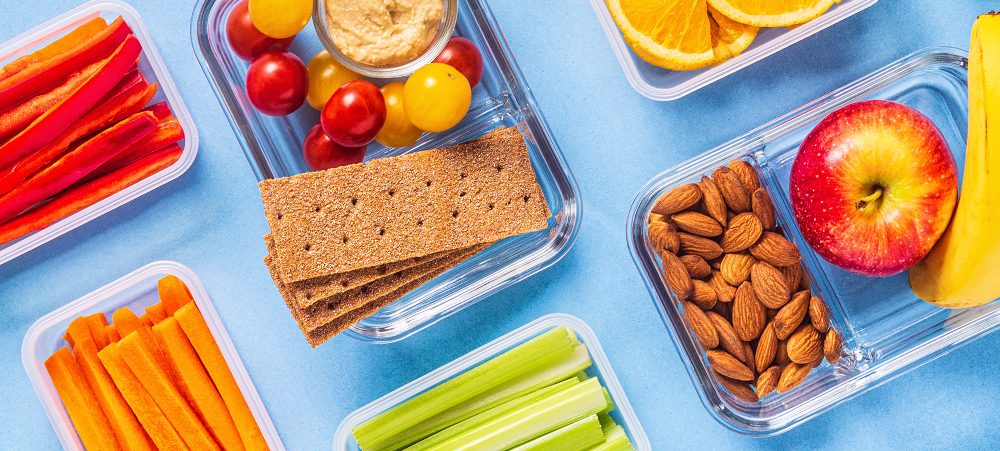
With a little careful planning – and an extra change of clothes! – heading off for a day out with your toddler in tow needn’t be daunting. Packing a variety of nutritious single-serve snacks and treats is essential to keep hunger at bay. These recipes are tasty and packed full of natural goodness – your little one will love them! FRUIT CRUNCHIES These treats are full of sweet fruit which means less cane sugar. We used Squish 100% Apple Fruit Puree in the recipe, but you can switch it for any flavour you choose, or use a combination of leftover Squish Purees from your fridge. All Squish 100% Fruit and Veg Purees have a screw-on lid, which means you can just pop the lid back on and save leftovers for later.  Ingredients: 230 g (1 cup) rolled oats 60 g (½ cup) desiccated coconut or ground almonds 125 g (¾ cup) cake flour 2.5 ml (½ tsp) baking powder 1 ml (¼ tsp) bicarbonate of soda 60 g (⅓ cup) dried apricots, finely chopped 65 g (¼ cup) butter 55 g (¼ cup) brown sugar 1 x 110 ml Squish 100% Apple Fruit Puree Method: Place the oats, coconut (or nuts) and cake flour into a bowl and stir to mix. Add the baking powder and bicarbonate of soda. Add the apricots. In a small saucepan melt the butter and the sugar together. Whisk in the Squish Puree and leave to cool. Add the apple mixture to the dry ingredients and stir well until evenly blended. Press the mixture into a baking pan that has been sprayed with non-stick spray and lined with baking paper. Bake in an oven that has been preheated to 160°C for 30 minutes or until golden brown. Remove from the oven and slice into bars in the pan. Leave to cool. TIP: Use a frozen Squish 100% Pressed Fruit Juice as an ‘ice pack’ in your cooler bag. Your little one can drink it later in the day once it has melted. CREAM CHEESE DIP AND CRUDITÉS This snack is so quick and easy to make and travels well. Plus, it provides a perfect combo of protein, dairy and healthy fruit and veg. Squish 100% Fruit and Veg Purees are made from quality fresh fruit and veg and are free from preservatives, colourants and flavouring, which means they’re just like homemade. And there is no added sugar or starch. Ingredients ½ cup plain cream cheese  ½ pouch of Squish 100% Fruit and Veg Puree  Fresh veggies or fruit, for dipping. Method Place cream cheese in a bowl and add your child’s favourite Squish 100% Fruit + Vegetable Puree. Stir well to blended. Serve with washed and cut fruit and vegetables. TIP: Switch the cream cheese for cottage cheese for a different taste and texture.  POTATO POPS These filling and delicious pops are mess-free and easy to serve. You can switch the regular potatoes for sweet potato if you like.  Ingredient 500 ml (2 cups) mashed potato 1 x 110 ml Squish 100% Veg Butternut + Carrot Puree  250 ml (1 cup) grated cheddar cheese 1 egg 295 ml (1 cup + 3 Tbsp) breadcrumbs salt and freshly cracked black pepper 30 ml (2 Tbsp) sunflower oil Method In a large bowl, combine the mash, Squish Puree and cheese. Add the egg and 45 ml (3 Tbsp) of breadcrumbs and mix well. Season to taste. Shape into balls and roll in breadcrumbs. Heat the oil in a non-stick frying pan. Fry the potato pops in batches for 3 to 4 minutes until golden brown. These can also be cooked on a baking tray in the oven at 180°C for 15 minutes.  TIP: These pops freeze well. Make a double batch and keep a stash in the freezer for lunchbox fillers.  For more delicious delicious toddler-friendly recipes, visit www.squish.co.za

6 Simple ways to live greener (and use more Earth-friendly products!)
Parenting Hub

6 Simple ways to live greener (and use more Earth-friendly products!)

Let’s face it – even if you’ve implemented greener habits in your home, we can all do more when it comes to protecting the environment. We can all do better at recycling, reusing, supporting local businesses, and making greener choices. Some may argue that in reality, we need major corporations, the public and private sectors as well as government on board for real, transformational change. And while that’s true, we as individuals are not powerless. When united with other like-minded individuals, we can create a movement that is powerful and impactful. While it’s important to support larger initiatives that work with government and corporations to initiate change on a large scale, it’s also important that each and every one of us do our bit to make a positive difference. And guess what? It’s much easier than you might think! What can we do in our day to day lives to make a positive change to the environment?  Recycle Glass, paper, cardboard and aluminium are all recyclable materials. Keep a separate bin in which you throw your empty glass bottles, tins, old newspapers and cardboard packaging, and drop it off at your local recycling depot. Many types of plastics are also recyclable. Check the back of plastic items like milk bottles, toiletry packaging and food packaging. If it has the recycling symbol on it (three arrows pointing towards each other in a triangular shape, also known as the “chasing arrows”), you can add it to your other recyclables.  Choose cruelty-free products Testing household and cosmetic products on animals is cruel and unnecessary. Be part of a positive change by actively supporting cruelty-free brands. Check product packaging for a cruelty-free stamp, Beauty Without Cruelty endorsement or PETA-approved logo. Because the demand has increased, more and more cosmetic companies are going cruelty-free. Whether it’s makeup, skincare or haircare, there is a variety of cruelty-free options available for you to try.   wet n wild prides themselves on offering fantastic quality, cruelty-free makeup products at affordable prices. Every item under the brand is 100% cruelty-free and they are endorsed by PETA. In fact, a lot of their products are vegan too. Shop wet n wild makeup at Clicks online here. For a cruelty-free haircare range rich in high quality botanical ingredients, try Hask. Formulated without nasties like sulphates, parabens, phthalates and gluten, Hask is a favourite among hairstylists on films and TV show sets! Shop Hask haircare at Clicks online here and at Dis-Chem online here.  Cruelty-free skincare on your mind? NIP+FAB offers regime-based skincare solutions and products of purpose to help you achieve your clearest, healthiest and most radiant skin yet. And best of all, they’re cruelty-free and vegan! Shop NIP+FAB skincare on Dis-Chem online here. Support local brands We will always have our favourite international brands that we love and support, but one of the best things you can do for the local economy and the environment, is to support locally-produced products too. Not only does this support local entrepreneurs and drive job creation, but it also means that your products travelled a shorter distance (thus using less fuel!). Local haircare brand  The Perfect Hair was created by a local female entrepreneur, and has grown from a small start-up to a big player in the natural haircare market. Not only are the products filled with nourishing natural ingredients and effective at treating and maintaining healthy hair, but they’re also affordable. Shop The Perfect Hair haircare products at selected Clicks, Spar, Checkers; Pick ‘n Pay & Foschini stores as well as Take-A-Lot. Say no to single use plastic Not all plastics are bad. Many are designed to last. We manufacture furniture, appliances, homeware and industrial products from plastic instead of valuable natural resources. Many types of plastics are recyclable. But one of the biggest challenges facing the planet is single use plastic. This is the type of plastic that gets thrown away after one use. Things like drinking straws, plastic packets and food packaging, that are only used once, or used for a very short period of time, is considered a single use plastic. It takes about 1000 years for plastic to decompose, and every year the world produces around 380 million metric tons of plastic. Limit your use of single use plastic whenever possible. Use a refillable water bottle and fill it at the tap instead of buying water, take fabric bags for shopping, avoid using straws and balloons and choose glass alternatives whenever possible. Embrace vegan options We can’t all follow vegan diets, but we can all do our part to consume less animal products. Start small by introducing “Meat-free Monday” in your home. Try plant-based food alternatives and introduce them into your eating plan gradually. Before you know it, you’ll be consuming a lot less animal products. Next up is cosmetic, personal care and household items – switch to vegan alternatives, it’s a lot simpler than you think. While not all brands are 100% vegan, a lot of them have vegan options within their ranges.  wet n wild has a wide variety of vegan makeup products within their ranges.   Umberto Giannini, an award-winning haircare brand from the UK offers transformational haircare products for every hair type, and you’re in luck, as the entire range is 100% vegan! Now you can get the hair of your dreams without the guilt. Shop Umberto Giannini haircare at Clicks online here. Say yes to sustainability When taking ingredients from nature, it’s important to give back to the environment, to ensure the supply runs strong. Sustainability is key when sourcing natural and organic material. Support brands that do their part to manufacture products containing ethically and sustainably sourced ingredients.  EcoTools manufacture exceptional makeup brushes and sponges from recycled and renewable materials like bamboo and eco-foam. They’re a sustainable alternative to the plastic makeup brushes and synthetic sponges we find on the market. Shop EcoTools at Clicks online here.  And what about botanical ingredients? Curls in Bloom, a local haircare brand, knows a thing or two about two about sustainable ingredient sourcing. They source their precious botanical ingredients from is a small pro-active farming community,

5 indications that your period is not ‘normal’
Parenting Hub

5 indications that your period is not ‘normal’

Every girl at a certain time in their life will start her journey into womanhood through a natural and necessary physical development known as menstruation. Sadly, despite this being a normal and natural phenomenon that every female experiences monthly until often in their 50s – menstruation and periods have a pretty negative stigma attached to them. This stigma often results in periods not being spoken about openly and a further unfortunate reality of many women being misinformed or simply clueless about what constitutes a ‘normal’ period. And herein lies the source of many common women’s reproductive health problems.  3Sixty Biomedicine’s CEO, Boitumelo Sebambo, shares these basic warning signs that every woman should look out for when having their menstrual cycle that could be an indication that their period is not ‘normal’ and they should seek advice from a medical practitioner.  A normal period lasts four to seven days, you can start getting worried if you have periods that occur less than 21 days or more than 35 days apart If you miss three or more periods in row If your menstrual flow is much heavier or lighter than usual Severe pain during your period or between periods that interferes with normal day to day activities Unusually heavy bleeding (soaking through a sanitary pad or tampon every hour for two to three hours) or passing large clots.  These abnormal period indicators can be caused by stress and underlying medical conditions such as Polycystic Ovary Syndrome (PCOS) that affects approximately 8 – 13% of women, and that can cause infertility in addition to hirsutism, acne, irregular periods and even hair loss. These conditions can be managed but diagnosis by a gynaecologist is important. Parents are  encouraged to take their teenage girls to visit the gynaecologist and be on the lookout for irregular symptoms in their cycles to avoid long-term effects on their health.  According to Sebambo, part of their mission this youth month is to help educate and empower women throughout their journey of womanhood so they can manage and overcome common women’s reproductive health conditions. “We believe that every woman’s journey matters. No matter what stage of life they are at, we want to help other South African women live quality lives uninhibited by common health issues that could be limiting to their success”. For more information about the Salome range and to be part of the conversation, visit www.salome-range.co.za. The full Salome range of products that helps to manage menstrual pain, heavy menstrual bleeding, premenstrual syndrome, infertility in women with Polycystic Ovary Syndrome (PCOS), and menopause are available to the public from pharmacies nationwide or online at Takealot.com and Salome’s website and can be reimbursed from medical aid savings. Facebook: Salome Range Twitter: SalomeRange Instagram: SalomeRange

How teachers can manage diversity in the classroom
Parenting Hub

How teachers can manage diversity in the classroom

South African teachers grapple with diversity each day as they implement methods and strategies to deliver the curriculum in ways that inspire all the young minds in their classrooms.  From schools to workplaces there are clear all-round benefits in engaging fulsomely with diversity, appreciating it and drawing on its systemic strengths. The concept of neurodiversity promotes the recognition that cognitive differences are to be understood and respected as accepted human variations and are not grounds for exclusion from general school life and classroom participation.  Neurodiversity in the classroom may include attention deficit hyperactivity disorder and the autistic spectrum, amongst others. As a result, teachers may need to optimally manage students experiencing specific learning disorders and presenting impairment in reading, written expression or mathematics.   However, when it comes to the classroom, diversity is always inherently present because children’s brains are growing and changing.   They follow unique learning paths and develop different styles of learning.  While we organise classes by fixed age groupings, learners demonstrate a notable variability in their capabilities which can impact on reading, motor skills, mental processing, word retrieval, telling the time, arithmetic, executive function, memory, estimating, social skills and more.  Teachers need classroom strategies that help them keep a diversity of learners altogether inspired to learn while keeping their curriculum delivery on track. This is the topic of an upcoming SACAP (The South African College of Applied Psychology) webinar – Diversity in the classroom on Saturday, 23 July 2022 from 09h00 to 10h30.  Free for teachers, SACAP’s professional panel will unpack the impact of diversity in the classroom and the role of educators in managing it.  Natalie Donaldson, SACAP’s Head of Teaching and Learning says, “Over the past two decades, we have seen South African classrooms become more and more diverse.  This is not just about the cultural backgrounds of the learners but also the ways that they engage and learn. In order to ensure a quality learning experience for all, educators need to find ways to meet the unique needs of all learners in their classrooms.” The webinar will also include a presentation by Educational Psychologist and SACAP educator, Juan-Pierre Moller who will deep-dive into the five areas of cognitive functioning and the diverse levels that a teacher can face in one class.  Juan-Pierre will include practical ways teachers can apply inclusive education in and outside of their classroom.  Other presenters include SACAP’s School Liaison Co-ordinator, Kiara Parsuram and Dr Diana De Sousa, Educational and Research Psychologist, and Chair of SACAP’s Research and Ethics Committee. Teachers are invited to join the conversation and discover new inclusive education strategies.  Registration is free here SACAP webinar – Diversity in the classroom: Date:  Saturday, 23 July 2022 Time: 09h00 to 10h30

Ameda Mya Joy- The NICU mom’s preferred breast pump
My Breastpump

Ameda Mya Joy- The NICU mom’s preferred breast pump

Producing enough breast milk for a baby in Neo Natal intensive Care (NICU) is a major concern for a mom. In fact, sending milk to you baby is sometimes the only practical thing and first thing you can do to help you baby. Some mothers send milk to their baby before they are able to see their baby. Later skin-to-skin and holding the baby starts to play an important role, but breastmilk is continually needed and in increasing amounts.   When a baby is born too soon it puts the mother’s breast milk making ability at a disadvantage. The disadvantage is that the mother may not herself be well after the delivery, she may need some time for recovery from surgery or illness. This time is also very stressful which can also affect her milk supply. However, a women’s body is so amazing, from the beginning of the pregnancy her body starts to prepare for making breast milk by increasing the number of ducts and glands in the breast. From the second trimester her body is already making colostrum, the first breast milk. When her baby is born too early the mother needs to start to stimulate her breasts and get her body making as much breast milk soon as possible.  She will need a breast pump that is strong enough to empty her breasts, be comfortable and convenient to use- this helps significantly with milk production. Stimulation of her breasts at this early stage is critical. The sooner after birth the best, ideally within 1 – 6 hours. This stimulation helps the body to release the hormones necessary to increase and build her milk supply.  In the beginning the baby does not require large amounts of breast milk, but this can quickly increase as the baby grows and breast milk needs increase.  In order for the mother to reach her full milk supply she will need to pump between 8 to 12 times a day. The goal is to stimulate and empty her breast, which signals to her body that she needs to continue to increase her milk supply. The sooner the mother can reach her full milk supply of about 1 litre a day the better for her breast milk supply and it will help her once her baby starts to latch directly on her breasts.  This is where the quality and strength of the breast pump is highlighted. The best pump to exclusively pump with is a hospital grade pump- so that a mom can increase her milk supply and maintain it.  In order for the pump to effectively increase the mothers milk supply it needs to be able to drain the breast, this can only be done efficiently with a breast pump that has a high suction capacity of above -180 mmHg and below -250 mmHg. These levels are only found in hospital grade breast pumps like the Ameda Mya Joy.  Most pumps that are bought online or off the shelf are not hospital grade pumps. These pumps need to be used in conjunction with a baby that has a effective latch, so that the breasts can be stimulated and drained correctly by the baby. This is because the baby is able to drain the breast when the pump is not able to. These pumps may also be the cause of a decreased supply of breast milk due to the incomplete draining of the breast.  Another important aspect for mothers that are pumping exclusively is to use a double breast pump. This means that you are able to stimulate and drain both breasts at the same time. Effectively cutting the mothers pumping time in half. The double expressing also results in increased release of hormones which helps to increase the milk supply. Dual phase pumping like that found in the Ameda Mya Joy is also essential in draining the breast well. Dual phase pumping has a stimulation and an expression phase which is able to mimic how a baby sucks. The stimulation phase is quick which helps with the let-down (release) of the milk in the breasts while the expression phase (longer higher suction) helps with draining deep within the breast. The combination of these phases being repeated about 3 to 4 times increase the number of let downs which effectively drains the breast.  The comfort of the breast pump is critical as no one wants to use breast pump that hurts you. An incorrect sized flange (the part that touches your breast), which is too small can cause friction and pain. If the flange is too big too much of the breast can be sucked into the flange and cause discomfort.  The Ameda Mya Joy has 7 different sized flanges. The different sized flanges helps the mother to be able to fit her pump comfortably which increased the amount of milk that is expressed from the mother. Another part of the comfort of a pump is how much noise it makes. The repetition of noise can be come very irritating and also prevent the mother from talking the phone or being able to multitask while she is pumping. The Ameda Mya Joy, the pump is very quiet and cannot be heard when a mother uses the phone. This makes it so easy to use the pump at your baby’s bedside, while watching T.V or at work without disturbing others. Portability and being able to use batteries is also so important with load shedding and being able to take your pump with you to the hospital. This way you never miss a pumping session. The Ameda Mya Joy even has a back clip that allows you to clip your pump to your belt and gives you the freedom to move around, while pumping.  All these benefits of the Ameda Mya Joy helps mothers to exclusively express and build their milk supply. These benefits are also available for mothers that are pumping at work as you can empty your breast quickly and quietly. This pump allows

Value of an international Education in a world where working borders have fallen
Boston Online High School

Value of an international Education in a world where working borders have fallen

International education has existed throughout time and in those times, people have sought education elsewhere in order to better their lives, equip themselves and contribute in their societies and communities. International education provides a comprehensive approach to education that intentionally prepares students to be active and engaged participants in an interconnected world. Having an education that transcends borders is essential in order to participate in a global economy.  An International qualification helps build understanding and respect among different people and enhances constructive leadership in the global community. International skills and education can help graduates to gain the traits required to move on to more senior positions or management roles in their chosen fields. However, it’s also as basic as being to communicate with global peers whether for work or studies, and to benefit from such interactions. One cannot underestimate the importance of global networking. Internationally or locally. International education provides students with opportunities to network with peers around the world. This often leads to collaboration on projects, which leads to gaining exposure to different cultures. Students that have an international education gain intercultural skills in the process. By enrolling in an education that gives you access to Universities locally and internationally, you’ll be exposed to a lot of things that you don’t see every day.  The benefits of an International education can be seen on several levels. One is simply achieving  international education and the benefit to pursue a further higher international education. When you’re done studying and you have an international education, opportunities open up for you and you can apply for work anywhere in the world. You get to have a global perspective of what happens in the workforce in other countries. You also get to have an international alumni network, and this could help with finding jobs internationally.  Ready to tackle the demands of tomorrow’s world? Cambridge International helps students become confident, responsible, reflective, innovative and engaged. The Cambridge Pathway allows students to build more than just a deep understanding of their subject. They importantly develop higher order thinking skills so that they can apply their skills and knowledge so they can be capable of shaping a better world for the future.  Over 1,400 universities worldwide recognise Cambridge qualifications. They are accepted by every UK university, by 600 universities in the US (including all the Ivy League universities) and in many other major student destinations, such as Canada, Australia, Singapore, South Africa, Germany and the Netherlands. Universities and employers recognise our qualifications as evidence of academic achievement. They understand that the demand of our curricula and the rigour of our assessments give students what they need to flourish in higher education. Look to a global future with Cambridge.

Neurodiversity: How to support a Dyslexic child?
The Bridge Assisted Learning School

Neurodiversity: How to support a Dyslexic child?

Children each learn and develop at their own pace, and reading is no different from any other skill. However, for some children they find it challenging at one point or another. They battle to build, recognise and manipulate the sounds in language. They also have difficulty in decoding words.  Often children battle with barriers to learning, which may include dyslexia.  Studies show that dyslexic children face many difficulties in their academic and social surroundings. Also, they suffer from a low self-esteem because of the lack of accomplishments, particularly in academics, which may affect their long-term life opportunities. Therefore, parents’ awareness about dyslexia and the impact it has on their child is imperative in ensuring support as well as a sustainable development of their child. At the Bridge Assisted Learning school we aim to work with our parents to create environments both at home and school that will be conducive to learning. Much can be done to alleviate this by utilising the following interventions, both at school and at home, in order to develop processes to support a comfortable confidence and self-esteem within children battling with dyslexia. These include:  Explicit direct instruction in phonological and phonemic skills. The intervention also needs to include ‘The Big 6 of Reading’: oral language, phonological awareness, phonics, vocabulary, fluency and comprehension. Font style: The most commonly referred to fonts for people with dyslexia are: Comic Sans, Verdana, or Arial. It does not matter which font is used, it is more about using the particular font exclusively, so that the person becomes accustomed to the font used. A specific font developed for dyslexic people can be found on the Open Dyslexic website (www.OpenDyslexic.org).  Open Dyslexic is a free font to use for the children who are battling with dyslexia. The letters are spaced out and wider in some instances. Also, when you use any font for a child with dyslexia, always justify left: it spaces the words out evenly and makes it easier for the child to read. Time constraints: Always provide extra time for students with dyslexia, especially for reading tasks. Always allow additional time in test or exam situations. Lowering the stress when learning is taking place: Create a learning culture where making mistakes lead to learning. Provide adequate time for thinking. Don’t place too much stress on children to read aloud in front of other people. Children with dyslexia should be aligned with an empathic teacher mentor. Building reliance and self-esteem: Dyslexia impacts on the social and emotional well-being of the child. Use terms of encouragement when talking to your child. Parent activities: Try to nurture children’s love for stories. Encourage them to collect books and build their own library and practice reading their favourites with them. Also invest in audio books that you can listen to while driving to school that gives phonetic sounds to practice. Showing them that you care and that you are just as invested to help them succeed.  Children don’t outgrow dyslexia, and their troubles with reading can affect how they behave in school. However, with the right teaching and support, children can overcome reading challenges and learn coping mechanisms to make them thrive in school and throughout their life.  By: Dr Greg Pienaar, Principal at The Bridge Assisted Learning School

How to choose an online high school
Parenting Hub

How to choose an online high school

South Africa has seen a proliferation of online high schools over the past two years – but not all of them offer the same standard of learning. For parents of ambitious students, who have their sights set on top universities or international jobs, choosing the right online school is a critical step in their child’s academic and work career. From class size and participation, to extracurriculars, and subject and curriculum choices, there are a number of factors to consider when making the leap to digital schooling.  “The key to choosing an online high school is to think about what you want for your child when it comes to their education. If studying at a top university is one of their goals, then you’ll need to find a high-engagement school that offers international curricula and prepares them for the academic rigour of those institutions,” says Executive Principal of Crimson Global Academy (CGA), John Morris.  Morris is the former head of Auckland Grammar School, founding Chairman of the Association of Cambridge schools in New Zealand, former goalkeeper for the New Zealand national football team, and an appointed Officer of the New Zealand Order of Merit for services to education. With over 40 years of experience in education, he heads up the international team of CGA educators, based across five different countries. “Before you finalise your decision, do your research to find out what your child’s lessons are like; how experienced their teachers are; what the school’s results are, and even what extracurricular opportunities are available to your child to ensure that they are actively engaged in their passions and interests, both inside, and outside the classroom,” says Morris.  Students from more than 30 different countries, including South Africa, are currently enrolled at CGA. The online high school is built on Crimson Education’s vision of empowering students to unlock their potential, through personalised education to support students getting into top ranked universities abroad. CGA is registered to offer International GCSEs, International A-Levels, Advanced Placement (AP), Cambridge Assessment, International Examinations (CIE), and the United States High School Diploma. As an international school, the next CGA classes begin 5 September 2022. Morris advises parents to consider the following when deciding whether an online high school gets a passing grade: Live versus pre-recorded lessons: Live lessons offer more opportunities for classroom-based discussion, which improves student engagement and allows them to ask questions, make comments and create meaningful personal connections.  Class size: Smaller class sizes help students feel more comfortable to ask for help and ensure they receive individualised support. Small classes foster greater interaction between students and teachers.  International curriculum: Graduating with globally recognised qualifications improves your child’s options when it comes to applying to university or finding work internationally.  Leading technology: Online learning works best when it’s facilitated via purpose-built platforms that are designed with learning principles in mind. Avoid schools that simply use existing video conferencing technologies for classes.  Experienced teachers: Teaching staff should be trained to provide instructions virtually, and have extensive experience in teaching both on and offline. International online high schools provide access to subject specialists from all around the world.   Extracurriculars: Teacher-led clubs, group activities, and leadership positions are critical to a full high school experience, and a well-rounded university application.  Crimson Global Academy is a fully registered online high school delivering live, real-time teaching to students in their own homes. By providing internationally recognised, academically rigorous qualifications, including the International GCSE and A-Levels, the school aims to give ambitious local students the opportunity to achieve their full potential. For more information, visit www.cga.school/za or email [email protected].

How to brighten blonde hair
Parenting Hub

How to brighten blonde hair

Whether you’ve gone platinum, golden, ash or honey blonde, you’re bound to love the effects of your fresh new colour. But while newly-coloured blonde hair looks great, it requires a fair bit of maintenance and TLC to keep it looking that way.  Blonde hair tends to lose its shine and is prone to brassiness and colour fade. The truth is that even when you’re diligent about your blonde hair care routine, dullness and brassiness (when shades of silver or platinum take on a yellowish tinge) can creep in and steal your shine. This is because blonde hair is vulnerable to sun damage, the effects of hard water (tap water that contains colour-stripping minerals like copper and chlorine), pollution and using the wrong hair care products. But while blonde hair may require a bit of maintenance, the reward is truly worth it. Brightening your blonde need not be difficult or stressful – follow these simple tips and product suggestions to enjoy your best blonde yet. Go sulphate-free Sulphates are present in the majority of soaps, shampoos and household cleaning agents. They are responsible for that foamy lather we’ve all come to love, and they are extremely effective at removing dirt and impurities. However, this also makes them very drying on the skin and hair, as they strip moisture along with dirt. This can lead to dehydration, damage and breakage, plus, using sulphate products on coloured hair may also strip the colour. To preserve blonde hair’s moisture, colour and strength, it is essential to go sulphate-free.   Try: Marc Anthony Complete Color CarePurple Shampoo (R179.95) and Conditioner (R179.95) for Blondes & Highlights. Formulated with violet pigments, this duo helps neutralise unwanted brassy tones, while nourishing and providing a boost of moisture to your blonde locks. Embrace purple Purple and violet shampoos are a great choice for blonde hair, as they can neutralise brassy and yellow tones in the hair by colour-correcting them. How? It all comes down to colour science. Purple and yellow are opposite one another on the colour wheel, which means they have the ability to cancel each other out. You know how you’d use a green concealer to cancel out redness on the skin? This essentially works the same way. Try: Pro:Voke Brightening Shampoo Touch of Silver (R130.00) neutralises brassiness and brightens colour in coloured, natural or highlighted platinum, blonde, white, or grey hair with a toning violet pigment. Follow with Pro:Voke Colour Care Conditioner Touch Of Silver (R130.00). Its creamy, protective formula strengthens and helps repair damaged hair by infusing extra moisture for an improved smooth and silky texture. It also contains optical brighteners to instantly boost shine and retain rich hair colour. Correct brassiness As with all things, prevention is better than cure, however, if you are struggling with brassiness, it’s not too late. Invest in colour-correcting products to remove unwanted brassy tones and restore your original colour.  Try: CreightonsSunshine Blonde Silver Intense Brightening Shampoo (R89.95) And Sunshine Blonde Tone Correcting Conditioner (R99.95). These products help correct unwanted brassy tones brought on by sun exposure. Formulated withviolet pigments and UV filters, the shampoo helps brighten your hair from the very first wash.  Rinse with lukewarm water Avoid the temptation to use hot water when shampooing and conditioning your hair. Not only is hot water drying on your skin (think an uncomfortable and flaky scalp!) but it also opens the hair’s cuticles which can result in faster colour fade. Cold water seals the cuticle rather than opening it, which helps preserve colour and increases shine.  Hydrate All hair colours need added hydration in winter, but for blonde hair, it is particularly important to use hydrating or moisturising hair care products. The process of lightening one’s hair can be very drying and sometimes even damaging. That’s why it is essential to replenish moisture with conditioner and hair masks or treatments. Use a generous amount of a nourishing conditioner for blonde hair after every shampoo, and apply a hair mask to strengthen blonde hair at least once a week. Try: Creightons Sunshine Blonde Brightening Silver Treatment Masque (R74.95). Quick and easy to use, this product is formulated with nourishing argan oil and violet pigments to protect and brighten blonde hair, while also repairing damaged hair.  Protect against breakage Because blonde hair is prone to dryness and damage, it is also at risk of breakage. While taking all the necessary steps to preserve your colour, don’t forget to also pay some attention to increasing your hair’s strength and resilience. Gently pat your hair dry with a towel rather than rubbing it dry, as the friction can damage wet strands. Wait for your hair to dry before you brush it as wet hair is vulnerable and can snap easily.  Apply a nourishing hair mask like Marc Anthony Complete Color CareNourishing Hair Mask (R189.95). This mask reduces colour fade while locking in nutrients and protecting against environmental damage. It is rich in fatty acids and castor oil which helps keep your scalp hydrated and nourished, resulting in stronger, shinier, and healthier hair. Follow these simple steps to keep your blonde hair in its best shape yet. 

Nilotiqa welcomes a fresh new look
Parenting Hub

Nilotiqa welcomes a fresh new look

Nilotiqa, a proudly South African hair care brand known for its nourishing, plant-based formulas, has a fresh new look. The local favourite, which celebrates natural hair in all its forms, aims to keep hair as healthy as possible, and offers products suitable for natural hair, hair in protective styles and hair that is undergoing transition.  What can you expect from the new packaging? Inspired by the incredible ingredients sourced in South Africa and Africa, Nilotiqa utilises rich African colours of orange, brown, gold and green in the new packaging. This unique colour combination is bold and unlike anything else you might find on the shelves, making it instantly recognizable. To celebrate the use of African ingredients, the new packaging features the words Shea & Coco written in a free-flowing font, which alludes to the natural ingredients in the products. The products now also feature certification logos on the back, not only to reinforce their efficacy-driven ethos and science-driven claims, but also to offer consumers transparency. The luxurious new packaging is true to the luxurious nature of the products. Keep an eye out for the new-look range on shelves from mid June 2022.  Nilotiqa founder and all-round natural hair care enthusiast, Thokozile Mangwiro, gives us some insight into the brand’s journey thus far: You have an impressive resume, and plenty of corporate experience. What made you decide to leave the corporate world to create your own hair care brand? “Creating Nilotiqa was more of a necessity than just starting a brand. I had struggled with my natural hair, which I started growing from high school, for 14/15 years. While working in corporate, I started looking for solutions for my very dry hair. There were no hair products that were made for my type of hair; products that could nourish and really moisturise my hair.  Noticing that there was a huge gap in the market, I met up with a formulator to start formulating products that would ‘work’ on my hair. This process started in 2014 and in 2016 I launched beautiful products that were so moisturising and really worked! I knew that I had to get these products into as many hands that struggled with dry hair as I did.” Can you tell us a little bit about the process of creating the Nilotiqa brand? “I started researching ingredients that would moisturise my hair, when I quickly realised that raw ingredients were not penetrating my hair strands. I worked with a formulator for about two years to create products that felt and smelled good. I then sourced the packaging (travelling all over JHB to find bottles and lids) and created the label designs myself and found a labelling company to print the labels. I eventually launched Nilotiqa through a Shopify website and registered with a delivery service.” How far into the journey did your partnership with Sunpac come about? “We partnered up with Sunpac a few months before Nilotiqa turned 6. We had been in the retail space for 4 years. The back story to this partnership is that we met Sunpac a year before we partnered up. I would say, the stars had not quiet aligned yet. When we met again a year later, it was definitely perfect timing and the perfect fit for both businesses.” Who is the typical Nilotiqa customer?  “I typically split the Nilotiqa customer into two: a. A busy working mom who loves to give her hair all the TLC, but does not have time to take the whole day for hair wash day. She wants products that work fairly quickly and make her feel amazing without too much effort. b. A very educated consumer, who wants clean ingredients in her products. They do not want chemicals in their products and are aware of #greenbeauty as being part of their regimen.” What sets Nilotiqa apart from other hair care brands? “As black women with natural hair, we’ve all come face to face with the uncomfortable and often embarrassing question of ‘So when will you do your hair?’ Because our hair is not considered ‘done’ when it is in its natural state. This is a perception that has formed a huge part of our relationship with our hair. Where most products aimed at black women speak to how to curl and style your hair, and offer you many ways to alter the structure of your hair, I wanted to create a product that was specifically suited for my type of hair; not to change it but to keep it in its healthiest form. Through our research we found that African hair is characterized by kinky curls and grows closer to the scalp. It is the structure of the hair that makes it challenging for the hair’s natural oils to travel down the hair strands to its tips. Nilotiqa is the solution to maintaining hair’s natural moisture.  Nilotiqa isn’t selling black women dreams about how it’ll change their hair to something so different they won’t recognize themselves. It is offering a solution which allows them a way to retain the moisture that their hair requires for healthy maintenance and growth, which is often tarnished by the use of inorganic products and many years of use of harmful products aimed at altering the form of our already beautiful hair. Whether you wear a weave or braids, Nilotiqa is aimed at keeping what is beneath, which is your natural hair, in its healthiest state.” What have been some of your biggest challenges and your biggest successes? “Biggest successes: First purchase of a Nilotiqa product online Launching into Clicks in 2018 Partnering with Sunpac Biggest challenges: A lack of resources (staff and funds) and knowledge of how retail works, can kill your business. You could be spending money ineffectively and watch your business fall apart. Surrounding yourselves with people that know better than you is a game changer. Trying to run the business with a small team proved to be more challenging that ever expected. Expanding to the other retail houses was

Did you know?
Panado®

Did you know?

Pain can be hard for a child to describe, especially if your tot’s vocab is limited to “mama”, “dada”, “woof”, and “nana”. However, fever and pain occur together frequently in childhood conditions.1 Panado® Paediatric Syrup, Peppermint 5 ml Sachets, contain paracetamol, an effective option for treatment of pain and fever in children.2  The Panado® Paediatric Syrup, Peppermint 5 ml Sachets, are great for on-the-go parents and super convenient for when you’re travelling! Make pain and fever care easy by shopping for Panado products from independent pharmacies and selected Clicks, Dis-Chem, and Pick ‘n Pay stores. For more information, visit https://panado.co.za/ and join the conversations onFacebook. #Panado #ADoseOfCare 2022042510198726 References: 1. Clinch J, Dale S. Managing childhood fever and pain – the comfort loop. Child Adol Psych Mental Health 2007;1:7. doi:10.1186/1753-2000-1-7. [Cited 2022 March 29]; Available from : https://www.ncbi.nlm.nih.gov/pmc/articles/PMC1971248/ 2. De Martino M, Chiarugi A. Recent advances in paediatric use of oral paracetamol in fever and pain management. Pain Ther 2015;4:149–168. DOI 10.1007/s40122-015-0040-z. [Cited 2022 March 29]; Available from : https://www.ncbi.nlm.nih.gov/pmc/articles/PMC1971248/

Internet safety tips for kids of all ages
Bethwel Opil

Internet safety tips for kids of all ages

During school holidays your children’s social media or interactive game time online may kick up a notch. As a parent, you want to make sure that they have a safe experience. Though the Internet can be a wonderful place to play and socialise, parents need to be aware of what their children see and hear on the Internet, who they meet, and what they share about themselves. Every age group – from toddlers to teens – comes with its own parental concerns. But there are some general guidelines that are good to keep in mind for children of all ages. Keep usernames and passwords safe Many of the websites your kids use require usernames and passwords. Make sure they know not to give this information to anyone – even their friends. Teach them to keep usernames and passwords private and change their passwords if you suspect they’ve been compromised. In fact, it’s best to change passwords intermittently as a matter of online hygiene. Every 3-6 months, or if accounts or platforms report hacking or data breaches, is a good habit for children to get into.  Don’t give out personal information Children should never tell anyone their full real name, address, neighbourhood, or phone number online. They should never share any information that could lead a predator to find them. Even small details like their school’s name or sports team are enough to give away their identity.  Be discerning on social media The Internet is vast, yes. But embarrassing pictures, rude comments, and personal information can leave a lasting, even permanent, mark. Remind your children that anything they post online immediately becomes public property and anyone can view it. Check age requirements Many apps and websites have age restrictions to set up accounts, browse, or join them. But they seldom actually have age verification in place. For instance, Facebook and Snapchat only allow users 13 and up, but signing up is as simple as filling in a false age. Explain location sharing Most apps and websites these days have some kind of geo-tagging or location-sharing feature. Children need to know the dangers of sharing their location – from online predators who can find them to identity theft – so they don’t agree to it or unknowingly click the pop-up boxes that allow it.  Create a list of Internet rules Sit with your children and make a list of Internet rules together. You can introduce them to kid- and teen-friendly sites, talk about why Internet rules are important, and encourage them to tell you if they feel uncomfortable or threatened by anything they find on the Internet. Set boundaries but be realistic. Use the golden rule online, too Teach your children that the golden rule applies just as much online as it does face-to-face. Children should be kind and polite to people online and should say nothing over text they wouldn’t say to someone’s face, even if they are posting anonymously.  Explain fake ads Talk to your children about Adware and similar scams they might encounter on the Internet. Often, these look like real offers to entice children to download a fake app, sign up for a sweepstake, or offer personal information in exchange for free products. They can be links to share with friends or post on social networks. If children know that these scams exist, they’ll be less likely to fall for them. Educate children about meeting strangers in person Children should never meet up with strangers they met online unless you are there to supervise the meeting. Teach them not to interact with people they don’t know offline. Online predators or cyberbullies can disguise themselves so your children might not know they are talking to someone who found them online. Monitor Internet history For all ages, it’s a good idea to spot-check your browser history to get a sense of what sites your children are visiting. Be completely transparent about checking their usage so they don’t feel spied on. Enable history tracking and check it across all Internet-enabled devices. If you come across any untoward  sites, ask your children about them.  Set parental controls Set up and review parental controls on all your devices at age-appropriate levels to protect children from accessing inappropriate content online. You can also use them to set usage times, monitor activity, and prevent the sharing of personal information.  Run antivirus program Run antivirus software on all your devices to protect them from incoming threats. It can also seek out, destroy, and warn of threats to the system. Antivirus software keeps up with the latest threats and stays on top of new viruses, which come out all the time. Use a trusted cybersecurity solution Cybersecurity tools, like Kaspersky Safe Kids, help you safeguard your children’s activities, monitor their behaviour and protect them when they are online. Choose one you can use on all your child’s devices, and that is flexible enough to change with them as their needs change and as they get older.  Most importantly, talk with your children about how to use the Internet safely, the tools you use to protect them, and how and why you monitor their online activities.  To support parents and guardians in keeping their children safe online, Kaspersky and Parenting Hub are giving 5 lucky readers a chance to win a license code to Kaspersky Safe Kids – a parental control software that helps to safeguard children’s activities online. You can enter this amazing give-away when you click here By Bethwel Opil, Enterprise Sales Manager at Kaspersky in Africa

Neurodiversity – We don’t all think the same
Wingu Academy

Neurodiversity – We don’t all think the same

In the same way that every person has their own unique set of fingerprints, each person has a unique brain. We all process information and think about things differently. If we didn’t, we’d be robots who all acted the same and were interested in the same things. What a boring world that would be! You may have read the book or watched the movie, Divergent (if you haven’t, spoiler alert!). In the story, the society is split into five factions. The people in each faction share common traits. Most of the people in the society happily fall into one of the five factions and fit into the system. Although, not everyone fits into these rigid categories, they are called the Divergents. Initially, the Divergents are hounded or forced to fit into one of the factions. However, in end the Divergents are actually necessary to save the society. Similarly, many people in society fall into our factions/norms, in terms of how they think, process information and behave somewhat uniformly. They are considered to be neurotypical. People who don’t fit these factions/norms are considered to be neurodiverse. As a disclaimer, the story is a dystopian romance, so we shouldn’t take the metaphor too seriously. What is neurodiversity? Neurodiversity is the idea that certain differences in brain function are not disorders (as previously considered) but actually normal variations in human development. Neurodiversity is an umbrella term for a range of differences in the way some people think and process information. These differences may occur in their social interactions, attention, mood, and/or the way they learn. Neurodiverse people may identify with labels such as ADHD, Autism, Dyslexia, Dyscalculia, and Tourette’s syndrome, among others. Biodiversity is crucial for the health of the natural world, in the same way, neurodiversity is essential for a healthy, functional human society. It is not surprising then that an estimated one in five people may be neurodiverse. Despite this, many neurodiverse people may experience negativity or stigma. Students who are neurodiverse may struggle in the classroom and be labelled as lazy or stupid. This shouldn’t serve as a prediction of lifetime failure though. Being neurodiverse doesn’t mean you can’t succeed and achieve your dreams. There are many famous and successful neurodiverse people, such as Albert Einstein, Billie Eilish, Emma Watson, Simone Biles, Richard Branson, Daniel Radcliff, Steven Spielberg and Steve Jobs, to name a few. In fact, Richard Branson has many positive things to say about dyslexia. In one statement he said: “Don’t be discouraged. Dyslexia is just a different way of seeing the world, a different way of processing information, and a different way of coming up with great ideas. And many of you will discover that it’s actually a superpower that can take you to great heights”. Neurodiverse people may face struggles, but remember it’s not about comparing yourself to others, it’s about being proud of what makes you unique. Strengths of someone who is neurodiverse may include problem-solving, vivid imagination, excellent memory, creativity, and an eye for detail. There are many advantages to being neurodiverse and workplaces that welcome such people are often more successful. This being said, we must remember that every person is an individual, thus we should be careful not to stereotype. Just because you know one person who is neurodiverse, doesn’t mean you know or understand everyone else. Remember to ask someone about themselves and be willing to learn about who they are and how they function, don’t assume you already know. Things to be mindful of Here are some things to be mindful of when engaging with someone who is neurodiverse (or just anyone really): Respect and communicate boundaries. If someone gets overwhelmed, let them leave the situation. If someone tells you they don’t like/want something, stop e.g. touching their fidget toys Realise that behaviour isn’t about you. For example, if someone is struggling to make eye contact or is silent, this may be related to what’s happening internally with them and has nothing to do with you. Don’t fuss over tics or stimming. Tics are sudden and repetitive twitches, movements, or sounds, which are involuntary and uncontrollable. Stimming is repetitive movements or sounds performed to cope with emotions. We all stim (e.g. twisting hair, tapping feet and hands, etc.), but this may be more pronounced in someone who is neurodiverse. Drawing attention to tics or stimming can increase the movements and make the individual feel embarrassed. Every day is different. We all experience mood and energy changes daily. Therefore, we should be mindful that things that were ok yesterday may not be so today. Don’t make fun of someone for being different. Be polite, respectful and patient. Making fun of someone won’t get you ahead in life. Treat others as you would like to be treated Key take away Everyone is different; our uniqueness is important and valuable. Some people have more notable differences, and that’s ok, in fact it can be a great asset. We humans often don’t like things we don’t understand or are different, leading us to judge it. However, just because something is different or unknown to us, that doesn’t make it wrong. Let’s challenge this human instinct and strive to approach people with an open-mind and try to understand things from their perspective.  Imagine if we could create a world where we are all free to become the best versions of ourselves. To aid us in achieving this we should heed the words of Gandhi: “if you want to change the world, start with yourself”. If we want a happier and more inclusive society, change has to start with us and the way we choose to interact and learn from those around us. At Wingu Academy we realise that schooling isn’t a one-size-fits-all solution.  For this reason we have developed our own unique,  research-based teaching methodology to accommodate the every student’s different learning style.  Coupled with this approach, we also offer a curriculum enriched with subjects that equip our students with 4IR, soft and life skills to prepare them for

Brace yourself for Minions: Rise of Gru
Parenting Hub

Brace yourself for Minions: Rise of Gru

The untold story of one 12-year-old’s dream to become the world’s greatest supervillain. In the heart of the 1970s, amid a flurry of feathered hair and flared jeans, Gru is growing up in the suburbs. A fanboy of a supervillain supergroup known as the Vicious 6, Gru hatches a plan to become evil enough to join them. Luckily, he gets some mayhem-making backup from his loyal followers, the Minions. Together, Kevin, Stuart, Bob, and Otto—a new Minion sporting braces and a desperate need to please—deploy their skills as they and Gru build their first lair, experiment with their first weapons and pull off their first missions. When the Vicious 6 oust their leader, legendary fighter Wild Knuckles, Gru interviews to become their newest member. It doesn’t go well (to say the least), and only gets worse after Gru outsmarts them and suddenly finds himself the mortal enemy of the apex of evil. On the run, Gru will turn to an unlikely source for guidance, Wild Knuckles himself, and discover that even bad guys need a little help from their friends. Based on (characters) by Cinco Paul. Genre: Animated, Comedy, Children’s Cast: Steve CarellTaraji P. Henson, Michelle Yeoh, RZA, Jean-Claude Van Damme, Lucy Lawless, Dolph Lundgren, Danny Trejo, Russell Brand, Julie Andrews, Alan Arkin Directed by: Kyle Balda Music: Heitor Pereira Produced by: Chris Meledandri, Janet Healy, Chris Renaud Language: English Running time: 88 (1h28′) Age restriction: PG V

DC League of Super-Pets
Parenting Hub

DC League of Super-Pets

All pets have secrets. Theirs are super. Krypto the Super-Dog and Superman are inseparable best friends, sharing the same superpowers and fighting crime in Metropolis side by side. When Superman and the rest of the Justice League are kidnapped, Krypto must convince a rag-tag shelter pack—Ace the hound, PB the potbellied pig, Merton the turtle, and Chip the squirrel—to master their own newfound powers and help him rescue the superheroes. Based on ‘Superman’ (characters) by Jerry Siegel, Joe Schuster. Genre: Superhero, Animated, Action, Comedy, Family Cast: Dwayne Johnson, Kevin Hart, Kate McKinnon, John Krasinski, Vanessa Bayer, Natasha Lyonne, Diego Luna, Thomas Middleditch, Ben Schwartz, Keanu Reeves Directed by: Jared Stern Screenplay: Jared Stern, John Whittington Music: Steve Jablonsky Produced by: Patricia Hicks, Dwayne Johnson, Dany Garcia, Jared Stern Language: English Running time: 106 (1h46′) Age restriction: PG L V

Prevent leakage by applying your baby’s nappy correctly
Exigo Care

Prevent leakage by applying your baby’s nappy correctly

Hi everyone, I’m Jessica from Growing Hearts. Today’s vlog is going to be about finding the right nappy size for your baby. It’s something that moms always struggle with because babies change so much. Their weight changes, their height and length changes and with that their body changes. So, it’s a good thing to talk about because if a nappy isn’t sized correctly you are going to struggle with leaks.

Value of flavoured milk for children – choose smartly!
RediscoverDairy

Value of flavoured milk for children – choose smartly!

Think about the role of your milk children’s diet. Are they getting enough of the essential nutrients needed to grow and stay healthy? When choosing a drink for your child, you should consider both hydration and nutrient content. A sweetened drink that provides nine essential nutrients, like flavoured milk, is a wiser option than a high sugar, low nutrient beverage. Flavoured milk is a tasty, nutrient­ rich choice for a growing child! Did you know?  Flavoured milk contains the same essential nutrients as unflavoured milk, including calcium, potassium, phosphorus, protein, vitamins A and B12, riboflavin and niacin. Flavoured milk is liked by children and helps them achieve the requirement of three dairy servings daily.  Studies have shown that consuming low-fat or fat-free flavoured milk can boost adolescents’ intake of nutrients without adding unnecessary energy to their diets. Flavoured milk helps meet nutrient needs: Maretha Vermaak, registered dietitian at Rediscover Dairy, says: “During adolescence, children often decrease their milk consumption while increasing their intake of soft drinks. Scientific evidence shows that bone fracture risk is three times higher in girls who drink carbonated beverages and seven times greater in physically active girls who consume both carbonated and non­carbonated drinks.”  Some parents are reluctant to offer children flavoured milk because it is sweetened.  However, according to the American Dietetic Association increasing the palatability of nutrient­dense foods and beverages by sweetening can promote diet healthfulness. Flavouring and sweetening milk does not take away its nutrients.  When you compare a glass of low-fat milk to that of flavoured milk, the nutrients are still present and the differences between the two are not significant: Comparison of low-fat flavoured and unflavoured milk Facts Flavoured milk is rich in nutrients, meaning it contains many nutrients in relation to its energy content. Although it is sweetened, it does not add empty kilojoules to the diet. Milk – flavoured or unflavoured, full-cream, low-fat or fat-free, provides three of the five nutrients that fall short in children’s diets, namely calcium, potassium and magnesium. Studies showed people who drank flavoured milk had higher calcium and nutrient intakes compared with those who did not drink flavoured milk. Flavoured milk can increase children’s overall milk consumption. The protein in flavoured milk increases satiety, contributing to the feeling of fullness. Research has shown flavoured milk to be a good rehydration and recovery drink after sport. For more information visit www.rediscoverdairy.co.za or follow Rediscover Dairy on Instagram (rediscoverdairy) or Facebook (RediscoverDAIRY)

When the ENT comes to the rescue
Good Night Baby

When the ENT comes to the rescue

Sleep is so essential for our children’s overall development and health, but we cannot address sleep habits if there are medical reasons for a child’s restless nights.  There are a few ear, nose and throat (ENT) related conditions that can contribute to poor sleeping – let’s look at the two most common causes amongst infants and toddlers: Adenoid hypertrophy or enlargement Any form of a blocked nose causes difficult, uncomfortable and noisy breathing while sleeping.  The most common cause for a chronically blocked nose that an ENT specialist diagnoses are enlarged tonsils and adenoids. Adenoids are lymphoid glands that form part of your immune system.  They are located behind the nasal cavity where they trap viruses and bacteria or allergens that try to enter and infect the upper respiratory tract.  When they are constantly exposed to viruses or bacteria (for example at creche or school) or even to allergies, they enlarge and block the passage where air needs to pass from the nose to the airway.   Adenoids are often enlarged in children, but shrink as we grow older and our immunity improves.  Adenoid hypertrophy causes snoring, a blocked and runny nose, nasal voice, mouth breathing and postnasal drip with night-time wet coughs. Severe cases can even lead to obstructive sleep apnoea where your child stops breathing for a few seconds at a time.  Your child will snore loudly and wake sporadically during the night due to these pauses in breathing and will not be able to enter the deeper part of sleep. In the long run this is detrimental to their sleep and overall health as essentially, they are not getting enough oxygen to their bodies and their hearts and lungs must work extra hard.  It can lead to failure to thrive and poor growth, behavioral problems, poor school performance due to lack of concentration, enuresis (bed wetting) and even heart failure.   Middle ear infection or effusion The middle ear has a natural drainage pathway to the back of the nose called the eustachian tube.  Any fluid build-up in the ear from inflammation or an ear infection is supposed to drain naturally via the eustachian tube.  When the adenoids are enlarged and block the eustachian tube’s opening, this cannot occur and fluid builds up and becomes stagnant in the middle ear.  This leads to recurrent infections or chronic fluid build-up called an effusion.   You know the feeling you get when your ears need to pop when landing in an aeroplane?  That is the pain a child has almost constantly when there is pressure build up in their middle ear, especially when lying down and there is increased blood flow to the head.  That is enough to keep anyone awake at night.  Not only is it painful for children, but it can cause difficulty in hearing and eventually delay their speech development because of the muffled sounds.  In severe cases it can even affect their balance.  Some mothers notice how their infants walk differently when their ears are acting up. These conditions are very common in infants from around 6-8months of age into toddlerhood and if the above symptoms are present, it’s best you visit an ENT specialist.  There are certain medications that can be prescribed if caught early to try and reverse the inflammatory process and essentially shrink the adenoids, but often it requires surgery.  The surgery is a low-risk, quick procedure where the adenoids are removed through the mouth (often combined with a tonsillectomy) and grommets can be inserted into the eardrums to drain the fluid. Once these medical conditions have been resolved there will be a marked improvement in their sleep and a child that already had well-stablished sleep habits, will often return to sleeping well once they are feeling better. What can you expect from their sleep once they have been treated? Waking early: Suffering from any of these conditions affect both the quality and quantity of your child’s sleep. Some children become so accustomed to poor quality sleep that once they finally get helped, they find themselves waking up at the crack of dawn refreshed and ready for the day. They’ve never slept so soundly before, and it can take your child a while to adjust to sleeping more appropriate hours. White noise: Once ears are cleared of fluid, some children become hyper-sensitive to the white noise in their room. You can temporarily reduce the volume and remember to never exceed 50 dB once you turn the volume back to normal. Discomfort: This will need to be addressed and you should offer your child comfort and reassurance. Once they are feeling better go back to your plan and ensure that they don’t become reliant again on any unsustainable sleep associations. Short term-use is often not the problem, it is allowing the bad habits to creep back in permanently that becomes an issue. Once your child is feeling better and has recovered, go back to their normal routine. Often sleep concerns after a procedure are easily resolvable and your sleep-trained child will undoubtedly surprise you with how well they bounce back. If your child slept poorly prior to the procedure, look at contacting a sleep consultant for some assistance. Quality sleep is vital to your child’s health and well-being and they certainly deserve a good night’s rest after what they’ve been through. By Dr Nina du Toit – ENT and Tammy Buitendach – Good Night Consultant www.drninadutoit.co.za

Dreaming big is the first step towards achieving your goals
The Papery

Dreaming big is the first step towards achieving your goals

All successful people men and women are big dreamers. They imagine what their future could be, ideal in every respect, and then they work every day toward their distant vision, that goal or purpose.” —Brian Tracy. Here are 10 good reasons why it is important to Dream BIG It allows the mental freedom to think about what you really want out of life. Helps you forget all the reasons why you can’t make it a reality. Motivates you to see the big picture. Gives you a renewed feeling of purpose. Opens up a world of possibilities. It doesn’t cost anything to dream. Dreaming gives us hope. The more you dream big, the more likely you are to succeed. People who dream big are generally happier than people who settle for less. Dreaming helps us determine what our goals should be. “Always remember, you have within you the strength, the patience, and the passion to reach for the stars to change the world.”—Harriet Tubman What is the difference between a dream and a goal? Dreams are something you create in your mind that can take any shape or form and can be quite abstract, while goals are based on taking action. With goals, a lot of focus and attention is needed. Dreams, on the other hand, don’t need that kind of focus. What does dreaming big involve? Dreaming is not necessarily only about the actual dream, it is also about setting the tone & having the tools to help make those dreams become a reality, which is why we have created the “DREAM BIG” journal to help with actualizing your dreams. During this process, we help create goals out of your dreams, by writing them down, although the action taking part, is far more fun and much more about creating the right headspace to turn them into a reality. “The future belongs to those who believe in the beauty of their dreams.”—Eleanor Roosevelt. What kind of big dreams do people have? Dreams can be anything from things you want, things you want to do, a way of being, your health, holidays to beautiful destinations, a specific lifestyle, happiness! There is no limit to what we can dream possible for ourselves. So many of our dreams at first seem impossible, then they seem improbable, and then, when we summon the will, they soon become inevitable.”—Christopher Reeves How can the Dream Big Journal help you get started? It’s all about bringing emotion into the dreams – when we add emotion & feeing to our dreams, they are far more likely to become a reality. Having a special place to write your dreams. Writing down your dreams, putting pen to paper, is like a writing a birthday wish list to the universe. Going back and reading through them often, helps keep those dreams top of mind. Remember when you read through those lists, feel the emotions you would feel if you had those things in your life. Pictures often stir up different emotions to what words do. Creating a vision board gives us a different way of feeling our dreams. We encourage you to use all your senses by doing the exercises that are included in the journal. Some of the exercises are there to help you to be more mindful and present. Doing what lights up your soul is one of the most important ways of actualizing your dreams because it conjures up the same feelings and emotions that your dreams would make you feel – Alison shares a personal story about this below. Giving attention to your dreams daily will also bring you closer to your dreams. A personal story from Alison! At the beginning of February this year, I decided to set myself a goal to swim every day that month. Most days this was really easy, although some days were harder as it rained or the wind was howling (and freezing), or the water was really cold. But I was determined to stick to what I had set out to do. When I got to the end of the month, I realised how much it was benefiting me. It felt like everything in my life was going along with ease.  Swimming in the sea and the beautiful views are really my happy place, which left me feeling in a constant state of happiness and gratitude. I had got myself into a very good routine of waking up early, working for a couple of hours and then taking this amazing break to go and swim and have a wonderful cup of coffee, before continuing with my day. It felt like my time was limitless, I got through so much more work, and especially focused work. I decided to carry on for another month and eventually kept going all through April as well.  For now I have had to stop due to a small op that needs recovery time out of the sea water. I am still going to the beach and walking (dipping my toes in the water) and will be back full body in the water as soon as I am allowed to! It has become about so much more than the swimming, my kids have been joining me, such special time with them, my little dog absolutely loves our morning outing – there is so much connection & benefit in this daily ritual! The reason I am sharing this story, is that doing things that light up our soul and connects us to our hearts, is very much part of making our dreams come true in the nicest possible way. While I am out there swimming and drinking coffee, I feel like I am filling up my happiness cup, and this is spilling over to all areas of my life, making me feel joyful and abundant and allowing me to realise many of my dreams at the same time.

EXPANDED OPTIONS FOR HIGH SCHOOL SUCCESS: FIND THE RIGHT FIT FOR YOUR CHILD
Advtech Group

EXPANDED OPTIONS FOR HIGH SCHOOL SUCCESS: FIND THE RIGHT FIT FOR YOUR CHILD

A mere cursory glance at social media and parent groups shows the anxieties and frustrations of parents with school going children today regarding access to an excellent education. Lack of access at public schools is a major challenge, with parents whose children qualify on all counts not gaining admission – through no fault on their part, but because of capacity constraints. Another observed challenge is that of children already at school, but where the environment is simply not preparing them for the modern world because of outdated pedagogies and ways of working, non-productive homework requirements, or a system that no longer serves the needs of students.  An education expert says while the above and other issues related to schools may feel like an impossible hill to climb for parents, the reality is that there are many options in the private sector of which parents may not be aware. Additionally, parents sometimes discard the idea of private education out of hand because of the perception that it might not be within their reach financially, when that is not necessarily the case. “Over the past weeks, many parents have had to tell their children that they were not accepted at any of the schools to which they applied, despite them qualifying for access,” says Kassandra Strydom, Academic Advisor: ADvTECH Schools Division Central Academic Team. “We’ve also noticed parents highlighting the struggles their children are facing because of personal challenges or circumstances, being just a number at school, being required to take subjects that are of no interest to them and being subjected to teaching methods and approaches that are out of touch regarding what is required in today’s world and what will be required of them in future. “Parental concerns are becoming evident. We urge these parents to investigate the options open to them in the private sector, because it can make a world of difference in a child’s educational journey, their self-actualisation and future prospects, and their general wellbeing,” says Strydom. Strydom says a key consideration for parents when investigating options in the private sector, is to consider WHAT KIND of school is right for their child, because unlike in the public sector, different private schools have very different offerings designed to cater to the specific needs of students and their families. She says top-level considerations when assessing any private school, will include the following: Class size Teacher qualifications, experience and expertise Commitment to continued professional teacher development on the part of the school Teaching styles, methodology and environments The selection of curriculum and whether qualifications will be internationally recognised Fee structures Sport and extra-curricular offerings as well as facilities Additional academic support as well as programmes such as core skill development and EdTech integration The kinds of private school offerings include the following: MODERN AND PROGRESSIVE SCHOOLS Emphasis on learning by doing – hands-on projects, expeditionary learning, experiential learning Integrated curriculum focused on thematic units Strong emphasis on problem solving and critical thinking Group work and development of social skills Understanding and action as the goals of learning as opposed to rote knowledge Collaborative and cooperative learning projects Education for social responsibility and democracy Integration of community service and service-learning projects into the daily curriculum Selection of subject content by looking forward to ask what skills will be needed in future society De-emphasis on textbooks in favour of varied learning resources Emphasis on lifelong learning and social skills Assessment by evaluation of child’s projects and production Ed tech enabled learning opportunities These schools prepare students for responsible adulthood and potential leadership by laying an excellent academic foundation supported by future-focused skills that will ensure students have lifelong success TRADITIONAL HOLISTIC SCHOOLS/ RELIGIOUS TRADITIONAL SCHOOLS In addition to the above elements, traditional schools offer a strong academic focus with excellence in sport and culture opportunities for students. They seek to retain traditional values while preparing students for an ever-changing world. The recipe of following time-honoured traditions has been very successful and recognised for the excellent contributions it makes in every sphere of education and to the social and emotional development of each student. SPECIALISED ACADEMIC SUPPORT AND ASSISTED LEARNING  These schools offer a non-traditional approach to education to support neurodiversity. The unique strategy creates opportunities for the academic support and nurturing of all students on their journey to achieving academic success. All students are included, catered for, and receive the additional support they require. The school believes that when a student joins the school, they are taking the first step toward their best future. creating opportunities for self-fulfilment and self-actualisation for all students, to develop their potential regardless of differences. Each student is taught according to their unique needs and in accordance with an individualised development plan by a multi-dimensional specialist team who follow a neurodiverse approach. School types as above can be broken down into top tier and mid-tier schools. The variety of school fee options can be aligned to the school’s offering. It is important to highlight that investigation into the academic success of students is important as this is possible at all fee levels, but the offering of additional subjects and activities vary. ONLINE HOME SCHOOLING Parents may consider investigating online/ homeschool options, but are urged to ensure that their chosen school focuses on ‘cognitive’ screentime – where students are able to engage during lessons – rather than opt for a ‘paper behind glass’ approach, which may impact successful study. “Very importantly, parents should feel comfortable that whichever school they choose, it has academic excellence at the core of its offering. Once that has been established, and the basic top-level considerations have been satisfied, parents can settle on the perfect environment for their child which fits with their budget, which will not only impact on the wellbeing and future preparedness of the child, but also on the family’s wellbeing as a whole,” says Strydom.

Essential makeup brushes everyone should have in their kit
Parenting Hub

Essential makeup brushes everyone should have in their kit

Whether you’re a professional or a novice, makeup brushes are an important tool for every makeup lover. It’s been said that we reach peak adulthood when we own a full set of makeup brushes (and actually know how to use them!).  But why use makeup brushes as opposed to your fingers, sponges or other applicators? Good quality makeup brushes make the process of applying makeup easier, they are the hygienic option (when washed regularly) and they help you achieve professional-looking results thanks to their blending and blurring abilities.  However, with so many different makeup brushes on the market, choosing a select few can be quite overwhelming. Knowing exactly which ones to use with which products can be confusing. The truth is, that you don’t need every single brush available. You need a select few to cover the basics, such as foundation, blush and eyeshadow, and then a few others depending on the type of makeup you like to wear, such as an eyeliner brush, concealer brush or highlighter brush.   Because it can be hard to narrow down, we’ve compiled a list of the top ten makeup brushes every makeup lover should have in their arsenal. 1. Foundation brush Perfect for buffing foundation onto your skin, a good quality foundation brush will be filled with densely packed bristles that allow you to build coverage and blend seamlessly. Try: wet n wild Foundation Brush(R99.99). It has a flat, dense head for expertly applying and blending cream and liquid foundations onto the skin in a streak-free, flawless finish. 2. Blush brush There are several different types of blush brushes available. We recommend a dome-shape with long, soft bristles. This shape allows for light sweeping motions across the apples of the cheeks, resulting in natural-looking pop of colour. Try: Real Techniques Tapered Cheek Brush (R250.00) which has small, tapered bristles that precisely apply a pop of colour for a natural flush. Its precision brush head allows for buildable coverage and it can also be used for applying highlighter.  3. All-in-one face brush Cover all your bases with an all-in-one face brush that can be used with liquid and powder formulas of foundation, bronzer and face powder. Perfect for travel (when your luggage is limited) or when you’re starting out (or building up) your collection, an all-in-one offers convenience and affordability.  Try: Real Techniques Everything Face Brush (R320.00) is a multi-purpose tool designed to seamlessly blend your makeup for a flawless glow. The oversized head and fluffy bristles provide light to medium coverage and a smooth finish. 4. Concealer brush Concealer brushes are usually small with soft bristles, and are designed to apply concealer with precision, especially around hard-to-reach areas such as the inner corners of the nose and underneath the eyes. Try: wet n wild Small Concealer Brush (R64.99). It allows you to precisely apply concealer where you need it, without streaking, to highlight your features and counteract the unevenness caused by blemishes and dark circles. 5. Powder brush While you might not wear powder formulas every day, a powder brush is an essential part of your toolkit as you can’t use other larger brushes as a substitute (the bristles are usually packed too tightly, resulting in compacted powder application). To apply powder, you’ll need a brush that’s fluffy, soft and flexible, allowing you to sweep product on lightly and avoid a cakey look. Try: wet n wild Powder Brush (R99.99) It lightly dusts setting powders, blushes and bronzers into the skin for an airbrushed look that is light, even and natural. 6. Angled / contour brush You no longer need to do full-on contouring to achieve more defined cheekbones. Strategic placement of highlighter, blush or a little bit of contouring product will sculpt, heighten and define.   Try: wet n wild Contour Brush (R99.99), which is perfectly angled to emphasise your cheekbones and enhance your bone structure in a few sweeps. 7. Eyeshadow brush One of the most important things to do when it comes to applying eyeshadow, is to blend, blend, and blend some more. And the best way to do that, is with a good quality eyeshadow brush. The Real Techniques Tapered Eyeshadow Brush (which forms part of the new Real Techniques Naturally Beautiful Eye Makeup Brush Kit (R480.00) can be used to apply both cream and powder eyeshadows. It has long, fluffy bristles to ensure a light and precise application of shadow. 8. Crease brush If you already have an eyeshadow brush, why would you need a crease brush too? While it’s not an absolute necessity, it certainly does make eyeshadow application easier and helps you achieve the enviable cut crease. Try: Real Techniques Instapop Crease Brush, which has dense bristles for seamless, precision blending from the crease of the eye to the lid – perfect to diffuse multiple colours flawlessly. This new brush forms part of the Real Techniques Eye Love Drama Brush Kit (R480.00). 9. Liner brush If you’re a gel or liquid eyeliner fan, you’ll need a good quality liner brush to achieve your desired look. Depending on the type of eyeliner look you’re going for, you’ll need either a winged liner brush or a small, tight brush. The Real Techniques Wing Liner Brush creates a defined wing with ease using liquid or gel liner for a buildable, natural eye look. Alternatively, the Real Techniques Tight Liner Brush features an innovative design that provides the perfect angle to apply eyeliner to the lash and water line. Both of these brushes form part of the new Real Techniques Eye Love Drama Brush Kit (R480.00). 10. Eyebrow brush We spend a lot of time grooming our eyebrows, so it’s only natural that we’d need a brush dedicated to our brows. A brow spoolie or brow comb work wonders in taming unruly brows and  The newly-launched Real Techniques Naturally Beautiful Eye Makeup Brush Kit (R480.00) features a Brow Duo brush, with a spoolie on one end and brow comb on the other.  The new Real Techniques brushes and brush kits, as well as the wet n wild makeup brushes, are available at Clicks.

How to keep your skin glowing this winter
Parenting Hub

How to keep your skin glowing this winter

While we love the thought of cozy jerseys, cups of hot chocolate and snuggling up in bed with a good book after a long, warm summer, we don’t love the way winter affects our skin. Dryness, dehydration, chapped lips and tightness are just a few of the most common skincare concerns that pop up when the temperature drops. During winter, humidity is lower both indoors and outdoors, meaning there is less moisture in the air. The water content of the top or outermost layer of our skin (known as the epidermis) tends to reflect the humidity around it, and this is why our skin is more prone to dryness during winter. While we focus a lot of our attention on dryness and dehydration during winter, there is another common skincare concern that does the rounds this time of year. If you’ve ever thought your complexion looks tired or dull during the colder months, you wouldn’t be alone. A lackluster skin with a lack of radiance is a common winter concern. Some of the most common causes of dull skin include: Dehydration Luminosity is closely related to the moisture levels in your skin. One of the leading causes of dullness is dehydration. When the skin is dehydrated, the volume of blood flow to the skin is less than if it is hydrated, which could make the skin look paler and dull. When the skin is dehydrated, fine lines and wrinkles may also appear more noticeable. Dead skin cells Our skin sheds dead skin cells every day, and if these cells are not removed from the skin, they can leave the complexion looking dull and tired, and if a build-up occurs, it can even lead to breakouts. Weekly or bi-weekly exfoliation removes dry and dead skin cells, allowing the ingredients in your skincare products to be absorbed more easily, and preventing clogged pores and blackheads. Exfoliation also smoothes the skin’s surface, so that it reflects light and appears brighter.  Dryness Whilst dehydration refers to a lack of water in the skin, dryness refers to a lack of oil in the skin. Dry skin is typically textured, may have fine cracks and a build-up of cells on the outer most layer of the epidermis.  Lifestyle While skincare plays a major role in the skin’s luminosity, there are plenty of lifestyle factors that also play a role. Stress results in an increase in the hormone cortisol, which may have a negative effect on the way in blood flow to the skin. Smoking may lead to collagen breakdown, which results in sallow skin. Not sleeping enough also plays a role. Our skin regenerates while we sleep, and if that time is cut short, skin cells will not function optimally. Then there’s the environment to consider. Living in an urban environment with a lot of pollution may affect the skin’s texture, as may exposure to harmful UV rays.  What can be done to increase radiance and glow? One of the single most important things you can do to improve dullness and increase radiance is to include vitamin C in your skincare regime. Vitamin C is a potent antioxidant that has the ability to brighten, firm, nourish and smooth skin. More than any other ingredient, it makes the skin glow, often with immediate effect, and offers continued improved radiance the longer you use it.  Not only does it help the skin build collagen, but it can also lighten pigmentation and dark marks.  Vitamin C is mildly exfoliating, which makes it a great ingredient to add to facial scrubs and exfoliants. We recommend exfoliating at least once a week with an illuminating scrub, like NIP+FAB’s Vitamin C Scrub Fix(R250.00). This energizing formula is infused with vitamin C, coffee seed extract and coconut oil to effectively cleanse, nourish and renew the skin. Because of its exfoliating properties, vitamin C found in facial cleansers may offer gentle daily exfoliation to prevent a build-up of dry or dead skin cells. NIP+FAB Vitamin C Fix Cleanser (R250.00) helps to protect skin from everyday environmental pollutants whilst revealing clearer, brighter skin.  Antioxidants like vitamin C protect the skin from free radicals caused by the sun and pollution, allowing the skin to retain its youthfulness for longer. When used regularly, it may also help soften fine lines and wrinkles. Applying a vitamin C serum and moisturizer twice a day will not only ensure that the skin stays moisturized and hydrated, but it will also improve the skin’s general appearance.  Try Creightons 2% Vitamin C Face Serum (R139.95) and Creightons Vitamin C Moisturiser (R89.95) Vitamin C is also a popular ingredient used to treat dark circles and under-eye bags. Apply a vitamin C-rich eye cream to brighten the eye area. Try Creightons Vitamin C Eye Serum (R115.95). With 2% vitamin C, this lightweight formula rejuvenates and replenishes the under-eye area and minimises the appearance of dark circles. In addition to using a good quality vitamin C skincare range, it’s also important to make heathy lifestyle choices. Avoiding smoking and processed foods, getting sufficient sleep and finding healthy ways to manage stress all contribute to a healthy and radiant complexion. 

Finding solutions to baby and toddler sleep woes

Parenting Hub

Finding solutions to baby and toddler sleep woes


Few issues vex the parents of babies and toddlers more than their child’s struggles to sleep well.  It’s debilitating for the whole family, and tightly stretches the emotional resources of parents, who are battling the consequences of their own sleep deprivation.  Sleep time is the body’s time not just for much-needed rest, but also healing and regeneration.  Not getting enough of it, depletes moms, dads and kids – physically, mentally and emotionally. It’s not surprising then that there are reams and reams of sources of advice for how parents can get their babies to sleep better.  It’s hard to know where to turn, and whose advice to trust.  Michele Carelse, a Clinical Psychologist and the Director of online health store, Feelgood Health says, “A baby’s sleep patterns go through various changes as they grow and develop, which can leave parents feeling at a loss, because what seemed to be working over the past week is suddenly upended.  It can feel like a rough rollercoaster ride.  What’s important is to understand the basics of baby sleep and have strategies in place to help you manage family sleep time as best as possible.  Fortunately, there are options, so if something is not working for you and your baby, you can try alternatives.  It’s important for parents to prioritise good sleeping patterns for the whole family and feel determined to find solutions so that they persevere when times are tough.” On Wednesday, 27 July 2022, from 8:15pm to 9pm, Feelgood Health, one of South Africa’s pioneering online healthy lifestyle stores, will be hosting a free parent’s webinar on how to get your baby or toddler sleeping peacefully.  The session will include a Q&A chat so that parents can talk through their concerns with Michele and also learn from other parents’ experiences. Michele says, “All babies are unique and develop at their own pace.  It’s better to know the general expectations of how babies’ sleep patterns develop, than to consider these ‘milestones’ that your child must reach by a certain time.  Just like us, all sorts of things can disrupt a baby’s sleep.  For instance, teething often brings discomfort, and this is commonly a time when a baby or toddler may struggle to fall asleep, or get back to sleep on their own if they have woken up because they are uncomfortable or sore.” For a new-born baby, up to around 2 months, feeding takes priority over sleeping.  There’s no getting around that you will be waking every two hours or so for feeding over these first precious weeks of life.  Around 3 to 6 months, your baby may be able to sleep for up to 6-hour stretches, much to the relief and delight of their new parents.  However, it is a common experience that between 6 to 9 months of age, things can go seemingly awry.  Michele says, “There is major brain development going on at this stage, as well as physical developments such as teething which can disrupt the sleep pattern.  Your baby may well begin to realise that sleeping means being left alone, and they may start crying at bedtime in the hope of keeping you close to them.  This is when you need strategies to manage the situation, to both soothe them when they need it, such as using a natural remedy to ease teething discomfort – and also to give them gentle opportunities to learn to self-soothe.” There can be many reasons why a baby is struggling to fall asleep or fall back to sleep if they have woken up, including hunger, illness, pain, the need for comfort and bad dreams.  It’s important to go through a process of elimination so that you have some understanding of what is causing the sleep disruption.  Many parents expect that at around 1 years old their baby would have established a healthy sleeping pattern that better suits the whole family’s sleep routine.  However, this is not a rule or a set milestone, and it’s perfectly natural for some children to need ongoing parental structure and intervention in order for them to sleep easily and peacefully. Helpful strategies to enable your baby to sleep more peacefully, include: Facilitating plenty of stimulating day-time activity  Setting up a sleep-conducive bedroom environment for your baby or toddler Establishing and maintaining a relaxing, consistent night-time routine Making sure your child’s hunger is sufficiently satiated before bedtime Winding down to bedtime Using natural remedies for calming, relaxing and relief of discomforts Implementing gentle sleep training To learn more about why these strategies are important, and how to implement them, join this parenting conversation with Clinical Psychologist, Michele Carelse at the Feelgood Health How to get your baby or toddler sleeping peacefully webinar. Date: Wednesday, 27 July 2022Time: 8:15pm to 9pm Registration is free here.  Parents who register will receive the webinar Zoom link.  

Sidebar Image

Scroll to Top