
Advice from the experts
Parenting Hub

Back to School Shoe Care with Toughees by Bata

School shoes are an essential part of the uniform kit – protecting your child’s feet while they run and play on the school grounds, and keeping them comfortable while they sit at their desks. With varying brands and costs on the market, parents purchase the best pair they can afford, and in order to reap maximum use of the school shoes, the onus lies on children, and parents, to take care of their shoes.  Michael Sithambaram, Manager of Schools Division at Bata South Africa, manufacturer of the country’s most loved school shoes, Bata Toughees, said caring for your school shoes is essential. Bata South Africa produces over 4 million of the country’s school shoes every year.  “We all eagerly look forward to back to school. Many parents will remember their very first back to school responsibility – polishing their school shoes at the start of the new week. With great attention to detail, this simple act not only taught children responsibility, but to protect the items they own against wear and tear. Parents have trusted Toughees for generations to craft a pair of good quality, comfortable and enduring shoes for their children, but thereafter it lies in their hands to properly care for shoes,” he said.    Here are the top points from Toughees to help teach and encourage children to take care of their shoes: Clean shoes with a soft cloth – wipe across the top of the shoe  Brush the underneath of the shoe daily to clear any grit or mud caught underneath Polish the shoe with a matching polish colour to take away scratches or marks Buff with a soft cloth for shine Do not store in a box, as the box can contain fungus and mould that could catch on the shoe.   If the shoe gets wet, stuff with a ball of paper to absorb any moisture and allow to air dry. Invest in shoes that have durable features such as genuine leather uppers, guarantees on fair wear and tear, have odour protection, and are less susceptible to discolouration and deterioration of fibre structure. “Back to school can be full of excitement for children, eager to see their friends, and run and play on the school grounds. This is how they learn. We know that parents invest in the best pair of shoes they can afford for their children, and with a few simple steps each week, both parents and children can lengthen the lifespan of a shoe and get maximum use of it without sacrificing on comfort,” said Sithambaram. Submitted your entry yet for the Toughees “It’s your time to shine” Back to School campaign? The competition is open to learners of all ages, as well as parents, to win one of ten R30 000 cash prizes that can help you to “shine”. To enter Think about how winning a share of R300 000 will help you “shine” and what you would do with your prize. Submit your short motivation to Toughees in one of three ways:  www.toughees.co.za/pages/itsyourtime, or Send a WhatsApp to +27 57 814 5994, or Scan this QR code (links to WhatsApp)

Bonitas – innovation, life stages and quality care

8 Vital health checks for men

Essential health checks or screenings are tests that are carried out by a medical doctor to check for diseases and health conditions, even before you may have any symptoms. By detecting diseases early on they are often easier to treat. Dr Morgan Mkhatshwa, Clinical Executive at Bonitas Medical Fund, talks about the most important check-ups for men. Colorectal Cancer Screening These tests look for cancer in the colon or rectum by checking for tissue growths, called polyps. If you have an elevated risk for cancer (such as a family history), then you should start having these tests from the age of 45. A colonoscopy, where the doctor looks at your entire colon, should be done every 3-10 years depending on what is found during your exam. A Faecal Immunochemical Test (FIT) which also screens for colon cancer by looking for hidden blood in the stool, should be annual. Prostate cancer Prostate cancer is one of the most common types of cancer in men.  It occurs in the small walnut-shaped gland that produces the seminal fluid that nourishes and transports sperm.   The growth is normally slow and it is the one type of cancer from which you have the best chances of recovery. However, while some types of prostate cancer grow slowly and may need minimal or even no treatment, other types are aggressive and can spread quickly. Most men with prostate cancer are older than 65 years and do not die from the disease. If prostate cancer is detected early — when it’s still confined to the prostate gland— there’s an excellent chance of successful treatment. Men, from the age of 50 (40 – 45 for those at high risk, with a family history of prostate cancer) should have an annual prostate examination.  How do you get checked for prostate cancer? Your doctor will recommend a blood test to check the levels of Prostate Specific Antigen (PSA) in your blood. PSA is a substance made by the prostate and can be elevated in men who have prostate cancer.  This must be supported by a rectal examination. Weight and BMI The Body Mass Indicator (BMI) is used to check if you are a healthy weight. To calculate your BMI: Divide your weight in kilograms (kg) by your height in metres (m)  Then divide the answer by your height again  Good to know Underweight <than 18.5 Normal weight 18.5 to 24.9 Overweight 25 to 29.9 Obese 30> Blood glucose With over 4.6 million people in South Africa living with diabetes, it’s important to check your blood glucose. There are two main types of diabetes: Type 1 and Type 2. They are different conditions but are both serious and need to be treated and managed properly. One of the biggest problems with diabetes is when it remains undiagnosed. This can lead to blindness, heart attackstroke, kidney failure, impotence and amputation so it’s vital to be checked. Blood pressure Hypertension (high blood pressure) is when blood pressure stays elevated over time. It is often referred to as the ‘silent killer’ since nearly 33% of people who have it, don’t know it.  If your blood pressure is too high, it puts extra strain on your arteries (and your heart) and if it’s not treated, hypertension can cause kidney failure, eye problems and heart disease. Skin checks Skin cancer is caused by the abnormal growth of skin cells – usually on the skin that has been exposed to the sun but not always. There are three major types of skin cancer: Basal cell carcinoma, squamous cell carcinoma and melanoma. Examine your skin carefully at least once a month and, if you are prone to getting lots of moles, go to a dermatologist and have the mole ‘mapped.’  If skin cancers are found and treated early, they are almost always curable.   If you have a history of skin cancer in your family have your skin checked regularly by a doctor.  Cholesterol levels Cholesterol is in every cell in your body. You need cholesterol to help your brain, skin and other organs do their jobs. But eating too much fat and cholesterol is not good for you and it can start to build up in childhood. Cholesterol is produced by your liver, it’s carried in your blood and can get into the walls of the blood vessels. This can cause the blood vessels to get stiffer, narrower or clogged. If the clogging worsens over the years, it can cause a heart attack or stroke in adults. Doctors can find out what your cholesterol level is by taking some of your blood and testing it. The two main types of cholesterol are: Low Density Lipoprotein (LDL) is bad cholesterol – a plaque builder and High Density Lipoprotein (HDL) is good cholesterol – which removes bad cholesterol from the body.  Testicular cancer Symptoms of testicular cancer include a lump, hardness, enlargement, pain or any other change in one or both of their testicles. It is a good idea for men between the ages of 15 and 55 to do a self-examination. This is best done after a warm shower and will help find the cancer at an early stage, when it is more likely to be successfully treated. If you present with any symptoms, visit your doctor immediate. The first step is usually an ultrasound but a blood test can also be done to detect the proteins which are produced by the testicular cancer cells. Remember early detection of any of diseases or health conditions can save your life. That’s why it’s important to go to your doctor for regular check-ups.  

Squish

Goodness to go – back to school lunchbox inspiration

The summer holidays have come to an end and the back-to-school season has arrived. While you might be looking forward to the quiet mornings that come with an empty house, the start of the school year comes with other challenges like preparing wholesome lunches for your kids to get them through a long day of learning. Packing a delicious and wholesome lunch for your children every day doesn’t have to be a chore.  Get your kids excited for lunch times on busy school days by keeping their food fresh, colourful, and interesting. How? Rhodes Quality have come up with a few ideas…With these seven lunchbox recipe inspiration ideas you can lovingly prepare snacks and meals that even the fussiest kids will enjoy!  Tuna gherkin sandwich Packed full of protein and flavour pack up these sandwiches for your little one’s lunch boxes. Ingredients (serves 4) 2 cans of tuna, well drained 1 tomato, chopped ½ red onion, finely chopped 4- 6 Rhodes Quality Sweet & Sour Gherkins, drained and chopped 125 ml (½ cup) mayonnaise salt and freshly cracked black pepper 45 ml (3 Tbsp) flat-leaf parsley, chopped  for serving: 8 slices buttered bread Method Place the tuna, tomato and red onion in a bowl and toss to mix. Add the Rhodes Quality Sweet & Sour Gherkins. Add the mayonnaise and parsley and stir lightly to mix. Season to taste. Spoon the filling onto 4 slices of buttered bread, close with remaining slices and serve. Tomato, salami, and cheese calzones Pizza for lunch is always a good idea. Snack size calzones keep all the toppings tucked away and easy to eat. Ingredients (makes 8) For the pizza dough 600 g plain flour 10 ml (2 t) of salt 5 ml (1 t) sugar 1 x 10 g packet instant dry yeast 30 ml (2 T) olive oil ± 400 ml (1 ¾ C) lukewarm water For the filling 1 x 410 g can Rhodes Quality Tomato Italian Style 100 g salami, chopped 350 g mozzarella cheese, grated salt and freshly cracked black pepper dried oregano Method Sift the flour, salt, and sugar into a large bowl. Sprinkle the yeast over the top and add the olive oil. Add 250 ml (1 cup) of warm water to the flour and work the mixture together. Continue adding the remaining water, a little at a time, until the dough is soft yet firm and is kneadable without sticking. Knead the dough by hand for about ten minutes or until the dough is elastic and smooth. Form the dough into a ball and place in a floured bowl. Cover with a damp cloth and place in a warm spot to rise until it has doubled in size. Knock down and knead again and then divide into 2. Roll out one half of the dough to an evenly thick rectangle. Use a saucer to cut four circles out of the dough. Spread each circle with a generous layer of Rhodes Quality Tomato Italian Style. Top with the salami and the mozzarella cheese. Season with salt, pepper, and dried oregano. Fold each circle in half and press the edges together. Place the calzones on a lined baking tray in an oven preheated to 190° C for 15 minutes or until golden and crispy. Peanut butter and jam sandwich cookies A traditional twist on a PB and J, chewy and sweet lunch box treats. Ingredients (makes ±24) 160 ml (⅔ cup) butter, melted 140 ml (½ cup + 1 Tbsp) brown sugar 125 ml (½ cup) white sugar 250 ml (1 cup) creamy peanut butter 1 egg 5 ml (1 tsp) vanilla essence 330 ml (1⅓) cup cake flour 5 ml (1 tsp) baking powder 5 ml (1 tsp) salt To sandwich together: 65 ml (1 C) smooth peanut butter Rhodes Quality Strawberry Jam Method Beat together the butter, brown and white sugars, and peanut butter until smooth. Add the egg and the vanilla essence and beat well. Sift together the flour, baking powder, and salt.  Add the dry ingredients and mix until just combined but do not overmix. Roll the cookie dough into 24 even sized balls and place evenly spaced out on a lined baking tray. Flatten each cookie with a fork. Bake the cookies in an oven preheated to 180º for 12 minutes or until golden brown. Allow to cool. Spread the flat side of a cookie with Rhodes Quality Strawberry Jam. Spread the flat side of a second cookie with peanut butter and sandwich the second cookie to the first. Repeat with remaining cookies, peanut butter, and jam. Mini burgers with tomato relish Kiddie friendly mini burgers for a filling fun lunchbox. Ingredients (makes 8) 500g minced beef 1 egg yolk 5 ml (1 t) dried mixed herbs 5 ml (1 t) Worcestershire sauce salt and freshly ground black pepper 30 ml (2 T) sunflower oil To serve: 8 mini hamburger buns Soft butter for spreading 2 Rhodes Quality Sweet & Sour Whole Gherkins, sliced Rhodes Quality Tomato Braai Relish   Method Place the beef mince into a bowl. Add the egg yolk, mixed herbs and Worcestershire sauce. Season the mince with plenty of salt and pepper. Mix the ingredients together using a wooden spoon or by hand. Once the mixture is well blended, divide into 8 equal portions and shape into small slightly flattened patties. Brush the patties with the oil. Heat a non-stick frying pan and grill the patties. Turn the patties over so that they cook evenly on each side. Grill until cooked to your liking. To serve: Slice and butter the mini hamburger buns. Place a burger patty on the bottom half of each bun and top with slices of Rhodes Quality Sweet & Sour Whole Gherkins. Top with a generous spoonful or two of the Rhodes Quality Tomato Braai Relish. Close with the second half of the bun. Crunchy chicken and corn salad Kids always love crispy chicken and paired with a crunchy salad you can be sure

Parenting Hub

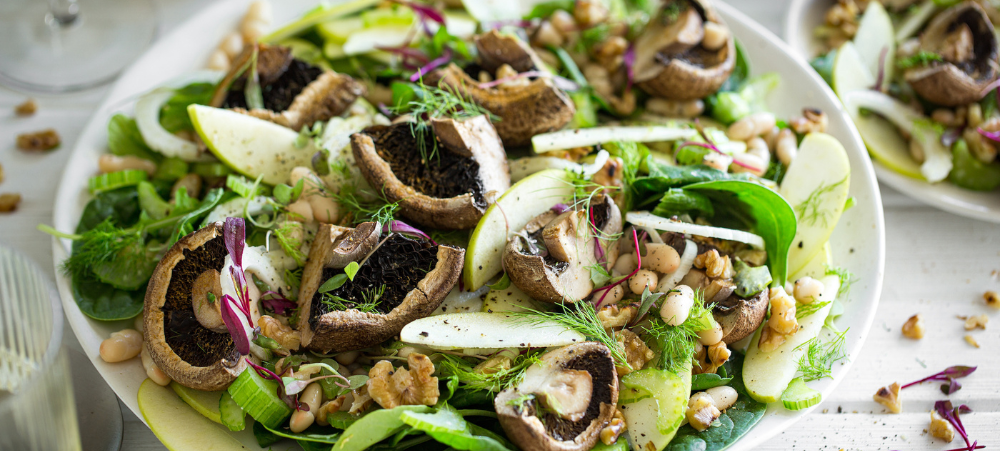
Cannellini Bean, Fennel, Apple & Roasted Mushroom Salad

Serves 4 Ingredients: 1 x 400g tin cannellini beans, rinsed and drained 1 bulb fennel, sliced very thinly 1 large stalk celery, sliced  400g medium portabello  mushrooms, quartered 1 tsp garlic powder 150g mixed baby lettuce leaves 2 green apples, sliced thinly 50g walnuts, toasted and roughly chopped Fennel fronds, for serving Olive oil, for dressing Sherry vinegar, for dressing Salt and pepper, to taste  Method: Place the cannellini beans, fennel and celery in a small bowl.  Drizzle with a little olive oil and sherry vinegar.  Season with salt and pepper. Toss to combine and set aside.  Preheat oven to 200˚C, fan on.  Place mushrooms on a baking tray.  Drizzle with olive oil and season with salt, pepper and garlic powder.  Roast for ± 7 minutes until tender and juicy, but retain some bite. Allow the mushrooms to rest.  Once the mushrooms have rested, assemble the salad.  Layer the baby leaves and apples on a serving platter.  Spoon over the marinated bean mixture.  Top with the roasted mushrooms.  Sprinkle with walnuts and fennel fronds. Season lightly. Drizzle everything with a little extra sherry vinegar and olive oil and serve! 

Parenting Hub

NAPPY RASH: TREATMENT TIPS

According to Affinity Health, a leading provider of high-quality healthcare, nappy rash is a common type of irritated skin (dermatitis) that appears as inflamed patches on your baby’s bottom. Wet or infrequently changed nappies, skin sensitivity, and chafing are all common causes of nappy rash.1  “Around one in four babies and toddlers not yet toilet trained will experience nappy rash at any given time,” says Murray Hewlett, CEO of Affinity Health. “While nappy rash can be frustrating for parents, it usually goes away with simple home remedies like air drying, more frequent nappy changes, and ointment.” Symptoms Of Nappy Rash Nappy rash signs and symptoms include:2 Red or inflamed skin on your baby’s buttocks, thighs, and genitals Pink or red patches in the nappy area (the folds of the groin will usually look normal) Skin that feels hot to the touch Spots, pimples, or blisters around the nappy area Discomfort, fussiness, or crying, especially when changing nappies Peeling, flaking, or scaly skin What Causes Nappy Rash? Nappy rash is often caused by leaving wet or soiled nappies on for too long, but other factors can also cause nappy rash. Rubbing or chafing Nappy rash can be caused by tight-fitting nappies or clothing that rubs against the skin. Using New Products Your baby’s skin may react to a new brand of baby wipes or nappies, as well as the detergent, bleach, or fabric softener used to wash cloth nappies. Lotions, powders, and oils may contain ingredients that exacerbate the problem. Bacteria Or Yeast Infection What starts out as a simple nappy rash on your baby’s bottom can quickly spread to the surrounding skin. Because the area covered by a nappy is warm and moist, it is an ideal breeding ground for bacteria and yeast. These rashes can be found in the skin’s creases. You may also notice red dots strewn about the creases. Food Allergies The composition of a baby’s stool changes as your tot begins to eat solid foods. This increases the chances of nappy rash. Changes in your baby’s diet can also cause more stools, which can cause nappy rash. Breastfed babies may develop nappy rash due to something the mother ate. Skin Issues Babies with atopic dermatitis (eczema) or seborrheic dermatitis are more likely to develop nappy rash. Antibiotics  Antibiotics can cause a rash by killing bacteria that control yeast growth. The use of antibiotics also increases the risk of diarrhoea. Breastfed babies whose mothers are taking antibiotics are also more likely to develop nappy rash. How To Prevent Nappy Rash   Keeping the nappy area clean and dry is the best way to avoid nappy rash. Affinity Health recommends these 10 simple steps to help reduce the chances of nappy rash developing on your baby’s skin. Change your baby’s nappies frequently and request the same from staff if your child is at daycare. Choose disposable nappies over cloth nappies. Disposable nappies have absorbent gel, which is effective because they draw moisture away from the skin. Rinse your baby’s bottom with warm water as part of each nappy change. Cleaning the skin can be aided by moist washcloths, cotton balls, and baby wipes. Use alcohol-free or fragrance-free wipes on your baby’s skin. Alternatively, use a gentle non-soap cleanser, paediatrician and dermatologist-approved, hypoallergenic, ph-balanced, and free from colourants and perfumes. Allow your baby’s skin to air dry, or gently pat it dry with a clean towel. You should not scrub your baby’s bottom. Use powders sparingly. Cornstarch-based baby powders may be problematic because their main ingredient may make a candida-caused nappy rash worse. Apply cream and ointment that contains time-tested ingredients such as petroleum jelly and zinc oxide. After changing your baby’s nappy, thoroughly wash your hands. Hand washing can help keep bacteria and yeast from spreading to other parts of your baby’s body, you, or other children. Nappies should be fastened securely but not too tightly. Nappy rashes can be avoided by using a nappy that allows for some airflow. Nappies that are too tight can irritate the skin. Avoid using plastic or tight-fitting nappy covers. Allow your baby’s bottom to go longer without a nappy whenever possible. Air-drying skin is a natural and gentle way to dry it. Try laying your bare-bottomed baby on a large towel and engaging in some playtime to avoid messy accidents. When Should You See A Doctor? If your baby’s skin does not improve after a few days of home treatment, consult with your family doctor or baby’s paediatrician. To treat nappy rash, you may need prescription medication, or the rash could be caused by something else, such as a zinc deficiency.

Parenting Hub

Every day should be story day!

You’re never too old, too wacky, too wild, to pick up a book and read to a child. – Dr Seuss Wednesday 1 February is World Read Aloud Day(WRAD)! Nal’ibali, the national reading-for-enjoyment campaign, has been providing a free, special story for children to celebrate World Read Aloud Day (WRAD) for over a decade. 2023 is no different. Once again, Nal’ibali is calling on all South Africans to join them in reading aloud to the children in their lives on WRAD.. For some it will be the first, important step to habitual reading while for others it will be a continuation of their reading journey. For WRAD 2023, Nal’ibali aims to reach their goal of reading aloud to 3 million children. Young children who are read to in languages they understand, perform better in school, develop better memories, stronger vocabularies and comprehension skills. This year’s story,  ‘Every day’s a story’ was written by Tumisang Shongwe (fondly known as Miss T), who is a children’s author and literacy advocate. The story is available in all eleven official languages on Nal’ibali’s website.  And copies will be distributed by the field team at community outreach events throughout the country. The story is available as a PDF – you can  download here

Parenting Hub

COLICKY BABY? PROBIOTICS MAY REDUCE CRYING FROM COLIC AND REFLUX

Does your baby cry for hours at a time every night for what seems like an eternity? Do their tears worsen into a full-fledged meltdown, complete with clenched fists, flailing legs, and an unhappy red face, despite your best efforts to soothe them? Welcome to the (very unpleasant) world of colic! Colic likely has more than one cause, but studies have found a link between gut microbiota and colic in babies. High levels of Escherichia coli, Clostridium difficile, and Klebsiella have been found in babies with colic, while Lactobacillus and Bifidobacterium levels have been found to be low. This dysbiosis could be a possible cause of abnormal gut motility and increased gas production.1 Supplementing beneficial bacteria, in addition to other methods, may help reduce pain and provide your baby with relief until colic passes. Here are six ways to help your baby’s gut. 1. Give Them a Burp A crying baby can consume a lot of air. This can make them gassy and bloated, exacerbating their crying. Burp them on the back with firm but gentle pats. The traditional position, with your baby’s head over your shoulder, works but can leave a spit-up trail down your back. Change things up: Place your baby on your lap, face down, or sit them up, while your arms support their chest and neck.2 2. Switch Up Feeding Practices Changes in feeding practices may also provide some relief. Bottle-feed your baby upright and frequently burp during and after a feeding. A curved bottle will help with vertical feeding, while anti-colic valves may reduce air intake.3 3. Do Baby Bicycles This simple exercise can aid in the manual release of gas. Lay your baby on their back and use a bicycle motion to gently cycle their legs towards their tummies.4 You can also gently push your baby’s knees towards his or her tummy and hold the position for 10 seconds. Release and straighten their legs several times, then repeat. 4. Watch Your Diet If Breastfeeding Research suggests there is some correlation between maternal diet in breastfeeding mothers and infantile colic. According to some studies, removing allergenic foods from the maternal diet may reduce colic while consuming a protein-rich diet may protect infants from colic.5 5. Consider Probiotics Restore and maintain your baby’s gut health with Reuterina® drops6, shown to reduce colic crying time7, and daily regurgitation8.  Reuterina® drops can be used as a preventative measure9 to reduce the onset of constipation in healthy newborns, increase the daily evacuations and improve gut motility and the number of bowel movements. 6. Speak To Your Healthcare Provider Make an appointment with your child’s paediatrician if your baby is crying excessively or you are concerned they may have colic. Remember that while it may appear that your baby will have colic indefinitely, colic is only temporary. You won’t remember your baby having colic in a few months because you’ll be too busy making memories with your bundle of joy. The Reuterina® family of probiotics are available from Dis-Chem and Clicks stores and independent pharmacies nationwide.  For more information, visit: https://reuterina.co.za/ and join the conversations on Instagram and Facebook. References and product legals available on request. | 006 ZA Reut 012023

Parenting Hub

Peachy tips for easy, healthy lunchboxes

Getting back into the school routine doesn’t have to be painful.  With some basic planning and organising habits, you can beat the weekday morning blues and get the kids off to school with a smile and a wave.  If you do just one thing this year to make the kid’s school life easier on you, consider mastering the healthy lunchbox.  It’s easier than you think. Registered dietitian, Reabetjoe Mokoko aka Rea-TheCookingDietitian, says, “Lunchbox packing can be overwhelming, especially with the hectic weekday schedules most parents have.  However, school snacks and lunches are important as they help to fuel kids, giving them the energy they need to get through the school day.  Research shows that kids who are well-nourished can focus better and are able to perform at their peak academically and at sports. Packing healthy lunchboxes also contributes towards building healthy eating habits in kids.  Remember that fresh vegetables and fruit are your best friends when it comes to filling up a lunchbox with goodness. We’re lucky to start off the school year with delicious stone fruit in season, which can be added whole to the lunchbox.  Look out for yellow cling peaches and firm nectarines, as well as plums and apricots because these fruits will travel well, and they are always favourites with kids.” Rea points out that the key is to plan and prepare in advance as much as possible on the days that are less busy. She says, “Buy fruit and vegetables on a Sunday, then wash and chop them up in advance. Snacks such as nuts, popcorn and pretzels can also be pre-packed in advance. Pack lunchboxes the night before school so that you can lessen the morning rush of trying to get the kids ready on time while also preparing their breakfast.” With most families on tight monthly budgets due to the ongoing economic downturn, it’s important to focus on packing healthy lunchboxes that are affordable.  One cost-saving, time-saving hack is to cook a bit extra at suppertime so that you have tasty leftovers that can be used for school lunchboxes.  Rea says, “Portions of leftover pasta, lentil or rice dishes can easily be included in lunchboxes or extra chicken can be used to make a chicken salad sandwich. Many leftover dishes work well in a wrap or pita bread with a bit of fresh salad such as grated carrot and chopped tomato.  Instead of buying pre-packed small snacks such as nuts, peanuts, and pretzels, buy the cheaper bulk packs of the healthier snacks and portion them into smaller packets at home.  I also always advise to pack fresh fruit that is in season, not only are they more affordable but they also have a higher nutritional value.”   So, what does a healthy lunchbox include? Rea says, “Every day, choose a variety of easy to eat foods that your kids enjoy from all the different food groups. Include fresh fruit and vegetables, healthy proteins such as peanut butter and eggs, whole grain starches such as brown bread, and dairy such as low-fat yoghurt, cottage cheese and cheddar.  If you need to add fats in your preparation, use a healthy fat such as olive oil.” Rea’s Five Key Tips when it comes to lunch box packing: 1.     Involve your kids from the planning to the preparation. 2.     Keep it fresh and healthy, limiting highly processed foods. 3.     Always include a variety of fruit and vegetables. 4.     Limit unhealthy foods that offer no nutrition such as fried fatty foods and items high in sugar and salt such as sweets and crisps. 5.     Avoid packing fizzy drinks and opt for low calorie beverages such as milk and water. It helps to have a small repertoire of wholesome recipes that you can use to add healthy, homemade foods to your kids’ lunchboxes. Try these back-to-school lunchbox recipe ideas from Juicy Delicious: Nectarine and Smoked Chicken Lunch Box by Jenny Morris Quick and Easy Nectarine Cookies by Jenny Morris Porky Plum Balls by Jenny Morris Peachy Granola Bars by Lolene Krige Follow @juicydelicioussa on Instagram or visit www.juicydelicious.co.za  Choosing a lunchbox Choose an affordable, quality lunchbox and water bottle for each child, such as the Addis BPA free, On-The-Go food storage range and re-usable hydration bottles.  Addis is a proudly South African brand producing innovative, quality plastic products for over 100 years.  BPA, bisphenol A, is an industrial chemical commonly used in plastics that may have health impacts on children, so it’s important to go with BPA free options.

Bonitas – innovation, life stages and quality care

Caffeine and pregnancy – am I allowed?

You may be wondering if your morning cuppa is something to be avoided now that you’re pregnant. Generally, caffeine should be avoided during pregnancy, as it can harm your baby. However, you can consume caffeine in small amounts, so you won’t need to go cold turkey on your coffee habit. But how much is too much? And what caffeine high food and drink should you be avoiding? How does caffeine affect you and your baby?  Too much caffeine can have a negative impact on both you and your baby. If you’ve drunk a lot before getting pregnant you may find adjusting to only one cup a day (or the equivalent) pretty tough. As a stimulant, caffeine has the effect of making you feel more awake and alert, but too much (even before getting pregnant) isn’t good for you. Caffeine can increase your blood pressure and heart rate, and leave you feeling fatigued when the stimulant has left your system. Caffeine is also addictive, while it doesn’t cause addiction in the way that drugs do, drinking it often can increase your dependency on it. When you’re pregnant your body will metabolize caffeine at a slower rate. Some studies have linked increased caffeine intake to miscarriage (although there are conflicting studies on this) as well as low birth weight. Because the risks aren’t fully understood it is best to limit your intake.  How much is enough? When you find out you’re pregnant it’s best to limit your caffeine intake to 200mg per day. This is the equivalent of two cups of instant coffee (filter coffee has more) or 3 to 4 cups of brewed tea. Energy drinks, sodas and chocolate are other sources of caffeine which you should consider. Remember, caffeine isn’t the only thing in these foods and drinks, energy drinks and sodas have lots of processed sugar, and some energy drinks also contain ginseng, which should be avoided during pregnancy. What are alternatives to caffeine?  If you are planning on sticking to as little caffeine as possible per day you’re probably wondering what healthy alternatives there are. Luckily in South Africa, rooibos tea is very popular and perfectly safe to drink. You can swap out filter coffee and flat whites for rooibos tea and red cappuccinos. Decaf coffee is another alternative, but it’s best not to overdo this one as it still has trace amounts of caffeine.

FYI Play it Safe

A SAFETY GUIDE TO GIVING YOUR CHILD A FIRST PHONE

Getting a first smartphone has become the major milestone of modern childhood, and many families are starting off the year with a new connected user in their midst.  Children are getting phones younger than ever, and parents need to be well-prepared.  Much like a teen getting their first car, the first smartphone brings greater freedom, but also more danger. Just like you wouldn’t hand over the keys to a first car without making sure your child can safely and legally drive, parents need to lay the groundwork for their child’s secure and responsible use of a device that opens up to them an infinite digital realm with an abundance of dodgy alleyways and dark corners. Safety is rooted in open parent-child communications If you haven’t yet started to have hard conversations with your child, then expect their first smartphone to be a catalyst for this change in your relationship.  Their safety, as they navigate the internet and an array of digital platforms, should from now on be an open and ongoing conversation.  Amongst many, and endlessly emerging topics, you’re going to need to have discussions around online pornography, depictions of violence, sexting, grooming by online predators, catfishing, cyber harassment and cyberbullying, suicide-related content, disclosure of personal information and the Law. Rachelle Best, the CEO and Founder of FYI play it safe, an AI-powered monitoring app says, “Some parents think that if they use a parental control app, they can side-step conversations with their child that they will find awkward.  It’s important to realise that a parental control app is just one measure in a family’s internet security ecosystem, it can not and does not do it all.  Conversations about threats, safety measures and digital behaviour should start even before the handing over of a first phone, and then continue as a norm of family conversation.  Establishing a trusted practice of talking about threats, dangers and staying safe, means that when your child is facing a challenge, they will come to you to talk about how to handle the situation.” Best’s advice here underscores an important point – your goal in keeping your child safe on the internet should not be to police every site they visit or pore over every chat they have with their friends.  What’s important is to help your child develop digital literacy and gain the skills they need to become responsible digital citizens capable of handling problems on their own. So, what do parents need to know and do about internet safety? Be aware – You can’t help your child navigate risks and threats that you don’t know about.  Take an ongoing interest in internet safety issues and keep up to date when it comes to the latest and emerging threats.  Be the trusted source of important online safety information for your child. Raise a responsible digital citizen – Your parenting extends from the real-world into the digital realm.  Educate yourself about South Africa’s recently promulgated Cybercrimes Act and keep abreast of digital etiquette and required standards of behaviour. Promote your family’s digital literacy – Encourage critical thinking and the rigorous verification of sources of information.  Help your children understand propaganda, disinformation, and misinformation, as well as the commercial incentives driving social media influencers and technologies enabling falsifications such as deep-fake videos. Understand the impacts of harmful content – In a significant development last year, a UK coroner’s inquest report identified that a 14-year-old UK girl’s viewing of online content via social media was a factor in her death by suicide.  At the hearing, it was reported that she binge-consumed suicide and depression content, and Pinterest and Instagram were highlighted.  Some of the content she engaged with wasn’t what she searched for but what algorithms served up for her.  Parents need to know that social media age limits do not work, and that there is harmful content across all social media platforms, which remain unregulated. Establish and maintain a family online safety ecosystem – A parental control app should be part of an online safety ecosystem, not the be-all and end-all of keeping your children safer online.  Some parents institute ‘device checks’ to periodically review their children’s online activity, however these types of inspections are time-consuming and often have a negative impact on the parent-child bond, especially for teens with their increasing needs for privacy and parental trust.  In addition, many instant messaging platforms now have a ‘disappearing messages’ feature that can be enabled to protect privacy.  This means that parents who inspect their children’s devices will not always see everything anyway.  Advanced solutions such as the FYI play it safe app draw on AI and ML to monitor the content of children’s online activity across mobile devices in real-time, and in a non-intrusive way to provide parents with proactive alerts. Best explains, “FYI play it safe monitors all apps and online interactions, including in-game chats.  New accounts and apps are included by default without the need for your child’s account credentials.  Yet, the app is not spyware, and it is not clandestine.  Instead, it provides parents and children with the opportunity to mutually agree on the best way to stay safe in the digital world, similar to providing your child with a helmet when they start riding a bike.  Parental alerts open the door to having important conversations about the content your child is engaging with or about the chats they are having with strangers online.  This is a solution that supports the goal of having open, trusting conversations about threats and dangers, and empowering your child to make responsible and smart decisions about their online activity.” Getting a first smartphone is an exciting and fun milestone for your child.  There are so many benefits for a connected child, from the boost of safety in the real-world to the discovery of new information, interests and connections that can enrich their lives.  Opening up communications, setting reasonable ground rules and establishing a family online safety ecosystem are the basics for your child to be able

Toughees

Bata Toughees puts up R300 000 cash prize in “It’s your time to shine” Back to School campaign

Back to School just got better! SA’s favourite and trusted school shoe since 1954, Bata Toughees, has launched one of its biggest Back to School campaigns – putting up a cash pool of R300 000 in the “It’s your time to shine” campaign. Understanding that learners have had to overcome several obstacles in their learning journey in recent years – from school closures and a disrupted schooling calendar, to learning to navigate online learning, not having the right technical equipment, or watching their parents and guardians bear the impact of reduced salaries or losing jobs – Bata South Africa, which owns the Toughees brand, said “It’s time to shine”. The back-to-school campaign urges learners, and parents, to enter the competition by stating how winning a share of R300 000 will help them “shine”. Bata Country Manager Michael Wyatt said: “Bata, as a global company, believes in supporting and uplifting children. Undeniably, the past few years have taken a toll not just on adults in the workforce, and the health and safety industries, but on our children as well. They’ve equally had to learn very quickly to adapt to being at home, being confined, learning online, or not learning at all due to having no computer or internet access, and witnessed their parents taking on stress and worrying about the impact of the pandemic on their livelihoods. But slowly, we are beginning to see things get better. We are optimistic and we are confident about the future. Bata Toughees wants to play a part in this good story and enter the New Year with excitement and hope. We want to give a boost to learners and parents that’ll help them reach their dreams, goals, or aspirations in an incredible way. We are saying that it’s your time to shine.” The competition is open to learners of all ages, as well as parents, to win one of ten R30 000 cash prizes. To stand a chance of winning, entrants need to describe how winning a share of R300 000 will help them shine. “It can be being able to buy a laptop, so that online learning is easier, or maybe parents would use it towards paying school fees to ease the financial burden, or it could be using the money to take up extra coding classes to equip your child with digital skills. We would like to know how this will help you in your aim to shine and be the best you can be,” said Wyatt. Michael Sithambaram, Manager of Schools Division at Bata South Africa, said back to school was their busiest period on the calendar. “We all eagerly look forward to back to school. Months of planning and forecasting lead to parents buying a pair of Toughees because they trust us to craft a pair of good quality, comfortable and enduring shoes for their children. It’s a small part to play in helping children reach their dreams. We look forward to hearing the aspirations of children as the next generation’s leaders,” he said. To enter Think about how winning a share of R300 000 will help you “shine” and what you would do with your prize. Submit your short motivation to Bata in one of three ways:  www.toughees.co.za/pages/itsyourtime, or Send a WhatsApp to +27 57 814 5994, or Scan this QR code (links to WhatsApp) Please note: The website link and QR code will only be active between the campaign period of 28 December 2022 to 15 February 2023. Ends.

Bonitas – innovation, life stages and quality care

Nutrition, Activity, and Exercise

Children and nutrition When preparing meals for your family, include a variety of foods from the five major food groups found on the food pyramid.Here’s some recommendations: Vegetables: 3-5 servings per day (Serving size examples: 1 cup of raw leafy vegetables, ¾ cup of vegetable juice or ½ cup of chopped or cooked vegetables) Fruits: 2-4 servings per day (Serving size examples: ½ cup sliced fruit, ¾ cup fruit juice or medium-sized whole fruit) Bread, cereal or pasta: 6-11 servings per day (Serving size examples: 1 slice of bread, ½ cup rice or pasta or 1 ounce of cereal) Protein: 2-3 servings per day (Serving size examples: 50 grams or 2 ounces of cooked lean meat/poultry/fish, ½ cup cooked beans, 1 egg or 2 tablespoons of peanut butter) Dairy: 2-3 servings per day (Serving size examples: 1 cup low-fat milk or yogurt, 25 grams or 1 ounces of cheese) Children and fitness Focus on finding fun activities rather than on exercise. Some ideas to get your children moving: Find activities your child finds fun Find activities that are age-appropriate Limit screen time (TV, mobile phones, laptops, tablets or game consoles) to no more than 1 to 2 combined hours a day; avoid TVs in children’s bedrooms Make time for play and activities; establishing a routine will make it easier to stick to Aim to do fun activities with your children 30 minutes 3 times a week Walk or bike wherever you can Do household chores as a family and make it fun; try dancing to music, picking up toys as fast as possible or having kids run and jump into a pile of raked leaves or snow Choosing healthy snacks Children are active and for most, occasional snacks can help them get their daily nutritional requirements.  Here’s some important things to keep in mind with snacks: Snacks should not affect regular meals; be careful not to give them too close to meals Children will reach for the easiest foods to reach; put healthy choices in easy to reach areas and avoid buying junk food Your food choices affect what your children eat; choose healthy snacks for yourself Involve children in cooking; teach them about healthy and less healthy foods What you teach your child now will last a lifetime; teach a life of healthy eating Healthy snack options Vegetables, with or without low fat dip Fruit Trail mix: low-sugar cereal, dried fruit, nuts and mini chocolate chips Crackers and peanut butter or hummus Low fat yogurt Whole-grain cereal with low-fat milk Crackers and cheese Low-fat microwave popcorn Low-fat cottage cheese Nuts Sandwiches made with whole-grain bread

My Breastpump

Did you check for mould in your breast pump?

The first time I needed a breast pump, I did not know that there were “closed” and “open system” breast pumps. In fact, I naïvely did not know that it was important. I just went along with what everyone else used.  In the beginning I was an exclusive pumper because my son was in NICU. This means that I pumped day and night basically around the clock.  I started to notice that when I had a really strong let down (that was a good thing) my milk started to get stuck in the tubes of the pump (I did not think this was a good thing). I started to worry about “How do I clean the milk out? “.  I really did not want sour  breast milk in my tubing, what if it got contaminated with bacteria, that could make my baby sick. That would be worse than gross it could be very harmful. The more I thought about it the more worried I became. I did what every self-respecting mother would do….. I googled it.  Oh my….. what a scare I had. Have you ever tried it? I dare you to use google images and look up “mould in breast pump”. Apart from having a mild heart attack I realise that I should not just be concerned about “off milk’ in the tubes but there could be worst things going on in my breast pump. I wondered “Why were people not talking about this?”  There are real risks to using an open system breast pump and as my baby was in NICU I did feel like this was something to really worry about.  After a bit more researching, I found out that there are closed system breast pumps. This means that there is some type of barrier that stops the breast milk (moisture and other nasties) from getting into your breast pump. This was great to find out. I then also found out that not all closed systems are equal. Some have the closure at the pump which allows for the nasties to collect in the tubing and then there are closed systems that close off the entire pump system from the flange (the thingy that sticks to your breast).  The closer the closure is to the flange the better as this stop’s nasties from growing in the tubing. I loved the idea of having a breast pump that did not allow for breast milk to enter the tubing. Firstly so that no nasties would grow and secondly what a waste of breast milk. Every drop counted for me.  The top closed system brand found in South Africa is the Ameda brand with the Mya Joy hospital grade private pump, Elite hospital grade (rental) pump and soon to have the Pearl Hospital (rental) pump. They all have complete closed system (at the flange) that is also FDA approved for bacteria and viruses. This means that they have tested their system and found it to be effective in separating the flange and breast milk from the tubing and pump. How it works is amazingly simple. The flange only has 4 parts which makes it so easy to clean and put together. The parts are: the collection bottle, the flange, the duck bill valve and the silicone diaphragm. The silicone diaphragm is the key. It completely separates the milk from the pump. So, no milk, moisture or nasties (bacteria, mould or viruses) can move between the two.  As an example, let’s look at thrush. If you get thrush on your nipples (sadly it is known to happen) the fungi sores can then move through an open system pump and grow in the tubing or your pump. This can later re-infect your nipples. What a nightmare. With a closed system this cannot happen.  All the Ameda breast pumps have the option of changing your flange size form 21mm to 36mm. The standard size is 25mm. Yes, women have different sized nipples! Not all breast flanges are comfortable for moms and this can really affect how much they can express and even cause damage if their fit is not comfortable.  Breast pumps are an investment, and they are an invaluable help. You need to do your homework and look at all the aspects. You need to find out if the pump you purchase will fit all your needs. Compare to the valve of the Ameda Mya Joy:  Question Ameda Mya Joy Is this a quality breast pump? Is it a closed system Yes How much noise does it make? Very quiet, it can’t be hear over the phone How do the setting work? Easy to use: Stimulation 6 levels                        Expression 12 levels Will the flanges fit my nipples? Will it be comfortable? Yes and Yes. There are 7 different size flanges, and we have support staff to help you find the best fit How long is the warranty? 2- years Can I claim from my medical aid? Yes, the Mya Joy has a Nappi Code. Claiming is scheme dependent   Find out more about the Ameda Mya Joy on our Website www.mybreastpump.co.za  After you have done your research and got your pump you can pump when you need to and most importantly of all enjoy spending time with you baby. 

POKKELOKKIE

A new years resolution

The start of a new year brings about a wonderful opportunity to make some small or even big changes. Making the switch to reusables is really a very easy switch. What a great time to make a better choice for your baby and ultimately the earth. Deep down you have always considered trying them. Well, 2023 is the time.You can decide to start smaller or dive in and go the full monty. Either way starting the process is somehow the “hardest part”. Change can feel daunting. Cloth nappies can appear to feel a bit like a foreign language given there are lots of different types here in SA and certainly some new lingo to learn. Is it hard? Neah. Is it rewarding- hell yes! Once you have realised that using our nappy system is really that easy and a lot of fun, you will be dying to top up that stash to full time because the cloth nappy addiction is a real thing and the landfill and money saving is very apparent. So how can you start? 1.Make the easiest switch of all – ditch the single use store bought wet wipes and replace them with a pack of reusable Wipey cloth wipes. Did you know that you only need around 20 – 30 reusable wipes to replace around 15 000 disposable wipes? Commercial wipes are full of chemicals (no matter how natural they say they are). A bright red rash between bum cheeks is often caused by these wipes. Using cloth wipes is dead easy. Simply wet a bunch in  the morning and store them in a container near the changing station. Use as you go. They can be cleaned by simple rinsing them under a tap, rinsed again in the machine then washed with dirty towels or clothes on a main wash.  Cloth wipes are the most handy items to carry around with you on the go too. Kids are dirty – clean hands, spills, faces in the car, at the park. The list is endless. Wash and reuse a gazillion times. Once you make this switch you will never buy another plastic packet of single use ones ever again. It all just goes into the bin. 2.What should I buy to get going? The less nappies you have the harder it is to really get a good feel for using them. With that said you don’t need to get a full stash. We recommend starting out with about 10 nappies and 4 Superwrap covers. This will then give you a good amount  for one days use roughly. Our newborn mini set is wonderful starter for the birth to three month stage. If baby is here, consider our Budget starter set from 6kg up. Flats and fitted type cloth nappies (both offered in the sets above) are easy to use. The waterproof cover must be used over every nappy. Our website shows you exactly how to use and wash our nappies. We also offer full support via WhatsApp if you need it. I assure you that once you have the nappy in your hand and you have popped it on, you will fall in love with the cuteness and wonder why it all seemed so “hard”. 3. Pack out your reusables in plain site or in the top drawer Your nappies must be accessible. If disposables take priority place at the change area, those are the ones you will reach for. Simply because old habits die hard. I always tell mums to pack the single use items away, out of sight. Even away totally. Use those 10 nappies, one after the other. Give it a real good try for a whole day. Why? Because your hands need to learn how to use something new. Without using a good handful in one stretch, it can make it quite unrealistic as to what it “would really be like” to use them as your hands feel quite clumsy initially. Another thing to consider is babies tend to wee/poop in a brand new nappy. Having only a few nappies is not really ideal given how many they go through. 4. Do not get discouraged  You may very well experience a bump in the road here and there (I mean who ever started something new without a few mistakes?). Using cloth is a learning curve however it is not a difficult one (breastfeeding is way harder). The most common issues we help our new cloth parents with are fit or absorbency issues. These are not caused by the actual nappy but rather because of “ignorance” given you are a newbie.Having a baby is full of new experiences. Incorporating reusable nappies is just one of them. Once you have been using our system for a few weeks, it all falls into place. 5. Ignore the naysayers So you’ve decided to use cloth and cannot wait to announce it to friends and family only to be greeted with big eyes and things like ” sjoe you will never manage that….”. What is interesting is that most people who have this advice are those that know absolutely nothing about modern day cloth. They have never seen or used our cloth diapers but seem to know the most about them. This probably comes from the old days where mums used to spend hours laboriously washing nappies in buckets (we now have washing machines and our cloth nappies do not need soaking). What we do know is one child generates almost one ton of landfill of disposable nappies. This can cost up to R25 000 for the parents. So no matter what anyone says, follow your heart. And opt for cloth. Never let anyone deter you. You will definitely show them!! 6. It`s never too late to start Did you know that even if you only start using cloth at eight months old, you will still save around R15 000 and around 5000 single use plastics in a landfill!?! One must consider that one cloth nappy is one less nappy into the earth, a ton less chemicals on baby’s bum, one less

Bonitas – innovation, life stages and quality care

Your child and headaches

Headaches aren’t just for adults, kids get them too. But if the sufferer is a child, the discomfort can put parents under enormous strain and anxiety. Knowing how to handle and treat a headache in a youngster can help you and your child feel better.

Koa Academy

Strong future for online schooling in South Africa

As a fellow school principal, I feel that it is important to join the ongoing conversation about the state of online schooling in South Africa.  Recently, there’s been a series of investigative articles about one school in particular, but there has also been widespread coverage about a principals’ report which issued a stark, sweeping warning that home/online schooling sets children back in their educational milestones. In a country where education is highly prized, this is an important topic, and it deserves further exploration from multiple perspectives.  Globally, the landscape of education has significantly changed with the opening up of the limitless digital realm.  Online study has become a phenomenal force with many millions of people across the world engaged in school, tertiary, on-the-job and lifelong learning in a multitude of digital spaces.  Online education is undeniably a powerful tool for us moving towards the democratisation of education. It offers unparalleled access to a wider range of learning experiences and provides another option for South African educational leaders in our mandate to educate our young people effectively. So how should we evaluate the academic outcomes of several specific online schools this year which have been, to put it frankly, disastrous? What does this mean for online schooling as a whole? The immense growth of online learning was already in play long before the COVID-19 pandemic.  Extended lockdowns did play a role in accelerating the uptake of online schooling, and new online schools have emerged in South Africa to meet that demand.  Just like traditional schools, online schools are not all the same.  Core values, academic rigour, educational philosophy, the delivery of education and the provision of a healthy school environment varies across schools in general.   It is not credible to state that South African children attending online schools or those doing home schooling will academically fall behind their peers at traditional schools.  We all know well that there is no one standard of education quality across South Africa’s range of traditional schools, and the same is true for the country’s online schools.   There is no doubt that amongst online schools, there are those that do not have sustainable models and don’t take responsibility for delivering quality education.  There are those that have dragged  the traditional school model onto a digital platform and called that an online school.  There are also those who have prioritised business growth over educational philosophy and academic standards, and these online schools are now struggling.  But this is far from characteristic of all South African online schools.  In fact, this can be viewed as analogous to the  failings of some traditional schools when it comes to academic standards, school leadership, teacher to student ratios and the provision of safe environments conducive to learning. Just as South Africa does have fantastic examples of traditional schools delivering quality education, there too are online schools which are getting it right according to online pedagogy and best practice models.  At Koa Academy, we monitor and evaluate our students from when they start at Koa, and throughout their school year. We engage in benchmarking assessments as part of our accreditation with the IEB (Independent Examinations Board).    We have had students that started at Koa with learning deficits due to pandemic disruptions who have caught up and moved forward at their proper Grade-level. In fact, learners in the Senior Phase who have been at Koa for more than a year are achieving significantly higher Maths scores on average than learners who have only recently joined us from other schools. This year, Koa Academy has notched up a 97% progression rate, and we’ve seen a 13% increase in Maths marks over 2021. Accountability is the key. Our students are organised into 8-person Pods with their dedicated Pod Teacher.  There is daily contact time in small groups, enabling us to maintain rigorous standards. At Koa, everyone is seen and everyone is heard. I hear horror stories about learners at some online schools being in virtual classes of 40, 80 even 350 learners! Parents need to keep this front and centre when considering their online schooling options. At Koa, we believe that effective online engagement happens best in even smaller groups than in person. That’s why we capped our Pods at 8. While the students still have broader community moments such as school Assemblies and Clubs, they are consistently kept accountable in those small Pod sessions every single day. We knew from the start that our Pods of 8 would actually slow our growth rate, but we have made it a non-negotiable for Koa because of how highly we value accountability in education.    Not every child will thrive in a good online school, just like it’s not the case that every child thrives in a good traditional school.  The presence of online schools in South Africa gives parents more choice when it comes to finding the best educational solution for their unique child.  It’s important for parents to think about what kind of education they want for their children in our fast-changing world.  They need to understand the values, the educational philosophy and assessment strategy of the school, and make sure that the school they choose matches their family values and aspirations for their child’s education.  A school should be able to articulate to parents the reasons why their academic programme is robust. Over the coming years, we will see the continued growth in online learning in South Africa, and the world.  Current online schools with deficient models and without academic rigour and accountability will not survive, while strong and sustainable online schools will thrive.  The country’s educational landscape will change, offering families greater choice and evermore individualised learning options. We hope that this will also include significant shifts in educational legislation and effective regulation of the online schooling space.  Within this landscape,  it’s imperative for physical and online educational institutions to work side by side to increase access to quality education for young South Africans.

Parenting Hub

Travelling with young children

Travelling with young children in the car for extended periods is often very challenging and very distracting for the driver. Here are some tips for making the journey easy Toys Children love toys that can keep them busy. Cars, dolls, mirror stickers, a car mirror, or even a mini steering wheel Books All children love books, and various books could assist for short periods. Colouring in books or plain paper and crayons While most children love to draw and colour, some need some motivation. Asking children to draw what they see on their travels or asking them to draw a picture of someone they will see when they arrive is a great way to keep them busy. Snacks Nothing keeps children busy quite like snacks. But make sure the snacks are light and varied. Liquids Water or juice is essential to keep on hand while travelling. Play games Children, young and old, love playing games with their families. Ask children to keep an eye out for birds, trucks, or even blue cars. Then allocate points and praise the children for spotting. Playing Eye-Spy is an oldie but a goodie and will keep everyone entertained. Create some of your games and ask the children to create the rules; you will be surprised at how the rules will evolve during the games. Stop along the way Travelling can be a wonderful family experience, but remember to stop and enjoy the little things. This will break up the journey and give families a chance to spend quality time together. We wish you all safe travels during the 2022/2023 Festive Season; return to us happy and healthy.

Bonitas – innovation, life stages and quality care

Drinking while pregnant – what are the consequences

Drinking during pregnancy is a huge NO, no matter what stage of pregnancy you are in. Alcohol causes harm to your unborn baby, and can cause them to have lifelong physical and mental problems. If you are planning on getting pregnant it is best to avoid alcohol.  But if you didn’t know for the first few weeks and have had a few drinks in this time, while this isn’t ideal it is somewhat common and shouldn’t cause you to panic. However, when you know you are pregnant, stop drinking. The consequences of drinking while pregnant  If you drink while pregnant, alcohol passes through your umbilical cord to your baby. According to Centres for Disease Control and Prevention, drinking can cause miscarriages and stillbirths, as well as a range of physical, behavioural and intellectual problems. These disabilities are known as fetal alcohol spectrum disorder (FASD). Fetal Alcohol syndrome (FAS) is the most severe among the range of FASDs.  Kids born with FASD can be born prematurely with birth defects such as a smaller head, low body weight, deformities in their facial features and problems with their joints and heart. Growing up they can have issues with coordination, memory retention, attention, vision and hearing as well as intellectual disabilities.  Some kids are born with problems that are only noticed when they go to school, when learning issues become apparent. There is no cure for FASD and FAS. Every pregnancy is different, some moms drink very little and their kids end up with severe health problems, whereas others report drinking more and have children with very few problems. If you are struggling to stop drinking it is best to seek professional help South Africa has the highest prevalence of FAS globally, 14 times higher than the global average. There are a number of local NGOs who focus their efforts on spreading awareness around the condition and programs which speak to pregnant mothers about drinking.

Parenting Hub

WHY TAKING 10,000 STEPS PER DAY IS GREAT FOR YOUR HEALTH

Affinity Health, a leading provider of high-quality healthcare, explores the benefits that 10,000 daily steps have on your health and well-being. You’ve probably heard the hype about walking 10,000 steps daily, but do you know why? The habit of tracking steps has grown in popularity over the last decade. People track to improve their fitness or compete with their friends or coworkers. The current advice is to walk 10,000 steps per day – but why? Interestingly, while this “recommendation” was not initially supported by science, science demonstrates compelling reasons why 10,000 steps per day is a good goal. What’s The Meaning Of A Number? The magical number 10,000 steps originated in a Japanese marketing campaign in 1965 when a Japanese health science professor invented a pedometer and believed that walking 10,000 steps per day would prevent obesity in the Japanese population. The pedometer was named Manpo-Kei, which translates to “10,000-step-metre”. Since then, the 10,000-step recommendation has stuck. How To Get 10,000 Steps Into Your Day If 10,000 steps seem daunting, we have good news: you can begin with fewer steps and reap significant benefits. Even minor efforts to move more throughout the day can have substantial benefits. Research shows that doing anything other than sitting for 30 minutes daily (walking, yoga, skipping, stretching, etc.) reduces the risk of premature death by 17%. Higher-intensity exercise reaps even more significant benefits, reducing the risk of early death by 35%. “Millions of South Africans have been working from home since COVID-19 began. That is why it is more important than ever to get out of the house and walk to improve your health,” says Murray Hewlett, CEO of Affinity Health. “Start by tracking your average steps for a week or two if you’re new to tracking steps. Then set a goal to go above and beyond your average step count. Trying to reach 10,000 steps is a great goal, but if you are getting discouraged, consider re-accessing your goal. Get out and move more than you did yesterday.” Health Advantages Of Walking 10,000 Steps Per Day Promotes Weight Loss Walking 10,000 steps per day equals about 8 kilometres. You could burn roughly 150 more calories daily if you added 30 minutes of brisk walking to your daily routine. Of course, the more calories you burn, the more you walk, and the faster you walk. It Helps Clear The Mind According to a Stanford University study, walking opens the mind and promotes the flow of ideas. It sparks creativity and aids in the improvement of concentration. Enhances Sleep Taking more steps during the day may be sufficient to improve our sleep. A new study published in the journal Sleep Health examined healthy adults who slept an average of 7 hours per night. Participants were divided into two groups: the Intervention group, instructed to increase their daily steps by at least 2,000, and the Control group, which was not. Fitbits were given to both groups to track their daily steps. The researchers compared the responses of the two groups to sleep questionnaires, including how long they slept and the quality of their sleep. Overall, the walking intervention resulted in significantly better sleep. Reduces Anxiety And Depression  Some studies say a quick 10-minute walk can help lift a depressed mood. Regular exercise can help with depression and anxiety by doing the following: Endorphins, natural brain chemicals (endogenous cannabinoids), and other natural brain chemicals that can improve your mood, taking your mind off your worries to break the cycle of negative thoughts that feed depression and anxiety. Lowers Blood Pressure A healthy heart can pump more blood while exerting less effort. Increasing your physical activity can reduce your systolic blood pressure by 4 to 9 points on average. Stabilises Blood Glucose  Walking causes the muscles to use more glucose, lowering blood sugar levels over time. This can make you more insulin sensitive. In fact, according to a study published in Diabetes Care, three short 15-minute walks per day are just as effective as one long 45-minute walk at the same pace in lowering blood sugar levels. According to the same study, taking a short walk after your evening meal helps regulates your blood sugar levels. Reduces The Likelihood Of Having A Heart Attack Numerous studies have shown that walking has health benefits related to cardiovascular disease. A sedentary lifestyle is one of the five major risk factors for cardiovascular disease (high blood pressure, abnormal blood lipid values, smoking, and obesity). Studies show that lowering these risk factors reduces the likelihood of having a heart attack or another cardiac event, such as a stroke, and the need for a coronary revascularisation procedure (bypass surgery or coronary angioplasty). Strengthens Your Lungs Everyday movement helps to strengthen your lungs and surrounding muscles. Your body’s ability to use oxygen efficiently increases as the rate and volume of oxygen you inhale (a measurement known as your “VO2 max“). The fitter you become, the higher your VO2 max. Strengthens Your Bones Physical activity (especially weight-bearing exercises) strengthens your bones, which improves their density and reduces your risk of osteoporosis later in life. Conclusion Keeping track of how many steps you take, how far you walk, and the time it takes can help you see where you started and what is possible. Consider how good it will feel to see how many steps you’ve walked each week, month, and year. Use an activity tracker, app, or pedometer to calculate steps and distance. Alternatively, keep track of these figures in a walking journal. “Walking – no matter the distance – can benefit both physical and mental health. Whatever method you use to incorporate walking into your daily routine, you will most likely notice some benefit that will accumulate over time,” concludes Hewlett.

Parenting Hub

Dr Judey Pretorius answers the most Googled skincare questions of 2022

The internet contains a wealth of information, and it’s become so easy to find answers to questions on just about anything – including skincare! We’ve done some digging to find the most-asked skincare questions on Google in 2022, and consulted an expert for the answers.  Dr Judey Pretorius, a biomedical scientist and founder of skincare brand Biomedical Emporium, answers the top eight skincare questions asked on Google this year:  How to know your skin type? We determine skin types by the Fitzpatrick skin types developed in 1975. Fitzpatrick skin types refer to a skin tone scale developed to classify skin colouring and response to ultraviolet (UV) radiation. Fitzpatrick 1 – 6 is based on how you burn.  Fitzpatrick skin type 1 skin always burns, never tans, and is sensitive to UV exposure Fitzpatrick skin type 2 skin burns easily and tans minimally Fitzpatrick skin type 3 skin burns moderately and tans gradually to light brown Fitzpatrick skin type 4 skin burns minimally and always tans well to moderately brown Fitzpatrick skin type 5 skin rarely burns and tans profusely to dark Fitzpatrick skin type 6 skin never burns, is deeply pigmented, and is least sensitive to UV exposure What is the difference between dry and dehydrated skin? Dry skin occurs when the epithelial layer of the skin (the outermost layer of the skin) does not have a moisture level or lipids within it. Dehydrated skin occurs when you don’t have any form of moisture retention or hyaluronic in the dermis (middle layer) of the skin.  While dry skin lacks oil (sebum), dehydrated skin lacks water. Dry skins may experience eczema, sensitivity, flaking and even cracking while dehydrated skin is prone to breakouts (due to the skin producing too much extra sebum in an attempt to counteract the dehydration), irritation and dry patches.  Dry skin requires oil or cream-based skincare to replenish lost lipids, while dehydrated skin requires water-rich products, an increased water intake and possibly lifestyle changes.  What are the basic skincare products we all need? The very basics of what we need is a facial cleanser, a serum and a moisturiser (one for the evening and one for the day that contains an SPF). What order do I use my skincare products? Always use your cleanser first followed by your serum, then your moisturiser and lastly your facial sunscreen.  What does vitamin C do? Vitamin C is one of the most powerful antioxidants on the planet, especially when it is used topically at higher concentrations. One of the perks of vitamin C is that when you apply it onto the skin, it literally brightens the skin and makes it glow, whether you are a Fitzpatrick 1 or a Fitzpatrick 6 skin type. Vitamin C can also assist in minimising dark spots, hyperpigmentation and acne scars.  What is niacinamide and what does it do? Niacinamide is vitamin B3. Firstly it is a vitamin, secondly it is a powerful antioxidant, but it’s one of the ingredients that are necessary to boost overall cellular energy. Our cells contain energy levels, which are essential in order for skin cells to go through cell division (when cells divide from 2, to 4, to 8, to 16 to replenish dying cells). Cells cannot divide without energy levels, and when this occurs, the skin may appear more dull and fatigued. When you expose your skin to niacinamide, it will boost the overall energy levels of skin cells, which will lead to faster cellular differentiation.  At what age should I start using skincare? You should start using skincare products as a teenager, but the age that you should start looking at anti-ageing skincare is 25.  Does washing your face in the shower cause dry skin? No, not at all, as long as you ensure that the temperature of your shower water is not too hot, because if the water is too hot it can strip skin of its natural oils, leaving it dry and sensitive. It can also compromise the skin’s moisture barrier, which is essential for protecting the skin against environmental stressors, bacteria, pollutants, and other irritants.  About Dr Judey Pretorius Dr Judey Pretorius is a highly accomplished Biomedical Scientist and product development specialist with substantial experience in the disciplines of acute, chronic and post-surgical wound healing, regenerative medicine and cell therapy. She holds a Master’s degree in Genetics and Molecular Biology followed by her PhD degree in Pharmaceutical Chemistry, Medicine Development and Design. She has also obtained an Advanced Diploma in Dermal Aesthetics. Dr Judey Pretorius gained extensive experience as a Research and Development Formulation Scientist. She was responsible for the Scientific and Biomedical formulation of therapeutic products of premium brands in respective disciplines. Her contributions included cosmeceutical, pharmaceutical and medical device developments. She is the co-founder of Biomedical Emporium®, a biotechnology company specialising in the formulation of advanced biological products, cell culture processes and tissue engineering for advanced wound healing and an advisory on regenerative medicine. She has made unique formulation discoveries that have had a profound influence on the course of new developments in aesthetic and wound care treatment. https://www.biomedicalemporium.com/ 

Parenting Hub

Men’s Christmas gift idea: FINO Man Bump Control Kit

FINO Man Bump Control Kit (R79.00) Includes FINO’s two best-sellers: FINO Soothe MAN This unique, hygienic balm is a mild exfoliator with both antiseptic and calming properties derived from ingredients such as Vitamin A and Papaya enzyme. With its non-greasy, drip-free formula, FINO Soothe can be applied to any part of the body, after wet or dry shaving or waxing, including the beard area, head, back of neck, chest, legs and underarms. This soothing balm also relieves the dry, itchy skin associated with new hair growth, and leaves your skin feeling moisturised and revitalised  – Dermatology Tested. Use FINO Face Wash MAN and FINO Bump Control for best results and a super smooth and soothed skin. FINO Soothe MAN is suitable for all skin types, tones and is safe for sensitive skin. FINO Bump Control With its antibacterial and antifungal ingredients and natural astringents, this hard-working, tea-tree and willow bark serum rids skin of stubborn bumps and nasty ingrown hairs leaving skin smooth and healthy – Dermatology Tested. Use together with FINO Soothe MAN and FINO Face Wash MAN for best results and a super clear, fine – looking skin. FINO MAN Bump Control is suitable for all skin types and tones. Use a dash of each, mix well and apply to areas where the skin is prone to bumps. Order online here: https://www.finocosmetics.com/products/fino-man-bump-control-kit    

Parenting Hub

Kitchen Time During Festive Season: Cooking Together 

The holidays are a great time for caregivers and kids to cook together. Families can use this time, away from work and school, to reconnect with each other by cooking together and teaching their families valuable skills.  Skills such as how to prep family recipes, learn how meals/dishes are put together, and the nutritional value behind these foods. Caregivers who want to cook with their children are often faced with trying to figure out how to make it fun and engaging. Here are some ideas for easy kitchen activities that will make cooking together a fun experience: Start small and encourage play! Make kitchen time fun by encouraging play.  Getting comfortable in the kitchen goes beyond watching but also involves handling food and cooking utensils. We want our kids to feel like the kitchen is their space. Allowing kids to handle ingredients, wash produce, or even simply play with toys within the cooking area creates a connection. Set up a “sensory activity” like allowing kids to use measuring cups and spoons to practice scooping and levelling. You can take this a step further and let them measure the basic ingredients such as sugar and flour Make up songs for simple tasks and make it fun Humming a song, putting on your child’s favourite soundtrack, or creating your very own cooking jingle, can lighten the mood for both of you. This is effective fun when teaching kids skills that require patience like stirring slowly or taking turns. Children will learn to love cooking if you relax and have fun with them in the kitchen. Give the children an opportunity to experiment with your guidance and only step in when it’s necessary, otherwise let them enjoy and create. Embrace the mess Cooking is messy, there is no way to completely avoid it. Kids learn so much from exploring. Don’t mind the mess, let them be creative and have fun. Wiping down the counter or washing up dishes can be a dual exercise. Create food art and encourage their imagination Make healthy eating fun for kids by getting creative at mealtimes. Presenting food in the form of a picture or simple pattern, or decorating the rim of the plate, can make it more exciting and enticing for children. Animals and faces are always popular, and broccoli and cauliflower make excellent trees! Why not let kids cut carrots and cucumbers with cookie cutters, into interesting shapes like hearts, stars and diamonds. Encourage your kids to be imaginative in the kitchen. Give them free reign when decorating their cookies or challenge them to create a fruit-salad rainbow or vegetable animals. Turn it into a contest to see who can come up with the best design. But remember, everyone is a winner as they all get to enjoy a delicious prize. ROLL, ROLL, ROLL THE DOUGH  Get your pre-schoolers involved teaching them about the dough. Helping to roll out or need dough will give their muscles a good workout, and they’ll be amazed when they see the results of their labour. Children tend to eat more of the healthy food on their plates when they help prepare it. There are lots of tasks that your children can help with. Washing, grating, or mashing are all fun activities for kids. And don’t forget the washing up too! For fun recipes and more tips, visit the Nestlé for Healthier Kids site: www.nestle-esar.com/N4HK By Anne-Marie De Beer, Nutrition, Health and Wellness Manager, Nestlé East and Southern Africa

Parenting Hub

Power into the Gifting Season & Celebrate Xmas Beautifully with Elixir Fusion

Ready, steady, Merry Xmas! Whether you are celebrating this festive season at home with your extended family and friends or zooming off across the continent, Elixir Fusion has hot updates for great looking skin delivered in handy holiday travel-sizes all elegantly wrapped up into specialty seasonal gifting collections for him and her, young and old.     Sample for yourself or share the Elixir Fusion magic with this amazing range of natural skin beauty health products. With something for everyone, there is a handcrafted bespoke gift pack to suit your holiday and your life.    Take the stress out of Secret Santa office gifting events, and gift the joy of clean, beautiful, hydrated skin at elegantly affordable Xmas prices to pamper and beautify every generation of your extended family of friends and loved ones.    SMILING EYES AND CURLING CHRISTMAS LIPS Elixir Fusion Eye & Lip Rescue – R250 is a gloriously handy gift pack comprising Firming Eye Gel – 15ml and Lush Lips treatment lip balm  – 10ml    Feel the power of pure essential oils containing active, plant-based ingredients and only the highest quality vegetable-based soy proteins with the Elixir Fusion Eye & Lip Rescue to keep at hand at home, on the beach or on the plane, train or taxi. Argiraline, a natural anti-wrinkle peptide that inhibits the movement of facial muscles thereby reducing the appearance of fine lines and wrinkles has been added to the eye gel for a younger, fresher skin, while this natural beeswax, olive oil and shea butter based lip balm is luxuriously rich with a delicious vanilla fragrance. ON THE GO, KEEP YOUR GLOW!  Elixir Fusion Travel and Go – R290:  The perfect travel sized products for your holiday trips, and a great opportunity to try out some of the most popular products in the Elixir Fusion range. This collection includes Elixir Fusion’s most essential products to keep your skin glowing, bright and nourished this holiday and party season. This pack includes: Multi-Active Enzymatic Exfoliator 20ml, Regenerating Anti-Ageing Cream 20ml, Balancing Cleanser 30ml, and Hydro C Oil GO BEAUTIFULLY YOUNG LOOKERS! Elixir Fusion Youth Pocket Pack – R220 Explore five exciting products all at once with the youthful pocket pack designed especially for teen skins and on the go lifestyles. Perfect as a stocking filler, it provides the ultimate chic Summer look for beach days and long nights spent hanging out under the glow of a million Christmas stars. The youth pocket pack includes: Youth Cleanser 30ml, Youth Day Cream 20ml, Apricot Facial Scrub 20ml, Lush Lips treatment lip balm and Hydro C Oil 5ml. YOUTH BEAUTY BASICS TO JUMPSTART THE FUN Elixir Fusion Youth Basics Kit – R320 Once the 1-2-3 basics are in place for clean, refreshed and healthy looking skin, the rest of the season is yours to socialise spontaneously. Elixir Fusion is the simple, gentle and more natural approach to youth skincare that easily fits in that trendy travel tote bag.  The Youth Basics Kit includes four luscious products to luxuriate in: Youth Cleanser 125ml, Youth Day Cream 50ml, Apricot Facial Scrub 20ml and a Lush Lips treatment lip balm.  NOURISH & SOOTHE SILLY-SEASON SKIN Elixir Fusion Anti Ageing Power Pack – R680   Say no to frowns and wrinkles and smooth on your most perfect smile with the platinum power of the Elixir Fusion Anti Ageing gift set made for radiant eyes and ageless, hydrated skin from morning sunlight until the ambiance of dinner’s candlelit glow. Includes two powerful hydrating serums: Platinum Radiance Eye Serum – 15ml and Platinum Ageless Youth Serum – 30ml.   *Purchase any 4 x Elixir Fusion Anti Ageing Power Packs for R1632.00. BALANCING BASICS TRIO  Elixir Fusion Balancing Basics Trio – R625 Lock in moisture with the Elixir Fusion Basics Trio gift pack including a Balancing cleanser, day moisturiser and Hydro C treatment oil to calm skin after a day spent in the hot, dry summer sun.  HYDRATE FOR EXTENDED HEALTH  Elixir Fusion Hydrating Basics Trio – R625 The Hydrating Basics Trio is designed to slow the ageing process and is suited to dehydrated, mature and sensitive skins. Includes extended sizes for longer travel days and rested night and comprises: Hydrating Cleanser – 125ml, Hydrating Day Moisturizer – 50ml, Hydro C Oil – 15ml  FESTIVE MOODS FOR THE MASCULINE FACTOR Elixir Fusion Men’s Basic – R385 and the  Elixir Fusion Men’s Basic Large – R485 Elixir Men’s Basic is the perfect gift pack for the modern man who wants to step out this festive season. Introduce some new habits for him this gifting season and see your guys step up to the plate in the beauty stakes as we head into the New Year in 2023. Each naturally fragrant gift pack includes: Daily Defence for Men -50ml or 125ml, and a Hydro C Oil – 15ml.  *Purchase 4 x Elixir Fusion Men’s Basics for R912.00 / *Purchase 4 x Elixir Fusion Men’s Basics Large for R1164.00 Also available in the Christmas Gift Pack range are the Hands & Heels and the Body Oil Combo: Elixir Fusion Hand & Heels  – R195includes Sun Defence Hand Cream – 40ml and Heel Balm – 30ml  Elixir Fusion Body Oil Combo – R360Stress & Relaxation Massage Oil -and Muscular Aches & Pains Oil, both 100ml.  Elixir Fusion is a proudly South African skincare brand that has been harnessing the power of pure essential oils to awaken natural beauty since 1999. Hand-blended with love in Cape Town, Elixir Fusion products contain active, plant-based ingredients and only the highest quality essential oils to nourish the skin for visible results, at home and in the salon. Elixir Fusion remains committed to delivering top-quality, affordable skincare, made exclusively with the highest-grade essential oils for impressive results. Using Elixir Fusion is a sensory experience, as the oils interact with the skin and release a pleasing aroma.  No artificial colours, fragrances, palm oil or parabens. Tested on people, not on animals. Elixir Fusion is available from selected salons and online at www.elixirfusion.co.za   Website: www.elixirfusion.co.za Facebook: www.facebook.com/elixirfusion Instagram: @elixirfusion

NutriPure

Back to school with NutriPure

Just as the holiday season had settled in, it’s time to prepare for the upcoming school year from shopping for new stationery supplies, thinking about healthy meal plans and more. Starting the year with optimum health is certainly one of the biggest things on the to-do list. It is vital for any parent to consider the absolute best options for their child’s physical and mental health and performance and how to maintain and boost sustainably. NutriPure understands the need of parents and the challenges their children may have to face going into the new year. Between new subjects, new schedules, and physical activities, it’s essential that parents support their children in the best possible way. Supplements like NutriPure Gummie Vitamins can help unlock energy, support immunity, and maintain overall health daily. NutriPure gummies are specially formulated with natural fruit pectins for adults and children. Say goodbye to morning delays as Nutripure Gummie Vitamins offers an easy and tasty way for kids and adults to take their daily vitamins with an all-natural sweet treat packed with best ingredients for you. NutriPure is vegan-friendly, has no sugar coating, and it is GMO-free. The NutriPure range is the perfect way to enhance your daily routine anytime, anywhere.  Nutripure has now made it even easier for you with their convenient travel-friendly pouches that contain 14 gummies each (R36,95). The pouches come in five different variants and are available at Dis-Chem. Three variants for kids: Immune Support+ Vitamin C Multivitamin Two variants for adults: Immune Support Multivitamin Nutripure can be found at Dis-Chem, Clicks, Takealot, and other major retailers.  For more information, go to http://nutripure.co.za/ Our back-to-school essential vitamin list: Children’s bodies are constantly challenged by rising toxin levels in the environment and dietary supplements cannot replace a healthy diet, but they can support these efforts. Multivitamins help ensure that basic nutritional needs are met. Try NutriPure Immune Support + (From R 109.95) to help protect your child’s immune system daily. NutriPure Immune Support Gummies have been carefully formulated with six essential vitamins and minerals: vitamin C, vitamin D, vitamin B6, vitamin B12, zinc, and selenium which all contribute to the maintenance of good health. Their body needs certain bacteria to stay healthy. Bacteria aids digestion, absorbs nutrients, and fights off other disease-causing bacteria. Try NutriPure Multivitamin for kids (From R109.95) which contributes to the function of the immune system and many other systems in the body. Each NutriPure Multivitamin complete contains 11 essential vitamins & minerals: vitamin D, B6, B12, C, biotin, pantothenic acid, and niacin help to increase energy levels and strengthen the immune system. A balanced gut is essential in keeping the body healthy at any age. Try NutriPure Probiotics for kids (From R 109,95) is formulated with bifidobacterium infantis & lactobacillus rhamnosus, two scientifically tested bacteria strains. Each Nutripure gummy contains 1 billion live cultures to help your child boost their daily culture intake.  Vitamin C’s best-known function is its role in supporting the body’s immune system. Vitamin C is an antioxidant and is essential for maintaining overall health, and helps boost the immune system when your child catches a cold. Try NutriPure Vitamin C 60s/120s (From R 109.95) which contributes to the immune system by helping to boost immunity. Vitamin C also contributes to the normal functioning of the nervous system and can reduce fatigue and exhaustion. Nutripure gummies contain 80mg of vitamin C. 

Parenting Hub

Air Purification Pal improves air quality to protect baby and toddler health

Designed with babies and toddlers in mind, the Air Purification Pal, by air treatment and lifestyle technology specialists Solenco, will improve the air quality in nurseries and baby rooms, which brings with it important health benefits – both immediate, like helping babies to sleep better, and long-term, like increased life expectancy and reduced chances of developing dementia and Alzheimer’s Disease later in life. Bianca Leonard, Marketing Manager at Solenco says that breathing cleaner air has a number of health benefits. “Ensuring that your baby breathes purified air gives him or her the best start in life. It will help to protect your baby’s health by reducing the chance of him or her catching colds and flu, and developing asthma, allergies and hay-fever.” The Air Purification Pal is approved by the South African Allergy Foundation and advances the foundation’s agenda of enhancing the quality of life and reducing the cost of healthcare for South Africans suffering from allergic disorders and primary immune deficiencies. Remaining steadfast in their mission to help improve overall health and enhance comfort in living spaces, Leonard says there was no reason why babies and toddlers shouldn’t be included too. She explains that even the cleanest home can have polluted air – cleaning materials, carpets and upholstered fabrics, pets and nearby traffic can all impact indoor air quality. “In fact, indoor air can be five times as polluted as outdoor air and, since indoor air is not circulated as much as outdoor air, many airborne pollutants thrive inside.” The Air Purification Pal’s triple filter system kills bacteria and viruses and traps up to 99.975% of particles, allergens, pollen, dust, smoke, mould spores and pet dander. It also reduces VOCs (volatile organic compounds, which can be 10 times more concentrated indoors compared to outdoors), toxic fumes and odours, ensuring that your babies have an increased chance of developing a healthy respiratory system. Health benefits aside, with its soft night light, cute interchangeable stickers and low noise output, the Air Purification Pal is perfect for toddlers. It’s also compact and lightweight, which makes it easy to move around the house, and its impact on a household’s electricity bill is minimal. Solenco sources international award-winning air treatment and lifestyle products to improve the health of South African families. These include a range of air purifiers, humidifiers and dehumidifiers to suit regional climates. “The Air Purification Pal fills a gap for health-conscious parents who want to give their babies every advantage,” said Leonard. The Air Purification Pal can be purchased via the website or Takealot.

Safety 1st

A home and travel safety guide for first-time parents

Now that the easy part of having a baby is over, you have to go home and deal with the most challenging part – keeping your baby safe. Babies don’t understand danger; as they age, they become more curious and want to touch everything they see. You will need to make changes around the house to keep your baby safe. This is what experts call babyproofing. Doctors recommend going room by room and making a checklist of all the items needed for each room, but with a newborn baby, who has time for that? Lucky for you, we have made it easy by breaking down the essential items that you will need to keep your baby safe. Let’s talk about safety gates. Even if you live in a single-story house with no stairs, a baby gate is still essential; for example, it can stop your baby from crawling into the kitchen while knives are lying around and hot oil splashing everywhere. The Safety 1st Auto Close Safety Gate (From R 1 199,00) is the best choice. We all have those moments where we need to double check if we closed a door because we can’t remember; with the Safety 1st Auto Close gate, you don’t have to worry as it has an automatic closing mechanism; the gate also opens in both directions making it easy to use. One of the biggest dangers in the home is plug points; when baby crawls about, they are at the perfect height for little ones to get curious and want to stick their fingers into the holes. Do you want to prevent your little one from sticking their fingers into a plug point? Safety 1st Outlet Plug Protectors (From R 59,00) are made with child-resistant rounded edges to fit unused electrical outlets in your house and ensure that baby doesn’t get electrocuted. Your home will be baby ready with Safety 1st Corner Cushion 4 Pack (From R47.99). The soft, rounded foam absorbs impact. Protect your active child from sharp corners with this four-pack of foam bumpers; they easily apply to tables, counters, and other furniture to soften sharp corners. Cupboards are another easy hazard for children to get into and play with the contents. Walking into the kitchen and seeing your child creating a ‘meal’ for you in your pots seems like the cutest scene, but the danger comes in when there are cupboards with cleaning products or glass items that are easily accessible. If it is possible, you can move all the dangerous/hazardous items to higher cupboards that they can’t reach; If this is not possible Safety 1st Cabinet Slide Lock (From R 72, 99) will turn your home into a child-friendly zone and ensure that your child stays safe. Safety on the move From the moment you leave the safety of the hospital, you are extra cautious with your baby to protect them from the dangers of the world, and you will also want everyone else to be careful. Safety 1st Baby On Board Sign (From R 52,99) hangs from your rear window and alerts all drivers on the road to drive carefully around you. When driving, it is not ideal to constantly be taking your eyes off the road to glance at the back seat and ensure your child is safe. Safety 1st Child View Mirror (From R 99,99) this adjustable mirror will help you to keep an eye on your child in the back seat; you can use it to watch children that are in either rear-facing or forward-facing car seats; it can attach either to the front or rear window depending on baby’s position. Keeping your baby safe at home and in the car is not only about ensuring the environment is safe but also ensuring that you have all tools necessary to take care of them. Safety 1st Baby Care Basics set 4 Pack (From R 99,95) has all the essentials for a newborn baby, including a nasal aspirator, a brush and comb, and a fold-up nail clipper that is perfectly sized for those tiny nails. The Safety 1st 11 Piece healthcare Kit (From R 290,00) is excellent for keeping in the nursery or for storing in the car for any emergencies. Some items included are a digital thermometer, a soft toothbrush, a medicine dropper, and a reversible carry case to store everything. This kit has all the necessities for your little ones’ health needs. Shop Safety 1st at Dis-Chem, Clicks, and other major retailers.

Parenting Hub

Plan and Prep Ahead for the Holiday Travel Season with 10 Top Baby Essentials at Hand

Life doesn’t stop just because you have children and summer travel vacations and holiday escapes shouldn’t either! You can still enjoy a robust traveling lifestyle after childbirth – even if it is just a weekender – and no matter how young your family may be, these 10 top childcare essentials are here to support you every step of the way. Start your holiday plans by prepping early and packing in the essentials and as you go you will gain holiday travel experience, tips and habits to last a lifetime. By staying flexible, parenting on the go will soon become your second nature. Check out our top ten secrets for success below when traveling this festive season with your newborn, infant, or toddler in tow.  On the Road….   Half the stress of travelling is getting there. Road tripping with a baby is easier than traveling with a toddler or older child, since babies are not yet mobile and your won’t have worry about your infant climbing out their car seat or throwing items, such as your expensive sunglasses, out the open window. Babies also sleep for longer stretches than older children, saying that however your child should not use a car seat for more than two hours in one go; for babies of all ages but especially newborns. This is because their heavy head can fall forward causing difficulties with breathing and even suffocation, according to Dr Harvey Karp, making baby travel seats unsafe for overnight sleeps whether in or out the car. You will want to make regular stops and take roadside breaks. Remember, your child will be out of their normal routine, so expect a few toilet accidents and mishaps. Even if your toddler is toilet trained, you may want to take along a pack of soft disposable diapers with adhesive waist strips and elasticated edges to keep your little one comfortable and dry. Baby’s Naturally offers an affordable and disposable answer to baby and toddler toilet moments with the Large 20 pack size ideal for 7kg-18kg babies retailing at just R56.10, which won’t break your holiday travel budget. Best of all, the moisture indicator changes colour so that you know when to change your baby’s diaper, and with a cut-out for the umbilical cord you won’t have to worry about irritating that sensitive area. Mealtimes on the go… Full tummies make for happy faces but feeding your young family while traveling or sightseeing in a new environment can be challenging, especially if you don’t want to resort to sugary snacks and fast-food fillers to fill the gap. This is where the ease and breeze of Happy Family meals for babies and toddlers come in handy. With only 30% of 1-year-olds eating their required portions of vegetables each day, the Happy Baby organic baby food is not only packed into handy travel pouches, their unsalted Savoury Blends delivers 1½ servings of veggies in delicious recipes made with flavourful fats, spices and herbs such as their Happy Baby Squash, Chickpeas & Spinach with Avocado Oil + Sage R55.00 which helps busy moms to introduce a variety of vegetables and fruit to little ones taste buds. To make it a travel no-brainer, their Happy Tot Super Smart range has choline and DHA included, the most abundant fatty acid in the adult brain and essential for baby’s brain health.  Organic and containing no artificial food colorants or flavourants, Happy Family offers a full range of savoury and dessert flavours for all stages of life with all natural ingredients. Try the delicious baby dessert Happy Baby Bananas & Peanut Butter dessert at R67.40… yummy! Snack Attacks…   Long hours of traveling for infants can be boring and for baby’s with developing gums, the Happy Family Teethers provide easily dissolving, organic teething wafers to soothe and entertain them. Made with ancient grains, they support self-feeding habits and dissolve easily, leaving no mess! Try the latest flavour with the  Mango and Pumpkin Strawberry and Beet flavoured Teether Crackers. Happy Baby Creamies is a dairy-free melt-in-their-mouth organic snack made of delicious drops featuring at least 40% veggies, Happy Baby Puffs are a fortified organic snack with choline for eye and brain health which are irresistible in taste and texture and Happy Baby Yogis are scrumptious, freeze-dried organic yogurt drops made with wholesome yogurt and organic fruit, offering your baby or toddler a snack on the road that you can feel good about! Play away the hours…   Traveling with your young family (when you are not the driver) provides surprising amounts of down time for you and your little one and can be the perfect opportunity to spend some one-on-one sharing and learning time together. For activities in the car, in the plane, on the bus or after snack time, the Infantino Piano & Numbers Learning Toucan R381.10 introduces little learners to music and numbers. With 9 songs, 18 spoken words and phrases plus 13 fun sound effects, you can switch the Toucan’s head feather to mode two for older toddlers to unlock playful quizzes. Its easy to grip handles and sounds and colours help your baby to focus, listen, learn, and hear while giving their little fingers added dexterity. Hydrate right… Hydration is vital for your toddler when traveling but avoid sugary pops and juices which can make little ones hyper. Try to stick to milk and water while travelling and for a sweet healthy treat pack some cut fruits such as watermelon, orange and pineapple which also aids in hydration. Parents can help advance baby’s drinking skills with the Vital Baby Easy Sipper HYDRATE™ drinking cup R158.00 which features a non-spill, easy-clean, 100% silicone valve and durable spout with a hygienic cover and removeable handles, which is both dishwasher and microwave safe for road travel convenience. Keep them close…   The safest place for your baby to be when you are preparing a day for at the beach or meandering around the local markets is when you are wearing them! The Infantino

The Bridge Assisted Learning School

HOW TO HELP YOUR NON-NEUROTYPICAL CHILD THRIVE

Parents of young children often fear whether their child will “fit in”, cope in a sporting environment or achieve academically if they are non-neurotypical. These concerns are based on a societal perception that children should at least be ‘average’, even if they are not top of their class.  However, an educational psychologist says this is the wrong approach to take for parents of non-neurotypical children, because it will always be possible for them to belong and fit in somewhere, even if this does not occur perfectly within society’s norms of what ‘fitting in’ means. Dr Greg Pienaar, Educational Psychologist and Principal at The Bridge Assisted Learning School, in Lonehill Sandton, notes that ‘average’ is literally defined as dividing a total by the number of quantities. “By that definition alone, no child will be average. Every child has strengths and weaknesses. That is the Neurodiverse approach, which acknowledges variations in the brain regarding learning, attention, and moods in a non-pathological sense. In other words, as Judy Singer noted, these differences are not deficits, they are variations. That does not however mean that we can’t support our children – with the help of their school, their teachers and potentially their therapists – to achieve and empower themselves to the best of their ability, says Dr Pienaar. “Most educational scientists or educational psychologists will tell you that everybody needs support somewhere. Some people less than others, some people more. Some children require assistance with academic areas. Some children require assistance with developmental deficits or with their “building blocks”. This could mean Speech or Occupational Therapy, for instance. Most professionals would agree that the earlier certain developmental issues are addressed, the better the chances are that issues may be either sorted out, or much improved.”  Dr Pienaar notes that at an Assisted Learning School such as The Bridge in Lonehill, support is provided as a team of the teacher, the therapists involved, and always the parents or guardians.  “It is therefore important to work together. Even if your child is receiving professional support, parents or guardians of the child have an important role to play at home. Very often (most of the time) it is vital that many of the concepts learnt during therapy are reinforced in the home environment. Regardless of the interventions and support required, by identifying what kind of support is needed, and by working together as a team, all children can rise to their potential,” Dr Pienaar says. The team of Therapists at the Bridge compiled the following helpful tips for parents:  SPEECH 1. Bath Time Language Modelling: Bath time is a great opportunity to model language as the options of bath toys and sensory-integrated water play is endless.  Quantity concepts: Water cups and toys are great to teach concepts of ‘more’ ‘less’ ‘heavy’ ‘light’ ‘the most’ ‘the least.’ Your child can fill up water cups with water from the bath to the desired quantity you specify to them. Remember that the modelling on the quantity is important so that they understand the concept before they are expected to demonstrate it.  Oral Motor Exercises: Blowing the bubbles in the bubble bath or using toys to collect the bubbles and blow them is a great way to stimulate the oral motor muscles required for the various articulation movements.  2. Transition Games: Transition games are activities that can be done as your child transitions between places or routines.  I-Spy Games: While driving to school in the morning, play a game of I-Spy with your child and ask them to name items starting with specific sounds. This targets an underlying early literacy skills or initial sound identification. Memory Games: As you walk through the grocery store with your child, play a memory game with them where they are required to recall items you put into your trolley, adding in a new item each time, and asking them to recall the list.  3. Bedtime Routine Games: Bedtime is the best time of day to include reading stimulation and book awareness. Use the method of paired reading, ask questions about the book, make predictions, point, and label items and colours, and make it fun.  OCCUPATIONAL THERAPY Foundational skills such as sensory processing, body awareness, eye movements, postural stability, and proximal stability (to name a few) form the building blocks of executive functioning skills such as performing gross/fine motor movements, writing, spatial reasoning, and so forth. These foundation skills can be supported and developed by: Providing deep pressure which improves body awareness and can assist with sensory regulation. Give lots of hugs Roll your child in their towel Let your child sleep with a heavy blanket Alternate seating improves postural and proximal stability. Let your child lie on his/her tummy while playing, watching TV, or working Let your child sit on a gym ball instead of a chair Work against a wall by sticking the work on the wall, instead of working on a table Activities of daily living can help in developing good planning and organisation skills, strength and stability, bilateral coordination, and other executive functioning skills. Wash a car with your child Allow your child to lay the table for meals Baking activities Allow your child to assist with wiping windows/mirrors Assist with putting clothes on the line “These are some of the few ways you can be involved in your child’s development, to allow for regular and consistent stimulation,” says Dr Pienaar. “While it is extremely important to facilitate your child’s development through structured tasks, children should also be encouraged as much as possible to play and to explore their environment. As our world becomes more technologically inclined, children are playing less and exploring less, which results in delayed development.  “If you identify areas of concern, it is important to approach a professional team as early as possible, to assist your child as soon as possible. Then, get involved in the professional support. By all role-players being involved in your child’s development, a supportive environment is created for your child to learn

Lamelle Research Laboratories

Ageing gracefully with Dermaheal

The idea of “ageing gracefully” means something different to everyone. At Lamelle Research Laboratories, we believe it’s being able to look like the very best version of you, nobody else, for as long as possible. This is why we’ve created our cutting-edge Dermaheal collection, an innovative range of skincare that addresses the three root causes of ages. These are chronic inflammation, something you can read more about here, cell stagnation and damaging enzymes that increasingly ravage your skin’s cells and structure. What is cell stagnation? Your skin is made up of billions of cells and, to function at its best, these cells need to communicate with each other, relaying important messages like “renew” and “clear waste”. Over time, our cells start to lose the connections that convey these important messages and the results become visible in your skin. Think a loss of elasticity, fine lines, wrinkles, pigmentation, dullness and dryness. Knowing this, we’ve dedicated years of research and relied on Nobel Prize-winning technology to create a unique and patented blend of recombinant human growth factors that you’ll find in all Dermaheal products. These human growth factors are created in a laboratory to be exact replicas of your own growth factors found naturally in your body. By applying them topically, they help restore your skin’s ability to communicate and, within just a few weeks, your skin will start behaving in a dramatically more youthful way. Suddenly, millions of messages to perform vital tasks like exfoliate, heal and produce healthy, fresh collagen start getting “heard”. Ultimately, skin that had once slowed its every natural process receives an invigorating jolt on a cellular level to perform at its very best. When good cells go bad Many anti-ageing skincare products focus on helping your skin produce more collagen and elastin, the proteins that give our skin its youthful firmness. While this is important, it’s a bit like using a cup to remove a flood of water from your house while your leaky roof is still letting in the rain. This is because, as we get older, our bodies don’t just slow down the production of collagen, they also attack it! To explain, we all produce matrix metalloproteinases (yep, it’s mouthful – that’s why we call them MMPs), an enzyme that’s very helpful when it comes to things like wound-healing. In fact, its main job is to snip out excessive, old and damaged collagen where it’s not needed to help pave the way for new, fresh collagen. Alas, thanks to the passage of time, UV exposure and unchecked inflammation, we see an uptick in these once helpful enzymes and then you’re dealing with a case of MMPs gone wild. Suddenly, MMPs can have such a collagen-killing effect on the skin that, much like that annoying junk email we can’t unsubscribe from, we simply have to block them. This is where Dermaheal gets to shine with its potent and proven mix of all-natural MMP inhibitors that include the super antioxidant Pycnogenol, Purslane extract and the Nobiletin. (FYI, Nobiletin is a flavonoid that also helps turn off chronic inflammation on a cellular level. Talk about a great multi-tasker!) The bottom line At the end of the day, who wouldn’t want to look and feel as vital and youthful for as long as possible? While you can always consider going under the knife (no judgies!), you can also rely on our years of clinical research in creating what we believe is our most powerful anti-ageing skincare collection to date. It doesn’t just tackle the signs of aging but addresses the root causes so you can enjoy firmer, smoother, less lined and more radiant skin for as long as possible. To us, this is the very essence of aging with grace. Learn more at www.lamelle.co.za

Bonitas – innovation, life stages and quality care

Home births vs the hospital – what you need to know

If you’re expecting a baby then you’ll probably know that you’ll have a choice between a home or hospital birth. If a home birth is something you’re considering it’s important that you weigh up the relative pros and cons. A home birth means you’ll be giving birth at home as opposed to the hospital, and if this is something that you are considering it is important that you discuss it with your doctor. What are the benefits of a home birth? The first pro of a home birth is that you are at home, in a familiar environment with familiar people or trusted friends. It is only recently that hospital births have become so common, and prior to half way through the 20th century, most births did happen at home . Another reason why some moms choose to deliver at home is the fact that allows them to give birth with a lesser degree of medical intervention and they have more freedom in the birthing process. After giving birth you are able to be in the comfort of your own home with your new baby and family, another reason why home birth would be chosen over a hospital by moms. If you think this may be an option for you, you’ll need to find a midwife who has experience with home births so that if any issues should arise, she has a contingency plan to deal with the situation. The risk depends on your situation. If you are only carrying one baby, don’t have diabetes or high blood pressure, haven’t had a previous c-section and live around 15 mins away from the nearest hospital (in case of emergency) you are a more ideal candidate for a home birth. It’s important to weigh in on the possible risks  before deciding if a home birth method is right for you and your baby. When would the hospital be a better option? Generally speaking, hospital births are safer because there are always doctors available in the case of an emergency, for instance if the baby becomes blocked in the birthing canal or the mom starts hemorrhaging. During your home birth, you may need to be transported to the hospital if your labour or birthing process doesn’t go to plan (that’s why it’s important to live close by to one if you choose this option). If your labour is slow, you need pain relief, the baby shows signs of distress or isn’t head first it’s best to be transported to the hospital for medical assistance. What do you need to prepare for a home birth? If you are seriously considering a home birth make sure you’ve consulted with your doctor to make sure this is a good option for you and your baby. If it’s something you want to consider, you’ll probably be wondering what you need to prepare for a home birth. Before getting to the details, you’ll need to choose a midwife or health care professional to assist, create a birthing plan, a well as a plan to prepare for a hospital transfer, should this become needed. If you still have questions, Home Birth South Africa, which is a website dedicated to home births in South Africa, has many resources you can browse through.

Sidebar Image

Scroll to Top