Advice Column

Advice from the experts
Heart-Healthy Lunchbox Ideas To Keep Your Kids Going
Parenting Hub

Heart-Healthy Lunchbox Ideas To Keep Your Kids Going

Packing a school lunchbox for your child can be much healthier than giving them money for the tuckshop or sending them to school with take-away meals. These foods are usually laden with unhealthy fats, salt and sugar. A balanced, heart-healthy lunchbox can help your children ensure they are getting sufficient nutrients needed for health, improve your child’s concentration at school, and help them form healthy habits that can help protect against obesity, diabetes, heart disease and stroke later on in life. And an added bonus is that it is great for the budget too. Keep in mind these five essentials that make for a heart-healthy, balanced lunchbox: A lean protein – anything from tinned fish, a boiled egg, beans or lentils, to lean meats, such as skinless chicken or trimmed beef. A complex carbohydrate – this means choosing whole-grain or high fibre starches, such as whole-wheat bread or seed breads, whole-wheat pita breads or wraps, whole-grain crackers or whole-wheat pasta. These high-fibre options provide more fibre, vitamins and minerals and release energy more slowly. Reduced fat diary – such as low fat milk, unsweetened yoghurt or reduced fat cheese. Healthier nibbles – Try to include at least two different colours of fruits or fresh vegetables in the lunchbox. This ensures a variety of vitamins and minerals. Plain unsalted nuts provide protein as well as a good dose of essential fatty acids. Home-popped popcorn makes a great snack, or you can even include healthier treats occasionally, such as home-baked bran or fruit muffins. Water is still the best drink to include in your children’s lunchbox. Add some fresh lemon slices or mint leaves and freeze the bottle overnight as this makes for a refreshing drink, especially on those hot summer days. Here are some tips for tasty lunchboxes when you’re working against the clock: If you are short of time in the morning, prepare your child’s lunchbox the night before and keep it in the fridge so that you can simply grab it on your way out in the morning. When cooking for dinner, make a bit extra and pack the leftovers into your lunchbox for the next day.. Leftover chicken can be added to a sandwich or whole-wheat wrap with grated carrot, lettuce, tomato and a slice of avocado for a delicious meal. Keep your kitchen stocked with convenient snacks that can be added to the lunchbox: small packets of plain, unsalted nuts, dried fruit, or small tubs of unsweetened yoghurt. Don’t forget fresh fruit. These are easy to transport, take no preparation and are packed full of vitamins, minerals and fibre. Compiled by Jessica Bacon, Registered Dietitian at the Heart and Stroke Foundation SA

Peace In The Home
Munchkins

Peace In The Home

The ‘peace in the home’ diagram The purpose of this ‘Peace in the Home’ diagram is to encourage you to stand back and see the situation in perspective. It depicts the different aspects of parenting to consider when you are confronted with a situation. This was inspired by the book ‘Kinders, Tieners en soortgelyke rampe’ written by Professor Johan Mostert PhD, AOG seminary, Springfield, Missouri. The following sections provide us with ‘checkpoints’ in the form of questions we need to ask ourselves: Could the problem lie with me (as parent)? Could it be them (the children)? Could it be us (our communication)? Is the time invested in our relationship sufficient? Is this particular issue negotiable? Do I need to step back (regaining objectivity)? After reading through these chapters, I trust you will be able to approach each situation with renewed confidence and make the right choice to achieve peace in the home. Peace is not something you wish for; It’s something you make, Something you do, Something you are, And something you give away. – Robert Fulghum Could it be me? Life is the art of drawing without an eraser. – John Gardner When we are challenged with a situation, the first question we need to ask before reacting is ‘Could the problem lie with me?’ As a parent you could be reacting instead of responding because of situations happening in your life. You could be stressed, ill, going through something traumatic like a death in the family, divorce and the like. Your first reaction could be to take out your frustrations on your child. If the problem lies with you, you can choose to do something that will help you think straight. Phone a friend, read a book, take a walk, pray, meditate, whatever it would take to redirect your thoughts so as not take it out on your child when he is innocent (this time!). Happiness is not a value but a result; a result of the practice of good values. – Cloud and Townsend Anger and shouting Patience is the ability to idle your motor when you feel like stripping your gears. – Barbara Johnson Often moms ask me in a seminar, ‘But what do you do when you get so angry that you just want to explode?’ The main reason why parents get ‘SO ANGRY!’ is that they have let it go and let it go so many times, that they then explode. Instead, they should deal with it the first time and not allow the behaviour to continue. When I deal with over nine-year-olds, they often tell me about their anger issues. They hasten to add that they feel really bad about themselves when they do get angry, and wish that, if there was a way to stop, they knew how. I try to use the analogy of the highway that they drive on to go on holiday. When you are on a highway, you know exactly where you are headed, provided that you stay on that highway. However, if you choose to take one of the exits, you will land up at a different destination. The choice is yours. This applies to anger as well. When you know you are building up to an explosion, you know where you are headed. If you choose an alternative route, you could have a different outcome. No one can make you angry: you choose to be angry. Try to break the pattern by choosing a different off-ramp. Anger is an acid that can do more harm to the vessel in which it is stored than to anything on which it is poured. – Mark Twain A very important off-ramp is to ensure that you have some ‘me-time’. If you don’t take care of yourself, nobody else will. think of how many people it would take to replace you, and the cost! As a parent you are priceless! It is a juggle to keep all the balls up in the air, but make sure one of those balls has time for you to relax and enjoy some sort of hobby or time with friends. Your tank needs to be filled so that you can give to others out of the overflow. By making time for yourself, you will be in the head space to deal with whatever comes your way. If you have neglected yourself, you will almost certainly be in an over-reactive state. In my experience I have found that the main reason why parents become so angry is because they repeat instructions over and over. This then builds up into a screaming match and they are simply ignored until they totally lose it. If they have no other form of discipline, shouting becomes the only ‘effective’ tool. But it is actually counter-productive because the parents feel guilty afterwards and end up indulging their children out of guilt; the children abuse this opportunity and the cycle repeats. Guilt-based parenting ‘Poor Simon, he is so used to having all our attention. I don’t want him feeling neglected when his brother arrives.’ ‘I only see Peter every second weekend so I feel I have to spoil him to make up for lost time.’ ‘I had to suddenly start working full-time, so I don’t want to fight when I walk in the door.’ ‘It’s my fault that he is sleeping in my bed, so why should he suffer now?’ ‘We have moved so many times, I am sure it is unsettling for him.’ I often hear parents making excuses for not dealing with a child’s misbehaviour. Although the statements above, amongst many others, are relevant, they cannot be a reason not to establish and maintain boundaries and consequences in the home. Let us deal with them one by one. Having a sibling is a privilege. There are sometimes wonderful lessons in character building that can be learnt on ‘fast forward’ when a sibling arrives. The most important one is to learn that the whole world does not revolve around

Vitamin D – Are You Getting Enough
Parenting Hub

Vitamin D – Are You Getting Enough

“I have never seen any medical diagnosis as widespread and so profoundly affecting peoples’ health and well-being as the current epidemic of Vitamin D deficiency.”  — Dr. Soram Khalsa, M.D.- ‘The Vitamin D Revolution‘) At a seminar held for the Association for Nutritional Therapy in Cape Town a while back, we learned that most South Africans, even those who do spend plenty of time outdoors under our powerful sub-tropical sun, are vitamin D deficient. I decided I had to put this somewhat incredible statement to the test. Being a sun worshipper who spends a lot of time in my garden, if I proved to have low vitamin D levels, then I would have to believe that most South Africans have. So I took myself off for a blood test for 25-hydroxyVitaminD (or 25(OH)D), the only reliable way to know what your levels are. Well blow me down! In the middle of our South African summer I only just made it into the 50-75 ng/ml range, recommended by Vitamin D experts. Apparently one needs to be in this range to really benefit from the protective or therapeutic properties of Vitamin D. Well now I understand why there is such a hoo-ha about vitamin D deficiency being at the root of a plethora of modern day degenerative diseases. Needless to say 2000IU per day Vitamin D3 was immediately added to my supplement regime and 6 months later, mostly Winter months, I’m thrilled to report that my level had risen to 71 ng/ml. Remember the new school of thought is that the right time to expose your body, without sunscreen, to direct sunlight is when your shadow is shorter than your height. Well have you noticed this is never the case on a Winter’s day? Not even at midday. So taking vitamin D supplements in Winter seems to be non-negotiable. I would have preferred to simply eat more Vitamin D rich foods however it is extremely unlikely one can get enough from one’s diet. Apparently two servings of fatty fish like salmon, tuna, sardines or mackerel would have to be consumed every day. Most of us would have to resort to canned fish which is definitely not ideal. There is a ton of research which links higher levels of vitamin D (and/or increased sun exposure) with reduced risk of a range of conditions including diabetes, multiple sclerosis, several forms of cancer (including skin cancer), arthritis, heart disease and depression. Ha! and we thought vitamin D was only good for keeping healthy bones and teeth! Who can expect to have low vitamin D levels? The elderly, anyone who does not get enough sun exposure and people who have cancer, heart disease, diabetes, osteoporosis, arthritis or suffer from depression. Also if you are prone to chronic fatigue, memory loss or dementia, joint, muscle and back pain, muscle weakness, bone fracture and falling risks, it can do no harm to have your vitamin D3 levels checked. Pregnant and breastfeeding women are at considerable risk of being deficient, which puts the child at risk too of future health problems. For teenagers suffering from depression a simple vitamin D deficiency may be the cause. In a recent study vitamin D supplementation in depressed teenagers resulted in increased well-being, improvements in depressed feelings, irritability, tiredness, mood swings, sleep difficulties, weakness, concentration and pain. If you decide to go for the 25-hydroxyVitaminD blood test and don’t know what to do with the results please seek advice on the appropriate vitamin D dose to supplement for your particular circumstances. It all depends on your starting level, how much sun exposure you are able to get and your present health profile and diet. Most people will need more than the generally recommended 400IU daily intake. Vitamin D supplementation is safe, however overdosing, although unlikely, can result in toxicity, so, if in doubt, rather seek professional advice. It is also very important that you take a D3 supplement as opposed to D2. If you really think about it, disease is much more likely to be due to a deficiency in some vitamin/mineral complex than in a deficiency of a drug.

Chromium Fights Atypical Depression
Lynne Brown

Chromium Fights Atypical Depression

The classic picture of depression is someone who doesn’t eat enough, doesn’t sleep enough and loses weight. But according to Patrick Holford, world-renowned nutritionist and director of the Brain Bio Centre in the UK, they are seeing more and more patients who are gaining weight, feel tired all the time, crave carbohydrates and experience rejection sensitivity. This form of depressive illness is known as atypical depression and affects about 40% of depressed patients. Since 1999 numerous studies have shown that people with this kind of depression often get instant relief, by taking a chromium supplement daily. One study even reports that more than 60% of the patients in the trial went into complete remission after just 6 weeks. Best news of all is that, as a non-prescriptive nutrient, chromium formulations are extremely affordable and have shown no side effects. Why it works Chromium is an essential trace mineral that enhances the action of insulin in the body. As such chromium deficiency may lead to abnormalities of blood sugar metabolism, which could result in many of the symptoms that characterize atypical depression. The typical Western diet is low in chromium because food processing and modern farming techniques may cause losses of chromium from food. Chromium keeps levels of glucose in the blood stable. Glucose is the most important nutrient for the brain and in order for our brains to work effectively we need a steady supply of it. Any imbalance in this supply results in a range of symptoms, depression being one of them. In addition to its blood sugar-regulating effect, chromium appears to alter the body’s response to serotonin, one of the major brain chemicals involved in depression. Carbohydrate cravings The authors of many of the studies have concluded that the main effect of chromium was on carbohydrate craving and appetite regulation in patients with depression. Some suggest that physicians and mental health professionals should be alert to patients who report carbohydrate craving as it may signal the possible presence of a more serious underlying medical condition, such as atypical depression. The use of antidepressants and mood stabilizers that are commonly prescribed to treat depression may worsen carbohydrate cravings. Conclusion I firmly believe that chromium supplementation offers a new treatment option for depressed patients who crave carbohydrates and for patients who often find it difficult to stay on prescribed medications because of side effects such as sexual dysfunction and weight gain. Chromium shows promise as a simple, safe and inexpensive therapy for a common and sometimes debilitating condition. As Patrick Holford puts it: “For many people chromium is the missing link”.

Ditch The Sugar
Lynne Brown

Ditch The Sugar

You know what is wrong with most dietary advice for managing weight? Firstly, the simplistic assertion that all we have to do is control calories in and calories out, and secondly, the belief that sugar and sweets are relatively benign foods.  Many diets allow the intake of refined sugars in sweets and desserts as long as the overall caloric intake is controlled.  The rationale is that by allowing yourself to eat a small amount of sweets, you won’t feel deprived. There are many factors that influence our ability to avoid weight gain, and one that is often overlooked is stress.  Stress reduces serotonin (the happiness hormone), causing low moods and carbohydrate cravings, which make us dive into the candy.  But many recent studies attest to the dangers of over-consumption of sugar, one being that sugar raises triglycerides – blood fats that are deposited as fat in our fat cells. Elevated triglycerides are now known to significantly raise risk for heart disease.  Even children can have high triglycerides which puts them at serious risk of cardiovascular events in adulthood.  All sugars consumed in excess of our caloric needs are quickly converted to triglycerides, but when more than 50% of the sugar is in the form of fructose, the production of body fat increases significantly. Fructose from corn is now the cheapest form of sugar and is used in most soft drinks. Sugar also depletes chromium and magnesium, two minerals that are needed to properly process glucose.  Without them our insulin receptors simply don’t function properly.  (If you crave carbs, especially sugar, you will greatly benefit from 400mcg of chromium taken with meals. Apart from reduced cravings you will experience improved mood and energy.) So, the more sweet stuff you eat, the more you deplete the very nutrients that are needed to help your cells metabolize the sugar in them, which could indirectly lead to insulin resistance. Elevated triglycerides are seen frequently in people with diabetes. But you don’t have to be diabetic. Anytime you take in carbohydrates in amounts that exceed the body’s requirements for energy, the excess glucose is converted to fat which may lead to raised triglycerides. The current American Heart Association recommendations for lowering triglycerides are to reduce intake of fats but these measures will have limited impact if a person’s carbohydrate intake (not fat intake) remains too high.  The research is pretty clear that it is carbohydrates, not fats, that have the biggest impact on triglycerides and the sooner dietary recommendations are updated, the better. Low sugar and starch diets are the most effective for lowering triglycerides and managing weight. So, if you want to be a weight-watcher you do need to take it easy on the sweet stuff.  Watch for hidden sugars like sucrose, dextrose, corn syrup and HFCS on labels in processed foods.  Starchy foods like bread, potatoes, rice and pasta are also high in glucose and need to be avoided too if you’re serious about not packing on the pounds. But not wanting to be a complete killjoy, and because I can’t resist a bit of chocolate either, here’s an amusing quote that frees us all of too much guilt: “Research tells us that fourteen out of any ten individuals like chocolate”. Sandra Boynton, “Chocolate: The Consuming Passion”

Beware The “All Cheese, Fat And Meat You Can Eat” Diet
Parenting Hub

Beware The “All Cheese, Fat And Meat You Can Eat” Diet

Although I am in favour of the Paleo/Banting/Ketogenic Diet and see it as a fundamentally healthy way of eating that mirrors the diet we evolved to eat and is in accordance with our innate physiology, alarm bells are ringing! This diet in the hands of followers who have scant knowledge of nutritional needs of the body or harm that can be done by toxic chemicals, becomes dangerous! I see people losing unwanted kilograms but at what cost? Here are some of the dangers I see: Eating only protein and fat and totally avoiding vegetables – any man’s dream! I hear of people eating just eggs, bacon and more bacon for breakfast. Some may even have a 400g steak for breakfast – nothing else! So what’s the problem with this? Firstly no acid-alkaline balance. Your vegetables are alkaline-forming and proteins, oils and fats are acid-forming. You need a balance or else disease will prevail. Cancer thrives in an acidic environment. High protein diets can lead to acidosis setting the stage for osteoporosis, hormonal imbalances and gut dysbiosis and can potentially lead to kidney stones, arthritis and gout. Secondly, you’re missing out on essential nutrients and anti-oxidants found in vegetables. Without them you are putting yourself at risk of vitamin and mineral deficiencies as well as oxidised or rancid cholesterol which can result in arterial plaque and inflammation. Thirdly, processed meats such as bacon are known to be potentially carcinogenic (cancer-forming) due to the nitrosamines formed during frying. Even non-processed meats, if from commercial sources and not from grass-fed animals, are full of toxins such as xenoestogens, antibiotics and growth hormones. Remember too that toxins are stored mainly in fat cells so the more fat you are eating from feedlot animals, and not those reared on the veld, the more toxins you are taking in. Fourthly, there’s the matter of “eat all the cheese you want” statement. There are good cheeses and bad and the bad ones from feedlot animals are just as high in the toxins mentioned for meat. Processed cheese is also high in sodium and eating too much of it can result in magnesium and potassium imbalances, never mind that cheese is also highly mucous-forming and constipating! Perhaps you find that you were but are no longer losing weight on this diet? My guess is you’re one of those eating too much protein. Did you know that a significant percentage of excess protein will ultimately be converted to sugar and stored as fat? You simply have to stick to the rules: protein portions should be no bigger than the area and thickness of the palm of you hand, minus fingers. And you simply have to include 5-7 cups of vegetables and fruits daily to benefit from this type of eating plan. Without the fibre provided by these foods constipation will be the order of the day. They are also your anti-oxidants, neutralising free radicals and slowing down ageing. This diet is also devoid of all grains so if you’re not eating organ meats, nuts and seeds then watch out for vitamin B deficiencies including biotin. If hair-loss occurs or your stress levels rise, a vitamin B supplement would be adviseable. Also have your homocysteine levels checked. High levels can cause hardening of the arteries and to reduce these levels you need most of the B vitamins which are abundant in whole grains which you are no longer eating! My intention is not to throw cold water on an eating plan that is working for you, all I ask is that you do not compromise your health for the sake of weight-loss. The good news is that two positives have come out of everyone “banting” these days: the harmful refined carbs are out and the no-fat and low-fat myths have been busted! Hoorah!

Potty Training Essentials
Mother Nature Products

Potty Training Essentials

Is our big boy or girl ready? This challenging question is raised by parents around the world and what parent doesn’t want to get their child out of nappies! On average children start potty training between the ages of 2 to 3 years. Once you have gone through our signs of readiness there really is only one way to find out – give it your best go. Signs your toddler is ready: Starting potty training earlier doesn’t necessarily mean finishing early; so be patient. In their first year babies don’t have bladder muscle and nerve control. This is something that develops at differing ages from child to child. Here is a checklist of signs they are ready: Shows general interest and independent thought Is co -ordinated (running, walking, balance) Follows simple instructions Developing a regular toileting routine Has dry periods of 2 hour intervals Can pull pants up and down Dislikes the sensation of being wet or soiled Grunting or squatting during bowel movement Shows an interest in the toilet Dancing or hopping about when bladder is full or during bowel movement Preparation for Potty Training: Equipment: sturdy potty or an inner seat to fit over your toilet, block to stand on to reach the toilet, bright and fun cloth potty training pants (such as Mother Nature Potty training pants) which have an absorbent saddle, bed mattress protector (such as Mother Nature’s breathable version), rewards chart . Introduce them to the toilet or potty. Let them learn by imitation by watching you spend a penny. Give them a plausible explanation as to why they must use the toilet and explain the reward system if using this system. Don’t be too pushy or angry as this will only aggravate their fear or stubbornness. Inform the playschool or carers that potty training has begun. Start off with day training by sitting them on the toilet for a few minutes at a time and then progress to night time. Tried and tested tips by our really wise parents: We asked our panel of parents what worked for them and this is what they came up with: Remember the three P’s: patience, positivity, praise Call your child the “king or queen” of their “throne” Familiarity is king: introducing them early to the toilet, regular hourly visits to the bathroom, learning from their parents Let your child lead you: they will let you know when they are ready Sing songs, read stories and make “ssswwiss” sounds while they are seated Reward ideas: small chocolates, biscuits, favourite food, play outside, stickers, allowed to flush, get to wash hand afterwards, get to draw on the toilet with a washable koki, dye the toilet water with food colouring Clap hands and cheer when they get it right Create a happy toilet story: An example is that the “yuk-yuk” goes to the sea to feed the fish when it is flushed and then say good bye Use cloth nappies as opposed to disposables and get your child trained earlier Make it seem like a fun and exciting game Easy clothing: dress girls in dresses for easy action or remove bottom clothing in the beginning phases Boy tip: put 5 Cherios in the bottom of the potty and get them to aim ‘n shoot Remove smelly odours caused by accidents by covering the spot with salt then vacuuming it up ½ hour later Remember it’s not mission impossible so hang in there folks! Messy Potty Tip: Use Mother Nature’s biodegradable & flushable liners to line the bottom of the potty. After use, flush them down the toilet! No need to deal with a messy, dirty potty! Night Time Advice: Lay-off liquids at least 1 hour before bedtime Take them to the toilet before their bedtime as well as your bedtime. Perhaps set alarm for midnight to take them again. And ensure they go to the toilet as soon as they wake up When Things Go Wrong: Potty training is not always a smooth sailing process as some children can be extremely resistant to the potty training process. Children who are refusing to potty train may be experiencing confusion about what’s expected of them, as well as emotional fears, painful physical sensations, or just general rebellion. Causes may include: Wilfulness to control the situation by refusing to co-operate Fear of the toilet or negative potty training experience Medical reasons – speak to a paediatrician Psychological reasons: life crisis, negative comments or teasing by family members which in turn leads to lack of confidence & shame Problems more common in boys Immaturity of the nervous system in recognising the sensation of being wet during sleep or the sensation of a full bladder Other medical causes of enuresis are: sleep apnoea (snoring), pinworm infection, diabetes, family history. May need to be referred to a urologist for evaluation We hope these tips are useful in successfully navigating your child out of nappies; on their path towards an independent and happy, wholesome life!

Rheumatic Heart Disease: The forgotten killer
Parenting Hub

Rheumatic Heart Disease: The forgotten killer

The Heart and Stroke Foundation SA is putting the spotlight on this forgotten killer and urging parents to be vigilant of a sore throat. Rheumatic heart disease (RHD) is the most common acquired heart disease in children in many countries of the world, especially in developing countries. The global burden of disease caused by rheumatic fever currently falls disproportionately on children living in the developing world, especially where poverty is widespread. The Heart and Stroke Foundation SA (HSF) is putting the spotlight on this forgotten killer and urging parents to be vigilant of a sore throat. RHD is a chronic heart condition caused by rheumatic fever which is an autoimmune reaction to an untreated streptococcal infection, known as strep throat. Rheumatic fever occurs somewhere between 2 and 4 weeks after a strep throat (characterised by a sore throat, pain when swallowing and swollen glands). The symptoms of rheumatic fever include tiredness, joint pain, fever and a rash, often visible on the chest. The ironic tragedy of this situation is that controlling a strep throat is effective and inexpensive. Antibiotics can treat a strep throat preventing the development of rheumatic fever. For those who develop rheumatic fever, regular antibiotic injections can prevent them from contracting further strep infections and causing progressive damage to heart valves. “Rheumatic heart disease is the leading cause of acquired heart disease in children and young adults in South Africa and there is a need to prioritise prevention of the disease and the control of rheumatic fever,” says Dr Vash Mungal-Singh, CEO of The Heart and Stroke Foundation South Africa. The decline of rheumatic fever in developed countries is believed to be the result of improved living conditions and availability of antibiotics for treatment. Overcrowding, poor housing conditions, undernutrition and lack of access to healthcare play a role in the persistence of this disease in developing countries. “Rheumatic heart disease is a sentinel condition of poverty and of health inequality; its persistence marks the failure of our health systems to address the non-communicable diseases of the poor. Rheumatic fever and rheumatic heart disease are neglected diseases that require immediate attention”, says Professor Bongani Mayosi from Groote Schuur Hospital and University of Cape Town, South Africa; and Chair of the World Heart Federation Working Group on Rheumatic Fever and Rheumatic Heart Disease. Rheumatic fever commonly strikes young children between the ages of five to 15 years. It causes inflammation and damage to several parts of the body, particularly the heart, joints and central nervous system. About 60% of all acute rheumatic fever cases will develop into rheumatic heart disease. Untreated, rheumatic fever can lead to severe heart valve damage. This heart valve damage can result in stroke, congestive heart failure and death. In fact, it is the most common cardiovascular disease in young people under 25 years of age. Although it is a reaction to a common infectious disease, RHD is a chronic condition that kills or debilitates young people in their most productive years. Treatment of this disease is expensive and complicated, and can even involve the replacement of heart valves. A heart valve replacement can cost around R50,000, placing an enormous burden on the healthcare system. In addition, many South Africans may die whilst awaiting the life-saving operation. Fortunately the World Heart Federation has developed a detailed action plan to reduce 25% of the premature deaths from rheumatic fever and RHD in young people under the age of 25 by the year 2025. Rheumatic heart disease facts: The global burden of disease caused by rheumatic fever and RHD currently falls disproportionately on children and young adults living in low-income countries and is responsible for about 233,000 deaths annually. At least 15.6 million people are estimated to be currently affected by RHD with a significant number of them requiring repeated hospitalization and, often unaffordable, heart surgery in the next five to 20 years. The worst affected areas are sub-Saharan Africa, south-central Asia, the Pacific and indigenous populations of Australia and New Zealand. Up to 1 per cent of all schoolchildren in Africa, Asia, the Eastern Mediterranean region, and Latin America show signs of the disease. Globally, up to 80 million people suffer from RHD, and up to 460,000 people die from RHD each year, with nearly 300,000 new cases detected every year. However, cases of rheumatic fever are greatly underreported.  

The Words We Use
Munchkins

The Words We Use

Once a word leaves your mouth, you cannot chase it back even with the swiftest horse. –Chinese Proverb Teachers and parents play a very important role when it comes to protecting our children from being shamed. The words we speak and the attitude and response to a child’s behaviour can be damaging or encouraging. Think of comments you remember from childhood. What emotion does it bring up in you? Here are some examples of statements that can be emotionally damaging when used regularly: You always. You never. What were you thinking? Why can’t you be like your brother? What did you do THAT for? You idiot! You’ll never amount to anything. You are an accident waiting to happen. Typical you! You irritate me. You make me mad. You’re so slow/sloppy/clumsy/irresponsible. You’re naughty/impossible. You embarrass me. Your brother is the apple of my eye/the best at … You are such a nerd. You can’t ever do anything right. You have no dress sense. If you experienced these derogatory words as a child, it is very easy to fall into the trap of repeating the cycle with your own children. Please do not hesitate to ask for help. A cycle can be broken! It takes so many positive words to cancel out the negative effects of the above kind of remarks. Positive statements are far more effective. They can build a child’s self-confidence and independence and contribute towards a positive relationship with you. Find opportunities where you can say things like: I am so proud of you for trying. You did such a good job. You are amazing/considerate/helpful. I love the way you help your sister. That was kind to… That was thoughtful. Are you really already old enough to …!? That must have taken a lot of effort. You’re such a good friend. That was quite a sacrifice. I can’t believe you remembered to … That was very brave/courageous of you to … Thank you for being so understanding. I know that was hard for you. The emphasis needs always to be on ‘I love you, but I don’t accept what you have done’ or ‘I love you but I cannot accept your behaviour’. Do not be tempted to say things in the heat of an argument. If you need to, remove yourself from the situation and resume the conversation later. Or, tell your child that you will think about a punishment and post it on the refrigerator later. Your word needs to be your word. That way, they learn to trust you so that when you say, ‘I love you’, The will know you really mean it. This is why I encourage a time-out from a young age because time-out is even a good practice for adults; removing themselves from a situation to calm down and gain a different perspective of the situation or to think about an appropriate response. Between stimulus and response there is a space. In that space is our power to choose our response. In our response lies our growth and our freedom. – Viktor E Frankl ‘It’s mine!’ Without giving it much thought, parents automatically say things like, ‘Don’t touch that, it’s mine.’ How many times does a child hear that from the time that they are crawling babies? then, when The are toddlers and a friend comes to play, parents are shocked to hear them snatch a toy away and say, ‘No, it’s mine.’ We need to emphasize the fact that, yes, it belongs to Mommy, Daddy, or a friend, but that is not the reason not to touch. The reason should rather be: It’s hot. It’s not your turn. It could break. I do not want you playing with it. And the like. When children are fighting over toys, I have often heard a parent say, ‘Well, after all it is his toy.’ That is not the point. Having possession of any item does not give you the option of being selfish, but simply affords you the right to share it at an appropriate time, with a good attitude. Johnny, Johnny, Johnny! It often happens in a home visit that while I am talking to the parents, the child will be doing something they shouldn’t. The parents then start randomly saying the child’s name over and over. The parent knows what they are implying, but generally the child does not. Theyhave learnt to ignore their name because there is not an instruction that follows nor a consequence to their lack of response. Rather say, ‘Johnny, look at me’ or ‘Johnny, stop running’ or what- ever the instruction is, but not just ‘Johnny’ randomly in different tones. This eventually just goes right over their heads. Make every word count The same applies when your child calls you. Do not ignore his ‘Mommy, Mommy, Mommy!’ Parents often learn to block out noise to be able to cope. However, tune in when your child is calling you, and respond immediately, either by answering or by showing the hand signal.

How To Encourage Healthy Eating Habits In Children
Parenting Hub

How To Encourage Healthy Eating Habits In Children

Practical tips for parents to help their children start eating better… Encouraging Healthy Eating Habits Getting children to eat healthy can be a real challenge. Creating healthy eating habits will keep your kids feeling great and contribute to a healthy lifestyle that they can continue to maintain their whole life. We tried to encourage good eating habits with our children from a young age. We only have healthy snacks in the house and also lots of tasty fruits within reach of little fingers. We try and sit together most evenings and have dinner. At the weekend we go shopping togetherand the kids help prepare some of the meals. Here are some ways to develop your child’s healthy approach towards eating- Go food shopping together Involve your children in food shopping and let them help you select the fresh fruit and vegetable and other healthy options. Show them the variety of the colours of the produce and talk about what you could make using them. Children may be more willing to eat or try foods that they were involved with choosing. Also, enjoy this time together with your children. Let your kids help you cook Whatever age your children are, they can help out in the kitchen. The younger children may not be able to chop vegetables, but they can help in tearing up lettuce for a salad or set the table. The older kids can stir sauces or measure out ingredients. Making home cooked meals is healthier for the whole family and sets a great example for kids about the importance of food. Ready prepared meals tend to have more fat, sugar, and salt. Also, save eating out at restaurants for special occasions. Encourage smart snacking Continuous snacking may lead to overeating, but snacks that are planned at specific times during the day can be part of a nutritious diet, without spoiling a child’s appetite at meal times. You should make snacks as nutritious as possible, without depriving your children of occasional chips or biscuits especially at parties or other social events. Try not to allow snacks at least one hour before dinner, and if they do have something, make it as healthy and light as possible: baby carrots with cream cheese or apple slices. Enjoy dinners together Eat meals together as a family as often as possible. Try to make mealtimes pleasant with chatting and sharing. If mealtimes are unpleasant, children may try to eat faster to leave the table as soon as possible. They then may learn to associate eating with stress. Eating and Television Eating meals and watching TV at same time makes it difficult to pay attention to the hunger and may lead to overeating.Discourage eating meals or snacks while watching TV. Try to eat only in designated areas of your home, such as the dining room or kitchen. Avoid the allure of bribes Try not to use food to punish or reward your children. It can certainly be tempting to say no TV, dessert, or whatever else they want unless they eat their dinner. But this can create an uneasy relationship with food in your child. Instead of making them feel pressured into eating when they don’t feel like it, give them options to choose from. Make healthy food choices yourself Children learn by watching their parents so make healthy food choices yourself. Set a good example by eating variety of nutritious foods and snacks. Also, do not overeat and keep a positive approach towards food. Teaching your child healthy eating practices early in life will help develop an approach to eating food with right attitude. Other tips Encourage your children to choose water when they are thirsty. If they do have fruit juice, dilute it with water and stay away from soft drinks. Cut down on the amount of fat in your family’s diet. Include low fat dairy products, lean meat, fat free cereals or breads. Allow sweets and desserts in moderation. Don’t curb them completely. Just teach your child to eat small portions of it. Eating slowly helps to detect hunger and fullness better. Encourage your child to eat slowly.   With determination, planning, thinking out ideas, and focus, embracing healthy eating habits for children can become simple and less stressful. There’s no better gift a parent can give their kids than a lifetime of healthy choices.

Guilt and Shame
Munchkins

Guilt and Shame

Guilt is a very important and healthy emotion. We can hold it up in contrast to who we want to be, thereby realizing a need to change our behaviour. When we have done something wrong, our human nature actually longs to be found out, pay the price, be forgiven and move on. When an offense is overlooked, ignored, or kept secret, shame is the outcome. Guilt says: I have done something wrong. I deserve punishment. I can be forgiven/relieved of guilt/make restitution. I can learn from this. I can become a better person. Shame says: I am bad. I don’t deserve to be forgiven. I feel judged. I hate myself and understand why others hate me. I deserve it because there is something wrong with me. I cannot talk about it, nobody will understand. Shame can lead to all sorts of other problems such as OCD, addictions, violence, bullying, suicide and perfectionism. It can be paralyzing. (Reference Brene Brown.) Teachers and parents have the power in their words and actions to shame children in a way that can scar them for life. It is so important for a child to be able to distinguish between having done something wrong and being someone bad. When you are guilty of something, you are able to change it, but when you are bad, it is out of your hands. This brings about a feeling of hopelessness. This is another reason why I believe in focusing on the child’s behaviour (‘You are not listening’) instead of who he is (‘You are naughty’). Embarrassment is: Something that has happened that we can laugh about later. Something that happens to everyone. Fleeting. Funny but normal. This emotion is the least powerful or serious because it is usually fleeting, e.g. toilet paper stuck under your shoe. Humiliation is: Not deserved. When I have been punished unfairly. Sometimes confused with shame. When handled incorrectly, can change to shame. Humiliation can be inflicted in private or in public and is undeserved, e.g. a teacher could humiliate a pupil in public for having a bad grade, but the bad grade could have been due to something unavoidable. Shame is the intensely painful feeling or experience of believing we are flawed and therefore unworthy of acceptance and belonging. – Dr Brene Brown When a child does not feel safe, accepted or that they belong, their ability to concentrate is hampered. Shame happens in the primal or survival part of the brain. It responds in one of three ways: Fight – The stand up against; start attacking; there would be exaggerated retaliation; there is no differentiation between a small current trigger or larger historical trauma; Flight – The move away; withdraw; hide; retreat into themselves; Freeze – The moving towards; trying to please and appease others; performing so that they can be accepted. Parents or teachers who trust and accept unconditionally are needed to help the child move out of survival mode (limbic system) and into the reasoning part of the brain (prefrontal cortex). This is achieved through conversation that can bring them out of their dark hole to help them see and think through the situation more clearly. When this is successful, children are more able to develop empathy towards others, which in turn helps to set appropriate boundaries. Boundaries are necessary for the formation of healthy relationships, creating a feeling of acceptance and belonging.

Food Affects Behaviour
Munchkins

Food Affects Behaviour

‘You don’t have to like it, you only have to eat it!’ In my previous book ‘Raising Happy, Healthy Children’ I covered diet extensively with the help of a clinical nutritionist, Sally Ann Creed, with whom the book was co-written. However, I think it is important to reiterate that what we eat affects the way we behave. The two go hand in hand. You cannot discipline a child who is being fed incorrectly, and conversely, you cannot enforce healthy eating if you have no discipline in place. Feeding a child sugar and expecting them to sit still is like expecting an intoxicated person to walk a straight line. We would all agree that alcohol affects our brain, but some people struggle to accept that food, also, can affect our brain, responses and general well being. If malnutrition makes you ill, why would the opposite not be true? Some foods can also affect behaviour and hormone functions in teenage years. Mood swings, aggression, loss of concentration, passivity, irregular or severely painful menstrual cycle, bad skin, memory loss and other problems can all be connected to a food in- tolerance or deficiency of some sort. It would be wise to check this out with your doctor or a nutritionist that you trust. I read a bumper sticker that said, ‘If you ignore your health, it will go away.’ This is so true. Sometimes people say to me, ‘Well, I do not eat vegetables and look at me, I’m fine!’ To which I respond, that sounds like saying, “I do not have to service my car. It is running just fine.”But when it has a costly breakdown that could have been prevented with a simple timely service, you regret it. We need to train our children in healthy eating habits so that as adults they will not be picky eaters but rather enjoy the full spectrum of fruits, vegetables, proteins and other foods that are freely available today. If you do not teach this, who will? To sum up, studies show that a healthy diet consists of three meals per day and two snacks. Each meal should contain a healthy form of protein. Here is a suggestion of a healthy routine for the whole family (the portion size is adjusted accordingly): Breakfast: Cooked oats, sorghum, quinoa or millet porridge (not the instant kind). For variations with the porridge add cinnamon, cashews, almonds, grated apple, banana, local honey, organic coconut oil or combinations of these. Adding raw cacao can also quickly turn it into a special chocolate breakfast. Keep in mind that grains are best absorbed by the body when they have been soaked, preferably for anywhere from 1-12 hours. This ‘increases digestibility, and eliminates phytic acid’ according to Integrative Nutrition. You can make the porridge by pouring boiling water over it and leaving it overnight to soak, and just topping up with boiling water in the morning to heat it up. Or for a faster option, you could just pour the boiling water over your porridge in the morning, cover it, and it’ll be ready in three minutes (that’s right, you don’t need the microwave or stove). For an incredibly delicious special treat, add egg yolks into hot porridge (first stir some hot porridge into the beaten egg yolks before adding to the hot porridge). Then beat egg whites till stiff and fold in gently. Serve with cinnamon and xylitol. Another breakfast option would be any variety of free-range eggs with whole grain bread if you wish (don’t be fooled by multi-grain; whole grain ingredients should be the first on the ingredient list if you have bread) and/or tomatoes, mushrooms, sautéed onions, peppers, etc. Mid-morning: Variety of fruit, nuts and seeds (not peanuts), plain full cream yoghurt (flavoured and/or sweetened yoghurts can do more harm than good, even the probiotics in them could become ineffective because of the sugar content); or Cracker breads with any nut butter (almond, cashew) or cream cheese; Green smoothies. Blend at least three organic kale leaves (or spinach, or any type of leafy green) with filtered water (this helps to blend it to a smooth consistency, rather than having bits of greens to chew). You get more benefits from leafy greens when they are blended. You could also add chia seeds and/or raw oats at this point to be ground up. The nyou can add banana (frozen makes for a more frothy smoothie) and any combination of these and other ingredients: nut butter, cacao, berries (again, can be frozen), nuts, coconut oil, carrot, raw beetroot (don’t judge it until you try it – it’s a pleasant surprise), maca, pear, etc. Try to have more vegetable than fruit where possible, just adding the fruit for some sweetness. If your children prefer a sweeter taste, you could add a touch of local honey (which can help with seasonal allergies) or xylitol. You can also blend in ice if you like a more frothy smoothie. Lunch: Half of the plate should be filled with a variety of vegetables (raw/ steamed/roasted). A quarter of the plate with a healthy carbohydrate (e.g. quinoa, sweet potato, basmati or brown rice, healthy pasta, whole grain bread, etc). It’s better if you can include complex carbohydrates, as oppose to simple. A quarter of the plate with protein (lentils, fish, red meat, chicken, eggs, beans, etc). At least 10-20% of your food needs to consist of healthy fats (coconut oil, olive oil, oily fish, avocado, nuts, etc). Mid-afternoon: Crudités with a protein (hummus, white cheese, cream cheese, cottage cheese, meat, fish, lentils, red kidney beans). You could try making this more appealing by creating a pattern or picture out of the food. Supper: Same make-up as lunch, but try to make something different so that you’re not serving the same thing on one day. You could, however, keep some dinner as leftovers for lunch the next day. It’s always more convenient for families if you can cook once, eat twice. This would typically happen around 8 am, 10


First Aid For The Common Cold
Parenting Hub

First Aid For The Common Cold

At this time of the year, every second person either has one or is getting over one. Firstly how do you know it is just a common old cold and not the flu? Symptoms of a cold are: Sore throat, runny nose or congestion, sneezing and mild or no fever. Should these symptoms develop into moderate to high fever with bodily aches and pains, you’re probably looking at flu. What to do? At the first signs of a cold (usually tingling in the nose, a scratchy throat and smarting eyes), start taking a supplementing of buffered vitamin C with bioflavonoids (preferably not ascorbic acid) at a dose of 1g every 30 minutes. You should be feeling a lot better after the third dose however continue at this high dose for the first day, till bowel tolerance is reached and stools become loose, then cut back on the dosage. For the next few days take 1g at least 3 times a day until you feel you have recovered completely. Zinc supplements have been shown to significantly reduce the severity of cold symptoms, as well as the length of the illness, but try to start within 24 hours of the onset of common cold symptoms. Take a 30mg capsule every 2 hours or suck zinc lozenges. Supplements of garlic extract may also reduce the days you suffer. Studies have reported significant improvements for the number of symptoms, the number of days and incidences that people felt under the weather, as well as a decrease in days missed at work. Raw, fresh garlic works better than cooked but the downside to fresh garlic is that the breath odour can stay as long as 2 days, so it is not appropriate to those who are in close contact with others. In this case take a supplement that leaves no odour on the breath. Timing is key so these supplements need to be on hand in your first aid cabinet to use as soon as cold symptoms manifest. What else can you do? Stay hydrated! Proper hydration allows for efficient transmission of your body’s most critical communications and helps eliminate toxins and foreign invaders so you can clear infections more efficiently. Pure water is of course the best hydrator. Get proper sleep. A deep, restorative sleep cycle is fundamental to your body’s repair process and supporting your immune system. A number of studies have demonstrated that failing to get enough sleep has numerous consequences for physical, mental and emotional health. Also don’t forget to take vitamin D daily, especially in winter when most of get almost no sunshine. Recurrent colds may just be due to a vitamin D deficiency. You probably need to take at least 4000IU vitamin D per day in Winter. Is the flu vaccine really necessary? A major review of flu vaccines appeared in the prestigious journal Lancet in which the author screened a massive 5 700 articles and found only 31 studies worthy of inclusion. The author, Professor Michael Osterholm, like many other researchers, concluded that there was only good evidence for a moderate efficacy in healthy adults, and no real evidence of protection in those over 65 years, or in children. This is a pity because the fact is that most healthy adults don’t die from the flu, and the ones that could do with the protection are the elderly and young children. Numerous studies are showing that everyone would be much better off taking vitamin D in high doses. This is safer than the flu vaccine and does not have any side-effects. Vitamin D does not kill the flu virus; it simply improves the resistance of the body to all viral infections.

How to Stop Your Child’s Whining
Parenting Hub

How to Stop Your Child’s Whining

Few things are more irritating to a parent’s ears than the sound of whining. It’s not just the tone of the voice but the repetition that is torture to us. Most kids whine at some time or another but you can break the whining habit and reinforce positive behaviour pattern in your kids. Why do they do it? Whining generally starts when children are toddlers and it is often a natural response to the overwhelming feeling of being out of control. Your child might have had a particularly busy day or feeling tired or hungry. They also don’t have the vocabulary to fully express themselves and their frustrations so they resort to whining. Children also tend to build up emotions and let them out in different ways. Unfortunately whining is one of them. Your child may not even realise that they are whining. Call their attention to the behaviour by demonstrating what they sound like. You can record their voice and play it back to them or you can mimic them and let them hear how it sounds. Diet and behaviour are often connected and sugar can definitely affect your child. Sweets, soft drink and other packaged foods are sometimes packed with sugar and you can exceed your child’s tolerance for it. Once the sugar high is gone, the low then comes. And with the low comes whining. Pay attention to your child’s eating habits, and make connections to their behaviour. Perhaps some simple changes will make all the difference. Plus, whining is generally effective and often works so they continue with the behaviour. Stop the whining Spend time listening to your children and getting to the bottom of what they really want. Is it your time and attention? Spend some focused time together reading or cooking, or doing something else the child enjoys. Connecting in this way can make a huge difference for your family. Ask your child to repeat their message without whining. Tell them you can’t understand when they whine and to speak in a normal voice. Ignore them until they comply. Try and remain patient and don’t get angry as this can often make things worse. To reinforce proper behaviour, tell the children when they’ve done a great job and that you are glad they are using their words properly. It makes them want to continue the good behaviour. You could try and call the whining something else, like the “moaning minny”. So when your child whines you can say “oh no, it sounds like moaning minny is back, let’s try and get rid of her”, this might also lead to a laugh or giggle which is also a good distraction. Talk to your kids. Explain how whining makes you feel and discuss acceptable ways that they can express themselves the next time they feel like whining. Keep it friendly and don’t bring up problems from the past. Talk about solutions for the future. Try and be consistent in your message that you pass on and let them understand that whining is unacceptable behaviour in your family and will never get them what they want. The more you give in to the whining, the more your child will use it against you. Respect works both ways. Listen and speak to your child respectfully and then ask them to treat you the same. Whining also becomes much less frequent as children get older so remember that “this too shall pass”.

‘White Gold’ – Help Decrease Infant Mortality
Parenting Hub

‘White Gold’ – Help Decrease Infant Mortality

In South Africa, one premature infant dies every 20 minutes. In the fight against this unnecessary loss of life, International Breastfeeding Week is calling on mothers to breastfeed their babies and donate breastmilk to help decreasing infant mortality and malnutrition. The South African Breastmilk Reserve (SABR), currently the largest human-milk-banking partner of the South African Department of Health, warns that breastfeeding rates in South Africa are dangerously low with only 7,2% of South African women breastfeeding. These low rates result in the loss of the most vulnerable members of our society, including 20,000 babies under 1,8kg and 70,000 babies under 5kg annually. The International Baby Food Action Network (IBFAN) of Africa credits breastfeeding as the single biggest influence on decreasing infant mortality and malnutrition, especially in the least developed countries of Africa. Based on this core belief, SABR is urging mothers to breastfeed their own babies for at least the first six months of their lives, to ensure optimum growth and development. “We believe that breastfeeding, access to mothers-own-milk, donated breastmilk and education are the keys to unlocking infant survival”, says Stasha Jordan, breastfeeding activist and executive director at SABR. “We are calling on all mothers to donate breastmilk at local breastmilk-banks to ensure that the young lives that do not have access to their mothers’ breastmilk get the best chance of a healthy start to life.  Not just during International Breastfeeding Week but on an ongoing basis. Whilst International Breast-feeding Week reminds us of the importance of ‘promoting, protecting and supporting breast-feeding’ we should live every day to ’empower inspire and counsel’ mothers and communities in breastfeeding and ‘baby-friendly’ care for the most vulnerable. Educating mothers living in poverty and with HIV and AIDS about safe infant feeding practices is also a key focus for the SABR, to ultimately avoid vertical transmission (from mother to baby) of HIV and AIDS. “We invite mothers with babies to visit our milk-banks across the country to learn more about home-methods for heat treatment of breastmilk and through this, promote food security in a continent where poverty and malnutrition are rampant,” says Jordan. In the previous financial year, the SABR had 889 donors and supplied breastmilk to 1295 infants, which contributed to saving an average of 5,000 premature infants from infection and mortality associated with lack of breastfeeding, since its inception in 2003. “Health care professionals and mothers are becoming increasingly sensitised to the importance of the use of breastmilk in perinatal care, which is in turn increasing the need for more breastmilk-banks across the country,” says Jordan. In realising the value this ‘white gold’ holds, the SABR, in partnership with the Free State Department of Health, has recently expanded human-milk-banking to a further four provincial hospitals, bringing the countrywide total 44 human-breastmilk-bank facilities. “Despite great success over the past ten years, the lives that need to be saved remain many, says Jordan. “We have a mammoth task ahead of us to turn around infant mortality rates in Africa, therefore we need the support from the breastfeeding community to help drive the change toward higher breastfeeding rates and ultimately lower infant mortality.” In reducing premature infant mortality rates, over-stretched hospitals also save millions of Rands annually, which advances the healthcare of the entire nation over the long run. To get involved and alleviate the challenges faced by the SABR, including low breastfeeding rates in South Africa, sourcing donor mothers when so many women are HIV positive, and funding for the operation of the milk-banks, please visit www.sabr.org.za or call 011 482 1920 or e-mail: [email protected]. About South African Breastmilk Reserve The South African Breastmilk Reserve (SABR) was founded in 2003 as the first registered human-milk-bank in South Africa. The main objective of the SABR is to facilitate the establishment of human-milk-banks in as many communities as possible, with the aim of providing human milk (and the necessary equipment and funding) to babies in need, particularly babies orphaned as a result of AIDS. Today the SABR supplies in excess of 60 hospitals and is constantly working to gain favour for human milk banking in these hospitals, including: Bloemfontein Universitas, Bloemfontein Pelonomi; Boitumelo Hospital; Bongani Hospital, Dihlabeng Hospital; Edenvale (cnr); Kalafong Hospital; Kimberley Hospital; Manapo Hospital; Netcare Alberlito (cnr); Netcare Blaauwberg; Netcare Cuyler PE; Netcare Femina; Netcare Kuils River (cnr); Netcare Olivedale; Netcare Parklane; Netcare Parklands; Netcare St Augustine’s (cnr); Netcare The Bay; Newcastle Provincial H; Northdale (cnr); Pietermaritzburg H Complex; Potchefstroom Hospital; SABR Head Office; Sandton MediClinic; Tembisa Hospital; Witbank Hospital.

Leapfrog Unveils Leapband
Parenting Hub

Leapfrog Unveils Leapband

Prima Toys South Africa has just announced the launch of the Leapfrog LeapBand, the first wearable activity tracker for kids, to get them active and learning whist having the most awesome time doing so. The LeapBand combines playful physical activities with a personalised virtual pet to encourage them to keep going, and track their progress. With over 50 different activities and challenges the child’s physical movements are tracked through the LeapBand, so the more active the child is, the more points their earn with their virtual pet. As the child earns points through play, they can unlock additional games, challenges, levels of play and virtual rewards.  The band is styled with kids in mind, including an accelerometer, high resolution colour screen, rechargeable battery and water-resistant design.  The device also doubles up as both a cool digital and analogue watch. With fun activities such as ‘leap like a frog’, ‘pop like a popcorn’, or ‘spin like a helicopter’ and many, many more, ,kids will love the interactive aspect of getting fit. Leapband is available at all leading retail outlets at the recommended retail price of R499.00 About LeapFrog LeapFrog Enterprises, Inc. is the leader in educational entertainment for children. LeapFrog’s award-winning product portfolio helps millions of children achieve their potential by delivering best-in-class curriculum through engaging content, fun multimedia learning platforms and toys. The Learning Path, LeapFrog’s proprietary online destination for parents provides personalised feedback on a child’s learning progress and offers product recommendations to enhance each child’s learning experience. Through the power of play, LeapFrog’s products and curriculum help children of all ages prepare for school and life success. LeapFrog’s products are available in more than 45 countries. LeapFrog is based in Emeryville, California, and was founded in 1995 by a father who revolutionised technology-based learning solutions to help his child learn how to read. Come see the learning at www.leapfrog.com. TM & © 2013 LeapFrog Enterprises, Inc. All rights reserved

Manners Become Our Values
Munchkins

Manners Become Our Values

Our beliefs become our thoughts; Our thoughts become our words; Our words become our habits; Our habits become our values; Our values become our destiny. – Gandhi Children are not born with manners. This is another aspect that needs to be taught and modeled by parents. Sometimes I would tease my grown children and say, ‘Didn’t your mom teach you any manners?’ But it is so true, if your mother doesn’t teach you, who will? It does not come naturally. Obviously cultures differ, but here are some examples that would be helpful if they could be taught and modeled before leaving home. Burping in public Picking your nose in public Shouting Slurping when drinking Scratching your private areas Picking in your teeth in company Wait till everyone is at the table before you start eating Say thank you to the cook for the food Excuse yourself from the table Offer others before taking a second helping Boys should hold the door and let girls/women go first Girls/women should then acknowledge this courtesy with thanks Saying please and thank you Greeting and communicating with people while making eye contact Closing the door when you use the bathroom Ask before you take Knock on doors and wait before opening Interrupt when someone is talking Scratch in someone’s handbag Helping yourself to things in the cupboard – ask first Pushing in front of people in a queue Wait patiently for your turn Shake hands with a firm grip and many more One little five-year-old told her mommy, ‘Only daddies are allowed to pick their noses, right Mommy?’ Besides modelling these habits, there are fun ways of teaching these skills. For example, with younger children, have a tea party and over-exaggerate the good manners. As The get older, Dad can take them on a formal ‘date’. This teaches girls what respect to expect from their future boyfriends and models for boys how to treat their potential girlfriends. Dr James Dobson had a good example of teaching young people how to communicate. He suggested you stand across from them with a ball. throw the ball at them letting it bounce once before The catch it. Then they have to return it the same way. Explain that conversation is similar in the sense that when you have the ball, you talk and the other person does not interrupt. Then you throw the ball (conversation) to the other person and give them a turn to respond. This can go on and on as long as the ball is returned to the other person. However, if your reply to someone’s question is simply a yes or a no, it kills the ‘game’. The ball stops. Giving examples to a child is always helpful. You can say things like, ‘When someone asks if you enjoyed the food, instead of just saying yes, thank you (keeping the ball), what sort of questions can you think of that you could ask?’ Some suggestions could be, ‘Did you use a recipe for this?’ ‘Was that real chocolate you put in there?’ ‘Is this the first time you made this or is it a family favourite?’ While driving down the street, I watched as a mother threw litter in the street, two paces away from a public refuse bin. Her little child was watching her, and proceeded to do the same. How sad. If her parents do not teach her these things by example, who will? I am sure we could all think of a few adults we know whom we would like to ask, ‘Didn’t your mom teach you anything?’ Don’t let your child become one of those people one day.

Communication
Munchkins

Communication

When someone does not feel heard, it can be extremely frustrating. When your child speaks to you, put down your phone, if possible switch off the TV, thereby reassuring him that what he has to say is important to you. However, remember, that mutual respect is very important. If you are texting while you are talking, the chances are that your child will soon be doing the same. So modelling the behaviour you expect is important and very effective. Effective communication There are two basic principles that one can apply to help the other person understand you better: Learn to listen. Learn to respond appropriately after you have listened. There are also two basic principles that one can apply in order to be better understood: Learn to be in touch with your own feelings. Learn to share your thoughts and feelings with the other person. Seek first to understand, then to be understood. – Anonymous Children are often not encouraged to make eye contact when an adult addresses them – they are busy sending a text or watching some sort of screen. Socializing without social media is becoming obsolete. Insisting on eye contact is a basic way of showing respect to and interest in the person speaking to you. Once that basic foundation is established, children need to be taught to respond appropriately and not just stare blankly or avoid making eye contact with others. It is important to speak to your child in a tone of voice that makes him want to listen and which shows that you care. Different viewpoints have equal validity. Open and closed responses To encourage conversation, use open responses that the other person can respect and give feedback on. When you use closed responses, this kills the conversation. Here are some typical examples: Commander: This is the sergeant major! He screams out commands like, ‘What is wrong with you? If you ever do that again, I will never …’ Moralist: This is the frustrated preacher inside of some of us. He doesn’t let an opportunity go by without finding a way to ‘preach’ about what should have happened: ‘Now that is no way for a Christian to act!’ Lecturer: This style is wonderful when it comes to giving advice, lectures and arguments. He sounds a lot like the Moralist, but not quite as spiritual: ‘I would never lose my temper like that! What really helps in a situation like this is …’ Judge: He always gives judgement on what is right and what is wrong. In actual fact, the judge is always right, and the child always wrong! ‘You were wrong to react in that way, so go to your room until you can admit what you did!’ Bully: There are parents who use sarcasm, insults and teasing to chastise their children: ‘You are such an idiot! Who do you think you are, acting like that? Get that pimple face out of my face!’ Psychologist: Some parents like to analyse and diagnose their children’s behaviour. This gives them a sense of power over their child: ‘Puberty is a time of storm and urgency where you focus your efforts to form your identity and discover your uniqueness!’ Comforter: They use classically sweet, superficial clichés in an effort to at least say something, but without exposing themselves to anyone else’s pain: ‘Oh shame! I’m sure everything will be just fine. God will provide!’ Detective: This is the investigator who is not concerned about other people’s feelings or reactions when he is trying to get to the bottom of what happened. He sees himself as the one that cross-questions all concerned and scratches everything open. He typically wants to find out, what, who, where and when: ‘Who hit first, was it you or him?’ ‘Why is your suitcase in such a state?’ Orator: This parent tries to control the child through logical arguments: ‘The fact of the matter is …’ ‘There are four points I would like to mention …’ ‘I understand what you said, but …’ A closed question of this kind creates the following responses: It has more chance of breaking down the relationship. It doesn’t help the person to brainstorm his idea or problems with anyone. It humiliates the person with the problem. It raises the emotional temperature of the person instead of solving the problem. It is not typically the way one would talk to your friends. Active listening By contrast, active listening has the following elements: It acknowledges that someone has the right to ‘feel’ what they are feeling. There is acceptance, even though we might disagree with their way of handling things. It concentrates on the verbal and non-verbal messages that are given by the sender. It decodes the messages that we receive and sends back to the other person a message to respect on and confirm that it is an accurate interpretation of what was heard. There are few things that build a relationship as much as Active Listening. It is said to be the greatest act of love. When someone truly listens to you, you don’t feel alone and you feel that someone has come very close to you and cares for you. We need to learn to really listen to our children and not just to hear them. Here are some examples that you could consider using: ‘It looks like your day hasn’t started too well.’ ‘You look really upset! Would you like to talk about it?’ ‘It looks like you really need someone to talk to today.’ You can leave what you’re doing and sit next to your child and wait till she begins to talk. Am I hearing or listening? Simply hearing what someone has said can be likened to hearing the birds or music in the background. Truly listening is an art that can and should be developed. This poem truly describes how most of us feel about how we would like to be heard: Listen When I ask you to listen to me

Why go for rice cereal when we have so many other delicious options?
Nutripaeds

Why go for rice cereal when we have so many other delicious options?

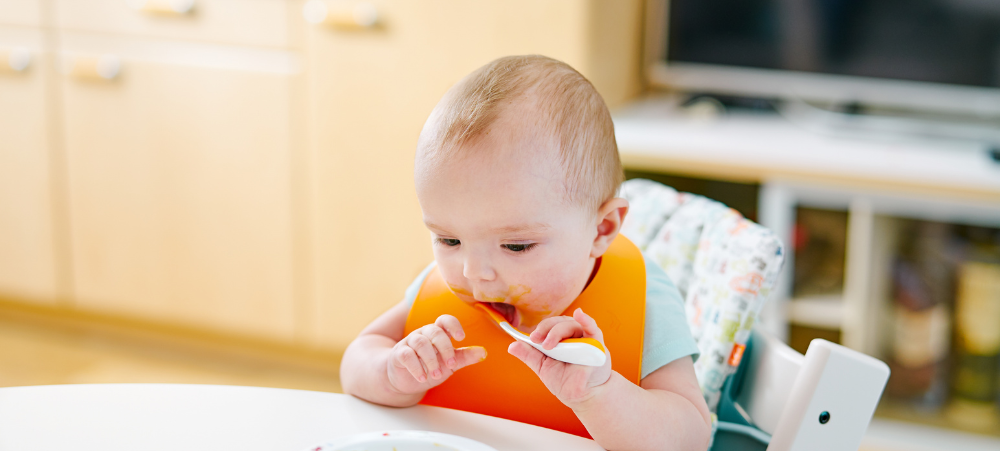
Honestly, as a Mom and dietitian there is no reason to start food introductions with rice cereal. Rice cereal has been a long-time staple of the food introduction folklore, but there is no science or even practical reasoning behind it.  Rice cereal has very little nutritional value.  It is starchy, full of carbohydrates with little to no protein or fat and very few vitamins and minerals.  Even the iron that is added to most brands is very poorly absorbed and frequently contributes to constipation. And that whole “add rice cereal to the bottle to make them sleep through the night” idea?  Sorry, it’s a myth. Why go for rice cereal when we have so many other delicious options?   Here are some ideas for the different age groups: 4-6 months, pureed food (the Allergy society recommends to wait until at least 4-6 months before introducing solid foods.  I strongly agree.  There is no downside to waiting past 4 months, as mothers milk is by far the best and most nutritious food.) Avocado (a great first food!  Full of healthy fats, mild in flavour) Carrots (add a drizzle of olive oil to increase the calories) Sweet potato Hubbard squash/butternut/pumpkin (mixed with a little cinnamon – yum!) Pear Banana Apple Mango 6-9 months, pureed food, start small finger food Berries (except strawberries, which can be allergenic – wait until 12+ months to introduce those) Broccoli, kale, chard and other “brassica” family vegetables Cucumbers Yogurt Cream cheese Poultry (even though it’s expensive, organic is really the best) Ostrich or venison Lamb Pork Egg Nut butters Beans and lentils (mixed with some chicken stock – yummy!) Sunflower and pumpkin seed butter (thinned) Grains like oats, rice, quinoa, buckwheat Blackstrap molasses (you can add a little to just about everything to increase iron and calcium) 7-12 months, mashed or finger food Orange and other citrus Strawberries Grapes Tomato Barley, rye and wheat Mushrooms Honey Soy Beef (pureed beef stew in tomato stock is so delicious!) Obviously there are a lot more foods.  Fruit and Veggies can be introduced daily, new one every day to increase range and variety. With the protein foods – Start with one food at a time and wait 3-4 days before introducing a new food (this is to see if there is a delayed food intolerance that may not be immediately noticeable). Once one food is well tolerated you can mix and match (or mix and mash) – e.g., chicken and pumpkin, avocado and peas. There are lots of opinions on how to introduce foods and when to add spices and herbs.  Personally, I think adding flavour is a great idea while the child’s palate is still developing.  Many infants start with extremely spicy curries and peppered dishes.  I don’t recommend that – unless your family is already used to some heat – but definitely consider adding a dash of cinnamon, a pinch of paprika, or some ground herbs like basil, thyme or oregano.  Just remember that infant portions are very small, so the spice needs to be proportionate. Making your own is so much more fun (and less expensive) than buying baby food jars.

Play Is Very Important For Your Child’s Development And Education
Parenting Hub

Play Is Very Important For Your Child’s Development And Education

As parents we constantly worry that we are not giving our children the very best educational foundations to prepare them for the adult, working world. We want our children to be a success in this highly competitive, fast-moving world of technology and we will pour our time, effort and money into extra-mural activities and extra-lessons in order to achieve just that. Sadly, this often comes at the expense of time spent in simple, unstructured play. More and more today, play time is being lost to structured learning activities. This does not simply reduce the freedom and joy of childhood; it removes a cornerstone of development. Yes, play is actually an essential part of child development and therefore of learning! Let’s look at how play helps your child’s development: Gross motor skills: It is easy to see how running, jumping, climbing and swimming develop your child’s muscle strength and coordination. What is less obvious is that if your child’s sporting activity becomes too regulated too soon, he is going to specialise before he has developed an overall good coordination. The more diverse a child’s physical play can be, the more chance he has of developing his muscles and overall coordination in a balanced way. He is less likely to develop early tight tendons ( I see many children with tight tendons at the back of the knees) and less likely to develop weak core muscles (we are seeing more and more young children walking around with poor posture due to weak core muscles). So encourage your child to do unstructured physical fun activities, such as climbing trees, sawing wood, jumping on a trampoline, before you set him on the road of specialised coaching in a specific sport. Fine motor skills: So many parents, in their keen desire to prepare their child for school, give them workbooks and pencil and paper tasks. Many parents begin teaching their child to write so that they can “hit the ground running” when they enter school. Unfortunately, this can have the negative effect of your child developing an inefficient pencil grip, which hampers writing for many years to come. This is because using a pencil correctly requires a child to have finger and thumb stability and a fairly high level of coordination. The best way to help your child be ready to learn to write is to play lots of hand-strengthening games at home. Games that include flicking marbles, crumpling paper, cutting, beading, tying knots and weaving pieces of paper to make table mats. Climbing on the jungle-gym is also a very good way to help your child develop both the coordination and hand muscle strength to prepare him for easy and efficient writing. Sensory Integration: We need all our senses to work and interact together so that we can be comfortable in our environment. Children begin developing their senses and the communication between them through interaction with the environment. The more opportunity children have to play with diverse media and in different sensory settings the better they can develop their sensory systems. A child with an inefficient sensory system struggles to work and learn at his real potential. Visual perceptual skills: Visual perception develops through a child’s interaction with his environment. When a child stretches his arm to reach a high branch, or climbs through a tunnel in an obstacle course, he is developing his spatial perception. Shape perception is developed by a child grasping and manipulating many different objects in play. When he cannot find the toy he wants and has to search for it in his toy-box, he is developing figure-ground perception. Figure-ground perception helps him separate the words from a body of text for reading and find his place when he is copying from the board in school. Verbal skills and Language: Children playing are constantly talking, either with themselves, explaining the aspects of the imaginary situation, or with the other children involved. Researchers have found that less verbal children speak more during imaginary play. In imaginary play, children are therefore experimenting with and developing their language and communication skills. Playing games where word sounds are changed and learning silly rhymes or making up nonsense words, helps children develop their phonics skills and auditory processing. If these are simply taught in a formal way, the child feels no real ownership and finds it harder to remember all the different sounds the written letters represent. If he plays games and experiments with the sounds in words, his feeling of being in control of the words and the sounds is greater, making it easier for him to learn and remember his phonics. He develops an actual concept of how sounds make up words. The reading programme I developed uses play to build phonics skills, the games continue the child’s reading development with fun and movement. This reduces the sense of apprehension so many children have around learning phonics and reading and allows them to develop their skills, while discovering that reading and the written word is fun. Thinking skills (cognition): Thinking is a kind of “inner speech”. We talk silently to ourselves to think through things and solve problems. Children in imaginative play begin to develop this skill through talking aloud and explaining everything that is happening in the game. (Think of the children playing in the “home corner” in your playschool and how they tell each other what to do and talk to the dolls and teddies). Slowly, as they become more practiced, this talking changes to become “inner speech” (they think it but don’t say it out loud). This is a major foundation for developing thinking and reasoning skills. We also know that showing a child how to do something has far less educational impact on him than providing him with the material and allowing him to play and experiment and discover for himself. Reading: To read well, a child needs to have developed the ability to notice the separate sounds in words. He also needs to be able to recognise

What Role Does Nutrition Play When It Comes To Your Child’s Sleep?
Good Night Baby

What Role Does Nutrition Play When It Comes To Your Child’s Sleep?

Not as much as you might be thinking…. Very often, when we talk to clients their main concern is that milk, milk supply, solids or the lack thereof, are the causes of their child not sleeping. This is a natural reaction due to the kinds of information new mothers are exposed to. In hindsight, I am embarrassed to admit, that I was shoving (and I mean, literally: forcefully, SHOVING) rice cereal down my 3 month old’s throat because I was convinced that he was hungry. This was supported by the sage advice of the older generation, who insisted that once I started feeding my solids, he’d magically start sleeping through. I also tried (with little success) “topping up” my baby’s breastmilk with formula because—as the nurse was telling me—he continued to wake at night because he is NOT receiving sufficient nutrition from me. I was also informed by loving friends and strangers alike that I should change the formula that I’ve selected for the young one, because my baby might in fact be lactose intolerant, therefore the current formula was causing him discomfort as it was being processed by the digestive system. Does any of this sound familiar? With the popularity of this type of ill-advice, it is very easy to fall into the “over-nutrition” trap. Moms, just because you are breastfeeding does not mean your child is not able to sleep through! What If I told you that only 5% of sleep problem cases have their root causes in nutrition challenges!? It is far more likely that that your baby has not yet developed the skill of soothing him/herself, and therefore nutrition is not the problem. The fundamental rule to remember is that your baby’s sleep is regulated by his/her brain and not by the stomach. When nutrition does play a role: Nevertheless, a hungry baby will not sleep well either; so here is a checklist to use to rule out whether nutrition is the problem: Is your baby growing according to his/her growth curve? Essentially, is your baby gaining weight steadily? Is your baby older than 6 months? If “yes”, solids can be introduced. How old is your child? If your child is younger than a year, milk is more important. If your child is older than a year, solids should be the primary source of nutrition. Does your child receive protein rich nutrition if he/she is older than 6 months? Does your child have a sufficient intake of minerals like Zinc, Magnesium and Iron? Does your child eat/drink too much salt, sugar or caffeine? These additives could spike energy levels, leaving the child in a hyper-alert stage. Is your baby drinking too much water, rooibos and/or juice? Remember, juice has a high concentration of sugar/fructose. Sugar is a drug – like it or not. We would live to believe that the hype around sugar is no more than drama-mongering by puritan foodies. Unfortunately they are right. People die from diseases every day that started (and ended) with their relationship to sugar. By sugar I am referring to high fructose corn syrup, which appears in just about every kind of sweetened convenience food, drink and confectionary. As well as good old table sugar. Of course there is a place for sugar, but when the average person has no idea about moderation it is good practice to abstain as much as possible. Possibly the most interesting research regarding sugar is not only the effect on the endocrine system, but the effect on the brain.  Researchers reported in the “Neuroscience & Bio-Behavioural Review Report” in 2008 that “intermittent dietary sugar consumption alters extracellular dopamine in the brain, much in the way an addictive drug does. Moreover, when this intermittent sugar consumption ceases, dopamine levels are affected and signs of withdrawal can become evident. Not only can extracellular dopamine levels be affected but so too can the dopamine receptors themselves.” The sugar addicts and chocoholics were right! To  initiate  a  restful  sleep  we  need  to  encourage  foods  that  support  sleep-inducing  neurotransmitters  such  as  serotonin  and  melatonin.  Traditionally  these  are  foods  rich  in  tryptophan  and  B  complex  vitamins.  Growth  hormones  are  also  released when  we sleep  and these are essential for not only growth but also healing and repair.

Typical Teen or a Teen in Trouble?
Parenting Hub

Typical Teen or a Teen in Trouble?

By Janine Shamos Teenagers have their good days and their bad ones. But every so often, a learner will sit in class and he or she isn’t simply ‘having a rough day’; they didn’t just miss the bus or just break up a relationship or just fail a test. They are struggling in life. And like most teens, they try very hard to hide it, to seem normal and unaffected. But, if you know your learners, if you really see and feel your classroom, you’ll understand that something deeper than a ‘just bad day’ is going on. “We see our kids in the classroom daily, in the playground and on the sportfield which gives us a repeated look at their patterns, personalities, and concerns”, says High School educator, Rose. “We sometimes know kids better than their own parents because we see very different sides to them at school. We are perfectly positioned to recognize the warning signs when things go wrong.” Depression is not only a grown-up concern. Thousands of teenagers struggle with depression each day. Trying to manage all that teenage life has to present is hard enough for the average, happy kid. So, when any form of depression sets in, their issues multiply, their troubles magnify, and they begin to see life through less hopeful eyes. According to the South African Depression and Anxiety Group (SADAG), an estimated one in five children and adolescents has a mental health disorder, and one in 10 has a serious disorder and may have considered suicide. In South Africa, suicide is the second leading cause of death in the 15 to 24 age group. The facts are scary: 90% of people who develop a mental disorder start showing warning signs during their teen years; youth with a mental health disorder will often have significant impairments at home, school or with peers, and over 60% of youth with a mental health disorder don’t get the treatment they need. According to the National Youth Risk Behaviour Survey (2008), 23.6% of South African youth felt so sad that they stopped doing usual activities, 20.7% were considering suicide, 16.8% have a definite suicide plan, and 21.4% have attempted suicide at least once. The prevalence of suicidal and depressed feelings increases by grade – 19.5% of Grade 8’s, 21.4% of Grade 9’s, 24.2% of Grade 10’s, and 29.7% of Grade 11’s feel helpless, hopeless and depressed. What does that mean in terms of your typical high school classroom? Teachers have been shown to be effective in detecting mental health issues in their learners. “Teachers are in a great position to identify teens at risk, because they have the greatest access to the adolescent population over the longest period of time”, says psychologist Liane Lurie. “Therefore they have the greatest opprtunity to observe changes in teen behaviour and performance, identify vulnerable kids and take appropriate action.” Mental health problems in teens are real, painful and, left untreated, can have serious consequences. Knowledge and education are key if we are to save lives. “The more you know about teen depression, the better equipped you are to intervene”, says SADAG’s Cassey Chambers. SADAG offers teachers’ workshops as well as school-based talks to empower teachers and learners to recognise the warning signs and take action. . SADAG is open 7 days a week from 8am to 8pm on 0800 21 22 23 (toll-free) or SMS 31393. “Some warning signs and behaviours may be simple, obvious to pick up, while others are more hidden and complex. But no matter how depression presents itself, we can help”, says Chambers. Seeing the signs, talking about the problem, taking appropriate action and offering support can go a long way toward getting a teenager back on track. “We must remember that most depressed or vulnerable teens are looking for help but have no clue how to ask for it”, says Chambers. The sooner a mental health disorder is recognized, the greater the likelihood that treatment will be effective. What you know and what you do will make a real difference in a teen’s life So how do you know if a grumpy teen is being ‘typical’ or if they’re ‘troubled’? Teenagers face many pressures, from the changes of puberty to questions about who they are and where they fit in, and trying to assert their independence can lead to fights with parents and teachers. With all this ‘natural’ drama going on in a teen’s life, it isn’t always easy to differentiate between depression and normal teenage moodiness. If you’re not sure whether a teen is ‘typical’ or ‘troubled’, read the warning signs at the end of the article and consider how long the symptoms have been present, how severe they are, and how different the teen is acting from his or her usual self. “While some ‘growing pains’ are to be expected as teenagers grapple with the challenges of growing up, dramatic, long-lasting changes in personality, mood, or behaviour are red flags of a deeper problem”, says Lurie. There are 6 most common symptoms that teachers see in the classroom that are warning signs that something is wrong. Remember that while a teen might not be depressed, there may be other problems or issues they are grappling with. Loss of enthusiasm and interest: It’s true that some high school learners don’t show much drive, most have some level of investment, whether academically or on the sports field. When that shuts down for an extended period of time, your warning bells should be going off. Headaches: Headaches have always been an early indicator of stress and depression, so be aware if a learner continually talks of headache pain. Fatigue: Teenagers do admittedly sometimes look and behave like zombies. But when a learner continually looks exhausted, take notice. Hygiene and appearance: While teen fashion is often odd to say the least, a general disinterest in caring for himself is a clear warning sign that something’s wrong. Closely watch the learner whose physical appearance declines and remains that

How To Grocery Shop With A Baby
Parenting Hub

How To Grocery Shop With A Baby

Yesterday I started a baby massage class. I was disappointed to find out that it would be me massaging my baby, and not the other way round. Surely I deserve a little bit of deep tissue love? It should be payback for never having any time for myself. Carter’s going through a growth spurt (well, that’s what the books say, as apparently ‘possessed by demons’ isn’t appropriate). This means that my days of having 3 hours in between feeds while he napped and I leisurely applied makeup, showered or pumped boobs are over – at least for the next few days. Just yesterday I ate an omelette with my hands, like a sandwich. I have the deepest amount of respect and sympathy for moms who have had niggly babies from day 1. It’s tough – you love them more than wine, but it’s near impossible to do anything if they don’t let you put them down for even a second. Short of drugging them, the only thing to do is wait for hubby to get home from work or wait for the growth spurt to be over. With this in mind, I wanted to share a few handy shortcuts to motherhood that I heave learnt in the last 5 weeks. Venturing out. When leaving the house for any reason at all, make sure you are always in gym clothes and are slightly disheveled. (Moms, I hear you laughing ‘cos how ELSE does one go out with a new born, right?). The reason for this, and no, it’s not to actually Go to gym, silly, is so should you bump into anyone you know, or even don’t know, they will automatically assume you’ve come from a 90 minute spin class, and will immediately think you Wonder Woman for exercising while looking after a baby. Extra points for smudged or no makeup and vomit on your top (people will just assume it’s  protein shake). Cooking. When making anything, anything at all, make sure you make enough to feed a soup kitchen. Then freeze the leftovers and re-heat for breakfast, lunch and dinner the following week. Your husband will grow to love tofu noodles, promise. Exercise. IF you ever get the inkling to actually do anything of the aerobic nature, then having a goal is key. And by goal I mean a fancy cappuccino or blueberry muffin. I like to take brisk walks to the local Seattle down the road and reward myself with a grande latte and a cheese sandwich. You may not ever lose weight, but it’s a lot more rewarding than going to the gym. Wine. Is very important. I am not ashamed to admit that I now buy wine in boxes as its a lot easier to pour when you only have 1 hand. Just be careful you don’t drop the glass. I mean the baby, don’t drop the baby. Makeup and personal hygiene. Invest in a deodorant that promises 48 hour protection, and you’ve saved yourself a day. Sleep with waterproof makeup on, and wear the sports bra to bed that you plan on wearing the next day. That pretty much leaves brushing your teeth and tying your hair in a mom bun, and you’re good to go. Grocery shopping. I made the fatal error of going to the mall when my baby was asleep in his pram. Taking full advantage of this I thought it was a magnificent time to buy all new wine glasses, drinking glasses, soup bowls and blankets for the house. This left me walking back to my car pushing a pram, a trolley of breakables, a nappy bag a handbag and a 6 pack of milk. School girl error. If you need to do a grocery shop then leave the baby in the very capable hands of another adult and go alone. Although I can’t promise that you won’t dash out for sesame seeds and nipple cream and come back with a thousand rands worth of Woolies goodies and a new lounge suite. Oh, and before you think “but the bitch has time to blog” please note that baby is with granny and I’m writing from the comfort of the hairdressers chair, while holding a dog named Leo. As you do.

Busting The Myths About Teen Suicide
Parenting Hub

Busting The Myths About Teen Suicide

By Janine Shamos All teens are moody; all teens are rebellious; all teens are angry and irritable; all teens are depressed. Aren’t they? Yet most of us still find it staggering that a teen could take his or her own life. Shouldn’t the world be filled with hope and possibility as a teen – not despair so deep that ending your life seems the only option? Teen suicide is a reality for many families. 9.5% of all teen deaths in South Africa are due to suicide and suicide as the fastest growing, and second leading, cause of death in the 15 – 24 age group. The National Youth Risk Survey found an alarming number of high school teens were depressed and suicidal – over 20% had considered suicide in the last month. But despite its prevalence, teen suicide is still shrouded in myth and misconception. It’s crucial we break the myths – there is no better way to prevent teen suicide. The South African Depression and Anxiety Group (SADAG) runs the only toll-free suicide crisis line in the country (0800 567 567) and the only teen suicide prevention programme in schools. “The Suicide Shouldn’t be a Secret programme now eleven years old, is aimed at educating teens and teachers about the warning signs, facts and interventions of teen suicide”, says SADAG’s Cassey Chambers. The programme has been implemented in schools across the country in rural, per-urban and urban schools. Teen suicide is a hard thing to think about, and many people turn a blind eye hoping it’s a problem that will solve itself. LOTTO, has taken the bold step of supporting SADAG’s teen suicide prevention initiative at 30 more high schools across Gauteng. SADAG will be talking to the teens as well as their teachers to demystify the issue of teen suicide. “Teachers have a lot of face time with their students and often see problems before the parents do”, says Chambers. “Too often they don’t recognise behaviour changes as potential problems and don’t know what to do or who to turn to for help. The programme offers that insight and quick access to assistance.” The SADAG programme is open to applications from schools who feel they are in need of such intervention. “If you have students who are at risk or you feel that prevention is key, let us know”, says Chambers. Schools can call Clare or Adri on 011 262 6396 for more information. “I thought that teen depression wasn’t an issue in our school, I thought our kids were ‘fine’ – until we had a Grade 10 student kill himself. It was so out of the blue, so sudden – and he was not the kind of person I would have thought would ever be depressed or want to take his own life. We all need educating”, says High School Educator Dianne. The myths surrounding teen suicide are numerous – and dangerous. “There is still a lot of ignorance – and prejudice – about suicide generally”, says Chambers. “Not only does this mean that those in need of help, don’t ask for it because of fear and shame, but also those who have lost loved ones due to suicide have a far tougher road to acceptance and healing.” US Researcher, Dr Thomas Joiner, refers to suicide as “the most stigmatised of human behaviours.” Many people mistakenly believe that you can’t intervene or make a difference – that a teen who wants to kill themselves will just keep trying until they get it right so ‘why bother’. “I used to think there was nothing you could do, then I heard a SADAG counsellor use the analogy of a heart attack. We don’t just resign ourselves to a loved one having repeated heart attacks until they die, we act and intervene. We need to do the same for teens who need psychological help”, says High School teacher Prudence. One of the biggest and most damaging myths is that if people want to die by suicide, we can’t stop them. The truth is that even teens who are serious about killing themselves can be helped. In the majority of cases, teens don’t want to die – but they see no other alternative. Providing another ‘way out’, another way to ease the pain is often the answer. Many adults are scared to talk about suicide, afraid to bring up the subject in case it makes the teen think about it. This isn’t true. “Simply talking about suicide won’t make your teenager more likely to try it”, says psychiatrist Dr Frans Korb. Frank conversation about suicide could have quite the opposite effect – and save a life. Many parents, teachers and peers believe that teens are all talk. “My friend used to always tell me she wanted to die, and that she was going to kill herself. I never took her seriously”, says 17-year-old Naomi. SADAG warns that up to 80% of teens give some kind of warning prior to a suicide attempt or completed suicide so, while your child may not always do what he or she says (like clean their bedroom), when it comes to talk of death and suicide – take it seriously. Most teens show a number of warning signs. “The key is knowing what to watch for and this is the power of the Suicide Shouldn’t be a Secret programme”, says Chambers. Teenagers who drink a lot, use drugs, run away from home, withdraw from friends, write or draw pictures about death, have trouble at school or go through a break-up may all be at risk for suicide. “There are many warning signs and the SADAG programme helps people understand what these signs mean and helps them put all these signs and triggers into context”, says Chambers. SADAG is open from 8am to 8pm 7 days a week on 0800 21 22 23, or visit www.sadag.org. The programme answers questions like: “My teen listens to metal – they sing about death and sometimes suicide. Does my

Your Diet During Pregnancy, How Important Is It Really?
Parenting Hub

Your Diet During Pregnancy, How Important Is It Really?

With so many myths out there about diet and pregnancy, no wonder new mothers-to-be feel confused about the do’s and don’ts of their own diets. To eat appropriately is the one thing a mother have a lot of control over, and wants to get 100% right, but is so afraid of getting it wrong. We are regularly told that our weight, nutritional status and health during pregnancy and breastfeeding have effect on a baby’s risk of developing disease in future, birth risks, the baby’s health and growth both in the uterus and after birth. Scary as it may sound, with the right dietary advice and support it can actually be quite easy to get your diet right with a few easy tips. Will what I eat in pregnancy influence my child’s eating habits? Want your child to love veggies? Start early. Very early! New research shows that WHAT a woman eats during pregnancy not only nourishes her baby in the womb, but can influence a baby’s palate and food memories before he/she is born. The study found that a mother’s diet shapes her baby’s food preferences and acceptance later in life. Flavour perception develops as early as in the unborn infant and taste and smell continues to develop once they are born. In the womb, a fetus is surrounded and nourished on amniotic fluids, which is filled with the flavours of what the mom has eaten in the last few hours. The fetus starts to swallow large amounts of amniotic fluid from about 12 week’s gestation. By the time a womb reaches her third trimester the fetus’s brain starts to communicate with the taste and smell receptors – for the baby to start to associate with certain flavours and odours in the amniotic fluid. A baby therefore already starts to build a memory bank of tastes and flavours during pregnancy. Amniotic fluid is therefore the first food for the baby to feast on and contains protein, sugars, fat and different flavours of the food that the mother eats. The fetus can detect these tastes and flavours – forming memories of these flavours and will prefer flavours that were previously experienced in the amniotic fluid. It was shown that if mothers who consumed carrot, anise or garlic flavoured food during pregnancy, their infants would be more accepting to flavours later in life. The flavour learning continues when infants experience the flavours of mother’s diet transmitted in breast milk, especially flavours such as anise, garlic, carrot, mint, vanilla. When babies start solids they showed greater liking for and acceptance of flavours to which they had early exposure. This means you can teach your baby to like broccoli from an early age! This varied experiences with food flavours increase food acceptance and may help explain why children who are breastfed are less picky during childhood. Formula tastes the same day-in and day-out. If you plan to formula feed your infant, and worry about the lack of variants in flavours just make sure you introduce your baby to the largest variety of solid food and flavours early on in the weaning period. To conclude, if you want your children to eat a healthy diet (e.g. their broccoli) or more adventurous diet, you should expose them to all the right, healthy flavours early on. Will WHAT I eat during pregnancy affect what diseases my child may have in later life? There are some studies that show that the mother’s diet may affect whether children have the risk for developing diabetes, heart disease, obesity or high blood pressure later in life. During the war, when pregnant women were exposed to very little food, especially in the first trimester, their children were more likely to be born heavier, taller and develop heart disease in adulthood. Some studies suggest that when an expectant mother has too little protein and too many carbohydrates in her diet, the child may have a risk of high blood pressure later in life. This also applies to when you do not supplement your diet with the recommended vitamin and mineral supplements e.g. folic acid, iron calcium and vitamin D. “Over nutrition” during pregnancy also has detrimental effects and may cause the fetus to grow faster than the fetus’s organs and can lead to liver, heart and kidney disease in adulthood. There is also a suggestion in research that if your diet is rich in omega 3 fatty acids (mainly available in oily fish and seeds) during pregnancy it can protect the baby against ailments such as high blood pressure and heart disease in adult life. Should I avoid certain foods during pregnancy to prevent my child from having food allergies? Many scientific studies have been done to investigate whether mothers who avoid certain foods in the diet during pregnancy can control the presence of allergies and eczema in their babies once they are born. They all concluded that babies might or might not present with food allergies and eczema, regardless of the mother’s diet, especially when there is a strong family history of food allergies. They also concluded that avoiding certain food in the pregnant mother’s diet have shown to affect the mother and the baby’s nutritional status. Both may run the risk of missing out on essential vitamin and minerals contributing to an inadequate nutritional intake and is therefore not recommended. You can actually do more harm than good by avoiding anything in the diet for instance nuts, fish, eggs, milk, citrus fruits to prevent allergies in your baby. If you as expectant mother do suffer from food allergies and need to avoid certain foods it would be of benefit to consult a dietitian who would be able to provide you with a nutritionally balanced diet and ensure both you and your baby get all the nutrients you require. Super foods for pregnancy Eggs: It contains choline that helps to reduce the risk of neural tube defects, such as spina bifida. In addition, studies suggest that choline is key to the

Getting Some Sleep
Mia Von Scha

Getting Some Sleep

Sleep deprivation is a form of torture. We all know this, and yet as parents we somehow expect ourselves to go for months or years without sleep and still function (and even be wonderful, calm, kind people). I’m sorry, but if specially trained soldiers crack under this particular form of torture, what makes you think you will be any different? So if your two, three, four or even seven year-old is still keeping you up at night, let’s look at some possible questions you can ask to get to the bottom of the problem. Now step one would be to make sure there are no serious health complications keeping the child awake. A quick trip to the GP can set your mind at rest and get you started on the following investigations! I always start by looking at the kids’ diets… what are they eating? Are they eating more carbohydrates than protein for instance? I would start by cutting out all sugar and refined carbs (wheat, flour, baked stuff etc) and increase fat and protein intake especially at night. It can also help to give a Magnesium supplement before bed (you can get these in a delicious syrup for kids, but please check with your healthcare advisor before adding supplements to your child’s diet). Do you have a proper routine that you stick to daily? i.e. Dinner at a certain time followed by bath, story and bed? Do you start winding down in the afternoons? A consistent routine can help a child to settle more quickly and to adapt to change more easily. How much TV are they exposed to? Television is highly stimulating. Definitely cut out TV right before bed (a bedtime story is much more calming), but you can even try cutting this out altogether and see if it makes a difference. Have they always slept less than other babies? Do they still have a daytime nap? With an older child you can try cutting this out – if they make it through the afternoon in a generally happy state, then leave the nap. If not, add it back in. My kids stopped their daytime nap at 18 months and were perfectly happy without it (and then slept well at night), so don’t always believe that a child needs a daytime nap until they are 4 or 5. What time do they go to bed? What time do they wake up? Do they then seem tired or ok? Some children need less sleep, and putting them to bed before they’re ready is a recipe for disaster! If your child is keeping you awake tossing and turning in your bed, then you need to ask… Have they always slept in your bed? Do they feel safe in their own room? Is there something they need to help them feel more comfortable/safe there? Keep in mind that as adults we generally share a room with a partner and even then we still sometimes get scared in the night and yet we expect a 5-year-old to cope on their own. Do they go to sleep in their own room and then come to you? It may help to lie down with them in their own room until they fall asleep and then do this every time they wake in the night and come to your room – I know it’s time consuming and frustrating especially if you’re sleep deprived, but worth it in the long run. Or if you’d like to keep your child in your room, but still get some sleep, consider having their cot or mattress in your room but not necessarily having them in your bed! There are so many possible factors involved when it comes to children not sleeping, that it is worth doing some investigating to find out where things have gone awry. Hopefully these questions will help you to get started. It is then also worth examining your own belief systems around what is enough sleep, when kids should sleep and where, and whether your needs are less important than theirs. Happy families are a balancing act of making sure that both the parents and children’s needs are being met, and your need for sleep is essential not only to your own well-being, but to the well-being of the entire family. Keep this in mind as you investigate.   And sleep tight!

Stay Well Watered This Winter
Parenting Hub

Stay Well Watered This Winter

If you thought you could cut back on or forego the water drinking during the Winter months you have been gravely misinformed. Although in Winter we do not perspire as much or get as thirsty as we do in Summer, there are many other reasons why we still need to take in adequate amounts of water no matter the season. Read on to learn why we are actually at great risk of becoming dehydrated in cold weather. Water Is Critical To Health You probably have heard that two-thirds of your body is water. This is why humans can go for forty days without food but cannot survive more than a week without water. Three quarters of your brain is water. Your blood is 82% water and your muscles are 70% water. Water is an important structural component of skin, cartilage, tissues and organs and is used by the body to carry out almost all bodily processes. Water improves oxygen delivery to the cells, transports nutrients, cushions bones and joints, lubricates and absorbs shocks to joints, regulates body temperature, removes waste and flushes out toxins, and much more. So What Happens If We Don’t Get Enough? The first sign that you’re not drinking enough water is thirst but did you know that by the time you experience thirst, or a dry mouth, you are already under-hydrated? Taking in too little water can also result in headaches, dizziness, lethargy, muscle weakness and cramps, loss of appetite, constipation, depression, and brain fog. Waking up not feeling refreshed and with aches and pains in your legs may also be a sign. Little or no urination or dark yellow urine is a sign of more serious levels of dehydration. If your urine is clear you know you are hydrating your body sufficiently. Dangers Of Dehydration Continuous water loss over time will speed up aging as well as increase risks of some serious health conditions. Symptoms of the body’s deterioration begins to appear when the body loses 5% of its total water volume. In a healthy adult, this is seen as fatigue and general discomfort, whereas for an infant, it can be serious. Reductions of 15% below our healthy hydration levels could be fatal. In an elderly person, a 5% water loss causes the body chemistry to become abnormal, especially if the percentage of electrolytes is overbalanced with sodium. High blood pressure, rapid ageing and disorientation may result. Even moderate dehydration can result in nasty conditions such as urinary tract infections, kidney stones, eczema, acne, sinusitis, gout and arthritis. In Winter, lack of water and the dry air will dry out the mucous membranes of your lungs, nasal passages and gut, Since these are protective barriers against bacteria, viruses and pollutants, allowing them to dry out leaves the body susceptible to colds, coughs, flu and sinusitis. The reason allergies abound in Winter is probably due to increased dehydration. Water is essential to the functioning of the digestive tract and the removal of toxic waste. If your intestinal transit time (the time it takes for food to enter and leave your body) slows down, then more toxins are retained. Higher levels of toxic waste products in the bowel, lymph, and bloodstream is a proven contributing factor to many illnesses such as chronic fatigue, fibromyalgia and psoriasis. How Do We Become Dehydrated In Winter? The average adult loses about 2.5 litres water daily through perspiration, breathing and elimination. One may argue that water loss should then be less in Winter because we do not perspire much. But have you noticed that we urinate more frequently in cold weather? As a temperature control mechanism our bodies have to get rid of the excess fluid and since we don’t perspire much, our kidneys take over and get rid of this excess through increased urination. The breathing process uses water to moisten the oxygen we breathe in and breathing in cold, dry air actually takes up more water. But there are more factors which come into play in Winter and can leave one considerably dehydrated: In cold weather, most of us will increase our consumption of warming drinks such as coffee and that glass of sherry or red wine in front of the fireplace is exceptionally comforting and warming. However caffeine and alcohol act like a diuretic causing us to urinate more frequently. Fireplaces and heaters dry the air in the room and as such draw moisture from our bodies too. Being outdoors in the cold, dry air will also dry out your skin causing overall water loss from your body. Our change in diet in Winter is also a factor. Raw fruit and veggies such as cucumber and lettuce contain as much as 95% water. So if you eat these you can drink less water. However in Winter we ditch the cold raw salads for more warming foods which have lost their water in the cooking process. How Do We Stay Hydrated? The unfortunate fact is that we just don’t feel as thirsty when the weather is cold. That is why we need to make a conscious effort to ensure we stay hydrated. Start your morning with a large glass of water before breakfast. Your day’s supply of 2 litres water needs to be within easy reach so you can sip at it all day. Take it to work with you in a glass bottle and keep it on your desk or wherever you spend most of your time – not in the fridge where it will be out of sight, out of mind. Take water with you on your travels – preferably in glass bottles or a flask. Make an effort to eat some raw foods with your meals. Salads and fruits are very hydrating as are fresh vegetable and fruit juices made in your home juicer. Reduce your intake of caffeinated drinks and alcoholic beverages or at least have a glass of water with each drink. In a heated room keep the air humidified by placing bowls

Parenting In The Information Age
Heather Hansen

Parenting In The Information Age

There’s no doubt that parenting is not an easy job. It requires enormous dedication, self-sacrifice, patience and love. Even with all that, there is no guarantee that our children will emerge from their childhood into the adults we hoped for. As parents we have a huge influence, however our children are also influenced by their outer circle – siblings, extended family, friends, teachers, school peers, sports coaches, etc. Nowadays we also have the Age of Information to contend with – an ever-increasing influence on our developing children. We had to gradually accustom ourselves to this digital revolution, but our children have grown up with it. It has influenced how they communicate, socialise, learn, think and play. They are continually bombarded with a sea of information through radio, TV, video games and the internet via pc’s, laptops, i-pads and cell phones. They must evaluate whether the information is relevant or not – not a simple task when your brain is still developing! We may remember our own childhoods being carefree, innocent, playful, filled with imagination and wonder but the world wasn’t really like that – we were just blissfully unaware of what was going on around us. So is it possible to raise our children to be responsible, upstanding adults who care and contribute to society? Yes, definitely; we just have to be more aware and in touch, keep up to date with technology and be good role models. We cannot bury our heads in the sand – we have to embrace this information age and keep ourselves and our children informed of the potential risks and consequences of using all the devices they have at their disposal. Some of these are: Addiction Many kids (and adults) are completely addicted to their cell phones. They feel out of touch and concerned they’ll be left out if they are not in touch 24/7. Children may also be addicted to playing games on their i-pads, playstations, x-boxes or computer video games. Health Risks The jury’s still out, but some medical research indicates that EMR’s (electro magnetic rays) emitted by devices like cell phones and i-pads can affect our children’s brain development and affect their sleep patterns. Many kids stay on their devices until the wee hours every night eventually causing sleep deprivation. RSI (repetitive strain injury) aka BlackBerry Thumb from all that texting is on the increase. Brain tumours, breast and testicular cancer are also a potential threat. Social skills Some sociologists worry that soon kids may be unable to make friends and maintain relationships without their cell phones. They don’t always give one-on-one interactions the attention they deserve due to being distracted by their phones. Face to face communication skills are being affected. Not everyone has good cellphone manners! Inhibitions lowered With the press of a key, a child can have his/her reputation ruined. Sexting is becoming a huge problem – sending inappropriate photos or text messages which are then distributed far and wide. More and more boys are accessing porn (even 9/10 year olds) which gives incorrect information, takes away the sanctity of sex, objectifies girls and women and is quite possibly linked with entitlement or violent behaviour later on, in addition to affecting their sexual response system as an adult. Cyber bullying It’s on the increase everywhere including SA. A study done in 2012 indicated that one in five high school learners in Gauteng have been a victim. Children don’t realise that putting their nasty thoughts into words online can have a huge impact on their target and on themselves. It may not just break school rules, but may also have legal implications. Predator risk People can be whoever they want to be on the internet. Children are particularly vulnerable because they may equate their popularity with the number of contacts on their cell phone, FaceBook, Twitter, SnapChat, Instagram, Tumblr, etc. Throw in the fact that they are going through puberty, unsure about their attractiveness and want to fit in and be accepted, and it’s potentially a recipe for disaster. Children accept other kids as contacts even if they’ve never met and are “followed” by total strangers. Predators cast their nets out far and wide and children are often targeted and groomed for nefarious purposes. Children don’t realise that the digital world is like a huge filing cabinet and everything they say and do is stored there for a long time, if not forever. More and more schools, universities and potential employers are looking at social media profiles to get an idea of who the person is before they make a decision on whether or not they will accept them into their institutions. One tiny mistake can have a ripple effect and make a lasting impact on a child’s life. Parents should be friends with their children on BBM, FaceBook and other social media platforms to keep an eye on their status and watch out for inappropriate posts and content. You don’t have to overdo it and make comments all the time – respect your child’s space while watching over them. You should also check out their cell phone from time to time (you should have their passwords). Explain that your responsibility to keep them safe overrides their right to privacy!

Does Your Daughter’s Social Media Profile Reflect Who She Really Is?
Heather Hansen

Does Your Daughter’s Social Media Profile Reflect Who She Really Is?

The other day I read an excellent blog written by a mother of boys addressed to all the young teenage girls out there. In it, she says: “I know your family would not be thrilled at the thought of my teenage boys seeing you only in your towel. Did you know that once a male sees you in a state of undress, he can’t quickly un-see it?  You don’t want our boys to only think of you in this sexual way, do you? And so, in our house, there are no second chances with pics like that, ladies. We have a zero tolerance policy.  I know, so lame. But, if you want to stay friendly with our sons online, you’ll have to keep your clothes on, and your posts decent.  If you post a sexy selfie (we all know the kind), or an inappropriate YouTube video – even once – it’s curtains. I know that sounds so old-school, but we are hoping to raise men with a strong moral compass, and men of integrity don’t linger over pictures of scantily clad high-school girls.” It got me thinking because I have two sons – one soon to be 15 and the other turning 12. I too hope to raise boys with a strong moral compass. I too question some of the photos posted by young girls on SnapChat, Instagram, FaceBook, Twitter and other social media platforms. I don’t think these girls take the time to think about the fact that by posting scantily clad or pouting, provocative poses, they are giving our boys a message. They are doing themselves and other girls a disservice by encouraging male sexual objectification. Sexual objectification occurs “when a girl or woman’s body or body parts are singled out and separated from her as a person and she is viewed primarily as a physical object of male sexual desire” (Bartky, 1990). Not only this, but Fredrickson and Roberts (1997) asserted that women to varying degrees internalise this outsider view and begin to self-objectify by treating themselves as an object to be looked at and evaluated on the basis of appearance. This can lead to various issues like eating disorders, depression and sexual dysfunction. We need to keep reiterating the message to our kids that there’s a lot more to girls than just how they look. How they act is so much more important! Having said that, girls need to think carefully about the message they’re putting across when they go out wearing tight little shorts or tiny minis and skimpy tops showing lots of cleavage. Just because celebrities do it doesn’t mean it’s okay at their age. One of the questions I ask in an exercise I do with boys is: “Do you think girls are asking for trouble if they wear revealing clothing?” The vast majority say YES. There’s a fine line between trendy and sluttish. Interestingly, many of the boys I’ve talked to said that although they’re happy to look at (and perve over) “hot girls”, they’re far more likely to have a longer-term relationship with girls who are comfortable enough to be “one of the guys”, confident and comfortable with themselves, funny, honest, loyal and intelligent. Girls have so much power – they don’t need to be sexually provocative to attract boys – at least not the right kind of boys – the ones who’ll stick with you through thick and thin! So here’s the thing. You may get the attention you crave if you portray yourself as a sexual siren, but will it be from the sort of boys you want – boys with integrity, who really care about you as a person – not just you as a sexual object to be used and then discarded for someone else? Bottom line is girls, if you want to be taken seriously, don’t sell yourself short. If you want to be respected, treat yourself with respect. Think before you post.

Natural Consequences
Munchkins

Natural Consequences

It’s a parent’s job to make the rules, it’s the child’s job to try and break them. – Anonymous A natural consequence is a result of an action happening from inexperience or an accident. For instance: ‘If you ride your bike over the step, you will fall and hurt yourself.’ ‘We have asked you repeatedly not to play with your ball in that area. However, you kicked your ball where there was a thorn bush and it punctured. I am sure you are really disappointed.’ A logical consequence is that as a result of disobedience there is a price to pay to help you remember the next time. For instance: ‘If you forget to put your bike away, it will be taken away for a few days.’ I asked you to sit and drink your juice. You chose to get up and so it all spilled. Unfortunately you cannot have any more.’ Both of these examples are extremely effective ways of encouraging a change of behaviour. Allowing children to suffer natural and logical consequences allows them to experience disappointments from making small mistakes or bad decisions, yet still develop winning skills in the process. If they never learn to feel and overcome such feelings of disappointment, they will struggle to cope with the hardships of life. Showing them empathy and unconditional love through this process helps them to feel like winners every time they ‘lose’.

Sidebar Image

Scroll to Top