Advice Column

Advice from the experts
Avoiding the Morning Rush
Parenting Hub

Avoiding the Morning Rush

Written By: Nigel Sloane (Headmaster at Pecanwood College: Preparatory) We have all experienced it before. As you are getting into the car to go to school, your six year child reminds you that she needs something for “show and tell” that begins with the letter “Y”. You are already late for school and now spend the next twenty minutes looking for a yo-yo or a toy Yak! The result of this sort of thing is a stressed and worried youngster arriving at school, who will not give of her best at school for the day. Not only that, but you as a parent are probably also stressed and up-tight knowing that you are going to be late for your eight thirty appointment. The secret is to do as much as you can the afternoon/evening before and look at the various aspects of a school day. To do this you need to have a school calendar, fixture list and make sure that you are up to date with school happenings. Reading the school newsletter and keeping up to date with the homework diary will give you a head start. As with all things, planning and preparation are the key. A well placed white board with all the week’s happenings is also a very good idea. Preparation is the key: Time needs to be spent every afternoon or evening listening to reading, helping with whatever homework that there is and generally ensuring that your child is up to date. Make sure that you have read the homework diary and that everything needed is in the bag for the next day. This includes stationary, library books and any items such as a toy for “show and tell”. Do all of this in conjunction with your child so that they can learn about planning and independence. Check the diary or fixture list and see if any sports clothing is required. In summer there may be days when swimming takes place and it is essential that the costume is in the bag. Throw in a towel and warm clothing if needed. If there are regular item such as hats or sunscreen, make sure that these are in the bag. Leave the bag in an easily accessible place near the front door. Once again, involve your child in the process. Get that lunch box and juice ready. Either have it in the fridge if there is something perishable, or actually put it in the school bag. Set out the clothes and shoes for the next day on a chair in the bedroom to ensure a speedy get up and go session in the morning. This will avoid the shock of discovering in the morning that all her socks are still in the washing machine. Other tips to avoid problems include making sure that all clothes, sporting items and all personal possessions are labeled. Hopefully this will cut down on items going missing and causing more stress in your preparation. Plan the breakfast and set it out if possible the night before. If you can encourage your child to get started on their breakfast without supervision, this in itself will save you precious time. With time, hopefully you will be able pass on many of these responsibilities to your child so as to create an independent and responsible youngster who can do things for themselves. As parents it is vital that we teach children how to look after themselves; however they do need to learn these processes. These are not skills that children will just acquire, but rather that they need to be taught.

Play is crucial for early child development
Parenting Hub

Play is crucial for early child development

Only 29 percent of South African children have access to safe, child-appropriate play areas in their communities, this according UNICEF, but a local organisation – Play Africa is championing for this change countrywide. Gretchen Wilson-Prangley, CEO of Play Africa – a social enterprise organisation driving inclusive public learning for the country’s most vulnerable says play is “exceedingly important” for children of all ages and an integral part of early learning and healthy social development. “Neuroscience has confirmed that the first few years of a child’s life is crucial for early learning. And play forms part of early learning and is far more valuable than we realise,” she says. Wilson-Prangley says play sparks imagination, enhances creativity and problem solving capacities, promotes teamwork and helps to instil empathy and compassion for others. “I believe in the importance of helping to advance children’s basic rights and this includes the right to play,” she says. And since many South African children lack toys and other learning materials that can help stimulate a range of child-initiated, open-ended activities which bolster cognitive, physical, social and emotional development, Wilson-Prangley explains that her organisation seeks to promote one single message – there is no cost to play. Their workshops encourage parents and children to make use of everyday materials when playing. “We demonstrate just how to transform everyday items into play materials using the imagination. Few people know that you’re able to make a robot or a rocket ship using clean milk containers, or a car out of empty loo paper rolls. What’s important is the process and the imagination and creativity it stimulates,” she says. Further, she says play is a “good way to engage” and helps children make use of their imagination; she also describes it as “pleasurable and enjoyable”. “Playing overall gives children an opportunity to stretch their thinking and imagination, it also invites repeated active engagement which is highly beneficial for children of all ages,” Wilson-Prangley says.  

Sleep Saviours From Pure Beginnings
Parenting Hub

Sleep Saviours From Pure Beginnings

Ask any parent what they would like for their Birthday and they will reply SLEEP. Sleep issues are common which young babies and children. Pure Beginnings can’t help you with rocking your tot to sleep but we can assist with these two great products. Pure Beginnings Soothing Baby Massage and Bath Oil (R119.99) The Pure Beginnings Soothing Baby Massage & Bath Oil contains a blend of moisturising and calming oils to nurture and protect delicate baby skin. There are TONS of benefits of baby massage. Here are some benefits outlined by Debbie Knighton-Fitt, Pure Beginnings pregnancy ambassador and author of Our Greenish Life Blog. It is a fantastic way of affirming your bond with your baby (which is critical if you understand how babies’ brains develop). Encourages digestion and eases baby’s colic, constipation and gas/wind. Improves blood circulation and skin conditions. Encourages sensory stimulation and routine building. Helps build parents and baby’s self-esteem. Improves baby’s health and general well-being. Helps baby sleep for longer and stimulates neurological development. Helps you become more confident in handling your child and better at recognizing their needs. Research has shown that baby massage can be a way in which a mother engages in positive ways with her baby (relieves stress for both mom and bub). It can be a great way for partners, grandparents and siblings to bond with the newest addition to the family. Regularly massaging your baby may help them to sleep and settle better too. Your baby’s muscles relax, and breathing becomes deeper as massage raises levels of the ‘feel-good’ hormone oxytocin in both you and your baby. This helps you both feel calmer and relaxed. (This can also help with breastfeeding). Using only pure natural plant oils, the product is 92% organic and 100% natural. “Our baby range is well known for its purity and safety”, says Bruce Moore-Gordon, owner of the Ecocert certified company. “When launching our massage oil for use on babies, purity and safety were top of the list. We specifically selected oils which are the most suitable for baby and infant skin, and we then sourced the purest organic supply of these oils”, says Bruce. As per the very strict standards of the brand, there are no synthetic chemicals in the product. These can cause inflammation or irritation of the skin. In addition, the baby oil contains no synthetic colourants, parabens or any petrochemically derived ingredients such as mineral oil. The Baby Massage & Bath Oil is not intended for use exclusively as part of baby’s bedtime massage routine. A few pumps can be added into baby’s bath water, which will help to lock in moisture and hydrate the skin. Since it is 100% natural, it won’t clog pores and will allow baby’s skin to breathe

Make Maths marvellous at home
Parenting Hub

Make Maths marvellous at home

Cindy Glass, Founder and Owner of after-school remediation franchise, Step Up Education Centres says that Maths is an interesting subject that is directly linked to one’s emotions, “Our children either love it or fear it and there is very little to be found in between!” She adds that the good news is that there are ways to promote Maths at home, “Your child will improve in Maths when he sees the value of fun, real-time application of the subject in his life.” In fact, she says that the holidays are the perfect opportunity for you to do exactly and share her tips on how you can re-ignite your child’s passion for Maths in time for Term 3: 1. Get creative in the kitchen Measurement and capacity are concrete concepts often taught in abstract ways.  By simply encouraging your child to help you weigh and measure ingredients in the kitchen, the understanding of measurement in Maths is easily mastered! Concepts such as millilitres and litres are better understood when DOING rather than on a sheet of paper! 2. Eat pizza!  The concept of fractions is difficult to master if your child cannot see the fraction in action!  One of the best ways of explaining fractions is by simply ordering and eating a pizza! Remember, a pizza is almost always cut into eight equal pieces – each piece is one eighth of the whole pizza.  Two pieces is the same size as one quarter and so on! 3. Go shopping together Younger children battle to understand the concept of Rands, cents, totals and change.  Every moment is a teachable moment. Using a calculator to add the values of the till slip and working out how much change you received can be done at home. You could vary the scenarios. “What if I paid with R100?”, or “Would I have enough money to pay for the groceries if I had two R10 notes and one R20 note?” 4. Mental Maths in the car Play maths games in the car.  Add the digits of the number plate in front of you as quickly as possible. Multiply the first and last digits together. Have fun! Road signs are wonderful opportunities to identify shapes as well. 5. Mistakes are ok! Finally, remember that mistakes are okay! The quickest way to block your child’s enjoyment and learning in Maths is to be impatient with mistakes.  A child who does not fear mistakes is more likely to pursue and solve problems effectively! Fear of making mistakes is the number one cause of children battling in Maths! Mistakes are the only way we can learn anything. So embrace the process of learning Maths, warts and all, and watch your child blossom! Sharing our content with parents you know will go a long way to making us smile for the day 

Safe, summer fun for baby’s skin
Parenting Hub

Safe, summer fun for baby’s skin

When the sun finally appears after a long winter it is natural to want to go out into the sunshine and enjoy the long, sunny afternoons.  But, even though your baby might enjoy playing on the grass or getting their toes dipped into the pool, over-exposing their delicate, sensitive skin to the rays of the sun can be harmful. “We know that giving our children an outdoor life is important, however we need to remember that their skin is more sensitive than ours, and care needs to be taken while they are out in the sun, and even afterwards,” says Su-Marie Annandale, brand manager for baby skincare range Krayons. Annandale provides the following five tips on how to look after your baby’s skin while and after they have been in the sun: Keep your child out of direct sunlight by sitting under a tree or put up an umbrella for them to play under. It is also important to remember to always have a hat on hand for outdoor excursions. When the sun is at its hottest 10am to 4pm, try to keep your children out of the sun, or keep them in the shade. Use age appropriate sunscreen. Although it is advised not to use sunscreen for children younger than 6 months, there are exceptions:  if your baby is going to be out in the sun for a time and there is no possibility of cover, use a small amount of sunscreen to their skin protected. Be sure not to put around their eyes or on their hands to avoid stinging eyes. Protect your baby’s eyes with a pair of baby shades. Your baby’s eyes are very sensitive and the bright light can become irritated. Make sure that the sunglasses are UV ray protected. Don’t forget the fluids. During the hotter months it is important to remember that your baby will lose more fluid. A great way to determine this is by checking to see how often you change their nappies. Staying hydrated is also important for keeping your baby’s skin healthy and firm during the hotter months. After your baby has been out in the sun, give them a lukewarm bath to cool down their skin. Since your baby’s skin will be sensitive after being in the sun, opt for cotton wool instead of a facecloth to wipe them down. Finish off with a soft massage using Krayons’ Aqueous cream which is gentle on baby’s skin, and helps to ensure that it is cleansed, protected and moisturised every time. For more information visit www.facebook.com/krayonsbabies Sharing our content with parents you know will go a long way to making us smile for the day 

Why it’s important to monitor the climate in your baby’s room
Parenting Hub

Why it’s important to monitor the climate in your baby’s room

With peak summer months peaking at early 30˚C or even early 40˚C in some places across the country, parents should constantly monitor their baby’s temperature to ensure their little ones are comfortable, even in the heat. In fact, t baby monitors aren’t just for sneak peeks – they can support your baby’s development too. It’s important to understand how climate can affect your baby’s health, what the ideal room climate is, and how your baby monitor can help. While a room that’s a little too warm or humid is no big deal for most of us, babies tend to be more sensitive to temperature and humidity. Too low humidity, for example, can cause the eyes and throat to dry out. And when it’s a little too cold or warm, babies aren’t yet able to regulate their body temperature the way an adult can. So what’s the ideal room climate? Think of the ideal room climate as a range rather than a specific temperature or humidity level. The healthiest room temperature for your little one is somewhere between 16-20˚, and humidity levels should ideally be kept between 40 – 60%. How your baby monitor can help If you’re wondering when all of this monitoring is going to happen in between feeding and comforting and the general business of being a parent, fear not. A smart baby monitor has your back: it continuously tracks the temperature and humidity of a room for you. By setting thresholds for temperature and humidity on the smart baby monitor, you receive notifications when the climate readings exceed these thresholds so you’ll always know whether the climate is healthy for your baby -or needs a little tweaking. Depending on the reading, you can then make adjustments to help keep your baby comfortable. Is the humidity a little on the high side? You might like to open a window to let in some fresh air. Worried about your little one overheating? Make sure your little one isn’t overdressed and consider using an air conditioner to bring the room to a more comfortable temperature. You can then also understand how your baby’s room climate affects their sleep as you’ll be able to see at a glance what kind of room temperature helps your baby sleep best. So you see, your baby monitor really isn’t just for sneak peeks. It’s a simple way to help your baby feel comfortable day and night. So make sure you choose the right baby monitor for you and your little one! Philips Mother and Child Division

“Help, my child is behaving badly at school!”
Parenting Hub

“Help, my child is behaving badly at school!”

The trouble with bringing children into the world is that they do not arrive with user manuals!  How much easier would it be if we could troubleshoot in a manual and find the solution that would solve their problems with minimal mess and fuss! As parents, one of our deep-rooted fears is that our children may behave badly whilst at school, upset their teacher, classmates or, worse, the Principal (whom we have learnt to fear from our own childhood misdemeanours)! As a mom and teacher, Cindy Glass Co-Founder and Owner of Step Up Education Centres can relate. She offers some advice and a new perspective to parents who are navigating the world of not-so-perfect kids. She starts out by acknowledging that negative behaviour at school can affect all who associate with the individual who has behaved badly.  Parents, in particular, can feel angry, frustrated and even helpless when their child consistently chooses negative, self-harming behaviours. “It is very easy for a parent to slip into ‘reaction’ mode and punish the child in ways that they may have experienced as a child. It takes great courage, however, to choose to understand these behaviours and find positive, creative solutions,” says Cindy. She adds, “Consider this:  Every choice we make, every action we take is based on how we feel about ourselves as a person!  Negative behaviours at school have a solid and powerful root – FEAR. Fear of rejection, fear of not being good enough, fear that the teacher will notice that he is struggling to understand the work, fear of being alone and fear of not being noticed and acknowledged. Think about it!   Many children would rather get into trouble for negative behaviours than it be discovered that they are not coping with the pressures of school!” So what can you do? Cindy says that children need to understand that all actions have consequences. “Positive choices result in positive consequences and the same applies to negative choices.  Being consistent in your expectations and consequences is essential.” “Fair, dependable boundaries are key to establishing a sense of stability within children. It takes courage not to shout, get excessively angry or perhaps even physically harmful toward a child who consistently misbehaves.  I STRONGLY recommend that you read the book: ‘Have a new kid by Friday”, by Dr Kevin Leman.  I did and it completely changed my approach to dealing with my children!” Cindy exclaims. Most of all she reminds parents that harmful words and actions destroy children and says that you should try teaching your child to value WHO HE IS and is so doing, overcome his fears. How? “Do this by choosing to value who YOU are!” says Cindy. There are no easy solutions, but with determination, patience and tons of love, you will be rewarded with more positive behaviours and it will be worth it! Sharing our content with parents you know will go a long way to making us smile for the day 

Handy homework hints
Parenting Hub

Handy homework hints

Homework is generally a painful process that is rarely met with excitement and anticipation. In fact, Cindy Glass, Co-Founder of Step Up Education Centres, the after-school remediation and tutoring franchise says, “In all my years teaching, I have yet to meet a parent or learner who cannot wait to do extra school work in the afternoons!” Whilst countries like Japan, the Czech Republic and Denmark assign little to no homework, South Africa doesn’t follow the same trend. “For us, homework is unavoidable, it is simply a part of our schooling system, whether we like it or not,” says Cindy. With that in mind, Cindy says that we need to not only find a way to help our children complete their homework tasks, but help them to enjoy doing it as well! She offers the following handy homework tips: Create a fun, practical workspace  It is important to assign one specific area in the house to do all school tasks. By doing this you will train your brain to automatically kick into work-mode when you sit down. Have a desk and comfortable chair Have all the necessary stationary Make the space beautiful – display art or any awards/reward charts to keep your child motivated Keep it neat Switch off all distractions for the duration of the homework time Cell phones, TV, games and sometimes even music can be a distractor for both parents and learners. As a result, you both need to switch off (or place on silent) all digital devices. If you are a learner, let your friends know you will be unavailable for that period If you are a parent, switch your phone on silent as cell phone noises can be very distracting, prolonging the homework experience Be clear on what needs to be done By knowing exactly what needs to be done and by when, you will find it easier to complete the task. Use a whiteboard to list the tasks that need to be completed on that day Start with the easy tasks first as this will give your child an immediate sense of achievement For older learners who have projects or longer assignments, decide which part of each will be completed on that day, in addition to daily homework Tick off each task as you complete it Get extra help if you are stuck! For parents, ‘Google’ will tame many-a-challenge.  Phone a friend if you need to.  Whatever you do – do NOT behave negatively – explain to your child that there is a solution to every problem and you can work together to find it! If your child is struggling consistently, seek professional help from an after-school remediation centre. For older learners, make sure that they listen carefully in class. They need to ask their teacher if they are unsure of what is required. Remember, your child is not always going to feel okay about doing homework.  Whenever this happens, Cindy suggests that you incorporate what she calls the ’10-minute rule’, “The first 10 minutes of anything is the worst.  Get through those 10 minutes and you will find that the work will flow more easily and they will begin to enjoy the feeling of accomplishment.”

Kangaroo Mother Care
Parenting Hub

Kangaroo Mother Care

Kangaroo Mother Care (KMC) is a way of caring for premature babies through skin-to-skin contact with their moms. It’s recommended for premature or ill babies because they miss out on critical time in the womb where they would have constantly heard their mother’s soothing heartbeat and been encapsulated in her body’s warmth and safety while getting continuous nourishment and care. Named after kangaroos that carry their babies in their pouches, the method can also be done by fathers, helping them bond with their babies. Huggies® expert, Lynne Bluff, a registered nurse, midwife and childbirth educator sheds some light on this subject. What is Kangaroo Mother Care? Kangaroo mother care (or skin-to-skin care), is a simple, easy method of caring for newborn infants where the baby is placed with just a Huggies® nappy (so mom and baby aren’t continually covered in wee and poo), on its mother’s chest – skin to skin with nothing between the two. Mom can then wrap a shirt around her and her baby, keeping the baby in an upright position between her breasts. Mom uses her own body heat to keep her little one warm.  The human body is incredible, a new mom’s body has the ability to heat or cool her chest in response to the baby’s temperature and in so keeping baby at a well-regulated temperature. When it comes to kangaroo care, more is better. The first two hours after birth are the most important, in terms of easing baby into the world. After that, continued skin-to-skin contact can still be beneficial, especially for preemies that have low birth weights. Consider it an alternative to an incubator. It is also recommended that preemies get frequent kangaroo care for the first 20-plus weeks of life. Do it as long as baby enjoys it, when your baby starts fussing and trying to get off your chest, it’s a good sign it’s time to let him or her do their own thing. What are the benefits of kangaroo care? It helps baby adapt: when your baby was in the womb, they didn’t need to regulate their own temperature. By having your baby skin to skin, it regulates and stabilises their temperature. It boosts baby’s mental development: preemies who received kangaroo care had better brain functioning at 15 years old¹ – comparable to that of adolescents born at term – than those who had been placed in incubators. By stabilizing heart rate, oxygenation, and improving sleep, the brain is better able to develop. Also, the hormones that aid mental growth and stability are activated by skin to skin, whereas a baby not in skin to skin contact with their mom is on high alert and this causes added stress to the little one. It promotes healthy weight: skin-to-skin contact dramatically increases newborn weight gain. When babies are warm, they don’t need to use their energy to regulate their body temperature. They use that energy to grow instead. It makes breastfeeding easier: newborns instinctively have a heightened sense of smell, so placing your baby skin-to skin helps them seek out the nipple and begin breastfeeding. In fact, moms who practiced kangaroo care were more likely to breastfeed exclusively and, on average, these moms breastfed three months longer than those who didn’t practice skin-to-skin care². Premature babies initially will need to be fed expressed breast milk via a nasogastric tube as the sucking reflex may not yet be developed. But once the baby is feeding on its own, the breast becomes very accessible for the babies that are skin to skin with their moms. It helps you make milk: when mom and baby are together, hormones that regulate lactation will help you produce more milk. It reduces baby’s stress and pain: just 10 minutes of skin-to-skin contact reduces baby’s’ levels of stress and makes babies feel calm and safe. Research has shown that when preterm infants are held skin to skin, they react less to heel pricks, a minimally invasive way to draw blood, and a common source of pain among preemies. It helps baby sleep: less stress means better sleep. Preemies who were cradled skin-to-skin slept more effectively and woke up less often than those who slept in incubators. It prevents postpartum depression: various studies show that kangaroo care reduces postpartum depression in new moms. Activity in the mother’s adrenal axis is negatively influenced by childbirth, and skin-to-skin contact may reactivate the pathways to minimize the risk of depression. Plus, oxytocin released from skin-to-skin care decreases maternal anxiety and promotes attachment, further reducing the risk. Kangaroo Care has come to play an important role for mom and baby especially in the case of preemie babies. Those moments of bonding and hugging your little one is what matters.  Huggies® is with you every step of your nappy journey. Your baby gets its first hug from you, let the second hug be just as good. Sharing our content with parents you know will go a long way to making us smile for the day 

Bonitas Talks Babies
Bonitas – innovation, life stages and quality care

Bonitas Talks Babies

When do advise your medical aid that you are pregnant? If you are a prospective member, you need to do so upon application or within 30 days after the completion of your application. If you are already a member with no waiting periods, you can access the out-of-hospital maternity benefits without advising the medical aid that you are pregnant. However, you need to obtain pre-authorisation for the delivery of the baby, which can be done from 20 weeks onwards. Are there waiting periods? Waiting periods may apply to members who join a medical aid while already pregnant. If you join while you are pregnant the pregnancy will not be covered. When do you advise the medical aid that the baby is born and needs to be added onto your medical aid The baby needs to be registered within 30 days from the date of birth to ensure there is no break in cover and your child will be covered from the first day of life. Are there any things you need to know or be cautious about when pregnant regarding medical aid so that you do not find yourself out of pocket We advise members to use doctors and hospitals on the network to avoid out of pocket payments. Bonitas offers a wide range of maternity benefits which includes cover for consultations, amniocentesis and scans as well. These benefits are in addition to savings to give members more value for money. Bonitas advises that any false information or non-disclosure of any material information provided upon application will result in the membership being declared null and void. In addition Bonitas Medical Fund offers Babyline  –  a dedicated children’s health advice line In 2016, Bonitas introduced Babyline – a 24-hour children’s health advice line manned by paediatric trained registered nurses.  They are on the other side of the phone to assist with any parental concerns, or health related issues, 24/7, 365 days of the year. How does it work? Bonitas parents, or their caregivers, simply call the Babyline number on 0860 999 121 to reach a paediatric trained nurse.  Through a series of questions asked regarding the health issue, parents will be provided with professional advice on what to do next. Depending on the symptoms, the advice might be to head straight to the ER or to see a doctor or specialist.  The nurse will advise which healthcare provider is the most appropriate, given the health issue. The services offered by the Babyline include: Home care advice Clinic/primary care/GP referral for the same day Clinic/primary care/GP referral for the following day After-hours care within the next six hours Immediate referral to the ER The Babyline service is available to members across all the Bonitas plans, for children under 3 years. Sharing our content with parents you know will go a long way to making us smile for the day 

Pure Beginnings 100% Natural Insect Repellent Spray
Parenting Hub

Pure Beginnings 100% Natural Insect Repellent Spray

The spray format of the insect repellent uses the same extremely efficient active ingredients as the stick and is convenient and easy to use. 100% natural and contains no added chemicals , which makes it suited to those who have sensitive skin , including children and babies. DEET FREE! Infused with a number of highly effective insect repelling essential oils : Neem, Citronella, Lemon Eucalyptus and Lemon Bush. Ecocert’s organic standards guarantee that: – At least 95% of the total ingredients are from natural origin (water included). – At least 10% of the total ingredients are from organic farming (water included). – At least 95% of the total plant-based ingredients are organic. Pure Beginnings is very proud to be offering South African consumers a product which is not only affordable and effective, but also certified organic by Ecocert giving them the peace of mind that they are making the safest choice for their family. With a great deal of greenwashing ,false natural and organic claims on many products, certification by a recognized organisation makes it easier for the consumer.  

How to ignite a passion for reading in children who resist books
Parenting Hub

How to ignite a passion for reading in children who resist books

Imagine for a moment what it must be like to be a child growing up in a time where technology seems to overrun just about every aspect of our lives. Smart TV’s, smart cell phones, social media, 3D games, YouTube, Google – the list seems endless.  It is no wonder that it is becoming increasingly difficult to instil a love of reading books in our children. Yet, according to Cindy Glass, ex-teacher and Co-founder of Step Up Education Centres, reading remains one of the most important skills for your child to master. “Reading develops the mind, the imagination and language skills.  Reading is key to discovering new things and it assists in mastering the essential skill of comprehension (understanding and applying what is being read).  In addition, reading is fundamental to developing creativity, self-confidence and independence,” Cindy says. It’s no secret that both parents and teachers alike want their children to reach their full potential and reading plays a massive part in that. So, how do you ignite a passion for reading in your child? Cindy provides the following tips that will help foster a love for books: Set the example:  Children who resist and defy what we say are more likely to do what we do.  You will achieve greater success in encouraging your children to read books, if you read books. Take some time to get to know your child: Find out what he/she finds interesting and exciting.  Then, help him/her seek out books that align with these interests.  Your child is more likely to read and enjoy books that support his/her interests. Show a sincere interest in what your child is reading:  Ask questions.  What is your book about?  What is the best part so far?  Do you think I would enjoy reading this book? Bedtime stories: Remember the days when you looked forward to being read to? Read to younger children.  Be enthusiastic.  Have fun! Be patient:  Every child is different.  Children who struggle to read will benefit from audio books –they can follow along in the book while listening to the story. Visit a library together:  Being surrounded by so many books sparks curiosity – few children can resist exploring what a library has to offer! Don’t force it: Avoid the temptation to force your child into reading books.  This inevitably creates dissention and may build walls of resistance that will be difficult to change. We cannot build our children up by breaking them down. It is far more effective to encourage your child to read by being a positive, enthusiastic, excited reading role-model. “The benefits of reading books are clear and to be encouraged.  Patience, enthusiasm and being a positive example will win the race,” Cindy concludes. Sharing our content with parents you know will go a long way to making us smile for the day 

Oops Stacking Block Sets
Parenting Hub

Oops Stacking Block Sets

The Oops Stacking Black Sets, promote creativity, imagination and learning in your child with the latest range of Oops Stacking Block Sets. Available in gorgeous and entertaining themed ranges such as the Forest and the City, these collections of easy-grip blocks provide your little one with all the tools needed to satisfy curiosity, whilst having the most possible fun learning new skills. From counting to learning the alphabet, to more advanced tasks like telling the time, Oops have a range of stacking blocks suited to your child’s learning age and development.  As fore-runners in child developmental toys, Oops is one of Europe’s leading brands and offers only the best quality products at affordable prices. Some of our personal favourite stacking sets include: 0 – Clock! Telling the Time.  30 Piece Set Forest ABC! – Learn The Alphabet With Me. 30 Piece Set City 123! – Learn To Count With Me.  30 Piece Set Guaranteed for hours of fun and all available now at Hamleys (Eastgate, Menlyn, Sandton, Mall of Africa, V&A Waterfront, Greenstone), selected Kids Emporium stores, Me, Mom and Dad (Greenstone), www.takealot.co.za, www.loot.co.za, www.thebabyzone.co.za, www.purplepepperz.com

How to adapt to a new school and year
Parenting Hub

How to adapt to a new school and year

By Dr Claire Symington, Educational Psychologist and  head of the Academic Enrichment Centre at Southdowns College Preparatory “But plants grow again,” She murmured, focusing on the verdant beauty around her. “They put down new roots, create room for themselves in foreign soil.”  – Nalini Singh. Starting at a new school or even moving from one grade to the next can, at first, be a rather daunting experience for a child. Your child may be worried about fitting in, making new friends and/or managing the academic demands. The anticipation may be making them feel irritable, short-tempered and even physically ill. Here are a few points to help your children find their feet when they have been bumped out of their comfort zone. Check your own anxiety: Parents often project their own anxiety about change onto their children which only serves to further exasperate the situation. It is therefore important that your own anxieties about change are reigned in. If you happen to feel very anxious feel free to express your emotions to your child provided you also ensure that you are actively working towards resolving this emotion by focusing on the positive aspects and promoting excitement about the new opportunities that lie ahead. Don’t dismiss their worries: it is important that you empathise with your child about the possible “what if’s” that may be running through their head. Perhaps they are concerned that they may not be able to make a friend, or that the work may be too hard for them or that they are not going to fit in. It is sometimes easy to dismiss these worries as irrational or ramble off a cliché of sorts to ease their minds – but that offers them very little comfort. Rather focus on practical solutions to empower them. If they are worried about the school work suggest that you will be prepared to organise extra tutoring or if they are worried about fitting in remind them of strategies that they could use to promote contact such as finding something that they may have in common with someone else or encouraging them to try out for a sports team. Get your ducks in a row: Smoothing out any potential and unnecessary complications helps to keep the anxiety levels low. Familiarise your child as much as possible with the school’s expectations and culture by visiting the website, visiting the school beforehand and paging through previous yearbooks. Make sure that all the communication regarding school rules, the uniform, bell times etc. is read and understood so that any embarrassment can be avoided. Little things like making sure that they are on time in the mornings or having the right stationery goes a long way in helping them feel more settled. Encourage social interactions: Get involved with other parents at the school by attending parent meetings, joining the PTA or volunteering as a class parent. Encourage your child to do the same by signing up for extra-curricular activities or inviting friends over. Embrace change: Change is inevitable and transitioning from one grade to the next or to a new school serves as an exercise in teaching them how to navigate their way in uncertain circumstances. By exposing your children to new situations they are in a better position to improve their degree of adaptability.  By offering your support and encouragement, your children will be able to experiment with strategies that will serve them well when they come across unfamiliar situations in the future. Be patient: Settling in takes longer for some than others. It is only natural that some parents may feel guilty about their decision to move their child to a new school and it may begin to seem as if your efforts have been futile … remind yourself and your child to be patient. If it does however appear as though they are experiencing severe anxiety or signs of school refusal, it may be a good time to ask your child’s teacher for additional support or contact a professional to assist your child with the transition.  

Parent Involvement: Stretch your vision for a long-term parenting role – Raising Free Range Children
Parenting Hub

Parent Involvement: Stretch your vision for a long-term parenting role – Raising Free Range Children

Written by: Justin Kistan, English & Information Science teacher at Crawford College North Coast Traveler, there is no path. The path is made by walking. ~Antonio Machado It is not that the Way broadens humans; it is that humans broaden the Way. ~ Confucius, the Analects  Where did the term ‘helicopter parents’ originate? Is it from the way they hover over their kids or is it because of the deafening sound they produce when their parental rotors are in a tizzy? Either way, it’s something of a spectacle to behold. We can’t blame parents for wanting the best for their children. It’s something we can all easily identify with. We want the people we care about to be looked after. We want to help them be happy, healthy and successful. But sometimes our help can be a hindrance. We need to ask ourselves difficult questions. When do our concern and best intentions become an obstacle to our loved ones continued evolution instead of an advantage? How do we empower our children so that they are strong enough to live without us?  And perhaps most importantly how do we go about making sure that our children will be amply prepared for the struggles of the 21st century and have the faculties about them to gain from its many opportunities? So where do we start? As the proverb goes, “the best time to plant a tree is twenty years ago, but the second-best time is now.” So, let’s begin with ideas we can nurture and grow now… · Parenting styles differ greatly. Julie Lythcott-Haims in her book, “How to Raise an Adult – Break Free of the Over-Parenting Trap and Prepare your Kid for Success”, mentions her preferred style, “AUTHORITATIVE, which is demanding and responsive. These parents set high standards, expectations, and limits, which they uphold with consequences. They are also emotionally warm and responsive to their child’s emotional needs. They reason with their kids, engaging in a give-and-take for the sake of learning. They give their child freedom to explore, to fail, and to make their own choices.” This style with its balance of strictness and warmth helps engender a child’s trust and respect. We need to help our kids build self-efficacy. They need to see that success comes from doing work that matters and that it requires effort. They need to have faith in their own ability to complete tasks (without help from their parents!) and reach set goals. Foster grit and perseverance. They need to realize that while there will be challenges in life, they possess the tenacity to meet and overcome them. Encourage in them a Stoic mindset.  As Marcus Aurelius said, “What stands in the Way, becomes the Way. The obstacle is the path.’ the world will constantly test them. Can they get past the things that inevitably fall in their way? Will they stand up and show the world what they’re made of? While we’re talking about the self, help your kids develop THE meta-skill of the 21st Century, SELF-AWARENESS, which is the ability to see ourselves for who we are, appreciate how others see us and to begin to understand our place in the world. Self-esteem which is the belief in one’s worth and value is important and must be appropriately nurtured but it is self-awareness that removes the blinkers from our kid’s eyes and allows them the vision to accurately tune into their current station in life. Our children will never get to where they want to go in the future if they don’t know where they are now. Help them develop their will and skill. Teach them to build their competence and with that, they will deserve their confidence. Give them opportunities to enter Flow – “the zone” in which we achieve optimal performance and feel our best. Gaining access to flow means being completely engaged with a task, preferably something you love to do and setting achievable goals. The task is normally something beyond your current level of skill and this requires you to stretch your skill set and reach to ascend to new levels. Kids should find a hobby or seek meaning in their learning which could give them a chance to enter flow. The more they operate in flow, the greater and more spectacular the accomplishments that our kids will accomplish. This is by no means an exhaustive list. But it is a place to start. We need to raise 21st Century Citizens. Future adults who are critical and creative thinkers, resilient and gritty in their approach and most importantly purpose driven. Children who are taught not just to survive life’s hardships but who will seek out and thrive on its challenges.

Children get stressed too!
Parenting Hub

Children get stressed too!

It’s a new school year! It’s exam time! Both of these occurrences during your child’s school life come with their own level of stress – for your child. When your child starts a new school year, or begins exams parents often focus on the stress that they themselves are feeling, rather than taking into account that their child is feeling the pressure as well. “Children don’t deal with stress, or show stress the same way that adults do, and often parents can over-look these clues,” says Carla Yssel, brand manager for Linctagon®. “When children are stressed they are not sure how to deal with it, and this can often manifest itself in a complete change of behaviour – being moody, crying, withdrawing from activities, and even complaining of stomach aches and headaches. Parents need to be on the lookout for these types of behavioural changes when big events in their child’s life occur, such as starting school, or tackling exams.” Although, some stress can be a positive as it can motivate your child to overcome what is worrying them, being over-stressed can cause illnesses. The stress hormone corticosteroid suppresses the immune system, and results in your child getting a cold or even the flu. “We are often consumed with whether our children have the correct stationery, or have prepared enough for their exam, that we forget to actually take care of them,” says Yssel. Yssel provides 5 tips on how to look after your child during stressful times: Be prepared in advance: Make sure that your child has everything they need long before school starts, and gets through all their studying with enough time to revise before an exam. This will give your child the peace-of-mind they require to overcome any stress they may be feeling. Get enough sleep: A good sleep is sure to improve your child’s concentration, and also allow them to feel ready to take on the new day with confidence and a clear mind. Talk to your child: Your child needs to know that you support them, and that you understand what they are going through. Talk to them about what they can expect on their first day of a new school term or year, or that no matter how they do in their exam you will support them through it all. Give them the edge: When your child starts to feel a cold or the flu coming on, give them Linctagon® Effervescent (which can be used from age 12) or Linctagon® Effervescent Junior (can be used from the age of 1) to help get over colds. Linctagon® effervescent and Linctagon® effervescent Junior contain the active ingredient Pelargonium sidoides and with its active support can shorten the duration of the common cold as well as reduce the severity of symptoms with the added Vitamins A and C, anti-inflammatory MSM and immunity enhancer Zinc (Alt Med Review, 2007). This will allow your child the opportunity to get back to what really matters; quicker than usual (Lizogub et al, 2007), and it is suitable for children and adults who are diabetic. Take time out to laugh: Just because your child is writing exams, or getting ready to go back to school it doesn’t mean that all fun needs to end! Laugh with your child; let them forget what they are stressed about, and just have a moment to breathe. Sharing our content with parents you know will go a long way to making us smile for the day 

How drawing develops in a toddler
Toptots Head Office

How drawing develops in a toddler

There are very definite developmental stages in drawing. Every child is different, however when it comes to their art there is a very clear developmental line that can be seen. Keep samples of your child’s artwork at the different stages. Often at our workshops the scribbles done by toddlers are left behind and not seen to have any value. Before your child can draw anything you will recognise that he has to be exposed to different items to draw and paint with. Experience is key to development. Did you know that one of the recognised “tests” that they ask a pre-schooler to do, is to draw a stick figure? Scribbling is typical of a 1.5 year old. This is not about the result but about the process and enjoyment. The more they scribble, the more fun they have and the more they learn to control the medium they are using. This scribbling is more a kinaesthetic activity.  You will notice that after 6 months of scribbling the marks start to become more orderly. Scribbling helps develop hand eye coordination, fine and gross muscle development and hand manipulation. Drawing circular shapes is typical of a 2 – 3 year old. They will spend many a happy time making circles. Once circles have started emerging you will find the very typical stick figure drawing of a 3+ year old. The big head, legs and arms that come from there. As they develop, more of a body image starts to appear, the body, the legs etc. At this stage they start to think about what they are actually drawing and are learning to problem solve. Enjoy these first drawings of your child’s and appreciate them for what they are – just stages in your child’s development. Remember that drawing plays a very important role in your child’s emotional, cognitive and physical development. With drawing he will learn to express his emotions and build up his self-esteem. Provide your child with a variety of mediums to draw with. Don’t tell him what to draw, rather let him explore and experiment and do it on his own. Praise his work and hang it up in your home – this will encourage him to create even more beautiful works of art for you. Sharing our content with parents you know will go a long way to making us smile for the day 

New Pure Beginnings Baby & Kids Sensitive Sun Milk
Parenting Hub

New Pure Beginnings Baby & Kids Sensitive Sun Milk

Pure Beginnings Baby & Kids Sensitive Milk SPF 50+ Offers very high broad-spectrum protection (UVA/UVB) against the sun. It is water resistant and is manufactured with 100% natural mineral filters which are guaranteed free from nanoparticles. It is suitable from ages of 6 months and older. Although designed for baby and kids, the product is perfect for the whole family, especially for people with sensitive skins who may react to chemical based sunscreens. Recommended  Retail Price: R249.99 Very high broad-spectrum protection Free from Nanoparticles 100% Natural Mineral Filters Water Resistant Natural mineral filters, Titanium Dioxide and Zinc Oxide protect skin from the sun Aloe Vera soothes sensitive skin and helps nourish and heal the skin. Karanja Oil assists in regenerating the skin and adds moisture to soften and nourish. Rapeseed Oil is excellent at improving the elasticity of the skin, while hydrating and nourishing it. Carrot Root Extract is included to help nourish dry skin and ease sensitivity. Pure Beginnings is very proud to be offering South African consumers a product which is not only affordable and effective, but also certified organic by Ecocert giving them the peace of mind that they are making the safest choice for their family. With a great deal of greenwashing ,false natural and organic claims on many products, certification by a recognized organisation makes it easier for the consumer.

Characteristics of a good camp counselor
Parenting Hub

Characteristics of a good camp counselor

Whether you want to work as a camp counselor, or you are a parent searching for the best holiday camp for your children; it is good to know what makes a good camp counselor so that you know what to look for. The best holiday camp doesn’t necessarily have the most impressive facilities or best equipment. The best sleepover camp has the best counselors. This alone has been found to be the primary deciding factor as to whether kids will want to return to a camp or not. In addition to having a passion for working with children and enjoying outdoor activities, the best counselors often have the following traits: 1.    Initiative Taking the initiative to do something before someone asks you to, is one of the most important characteristics of a good camp counselor. For example, if you see something on a path that someone could possibly trip on and hurt themselves, a good camp counselor has the insight and initiative to remove it out of harms way. In supervising children, this characteristic is essential. 2.    Selflessness At camp, the children always come first. What would you do if you’re really tired, and a child cannot go to bed because they’re feeling homesick? A good camp counselor will sacrifice their sleep to ensure that the child is made comfortable. Throughout a camp, counselors are expected to make sacrifices for the benefit of the children. 3.    Positive Role Model As a camp counselor, it’s important to note that your behavior can be emulated by others, especially by the younger children. Camp counselors need to lead by example. For example, a camp counselor cannot tell the children that technology isn’t allowed at camp, and thereafter, get caught using their mobile phone when they think everyone is asleep. Neither can camp counselors express negative emotions, swear or be ill-mannered, as these present a bad example to the children they supervise. 4.    Creativity Good camp counselors, like good baby sitters and teachers need to be able to use their imagination in order prevent boredom. Camp counselors need to think outside of the box and constantly come up with new and exciting activities to keep children entertained. 5.    Resilience  There are always challenges and unpleasant situations that camp counselors have to deal with – anything from late working nights to gossip, dealing with bullying or upset parents. In order for camp to run smoothly, camp counselors need to be able to deal with difficult situations in an honest and diplomatic way. If you are interested in working as a camp counselor at a holiday camp and you have the above characteristics, then you are an ideal candidate.  On the other hand, if you are a parent looking for a good holiday camp, these traits may give you some ideas when you ask a camp what they look for when they hire their staff. You should also ask whether they require a police clearance from all staff, and what training their staff receive beforehand. Sharing our content with parents you know will go a long way to making us smile for the day 

The importance of play
Helen Hansen

The importance of play

The intelligence of play occurs way beyond the naked eye. The world of ‘pretend’ is a necessary means of intellectual and emotional development for young children who are absorbing new experiences all the time. This safe space provides the opportunity to explore emotions and situations that are relevant for the child at a particular time. Different stages of childhood mean different types of play.  Creativity and curiosity are the basis of play, no matter what the age. For example, babies and toddlers explore and express their curiosity through body movement. This prepares the brain for the next development phase. While younger children generally play for no reason other than pleasure, older children enjoy working towards a specific outcome. Joseph Chilton Pearce states in his book ‘Evolution’s End’, “Play develops intelligence, integrates our triune nature; prepares us for higher education, creative thought and helps us prepare for becoming an effective parent when that time comes”. If you are tempted to cut your child’s playtime, remember that oxytocin, a hormone and brain chemical described as the “love molecule”, is released through play. In effect, playing, is like having a boost of goodness injected into your body improving mood and the immune system. Children learn first and foremost how to play from parents and siblings.  Added to this is free-play where the child plays alone, making his/her own decision about what to do.  Social and solo play is an essential ingredient for the daily life of children of all ages. Author: Helen Hansen is a kinesiologist with extensive experience in early childhood development and developmental psychology.  You can read more about play in Helen’s recently released book, ‘150 inspiring educational activities for 2 to 7 year olds’.   Helen offers therapy sessions for children and adults to balance imbalances in the body, mind and emotions.  You can contact Helen: [email protected] https://www.amazon.com/Inspiring-Educational-Activities-year-olds/dp/1504370996 Sharing our content with parents you know will go a long way to making us smile for the day 

Will you bank them, or bin them? Wise up on stem cells before it’s too late.
Parenting Hub

Will you bank them, or bin them? Wise up on stem cells before it’s too late.

Becoming a parent is fraught with responsibilities. Prospective parents should know the facts about the life-saving abilities of umbilical cord stem cells so that they can make informed decisions for their families. Stem cells should be called master cells as they can replicate, regenerate and differentiate themselves into any one of 200 different specialised cells in the body, and are used to treat over 80 potentially life-threatening blood related diseases including leukaemia, lymphoma and bone marrow failures. Blood stem cell transplantation, using stem blood cells from sources such as bone marrow, has been performed for more than 50 years, with more than one million blood stem cell transplants across the world playing an important role in the treatment of bone marrow failures, blood cancers, blood disorders, metabolic diseases, immune deficiencies and autoimmune diseases. Cryo-Save South Africa has listed the top 10 most noteworthy facts about stem cells that you need to know: Stem cells are your body’s internal repair system Stem cells continuously replace dead or diseases cells with healthy ones to maintain a normal functioning body. They fall into two major groups; pluripotent and multipotent stem cells. Pluripotent stem cells are powerful, meaning they can develop into any type of cell in your body. However, these cells are still fraught with ethical controversy. Multipotent stem cells, also called adult stem cells, can develop certain tissue cells to maintain your body’s organs as you age, such as blood-forming stem cells. Blood-forming stem cells produce new and healthy red blood cells to carry oxygen to all parts of our body; white blood cells to fight bacteria; and platelets which form clots to pervert excessive bleeding. Best time to collect stem cells is at birth  Stem cells age as we age, so the best time to collect blood stem cells is at birth. These cells have not been exposed to pollution and poor lifestyle choices and can therefore offer greater therapeutic possibilities and better transplant outcomes. Stem cells from umbilical cord blood don’t need to be a 100% match for transplants Although your baby’s umbilical cord blood stem cells are a 100% perfect match for own use, there is a 25% probability for a 100% match for siblings. However, unlike bone marrow transplants, you often don’t need a 100% match using cord blood stem cells, which means the probability of finding a suitable donor is so much greater. Stem cell storage is not that costly Stem cell storage is available to anyone who wishes to store their baby’s umbilical cord stem cells. Cryo-Save offers multiple cost options and interest-free payment plans from as little as R273.00 per month to store cord blood and R350.00 per month for storing both cord blood and tissue. Mixed ethnicity parents should store stem cells The chances of finding a perfect matching blood stem cell donor for an allogeneic (matching donor) transplant are only 1:1,00,000, but the odds are much lower for anyone from a mixed-race family Despite its diverse ethnic make-up, Africa has no public cord blood stem cell bank, which makes the likelihood of finding a matching donor even more challenging. Therefore, Cryo-Save encourages mixed race families to store their babies’ stem cells. Banking stem cells is not just for families with a history of cancer Many people don’t realise that stem cells now play a part in the treatment of over 80 blood diseases and conditions. Every day we are seeing more diseases developing, and more clinical trials are taking place to identify treatments of many of these diseases. Some of the most promising research is being done to use children’s’ own umbilical cord blood stem cells in the treatment of cerebral palsy and autism. Additionally, statistics show that more than 90% of cancers develop due to lifestyle factors, not genetics, and that the incidence of cancer is increasing. Stem cell collection is a safe medical procedure Collecting stem cells from an umbilical cord is quick, painless and non-invasive, posing no medical risk to mother or baby. It is only after the clamping that the blood and tissue are collected from the umbilical cord for stem cell processing. Stem cell banking is possible with any type of birth Cord blood and cord tissue collections can be performed at both vaginal and caesarean deliveries. Immediately following the birth but before the placenta is delivered, the healthcare provider collects the cord blood from the baby’s umbilical cord. You can store your second child’s stem cells if you didn’t store for your first child Today, umbilical cord stem cells are used in more than a third of blood stem cell transplants around the world. Siblings have a 25% chance of being a perfect match. But because cord blood stem cells do not require a perfect match for transplant, the likelihood that siblings will be a match is much higher. Therefore, storing your second child’s stem cells has the possibility, depending on the degree of matching, to treat your first child should a stem cell transplant be required and may also be used for other immediate family members. Stem cell storage is available in South Africa Cryo-Save has been storing umbilical cord stem cells for families all over the world since 2000. It is the leading family stem cell bank in Europe and ranked fifth most influential cord blood bank in the world by Bio Informant. Cryo-Save South Africa offers both local and international storage options in either Pretoria or Europe for both cord blood and cord tissue. This local laboratory complies with the highest international standards and importantly complies to the coveted American Association of Blood Banks accreditation standards. Just as some people need organ transplants to treat or cure diseases, blood stem cells can be transplanted too. If the blood forming stem cells in our bodies cannot produce healthy cells or stop producing cells completely, we cannot function normally and our stem cells will have to be REPLACED with healthy ones that can be found in the bone marrow or umbilical cord blood. Sometimes these stem

Help your Child Play (right) to lay the Foundation for Future Academic Success
Advtech Group

Help your Child Play (right) to lay the Foundation for Future Academic Success

Giving their children a head start is something parents want to do. Unfortunately, the way this is done in our hyper-competitive, over structured world may in fact be working against exactly these intentions.  More and more research is showing that the most critical activity for the development of little children’s brains and their social and cognitive skills, before they go to school, is good old-fashioned play.  Far less is gained when little children have full schedules of structured activities, from basic maths classes to early reading, gymnastics, kiddy music and mini-soccer. “When it comes to brain development, time spent in the classroom and at other structured activities is less important than time on the playground,” says Barbara Eaton, Academic Development Advisor for the Pre-Primary Schools Division at ADvTECH, Africa’s largest private education provider. She says that research by Sergio Pellis, from the University of Lethbridge in Canada, showed that the experience of play changed the connections of the neurons in the pre-frontal section of a child’s brain, and that without play experience, those neurons remained unchanged. “Pellis found that it was those changes in the prefrontal cortex during childhood that helped wire up the brain’s executive control centre, which has a critical role in regulating emotions, making plans and solving problems. In other words, play prepares a young brain for life, love and even schoolwork,” Eaton says. But she warns parents whose children’s rooms look like toyshops that they need to get things back to basics, because the kind of play that is beneficial is primarily the kind of play that requires creativity, imagination and problem-solving. “In the pre-school phase children need basic toys, not those with roles defined by the media, as the latter limits imagination and the opportunities to plan and create. Provide the child with a good set of plain wooden bricks, a few non-battery-operated cars, a soft doll or two, a teddy, some plastic plates and cups and a big ball. “Old blankets or sheets for making houses and tents, and some boxes and crates will provide the basics for endless creative and imaginative play. Playdough, some crayons and big sheets of paper – not colouring books – as well as some paint will amply provide for creativity,” says Eaton. She says that parents need to appreciate that in allowing their children plenty of opportunities to play, with others and alone, they are laying the foundations for academic success. “Young children work hard at play, and it is not for nothing that play is considered a child’s work. They invent scenes and stories, solve problems and negotiate their way through social roadblocks. They know what they want to do and they work and plan to do it. “We as adults must not be too quick to interfere in this process, but allow them to work things out for themselves.” Parents who want to ensure their children are exposed to the right kind of free play (which ironically is also the least expensive kind) should ensure that they provide, from an early age, access to materials that will stimulate their sensory systems. These include water, sand, things that make a noise, books with pictures they can relate to and toys of different textures. “The contents of your saucepan and plastics cupboard will give hours of creative play while teaching concepts of matching, size, shape, texture and sound. Things that bounce, roll and change shape when pressed or pulled help develop spatial skills and visual acuity,” says Eaton. “Children must be free to move around once they are mobile, obviously with safety in mind, but do not fear the odd mouthful of grass or your child being dirty. Allow them to dig in the garden, pick flowers and when they are older, make mud cakes and grass ‘soup’ for their fantasy games.” The Russian psychologist Lev Vygotsky found that children are able to rise above their average behaviour through play, notes Eaton. “It is through fantasy play that children make sense of their world. They must pretend and take on roles in order to understand. The more time children spend in dramatic play, the more they advance in terms of intellectual development and their ability to concentrate. “As a parent, it is best to curb the growing fashionable trend of extra murals for little children and allow uninterrupted time and space for fantasy play.  Choose a pre-school that believes passionately in play based learning. This allows children to work through emotions such as anger, fear and jealousy, to become more self-disciplined, and to develop resilience. All these skills are essential to the development of individuals who can in future master academic challenges and live comfortably in their society.”

Holiday Blue’s
Mia Von Scha

Holiday Blue’s

December: Time for festive lights and great food and fun with the family and holidays and presents and singing and cheer and… suicide. What?! Yes, despite the festivities, this is the time where depression and suicide are most prevalent. All the pressure to have a good time and the fantasy of how perfect it is going to be can be downright miserable, and if you’re already prone towards depression can really take you down the spiral. Depression is a whole body-mind phenomenon, and so there are many things that you can focus on and shift in your life to both prevent and treat depression. Of course, if you’ve already gone so far down into hell that you can’t even imagine implementing these things then you need to get some help, but my xmas wish for you is that you take note of these things before you disappear down the rabbit hole. This is a summary of my full depression checklist that I use myself to give myself a leg-up when I need it. Check in with yourself regularly and make sure that you have these basics in place: EXERCISE/MOVEMENT: This is the single most effective and most underutilized treatment for depression. Get up off the couch! DIET: The key things here (other than good all round nutrition) are Omega 3’s, probiotics, magnesium, Vitamin D and the B Vitamins and water. Make sure you’re getting these in your diet, or supplement. ILLNESS: Make sure your depression isn’t a remnant of a previous illness. Allow yourself time for recovery. ENERGY LEVELS: Take a break. Get enough sleep! STRESS LEVELS: Breathe, breathe, breathe. HORMONES: Don’t confuse your life falling apart with a bout of PMS. APPEARANCE: Look after yourself – treat yourself to a manicure, a new outfit, a homemade facemask. PURPOSE: Do something every day that moves your soul. BOREDOM: Sign up for an online course, go to an interesting talk, read a good book. DAILY GRIND: Add some fun into your week and prioritise. GOALS: Take some baby steps towards something meaningful to you. TRAUMA: Find the growth points in what you have been through or get some help to work through your past. SEASONAL: Brainstorm some fun ways to make the season more bearable for you. SOCIO-POLITICAL: Stop watching / listening to the news. Change the subject. Don’t get drawn into other people’s fears and negativity. CLUTTER: Do some Spring (Summer) cleaning. Start with a small area or just one drawer. MUSIC: Switch from Leonard Cohen to The Beatles! TOXINS: Clear out harmful chemicals from your home and life. CONNECTION: Reach out to a friend who really cares and is open to listening. FUN: Find enjoyable things to do with your family other than just day-to-day necessities. TIME: Get rid of irrelevant time wasters and see what in your life can be delegated to somebody else. WORRIES: Take action on niggling worries. ASSUMPTIONS: Question the things you are thinking (eg the mess in the house means nobody cares about me)… always ask: “Is this really true?” PERFECTIONISM: Let it go. You are enough (write this on your mirror now!) FANTASY: Let go of how you think life “should” look and appreciate it as it is. Find 3 things right now to be grateful for. Do this daily. DEPRESSION IS BAD: Depression is there to help you to grow, to reprioritize your life, and to get on track living your purpose. Question the idea that it is bad and see if you can gently welcome it in and allow it to change you! Life is not always going to be happy-go-lucky, and just because the festive season swings around at this time of your does not mean that your mood will too. Let go of the pressure to be joyous and filled with fun and allow yourself to be as you are. Take tiny steps towards addressing the things in the list above – just start with whatever you can manage and see how little changes over time amount to massive shifts. This festive season, be real, be safe and look after your whole self.

Deciding whether to keep a child back at school
Parenting Hub

Deciding whether to keep a child back at school

Imagine that you are observing from the side of a swimming pool and are watching children learn how to swim. As you watch, you notice the different variety of abilities, confidence levels and fears that they display in the water.  Some children seem to grasp these new skills with ease while others seem to struggle and need a bit of extra assistance and encouragement along the way.  With a swimming gala looming ahead, the decision has to be made as to who is competent enough to compete at the next level, and who may need extra practice in mastering the skills that are needed. “In a scenario such as this one, it is without a doubt that any child who has not sufficiently mastered the skills at this level will become more fearful, less confident and progress slower if they were forced on to a more challenging level. They may even risk drowning in the process!” says Cindy Glass, Director and Co-founder of Step Up Education Centres. She adds that while learning to swim is not quite the same as learning to read, write and progress academically, the principal of learning any new skill is the same. “It is best to achieve sufficient mastery of each level of study before progressing to more challenging levels of learning.” Sadly, for generations, the need to repeat a school grade has been classified as a failure, leaving scores of parents and learners struggling to embrace the idea of repeating a grade to better master the necessary skills needed for the next level! “Yet, forcing a child, who is not ready, into the next grade could have a significantly negative impact on the child’s self- esteem and, worse, it could slow the learning process or even stop it altogether as the child’s struggles worsen with the pressures of the new grade!” Cindy explains. Cindy gives the following advice to parents facing the decision of whether to allow their child to repeat a grade or not: Repeating a grade is NOT a failure. It is an opportunity for a struggling learner to better master the skills he needs! If you speak of failure, your child will feel like he has, indeed, failed! Your approach to a child repeating the grade will determine your child’s reaction toward it! Discuss all available options with your child’s teachers before making a final decision. Have an open mind – remember that this is about what is best for your child.  Discuss any concerns that you may have openly and honestly. Consider your child’s level of competency in the current grade.  If your child is struggling significantly, he is most likely going to struggle even more so in the next grade. Consider your child’s age and physical development. Remember, always, that YOU need to decide what is BEST for your child.  A child who is significantly taller or older than his upcoming classmates may feel too embarrassed for a repeat to be of any help! Make a list of all the pros and cons of your child repeating the grade or going on. Ask yourself:  What is best for my child?  What are the long-term benefits or harms? What would happen if I do/do not allow the repeat? “There is no denying that the decision to repeat a struggling learner is an emotionally tough one to make.  Take your time and do what you feel is best for your child. Remember, how you react to the situation will set the tone for how your child responds to it!” Cindy concludes.

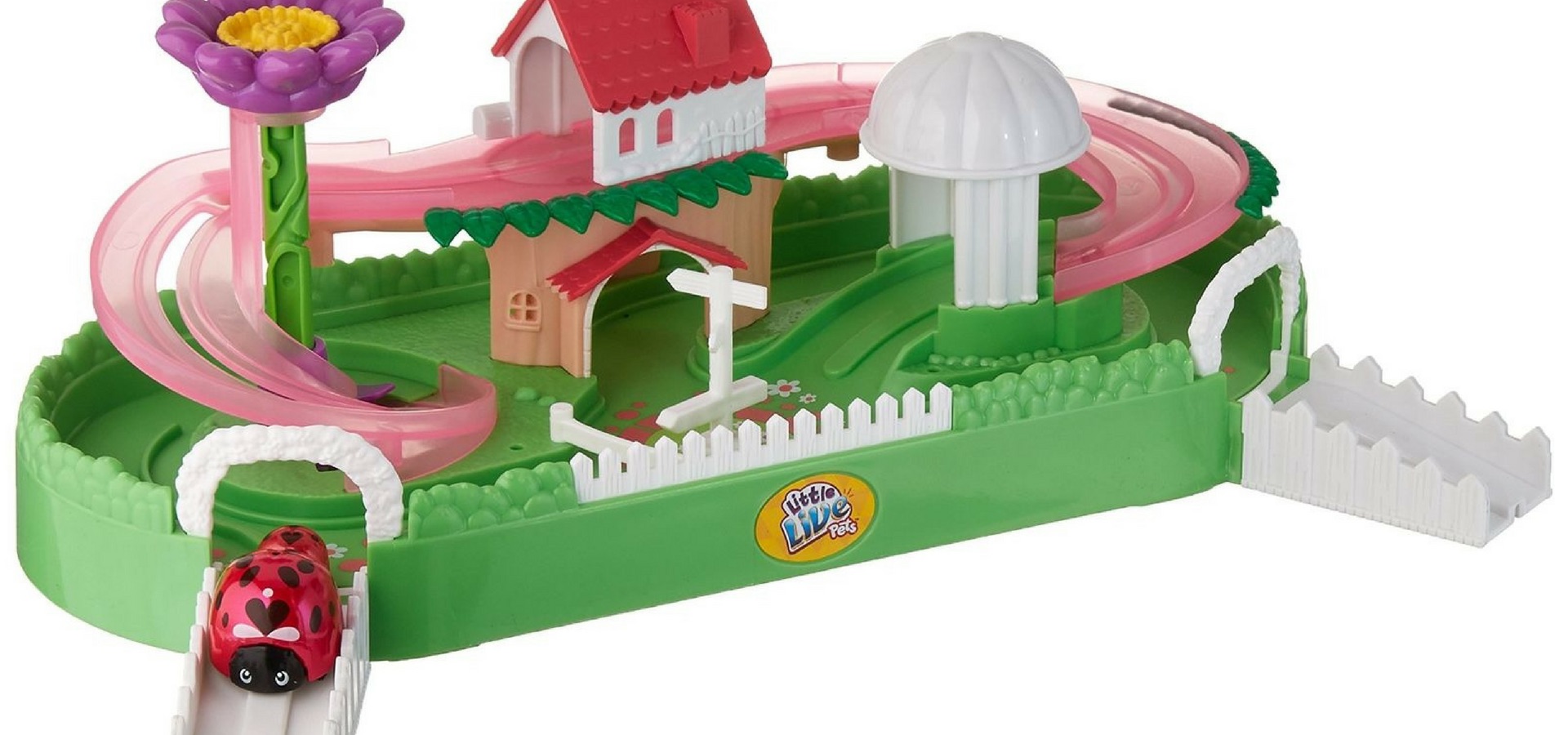
Review: Little Live Pets Lil’ Ladybug Garden Playset
Parenting Hub

Review: Little Live Pets Lil’ Ladybug Garden Playset

  OMG Cuteness overload! This toy is such a simple concept but yet it kept our daughter playing with it for 4 hours on the first day and she is not slowing down anytime soon! These little lady bugs have their own little garden to crawl around in. From going up the grass to down the flower elevator this has to be on every girls Christmas Wish List.  You can purchase more ladybugs to two behind, although the Lil’ Ladybug Garden does come with one mama bug and a baby bug. There are 12 Lil’ Ladybugs to collect with 2 rare finds throw into the mix. The Little Live Pets range is such a cute range and features: Bird in Cage Glitzi House with Pet Mice Turtle Mouse Track Surprise Chick House For more information on this rang e- you have to visit and I mean have to visit  http://www.primatoys.co.za/little-live-pets/little-live-pets-ladybug-playset

Practical ways to enhance emotional intelligence in children
Parenting Hub

Practical ways to enhance emotional intelligence in children

Emotional Intelligence is like freshly-squeezed orange juice!  When you squeeze an orange, you expect orange juice to flow out of it.  You wouldn’t expect to find grape or peach juice inside an orange because an orange only has orange juice to give. Human behavioural choices are based on what we have inside to give – much like that orange.  “What we have inside is based on how we feel about ourselves as a person. And… how we feel about ourselves as a person influences every choice we make!” says Cindy Glass, Director and Co-founder of Step Up Education Centres. She adds that every choice that we make defines the path of our lives! “All negative behaviours are based on fear, low self-esteem, self-defeating and destructive self-talk and low self-value. Consider, for a moment, how nobody, who values and respects himself would want to hurt another! The very act of self-value and self-respect ensures that he will give that out to others!  This is the reason why it is so important to teach and enhance emotional intelligence skills in our children!” Emotional intelligence is self-awareness, self-regulation, motivation, empathy and social skills all packed into one. Cindy adds that children who master emotional intelligence skills become better leaders, study more effectively, enjoy more fulfilling relationships with others, are better able to retain information, have better concentration skills and live happier more fulfilled lives. “In fact,” she says, “Schools who teach emotional intelligence skills even have fewer bullying incidences and learning for all is more exciting, creative and effective!” She gives parents and caregivers the following tips on how to enhance a child’s emotional intelligence skills: Communication is key. We need to talk to our children about their emotions and listen sincerely to their answers… without judgement.  This will help them become more aware of how they are feeling and, with your encouragement, they will find more positive solutions to any number of challenges. Use phrases such as: “How was your day?’  “What was the best/worst thing that happened today?’ “How did that make you feel?” “I hear you…”   “I can understand how that must have upset you…” Teach your children to take responsibility for the choices that they have made.  Blaming others has no value. We all make mistakes… own them and learn from them. Help your children understand that every choice has a consequence.  We are free to make any choice that we want.  The consequences, however, will be there no matter what. Teach your children to value who they are so that they will value others around them. Children do what we do and not what we say. It is vital for you to walk your talk.

Grade 11’s – Now (not next year) is the best time to consider your study options
Parenting Hub

Grade 11’s – Now (not next year) is the best time to consider your study options

With three months left before they enter their final year of school, Grade 11 learners could be tempted to make relaxing their only priority before the whirlwind year that is Matric. However now is precisely the time they should be investigating and even pinning down their further study plans, an education expert says. “Once you’ve started your Matric year, you will have very little time to focus on ensuring you choose the right course and the right institution for you, because of the workload, endless rounds of revision and exams, and all the fun and functions that go with your last year at school,” says Peter Kriel, General Manager at The Independent Institute of Education, SA’s largest and most accredited private higher education provider. Kriel says many Grade 12s get so caught up in the social and academic demands of their final year, that they don’t spend enough time ensuring they investigate all their options and apply timeously to university or private higher education. This could lead to them missing out on a space, settling for second best, and diluting their Matric study efforts with stress and anxiety about what they are going to do after school. “Another thing that Grade 11s are often not aware of, is that they can submit applications on the basis of their Grade 11 marks, which means that they can then focus wholely and completely on Grade 12, without further concern or distraction about what happens the year after. In addition, knowing what you want and where you are going at the start of the year, will also help you focus your study efforts, as you’ll know exactly what you need to achieve during the year and at your final exams.” Kriel says that the changed Higher Education landscape in South Africa means that prospective students now have many more options than what they had in the past, when the default approach was to enter a public university for a 3-year degree. But he warns that because there are so many more options now, prospective students also have more work to do to ensure that they find the right course and right institution for their unique goals. “Finding the right study direction should be on top of your priority list when finding out about what and where to study,” he says. “In addition, selecting an institution that will meet your needs is the most important aspect of helping you prepare for your future.” Kriel warns that while the websites and brochures of institutions may provide one with the basic information about which programmes are on offer, the process of applying and cost, merely looking at brochures and websites may not give you the type of information that would really allow you to make an informed decision. “In fact, all institutions would provide you with course information, but no institution will state that the size of the Business Management 1 class is over 500 or that it is really challenging getting academic support on campus. Therefore, the only way to find out about such underlying aspects is to ask the right questions. And to do so thoroughly takes time – time which you are not likely to have next year.” Kriel says when evaluating institutions, future students should attend open days, physically visit the campus, and make telephonic or written contact. “These actions and the way your inquiries are handled will provide a solid indication of what you can expect from an institution going forward.” For Grade 11s who are serious about getting their ducks in a row before jumping in the Matric pond, Kriel has a handy checklist that will help them determine which institutions will be able to provide them with the highest quality education. He says prospective students should ask institutions the following questions: How do your class sizes in this particular programme compare to other institutions or universities? (Keep in mind that the institution may not have in-depth information about the class sizes at other institutions, but you want to hear about this particular institution). How is classroom contact time and self-directed study balanced? (Self-directed study is an integral part of higher education and therefore as important as classroom contact). How is technology supporting the learning experience of students at this institution? (Merely having a data projector in classrooms or lecturers making presentations available electronically is not the response you are looking for). How important is employability of students after studying at your institution? (You want to listen out for responses that relate to industry ties, industry input into curricula, work readiness programmes, career centres, as well as the lecturing staff’s industry experience and relationships with industry). If I get stuck with an assignment or project, which resources and courses of action are available to me? (Only talking to your lecturer is not an ideal response. You want to listen for reference to, for example, library support and resources, writing centers and other forms of student support). Even if not applicable to you, it may also be a good idea to ask about the institution’s policy and support for students with special needs, for example needing extra time in assessments. (If they stumble in answering this question, it may be an indication that they are not really focused on this aspect of student support, which may be a sign about their overall student centeredness).

Review: L.O.L Surprise Lil Sisters Ball
Parenting Hub

Review: L.O.L Surprise Lil Sisters Ball

Prima Toys have come up with a WOW new edition for girls. The L.O.L Lil Sisters Surprise will have your little one guessing just what is inside.  The fun all starts when your little one unravels the 5 layers of surprises until they finally reach their little L.O.L Surprise Tot waiting inside. The product is ideal for girls ages 5 and up. Inside this fun surprise there is a secret message, collectable sticks, more than one accessory that goes perfectly with the L.O.L Lil Sisters. There are 45 dolls to collect in this range of collectables and certainly a fantastic stocking filler this Christmas. For more information visit http://www.primatoys.co.za/lol-surprise

Prima Baby welcomes Disney Baby
Parenting Hub

Prima Baby welcomes Disney Baby

We at Prima Baby are honoured to announce that we are now the sole distributor of select products in the Disney Baby franchise. Home to some of the world’s most beloved characters like Mickey and Minnie Mouse, Winnie the Pooh and the fellow stars of the Hundred Acre Wood and many more, the Disney label has filled children’s hearts with joy for many, many years and been always top of its game in terms of quality, yet affordable merchandising. In fact, many mothers themselves grew up in the company of the characters and now they can pass that tradition along to their little ones. The ‘Baby’ component to the Disney label brings all the most beloved characters to life in their smaller, younger selves.  Adorable baby versions make these familiar friends even cuter than ever before. With products to appeal to every single aspect of your baby’s life – from feeding and nurturing to soothing and learning, Disney Baby is available in a variety of colours, from traditional, to pink and blue. All stock is available at selected major retailers and online stores.

Spectacles can mean the difference between success and failure for an underprivileged learner
Parenting Hub

Spectacles can mean the difference between success and failure for an underprivileged learner

Sight is something most people take for granted, yet at least 239 million children around the world suffer from impaired vision that could be corrected by spectacles. Since 80% of all learning occurs through vision, children who cannot afford spectacles are at a major disadvantage in education environments, which can lead to lower earning potential later in their lives.* As we observe World Sight Day on 12 October, the Adopt-a-School Foundation (AAS) encourages partners in the private sector, civil society, and government to support its efforts to address the issue of impaired vision that affects millions of underprivileged learners in South Africa. AAS first encountered this issue six years ago in Bodibe, a small village nestled in the rural part of the North West province, when they were conducting educator development programmes in 11 schools in the community.  Educators shared their frustrations with AAS, saying that many children were being disruptive and unable to concentrate. When AAS investigated the matter, they decided to test the learners’ eyesight, and found that more than half of the children had vision problems. “At AAS we use a unique Whole School Development (WSD) approach to school development,” says Banyana Mohajane, Head of Skills and Social Development at AAS.“Rather than tackle an individual issue, WSD works to improve the school holistically by focussing on the academic, infrastructural, social, and security environment in which a school operates. This includes issues such as learner health and well-being, and includes eyesight testing,” she continues. “Most children in our adopted schools have never had their eyes tested,” explains Mohajane. “Through the introduction of mobile eyesight testing clinics, we have found that up to 15% of these learners have vision problems, which could lead to poor academic performance,” she continues. The benefits of treating impaired vision are immediate and clear. Research by the World Economic Forum has found that simply correcting the vision of primary school students is equivalent to another six months of additional schooling in terms of test scores. There is also strong evidence that the provision of spectacles leads to higher earnings, and can lead to increases in GDP.* “Over the last six years we have partnered with optometrists to conduct nearly 60 000 eyesight tests. We have donated 2 697 pairs of spectacles to learners in need and have referred the more serious cases to specialists and the Department of Health,” continues Mohajane. “Together with our partners, we hope to test the eyesight of many more school children across South Africa,” she concludes. For more information on Adopt-a-School or to contribute to this programme, visit the Foundation’s website at www.adoptaschool.org.za,  email [email protected] or call 011 592 6430.

Sidebar Image

Scroll to Top