Advice from the experts
OneAid

Top Choking Hazards For Babies and Toddlers

We recently went to a very popular restaurant for lunch and to my astonishment there were vending machines with gumballs and other small toys, right next to the jungle gym. This is a disaster waiting to happen! Children under 3 are at the highest risk of choking because their airways are so small. Plus, chewing and swallowing is a lot more difficult for them. They also love to put foreign objects in their mouths. There is a cylindrical tool in the US used to measure toy parts that is the same size as a young child’s throat. If a toy part fits into this cylinder it’s a choking hazard and a warning label has to appear on the toy packaging. Therefore any object smaller than 3 cm wide is a choking hazard for small children. WHAT IS A CHOKING HAZARD? Any object that can get caught in a child’s throat and block the airway is a choking hazard. TOP 10 HOUSEHOLD CHOKING HAZARDS Once your baby starts to crawl and explore, choking hazards are all of a sudden everywhere. Coins Small caps of bottles e.g. juice and water bottles Small round batteries Jewellery Buttons Toys and toy parts Balloons (uninflated or popped) Garden pebbles Nails and screws Stationary e.g. staples, paper clips and pen lids If you have older kids too, you should keep their toys separate and make sure they learn to pack their toys away. There are countless more choking hazards. You should probably get down on your knees and have a look at your child’s eye level. How many more choking hazards can you find? TOP 10 FOOD CHOKING HAZARDS Hotdogs, grapes and popcorn are the top 3 causes of choking in children under the age of 3. Young children have a hard time chewing their food since they lack the proper dentition (canines for tearing and molars for grinding). They are still trying to coordinate chewing, and as a result, often just swallow their food whole. This makes smooth, slippery, round and hard foods especially dangerous. The foods in the list below are not recommended for children under 4 years of age. The American Academy of Pediatrics (AAP) goes even further and recommends that hotdogs, grapes and popcorn not be given to children until they are at least 5 years old. If you do however want to give your children some of these foods, then cut them in such a way that you change their round shape. Hotdogs should be cut lengthwise before slicing and skins of other sausages removed. Grapes and other round fruit should be cut into quarters. Whole grapes, cherry tomatoes and other round balls of fruit (blueberries are ok for toddlers as they are soft to chew) Hot dogs and other sausages Popcorn Tough, large pieces of meat Fruit pips and stones Nuts and seeds Hard round sweets and caramels Raw vegetables, especially carrots Marshmallows Chewing gum BE CAREFUL  Children can trip and choke more easily if playing and eating at the same time. Your child should not walk, run or lie down while eating. Children should not be distracted whilst eating. They must sit upright and concentrate on what they are doing. It is also not advisable to have your young child eat in their car seat whilst you’re driving. You might not even notice if they’re choking. You should always supervise your child when they are eating. It’s important that all parents and caregivers learn first aid for choking and CPR. There are many training academies that offer such courses around the country that are usually done over one day and will make you feel more confident when dealing with childhood emergencies. RESOURCES Altkorn, R. et al. (2008) Fatal and non-fatal food injuries among children (aged 0–14 years). International Journal of Pediatric Otorhinolaryngology, [online] 72 pp. 1041—1046. Available from: https://www.sciencedirect.com/science/article/pii/S0165587608001298[Accessed 24 October 2018]. CDC (2018) Choking Hazards [online]. Available from: https://www.cdc.gov/nutrition/infantandtoddlernutrition/foods-and-drinks/choking-hazards.html [Accessed 24 October 2018].

Abbotts Colleges

Is homework still relevant

A student’s high school career is far more than mastering subjects. The goal is to facilitate the development and transformation of adolescents into independent young adults, prepared to deal with the 21st century challenges. The adult world demands self-study, discipline and independent thought. Entrenched behavioural patterns are difficult to change; hence, instilling a good work routine whilst at school is essential for future success. • It teaches a student to work independently. Engaging with the content on their own allows them to find solutions and formulate opinions without the prompts or cues from teachers, peers or parents. • It teaches a student to take responsibility for his or her work. The student must be an active participant: it is conducive to confidence building and encourages self-reliance. • It allows a student to review and practise what has been covered during the lesson. Extensive research has been done on the memory retention of information over a period. Regular reviewing allows a broader knowledge base when applying the minds to new content. Any potential misunderstandings or lack of comprehension can be addressed far sooner. • It helps a student to get ready for the next day’s lesson. Being prepared for the lessons allows the student to feel more in control and this in turn boosts their confidence and aids the development of a positive self-image. • It encourages a student to explore the subject content far more thoroughly than class time permits. This is vital for giving depth to the work they are grappling with and leads to discoveries, making connections and problem solving. • It allows a student to extend learning by applying skills to new situations. Doing their homework properly establishes a strong foundation. Successful attempts to solving higher order questions are only possible once the content has clearly crystallised in their mind. • It is part of the revision and consolidation process in adequately preparing for tests and examinations. Practice makes perfect! Clichés are clichés because they hold a lot of truth. Author: Andre Moolman, Principal at Abbotts College Century City.

Parenting Hub

Are headphones damaging your hearing

If it’s too loud, you’re too old? No, more like too sensible… Headphones and earphones are the accessory of our times. They are affixed to our ears to deliver music or podcasts, to conduct telephone calls, to accompany a workout routine, or to drown out the conversation of colleagues in open-plan offices. But is all this in-ear noise safe? The answer, unfortunately, is “not really”, but you can take steps to prevent or reduce the harm of being plugged in all day. According to the World Health Organisation (WHO), up to 1.1 billion teenagers worldwide are at risk of hearing loss from unsafe use of personal audio devices, including smartphones, and exposure to damaging levels of sound at noisy entertainment venues. Of course, it’s not just teenagers who are at risk – anyone who is exposed to harmful noise levels can suffer the same hearing damage. The WHO points out that hearing loss has potentially devastating consequences for physical and mental health, education and employment. How headphones damage your hearing Sound waves travel into your ears and cause the eardrum to vibrate. This vibration is then transmitted to the inner ear via several small bones. In the inner ear, the vibrations reach the cochlea, a fluid-filled chamber that has thousands of small hairs that are moved by the vibrations. It is the movement of these hairs that enables us to hear sound. If you listen to loud sounds, the hairs move more, and if you listen to loud sounds for too long, the hairs can lose their sensitivity to vibration, or become damaged. While it is possible for the hairs to recover over time from a single instance of loud noise, repeatedly listening to sounds that are too loud and for too long can result in permanent damage and hearing loss. Preventing damage To avoid headphone-related hearing damage, the WHO strongly recommends the following: Restrict the daily use of personal audio devices to less than one hour. Limit the time spent on noisy activities by taking short listening breaks (a time when you listen to nothing). Audiologists also recommend: Turn down the volume. If you are listening through headphones and you can’t hear any of the noise around you, then your volume is too loud and is damaging your ears. Use over-the-ear headphones rather than in-ear earphones, as they increase the distance between the source of the noise and your eardrums, reducing the chance of damage. Even better, if you are listening at home or in the car, play your music or other media over a speaker, at moderate volume. If you are planning to be in a loud-noise environment, take a headphone break for most of the day so that your ears haven’t already been damaged by sound. How do I know if there’s hearing damage?  If you experience any of the warning signs of hearing loss, visit a doctor or audiologist immediately, and get regular hearing check-ups so that if hearing is being lost, action can be taken. The signs of hearing loss include: the muffling of some sounds, difficulty understanding words especially when there is background noise, trouble hearing consonants, increasingly asking people to repeat themselves, needing to turn up the volume on the television, radio or device, withdrawing from conversations, or avoiding social situations. Safeguard your hearing While listening to music at loud volumes may be cool and fun and being permanently plugged into a set of phones is just the way life is, a permanent loss of hearing can affect your quality of life forever. Rather take the steps to prevent hearing damage and enjoy existing in a hearing world for as long as possible. How long to listen It’s not just volume but time spent listening to sound that is damaging to your ears. Here is a useful guide to how long you can listen to noises at certain volumes: By 1Life

Breastpumps and Beyond

Electronic vs. Manual Breast Pumps: Which Works For You?

Many people debate over whether they need an electric or manual breast pump. Truth be told, there is no right side to this discussion. Both manual and electronic breast pumps have their purpose within the breastfeeding world. Knowing which best suits your lifestyle is the key question one should be asking. We shall discuss this below, so read on ow to see which pump best suits your needs. Electric Breast Pumps The electric breast pump has been in production since 1991. This was introduced to the world by the Swiss company, Medela, who managed to produce the first ever electric-powered, vacuum operated breast pump. From then on, the electronic pump has grown exponentially, with hundred of suppliers and models available. But what are the advantages to having an electronic pump? The Pros Of The Electronic Breast Pump It is time efficient – taking less time than a manual pump to express This type of pump requires less effort to use than a manual pump There is a wider variety of models to choose from, including hospital grade pumps Offer you the option of hiring – please note however, only hospital grade pumps can be rented from a professional supplier The Cons Of The Electronic Breast Pump These types of pumps are a lot pricier than any manual The electronic pump is far nosier than a manual pump Some electric models can be intricate to sterilize Generally, these pumps are more difficult to transport than a manual If you buy a mains operated pump, you will be reliant on a plug outlet to do your pumping Manual Breast Pumps The manual pump has been around since the late 19th century, first being patented in the States. There is a reason this magical little appliance has endured through the century – even with the introduction of the electronic breast pump.  The Pros Of The Manual Breast Pump Cost effective – this type of pup is far more affordable for the everyday mum The manual pump is light weight and compact, making it easy to carry on the go The manual pump is incredibly quiet to use The pump is also really simple to operate This pump requires no electricity, meaning you can use it any time, any where The Cons Of The Manual Breast Pump This type of pump operates slower than the electronic counterpart Sometimes finding a regular pumping rhythm can be challenging Manual pumping can tire your hands In Conclusion As you can see, both electronic and manual breast pumps have their pros and cons. If you are a mom pressed for time with a bust schedule, your best bet would be to invest in an electronic pump. However, if you’re looking for an affordable, easy t use and transport breast pump, the manual version will serve you just fine! Stand a chance to win a Medela Harmony Manual Pump this month! See our competition page for more now.

Parenting Hub

How to teach children to respect their teachers

It is common knowledge that teachers are some of the most stressed professionals in our country. They face abuse of various kinds on a daily basis and one cannot deny that this is having a profound impact on an education system that is already struggling. In addition, and perhaps even more worrying is the steady increase in incidents of verbal and emotional disrespect shown toward teachers by the learners in their care. Education in South Africa is being compromised and it is time for parents to step in and step up to help rectify the problem before it becomes completely unmanageable. According to Cindy Glass, Owner and Founder of Step Up Education Centres, “Education is the root of success. It is an essential tool which, when delivered and received correctly, could change the face of poverty and other challenges that face our country at this time. The benefits of a good education can never be underestimated and ensuring that learners respect their teachers is an essential and most necessary step if we are to make positive progress in learning”. She gives the following things to consider when teaching your child to respect their teachers: You are your child’s first and longest-lasting teacher. Your child needs your guidance and assistance in learning the value of respecting self and others. It is important to remember that our children are likely to do what we do, rather than what we say. Encourage respect of teachers by respecting your child’s teachers. Avoid teacher-bashing conversations and seek to find positive solutions to challenges that present themselves. Teach your child that, no matter the circumstance, there is always a way to find a solution. Teachers are human too. They have an enormous responsibility to assist your child in becoming the best version of themselves. Teachers make mistakes. Disrespectful comments and abusive behaviors are not the solution. Open communication is needed to find ways of assisting both parties in achieving the desired outcomes in learning. Every choice that we make defines the path of our lives. All negative behaviours are based on fear, low self-esteem, self-defeating and destructive self-talk and low self-value. We need to teach our children to own their mistakes and choices and to avoid blaming others for their shortfalls. Taking frustrations out on their teachers only exasperates their difficulties whereas they could find wisdom and assistance with their teacher instead. Learners need to recognise and acknowledge that challenges are a part of growth and learning. There are always ways to seek and receive the help that they need, without a show of disrespect to anyone. Disrespect reflects their character, not the teachers. Teach your children that disrespecting & abusing teachers is an indication of who THEY are, not of who their teachers are. Negative behavioural choices reflect on the giver, not the receiver. It is a clear indication that the person does not respect and honour themselves. It certainly does not engender admiration from his peers. Seek to develop positive self-respect and self-value in your children and this will ensure that they give the same to others.

Prima Baby

Chicco PhysioSoft Pacifiers

With 61 years as global leaders in the world of baby products, Chicco has perfected the art of the quality nursing item – and with soothers and pacifiers, moms can’t get much better than the PhysioSoft. Made from 100% silicone, the PhysioSoft has been crafted carefully in the Chicco Observatory in Italy, a laboratory that focuses on the study and perfection of all their baby products.  Paediatricians, dentists, gynaecologists and parents alike impart with scientific and anecdotal advice to create the best possible product. The results include a smaller neck than most teats, ensuring mouths do not sit unduly open and create muscular imbalance in the baby.  The air holes are situated just right to avoid saliva stagnation, and the placement of the orthodontic teat ensures just the right amount of pressure is applied to the palette to discourage movement in the mouth and ensure a snug fit. One of the best-selling aspects of the PhysioSoft is that the entire pacifier is made from one soft mould that will not leave marks, or cut baby’s face whilst sleeping. In fact the pacifier is so soft the child could literally sleep on their face and not be disturbed. When it comes to soothing, the PhysioSoft is in a class of its own.  Available from 0 months upwards. Available at Baby City, selected Kids Emporium stores, Takealot.com, Loot.co.za and other baby retailers.

Parenting Hub

Review: The Chicco Easy Lunch Booster Seat

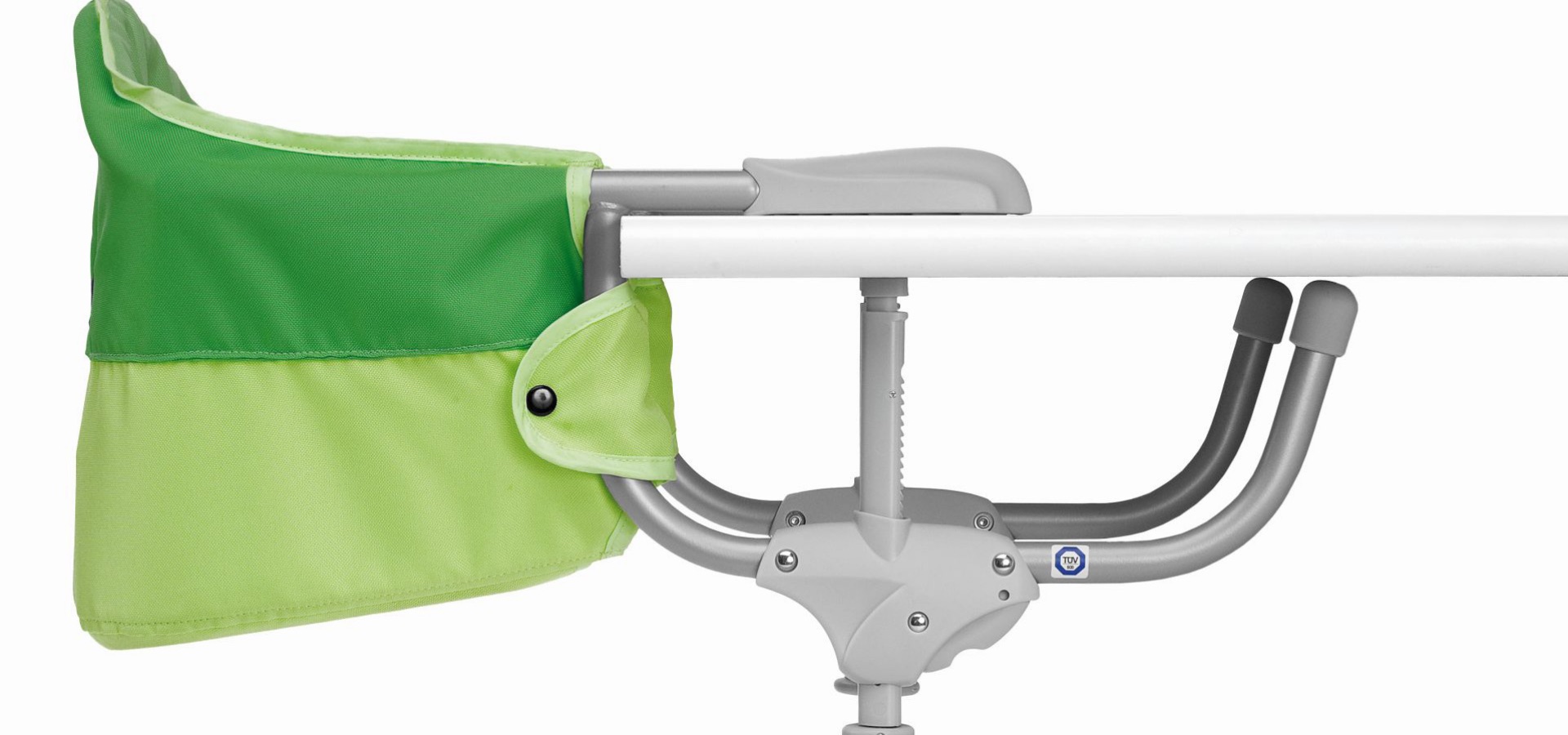
The Chicco Easy Lunch Booster Seat is a simple yet effectively designed mobile feeding solution.  When dining out or simply put at the dinner table, you can quickly have your little one right next to you in no time!  This chair is easy to use and has a double hook on system ensures that baby is safely secured to the table at all times.  The screw on legs attach directly to the table so to ensure that the chair is extra secure. We however would stress that this should not be used on a glass table but any other surface is perfectly fine provided there is a thickness of surface of between 19 and 35cm.  The seat and backrest, however, so that baby is nice and comfy at dinner time.  The seat has a 3 point safety belt attaches so that baby cant simply hop out.  When you attach all you need is a quick wipe down or a simple hand wash to keep it clean.  Then fold it away and place it back in the carry bag. BRAND: Chicco MODEL: Easy Lunch Booster Seat APPROX AGE: From 6 months to around 3 years or 15kgs DIMENSIONS WHEN FOLDED: 35 x 12,5 x 43cm  AVAILABLE FROM: All leading retailers

Breastpumps and Beyond

Why You Need The Twistshake Mini Click Mat

The Twistshake Mini Click Mat is a revolutionary piece of feeding equipment every parent simply needs to own. This is attributed to its brilliant design and baby friendly features. Read on below now to find out everything you need to know about the Twistshake Mini Click Mat and why you should make this a part of your baby’s meal plan now! Features Of The Twistshake Mini Click Mat No harmful products have been used in production of this product as it contains no BPF, BPS or BPA Designed to work in perfectly conjunction with other Twistshake feeding plates Adhesive bottom allows the mat to stick to the table surface it is placed on, avoiding spills and falls Made from quality silicone Can be easily washed in the dish washer as it is dish washer safe 31x17cm A Bit More About The Twistshake Mini Click Mat Now you know the ins and outs of the product, here is why this is such an innovative mat. The Twistshake Click Mat has been designed to minimalize mess made during meal times. This is achieved by the adhesive underlayer of the mat which secures it to any table surface it is placed on to.  From there, additional Twistshake feeding products such as the divide plate can easily be clicked into place. this hinders your baby from picking up their plate or bowl and sending it flying across the room. The mat will still allow your little one the freedom to feed themselves, however, it lessens their chances of making a colossal mess around their feeding area. Furthermore the mat is a breeze to clean. Since it is made from premium silicone, it can easily be wiped down or placed into the dish washer. However, please note that this product is NOT suitable for the microwave.

Mia Von Scha

SPECIAL NEEDS OR NEEDING SOMETHING SPECIAL

My children simply did not fit into the mainstream schooling system. They’re both very bright and along with that come some eccentricities that often get  labelled as problems within a very structured environment where children are expected to be alike, fit within the system and not stand out or cause waves. My ten year old once explained it like this: “I’m like a puzzle piece that’s been put in the wrong box… I don’t fit anywhere. There’s no place for me.” That’s quite a tough feeling for a small child to bear. And it isn’t that there’s something wrong with her, although within that system that was exactly the message she was getting. There are many children struggling in school who don’t need to be placed in remedial classes. They need something special, but they’re not exactly special needs. They would thrive in a different environment but not that one. I have nothing against remedial education. It is fantastic in the right circumstances. But a child who is simply in the wrong place and is then moved to a remedial class where there are really special needs kids can look around and label themselves. They end up thinking there is something wrong with them. These kids will generally fly if homeschooled or placed in a good cottage school or Montessori or within the Cambridge system where they have the freedom to work at their own pace and fill in the gaps they missed by being in the wrong environment.  For some, the box is simply too small to contain them. For others, it’s the noise levels. Some children are visual or kinesthetic learners and don’t respond to lectures. Most children don’t learn at the predetermined pace of the SA education system. Every child is unique – the exact reason that standardized education is failing. Nobody is standard. The trouble is if kids keep being pushed to move onto the next thing without mastering the previous stage then they end up with huge gaps in their foundational knowledge which will cause the whole structure to come crashing down at some point. That’s the point they pick up the label. Or if they learn faster than the system they get bored and restless and get labelled as ADHD or ODD (Oppositional Defiant that is, not odd – although they can be labelled as odd too!) If there is a problem with learning don’t necessarily assume that the problem is with your child. It might be. But it might not. And you are their advocate until they can stand up for themselves. You need to question and explore alternatives and not necessarily take the word of those in educational authority as fact. Only a few children really thrive within the schooling system. Most do not. Your child may genuinely be a special needs child – with Autism or dyslexia or serious processing difficulties and for these children the special needs schools and classrooms can make a huge difference to their ability to learn and develop with the appropriate assistance. But if your child is simply in need of something special – a smaller class, a more nurturing environment, a faster or slower pace, or a different style of teaching – then you need to look beyond the special needs class to any of the amazing alternatives that exist. Every child deserves to feel that there is a puzzle that they will fit in to!

Parenting Hub

Pregnancy and Gestational Diabetes, What You Need to Know

Pregnancy is one of the most life-altering experiences for a woman. Pregnancy Awareness Week takes place from 10 to 16 February to strengthen pregnancy education and stress the important issues that promote a healthy pregnancy and safe motherhood1. This year Life Healthcare is focusing on educating women about gestational diabetes. Pregnancy can result in various risks for both mother and baby, the most prevalent of these risks is gestational diabetes, a condition in which a woman without diabetes develops high blood sugar levels during pregnancy. Pregnancy can affect the way a woman’s body processes sugar due to a high volume of hormones produced by the placenta. These hormones block the body’s ability to produce insulin that moves the sugar from the bloodstream into the body’s cells. “Gestational diabetes is most common from 20 weeks of pregnancy and is rarely diagnosed before this. Identifying the signs and symptoms of gestational diabetes isn’t always easy as they are nonspecific, however, a urine test, which is then followed up with a fasting blood test, can ascertain whether an expectant mother has this condition,” explains Dr Liz Radloff, Obstetrician/Gynaecologist at Life Wilgers Hospital. Risk factors for diabetes include being over the age of 25 years, being overweight, having conditions that cause insulin resistance, such as polycystic ovarian syndrome (PCOS), and having high blood pressure prior to pregnancy. Gestational diabetes can result in various complications for both mother and baby, including a higher than normal birth weight, preterm labour and low blood sugar in the infant2. “Nutrition is critically important for an expectant mother and child and will assist in decreasing the risk of developing gestational diabetes. It is important for pregnant women to adopt a healthy, balanced diet and establish a regular exercise routine that is overseen and approved by their specialist. It is not recommended that women who are overweight attempt to lose weight once they have fallen pregnant. If weight loss is required, consulting with your specialist and a dietician will ensure that this is done safely to minimise the risk of complications,” explains Dr Radloff. Should diet and exercise fail in managing this condition, medication in oral or injectable forms may be necessary to manage high sugar levels. Generally, gestational diabetes clears after birth, however, mothers who have been diagnosed during pregnancy are likely to develop type 2 diabetes later. If a pregnant woman has gestational diabetes, her risk of type 2 diabetes after pregnancy rises. It is therefore recommended that mothers follow the same diet and exercise plan once their babies have been born. It is vital that expectant mothers listen to their bodies to avoid the risk of developing complications such as gestational diabetes. Life Healthcare places great importance on appointing a qualified and skilled healthcare practitioner to assist and monitor development during pregnancy. The correct medical assistance from a certified healthcare provider will ensure both mother and baby are kept healthy and safe during pregnancy. “Gestational diabetes can be a worrying diagnosis for an expectant mother. However, by managing the condition with your obstetrician/gynaecologist and making well-informed decisions related to your diet and exercise, risks can be mitigated, and expectant mothers can look forward to delivering healthy babies,” concludes Dr Radloff. For more information on pregnancy and pregnancy-related symptoms and developments visit our pregnancy guide in the link below: https://www.lifehealthcare.co.za/media/1567/pregnancy-guide-v2.pdf

Impaq

MIGHT MY CHILD HAVE ADHD?

If you are wondering about the answer to this question, then it’s most likely that your child is in preschool and not primary school because by the time children are in a more formal school setting with all the demands of sitting at a desk, having a school structure etc., issues of ADHD have already started to present themselves or been diagnosed.  Nearly all preschool-aged children display the core behaviours or symptoms of ADHD – inattention, distractibility, impulsivity and hyperactivity – as part of their normal development. However, as other children gradually begin to grow out of such behaviours, children with ADHD do not and this difference becomes clearer the older the child gets. So, when looking at the preschool child (three/four-year-olds), it’s easy for parents to feel confused about whether their child’s pattern of activity and behaviour is typical or whether it’s atypical. The signs and symptoms of ADHD are the same for preschoolers as they are for older children with ADHD – struggling to pay attention, getting bored and distracted quickly, being fidgety, restless or very active, having difficulty waiting and taking their turn, and engaging in risk-taking behaviour. The difference for ADHD is the degree of the symptoms.  The key is to discover whether the child’s behaviour is developmentally age appropriate or not. For instance, one parent observed her child in free play at the end of the school day. She noted that her son ran around wildly and didn’t listen to the teacher’s instructions to “play safe”; when the other children were settling down after activities her son couldn’t and seemed to get more hyped up; when other children were listening to a story being read, her son was rolling around and playing with toys. Although diagnostically children with ADHD may be diagnosed as young as four years old, usually from teacher reports, assessment on the Conners Comprehensive Behavior Rating Scales™, and collateral evidence from parents, the following questions may help a parent to develop some answers. Is the behaviour I observe in my child similar to that of other children he encounters; is the behaviour I expect of my child developmentally appropriate for his/her age, do I see a pattern of behaviour when my child engages in various activities, do I see a pattern of behaviour in various settings? To be diagnosed with ADHD, a child must have a specified number of symptoms for at least six months that occur in more than one area of life, e.g. at home AND at school. However, diagnosed or not, until the age of five, medication cannot be prescribed. The best treatment plan is behavioural therapy/play therapy for the child as well as parent training to help parents understand ADHD and best manage the ADHD child so that they can function optimally at home and at school. Lorian Phillips is a clinical psychologist and has been in private practice for the last 21 years. She also parents two ADD/ADHD sons and due to her challenges with her boys, she was motivated to find more constructive ways of dealing with them. This led to her parenting her boys differently and when she saw the results of her alternative parenting style, she developed a parenting course for parents of ADD/ADHD children. The successful course has been running for the past six years. In addition, Lorian also consults with parents in her private practice to offer guidance and support in working with ADHD children. She has spoken at various schools to help teachers manage the ADHD child in the classroom and has given many talks on parenting the ADHD child including an appearance on 5FM’s Weekend Play Date where she spoke about ADHD management. You can read her parenting blog called ADHD Parenting on her Facebook page. Lorian Phillipa writes for Impaq. Impaq provides innovative and accessible education solutions.

Mia Von Scha

LETTING GO OF THE PURSUIT OF HAPPINESS

Behind most things that we want, at the core of what we think we are looking for, is this one elusive word, “happiness”. We want to be happy, we want our kids to be happy, we want to be happy in our careers, we want to have happy families. Have we ever stopped to ask ourselves what happiness actually is? Do we even know what we’re asking for? And if we did, would we still want it? In order to understand happiness, we have to start by looking at the raw experience of emotion. The next time you feel any emotion, close your eyes and observe it. Imagine that you could remove the label from it and just see it in its raw state as a baby might experience it. What you’ll notice when you close your eyes is that you are instantly transported into a never-ending internal space and emotion is something that arises within this space. All that emotion is, is a movement of energy in this vast space. It may feel fast or slow, smooth or prickly, quiet or loud, distant or in-your-face. It may move upwards or downwards, be constricting or expansive, it may even have a shape or a colour.  When you begin to observe your internal world, you’ll see that all emotions are simply movements of energy in this inner space, each one with a different movement, frequency or intensity. There is nothing in this movement that tells you that this is happiness or anger or sadness or boredom or excitement or anxiety or peace. There is nothing in the movement of energy that tells you that this is a ‘bad’ or a ‘good’ emotion. Each one is simply a different movement of energy once you view it without the label that you have applied to it. In fact, if you watch carefully you’ll see that without the label, it is very difficult to distinguish between boredom and peace, or between excitement and anxiety. The difference between a ‘bad’ and a ‘good’ emotion lies in the label and in the story that our minds attach to the experience. So, knowing this, then what is happiness? It is simply one movement of energy in inner space. We may experience it as smooth, quiet energy, but there is nothing in that movement that makes it better energy than one that is loud and spiky or one that is fast and expansive. What we’re saying when we say we want to always be happy is that we only want to experience one movement of energy for the rest of our lives. Like only watching one movie for the rest of your life, or listening to one song, or eating one type of food, or hanging out with only one friend. Is that really what you want? We have a variety of emotions to make life interesting, diverse, fun. There is a richness to our experience as humans because of our range of emotional energies, not in spite of them. What most people call happiness I call flatlining. What I believe we are all really looking for is fulfilment – that state of pursuing something so meaningful to you that you enjoy both the ups and downs, the highs and lows; the full range of emotional expression. That is a life worth living, that is a career worth pursuing, that is a family goal worth having, and that is what we need to be teaching our kids. Let go of the pursuit of happiness. Pursue your dreams and enjoy the roller coaster of an experience that comes with that pursuit!

Prima Baby

CHICCO EASY LUNCH HOOK ON CHAIR

How many times have you been out for dinner, or to a picnic, only to find that baby has nowhere to sit whilst eating?   Most parents can relate, socialising and traveling with small children is not always easy.  Chicco offers an incredibly efficient, convenient and cost effective way to ensure maximum safety whilst enjoying meals with baby – the new Easy Lunch Hook On Chair. Simple to install, the Easy Lunch is a durable canvas chair with adjustable screw legs that connect onto any table surface, and can be adjusted to a snug fit for maximum safety. The Easy Lunch is not just the perfect solution for restaurants and socialising, but is also ideal for the home too, as any kitchen or dining room surface can be used. The resilient upholstery fabrics are dirt-resistant and can easily be removed for washing.   Suitable from 6 months old, the chair is suitable for any child up to 15kgs in weight and is for use with table tops with a thickness between 19 and 35 cm. If you plan on traveling, grab the Easy Lunch Hook On Chair and fold or completely disassemble and store in the transport bag included in the delivery. This funky little chair is available in beige (known as mirage), green and blue and is for sale for the average price of R799 in SA at all leading retailers and online portals.

Parenting Hub

The gift of making mistakes

Mfundo is a young man who is considered to be a top academic and sporting high-flyer. He is in Grade 5 and has already won many awards for his achievements. Despite his top-of-the-class status, his parents and teachers are very concerned because Mfundo is making negative behavioural choices.  He is often in trouble for bullying other children and his parents find his tantrums at home almost intolerable.  Why would a child who seemingly has everything going for him, behave in this way? The answer is quite simple. According to Cindy Glass, Owner and Co-Founder of Step Up Education Centres, Mfundo, like so many children, has a very low sense of self. “If he is not at the top, he sees himself as being ‘nothing’, unworthy and even worthless! He is so afraid of making mistakes, that he finds life intolerable-unless he pumps-out perfection!” Cindy explains. She adds that the same can be said of children who struggle at school, who give up, dislikes learning of an academic nature or is afraid of trying anything new.  “They are so afraid of making a mistake that they would, subconsciously, rather get into trouble for their negative behavioural choices than allow someone to see that they need assistance. These children, too, develop feelings of unworthiness and their self- esteem is at an all-time low.” Cindy believes that it is time for parents and teachers to reconsider age-old patterns of previously learned behaviours which have made the making of mistakes bad, intolerable, reasons for (unnecessary) punishment and a tool to humiliate and embarrass children in the hope that they will change for the ‘better’. She gives parents the following advice on how to give their children the gift of mistakes: It’s important to understand that making mistakes allows for effective learning, problem-solving and critical thinking. Allowing mistakes encourages imagination, creative thinking and the building of confidence! Mistakes are opportunities to experiment and learn. They help us grow and try new ideas. Making mistakes, contrary to popular belief, is actually a gift to humanity! Children fear to make a mistake, not because of the mistake itself, but rather out of a fear of the reaction it would elicit from the adult(s) in their world! As adults, we need to consider teaching our children to recognise and acknowledge their mistakes and to have the confidence to find solutions that work. After all, Thomas Edison is famously quoted (in his many attempts at inventing the light bulb) that he did not fail in his efforts. He simply found 10 000 ways of how not to make a light bulb. He changed the world! Parents and teachers need to teach children that making mistakes is a part of life. There is no such thing as perfection. There will be times when we do not achieve top results. And that is perfect in itself. Making mistakes does not have any bearing on who we are as people.  Making mistakes is inevitable. Learning to own and embrace these mistakes as wonderful opportunities to learn and grow is a gift! Parents and teachers need to understand that children are more likely to do what we do that what we say. How we react to mistakes will set the tone for the relationship that children develop with mistakes. “Mistakes can be a burden or a gift.  The choice is yours to make” Cindy concludes.

OneAid

Don’t Be Scared, Be Prepared

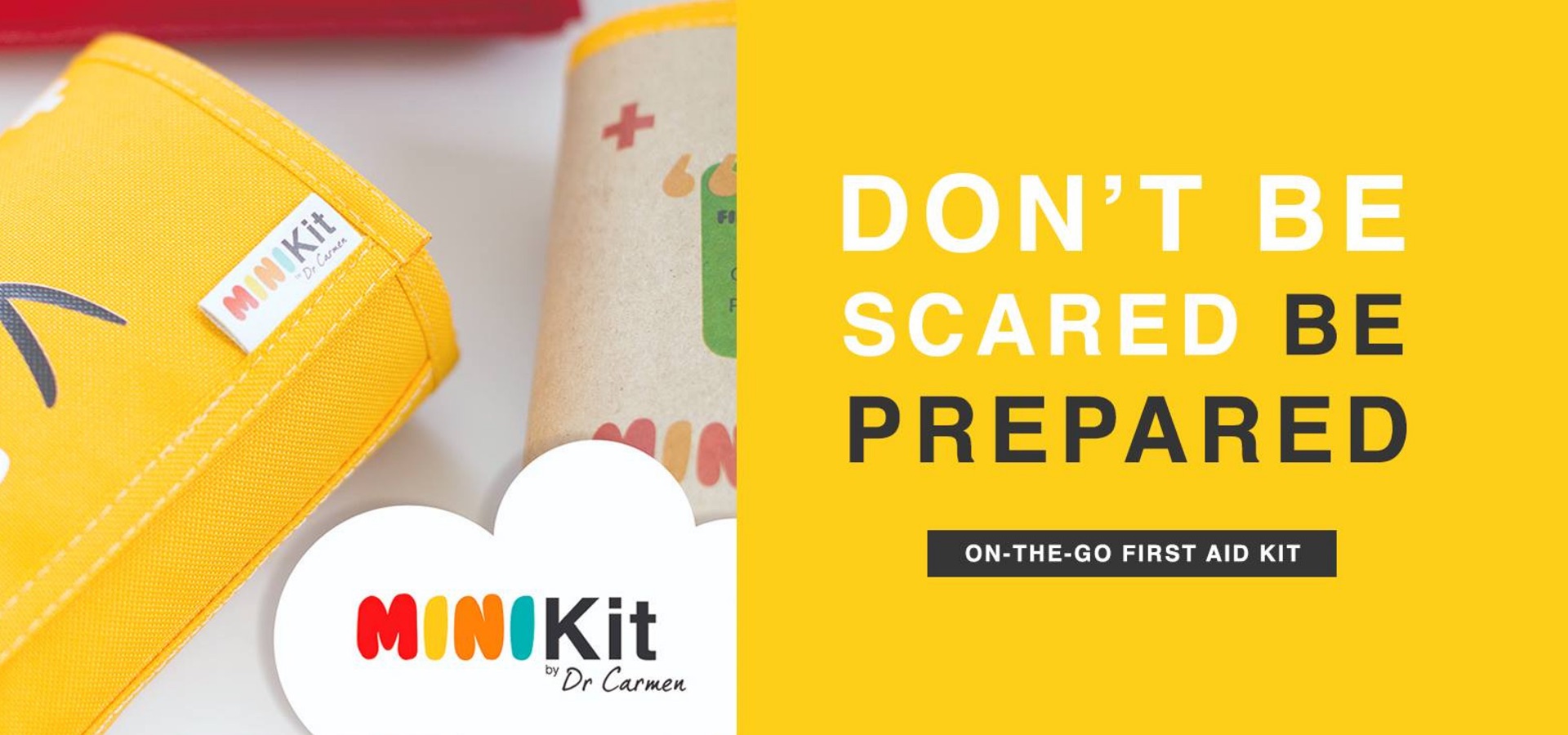
Oneaid focuses on preventing and reducing the risk of childhood injuries. Through blog posts and social media Oneaid offers you, as parents and caregivers, useful information and helpful tips on how to keep your little ones healthy and safe.  OneAid by Dr Carmen Becoming a parent is one of the most challenging and liberating experiences anyone can go through. There is no amount of research, childcare books or magazines that will prepare you for parenthood. For most parents keeping their little ones safe and making sure they have few accidents as possible can be extremely stressful. It was, for this reason, Dr Carmen – mother and Doctor – created OneAid.  Dr Carmen is a medical doctor with over 10 years experience in accident and emergency medicine, and is also a mom to a beautiful, baby girl. She has a Masters degree in Public Health and is passionate about disease prevention and health education.  Social Media In Healthcare Almost 90% of adults have used social media to look for and share health information. Dr Carmen believes that healthcare needs to go digital and more healthcare professionals should be taking advantage of its broad reach. Social media can be an effective tool to get information to the public and promote health and safety.  OneAid creates engaging fun content on social media to provide information and tips relating to various public health issues in an effort to spark up conversations to drive behaviour change and education.  For a little daily advice on childhood safety issues readers can also subscribe to the OneAid newsletter. The MiniKit by Dr Carmen Cuts, scrapes and burns are common injuries to expect as our little ones gain more confidence in this world. Having a first aid kit on hand can help reduce the risk of infection or the severity of the injury. It also teaches our kids the right thing to do when they hurt themselves.  Dr Carmen has designed and developed the MiniKit, a mini first aid kit geared towards common childhood injuries. This is available in two colours – red and yellow and includes first aid essentials such as plasters, burn gels, dressings and more. Plus, the MiniKit’s small size makes it fit perfectly into any nappy or handbag, so parents are always prepared, even on the go. Through its fun and colourful design, Dr Carmen hopes to get little ones engaged and involved in the first aid experience. But that’s not all. Inside each MiniKit you will find a detailed first aid pocket guide that features simple, easy to follow steps on what to do when your child has had a minor accident or fall. By following the guide’s steps, parents can take the necessary action when dealing with broken bones or burns for example, and will now know which medical materials to use.  Ordering Your MiniKit Whether you are buying the MiniKit for yourself or as a baby shower gift, it’s really easy to order. All you need to do is visit the OneAid website on www.oneaid.co.za and browse through the products page. Add your products to your cart and checkout when you are done. There is no need to open up any accounts.  You can also purchase the pocket guide, which can be downloaded straight onto your phone. If you buy the MiniKit this download will be available to you for free.  “Accidents are just that, they happen unintentionally and unexpectedly. With the right information, we can try and reduce the incidence of these accidents.” – Dr Carmen

Parenting Hub

Do you worry about your child and cyberbullying?

As digital continues to grow and influence the day to day lives of children, and with the new school year already underway, do you find yourself worrying about the risks your children may face online, especially when it comes to cyberbullying? And do you feel that you know enough about cyberbullying – the signs, the various forms and what measures you can put in place – to not only protect your children but to be able to help them if they face this very real issue? “Despite the many benefits the digital world offers, an unfortunate challenge many parents face today is that they don’t always realise when children are being impacted by cyberbullying,” says Riaan Badenhorst, General Manager for Kaspersky Lab Africa. “This is in no way a reflection on parenting styles, but rather the result of not understanding the different types of cyberbullying that exist and with that, the proactive steps that can be put into place to help protect children from this very dangerous and growing online threat. There are many forms of cyberbullying, and getting a grip on these can assist parents in not only having a better understanding for themselves but to also educate their children on what to look out for.” Forms of cyberbullying: Exclusion – is the deliberate act of leaving someone out – like when a child is excluded from friends’ parties or activities. It can also occur when a child’s friends are having online conversations and tagging other friends but not them. Outing – involves the deliberate act of embarrassing or publicly humiliating a child or group of children, online, through the posting of private, personal, sensitive or embarrassing information, without the child’s permission to do so. Outing can happen in a variety of ways and parents should consider that even reading out aloud a child’s saved message(s) from their mobile phone can be considered a form of outing. Fraping – involves the act of someone logging into someone else’s social networking accounts and impersonating that person by posting inappropriate content, using their name. Parents are likely to be familiar with this type of bullying, as they may have personally experienced it, often in a joking manner. Unfortunately for children, however, it is more than often not a joke. Fraping can lead to repetitional damage and have serious consequences. ‘Google never forgets’ – and so anything posted online is never fully gone, even after it is deleted. Trolling – is a deliberate act of provoking a response through the use of insults or bad language on online forums and social networking sites. A troll aims to personally attack a child, in the hopes that the child becomes angry enough to act in the same way, to get a reaction – and then possibly looks to use it against the child, to get them into trouble at school or with an adult. Catfishing – is when another person steals a child’s online identity and photos, and creates new or alternative social networking profiles, for misleading purposes. A catfish is someone who wants to hide who they really are and does this through creating a fake persona, using images and information they found (and stole) online. Harassment – is sustained, constant and intentional bullying that involves abusive or threatening messages sent to a child or group of children. The messages are mostly malicious and aimed at attacking a child’s confidence and self-esteem. Continues Badenhorst; “All forms of cyberbullying should be perceived by parents/guardians of children as very dangerous and therefore requires immediate attention, as any type of cyberbullying can have massive implications to a child’s well-being.” How parents/guardians can help: Kaspersky Lab offers a few guidelines that can be followed by parents/guardians, as a means to help children deal with cyberbullying: It is important that parents/guardians are tolerant of the situation and do not ‘overreact’ leaving the child feeling scared and embarrassed. Cyberbullying can take some time to fix and so being open and talking through the issue with your child, showing support, can be beneficial in dealing with the problem. Be open and talk about cyberbullying with your children – using things like TV programmes as teachable moments around bullying and online behaviour. Ask them their views on cyberbullying and talk through these. Parents/guardians should be conversation starters on the topic – don’t wait for your child to raise the matter – look for signs of cyberbullying as the earlier the matter is picked up the faster it can be dealt with. Monitor your children’s online activities. Understand what they do on social networks, which platforms they use and who their friends are online. It’s not about ‘policing’ their behaviour, but monitoring is important. Explain to your children that they should alert you as the parent, or alert a trusted adult, if they are being cyber-bullied – that they will not be judged but can seek the right help to fix the issue. Ensure they understand that cyberbullying is not okay – and that it is better to talk up and report it so that the right help can be initiated. Do not take your child’s mobile device away or disconnect their devices from the Internet – this will only frustrate them – rather talk to them and help them with the challenge and monitor their mobile time and use, depending on their age. Educate children about basic online security rules – what can and should not be shared – and privacy guidelines. Ensure their social media pages are set on private, encourage them to only connect with people they know (friends and family) and talk to them about the types of images they share online. Make use of applications, such as Kaspersky Safe Kids, to help you manage your children’s screen time and use of certain apps. Such a solution allows you to set rules for website access, ensuring that sites with harmful content can be blocked. It also uses a GPS tracker, meaning that you can locate your children’s

Impaq

Cyberbullying

Bullies have always existed. However, in the digital age, the bullying we are seeing is worse than ever before. This is largely for two reasons: firstly, before we all had smartphones, a victim of bullying could go home from school and have some sort of break. Now, bullying is round the clock. Secondly, the type of content being shared is troubling as people say things behind a screen that they would never say to someone’s face. Moreover, the consequences of cyberbullying are more prevalent – in South Africa, we are seeing increased incidences of depression, anxiety and behaviour related to self-harm and even suicide as a direct result of cyberbullying. When it comes to cyberbullying, anonymity is the root of all evil – people seem to think they can get away with saying whatever they want when they hide behind the veil of online anonymity. We are seeing the worst kinds of bullying taking place on anonymous apps such as Qooh.me or through anonymous profiles created on apps such as Instagram. We are seeing a lot of naming and shaming, direct personal attacks, slut shaming, fat shaming, pressuring others to send nudes, and revenge pornography. Although terrible content is shared on anonymous platforms, the truth is that any platform can be open to abuse. Some platforms are simply better than others at removing offensive content. What to do if you are being bullied If YOU are being bullied: Tell a trusted adult (a parent, guardian or teacher). Take screenshots to keep as evidence. BLOCK the bully.  If you are aware that someone else is being bullied: Don’t join in (this includes commenting and sharing harmful content) and leave a WhatsApp group that hosts abusive content. Report bullying to a trusted adult (a parent, guardian or teacher). What legal options are available if you are being bullied?  If you know the identity of the bully, and the bullying is sufficiently severe to the extent that it can be said to cause you mental, emotional or psychological harm (or inspire the belief that harm could be caused), one mechanism available is to apply for a Protection Order under the Protection from Harassment Act. Almost all social media platforms have a reporting function that allows the possibility for damaging content to be removed.  Finally, the Cybercrimes Bill, which will hopefully become law soon, has codified a lot of crimes relating to online activities. Specifically, its chapter on malicious communications criminalises the creation or distribution of “a data message” that incites the causing of any damage to property belonging to, or violence against, a person or group of persons which is harmful or intimate in nature, and which is distributed without the consent of the person involved. This would include a lot of content that we are loosely defining as cyberbullying.

OneAid

Tips For Choosing The Right High Chair

Before going out and buying a high chair it’s important to know the safety requirements. A US study found that more than 9 400 children, aging three years and younger, were treated each year for high chair related injuries in emergency rooms from 2003 to 2010. That’s one child every hour!  Nearly all of these injuries were as a result of a fall where the child either climbed in or out of the chair or stood in it. Majority of the injuries seen were head injuries (37%) then bumps and bruises (33%) followed by lacerations (19%). Most of us use our high chairs in the dining room or kitchen where the flooring is usually hard, so you can imagine the impact this has on a small brain.  This has prompted the US to update their safety standards (unfortunately there are no available statistics for South Africa). From mid-2019 all high chairs in the US will have to have a passive crotch restraint and a three-point restraint system, which means there has to be a fixed post that sits between a child’s legs and restraints that are fixed to the high chair in three different places. They found that children were able to slip out the bottom of a high chair and hope a fixed post will prevent this.  High chairs are not recommended for children younger than 6 months of age. A child is only ready for a chair once they have good head and neck control and are able to sit up on their own. If one is used too early a child could experience positional asphyxia. You may however, be able to start a little sooner with a reclining high chair. CHOOSING THE RIGHT HIGH CHAIR Framework: choose a high chair that is sturdy. Put some weight on it and see if it squeaks, deforms or moves or collapses. Gaps: make sure there are no gaps your child can slip out of. Also chair-related check for gaps that little fingers can get caught in.  Harness: choose a high chair with either a three-point or five-point harness that includes a crotch strap or a post. The restraint should go over the shoulders, around the waist and if a five-point harness then between the legs.   Wide base: a high chair becomes top heavy when your child is in. Choosing a chair with a wide base will make it more stable so that it does not tip easily.  Wheels: if you choose a high chair with wheels, make sure they can be locked when the chair is in use. Folding locks: if the high chair folds check that the locks work well enough so that the chair cannot fall or collapse when in use. Joints: choose a high chair with metal joints. These are stronger than plastic, which can crack after time. Safety standards: make sure the high chair meets current safety standards and has been approved by an international safety authority.  BOOSTER SEATS AND HOOK-ON SEATS  Please be careful when you use these chairs. If not used correctly these seats can be dangerous.  Hook-on seat: These chairs are mounted directly onto a table and should only be used once your baby has good head and neck control and can sit upright. The mounts must be slip resistant and because this seat carries the entire weight of your baby the table has to be strong so that it does not tip over.  Booster seat: These seats are attached to normals chair by straps to raise a child’s height. They are usually used when a child has outgrown the high chair but is not quite tall enough to sit at the table unaided. They should also have straps to keep your child in the seat.  KEEPING YOUR CHILD SAFE IN A HIGH CHAIR  Never leave your child unsupervised when they are in a high chair.  Always use the safety straps when your child sits in the chair, even if only for a few minutes. The tray is not a restraint. If the chair folds, make sure it is locked each time you set the chair up. If the chair has wheels, make sure they are locked each time you set the chair up. Never allow your child to stand in the high chair. Do not place the high chair near a counter or table. Your child may be able to push against the surface and cause the chair to tip over.  Don’t allow older children to climb or play on the high chair while another child is seated in it because it could tip over. Position the high chair at its lowest possible height if this is adjustable.  Make sure potential hazards such as hot food, drink and sharp cutlery are out of reach.  When choosing a high chair opt for an age-appropriate one with plenty of safety features. It’s also important to check often for recalls once you have purchased your chair. High chairs are commonly recalled because of their safety issues. Recent recalls include the Skip Hop Tuo convertible high chair and the Graco Table2Table 6-in-1. You can check http://www.recalls.gov to see if your high chair has been recalled.  RESOURCES https://journals.sagepub.com/doi/abs/10.1177/0009922813510599 http:// https://www.nationwidechildrens.org/newsroom/news-releases/2013/12/new-study-finds-24-children-a-day-are-treated-in-us-emergency-departments-for-high-chair-related

Parenting Hub

How to talk with your teenager

Parenting is a walk in the park.  Jurassic Park.  The journey to teenagerhood is dotted with a multitude of trials.  Remember the tantrums of your precious two-year-olds?  Probably not.  The mind has a clever way of making us forget the hardships of the really trying times in our lives.  It must be some evolutionary development to ensure the continuation of our species.  But now you find yourself in the midst of a hurricane of hormonal angst and monosyllabic responses from a teen who vacillates between the sheer inability to care about anything and the deeply emotional and eternally scarring trauma of no-one caring about them.  The truth is, teenagerhood is really difficult.  On everyone.  Especially parents.  We struggle to reconcile memories of our delightful little toddlers with these temperamental and uncommunicative tyrants and, for many, the light at the end of the tunnel seems to have been blown out by their teen’s endless sighing.  The truth is, this period is transient.  And, though difficult to believe, it is a sign of a maturing individual, preparing themselves to be the successful adults that we hope they will become.  In fact, this stage of infinite frustration is one that should be celebrated, as much as we celebrated their first steps or first badly-formed words.  If only they would put to use those verbal skills we revelled in their first few years. Communicating with teenagers is tricky.  Friendship groups and their significant others (for now) take your place in their hierarchy of importance.  Where you were once the person who bought the single most joy to their lives (remember fetching them from pre-school?), you’re now not much more than irritation or a glorified cook and taxi-driver.  Developmentally, they find baring their emotions and thoughts in spoken word incredibly difficult.  Technological development has been kind to this generation.  They’re now able to communicate, especially with those that matter, in a complex arrangement of emojis and acronyms.   But just because they appear to be retreating from their parents and avoiding (at all costs) any kind of meaningful interaction, it does not mean that communication is not what they need.  Quite the opposite.  Our challenge, as parents of teenagers, is to find ways in which to communicate without breeding hostility and judgement.  Teens need their parents’ support and guidance as much as they did when they were toddlers.  It’s just that the communication needs to take a different form. The first consideration parents need to make is when they attempt to reach out to their teens.  A bombardment of questions as soon as anyone walks into the house after a long day is bound to inspire mild irritation.  A good place to talk is around the dinner table, or in the car while driving them to and from their many arrangements. (This is particularly helpful for the teen as eye contact is limited). As far as communication goes, it really is a case of ‘the more, the merrier’.  Before we can tackle the really trying topics like appropriate sexual behaviour and the use of illegal substances, we need to have created a habit of communication.  The more you talk to your teen about the mundane, the easier it will be to communicate in general, and then the really difficult conversations become a lot easier too.  Consider creating time to spend together on equal ground.  A Saturday afternoon on the beach, for example, or a trip to the local beauty salon for a pedicure offers the opportunity for parents to really connect with their teens – even if it is only about their most recent favourite celeb’s spectacular fall from grace. Teenagers, like adults, need to feel valued too.  They are under immense pressure at school to perform, and while we all do realise the importance of their academic performance, we need to sometimes remind ourselves to take a step back and look at the bigger picture.  Yes, of course, school work is important.  But more important to your teen right now is the feeling that you genuinely care about them.  A teen who feels secure in the undeniable reliability of their parents’ support is one who more likely to communicate when they need your help the most. And while teenagers are indisputably trying, our relationship with our teens consists of two individuals.  One of those individual’s body’s is a cocktail mixed with unchecked hormones, insecurity and plethora of pressures.  The other is a mature adult.  Sometimes we need to, as difficult as it is, turn the microscope on ourselves and ask, “Am I the parent that I wish I’d had or am I the parent that my child needs?” And if all else fails, you could always send them a SnapChat with a string of acronyms and emojis, and hope for the best.   By André Loots (Principal) & Jacqui Browne (English teacher at Crawford College North Coast)

Parenting Hub

MATRIC FAILURE: GETTING BACK ON TRACK WITHOUT LOSING HOPE

The future may look bleak and uncertain to the more than 170 000 Grade 12s who failed their 2018 National Senior Certificate exams, but it would be a huge mistake for them to throw in the towel and resign themselves to the idea that no Matric means no hope for the future, an education expert says. “Of course it is preferable to obtain your Matric certificate, and we will always encourage young people to continue working towards doing so, but that doesn’t mean your life has to stand still in the meantime,” says Alvino Hartley, Team Leader at Oxbridge Academy, which serves more than 20 000 South African distance learning students every year. He says many people don’t realise that there are various study options, particularly vocational ones that are in high demand in the workplace, that don’t require a Matric certificate. “If you can be resilient in the face of this setback, and vow to not put your education on the backburner but rather work hard towards a goal you can become passionate about, you have a recipe for success on your hands,” he says.  Hartley says that no matter what the outcome of one’s final exams were, there are always options, and sometimes finding the right way forward just requires some research. “You may want to redo a subject or two, complete failed subjects via distance learning, redo Matric in a year or two, or perhaps even find a qualification that doesn’t require an NSC for enrolment,” he says. “Find what you are passionate about, and then determine how you can still reach your goal within the next three to four years. Yes, it is not ideal if you didn’t pass, but it also does not mean that this ‘failure’ needs to define who you are and what you can achieve for the rest of your life.” Hartley says that instead of allowing ‘failure’ to define you, the experience should be used as a learning opportunity and inspiration to do better in future. Additionally, Matric failure should not serve as a limit check on one’s aspirations for the future. “You can and must still dream big. If you didn’t before, do so now. Once you have a vision for your future, you start building it. Like a house – one brick at a time.” For many who failed Matric, heading right back to school to redo the year may not be an option, for various reasons. In these instances, the Matric goal can be pursued in parallel with other goals, or postponed until after achieving a vocational qualification, says Hartley. “A vocational qualification makes you more employable, by providing the specific skills and theoretical knowledge required in fields such as, for instance, project management, health and safety, logistics and supply chain management, and contact centre operations. All of the aforementioned qualifications can be completed without having a Matric certificate and via distance learning, which means that you can even start earning while you’re learning,” he says. Another option is to do an Introductory N4. “Also called a bridging course, this will give you access to N4 National Qualifications. Students who haven’t completed Matric do the Intro N4 courses and, once they pass the examinations, they cross over to the N4 courses. Once they have passed N4, they can progress to N5 and N6, after which they can apply to the Department of Higher Education and Training for a National Diploma, provided that they have gained 18 months of relevant practical experience,” says Hartley. Passing an N4 level qualification is comparable to Matric. And persevering through N4 to N5 will make you more employable than someone who only has a Matric certificate, says Hartley. “The message is this: You have your whole life ahead of you and you still have time on your side. If you act now to start building  your vision brick by brick, investing in your future and believing in yourself, the time will arrive when you look back at your Matric disappointment and see that it wasn’t a brick wall barring you from a successful life, but rather an unexpected door to new and exciting opportunities to turn your dreams into reality.”

Prima Baby

CHICCO MODE BOOSTER SEAT

The Chicco Mode Booster Seat is the ideal solution for toddlers who want to sit at the table and join in with their family during meals.  It has 3 different height positions, can be adjusted to suit different types of tables and adapt to your child’s growth.  The adjustable and removable tray is also an ideal surface that toddlers can use when they cannot reach the table. The seat has a padded lining and trendy solid colour or geometric patterned prints. Safety tested and approved by the most authoritative European laboratories, the Mode Booster Seat grows with your baby, from 6 months to 3 years. This funky little piece of furniture is the perfect first chair for your baby as they start gaining their independence and want to sit, eat and socialise with the family. Comes in trendy Pois design as well as a cute Elephant design. Pick one up today at al leading retailers and online portals for the suggested price of R899.

Parenting Hub

How To Instantly Organize Childhood Memories

How do you survive an influx of your kids’ stuff pouring into your home from school on a regular basis?  Today it’s a drawing of your family, tomorrow it’s a painting, yesterday it was a school photo, 3 weeks ago it was a special valentine’s card and next week it might be a footprint in clay.   And I’m sure your memory keeping doesn’t stop with creative objects.  During the year you’ll take digital photos of a birthday ring, receive a medal of achievement from a sports day and near year end, purchase a video of a school concert.   Memory keeping, I’m sure you’ll agree, doesn’t stop there. You’ll most likely celebrate a birthday with a specific theme, and you’ll enjoy a family holiday.  Both events will bring loads of digital photos and videos to show for them. And that’s just for one year.  Now multiply that by the number of years your child goes to school and multiply the stash of keepsakes you have for every other child you have.  Oh, my! That’s a lot of, well… good stuff! Who else is living with the dilemma of clutter in their living space?  So why then, do we collect all these objects that take over our lives?  I don’t know about you, but my heart goes all mushy when delight fills my daughters’ eyes, as she delivers her little masterpiece into my hands, after a day at school. Her unique voice rambles away with joyful excitement as she explains her creative work.  I love being part of her development, watching her grow and flourish from day to day.  I especially enjoy participating in the progressing maturity of her work. And that’s why I tend to keep a careful selection of her beautiful efforts. Each piece telling a story of her childhood journey.  Sentimental items, that’ll one day take her back in time, of days long forgotten. Browsing through photos of when she was a baby and toddler, never ceases to amaze her.  Again, and again, she loves to travel back in time and witness how she has grown over the years.  I feel particularly fuzzy inside, when she suddenly gets excited about a birthday theme she had, or friends that were present in her life. She suddenly remembers stories of her past and confidently tells us about them, and as a family, we share in her joy. Children are a joy! As parents we choose to celebrate their lives.  And most of the time, I’m sure you’ll agree with me, all these precious memories and valuable mementos of their childhood, are of course, very sentimental.  And that’s the reason why we keep these tokens of their lives. How much we tend to keep, is purely a reflection of who we are as individuals.  Some moms will keep more, some will keep less, but the point is, we all keep something, because there is priceless value associated to whatever we choose to keep. The problem doesn’t lie with keeping these treasured pieces. The problem therein lies, on where we keep them and how we display all these very dear tokens of childhood.   The truth is, most of us moms and dads, think we have solutions for saving our children’s prized works and achievements.  We think we have all our digital memories all saved safely and sorted.  But if we ask ourselves honestly, do we really have it together?  I’ve experienced it all myself and I’m sure dozens of you feel the same.   From boxes, of all shapes and sizes, to envelopes, files, books, scrapbooks, flip files, albums, drawers and shelves.  We’ve all tried and tested a mix of them all.  Some work, some don’t but the combination of assorted methods tend to create havoc on in our lives. To make things worse, and with the advent of the digital world, well this just bamboozles our filing methods all together. Because simply put, there are way too many videos and photos to look through in a single lifetime. And they too, are just dotted all over the place in  various drives, SD cards, memory sticks, computers, phones, CDs and DVDs. Do you feel swamped? Do you need a life jacket yet? If you are anything like I was, or how most people are, you’re using a bunch of standalone keepsake methods that are cluttering up your home and life. In isolation they probably work, but honestly, they negatively alter the way every childhood story should unfold, that is, chronologically, in unified sequence.   If you want to feel better, faster, I’ll pinpoint ONE staggering storage solution, that’ll save you money, space, time, chaos in the long term. More importantly, this one revolutionary system is guaranteed to accurately and chronologically keep a variety of ALL your keepsakes, art and memories together, in ONE place, in a neat, tidy, organized and compact way.   A way that is not only easy to put together, instant to enjoy and look through, but impressively tracks childhood year by year, whilst keeping all documents safe, from anything that can destroy them. ForeverChilds – My File About Me has made a huge difference in my life, and it’s had an impact on the lives of thousands of our happy customers too. I invite you to embark on a new adventure. It’s truly a delight to watch your child grow and capture the journey. To discover more or shop online www.myfilleaboutme.co.za

Parenting Hub

UNO®, World’s #1 Card Game, Announces New Game – DOS™

What’s better than one? Two, of course! Introducing the newest member to the UNO® family, the first new game release from the classic card brand in over 50 years – DOS™. Based on the same simple rules that have made UNO® one of the world’s much-loved card games, DOS™ is a new spin on an old favourite, reflecting UNO’s® perfectly simple premise of matching numbers and colours, but offering the additional challenge of multiple play options.  DOS™ features new rules and 3 new cards to offer players a different challenge alongside the nostalgia of the classic UNO® brand. The DOS™ game starts with two cards in the center and each player with seven cards in their hand. As per UNO®, the aim of the game is for players to get rid of their cards before their competitors do by matching them to the cards on the piles on the table, either through numbers or colours. In a fun twist, if a player has two cards that add up to the number on the pile, they are able to put down both cards at the same time. Anytime a player has only two cards in their hands, they must yell “DOS™”. The winner is the first person to attain 200 points.  If you love UNO®, you’re going to love DOS™ twice as much! It’s a fun, fast-moving game that’s set to become a firm family favourite. DOS™ hits South African shelves in March 2019 and will be available at selected retailers for RRP R119.99. Suitable for children aged 7+ Follow the conversation on social media using the hashtag: #UNOxDOS

Parenting Hub

Review: Chicco Mode Booster Seat

The Chicco MoDe Booster Seat is a great mobile solution for feeding.  The seat is bright and practical and offers a great portable dining experience.  Most times when going on a picnic, or even a restaurant these days, there are just not enough seats for little one’s.  With the Chicco MoDe Booster Seat, you can quickly have your little one right next to you in no time!  The Plastic moulded seat ensures that there are no gaps for little bits of food to fall in-between.   The seat itself is attractive and fits with most standard chairs. One is able to adjust to your child’s needs. The two lockable straps really ensure that baby is safe at all times. One for the back of the chair as well as one for under the chair as well as a 3 point safety belt to ensure that baby is safe at all times.  The removable and adjustable tray has three locking positions. The chair has height adjustments as well so baby can be seated comfortably no matter the height to chair table. Then when you done, the whole seat folds in two which makes it east to transport.  The covers are quick to remove and wipe down or simply hand wash to preserve the protective coating. BRAND: Chicco MODEL: MoDe Booster Seat APPROX AGE: From 6 months to around 3 years DIMENSIONS: Seat width 290mm; seat depth 320mm and backrest height 210mm AVAILABLE FROM: All leading retailers

Bonitas – innovation, life stages and quality care

Medical tax rebates stable after budget speech

Private medical aid members can breathe a sigh of relief after the budget speech. Treasury has been hinting for a while that they were considering reducing of the medical tax credit to fund the National Health Insurance (NHI), fortunately, it remains unchanged for the year ahead. Although it was a relief to members it was also a surprise tax sacrifice, considering the need to fund NHI. This equates to over R30 billion this year and around R35/36 billion for the coming year – a large sum indeed.  It is believed the removal of tax credits would have upset too many people who are dependent on it to access private health care and are essentially being rewarded for not burdening the government health care. Before 2012, SARS deducted your medical aid contributions against your taxable income. ‘Originally,’ says Gerhard Van Emmenis, Principal Officer of Bonitas Medical Fund, ‘your medical aid contributions would be a deduction against your taxable income. However, from 2012, SARS introduced a medical credit, a ‘tax credit’ which is deducted from your overall tax liability.’ The medical tax credit consists of the following two amounts: The medical scheme fees tax credit This applies to the premiums paid by you to a registered medical scheme on behalf of yourself and your dependents. The main member, as well as the first dependant on the medical scheme, receive a monthly tax credit of R310 (for the 2018-2019 year).  All additional dependants receive a monthly tax credit of R209 (for the 2018-2019 tax year). There are three categories: 1. Under 65 (without disability) 25% of the total contributions paid to the medical scheme  Less (4X medical scheme fees credit) Plus qualifying medical expenses paid less 7.5% of taxable income 2. Under 65 (with a disability) 33.3% of total contributions paid to the medical scheme Less (3X medical scheme fees credit)  Plus qualifying medical expenses paid  3. 65 or over (with or without disability)  33.3% of total contributions paid to the medical scheme Less (3X medical scheme fees credit)   Plus qualifying medical expenses  It is important to note that if your premium is a deduction from your salary or wages, your employer is obliged to use the credit system to adjust your monthly PAYE tax accordingly. If you contribute to a medical scheme independently from your employer, you will receive the tax credit on assessment when you complete your tax return.  2. The additional medical expenses tax credit This means that the overall amount of tax you need to pay at the end of the tax year is reduced. The amount of your tax rebate is made up of a percentage of all out-of-pocket expenses you have spent on qualifying medical expenses that weren’t covered by your medical scheme. This amount accumulates throughout the tax year. You will need to keep the slips for these expenses. To calculate the additional medical expenses tax credit, special formulas are used. The specific formula to use depends on your age and whether you or one or more of your dependants has a disability. The following out-of-pocket expenses qualify: Consultations, services or medications from a registered medical practitioner, arthropod, physiotherapist, dentist, chiropractor, herbalist, homoeopath, optometrist, osteopath or naturopath Admission to a registered hospital, including nursing homes Care at patient’s home by a registered nurse, nursing assistant, nursing agency or midwife Medicines prescribed by a duly registered physician (as listed above) and acquired from a duly registered pharmacist Medical expenses on services rendered or medicines supplied outside of South Africa and which are substantially similar to the services and medicines listed above Money paid towards the treatment of a physical impairment or disability (as long as it is a qualifying expense prescribed by the Commissioner). What about over-the-counter expenses It is important to note that unless these are prescribed by a registered medical practitioner and acquired by a pharmacist they don’t enjoy a tax rebate. Examples include medicines, such as cough syrups, headache tablets or vitamins.  ‘Whether NHI is going to materialise or not’, says Van Emmenis, ‘The Government’s coffers need filling and the approximately 17% of the South African population on private medical should expect their medical aid tax relief to get less and less in the future.’ 

With Love Baby

How To Track Baby’s Feeds, Sleeps and Nappies

There are many ways to track your baby’s daily essentials. You may prefer to use a baby tracker App, note book or just printed out notes. Either way, here is what you need to be tracking. How to track your baby’s feeds If you are breastfeeding, track the time you commence breastfeeding, the duration your baby fed on each breast. For bottle feeds, track the time you started the feed and the amount of milk your baby drank. Once your baby transitions to solids, you can note down the time, what your baby ate (e.g., sweet potatoes) and portion size (e.g., one ice cube, or 1 tablespoon). It is also a good idea to jot down if he ate ‘all, most or some.’ So that you can see what your little one likes! WHY? You will be able to pick up your baby’s feeding patterns and then from there build a routine. Also, if your baby has any weight issues or health concerns a record of your baby’s feeding schedule will be required by your paediatrician. By referring to the feeding record your paediatrician can begin to understand why and support you to address the situation. How to track your baby’s sleep Write down the time your baby went to sleep, and when he woke up, or the duration of the nap. Importantly, write down the time your baby goes down for the evening and wakes up in the morning to start the day. Knowing your little one’s bedtime will enable you to set down bedtime at the same time each night. WHY? You will pick up your baby’s sleep patterns and notice your baby’s routine developing. By noting your little one’s sleep, you can also start to pick up if your baby is going through a growth spurt or getting sick, etc. Knowing your little one’s bedtime will enable you to set down bedtime at the same time each night. Establishing a bedtime is often the first step in building a healthy, flexible sleep routine. How to track your baby’s nappies Tick off when your baby has a wet or a dirty diaper. You may also make comments on consistency or colour if relevant, or if you have any concerns. WHY? Through this, you will pick up whether your little one is feeding enough. Generally, a newborn will have about 6 wet diapers a day. If your baby has no wet nappies, this is a concern, and you should contact your doctor. Who should track your baby’s daily routine? First and foremost, as a mom you will be the one spending the most time with your newborn baby. Therefore, it is essential that you are comfortable with the baby tracker method you will use. Ultimately, everyone who cares for your little one should track. Including both parents and caregivers. As your baby grows and you start leaving your baby with granny or a nanny, you can also ask them to note down your baby’s day in the baby tracker. In this way, you will have a one snapshot view of your baby’s day while you were away. Track your little one’s special moments and milestones Whichever baby tracker method you use, ensure you have space to capture special moments. That first outing, first smile, or the first nappy blow out on to your clothes (yep, it’s a THING). Although having a newborn is tough, it is also incredibly rewarding. These moments are priceless. The With Love Baby Journal – Baby Tracker Journal The With Love Baby Journal was designed as a simple, yet beautiful book for you to write down your little one’s routine. Created by a mama for mamas! It is the perfect Baby Tracking Journal for you track your baby’s feeds (breast, bottle, solids), sleep, nappies, and milestones. The With Love Baby Journal also doubles up as a beautiful keepsake you can look back on. Order your With Love Baby Journal to help you keep track of everything that matters.

Advtech Group

TABLETS: THE TIP OF THE ICEBERG FOR SUCCESSFUL DIGITAL EDUCATION

Public schools in South Africa can look forward to joining the digital education revolution as some of their private school counterparts have been experiencing for the past few years, but education experts have cautioned against a rush to provide tablets and other digital infrastructure before a solid strategy and fundamentals have been put in place. “In the rush to get on board with the 4th Industrial Revolution – a term many are invoking without truly understanding the issues involved – private schools have increasingly been offering coding, robotics and digital learning on their campuses,” says John Luis, Head of Academics at ADvTECH Schools, which has been at the forefront of introducing tech in South African classrooms for several years. “However simply offering content that previously used to be in book or paper format, and not investing time and money in a holistic approach to content and delivery, as well as proper educator and support staff training, will render such initiatives futile and expensive mistakes,” he says. Luis says while there is much talk about coding and ICT in schools, the key success factor when introducing technology in classrooms is the development of an appropriate and defined curriculum. And very importantly, tech in the classroom can never replace the fundamental core skills required for academic excellence. In his State of the Nation address this month, President Cyril Ramaphosa announced that government would, over the next six years, provide every school child in South Africa with digital workbooks and textbooks on a tablet device. While the sentiment is welcomed, there is much work to be done before the time arrives to unbox devices. “It is extremely important to understand that learning is served and not defined by technological tools,” says Dr Neelam Parmar, renowned global tech-ed expert. “All too often we think that the technology will fix our teaching and learning problems in school but what is truly important that the technology is embedded firmly and seamlessly within the curriculum and lesson delivery in the classroom,” she says. The digital strategy at ADvTECH schools was designed and implemented in conjunction with Dr Parmar, whose stellar career includes leading the implementation of technology and learning across The London Preparatory Schools in South West London and now in Ashford School, one of the United Learning Trust Schools. She is an award-winning professional, international researcher, author, thought leader and speaker on effective technology, pedagogic, and content integration within education. “There is great potential in creating online learning systems to close the widening educational gap,” she says, “but to get to this point in education, it is vital that the government first understand the relevance of emerging technologies and the means of how to offer the necessary digital literacy skills for our next generation”. She says the right curriculum is essential for successful and sustainable digital transformation in classrooms, and while the market is inundated with companies that claim to offer bespoke educational solutions, private – and now also the public education sector in South Africa – must realise that one solution does not fit all. “At ADvTECH, we embedded a digital literacy curriculum which follows a structured format and affords a flexible approach to adapt to the requirements of the classroom. The curriculum takes into account industry-wide key digital skills in areas of Computational Thinking and Programming, Creativity and Communication and Computer Networks and Collaboration. “There is a great deal of hype around the 4th Industrial Revolution, and undoubtedly change is taking place at a phenomenal level, yet any change at this level needs to come with a vision, and with a vision, we need a strategy.” The risk is often that visions are little more than ideas without substance or structure, Dr Parmar says. “For technology to become relevant in education, a strategy considering the grand scheme of systems, teaching and learning, curriculum redesign, teacher training, community, new partnerships and the relevant stakeholders, has to be considered.  It is now time to act on delivering the right education to our students, by using the technology we know can make it happen.”

Parenting Hub

DIFFERENT ROUTES FOR TACKLING MATRIC THROUGH DISTANCE LEARNING

Thousands upon thousands of learners who fail Matric every year are either unable or unwilling to return to school to complete their National Senior Certificate examinations, forcing them to join the relentlessly growing pool of South Africans who have little prospect of landing even an entry-level position. Some of the reasons for not returning to school include a lack of funds, an unwillingness to go back to the benches with younger learners, the stigma some may feel as a result of failing, and a sense of futility over one’s ability to successfully complete Grade 12.  “There is hope, and good news for young people facing these circumstances, as well as those who had long ago given up hope,” says Nomawabo May, Team Leader: Student Advisor Department at Oxbridge Academy. She says young people who either failed or didn’t gain university exemption in the past three years, still qualify to do rewrites of papers this year – provided they move quickly to meet registration deadlines. “If you’ve been sitting at home since receiving bad news about your results last month, and don’t know where to from here, you should seriously consider heading back to the books sooner rather than later, as you are still in a great position to earn your Matric despite your earlier setback,” she says. May says the benefit of doing Matric subject rewrites via distance learning, is that it is affordable, that it can be done via the comfort of one’s own home, that learning materials are user-friendly and easy to understand, and that there will be excellent tutor support available both telephonically and online if one is signed up with a respected institution. “If your attempt to finish school in 2016, 2017 or 2018 was unsuccessful, you are still well positioned to grasp the bull by the horns this year, and we’ll advise anyone falling into this category to consider their vision for their future and to turn their goals and dreams into reality,” she says. May says those who were unsuccessful in completing Matric during or before 2015 should also not despair, as there is a range of options available to them, including completing a bridging course or equivalent qualification or attempting the Senior Certificate (as amended).  “Unfortunately, people are not always aware of their options, which means that they may become despondent too early, and give up because they simply don’t know that there are routes to qualifying that will suit their pocket and their circumstances.  “Some people still think going to school is the only way to finish Matric, and if you weren’t successful, you have to resign yourself to this outcome. Nothing can be further from the truth, as a home study – distance learning – is recognised worldwide as an effective way in which to further your education. It is the ideal option for older students, those who live outside of the main metros or even in rural areas, those who have work or family responsibilities preventing them from attending full-time contact classes, and those whose budgets don’t allow for travel and high accommodation costs.” May says one of the big inhibitors for these students, however, is the fear of failing again. “That is why you need to ensure you speak to a student counsellor at a respected institution, who will help you devise the best strategy for you and your studies. These advisors will be able to help you determine exactly what the best course or courses are for you, how you need to pace your studies, and also what additional support you may need. “Our message to the hundreds of thousands of South Africans sitting at home, unable to see a light at the end of the tunnel, is that there is indeed hope. All it takes is for them to take the first step, and to make contact with the people whose mission in life it is to help people like them realise their dreams and aspirations. Then, to take the next baby step and the next baby step, until these dreams start taking shape and are realised.”  

Prima Baby

CHICCO POCKET RELAX BOUNCER

Ensure your newborn always has a place to sit and play. Perfect for families on the go, the Chicco Pocket Relax bouncer is lightweight and features a 3D folding system which allows it to fold easily and compactly at the click of two buttons making it easy to take with you when away from home. The Chicco Pocket Relax can be used in both a static sitting position or can be used to gently rock and soothe your little one. It even comes complete with its own storage bag making it even more portable when on the move.  One of the best things about the Chicco Pocket Relax Bouncer is the fact that it is so compact, and comes with an easy to transport travel bag. The entire bouncer weighs only 2.2kg.  It is not only ideal for travel, but an excellent solution to use around the home to keep an eye on your child whilst busy. Grab one today at all leading retailers and online portals for the suggested price of R1199.

Amani Mediation

What is Divorce Mediation?

Separation and divorce are among the most distressing and disruptive events that individuals and families can go through. They are extremely emotional processes which involve making decisions and reaching agreements on sensitive issues which have a direct, long-term impact on families. Making decisions regarding your children’s upbringing, calculating maintenance costs or dividing assets and liabilities justly can be very difficult under these circumstances. Objectivity and problem-solving are often dominated by emotion and as a result, couples’ resort to litigation. Litigation can be expensive, emotionally draining, time-consuming and have a long-lasting negative impact on family relationships.  Divorce or family mediation is an alternative to litigation. It is a form of Alternative Dispute Resolution (ADR) designed to resolve disputes pre, during or post-separation or divorce. The process empowers participants to shape their own agreements regarding parenting plans, maintenance calculations and division of assets and liabilities. Because they are shaped by the parents themselves, they are typically more fair, practical and sustainable. These agreements are suited to meet the needs of each family’s unique circumstances. When children are involved, they are developed around the children’s best interests.  In my experience a holistic approach to managing the separation or divorce process is ideal. The reason for this is that the focus of mediation is not solely the termination of the marriage or relationship. Mediation focuses on the entire family, the continued relationship of the parties and how to best prepare the parties to anticipate and manage future scenarios. Therefore; in some instances, the process may include the brief involvement of psychologists or social workers, financial coaches and, to formalise agreements, an attorney.  The underlying principles of Divorce Mediation Divorce mediation has five underlying principles that will help you better understand the mediation process: The process is voluntary (unless ordered by the court). Both parties need to agree to mediate and sign an agreement to mediate. However, at any stage, either party can terminate the process. Mediation is confidential (except for some situations), providing a safe space for parties to openly communicate. What is discussed in mediation is without prejudice, therefore, cannot be used in court. This fosters more open dialogue which in turn can lead to a clearer understanding of the issues and result in more creative and flexible solutions.  The mediation process is empowering. Why? Because empowerment is synonymous with taking responsibility and this is what the mediation process encourages and allows parties to do. It recognises that nobody is better placed to create a family’s future than the family itself.  Objectivity is central to the mediation process. A mediator is an independent, neutral third-party who conducts the mediation. The mediator’s role is to help both parties identify, negotiate and come to a mutually-acceptable agreement on the various issues highlighted by the parties themselves. The process of mediation is unique. You determine what issues need to be addressed, you decide on the solution, you control the outcome and as a result, you are the decision makers for your family’s future.   Under what circumstances can divorce mediation be used? Divorce mediation can assist families to reach agreements on many issues such as: •    Parenting plans •    Child maintenance agreements •    Spousal maintenance agreements •    Division of assets and liabilities and accrual calculations •    Family disputes •    Matrimonial property regimes  Research backs mediation Mediation in the 1970s was effectively an experimental approach supported by a few practitioners. Today, the growth of family and divorce mediation is revealed in the volume of literature which describes the process, models and techniques that can be used, promoting the use of it, the role of the mediator and how to select a mediator are just some of the avenues that have been researched extensively. Examples of research findings are: De Jong (2010), found that mediation is a way of helping parties to negotiate agreements and renegotiate relationships in a more adaptive way than adversarial procedures.  Lowenstein (2009), describes mediation as, one of the interventions in place to put parents in control of the decision making regarding their divorce and future of their children. Shaw (2010), conducted research and reported that mediation has been shown quantitatively to be superior to litigation in dealing with divorce cases. Research by Kelly (2004), has shown that divorce mediation is helpful in resolving emotional and agreement issues in family conflict, which could have a positive impact on children’s adjustment to the divorce Judicial stamp of approval Various court judgements illustrate that both the legislature and the judiciary fully recognise the importance of mediation in South Africa. The following are examples of court judgements: In the case of Brownlee v Brownlee, the court emphasised the parties duty to attempt to mediate their dispute prior to appearing in court. Also, highlighted was the obligation of the law practitioners to advise and encourage their clients to enter into divorce mediation was also highlighted.  In the case of Van den Berg v Le Roux, the court ordered that the parties undergo mediation for all future child contact disputes with regard to their 10-year-old daughter. Only after completion of the mediation process could either of the parties approach the court for a ruling.  In Townsend-Turner and another v Morrow, the parties were ordered to attend mediation for a period of three months or at least four sessions in an effort to resolve the issue of access between of a 7-year-old boy’s father and his maternal grandmother. The Benefits of divorce mediation As an accredited family and divorce mediator, apart from where there is substance abuse, domestic violence or major power imbalances in the relationship, I am convinced that mediation is a better option than litigation to solve disagreements. The reason being is that agreements reached in the mediation process are suited to meet the needs of each family’s unique circumstances which involves the children’s best interests. Therefore, mediation is a compelling alternative to litigation with numerous benefits such as: Saves time  Reduces financial costs considerably Children’s best interests are put first

Sidebar Image

Scroll to Top