Advice Column

Advice from the experts
GD Chocolate Launches Nutritiously Delicious Chocolate Loaded Logs
Parenting Hub

GD Chocolate Launches Nutritiously Delicious Chocolate Loaded Logs

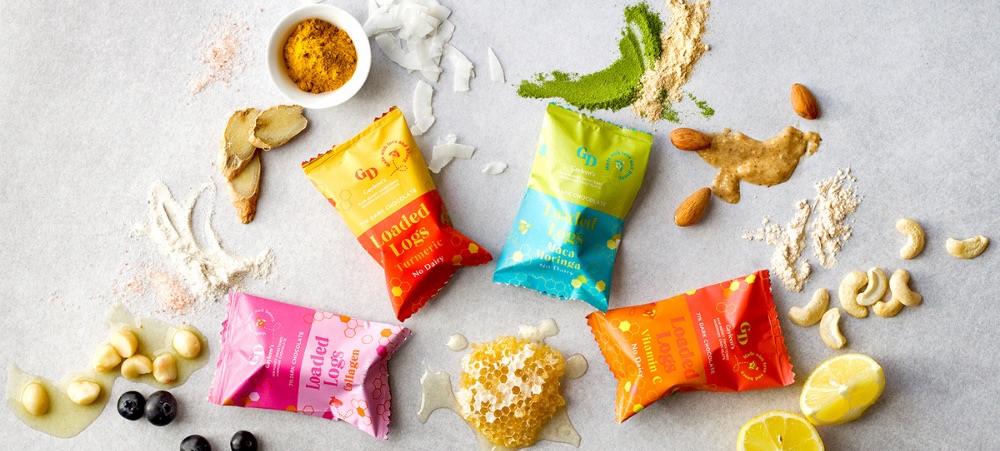
As more and more people are opting to eat healthier and lead more active lifestyles, there’s been an increase in consumers looking for better-for-you options, especially when it comes to sweet treats and chocolates (after all, who doesn’t love chocolate).  Cape Town based brand of natural chocolate, GD Chocolates recently launched their nutritiously delicious chocolate Loaded Logs (RRP R24.75) packed with only healthy and flavourful goodness.  Blended with the finest quality of raw honey and the smooth, enticing taste of GD’s dark chocolate each flavour offers many unique nutritional properties. Whether you’re looking for a collagen or energy boost, a dose of vitamin C or something to ease inflammation, GD Chocolates Loaded Logs boost a number of benefits.  Collagen Loaded Log Lusciously chewy, with a deliciously malty flavour, the Collagen Loaded Log contains collagen and Vitamin C (which promotes collagen production in the body), providing a collagen boost essential for great-looking skin, hair and nails. Ingredients: Cocoa (powder, butter, mass), raw honey, collagen, blueberries, macadamia oil, Vitamin C and Himalayan salt. Vitamin C Loaded Log Tart, yet sweet with a tangy citrus zing, the Vitamin C Loaded Log sparkles on the tongue, leaving you craving for more… just another taste-burst, please! Your body needs vitamin C every single day. We can’t think of a more exquisite way to get your daily dose. Ingredients: Cocoa (powder, butter, mass), raw honey, cashew nuts, baobab, Vitamin C, lemon oil, bioflavinoid (orange peel). Maca Moringa Loaded Log With its marzipan-texture and sweet, malted-nutty taste, the Maca Moringa Loaded Log is an energy boost that lasts, sustaining you for hours. Have one for lunch (literally have one for lunch!) and Maca’s mood-improving energy shotplus Moringa’s abundant phytonutrients will see you through until dinner-time. Ingredients: Cocoa (powder, butter, mass), raw honey, Almond nut butter, Maca powder, Moringa powder. Turmeric Loaded Log The Turmeric Loaded Log delivers a load of turmeric’s anti-inflammatory properties along with a sweet, coco nutty chocolate bliss with subtle, peppery-ginger warmth. Ingredients: cocoa (powder, butter, mass), raw honey, coconut, coconut oil, himalayan salt, vanilla extract, turmeric, ginger, black pepper. From natural nutrients and enzymes to antioxidants and antibacterial qualities, raw honey, a key ingredient in GD Chocolate’s range contains a variety of health benefits too: High level of antioxidants helps with heart disease, high blood pressure and cholesterol Promotes both body and digestive health Strengthens the immune system Helps to eliminate allergies Excellent remedy for skin wounds, inflammation and ulcers Available at Wellness Warehouse stores, selected Spars, Health shops and Deli’s nationwide.

Signs your young child may be suffering from Anxiety
Toptots Head Office

Signs your young child may be suffering from Anxiety

There are many reasons why children develop anxiety. From genetics to traumatic events, personality types that are prone to it or natural fears that have deepened. However, it is important to remember that if your child suffers from anxiety, they may not have it for the rest of their lives, and it is a condition that can be managed. Here are signs to look out for to spot anxiety in your child. Unusual tantrums may be anxiety. If your toddler has started throwing temper tantrums and showing disruptive behaviour – these may stem from them being anxious about something. If the tantrums aren’t associated with tiredness, and come about in specific situations, try to take a step back and see if there is something about that scenario that could be overly stressful to your child. Young toddlers often can’t communicate their fears and emotions, so they act out instead. Avoiding situations Have you noticed your young child hiding behind your legs whenever you are in a new place or doing everything, they can not to go to school every day? While both of these situations can be absolutely normal reactions, if you find it persists and becomes more intense, your child may be suffering from anxiety.  Sleep disruptions If your child suddenly battles to sleep through the night, and you find them tossing and turning when they didn’t before – this could be caused by anxiety. Just like adults who suffer from anxiety battle to sleep, so too can affect your child’s sleep.  Physical signs If your toddler or young child often complains of things like tummy aches or a sore head, however, doctors have said that there is nothing wrong; this could be a sign of anxiety. And they aren’t pretending. The stress that anxiety can cause their bodies can induce these psychosomatic symptoms.  The difference between being anxious and a disorder Everyone has moments when they feel anxious. This doesn’t necessarily mean you are suffering from an anxiety disorder. In actual fact, anxiety in the form of fears can be good for our children – it is our brain’s way of telling us something may be dangerous. When usual fears and stress start to become debilitating and stops your child from doing everyday things – this is when they may be dealing with an anxiety disorder. What you can do to help Not all of the above signs mean your child has anxiety – however, if you spot more than one on a regular basis, the best bet would be to take your child to their doctor and let them know your concerns.

HeronBridge College – Coming soon
Parenting Hub

HeronBridge College – Coming soon

Are you looking for an educational institution for your little one in 2022? Watch this space to learn more about all that HeronBridge College has to offer.

Fluent Panda
Parenting Hub

Fluent Panda

Are you looking for an additional language institution for your little one in 2022? Watch this space to learn more about all that Fluent Panda has to offer.

Kaily car seat incl Base
Prima Baby

Kaily car seat incl Base

When it comes to your little one’s safety, the absolute first item to consider when it comes to transporting your baby is a suitable car seat!  The fact is that when your baby is correctly strapped into their car seat their risk of dying in a car accident decreases. WHAT TO LOOK FOR IN AN INFANT CAR SEAT? Rear Facing Bucket shaped with the handle  Installed Base for easier transitions The Chicco Kaily car seat is a new Group 0+ car seat that is homologated for babies up to 13kgs.  It really is the perfect ally for little ones who will be rear facing for the first few years of their lives. The base is installed with your vehicles seatbelts, which allows the seat to click into the base, providing a sophisticated and easy travel experience – the less times we wake a sleeping baby the better!  This car seat is compatible with several of our Chicco strollers allowing for a versatile travel system solution.   From R3999.99 at participating outlets, the Kaily car seat is a safe and reliable choice for travel with your most loved treasure – your little one!

Cheese fits into almost any meal plan
RediscoverDairy

Cheese fits into almost any meal plan

Cheese is a tasty, convenient and versatile food and it pairs well with fruit, vegetables and many other foods. Including cheese in a meal plan may help to complement foods from other food groups to optimise total nutrient intake. Broccoli with a cheese sauce, for example, or sliced apple, pairs well with sliced cheese. Many different types of cheeses can fit into almost any meal plan as a nutritious option: 1.Cheese helps to fill the nutrient gaps. Cheese is a source of quality protein. The protein in dairy and cheese is complete, which means it provides all the essential and non-essential amino acids (building blocks) needed to build the body. Essential amino acids cannot be made by the body itself and need to be acquired from protein-rich foods. Complete protein is necessary for growth and development, especially in children.  The protein in dairy is also a good vehicle of the amino acid lysine, which typically lacks in a diet consisting mostly of starches such as bread and pap. Protein in cheese also makes you feel fuller for longer and can help prevent unnecessary snacking. It can be served as a snack between meals and is a perfect sandwich filling for school lunches. For sports enthusiasts, the protein in cheese helps with muscle recovery and repair.  But cheese is more than purely its protein. It provides many important nutrients that work together to keep us healthy and strong. Most cheese is an excellent source of calcium, important for growing children between the ages of 9 and 19, when most bone growth takes place. The calcium is well absorbed in the presence of the naturally occurring nutrients such as phosphorus and potassium. 2.What about the fat content in cheese? The average hard cheese (Cheddar and Gouda) contains between 28% and 32% fat, compared to the fat content of other products often used as a snack, e.g. mixed nuts, with almost 55% fat, crisps at 36% fat, or peanut butter at 50%. Although cheese is relatively high in fat, it also provides many other important nutrients. A typical serving size is about 40 g (two tbsp grated cheese) and is just enough to cover a slice of bread. The good news about cheese is that emerging research has shown that the fats in dairy and cheese do not contribute to an increased risk of heart disease and may even have a protecting effect. 3.Other important facts about cheese Sodium in cheese is important as it controls the moisture content of cheese and provides texture and taste. The average hard cheese is not very high in sodium, but take note that cheeses packed in a brine such as feta can have a higher sodium content. Read the labels on the products to make sure you stay in line with your personal dietary goals. Processed cheese also provides important nutrients such as calcium, phosphorus, and protein. It is shelf-stable and can be a convenient product when on the go. It does not age and the flavour, texture, and smoothness are maintained. Processed cheese is a healthy and convenient alternative bread topping to jams and spreads.  For those who are lactose intolerant, cheese is an important source of calcium and can be enjoyed without the negative symptoms associated with lactose intolerance. 4.How much cheese does a child need and how can it be incorporated into the daily diet? Three servings of dairy per day are recommended. This can be made up of milk, cheese, yoghurt, or maas. 5.Protein requirements for children and the contribution of a 40 g serving of cheese. As cheese is an important source of good quality protein, it can also replace other protein sources in the diet. Cheese is an affordable source of protein, especially when it replaces meat in the diet. The protein in two servings of 40 g cheese can replace one chicken drumstick and one serving of cheese can replace the protein of one egg. Nutrition table:  Did you know that milk has been part of human nutrition for many years? Evidence shows that humans tamed and started farming with dairy animals 9 000 years ago! The consumption of milk and cheese can be traced back to Anatolia, the modern-day Turkey.

Who took my collagen and how can I get it back?
Parenting Hub

Who took my collagen and how can I get it back?

Four benefits of taking a collagen supplement to support your body through menopause There’s so much about menopause that just isn’t discussed. Deepening wrinkles, sagging skin and weight gain go hand-in-hand with hot flushes and broken sleep. Most of us know this is due to waning estrogen levels but did you know this hormone also plays a powerful role in the promotion of our human elastic glue: collagen. So, what can you do during menopause to help restore your collagen and reclaim some of your youthful virility? Catherine Clark, the Owner and Founder of Harvest Table says that generally, menopause begins 12 months after a woman’s last period. Women enter this stage of life anywhere from their mid-40’s to their late 50’s and when it hits, your body has a sudden and steep drop in estrogen, triggering major changes throughout your body.  “The decrease in estrogen as women age is directly tied to the decrease in collagen production. In fact, when you hit menopause, you experience a 30% drop in collagen which means that your skin becomes thinner, your bones become more brittle and your organs struggle to maintain levels of tissue,” Catherine explains.  Catherine explains four key symptoms of menopause and how regular collagen supplementation can improve women’s health as they age: 1. Sagging skin Estrogen is key for the normal functioning of your skin and as your levels of this hormone decline in menopause so does your collagen production. As a result, our skin loses its firmness and begins to sag causing jowls to appear and wrinkles to become more pronounced. That’s because your whole body is actually kept together by collagen protein, which makes up the majority of tissue that connects organs and skin. It, therefore, makes sense that collagen originates from the Greek word ‘kolla’ – or ‘glue’. Supplementing your diet with collagen can help restore this glue and support your system’s ability to improve your skin’s elasticity and hydration and reduce the signs of ageing. 2. Cellulite While most women are familiar with cellulite – that dimpled “orange peel” look that appears on your thighs, upper arms, buttocks and stomach, it develops much more quickly in menopause. Cellulite is fat that pushes up through the connective tissue under the skin creating an uneven or lumpy surface. Cellulite may appear anytime in a woman’s life, but when estrogen levels decline, cellulite generally increases.  Again, taking a collagen supplement on a regular basis will help reduce cellulite as it will increase the skin’s thickness and elasticity and thus reduce the appearance of cellulite.  3. Hot flushes Your liver is one of your most important organs as it regulates your health. It performs over 500 different functions on a regular basis so when your body changes during menopause, your liver suddenly gets hit with a lot more things to do and it’s no surprise that it starts to protest. Cravings, mood swings, hot flushes and sleep issues are just some of the symptoms that your liver is taking strain. Collagen feeds not only your liver but all your organs, so by taking a regular collagen supplement, you will also be supporting your liver too, helping it to deal with all the changes taking place in your body. 4. Weight gain The hormonal changes of menopause may make you more likely to develop an extra tyre around your middle as well as heavier hips and thighs. This is part of the natural ageing process because as your muscle-mass decrease, it is replaced by fat. By taking a collagen supplement you will be able to build more lean muscle mass which is great news for weight loss as muscle burns calories faster than fat. Muscle fires up your metabolism and your body becomes a calorie-burning machine. So if you couple collagen with a sensible, healthy diet, you should lose or maintain a healthy weight and feel great. Catherine concludes: “Once you’ve started taking a collagen supplement, the health benefits are notable. Whether you are concentrating on the appearance of your skin, maintaining a healthy weight or overall wellbeing, taking a collagen supplement can help you reach your health goals and counteract the symptoms of menopause.” Harvest Table has a wide range of collagen products that are available from www.harvesttable.co.za. Follow Catherine on Instagram: @whole_healthy_me.

Creightons | the Perfect Solution to Your Winter Hair Woes
Parenting Hub

Creightons | the Perfect Solution to Your Winter Hair Woes

Along with the upsides of winter (snuggling under cosy layers, sitting in front of a fire place with a good book and hot chocolate in hand) come a few downsides, especially when it comes to your hair. We’re talking dryness, frizz, and lackluster tresses. Switching up your shampoo and conditioner is a good idea to give your mane some TLC. Professionally formulated and expertly developed, Creightons award-winning Argan Smooth Moisture Rich and Pro Keratin Strength and Repair collections offer the perfect solution to your winter hair woes. Whether you’re looking for intense nourishment and moisture to transform dry and damaged hair into silky soft locks, Creightons will ensure salon-worthy tresses every day, without breaking the bank! An age old beauty secret, Moroccan Argan oil (extracted from the kernels of Argan Trees) is a luxury inclusion in hair care products. Thanks to its moisturising and conditioning properties, this beauty elixir (rich in vitamins, minerals, antioxidants and essential fatty acids) has become a popular addition to our hair regimes.  Harnessing the natural power of Moroccan Argan Oil, Creightons Argan Smooth range helps to deeply nourish, hydrate and protect even the driest of hair against frizzy and damaged strands, whilst increasing the hair’s elasticity and adding shine to dull lifeless hair. Argan Smooth Moisture Rich Shampoo and Conditioner  Perfect for hair types in need of hydration, shine and light frizz control, Creightons Argan Rich Shampoo and Conditioner (RSP R99. 95 each), infused with Moroccan Argan oil and silk proteins, replenishes moisture, leaving hair silky soft and more manageable from root to tip. Hands up if you’re tired of dealing with lackluster, frizzy locks? If that’s you, investing in a keratin shampoo and conditioner is a must to help tame your mane and make it more manageable. Keratin is a protein that is found in your hair and when your hair suffers from dryness or damage, it loses this protein, making it weaker and more prone to damage.  Pro Keratin Strength and Repair Shampoo and Conditioner  Suitable for all hair types, but particularly beneficial for those with dry, damaged, natural or colour treated hair, Creightons Keratin Pro Strength and Repair Shampoo and Conditioner (RSP R99. 95 each) gently cleanses and conditions the hair from root to tip, reducing frizz and adding maximum shine. It also helps boosts keratin levels, providing an extra layer of protection for silky smooth and more manageable locks.  Tip: Washing your hair every day will remove important natural oils, known as sebum, and will leave your hair feeling dry and brittle. Additional signs of over-washing include the colour of your hair beginning to fade, frizziness and a flaky scalp. Made with the highest quality formulations, Creightons products are 100% cruelty-free and where possible their products are vegan friendly.  Available from Dis-Chem Pharmacies.

Preventing Childhood Burn Injuries
ChildSafe

Preventing Childhood Burn Injuries

It is winter again.!!! Time for warm clothes, hot drinks, food, heaters and fireplaces. Young children like to explore.  They do not know what is dangerous and what is not. Many parents do not realise how many burns hazards are within easy reach of a child. A child’s skin burns much quicker than that of an adult. Let us continue to take care this winter not to endanger a child’s life through one careless moment. Here is some useful information to keep your family happy and safe this winter season.

Baby’s physical milestones for every age
Toptots Head Office

Baby’s physical milestones for every age

As parents, we naturally want to keep track of how our little ones are developing or if there are any concerns around things they are supposed to be doing. This milestone guide, written by Occupational Therapist Megan Smith, gives you the average milestones children reach at certain ages. It is important to note that not all children are the same, and many develop at different paces than others. If you are concerned about drastically missed milestones, we always suggest booking an appointment with your child’s doctor to check everything is on track.  Milestones for 0 to 6-month-old babies During the first 0 to 2 months of the baby’s life, they have limited control over their own movements as they are generally due to reflex actions. (Baby massage and exercises will assist in muscle strength and tone development).  During the first few weeks, babies will lie in a flexed position (tucked inwards, knees to chest and arms towards trunk centre). This mimics the position they maintained in the womb and allows them to feel safe and secure. Swaddling assists babies in maintaining the contained position.  Babies first motor milestone are to overcome flexion and uncoil into a more neutral lying position. As their back muscles strengthen, this becomes easier and more natural.  4 to 6 weeks – during tummy time, babies will start to lift their heads off the mat for short periods of time. As the neck muscles start to strengthen, this movement becomes easier and will be sustained for longer.  By six weeks, they should be able to hold their head up for a few minutes in supported sitting and on their tummy.  12 weeks – arm movements start to appear more controlled as babies start to swipe for objects held in their visual field. This is important for developing arm strength.  By 3 months old, when babies are placed on their side, they can roll over onto their back. 3 months – babies can hold their heads up at a 45-degree angle during tummy time.  During the 8 to 12-week period, babies will start to notice their hands and bring them to their mouths actively. This is the starting point in developing hand-eye coordination.  4 to 6 months – babies start to prop up on their elbows during tummy time and may even hold themselves up on straight arms in this position. They may collapse on one arm, causing them to roll over accidentally.  4 to 6 months – when lying on their backs, babies will start to play and engage with their toes, bringing them right up to their mouths. This is important as the position strengthens their tummy muscles.  By 6 months, babies should be rolling one way – back to tummy or tummy to back.  By 6 months, babies will love to be supported on your lap in the standing position and bounce. This strengthens the leg muscles to prepare them for pull-stand.  6 months – babies should achieve the sitting position.  6 months – babies hands become more functional, and they start to actively grasp and manipulate objects.  Milestones for 6 to 12-month-old babies 9 months – independent sitting where babies will be able to get in and out of the sitting position on their own.  While sitting, babies will start to reach forward for objects and turn their trunks to the sides to reach objects. During the reach, they may find themselves propping forwards into the crawling position.  9 months – babies should have a good contralateral crawl.  By 9 months, babies can pick up an object between their thumb and forefinger.  Around 9 to 10 months, babies can pass toys from hand to hand.  At 9 to 12 months, babies will start using external objects to pull themself into a standing position.  Once in a supported standing position, babies will bounce and rock on their legs, preparing their muscles for weight shifting needed to achieve walking.  During this period, one bounce will eventually turn into a step, and they will learn how to cruise – holding onto something with their hands for support and moving their feet. Walking is the most variable milestone and really depends on the individual child. Some walk at 9 months, others at 16 months.  Milestone for 12 to 18-month-old babies  At 12 months, they will point to objects with their index finger.  At around 15 months, they can now bend in standing to pick up a toy. At 15 months, babies can crawl up a few stairs.  At 18 months, babies can start to take a few steps backwards. At 18 months, babies can page through a thick paged book.  Milestones for 18 to 24-month-old babies  Towards 2 years, toddlers can now run more rhythmically, faster and with better balance.  At 2 years, toddlers can walk up and down stairs unaided, holding onto a rail.   They can stand and kick a big ball without losing balance.  They can catch a ball if you through it into their arms.  Milestones for 2 to 3-year-old’s At 2 years, they will start to ride a tricycle.   They can hit a ball lying on the floor with a bat.  They are able to hold a crayon with all fingers and their thumb in opposition, using elbow and shoulder to draw.  They can jump down a step with two feet together. At 2,5 years, they can walk between two lines.  They will start to cross the midline of their body during activities.  They can stand on one leg momentarily.  They can throw a ball in a specific direction.  They can kick a ball without losing balance.  They can use their fingers separately – touching their thumb to their index finger.  Milestones for 3-year-olds They can walk backwards, forwards and sideways.  They can walk heel-toe with good balance. They can walk on a straight line.  They can throw a ball from above his head.  They start to use an inferior pencil grip – holding the pencil between their thumb, index

How to support your family during a crisis
Impaq

How to support your family during a crisis

What is a crisis? Crises are pronounced adverse life events typically accompanied by some type of loss. A crisis can include a death or accident in the family, a parent losing their job, or violent crime. Sometimes, even good things – like a new marriage or a pregnancy – can feel like a crisis because of the associated stress and how these events change a person’s life.  How children react to a crisis Children are very perceptive and will notice when there is something ‘wrong’ in the family. Depending on a child’s age, they may not be able to verbalise their feelings. Consequently, children may present with behaviours that are not standard for them. During a crisis, it is important to keep an eye out for behavioural oddities such as: Aversions to stimuli that previously did not bother them Disturbed sleep or nightmares Diminished interest in school and other activities Poor concentration Age regression (acting younger than they are) What parents can do for themselves As the saying goes, you cannot pour from an empty cup: parents cannot help their children unless they help themselves. Here are some tips on how you, as a parent, can look after yourself during a time of crisis: Focus on the most significant and pressing responsibilities. By concentrating on what is essential and paying less attention to less important things, you will not burn yourself out trying to ‘do it all’. Determine what you can and cannot control. By focusing on the things you can control, you will be able to reduce your stress. Practise self-care. Although self-care is something we should always be practising, it is imperative during a crisis. Take an hour to read your favourite book, have a luxurious bath, or treat yourself to a delicious snack. While self-care might feel unnecessarily indulgent, it is crucial for helping you keep calm and to keep your stress in check. Read more: Parental self-care  Make sure to reach out and connect with loved ones. Humans are inherently sociable creatures, and no man is an island. Keep in contact with friends and other family members, as they are a vital source of support during a crisis. Keep loved ones informed of the situation, and spend time with them when and where possible. Respect that people deal with crises differently. Some people are more openly emotional than others; some find it more challenging to cope with stressful situations – be mindful of the different personalities in your family. Do not expect everyone to recover at the same rate, and remember that healing is not linear: there will be ups and downs. Be easy on yourself and your family. Allow yourself to recognise and express your feelings. Ignoring them will not make them go away, and trying to repress your emotions will backfire in the long term. Give yourself the necessary time to grieve and heal. Acknowledging your fears and anxieties is good not only for your emotional wellbeing but also for your children’s wellbeing as they will see that it is okay and normal to have and talk about these feelings. What parents can do for their children Above all else, during a crisis, children need to feel safe and know that they have people in their life on whom they can rely. They will need reassurance, understanding, support, and acceptance. You can help do this for them by: Talking openly about the situation with your child. Share accurate but age-appropriate information about the problem, do not keep them in the dark. Use simple language and avoid sugar-coated metaphors. Answer their questions but refrain from giving them details they do not need. If you do not know the answer to a question, be honest and let them know you will try to find out. Being positive. While it is important to be honest and realistic, be optimistic and tell your children that you are dealing with the situation and expect things to get better. Reassure and encourage them, but do not make false promises. Listening to children. Too often, parents brush off or invalidate their children’s concerns, but you must tune in to their feelings and take them seriously. Take time to ask them how they are feeling and if they would like to talk about their feelings. If they are non-verbal or unsure how to verbalise their feelings, encourage them to draw, write, or use toys to ‘tell a story.’ Read more: Supporting your child’s emotional intelligence development Helping children socialise. As mentioned, parents need external support from loved ones, and so do children. Facilitate contact with people with whom you know your child likes spending time and feels comfortable, whether this is a best friend, an aunt, or anybody else! Read more: You’ve got a friend in me Spending extra time with children. Children might feel the need for extra attention from caregivers during a crisis, so be sure to give it to them if that is what they need. Do a fun activity together (like watching a family-friendly movie), or take some more time putting them to bed. Ask them what you can do for or with them that will make them feel better. Most importantly, for both parents and children, try to stick to your routine as much as possible. Predictable routines help children feel safe, and giving them – and yourself – things to do will give all of you a feeling of control. Make sure you and your children eat well, exercise, and get plenty of rest, where possible.  Read more: New normal, new routine  If you are concerned about your wellbeing or that of a family member, seek professional help. A general practitioner can refer you to a psychologist or counsellor specialised in trauma and distress. By Jacqui Smit

How to make sure the kids’ feeding time is not mission impossible
Parenting Hub

How to make sure the kids’ feeding time is not mission impossible

When a baby or toddler refuses certain foods or does not eat at regular mealtimes which adults are accustomed to, it can create tension and anxiety. Without an understanding of how young children eat, many parents find themselves disillusioned about feeding their child and misunderstand them as “fussy” eaters. This can lead to life-long issues around food.  This is the view of Dr Iqbal Karbanee, paediatrician and CEO of Paed-IQ BabyLine, who says that a lot of conflict arises when parents expect their children to conform to certain unfounded expectations around eating patterns and food preferences, which can be avoided. BabyLine is South Africa’s trusted telephonic medical advice service for the first 1000 days of a child’s life, starting from conception to birth and beyond.  “Childhood is a dynamic phase, and as a child grows and changes developmentally and physically, their nutritional requirements are also changing, ” says Karbanee.   He says that when it comes to butting heads with “fussy” eaters, it is often within the 18-month to 3-year-old category where feeding tantrums, food refusal and picky or select eating give parents headaches. He adds that parents must learn to be more dynamic in adapting to the unique needs of their child.    “Although feeding and nutrition should be viewed in the context of a child’s individuality, unfortunately we also have to consider the cultural and societal norms that come with the family, as well as the influence of others on our expectations of eating,” says Dr Karbanee.  He stresses the need for parents to understand that their young child is an individual,  and as long as they fall  within the basic developmental parameters, then they’re still within normal limits and doing fine.  Below he gives his top tips to help parents and children survive the very normal “fussy” eating phase:  Patience is a virtue – parents may need to offer a certain food to a child on many separate occasions before they’ll stop rejecting it. Just keep trying while showing your child how much you enjoy the food yourself.  A child’s stomach is only the size of their fist, so they’re only comfortable eating small portions of nutritious meals and snacks.  Sometimes it’s also as if children go through certain phases where they crave more protein or more carbohydrate in their diet. Go with the flow and allow your child to eat when they are hungry, and don’t become stressed if they skip a meal here or there. Look at your child’s food intake over an entire week before worrying whether there’s a problem.   Don’t give your child excess fluids like milk or juice or other snacks between meals. Allow them to develop that hunger so that they can eat in a healthier way.  Keep mealtimes happy, positive and fun.  Don’t react if your child refuses food. Provide positive feedback even when their food is only touched, smelled, licked or tasted.  Parents should only seek professional help if their child is not drinking fluids, not growing well, and/or becoming anxious or upset around food. If you are uncertain whether your child’s fussy feeding behaviour is anything serious, consider phoning a reputable medical advice line, which can help you quickly understand whether or not you need to take your child to a doctor.   “Children eat very differently to adults. Adults seem to have regular meals at certain times, sometimes whether they’re hungry or not. We should actually aim to eat more like children, because they will eat only as much as they need to eat,” Dr Karbanee concludes. 

GD CHOCOLATE LAUNCHES CHOCOLATE BUTTERCUPS
Parenting Hub

GD CHOCOLATE LAUNCHES CHOCOLATE BUTTERCUPS

A national lock-down together with winter descending may have seen some of us reaching for comfort food more often than we should be.  And to be fair, it’s understandable that we have felt the need for some extra sweetness to get us through these rather bitter times. Something else has happened during lock-down – Gayleen’s Decadence, the artisanal, gourmet chocolate that packs a powerful but delicious health-boosting punch, has re-branded as GD Chocolate and received a stylish new look, with all the good stuff that Gayleen’s many fans love – dairy, preservative, refined sugar and HFCS free, and sweetened only with raw honey.  Furthermore, GD Chocolate recently launched their chocolate Buttercups. Retailing at R20, the Buttercups are a treat-sized favourite that allow you to get your chocolate fix without the temptation to over-indulge.  GD Chocolate Buttercups are made with 71% dark chocolate and about 80% raw ingredients, providing all the superfood benefits of cacao.  The buttercups are available in five deliciously indulgent soft-centre fillings to choose from – Mint, Mocha-Coffee, Turkish Rose, and newcomers to the range, Almond Butter and Vanilla. GD Chocolate Buttercups provide the perfect pick-me-up before exercising, and are a great substitute for coffee when the dreaded mid-afternoon office slump kicks in.  And if you’re inclined to share them, they make a healthy yet delicious addition to school lunchboxes or as after-dinner dessert nibbles with friends. GD Chocolate and Gayleen’s journey started more than 10 years ago, when she adopted a healthier lifestyle but was loath to give up her favoured sweet treat.  She started experimenting with chocolate and soft fillings, and became the first chocolatier in the world to replace sugar or sweeteners with raw honey. She says, “I was told by other chocolatiers that it wasn’t possible to make chocolate sweetened with honey, and eventually had to have my chocolate analysed to prove that I wasn’t lying!  Not only did honey work, but what started out as a stall at a local market is now a national business, with GD Chocolate now sold at Wellness Warehouse, health shops, pharmacies, deli’s, on-line retailers and selected Spar stores around the country – all thanks to my loyal customers!” Follow GD Chocolate on social media Facebook: GD Chocolates Instagram: @gdchocolate For more information or imagery, please don’t hesitate to contact me or visit https://gdchocolate.com/

ins and outs of Positive Parenting
Toptots Head Office

ins and outs of Positive Parenting

You may have heard the term ‘Positive Parenting’ thrown around lately. While it may seem like just another parenting trend, it is actually a parenting philosophy and style that is rooted in years of research. Positive Parenting is taking your child’s individual needs, personality and sensitivity into account when raising them. It is based on five main principles. Positive Parenting principle one: Respect This one seems simple, but it’s actually not that common amongst parents. We tend to want to teach our children to respect; however, the first thing we should do is respect our children. Acknowledging that our children are people, just like us, that have the right to their own decisions and emotions. It focuses on giving your child space when needed, respecting their body and their dignity – just like we would want others to respect ours.  Positive Parenting principle two: Proactivity The next foundation of Positive Parenting is being proactive when it comes to responding to your child. Instead of waiting for your child to throw a temper tantrum and then dealing with it, this philosophy urges parents to try and spot the behaviour as it starts or just before. While you get to know your child, this will become easier. Suppose you are at a birthday party and see your child begin to isolate themselves or rub their eyes. In that case, proactive parenting means you will see these signs, know that your child is tiring and reaching their sensory limit and removing them from the situation before a temper tantrum ensues.  Positive Parenting principle three: The Bond Did you know that when babies and young children establish a deep bond with their parents, it helps their brain development and chemical production? It also helps them develop their emotional IQ as they get older. The one sure way to ensure the strength of the bond between yourself and your child is quality time. By quality, we don’t mean amazing adventures or doing special things together. Quality time is simply uninterrupted time with your child. No phones, no TV, no distractions. Just you and baby being together. It can be playtime, reading time, cuddle time, or walk time. Whatever works for you. But spending this close time together will be the foundation of your parent-child bond and will assist you in your parenting for years to come. Positive Parenting principle four: Empathetic Leadership You may find many people against Positive Parenting, as they tend to think it is letting your child do whatever they want. However, this is not the case. As a positive parent, while you are understanding of your child’s needs and individuality, you are most definitely still a leader. This means you don’t let them choose what they want, but you do give them options that suit their personality and your boundaries. You still have rules and consequences; you just make sure that these are centred around mutual respect and empathy. Positive Parenting principle five: Positive Discipline Positive Parenting doesn’t mean your child does not get disciplined. It means that you approach it in a very different way than what is seen as ‘traditional punishment’. Punishment is a way to make your child suffer so that they think twice about doing it again. Positive discipline teaches your child not to repeat the same action by giving them the tools to do things differently. As a positive parent, when your child needs to be reprimanded is seen as a teachable moment. It’s a chance to guide them to understand their actions and show them how they can start learning to act differently. When you approach discipline with empathy instead of anger, you take away the shame and replace it with an environment where your child feels safe to learn.

We Black Travel System – Stroller, car seat & carry cot
Prima Baby

We Black Travel System – Stroller, car seat & carry cot

BUYING A TRAVEL SYSTEM When looking for a travel system, there are a few things that parents must keep top of mind: Comfort Versatility Strength Convenience for parent Longevity and value for money The Chicco We Travel system super combo which includes the We stroller, Kaily car seat and Chicco Soft Carrycot offers parents all they could ask for in a travel system in spades!   This versatile We travel system hits the trifactor!  A safe car seat for complete peace of mind, a buggy-style stroller and a super soft carry cot for those nap times on the move. WHY THE KAILY CAR SEAT? Suitable for use from birth, the Kaily car seat is rear facing for added safety and comes with a based that remained installed in your vehicle with your seat belts for quick transitions in and out the car with a simple click. WHAT MAKES THE WE STROLLER PERFECT FOR PARENTS ON THE GO? It is super lightweight and has a compact fold.  A large canopy with UV50+ protection ensures your little one is always kept safe from harsh conditions.  The cushioning is premium and with full recline capability, your little one can easily nap whilst out and about.  A large storage basket is complimented by slick leather details. SNUG AND SAFE IN THE SUPER SOFT CARRYCOT This carrycot is created from soft breathable fabric with superb inner support for nap times on the go with your little one.  Slotting easily into the reclined We Stroller, you can ensure your baby feels snug and safe even whilst on the go.  Suitable for use up to 9kg, this strong durable carry cot is a super addition to the travel system.   Available from participating baby retailers, this ultimate We Travel system can be purchased from R11 999.99. For more information head to www.chicco.co.za

Our “talking textbooks” help learners engage with their studies
EXCOM

Our “talking textbooks” help learners engage with their studies

Excom provides the following textbooks: EMS Grades 7 – 9 Accounting Grades 8 and 9 Life Orientation Grades 8 to 12 Business Studies Grades 10 to 12 Learner books are available in English and Afrikaans in both printed and e-book format. Talking textbooks Our ‘talking textbooks’ help learners become active participants in their learning journey. ‘Bubbles’, which are short online lessons, are embedded in our textbooks. The lessons expand on the concepts being taught in class with additional examples and explanations. Learn more about our ‘talking textbooks’ below: All our books are in colour and make use of contemporary case studies and examples. Content is updated regularly Content is developed by experts in their relevant fields, including examination panel members, senior examiners, and moderators. The EMS and Life Orientation ranges follow the CAPS curriculum, and the Business Studies range follows the SAG (IEB) curriculum. All our books have a corresponding educator’s guide. Excom Business Studies workbooks Online learning has become more important than ever, and these workbooks are the ideal tool for learners to manage their learning and ensure they cover essential theory. The framework format is based on the short questions learners can expect in examinations and allows them to plan their answers to fit the available space. Help your learners make the most of their study time – buy Excom textbooks and workbooks today.

How to Tell if Your Baby is Hungry
Squish

How to Tell if Your Baby is Hungry

Just as your baby is learning how to eat solid food, so too will you be learning the skill to read your baby’s hunger and fullness cues. A healthy baby will eat without being coaxed and stop when full. Being responsive to your baby’s signs of hunger and fullness will help manage many frustrating mealtimes and also leave you rest assured that your little human is happy and content with a full tummy. Feed Me! Your baby will let you know when they are hungry by reaching out or pointing to food. They may even become excitable when placed in a familiar eating place like a highchair, and be rather expressive with smiling, cooing, squeals of glee, and maybe even a frustrated cry. Your baby may also move their fingers towards their mouth or try and reach out for the spoon as you prepare to feed. Fill Up! Adults, babies, and children are less likely to eat beyond fullness and your baby will very clearly tell you if they need more food or if their tummy is full. What started out as a content baby in a feeding chair, now becomes fussier and more irritable. The pace of eating will slow down, and your baby will close the mouth, push food away and even spit it out. Older babies may grab and throw food to the floor. There will be a change in posture from excitable and upright to disinterested and slumping in the chair, and some babies may even fall asleep. It is good to know that it is normal for your baby’s appetite to change from day to day, and even from meal to meal. Be guided by your baby’s interest in food and appetite levels to know how much to offer, rather than worry about an exact amount eaten. It is recommended that you check your baby’s weight regularly and if you are concerned about the amount your baby eats or about its weight you should consult your doctor or specialist. For a convenient way to get your baby to try its first foods, why not try Squish 100% fruit and veg purees? Squish offers a range of 100% fruit and veg purees and pressed 100% fruit and veg juices. The convenient pouches are well-loved amongst mommies and are perfect for babies from the first introduction of solids, right through the weaning process – from babies to toddlers and beyond.

Mood disorders – know the signs & ways to help your teen
Advtech Group

Mood disorders – know the signs & ways to help your teen

One in eight young people between the ages of 5 and 19 are at risk of developing a mental disorder, of which Mood and Anxiety Disorders are the most prevalent. Emphasis on the mental health of young people recently increased as a result of the disruption caused by Covid-19 and lockdowns which exacerbated challenges that existed before the pandemic. It has therefore once again become important to not only start talking about the mental health of young people, but also to recognise symptoms and know where to look for help, an education and mental health expert says.  “The prevalence of mood difficulties among young people is increasingly becoming a concern internationally,” says Dr Jacques Mostert, Brand Academic Manager at ADvTECH, SA’s leading private education provider. Dr Mostert holds a PhD in Psychology of Education and is globally renowned in his field, having conducted experiential research in education in Denmark, the UK, South Africa and The Netherlands. Dr Mostert notes that an estimated 24% of teens between the ages of 11 to 19 suffer from depression caused by the home environment, 25% are subject to cyber-bullying and loneliness, 92% of LGBT youth report depression during the ages of 11 to 19, and 80% of teens between the ages of 11 to 19 report a sense of isolation that causes them to feel depressed. “It is very important to understand the signs of depression, so that action can be taken timeously should concerns about the mental wellbeing of a child arise,” says Dr Mostert. “Teachers and parents can recognise the onset of depression when a sudden change in behaviour becomes apparent and continues for at least 3 weeks or longer. These include an atypical lack of energy, becoming increasingly irritable and agitated without a rational explanation, and a sense of being down in the dumps for no reason.” Some adolescents may withdraw from friends and family over a sustained period of time, he notes, adding that this is especially concerning if this is atypical of the normal interactions of the teen. “Another red flag is the inability to concentrate in class where ADHD or other non-neurotypical difficulties are not present, as well as regularly failing to complete classroom and homework assignments in time or often being late to class because of feeling overwhelmed. “This, coupled with unusually defiant behaviour towards teachers and other school staff, especially if this is non-typical behaviour, may indicate that the teen is experiencing difficulties with mood and affect.” In the same way as with anxiety difficulties and disorder, the student often asks to go home because of feeling ill with no discernable symptoms.  The teen often has days off from class time due to doctor’s appointments, hospitalisation, or inability to attend classes. Changes in sleep patterns, a significant weight loss or gain in a short period of time and disinterest in hobbies or areas where the teen previously showed interest also raise concerns about the mental wellbeing of the teenager. Finally, a loss of future-mindedness, or talk about death or suicide, engaging in risky or self-destructive behaviour (drinking alcohol, taking drugs, or cutting, for example) are clear signs of the teen suffering from mood difficulties or a possible mood disorder. “Not all of the above need to be present, but if there is a discernable and drastic change in a young person’s behaviour which continues for a period of several weeks or longer, intervention is necessary,” Dr Mostert says. He says first steps teachers and parents can take to help their child deal with depression at home and in the classroom include: DEVELOPING COLLABORATIVE RELATIONSHIPS Parents of teenagers should develop the habit of listening with empathy and not give in to the easier way out of lecturing. However, it must also be said that parents should be gentle yet persistent when it comes to holding realistic expectations of their child. AVOIDING NEGATIVE TECHNIQUE STRATEGIES Punishment, sarcasm, disparagement, and passive-aggression is a way of affirming the depressed teenager’s belief of not being worthy or a valued member of the family or society. Parents must be willing to be vulnerable and acknowledge their own and their teenager’s feelings, especially at a time of disruption such as the Covid-19 pandemic. NOT LOWERING EXPECTATIONS OR GIVING UNEARNED REWARDS Realistic and earned rewards is one of the most important tools in a parent’s approach to supporting their depressed child. The sense of having earned a reward, and receiving acknowledgement for an aspect of their life they find significant affirms a sense of value. However, the opposite is also true. Unearned praise leaves the teenager with a feeling of inauthenticity and affirms their already negative self-perception.  PLANNING FOR EARNED SUCCESS Activities that are of interest often fall by the wayside when teenagers are depressed. Often parents try to arrange and engage in these activities as a panacea to their teenager’s depression. However, this may exacerbate the young person’s feeling of worthlessness. Parents should find novel and interesting activities that may lead to earned success. This may include DIY activities around the house or asking for help with a specific app or technology in which, when success is achieved, due praise is earned. “Most importantly, parents should trust their gut,” Dr Mostert says. “If your teenager insists that nothing is wrong, despite a prolonged period of depressed mood or being diagnosed with major depressive disorder or bipolar disorder, parents should trust their instincts and seek help. “Should the above techniques not bring about an improvement in the mental wellbeing, parents should seek advice from their medical practitioner or a psychiatrist.”

A balanced diet with dairy for optimal growth
RediscoverDairy

A balanced diet with dairy for optimal growth

All growing children need good nutrition to build healthy bodies. Eating patterns that are formed while growing up influence dietary patterns throughout life and is a good prediction of overall health in adulthood. Therefore it is important that parents should not only strive to feed their children a healthy balanced diet, consisting of a variety of foods, but also set a good example by eating healthy food themselves. Maretha Vermaak, registered dietitian at Rediscover Dairy says: “Growing children need vital nutrients, including those found in dairy foods, to help them develop strong, healthy bodies. It is important to make sure that children are not at risk. Hunger and poor nutrition are not only connected to their growth and development, but also their readiness to learn. When children have regular access to nutritious meals, especially breakfast, research shows a connection to better performance in school.” Everyone in the family needs dairy in every stage of their life It starts at pregnancy. Because dairy is important for bone health and development, it is important for a pregnant mother. When a woman expects a baby, she needs to make sure that she gets enough calcium to maintain her own bone mass and the skeleton of her growing baby. Healthy, sensible eating and planning are necessary to give your body and the growing baby everything needed for a healthy outcome. Dairy will help provide you and your baby with many of the important nutrients you need. Your daily calcium needs during the life cycle Your baby grows very fast in the first year of life: Birth weight triples Length increases by 50% Head circumference increases by 30% The percentage of water in the body decreases, whereas the percentage of fat and protein increases At one year of age, your baby should have at least developed four teeth It is well recognised that the period from birth to two years of age is a ‘critical window’ for the promotion of optimal growth, health, and behavioural development. Breastfeeding your baby is the best start for any child. Breast milk helps keep your baby healthy and it supplies all the necessary nutrients in the proper proportions. It also protects your baby against allergies, sickness, and child obesity. Breast milk is the perfect food for your baby – it changes constantly to meet babies’ needs. The milk volume and composition changes according to the time of day, nursing frequency, and the age of the baby to promote healthy growth. The World Health Organisation encourages exclusive breastfeeding for the first six months of life. By the age of six months, your baby is now ready to be introduced to solid foods. This is the time to start with complementary feeding.  Complementary feeding is defined as the process starting when breast milk alone is no longer enough to meet the nutritional requirements of infants, and other foods and liquids are needed in addition to breast milk. When you introduce your baby to solids, start with small amounts of one food at a time and increase the quantity as the child gets older.  Examples of introductory foods include: soft maize meal porridge; iron-fortified rice cereal; sweet potatoes or potatoes; butternut and other mashed or strained vegetables; chicken livers or fine, soft meat or chicken; and mashed fruit like bananas or pawpaw. Subsequently, a variety of foods is recommended.  This is also the ideal time to introduce yoghurt and cheese to your child. Yoghurt is a perfect base for lunch or an in-between snack. You can mix plain full-cream or double cream yoghurt with fresh mashed fruit. Remember your baby does not know the taste of  sugar or salt and you do not need to add any sugar or use sweetened yoghurt. You can grate cheese into their vegetables or allow them to eat a piece of cheese just like that – it is a perfect finger food. Full-cream milk may also be used to mix their cereal or in a white sauce as an addition to vegetables. Adding milk to your baby’s food ensures the addition of many important nutrients and good quality protein.  At the age of six months your baby still needs breast milk and mothers are strongly advised to continue breastfeeding. If possible, breastfeeding should continue up to two years. At six months your baby still needs 150 ml milk per kilogram of body weight. Acceptable milk sources include fresh full-cream milk, long-life milk (UHT), fermented milk (maas), or yoghurt.  Increase the consistency and variety of food gradually as the infant gets older, adapting to the baby’s requirements and abilities. Infants can eat pureed, mashed, and semi-solid foods from six months of age. By eight months, most babies can also eat ‘finger foods’, which is food that they can eat on their own. By 12 months, most children can eat the same types of foods as the rest of the family. However, keep in mind the need for foods rich in nutrients. It is important to teach children from an early age to enjoy their food. Mealtimes should be times of relaxed social interaction in a loving environment.  How and when to introduce dairy in your child’s diet There is a dairy product to suit everyone’s taste and dietary preferences.

Keep Your Blonde Tresses Nourished and Shiny All Winter Long
Parenting Hub

Keep Your Blonde Tresses Nourished and Shiny All Winter Long

Winter weather has a tendency to zap all the moisture out of your locks. Hair tends to become dry and dull, causing colour to fade, making strands lackluster and hard to style.  Just like your skin, your hair is susceptible to the cold suck of winter air — even more so if it’s coloured or chemically processed. When blonde hair – especially highlighted blonde hair – gets dry and beaten down in winter, it starts to look dull, brassy, and warm. So when it comes to keeping your blonde tresses glistening all season long, it’s worth investing in a nourishing purple shampoo and conditioner.  With advanced ranges for coloured hair that needs extra care and products to make your colour pop, PRO:VOKE’s cruelty-free Touch of Silver Colour Care and Brightening products (suitable for vegans too) helps to remove brassy tones, brighten blondes, and illuminate hair, giving you all the hair colour confidence you need!  An expertly created range specifically for blonde hair, PRO:VOKE’s Touch of Silver products will brighten and restore your colour back to looking its very best.  Their purple shampoos will banish brassy tones, while their intensive conditioners rebalance nourishment in the hair. These haircare heroes are ideal for weekly use. Suitable for anyone with blonde and/or platinum hair, the Touch of Silver products works specifically on lighter hair colours and helps to achieve a cool tone. Touch of Silver Colour Care Shampoo and Conditioner  Keep your hair colour bright in between toning or colour treatments with the Touch of Silver Colour Care Shampoo (RSP R119. 95). Formulated with anti-oxidants and optical brighteners, this shampoo protects against environmental pollution to safeguard your colour and boost shine, resulting in healthy hair that feels fresh and rejuvenated.  The Touch of Silver Colour Care Conditioner (RSP R119. 95) leaves hair shiny, strengthened, and deeply moisturised in between toning or colour treatments. Just like the shampoo, the conditioner has been formulated with anti-oxidants and optical brighteners to boost shine and keep hair colour bright, whilst helping to repair damaged hair by infusing moisture. Hair feels more nourished, smoother, and silkier. In between uses, the Colour Care range can be used daily, to protect your hair colour, prevent dulling and keep hair feeling its best. For ultimate care, follow up with the leave-in conditioner to instantly hydrate and protect hair from heat damage.  Touch of Silver Brightening Shampoo and Intensive Conditioner Brighten hair colour in just one wash with PRO:VOKE’s Touch of Silver Brightening Shampoo (RSP R119. 95)! Formulated with a unique mix of violet and blue pigments, this purple shampoo restores your hair colour by removing yellow and orange brassy tones, whilst optical brighteners add shine. Formulated with restorative proteins from our keratin repair complex, the Touch of Silver Intensive Conditioner (RSP R119. 95) improves hair health and structure in just one wash. Rich and creamy, this conditioner targets dry, damaged hair to help rebuild and protect its structure. Combined with a nourishing blend of anti-ageing properties and optical brighteners, hair is left smooth, moisturised, and shiny.  PRO:VOKE is available at Clicks stores, Dis-Chem pharmacies, Woolworths stores and www.takealot.com.  *Price is at the discretion of the retailer

Going blonde is winter 2021’s hottest trend – here’s how to do it
Parenting Hub

Going blonde is winter 2021’s hottest trend – here’s how to do it

Platinum, silver, strawberry and honey blonde have been ruled the hottest hair colours of Winter 2021, as big names like Selena Gomez, Maisie Williams and Lucy Hale all ditched their trademark brunette styles for shades of blonde. While we’re used to seeing warm auburns, chocolate and chestnut browns dominate the winter months, this year is proving to look a little different. Going from brunette to blonde is a major transformation, and one that should not be undertaken without caution. Going lighter means your hair will require a lot more maintenance and some realTLC to ensure it doesn’t become brittle or break. If your hair is very dark, your colourist might suggest going lighter in stages to minimise the risk of damage. This could mean starting off with highlights, balayage or ombré colour before going fully blonde. Getting your brunette hair blonde will inevitably require some form of bleach or colour stripping, so it is advisable to have the colouring process done by a professional, and not to attempt it at home. Not only will a home dye increase your risk of brassiness, but it also significantly increases the risk of damaging your hair, which could lead to severe dehydration and breakage. Maintaining your new blonde colour and keeping your hair in tip top condition will require a littlemore dedication and time, but the results will be worth it. Here’s how to preserve your new colour and protect the health of your hair. Use as little heat as possible Avoid heat styling as much as possible, or if you can, turn down the heat on your styling tools so that they work at a lower temperature. All hair is susceptible to heat damage, but coloured hair (particularly hair that has been lightened) carries extra risk. Make sure to use a heat protectant spray every time you blow-dry or style your hair. If you cannot wash your hair without blow-drying it afterwards, try to wait an extra day between washes. A good quality dry shampoo like COLAB Dry Shampoo (R89.99) absorbs excess oil and odours, leaving your hair looking and feeling fresh, without any white residue. Invest in blonde shampoo and conditioner Blonde hair has unique needs, so to ensure your hair gets all the care it requires, opt for shampoo and conditioner designed specifically for blonde hair. Creightons Sunshine Blonde Extra Moisturising Shampoo (R99.95) and Conditioner (R99.95) contain pro-vitamin B5 and sunscreens to help protect your hair and enhance your colour. Make time for deep conditioners and hair masks regularly Your hair will need more hydration than usual, so stock up on hydrating deep conditioners and hairmasks and be sure to use them at least once a week to boost your hair’s moisture levels and keep itlooking and feeling healthy. OGX Coconut Miracle Oil Hair Mask Extra Strength (R209.99) is an ultra-nourishing blend of coconut oil, vanilla bean extract and essence of Tiare. It is perfect for reviving dehydrated hair that requires restoration. Marc Anthony Argan Oil Deep Hydrating Conditioning Treatment (R71.99) is a restorative sulfate free weekly conditioning treatment. It contains argan oil, keratin and grape seed oil to combat damage, breakage, split ends, dryness, dullness and frizz, and leave hair with added strength. Try a purple shampoo Purple shampoo does more than keep blonde hair healthy, it also prevents the dreaded brassiness. Ifyou’re looking to maintain the tone of your colour, a purple shampoo is a must. Provoke Touch of Silver Brightening Shampoo (R120.00) and Conditioner contains violet pigment to actively neutralise brassy, yellow tones and treat colour fading and dullness for instant, visible results. This toning treatment shampoo brightens coloured, natural or highlighted platinum, blonde, white and grey hair, resulting in vibrant, dazzling shine. For best results, use with Provoke Touch of Silver Intensive Conditioner (R120.00). It contains restorative proteins which intensively target dry, damaged and coloured hair, leaving it feeling smooth and moisturised. Sleep on silk If you think silk pillowcases are just hype, think again! Silk allows your hair to gently slip and slide across the fabric while you sleep instead of it stretching or pulling like it does on other fabrics like cotton. Less friction, means less damage. Cotton is more porous than silk, and absorbs moisturefrom your hair, whereas silk won’t absorb any of your hair’s precious moisture. All-in-all it’s a greatchoice for coloured hair (and has major skincare benefits too!). Nourish with hair oil Apply a strengthening hair oil after every shampoo and conditioner to help protect your hair. OGX Anti-Breakage Keratin Oil (R174.99) has rich, fortifying keratin proteins to help protect and strengthen your hair. This helps it to resist unnecessary breakage caused by brushing. Hydrating argan oil also helps to condition your hair, leaving it soft and with a brilliant shine. You can also try Marc Anthony Grow Long Anti-Break Oil Caffeine & Ginseng (R194.99). It’s a light-weight oil that provides a strengthening hydration boost for fragile strands to help reduce breakage and promote frizz-free hair with shine.

What kind of insurance should you be considering for older children?
Parenting Hub

What kind of insurance should you be considering for older children?

Every parent wants to protect their children to the best of their ability. While the need for long-term insurance for an adult with a career, assets and responsibilities is well understood, few parents consider the value of taking out insurance for older children, particularly those in their late teens and early twenties, to protect them against unforeseen incidents. This age group may not yet be wealthy in terms of assets, but they are ‘rich’ when you consider all their future pay cheques. However, there is a reason that car insurance premiums for young adults under 25 are higher than they are for somebody older – this is a high risk group. But what kind of cover should you be considering for your older children?  Permanent disability or incapacity The most important insurance you should be considering is a permanent disability or incapacity benefit.  In the unlikely event that your child becomes permanently incapacitated, parents and family members are required to assume financial responsibility for providing for the child for the rest of their lives. Expenses could include once-off costs such as modifying your home to accommodate a disabled person, specialised equipment, as well as ongoing monthly expenses for food, clothing, care giving and medical treatment. Life cover Unless your child has financial dependents or significant debt in the form of a student or car loan there is no real need for life cover. However, the advantage to taking out life cover for a young child is that life cover is a whole of life benefit. By taking it out when your child is young and healthy they are guaranteed that there will be cover even if there is a deterioration in their health. Severe illness Statistically speaking there is a lower chance of a child suffering from a severe illness, but that said, there are no guarantees. Each year we see cancer and heart attacks dominate the claims paid out for this benefit although in fairness, this is primarily to older claimants. However, while cancer might be more prevalent in older age categories, the youth are not excluded. Medical aids typically don’t cover the main costs associated with a dread disease such as the cost of a care giver, travel expenses to a rehabilitation centre, and adapting a home for somebody with special needs which means that it is a good idea to have some cover in place to protect against your child suffering from a severe illness. The best case scenario is that your child never claims on this benefit and can chose to continue with the cover when they become an adult. This is a need that remains no matter the life stage one finds themselves and will be needed for one’s whole life. How to insure a child Most insurers offer a “child care benefit’ linked to the insurance benefit taken out by the parent. There will be a maximum pay out in the event of claim. However, the child would need to suffer a very serious illness or injury in order to qualify for a claim. Some insurers allow children from 15 to be comprehensively insured. The disability benefit is only measured against ‘impairment’ definitions as there are no occupational duties to claim against.  It’s time to shake off the perception that only the breadwinner needs disability and illness cover given that the well-being and health of every family member has an impact on household expenses. Speak to your financial advisor for the most appropriate cover for your child. By Trevor Crouse, Private Wealth Manager at NFB Private Wealth Management

A Little GLO on the Inside and Out
Parenting Hub

A Little GLO on the Inside and Out

WHITE GLO UPS THE ANTE ON ORAL HEALTH AND BEAUTY AS ONE  Australian owned brand and leading dental innovator, White Glo is taking over our daily beauty and hygiene routines once again with a new range of hotly anticipated products. No stranger to pushing the boundaries of dental health and beauty, White Glo has launched world first innovations in their Curcumin and Turmeric, Instant White and Micellar Whitening Toothpastes – shaking up our daily brushing routine as we know it.  Maintaining our health and wellbeing has never been more important than right now, and oral health and hygiene are no exception. Our mouths are the gateway to our immune system and vital organs and is often the first port of call when assessing our overall health. But a nod to oral health doesn’t just benefit our insides – taking care of our teeth, tongue and mouth with a consistent routine inevitably brings a freshness to our smiles, and there’s nothing quite like the confidence that a bright white smile brings.   Getting there is not as tricky, disruptive or time consuming as you may think. Enter: the next generation of White Glo. Guaranteed to be working harder and smarter than the toothpaste sitting on your bathroom counter right now, White Glo’s new range heightens every health and beauty routine with a little pizazz you didn’t even know you needed. White Glo Curcumin and Turmeric Whitening Toothpaste (R72.95) – Stockist – Dis-Chem You’ll be forgiven for questioning whether you really did read turmeric in the same sentence as whitening toothpaste. These days, turmeric conjures images of spiced lattes and fragrant recipes, but it also works wonders for gum inflammation and keeping plaque and tartar build up at bay. White Glo’s Curcumin & Turmeric Whitening Toothpaste is equipped with extra strength agents that whitens and protects against decay at the same time.    White Glo Instant White Whitening Toothpaste (R79.95) –  Stockists – Clicks, Dis-Chem & Pick n Pay The joys of a product that make us feel glowing in a moment and has long-term health benefits is truly a thing to behold. White Glo Instant White Whitening Toothpaste has a firm seat at the table, as just one brush will leave you with a new spark to your pearly whites while simultaneously working to whiten the enamel on your teeth in the long term. The Blue Foam Optical technology is based on colour science – blue offsets yellow in the colour spectrum therefore this formula is designed to give teeth an immediate boost for when you need it most. White Glo Micellar Whitening Toothpaste (R49.95) –  Stockist – Dis-Chem Health and beauty gurus are no stranger to the wonders of micellar water for when our skin needs a deep clean. It turns out the same goes for our teeth! White Glo Micellar Whitening Toothpaste is formulated with micelles – an active cleaning molecule which acts as a magnet to capture stains, plaque and tartar on the enamel. No vigorous brushing, no lengthy whitening processes – just a gentle brush with micellar and you’ll be on your merry way to a fresh white smile.                                                                                                              A bright smile goes hand in hand with oral health. It’s never been simpler to satisfy both at once than with White Glo!

The Scoop on Soup
Parenting Hub

The Scoop on Soup

Five benefits of enjoying a hearty bowl of homemade soup We’ve just come out of a country-wide cold snap and it’s likely we will face another before winter is up. The cooler weather definitely offers the perfect opportunity to indulge in a hearty bowl of homemade soup. Be it a bisque or broth, Catherine Clark, the owner and founder of Harvest Table says that soups are not only an easy choice to warm you up, they are the ultimate healthy meal or snack that the whole family will love.  “Whatever the season, my favourite go-to meal for my family is soup. The most wonderful thing about this easy, convenient meal is the health benefits that come with it. Combining so many essential food groups, soups are rich in the vitamins, minerals and other nutrients that your body needs to keep you going, especially in the colder months,” Catherine says. She offers five reasons why you should be eating more soup this winter are: 1. Soup is inexpensive Making soup is a great way to use up all the leftovers you’ve got in your fridge and a little goes a long way. If you have veggies that are starting to wilt, tossing them into a soup can give them new life. Play around with ratios and measurements to create a warming, delicious bowl of goodness and add a variety of herbs and spices to create new flavours.  2. Soup is easy to prepare Soup is one of the easiest, stress-free meals to cook. You need zero “cheffy” skills to whip up a mouth-watering homemade delight. It’s simply a case of sweating off some onions, leeks or even celery, adding water or stock and whatever else you fancy, be it root vegetables, chicken or greens, and just waiting until everything is cooked through. It couldn’t be simpler.  3. It’s good for you Soups are versatile and you can pack them chock full of nutrient-dense fibrous vegetables, meats, lentils and beans. And because soups are slow-cooked, these ingredients retain their nutritional value, delivering a meal in a bowl that is easy to digest, appealing in texture and tastes great. Just go easy on the salt and cream, and your bowl of soup will always be a nutritious and filling option. 4. It freezes well Forget ready-made meals, soup is the last word in convenience foods. To prepare lunches or dinners in advance, whip up a big batch of your favourite soup over the weekend and you can stash half in the freezer to enjoy later. A bonus: you’ll have a healthy, homemade meal at the ready when you’re busy, under the weather or too tired to cook.  5. It can give your immune system a boost While all the ingredients used to make a homemade soup are nutritious, you can also give your immune system an extra boost by adding Harvest Table Bone Broth Powder to your soup. Good immunity starts in your gut, and bone broth ensures a well-functioning digestive system as it helps seal up any holes, heals the lining and nourishes the gut with important nutrients. Plus, bone broth is mild enough to be able to blend into almost any dish without the risk of it overpowering, or even changing the flavour. In fact, in soups, it is known to enhance the flavour. In hopes of tempting even beginner cooks to jump on the soup bandwagon, here is a much-loved simple, but delicious soup recipe by @drjoshaxe from the Harvest Table kitchen: Home-made Chicken Broth INGREDIENTS: 2kg chicken necks/feet/wings 3 carrots, chopped 3 celery stalks, chopped 2 medium onions, peel on, sliced in half lengthwise and quartered 4 garlic cloves, peel on and smashed 1 teaspoon Himalayan salt 1 teaspoon whole peppercorns 3 tablespoons apple cider vinegar 2 bay leaves 3 sprigs fresh thyme 5–6 sprigs parsley 1 teaspoon oregano 18–20 cups cold water **Optional: 8 tablespoons of The Harvest Table Bone Broth DIRECTIONS: Place all ingredients in a 10-quart capacity slow cooker. Add in water. Simmer for 24–48 hours, skimming fat occasionally. Remove from heat and allow to cool slightly. Discard solids and strain remainder in a bowl through a colander. Let stock cool to room temperature, cover and chill. Use within a week or freeze up to three months. Harvest Table has a wide range of collagen products that are available from www.harvesttable.co.za. Follow Catherine on Instagram: @whole_healthy_me.

Put a pin in using plastic this July
Impaq

Put a pin in using plastic this July

Plastic is part of our everyday lives. And while it is undoubtedly convenient, it is unfortunately very detrimental to the environment, as much of it is designed to be used briefly, but it lasts forever. While some plastic can be recycled, most ends up in landfills or in the ocean, where it takes hundreds of years to break down, if it ever does. Plastic has a terrible impact on marine life. It finds its way into the stomachs of fish and marine birds, and, now, even humans who eat seafood are ingesting small amounts of plastic as a result.  Plastic is not biodegradable, and, consequently, it clogs up the stomachs of animals who eat it and pollutes our waterways and land. If we don’t change our ways drastically, there could be more plastic, by weight, than fish in the sea by 2050. Luckily, there’s a growing movement to solve the world’s plastic problem, and you can be a part of it. In fact, this month, participants across the globe will be doing all they can to reduce their use of plastic, all in the name of Plastic Free July®! What is Plastic Free July®? Plastic Free July® is an annual global movement that encourages people to reduce their plastic consumption for an entire month. What started from humble beginnings in 2011 has since attracted the masses, with an estimated 326 million people joining in last year. The campaign, which aims to inspire people to consider their everyday plastic usage and make small lifestyle changes, shows how everybody can help to reduce the impact of plastic on our planet.  Getting started While the number of plastic items being produced these days is practically never-ending, there are four items that make up the bulk of our plastic consumption: plastic bags, water bottles, takeaway coffee cups, and plastic straws. By eliminating these items and replacing them with reusable versions, we can make a huge dent in our plastic use. That said, the thought of reducing plastic consumption can feel totally overwhelming because plastic is just about everywhere! The key is to start by focusing on one small change at a time. Take note of what plastics you are using on a daily basis, and slowly pick one at a time to substitute.  For example, commit to eliminating the use of one item – be it plastic water bottles, cling wrap, plastic shopping bags, Ziploc bags, single-use coffee cups, disposable makeup wipes, or straws – for a week. If it goes well, you can expand the number of items you do not use and increase that list throughout the month.  Even if you manage to reduce your plastic consumption by only a small amount this July, adopting any of these habits in your day-to-day life is an excellent step towards decreasing your plastic consumption. Plastic free during the third wave Some plastic use, such as personal protective equipment (PPE), is inevitable amid the pandemic. But there are steps every household can take to minimise the impact of these single-use plastics:  Disposable plastic face masks pose a huge environmental risk – it is estimated that they are produced on a similar scale to plastic bottles, approximately 43 billion per month. But, unlike plastic bottles (of which 25% are recycled), there is no official guidance on mask recycling, meaning masks will end up polluting our environment. So, switch to reusable fabric face masks to reduce plastic waste. The World Health Organization (WHO) advises that fabric masks can be used by the general public under the age of 60 and those who do not have underlying health conditions. Ditch the plastic gloves. The use of gloves by the public in public spaces is not a recommended or proven prevention measure, according to the WHO. Swap single-use hand wash for a bar of soap. Anything with a plastic pump mechanism is difficult to recycle, and it will either end up being burned or sent to a landfill. If you already have one, you can reuse it by buying liquid refill soap or simply swap it for a bar of soap. Get the kids involved Although many adults are taking action to leave behind a cleaner planet for the next generation, it is also important for children to get involved in these efforts. By teaching them the importance of eliminating plastic and seeking out other options early on, it will help them adopt new, more eco-friendly habits that they will carry into adulthood. Watch a documentary: an easy and effective way to teach children (and adults) what plastic is doing to our environment is to watch a documentary on the topic, as it helps people visualise and more fully understand the issue. (Some documentaries can upset sensitive viewers, so be sure to choose one that is age appropriate.) Host a clean-up: the environment is already full of plastic litter. So, why not get your children to host a clean-up in your area? They can meet up with their friends and see how many bags of litter they can pick up. It is a great way to reduce plastic in the environment and protect local wildlife. Make something from scratch: a big part of going plastic free is figuring out how to make homemade replacements for things you would normally buy in plastic packaging. There are a number of fun projects for children to try, such as baking their own bread or making yoghurt. Another great idea is to turn some seasonal fruit into jam.  Try beeswax wraps: beeswax wraps offer a reusable, compostable alternative to single-use plastic wraps. They can be bought or made at home, so get your children involved in turning a piece of their favourite fabric into a DIY beeswax wrap – there are great tutorials online.  Upcycle and save: upcycling is a fun and clever way of turning something old into something new. There are endless ways to upcycle plastic. A fun suggestion to help your children upcycle and save is to turn plastic

SKIN LOVERS LIMITED EDITION
Cosmetix

SKIN LOVERS LIMITED EDITION

We recently launched our CATRICE skincare range which consisted of multiple beautiful serums. However, it did not just stop there! We now have our NEW Skin Lovers skincare range. The beauty range consists of three serums, a versatile balm, and a spray. The Skin Lovers products can be used separately or in combination. We are all about skincare and loving the skin you are in. Taking care of your skin’s needs means that you will also learn to love it. Want to find out more about our skin lovers’ range? Then keep reading! Pick Me Up! ENERGY BOOST SERUM Sometimes the skin needs a kick start and a little pick me up, and this is now available in the shape of the new Energy Boost Serum. When the skin looks sallow and tired, the serum brings it back to life thanks to its booster ingredients: a seven percent ginger complex, hyaluronic acid and PHA (polyhydroxy acid) ensure a revitalized, radiant complexion. Now you are probably wondering what exactly is Hyaluronic Acid and Polyhydroxy Acid? Hyaluronic Acid helps your skin cells retain as much moisture as possible so that your skin feels and appears hydrated, plump, and healthy. Polyhydroxy Acid helps brighten up your face and even out your skins texture. These two ingredients certainly hold the key to smooth, flawless, healthy, and hydrated skin! Show Stopper MULTI-PURPOSE MAKE-UP FIXING SPRAY The latest all-rounder by CATRICE is The Multi-Purpose Make-Up Fixing Spray which can be used as a primer as well as for setting and refreshing make-up. The fine mist rejuvenates the skin with a single spray, while the 3% coconut water it contains provides an ultimate boost of moisture. Beauty Tip: Skin can quickly look dull and sallow. However, this Fixing Spray is ideal for regularly refreshing the skin – even when you are out and about. Thanks to its compact size, it can easily be carried in your pocket, so it is always ready to provide a quick hydrating kick! Handbag Essential MULTI-PURPOSE NOURISHING BALM The Multi-Purpose Balm is a lifesaver for dry, chapped lips and contains 40% coconut oil to ensure protected, soft, and smooth skin. As the name suggests, the balm is extremely versatile and cares for the skin and hands as well as dry lips – and, if that is not enough it comes in a practical size and contains over 80% natural oils and waxes! A super convenient product to keep in your handbag if you are someone that is always on the go, but still want smooth and protected skin! Beauty Tip: During the colder months of the year, our skin tends to dry out due to falling temperatures and the heating air. This balm is therefore the perfect companion on the go or at work because no matter where or what – it provides relief. Dry, cracked elbows from being propped up at your desk? Just gently massage with a little balm. Chapped lips, but you want to apply a stylish matt lipstick for your next night out? Apply some balm and your lip make-up is ready to go! Bye, Bye Stressed Skin RELAX STRESS-DEFENDER SERUM Spa-Day for the skin! Everyday stress factors like environmental influences and UV radiation can throw our skin off balance. The Relax Stress-Defender Serum ensures regenerated and radiant skin. The facial serum with 5% squalene hydrates the skin without making it feel greasy. But what on earth is squalene? Squalene is a moisturising ingredient used in some skin care products. It is known for moistening your skin, making it more supple or elastic and reducing fine lines and dry patches. Beauty Tip: Before applying the serum, the face should be thoroughly cleansed in the morning and evening. This way, the skin is relieved of dead skin cells, a little sweat and any excess sebum in the morning, and any make-up as well as harmful environmental influences are removed before going to bed at night. After cleansing, the skin can optimally absorb the serum and regenerate effortlessly. Let stress be a thing of the past with this serum! Hello, Youthful Skin YOUTH BOOST SERUM Want to look younger? Well, we have just the secret for you. The Youth Boost Serum is an insider’s tip for a youthful glow – and a real power package! This serum contains hyaluronic acid and bakuchiol. Bakuchiol is a gentle alternative to retinol and helps smooth the appearance of fine lines and wrinkles while sealing in hydration. Bakuchiol is sourced sustainably from the Ayurvedic Babchi plant. It ensures a radiant complexion and perfects the skin texture. It also provides a vegan alternative to collagen derived from the seyal acacia to replenish the skin with moisture. The pipette of this serum allows a simple and hygienic dosage. Apply the serum to your fingers, gently massage into the skin on your face and walla youthful skin in coming! It is very important to look after your skin, especially in Winter! Prolonged exposure to cold air often results in dry and flaky skin and can even trigger other issues. The Skin Lovers range consists of products which are great all-round treatments for the skin, in all seasons! Makeup looks good when your skin feels good. Be sure to get your hands on these products in Dis-Chem stores 

No mid-years? No problem. How to make the best of extra Matric teaching time
Parenting Hub

No mid-years? No problem. How to make the best of extra Matric teaching time

The Matric mid-year exams normally provide a valuable opportunity for Grade 12s to get in the right frame of mind for their all-important final exams later in the year, and for them to get a good idea of how far they’ve come and how much ground still needs to be covered. However the Department of Basic Education has announced that the Matric mid-year exams will once again fall away this year as a result of the impact of Covid, lockdowns and other mitigation measures, to allow for additional teaching time so that Matrics can complete the whole curriculum. An education expert says while it is unfortunate that Matrics will once again lose the opportunity to write an official mid-year exam as a result of our current circumstances, Matrics can, with the right approach, turn this negative into a positive and use the extra time to their advantage. “Unfortunately, like the Class of 2020 before them, the Class of 2021 are again facing the most important year of their school careers under very difficult and unusual circumstances,” says Nola Payne, Head of Faculty: Information and Communications Technology at The Independent Institute of Education, SA’s largest and most accredited private higher education provider. “As pointed out by Minister Angie Motshekga, many Grade 12s would have lost as much as 60% of teaching time this year, on top of the fact that they didn’t finish last year’s curriculum. Additionally, they also had to sacrifice holiday time to make up for lost teaching days. All things considered, it is clear that this year’s Matrics are again under a lot of strain, and being called upon to perform to the best of their ability under rather difficult circumstances,” says Payne. However there are ways in which they can mitigate the impact of their circumstances, and ensure they make as much as possible with what they do have available before sitting for their final exams later this year, she says. “It is important to realise that you are not alone, and that it is okay to not feel okay all the time. But then also to make the choice that you are going to do the best that you can with the resources and support you do have available, and even to get a little creative in the process,” says Payne. STEP ONE: MAKE THE BEST OF TEACHING TIME “Get as much as possible from your contact classes, and be sure to do all you can to grasp key concepts. If you don’t understand something, keep asking for assistance and clarification until you do. If you are studying at home and you find there is something you don’t understand, keep a list of questions to ask your teachers when you are back in class again.  “Don’t just move on to the next thing and think you are going to come back to challenging work later – steadfastly build on your knowledge so that you can continue with confidence.” STEP TWO: TAKE CARE OF YOUR MENTAL AND EMOTIONAL WELLBEING Matric is a tough year even under normal circumstances. This year’s Matrics didn’t only have to face the unprecedented challenges of last year, but have now had to contend with an environment filled with uncertainty, unusual requirements such as masking and interrupted teaching time, and fear of the future for close on a year and a half. “Unfortunately, things didn’t return to normal at the strike of midnight on December 31 2020, and the tough times continue to this day. The events of the past year have left their mark on the psyches of all, and Matrics should understand that it is okay to not be okay given the circumstances. “So if you are feeling overwhelmed or anxious, recognise and acknowledge this fact, and reach out to a trusted adult for support and assistance. Try to look after your physical wellbeing as much as possible, by getting enough sleep, fresh air, and exercise if you are up to it. When things get too much, take a timeout, practise deep breathing, and return to the task at hand when you are feeling better.” STEP 3: GET CREATIVE WITH YOUR LEARNING Payne says that even though most Matrics in South Africa won’t be writing their mid-year exams, anyone can still set up their own mock exams – alone or with friends. “Make a fun activity of it, by getting past exam papers from your school library, your teacher or online, and simulate an exam environment. Sit down with your clock and all the supplies necessary, and pretend you are in fact writing an exam within the allotted time. “This will give you a good framework from which to proceed with your learning, because you’ll be able to see whether you need to work faster, get a feel for the different formats of questions, and also insight into which work requires additional attention. After completing the paper, you and your study partners can go over the questions together, which is an additional learning opportunity.” STEP 4: FIND AND USE ADDITIONAL RESOURCES Last year, and continuing this year, the national and provincial education departments ensured that they loaded a host of additional resources on their websites – from exam and study tips to past papers and other resources. Additionally, the public broadcaster regularly schedules lectures which can be viewed for free. “Look further than just your own province’s website and see whether you can find additional resources on the websites of education departments in other provinces,” says Payne. “There is also a myriad of videos on YouTube which can assist with those subjects or concepts in which you need additional help.” STEP 5: KEEP THE END GOAL IN MIND Things are tough right now, and the circumstances not ideal for performing at your best. However, by keeping the future in mind and connecting that to your daily efforts, you’ll be able to keep the momentum while building on the small victories of each day, says Payne “Always remember what you are

Teaching children how to spend
Parenting Hub

Teaching children how to spend

You don’t have to wait to leave a monetary legacy for your children, instead, help them develop healthy savings and spending habits now that will set them up for future financial freedom.  As parents we have a significant role to play teaching our children the value of money. These lessons should not be limited to lessons around saving money but should be extended to how to spend. I was shopping with my children a few months ago when my son asked me to buy an expensive Lego set. “Put it on your card,” was his solution when his Lego request was denied. You still have to pay for whatever you spend on your credit card, I explained, adding that you have to earn enough to cover your spend. Since ‘spend less than you earn, buy less than you can afford’ is my personal mantra, I only spend on my card what I can afford to ‘repay’ at the end of each month. Having decided that my children would benefit from a money chat at this point in their lives, I adapted a story from a children’s book, ‘More Than Enough’, distributed by Foord Asset Management. Here’s what I told them: When squirrels get old, they don’t have as much energy as they did when they were young, and they like to rest and enjoy the forest a little more. However, when squirrels are young, they are full of energy and need to collect as many acorns as they can, for a few different reasons: They collect acorns so that they and their family can eat.  They collect acorns for the winter in case food is more difficult to find during these months. They also collect acorns for when they are old and don’t have the energy, or the ability, to go out and look for acorns. These three reasons easily translate into our daily lives and are the motivation both to earn and save: Earn so you can buy food and clothes, pay rent or a bond, pay school fees and maybe even go on holiday.  Create an emergency pot of money in case things do not go to plan – making provision for, for example, unanticipated expenses, job loss, health issues, and so on. You can also add long-term insurance to this pile of acorns; this is a crucial part of an investment portfolio to provide for you and your family in the event of death or disability. Save money for retirement.  Out-of-pocket principles Arguably as important as why to save, it’s imperative to teach children how tospend their earnings and savings. I have often heard friends proudly noting that their children save all their pocket money.  That means that they continue to spend their parents’ money … thereby losing a valuable opportunity to learn a lesson on the value of money. Following our squirrel tale, my children started to receive their own pocket money and manage their own credit cards (debit cards for now, but they don’t yet know the difference). I advised them that half the pocket money was going into a ‘spending account’, for whatever purchases they wanted, and the other half into a ‘savings account’, not to be touched until they turn 18. For now, I put R50 per month into each spending and savings account, and separately have a unit trust for each of them that they are unlikely to be aware of until adulthood. What’s important is not the amount, but the principle. There is already seen evidence of the spending lesson taking root. Over the past few months, my children’s spending habits have changed. What started off as spending on rubbish and sweets has transformed into waiting for a few months of pocket money to get something they really want.  They occasionally ask me how much their savings account has accumulated so they can weigh up a purchase. Each child has had a birthday since we started this and any cash gifts from family and friends go into the spending account. Their savings accounts earn interest, albeit at a paltry rate, which is an opportunity to teach them about the free money (interest and compound interest) they earn by leaving the savings pot alone. Now is the time  We have a duty to teach our children about money and, more importantly, the value of money. This does not mean your sole purpose needs to be to find a job that pays the most. What it does mean is understanding where you are and where you want to go. Financial security, I believe, is within most people’s reach although this will mean different things to different people. If you earn R30 000 a month, for example, it’s unlikely you will drive a Ferrari and go on annual overseas holidays, but you can probably put something away to secure your future.  It’s never too late to start learning about money and savings – it’s also never too early. By Stephen Katzenellenbogen, Senior Executive and Wealth Manager at NFB Wealth Management

WHY DO WE GET CRAVINGS?
Paarl Dietitians

WHY DO WE GET CRAVINGS?

Cravings’ are often the cause of overindulging and cheating on everyday healthy eating that contributes to weight gain. But…did you know that your ‘craving’ could be the cause of a deficiency in your diet or your body telling you that it needs a certain nutrient. Continue reading, if you want to know which nutrients you really need to nip those ‘cravings’ in the bud. Craving this…. Means you may be missing this… General overeating The science behind overeating, hunger and cravings is vast and can easily fill a book. We overeat for many reasons — hunger (the rumbling in your stomach) and appetite, of course — but also when we are tired or to celebrate, to be social, to soothe and to relieve boredom. However, a lack of silicon (found in nuts and seeds), tryptophan (found in cottage cheese, raisins, sweet potato and spinach) and tyrosine (present in orange, red, green fruits and vegetables, Vitamin C supplement) could also contribute to overeating. If you ‘crave’ the following foods, it could be your body telling you what you really need. Hormones and cravings As many as 70% of women suffer from PMS-related food cravings, bloating, fatigue, sleep disturbances, mood swings and irritability – any of which have the potential to sabotage a healthy diet. First, you have food cravings, usually for sweet, starchy foods with an underlay of fat, like chocolate ice cream. And then, your bad mood makes you say, ‘To hell with it!’ You lose your willpower to exercise and any control over what you are eating. What do we eat when those cravings hit? Chocolate is no. 1 on the hit parade, followed generally by other sweets. Salty foods, particularly chips, are a distant third. The hormonal ebbs and spikes that occur throughout a woman’s cycle are the major culprits in PMS. Cravings during PMS could further be exacerbated by a deficiency in zinc! Cravings, foods and moods Food also influences our mood and mood influences our food choices or could be the cause of you succumbing to that ‘craving’. If you find that your mood changes after meals and snacks, it may be that you’re lacking the nutrients that can help promote good mental health. Anxiety is often due to a deficiency of folic acid and magnesium. Folic acid can be found in foods such as meat, spinach, beetroot and asparagus. Depression could be made worse if your diet is lacking in vitamin B6 and B3 found in lean meat, oily fish (salmon, trout, tuna), whole grains, some fruits and vegetables as well as avocado. If poor concentration & attention is a problem then you need omega-3 fats and Vitamin B1 found in pork, seafood, whole grains, seeds and most vegetables. Insulin: Fuel for cravings Insulin resistance is a condition in which the body produces insulin but the body’s cells do not use the insulin properly. Insulin helps cells use blood glucose for energy. After you eat breakfast, lunch, or dinner, insulin is released into the bloodstream. Insulin’s job is to give muscles and organs permission to access sugar in the bloodstream. When people are insulin resistant, their muscle, fat and liver cells do not respond properly to insulin. As a result, their bodies need more insulin to help glucose enter cells. The pancreas tries to keep up with this increased demand for insulin by producing more. When there is too much insulin present, it contributes to sugar cravings as well as the “mid-afternoon lows.” Eventually, those sugar cravings lead to weight gain if we give in. Insulin resistance increases the risk of developing pre-diabetes, type 2 diabetes and cardiovascular disease. A person is classified as being insulin resistant if their middle circumference is >88cm (women) and >102cm (men). So get those measuring tapes out……or alternatively your Dietitian would be able to arrange for the necessary blood tests to be performed to determine if you are insulin resistant. Insulin resistance is a major global health concern that proves to be difficult to combat. Are you a victim? Tips on controlling those nasty cravings Have regular meals as well as snacks and DON’T skip meals. This will help maintain healthy blood sugar levels and prevent cravings. Limit starchy carbohydrates intake to meal times only and choose Low Glycemic Index starches. NO Starchy carbohydrate snacks – rather choose lean protein e.g. biltong, a small portion of nuts or yoghurt Exclude refined sugar like jelly, sweets or biscuits – this will only make the cravings worse! Know your metabolic rate: use it as an indication of the total carbohydrates that you need (and are allowed to eat) in a day –Your dietitian would be able to measure this for you. Have yourself checked out! Our dietitian’s take a complete diet history, assess your diet and establish which nutrients you are lacking in. Anél, Caryn or Sanmare can then advise you on how to make the necessary dietary changes to ensure a nutritionally balanced diet. If you are concerned about the nutritional adequacy of your diet, then make use of a good quality, comprehensive multi-vitamin/mineral supplement. Ask your dietitian for advice. Craving sugar and carbohydrates? Then consider using a chromium supplement. Chromium helps to maintain blood-sugar levels, by assisting insulin to do its job and keep the blood-sugar levels even which reduces sugar cravings. You require 200 mcg Chromium, twice a day, for control of cravings. Some forms of chromium may be toxic – so make sure you use the correct supplement. Discuss this with your dietitian, otherwise come and have a look at the practice where we stock the correct brands of chromium. Brushing your teeth is a tactic to help avoid late night snacking, which is mainly something that’s habitual. Many times when we eat late at night, it’s by force of habit, not because we are really ‘craving’ or hungry. Another tactic is to avoid the kitchen after a certain time at night, say 8pm. Many of us go in the kitchen like mindless zombies looking for stuff to munch on, so this “no kitchen re-entry” rule


Chicco We Black Travel System : Stroller & Car Seat Combo
Prima Baby

Chicco We Black Travel System : Stroller & Car Seat Combo

At Chicco we understand that choosing a travel system for your precious bundle of joy is stressful!  That’s why we take the stress out of the decision by offering you well rounded travel system options. The We Travel system is new to South Africa and is super stylish with leather details.  The We stroller and Car Seat combo will ensure your little one is transported safely from birth to 15kgs. Super lightweight (no more breaking your back getting either the car seat or the stroller in and out your vehicle) the buggy-style travel solution is perfect for parents who like to be on the move.  The stroller folds neatly and compactly and is capable of full recline.  It is fitted with a UV50+ large canopy which keeps your little one protected from the elements.   Matched with the Kaily car seat – Gro 0+, you now have the perfect travel system.  The Kaily car seat comes with a base that is easily installed with seat belts, so that it remains in your vehicle, making transitions much easier – especially if your little one is napping. From only R9 999.99, this all-around lightweight travel system will fit perfectly into your new life as parents! More information can be found at www.chiccco.co.za

Sidebar Image

Scroll to Top