

leading expert advice from Impaq
Advice from the experts
Abbotts Colleges

GRADE 12 RESULTS: DON’T SETTLE FOR LESS IF YOU DIDN’T PERFORM AT YOUR BEST

As the Department of Basic Education prepares to release the Matric results of 2020 next week, many young people are nervously awaiting results, either knowing that they didn’t perform to the best of their ability, or with no idea of what to expect and what they would do if they didn’t do well. It is however important to know that there are various options available if things didn’t go as planned, and not worry about what came before, but rather focus on what actions can be taken going forward, an education expert says. “At the beginning of each year, we set ourselves goals and enthusiastically make New Year’s resolutions. For a significant number of young people, this also means embarking on a new adventure, transitioning from the structured life of school to the exciting world of adulthood,” says Dr Jacques Mostert, Academic Manager for ADvTECH’s Abbotts College. “This rite of passage usually goes along with making plans for further education and training. But what happens if things don’t go according to plan, and instead of going on to further study, you are faced with the reality that your Matric results were not good enough to start out on this new journey just yet?” Mostert says the enthusiasm of looking towards a future filled with potential and promise can sometimes be dampened by Grade 12 results that are not as good as what were expected.  “Usually this results in a reshuffling of plans, a rush to come up with Plan B, or desperate calls to schools to enquire about re-marks or a second attempt to writing the exam. But these aren’t always the best approaches available and settling for second best need not be the way forward.” Before making instant decisions about what to do if things didn’t go as planned, there are a few things that parents and young adults must consider, says Mostert: Embracing the power of “yet”; making a mind-set change from feeling helpless towards taking control, and embracing a growth mindset geared towards the future.  Embrace the power of “yet” Dwelling on the past, and constantly going over the ‘what ifs’, can be debilitating, says Mostert. “Notwithstanding the cliché of letting the past remain in the past, for a young adult with high expectations experiencing disappointment, letting bygones be bygones isn’t that easy. Accepting that a goal may not have been reached yet, and embracing the power of possibility, young people can develop a resilience that will inevitably become paramount in their personal and professional development.”  From hopeless to taking back control The anxiety that goes hand in hand with making life-altering decisions without considering all the options is a considerable contributing factor of a sense of helplessness both parents and young adults experience, notes Mostert.  “Deciding to change course and settle for less should not be an option. We tend to believe that in the modern world of the fourth industrial revolution and omnipresent social media, there exists a set timeline to reach arbitrary milestones. The reality is that there is no set end date for reaching any goal. Young people should look past peer pressure, and take action to get back on track towards fulfilling their goals.”  Developing a growth mindset Mostert says that no matter how attractive moving out of the house, embracing independence and forging a new future may seem, there are two inevitabilities of life, other than paying tax, every young adult must face.  The first is that change is ubiquitous and the second is that getting better never stops. Learning, especially in an ever-shrinking global market, never stops.  “Disruption isn’t always as negative as we may think at first. Taking a moment to consider all the options available and considering an alternative that at first did not look like an option often allows a person to embark on a pathway towards success.” Mostert says apart from the usual avenues of rewrites and remarks young people might consider when receiving less than stellar results, they also have the option of redoing Matric or even just improving their subjects, to ensure they can still pursue their dreams, albeit a little bit later than initially planned. “At Abbotts College High School, students can enrol part-time to upgrade their subjects, for instance. This approach provides students the chance to increase their marks and that enables them to meet their tertiary Admission Point Score (APS) in order to be accepted to study in the field of their dreams.” He says while many students may not be keen to return to a school setting, institutions such as Abbotts College provide a different kind of environment which is more in line with a college campus, because the focus is on academic improvement, not rules and uniforms.  “We believe that every student is able to develop and achieve academic success, wherever it is that they start from. Improving subjects or redoing Matric in an environment that treats you like a young adult while still following a structured and organised routine, enables students to put the disappointment behind them and become increasingly independent as they manage themselves and their learning.  “Last year was an exceptionally difficult one for the Class of 2020, and for those whose results are not yet in a space which allows them to pursue their vision, our message is clear. If you take a little extra time now to invest in starting from a solid foundation, this temporary hurdle will soon be forgotten, as you embark on the path that you intended a few months down the line.”’


Kumon

A STEP-BY-STEP GUIDE TO SETTING GOALS WITH YOUR CHILD FOR THIS NEW YEAR

The start of a new school year is a time when resolutions and goals are a trending topic for many — even for kids! Many kids have dreams and ideas on what they want to accomplish, but it can be hard to remember with so many other activities going on. That’s why creating a goals list with your child is a great way to start the new school year. Why create a list of goals with your child for the year? Creating lists in general allows for better structure, accountability, and productivity, regardless of the topic. That’s why for kids to turn their goals into a reality, it helps to have a list in one place to plan and serve as a reminder. To create a list, we put together this step-by-step guide on how to help your child set goals for the year. 1. Have a discussion as a family to learn more about your child’s ideas. Have a discussion as a family to start thinking about the things you’d like to tackle this year. This can be taking a family holiday, donating items around the house to those in need, or reconnecting with friends that you may not have seen in some time. Kids are often eager to add to the conversation, and it might even bring up some new ideas you haven’t considered. It’s also a great place to start as it will get them excited to consider what they want to do on their own. 2. Ask your child specific questions Prompt your child by asking specific questions. For example, if they want to go on holiday, find out where. Somewhere in the bush? A place where they can swim? Although some locations may not be as easy to get to as others, it can spark ideas to include on the list. You can also break down the questions into categories such as learning, giving, health and wellness, personal achievements, academics, or even seasonal. Here are some questions for inspiration: How many books do you want to read this year? What new sport do you want to try? What do you want to be when you grow up? Is there a meal or snack you’ve been wanting to make? Do you have items you don’t use anymore that you want to donate? How can you help someone in need this year? 3. Break down their answers into actionable steps. If your child wants to read 10 books this year, you can break it down to one book each month. You can also incorporate smaller related goals that are related to reading such as researching / drawing up a list of book titles they’d like to read, reading a book on holiday, or even creating a reading nook at home. The items will help make that big goal of reading 10 books achievable and a fun process along the way. This step will show them that there are so many possibilities that stem from one idea! 4. Help your child create the list on paper. Once you have talked through some of your child’s goals for the year, it’s time to create the list. You can have your child write these out, type a list on the computer to print out, or turn it into a vision board to show it in a fun and engaging way. Whichever list method you choose, make sure it can be hung in your home. 5. Hang up the list somewhere it’s seen daily. Now that the list is complete, hang it up in a spot that is seen frequently. Seeing it daily will be a consistent reminder and motivator to achieve these goals. They will be excited to see items that they can check off and work towards more on their list. 6. Revise, add, or remove. A goals list can always be revised. Once your child learns a new instrument, they may want to learn to play a song. Maybe they realize they don’t love swimming but want to try karate. Continue to discuss the list of goals with your child and revise or add to it. Your child’s goals list for the year is simply a tool to help them think more about what they want to achieve and take action to do it! 7. Recognize and reflect on achievements It’s exciting to accomplish goals, big or small! Instill a feeling of success by recognizing and celebrating these achievements with your child. Once the year comes to an end, it will be an amazing experience to reflect on everything that they accomplished and set even more goals moving forward! THE TAKEAWAY Your child has a lot of things they want to accomplish. The start of the new year is a great time to discuss these goals with them and help create a list they can refer to throughout the year. Taking the time to set goals with your child will help them get motivated to take action in all areas of their life. This article is from the KUMON NORTH AMERICA website: https://www.kumon.com/resources/a-step-by-step-guide-to-setting-goals-with-your-child-for-the-new-year/ 

Parenting Hub

Book your school for a tour at Sugar Bay in 2021

Sugar Bay is the number one holiday destination for children and teens in South Africa. Based on the American Summer Camp model, Sugar Bay stands out head and shoulders above every other South African camp. Our school tours are tailor-made to balance educational study and fun activities, ensuring that learning is done in an interesting and memorable way. Send us your curriculum and our team of creative and academic managers will tailor-make a program just for your school.  “From the time we arrived until the time we left, I noticed that this place has such great customer service, we were well taken care of and the staff were really friendly and helpful. Our accommodation was brilliant and it’s been good from when we got here. We would recommend Sugar bay to every school, because it really helped with the kids bonding and getting to know each other”. – Crawford College, Sandton We have luxurious accommodation for both teachers and students. We can cater for up to 200 learners. Teachers stay in their own luxurious 3-star teacher lodge, separate from the students, complete with mini bar, DStv and heated pool. Teachers can chill out on their own private deck, take a stroll on the beach, cruise on the lagoon or join in on the fun camp activities while our professional staff takes care of everything. Students are treated not only to all the great activities we have to offer, but to luxury en-suite stilted log cabins nestled in the tree tops. Our camp counselors are specifically trained and experienced in the growth and developmental needs of the different age groups, as well as Emergency First Aid & CPR. We also have our own qualified lifeguards who accompany the children to the beach, lagoon, and swimming pool. Their first priority is the care, supervision and happiness of every child; and they form an integral part of the Sugar Bay experience. They are also actively involved in teaching activities and ensuring that every child is helped and encouraged to reach their full potential, whatever their capability level. Our 1:5 staff to child ratio is the highest in the country, and 24-hour supervision ensures that the campers are kept extra safe while having the time of their lives. There is something for everyone at Sugar Bay. Our broad selection of activities caters to all interests, hobbies, and current trends. With a full range of the latest equipment and experienced instructors, the choices are continually being innovated. Children may choose to learn anything from stand-up paddle boarding to BMXing, or skateboarding to crafts. Sugar Bay is guaranteed to be one of the most memorable experiences of any young student’s life. Children will discover and transform themselves in a safe and fun-filled environment. They will always take something home with them: a new hobby, a new skill, and memories that will stay with them forever. Sugar Bay’s extensive range of over 100 activities makes us the number one choice for Africa’s top schools. Free choice of these activities encourage children to be independent, exercise their decision-making skills, and reach their highest level of potential, whatever their level of ability.  “The American International School of Johannesburg has been bringing students to Sugar Bay Camp in Zinkwazi Beach, KZN for our annual Classroom Without Walls (CWW) week for over a dozen years. I have been the organiser on the school’s end for the past 8 years. From the start Sugar Bay has always been the highlight of the grade eights’ year. A greatly anticipated event that marks the closing of their final middle school year. In a phrase, Sugar Bay Camp is a fantastic educational opportunity that I would unconditionally recommend for kids of all ages”. – American International School Johannesburg Some schools that have attended school tours at Sugar Bay: Crawford Schools, Oprah Winfrey Leadership Academy for Girls, American International School of Cape Town and Johannesburg, Deutsche Schule Hermannsburg, Ashton International College, Cornwall Hill College, Laerskool Constantia Park, Durban Girls High, Cambridge Academy, Redhill School and SAHETI School. We would love to host your school at Sugar Bay. Please contact us for more information or to book your next school tour: 032 485 3778 | [email protected] | Visit www.sugarbay.co.za for more information. 

Brainline

VIDEO COMMUNICATION CHALLENGING THE STATUS QUO OF TEACHING


Video communication is now more than ever challenging the status quo of teaching. The value of eLearning or video communication is being recognized by more and more organizations since it can produce significant results, including improved performance and productivity by learners. Using video conferencing for education has made classrooms walls invisible, allowing students to have the entire world as their learning resource.

Parenting Hub

Online schooling can literally become a pain in the neck!

Lockdown has affected our children in more ways than one. Isolation. Anxiety. Confusion. And this is just the tip of the iceberg. Most of these emotions and feelings are beyond our control, and nurturing, understanding and just being there for our kids is all we can do. But some things are in our control, and one is comfort.  Online learning and sitting in front of a computer has become the norm. Video games and screen time have replaced sports and outdoor activities with friends. And this has led to a growing trend in back and neck pain in children. In fact, what was once just a problem for adults sitting, at a desk all day, has veered to the younger generation. More children today are sitting for extended periods and the longer they sit, the more they are likely to suffer from lower back pain and become victims to slouching. In fact, studies indicate that by the age of 15 years, 20% to 70% of children will report some back pain while other say  75% of children between the ages of 8 to 12 years complain of back pain. Either way, the stats are alarming and are likely to increase as dining room tables and kitchen counters become desks once again due to the rise in COVID-19 infections. Help them find their comfort zone  The significant causes of back pain in children have been found to be triggered by poor posture, sitting for long periods and continuous inactivity. Poor posture can cause the spinal cord to change shape, creating chronic pain and affecting balance. It can also affect the rest of the body. Sitting for extended periods with poor posture compresses the digestive organs, which can harm the entire digestive system. As parents, we want to provide our kids with the right tools in everything they do. The correct size bat for the cricket season, good sturdy boots for the soccer season, so why should paying attention to our kids’ posture be any different? Children will spend an estimated 23 years of their lives sitting in a chair, so the time for good habits is now. And that means providing comfort and correct postures while sitting. When looking for the correct chair for your child, remember that size does matter. A height-adjustable chair is paramount for a growing child. And so is an adjustable backrest angle, height-adjustable armrests, and lumbar support. A foot ring on the chair, or a separate footrest is usually required because the feet have to be anchored, otherwise they land up perching at the edge of the seat. Adjustability, and the ability to be supported in the lower back and under foot will ensure that the time your child spends sitting in front of the computer or doing homework at a desk is painless and productive. The immediate cost should be viewed as an investment in your child’s future and will far outweigh the costs of dealing with future health issues, especially as their spines still have so much growing to do!  It is also important to try to regulate all screen time – enforcing regular breaks every hour.  Encourage motion – be it a swim, a game of soccer or a walk around the neighbourhood. Create these movement habits daily. And if your child has a hard time sitting still, let them work while standing up.  Online schooling is part of our lives and is a critical alternative in the current environment. Even when schools can return, online processes are highly likely to stay in place, in some form so now’s the time to act. It’s a whole new world for them too, so make sure they are sitting right to not only survive online schooling, but thrive! By Gary Arenson, Physio, MD, and Founder of Ergotherapy

Impaq

The future is female – women in STEM in South Africa

When people think of science, technology, engineering, or maths, they tend to think only of bespectacled old, bearded men. The truth is, though, that women have been pioneers in STEM fields since humans invented them! While sadly often overlooked or forgotten in the annals of history, women have made invaluable contributions to science throughout the millennia and continue to do so to this day!  As 11 February is the International Day of Women and Girls in Science, let’s look at what amazing things some South African women are doing in these fields today! Youngest working doctor in SA At the end of last year, Thakgalo Thibela received her Bachelor of Medicine and Surgery, which is already no mean feat. But what makes her achievement extraordinary is that Dr Thibela is only twenty-one years old, making her the youngest working doctor in South Africa today! Although she is currently on the frontlines of the COVID-19 pandemic at the Helen Joseph Hospital in Johannesburg, she aims to specialise in neurosurgery when she gets the opportunity to do so. Speaking of her incredible achievements, Dr Thibela has said: “It’s a reminder to all the young girls that we are capable of being whatever we want.” A princess AND a nuclear physicist  A princess AND a nuclear physicist? Senamile Masango is proof that women can do it all! Born into Zulu royalty in Nongoma, Kwa-Zulu Natal, this phenomenal young woman soon developed a fascination with the starry skies and outer space. Having obtained her masters at the end of 2019, she is now working toward her doctorate in nuclear physics. Masango is the first African woman ever to have worked on a project at CERN, the European Organisation for Nuclear Research in Switzerland.  She has also established a non-profit organisation, the Senamile Masango Foundation, which provides programmes to women and young schoolgirls, aimed at increasing the number of highly qualified and competent women in STEM across the continent. Breaking the glass ceiling  Breaking the glass ceiling in any industry is tough, let alone a field as male-dominated as Mathematics, but in 2002, Professor Mamokgethi Phakeng became the first black woman to obtain her doctorate in mathematics education.Since then, she has been the vice-principal of research and innovation at UNISA, the acting executive dean at the College of Science, Engineering and Technology at UNISA, and is currently the vice-chancellor of the University of Cape Town. Last year, she was named one of Times Higher Education’s (THE) 10 People of the Year – the only African on the list!  Dreaming big Tebogo Lebelo is a second-year PhD student in human genetics, focusing on prostate cancer research. Knowing that what she does will bring a significant change in people’s lives fuels Lebelo’s love for her work and drives her to work even harder to contribute to a better life for cancer patients. “I love cancer research because it helps us understand and tackle this global health burden. We look into ways to better diagnostics and contribute to treatment solutions, ways that can be translated from the lab to hospital [bench to bedside].”  When she was in high school, a programme on SABC 2 called Women in Science played a considerable role in Lebelo’s career choice. It made her believe that she can dream big.   “From that day, I just saw myself in a lab coat ‘making magic’ [creating solutions for issues in the health system]. I wanted to be ‘the hero in a lab coat’ because we all know that not all heroes wear capes. We need more of those shows for our young girls, to inspire and encourage them that science is for us. It is not something to shy away from but to engage in.” Morongoa Ngoasheng, who completed her MSc (majoring in atmospheric chemistry) with distinction, also encourages young women to dream big. “They are going to try to discourage you, make you question everything that you are going to do, don’t let them, focus on your dreams”. Ngoasheng is currently working as a chemistry graduate at a global mining company and says that her love of chemistry is growing the more she works in the field. “By Africans, for Africans”  “By Africans, for Africans” – that’s the motto of Johannesburg software designer Charlette N’Guessan Desiree. As facial recognition technology becomes globally ubiquitous, N’Guessan Desiree noticed that many Africans are sceptical of this new advance in technology. The 27-year-old realised that people across the continent would be less suspicious of similar technology developed by someone from the continent. Thus she set out to design African-specific software with her company, BACE Group. Last year September, she won the Royal Academy of Engineering’s Africa prize for engineering innovation – the first woman ever to win the award! Sources: https://www.iol.co.za/saturday-star/news/at-just-21-dr-thakgalo-thibela-becomes-one-of-sas-youngest-doctors-ca2c9b5c-3dd9-4527-acdf-df919e6a35c7 https://www.iol.co.za/capeargus/news/how-senamile-masango-went-from-rural-nongoma-to-a-degree-in-nuclear-physics-20553543 by Jacqui Smit

Parenting Hub

Back to school safety for 2021

Parents and caregivers may feel some dread, especially those who are worried about the safety of their children while they make their way to school and back during this time of Covid-19. The Department of Basic Education confirmed this morning (Friday) that the restart of the new school year has been delayed for both public and private schools, and will now resume in February. “While at school, your children will follow the regulated PPE processes, but there are personal security tips we believe parents can follow to make a difference in the safety of their children and to give everyone peace of mind. It boils down to making sure your children know exactly how to avoid possible danger, and also what they must do in case something bad happens to them,” said Charnel Hattingh, Fidelity ADT’s head of marketing and communications. She recommends: Children must always walk to or from school with a friend or friends. If your child walks alone, it’s a good idea to ask a teacher or other parents if they know of other children from the area who do the same. Some towns have started “walking buses”, where local parents volunteer to walk to and from school with a group of schoolchildren to assure their safety. Stick to streets you know and never take shortcuts through unfamiliar or quiet areas. If you get picked up at school, always wait inside the grounds for your lift to arrive; do not leave the premises to go and look for them in the street. Remember, your parents would never send someone you don’t know to fetch you. Never get into a stranger’s car even if they claim someone you love is hurt and that they are supposed to pick you up. It is a good idea to consider using a password system to ensure the person collecting you is in fact a friend of your parents or someone you can trust. If a stranger approaches you, do not talk to them no matter how friendly they may seem. If someone tries to grab you, fight, kick and scream that they are not your mom or dad. In some cases, children have to see themselves to and from school and keep occupied until mom and dad return home in the evening. “It is extremely important that children know not to let anyone into the house without your permission. If you are going to be late, let your children know as soon as possible and give them an idea of when they can expect you to be home,” said Hattingh. She suggested drawing up a list of important telephone numbers. “This list must include emergency services and mom and dad’s work and cellphone numbers. Save it on your child’s cellphone and stick it on or near the landline. It’s also important to explain to them when these should be used,” she said. Hattingh added that everyone in the household should also know how to use your home security system, children included, and when and how to use the panic buttons.

Parenting Hub

The 2021 school year starts later… Don’t get caught out

With schools returning later than usual, now is the time to think about putting some money aside to cover the costs of starting the new school year. Nozizwe Fakude, Head of Customer Insights at DirectAxis, and a mother of one, says with schools starting later parents who haven’t planned ahead could find themselves under financial pressure when they need to fork out for uniforms, stationery and other back-to-school expenses. By anticipating back-to-school expenses parents can budget now and spread the costs rather than having to buy everything in January. Another advantage of thinking ahead is that you can shop when it suits you and when prices are best. DirectAxis spoke to some parents and teachers, who had the following suggestions to help manage back-to-school finances and avoid unnecessary expenses. Avoid last-minute surprises: Before the uniform gets bundled into the wash and hung back in the cupboard, check to see if it’ll last another term. Do the same with shoes, school bag and inventory the stationery. This ensures that you only buy what is really needed.  Make a list: Studies show that people who shop without a list can spend up to 23% more. Find out from the school or other parents exactly what your child needs for the next year and by when. They may not need everything in the first term. Try to get as much detail as possible, so you don’t waste money buying the wrong thing. Cross off the list anything you already have. Set a budget: Unless your child is just starting school or moving from primary to high school you should have some idea of what you spent the previous year. Alternatively, ask other parents what they typically spend. Using this, your inventory of what they already have and the list of what is required should give you a good idea of how much you’ll need to spend. Once you’ve got a budget, stick to it. It may be an idea to involve your child. Agreeing the list of requirements and what the budget is may prevent them asking for everything they see when you go shopping. If they do, it makes it easier to say no. Score second-hand savings: Children can quickly grow out of jerseys and blazers. If the school has a second-hand shop you may be able to find good quality second-hand items there. Alternatively talk to other parents who have children who are older or leaving school and ask if they have any uniforms they want to sell. Seek out savings: Look for opportunities to save money. Some schools provide a discount on school fees if these are paid in a lump sum at the beginning of the year. The same may apply to bus fares. If you are able, try to take advantage of these savings. The recent increase to Level 3 lockdown, gives you a good reason to shop online, where it is often easier to compare prices and you have access to discount vouchers.  Don’t be tricked by what’s trendy: Children can be very brand conscious and may want something because it’s trendy and consequently more expensive, rather than because they need it. This can be true of shoes, sports gear and particularly technology. Many schools require children to have tablets or laptops and most children want top-end technology that comes at a price. Rather find out the specifications of what is required and what the equipment is being used for. This will help you decide what’s most appropriate. If in doubt, ask the teachers or other parents, rather than a computer salesperson, what offers the best value or what most children use.  If your child does require a tablet, laptop or other device or new sports equipment, consider buying it as an early birthday present. Set a little aside: Inevitably there’ll be some expenses that the school didn’t warn you about or which you forgot. If you can, put some money aside to cover these unexpected items.  “Most of the people we spoke to agreed that planning ahead, making a list, setting a budget, actively looking for savings and spreading expenses over time are the best ways of reducing back-to-school stress,” says Nozizwe.  For more information on how to manage your money visit: https://www.directaxis.co.za/make-a-plan/make-considered-financial-decisions

Brainline

Opportune time to prioritise online learning as primary method of education in South Africa

Distance Educator, Brainline, says the postponement of the reopening of schools should signify the importance to prioritise online learning as the primary method of learning in the country. This follows an announcement by the Basic Education Department that schools will now only open on 15 February, two weeks later than the initial opening date due to fears over the rising Covid-19 infections in the country. Brainline CEO, Coleen Cronje, says thousands of learners may suffer an academic set back due to a loss of precious educational time. ‘Hundreds of thousands of learners were affected by the long school closures last year. The fact that the reopening of schools has been pushed back another two weeks again translates into valuable academic time being lost. It is important that the Department of Basic Education and relevant stakeholders urgently look at ways to minimize the impact of the current status quo, starting with setting up reliable e-learning platforms,’ she says. Cronje has welcomed suggestions that the Department is looking at opening online schools to reduce pressure on school admissions. Earlier this week Gauteng’s Director-General of Education, Mathanzima Mweli, said the department was working with provinces and private education providers to come up with regulations and policies that they can follow to open online public schools. Cronje says now is the opportune time for basic education authorities to look at restructuring the current traditional school system by phasing in e-learning elements.  ‘South Africans are familiar with a more traditional classroom set-up but now is the time to evolve. E-learning and also mobile learning should be viewed as an additional learning resource that can assist in accessing learning tools. President Cyril Ramaphosa in a recent State of the Nation Address said that government wanted to provide learners with a tablet to access e-learning platforms. He also indicated that government was working with network operators to reduce the cost of data. This drive should be on government’s radar more than ever before.’ However, Cronje admits that the quality of e-learning will be dependent on the learner’s access. She says it is expected that online learning and even home education will see another growth spike in the year to come. ‘Home education in South Africa has experienced significant growth over the last few years. At the end of 2018, there were an estimated 100,000 home education learners in the country. Several factors have driven the growth of home education as an alternative option, ranging from increasingly sophisticated distance e-learning technology to an ever-growing network of tutors. Because it’s based on individual needs, home education can provide a safe space for children who may have found the traditional schooling environment challenging. Nowadays it is also a safe and secure environment for parents amid fears of Covid-19,’ says Cronje. As a fully functional online school, Brainline has not been affected by the 2020 school closures and virtual classes will resume on 25 January as planned. Cronje says Brainline is also accommodating learners who were affected by reduced curriculums in 2020. ‘Due to the school closures, many schools had decided to reduce their curriculum, therefore resulting in some students not having completed important aspects of the work. We have consequently decided to offer online catch-up classes for our senior learners to ensure they are up to date with the work and that they can join the rest of their peers when classes start on the 25th.’ Brainline is IEB recognised. Learners who are enrolled with us to complete their final examinations and who fulfil the requirements for this qualification will receive their National Senior Certificate (NSC), as issued by Umalusi.

Catrobatkidz

The Benefits of Enrolling Your Child in Catrobatkidz

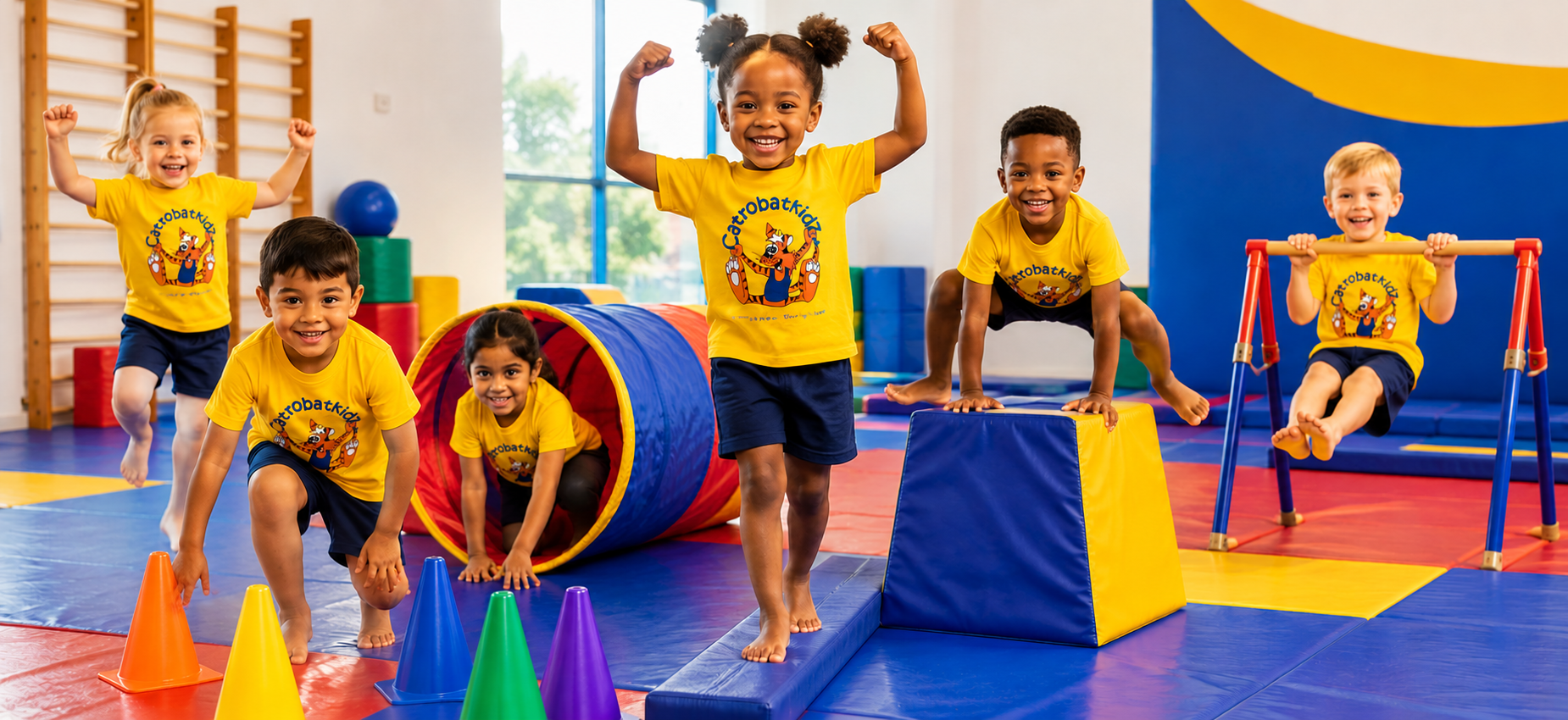
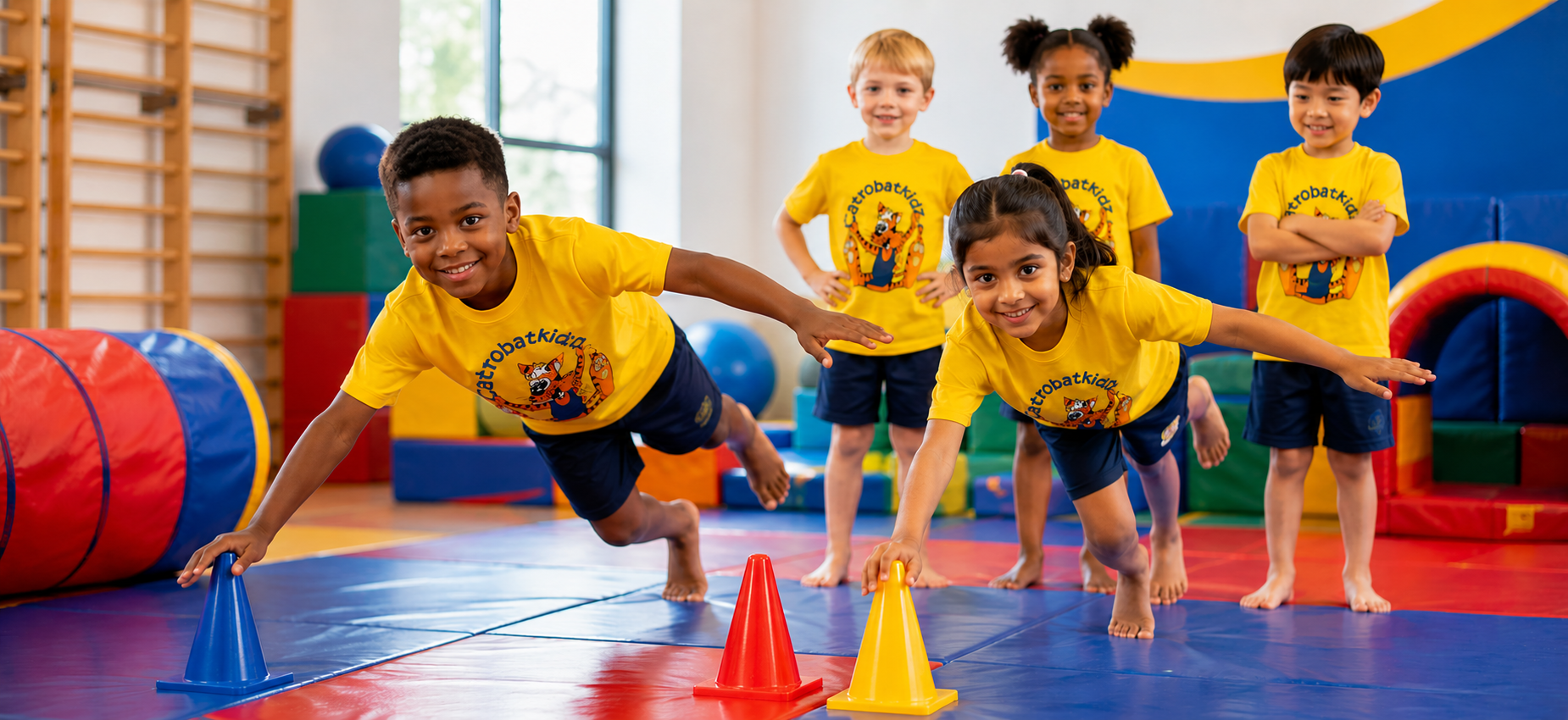
As parents, you have lots of options when it comes to choosing extra-mural activities for your children. At first glance, they all seem to offer the same benefits, such as developing strong, healthy bodies, improving co-ordination and providing children with an outlet for all their energy.  Children benefit from physical activity in many ways – a topic we explored in our previous blog, but that doesn’t mean that all extra-murals are equally good.  There are a few reasons why the Catrobatkidz programme stands out as it offers some benefits you probably haven’t thought of. Here are just a few of the advantages of enrolling your child in Catrobatkidz: Discipline & Confidence Our trained coaches show the children in their care how to follow the rules and behave properly. This way, they learn patience, discipline and how to get along with their peers. Along with discipline comes confidence. A child who knows how to behave around others will naturally be more confident. This confidence goes hand-in-hand with self-esteem. At Catrobatkidz, we’ve seen shy children blossom into children who are confident, secure and open to trying new things, all thanks to our amazing coaches. Listening & Following Directions As much as Catrobatkidz is about movement and activity, we also teach children how to stop, listen and focus on instructions. The earlier children can learn this skill, the better as it’s one that will serve them both inside and outside of the classroom.  Body Awareness & Co-ordination If you’re not sure what body awareness is, it’s often described as having a sense of your own body – understanding where each part is located in space and how it feels. This knowledge helps us know how far to reach for a glass or how close to stand next to another person. At Catrobatkidz, we incorporate exercises and activities that help children develop body awareness and fine-tune their co-ordination. Why is this important? Children with a good body awareness and co-ordination are less likely to hurt themselves when running, climbing or performing other activities. Rhythm & Timing Music makes exercise fun and it helps young children develop two other important skills – rhythm and timing. Children respond to music from an early age. In fact, your probably remember how your little one would sway and clap their hands to a favourite song.  Despite their physical response to music, rhythm and timing play an important role in helping children develop emotionally and intellectually. Being ‘in tune’ with the people around you helps you feel connected to them and makes communication easier. We’ve seen the positive effects first hand, which is why music and activities promoting rhythm and timing form part of our programme. Proper Posture & Flexibility Evidence of bad posture is all around us. Everywhere you look, you seepeople hunching over desks, slouching in front of the TV and slumping over their cellphones. As they get older, this can lead to back pain, neck pain and other health issues.  That’s why it’s important that children learn to sit, stand and move with the right posture. At Catrobatkidz, we focus on developing the core muscles that children need to be able to maintain an upright posture and relaxed shoulders at all times. Flexibility is just as important when it comes to maintaining a healthy, pain-free body because a flexible body is less prone to injury. Although children are naturally more flexible than adults, without maintaining their muscles and joints, they’ll lose this flexibility as they grow up. By instilling a love of movement and exercise from an early age, Catrobatkidz is the ideal choice for parents who want their children to experience exercise as fun and not a chore. Every type of sport and exercise has its benefits but there are few that manage to combine, physical, mental and emotional advantages the way Catrobatkidz does. If you’re interested in learning more about the programmes we offer, get in touch or ask your child’s school to sign up for a FREE demo class. We love what we do and we’d love to share it with you.

Impaq

What to do when your teen wants to start dating

The prospect of your child wanting to date is a little unnerving – what if they get hurt, are manipulated, get in over their head, or have their heart broken? Yet as uncomfortable or scary as it may feel, dating is a normal, healthy, and necessary part of any young adult’s emotional development. In fact, romantic relationships are a major developmental milestone.  Too young to start dating? While some teens will want to start dating early, others will have no interest in romantic relationships until their late teens. Both scenarios are perfectly normal and healthy. Experts agree that there isn’t a ‘right age’ to start having relationships – every teen is different, and every family will have different views and beliefs about dating. On average, however: Children might start to show more independence from family and more interest in friends between the ages of nine and eleven years. From ten to fourteen years, they might want to spend more time in mixed-gender groups. They might meet up with someone special among friends, and then gradually spend more time with that person alone. Romantic relationships can become central to social life between the ages of fifteen and nineteen. Read more: The history of Valentine’s Day Having the Talk It is important to talk to your teen about various dating topics, including personal values, expectations, and peer pressure. While these conversations may initially revolve around treating other people with kindness and respect, it may also raise issues about sex and intimacy. When it does, be open with your teen about your beliefs around sexual activity and, in turn, listen to theirs. Give your teen permission to express their views, ask questions, define what feels safe and comfortable for them in terms of dating. If your child knows that you are there to listen without judging, they are more likely to come to you with questions and concerns down the road. Rules of engagement Your job is to keep your teen safe while helping them build the skills they need to navigate healthy relationships. Here are some suggested rules you might want to establish for your child once they start dating: Get to know anyone your teen wants to date.   Make it clear you need to know the details of who your teen will be with, where they will be going, and who will be there. Set a clear curfew.   If your teen is going to a date’s home, find out who will be there. Have a conversation with the date’s parents to talk about their rules and your expectations. Discuss the dangers of technology. Many teens talk online, which can create a false sense of intimacy. Remind them that people they have chatted with but have never met are strangers. Teens are also often tempted to comply with a date’s request to send nude photos. Warn them of the consequences – they can end up hurt, shamed, and embarrassed.  Read more: Practical tips on how to keep your kids safe online While it is essential to set clear rules once your teen starts dating, aim to offer your child at least a little bit of privacy. Here you will need to consider your values, your teen’s maturity level and the specific situation (as well as your instincts). Dealing with break-ups  Dating helps teens build vital life skills – independence, communication, caring, selflessness, and intimacy – and promotes emotional growth. Just like starting any new phase of life, dating can be both exciting and scary! Teens will need to put themselves out there by expressing romantic interest in someone else, risking rejection, and figuring out what exactly dating means. They often have unrealistic expectations – reality can never match the relationships in movies or books – which means that they can easily become disillusioned.  Of course, break-ups and broken hearts are part of teenage relationships. However, this too is essential to their development, particularly in terms of learning how to cope with difficult decisions and disappointments. Whether your teen suffers heartbreak or inflicts it, they might need a shoulder to cry on and a willing ear.  Also read: How to help a child manage depression Providing guidance As with any other relationship, romantic relationships can bring many emotional ups and downs for your child. Keep in mind that your input and reaction as parent during this stage can have a lasting impact on their future relationships (romantic and otherwise), their lifestyle choices, and the adult they eventually become.  Remember, the more open and supportive you are, the better. After all, if something does go wrong, you will want your child to know that you love them, no matter what. By Danielle Barfoot

Brainline

Home Education is a valid and trusted alternative for your child’s education, through Brainline

Many leaners are being swallowed by the current school system. They are suffering due to the pressures of a full workload and failure to receive sufficient individual attention, resulting in them not being able to reach their full potential. There is also a lot of pressure on learners to take part and excel in extracurricular activities, of which the options may be limited to the offerings by the school. . At the same time, parents are confronted with the constant fear over the safety of their child in a school environment and the possibility of bullying.

Parenting Hub

Back to school fun with Play-Doh

The past year has challenged parents in many ways including finding endless at-home activities to keep kids entertained while ensuring they continue to learn and develop outside of a traditional classroom environment. Fostering creativity, being able to think out of the box, brainstorming, generating new ideas and improving on existing ones are important tools for young minds. Which is why Play-Doh continues to captivate the imaginations of children around the globe, providing them with the best in colourful, creatable, makeable adventures!  High quality Play-Doh compound is non-toxic and is made up predominantly of simple ingredients including water, salt and flour. As children’s safety is always Hasbro’s top priority, Play-Doh compound undergoes vigorous testing to ensure it meets (and exceeds) all applicable global safety standards and regulations. This is why, after more than 64 years, Play-Doh remains a loved and trusted brand for parents, caregivers and teachers worldwide! A classroom favourite, Play-Doh combines the fun with essential development and learning benefits (listed below). Providing ideal opportunities to practice and nurture kids critical thinking and problem solving, communication, collaboration and creativity skills while exploring a range of topics and skills including language, math, science, social studies, and the arts.   Additionally engaging toddlers and young children (ages 2-6 years) with sensory, open-ended play activities can help them prepare for the big, elaborate world.  Combine the fun with essential development and learning benefits: Play-Doh encourages creativity and imagination by providingyour child with unlimited moulding possibilities and the freedom to explore. Creating different shapes or mixing different Play-Doh colours together to discover a new colour, can assist children in growing their curiosity, develop cognitive exploration and enhance their mathematical thinking. All the squishing, rolling, flattening and shaping helps to enhance fine motor skills by developing and strengthening hand muscles, which encourages pre-writing and other motor skills such as cutting with scissors, using tweezers, holding a pencil etc. The tactile, hands-on nature of Play-Doh compound can also help encourage development of hand-eye coordination.  Play-Doh offers kids a multi-sensory experience allowing them to learn about their world through touch, sight and smell. Sitting and squishing Play-Doh is also a very calming and soothing activity, which eases tension, releases extra energy as well as improves focus and concentration. Playing with Play-Doh in a small group and/or with adults presents opportunities for children to develop social skills such as collaborative problem solving, planning and playing as well as learning to effectively communicate ideas or discuss what they are making. Children can also learn to effectively engage in individual play sharpening their focus, patience and concentration skills.  Nominate a teacher for the #CansOfKindnessAward!    For many the past year has also renewed our appreciation for the incredible job that teachers do to keep kids inspired, motivated and encouraged while learning!  This is why Play-Doh is calling on the kids to nominate their favourite  Grade 0 or Grade 1 teacher for the #CansOfKindnessAward!   Stand the chance to win an exciting Play-Doh hamper, while the winning teacher will receive a year’s supply of Play-Doh for the classroom. All you have to do is post a video to FB @PlayDohSouthAfrica of your kid telling us about their incredible teacher and use #CansOfKindnessAward.  Entries close 26 February 2021. For more inspiration visit @PlayDohSouthAfrica on Facebook  Play-Doh is available from Toy Kingdom, Toys R Us, ToyZone, Takealot.com and other major retailers. PARENT GUIDE Some fun activities designed to ensure kids have fun while learning At its core, Play-Doh is creativity – providing endless interactive play options.  Guide your child to explore different shapes, forms and colours, which increases curiosity and knowledge while developing their fine motor skills and hand to eye coordination.  Play-Doh allows children the flexibility to experiment and develop their own stories and leads to innovative, imaginative thinking and increased confidence down the line.  Engaging in child-adult conversation, assists with communication and vocabulary growth – ask questions and allow your child to practice critical thinking and decision-making skills.  Repetition can be a great way to reinforce the skills you’ve explored. Have fun doing the activities multiple times and in different ways! All Set for some Play-Doh fun! Get creative with Sticky the Octopus! Gather the materials you’ll need:  4 Play-Doh colours  Red or pink   A light colour i.e. white or yellow  A darker colour i.e. blue Your favourite colour Toothpick/ fork/ beads Using your favourite colour roll out a round-shaped ball for the head Roll two small balls (in your lightest Play-Doh colour) for the eyes and place two smaller circles in a darker colour on top for the pupils. Add the eyes to head Curl eight ‘snake shapes’ in the same colour as your head for the tentacles Attach the tentacles to the bottom of the head Use your toothpick or fork to ‘scratch’ lines, circles or any pattern onto the tentacles as decoration Make 30 small balls in a contrasting colour and add them onto the tentacles and head If you’d like add beads as decoration – press these into the tentacles for added colour and texture (please note if adding beads to Octopus creation – the Play-Doh will not be able to be reused). Roll a short thin red/ pink piece of Play-Doh and complete your Octopus by adding a bright smile.  If you are feeling extra creative shape a top hat or a bow tie for your Octopus to wear or create a beach ball for your Octopus to ‘play’ with. Skills match: fine motor skills, creativity, collaboration, sensory play (Task source Una van Staden, Pikanini) Play-Doh Faces Fun Making Play-Doh faces is so much fun and a great way for kids to learn about their bodies more specifically the face while developing fine motor skills.  Before starting the activity discuss the different parts of the face and the shapes and size each aspect has in relation to each other i.e. eyes, ears, hair, nose, and mouth. Create a Face Mat – on a blank sheet of A4 paper draw a round circle for ahead with shoulders

Parenting Hub

Back to school: Time to boost your child’s immune system?

The kids have been at home for almost two months, but in just a few short weeks, they will be back to school. Most of us headed the president’s plea to keep safe, sanitise and stay home, which means that our children have been around fewer people, have been exposed to less germs, and may require a little immunity boost.   Catherine Clark, Owner and Founder of the Harvest Table says that even if you’ve already started giving them vitamins, there are other ways to help boost immunity, “A strong immune system does not necessarily mean your child will not get sick, but their body will be in a better position to fight against bacteria and viruses,” she adds. Catherine offers these four ways to boost your child’s immunity: Encourage adequate sleep time: Sleep is one of the most important components of the immune system. Many studies show that sleep deprivation increases susceptibility to infection in children. The Sleep Foundation recommends that children aged 3-5 years get 10-14 hours of sleep, and those aged 6-13 get 9-11 hours of sleep. In order to help give your child a longer, better rest at night, it is essential to get them back into a well-defined sleep time routine. Have set bed- and wake-up-times, limit noise in the home by switching off devices and wind down by reading them a book.  Keep up the hygiene: According to the Centres for Disease Control and Prevention (CDC), washing hands prevents illnesses and the spread of infections to others. They also recommend regular hand washing because it helps prevent 30% of diarrhoea-related illnesses, and 20% respiratory infections. Encourage your children to not only sanitise regularly, but also wash their hands often (and not only when they are visibly dirty!). Furthermore, clean their toys and high-touch surfaces often to limit the transfer of germs.  Make movement a part of play: Research shows that prolonged hours of sitting can increase the risk of upper respiratory infections by two or three times a year, but, moderate exercise can reduce this by stimulating an immune response in the body. Children don’t spend as much time outside as they used to due to distractions like television and other devices. It can be challenging to encourage them to do something outside, so it’s important to make outdoor play fun. And, it’s not enough to tell your children to play in the yard, you need to get involved too! They will be more motivated if mom or dad doing it as well. Up the probiotics and prebiotics: About 70% of the body’s immune cells are found in the gut. There are good and bad bacteria found in the gut. Probiotics increase the good bacteria and thus reduce the potential damage caused by the harmful bacteria. Prebiotics, on the other hand, stimulate the growth of beneficial bacteria and directly impact the body’s defense system by decreasing susceptibility to inflammatory disease. You can increase your child’s probiotic and prebiotic intake with The Harvest Table’s new Kid’s range. It contains prebiotics, probiotics, collagen, bone broth, magnesium, barley grass juice, and lion’s mane mushrooms — all vital ingredients for growing bodies. Plus, it tastes like a milk shake so it’s easy enough to get them to take it!  “Illness is a part of life. Your child is likely to still get sick, no matter how many vitamins and supplements they take, but boosting their immunity builds up their ability fight off illnesses quicker and gives them a fighting chance,” Catherine concludes.

Parenting Hub

Waiting for matric results: focus on what you CAN control

As South Africa entered the new year, it quickly became clear that 2021 would not represent a return to the normal we knew before the pandemic, and that the country, like the rest of the world, would continue living with ongoing uncertainties for at least the near future. Following arguably the most tumultuous year a Matric class had to face in recent history, the Matric Class of 2020 now await their results, with many still not having a clear idea about what their future in general, or this year in particular will hold. “The one thing that these Matrics can do now, is to focus on those things that are within their control, rather than take a wait and see approach,” says Peter Kriel, General Manager at The Independent Institute of Education, SA’s largest and most accredited private higher education provider. He says there are still many unknowns about the coming year, and the only constant one can bargain on during these times is change. “However, waiting things out until normal returns one day is not an option. The world continues despite the challenges we continue to face, and there are things you can do to continue on your personal and professional journey to ensure you are not left behind,” he says. Kriel says one of the most important things 2020’s Matrics can do in the coming weeks, until results are released on February 23 (as currently scheduled) is to review their plans for the year and ensure that they will be able to continue on their chosen path regardless of any new and unforeseen circumstances that may arise to throw a spanner in the works. “So, if you have signed up to study somewhere, you can use these coming weeks to make sure that your institution will be able to continue seamlessly in the event of, for instance, another hard lockdown. The way to determine this is to ask an institution about their readiness and ability to quickly adapt their offering to a hybrid or online model,” he says. “Additionally, you should not just take an institution’s word for it, but also speak to students who experienced last year’s response. You need to ask questions to determine whether students last year were able to continue their learning journey seamlessly, whether they got the support they needed to do so effectively, and whether the learning was adapted in such a way that they continued to be engaged,” says Kriel. Kriel says that on-campus education is the preferred and most effective way to learn for many young people and it has strong advantages in terms of outcomes.  So, if you want the campus experience don’t give up on that aim now – look for an in-contact institution that can move between online and face-to-face as circumstances change.  For some students, distance education is a great alternative, but it is not right for everyone – it is a mistake to think that in current times it is a direct swop for contact.  If contact is what you want, make sure your institution can move between the two so you can have the benefit of contact with lecturers and classmates in person when the pandemic allows. Kriel adds that those Matrics from the Class of 2020 who have not yet decided on their plans for the year, and are waiting for results before making a move, should seriously consider approaching an institution to talk through their options rather than leaving it too late. “Our world has changed forever and is becoming more and more competitive all the time, with technology constantly developing and giving rise to new and exciting career paths. Instead of waiting for your results and attempting to get clarity thereafter, use this time to contact respected registered and accredited institutions that have shown themselves to be up to the task during 2020, and speak to a student advisor about your options.” It also makes sense to ensure that your computer skills – including old-fashioned typing skills – are up to the task ahead of you.  Anything you can do to make the transition easier will be very worth it in the long run, he says. “There is much that is outside all of our control right now. But there is still much that is within our control, and by focusing on what they can make happen instead of the many uncertainties that prevail, the Class of 2020 can continue to build on the resilience they displayed last year, and ensure the best possible outcomes for themselves in the face of any new or existing challenges we will face in the future.”

Impaq

Multigrade teaching made easy

In most mainstream schools, teachers tend to teach one subject to one grade – which generally consists of learners of around the same age – at a time. In smaller private or rural schools, however, there is a gradual shift to multigrade teaching, which essentially means teaching two or more grades in one class. Multigrade teaching is also the reality of many homeschool parents. Homeschool families vary in size and often have children across various grades, ranging from Grade R to 12. While the prospect of teaching children in multiple grades seems daunting, it is certainly doable.  If you are about to embark on your homeschooling journey, or if you are adding another learner to the mix in 2021, don’t fret. Multigrade teaching is not as difficult as you might think.   Tips for multigrade teaching Know your children: Every child is different. Some do best with every minute accounted for while others prefer a general list of daily activities; some need constant monitoring while others can be left to their own devices; some are energised in the early morning, while others do their best work after dinner. As a parent, you know your children better than anyone. When homeschooling more than one child, create a system that works based on each child’s ability to concentrate, preferences and learning abilities. You know what works best for you and your family. Schedule one-on-one time: With a multi-child and multi-grade setup, it is impossible to spend hours every day with each child. Instead, spend short blocks of one-on-one time with each child every day. Just 10 to 15 minutes of direct, focused instruction can be valuable, especially when you have a solid curriculum as guidance. Once you have taught one child a new concept or covered specific content, let him/her work on the rest independently while you spend time with the next child. However, be sure to cover everything your child can’t do independently during your one-on-one session. While waiting their turn, other children can do independent work, read quietly or aloud to one another, or practise other skills.    Encourage independence: Independent learning can help instil a sense of self-motivation, and responsibility in your children, so allow them to work independently as often as possible. While this may be easier with older children, there are plenty of learning activities younger ones can manage on their own, especially once they are able to read independently. It is vital, to check in when your children work on their own to ensure that any questions they might have or challenges they might face, are addressed to ensure that they stay on task. Use all available resources: When you homeschool, you should take advantage of the wealth of quality resources out there, many of which are available for free. Consider educational games, apps, online classes, documentaries, YouTube – the list is endless. In fact, there are a number of ways you can use screen time to your benefit. Also, keep in mind that there are learning opportunities everywhere and in everything, even in what may seem ordinary. Think cooking, gardening, and even shopping.  Be organised but not rigid:A well-planned and easy-to-follow schedule will ensure that your children know what is happening at different times of the day. This will make life easier for everyone. Remember though that in homeschooling, as in life, things don’t always go as planned. So, be sure to leave room in your schedule for the unexpected. Remember, structure gives children a sense of security. Advantages of multigrade teaching Research suggests that teaching children of different ages and abilities together offers a number of benefits. It fosters independence, encourages cooperation and collaboration, allows children to work at their own pace, promotes responsibility, and teaches organisational and time management skills. In addition, it enforces re-teaching, meaning that older children benefit as they listen in on lessons being given to younger ones. A review of basics concepts can reinforce and clarify a child’s understanding, even when they may be working at a more advanced level. It also exposes younger children to pre-teaching. By ‘eavesdropping’ on lessons and discussions, generates new knowledge and younger children can get a glimpse of what to expect when moving to higher grades.     Whether you have one child or many, one of the greatest benefits of home education is being able to do what works best for your family. So, consider these tips, then adjust accordingly. By Danielle Barfoot

Brainline

How to register your child for home schooling


Home Education Provider, Brainline, has reassured parents who are considering home schooling as an option not to be deterred by the process of registering for home education. Brainline CEO, Coleen Cronje, says the process is not as daunting as it might seem. ‘Many parents who would like to opt for home education or e-learning are deterred by the notion of having to apply for exemption to have their children home schooled. This is, however, not such a complicated process. Parents who would like to home school their children only need to apply to the head of the Provincial Education Department,’ she says.  The application can be made electronically, and parents need to submit the following documentation: Parent/s certified ID copy In case of foreign nationals certified copies of passport /study permit/work permit/Asylum document is required Last copy of school report (if the child was in school before, but if the child is only starting school now you must attach an immunisation card) Weekly timetable which includes contact time per day Breakdown of terms per year (196 days per year) Learning programme Certified copy of child’s birth certificate ‘The application process might take up to 30 days to be processed but learners are allowed to continue home schooling during this period. There is also no cost involved in registering your child,’ Cronje explains. Cronje says to home school learners parents need to ensure that they adhere to a number of requirements including that the lessons offered to the learners fall within the scope of the compulsory phases of education. (https://www.education.gov.za/Programmes/HomeEducation.aspx) ‘This is the foundation phase for Grade 1-3, the intermediate phase for Gr4-6 or the senior phase for Gr7-9. There is also a list of records that the parents need to keep as portfolio of evidence which include amongst others, record of attendance, portfolio of work, portfolio of the educational support given to the child, evidence of the continuous assessment of the child’s work, evidence of the assessment and or examination at the end of each year, and evidence at the end of Grade 3,6 and 9, that shows whether your child has achieved the outcomes for these grades.’ Cronje says when learners enrol with home education providers such as Brainline, these requirements are already adhered to within the annual curriculum. Brainline is IEB recognised, which means that learners follow the South African National Curriculum (similar to the curriculum offered in South African schools) resulting in the National Senior Certificate (NSC) upon successful completion of their matric exams.

Impaq

Helping your child set goals for the new year

It’s a new year and, for many, that means New Year’s resolutions. Children don’t necessarily need resolutions – after all, they are unlikely to have many of the same vices and bad habits adults need to break – but it is a good idea to help children set goals for the year, both academic and personal.  The ability to set goals – and create a game plan for achieving them – is a lifelong skill that is vital for success, whether that be at the office, on the sporting field, or even within the home. And like all lifelong skills, it is imperative to begin practising setting and working towards goals from a young age. Here are some notes on goal setting, and some tips on how to go about it. Read more: A successful start to your (home) school year!  Why do children need goals? Regardless of their age, children are autonomous beings and, as such, they need to be able to make some decisions for themselves and take responsibility for their actions. Having goals and figuring out how to stick to them is a great way to teach children self-discipline and self-motivation. By having something to work towards, children are more inclined to focus and make productive decisions. Having a clear set of goals will also give children a sense of autonomy, which is important as they get older and want to feel less like babies and more like the adults into which they are growing. For these reasons, having goals (and attempting to achieve them) can also help build children’s confidence and self-esteem as they watch their own progress, which is very important for a child’s holistic development.  Determine realistic goals for your child Before you and your child can set goals, it is essential to ascertain what can be realistically thought of as a goal. Do not take it in yourself to decide what a realistic goal is – this is a conversation you must have with your child. Help them think about what goals they might set by asking the following questions: What would you like to accomplish? What would you want to try this year? What would make you feel proud? Perhaps they want to increase their grade in a subject by a letter or wish to be in a higher-up team in their sport. Use this input as a springboard for making those goals concrete. Read more: Homeschooling in 2021? Here’s how to prepare Help your child understand the concept of goals To make the notion of goals make sense to kids, ask them what the purpose of their newfound goal is. Ask questions like “How do you think that will help you?” or “What are the benefits of doing this?”  By helping them to dig a little deeper into what they want to achieve, your child will start to understand goals, not as merely something to accomplish, but something that has personal value and meaning for them. This is what will help drive their self-discipline and self-motivation. Make the goal(s) actionable  It’s all well and good to have a specific goal, without a plan to achieve it, it’s pretty useless. Break down the ‘big goal’ into a series of smaller goals through which your child will work. Sit down with your child and decide together how your child is going to work towards that goal. It’s useful to decide on a (realistic!) timeframe, whether that be a month or a year. For example, if your child wants to increase their grade from a C to a B, that’s a 10% increase, so you could focus on increasing the grade by a couple of percentage points with every test or assignment. It’s also a good idea to set up a monitoring system to help ascertain your child’s progress. Charts are usually a useful way of doing this: have one column for the date, and one column for the progress update. That way, at a glance, you can see whether the goal is being achieved. Read more: Teaching kids how to plan Plan for failure or setbacks While no one likes to think about it, it is simply a fact of life that none of us will ever achieve every single goal without encountering an obstacle or challenge. Children are very sensitive and, as such, you need to sit with your child and discuss what both of you will do in the case of the goal not going to plan.  Read more: How to foster resilience in children It’s important to try to predict possible hurdles in advance because they can knock the wind out of a child’s sails, especially a younger child. Plan in advance how you and your child will work together to overcome an obstacle, should it appear. For example, if your child wants to improve their grades but performs worse on a particular assessment, decide ahead of time that the two of you will sit together and go through the work to see where they went wrong and focus on that area in the future.  Setbacks like these can be very demotivating, but it’s essential to help your child focus on the bigger picture and help them understand that failure is a normal part of life. The important thing is overcoming it and working even harder to achieve those goals. by Jacqui Smit

Parenting Hub

SACAP’S HIGHER CERTIFICATE IN COUNSELLING AND COMMUNICATION SKILLS HELPS BRIDGE PANDEMIC DISRUPTION

As we move into the second year of life upended by the global pandemic, SA’s school leavers are weighing their limited options.  While some will forge onto their chosen tertiary education path, others may be set back by not achieving a bachelor’s pass or be uncertain about what they want to study.  Travelling and gaining world experience before you make up your mind is off the cards for the time being, and probably for most of 2021. The challenge for these school leavers is how to make the best of these tough circumstances. There’s currently an increasing focus on short programmes offered by tertiary institutions.  The best of these are typically one-year programmes offering an accredited Higher Certificate qualification that can improve a student’s readiness for tertiary education, make up for a Matric without a bachelor’s pass and enhance critical skills for success not only in their studies to come, but in their future work lives. Dr Jaclyn Lotter, SACAP’s (The South African College of Applied Psychology) Academic Dean, points out that parents and young people are anxious that 2021 ‘doesn’t go to waste’ as the education sector continues to grapple with how to master continuity during the pandemic.  “After the disruptions of last year, which certainly did result in some SA school leavers underperforming, through no fault of their own, there’s a strong urge to move forward this year and overcome the disadvantage of the pandemic,” she says. “There will be close scrutiny of options such as Higher Certificate programmes to not just keep students busy, but to ensure that they have a meaningful education experience that helps them leapfrog over the pandemic years.” In line with its focus on Social Sciences education, SACAP offers a popular Higher Certificate in Counselling and Communication Skills. The one-year, nine-module programme, which is available online or on-campus (subject to COVID-19 restrictions), offers practical, work-related skills training set in an Applied Psychology framework that is relevant to students anticipating careers across all sectors. While it’s a notable gateway into the Social Sciences field, the application of interpersonal skills is equally critical in business, academia, education, medical, tech, science, government and non-government fields.  As Dr Lotter puts it: “There isn’t an industry in which having a better understanding of human behaviour or the ability to communicate more effectively with others isn’t useful.” Is the Higher Certificate in Counselling and Communication Skills  right for you? If you passed matric without exemption in 2021 You may have set your heart on studying for a degree but matric didn’t turn out how you hoped it would.  You’re not alone.  The pandemic wreaked havoc on the education system last year, and the Matrics faced the toughest challenges of any generation since World War 2.  “Graduating from SACAP’s Higher Certificate this year can not only help you get back on track, but set you off with some important advantages,” says Dr Lotter.  “You will not only meet the minimum entrance requirements for degree studies around the country, but you will lay the foundations for good academic literacy, setting you up for success in your further studies.  You will also gain critical skills if you rather decide to enter the workforce in 2022. If you don’t feel sure you will be able to succeed at university Many school leavers might not feel confident with their ability to cope at a university level given the very disruptive matric year they experienced. Engaging in the Higher Certificate  will give you this year to build confidence and empower you to continue your journey into higher education. If you wanted a gap year and really don’t want to start long-term tertiary studies instead  Dreams of a gap year, especially for those who planned on travelling for self-exploration, are very compelling and hard to let go.  It’s not easy to just set this aside and dive into tertiary education when you believe you need time and experience before committing to a study/career path.  “The Higher Certificate is a one-year programme that introduces students to psychology and the Social Sciences,” says Dr Lotter. “It gives students a taste for the field of study without a long-term commitment and provides them with a registered qualification and practical skills at the end. Along with SACAP’s student-centred approach, it is also a voyage of self-discovery enabling greater awareness and understanding in relation to others as well as a deeper relationship with self”. If you’re interested in Social Sciences but not ready for degree studies The Higher Certificate is a gateway to further studies in Social Sciences, and some credits can even be carried over to SACAP’s Bachelor of Applied Social Sciences degrees when majoring in Psychology and Counselling, Business Management or Human Resource Management. If you need to improve your communications and interactions with others “The Higher Certificate is a great qualification for anyone who wants to develop their communication skills and improve their ability to interact and work with others,” says Dr Lotter. “There are key features of this qualification that offer invaluable knowledge and insight to graduates, including communication skills, counselling skills, academic literacy , as well as insight into human behaviour and better understanding of human diversity. Together these areas of focus lay the foundation for better understanding and insight into how people think and behave on an individual level as well as within society at large. The Higher Certificate develops relevant, useful and practical skills that are both transferrable and invaluable for a graduate’s personal and working life, as well as future studies they may choose to pursue.” Webinar: What you can do with a Higher Certificate Pass Not getting a matric exemption may be disappointing, but it is definitely not the end of the road. Join Dr Jaclyn Lotter, Claire Chester and Praneetha Jugdeo in a live webinar where they will discuss the many advantages that SACAP’s Higher Certificate in Counselling and Communication Skills has to offer matrics. This vocational programme is an excellent bridge to wherever students want to go next. It

Catrobatkidz

Midline Crossing

Crossing the midline is very important to a child’s learning development. It’s a key element to helping children flourish and learn in the classroom as they get older. Our ability to reach over our midline with our arms and legs to perform tasks on the opposite side of our body plays a huge role in our day-to-day functioning. Brain Development Helping your child cross the midline as they grow is very important for their brain’s development. Midline crossing activities are often tied to higher learning skills such as speech, language, handwriting, reading, tracking objects, math sequencing, sensory integration, body awareness and other important skills for critical thinking. It’s also important for helping children retain information, improves attention and focus and allows them to listen to the teacher as they give directions (auditory processing). Crossing the midline helps the right and left sides of the brain work together. If we only work one side of the brain, the other side may become weaker, which could cause gaps in learning. Learning tools that come naturally for some children (organizing thoughts on paper, executive functioning, writing, comprehension and sitting still in a chair) may not come so easily to others who can’t cross their midline. When a child crosses their midline, new connections are made between the right side and the left side of the brain, and both sides are then working together, rather than independently of each other.  It integrates the two sides of the brain, and organizes the brain for better concentration and problem solving.  This is needed for reading and writing, as well as sports activities and other daily skills. What is Midline Crossing? Crossing midline simply means that a child reaches across their body with either hand or foot. Think of it as if there is an imaginary vertical line down the center of the body. Crossing the midline would mean having the ability to reach over this imaginary line with an arm or leg, and perform a task on the opposite side of the body. The ability to cross midline develops as bilateral coordination skills develop.  The child learns to coordinate their stronger hand (used for specialized skill) with their helper hand (the hand that they use to assist the dominant hand). Crossing the midline is a developmental ability that is important for so many gross motor tasks.  When a child has difficulty with crossing their midline, they will demonstrate difficulty with fine motor skills, too. Signs a Child can’t Cross their Midline 1. Appears ambidextrous. Children who have difficulty crossing the midline may use their right hand to perform tasks on the right side of their body, and their left hand to perform tasks on the left side of their body. They may seem ambidextrous, but what’s actually happening is that they aren’t properly developing the fine motor skills in their dominant hand. Instead, they are essentially developing average skills in both hands which can have significant implications in the long-run. 2. Has poor handwriting and often changes hands repeatedly while writing, drawing, colouring, etc. Handwriting may be more challenging, and their school work may be sloppy and messy. 3. Has difficulty performing basic life skills, like brushing teeth and hair, doing up buttons, zipping up zippers, putting on socks and shoes, etc. 4. Demonstrates poor gross motor skills. A child who can’t cross the midline will likely struggle with gross motor activities. For example, they may struggle to kick a ball with two feet instead of fine-tuning this skill with only their dominant foot. 5. Appears uncoordinated and struggles with more complex gross motor activities that require greater coordination, like jumping with a skip rope or doing jumping jacks. 6. Has difficulty with reading. Kids who can’t cross the midline may find it more difficult to visually track something from left to right, which can result in delayed reading skills. For more information, and videos for activities to do at home with your child to improve midline crossing, check out Catrobatkidz ON TV

Impaq

Impaq: Your guide to homeschooling in 2021

The continued surge of coronavirus cases in South Africa has many parents rightfully concerned about sending their children back to school. Parents are looking for a safer alternative, and many may now consider homeschooling as a permanent option.  Homeschooling allows you to tailor your child’s learning to suit their individual needs and foster a love of learning in a safe environment. Impaq is South Africa’s largest home education curriculum provider, and last year they helped nearly 25 000 learners study at home. Whether you are a homeschooling veteran or a nervous newcomer, Impaq is your guide to homeschooling in 2021.  Why homeschooling may be the best choice for your child Before embarking on the homeschooling journey, it is important to consider whether it is the best option for your child. Below are some of the reasons why homeschooling may be a good fit for your family: Children can study at their own pace, anytime, anywhere. Children can continue their schooling at home in a clean, safe, and nurturing learning environment. Children can follow a flexible study schedule. Children can spend more time on difficult subjects. Parents can instil personal beliefs, values, and ethics in their children. What to expect from Impaq in 2021 If you are convinced the pros of homeschooling outweigh the cons, the next step is choosing a curriculum provider to guide you on your learning journey. Impaq has more than 19 years’ experience and provides you with everything you need to complete Grades R to 12 at home, including: Lesson material (printed books, e-books, videos, and more)  Impaq’s lesson material is aligned with the national curriculum (CAPS). Most public and independent schools in South Africa follow CAPS. Impaq learners who write and pass the NSC examination in Grade 12 are issued the same National Senior Certificate (NSC) by Umalusi as learners attending public schools.  The difference between CAPS material used in schools and CAPS material used at home is that Optimi Publishing develops learning material for Impaq that provides learners and facilitators with the tools to guide and track individualised learning, allowing learners to work at their own pace. Our benchmark study and facilitator guides are created by a team of subject experts, teachers, moderators, editors, and designers, based on the latest insights from the learning sciences.  Facilitator guides (printed books and e-books) Facilitator guides are the cornerstones of homeschooling. These thorough guides empower parents to become their children’s primary educators. The Impaq facilitator guides include year plans, suggested timetables, daily lessons, lesson guidance, and step-by-step calculations and answers for Mathematics and Mathematical Literacy. Live online classes Impaq’s education specialists host weekly online classes to assist Grade R to 12 learners in various subjects. The classes are presented as monolingual classes in English or Afrikaans, or as bilingual classes in both languages. Learners can also catch up on previous classes to ensure they stay up to date with their work.  Access to education specialists Impaq learners have access to our team of experienced education specialists who provide additional subject support. If you were concerned about teaching subjects you are unfamiliar with, you can rest assured that support is only an email away.  Downloadable assessments and support services Impaq provides a full set of assessment components and services and a pathway to obtain an NSC in Grade 12 (through an independent assessment body). Impaq’s online portal enables parents and tutors to easily capture marks, generate reports, and monitor learners’ progress. Optimi Learning Portal The Optimi Learning Portal offers additional guidance and support (in selected subjects and grades) including quizzes, notes, previous examination papers, and more than 900 educational videos.  Supplementary products and additional resources But that is not all – Impaq also offers a comprehensive range of supplementary products and additional resources: isiZulu  isiZulu is offered as a First Additional Language for Grades 1 to 4. The learning material includes a CD to guide parents and learners on the correct pronunciation of words. The language of instruction is English but systematically changes to isiZulu as learners progress through the grades. Bible Education  Bible Education is offered as a non-examinable additional subject for Grades R to 9. The lesson material is based on the Christian religion and guides parents, teachers, and facilitators to help children discover their unique identity and God-given gifts, talents and blessings. Cami Education Software Cami offers a collection of fun and interactive educational software programs that are available both online and offline. The practice software includes unique programs for mathematics, mathematics for special needs, perceptual skills, reading, and literacy. All the programs are available in English and Afrikaans. Robotics Robotics is the perfect tool to introduce children to robotics, engineering, and programming. Children will learn how to solve real-life problems through engaging projects such as building their own robot, an automated hand sanitiser, and an autonomous line-following car. Impaq offers LEGO® Robotics and Coding for Grades 1 – 5 and Resolute Robotics for Grades 7 – 12. With Impaq as your guide, homeschooling has never been easier. Ready to get started? All you need to do is pick your child’s grade, and Impaq will provide you with everything you need to complete an academic year at home. Register online for 2021. If you need more information about the registration process, read Impaq’s how-to guide for step-by-step instructions. By Elmien Ackerman

Parenting Hub

Playschool startup achieves government accreditation on top of international funding

Play Sense becomes one of the first programmes of its kind in SA to be registered by the Department of Social Development as demand booms for innovative online and home-based schools The South African edutech startup Play Sense, which recently raised more than R8-million in international investment from an Africa-focused, gender-lensed venture capital fund, has now also become one of the first registered play-focused preschool franchises in the country. The digitally-enabled micro-playschool programme is a first for South Africa and enables teachers to set up their own playschools at home under the Play Sense banner, with its award-winning imaginative play-centred curriculum for preschoolers as its primary drawcard. It has now become one of the first programmes of its kind to be accredited by the Department of Social Development as a registered early childhood development (ECD) programme in terms of the Children’s Act. The business was founded by early childhood expert and author Meg Faure, who also founded the well-known Baby Sense brand, and fellow occupational therapist and educator Lara Schoenfeld, who also founded the successful Nanny ‘n Me franchise. Faure is CEO and Melissa Cumming, previously the MD of ecommerce business Bloomable, is COO.  “Our evidence-based curriculum follows the Vygotskian theory of development which says that guided imagination-based play is the best way to equip kids with the core capacities they need to thrive in a changing world, including self-regulation, executive function, creativity, collaboration and learning readiness,” said Faure.  “Our accreditation by the department is an important validation of the quality of both our educational programme and the innovative business model that underpins it. We’re excited about expanding the programme across South Africa this year and globally in the near future – and in the process bringing the ECD space into the sharing economy as a solution to some of the most pressing challenges faced by children, parents and teachers in the world today. This kind of schooling really is the way of the future.” The Play Sense team raised R8.25-million in early-stage funding from USA-based Enygma Ventures in April. The private investment fund focuses on investing in women-led social impact businesses in Southern Africa. The Africa Trust Group is its local implementation partner.  The Play Sense franchise model was founded to provide high quality, cost-effective ECD business opportunities for teachers and qualified caregivers who want to run world-class preschools from homes. The model is designed for groups of up to six children between the ages of two to four to come together to play and learn in a safe home-based environment for three to five days of the week.  The franchise stable currently accommodates more than 30 groups in the Western Cape, Gauteng, KZN and online, but it is gearing to scale to 200 in-home groups and 15 online groups, as well as to have its global expansion playbook bedded down by the end of 2021. The startup successfully pivoted at the beginning of the Covid-19 crisis in South Africa to offer parents and teachers an online learning environment as well. It was this online move that ensured its funding from Enygma, whose investors wanted to see Play Sense scale and roll out its new tech platform in response to the boom in demand for online, independent home-based schools during the pandemic, and empower women entrepreneurs in the process. With the online model, the teacher undergoes the same training but can run an online school for up to 12 families who check in virtually twice a day while teaching their own children at home.  “All our teachers are trained in both online and in-home education so that they can adapt as situations change. We just don’t know what 2021 holds, so we have to be flexible,” said Faure. “What makes Play Sense unique is that it is such a cost-effective and scalable model for highly progressive preschool education – something that the market has been asking for and that will empower lots of women who are passionate about ECD to become entrepreneurs who make an impact in their communities. They can now set up schools that offer exceptional education to learners, without the high overheads of a school building because they can use their existing and under-utilised assets, their homes, instead. The fact that they work with a fully developed curriculum and fully equipped starter kit also saves them time and money, and ensures that a specific standard of education can be upheld,” said Faure.  The Play Sense curriculum is aligned with UNICEF’s National Curriculum Framework (NCF), Early Learning Developmental Areas (ELDAS), National Early Learning Development Standards (NELDs) and Operational Norms and Standards for preschool education. 

Brainline

Coping with stress while waiting for your matric exam results

You’ve written your final paper and now the long wait for the results begins. This is true for thousands of learners, especially the Class of 2020 who have finished their final exams on 15 December. Whilst most matriculates are celebrating the end of more than a decade of studying, others are nervous, anxious or afraid whilst waiting in anticipation for their final Matric Results to be released in January. Home Education Provider, Brainline, says many students struggle with the idea of disappointing their family and friends. ‘At this point you have done everything possible to ensure success; all the late night study sessions, extra classes and missed social events have to be worth the sacrifice. However, there’s about a month to get through before you know whether you’ve made the grade and those weeks can be even more stressful than the entire year that preceded it,’ says Liezel Bruwer, Brainline Mentor Bruwer says the build-up to the results can prove too much for many. ‘So many matriculants are worried about low results, a missed distinction or not getting enough points to further their studies. Newspapers are gearing up to publish all the matric results nationwide and all eyes are on the matrics, which makes the process very overwhelming and creates a lot of anticipation waiting for the dreaded unknown results,’ Bruwer explains. Bruwer has a number of tips for both students and parents during these coming weeks leading up to receiving the final results: For students: Over the next few weeks, try to occupy your time by catching up on lost sleep, exercise, eat well, take up a new hobby or a holiday job, get ready for the festive season, have fun and think about your future options. Remember that success looks different for everyone. It does not need to mean all ‘A’s’. If you are working towards a goal for yourself, you are on the right path. Talk about your fears and feelings with your parents or trusted advisor. The most important thing is to remain calm. Once you have received your report, take a deep breath, and don’t let a bad grade or two hold you back. If you did not receive the report you wanted, it may feel like the end of the world, however, it is important to remember that some of the world’s most successful people experienced setbacks.  For parents: There are many ways to cope after receiving the results, parents need to be there for their children before and after exam result. Offer support and make an effort to show them that it is not the end and that there is so much that can be done after a bad result, missed distinction or points too low for University exemption. As a parent, one needs to validate a child on the importance of trying again, or striving to do better. We can only learn from our downfalls. Stay calm Plan the discussion Sit down together as a family, without distractions. Let your child share their thoughts, comments and worries Help to rephrase complaints and end up with more positive outlook ‘It is also important that student and parent work together to set goals, identify areas to focus on and to track future progress. Learners must also know that failing matric isn’t the end of the road. They can apply for remarking, write supplementary exams or redo matric via a college,’ Bruwer says. 

Catrobatkidz

The Importance of Catrobatkidz – ages 2 to 6

Infants, toddlers and pre-schoolers grow quickly, both physically and cognitively. During these childhood years they develop the physical skills needed for their adult lives. Physical development experiences and activities are one of the prime areas of learning and development, influencing changes in the child’s brain and gross and fine motor skills. Therefore, it is very important that children are given the opportunities to be active and interactive to develop their co-ordination, control and movement.  Catrobatkidz programme is jammed packed full of all the essential building blocks covering all the important physical skill areas that children need to master.  Physical changes Children begin to lose their baby fat, or chubbiness, from around three years old. Toddlers soon acquire the leaner, more athletic look associated with childhood. Brain development The brain is comprised of two halves, the right and left cerebral hemispheres. Specifically, language, writing, logic, and mathematical skills seem to be located in the left hemisphere, while creativity, fantasy, artistic, and musical skills seem to be located in the right hemisphere. Although the hemispheres may have separate functions, these brain masses almost always coordinate their functions and work together. Motor skills Motor skills are physical abilities or capacities. Gross motor skills, which include running, jumping, hopping, turning, skipping, throwing, balancing, and dancing, involve the use of large bodily movements. Fine motor skills, which include drawing, writing, and tying shoelaces, involve the use of small bodily movements. Both gross and fine motor skills develop and are refined during early childhood.  How Children Learn 1. Observe the behaviour in others. 2. Form a mental image of the behaviour. 3. Imitate the behaviour. 4. Practice the behaviour. 5. Be motivated to repeat the behaviour. The Catrobatkidz programme is designed to teach children physical skills and improve brain integration while having fun. Where do you Want Your Catrobatkidz? ON TV @School @Home There is really nothing else quite like Catrobatkidz, please let your child exercise, learn, laugh and grow in self-confidence with us.

Parenting Hub

Considering a gap year? Here’s a quick guide on what you need to know

The popularity of gap year programs has been on a steady rise in South Africa, and it’s not only popular with graduates any longer, but professionals are also leveraging the power of these ‘sabbaticals’ as well. Whether you’re planning on taking on an Au Pair job in the UK or a TEFL program in Asia, the opportunities for living and working abroad are virtually endless. In this post, we’ll be taking a closer look at the benefits of taking a gap year, the disadvantages that may come from taking a year off, and finally, discuss what you should be focusing on during your gap year experience. What are the benefits of taking a gap year? According to the American Gap Association, taking a gap year can be beneficial to your career. When you take some time off to re-centre yourself, you’re better able to concentrate on your interests and hobbies, which also helps boost that inspirational mindset you’ll need to develop your career in the long run. Because you’re not just loafing around – but actually working – during your gap year, you’ll get to add some valuable experience to your CV, which might boost your chances of getting employed once you get back home. According to US Gap’s data and statistics, students that take a gap year before they enter the workforce gain a lot of valuable life experience, something which their non-gap counterparts might not have. Since they spend most of their time travelling during their gap year, students tend to mature much faster, find their independence, and learn responsibility much sooner in life when compared to students that enter the workforce straight after graduating. If you’re considering the idea of taking a gap year, you’ll probably find that you’ll be developing new skills at a fast-paced rate since you’ll be challenged on a daily basis while working and living abroad. Not only does a gap year provide you with the opportunity to meet new friends, but it also helps connect you with others, boosting your networking skills. What are the drawbacks of taking a gap year? Obviously, one of the first and most noteworthy disadvantages of gap years is that they are often accompanied by homesickness. Missing your loved ones back home is one of the most significant drawbacks of the gap year experience, and for some, taking a full year off from their studies or their careers can seem like yet another massive risk. Gap years aren’t exactly the best option for individuals that prefer more structured routines. What to do with your gap year? A lot of students (and professionals) that consider gap years aren’t sure about where they need to start looking for gap year jobs. The good news is that there are plenty of great opportunities out there; you just need to find one that meets your personal needs and interests. You could try teaching English in Asia, or perhaps the idea of becoming an Au Pair in Italy or America sounds more appealing to you. Maybe you’re a world traveller who prefers the finer things in life, in which case a job onboard a luxury yacht might be your ideal fit. Australia is where you should be looking to find a job if you feel up for the challenge of an agricultural career, but if the Outback isn’t your ideal scene; you might also want to consider the USA or New Zealand for farming jobs. Are you considering the idea of going into the hospitality industry after your gap year? Why not take up a gap-year job in the USA or Mauritius, which are well-known for their impeccable offerings across their hospitality sectors. This post should have cleared up any fog that might have been clouding your mind as far as gap years go. Now that you know the basics of taking a gap year, all that’s left for you to do is to find an opportunity that matches your preferences and then, it’s time to embark on a working holiday you’ll never forget!

Parenting Hub

“Dad, do you have a spare R1.5m for me?”

As a parent, one of the best gifts you can give your child is a solid education but do you have any idea about how much it will cost to fund this education down the line and can you start setting aside money for it?  Here is a quick example using the OUTvest Education Calculator, which is a popular tool with forward-thinking parents who want to ensure that they have set something aside for when their children need it.  If you have a child today and you want them to start a 4-year University degree on the 1st of January 2041, you will need to have saved up R1 586 000 to fund this degree. The assumptions here would be that you would start with a lumpsum of R10 000 and inflation was running at about 6%. It is also working on the assumption that you would not be setting aside any money for residence and your child would be living at home.  When you start seeing numbers like R1.5m, it can be incredibly daunting but a key message when it comes to saving is that compounding is one of the most powerful forces around and real wealth gets built when you stick to a plan.  Let’s break it down and assume that you start with R10 000. You will need to save roughly R1483 per month up-front. If we assume that you will be generating an average investment return each year and you will be increasing your monthly premium by 7% per annum in line with inflation, suddenly R1.5m doesn’t seem that far away.  The problem with theoretical calculations like this is that life invariably gets in the way and keeping up monthly contributions may not always be practical and this is where the OUTvest team have something quite novel to bring to young parents in the form of its Crowdvest functionality. The Crowdvest offering allows people to contribute toward specific savings goals that other people have started. Taking advantage of the power of the crowd, you can then have friends and family contribute toward your savings goals and share the responsibility of helping your child get ready for university.  Giving your child the gift of a high quality education is one of the best ways you can set them up for success in the future and adopting a structured plan will take a big number like R1.5m and break it down into a bite-sized goal.  OUTvest is an authorised FSP. All investments are exposed to risk, not guaranteed and dependent on the performance of the underlying assets.  The examples used are for illustrative purposes only and depend on various factors. T’s & C’s apply.

Impaq

How to foster resilience in children

Our children have been through a very tough year having to deal with unforeseen circumstances and having to adapt to many changes in their daily lives – without any preparation for it. In this final article for the year, we will be looking at how to build resilience in our children as 2021 is bound to bring another set of changes and unforeseen circumstances. Also read: Homeschooling in 2021? Here’s how to prepare What is resilience? Psychologists define resilience as the process of adapting well in the face of adversity, trauma, tragedy, threats, or significant sources of stress. Ourselves and our children have certainly experienced much stress, and possibly adversity, this year. Simultaneously, it has also been an excellent opportunity to teach resilience.  How to teach resilience But how do we start teaching our children to develop this vital characteristic? Teaching resilience begins from a young age when our children are toddlers, and the feeling of frustration can become a common one for them. From learning to walk to wanting to be able to express themselves and do things that they struggle with, the early experiences of resilience-building are already being laid down.  Imagine if every time our toddler was trying to walk and fell and could not get up again, we picked him up and carried him? Eventually, we would have a child who would have delayed motor development. The first steps of teaching resilience come with our ability, as parents, to withstand our children’s frustration and not dive in to help them when they are struggling with something.  We can give gentle cues and advice, but one of the core building blocks of developing resilience is for our children to feel a sense of competence and mastery. This ranges from the physical experience of being able to do things to the most important – the mental and emotional aspects of dealing with frustration, delayed gratification and the complicated emotions of disappointment, anxiety, and anger.  Real-life resilience Two of the clearest examples of resilience I have experienced was with my daughter’s friend. She did gymnastics with my daughter, and in gymnastics, one does not automatically graduate to the next class but gets invited to it depending on the child’s performance level. This little girl did not get the invitation/promotion. Instead of complaining and moaning about the teachers and throwing a tantrum, she just said that she would have to practise her cartwheels and somersaults to be invited next time. That is emotional resilience.  The following year, this same little girl was put into a different class from her friends with a teacher she did not particularly like and again her response was that it was an opportunity to make new friends and see if she could find aspects of the teacher that she did like. What a stunning example of resilience and emotional maturity. Also read: There’s more to life than academic achievement Resilience vs emotional regulation It is clear to see that resilience and emotional regulation go hand in hand. We have all spotted the following children on the playground: the one who has a meltdown if he does not win in a game,  the child who cries non-stop before having to be on stage in a concert, and  the child who has a tantrum if his needs are not immediately met.  None of these behaviours is appropriate and results in negative social consequences. Therefore, it is clear to see that emotional regulation is a skill that goes hand in hand with resilience. Emotional regulation is a term generally used to describe a person’s ability to manage and respond to an emotional experience effectively. It refers to the ability to control the difficult and unwelcome feelings of frustration, anxiety, anger, and so on in an appropriate way.  Resilience role models As parents, we need to be aware of how we model resilience and emotional regulation to our children. If we are calm and contained when a problem situation arises, this is an excellent example for our children. Similarly, when our children are experiencing frustration or difficult emotions, teaching them resilience skills puts them in a position of ‘can do’ versus the feeling of being overwhelmed and powerless. Resilience skills can include:  deep breathing to calm down,  calmly talking about the situation to gain some detachment and perspective on it,  breaking the problem down into manageable pieces, and  coaching them through the steps they can take to deal with the situation. This can apply to anything they are struggling with, e.g., an argument with a friend, a problem with homework, etc. It also vitally teaches problem-solving skills for the future. The business tool of SWOT analysis is useful here as resilience is all about turning a weakness into a strength and a threat into an opportunity – for growth, change and adopting a new approach.  Power of resilience Resilience doesn’t mean that a person won’t ever experience difficulty or distress. People who have suffered significant adversity or trauma in their lives naturally experience emotional pain and stress. However, resilience involves behaviours, thoughts, and actions that can be learned and developed. This is the power of resilience. So, whenever our children complain and are heading for a meltdown, we can always point out the resilience-building tools they have at their disposal.  The year has already been an excellent lesson in resilience – our children never thought they would have to do online schooling, experience lockdown, wear masks whenever they were out, be isolated from social activity, and so on. Yet they have all adapted and managed mostly very well. Another core resilience builder is accepting that change is a part of life and as Charles Darwin famously said, “It is not the strongest species that survive, nor the most intelligent, but the ones most responsive to change”. If we don’t adapt, we die. So, the next time our children (and ourselves) are complaining, struggling with frustration, remember to breathe and think about what we can do instead of surrendering

Parenting Hub

Early Childhood Development: Building Blocks for Lifelong Learning

South Africa has the goal of universal access to a full range of early childhood development (ECD) services in ten years’ time. To meet this target, we will need more than 100 000 additional early learning teachers and 40 000 new venues for three- to five -year-olds alone, say education experts. South African children are surviving rather than thriving, it was agreed at the recent Trialogue Business in Society Virtual Conference. ‘Breaking Barriers to Quality Education’ was a key theme, with these sessions presented in partnership with Old Mutual on 13 October. Panellists Nicole Biondi (Strategic Head of marketing and communications at Innovation Edge), Justine Jowell (Programme Design Lead at SmartStart) and Megan Blair (CEO Earlybird Educare@Work) discussed how to accelerate access to, and drive the enrichment of, ECD.   Moderated by Kanyisa Diamond, senior project manager at the Old Mutual Foundation, the session unpacked different early learning models. Participants considered which ECD interventions are most effective, and what needs to be done differently to achieve the goal of the National Development Plan (NDP):  universal access to a full range of ECD services for all children aged 0-8 by 2030. The South African Early Childhood Review 2019 shows that we have made some progress in terms of ECD. Maternal and child mortality rates are on a downward trend, but we still struggle with nutrition (27% of children under five suffer from stunting), support for primary caregivers, and the stimulation of early learning. Models for social impact Justine Jowell of SmartStart said systems intervention is needed to close the provisioning gap. Some 1.2 million children aged three to four years are not attending an early learning programme, 900 000 of them from poor households.  “To achieve universal access to quality early learning for all three- to five -year-olds, we need more than 100 000 additional early learning practitioners and 40 000 new venues. To reach these high numbers of excluded children, system capacity must be expanded. This needs to happen fast to bring children in sooner.” SmartStart is an example of a national early learning delivery platform that operates under a social franchise model. SmartStart currently includes 13 organisations (independent, locally based NPOs) across nine provinces in the country that form part of the SmartStart delivery platform (as franchisors), enabling SmartStart’s rapid acceleration of reach of new children in a locally relevant and responsive way. This model helps to create direct employment and support microenterprise development, especially for women. In the five years since set-up, this model has allowed SmartStart to reach more than 75 000 children, with nearly 4 000 active early learning social enterprises (franchisees) supported to run quality early learning programmes.  Earlybird, a social enterprise, provides on-site educare services to companies that want to attract and retain top talent, particularly women. “There is a good deal of evidence that employer-sponsored educare improves productivity, reducing single-day leave-taking and enabling greater female labour force participation and progression,” said Blair. A portion of net income from the for-profit side of the business cross-subsidises the non-profit side, which funds young black women to set up Blue Door Educare Centres as entrepreneurs. These high-quality educare centres serve low-income environments and also partner with social housing developers, with a goal to bring quality learning to all young children. Innovation Edge, an innovation catalyst and social impact investor, believes in supporting early learning programmes and ensuring that caregivers get support to equip children for lifelong success. In one of their projects, they work with design and manufacturing company Barrows to print and distribute early learning materials to under-resourced communities, using blank production space available on existing client print runs. The posters and flash cards they create at minimal cost are distributed at their nine business hubs in each province of the country – and they provide more than 50 000 pieces of educational material to children in under-resourced areas each month.  They have also partnered with Out There Media on the 3 Little Minutes mobile SMS campaign, which provides caregivers with data-free access to roughly three minutes of songs and stories located on a mobi-site. The campaign is delivered via the Mobucks™ platform, which links the mobile operator with businesses wanting to advertise to specific audience (thus content is sponsored). “The pilot was in English, but the next stage will include more languages,” said Biondi. “Content on the system is provided by Book Dash and Nal’ibali, and they do have content in various South African languages, in the form of songs and stories.”  Biondi said that Innovation Edge is working with government on compiling data sets of national early child assessments to understand how literate, numerate and school-ready children may be. “We really want to get South Africa excited about how children enter school, because if we can shift the way they enter schools we can surely shift the way they are leaving school.” Effective interventions A snap poll during the session asked delegates which ECD interventions they think are the most effective. The majority (62%) said training teachers works best, followed by providing nutrition (12%) and providing equipment (12%). A further 6% listed helping with registration and 6% said building infrastructure was most effective. Blair pointed out that preventing exposure to violence is also an important factor, as toxic stress has a huge effect on development. Assuming nutrition and infrastructure are in place, training is the most effective way to improve child outcomes, she said.  “There is broad agreement that in-service training is crucial – just-in-time pedagogical support – that involves meeting a teacher on a weekly or monthly basis and finding out what they are battling with.” She said this type of intervention is exponentially more effective than pre-service training. Biondi suggested that companies think about subsidising their employees’ children so they can receive quality educare, as well as considering parental leave. “Don’t just support external ECD providers. Look inside as well as outside,” she recommended.

Parenting Hub

Start 2021 Smart with Smart Nutrition and a Great Education

Stand a chance to win a year’s worth of school fees FUTURELIFE®, in partnership with Pick n Pay Smart Shopper, are thrilled to launch their Start Smart Campaign, an opportunity for one lucky child to win a year worth of school fees for 2021. “FUTURELIFE® was built on the vision to improve the lives of South African families through Smart Nutrition, and this exciting initiative is merely an extension of that commitment so that we can help future leaders start smart,” says Mark Bunn, FUTURELIFE®’s Managing Director. He adds that education is key to unlocking future success, “Education empowers our youth with the knowledge, skills and values they need to build a better society, and it all starts with the foundation built during pre-, primary- and high-school. Much like Smart Nutrition, which also is fundamental for good health and development during the early years.” How Start Smart will work: 1. Buy any 2 FUTURELIFE® bread and/or FUTURELIFE® cereal bars at any Pick n Pay across South Africa between 16 November 2020 – 10 January 2021 and swipe your Smart Shopper card. 2. You will then automatically be entered into a draw to stand a chance to win school fees for your child in 2021. 3. Winner will be drawn within four weeks of the competition closure date and will be contacted directly. FUTURELIFE® has been using and leveraging the knowledge, expertise and experience, of a multi-disciplinary team of science and nutritional experts for over 13 years. This together with a proprietary manufacturing process, and a unique combination of essential nutrients and ingredients, in a specially formulated recipe, is of nutritionally superior smart food products. “Our vision all those years ago has made a real impact. We have witnessed how far a little can go and appreciate how even the smallest action can make a huge difference. So, purchase your two participating products today and help your child to start 2021 smart with Smart Nutrition and a great education!” Bunn concludes. Buy any two of the following participating products: Futurelife High Protein Low GI Brown Bread Futurelife High Protein Honey and Oats Bread Futurelife High Protein Ancient Grains Brown Bread Futurelife High Protein Bar 50 g Futurelife High Protein Lite Bar 40g Futurelife High Energy Bar 40g Futurelife High Protein Crunch Bar 40g Futurelife Granola Bar 40g Products are available from all leading Pick n Pay Retail Outlets. For more information on the Start Smart Campaign, please go to www.futurelife.co.za or https://www.pnp.co.za/campaign/win-with-futurelife

Impaq

Three R’s to focus on during summer

(Almost) everyone is familiar with the three R’s of education: reading, ‘riting (writing), and ‘rithmetic (arithmetic). As an undoubtedly challenging year comes to an end; it’s time for home education parents to shift the focus to three different R’s – reflecting, reimagining, and relaxing. Reflect This year presented previously unimaginable challenges to families everywhere. Whether you are an experienced home educator or whether you chose homeschooling as a result of the pandemic, now is the time to reflect objectively on the 2020 academic year. Reflection allows you to contemplate the events of the past year to gain a new perspective on them. Thinking specifically about how you and your children managed homeschooling this year will allow you the advantage of becoming more strategic and intentional when preparing for 2021. If you plan to continue homeschooling your children next year, now is an excellent time to consider which aspects need to be modified and which can be omitted altogether.  Of course, reflection also allows you to take stock of everything you have accomplished this year. Considering the unprecedented global events of 2020, you probably ended up with a long list of things you weren’t planning on doing – perhaps home education was one of them. But you rose to the occasion and handled them all. So, congratulate yourself on a job well done!  Finally, why not get your children involved? Reflection is a great way to process feelings and share ideas. Have everyone write down some things they learned, what they are grateful for, or ways they have grown this year. This exercise is helpful as your children may have overcome specific obstacles or learned new skills without even realising it.  Reimagine Reimagining is about using what you learned this year to review and readjust your approach to home education. After all, one of the benefits of home education is that there is no such thing as a one-size-fits-all solution – it can be customised to accommodate your particular situation and tailored to meet your children’s needs.  The pandemic has encouraged innovation in many sectors, including education. It has proven that children can and will learn outside the constructs of traditional schooling. As the year winds down, why not use this time to consider your approach to teaching your children?  Also read: Parents, here’s how screen time can work in your favour Some of the upsides of home education include:  focusing on your children’s different learning styles and strengths,  incorporating and leveraging technology, nurturing your children’s natural curiosity and interests, encouraging a love of learning in whatever shape or form, it presents itself. With all of this in mind, how can you do things differently in 2021? Also read: A successful start to your (home) school year!   Relax Coping with the pandemic and all its consequences may have left you feeling overwhelmed, exhausted, and anxious. While there are still some COVID-19-related regulations in place, now is the time for family, friends, and fun!  Whether you are off on a family vacation or staying home, the key is to take some time to rejuvenate your body, mind, and spirit – and to allow the rest of your family to do the same. Use this time to slow down and enjoy the simplicity of life. Have a picnic, read a book, spend all day by the pool or at the beach, go for a hike, have a nap, treat yourself to a massage – the list is endless.  Also read: Cool ways to beat summer boredom Taking time to relax and recharge over summer will put you in a better frame of mind to take care of the people who depend on you in the new year – whatever it may hold. By Danielle Barfoot

Sidebar Image

Sidebar Image

Scroll to Top