Dissolve those first term jitters fast and ensure your child is emotionally ready for school and adapts well to his/her new routine with top tips by creative parenting expert in partnership with Toy Kingdom, Nikki Bush.
The first bell of 2018 academic year has rung and first term jitters are still a real thing for some kids, especially those who have entered the classroom for the very first time. Bush says the change in a child’s usual environment; in this case a new school – pre-primary, primary and high school, and even moving onto the next grade mean kids find it daunting and stressful to adapt.
“And parents the world over agree, when kids are fretful and uneasy, mom and dad are too,” she says. Here’s what Bush advises to help kids cope better.
A movement matter:
Bush says activities that involve movement are highly beneficial, it raises endorphins and puts kids in a better move. She suggests the following fun, interactive movement games:
Rough and tumble
Hide and seek
Family time is fun time:
Quality time with mom, dad also eliminate stress and is ‘”extremely important” to help kids relax. Bush says there are a few entertaining games fit for the whole family.
Cricket
Soccer
Hopscotch
“Parent-child interaction has a calming effect on kids and helps to minimise stress. It means bonding as a family, which also acts as a channel of support for children, they feel safe and secure and are reminded that mom and dad are there for them every step of the way,” Bush says.
Say play:
Since play is a universal language, Bush says “play your sillies away”, it has a calming effect on kids and helps to minimise stress. A few of the games she recommends.
Board games
Bikes and scooters
Lego
“Mom and dad, haul out all sorts of games and toys and let them play to their heart’s content. It does wonders,” she says.
Drop-off deal:
If children are more anxious with one parent than with the other, simply swap drop-off roles and “don’t feel guilty about it”. Bush advises parents to be:
Parenting Hub is one of South Africa’s largest online lifestyle magazines, targeted toward Parents.
We understand that there are many aspects that encompass a Mother, Father or Child and strive toward providing resources and services that accommodates this.
Our content is aimed to inform and educate families on issues starting from pregnancy through to the challenges of the teen-age years.
In a world of packed schedules, rising anxieties, and digital distractions, the way we parent has never been more complex, or more important. Children don’t need perfect childhoods, they need real ones. Ones filled with play, protection and participation to grow.
“Today’s parenting styles often come from a place of deep love,” says Ursula Assis, Country Director for Dibber International Preschools in South Africa. “But when we hover too closely or clear every obstacle before our children reach it, we can unintentionally rob them of the small struggles that help them thrive.”
Modern terms like ‘helicopter parenting’ and ‘lawnmower parenting’ describe well-intentioned behaviours. ‘hovering’ to protect and help or smoothing every path to prevent discomfort. While these approaches are rooted in care, they often overlook what child development experts call the ‘just-right challenge’. Dibber’s approach, built on Nordic pedagogical principles, embraces this balanced philosophy which gives children the support they need while encouraging and maintaining independence.
“Children build confidence by trying, failing, and trying again. That’s where resilience begins”, explains Assis. “When we pair warmth with boundaries, and love with opportunity, we see incredible growth -not just academically, but socially and emotionally.”
Free play remains one of the most powerful developmental tools in early childhood. Whether it’s climbing, balancing, or imaginative playing, these experiences help children build executive function, manage emotions, and understand social dynamics. With adult support close by – but not overbearing – these activities become safe and enriching opportunities to learn.
In South Africa, Dibber believes parents have a unique advantage: community. Grandparents, neighbours, and extended families as they often play a vital role in raising children. “That village of support is our strength,” Assis adds. “We encourage families to use it -plan outdoor playdates, invite cousins to join, share learning spaces. There’s no app that can replace the value of human connection.”
At Dibber’s campuses across Gauteng, the Western Cape, and KwaZulu-Natal, the focus is on nurturing not just cognitive skills, but the whole child. Teachers act as gentle guides, helping children navigate early life’s hurdles with empathy, patience, and clear structure. The result? Children who feel seen, heard, and confident enough to explore the world.
“Resilience doesn’t come from a perfectly smooth path. It comes from knowing that when life gets bumpy, someone is there to support you while you take the wheel,” says Assis. “At Dibber, we’re not raising perfectionists—we’re helping raise capable, compassionate human beings.”
For parents wondering whether they’re doing it ‘right’, Dibber offers this reassurance: there is no single perfect parenting style. What matters most is balance. Guide, protect, listen, and most importantly let children play, explore, and grow into who they want to be.
Parenting Hub is one of South Africa’s largest online lifestyle magazines, targeted toward Parents.
We understand that there are many aspects that encompass a Mother, Father or Child and strive toward providing resources and services that accommodates this.
Our content is aimed to inform and educate families on issues starting from pregnancy through to the challenges of the teen-age years.
As a grade six English teacher at Maragon Ruimsig, I am frequently asked this question at Parents’ Evenings. The child concerned inevitably struggles with the comprehension section of my assessments and while the diagnosis is simple, the “medication” is very difficult to administer…think squirming cat here and the thankless task of attempting to force a pill down the hapless feline’s throat! An almost impossible task.
After about 28 years of teaching English, I am certainly qualified to state that, without a doubt, my top achievers were bookworms. Their vocabulary was excellent; they were able to master the skills of skimming and scanning for information in no time at all. The non-reader would comparatively read line by line looking for answers in the most laborious fashion, often needlessly re-reading sections in an attempt to find that ever-elusive answer. Naturally, the non-reader would start to panic and run out of time and in many cases skip to the easier Language section, often losing some 15-20% of their marks because of their inability to skim and scan.
Before beginning with the suggestions, I will outline below, there may be a valid reason why your child dislikes reading. He or she may be struggling with a number of optical difficulties best diagnosed by an optometrist. The, as yet undiagnosed, difficulty could cause words to swim in front of your child’s eyes, letters could well be dancing in the most bewildering fashion making reading a fate worse than death itself. If you, as the parent wore glasses at an early age then genetically your child, too, will be more inclined to wear spectacles at an early age as well. In short: a visit to the optometrist is essential before proceeding.
Being an avid reader from an early age, I often find myself returning to my childhood looking for the stimuli that set me on the path towards loving books. My father was always curled up on the couch with a Louis L’amour in hand. The bookshelf was filled with westerns, non-fiction and various other genres. I was always a naturally curious child and absorbed all the “Children of the World” books, which were full of fascinating facts from countries all over the world. Very soon I graduated to Westerns and then onto adult novels at the age of 12. In hindsight, some of these books were not suitable for children of my age but my parents were none the wiser.
From this account, you can draw your own conclusions. If you want, your children to read you should be modelling that behaviour. Provide a healthy cross section of genres to appeal to your child’s unique reading palate. Generally, I find boys prefer non-fiction to fiction; girls on the other hand gravitate to fiction and tend to, as a rule, read more than boys tend to. As an added incentive, and to gauge your child’s interests, take your child to a bookstore and ask them to choose what it is that interests them.
Another possible way forward, counter-intuitively, is to choose an excellent audio book and listen to it in the car, on the way to your holiday destination, or even to school, every morning. This method will pique your child’s interest as they become involved in the plot and the drama of the reading. The next step may well be your child asking to read the books produced by that particular author.
Use technology to your advantage allow your child to purchase digital readers and order books online. Naturally, you will have to put provisos in place as to how much they may spend.
Which brings me to another matter…my own children…confession time: they do not read! Horror of horrors and here I am dispensing advice to all those parents out there! My children have been surrounded by books and both my wife and I read a great deal. My eldest was never interested in reading except for a very short “Lord of the Rings” spell. Today at 23 years of age, he mostly immerses himself in surfing the net and following up on his investments and shares, all of which require skimming and scanning skills. My middle child, now in Matric, was a bookworm of note and is now a top student, he no longer reads. My youngest has read perhaps two or three books in his entire 14 years and yet manages to achieve top marks for his comprehensions.
My point is that there are no fixed rules, the old adage applies, “You can take a horse to water, but you can’t make it drink.” Do not despair if you try out all the tips I have mentioned without success. Our children are reading all the time, be it advertisements or cereal boxes, they read a copious amount of material without picking up a book. More important than the mechanical technique of reading is comprehension or understanding what it is you are reading. The thinking skills behind the reading are vital. You might want to try commenting on a headline that may appear on a street-pole. Try the WWWWHW technique i.e. who, what, where, when, how and why. In other words, “Who do you think the headline is speaking about?” This technique teaches your child to read with comprehension. Scroll through the articles on news 24 and utilize the same technique.
In conclusion: you may not produce a bookworm, but you are giving your child the skills by which they can dissect a piece of writing and is that not what reading is really all about?
By Ian McCallum, teacher of Maragon Ruimsig Preparatory
Parenting Hub is one of South Africa’s largest online lifestyle magazines, targeted toward Parents.
We understand that there are many aspects that encompass a Mother, Father or Child and strive toward providing resources and services that accommodates this.
Our content is aimed to inform and educate families on issues starting from pregnancy through to the challenges of the teen-age years.
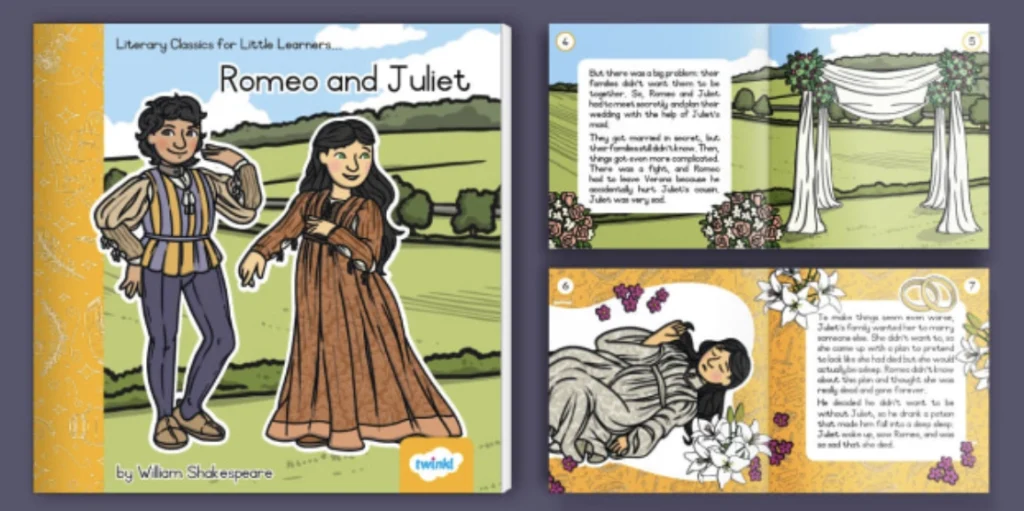
Step into a world of wonder and imagination with the Twinkl Literary Classics for Little Learners range — a beautifully curated collection of timeless tales thoughtfully adapted to ignite a love of reading in young children. This range offers a gentle introduction to some of literature’s most cherished stories, designed to nurture curiosity, empathy, and a lifelong passion for books.
Why Introduce Classic Literature to Little Learners?
In an age where digital distractions are everywhere, sharing classic stories with children opens a door to rich storytelling traditions, diverse cultures, and timeless life lessons. These beloved tales connect readers to historical contexts, moral dilemmas, and universal themes, helping children explore complex emotions and understand the world through different perspectives.
Reading classic literature at a young age can also enhance language development and vocabulary, introducing children to beautiful, expressive language they may not encounter elsewhere. The vivid imagery and memorable characters spark imagination and creativity, encouraging children to dream big and think beyond their immediate surroundings.
Moreover, these stories help build resilience and moral reasoning as children witness characters navigating challenges, making difficult decisions, and growing through adversity. This not only fosters empathy but also empowers young readers to see themselves as capable of kindness, bravery, and perseverance in their own lives.
Thoughtfully Adapted for Young Readers
The Twinkl Literary Classics for Little Learners range carefully reimagines classic tales to suit young audiences. We’ve simplified intricate subplots, adjusted complex themes, and ensured the language remains accessible and engaging for early readers — all while preserving the heart and essence of each original story.
Sensitive and Age-Appropriate Storytelling
We understand that some classic tales touch on challenging themes like loss, conflict, or hardship. Rest assured, any sensitive content has been handled with care, softened to align with the emotional maturity of younger readers. When pivotal to the plot, these themes are presented gently, providing an opportunity for meaningful conversations without overwhelming little minds.
Shared Reading and Meaningful Conversations
Reading these stories together can be a special bonding experience. As you turn the pages with your child, you can explore big ideas, answer curious questions, and encourage thoughtful discussions. This shared experience helps foster critical thinking and emotional growth, allowing children to reflect on the story’s characters, choices, and underlying messages.
Sparking a Lifelong Love of Literature
Above all, the Twinkl Literary Classics for Little Learners range is designed to inspire joy and wonder. We hope these adaptations become treasured favourites in your home, laying the foundation for a lifetime of literary exploration. After all, stories have the power to captivate, comfort, and empower — and every child deserves the chance to discover the magic of books.
Parenting Hub is one of South Africa’s largest online lifestyle magazines, targeted toward Parents.
We understand that there are many aspects that encompass a Mother, Father or Child and strive toward providing resources and services that accommodates this.
Our content is aimed to inform and educate families on issues starting from pregnancy through to the challenges of the teen-age years.
We use cookies on our website to give you the most relevant experience by remembering your preferences and repeat visits. By clicking “Accept All”, you consent to the use of ALL the cookies. However, you may visit "Cookie Settings" to provide a controlled consent.Accept All
Manage consent
Privacy Overview
This website uses cookies to improve your experience while you navigate through the website. Out of these, the cookies that are categorized as necessary are stored on your browser as they are essential for the working of basic functionalities of the website. We also use third-party cookies that help us analyze and understand how you use this website. These cookies will be stored in your browser only with your consent. You also have the option to opt-out of these cookies. But opting out of some of these cookies may affect your browsing experience.
Necessary cookies are absolutely essential for the website to function properly. These cookies ensure basic functionalities and security features of the website, anonymously.
Cookie
Duration
Description
cookielawinfo-checkbox-advertisement
1 year
The cookie is set by GDPR cookie consent to record the user consent for the cookies in the category "Advertisement".
cookielawinfo-checkbox-analytics
11 months
This cookie is set by GDPR Cookie Consent plugin. The cookie is used to store the user consent for the cookies in the category "Analytics".
cookielawinfo-checkbox-functional
11 months
The cookie is set by GDPR cookie consent to record the user consent for the cookies in the category "Functional".
cookielawinfo-checkbox-necessary
11 months
This cookie is set by GDPR Cookie Consent plugin. The cookies is used to store the user consent for the cookies in the category "Necessary".
cookielawinfo-checkbox-others
11 months
This cookie is set by GDPR Cookie Consent plugin. The cookie is used to store the user consent for the cookies in the category "Other.
cookielawinfo-checkbox-performance
11 months
This cookie is set by GDPR Cookie Consent plugin. The cookie is used to store the user consent for the cookies in the category "Performance".
viewed_cookie_policy
11 months
The cookie is set by the GDPR Cookie Consent plugin and is used to store whether or not user has consented to the use of cookies. It does not store any personal data.
Analytical cookies are used to understand how visitors interact with the website. These cookies help provide information on metrics the number of visitors, bounce rate, traffic source, etc.
Cookie
Duration
Description
_ga
2 years
This cookie is installed by Google Analytics. The cookie is used to calculate visitor, session, campaign data and keep track of site usage for the site's analytics report. The cookies store information anonymously and assign a randomly generated number to identify unique visitors.
_gid
1 day
This cookie is installed by Google Analytics. The cookie is used to store information of how visitors use a website and helps in creating an analytics report of how the website is doing. The data collected including the number visitors, the source where they have come from, and the pages visted in an anonymous form.
Other uncategorized cookies are those that are being analyzed and have not been classified into a category as yet.
Cookie
Duration
Description
_gat_gtag_UA_18530557_4
1 minute
No description
pron_ip
session
No description
pvc_visits[0]
1 day
This cookie is created by post-views-counter. This cookie is used to count the number of visits to a post. It also helps in preventing repeat views of a post by a visitor.
tk_ai
session
Gathers information for WordPress by themselves, first party analytics tool about how WP services are used. A collection of internal metrics for user activity, used to improve user experience.