Sports injuries are common at all levels, from recreational athletes to elite professionals. Radiology not only helps diagnose injuries but also assists in monitoring recovery, identifying complications early and helping determine when it is safe to return to sport.
Dr Ewoudt van der Linde, a radiologist at SCP Radiology specialising in musculoskeletal (MSK) imaging and sports injuries, discusses common injuries, imaging techniques and the role radiology plays in modern sports medicine.
What is the role of a radiologist in sports injuries?
Radiologists work as part of a multidisciplinary medical team. Imaging helps distinguish between minor and more significant injuries, such as differentiating a low-grade muscle strain from a major tear or identifying ligament injuries that may require surgery.
Imaging also guides treatment decisions and, in selected cases, can be used to monitor healing and recovery, particularly in high-performance athletes.
Are there specific sports that produce distinctive injury patterns?
Yes. Running and field sports commonly result in muscle strains, ligament injuries and stress fractures. Sports involving rapid changes in direction, such as rugby or football, are often associated with knee ligament injuries and ankle sprains.
Padel, tennis and golf frequently produce overuse injuries involving tendons around the shoulder, elbow and wrist, while running and jumping sports commonly affect the Achilles tendon.
Are there particular sports injuries commonly seen in practice?
Common injuries include muscle strains, ligament sprains, tendon injuries and stress-related bone injuries. In the lower limb, ankle sprains, Achilles tendon pathology and knee ligament injuries are frequently encountered. In the upper limb, shoulder and elbow tendon injuries are common, particularly in throwing or racquet sports.
What imaging is used in sports injuries and why?
Different imaging techniques are used depending on the suspected injury:
- X-rays are often the first step when a fracture or dislocation is suspected.
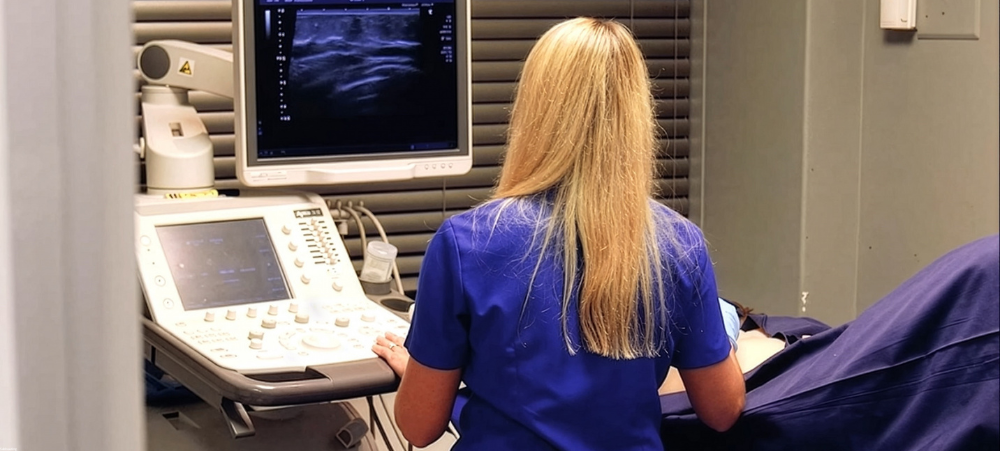
- Ultrasound is useful for assessing tendons, muscles and soft tissues, and can also guide injections.
- MRI provides detailed evaluation of ligaments, cartilage, muscles, tendons and bone marrow.
- CT scans are mainly used for complex fractures or detailed bone assessment.


Is imaging important even if an injury does not seem serious?
Yes. Some injuries may appear minor but can involve underlying damage such as stress fractures, small ligament tears or early cartilage injury. Early detection may prevent worsening injury and reduce long-term complications.
Is pain a good indicator of injury severity?
Not always. Some serious injuries may initially cause only mild discomfort, while relatively minor conditions can be very painful.
How do stress fractures differ from acute or occult fractures?
- Acute fractures usually occur after sudden injury and are often visible on X-rays.
- Stress fractures develop gradually due to repetitive strain and may only be visible on MRI in the early stages.
- Occult fractures are not seen on initial X-rays despite ongoing symptoms and may require MRI or CT for diagnosis. Early diagnosis is important to prevent progression to a complete fracture.
Can imaging distinguish between inflammation, overuse injuries and structural damage?
Yes. Imaging can help differentiate between low-grade inflammation or overuse changes and more significant injuries such as tendon tears, ligament ruptures or cartilage damage. This distinction is important because treatment and recovery timelines differ significantly.
Can imaging help predict recovery time and return to sport?
Imaging cannot provide an exact recovery timeline but does provide valuable information about the severity and extent of injury. In selected cases, imaging may also be used to monitor healing and assist with return-to-play decisions.
Can you discuss concussion briefly?
Concussions are common in sports such as rugby and are primarily a clinical diagnosis. Imaging is usually not required in mild cases. However, CT scans may be performed when there are concerning symptoms to exclude more serious injuries such as a brain bleed or skull fracture.
What role does Interventional Radiology play in sports injuries?
Interventional Radiology involves minimally invasive procedures performed under imaging guidance. In sports medicine, this may include image-guided injections for pain relief or aspiration of fluid collections. These procedures are typically performed using ultrasound or CT guidance and are generally less invasive than surgery.
Are there any new imaging techniques particularly useful in sports medicine?
Modern MRI techniques continue to improve and provide increasingly detailed evaluation of soft tissues, allowing earlier detection of subtle injuries. Ultrasound technology has also advanced significantly, with higher-resolution imaging and expanded use in both diagnosis and image-guided procedures.
Why is specialised MSK imaging important?
Sports injuries often involve complex anatomy and subtle findings. Subspecialised MSK radiologists develop expertise in recognising injury patterns and understanding sport-specific demands, helping provide more accurate diagnoses and clinically relevant reporting.

We understand that there are many aspects that encompass a Mother, Father or Child and strive toward providing resources and services that accommodates this.
Our content is aimed to inform and educate families on issues starting from pregnancy through to the challenges of the teen-age years.
- Playtime that gives back: A new school programme that helps raise funds while children have fun - September 22, 2026
- You Look After Everyone Else. Isn’t It Time You Put Yourself Back on the List? - September 17, 2026
- How breast density matters in breast cancer - September 17, 2026