
Choosing Agricultural Sciences & Agricultural Management Practices – everything you need to know

In a brand-new blog series, we will be exploring the various subjects offered by Impaq in the FET Phase (Grades 10 – 12). We spoke to education specialist Janet Zandberg and Impaq alumnus Carla Botha to learn more about Agricultural Sciences and Agricultural Management Practices as subjects.
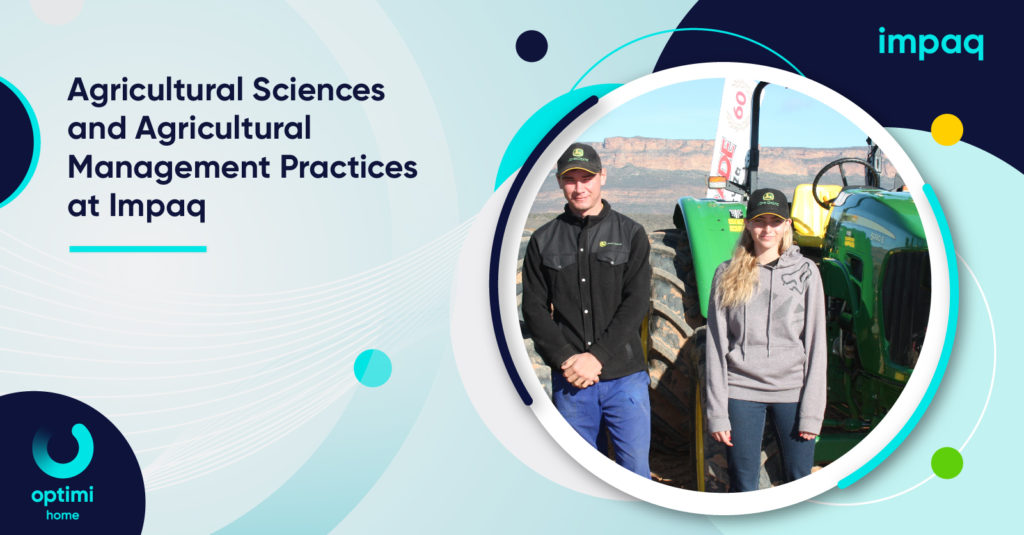
Agricultural Sciences vs Agricultural Management Practices

While choosing subjects in Grade 9, many learners are unsure of the difference between Agricultural Sciences and Agricultural Management Practices. We asked Zandberg to explain the differences between these two subjects below.

Agricultural Sciences 

“Agricultural Sciences (AGS) is a science,” Zandberg says. It is the study of the relationship between soils, plants, and animals in the production and processing of food, fibre, fuel, and other agricultural commodities with economic, aesthetic, and cultural value. 

Zandberg says that Agricultural Sciences is a subject that can be used when a learner wants to go to university to study for a bachelor’s degree or a diploma. Agricultural Sciences contains content such as:

  • soil sciences, 
  • basic agricultural chemistry,
  • animal nutrition, 
  • animal reproduction, and
  • genetics.

Agricultural Management Practices 

“Agricultural Management Practices (AMP) is a more practical subject,” Zandberg explains. It is the study and application of production, economic, and management principles used in the cultivation, transformation, and marketing of food and other agricultural products.

Learners who take Agricultural Management Practices must complete a practical assessment task (PAT) on a farm for 40 hours in Grade 10, 11 and 12. Agricultural Management Practices contains content such as:

  • crop production and management,
  • animal management practices,
  • plant reproduction,
  • farm planning, and
  • production management.

“If a learner loves farming and animals, Agricultural Management Practices is a better choice,” Zandberg says. 
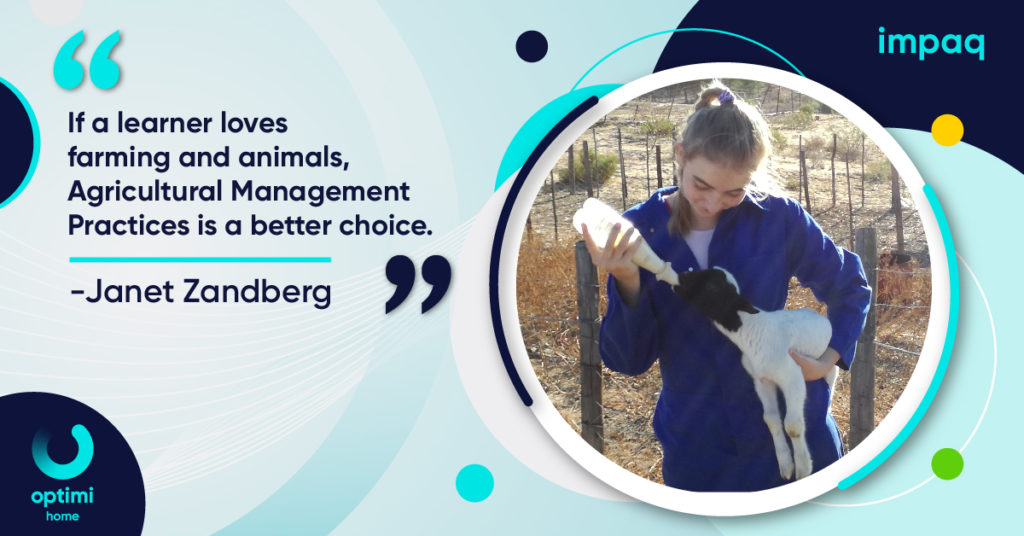
farming is a possible career option, Agricultural Management Practices will be the best choice,” Zandberg says. “For further study, Agricultural Sciences will be the best choice,” she adds.

Life is better on the farm

Carla Botha, who has been studying through Impaq since Grade 1, says that she had no doubt about the subjects she wanted to choose when making subject choices in Grade 9. “For as long as I can remember, I have wanted to be a farmer,” Botha explains. When she learned that Impaq offered two agricultural subjects in the FET Phase, she was overjoyed. “When the time came to choose my subjects there was no doubt that I would take both,” she adds. 
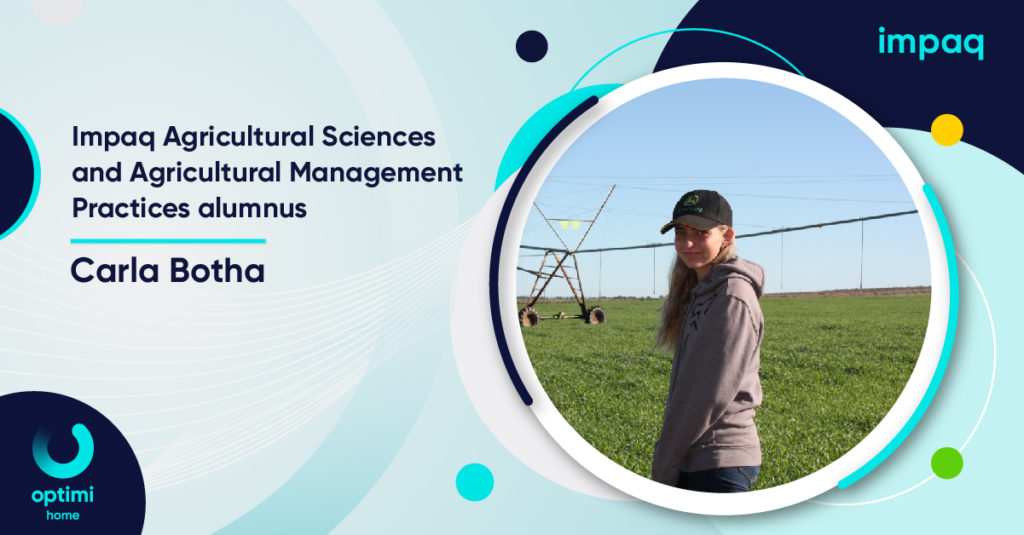
Completing her practical assessment tasks in Agricultural Management Practices was the highlight of Botha’s school year, three years in a row. “Getting to document every aspect of ‘my farm’ was so much fun. I had an excuse to take over 500 photos of everything farm related,” she explains. Botha also enjoyed the depth of the lesson material when it came to Agricultural Sciences. “The knowledge I obtained helps me in my everyday work,” she explains. 

Also read: How to easily complete practical subjects through home education

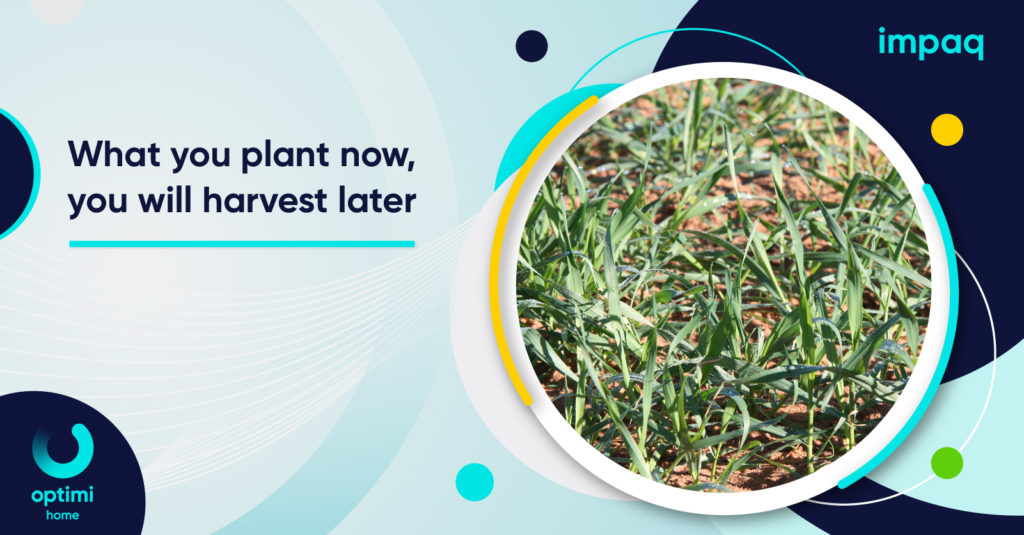
What you plant now, you will harvest later

Both Agricultural Sciences and Agricultural Management Practices requires hard work to complete the subjects successfully. “In both subjects, learners will have to put in a lot of effort,” Zandberg says.

Agricultural Sciences 

Zandberg advises learners to only take Agricultural Sciences if they plan on going to a university or college for further training. “It is a challenging subject and must not be underestimated,” Zandberg says. Botha agrees and says that she had difficulty with the chemistry aspect of the subject in Grade 11. “This was my first encounter with chemistry, and I dreadfully struggled to master this part of the subject,” she explains.

While taking Mathematics with Agricultural Sciences is not compulsory, Mathematics will be a requirement if a learner wants to study BSc Agricultural or Veterinary Sciences after completing Grade 12. 

Top tip: Ensure that you know what the requirements are for further study at tertiary institutions.
Also read: How to change a learner’s perception of difficulty to achieve success

Agricultural Management Practices 

Zandberg explains that if learners take Agricultural Management Practices, they will need access to a farm to complete their practical assessments tasks (PATs) successfully. “Learners must be part of the practical activities on a farm or an active production enterprise for at least 40 hours per year,” Zandberg says.

A farmer or veterinarian must assess the PAT. If the assessor is a farmer, the farmer must have been operating the farming enterprise for at least five (5) years. If the assessor is a veterinarian, their qualification, practice number, and the number of years they have operated their practice must be submitted along with the PAT.

Botha says that with Agricultural Management Practices, she did not struggle with the lesson material as it was her favourite subject. “There were a few of the assignments that were out of season for my area, Vanrhynsdorp in the Western Cape, and it brought forth a bit of a challenge but nevertheless it was fun,” Botha explains. 

Top tip: Ensure that you have access to a farm when choosing Agricultural Management Practices as a subject.

Leaders in the field

Agricultural Sciences and Agricultural Management Practices prepares learners for entry into further studies for a possible career in a variety of fields (pun intended).

Typical career paths for Agricultural Sciences include:

  • a veterinarian or veterinarian assistant, 
  • agricultural researcher, 
  • soil researcher, 
  • a career in animal or plant studies, and
  • a biologist.

Typical career paths for Agricultural Management Practices include practical work such as:

  • farming, 
  • farm management, 
  • managing different plant crops, and 
  • caring for farm animals.

Working in acres, not in hours 

Since Botha graduated as the top Impaq learner in Agricultural Sciences and Agricultural Management Practices in 2019, she has been working as a farm manager. “My focus has primarily been on animal health and reproduction,” Botha says. She, however, has ambitions to become a mega farmer. 

Also read: Life after matric – guiding your child during this next chapter
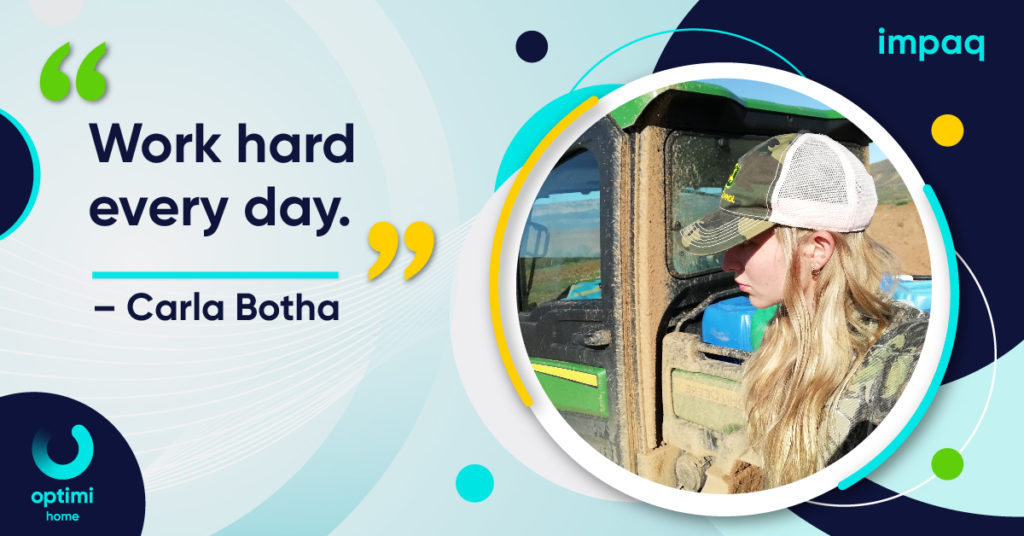
Her advice to other young aspiring farmers is to work hard every day. “Use as many previous papers as possible when studying and use more than one study method to obtain success,” Botha adds. “And lastly, enjoy it,” Botha concludes.

By Elmien Ackerman

Impaq

Leave a Comment

Your email address will not be published. Required fields are marked *

Get a second chance at success

If you’ve recently completed Grade 12, you’ll know that your matric results can lead to many exciting opportunities. Your matric certificate can help you get into the university or course of your choice, it looks great on your CV and it can help you ace that job interview by showing that you have the necessary skills to do the job.

But, what if your results were not what you hoped they would be and all these opportunities seem out of reach? You don’t have to be stuck with your less-than-great grades for the rest of your life. You can get a second chance at success.

Impaq, an innovative education solution provider, can help. You can register to redo some of your Grade 12 subjects in order to improve your results. Plus, you don’t have to be an Impaq learner to qualify. If you went to a public or private high school or received your matric certificate through a distance learning provider, you can still apply to redo your matric subjects with Impaq. The only requirement is that you must have had a sitting for the final examination in order to qualify.

Once you’ve applied and been accepted, Impaq will register you with the South African Comprehensive Assessment Institute (SACAI) to ensure that you receive your new (and improved) National Senior Certificate after passing the NSC Examination for the rewritten subjects.

To see if you qualify, send an email to [email protected]. The final cut-off date for registrations is 15 February 2018.

Impaq
Bullying: What parents and schools can do

ARTICLE BY PROF RITA NIEMANN, NALIZE MARAIS, ZENDRÉ SWANEPOEL AND MONIERA MOOSA

Bullying is a great concern for both parents and schools. Here we outline a number of measures that can help them both parties deal with bullying.

Parents

When parents notice that their child is behaving differently – not wanting to go to school, using illness as an excuse, suddenly performing poorly at school or enuresis – and suspect bullying, they need to act immediately.

Firstly, they must determine where this is happing (at school, at a sports club, on social media, etc.) and who the perpetrator(s) are.

Secondly, if the bullying is taking place in an organised environment such as at school or sports club, the authorities need to be informed and requested to step in. They are legally bound to protect the rights of the child.

Thirdly, parents have the responsibility to equip their children to cope by:

  • Instilling the knowledge that children must take a stand and that they have a choice in allowing someone else to victimise them.
  • Assisting children to terminate relationships that are potentially harmful, such as blocking a person on social media.
  • Helping them to identify bullies and the different forms of bullying.
  • Creating a safe space for children to speak about what is happening to them.
  • Emphasising assertive verbal communication if threatened.
  • Building children’s self-concept.
  • Getting the help of a psychologist, if necessary, to counsel the victim.
  • Emphasising that respectful behaviour is always the best option and thus preventing retaliation.
  • Fostering problem-solving and conflict resolution skills with the focus on restoring damaged relationships.
  • Working collaboratively to solve the problem with their children so that they can feel reassured.

Schools

As bullying is a deliberate act to hurt someone, there must be consequences for the bully. Once teachers are aware that a bullying incident has taken place at school, the matter must be dealt with by:

  • Asking the victim to provide the names of the perpetrator(s), as well as the names of friends of the victim, as soon as he/she has calmed down.
  • Counselling the victim and finding out whether he/she has been injured and what effect the bullying or harassment has had on him or her.
  • Cultivating a “no blame” approach towards bullying or harassment.
  • Establishing punitive sanctions for both the bully and for any bystanders.
  • Developing a bullying code of conduct/bullying policy and informing learners of this.
  • Having designated teachers to deal with incidents of bullying.
  • Facilitating mediation and discussions with the victim and the bully, depending on the severity of the bullying.
  • Passing the responsibility to the bully or group of bullies to make sure that the problem is solved.
  • Ensuring that potential bystanders understand that they have a vital role to play during bullying incidents.
  • Letting the victims feel protected after they have reported the incident.
  • Encouraging learners to make suggestions on how they can contribute to alleviating the negative experiences of the victim.
  • Scheduling follow-up meetings to monitor the situation where each party has to share how things are going.
  • Informing the parents of both the bully and the victim about the incident/s.

The principal and teachers have a crucial role to play in directing learners towards becoming responsible citizens. They should create a safe and secure environment, establish a non-violent culture, and be good role models for all learners.

Reference

Niemann, R., Marais, N., Swanepoel, Z. & Moosa, M. 2016. Problem areas in schools In: Jacobs, M. Teaching-learning Dynamics, Johannesburg: Pearsons

Impaq
How to help a learner prepare for university

University presents learners with a range of challenges whether they will be moving out or staying at home, so prepare well ahead of time to avoid any nasty surprises!

When living in residence or off-campus accommodation

Living away from home can be nerve-racking for even the most adventurous of learners. Here are some tips on how to prepare for living away from home:

If the student accommodation doesn’t provide food, learners should learn how to cook easy, nutritious meals if they don’t know how to do so already. Also, very rarely does student accommodation offer laundry service, so learners should make sure they know how to do their own laundry if they’ll be doing it for the first time.

Read more about teaching children life skills

Ensure the accommodation has a working internet connection. While Wi-Fi is widely available on campus and most campuses have 24/7 libraries, having internet access at ‘home’ will make completing your studies a lot easier.

Learners should try to get to their new home well ahead of time to familiarise themselves with the surroundings, particularly places like grocery stores and bookstores. Also find a local GP and hospital – if there is an emergency, better to be safe than sorry (and invest in a first aid kit)! Arriving early will also give learners time to buy any things they may need, like cutlery, crockery, and so on.

If the student accommodation is shared, learners should set boundaries with their new roommate(s) regarding socialising hours, cleaning up, quiet time, and so forth. Also, invest in a pair of shower slippers as communal showers are often a breeding ground for nasty fungal infections.

Make a list of things to pack, and tick them off as you pack. Most critical will be paperwork, legal documentation, and a bank card. If necessary, learners should ensure they have all the necessary medication they need and make sure they have a new prescription ready for when refills run out.

When living at home

Living at home as a varsity student might be even more challenging than living away from home for the first time. Here are some tips on how to survive:

Join societies to help make friends. If a learner is not living in student accommodation, it will inevitably be more difficult to socialise and meet new people. University sports and cultural clubs are a great way to socialise with fellow students outside of lecture halls.

Learners and their family members absolutely must set boundaries well ahead of time. These boundaries include:

  • Leisure time: it is vital to give learners some time to rest when they have come home after a long day of lectures. Don’t harass them as soon as they set foot in the door, they’re tired and need rest. Decide on agreeable ‘relaxation time’.
  • Socialising: agree on rules like curfew, staying over at friends’ houses, keeping in contact with parents while out on the town, and so forth.
  • Attending lectures and tutorials: while not ideal, often students will need to skip one or two to study for a test or complete an assignment. Start managing expectations surrounding class attendance ahead of time.

These boundaries must be seen as compromises rather than forced stipulations. Your child is an adult now – treat them as such.

Keep the lines of communication open and have regular open and honest conversations.  Learners need to know that they can count on their parents if something goes wrong, whether academically or in their personal lives. Making mistakes is a part of growing up, and if your child is staying at home for the duration of their studies, you are on this journey with them. 

Read more about managing failures.

General tips

Irrespective of whether a learner will be living at home or not, there are some general guidelines to prepare learners:

  • Take a tour of the campus and make notes of where different buildings are – this will make navigating them easier when lectures begin.
  • Have a look at the orientation week programme as soon as you receive it. Choose which events you would like to attend, or which you think will be helpful. Participating in ‘O-week’ is a fantastic way to get to know the campus and new people.
  • Purchase your learning material as soon as you get your book list and get stuck into the recommended reading before lectures even start. University involves a lot of self-studying, and often, having done the reading ahead of time is a prerequisite for attending the class, so get into the habit now.

Read more about how Impaq learners have achieved success at university.

Varsity is often a once-in-a-lifetime experience for students. With the parents’ help, support, and guidance, these can be some of the best years of a learner’s life! 

Read more on how to help prepare your child for life after matric.

by Jacqui Smit

Impaq
Scroll to Top