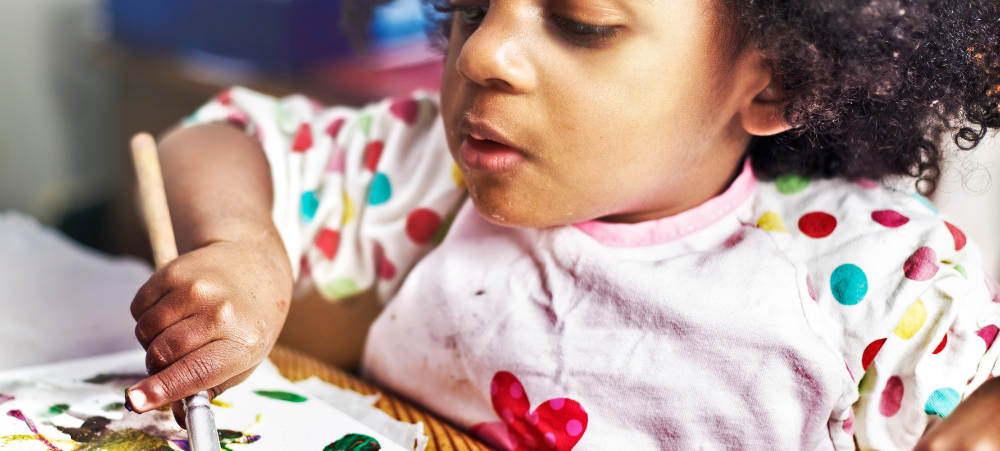
A toddler with paint on their hands, glue on the table and a half-finished piece of paper in front of them may not look especially productive to an adult. But Dibber International Preschools say that these moments are often when some of the most valuable early learning is taking place.
Dibber is encouraging parents to look more closely at the role of creative activity in the early years, arguing that art is more than a way to keep children occupied. In practice, simple art activities can help build the fine motor control children later need for writing, dressing, tying shoelaces and managing everyday tasks confidently.
That makes art an important part of toddler development rather than a decorative extra around the edges of learning.
“At Dibber, we see creative activity as one of the most natural ways young children learn about themselves and the world around them,” says Ursula Assis, Country Director of Dibber International Preschools South Africa. “When toddlers paint, pinch, tear, press, roll or draw, they are doing much more than making something. They are building hand strength, coordination, focus and confidence through experience.”
Many of the art activities most useful for toddlers are also the simplest. Finger painting remains one of the clearest examples. Smearing, pressing and spreading paint across paper strengthens the muscles in the hands and fingers while giving children a direct sensory interaction of colour, texture and movement.
Playdough works in a similar way. Rolling, pinching, flattening, and shaping dough help toddlers strengthen their grip and control while allowing them to explore their hands freely. Tearing and sticking paper for collages, meanwhile, encourages bilateral coordination by asking both hands to work together purposefully.
Dibber also points to the value of less conventional painting tools. A sponge, a cotton wool ball, the bottom of a bottle or an old toothbrush can all invite different grips and movements. That variety matters, especially in the early years, when children are still developing the fine-motor control needed for later tasks.
Sticker art offers another form of practice that can look deceptively simple. Peeling and placing stickers asks toddlers to use a pincer grip, the same kind of movement later needed to hold a pencil with control. Chalk drawing outdoors, sponge stamping, and wall or paving water painting all build coordination in slightly different ways while keeping the activity playful and inviting.
For older toddlers, child-safe scissors can also become part of that development. Cutting paper or even playdough helps sharpen coordination between both hands and gives children one of the more focused forms of fine motor practice available in everyday play.
Dibber’s broader point is that these activities matter because they combine physical development with creativity, experimentation and enjoyment. In the early years, children tend to learn best when these elements are allowed to sit together.
“Toddlers do not separate development into neat categories,” says Assis. “For them, creativity, movement, sensory discovery and learning are happening all at once. That is why art can be such a powerful part of early childhood. It reaches the hands, the mind and the emotions together.”
This is one reason art remains so useful in both home and school settings. It offers children a way to strengthen practical skills while also expressing themselves, exploring materials and building confidence through open-ended activity. There is no single correct outcome. The process carries much of the value.
That can be reassuring for parents who sometimes feel pressure to focus heavily on more visible academic preparation. Dibber’s view is that skills such as grip strength, hand-eye coordination, concentration and confidence often begin developing long before formal learning appears to start. Activities that look playful or messy can still do serious developmental work.
At Dibber, these understandings form part of a wider play-based approach to early childhood education, where children are encouraged to explore, create and learn through direct experience. Art is part of that rhythm because it gives children meaningful ways to experiment, communicate and strengthen essential developmental foundations.
For Dibber, the message to parents is simple. The next time a toddler covers the table in paint, presses stickers everywhere but the page, or proudly presents a drawing that makes sense only to them, it may be worth looking beyond the mess.

- Why the Best Early Years Educators Do More Than Teach - September 25, 2026
- How to Help Toddlers Learn the Language of Emotion - September 18, 2026
- Why Telling Kids to Wash Their Hands Is Often Not Enough - September 11, 2026