Impaq

How healthy homeschooling habits matter to future success

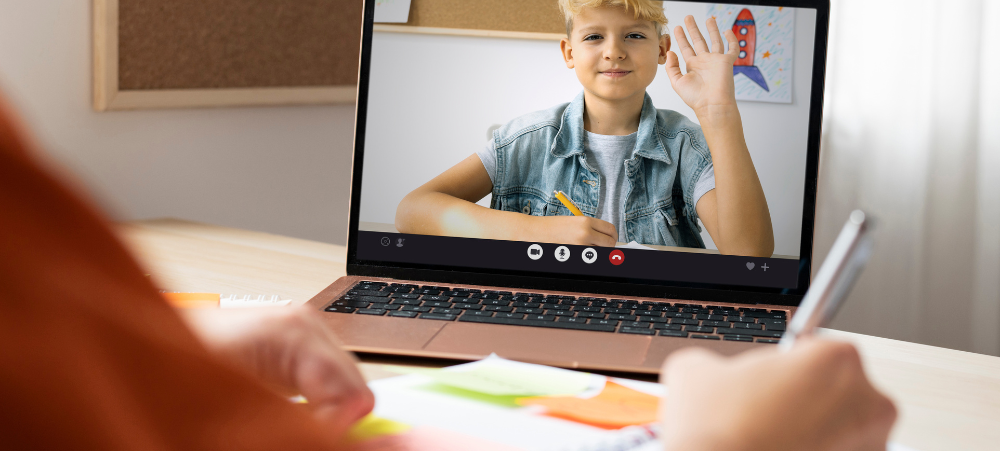
For many parents, homeschooling is not only about where a child learns. It is also about how that child builds curiosity, keeps going when work feels difficult, and stays interested in learning. These are habits that can support later success, but they need to start somewhere. Learning at home gives parents more direct influence over the pace and rhythm of their child’s education. That can be a real advantage, and it makes the home a place where children begin to build habits that shape how they learn as they grow. Those patterns can continue to matter long after the early years, through later schooling and eventually in the workplace. The World Bank’s Building Human Capital Where It Matters report highlights the home as one of the key places where children’s development takes shape. It shows that children need more than resources alone to grow and learn well. They also need care, encouragement, reading, routine, and regular opportunities to learn. The report also points to the need to enable parents to create homes that are both nurturing and stimulating. For homeschooling families, good intentions and content matter, but children also need a clear sense of direction in their work. A steady path through the week Without a clear way forward, home education can start to feel uneven. Children may stay busy without making steady progress or building strong work habits. In the early grades, parents need to know what comes next, how learning should build over time, and how to tell whether their child is keeping up. That kind of clarity makes daily lessons easier to manage and gives children a steadier sense of progress. This is where Impaq’s homeschooling options for Grades R to 3 can make things easier for families. The packages include workbooks, readers, learner aids, and portfolio-based assessments for daily lessons at home – useful tools parents can use as learners build early reading, numeracy, and life skills. Impaq also offers a clear, CAPS-aligned way to organise learning at home. This gives parents a proven framework for parent-led homeschooling, including regular listening, speaking, reading, writing, and ways to track progress. With CAPS-aligned learning materials, facilitator guides, assessment tools, and access to the Optimi Learning Portal (OLP), parents have what they need to lead teaching at home with more confidence. For children, this creates a regular rhythm that supports steady learning. They are not only working through content. They are also building consistency, follow-through, and confidence – habits that matter later in life. The value of these habits over time The habits formed in Grades R to 3 continue to matter beyond the early years. Over time, they shape how children approach challenges, respond to feedback, and take responsibility for their learning. Homeschooling is not the right choice for every family, but for those who do choose this learning path, the quality of the materials and guidance they use can make a real difference in helping their child grow – both in learning and in the habits they carry into later life. As Louise Schoonwinkel, Managing Director at Optimi Schooling, of which Impaq is a registered trademark, says, “When families read, talk, and build routines early, children arrive at formal learning with confidence, and that confidence compounds later in their lives.”

Wriggle and Rhyme

Memory – Take Note of the Role of Music!

Have you ever heard a song and it has brought back a memory? That memory may include the place where you heard the song, what you were doing at the time, how you felt and sometimes even a sensory trigger, like the memory of a certain taste or smell. The effect is so profound that a heart-warming movement called “Music and Memory” (http://www.musicandmemory.org) creates personalised playlists for residents with dementia in nursing homes. Apparently, the response is incredible!  Eyes light up and bodies start to move with the rhythm, as the music awakens memories of forgotten lives. All this from a piece of music! So why does music impact memory so profoundly? Neuroscientists have analysed the brain mechanisms related to memory, finding that words set to music are the easiest to remember.  We can all relate to that – just try and remember anything set to a tune and your powers of recall will be stronger! Apparently, the hippocampus and the frontal cortex are two large areas in the brain associated with memory and they take in a great deal of information every minute. But, we all know from experience, that retrieving all that information is not always easy. However, the structure of a song helps us to remember, because it provides a rhythm, rhyme and sometimes alliteration, which helps to unlock that information with cues.  The cues can also include things like the melody, emotions or images that the song lyrics evoke. Neuroscientists are constantly discovering more and more about how music affects memory. A 2009 study done by cognitive neuroscientist Dr. Petr Janata at the University of California, found a potential explanation for the link between music and memory by mapping the brain activity of a group of subjects while they listened to music.  Dr. Janata found that songs linked to strong emotions and memories corresponded with fMRI images that had greater activity in the upper part of the pre-frontal cortex, which sits right behind the forehead. This suggests that this area of the brain, which is also responsible for supporting and retrieving long-term memories, acts as a “hub” that links together music, emotions, and memories. The soundtrack of our lives … Janata explains that listening to a piece of familiar music “serves as a soundtrack for a mental movie that starts playing in our head,” calling back memories of a particular person or place. What about music in the brains of children? Over the past 14 years of using music as a catalyst for learning at our Wriggle and Rhyme music classes, we’ve seen, first hand, how music-based activities affect children’s brains. The responsibility to fill children’s brains with positive, learning experiences is not one that we take lightly.  We recognize that because our programs are set to music, we are building memories that may last a lifetime. Music education is therefore both a privilege and an exquisite burden! Whether you’re a parent, caregiver or educator, bear that in mind!  When it comes to music, everything that you expose your child/ren to needs to be done intentionally, with purpose.  You could be impacting your child’s memory for the rest of their lives! So, can I encourage you to build musical memories that evoke rich, joyful experiences for years to come? Because, when it comes to memory, we need to take note of the role of music! Musical resources

Bonitas – innovation, life stages and quality care

The First Signs of Labour

If you’re expecting your first baby you’ve probably read up a little (or a lot) on pregnancy and birth process. Labour is something you’ve probably wondered about and seeing as every pregnancy is different, many moms experience different labour signs. However, there are a few tell-tale signs to look out for that you are about to meet your new baby soon.  What to look (or feel) out for  You may be worried that you won’t distinguish normal late pregnancy signs from the fact that you’ve started labour. Luckily your due date should give you an indication of when you could expect your baby to arrive, but this won’t always be the case. Here are some indicators that your baby is on the way.  One of the more obvious signs of labour beginning is regular contractions. This will be different to the Braxton Hicks contractions you may have been experiencing leading up to this point. Labour contractions are longer, stronger and more frequent – when they come every 5 minutes you should call your doctor or midwife.  Another sign your baby is on her way is your cervix dilating or beginning to open. This can start happening in the days or weeks before you deliver. Your baby will also move down into your pelvis during this time – which is known as your baby dropping.  When your labour begins, the mucus plug which seals your cervix opening comes away. This jelly-like pink mucus is known as a show, and you may notice it when it passes out your vagina.  Lower back pain, diarrhoea and looser feeling joints are all other signs that your labour may be starting. Another sign is your water breaking, this can happen in a gush but a trickle is more likely, most moms-to-be go into labour within 24 hours of their water breaking.  Be sure to keep your birth partner in the loop about how you are feeling mentally and physically around the time of your birth. If you are at all worried about your baby or experience anything abnormal be sure to let your doctor know as soon as possible. 

Bonitas – innovation, life stages and quality care

Living longer isn’t enough, it’s time to live better

Good news: South Africans are living longer. According to Statistics South Africa’s 2025 Mid-Year Population Estimates, life expectancy has climbed to 64 years for men and 69.6 years for women. This marks a remarkable recovery from the devastating lows of the early 2000s, when the HIV epidemic cut lives tragically short. Expanded access to antiretroviral treatment deserves enormous credit for that turnaround. But here is the number that should stop us in our tracks: our healthy life expectancy sits at just 52.8 years. That means the average South African spends roughly a decade, sometimes more, living with illness, disability, or diminished quality of life before they die. We are adding years to life, but we are not yet adding enough life to years. This World Health Day, on 7 April, that is the conversation we need to be having. A nation under double pressure South Africa’s health landscape is uniquely complex. We carry a double burden of disease that few countries face at the same scale. On one side are communicable diseases: an estimated 8.15 million South Africans are currently living with HIV, representing 12.9% of the total population. On the other, non-communicable diseases (NCDs) are rising at an alarming rate and they are increasingly becoming the silent drivers of preventable death. Diabetes is perhaps the starkest example. Its prevalence has nearly tripled over a decade, from 4.5% in 2010 to 12.7%. By 2019, an estimated 4.58 million South Africans between the ages of 20 and 79 were living with the condition. More troubling still? Over half of them (52.4%) were undiagnosed. High blood pressure and heart disease follow a similarly concerning trajectory, steadily eroding the life expectancy gains we have worked so hard to achieve. The root of this problem is not only a lack of healthcare access though that inequality remains real and urgent. A significant part of the challenge is a lack of health literacy: people not knowing their numbers, not understanding their risk, and not knowing when or where to seek help. Information is healthcare World Health Day is not just about healthcare systems. It is about ensuring that every person, regardless of income, geography, or education level has the knowledge they need to protect their own health. That is health literacy. And it is one of the most powerful, and underused, tools we have. At Bonitas, we believe that a medical scheme’s role extends far beyond paying claims, we are a healthcare partner. That means meeting our members where they are: helping them understand their conditions, navigate the system, and make informed decisions before a health crisis forces their hand. Our Be Better Benefit is a direct expression of that philosophy. It is designed to empower members to take a proactive approach to their health, offering access to wellness screenings, tests, vaccines and preventative care measures – helping with early detection of health issues, and allowing for timely intervention. Because the best claim is the one that never needs to be submitted. Part of health literacy is understanding your medical aid, not just having it. Too many South Africans are either underinsured, enrolled on benefits that do not match their actual health needs, or simply uncertain about what their plan covers. With NCDs now affecting South Africans across every age group and income bracket, having the right cover is not a luxury. It is a necessity. Choosing the right medical scheme benefit option means understanding your family’s health profile: your age, chronic conditions, preventative care needs, and anticipated healthcare use. It means asking the right questions. And it means having a scheme that gives you the tools, and the transparency, to make those decisions confidently. A shared responsibility South Africa has made genuine, hard-won progress in public health. Infant mortality has dropped to approximately 23 deaths per 1,000 live births. Under-five mortality has fallen to around 26 per 1,000. But the next frontier of progress will not be won in hospitals alone. It will be won in the daily decisions people make about their health: whether it is getting screened, managing a chronic condition, or seeking care early rather than later. For that to happen, people need information, support, and a healthcare partner they can trust. This World Health Day, we at Bonitas reaffirm our commitment to being exactly that, not just a funder, but an educator, an advocate, and an ally in every South African’s journey towards a longer, healthier life. For more information on the Bonitas Be Better Benefit and to find the right benefit option for you and your family, visit www.bonitas.co.za.

Teneo Online School

Why stable learning environments matter, and why more families are considering online schooling and homeschooling

For many South African families, the conversation about schooling has shifted. It’s not only about academic outcomes. It’s about whether a child has the stability to learn consistently: predictable routines, fewer disruptions, safe social conditions, and learning support that doesn’t depend on “waiting until the next test”. That’s one reason online schooling and homeschooling have become a serious option for more parents, not as a trendy alternative, but as a way to create a calmer, more stable learning environment at home, and why providers like Teneo Online School are seeing growing interest from families looking for structure, visibility, and consistent support. You can see how mainstream distance education is becoming in the matric landscape, too. Reporting on SACAI’s 2025 NSC results, one local summary noted that 94% of candidates were registered via distance education providers or online schools. And as more families explore these models, questions about quality and credibility naturally follow, which is why it matters that national quality assurance remains central to the system. For example, Umalusi publicly confirms its role in approving and quality assuring national examinations (including private assessment bodies) before results are released. What does a “stable learning environment” actually mean? Stability isn’t about removing challenge. It’s about removing unnecessary chaos so children can focus. A stable learning environment usually includes: In many traditional settings, stability is built into the school day by default: set timetables, bells, transitions, and a structured rhythm. But for some children, especially those who experience anxiety, struggle with sensory overload, or feel socially unsafe, the physical school environment can be the opposite of stabilising. Why is this a real issue for South African families Parents don’t need convincing that school can be tough socially. But it’s worth acknowledging that safety and bullying are not “soft” issues — they affect attendance, focus, confidence and learning. A piece from the Institute for Security Studies cited a 2019 Statistics South Africa study finding that 8% of primary school-aged children experienced violence at school, including corporal punishment and other forms of abuse. Separately, the Human Sciences Research Council has also highlighted bullying vulnerability among primary school learners, including high levels of ridicule and coercion reported by learners in its research spotlight. For some families, this context is part of what drives the search for stability: a learning environment where the child can concentrate without constant emotional noise. Why online schooling and homeschooling can be stabilising Online schooling and homeschooling are not the same thing, but both can offer a similar benefit: a learning environment you can control and design intentionally. 1) A calmer daily rhythm When children learn at home, the day can be built around what supports focus: consistent wake/sleep times, regular breaks, movement, and learning blocks matched to attention span, instead of forcing every child into the same pace. 2) Fewer “hidden disruptions” In many households, stability comes from reducing time lost to commuting, daily logistics, and the emotional hangover of difficult school days. For some learners, simply removing those stressors creates the headspace they need to engage. 3) A safer social environment (without isolating children) A stable learning environment doesn’t mean children shouldn’t socialise. It means social time is more intentional: clubs, sports, interest groups, tutoring communities, and supervised peer learning, rather than unstructured environments that can be difficult for anxious or vulnerable learners. 4) Earlier support and more visible progress One of the biggest stability benefits of digital learning models is visibility: when a learner struggles, it can become apparent sooner than it might in a classroom of 30 children. That doesn’t replace teachers; it supports them by making it easier to intervene early. This is also where quality matters, and why parents are right to vet providers carefully. TimesLIVE has previously reported on how parents can vet online learning institutions, including clarifying the difference between online schools and distance education providers and warning against unregulated centres. A parent’s perspective: stability that lasts One of the most common reasons parents cite for choosing online schooling is not novelty; it’s stability over time. As one parent wrote in a review: “We moved over to Teneo in 2020. Teneo offered a stable learning environment and continues to do so. My kids enjoy being taught online in the comfort of their own home… The teachers are highly qualified, and they put in extra effort to make learning fun. Our family will recommend Teneo as an alternative education system.” That idea “continues to do so” is the key. Stability isn’t a once-off improvement. It’s something families need to hold across terms, transitions, and tougher seasons. How to build a stable learning environment at home (even if you’re just starting) Whether you’re moving into online schooling, homeschooling, or a hybrid approach, stability is created by design. Three practical starting points: 1) Build a repeatable weekday structure  Not rigid, but predictable. Children tend to regulate better when the day has the same “anchors”: start time, break times, movement time, lunch, and a clear finish. 2) Create a dedicated “learning zone”  This doesn’t need to be a home office. It just needs to signal: “this is where we focus.” Consistency reduces daily friction. 3) Separate learning screens from leisure screens If learning happens online, screen boundaries matter even more. Stability improves when children don’t feel like the whole day is one long device session, and when leisure time still includes movement and offline breaks. Online schooling and homeschooling aren’t automatically better than traditional schooling. But for many families, they offer something increasingly valuable: a stable learning environment that reduces unnecessary disruption and helps children build confidence through consistent progress. For parents exploring alternatives, the best question often isn’t “Is online schooling good?” It’s: What learning environment will help my child show up consistently, academically, emotionally, and socially, week after week? If the answer is “more structure, more calm, and earlier support,” then online schooling or homeschooling may not be a compromise. It may be the stabilising factor that helps learning finally click.

Wingu Academy

The Rise of Globally Recognised Online Schools: Excellence Without Borders

Online schooling has evolved from convenience to global academic credibility. In 2026, leading online schools are: The shift has been driven by: Today’s top-tier online schools offer: At Wingu Academy, this global standard is reflected through: Affordability and accessibility are also key drivers. AI-supported systems help reduce operational inefficiencies, making high-quality education more scalable and cost-effective. This creates a powerful outcome: World-class education that is both accessible and sustainable.

It seems we can't find what you're looking for.
Scroll to Top