
Bonitas – innovation, life stages and quality care

Mental health matters during the festive season: Let’s normalise getting help

As the year draws to a close, many South Africans brace themselves for a season packed with expectations. Social commitments like braais, family visits, long-distance travel to hometowns and the pressure to create joyful memories are all realities of this time of year. For some, however, the festive season also brings the hidden burden of grief, loneliness, despair and an emotional exhaustion that can seriously dampen the cheer. ‘December can be tough, whether it’s challenging family dynamics or the lack of loved ones to spend the festive period with altogether. Many end up feeling overwhelmed, isolated or emotionally drained,’ says Dr Themba Hadebe, Clinical Executive at Bonitas Medical Fund. ‘We’ve all been there in some way, and it’s important that people recognise the signs early and reach out for support, because help is available and there’s no shame in asking.’ Recognising the warning signs Seeing the symptoms in family and friends can be hard, but there are few tell-tale signs to look out for. Social withdrawal is often the first red flag; in a season defined by gatherings, family dinners and busy group chats, someone toggling offline, cancelling plans or spending long hours alone may be subtle cries for help. Sleeping all day or waking up at odd hours feeling consumed by anxiety, losing their appetite altogether or overeating in search of comfort are also common warning signs. And, at a time of year when consuming more alcohol than usual is considered somewhat normal, this can be a difficult sign to spot. Drinking alone or drinking to the point of passing out or making a scene routinely, can be a way of telling someone needs help. For many, admitting mental distress carries social stigma. It may feel like a sign of weakness, especially in communities where strength is tied to ‘keeping it together’ during holiday celebrations. ‘Our mental health doesn’t go on holiday,’ says Hadebe. ‘Taking care of mental wellbeing is especially important at the end of the year, and members of not just Bonitas but any medical scheme in the country should understand that support isn’t something extra or a nice-to-have benefit, but is in fact part of what they pay for.’ Bonitas members have access to comprehensive mental health benefits paid from the scheme’s main risk pool. As such, counselling and therapy are covered under their plans. On top of that, there’s a full Mental Health Programme which aims to empower members to manage their condition more effectively. How families and communities can help Support doesn’t always require a professional. Loved ones can play a key role just by noticing and listening. A simple, open question such as ‘How are you really doing?’ can open the door to meaningful dialogue. Resist the urge to fix things immediately. Sometimes what a person needs most is to be heard. What’s more, lower the pressure to celebrate, remembering that not everyone has the emotional energy for loud parties. Rather offer quieter alternatives such as a walk, a movie night, coffee and conversation, and normalise the idea that it’s okay to opt out. And if signs persist, like constant sadness, withdrawal from life and changes in behaviour, gently suggest professional support. Offer to help find a therapist, book an appointment, or simply make the first call. For those struggling this December, remember that you don’t need to bear it in silence. With a Mental Health Programme and counselling benefits available, help is accessible, discreet and covered.


Meridian Pinehurst

Meridian Pinehurst Preschool, building tomorrow’s thinkers through today’s play

As a parent, you want your child’s first steps into learning to feel safe, joyful, and full of wonder. At Meridian Pinehurst Preschool, we understand this. Our newly refreshed space has been designed to offer an environment where little ones aged 3 months to 5 years can thrive. Our revamp goes beyond fresh paint and new equipment. It reflects a renewed vision for early childhood care. Redesigned classrooms and enchanting outdoor areas create a setting where curiosity, growth, and happiness come naturally. A nurturing approach that puts your child first We believe the early years should be filled with laughter, exploration, and gentle guidance. Our approach focuses on helping each child develop at their own pace, in their own way: Facilities designed for wonder and discovery Our renewed campus includes inviting indoor play areas, jungle gyms, playhouses, and a sensory garden that encourages learning through touch and movement. The on-site kitchen prepares nutritious meals daily, and child-friendly bathrooms and dedicated cots or beds ensure comfort throughout the school day. Supporting modern family life We know juggling work and family is not always easy. That is why we have designed our offering around real family needs: Early drop-off from 7:00 and full-day care until 18:00 provides flexibility. Holiday care keeps children in a familiar, engaging environment during school breaks at no additional cost. With healthy meals included in the fees, you can feel confident that your little one is well cared for throughout the day. Safe hands, peaceful minds Your child’s safety is at the heart of everything we do. From biometric access controls to attentive supervision throughout the day, we have thoughtfully designed an environment where children can explore freely, while parents can breathe easily. You will find comfort in knowing that every detail has been considered, allowing you to focus on your day with complete peace of mind. Enriching experiences beyond the classroom We offer a wide variety of extramural activities to support your child’s holistic development. From Swim Hub and Playball to Dance Academy, Karate, Cricket, Rugby, and Monkeynastix, each programme nurtures physical development, confidence, coordination, and teamwork. These activities help children discover their unique talents whilst building essential motor skills and social connections. A community where your child belongs At the heart of Meridian Pinehurst is a simple promise: to nurture the whole child, emotionally, socially, academically, and physically. Enrolling is easy, and we are here to help. Apply online at curro.co.za, or simply give us a call, we would love to chat about your child’s journey with us: 087 087 7711 | [email protected] | 6 Campus Way, Pinehurst

be.UP Park

The Benefits of Indoor Play on Rainy Days

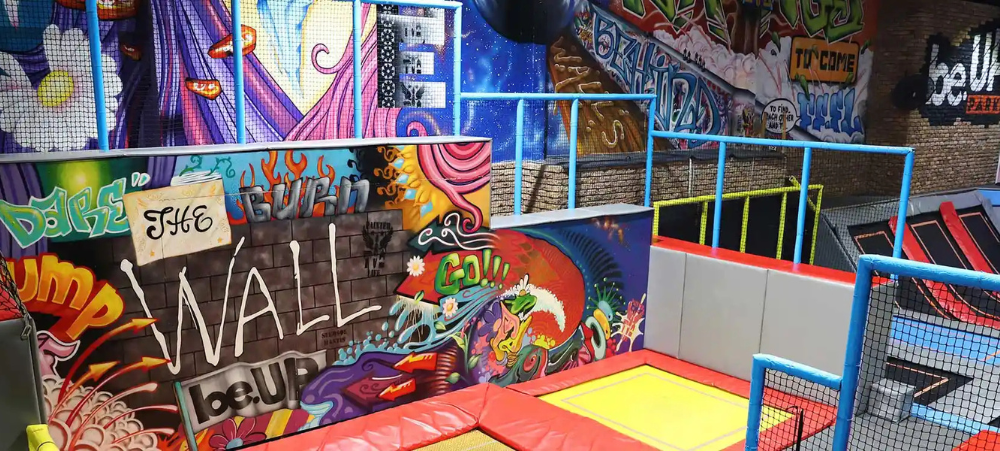
Rainy days do not have to mean boredom or screens. Indoor play environments offer the perfect combination of energy, creativity, and safety, and they come with a few bonus benefits you might not have considered. When kids cannot go outside, energy often builds up and that can lead to restlessness, frustration, or way too much time on tablets. At be.UP Park, kids can still move, climb, balance, and explore, even when the weather keeps everyone indoors. The activities are designed for all ages, from soft play and Little Town zones for toddlers to mazes, climbing walls, and football pitches for older kids. They are constantly moving and having fun, but in a clean, dry, and supervised environment. Physical play is not just good for fitness. It is also linked to brain development.Structured movement and play improves coordination, focus, and emotional control in children. Rainy days, when outdoor play is not possible, are the perfect opportunity to keep those skills growing indoors. At be.UP, activities like the Maze Zone or Climbing Walls encourage critical thinking and problem-solving. Every move is a lesson in balance, strategy, and confidence, all disguised as play. When kids play together indoors, they learn cooperation and teamwork. Whether it is helping a friend through the maze or taking turns on the slides, playtime at be.UP naturally builds social skills. Parents often notice how quickly children make friends here, even on their first visit. Let’s be honest, rainy days can be exhausting for parents trying to keep kids busy at home. At be.UP Park, parents can relax in the café, enjoy a coffee, and still keep an eye on their children. It is a space designed for family convenience, with clear visibility, trained staff, and activities that do not need constant supervision. Why Kids Love Indoor Play at be.UP Park Each be.UP branch across South Africa has been designed with children’s natural curiosity and movement in mind. Each park is fully equipped to handle wet weather crowds, with well-managed bookings, structured time slots, and staff ensuring smooth playtime for everyone. The Science Behind All-Weather Play Rainy weather does not stop kids from needing to move. It just shifts where they do it. By giving children space to explore safely indoors, be.UP helps them stay healthy, confident, and connected, no matter what the sky looks like. Tips for Rainy Day Visits Indoor Play: Where Rainy Days Turn Into Adventure Days Rainy summer days do not have to be dull. At be.UP Park, they become opportunities for creativity, movement, and connection. It is a place where kids can climb, laugh, and make memories without the mud, puddles, or screens. Whether you are in Cape Town, Durban, or Johannesburg, be.UP is ready for those unpredictable summer showers with a safe, colourful world of indoor fun. Plan your next rainy-day outing today:https://beuppark.co.za/birthday-parties/ Because rainy days should never stop the fun.

Sanosan

Baby Skincare Myths Debunked: What Science Says vs. Old Wives’ Tales

When it comes to caring for your baby’s skin, it seems everyone has advice – from well-meaning grannies to social media “experts.” But not all that wisdom holds up under scientific scrutiny. From using olive oil on dry patches to skipping moisturising altogether, there’s plenty of confusion about what’s really best for your baby’s delicate skin. “New parents often feel overwhelmed by conflicting information,” says Karen Van Rensburg, spokesperson for Sanosan South Africa. “But your baby’s skin isn’t just softer; it’s also thinner, more sensitive, and more prone to irritation. That means it needs a different approach to care.” Myth 1: Natural automatically means safe This is one of the most common, and misleading, beliefs. While it sounds wholesome, some natural ingredients, like certain essential oils, can be too harsh for a baby’s delicate skin and should be used with caution or avoided. Always choose products specifically formulated and tested for babies.“Not all natural ingredients are automatically gentle,” explains Van Rensburg. “Products formulated specifically for babies are designed to match the natural pH of their skin and help maintain its protective layer.” Myth 2: Babies should be bathed every day It might feel like good hygiene, but frequent bathing, especially with soap or adult body wash, can strip away essential protective oils leaving baby skin dry and itchy. Experts recommend short baths with lukewarm water and a mild baby cleanser a few times a week, unless there’s a specific reason for daily washing.“Less is often more,” says Van Rensburg. “Your baby’s skin is self-regulating; over-cleansing can do more harm than good.” Myth 3: Babies don’t need moisturizer A baby’s skin is thinner and loses moisture five times faster than an adult’s. Moisturizer is crucial for hydration, especially after bathing or in dry weather, to prevent dryness and irritation.  Myth 4: Fragrance-free always means bette Fragrance-free products can be great for babies with allergies or eczema, but for most babies, a light, hypoallergenic scent formulated for infant skin is perfectly safe and can even make daily care more enjoyable.“The key is to choose gentle, dermatologically tested products from trusted baby care brands such as Sanosan” adds Van Rensburg. “Fragrance isn’t the enemy; harsh ingredients are.” Myth 5: Baby powder is essential This old-fashioned staple has fallen out of favour – and for good reason. Traditional talc-based powders can irritate the lungs if inhaled. Instead, opt for a soothing baby lotion or cream that hydrates the skin and reduces friction naturally. At the end of the day, Van Rensburg says, baby skincare should be simple and soothing. “Your baby’s skin tells you what it needs. Look for signs of dryness or irritation and respond with gentle, scientifically-backed care.”  Sanosan focuses on natural ingredients and gentle formulas for healthy skin. Using active ingredients specially tailored to your baby’s skin, natural milk protein is the central ingredient in Sanosan and is especially nourishing. More than 90 % of the ingredients are of natural origin such as organic olive oil, and the formulations are biodegradable. Safety first: all products are clinically tested and are free from parabens, silicones, paraffins, SLS / SLES and phenoxyethanol. For more info visit  sanosan.co.za 

Wingu Academy

Online Schooling, Accreditation, and Trust: What Parents Need to Know in 2026

As online education continues to expand globally, recent media reports have raised important questions about accreditation and exam registration. Some families were affected by providers who failed to register learners with recognised examining bodies—a deeply troubling development. This moment highlights a critical truth:Not all online schools are equal. The New Global Standard: Transparent Examination Pathways Internationally, leading online schools now follow strict documentation models that allow parents to verify every step of the qualification process.Wingu Academy has long complied with—and exceeded—these global expectations. How Wingu Academy Guarantees Examination Integrity Wingu learners write through: All Wingu matriculants have received their official Umalusi National Senior Certificates. For international streams, Matriculation Exemption Certificates are issued without difficulty. Wingu alumni are already succeeding at: …and more, studying everything from engineering and veterinary science to commerce and teaching. The Due Diligence Every Parent Should Do Top global digital schooling experts advise parents to check: Wingu has all of these—and is elevating them even further. Understanding Umalusi’s Non-Negotiables Umalusi has recently re-emphasised strict standards for online schooling. Wingu not only meets these, but in most cases surpasses them. Examples include: Wingu goes beyond compliance by implementing: Why ISO 21001 Matters In 2025–2026, the leading global trend in online education is the move toward ISO-aligned quality frameworks for schools. Wingu Academy is pursuing ISO 21001 accreditation, likely making it: This signals: Setting a New Benchmark for South Africa Wingu has also expressed interest in participating in Umalusi’s planned online-school mock accreditation pilot—intended for only three schools nationally. This is not just compliance. This is sector leadership.

Educ8 SA

Educ8 SA: How the Education System Is Changing for the Better

Education is often described as the great equaliser — the tool that gives every child, regardless of background, a fair chance at a brighter future. Yet, for decades, traditional education systems have struggled to live up to that promise. Overcrowded classrooms, rigid curricula, under-resourced teachers, and outdated assessment methods have left millions of students behind, especially in developing regions where inequality is most pronounced. But the tide is turning. Around the world, education is evolving — and not just in form, but in philosophy. The future of learning is no longer about rote memorisation or standardised testing; it’s about nurturing creativity, adaptability, emotional intelligence, and real-world problem solving. The education system, once resistant to change, is now in the midst of one of its most exciting transformations in history. 1. Personalised Learning Is Replacing One-Size-Fits-All Every child learns differently. Some thrive through visual learning, others through hands-on experimentation, and still others through discussion or movement. For much of modern education, this individuality was ignored in favour of uniform instruction — but today’s technologies and pedagogical advances are changing that. Artificial intelligence, adaptive learning platforms, and project-based curriculums are allowing teachers to tailor learning experiences to each child’s strengths, pace, and passions. Instead of forcing students to fit into a rigid mould, education is now being shaped around them. In forward-thinking schools and home education platforms, personalised learning plans are helping students grasp complex topics at their own speed while encouraging deeper understanding. Learners who once struggled to keep up are now flourishing when given the chance to learn differently — and that change is redefining what success looks like. 2. The Rise of Hybrid and Home-Based Learning The COVID-19 pandemic accelerated the shift toward flexible learning like nothing before. When schools around the world closed, families and educators were forced to reimagine how learning could happen beyond classroom walls. What began as a crisis response soon revealed something profound — children can thrive outside traditional school systems when given structure, support, and freedom. Hybrid models, where students combine classroom time with home-based or online learning, are now seen as one of the most effective ways to balance academic rigor with emotional well-being. Home education, once considered unconventional, has grown exponentially — especially in countries like South Africa and Ghana, where parents are seeking safe, values-based, and quality alternatives for their children. Parents have discovered that learning at home or in smaller, flexible settings can create space for curiosity, family connection, and life skills — qualities that often get lost in the pressure of traditional schooling. Educational platforms like Educ8 SA, for example, are helping families navigate this shift by offering accredited programs, personalised tutor support, and community engagement that bridges the gap between home and formal education. 3. Digital Tools Are Creating Access and Opportunity Perhaps the most transformative change in education is how digital technology has democratised access. What was once a privilege of the few — quality learning materials, top-tier teachers, or global educational content — is now available to anyone with an internet connection. Online classrooms, open-source textbooks, and digital learning tools are empowering students from rural villages to global cities alike. Children in underserved communities can now watch world-class science demonstrations, join global discussions, and access university-level resources. For Africa in particular, this shift is revolutionary. Educational inequality — historically driven by limited infrastructure — is being challenged by mobile learning and affordable digital platforms. Governments, NGOs, and private innovators are collaborating to ensure connectivity and devices reach more learners, while educators are being trained to integrate technology meaningfully into lessons. The digital divide still exists, but the momentum toward inclusion is unmistakable. Technology, when used wisely, is not replacing teachers — it’s amplifying their reach and impact. 4. Emotional Intelligence and Soft Skills Take Center Stage The workforce of the future demands far more than academic knowledge. Employers are looking for problem solvers, collaborators, and creative thinkers — people who can communicate effectively, show empathy, and adapt to change. Modern education systems are finally reflecting this reality. Around the world, schools are placing greater emphasis on social-emotional learning (SEL), teaching children how to manage their emotions, build resilience, and work harmoniously with others. Lessons in empathy, community service, mindfulness, and teamwork are becoming core components of curricula. Educators are recognising that emotional well-being is not a “nice-to-have” — it’s essential to long-term success. A confident, emotionally aware learner is far more likely to thrive both academically and personally. 5. Skills for the Real World: From Coding to Creativity The global economy is changing fast, and education is catching up. No longer confined to textbooks, modern learning is increasingly focused on real-world application. Coding, entrepreneurship, environmental science, and design thinking are being introduced to students at younger ages. Children are encouraged to solve real community problems — to build apps, plant gardens, start mini-businesses, and engage in local sustainability projects. This shift from passive consumption to active creation helps learners see education not as something done to them, but as something for them. It instills purpose and agency, preparing them not only for jobs that exist today but for the ones that don’t yet exist. 6. Teachers as Mentors, Not Just Instructors In the traditional system, teachers were seen as the ultimate source of knowledge. But in today’s world — where information is available at the tap of a screen — the teacher’s role is evolving. Educators are now mentors, facilitators, and guides. Their mission is less about transferring facts and more about nurturing critical thinking, guiding curiosity, and building character. Many teachers are embracing this transformation wholeheartedly, using creative approaches to connect with their students and inspire a love for learning. Professional development programs and new education technologies are helping them adapt, ensuring they remain at the heart of the education revolution. 7. Inclusion, Equity, and Lifelong Learning Another encouraging change is the global movement toward inclusive education. Schools and learning institutions are becoming more aware of diverse learning needs — from neurodiversity to

It seems we can't find what you're looking for.
Scroll to Top