

DIBBER SA

Why ‘Because I Said So’ May End the Argument but Miss the Lesson

For many South Africans who grew up in the 1980s or 1990s, the phrase needs little explanation. It ended arguments quickly, often before a child had time to ask another question. Clear authority has its place in parenting. Children need boundaries, and some situations require an immediate response. A toddler moving towards a busy intersection needs a firm “stop”, rather than a discussion about road safety. The question is whether children understand why a rule matters, or have learned to obey only while the adult is present. According to Dibber International Preschools South Africa, this question sits at the heart of the distinction between guiding and controlling a child. Both approaches involve adults setting limits. Control emphasises immediate compliance, often through direct instruction. Guidance keeps the boundary in place while giving the child an age-appropriate reason for it. A controlling instruction might be: “Hold my hand now.” A guiding version could be: “We hold hands when we cross the road because drivers cannot always see us, and I need to keep you safe.” The action required from the child has not changed. What changes is the information attached to it. That explanation may help the child apply the same reasoning later, when the parent is not standing beside them. Over time, children begin to connect rules with safety, care and the effect their behaviour has on other people. Guidance does not require parents to explain every instruction or negotiate every boundary. Time, age and emotional state all matter. A tired three-year-old in the middle of a meltdown may not be ready for a careful conversation about why it is time to leave the playground. The difficulty comes when authority becomes the only reason a child is given. A child may follow the rule, but remain unsure of what it is intended to teach. As independence grows, that gap can become more significant. Some parents worry that explaining a rule will invite debate or weaken their authority. It does not have to. A parent can acknowledge a child’s disappointment and still hold the limit: “I know you want to keep playing. We are leaving now because it is time for supper.” Guidance allows children to feel understood without placing the decision in their hands. It also shows them that strong emotions can be accepted without changing every outcome. This matters because children are still learning how to manage frustration. They need adults who remain calm and clear when they cannot yet do that for themselves. Many South African families place strong value on respect for elders and clear family roles. Explaining a boundary does not require those values to be abandoned. A child can understand that an adult carries responsibility while also learning why a particular rule exists. For parents raised in more control-led households, this shift may take practice. Familiar phrases will still appear on tiring days. That is part of family life, rather than evidence that a parent has failed. The aim is awareness. Parents can begin to notice when immediate compliance is necessary and when a brief explanation may teach something that lasts beyond the moment. At Dibber, educators use clear boundaries alongside age-appropriate explanations, adjusting their response to the situation and the child in front of them. Children are gradually encouraged to think, communicate and understand the consequences of their choices. “Guidance is not permissiveness,” says Ursula Assis, Country Director of Dibber International Preschools South Africa. “Children still need adults to lead. The difference is that a well-explained boundary can become part of the child’s own understanding, rather than a rule that exists only while an adult is watching.” The real test of a boundary may be what a child does with it when the adult is no longer in the room.


Wingu Academy

Preparing Learners for a World That Never Stops Changing

The careers our children will pursue may not even exist today. As technology continues to reshape the way we live and work, education must do more than teach facts—it must develop adaptable, curious and confident learners. Future-ready education encourages students to think critically, solve problems creatively, communicate effectively and embrace new technologies with confidence. These skills are becoming just as valuable as academic achievement. Online learning naturally supports this development. Learners become comfortable navigating digital environments, managing their own responsibilities and collaborating with others across different locations—skills that mirror the modern workplace. At Wingu Academy, we believe education should prepare students for life beyond the classroom. By combining academic excellence with digital literacy, independent learning and personalised support, we help learners develop the confidence to embrace whatever the future holds. The world is changing rapidly. Education should empower learners to change with it.

Parenting Hub

How to Talk to Your Kids About Big Emotions

A meltdown over the wrong colored cup. Tears over a friend who didn’t want to play. Sudden anger that seems to come from nowhere. Big emotions in children can feel disproportionate, exhausting, and at times bewildering to navigate — but they’re also one of the most important teaching opportunities parents get. How you respond in these moments shapes not just the moment itself, but how your child learns to relate to their own emotional world for years to come. Why Emotions Feel So Big for Kids Children’s brains are still developing the systems responsible for regulating emotion — particularly the prefrontal cortex, which handles impulse control and rational thought, and which isn’t fully developed until the mid-twenties. This means young children genuinely experience emotions with an intensity that can overwhelm their limited capacity to manage them. What looks like an overreaction to a small trigger is often a real, unregulated flood of feeling that the child has no tools yet to process. The Goal Isn’t to Stop the Feeling A common instinct is to try to shut down or minimize a child’s big emotion — “It’s not a big deal,” “Stop crying,” “You’re fine.” While well-intentioned, this can teach children that certain feelings are unacceptable, which often leads to those feelings either being suppressed or expressed more explosively later. The more effective goal is helping children learn to experience the emotion, understand it, and move through it — not avoid having it in the first place. A Practical Approach 1. Name the emotion. “You look really frustrated” or “I think you’re feeling disappointed right now” gives children language for what’s happening internally. Over time, this builds an emotional vocabulary that lets them self-identify feelings rather than only expressing them physically. 2. Validate before problem-solving. Jumping straight to a solution (“Well, just play with a different toy”) can feel dismissive. Validating first — “That’s really disappointing, I get why you’re upset” — helps a child feel understood, which itself is often calming. 3. Stay calm, even when the emotion is intense. Children co-regulate off the adults around them. A parent’s own steady, calm presence during a child’s emotional storm communicates safety more powerfully than words alone. 4. Wait for the wave to pass before teaching. During a genuine meltdown, a child’s capacity for reasoning is essentially offline. Lessons about behavior (“Next time, use your words”) land far better once the child has calmed down, not in the middle of the storm. 5. Give language for physical sensations too. Emotions show up in the body — a racing heart, clenched fists, a tight chest. Helping children notice these physical signals (“Does your tummy feel funny when you’re nervous?”) builds early self-awareness that supports regulation as they get older. 6. Model your own emotional language. Children learn enormous amounts from hearing adults name their own feelings out loud: “I’m feeling frustrated because traffic made us late, so I’m going to take a deep breath.” This normalizes having big feelings and shows a real example of managing them. What This Builds Over Time Children who grow up with consistent emotional coaching tend to develop stronger self-regulation, better peer relationships, and greater resilience under stress. They learn, through hundreds of small repeated moments, that their feelings are valid, survivable, and something they have real tools to manage — rather than something to fear or suppress. Big emotions aren’t a problem to eliminate. They’re a skill to build, one calm, validating moment at a time.

BOUNCE Inc South Africa

Creating More Inclusive Ways to Play at BOUNCE

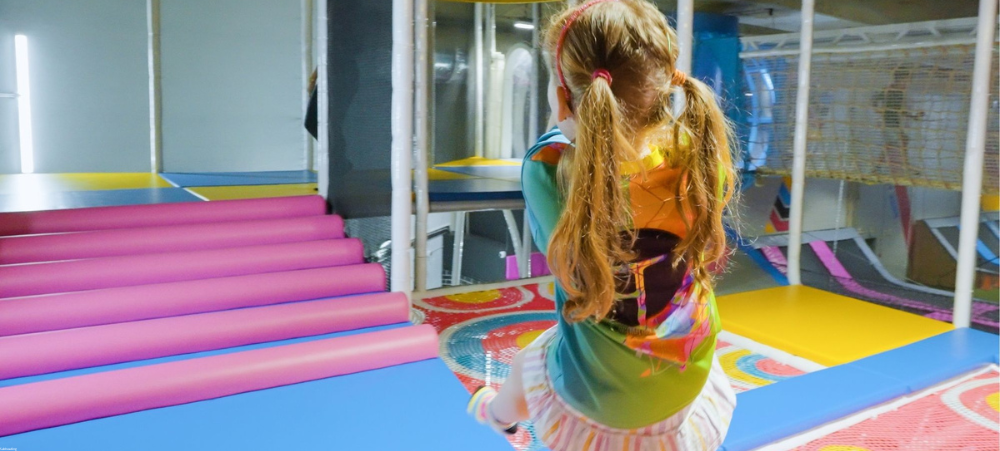
At BOUNCE, every child should have the opportunity to move, play, build confidence and experience the joy of flight. Children experience the world in different ways. For some neurodiverse children and children with sensory sensitivities, bright lights, loud music, busy spaces and unfamiliar surroundings can feel overwhelming. A family outing that should be exciting can quickly become difficult to navigate. BOUNCE introduced dedicated SEN Sessions to offer families a calmer and more supportive way to enjoy the venue. These sessions give children more space, fewer sensory distractions and the freedom to explore at a pace that feels comfortable for them. The aim is not to change how children engage with the world. It is to adapt the environment so that more children can take part. A Calmer BOUNCE Experience During SEN Sessions, practical adjustments are made throughout the venue. Music and general venue noise are reduced, flashing lights are limited and attendance numbers are managed to create more space. Quiet areas are also available for children who need time away from the action before returning when they feel ready. One parent, guardian or carer may accompany each child at no additional cost. This allows children to enjoy the experience with the reassurance of having someone familiar nearby. SEN Sessions currently take place at BOUNCE Menlyn Maine and BOUNCE Fourways Mall every Tuesday and Thursday from 2pm to 5pm. Each three hour session costs R199 per BOUNCEr and includes admission for one accompanying parent, guardian or carer. Families can view availability and book through the BOUNCE website. BOUNCE hopes to make these sessions available to more families in the future. As awareness, participation and interest grow, demand will help guide the rollout of SEN Sessions to more communities across South Africa. A Team Trained to Offer Better Support Creating a more inclusive experience involves more than lowering the music or adjusting the lighting. The way a child is welcomed, spoken to and supported can have a significant impact on how comfortable they feel. BOUNCE team members have received specialist training to strengthen their understanding of neurodiversity, sensory needs and different communication styles. This training helps Refhosts recognise that children may respond to an environment in different ways. A child may need more time to process an instruction, prefer to observe before joining an activity or understand a visual demonstration more easily than a verbal explanation. Some children may communicate using words, while others may use gestures, facial expressions, movement or assistive communication. Refhosts are encouraged to approach every child with patience, flexibility and respect. Rather than making assumptions, the team takes guidance from the child and their accompanying adult wherever possible. Parents, guardians and carers know their children best. Information about communication preferences, favourite activities, situations that may be challenging or strategies that help a child feel settled can make a meaningful difference to the visit. Movement Through Play BOUNCE is an active play environment where children can explore movement in a fun and engaging way. Jumping, climbing, balancing, landing and moving through different activity areas encourage the use of coordination, strength, timing, motor planning and body awareness. These experiences happen naturally through play, with no pressure for every child to participate in the same way. One child may enjoy the steady rhythm of jumping on the same trampoline. Another may prefer to move slowly through an obstacle, observe from the side or take regular breaks. Some children may seek plenty of movement, while others may choose calmer or more predictable activities. SEN Sessions create space for these differences. Children can explore what feels enjoyable, pause when they need to and return to the activity when they are ready. Movement may also provide an enjoyable outlet for energy and create moments of concentration. A child may focus on where to place their feet, how to keep their balance or how to land safely. Completing a personal challenge, however small it may appear to someone else, can create a real sense of achievement. Building Confidence and Participation At BOUNCE, progress looks different for every child. Success does not always mean jumping the highest, completing every activity or staying active for the entire session. It may mean entering the venue and feeling comfortable enough to stay. It may mean trying one trampoline, approaching a Refhost, sharing an activity space or communicating that it is time for a break. These moments matter. When children are given time, choice and space without unnecessary pressure, they can explore their surroundings, communicate their preferences and grow in confidence. The social side of a BOUNCE visit can also create useful everyday experiences. A child may greet a Refhost, listen to a safety explanation, wait for a turn, ask for help or participate alongside another child. These interactions take place in a supportive setting, with no expectation for a child to engage beyond what feels comfortable. Returning to the same venue may also help build familiarity. Over time, children can become more comfortable with the entrance, check in process, activity areas, equipment and team members. A child who chooses to observe during a first visit may decide to participate during a future session. Someone who begins with one familiar activity may gradually feel ready to explore something new. A Place Where Families Feel Welcome BOUNCE offers a recreational environment where children can enjoy movement, practise everyday participation and explore activities that may sit alongside goals identified by families and professional support teams. Most importantly, SEN Sessions give families the opportunity to enjoy BOUNCE in an environment where individual needs are recognised and respected. Through trained team members, calmer sessions, reduced attendance, quiet spaces and a flexible approach to play, BOUNCE is working to make the experience more accessible and help more children move, explore, connect and experience the freedom of flight in their own way.

Cambrilearn Online School

Online High School in South Africa: How It Actually Works

An online high school in South Africa is a school in the full sense of the word: your child enrols, follows a timetable, attends live lessons taught by qualified teachers, writes assessments, and works toward a recognised qualification such as the National Senior Certificate or A Levels. It is not homeschooling, where the parent carries the teaching, and it is not a video library with a login. The distinction matters more than any other fact in this article, because the three get lumped together constantly and they are nothing alike. Somewhere between 2020 and now, online high school moved from an emergency measure to a deliberate first choice. Families choose it for a calmer environment, for teaching quality they can actually observe, for a curriculum their local school does not offer, or because their lives cross borders and their child’s education should not have to restart every time. Whatever the reason, the practical questions are the same, so here they are, answered plainly. What does the school day look like? A structured online high school runs on a timetable, much like the one pinned to your own childhood kitchen wall. Lessons happen live at set times, taught by subject specialists to a class your child comes to know, with recordings available afterwards for revision. Around the live lessons sit set work, assignments and tests, so the day has a shape: lessons in the morning blocks, independent work and clubs in the afternoon. At CambriLearn, that day runs through CambriCampus, the campus your child logs into every morning, one of the four connected school experiences powered by CambriOS. The design principle behind it is worth stealing as a test for any school you assess: a real school day has a rhythm your child can feel. If a school cannot show you a timetable, what it is selling is content, not schooling. Which curriculum can an online high school student follow? This is where online schooling quietly beats the school down the road, which offers one curriculum because a building can only be one kind of school. Online, a South African family can choose between several accredited routes under one roof. The CAPS curriculum is the familiar South African route, running from Grade 8 through to matric and the National Senior Certificate, with the NSC examined through SACAI for students at registered distance institutions. It is the right choice for families who want their child to have the same qualification as their peers, with university admission in South Africa as the primary goal. KABV, its Afrikaans counterpart, serves Afrikaans-first households the same way. The International British Curriculum* offers the globally portable route: International GCSEs from around Grade 10 age, then AS and A Levels, the qualifications British and international universities read fluently. Pearson Edexcel provides a parallel British-examined pathway through an approved centre. And the IEB route, which CambriLearn currently offers from Grade 10, leads toward the IEB-assessed NSC favoured by many South African independent schools. No single route is best. A future medical student aiming at a South African university and a future engineer aiming at Manchester are both making the right choice when they choose differently. How do you check that an online high school is legitimate? Accreditation is the boring paragraph that protects your child’s future, so read it twice. A legitimate online school will name the bodies that accredit and register it, and you should be able to verify each claim on the accreditor’s own website in ten minutes. CambriLearn, for instance, is accredited by Cognia, one of the world’s largest school accreditation bodies, is an approved Pearson Edexcel centre, and is registered with SACAI and the IEB. Treat vagueness as information. A school that says internationally recognised without naming a single body, or leans on words like registered without saying with whom, is asking you not to check. The stakes are your child’s matric or A Levels, so check. Where do students write their final exams? Externally, at registered examination centres, under the same conditions as every other candidate in the country. NSC students write through SACAI. International GCSE and A Level students write as private candidates at independently registered exam centres in major cities. The certificate your child earns is issued by the examining body, not by the online school, which is exactly why it carries the same weight as one earned in a traditional classroom. Universities admit the qualification, and the qualification is identical. What online high school asks of the teenager A fair guide owes you the other side of the ledger. Online high school hands a teenager more ownership of their day than a traditional school does, and ownership cuts both ways. The timetable and live lessons carry the structure, but between lessons nobody physically walks your child to their desk. Students who thrive tend to be the ones who settle into the rhythm within the first few weeks, helped by a parent who treats school hours as school hours until the habit holds. The honest fit test is less about personality than about setup. A teenager with a dedicated workspace, a household that respects the school day, and one adult paying attention to the first month will almost always find their feet, including teenagers who were drifting badly in a conventional classroom. A teenager expected to run their entire schooling from a couch, unsupervised, with the television on, will struggle at an online school for the same reason they would struggle anywhere. Frequently asked questions Do universities accept students from online high schools? Universities admit qualifications, not buildings. A National Senior Certificate or an A Level earned through an accredited online school is the same certificate, issued by the same examining body, as one earned anywhere else, and is assessed by admissions offices on the same terms. How many hours a day does online high school take? Expect a full school-length day, differently arranged: live lessons concentrated in morning blocks, with afternoons for set work, revision and activities. High school students

Parenting Hub

Why we ignore the most sensitive skin on our face

We spend time (and money) building the perfect skincare routine. Serums are layered, moisturisers are carefully selected and SPF has finally earned its place as a daily essential. But while we focus on glowing skin and anti-ageing benefits, two of the most delicate areas on our face are often overlooked: our lips and the skin around our nose. Yet when everyday issues like colds, allergies or harsh weather strike, these areas are often the first to suffer, and the least intentionally treated. It’s an easy oversight. These areas don’t always feature in traditional routines, yet they’re among the most exposed and vulnerable parts of the face. “The skin around the lips and nose is thinner and more delicate than the rest of the face,” explains dermatologist and Ivohealth spokesperson Dr Lauren Knight. “This makes it more prone to dryness, irritation and barrier damage, especially when exposed to cold weather, frequent rubbing or certain medications.” Unlike the rest of the face, these areas are less equipped to retain moisture. Add relatable triggers like weather changes, constant nose blowing during colds or allergies, and certain acne treatments, and it’s no surprise they’re often the first to show signs of damage. Think about how your skin feels during a cold. Constant wiping can leave the nose raw and inflamed, while lips become chapped and uncomfortable. Seasonal shifts, from cold winter air to harsh winds, only intensify the problem, stripping moisture from already fragile skin. “Most generalised facial skincare regimens stop at moisturiser,” says Dr Knight. “But because the lips and nasal skin lack oil glands, they need targeted support. Without proper care, the skin loses its natural resilience.” Many people reach for standard lip balms, which may offer quick relief but don’t address long-term repair. In contrast, products specifically formulated for both the lips and nasal area go beyond basic hydration. They help restore the skin barrier, calm irritation and create a protective layer that supports recovery. Unlike standard lip balms or general moisturisers, these products are purpose-formulated to care for both the lips and the delicate skin around the nose, areas often neglected by traditional products. Multitasking balms are particularly effective, combining targeted care in a single product. Rather than relying on multiple creams or ointments, one well-formulated balm can keep both the lips and nose hydrated, soothed and resilient. LETIbalm Nose & Lip Repair Balm was developed specifically for the nose and lips, not just a lip balm but a targeted solution for these high-stress areas. Its rich, occlusive formula helps soothe, hydrate and protect dry, red or cracked skin around both the lips and nose, particularly during colds, flu, allergy flare-ups and periods of intensive skincare treatments like isotretinoin, when the skin becomes especially dry and vulnerable. “For patients on isotretinoin, targeted care around the nose and lips isn’t optional, it’s part of managing treatment side effects,” says Dr Knight. “A balm that restores moisture and reduces irritation can significantly improve comfort.” What makes LETIbalm Nose & Lip Repair Balm particularly suitable for these areas is its dual-action approach, helping to soothe discomfort while also supporting the skin’s natural barrier. The formulation is gentle enough for sensitive skin and is designed not to clog pores or contribute to breakouts. It can be used across all ages and skin types, including sensitive skin, making it a practical option for family use. Incorporating a product like this into your routine doesn’t require a complete overhaul. A small amount applied before bed or after repeated nose blowing can make a noticeable difference. Ultimately, good skincare isn’t just about what we add but what we stop overlooking. The lips and nasal area may be small but they play a big role in how our skin looks and feels. Giving them the attention they deserve isn’t an extra step, it’s a necessary one. Because when it comes to healthy, comfortable skin, every part of your face counts. LETIbalm Nose & Lip Repair Balm is available at Dis-Chem and independent pharmacies. More details on Ivohealth.co.za 

It seems we can't find what you're looking for.
Scroll to Top