Wingu Academy

Human-Centred Digital Education: Why Connection Still Matters

As education becomes more digital, one truth remains unchanged: “Human connection is essential to meaningful learning.” Leading global organisations emphasise that AI in education must remain human-centred, ethical, and inclusive. Why? Because learning is not just cognitive — it is also: Over-reliance on automation can create risks such as passive learning or reduced critical thinking. This is why the most effective online schools in 2026 prioritise: At Wingu Academy, this translates into: Technology delivers efficiency. But people deliver impact. The future of education belongs to institutions that understand this distinction — and design learning environments where students feel:

Wingu Academy

Personalised Learning at Scale: The Future is Individual

For decades, education followed a one-size-fits-all model. That model is now obsolete. Today, personalised learning is the global standard, powered by AI and data-driven insights. In fact, adoption has accelerated rapidly, with the majority of students and teachers now actively using AI tools in education environments. AI enables: This approach ensures that: But personalisation is not only about technology. At Wingu Academy, personalised learning is layered with: Global education research confirms that data-informed instruction significantly improves learning outcomes when combined with expert teaching. The result is a learning experience that is: Education is no longer about keeping up — it’s about unlocking each learner’s full potential.

Bonitas – innovation, life stages and quality care

South Africans are stressed out: the hidden health impact of a strained economy

South Africans are living through another cycle of sustained economic pressure as rising fuel costs continue to filter through the economy, pushing up the price of transport, food and household goods. At the same time, broader global uncertainty and ongoing geopolitical tensions are adding further worry and dread to an already financially stressful landscape for South Africans. A 2026 study on the impact of geopolitical tensions on mental health shows that sustained global conflict and political uncertainty is a key driver of anxiety, even among populations not directly affected by war, contributing to a persistent sense of threat. For many people, this is experienced not as a single event but as a constant background load, which compounds existing financial strain and intensifies everyday stress responses. “When people are faced with instability and conflict narratives, even if events are occurring far away, the body can remain in a sustained stress response,” says Dr Themba Hadebe, Clinical Executive at Bonitas Medical Fund. “Even when individuals are not directly affected, the constant sense that the world is unstable can heighten anxiety and intensify the strain already created by financial pressure. Over time, this compounds into burnout and emotional exhaustion that we are increasingly seeing in members.” Mental health challenges are also having a wider economic impact, with South Africa estimated to lose over R250 billion annually (around 4.5% of GDP) linked to mental health conditions. In addition, about 452 million work hours are lost each year, with “presenteeism” alone costing more than R200 billion in lost productivity. Chronic stress linked to money worries also drives physiological changes in the body that are harder to detect early. Sustained elevated levels of stress hormones like cortisol can affect sleep quality, weaken immune response and contribute to weight changes, fatigue and burnout. Over time, this creates a cycle where physical exhaustion and mental strain reinforce each other, making recovery more difficult. Managing stress in a high-pressure environment While economic conditions are not within individual control, there are practical steps that can help reduce the health impact of ongoing stress. Structured routines are important; regulating sleep patterns and ensuring you are eating balanced, consistent meals help regulate the body’s stress response. Even small adjustments, like limiting late-night screen exposure or introducing short daily walks, can improve sleep quality and mood regulation over time. Financial clarity also plays a role in reducing anxiety. Simple budgeting tools or weekly financial check-ins can reduce the cognitive load of uncertainty, which is often a major driver of chronic stress. “Preventative approaches are also important,” says Themba. “Early support for mental health symptoms can help prevent things from becoming worse. Members of a medical aid must look into the structured care programmes they are able to access and take benefit from through their plans, which can help a great deal in the event an individual requires further medical care that can become costly.” Bonitas’ Mental Health Programme offers its members structured support that is designed to help identify and manage conditions such as anxiety, depression and burnout earlier, with coordinated access to care pathways and ongoing support. “As a society we re quicker to discuss how these pressures affect us in economic terms, but are less cognisant of, or willing to speak to about, the very real and problematic physical and mental health issues that arise as a result of what’s happening in the world right now. “Stress linked to financial strain has real physiological and societal consequences, affecting all of us whether on an individual or organisational level. Don’t ignore the early signs of burnout and seek support to stop stress form developing into more serious conditions,” concludes Themba.

Bill Corbett

Help! My Kids Won’t Stop Fighting!

Parents generally see their children as wonderful gifts from the heavens but children don’t always see each other in that same light.  They first see their primary caregivers, and the love and attention they get from them, as a limited commodity.  They then see their siblings as competition for that love and attention and sometimes feel they have to fight for it. When a new child enters the family, the oldest or older children sometimes feel as if they have been dethroned and now have to share their parents with this new child.  This can bring about feelings of animosity and jealousy between children.   To deal with this problem effectively, parents can find ways that will allow the older child to become a teacher or leader to the younger child(ren).  You can also give the older child special privileges and give them special time with you, such as one-on-one dates to help them feel like they haven’t lost their place in the family. Fighting and other forms of sibling rivalry also occur as a result of these feelings.  Avoid racing into every little argument or disagreement.  If you do, it will teach your children to create problems just to get you involved.  It will also train them that they are NOT accountable for stopping fights and working things out, it teaches them instead that YOU are responsible for doing that.  Because you ARE responsible for keeping everyone safe, sometimes the only solution is to just separate them.  This is especially true for when toddlers and preschoolers hit one another or begin to fight.  It just means they’ve had enough of that other person for a while and they want them out of their space. Avoid using punishments like time out and avoid taking sides.  When a conflict breaks out, just separate both of them.  It doesn’t matter who started it or who did what, just separate them in different spaces to be apart.  And during this moment of behavior management, remain calm and talk very little.  You can easily transfer your own negative feelings into the relationship between the children.  Sometimes the conflict between the children is actually an imitation of what’s going on with the adults.

Parenting Hub

Body20 Cares Returns in 2026: Powering Hope for Children with Cancer

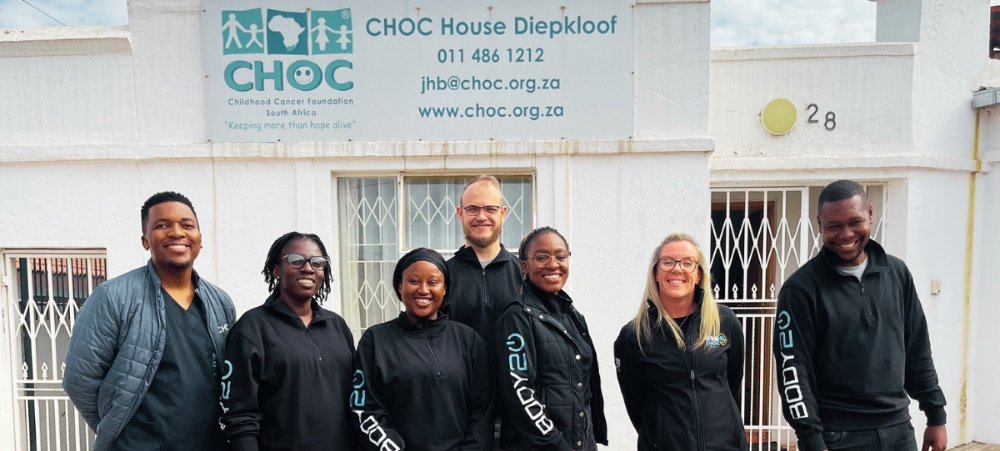
Sometimes, the greatest strength is found in unity. After raising over R150,000 in its inaugural year, Body20 is proud to relaunch its Body20 Cares initiative for 2026 — a campaign driven by compassion, community, and the belief that true wellness extends far beyond the studio floor. Body20 remains committed to ongoing support throughout 2026 and beyond, ensuring sustained impact for children with cancer and their families. From April to May 2026, 50% of all new members’ joining fees at Body20 studios nationwide will be donated to CHOC Childhood Cancer Foundation South Africa. These funds don’t just support a cause—they wrap children and their families in hope at the very moment they need it most. Supporting CHOC means directly helping children facing cancer and their families find comfort and strength. “This initiative isn’t just an activity for us — it’s a lifeline,” says Philip Hughes, chief executive officer of Body20 Global. “Last year, we witnessed firsthand how small actions, multiplied by many, can create a wave of hope. As Body20 Cares returns, our mission is simple: uplift families, offer practical support, and remind every parent and child battling cancer that they are never alone.” Cancer today touches almost every family, casting long shadows of fear and uncertainty. In South Africa, around 1,000 children are diagnosed with cancer each year—though many more go undiagnosed, and each statistic represents a child, a parent, a story. Despite advances in treatment, a diagnosis brings a tidal wave of emotional, logistical, and financial challenges. Organisations like CHOC are lifelines, offering more than just accommodation—they provide comfort, dignity, and a sense of home when families need it most. “Partnerships like Body20 Cares help us deliver vital support to children and their families,” says Adri Ludick, interim CEO for CHOC. “Every contribution means a family can stay together, a child can rest in comfort, and no one must face this journey alone. Last year, funds from Body20 Cares kept our CHOC Houses open—safe havens like Diepkloof, which offered warmth, food, and daily support to up to 30 people at a time. When hospitals close their doors at night, CHOC keeps hope alive for families in crisis.” Body20 Cares is about more than fundraising—it’s about human connection and shared purpose. Every new member isn’t just prioritising their own wellness; they’re giving a child and parent one less worry, one more day together, and a little more hope. Your participation can help us build a community united by compassion and action. “This is where fitness meets purpose,” Hughes adds. “Every sign-up is more than a membership; it’s a lifeline for a child fighting cancer, and a message to families that they are seen, valued, and supported by a whole community.” As Body20 Cares enters its second year, we invite every South African to stand with us. Join as a member, donate, or spread the word—every action, big or small, has the power to change a life. Your support makes you an essential part of this movement, helping us turn compassion into tangible hope. In a world where time is scarce and health is priceless, Body20 brings together your two most valuable resources. With cutting-edge EMS technology, Body20 helps people transform their wellbeing in just 20 minutes a week. It’s a promise: you can prioritise your health, support your community, and still have time for what—and who—matters most. Powerful transformations don’t just happen in our bodies—they ripple out, touching families, communities, and futures. When we move with purpose, we move the world a little closer to hope. To join Body20 Cares, become a new member at any Body20 studio or donate directly. For information or to get involved, visit https://body20.co.za/body20-cares or contact [email protected] | 087 231 0359. #Body20 #CHOC #Body20Cares #Cancer #ChildrenWithCancer #Children

DIBBER SA

The Role of Preschool Educators Is Changing

While most people believe preschool educators simply keep children safe and teach basic skills, Dibber International Preschools emphasises that today’s early childhood educators have a much broader, more critical role. Their evolving responsibilities are essential in shaping children’s development, making their work more significant than ever. “The early years are not just a phase to manage — they are a window where children form foundations for learning, relating, and coping,” says Ursula Assis, Country Director of Dibber International Preschools South Africa. Educators do much more than deliver activities. They observe, guide, and support each child’s development responsively, intentionally, and skillfully.” Today, early learning success is defined not by rote performance but by a child’s capacity to make meaning from real experiences. Exploration, repetition, interaction, and play are now recognised as the best ways young children build foundational skills for lifelong learning. The educator’s task has shifted: Rather than focusing on direct teaching, they now create learning moments that ignite curiosity and strengthen competencies. True impact comes from recognising what each child is ready for and supporting discovery rather than directing it. At Dibber South Africa, this is reflected in the Engaged Educator™ role. Children are encouraged to explore and lead their learning through play-based experiences, while educators gently guide in the background, stepping in when support is needed and back when independence grows. “From the outside, it can look like children are simply playing,” Assis explains. “But what is really happening is that educators are building language, problem-solving, self-regulation and social confidence through carefully observed, thoughtfully supported experiences.” One reason the evolving role of preschool educators is under-appreciated is that much of their most important work is invisible at drop-off, pick-up, or during a tour. It shows up in pacing, tone, timing, and what educators choose to notice. In an average day, an early childhood educator may be: These actions accumulate quietly and consistently over time. Outcomes are often celebrated—a child who manages disappointment, plays cooperatively, or tries again after struggling—but the source can be overlooked unless parents know what to look for. As educators’ roles become more developmental and responsive, the parent-educator relationship evolves as well. Dibber says this requires genuine partnership, where educators share observations, and parents feel included, not just informed. “This invites parents to a new kind of trust,” says Assis. “Not blind trust—real trust. Built with open conversation, shared observations, and educators knowing each child individually.” When choosing a preschool, parents should look beyond logistics and ask: Do educators speak warmly and specifically about children? Do they know each child’s interests, strengths, and challenges? How do they respond to upset children? Is the environment calm and purposeful, or rushed? Does the school have a clear, well-articulated philosophy? “The questions parents ask shape their partnerships,” Assis adds. “When families and educators align, children feel it—and that security supports all learning.” While the importance of preschool educators has always been high, what’s evolving is society’s understanding of just how vital the early years are and of the expertise educators need to nurture a child’s earliest development. This is why their changing role matters so deeply today. Dibber International Preschools advances educator development with its Nordic-based method, values-led Heart Culture, and play-based philosophy supporting the whole child—cognitively, socially, emotionally, and physically.

It seems we can't find what you're looking for.
Scroll to Top