
Parenting Hub

Body20 Cares Returns in 2026: Powering Hope for Children with Cancer

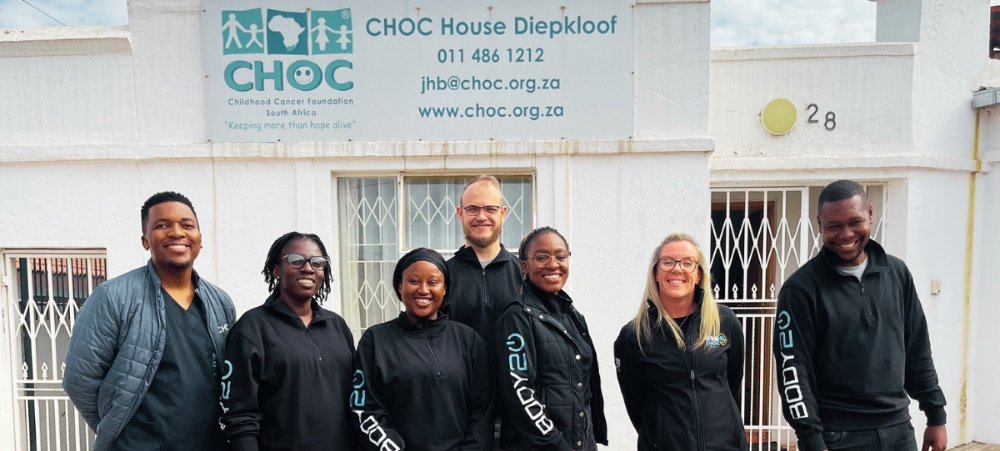
Sometimes, the greatest strength is found in unity. After raising over R150,000 in its inaugural year, Body20 is proud to relaunch its Body20 Cares initiative for 2026 — a campaign driven by compassion, community, and the belief that true wellness extends far beyond the studio floor. Body20 remains committed to ongoing support throughout 2026 and beyond, ensuring sustained impact for children with cancer and their families. From April to May 2026, 50% of all new members’ joining fees at Body20 studios nationwide will be donated to CHOC Childhood Cancer Foundation South Africa. These funds don’t just support a cause—they wrap children and their families in hope at the very moment they need it most. Supporting CHOC means directly helping children facing cancer and their families find comfort and strength. “This initiative isn’t just an activity for us — it’s a lifeline,” says Philip Hughes, chief executive officer of Body20 Global. “Last year, we witnessed firsthand how small actions, multiplied by many, can create a wave of hope. As Body20 Cares returns, our mission is simple: uplift families, offer practical support, and remind every parent and child battling cancer that they are never alone.” Cancer today touches almost every family, casting long shadows of fear and uncertainty. In South Africa, around 1,000 children are diagnosed with cancer each year—though many more go undiagnosed, and each statistic represents a child, a parent, a story. Despite advances in treatment, a diagnosis brings a tidal wave of emotional, logistical, and financial challenges. Organisations like CHOC are lifelines, offering more than just accommodation—they provide comfort, dignity, and a sense of home when families need it most. “Partnerships like Body20 Cares help us deliver vital support to children and their families,” says Adri Ludick, interim CEO for CHOC. “Every contribution means a family can stay together, a child can rest in comfort, and no one must face this journey alone. Last year, funds from Body20 Cares kept our CHOC Houses open—safe havens like Diepkloof, which offered warmth, food, and daily support to up to 30 people at a time. When hospitals close their doors at night, CHOC keeps hope alive for families in crisis.” Body20 Cares is about more than fundraising—it’s about human connection and shared purpose. Every new member isn’t just prioritising their own wellness; they’re giving a child and parent one less worry, one more day together, and a little more hope. Your participation can help us build a community united by compassion and action. “This is where fitness meets purpose,” Hughes adds. “Every sign-up is more than a membership; it’s a lifeline for a child fighting cancer, and a message to families that they are seen, valued, and supported by a whole community.” As Body20 Cares enters its second year, we invite every South African to stand with us. Join as a member, donate, or spread the word—every action, big or small, has the power to change a life. Your support makes you an essential part of this movement, helping us turn compassion into tangible hope. In a world where time is scarce and health is priceless, Body20 brings together your two most valuable resources. With cutting-edge EMS technology, Body20 helps people transform their wellbeing in just 20 minutes a week. It’s a promise: you can prioritise your health, support your community, and still have time for what—and who—matters most. Powerful transformations don’t just happen in our bodies—they ripple out, touching families, communities, and futures. When we move with purpose, we move the world a little closer to hope. To join Body20 Cares, become a new member at any Body20 studio or donate directly. For information or to get involved, visit https://body20.co.za/body20-cares or contact [email protected] | 087 231 0359. #Body20 #CHOC #Body20Cares #Cancer #ChildrenWithCancer #Children
DIBBER SA

The Role of Preschool Educators Is Changing

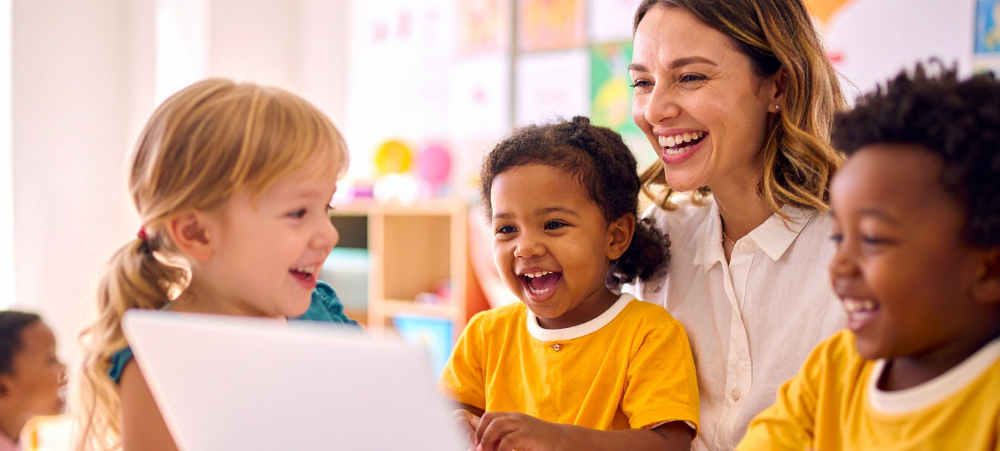
While most people believe preschool educators simply keep children safe and teach basic skills, Dibber International Preschools emphasises that today’s early childhood educators have a much broader, more critical role. Their evolving responsibilities are essential in shaping children’s development, making their work more significant than ever. “The early years are not just a phase to manage — they are a window where children form foundations for learning, relating, and coping,” says Ursula Assis, Country Director of Dibber International Preschools South Africa. Educators do much more than deliver activities. They observe, guide, and support each child’s development responsively, intentionally, and skillfully.” Today, early learning success is defined not by rote performance but by a child’s capacity to make meaning from real experiences. Exploration, repetition, interaction, and play are now recognised as the best ways young children build foundational skills for lifelong learning. The educator’s task has shifted: Rather than focusing on direct teaching, they now create learning moments that ignite curiosity and strengthen competencies. True impact comes from recognising what each child is ready for and supporting discovery rather than directing it. At Dibber South Africa, this is reflected in the Engaged Educator™ role. Children are encouraged to explore and lead their learning through play-based experiences, while educators gently guide in the background, stepping in when support is needed and back when independence grows. “From the outside, it can look like children are simply playing,” Assis explains. “But what is really happening is that educators are building language, problem-solving, self-regulation and social confidence through carefully observed, thoughtfully supported experiences.” One reason the evolving role of preschool educators is under-appreciated is that much of their most important work is invisible at drop-off, pick-up, or during a tour. It shows up in pacing, tone, timing, and what educators choose to notice. In an average day, an early childhood educator may be: These actions accumulate quietly and consistently over time. Outcomes are often celebrated—a child who manages disappointment, plays cooperatively, or tries again after struggling—but the source can be overlooked unless parents know what to look for. As educators’ roles become more developmental and responsive, the parent-educator relationship evolves as well. Dibber says this requires genuine partnership, where educators share observations, and parents feel included, not just informed. “This invites parents to a new kind of trust,” says Assis. “Not blind trust—real trust. Built with open conversation, shared observations, and educators knowing each child individually.” When choosing a preschool, parents should look beyond logistics and ask: Do educators speak warmly and specifically about children? Do they know each child’s interests, strengths, and challenges? How do they respond to upset children? Is the environment calm and purposeful, or rushed? Does the school have a clear, well-articulated philosophy? “The questions parents ask shape their partnerships,” Assis adds. “When families and educators align, children feel it—and that security supports all learning.” While the importance of preschool educators has always been high, what’s evolving is society’s understanding of just how vital the early years are and of the expertise educators need to nurture a child’s earliest development. This is why their changing role matters so deeply today. Dibber International Preschools advances educator development with its Nordic-based method, values-led Heart Culture, and play-based philosophy supporting the whole child—cognitively, socially, emotionally, and physically.

Bill Corbett

Are You Raising a Praise Junkie?

Extensive research has been done to show the amazing results of praise.  It can motivate both adults and children to perform exceedingly well, but to do it for the goal of obtaining the praise, not for the joy of achieving or the pleasure of the activity.  I first learned of the term ‘praise junkie’ when I read Nurture Shock (2009; Twelve), a book that offers new research-based thinking about children. The authors state that the use of praise is becoming the solution for modern-day parenting that caregivers offer to their children as a way of soothing the anxieties the children experience throughout their day.  More and more parents seem to strive to “make things all better,” so that their children experience less stress.  And over-praised children don’t grow up to be ‘unmotivated softies’ as some have claimed, but instead, researchers have found that they actually become more competitive and overly focused on tearing others down. So if praising our children is discouraged, what are we supposed to do?  The answer lies in our response to our child’s accomplishment.  Instead of making sure that every child receives a trophy, the key is in how we respond to our child individually.  Instead of saying “I’m proud of you,” the most effective parental response is “What did YOU think of the game,“ or “Tell me all about the picture you drew.”  But there is more to this story; allow me to explain. I’m often asked if praise is bad for children and my response has been that it has a time, a place and a season.  I see certain types of praise being necessary in three specific situations: in teaching young, egocentric children learn new social skills (hygiene, chores, etc.), when working with some children with disorders (such as those on the Autism spectrum) and in situations for turning around unhealthy family relationships. In most of these types of situations however, there is a season.  Eventually, the awarding of smiley faces on behaviour charts or rewards for accomplishing new tasks should stop.  Eventually, many autistic children can move past the daily rewards for better cooperation at home and in the classroom as their development progresses.  And if the work is done, unhealthy family relationships can be restored, leading to less praise and rewards. When praise is not or no longer needed, encouragement (as you indicated) is needed instead.  Praise is one person’s judgment of another.  Even the words “Good Job” or “Attaboy” are someone’s evaluation of another person’s creation or performance.  Encouragement is the technique of having that creating or performing person to say “Good Job” with their own voice.  It coaches them to step back and assess what they did, and make internal decisions such as: “Am I happy with what I created?” “Will I do it again?” “Do I love doing this” “Does it fulfil me?” “What will I do with what I created?” When my children were young, I made the switch to stop the praise and instead, use encouragement.  I tried it, sort of as an experiment to see what would happen.  When my children came up to me with a picture they had drawn or a castle they built and said to me, “Look Dad, look at my picture.”  Instead of saying to them “Good Job,” I said “Wow, tell me all about it.”  In that moment, they would describe what they had created and I would avoid providing my opinion.  My job was to be there in that moment and listen. In the beginning, using this new response to whatever they wanted to show me, they would sometimes ask me, “What do you think Dad?”  My response would always be, “I like it, but what do YOU think about it.”  To wean them off the praise society and my parents taught me, I would always pass it back to them.  Because what they thought of their own creation was more important than mine.  Eventually, my children stopped asking me and stopped hanging their pictures on the refrigerator and instead, started hanging them on their bedroom walls or putting them in albums for them to enjoy.  They stopped placing them in public places in hopes of obtaining good words from others. When report cards came home, instead of taking it and reading it, I would hand it back to them and say, “Read it to me.”  They would then read off their grades and I would listen.  Encouragement requires lots of eye contact, much facial expression and few words.  After they had read their grades, I would ask them specific questions to bring out more about the report card, never once applying my opinion.  I would ask questions like what grade were they most proud of and which grade might they change and why.  If they expressed a desire to bring up one grade or another, I would coach them into coming up with ideas and in many cases, I would offer to help in some capacity, still never applying my opinion of them or their grades. Today I’m watching my three children live their lives according to what they enjoy and according to their own opinions of their accomplishments.  They are not performing or creating for other people, they are doing what they love to do for the love of doing the act, not doing it to please others.  I urge all parents to use more encouragement and less praise, every day!

Cartoon Network Africa

Movie Magic on Cartoon Network: Detective Pikachu & Space Jam Adventures!

Get ready for family movie fun on Cartoon Network! 🎬✨ Start the week with Pokémon Detective Pikachu (2019) on Monday 27/04 at 11:00 CAT, where Tim Goodman teams up with a clever talking Pikachu to solve his father’s last case in Ryme City. Then, don’t miss Space Jam: A New Legacy (2021) on Friday 01/05 at 17:00 CAT! Join LeBron James and his son Dom as they get trapped in a virtual world and must team up with the Looney Tunes to win a high-stakes basketball showdown. Plus, the Teen Titans meet the iconic Space Jam villains in Teen Titans Go See Space Jam (2021) for extra laughs and adventure. Perfect for kids and the whole family to enjoy together! Premiere 📺: Monday 27 April 2026Tune-In ⏰: Monday 27 April 2026 @ 11:00 CAT & Friday 1 May 2026 @ 17:00 CAT

Toptots Head Office

Routines are they really necessary

We know that having a routine is important for children in their early developmental years, but let’s unpack why it is so beneficial to their overall level of well-being. Young children do not have a concept of time and thus they cannot judge the passing of minutes, hours and days. The only way they can understand the passing of time is through events e.g. nap time, dinner time, bath time, bed-time, play-time, story-time etc. This understanding of the sequence of different events in their day gives them a sense of predictability and structure which makes them feel more secure in that they know what to expect.  Just as routine and predictability are vital, experiencing change is also an important step in a child’s development. Having a set routine and a strong sense of security in that routine allows children to be able to approach any changes calmly and with confidence.  Coping well with a change then helps them to develop a sense of mastery in dealing with the unexpected and as this sense of mastery is strengthened, they can then feel confident to tackle larger changes.  However, without the foundation of structure and routine, they are likely to experience fear and anxiety when faced with the unknown and this will reinforce that they are not able to cope and can result in avoidance of anything unknown or unfamiliar.  Here are some of the benefits of having a routine at home: Children are likely to be better sleepers if they have a regular routine for nap-times and bed-times. Their body clock can adjust to their routine making it easier for them to regulate themselves. The same is true for having regular mealtimes and they are likely to be better eaters. Having a consistent time for meals will result in better bowel routines.  Children who have a set routine are less likely to have meltdowns and display extreme emotional reactions to things. This is because of the sense of predictability and safety that goes along with knowing what to expect and reduces feelings of stress and anxiety. Routines help with establishing expectations e.g. children begin to expect and complete activities without issue e.g. “after play-time we need to pack away all the toys”. This then reduces the need for parents having to nag and repeat themselves as children know exactly what is expected of them. Having a routine can help with developing healthy habits e.g. the knowledge that every day after breakfast and before bed, teeth need to be brushed! A routine at home makes it easier to adapt to a routine at school. If your child attends extra-mural activities for e.g. Toptots, it is important to stick to the weekly routine as it helps children to feel comfortable with the environment, the other people (parents and children) and with the activities. It is important to remember that programmes like Toptots (and other extra-murals) often follow a particular sequence of steps and each week builds on the skills of the previous week. 

Educ8 SA

How the American High School Diploma Prepares Students for Global Opportunities

For students in Grades 9–12, high school is more than just academics—it’s preparation for the future. Educ8 SA’s American High School Diploma provides learners with an internationally recognised certification, opening doors to universities, careers, and global opportunities. What is the American High School Diploma? The program offers a structured, computer-based curriculum covering core subjects such as: Offered at R1,800 per month, this diploma combines affordability with rigorous, internationally recognised academic standards. Flexible Learning for High School Students Students can learn at their own pace, completing lessons, assignments, and assessments online. This flexibility is ideal for those balancing part-time work, extracurricular activities, or personal commitments. Global Recognition and Opportunities The American High School Diploma is widely recognised internationally, making it an excellent choice for students who want to: Interactive, Self-Paced Learning The computer-based platform provides interactive modules, quizzes, and assessments. Students can review challenging topics as needed, reinforcing knowledge while building confidence and independence. Getting Started Enroll in the American High School Diploma program today: The American High School Diploma equips learners with academic excellence, independence, and the skills necessary for success in a globalised world.

It seems we can't find what you're looking for.
Scroll to Top