Leading expert advice from Wingu Academy
Wingu Academy

Wingu Academy’s Wellness Hub provides next-level services to ensure learner well-being in online environment

Learner well-being is a core focus area for Wingu Academy, especially due to the increase in mental health awareness in the online environment.  In fact, Wingu Academy takes this so seriously that they have a dedicated wellness hub, called Wingu Wellness. The vision is to collaborate with students, guardians, and parents, as well as the valued staff of the Academy, to build a safe online learning environment. “Wingu Wellness provides up to date information on mental health issues, learning barriers, coping mechanisms and stress management, to mention a few. Working alongside top names in the field, like Dr Serahni Symington, counsellor and play therapist specialist, we will be providing counselling and mediation sessions and webinars free of charge, to anyone in the Wingu Family.” says Ian Strydom, Wingu Academy’s Managing Director. Services offered by Wingu Wellness Hub Current services include: Organising concessions for learners with learning barriers; Wellness consultations with a wellness coach or qualified counsellor; Monthly webinars; Sensitivity training; Resolution of behaviour misconduct; Assisting students and parents with day-to-day educational needs, i.e. study assistance, identifying learning styles, etc. Diagnostic Testing facilitated by Educationist, Dr Belinda van der Westhuizen Family mediation offered through Dr Serahni Symington How does Wingu Wellness assist students? The Wingu Wellness Hub will be assisting students by offering consultation sessions with either the Wellness Coach or a trained therapist. This will act as a safe space for learners to talk about what is weighing on them. They also provide learner applicable content to assist them in matters that they do not feel comfortable coming forward about. They further facilitate external coaching in the form of play therapy for the younger learners, by referring them to Dr. Symington. Wingu Wellness will also act as a means to further promote the many social clubs within the Academy to assist learners in still benefitting from the social aspects that are sometimes lacking in the cyber world.  How does Wingu Wellness assist parents/guardians? Assistance includes the same support as to students, but on top of that also offering family mediation through Dr Symington. “We offer comprehensive and professionally verified content to assist in matters dealing with how to cope with situations such as moving a learner from a mainstream school into an online learning environment or to things like dealing with family trauma.” says Panashe Tiffany Saungweme, Associate Director of Human Capital. Aiming to assist the Wingu Family with their overall well-being. “Wingu Wellness is not just an initiative to create awareness of mental barriers we may all have, but rather a platform providing a safe space to find solutions and encourage positive well-being behaviour for everyone part of the Wingu Family.” Strydom concludes.

Wingu Academy

Future-proof your child’s employability from an early age with 4IR Skills

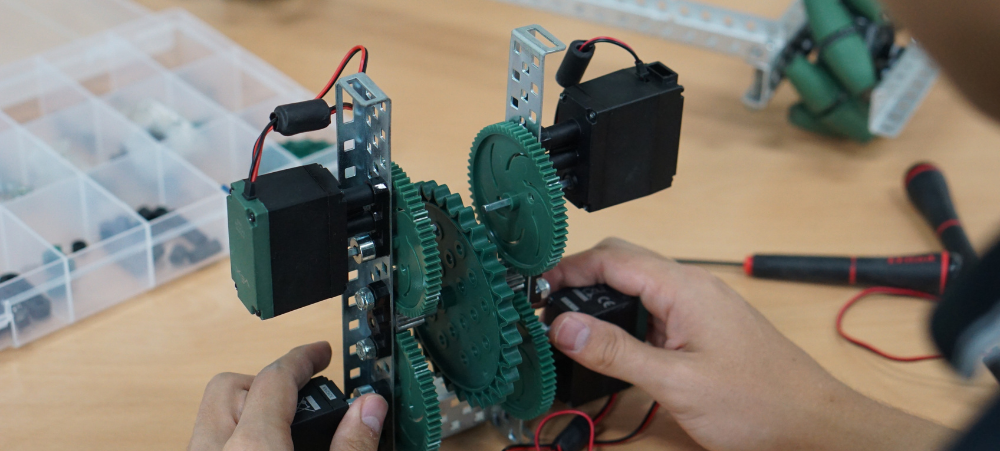
The world of work has been changing over the past decade. There were talks of the 4th industrial revolution by many forward thinking individuals, but the trends towards the revolution has become very clear in the workspace. Trends such as remote work which seemed an impossible consideration for many companies, has become centre stage and many will pay the price if an effective remote work policy is not put in place. Most employers had to rapidly change the way they worked, resembling the 4IR trends that have shaped the vision of the Future of Work. The catalysing effect of the COVID-19 pandemic has turned leaders to focus on what the lasting effect of the pandemic will have on their workplace. Leaders in education have turned their focus on what the lasting effect will be on (a) educators and (b) the future leaders – the youth – and they have a responsibility as a transformative element in society to be paving the way to thriving, growth mind-set individuals ready for the 4th and even the 5th industrial revolutions. But how?    According to a report by the World Economic Forum, titled “The Future of Jobs”, the skills that will be most in demand during the fourth industrial revolution are: Complex problem solving Critical thinking Creativity Managing people Coordinating with others Emotional intelligence Judgement and decision making Service orientation Negotiation Cognitive flexibility “Education can no longer be about learning facts. Educational organisations must focus on being transformative experiences, delivering an individual that has gained more than knowledge after completing a program. Central to these future skills is a mindset resembling that of the entrepreneurial-mindset where resilience and personal growth are centre stage in determining success. Education systems and mindsets – striving to master a fixed set of learning outcomes and avoiding failure are outdated viewpoints. Instead, critical and creative thinking, embracing failure as a positive growth opportunity, resilience and collaboration should take centre stage in transformative education strategies. It’s important to future-proof your child to thrive with skills of the future, like lifelong purposeful learning, unlearning and relearning, adaptability and rapid (re)skilling, says Ian Strydom – Managing Director Wingu Academy.  Why is it important to future-proof your child’s employability? The industries tied to the defining 4IR technologies (robotics, artificial intelligence, augmented and virtual reality, nanotechnology, cloud computing, quantum computing, machine learning, additive manufacturing, genetic modification) will birth new areas of work. McKinsey and Company predicts that by 2030, up to 30-40 percent of all workers in the developing world may need to move into new jobs or at the least up- or re-skill significantly.  At Wingu Academy learners are introduced to subjects such as coding, robotics, app development and game development from an early age to build a foundational grasp of these fields.  Learners and parents have a preconceived idea of Robotics and Coding and in general believe it’s for the “smarter” kids or for learners who are doing really well in other subjects. In doing so, they automatically disqualify themselves from enriching their future careers with these skills. We want to challenge this mindset. Every field in the future will incorporate coding and robotics to some extent and having a keen understanding of the underlying principles will set them up for success.   Apart from the hard practical skills learnt, integrated robotics and coding curricula teaches students invaluable soft skills such as  critical thinking, collaboration and solving problems logically and has the added advantage of teaching them to persevere in solving problems. Employers are looking for high-performance individuals – young people and mid-career employees- who are in sync with the demands of a rapidly-changing digital workforce. Learners that have these skills at school will be at an advantage, even if a child doesn’t go on to pursue a career in coding/IT. Even if a learner doesn’t go on to pursue a career in coding/IT, how will this benefit them? The first obvious advantage is the opportunity to be employed directly in the IT industry which offers huge employment potential. Currently SA has 200,000 unfilled positions that require a knowledge of coding.  Coding has emerged as a new literacy that allows us to leverage the power of computers.  At school it is important that children learn to use computational thinking to solve problems as this way of thinking is best developed early on. A keen understanding of computational processes allows team members to collaborate with programmers, to better understand the impact of actions and decisions on enabling digital technological processes (and the teams that develop them) and use design thinking principles to drive innovation effectively.   Coding and IT are becoming prominent in almost all career fields. For instance; artists are using machine learning algorithms to create unique art, acting and entertainment machine learning algorithms are used to write scripts and in medicine or biology it is used for diagnosing diseases and finding new treatments by repurposing medicine. “Our aim is thus that learners who complete these courses will not only be more desirable to employ, but at the same time exceed employers expectations,” Strydom concludes. What will the learners be taught to master with these programmes at Wingu Academy? Learners in the Coding and Robotics programme will use a variety of different programming languages such as Python and JavaScript to solve various problems, some translating into creative solutions in the real world. They will apply their skills in various different fields of interest including music, robotics, science and others to demonstrate the power of coding in various fields. More mature learners enter the Software Development programme where they work on front-end and back-end solutions and build a variety of web applications to develop a portfolio of evidence, equipping them with many entry level skills in the IT industry. Parents who would like to find out more about Wingu Academy’s Kukua Programme can visit https://wingu-academy.com/innovation/. The internationally recognised curriculum at Wingu Academy prepares learners for entering University degrees locally and across the globe, and focuses on building critical and creative thinking skills. The

Wingu Academy

How Wingu Academy changes lives – one Wingulian at a time!

At Wingu Academy we pride ourselves in doing school differently. Schooling is no longer one-size-fits-all and therefore we believe the fundamental purpose of education is to unlock potential. We also have the privilege of schooling learners with different needs and requirements. Following; is one Wingu parent’s account of how Wingu Academy creates an environment for a learner (Wingulian), that’s atypical, to thrive and excel: My husband and I were discussing High School options for our children even before they were of high school age.  The decision to change our children from CAPS to Cambridge, brick-and-mortar to online and then specifically Wingu Academy, were made due to the following factors. Living in Pretoria the options for good, affordable, non-private high schools are many, if your Afrikaans speaking, but options for English speaking children are very few and far between. We also wanted to give them the opportunity to study abroad if they wanted to and Wingu’s British curriculum was the best option for this decision.  When we started researching the different online schools, we kept in mind that both my husband and I must work and needed a platform where we weren’t responsible for teaching, but where we could keep track of classes, homework, assessments, etc. A big concern was that towards the end of 2020 our daughter had become super anxious and started struggling with social interaction at her school, distancing herself from her circle of friends and self-harming.   After researching other platforms, we decided on Wingu Academy, because 1. It has online classes where there is interaction with a teacher, and 2. the support structure that exists for students and parents.  In retrospect we can now see that Wingu’s set-up, teachers, and classmates were the absolute ideal option for our daughter. Changing to online schooling was an easy decision, but when she was diagnosed with Autism Spectrum Disorder (aka ASD or Asperger’s) we chose to register with Wingu. The first part of 2021 was extremely stressful for our girl, not only because Cambridge was new to her and doing online schooling had its own challenges, but I was in hospital with Covid mid- February.  The stress of me not being home and not knowing whether I would leave the hospital alive was a huge burden on my family and our daughter had to try and navigate the new schooling system pretty much alone for almost four months, before I was mentally and physically able to focus on anything other than survival.  ASD has a lot of amazing positive traits which we are encouraging.  One of these traits can also be negative though. It is the propensity to stick to a set routine and intense focus on their interests to the detriment of others.  With CAPS she had gotten into a ‘non-homework’ routine as she was so good at retaining any information she heard in class and regurgitating during exams, which gave her 90+% in almost every subject.  Once I could focus on her schooling, I could help her create a new routine of doing online quizzes, assignments, homework and read questions in a way that she would not just regurgitate information but actually apply the knowledge.  This has taken a while and I still need to encourage the new routine on almost a daily basis, but she has made great strides and we are SO proud of her.  There are so many aspects of her life that have been positively affected by being at Wingu. As for most teenagers, not having to get up at the crack of dawn to get to school on time is a huge bonus. The fact that she doesn’t have to leave home to go to school with throngs of other teenagers has reduced her anxiety levels immensely. The Wingu teachers are aware that being on camera is an issue for her and have been very accommodating.  This has made classes such a safe space for her that she now feels comfortable to engage with her teachers and classmates via audio. She has made friends with some of her classmates and not only hosts online homework sessions (off-camera) but goes ice-skating and has ‘live’ visits with friends she made at Wingu. Yes, there will be social limitations for her going forward, but having a platform where she is accepted as she is, given space to interact when she feels comfortable to do so, whilst getting a world-renowned education, has been an absolute Godsend.   For any parents who are considering online homeschooling, whether they are atypical or typical, this is my advice. Do your homework in researching different platforms. Be honest with yourself about your capacity.  I knew with a full-time job I would not have the capacity to teach my children myself, or research extra resources as many platforms would require you to do. You know your children and their abilities – Even with ASD I know my daughter would not cope with just watching videos day after day, she would stop watching them out of utter boredom.  Although she is socially awkward, she needs the structure that a class environment supplies. I also know my son, who will be joining Wingu for Stage 6 in 2022, would get super bored with videos and so a class environment would be ideal. Set up a time with the Wingu admission specialists and consultants and ask every question you can think of.  The staff are super helpful and patient.  After our daughter was diagnosed with ASD at the end of 2020, we had even more questions for the Wingu consultants, and they were very helpful and informative. If you are looking for quality, internationally recognised schooling, Wingu Academy is your answer as SA’s best-rated online homeschool with education rooted in innovation and excellence. Our Wellness Hub and Learning Coaches can assist both learners and parents with professional academic and wellbeing support and guidance to ensure that learners develop, grow and thrive in the Wingulian environment. Enrolments for 2022 are still open. Book a consultation with

Wingu Academy

Wingu Academy to open its first Learning Hub in Centurion – enrolments now open!

Wingu Academy has ventured into establishing its first Wingu powered Learning Hub in Centurion to provide a future focused, safe, reliable, and social environment for learners from different backgrounds to learn.  The first Learning Hub is currently open for January 2022 enrolment for learners aged 6 – 19. Interested parents can follow this link to book a free consultation here: https://form.jotform.com/203373140162039 Wingu’s Learning Hub will provide the opportunity for a blended approach to allow learners to learn from home or get support in person at the Hub, providing a unique level of flexibility and uninterrupted education. Learners will engage and interact with fellow learners in a safe and friendly environment that promotes learning and personal growth. The Hub will provide support such as learning spaces to attend seminars and tutorials, collaborative learning spaces, learning coaches, science and robotics laboratory access and other extra-curricular support.   Wingu Academy officially launched in July 2020 and soon after joined TuksNovation (The University of Pretoria’s High Tech Incubator and Accelerator) where it has been housed ever since.  Their remote-learning platform offers educational support to schools, tutoring centres and home-schoolers across the globe, with live classes and tutorials, interactive online content that is aligned with British International Curricula (a Pearson Edexcel examinations centre) catering for qualifications such as the General Certificate of Secondary Education (GCSE) and AS/A-levels with a focus on developing fourth industrial revolution skills. After finishing these exams, students are welcome to apply at the leading institutions such as the top 100 Universities in the world.   Developed by teachers, UP alumni and postgraduate students who hold advanced degrees in respective fields, and in collaboration with researchers at the Wits School of Education, Wingu prepares students for an international curriculum that is relevant and accredited globally. There is a focus on blended, student-led learning, gamification and instant constructive feedback and continuous assessments. The Wingu platform has evolved markedly over the past year to provide a unique blended experience for the families allowing to utilise Wingu for either complete online schooling or traditional home-schooling with the ability to take advantage of the benefits of both approaches. The core of the Academy is to develop Fourth Industrial Revolution Skills, including critical thinking, problem solving and emotional intelligence. All learners will also be given access to the Wingu Wellness Hub which will provide physical, mental and emotional support to ensure academic success while supporting holistic learner wellbeing. Wingu Academy further offers a variety of different social clubs that enable learners to identify activities they enjoy. The Fitness Club is one example of this, which promotes a healthy level of physical and mental stimulation to keep learners fit, focused and happy. There are limited spaces available at the Learning Hub in 2022, interested parents can follow this link to book a free consultation here: https://form.jotform.com/203373140162039

Wingu Academy

Surviving year-end academic burnout

Have you ever woken up in the morning and felt less motivated to get going? Maybe even irritable and just plain exhausted, or even frustrated for no reason? You may very well be experiencing Academic Burnout. Academic Burnout is something that affects most learners, especially when you are putting in those extra hours to complete that every growing mountain of assignments and homework throughout the school year, and that prolonged state of stress. It is experienced through an increase in negative emotions, physical and mental reactions due to prolonged studding which can also results in exhaustion, frustration, a lack of motivation and reduced ability in school. It is often caused by the accumulation of weeks of hard studying of the same material and back-to-back classes.  Academic Burnout, however, is not to be confused with a student’s occasional feelings of frustration and fatigue from putting in hours of studying for and upcoming exam or pulling and all-nighter to catch up on missed work.  Academic burnout is far more serious than this. Academic Burnout can severely reduce your productivity, reduces all your energy which leaves you feeling hopeless, helpless, and resentful towards your educators, peers, and parents. These negative consequences from burnout often spills over into other areas of your life, including our personal and social life. Therefore, it is so important to understand what exactly academic burnout is and how to survive it. Constant exhaustion, no matter how much sleep you get; disrupted sleep patterns or insomnia; a serve lack in motivation to either attend classes or complete homework assignments; loss of confidence in your academic abilities, frequently ill or somatic pians are just a few of the common symptoms to look out for that are associated with academic burnout. But it’s not all doom and gloom. “There are ways to help prevent and manage Academic Burnout before it becomes too severe. The first step to treating Academic Burnout is to acknowledge it and understand that a change does need to be made to how you are current way of tackling school tasks and activities,” says Jessica Hart from Wingu Academy’s Wellness Hub. Here are a few changes you can introduce: Make time for the things you enjoy: Its important to remember that there is more to life then school and work. Use your weekends to spend time with friends and family, and to reconnect with the things that make you happy. Up the exercise: Finding the motivation to get up and exercise can be tough. But its always important to remember that a healthy body equals a healthy mind – the two go hand in hand. Try being active at least three times a week and remember to stay hydrated and eat health. Welcome that fresh air: Spending time outside in the fresh air and sunshine, will not only help your body produce that much needed vitamin D, but it will help reduce levels of stress and anxiety, helping you feel more relaxed, improve mental focus and concentration. Set reasonable goals for yourself: Use a calendar or planner and organise what needs to be done in a way that allows you time to rest in between tasks. Trying to get a months’ worth of work done in one week is not going to benefit your grades or mental well-being. Set reasonable goals and stick to them. Wingu Academy’s Wellness Hub offers guidance to all learners and parents on academic, well-being and mental health support. As an online home school we can offer education in a more relaxed environment in the safety of your home. Enrolments are still open for January 2022 at Wingu Acadamy. Book a FREE consultation here: https://wingu-academy.com/book-now/ or visit https://wingu-academy.com/ for more information.

Wingu Academy

The fourth industrial revolution is here – is your child ready?

The fourth industrial revolution (4IR) is more than just a catchy buzzword. To understand this term, it is necessary to look at the origins and outcomes of the preceding industrial revolutions, as these set the foundation for the advent of the fourth industrial revolution. The first industrial revolution (1760-1840) was brought about by the invention of the steam engine. Why a “revolution”? Because this technology rapidly changed the way society organized itself – from an agrarian, artisanal society, to a more mechanized one. For example, dresses were no longer handmade by a local seamstress, but produced in a textile factory by machines. Average income and population growth soared. Rapid urbanization took place. The second industrial revolution (1870-1914) expanded on the technologies introduced during the first industrial revolution. Railroad and telegraph lines expanded, ushering in a wave of globalization. The invention of electricity and the telephone also emerged during the time. This industrial revolution finally brought the concept of standardization and the assembly line to the fore, as pioneered by the Ford motor company in 1913. The economic outcome of this was tangible. Economic life organized itself around the mass production of consumer goods. Mega-corporations emerged, which could control segments of the market. There is even an economic theory centred on this outcome – aptly called Fordism. Finally, the third industrial revolution was bought about by the invention of the semiconductor. This led to a slew of innovative technologies, most of which are well known to us by now, such as mainframe computing, personal computing and the internet. This still begs the question however, what is the fourth industrial revolution and what will its outcomes be? And most importantly, how can you ensure your child’s readiness to face these rapid changes? Similar to preceding industrial revolutions, the fourth industrial revolution is being brought about by new technologies such as robotics, artificial intelligence, augmented and virtual reality, nanotechnology, cloud computing, quantum computing, machine learning, additive manufacturing, genetic modification and bioscience technologies, which are shaping the way we organize our societies. Just as artisanal dressmakers had to adapt to a changing society during the 1760s, so too will our children have to adapt to the changes arising from the current industrial revolution. The fourth industrial revolution will eliminate some jobs, but also create new ones in their stead. Children currently in grade R might someday fulfil a role that doesn’t even exist on paper yet. Other jobs will not necessarily be eliminated, but it will require people to adapt and to learn how to leverage these new technologies in their existing roles. One sector of society that has been relatively slow to adapt to changes being bought about by the fourth industrial revolution, is the education sector. The traditional education system is currently based on training factory workers, who had to focus on repetitive tasks for long hours. It is therefore not designed to foster critical and creative thinking, but rather to encourage compliance and regurgitation of facts. In an increasingly automated world, jobs which require repetition and regurgitation are rapidly being eliminated by machines and software. So which skills will be relevant in the coming fourth industrial revolution? And how can we ensure that our children will graduate from school with the necessary skills to thrive in this environment? According to a report by the World Economic Forum, titled “The Future of Jobs”, the skills that will be most in demand during the fourth industrial revolution are: Complex problem solving Critical thinking Creativity Managing people Coordinating with others Emotional intelligence Judgement and decision making Service orientation Negotiation Cognitive flexibility The industries tied to the defining 4IR technologies (robotics, artificial intelligence, augmented and virtual reality, nanotechnology, cloud computing, quantum computing, machine learning, additive manufacturing, genetic modification) will birth new areas of work. For example, traditional methods of manufacturing will increasingly be replaced with additive manufacturing technologies (3D printing), as the technology improves. Think 3D printing is just for hobbyists? Think again. Professor Mashudu Tshifularo from the University of Pretoria conducted a pioneering surgery in 2019, transplanting 3D printed middle-ear bones in a patient. In another example, NASA’s “Made in Space” 3D printer is being used by members of the International Space Station to print tools, reducing the number of objects that have to be stored onboard. It is also creating opportunities for recycling and re-use of materials – which in turn creates new opportunities to launch longer manned space missions to planets such as Mars. In conclusion, teaching our students the basis of these defining 4IR skills from a young age is vital. Ensure that your child’s educational provider incorporates elements such as coding, robotics, 3D printing and software development into their offering. Furthermore, jobs which require creative and critical thinking, as well as empathy and emotion – innate human qualities – are less likely to be replaced by an automated system. Learning should be about more than just what your child learns, but about how they learn it. Are they just repeating the solution presented to them by someone else, or being encouraged to discover a new solution of their own? Are they encouraged to solve problems creatively and taught to think analytically and independently? Fostering these skills in students will ensure that they are resilient and able to adapt to changing career and societal circumstances with ease. At Wingu Academy we pride ourselves on doing education differently. Students are introduced to subjects such as coding, robotics, app development and game development from an early age. Teaching pedagogies are based on a blended learning approach, which blends synchronous and asynchronous learning to allow and encourage independent study. Students are engaged with their work through interactive quizzes and simulations, as well as live class presentations by subject experts. The implementation of the application focused British International Curriculum further ensures that students develop critical thinking and problem solving skills. Enrolments for 2022 are still open. Visit our website at www.wingu-academy.com and book a FREE consultation now at: https://wingu-academy.com/book-now/

Advice from the experts
Impaq

Take time to reflect

While most parents spend considerable time preparing for the beginning of the school year, not much thought is given to the end of the year. For the most part, both parents and children are simply thankful to have survived another school year! However, helping children wrap up the year on a positive note, and encouraging them to reflect on what they have gained – knowledge, friends, skills – will leave them with a sense of pride and accomplishment. For example, if your child struggled in a particular area at the start of the year, the last school term offers a good opportunity to celebrate how far he has come. You can also talk about what was easy and what was hard, what was enjoyable and what wasn’t, and which part of learning was fun and exciting! Here are a few suggestions for ending the year on a high note: Celebrate: Help your child create a list of things that he is proud of. Consider what it took to achieve these successes, and encourage him to keep working hard to achieve his goals. Say thanks: Let your child write a note to his teacher/s. While they may have had some ups and downs during the year, writing a sincere note of gratitude to a teacher is a meaningful way to end the school year. Stay in touch: Encourage your child to make plans during the final term to stay in touch with his friends over the holidays. This will help maintain the strength of the relationships he worked so hard to build during the year. Unfortunately, the end of the school year is also accompanied by certain losses. While saying goodbye is never easy, school goodbyes provide (repeated) opportunities to help children acknowledge and express loss, which is vital for their emotional development. The end of primary school, in particular, marks a major shift in a child’s life and can be both exciting and terrifying. Your child will have to say goodbye to teachers who made a lasting impression, but more importantly, he will have to say goodbye to friends who may be going to a different high school. As peer relationships have become quite important by this point in a child’s life, this transition may be particularly difficult for children to deal with. Allow your child to reflect on what he will miss, but also talk about the benefits of moving on. Support your child by keeping conversations about his feelings – both positive and negative – open. So, as the last day of school approaches, try not to get too caught up the end of the year rush! Make time for your child to reflect on the year’s achievements, experiences and feelings. Impak is a curriculum provider for home, tutor and school education. Visit www.impak.co.za for more information.

Impaq

Look beyond the book

We all know why it is important for children to read, and that developing a love for reading from a young age has lifelong benefits. But many children regard reading as a chore, especially if they are forced to read things that they have no interest in. So how do you get reluctant – or downright uninterested – children to read for pleasure? The key is to not only find something that appeals to them, but also to look beyond the traditional book. Here are some alternative suggestions to encourage reading: Turn to technology  Many kids are fascinated by technology, so why not use it to get them excited about reading? Reading books on a screen is just as valuable for your child as reading a traditional book, and books in electronic format have proved to be especially engaging for boys. In addition, e-books are readily – and immediately – available. Colourful comics For children with reading problems, graphics make it easier to follow the action because, even if the text is difficult, the visuals offer support in comprehending the story. In addition, the text is broken down into shorter, more understandable segments. Comics contain the same story elements and literary devices as narrative stories, e.g. characters, conflict, themes and symbolism, so these elements are embedded. Most importantly, comics are fun! You’re joking Joke books can be a compelling way to engage reluctant readers. After all, who doesn’t enjoy having a laugh? Jokes can provide a subtle exercise in reading fluency and, because comedy is all about timing (you may have to explain this to your child), he’ll want to repeatedly read his favourite jokes aloud to perfect his delivery. A for audiobooks  You may think that as soon as your child learns to read on his own, he no longer needs to be read to. But sometimes children just want to relax and take it all in. So try audiobooks. Technically, they involve listening rather than reading skills, but when trying to encourage kids to read, it counts! Why? Because it builds vocabulary, it cements background knowledge, it supports comprehension and it helps children discover the magic of storytelling. Recipe for success For children who love to help out in the kitchen, recipes can be a fun way to practise reading skills. In addition to providing general practice, it reinforces other essential skills and helps build confidence. As an added incentive, why not break the rules a little? Almost no child wants to go to bed on time, especially on weekends, so give yours the choice between going to sleep at the usual time and staying up later to read a book. Ultimately, reading should be fun, interactive, and engaging (no matter the medium), and by thinking “outside the book”, your child may well find something that captures his imagination and sparks a lifelong love for reading.

Impaq

Make every day fun!

It is almost school holidays again, and to prevent your children from complaining that they are bored or from spending all their time in front of the television, you need to be creative and plan ahead. Here are a few suggestions to inspire you. Monday: Museums and maestro’s   Visit a museum – preferably one that will interest your children – or find out what is being performed at your local theatre. (Many museums and theatres offer fun, interactive holiday programmes for children.) If nothing is happening in your area, why not encourage your children to create, practise and perform their own play? Tuesday: Try it at home Holiday fun doesn’t have to be expensive. Bake cupcakes, make playdough, tie-dye a t-shirt, or dig out all your craft materials and let your children unleash their creativity! Wednesday: Will you dare?  Older children will enjoy skating or testing their fear of heights by trying wall climbing or zip lining, while younger ones will enjoy the challenge of the jungle gym at a play centre. You can also visit a theme park, which will undoubtedly offer something to challenge everyone. Thursday: Treat some animals  Our country teems with places where you can see and even pet all kinds of animals – from the ordinary to the peculiar! Is there an aquarium, zoo, snake park, crocodile farm or bird paradise in your back yard? Go visit it! Better yet, give of your time and help out at an animal shelter – you can walk or play with the animals, or assist with other tasks that need doing. Friday: Find out more about your town Load the children in the car and go explore the nooks and crannies of your town. You can also explore your area on foot (find out if there are any fun day trips) or by bike (why not pack a picnic basket?). End the day with a movie marathon – let everyone choose their favourite movie, make buckets of popcorn, get comfortable on the couch and relax! Impak is a curriculum provider for home, tutor and school education. Visit www.impak.co.za for more information.

Mia Von Scha

Why I Decided To Homeschool

This was not the easiest decision I’ve ever had to make. I love my work. I love my kids. Not necessarily in that order. Making the decision to homeschool is not for everyone, and although I definitely thought it was for me, I knew it would involve some major changes both to my life and the rest of my family. So why did I do it? Let me start by saying we were on our 5th school by the time I pulled my kids out of the system. I finally had to admit that I was never going to find a school that I liked because I didn’t agree with school in general. At heart I am both a rebel and a non-conformist and I find the system in general oppressive to creativity, limiting to an above average child, draining on a child’s natural energy and love of learning, and on the whole unnatural (I really don’t believe that any child was designed to sit for 5 hours or more a day). On top of that I had some particular challenges to deal with, specific to my own children. Both my kids have what is clinically termed as “tactile defensiveness” but which I prefer to call being more attuned to your environment than everyone else! It means that they find certain textures and fabrics absolutely unbearable. School uniforms were a nightmare. My daughter cried at least once a day through the whole of Grade One just because the uniform was bothering her. And for the life of me I could not think of a good reason to give her as to why she had to wear it. Along with this heightened sensitivity comes an aversion to too much noise. A classroom is not the easiest place to concentrate for any child, but for one who struggles with excess noise it is virtually impossible. And to top it off, both my girls are particularly bright (they both score 3-5 years above their age group on all developmental assessments) and extremely creative. School is simply not set-up for the gifted child (and by the way, I see all children as gifted – it just takes someone with time and love to find out what their gifts are). They were bored and frustrated at having to continually work below their abilities. We were also unfortunate enough to encounter some very uninspired teachers along the way – teachers who have no intention of going the extra mile, who are not interested in finding out what the children’s values are and communicating to them in a way that will inspire them, who have lost their own love of learning and are slowly killing it in the children in their care. We did, of course, come across some amazing teachers too, but they were sadly in the minority. My kids, particularly the eldest, hated school. In Grade One! I personally loved school until I got to the higher grades, and I couldn’t imagine going through 13 years of hating a system and feeling there was no escape. I was lucky enough to know a few people already homeschooling and was able to see the joy and love of learning that had been reinstated in these homes, and I felt inspired. I figured that there was no way that I could do a worse job than some of the teachers we’d encountered, and at least whatever I did would be done with love. Of course, I am at an advantage. For a start, both my husband and I work for ourselves so we’re both fairly flexible. I’ve also studied both Child Psychology and Education as part of my BA degree. And I’ve trained in coaching which included a lot of information on how the brain works, how we process information, and more importantly how we learn. So although I didn’t have a teaching diploma, I did feel confident that I could make it work. Not that it’s brain-science, mind you. If you relax and allow your children to guide you they’ll surprise you with how eager they are to absorb their worlds. But it still wasn’t an easy decision. I had to completely overhaul the way that I work, as did my husband. We had an incredible learning curve trying to figure out what the curriculum was and how much of it we actually needed to adhere to. We had to teach ourselves to relax with complete uncertainty and an initial lack of structure. I’ve literally spent the last few months “unschooling” myself so that I can be open to how and what my children want to learn and fitting in with them instead of them having to fit in with some predetermined system. Has it been easy? No. Has it been worth it? To see my children wake up after having had enough sleep, to not have to rush them through breakfast and force them into uncomfortable clothes, to allow them the freedom to move and eat and play and laugh and talk and be natural children, and to see them blossoming into eager learners filled with joy and curiosity… I’d say yes, it has.

Impaq

Is Home Education Right For You?

Perhaps you live on a remote farm or your child is not receiving the individual attention he deserves in a crowded classroom. Maybe you don’t agree with the ideological, cultural or religious point of view of the schools in your area, or perhaps you’ve simply had enough of the daily school run… Whatever the reason, if you have considered educating your child at home, you are not alone. In fact, an increasing number of parents are taking on the role of “teacher”. According to the Homeschooling Curriculum Guide, the home education market is growing at a rate of 20% per year! Five reasons parents choose home education: Investing time in your child’s emotional, social, physical and intellectual development: If you choose home education, you take complete responsibility for your child’s education and development. You will be there every step of the way on their journey to adulthood. Flexibility to accommodate your child and your family’s specific needs: Home education allows you more freedom to accommodate a wide range of needs or to simply deal with life as it happens. Perhaps you have to travel frequently for sport or performance commitments, live far from school or suffer a tragedy in the family. It also helps a child who has trouble dealing with peer pressure, is struggling with language barriers or who cannot fit into a rigid school system. Control over the quality and content of your child’s curriculum: A key feature of home education is that children can progress at their own pace, in their own time. It also offers you the opportunity to make decisions about the content of your child’s curriculum. Research the various curriculum providers and choose the one that best suits your circumstances, expectations, norms and values. A good curriculum provider will offer you the necessary material and assistance to guide your child from Grade R to Grade 12. Creating a safe environment for your child to thrive: To be educated in the safe and familiar environment of the home is a wonderful experience for children. No more negative peer pressure, bullying or compromise on religious or moral beliefs. In addition, children who are educated at home work individually, measuring themselves against their own performance and not a class average. As such, these children learn to identify their own strengths and weaknesses, they always have to take responsibility for their performance, and they quickly learn that the outcome of their work equals their input. Have fun! It is such a privilege to spend the day with your child, to be a part of their learning process and see the awe on their faces as they discover more about the world. Enjoy this time that you have together and have fun in your lessons. The opportunity to explore your child’s interests and strengths is a fascinating journey – treasure it. What about children with special needs? Home education is a viable option for successfully teaching children with special needs, and parents choose this option for a number of reasons. They may be frustrated that schools are unable to provide the services their child needs, they may be discouraged by the way their child is treated by classmates, and in some instances teachers, or they may simply want to create a more ideal learning environment. Whatever the motivation, the benefits of educating children with special needs at home are varied and include: Guaranteed one-to-one instruction. Effective control over the environment to minimise distractions. Tailored instruction based on a child’s unique learning needs. Flexibility to adjust the daily schedule. More pertinent and productive learning. Greater opportunity for teaching real-world skills. Opportunity to tend to a child’s sensory needs. What does the law say? According to Section 51 of the South African Schools Act (Act 84 of 1996), home education is a legally recognised alternative to education at registered public and/or private schools. Parents of children in Grade 1 to Grade 9 (ages 7 to 15) have to apply to the head of the Provincial Department of Basic Education to register for home education. Grade 10 to Grade 12 learners, or learners older than 15 years, are not required to register. About Impak  Impak was established in 2002 as a curriculum provider to home education learners. We have, however, experienced remarkable growth over the past 14 years and in 2014 we expanded our offering to include a broad range of educational products and services for schools and tutors. We currently serve approximately 10 000 learners and more than 400 schools and tutors across South Africa. We offer a CAPS (National Curriculum and Assessment Policy Statement) aligned curriculum for Grade R to Grade 12 that is designed to ensure holistic learner development. In addition, we provide parents with all the products and services they need to successfully educate their children at home or with an Impak tutor. This includes step-by-step guidance in every subject, as well as online subject forums and other subject support services. We believe that a sound, comprehensive curriculum is more than a general guide of ideas and activities; it is a resource designed to meet each learner’s needs and to assure learning and development in all areas, including social, emotional and physical development, language and literacy skills, and creative expression. For more information, visit www.impak.co.za

Sidebar Image

Sidebar Image

Scroll to Top