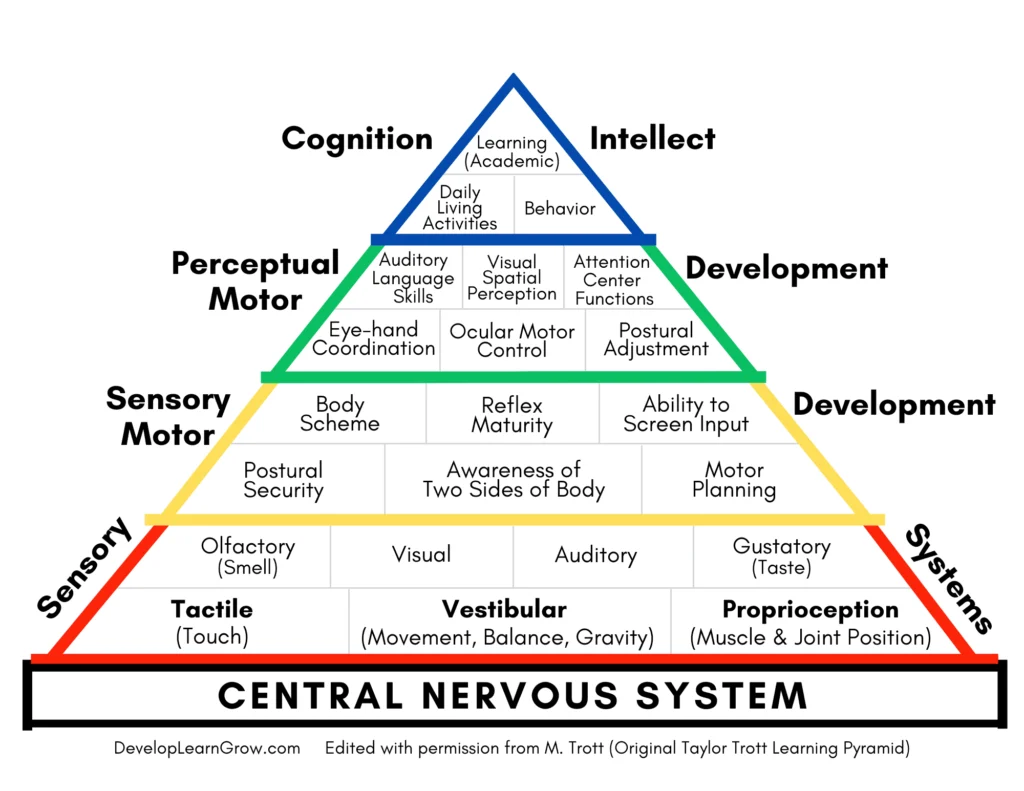
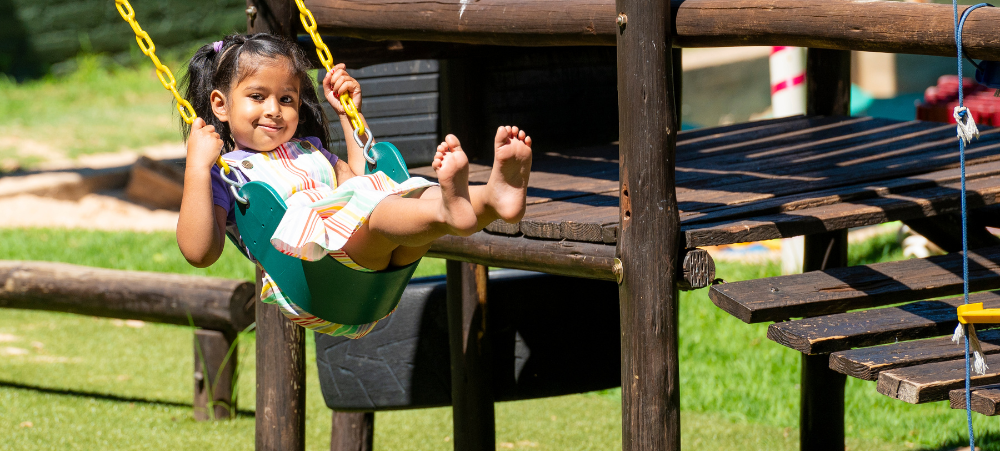
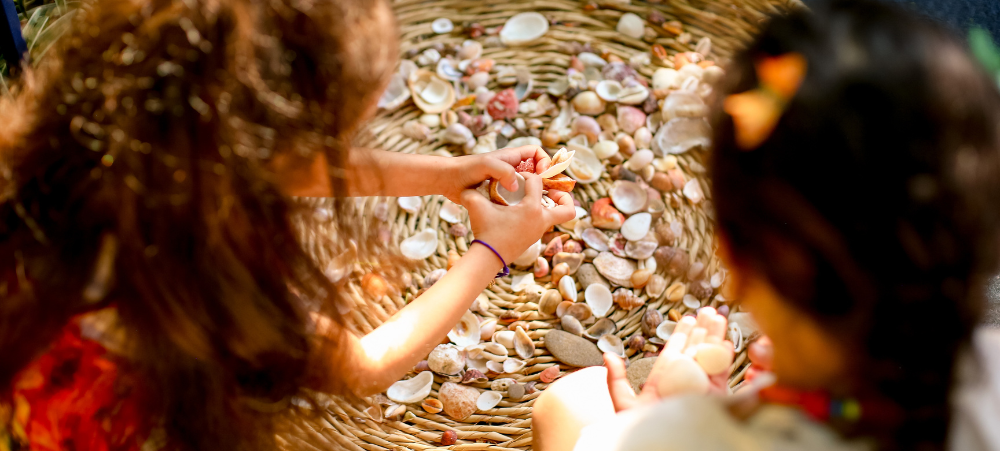
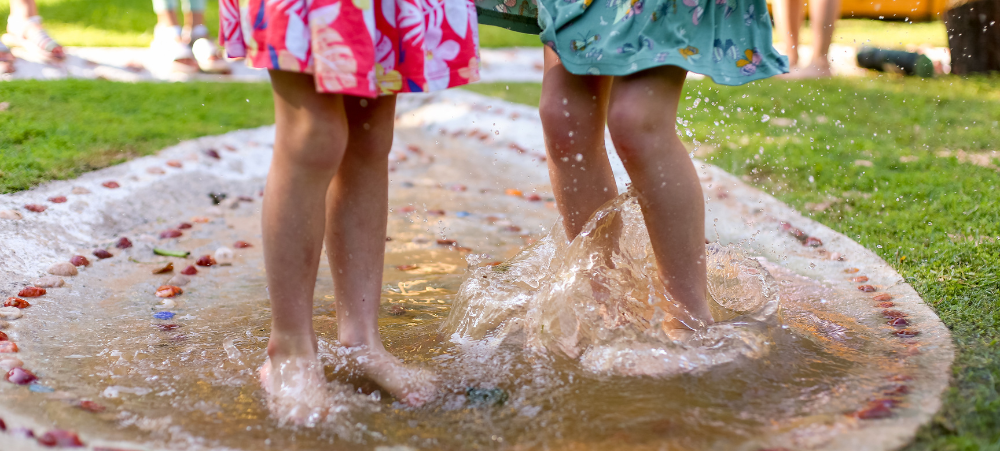
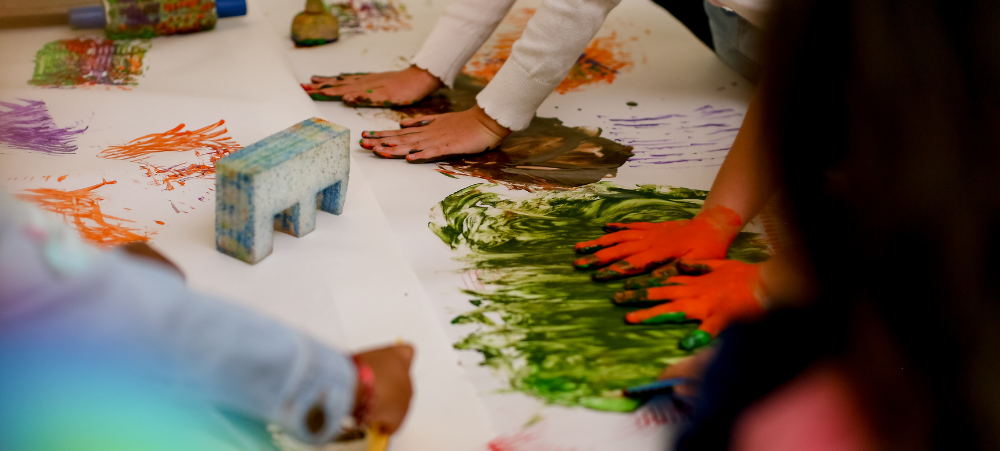
“Messy” play is vital for early childhood development. It engages all the senses, creating and strengthening neural pathways in the brain, laying the foundation for future academic learning. A child’s nervous system requires sensory stimuli to mature. Gaps in sensory development can make it harder for children to thrive in the school environment.
“This foundation helps a child attend, behave, function, and learn.” – Amy Hathaway
Are our children being deprived of the necessary sensory stimuli that build the foundation of human development in a world of ever-increasing technology, busyness and the need to perform?
As parents, are we creating opportunities for our children to be exposed to a variety of sensory experiences that stimulate growth and development, or are we inadvertently limiting their sensory experiences by protecting them from too much?
Research conducted by psychologists and experts in child development underscores the urgent need to return to basics. Never in history has there been such a wave of mental health needs in younger and younger children. Children are kept safe behind fences, entertained on screens and enrolled in extracurricular activities, with very little time to play freely, think for themselves and explore their world.
The Sensory Pyramid of Learning was developed by Occupational Therapist Kathleen Taylor and special educator Maryann Trott in 1991. It is a wonderful visual that shows the order of learning, requiring a broad base of sensory learning before other skills can be built upon.
Edited by Amy Hathaway with permission
At the base of the pyramid are the primary senses of touch (tactile), balance (vestibular), body awareness (proprioception), smell, taste, vision, and hearing. As these systems develop, children are then able to build higher-level skills like attention, emotional regulation, language, social interaction, and eventually, academic learning such as reading, writing, and problem-solving. If there are gaps or challenges at the base of the pyramid, it can affect a child’s readiness for more complex learning tasks. This is why rich, varied sensory experiences are so vital in the early years.
So how can you practically support your child’s sensory development?
Allow uninterrupted time for lengthy periods of play without instructions, free from devices.
2. Provide spaces where your child can make a mess, explore and discover.
3. Provide materials such as boxes, old linen, and recyclable materials such as bottle tops, which are open-ended and can function in many different ways.
4. Dress your child in comfortable clothes, allowing them to move freely and get dirty without worry.
5. Give access to the outdoors where your child can find bugs, make mud pies and move.
6. Encourage your child to explore a variety of sensory experiences and develop independence.
7. Remove their shoes. Barefoot walking has many benefits, providing sensory feedback to the nervous system. Studies show that walking barefoot increases cognitive ability, sensory integration, foot mechanics, balance and calmness. These studies recommend that children predominantly go barefoot and only wear shoes when necessary up to the age of 4, while their feet are still developing.
8. While creating boundaries is necessary, provide a space where they can explore with a variety of mediums, such as paint, chalk, and mud. Allow them to paint their feet, hands, and bodies, providing a rich sensory experience. A great way to do this is in the shower or bath, where everything can be washed away, or outdoors on a hot day with added water play.
9. Allow children to safely make mistakes, thereby learning from them and gaining independence and resilience.
“A brain that is nourished with a balance of basic sensory input attends well and learns well!” – Amy Hathaway
St Teresa’s School is a well-respected independent Catholic school for girls, offering a dynamic and enriching education from Grade 000 to Grade 12. With campuses in Craighall Park (Grades 000–3) and Rosebank (Grades 4–12), we are known for our commitment to academic excellence, holistic development and social and global responsibility.
At our Reggio-inspired Rosebuds Pre-Primary for 3–5 year olds, each day is filled with wonder, discovery and joy. From outdoor adventures and sensory play to creative exploration and shared giggles, we lay the foundation for lifelong learning through curiosity, connection and play.
Rooted in tradition and guided by strong Christian values, St Teresa’s School provides a unique, caring and empowering environment where girls develop confidence, lead with compassion and become courageous, capable young women of tomorrow.
If you’re raising a neurodivergent child in South Africa, you’re already doing a lot.
Appointments. School meetings. Forms. “Can you just send that report again?” moments. The daily juggling act of home + school + therapy + life.
So when someone says, “You might be able to claim tax relief,” it can feel like one more admin mountain… right when you’re already running on fumes.
Here’s the good news: tax relief is available, and there’s a real framework designed to give families some breathing room.
The bad news is: it’s not always obvious how it works, and the internet is full of conflicting advice.
This guide will help you understand the basics without spiralling.
Tax relief is available in South Africa
South Africa’s tax system includes support for families who carry additional medical and care costs. The main mechanism is the Additional Medical Expenses Tax Credit (AMTC).
It’s not a cash payout. It’s a tax credit that reduces the amount of normal tax you pay.
For many families, it becomes a crucial “safety valve”, especially when you’re paying for the kind of support your child needs to function well in the real world.
Where neurodiversity fits into the SARS framework
SARS doesn’t have a neat category called “neurodivergence.”
Instead, conditions like Autism Spectrum Disorder (ASD), ADHD, and PDA are considered based on their functional impact, in other words, how much they limit day-to-day life.
For tax purposes, a “disability” is defined as a moderate to severe limitation in a person’s ability to function or perform daily activities (including learning, thinking, communicating).
If your child’s challenges create a moderate to severe limitation that is expected to last more than a year, your family may qualify for tax relief.
If the limitations are considered milder, the condition may fall under what SARS calls a “physical impairment.” (Despite the name, this category isn’t limited to physical conditions and can still apply in some neurodevelopmental contexts.)
Relief may still be available, but often with different thresholds and limits.
The common misunderstanding that trips parents up
One of the biggest myths is:
“If I have the diagnosis, we automatically qualify.”
Not necessarily.
SARS looks at whether the condition remains a significant limitation even after what it calls “maximum correction” (including appropriate therapy, treatment, or medication).
Because every child is different, eligibility is assessed case by case. Two families can have the same diagnosis and still have different outcomes depending on how the condition impacts daily functioning.
Which is frustrating, yes. But also: it’s why getting clarity early matters.
Why paperwork and medical confirmation matter (even if you hate admin)
The admin requirements can feel like adding weight to an already heavy load.
But they’re also the keys to unlocking tax relief.
A diagnosis label isn’t enough. You need formal medical confirmation from a registered practitioner who is trained to give an opinion on your child’s condition.
The key document is the ITR-DD form (Confirmation of Diagnosis of Disability).
Whether this form is required in your situation can depend on how your child’s needs are classified (which is exactly where many parents get stuck).
Important: you typically don’t submit the form with your annual return, but you must keep it, along with invoices and proof of payments, for at least five years.
SARS often verifies these claims, so having your paperwork organised from the start protects you later.
Think of it like this: a few clicks to save documents today can save you hours of stress later.
You don’t have to figure it all out today
If this feels complex, you’re not meant to decode it alone in between lunchboxes and meltdowns.
So we created a simple starting point for parents:
✅ Download the tax relief cheat sheet at www.dalza.com/tax-relief-cheat-sheet/ A clear summary of what you need to know (and what to gather), without the jargon.
Supporting a neurodivergent child requires enough time, energy, and emotional bandwidth as it is. Tax admin shouldn’t be another thing you have to white-knuckle your way through.
Start with the cheat sheet. Get the lay of the land. And take it one step at a time.
This content is provided for general information purposes only. It is not intended as legal, tax, or financial advice. Tax outcomes depend on individual circumstances, and eligibility for tax relief is assessed by SARS on a case-by-case basis. We recommend consulting a registered tax practitioner or qualified professional before submitting any tax claims
St Teresa’s School is a well-respected independent Catholic school for girls, offering a dynamic and enriching education from Grade 000 to Grade 12. With campuses in Craighall Park (Grades 000–3) and Rosebank (Grades 4–12), we are known for our commitment to academic excellence, holistic development and social and global responsibility.
At our Reggio-inspired Rosebuds Pre-Primary for 3–5 year olds, each day is filled with wonder, discovery and joy. From outdoor adventures and sensory play to creative exploration and shared giggles, we lay the foundation for lifelong learning through curiosity, connection and play.
Rooted in tradition and guided by strong Christian values, St Teresa’s School provides a unique, caring and empowering environment where girls develop confidence, lead with compassion and become courageous, capable young women of tomorrow.
“Our mission is to embark as many children as possible on a magical learning journey – giving them the best start in life and fostering a lifelong love of learning.” — Hans Jacob Sundby, Founder, Dibber International Preschools
Crowthorne, Midrand – Today marked the official opening of Dibber The Whisken. This brand-new early childhood development centre is situated in the heart of the Whisken Lifestyle Estate on Whisken Avenue. The new campus is the latest addition to Dibber’s growing family of international preschools in South Africa. It offers young children in the local community a nurturing and inspiring start to their learning journey.
Located in one of Gauteng’s vibrant residential hubs, Dibber The Whisken is set to become a cornerstone for families. It offers meaningful, values-driven early learning in a safe and stimulating environment. The school is led by principal Drew Ellis and her passionate team of educators. Bharti Daya, Dibber’s Pedagogy and Operational Lead for Montessori campuses in South Africa, provides pedagogical guidance.
With a global foundation across nine countries, Dibber is known for its heart-led early education. In South Africa, the network now spans 17 schools across Gauteng and the Western Cape. A new Western Cape campus opens in March. A franchise model will soon launch to expand access even further.
Dibber’s unique philosophy centres on nurturing the whole child, with a strong emphasis on the holistic development of the child. Every Dibber school is rooted in its local community. The curriculum combines global best practices with South African cultural richness and play-based discovery. Children are encouraged to explore, question, imagine, and connect. Engaged educators see and celebrate the individual strengths of every child.
“At Dibber, we believe children are the most important people in the world. That belief shapes everything we do – from how we build our classrooms to how we greet each child in the morning. With the opening of Dibber The Whisken, we’re so proud to extend this culture of care and curiosity to even more families,” said Lizelle ‘t Lam, Growth, Integration and Marketing Lead, Dibber South Africa.
The Whisken campus offers Montessori-inspired classrooms and interactive outdoor play areas. The daily rhythm balances structure with creativity. Parents benefit from Dibber’s emphasis on family partnerships, transparent communication, and values-based education.
Dibber invites all parents in the Midrand and greater Johannesburg area to explore what makes its schools different. Open Days and enrolment tours are available upon request.
St Teresa’s School is a well-respected independent Catholic school for girls, offering a dynamic and enriching education from Grade 000 to Grade 12. With campuses in Craighall Park (Grades 000–3) and Rosebank (Grades 4–12), we are known for our commitment to academic excellence, holistic development and social and global responsibility.
At our Reggio-inspired Rosebuds Pre-Primary for 3–5 year olds, each day is filled with wonder, discovery and joy. From outdoor adventures and sensory play to creative exploration and shared giggles, we lay the foundation for lifelong learning through curiosity, connection and play.
Rooted in tradition and guided by strong Christian values, St Teresa’s School provides a unique, caring and empowering environment where girls develop confidence, lead with compassion and become courageous, capable young women of tomorrow.
You know that moment when you are sitting in traffic, staring at the red brake lights ahead, and your mind is racing through the list: Did I pack the lunchbox? Did I pay the electricity bill? Will I make it to the office on time? And then, like a punch in the gut, the thought hits: Am I even doing enough for my child?
This is the reality for so many South African parents. We are carrying an invisible weight that no one sees, the emotional load that comes with raising children in a country where safety concerns, economic uncertainty, and relentless work-life pressure collide every single day. It is not just about getting through the day; it is about holding it all together while the ground beneath us feels shaky.
We wake up to headlines about rising costs, load-shedding schedules, and crime alerts. Then we rush to pack lunchboxes, navigate traffic, and show up at work like everything is fine. But beneath the surface, many of us are running on fumes, trying to be present for our children while silently wondering if we are failing them. Parenting here is not about perfection. It is about survival. And yet, in the middle of this chaos, something powerful often goes unnoticed: the role of early childhood education in lightening that load.
Because here is the truth: when parents feel supported, children thrive. High-quality early childhood education does not just teach ABCs; it becomes an emotional anchor for families. It is the teacher who notices your child’s anxious face and gently reassures them. It is the predictable routine that gives your little one stability, so you can breathe a little easier. It is the educator who greets you by name, shares a small win about your child, and reminds you that you are doing an excellent job, even on the days you feel like you are barely holding on.
Schools like Dibber understand this. They do not see parents as people who simply “drop and go.” They see you as partners. They know that when you walk through the door, you are not just handing over a child, you are handing over your heart, your worries, your hopes. And they meet that with Heart Culture: a way of being that says, “We see you. We are with you.” It is the quiet reassurance that you are not alone in this. It is sending a photo of your child’s joyful moment during the day so that, stuck in traffic, you feel connected instead of guilty. It is creating spaces where children feel loved, and parents feel seen.
Imagine this: a mom who has been up all night worrying about bills walks into a centre where her child runs into the arms of someone who truly knows them. The teacher smiles, says, “He told me the funniest story today,” and suddenly, for a moment, the weight lifts. That moment matters. It is not just childcare; it is care for the whole family.
And here is the thing: you do not need a Pinterest-perfect routine to ease the emotional load. Start small. Create one predictable ritual, like a bedtime story or a morning hug. Name feelings aloud, for yourself and your child. “I’m tired today, but I’m happy to be with you.” Lean on your child’s educators, share what is hard, and celebrate what is working. Partnership starts with honesty.
Parenting in South Africa is tough, but you are not alone. When early years education is done right, it does not just shape children; it strengthens families. It reminds parents that they do not have to carry the emotional load alone. And in a world that feels uncertain, that kind of support is everything.
St Teresa’s School is a well-respected independent Catholic school for girls, offering a dynamic and enriching education from Grade 000 to Grade 12. With campuses in Craighall Park (Grades 000–3) and Rosebank (Grades 4–12), we are known for our commitment to academic excellence, holistic development and social and global responsibility.
At our Reggio-inspired Rosebuds Pre-Primary for 3–5 year olds, each day is filled with wonder, discovery and joy. From outdoor adventures and sensory play to creative exploration and shared giggles, we lay the foundation for lifelong learning through curiosity, connection and play.
Rooted in tradition and guided by strong Christian values, St Teresa’s School provides a unique, caring and empowering environment where girls develop confidence, lead with compassion and become courageous, capable young women of tomorrow.
We use cookies on our website to give you the most relevant experience by remembering your preferences and repeat visits. By clicking “Accept All”, you consent to the use of ALL the cookies. However, you may visit "Cookie Settings" to provide a controlled consent.Accept All
Manage consent
Privacy Overview
This website uses cookies to improve your experience while you navigate through the website. Out of these, the cookies that are categorized as necessary are stored on your browser as they are essential for the working of basic functionalities of the website. We also use third-party cookies that help us analyze and understand how you use this website. These cookies will be stored in your browser only with your consent. You also have the option to opt-out of these cookies. But opting out of some of these cookies may affect your browsing experience.
Necessary cookies are absolutely essential for the website to function properly. These cookies ensure basic functionalities and security features of the website, anonymously.
Cookie
Duration
Description
cookielawinfo-checkbox-advertisement
1 year
The cookie is set by GDPR cookie consent to record the user consent for the cookies in the category "Advertisement".
cookielawinfo-checkbox-analytics
11 months
This cookie is set by GDPR Cookie Consent plugin. The cookie is used to store the user consent for the cookies in the category "Analytics".
cookielawinfo-checkbox-functional
11 months
The cookie is set by GDPR cookie consent to record the user consent for the cookies in the category "Functional".
cookielawinfo-checkbox-necessary
11 months
This cookie is set by GDPR Cookie Consent plugin. The cookies is used to store the user consent for the cookies in the category "Necessary".
cookielawinfo-checkbox-others
11 months
This cookie is set by GDPR Cookie Consent plugin. The cookie is used to store the user consent for the cookies in the category "Other.
cookielawinfo-checkbox-performance
11 months
This cookie is set by GDPR Cookie Consent plugin. The cookie is used to store the user consent for the cookies in the category "Performance".
viewed_cookie_policy
11 months
The cookie is set by the GDPR Cookie Consent plugin and is used to store whether or not user has consented to the use of cookies. It does not store any personal data.
Analytical cookies are used to understand how visitors interact with the website. These cookies help provide information on metrics the number of visitors, bounce rate, traffic source, etc.
Cookie
Duration
Description
_ga
2 years
This cookie is installed by Google Analytics. The cookie is used to calculate visitor, session, campaign data and keep track of site usage for the site's analytics report. The cookies store information anonymously and assign a randomly generated number to identify unique visitors.
_gid
1 day
This cookie is installed by Google Analytics. The cookie is used to store information of how visitors use a website and helps in creating an analytics report of how the website is doing. The data collected including the number visitors, the source where they have come from, and the pages visted in an anonymous form.
Other uncategorized cookies are those that are being analyzed and have not been classified into a category as yet.
Cookie
Duration
Description
_gat_gtag_UA_18530557_4
1 minute
No description
pron_ip
session
No description
pvc_visits[0]
1 day
This cookie is created by post-views-counter. This cookie is used to count the number of visits to a post. It also helps in preventing repeat views of a post by a visitor.
tk_ai
session
Gathers information for WordPress by themselves, first party analytics tool about how WP services are used. A collection of internal metrics for user activity, used to improve user experience.