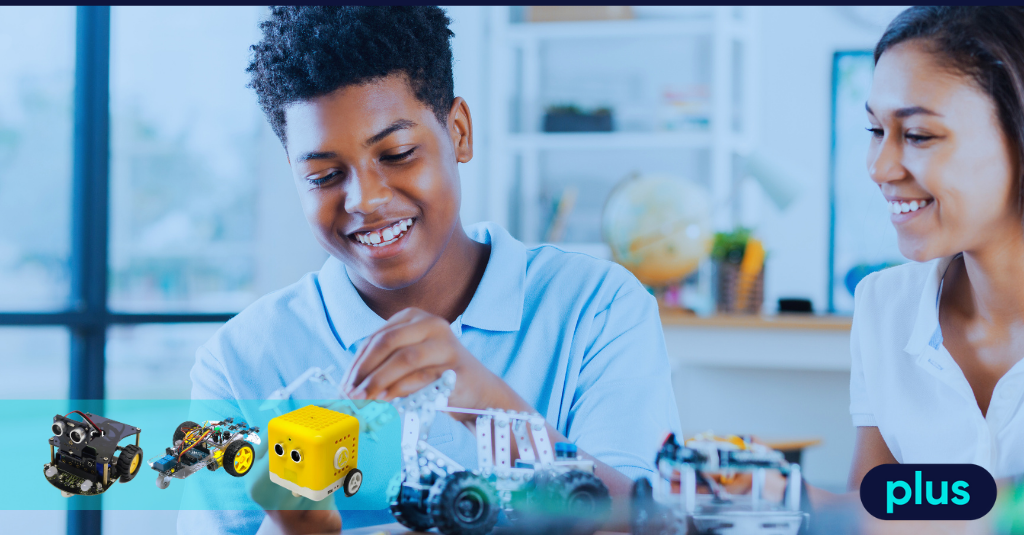
Understanding the trends that will shape SA Education in 2024

For the longest time, education systems have changed at the proverbial glacial pace.  However, the rapidity of change in every other human-made system over the past few decades has put education under excruciating pressures to transform, to keep up and prove that it is fit-for-purpose in the modern world.  Education in South Africa is undergoing significant transformation which is driven by several key trends. This is ushering in an era where South African children are increasingly being educated in different ways, in different kinds of school environments with their teachers serving in different roles.  In short, the education of today’s children is becoming increasingly different from the education that their parents experienced.

Mark Anderson, the Principal of Koa Academy, a high engagement online school started in 2021 in South Africa, is a strong advocate for schools delivering a relevant education that ensures that learners develop the real-world skills they need to succeed in the 21st Century.  We’ve asked him to unpack six trends that are currently shaping the South African educational landscape and are set to become more evident in 2024.

Learning is becoming personalised – Personalised learning customises education to the individual learners needs, interests, and abilities. This is a radical shift from the traditional school classroom model where standardised content is delivered to a group of learners.  According to Mark, we’ve known for decades that collective learning is far from effective, and that students learn best when they are on individualised learning pathways.  He says, “Due to constraints, we’ve traditionally modelled education on the assumption that if we teach in a very standardised way then most of the learners in the classroom will be with us, and that we might need to differentiate for just a small portion of that group.  But the reality is that when we do this standardised teaching and assessing, we actually miss most of the learners.  The research is clear, learning is a highly personal journey, and therefore our education needs to be tailored for individual learning, not group learning.  So, we are seeing big shifts in the ways that schools are thinking about how content is delivered and how assessments are done to be much more personalised and individualised, while at the same time operating within constraints, which may be economic, geographic, and meeting legislative requirements.”

Personalised learning not only changes the education experience for learners.  Teachers are no longer mere presenters of content, but the expert guides and facilitators who dynamically support and coach each learner as they progress on their unique learning pathway. “Personalised learning unleashes the real expertise of teachers who are trained to have deep knowledge and experience of how people learn and about different learning styles,” says Mark.  “It also addresses the major concerns that parents have when their child is either left behind because they are struggling with certain concepts, or they are bored in class because they grasped some other content more quickly than their peers.”

The growth of online education in South Africa is also driving the trend towards personalised learning.  Mark says, “The online space is amazing for personalising the education journey. It opens up limitless opportunities to present content in different formats to suit different learning styles.  Individualised dashboards and timetables empower learners to chart their own course and track their own progress.  These tools also enable teachers to track every learner’s progress in real-time and quickly identify where learners need additional support.  At Koa, parents can also access their child’s dashboard every day, and see their child’s progress on their academic targets in real-time.”

Mastery and competencies are in the spotlight – The mastery-based approach shifts the focus from advancing because of your age or grade level to advancing because you’ve mastered the concepts.  This emphasises not only a deeper understanding of subjects and the abilities to apply learning but also ensures that no student is left behind. Mark says, “The real strength of the mastery-based approach is that we don’t plaster over gaps in learning.  Historically, this has been a significant problem for kids in South Africa where they are promoted into the next grade, even when they have big learning gaps.  This has happened particularly in Languages and Maths.  Kids are pushed through into the next grade because schools understandably must get them through the system.  They end up going to the next grade with a shaky foundation and then we keep building on top of that, and it all comes crumbling down.  The idea of mastery-based education is that you can move at your own pace.  Once you have shown mastery in a particular area, you can move ahead without having to wait for others.  So, if a child is particularly strong in Maths and ahead of their peers, they move on quickly.  They then have more time to focus on the areas where they are not so strong, perhaps in their language course they may need to slow down or take extra time to get help from a teacher.  The mastery-based approach goes hand-in hand with personalised learning, and it doesn’t work in large groups.”

For teachers, the mastery-based approach means more precise assessments, greater flexibility, and a redefined role in helping students achieve mastery, rather than just teaching to a curriculum.

Gamification has entered the education landscape – With its propensity to deliver dopamine boosts, gamification is making learning more engaging and interactive. Through game elements such as targets, leaderboards, points, and rewards, schools are creating more enjoyable and motivating learning environments. For learners, this trend can encourage problem-solving, collaboration, and creativity as they navigate through challenges and adventures in the pursuit of knowledge.

Mark says, “It’s important to note that gamification in education is not just about having fun. It’s about being rewarded for progress and inspiring you to be accountable for your own learning.  The idea is that I know what my academic goal is, I know what I must do to reach my goal, and when I reach it, I am rewarded.  This is a tangible recognition that I have levelled up and it gives me an indication of my progress.  As you are working, the gamification platform is telling you the things you are getting right, and it is showing you where you are tripping up or dropping the ball.  This gets my buy-in on my learning process, I can understand my strengths and challenges more clearly, and it makes me want to reach the next level.  Of course, in the online space, gamification is incredibly easy and there’s a lot of expertise to hand when it comes to hooking you in and levelling you up.  While that may not be good for us when it comes to platforms like social media, we can get a positive result with gamification in education because when we see our growth and our development, it makes us want more of that and so we spiral upwards.”

AI in education is already a game-changer – We’re only seeing the tip of the iceberg at this moment.  Mark says, “In the early 1980’s, educational psychologist, Benjamin Bloom conducted research into teaching and learning techniques that showed that average-performing students who were exposed to one-on-one tutoring could perform better than 98% of their classmates who experienced classroom learning only.  He coined the term ‘the 2 sygma problem’ in reference to the fact that our education systems are not built to deliver one-on-one tutoring to every student, and this solution to attain optimal educational efficiency is simply not scalable.  One of the great promises of AI is that it has the potential to fill the gap in one-on-one tutoring.  We are already seeing the emergence of, and classroom testing of AI tutor models such as Khan Academy’s Khanmigo.  An AI tutor model embedded in an education platform means that the platform can see exactly where each learner is and what they are struggling with.  It can then immediately provide the precise guidance or help the learner needs so that they can master the concept and progress.  This use of AI supports both personalised learning and the mastery-based approach.  This is just one way, a very important way, that AI can be deployed to enhance education in the future.  We are also likely to see AI making an impact in freeing up teachers from routine administrative tasks so that they can spend more time focusing on meaningful engagement with their learners.  We’ll no doubt see AI coming to the fore when it comes to analysing learner performance data, identifying learning gaps and creating individualised learning plans.  At Koa, our approach to AI generally is to encourage our learners, teachers and parents to learn about it, engage with it, and have the important conversations about the responsible and ethical use of AI models, which is going to be important to our learners when they enter the workforce.”

Soft skills are foundational instead of ‘nice to have’ – If modern education is to meet the workplace demand for young generations with the skills to succeed in their jobs, then gaining soft skills needs to be prioritised in school and tertiary education. In a 2019 LinkedIn Talent Trends survey, 91% of employers ranked soft skills as their top requirement in the recruitment process. Research conducted by Harvard University, the Carnegie Foundation and Stanford Research and published by the National Soft Skills Association concluded that soft skills make an 85% contribution to career success.  Mark says, “We know that understanding myself and understanding others; being able to interact, communicate, create, and collaborate are so important.  These attributes are key drivers in our learning process itself, and in achieving outcomes.  Schools are realising socio-emotional learning can’t be icing on the cake, it must be foundational.”

Demand for high engagement in online schools – The COVID-19 pandemic greatly accelerated the uptake of online education in South Africa.  However, a curriculum dumped online and accessed by large groups of learners doesn’t make a school or a college.  Mark says, “As online education evolves in South Africa, and the world, we’re seeing different models emerge based on the needs and wants of learners and their families.  Koa started with a clear vision of being a high engagement school and we’re spearheading this trend of experiencing a strong sense of community, and of belonging, in the online space.  We’re leveraging the benefits and the flexibility of the online environment to get small groups of learners together with a teacher.  We have Pods of eight learners with their Pod teacher because when you have eight on a screen, every learner is seen and heard.  No one is anonymous and there are plenty of opportunities for social interaction during the school week, which is so necessary for a well-rounded education.”

These trends transforming education are reshaping the roles of teachers and the experiences of learners. As personalised learning and the mastery-based approach develop further, more South African learners will be set on their own pathways to develop as lifelong learners.  We can expect that gamification in education and AI will be revolutionising forces in the years ahead.  It’s taken a long time for our education system to evolve, in many ways it is still woefully out of step with the world of work, but change is happening; and the pace of change in education is certainly accelerating.

Discover Koa Academy, visit www.koacademy.com
Koa Academy

Leave a Comment

Your email address will not be published. Required fields are marked *

Homeschooling in SA: Keeping learning steady amid school placement delays

South Africa’s school placement scramble is influencing the choices families make about how their children learn. For many, the uncertainty runs deep into the first term – particularly in the early grades where classroom capacity is stretched and late placements can disrupt the steady routines young children need. As provincial education departments work to place learners, parents are left balancing practical realities with what matters most: keeping their children learning, settled, and confident.

For some families, homeschooling is no longer a “last resort”. It has become a deliberate, parent-led option that offers continuity when mainstream placement is delayed, or when a child needs a calmer, more supported start to their school journey. 

As South Africa’s largest homeschooling provider, Impaq supports parents with structured lesson plans, the Optimi Learning Portal (OLP), and a full ecosystem of resources designed to guide learning at home – without parents having to “figure it out” alone.

“Parents are doing their best in an uncertain placement environment, and what children need in the early years is stability, encouragement and consistent learning routines,” says Louise Schoonwinkel, Managing Director at Optimi Schooling, of which Impaq is a registered trademark. “The Foundation Phase is where children build their relationship with learning. When that is nurtured in a supportive environment, it can have a lasting impact on confidence and readiness for the years ahead.”

The early grades, from Grades R to 3, are widely recognised as the building blocks for literacy, numeracy, and emotional development. These are also the years when confidence can be shaped quickly. A learning environment that feels rushed or inconsistent may affect how a child sees themselves as a learner. 

Homeschooling, when structured properly and supported with quality materials, can create space for children to learn at their own pace, ask questions freely, and strengthen the basics without the pressure of feeling “left behind.”

Impaq’s lesson plans help parents follow a clear weekly rhythm, ensuring children cover what they need to while maintaining a steady routine at home. The Optimi Learning portal (OLP) provides guided learning resources and tools that support understanding and practice. For many parents, especially those juggling work and household responsibilities, the value is not just the content, but knowing what to do next: what to teach, when to teach it, and how to track progress.

“Homeschooling doesn’t mean parents must become teachers overnight,” Schoonwinkel explains. “It means families need a trusted partner that provides a curriculum-aligned plan, resources that make learning practical, and support that helps parents stay consistent, because that is what builds confidence in young children.”

That confidence shows up in everyday moments: a child reading aloud without fear of making mistakes, completing a task independently, or trying again when something feels difficult. In the Foundation Phase, those “small wins” matter. They shape resilience, curiosity, and willingness to participate – traits that carry into later learning, whether a learner continues homeschooling long-term or transitions back into a classroom setting once placements stabilise.

Families considering homeschooling should ensure they choose a credible provider and understand the legal and administrative requirements for home education in South Africa. Parents should also be realistic about what they can commit to daily, and select a programme that offers guidance, structure, and accessible support. For younger learners, homeschooling works best when learning is consistent and age-appropriate – incorporating play-based activities, movement, reading practice, and short, focused lessons rather than long periods of screen time or a rigid “classroom at home” routine.

As placement challenges continue to affect parts of the country, the conversation is shifting from “What do we do now?” to “What learning environment will help my child thrive?” 

“Placement delays are a reality in many communities, but a child’s learning and confidence don’t have to be put on pause,” Schoonwinkel says. “The Foundation Phase is where children learn to trust themselves as learners – and with the right structure, support, and consistency at home, parents can protect that momentum and give their child a strong, steady start, regardless of what’s happening in the wider system.”

Koa Academy
The power of play-based learning for homeschoolers

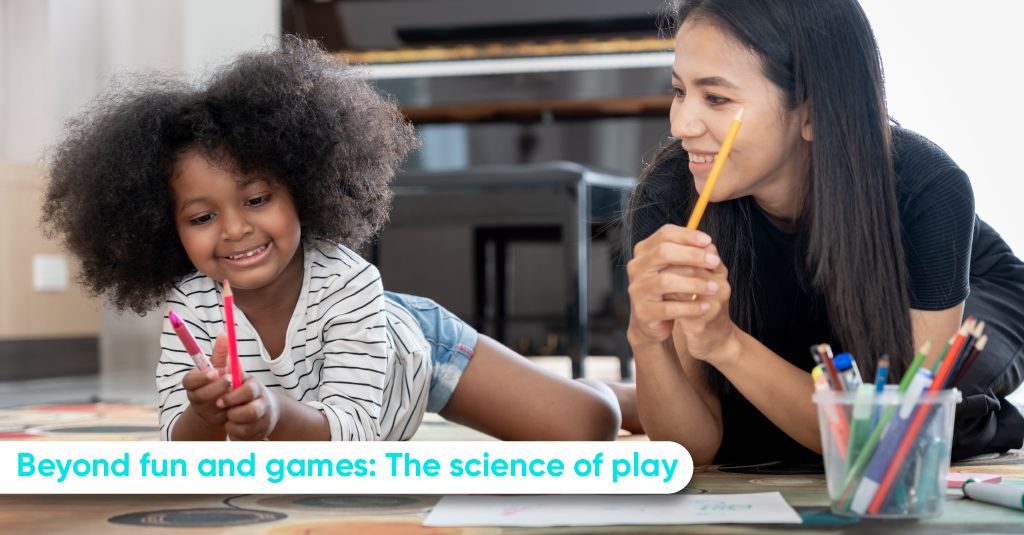
Building elaborate forts out of blankets or transforming cardboard boxes into spaceships is not just child’s play; it’s play-based learning in action. Between the giggles and make-believe, your child is developing their critical thinking and problem-solving skills. Play-based learning can be transformative, especially for homeschooling learners. 

Beyond fun and games: The science of play 

Children are naturally curious and imaginative beings. Play-based learning taps into these innate qualities, making education an exciting adventure. But play-based learning is not just a welcome break from textbooks – it’s essential for development. Playing with your learner has many benefits, including:

  • Boosted creativity and imagination: Open-ended play allows children to experiment, take risks, and build new worlds – the foundation of innovative thinking.
  • Sharpened critical thinking and problem-solving: From navigating pretend traffic jams to figuring out how to build the tallest tower, play presents endless challenges that develop mental agility and resourcefulness.
  • Fostering social and emotional intelligence: Through collaborative play, children learn to communicate, negotiate, and empathise, building their capacity for healthy relationships.
  • Boosted confidence and self-esteem: Mastering challenges in a playful environment fosters a sense of competence and a love for learning that fuels perseverance and achievement.

Here’s how to integrate this learning tool with plenty of playful possibilities from Optimi Plus.

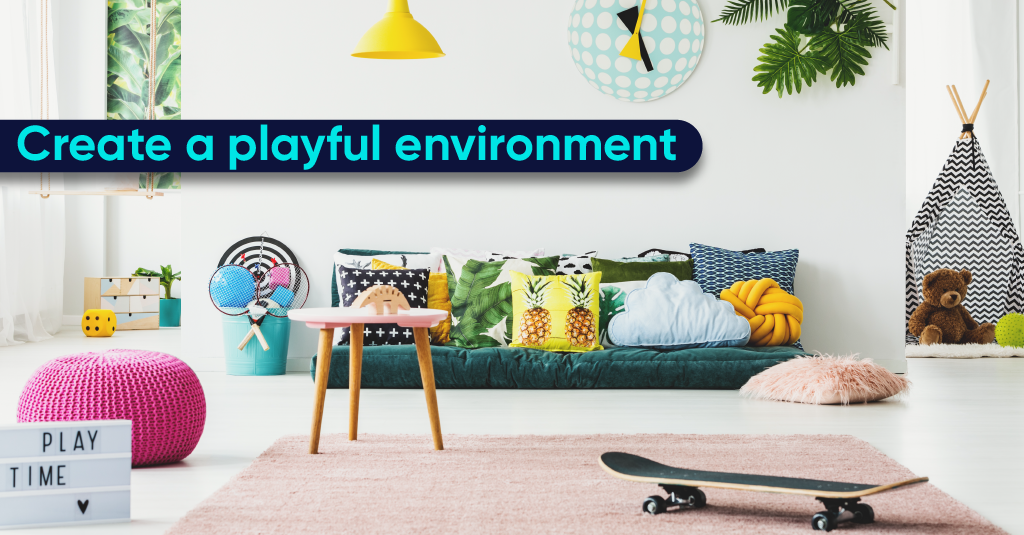
Create a playful environment

Set the stage for creativity by establishing a dedicated play space. A conducive environment is vital – dedicate a corner in your house or a specific time to play during the day.

Prepare the space by including role-playing toys and activities. Whether it’s pretending to be astronauts exploring space or chefs in a bustling kitchen, imaginative play will help your little one think outside the box.

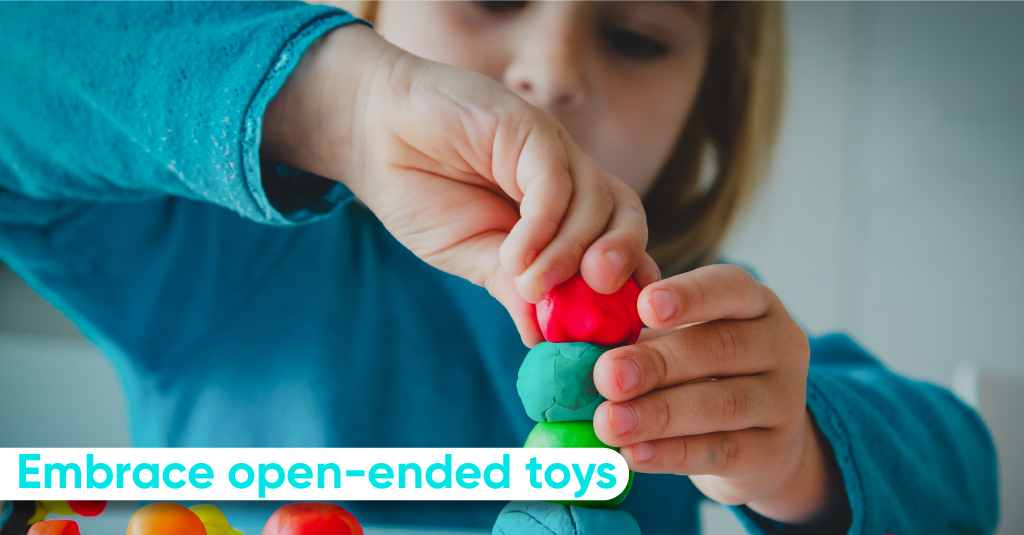
Embrace open-ended toys

Blocks, paints, playdough, and natural materials like leaves and sticks encourage open-ended exploration and imaginative storytelling. These activities stimulate cognitive development and enhance problem-solving skills. 

Encourage your child to express themselves freely through drawings, stories, and even doodles – you’ll be amazed at the creativity that unfolds. If you still need stationery for the year, unleash your child’s creativity and develop their gross and fine motor skills with the Stationery Packs available on Optimi Plus.  

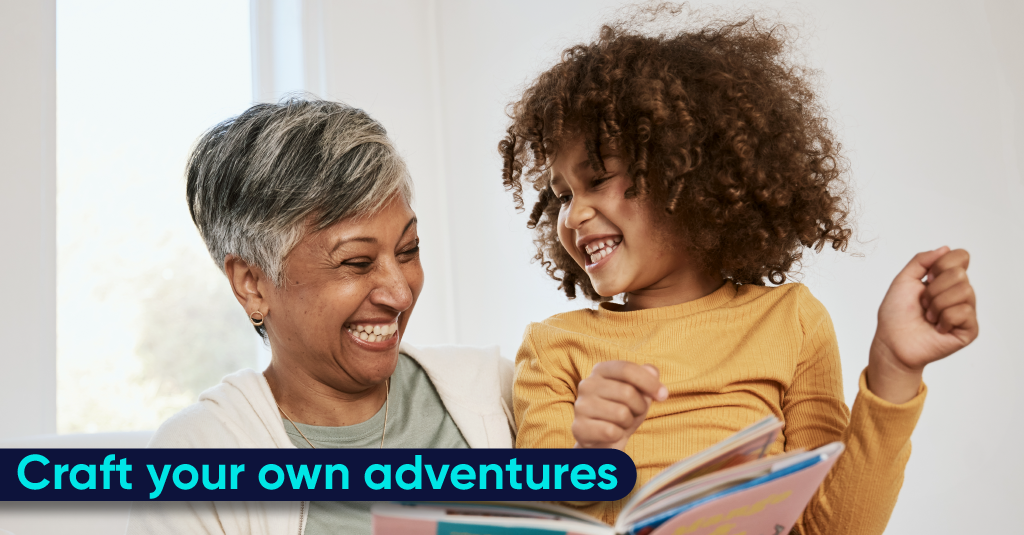
Craft your own adventures 

One of the key elements in play-based learning is the emphasis on early literacy. And what better way to foster a love for reading than with the Foundation Phase Readers from Optimi Plus? These captivating stories, brimming with colourful illustrations and imaginative characters, not only improve reading skills but also open the door to a world of imagination. 

Encourage your child to craft their own adventures, re-interpreting storylines or creating new ones. Let them act out scenes, invent dialogue, and build worlds beyond the printed page.

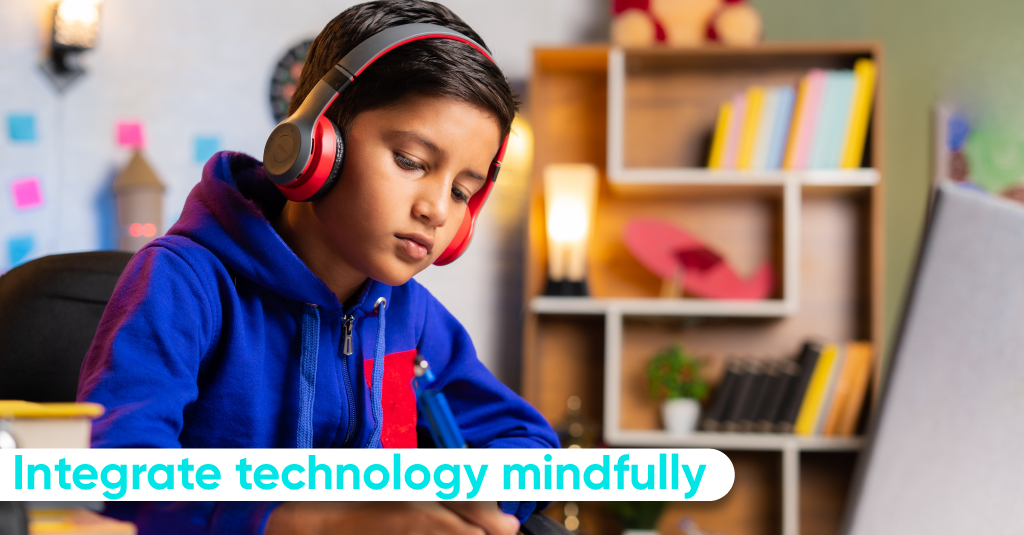
Integrate technology mindfully

Leverage the power of technology and include educational games and interactive learning experiences. Apps such as Cami can provide a fun and engaging way to reinforce concepts learned in more traditional lessons. Nurture a genuine passion for reading with Cami Literacy or foster a mathematical mindset and problem-solving abilities with Cami Maths.

You can even take your child on a virtual safari through the African bush! Safari Academy 101 is a new and exciting e-learning course that empowers learners with first-hand knowledge of wildlife and nature. Encourage your child to create nature journals, write stories about their favourite animals, or even design their own conservation projects inspired by their virtual adventures.

Explore hands-on STEM

STEM is an acronym that stands for science, technology, engineering, and mathematics. These subjects often intimidate young learners, but infusing play can help your child develop a positive attitude towards these subjects from the start. The Foundation Phase Maths Kit includes hands-on activities to help your little one explore concepts like addition, subtraction, and shapes in a hands-on, interactive way. The kit is ideal for fostering mathematical fluency, reasoning, and problem-solving skills in young learners.  

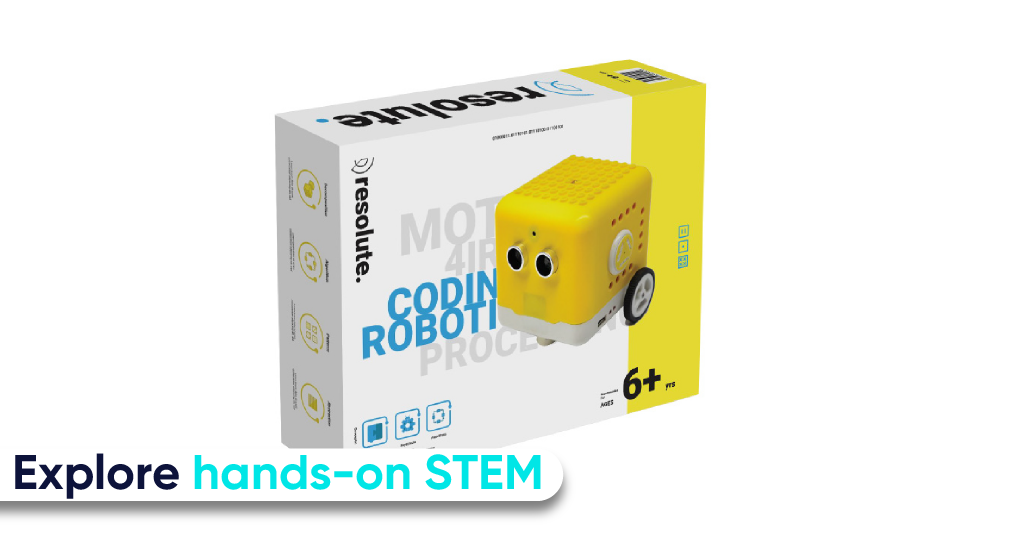
Older learners can also explore STEM concepts through play with Resolute Robotics. The hands-on robotics kit allows learners to build, program, and play with their very own robots. Through experimentation and discovery, your child can develop the following skills:

  • problem-solving, 
  • critical thinking skills, and 
  • creativity.

The Optimi Plus advantage

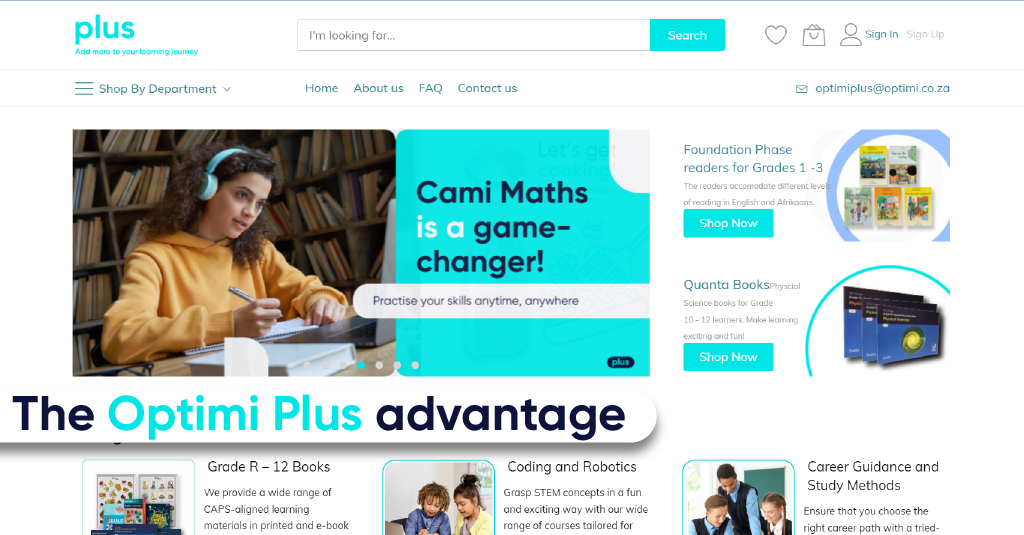
At Optimi Plus, we understand the importance of play-based learning in nurturing young minds. From captivating storybooks to interactive learning platforms, we have everything you need to make learning child’s play. Visit www.optimiplus.co.za to unlock the endless possibilities of play-based learning!


Sources:

https://www.britishcouncil.org/programmes/creative-play/creativity-pretend-play 

https://www.nidirect.gov.uk/articles/how-play-helps-childrens-development

Koa Academy
How Impaq helps you work through the CAPS curriculum

Whether you are a homeschooling veteran or a nervous newcomer, looking at all the content you need to cover can be overwhelming. Luckily, Impaq makes working through the CAPS curriculum easy! All you have to do is pick a grade, complete your registration, and you’ll be provided with everything you need to complete the year at home (and have some fun along the way). Here’s how we help you make learning at home a breeze.

Read more here: From CAPS to Cambridge and everything in between

Planning for the year ahead


Dale Carnegie knew a thing or two about planning for success as he famously said: “An hour of planning can save you 10 hours of doing”. And by now, you might be wondering how many hours you need to spend planning for the year ahead to save time down the road. The answer? Almost none.

With Impaq Homeschooling, the planning is already done for you. We provide carefully crafted lesson plans that tell you exactly how much time you need to spend on each subject, and how to integrate the lesson plans with the learner material. The curriculum is broken down into bite-sized bits to help you and your child know exactly what to focus on during each term. Lesson plans, along with weekly calendars and additional resources are available on the Optimi Learning Portal (OLP).

CAPS made easy

As a homeschool parent, the CAPS curriculum can seem content-heavy, and you might be wondering what to focus on. As of 2024, Impaq will be providing our learners with a framework of what to concentrate on for each subject. We have organised the content to make it easier for homeschool parents to work through the curriculum challenges and ensure that their child masters the basic concepts. All these resources can be found on OLP.

All the support you need


As a homeschooling parent, you will receive your very own facilitator’s guides to help you teach your child at home. These detailed guides accompany the lesson material your child receives and give you step-by-step guidance to set your child up for success. Prepping for tests and examinations is also made easy as you can find suggested timetables for Grades 4 to 9 on OLP. You can then decide whether to stick to these timetables or to create your own. Grade 10 to 12 learners write tests and exams according to a strict timetable

If you find yourself needing some additional support, especially in certain subject areas such as Mathematics and Physical Sciences, you can reach out to our team of education specialists. They are always happy to assist and support parents with any academic queries. You can also find the answers to most of your homeschooling questions on our client helpdesk.

Enjoy online resources

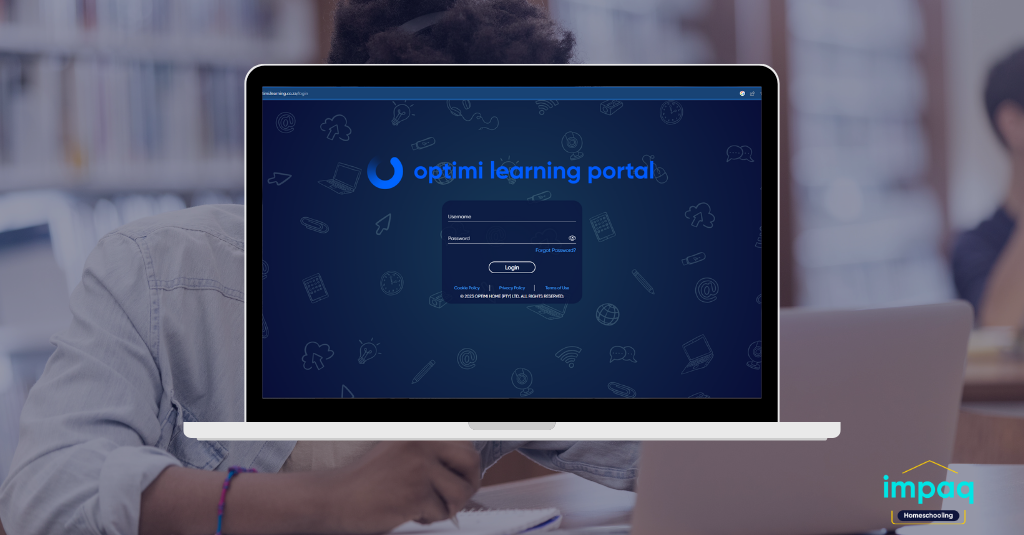
The Optimi Learning Portal (OLP) serves as our learning hub and contains a treasure trove of digital resources. Along with the lesson material your child receives, they can find additional resources per subject on OLP, including educational videos, quizzes, previous examination papers, helpful notes and much more.

Learners can also easily access both live and pre-recorded subject guidance sessions on OLP. These sessions focus on providing guidance on how to complete specific assessments, revision for more difficult concepts, as well as enrichment lessons.

Track your child’s progress


Tracking your child’s progress is as easy as logging in to OLP. With the click of a button, you will be able to see which lessons your child has completed (marked in green) and which lessons they still need to complete (marked in red). You will also be able to capture the marks for their tasks, tests, and examinations (depending on their grade) and generate report cards.

The advantage of keeping track of your child’s progress is that you can easily see which subjects or topics they need a bit more help with. This individualised attention ensures that your child fully grasps the concepts before moving on to more advanced topics.

A fun adventure

Now that the planning is done, the content is sorted, and you have access to additional support, you can spend your time on making learning fun. With everything laid out for you, you’ll have more time to focus on your child and plan exciting excursions and activities.

If you find you have some extra time or your child is especially interested in a certain subject or topic, why not incorporate it into your daily lessons? Learn a new language like isiZulu, take up a new hobby such as robotics, learn how to develop successful study habits or take your learner on a virtual adventure through the African bush.


Also read: Say yebo to isiZulu! The benefits of multilingualism

Register today

With Impaq as your guide, homeschooling has never been easier. Ready to get started? Register online or send an email to [email protected] 

Koa Academy
Scroll to Top