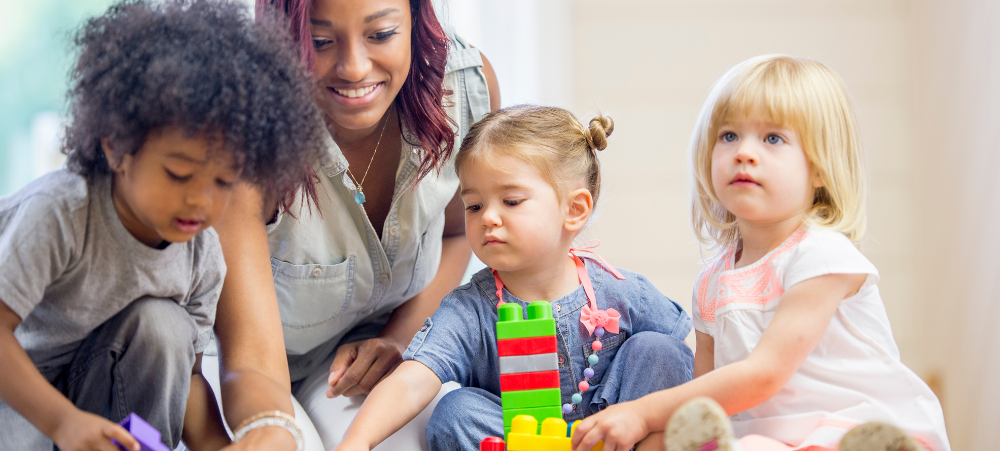
As parents consider the best path for their child’s development, early childhood education and care stand out as essential building blocks for future success. Ursula Assis, Country Director of Dibber International Preschools, emphasises the profound impact of early learning on a child’s cognitive, social, and emotional development.
“Learning begins at birth, and the experiences children have in their early years lay the foundation for lifelong learning. At Dibber, we recognise that tapping into a child’s natural curiosity through structured learning and social interaction offers remarkable benefits,” says Assis.
Early childhood care and education provide numerous developmental advantages beyond the classroom. From literacy and numeracy skills to nurturing independence and social interaction, the advantages of early learning experiences are transformative.
Here are the top 7 advantages of early childhood education and care:
Literacy and Numeracy Skills
Early exposure to a structured curriculum helps children easily grasp fundamental concepts like letters and numbers. “A well-designed early education program ensures that children build a strong foundation in literacy and numeracy, essential for future academic success,” explains Assis.
Independence
Being introduced to a world outside of their home environment allows children to develop independence. They learn to explore, solve problems, and make decisions in a safe and supportive setting.
Socialisation
Early learning centres provide valuable opportunities for children to socialise with their peers. “Socialisation is critical for children as they learn the basics of teamwork, cooperation, and empathy through interactions with other children of the same age,” says Assis.
Confidence
Encouraging teachers play a significant role in helping children feel seen and heard. When a child’s contribution is valued, their confidence and self-esteem grow. “At Dibber, we are committed to fostering an environment where children feel empowered to express themselves,” adds Assis.
Routine
A structured daily routine helps children feel secure and in control of their environment. Knowing what to expect throughout the day supports emotional well-being and helps children manage transitions more smoothly.
Lifelong Learning
Early childhood education cultivates a positive relationship with learning by making learning enjoyable and stimulating. “When children develop a love for learning early on, they become eager to explore new ideas and challenges throughout their lives,” Assis highlights.
Exposure to Diversity
Early childhood education introduces children to a diverse world. They meet peers and educators from various cultural, religious, and social backgrounds, helping them appreciate diversity and fostering a sense of unity in difference. “Exposure to diversity from a young age allows children to develop a global mindset, which is invaluable in today’s interconnected world,” notes Assis.
The holistic benefits of early childhood education cannot be overstated. Children develop crucial life skills, improve their academic readiness, and build strong social connections, all within an environment that encourages play-based learning.
“As we continue to provide high-quality education at Dibber International Preschools, we are dedicated to giving children the opportunity to grow, learn, and thrive in a nurturing environment that supports their development in every aspect of life,” concludes Assis.
Dibber International Preschools is a global leader in early childhood education, with a commitment to providing high-quality preschool experiences that foster children's holistic development - with over six hundred high-quality preschools across ten countries and with a focus on the Dibber Heart Culture and customised learning approaches, Dibber aims to nurture the potential of every child, ensuring they receive the best start in their educational journey.
“Our mission is to embark as many children as possible on a magical learning journey – giving them the best start in life and fostering a lifelong love of learning.” — Hans Jacob Sundby, Founder, Dibber International Preschools
Crowthorne, Midrand – Today marked the official opening of Dibber The Whisken. This brand-new early childhood development centre is situated in the heart of the Whisken Lifestyle Estate on Whisken Avenue. The new campus is the latest addition to Dibber’s growing family of international preschools in South Africa. It offers young children in the local community a nurturing and inspiring start to their learning journey.
Located in one of Gauteng’s vibrant residential hubs, Dibber The Whisken is set to become a cornerstone for families. It offers meaningful, values-driven early learning in a safe and stimulating environment. The school is led by principal Drew Ellis and her passionate team of educators. Bharti Daya, Dibber’s Pedagogy and Operational Lead for Montessori campuses in South Africa, provides pedagogical guidance.
With a global foundation across nine countries, Dibber is known for its heart-led early education. In South Africa, the network now spans 17 schools across Gauteng and the Western Cape. A new Western Cape campus opens in March. A franchise model will soon launch to expand access even further.
Dibber’s unique philosophy centres on nurturing the whole child, with a strong emphasis on the holistic development of the child. Every Dibber school is rooted in its local community. The curriculum combines global best practices with South African cultural richness and play-based discovery. Children are encouraged to explore, question, imagine, and connect. Engaged educators see and celebrate the individual strengths of every child.
“At Dibber, we believe children are the most important people in the world. That belief shapes everything we do – from how we build our classrooms to how we greet each child in the morning. With the opening of Dibber The Whisken, we’re so proud to extend this culture of care and curiosity to even more families,” said Lizelle ‘t Lam, Growth, Integration and Marketing Lead, Dibber South Africa.
The Whisken campus offers Montessori-inspired classrooms and interactive outdoor play areas. The daily rhythm balances structure with creativity. Parents benefit from Dibber’s emphasis on family partnerships, transparent communication, and values-based education.
Dibber invites all parents in the Midrand and greater Johannesburg area to explore what makes its schools different. Open Days and enrolment tours are available upon request.
Dibber International Preschools is a global leader in early childhood education, with a commitment to providing high-quality preschool experiences that foster children's holistic development - with over six hundred high-quality preschools across ten countries and with a focus on the Dibber Heart Culture and customised learning approaches, Dibber aims to nurture the potential of every child, ensuring they receive the best start in their educational journey.
You know that moment when you are sitting in traffic, staring at the red brake lights ahead, and your mind is racing through the list: Did I pack the lunchbox? Did I pay the electricity bill? Will I make it to the office on time? And then, like a punch in the gut, the thought hits: Am I even doing enough for my child?
This is the reality for so many South African parents. We are carrying an invisible weight that no one sees, the emotional load that comes with raising children in a country where safety concerns, economic uncertainty, and relentless work-life pressure collide every single day. It is not just about getting through the day; it is about holding it all together while the ground beneath us feels shaky.
We wake up to headlines about rising costs, load-shedding schedules, and crime alerts. Then we rush to pack lunchboxes, navigate traffic, and show up at work like everything is fine. But beneath the surface, many of us are running on fumes, trying to be present for our children while silently wondering if we are failing them. Parenting here is not about perfection. It is about survival. And yet, in the middle of this chaos, something powerful often goes unnoticed: the role of early childhood education in lightening that load.
Because here is the truth: when parents feel supported, children thrive. High-quality early childhood education does not just teach ABCs; it becomes an emotional anchor for families. It is the teacher who notices your child’s anxious face and gently reassures them. It is the predictable routine that gives your little one stability, so you can breathe a little easier. It is the educator who greets you by name, shares a small win about your child, and reminds you that you are doing an excellent job, even on the days you feel like you are barely holding on.
Schools like Dibber understand this. They do not see parents as people who simply “drop and go.” They see you as partners. They know that when you walk through the door, you are not just handing over a child, you are handing over your heart, your worries, your hopes. And they meet that with Heart Culture: a way of being that says, “We see you. We are with you.” It is the quiet reassurance that you are not alone in this. It is sending a photo of your child’s joyful moment during the day so that, stuck in traffic, you feel connected instead of guilty. It is creating spaces where children feel loved, and parents feel seen.
Imagine this: a mom who has been up all night worrying about bills walks into a centre where her child runs into the arms of someone who truly knows them. The teacher smiles, says, “He told me the funniest story today,” and suddenly, for a moment, the weight lifts. That moment matters. It is not just childcare; it is care for the whole family.
And here is the thing: you do not need a Pinterest-perfect routine to ease the emotional load. Start small. Create one predictable ritual, like a bedtime story or a morning hug. Name feelings aloud, for yourself and your child. “I’m tired today, but I’m happy to be with you.” Lean on your child’s educators, share what is hard, and celebrate what is working. Partnership starts with honesty.
Parenting in South Africa is tough, but you are not alone. When early years education is done right, it does not just shape children; it strengthens families. It reminds parents that they do not have to carry the emotional load alone. And in a world that feels uncertain, that kind of support is everything.
Dibber International Preschools is a global leader in early childhood education, with a commitment to providing high-quality preschool experiences that foster children's holistic development - with over six hundred high-quality preschools across ten countries and with a focus on the Dibber Heart Culture and customised learning approaches, Dibber aims to nurture the potential of every child, ensuring they receive the best start in their educational journey.
In a world of packed schedules, rising anxieties, and digital distractions, the way we parent has never been more complex, or more important. Children don’t need perfect childhoods, they need real ones. Ones filled with play, protection and participation to grow.
“Today’s parenting styles often come from a place of deep love,” says Ursula Assis, Country Director for Dibber International Preschools in South Africa. “But when we hover too closely or clear every obstacle before our children reach it, we can unintentionally rob them of the small struggles that help them thrive.”
Modern terms like ‘helicopter parenting’ and ‘lawnmower parenting’ describe well-intentioned behaviours. ‘hovering’ to protect and help or smoothing every path to prevent discomfort. While these approaches are rooted in care, they often overlook what child development experts call the ‘just-right challenge’. Dibber’s approach, built on Nordic pedagogical principles, embraces this balanced philosophy which gives children the support they need while encouraging and maintaining independence.
“Children build confidence by trying, failing, and trying again. That’s where resilience begins”, explains Assis. “When we pair warmth with boundaries, and love with opportunity, we see incredible growth -not just academically, but socially and emotionally.”
Free play remains one of the most powerful developmental tools in early childhood. Whether it’s climbing, balancing, or imaginative playing, these experiences help children build executive function, manage emotions, and understand social dynamics. With adult support close by – but not overbearing – these activities become safe and enriching opportunities to learn.
In South Africa, Dibber believes parents have a unique advantage: community. Grandparents, neighbours, and extended families as they often play a vital role in raising children. “That village of support is our strength,” Assis adds. “We encourage families to use it -plan outdoor playdates, invite cousins to join, share learning spaces. There’s no app that can replace the value of human connection.”
At Dibber’s campuses across Gauteng, the Western Cape, and KwaZulu-Natal, the focus is on nurturing not just cognitive skills, but the whole child. Teachers act as gentle guides, helping children navigate early life’s hurdles with empathy, patience, and clear structure. The result? Children who feel seen, heard, and confident enough to explore the world.
“Resilience doesn’t come from a perfectly smooth path. It comes from knowing that when life gets bumpy, someone is there to support you while you take the wheel,” says Assis. “At Dibber, we’re not raising perfectionists—we’re helping raise capable, compassionate human beings.”
For parents wondering whether they’re doing it ‘right’, Dibber offers this reassurance: there is no single perfect parenting style. What matters most is balance. Guide, protect, listen, and most importantly let children play, explore, and grow into who they want to be.
Dibber International Preschools is a global leader in early childhood education, with a commitment to providing high-quality preschool experiences that foster children's holistic development - with over six hundred high-quality preschools across ten countries and with a focus on the Dibber Heart Culture and customised learning approaches, Dibber aims to nurture the potential of every child, ensuring they receive the best start in their educational journey.
We use cookies on our website to give you the most relevant experience by remembering your preferences and repeat visits. By clicking “Accept All”, you consent to the use of ALL the cookies. However, you may visit "Cookie Settings" to provide a controlled consent.Accept All
Manage consent
Privacy Overview
This website uses cookies to improve your experience while you navigate through the website. Out of these, the cookies that are categorized as necessary are stored on your browser as they are essential for the working of basic functionalities of the website. We also use third-party cookies that help us analyze and understand how you use this website. These cookies will be stored in your browser only with your consent. You also have the option to opt-out of these cookies. But opting out of some of these cookies may affect your browsing experience.
Necessary cookies are absolutely essential for the website to function properly. These cookies ensure basic functionalities and security features of the website, anonymously.
Cookie
Duration
Description
cookielawinfo-checkbox-advertisement
1 year
The cookie is set by GDPR cookie consent to record the user consent for the cookies in the category "Advertisement".
cookielawinfo-checkbox-analytics
11 months
This cookie is set by GDPR Cookie Consent plugin. The cookie is used to store the user consent for the cookies in the category "Analytics".
cookielawinfo-checkbox-functional
11 months
The cookie is set by GDPR cookie consent to record the user consent for the cookies in the category "Functional".
cookielawinfo-checkbox-necessary
11 months
This cookie is set by GDPR Cookie Consent plugin. The cookies is used to store the user consent for the cookies in the category "Necessary".
cookielawinfo-checkbox-others
11 months
This cookie is set by GDPR Cookie Consent plugin. The cookie is used to store the user consent for the cookies in the category "Other.
cookielawinfo-checkbox-performance
11 months
This cookie is set by GDPR Cookie Consent plugin. The cookie is used to store the user consent for the cookies in the category "Performance".
viewed_cookie_policy
11 months
The cookie is set by the GDPR Cookie Consent plugin and is used to store whether or not user has consented to the use of cookies. It does not store any personal data.
Analytical cookies are used to understand how visitors interact with the website. These cookies help provide information on metrics the number of visitors, bounce rate, traffic source, etc.
Cookie
Duration
Description
_ga
2 years
This cookie is installed by Google Analytics. The cookie is used to calculate visitor, session, campaign data and keep track of site usage for the site's analytics report. The cookies store information anonymously and assign a randomly generated number to identify unique visitors.
_gid
1 day
This cookie is installed by Google Analytics. The cookie is used to store information of how visitors use a website and helps in creating an analytics report of how the website is doing. The data collected including the number visitors, the source where they have come from, and the pages visted in an anonymous form.
Other uncategorized cookies are those that are being analyzed and have not been classified into a category as yet.
Cookie
Duration
Description
_gat_gtag_UA_18530557_4
1 minute
No description
pron_ip
session
No description
pvc_visits[0]
1 day
This cookie is created by post-views-counter. This cookie is used to count the number of visits to a post. It also helps in preventing repeat views of a post by a visitor.
tk_ai
session
Gathers information for WordPress by themselves, first party analytics tool about how WP services are used. A collection of internal metrics for user activity, used to improve user experience.