For millions of South African children, crowded classrooms, and limited resources continue to hold back a generation of learners. BIC continues to champion education by supporting learners, teachers, and communities to ensure access to quality learning so that, despite the challenges, children have the tools and support they need to reach their full potential.
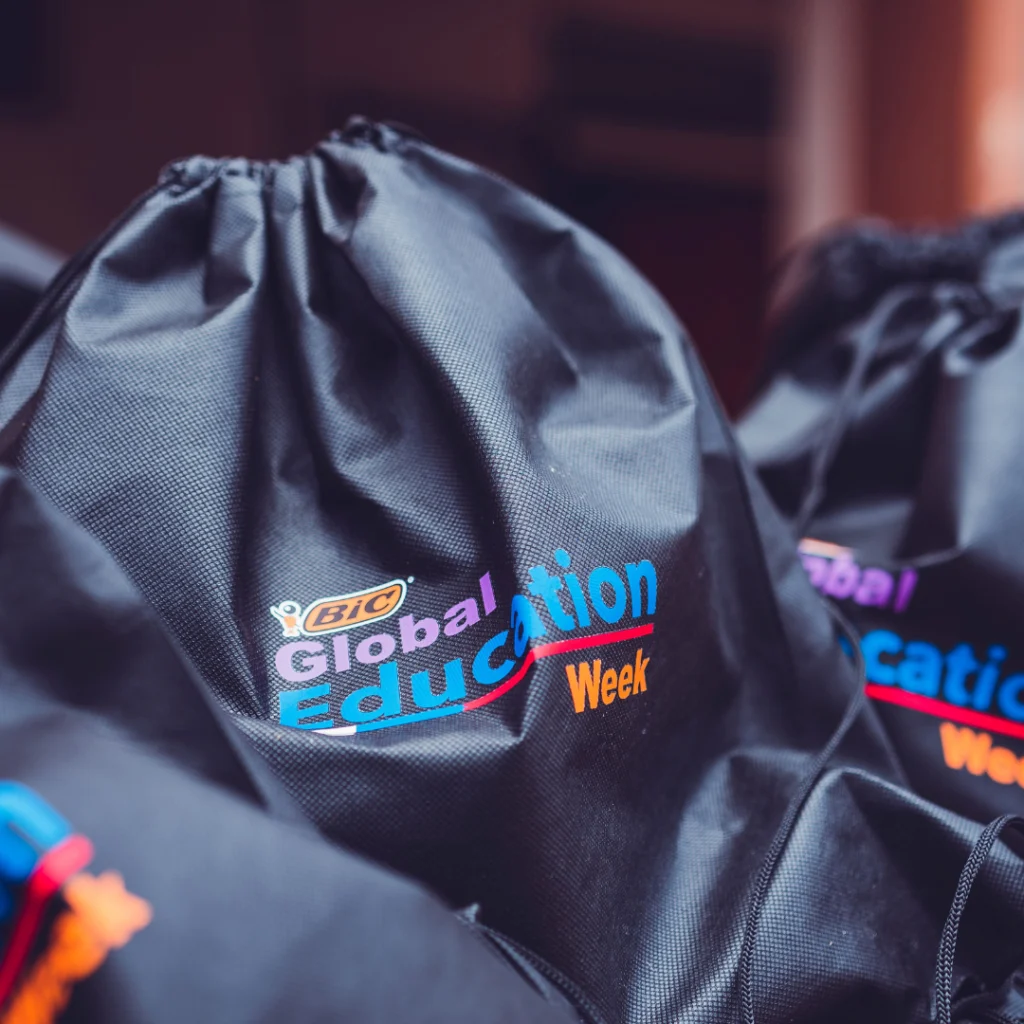
This November, BIC South Africa joins team members around the world for the sixth Global Education Week (GEW), reaffirming its mission to put the power of learning in children’s hands. GEW is part of BIC’s global “Writing the Future, Together” sustainability program launched in 2018, which seeks to improve learning conditions for 250 million students globally by 2025.
Data from the Department of Basic Education* revealed of the Grade 10 boys who started school in 2022, fewer than half made it to Grade 12 in 2024 without repeating a year. Girls fared only slightly better, and roughly 172,000 pupils dropped out entirely.
Leaving school before matric does not just end a child’s education – it cuts off their chances of finding work, building a future, and breaking the cycle of poverty.
For BIC, helping students learn goes beyond GEW. Since 2012, the company has donated over 17 million pens to South African schools, keeping classrooms stocked and learners equipped. In 2025 alone, through its various initiatives in South Africa, BIC has:
Donated over one million pens and pencils via Buy a Pen Donate a Pen
Visited 466 high schools and 137 primary schools
Hosted 46 roadshow activations in high schools across the country as part of our effort to motivate learners and reduce South Africa’s dropout rate
Reached more than 500 000 students and 16 000 teachers in need
Distributed 35 000 pen licences to primary school learners and 115 000 pens to matric learners
Globally, Global Education Week activities have impacted more than 1.9 million learners in the past three years, with over 11 million products donated to schools and educational programs. By 2024, BIC had already reached 210 million beneficiaries worldwide, showing real progress toward its 250 million-student goal.
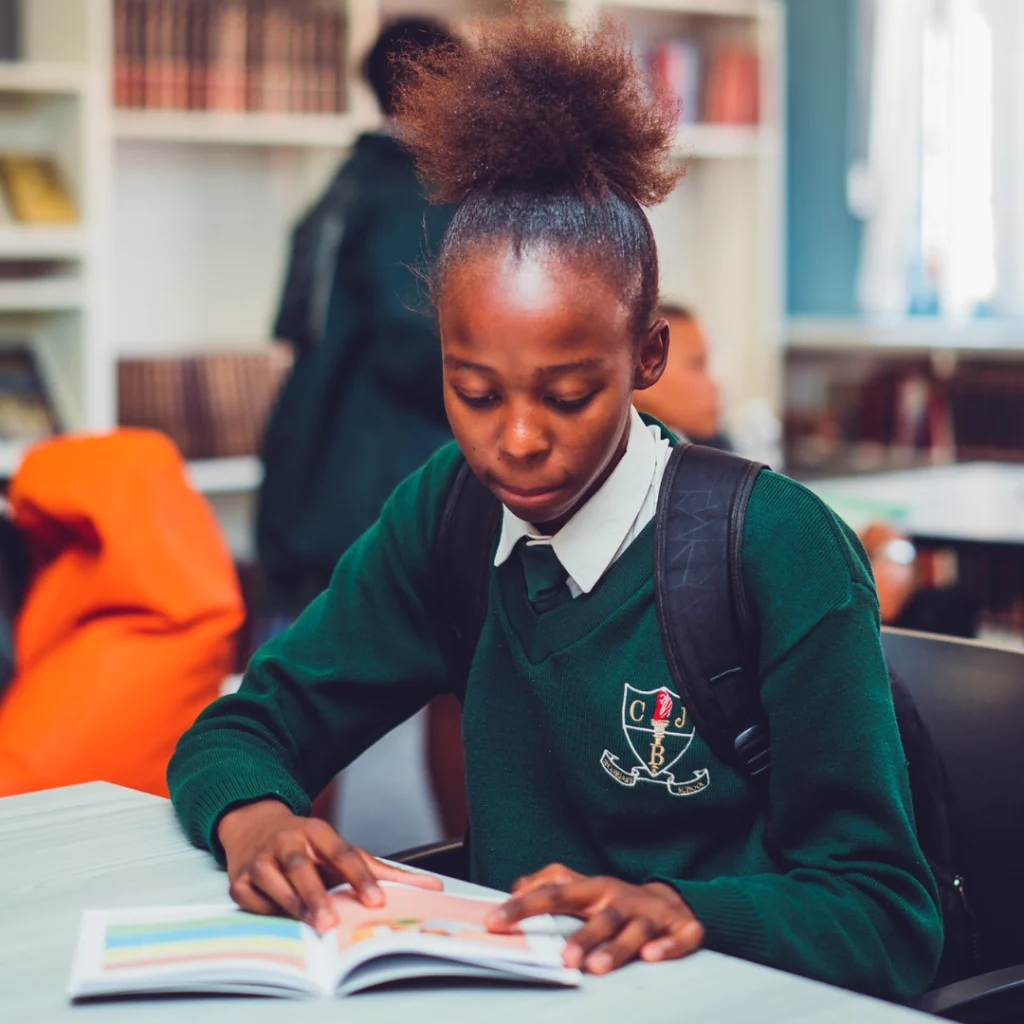
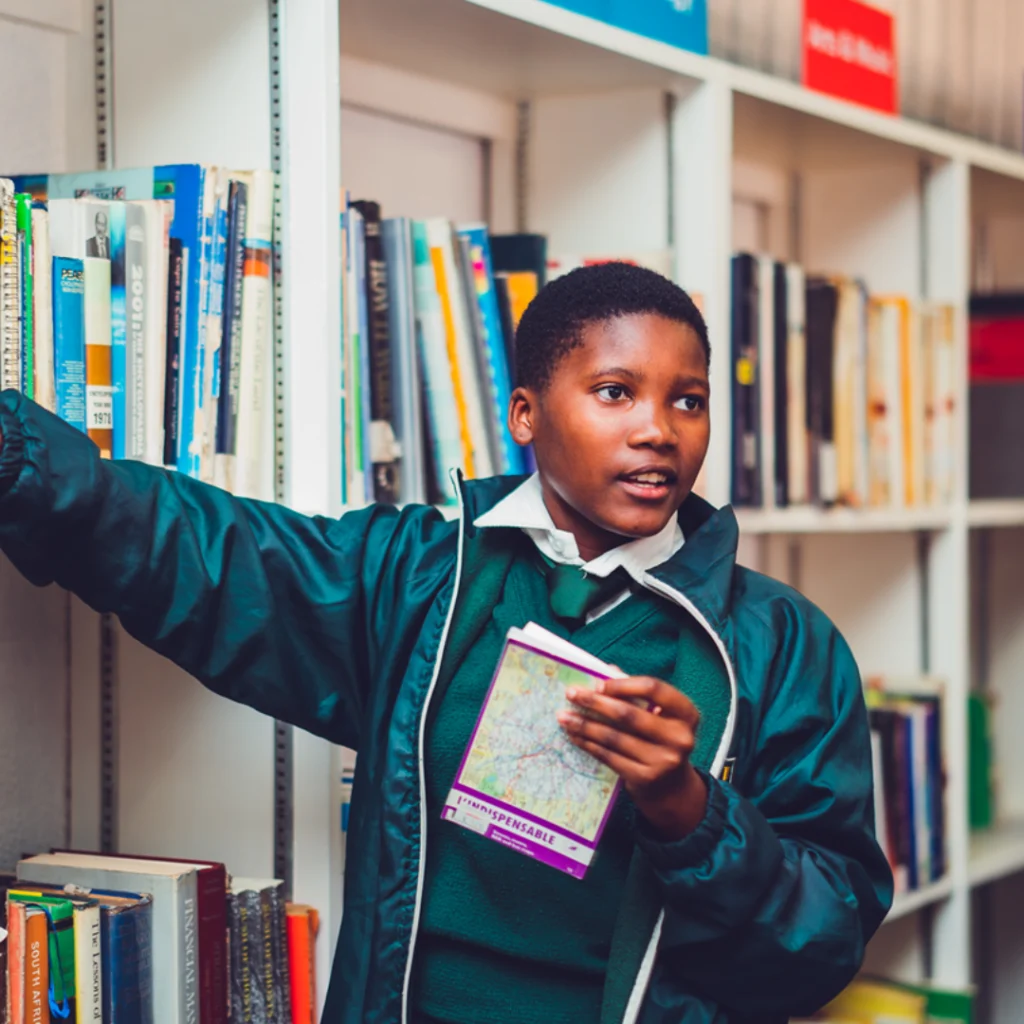
This year, BIC’s GEW focused on CJ Botha Secondary School in Industria, Johannesburg, near the company’s manufacturing site. BIC team members joined forces to refresh and reorganize the school library. The project also included providing teachers and learners with essential writing tools.
“Every child deserves the dignity of a fair start in life,” says Marc D’Oliveira, General Manager of BIC Southern and East Africa.
“Through GEW and our ongoing outreach, we want to ensure that students not only stay in school but also enjoy learning. Change happens one classroom, one teacher, and one student at a time.”
The story of BIC’s involvement in education is one of consistency. Each year, the company looks at how it can contribute where the need is greatest, whether that means equipping teachers, transforming learning spaces, or providing students with the basic tools that enable them to express their ideas and structure their thoughts.
Writing, after all, remains one of the most fundamental skills in education. It underpins how we communicate, reason, and remember. For many learners, something as simple as having a reliable pen can mean the difference between participation and silence in the classroom.
“Writing tools play an important role in cognitive development,” adds D’Oliveira. “They help learners think more clearly, capture what they learn, and build confidence in expressing themselves. That’s why access to writing tools is a necessity.”
BIC believes that the responsibility for improving education cannot fall solely on government or educators. It requires collective action with businesses, parents, and communities working together to create conditions where young people can thrive.
Through GEW, BIC’s team members also volunteer their time, sharing skills and supporting initiatives that uplift schools and teachers. This hands-on involvement reflects a belief that genuine corporate citizenship combines global vision with local impact.
Across every region where BIC operates, the company’s actions during GEW are guided by the same principle: that small, consistent efforts lead to big change over time.
As 2025 draws to a close, BIC is still pushing toward its commitment to improving learning conditions for 250 million students by 2025. GEW is a time to reflect on the progress made towards that goal, recognize the work still ahead, and keep driving toward a world where every learner has the chance to perform, express themselves, and succeed.
*Research used data from the Department of Basic Education’s Learner Unit Record Information and Tracking system (LURITS) to monitor pupil’s movement through grades 10 to 12
Parenting Hub is one of South Africa’s largest online lifestyle magazines, targeted toward Parents.
We understand that there are many aspects that encompass a Mother, Father or Child and strive toward providing resources and services that accommodates this.
Our content is aimed to inform and educate families on issues starting from pregnancy through to the challenges of the teen-age years.
its difficult but parents too really need to up their game and assist and monitor their kids,that is the basis of their educational journey,thats where they first learn their attitude towards schooling and schoolwork.
If you’re raising a neurodivergent child in South Africa, you’re already doing a lot.
Appointments. School meetings. Forms. “Can you just send that report again?” moments. The daily juggling act of home + school + therapy + life.
So when someone says, “You might be able to claim tax relief,” it can feel like one more admin mountain… right when you’re already running on fumes.
Here’s the good news: tax relief is available, and there’s a real framework designed to give families some breathing room.
The bad news is: it’s not always obvious how it works, and the internet is full of conflicting advice.
This guide will help you understand the basics without spiralling.
Tax relief is available in South Africa
South Africa’s tax system includes support for families who carry additional medical and care costs. The main mechanism is the Additional Medical Expenses Tax Credit (AMTC).
It’s not a cash payout. It’s a tax credit that reduces the amount of normal tax you pay.
For many families, it becomes a crucial “safety valve”, especially when you’re paying for the kind of support your child needs to function well in the real world.
Where neurodiversity fits into the SARS framework
SARS doesn’t have a neat category called “neurodivergence.”
Instead, conditions like Autism Spectrum Disorder (ASD), ADHD, and PDA are considered based on their functional impact, in other words, how much they limit day-to-day life.
For tax purposes, a “disability” is defined as a moderate to severe limitation in a person’s ability to function or perform daily activities (including learning, thinking, communicating).
If your child’s challenges create a moderate to severe limitation that is expected to last more than a year, your family may qualify for tax relief.
If the limitations are considered milder, the condition may fall under what SARS calls a “physical impairment.” (Despite the name, this category isn’t limited to physical conditions and can still apply in some neurodevelopmental contexts.)
Relief may still be available, but often with different thresholds and limits.
The common misunderstanding that trips parents up
One of the biggest myths is:
“If I have the diagnosis, we automatically qualify.”
Not necessarily.
SARS looks at whether the condition remains a significant limitation even after what it calls “maximum correction” (including appropriate therapy, treatment, or medication).
Because every child is different, eligibility is assessed case by case. Two families can have the same diagnosis and still have different outcomes depending on how the condition impacts daily functioning.
Which is frustrating, yes. But also: it’s why getting clarity early matters.
Why paperwork and medical confirmation matter (even if you hate admin)
The admin requirements can feel like adding weight to an already heavy load.
But they’re also the keys to unlocking tax relief.
A diagnosis label isn’t enough. You need formal medical confirmation from a registered practitioner who is trained to give an opinion on your child’s condition.
The key document is the ITR-DD form (Confirmation of Diagnosis of Disability).
Whether this form is required in your situation can depend on how your child’s needs are classified (which is exactly where many parents get stuck).
Important: you typically don’t submit the form with your annual return, but you must keep it, along with invoices and proof of payments, for at least five years.
SARS often verifies these claims, so having your paperwork organised from the start protects you later.
Think of it like this: a few clicks to save documents today can save you hours of stress later.
You don’t have to figure it all out today
If this feels complex, you’re not meant to decode it alone in between lunchboxes and meltdowns.
So we created a simple starting point for parents:
✅ Download the tax relief cheat sheet at www.dalza.com/tax-relief-cheat-sheet/ A clear summary of what you need to know (and what to gather), without the jargon.
Supporting a neurodivergent child requires enough time, energy, and emotional bandwidth as it is. Tax admin shouldn’t be another thing you have to white-knuckle your way through.
Start with the cheat sheet. Get the lay of the land. And take it one step at a time.
This content is provided for general information purposes only. It is not intended as legal, tax, or financial advice. Tax outcomes depend on individual circumstances, and eligibility for tax relief is assessed by SARS on a case-by-case basis. We recommend consulting a registered tax practitioner or qualified professional before submitting any tax claims
Parenting Hub is one of South Africa’s largest online lifestyle magazines, targeted toward Parents.
We understand that there are many aspects that encompass a Mother, Father or Child and strive toward providing resources and services that accommodates this.
Our content is aimed to inform and educate families on issues starting from pregnancy through to the challenges of the teen-age years.
The Development of Maths Anxiety – Common Challenges that Children Face
Studies show that at around age 8 children start losing their spontaneity and become more anxious about Maths. Why is this?
Maths is Unforgiving!
Maths measures us like no other subject and affects our self-esteem like no other subject. The perception is that if you are good at Maths, you are clever.
A Maths answer is either perfect or not. An answer of 7 x 7 = 50 is very close but very wrong. None of us like being put on the spot and being wrong.
Speed kills
Many children equate speed to intelligence. Pressure to give answers quickly often builds anxiety in children that need a bit more time.
Speed tests for basic facts are often counter-productive and serve to make the faster child quicker and the slower child even slower and more anxious.
Children who work slowly end up doing fewer sums and get caught up in a downward spiral. Developing understanding takes time.
When we emphasize speed only, we send the incorrect message that all problems should be solved quickly, which hurts children’s persistence on more complicated tasks.
Emphasis on Rote learning and memory
An over emphasis on rote learning impacts children that have a limited working memory and long-term memory.
Many of our ideas around teaching Maths revolve around memorising Maths information.
All of us differ in our ability to do that especially when what we must memorise has no meaning.
Negative messages about Maths by Parents and Teachers
Many of us send out messages of a fixed mindset. “I am just not good at Maths and will never be good at it. This is just the way I am!”
One often hears parents say: “I was never good at Maths, so it’s not surprising my child isn’t good either.” A growth mindset says that we can all become better through practice.
Ineffective Strategies
Many children have an over-reliance on counting.
This leads to problems in developing fluency for the four operations.
Poor number sense and an inability to estimate leads to difficulty in understanding place value. This in turn has a negative effect on children’s ability to develop effective strategies to do calculations fluently.
It is a common misconception that Maths is all about “rules” and procedures. Algorithms play a big role in Maths but a lot of it needs to be understood. Maths is about making sense of problems and understanding why particular strategies work.
Maths becomes tricky if we don’t Understand what the Symbols mean
Somewhere a young child is confronted with the fact that the number 7 on a clock can represent 7, sometimes 25 and at other times 35.
When working with money, two 50 cent coins equal a R1 coin.
When measuring length, we expect children to know that 100cm =1m.
All of this is very confusing for a young child if they don’t have conceptual understanding of what the symbols represent.
What can I as a parent do?
Here are a few simple ideas for you to think about.
Your Child first, Maths second
Know that your child is a little human being not a little human calculator.
We are human beings not human doings.
Our ability to do Maths does not define who we are.
Our ability to do Maths does not define our worth.
Our ability to do Maths does not determine whether we will be financially successful one day.
It is also true that Maths plays a big role in the school curriculum.
Battling with Maths is not nice. Full Stop.
Maths is a pathway to many careers.
It feels nice to be able to solve a Maths problem.
We firmly believe that all children can develop a good foundation in Maths.
Be Authentic
Know that you and your child are unique and that you both have your own unique gifts.
Take a firm resolution to never compare your child with other children.
All children develop differently and at their own pace.
There is no rush.
Regular opportunties for learning in an enabling environment gives your child the best chance.
You as a Mom are unique with your own talents and parenting style.
Take a firm resolution to never compare yourself with other Moms.
You don’t have to be a great Mathematician in order to be a great Maths Mom.
There is no Ceiling
Know that your beliefs determine everything. Isn’t it amazing and scary that the beliefs that we infuse in our kids will be the beliefs that they will most probably carry with them for the rest of their lives.
Children become what those around them believe them to be. The biggest gift that you can give your child is to help them develop a good feeling about themselves.
Your child knows more than what you think.
You know more than what you think.
Your child is capable of much more than what you might believe.
You are capable of much more than what you might believe.
At the end of the day how you interact with your child is foundational.
Read through these tips a few times and reflect on your belief systems around Maths.
In our next article we will look at specific topics in the curriculum and give you some pointers of how to help your child.
If you are interested in chatting further you are welcome to contact us at www.mikimaths.com
Parenting Hub is one of South Africa’s largest online lifestyle magazines, targeted toward Parents.
We understand that there are many aspects that encompass a Mother, Father or Child and strive toward providing resources and services that accommodates this.
Our content is aimed to inform and educate families on issues starting from pregnancy through to the challenges of the teen-age years.
“Our mission is to embark as many children as possible on a magical learning journey – giving them the best start in life and fostering a lifelong love of learning.” — Hans Jacob Sundby, Founder, Dibber International Preschools
Crowthorne, Midrand – Today marked the official opening of Dibber The Whisken. This brand-new early childhood development centre is situated in the heart of the Whisken Lifestyle Estate on Whisken Avenue. The new campus is the latest addition to Dibber’s growing family of international preschools in South Africa. It offers young children in the local community a nurturing and inspiring start to their learning journey.
Located in one of Gauteng’s vibrant residential hubs, Dibber The Whisken is set to become a cornerstone for families. It offers meaningful, values-driven early learning in a safe and stimulating environment. The school is led by principal Drew Ellis and her passionate team of educators. Bharti Daya, Dibber’s Pedagogy and Operational Lead for Montessori campuses in South Africa, provides pedagogical guidance.
With a global foundation across nine countries, Dibber is known for its heart-led early education. In South Africa, the network now spans 17 schools across Gauteng and the Western Cape. A new Western Cape campus opens in March. A franchise model will soon launch to expand access even further.
Dibber’s unique philosophy centres on nurturing the whole child, with a strong emphasis on the holistic development of the child. Every Dibber school is rooted in its local community. The curriculum combines global best practices with South African cultural richness and play-based discovery. Children are encouraged to explore, question, imagine, and connect. Engaged educators see and celebrate the individual strengths of every child.
“At Dibber, we believe children are the most important people in the world. That belief shapes everything we do – from how we build our classrooms to how we greet each child in the morning. With the opening of Dibber The Whisken, we’re so proud to extend this culture of care and curiosity to even more families,” said Lizelle ‘t Lam, Growth, Integration and Marketing Lead, Dibber South Africa.
The Whisken campus offers Montessori-inspired classrooms and interactive outdoor play areas. The daily rhythm balances structure with creativity. Parents benefit from Dibber’s emphasis on family partnerships, transparent communication, and values-based education.
Dibber invites all parents in the Midrand and greater Johannesburg area to explore what makes its schools different. Open Days and enrolment tours are available upon request.
Parenting Hub is one of South Africa’s largest online lifestyle magazines, targeted toward Parents.
We understand that there are many aspects that encompass a Mother, Father or Child and strive toward providing resources and services that accommodates this.
Our content is aimed to inform and educate families on issues starting from pregnancy through to the challenges of the teen-age years.
We use cookies on our website to give you the most relevant experience by remembering your preferences and repeat visits. By clicking “Accept All”, you consent to the use of ALL the cookies. However, you may visit "Cookie Settings" to provide a controlled consent.Accept All
Manage consent
Privacy Overview
This website uses cookies to improve your experience while you navigate through the website. Out of these, the cookies that are categorized as necessary are stored on your browser as they are essential for the working of basic functionalities of the website. We also use third-party cookies that help us analyze and understand how you use this website. These cookies will be stored in your browser only with your consent. You also have the option to opt-out of these cookies. But opting out of some of these cookies may affect your browsing experience.
Necessary cookies are absolutely essential for the website to function properly. These cookies ensure basic functionalities and security features of the website, anonymously.
Cookie
Duration
Description
cookielawinfo-checkbox-advertisement
1 year
The cookie is set by GDPR cookie consent to record the user consent for the cookies in the category "Advertisement".
cookielawinfo-checkbox-analytics
11 months
This cookie is set by GDPR Cookie Consent plugin. The cookie is used to store the user consent for the cookies in the category "Analytics".
cookielawinfo-checkbox-functional
11 months
The cookie is set by GDPR cookie consent to record the user consent for the cookies in the category "Functional".
cookielawinfo-checkbox-necessary
11 months
This cookie is set by GDPR Cookie Consent plugin. The cookies is used to store the user consent for the cookies in the category "Necessary".
cookielawinfo-checkbox-others
11 months
This cookie is set by GDPR Cookie Consent plugin. The cookie is used to store the user consent for the cookies in the category "Other.
cookielawinfo-checkbox-performance
11 months
This cookie is set by GDPR Cookie Consent plugin. The cookie is used to store the user consent for the cookies in the category "Performance".
viewed_cookie_policy
11 months
The cookie is set by the GDPR Cookie Consent plugin and is used to store whether or not user has consented to the use of cookies. It does not store any personal data.
Analytical cookies are used to understand how visitors interact with the website. These cookies help provide information on metrics the number of visitors, bounce rate, traffic source, etc.
Cookie
Duration
Description
_ga
2 years
This cookie is installed by Google Analytics. The cookie is used to calculate visitor, session, campaign data and keep track of site usage for the site's analytics report. The cookies store information anonymously and assign a randomly generated number to identify unique visitors.
_gid
1 day
This cookie is installed by Google Analytics. The cookie is used to store information of how visitors use a website and helps in creating an analytics report of how the website is doing. The data collected including the number visitors, the source where they have come from, and the pages visted in an anonymous form.
Other uncategorized cookies are those that are being analyzed and have not been classified into a category as yet.
Cookie
Duration
Description
_gat_gtag_UA_18530557_4
1 minute
No description
pron_ip
session
No description
pvc_visits[0]
1 day
This cookie is created by post-views-counter. This cookie is used to count the number of visits to a post. It also helps in preventing repeat views of a post by a visitor.
tk_ai
session
Gathers information for WordPress by themselves, first party analytics tool about how WP services are used. A collection of internal metrics for user activity, used to improve user experience.




2 thoughts on “Putting the Power of Learning in Learners’ Hands During Global Education Week”
its difficult but parents too really need to up their game and assist and monitor their kids,that is the basis of their educational journey
its difficult but parents too really need to up their game and assist and monitor their kids,that is the basis of their educational journey,thats where they first learn their attitude towards schooling and schoolwork.