
Why does reading matter?

 Why do we tell children to read?

Why do we always tell children that reading is beneficial for them? And is it even true in this digital age? Does reading novels actually help older children in any way? Does reading to younger children have identifiable benefits?

And, finally, does reading really matter in any way?

Yes – reading is vital, life-changing and stimulating for some very important reasons. Let’s take a look at how reading assists children in their everyday lives, and then look further to see how it can give them an overall fulfilling, rewarding life.

Books help children develop vital language skills.

In children, reading skills do exist, but they need to be developed. Learning in school, and later on at university requires advanced levels of reading. No reading SKILL equals no advancement in the university of life. Whatever path you want to follow in life, be it academia, sciences or even entrepreneurship and the arts, you need reading skills. And to cope with life as a normal functioning adult, reading skills are of utmost importance for everyday use.

People studying futurology have hailed the death of the written word as imminent. However, the exact opposite has happened. With the advent of the internet and the overload of information that we are bombarded with every day, reading a vital skill that everyone wants to acquire as fast as possible. Skimming and searching through copious amounts of information as fast and as accurately as possible is a valued skill. Paperless does not mean without the written word. You can read the same report in many different ways, formats and presentations at the click of a button. A couple of written words today can cause an international uproar in minutes. In order to understand what you read, other skills are also necessary, such as critical thinking, evaluation, anticipation, and moderation.

Without these skills, reading would not mean much at all.

The more children read, the better they become at reading.

Yes, it’s true. If children enjoy what is being read to them, the more interested they will become in doing as much as possible to fine tune and develop their reading skills. This means they will be fully capable adults with access to all information anywhere they choose. It is also important to enjoy the activity of reading. If it takes you out of your life and introduces you to other worlds, thoughts, places, and things, then you are the richer for it. When a child struggles to read, it will continuously be an emotional obstacle. So, it is important to forge a positive attitude towards reading as early as possible.

Children who read frequently will develop enquiring minds and become more interested in becoming avid readers themselves. If you read out loud to children, they become familiar with grammatical styles and expression. Through this, they learn to speak better and develop a greater understanding of how to express themselves verbally. Through this they are also able to pick up on empathy as they read stories through the eyes of different characters. They learn to identify similarities and differences between themselves and various characters. The list goes on.

Children who read a lot regardless of whether it is newspapers, the internet, books or magazines are exposed to a greater range of new and interesting vocabulary. They do not have to understand the actual word as most times they can work it out from the context of the sentence and next time they see it, they will have learned something without even realising it. Reading aloud also helps children with the pronunciation of words as they link the word on the page to the word that is being spoken – this is true even if they cannot yet sound out the word themselves.

Reading is an amazing experience. It can open up a whole new world to children, enhancing their lives with places, things, and descriptions they have never heard of before. Reading also brings a completely new world to a child – whether it is factual, scientific or simply for self-interest. There are so many resources available from which children can read, that if they take to it and realize how useful it can be, then, literally, the world is their oyster – there is no end to what they can read and access. It would be a magical experience for them.

Reading will open up a whole new understanding of humanity, and its history from all over the world. And nowhere is it more obvious that we live in a “global village” than when thinking of this in relation to children growing and developing their hungry minds. Aspects such as peaceful coexistence throughout the world and concern for humanity are all by-products of reading. Children will learn these things through the reading of non-fiction books, and other materials that are set in other periods of time, in other countries and cultures.

Books bring a real live world into the life of a child. Through their imagination, they can go places and feel things without any consequences. They don’t have to answer to anyone. They can travel with their minds and meet all sorts of unsavory or popular characters who they can revisit, whenever they feel the need, by simply rereading the book. Discovering a sequel or other stories by the same author is even more exciting. Lessons in life skills such as problem-solving, cause and effect as well as conflict resolution and learning about accepting responsibility for your own actions are all explained and contained between the exciting pages of novels. Mystery stories or investigations into plots can all challenge young minds to solve theories – and then feeling terribly pleased when they do it correctly as it unfolds in the book.

Furthermore, their confidence is given a great boost. Everybody knows that children copy what they see and hear from the world around them. There are plenty of children’s TV programs that leave much to be desired in terms of violence and war and bad relationships. On the plus side, children are positively influenced by carefully chosen books and stories which can teach them positive and acceptable behavior. From these materials children learn to be in tune with the needs of others around them, they can also learn about how to love and treat animals, or how to protect our planet.

Reading can enhance children’s social skills. 

Reading is normally seen as a solitary activity, however, when children are being read to from a book or an eBook, it is a perfect opportunity for parent / adult and child to interact together and to share some calm time together away from the hustle and bustle of daily life.

Time spent reading is precious, and at the same time, they are sharing the ideas in the book. Older children reading to younger children is also encouraging.

Reading is normally seen as a solitary activity, however, when children are being read to from a book or an eBook, it is a perfect opportunity for parent / adult and child to interact together and to share some calm time together away from the hustle and bustle of daily life. Time spent reading is precious, and at the same time, they are sharing the ideas in the book. Older children reading to younger children is also encouraging.

Children who go to school will be used to having reading time, or story time when their teacher reads to them. They associate this with coming together and sharing an hour of quiet when they are together because of a book. For some children, this is the only time they get to share with other children, the only social time they have. It is important to encourage this type of activity and to talk about the experience.

Reading can improve hand-eye coordination.

You may not think that eBooks could help a child, but actually, while they are clicking around the child-friendly website, they are improving their fine motor skills and their eye-hand coordination, they are also picking up excellent computer skills which will serve them well in later life.

Reading can provide children with plenty of good, clean fun!

I have saved the most important aspect for last! Reading can actually provide children with so many hours of fun, excitement, and anticipation of how the story will end. Stories allow children to dream! And this is what keeps them intrigued for life. Read to your younger children every day and encourage older children to read. Make sure they have access to reading material and can get to it on their own – and then talk to them about what they have read. Read to them from different sources too – eBooks, novels, classics and so on. They will love the old fairy tales and soak up the more modern stories. Reading the same story over and over is not damaging – in fact, it makes the child feel comfortable and safe when they know the outcome of the story. Reread the old favorites, and also throw in some new stories. Children’s minds are like sponges – they soak up all the information you give them, with room for more.

Reading can give a child three things (amongst others!) – important new skills, interesting knowledge, and simple pleasure. Form a habit with your child – nurture it, encourage it. Use all resources you have access to. Introduce activities that follow on from the story such as coloring in. Talk to them about the story and what happened. Give them a chance to think about it, reflect on it, and learn from it. While getting them into the wealth of literature out there, you may even find a child’s story that you could enjoy!

 About Stimulus Maksima 

Here at Stimulus Maksima!, our goal is to promote reading preparation, learn to read and reading improvement for learners of all ages in South Africa. We do this by offering a variety of products and services to parents, individuals who wish to improve upon their reading skills and to schools who wish to give their students a boost in their development.

Along with this, we also focus on providing assistance and guidance when it comes to mathematics. For more information on what we do and how we can help, please do not hesitate to get in touch.

Stimulus Maksima!

Leave a Comment

Your email address will not be published. Required fields are marked *

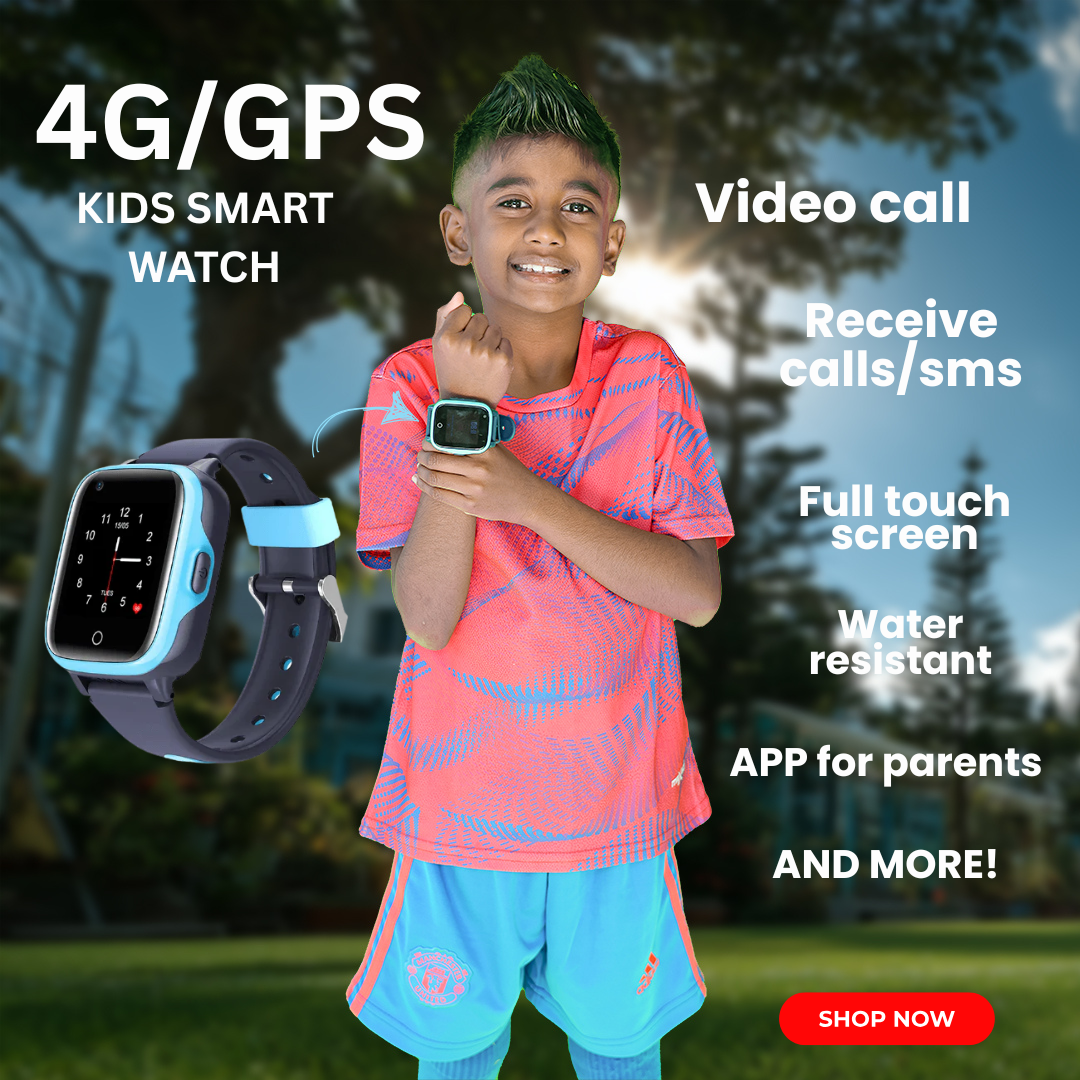
Discover the Future of Kids’ Safety and Connectivity — Meet the Freedom 2

It’s a Saturday morning at a bustling shopping mall in Johannesburg. Little Thando, full of curiosity, wanders off while his mom browses the toy aisle. In seconds, panic sets in — that heart-stopping moment every parent dreads. But unlike most stories, this one ends differently. Thando’s mom opens the Freedom 2 app, taps “Locate”, and within moments, she sees his exact position — just outside a nearby store. Relief floods over her as she spots him, still holding his ice cream, completely unaware of the worry he caused.

In a country like South Africa, where safety is always top of mind, the Freedom 2 isn’t just a gadget — it’s peace of mind on your child’s wrist. With increasing concerns about public safety, this smartwatch gives parents a practical way to stay connected and prevent tragedy before it happens.

Why the Freedom 2 is a Must-Have

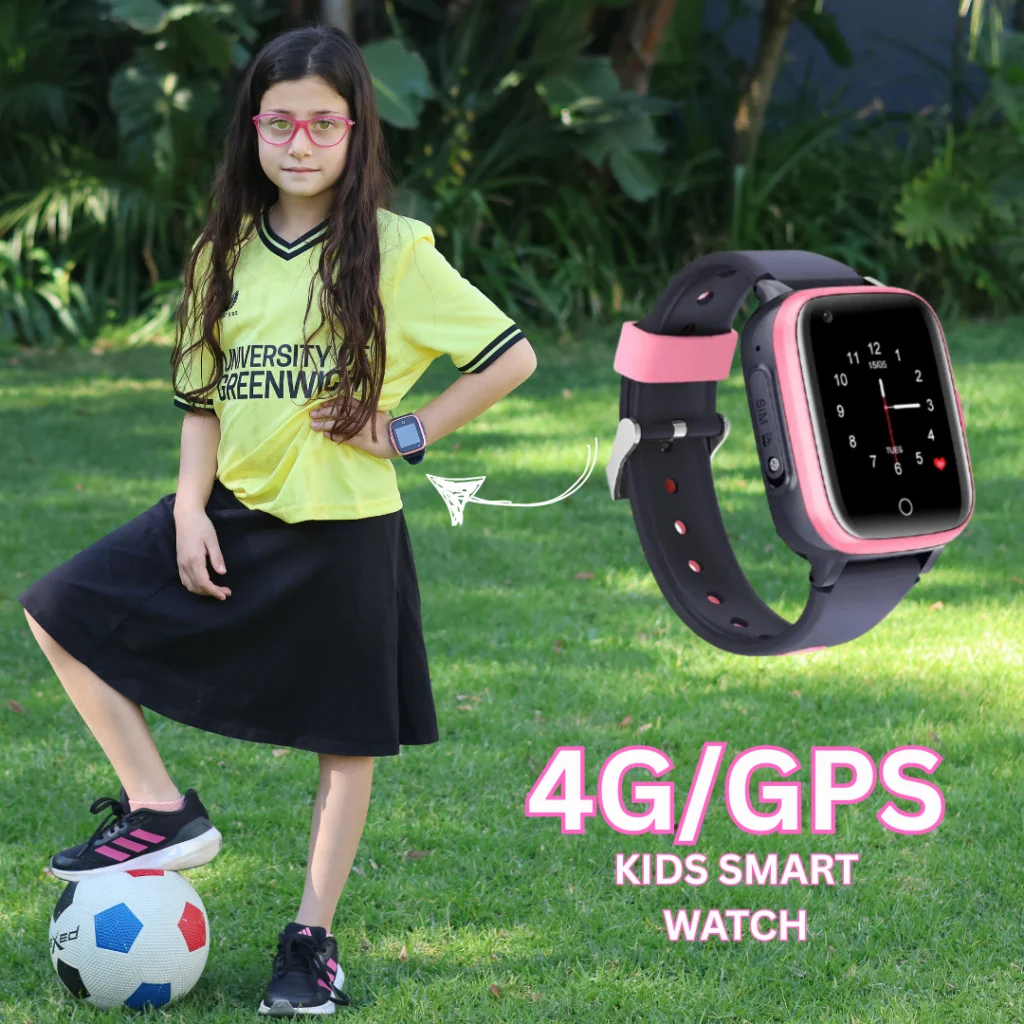
If you’re looking to give your child both freedom and safety, the Freedom 2 by Fabulously Fit is a standout. Designed with parents and kids in mind, this smart watch blends advanced technology with kid-friendly features — providing peace of mind for you and fun for them.

1. Stay Connected Anytime, Anywhere

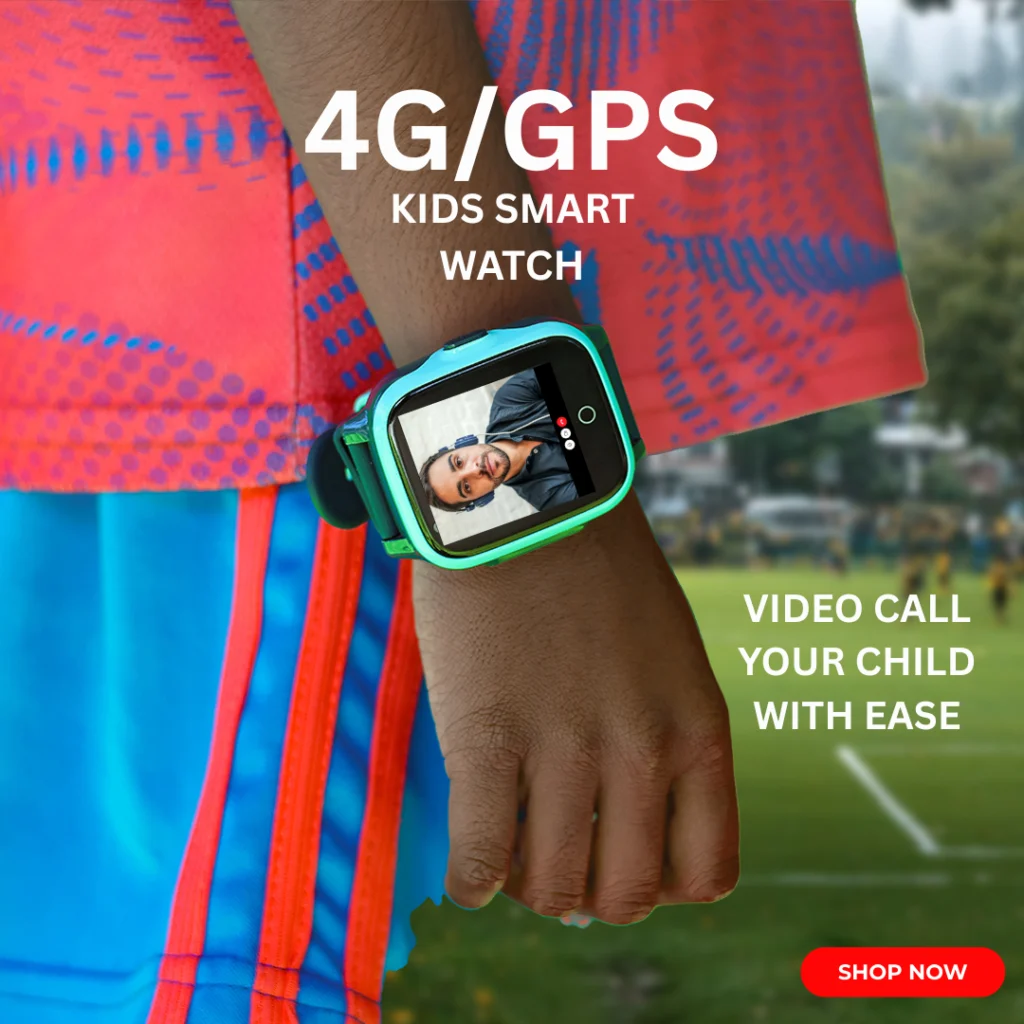
With full 4G support, the Freedom 2 enables 2-way voice calls, video calls, text messaging, and even WhatsApp — letting your child reach you instantly, and you keep tabs on them with ease. 

2. Precision GPS Tracking for Added Safety

This smartwatch uses GPS + AGPS + LBS + WiFi to track your child’s position with 5–15 metre accuracy. Set up geo-fences — get alerts when your child enters or leaves a safe zone. Review their route playback. Activate an SOS alert if they need help. All this gives you real-time confidence. 

3. Dual Cameras, Smart Tools & Kid-Friendly Features

Your child can snap photos or make video calls with a dual-camera setup. The watch also includes smart tools: WhatsApp, MP4 player, voice recorder, class-schedule tracker, math games — blending safety with learning and fun. 

4. Durable Performance & Long Battery Life

Built on Android 4.4 with 2 GB RAM + 4 GB ROM, a Nano-SIM slot for connectivity, and a robust 1 000 mAh polymer battery. It also features a 1.69″ IPS colour touchscreen (240×280 pixels) and modes for vibration, voice or silent notification — ideal for in-class use without distraction. 

5. Designed with Kids in Mind

A “No Disturb” mode ensures the watch won’t interrupt learning time. A pedometer and sleep monitor support wellness tracking. Remote monitor and remote shutdown features let you discreetly check that everything’s okay. 

🎯 Why It Matters for Your Family

Modern parenting comes with a tough dilemma — you want your child to stay connected and safe, but you don’t want to hand them a smartphone too soon. Too much screen time, access to social media, and unrestricted internet exposure can harm focus, sleep, and emotional wellbeing.

The Freedom 2 offers the perfect balance. It gives parents the ability to call, message, and locate their child instantlywithout placing a smartphone in their hands. Your child gets independence and responsibility; you get reassurance and control. It’s connection with boundaries — the healthy middle ground every family needs.

🛍 Get Yours Now

Available in Blue, Pink, and Black, the Freedom 2 is ready to become your child’s everyday companion.

Shop now at Be a Boffin 

Stimulus Maksima!
START YOUR CHILD ON THE CODING PATH, EVEN IF THEIR SCHOOL ISN’T THERE YET – EXPERT

There is a lot of talk in South Africa about the Fourth Industrial Revolution (4IR) and the need for education in the country to start preparing learners for the future world of work from a young age. Unfortunately in South Africa, resources are often lacking and many teachers are not yet equipped to teach coding. However this shouldn’t stop parents from encouraging their children to start with the basics of coding from a young age, an expert says.

“As we teach our children to read and speak our mother tongue language so we should start with coding at an early age,” says John Luis, Head of Academics at ADvTECH Schools, a division of South Africa’s largest private education provider.

“Parents who are not tech savvy may find this daunting, so the easiest way to start the children off will be to download some apps to their mobile devices which will use games to kick off the coding thought processes. Learning to code is like learning how to speak, read and write in a different language. Children are very good at learning a variety of languages from a young age so teaching them coding will be no different,” he says.

Luis says that the importance of preparing children for a technologically-enabled future cannot be overstated.

“Technology changes rapidly and our children must be able to adapt, be agile minded and most importantly prepared for the future working world. The 4IR should not be dismissed as a buzzword – it is real, and it is here where our lives will become intertwined with technology, the edges between reality and virtual worlds will blur and we need to ensure our children will be effective workers in this rapidly changing environment. 

“This means that in the future world of work, coding will be a fundamental digital skill which our children will need to be literate in much the same way we prepare our children with language, numeracy and physical skills. Coding is no longer a skill reserved for scientists, engineers and IT geeks.”

Luis explains that the fourth industrial revolution is characterised by a rapidly developing technological environment in which disruptive technologies, the Internet of Things, virtual and augmented reality, robotics and artificial intelligence are changing the way we exercise, play, study, live and work.

“Behind this technology, functionality is achieved using code. It is how we communicate with computers, build websites, mobile apps, computer games and instruct robots. The Internet of Things (IoT) is already becoming more integrated into our homes. Smart TVs and watches, automated home management and security are only some of the examples where IoT is already used.”

Like mathematics, becoming competent in the language of coding has many advantages beyond the obvious, he says.

“Coding also helps with maths skills, it fosters creativity, improves problem solving abilities and can improve language and writing skills,” he says.

Internationally coding has long been recognised as a future life skill and is offered as part of the normal primary school curriculum.  In South Africa, high schools have had the subject from Grade 10 to 12 as a subject choice (Information Technology) for many years, but it was mostly offered to select learners based on their mathematics marks. Still, only a small percentage of schools have been able to offer the subject as it requires dedicated infrastructure and highly competent teachers.

The situation looks better at progressive private schools, where coding has been introduced as part of the mainstream offering, from as early as pre-prep, where children are introduced via simple techniques and readily available software.

“While many schools are still in the starting blocks, and most haven’t even arrived for the race yet, parents must realise that academic excellence and individual competitiveness in future will require a solid grasp of the language of technology. So the question of a school’s offering in this regard should be one they take very seriously before enrolling their child.

“And where they do not yet have the option of enrolling their child in a school that incorporates coding as part of the mainstream offering – which is the reality for the majority of the country – they should ensure that their child isn’t left behind, by assisting them independently,” says Luis.

One of the options available to these parents, is to search for holiday camps in their area. And where those are not offered, parents can start by helping their child download some of the various free mobile applications and software (listed below) which help young children to start coding, he says.

* Scratch (https://scratch.mit.edu/educators) is a very effective free coding language that is designed specifically for ages 8 to 16 but can be used by people of all ages.

* Alice (https://www.alice.org/) is a block-based programming environment that makes it easy to create animations, build interactive narratives, or program simple games in 3D.

*Microsoft Minecraft Education an educational version of Minecraft, the game popular with children all over the world. (https://education.minecraft.net/) .

* Roblox (https://developer.roblox.com/resources/education/Resources) caters for children from the ages of 8 to 14.

Stimulus Maksima!
Brands on-board to help SA families build bursaries for school

As any parent knows, when it comes to affording quality education for our children, we need all the help we can get.  Escalating school fees, continual costs of uniforms and many extras make educating our children a significant, long-term family expense.   Quality education features high on the UN’s list of 17 sustainable development goals, and South Africa is a signatory to the UN 2030 Agenda for Sustainable Development which recognises the vital role that education plays in improving lives.

There’s probably no more universally common drive than the one parents have to set their child on the path to a better world.  We know that education is a key to unlock opportunity and enable our children to grow into productive, fulfilled citizens.  But can we afford it?  According to Stats SA one in five qualified learners are currently unable to attend school or a tertiary institution due to lack of funds; and two thirds of pupils do not pay school fees, putting an additional strain on public funding.

Each child spends around 200 days a year at school.  Based on former Model C school fees, a South African school day typically costs R122.50, and a 200-day school year is R24 500.00 for one child.  As Millennials rise to become the majority parenting generation, how will these digital natives who embrace disruption and innovation save most effectively for their children’s education?

An option that is on the rise is the bursary-building platform School-Days. By interacting with brands and mobilising family and friend support, parents are actively saving towards the quality education of their children.  A School-Days bursary can be built for school, college and university.  Dis-Chem, recognizing the need for education funding in South Africa, were the first corporate entity to put their weight behind School-Days.  Lynne Blignaut, Group Customer Services Head at Dis-Chem expressed that purpose in telling “Our customers, and their families have education as the heartbeat of their homes, and partnering with School-Days is our way of supporting that.”

School-Days founder, Chris Nel says, “We’re delighted at the response and salute our partners like Dis-Chem, who have so far contributed R22.8 million to family bursaries, and together we have grown the number of paid for school days to 190 265 that can now be paid for.”

A major boost to the platform is the recent on-boarding of the Exact brand of TFG (The Foschini Group) which has 309 stores across the country.  Nikki Crous, Head of Marketing at Exact, says, “It’s a perfect fit for Exact to become part of the School-Days bursary platform.  As a brand, with family at the heart of everything we do, we know how much quality education means to our customers and South Africans want their consumer spend to be able to contribute to something meaningful and tangible in their lives. Exact cares and is committed to helping children across South Africa gain access to quality education, and the School-Days platform is the perfect means to empower families to make it happen.”

Other new School-Days partners include Day1 Health, an authorised financial services provider offering affordable private health care packages.  They will make a monthly contribution to their members’ bursaries based on a percentage of the plans ranging from R265 to R760.  Opportunities to build the family bursary will be further increased as premier florist and gifting service, NetFlorist and online computer store FirstShop also become School-Days partners in the upcoming months

The good news is that you as the parent do not have to go it alone.  The flexible platform enables your friends and family members to connect and contribute to your bursary.  This can be just through swiping their linked cards at the till points or by actively boosting the bursary with gift contributions that can be used towards both school and tertiary education.

“There’s a huge advantage for the modern family in having school days that are paid for” says Nel, “Educating our children well is one of the greatest concerns for parents, and society.  It’s a great opportunity to bring together brands that care and family and friends to give today’s parents more prospects to fund quality education of our future generations.”

School-Days is free to join, and it’s easy to build a bursary. Click here to join School-Days and start building a bursary for your family’s education: https://www.schooldays.co.za/#join-today

Stimulus Maksima!
Scroll to Top