After a successful launch last year of the goIT Challenge in South Africa, Tata Consultancy Services and STEAM education specialist, Sakhikamva Foundation have brought together 455 learners from nine high schools to participate in the worldwide school’s technology programme. Students were tasked with coming up with app ideas to solve real-world problems in their own communities, and six finalist teams had the opportunity to pitch their ideas to the judges on 5 May.
The six 2021 SA goIT Challenge finalists were:
WO-MEN created by Sinenjongo High School team – an app promoting gender equality and the acceptance of gender diversity which includes a conversation platform to highlight the impacts of gender inequality
‘Hope Away from Home’ created by Get Ahead College team – an app aligned to the #zerohungerworld Sustainable Development Goal that enables small food donations in one’s own neighbourhood
EVOLVE created by Goodwood College team – an app offering physical workouts, healthy eating regimes and positive mindset texts to enable people in under-resourced communities to benefit from healthy body and mind education and support
W.A.S.H. created by another Goodwood College team – an app to connect people in rural and homeless communities with nearby sources of clean drinking water and sanitation facilities
‘Building Confidence Lifestyle’ created by Modderdam High team – an app to help users improve self-image, self-esteem and self-motivation so that people in under-resourced communities are more empowered to live healthy and successful lives
‘Study Room’ created by Valhalla High team – an app that provides educational video resources to help boost learning among young people who are struggling to access classroom learning
Founder of Sakhikamva Foundation, Fatima Jakoet says, “What we have seen in this second SA goIT Challenge is young people expressing their abilities to be problem-solvers who can contribute to a better world. Participants had no trouble identifying real challenges that they experience and see in their communities, and then align these to the UN Sustainable Development Goals. They got the opportunity to grapple with how technology offers the world opportunities to solve these problems in innovative ways that can also be brought to scale through tech platforms. The goIT Challenge gave them a rare opportunity to build their 21st Century skills, and it was wonderful to see how much they relished this and rose to the occasion.”
The SA winners of the 2021 goIT Challenge are:
First Place: WO-MEN app created by the Sinenjongo High School team (each team member received a tablet)
1st place winning team from Sinenjongo High School (Grade 10): From left to right
Makanaka Muzuva Aphiwe Habo Lilitha Masina Lilitah Masizana
Second Place: W.A.S.H. app team from Goodwood College (each team member received a drone)
2nd place winners from Goodwood College (all in Grade 10) : From left to right:
Cleo Adriaan Noshaad Salie Ni-Shaat Naidoo
Third Place: EVOLVE app team from Goodwood College (each team member received a robotics kit)
3rd place winners from Goodwood College (all in Grade 11): From left to right:
Muzamiel Charles Connor de Wee Samual Mulangu Caitlin Malan
Over more than a decade, the TCS goIT Challenge has been rolled out in North and South America, Asia, Australia, the UK and Europe. In 2020, TCS expanded this footprint by bringing the innovative 21st Century learning programme to South Africa. Nikhil Dabhole, HR Head of TCS South Africa says, “We congratulate this year’s winners of the goIT Challenge and commend the finalists and all other participants. As an IT service provider, we are committed to providing opportunities for schools to bring their learners, educators, and school communities together in an exciting and relevant tech education programme. The goIT Challenge is a way to strengthen communities today, by empowering their own digital innovators of tomorrow. These participants are building their skills to contribute to the workforce of the future, and engaging with tech is vital to their education.”
South Africa lags significantly in bringing a coding and robotics curriculum to schools, which means that a generation of our children is falling behind in developing the skills most needed by the changing 4IR world. The goIT Challenge brings tech to the forefront in schools and gives SA children a hands-on experience of how innovation can solve real-world problems.
Parenting Hub is one of South Africa’s largest online lifestyle magazines, targeted toward Parents.
We understand that there are many aspects that encompass a Mother, Father or Child and strive toward providing resources and services that accommodates this.
Our content is aimed to inform and educate families on issues starting from pregnancy through to the challenges of the teen-age years.
It’s a Saturday morning at a bustling shopping mall in Johannesburg. Little Thando, full of curiosity, wanders off while his mom browses the toy aisle. In seconds, panic sets in — that heart-stopping moment every parent dreads. But unlike most stories, this one ends differently. Thando’s mom opens the Freedom 2 app, taps “Locate”, and within moments, she sees his exact position — just outside a nearby store. Relief floods over her as she spots him, still holding his ice cream, completely unaware of the worry he caused.
In a country like South Africa, where safety is always top of mind, the Freedom 2 isn’t just a gadget — it’s peace of mind on your child’s wrist. With increasing concerns about public safety, this smartwatch gives parents a practical way to stay connected and prevent tragedy before it happens.
✅ Why the Freedom 2 is a Must-Have
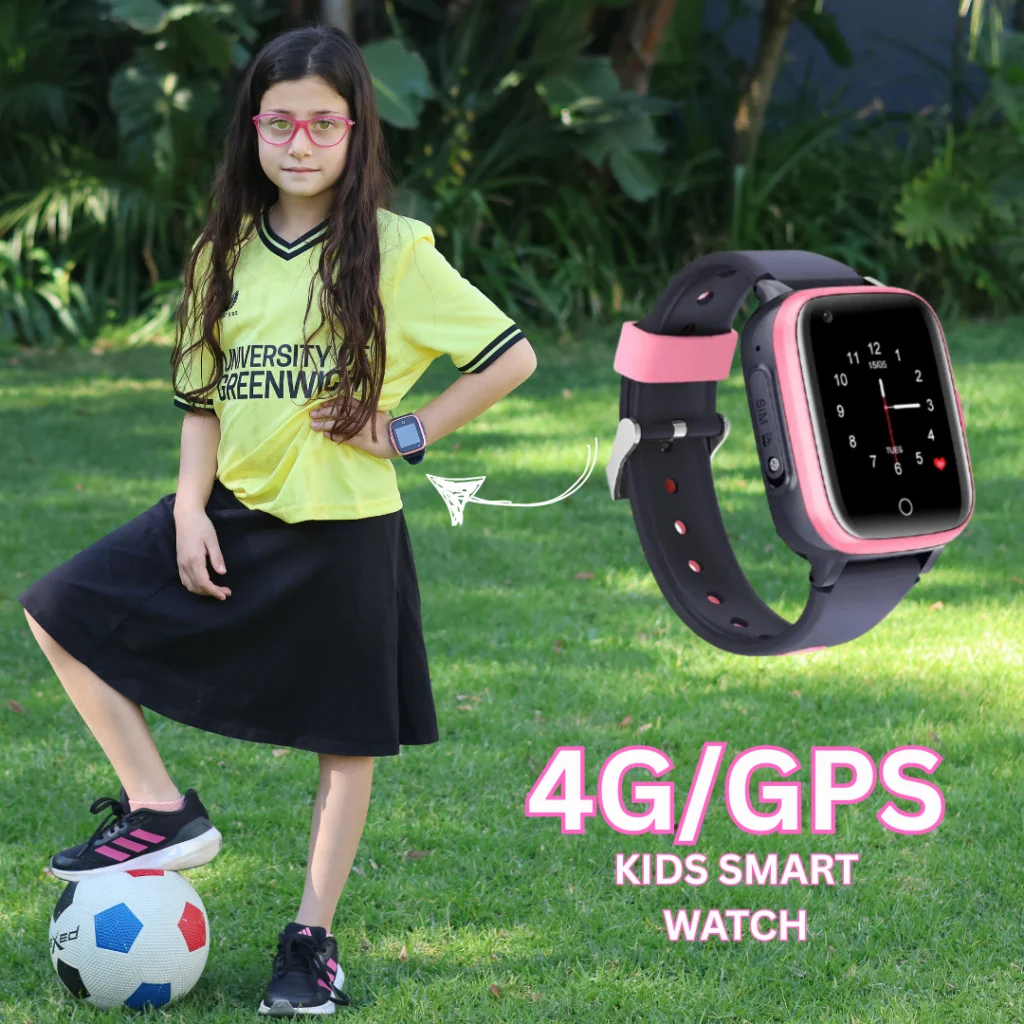
If you’re looking to give your child both freedom and safety, the Freedom 2 by Fabulously Fit is a standout. Designed with parents and kids in mind, this smart watch blends advanced technology with kid-friendly features — providing peace of mind for you and fun for them.
1. Stay Connected Anytime, Anywhere
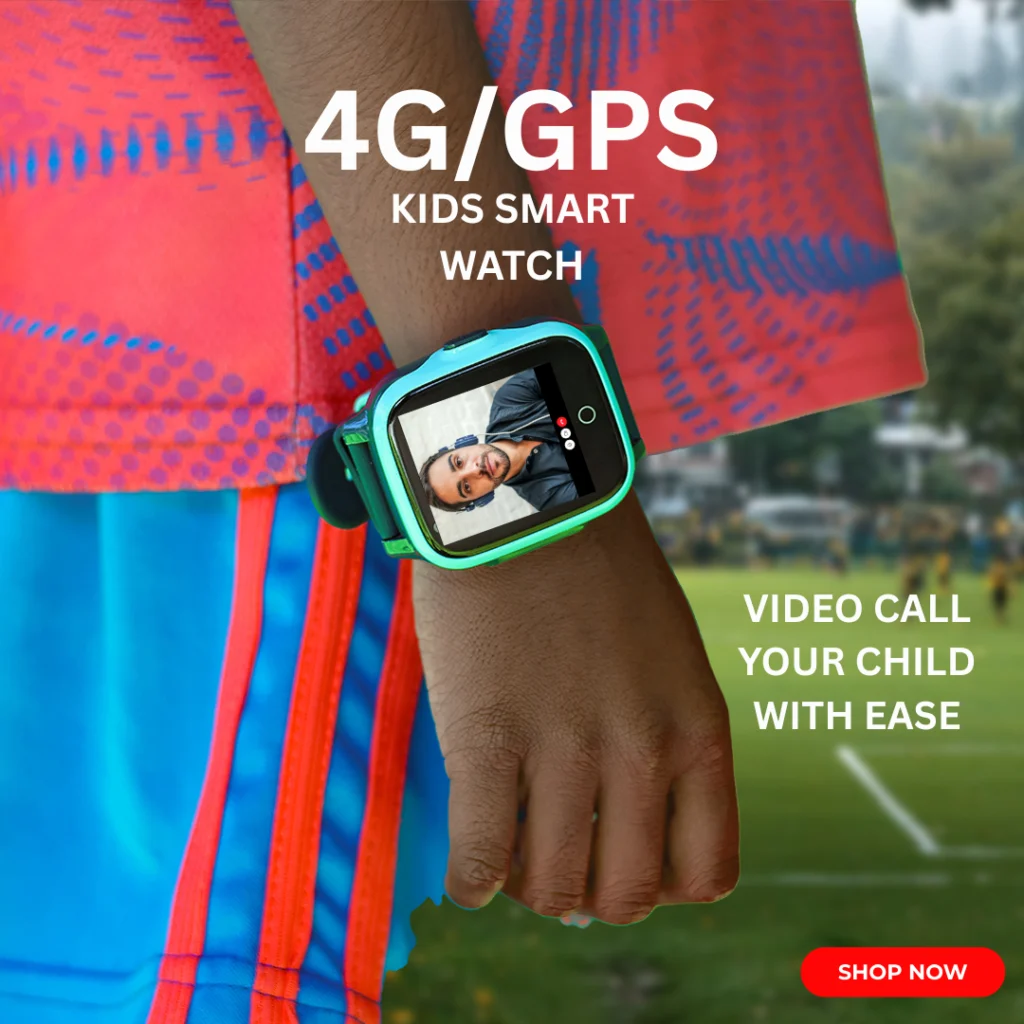
With full 4G support, the Freedom 2 enables 2-way voice calls, video calls, text messaging, and even WhatsApp — letting your child reach you instantly, and you keep tabs on them with ease.
2. Precision GPS Tracking for Added Safety
This smartwatch uses GPS + AGPS + LBS + WiFi to track your child’s position with 5–15 metre accuracy. Set up geo-fences — get alerts when your child enters or leaves a safe zone. Review their route playback. Activate an SOS alert if they need help. All this gives you real-time confidence.
3. Dual Cameras, Smart Tools & Kid-Friendly Features
Your child can snap photos or make video calls with a dual-camera setup. The watch also includes smart tools: WhatsApp, MP4 player, voice recorder, class-schedule tracker, math games — blending safety with learning and fun.
4. Durable Performance & Long Battery Life
Built on Android 4.4 with 2 GB RAM + 4 GB ROM, a Nano-SIM slot for connectivity, and a robust 1 000 mAh polymer battery. It also features a 1.69″ IPS colour touchscreen (240×280 pixels) and modes for vibration, voice or silent notification — ideal for in-class use without distraction.
5. Designed with Kids in Mind
A “No Disturb” mode ensures the watch won’t interrupt learning time. A pedometer and sleep monitor support wellness tracking. Remote monitor and remote shutdown features let you discreetly check that everything’s okay.
🎯 Why It Matters for Your Family
Modern parenting comes with a tough dilemma — you want your child to stay connected and safe, but you don’t want to hand them a smartphone too soon. Too much screen time, access to social media, and unrestricted internet exposure can harm focus, sleep, and emotional wellbeing.
The Freedom 2 offers the perfect balance. It gives parents the ability to call, message, and locate their child instantly — without placing a smartphone in their hands. Your child gets independence and responsibility; you get reassurance and control. It’s connection with boundaries — the healthy middle ground every family needs.
🛍 Get Yours Now
Available in Blue, Pink, and Black, the Freedom 2 is ready to become your child’s everyday companion.
Parenting Hub is one of South Africa’s largest online lifestyle magazines, targeted toward Parents.
We understand that there are many aspects that encompass a Mother, Father or Child and strive toward providing resources and services that accommodates this.
Our content is aimed to inform and educate families on issues starting from pregnancy through to the challenges of the teen-age years.
Most parents are very aware that too much screen time for young children isn’t a good thing, but many are just as uncertain about what exactly the problem is and, importantly, how time can be more constructively spent without it becoming an additional daily burden adding to the stress of the adults.
“Taking the guesswork out of quality family interaction, which also assists in the development of the child, is half the battle won,” says Barbara Eaton, Academic Development Advisor for the Pre-Primary Schools Division at ADvTECH, Africa’s largest private education provider.
Eaton says parents who rely on some screen time to get a bit of a breather shouldn’t feel guilty, but adds that they should ensure they also spend time every day connecting with their children through activities. Activities, which are both fun and will aid the cementing of the skills they will require for reading success in future, can be woven into the daily routine.
“We are constantly researching improved methods of teaching foundational reading skills from Grade 000,” says Eaton.
“Research into the reading brain indicates that 40% of children learn to read easily, but 40% of children are at risk and 20% at severe risk. Over twenty thousand studies of children failing at reading in the USA indicated that the bottom 40% of readers lack phonemic awareness, which is the ability to hear, identify and manipulate individual phonemes – the smallest unit of sound in the spoken word.”
Eaton says the human brain is wired for developing spoken language which is why, with good personal interaction, babies develop speech from an early age without intentional teaching.
“But there is no automatic brain wiring for reading and spelling, so all aspects of these skills need to be taught systematically and explicitly. Modern life has increasingly seen young children spend significant amounts of time in front of screens, which focus their brains on visual more than auditory content.
“The major problem with screen time is that much of the spoken content of what they watch is too fast and often indistinct, making them less likely to concentrate on it. This has impacted on the development of accurate listening skills.”
This all sounds quite negative, but the good news is that brain repair and the re-routing and development of neurons are possible and that with correct teaching, the children who would have learned to read easily will read at a higher level while the ‘at risk’ children will be able to read well.
So how can parents help their children?
1 – BY TALKING AND LISTENING
“In these days of digital media, we are talking less to each other and much of the communication taking place is instructive: ‘It’s time to bath. Pick up your clothes” etc. Instead, try to focus on generating discussions, for instance talk about the highs and lows of your day; introduce topics such as, ‘if you could do anything you wanted, what would it be and why’, ‘tell us about the best thing you saw today’.”
Eaton says it is important to ask open-ended questions (which don’t have a yes or no response), to elicit full answers. Dads are especially good at this!
2 – BY READING TO THEIR CHILD
Read both fiction and factual books from a very young age and join the library to give a wider choice. Choose quality stories that link to your child’s interests, not just Disney ones, Eaton advises.
“Let your child see you reading books and magazines. When you read a menu, shopping list, or road sign, involve your child and discuss how wonderful it is to be able to read and understand the information around you.”
3 – BY SINGING AND RECITING
Sing songs, recite rhymes together and read poems.
“Rhyming is such an important pre-reading skill, but fewer and fewer children learn any rhymes at home. Nursery rhymes are basically historical nonsense but children love them and they are easy to memorise,” Eaton says.
4 – PLAY WITH WORDS
Play with compound words – breaking popcorn into pop and corn, fishtank into fish and tank etc. They make good car games, and make a walk to the shops shorter and more fun. I Spy is another fun favourite but use the sound at the beginning of the word, not the name of the letter. Cat starts with ‘c’ not CEE.
Eaton says activities as listed above should be fun for adults and child, and should not become another chore for parents, but rather an easy, entertaining way to connect as they go through their usual routine in the morning and the evening.
Additionally, to build solid listening skills, parents should not repeat instructions and comments, as this programmes a child not to listen the first time.
“Parents should make eye contact (lower the phone!), and pay attention to what their child is saying so that they model the desired listening behaviour. Above all, be excited about your child’s developing language and literacy skills.
“Investing quality time in your children can be achieved by including them in daily routines. Complementing this time with activities such as the above can make a tremendous impact on setting a child on the path to their own personal academic excellence,” she says.
Parenting Hub is one of South Africa’s largest online lifestyle magazines, targeted toward Parents.
We understand that there are many aspects that encompass a Mother, Father or Child and strive toward providing resources and services that accommodates this.
Our content is aimed to inform and educate families on issues starting from pregnancy through to the challenges of the teen-age years.
As parents, we often think that because we once wrote Matric exams ourselves, we are perfectly capable of supporting our child through the biggest trial of their education so far. The trick however, is to be mindful of the vast generational gap that exists between our children and ourselves. Our kids are going to experience the upcoming Matric exams quite differently from the way we did. And if we’re going to be able to help them, we need to understand their generation as well as we possibly can.
The ABCs of Gen Z
Gen Z refers to those children/teenagers born between 1995 and 2009 and as with all other generations, this cohort has distinct strengths and weaknesses.
In broad strokes: the positive traits that Gen Z have on their side include higher IQs than Baby Boomers, greater ambition than Millennials and a well-developed sense of responsibility.
Gen Z are also the first generation to be been entirely digitally immersed and are often referred to as ‘Digital Natives’. They simply can’t imagine a world without smartphones, Google and WiFi (a kid with a device permanently in hand is something every Gen Z parent can relate to). Gen Z’ers prefer almost everything that is digitally presented and are highly adept at discovering and learning on their own.
A different kind of learning
For most parents, learning means sitting diligently at a desk poring over textbooks. However, your Gen Z child will most probably prefer to do a lot of studying for their Matric exams sprawled on the couch and watching videos of their favourite YouTube teachers. Gen Z’ers also have a tendency towards social learning and can readily turn an online chat with friends into a peer-learning classroom. “Parents of the current Matric cohort need a real understanding of how their child learns best,” says Lauren Martin, Counselling Psychologist and Head of Teaching and Learning at SACAP (The South African College of Applied Psychology).“You don’t want to make the mistake of shutting down or getting in the way of what is highly effective learning for them because you have misinterpreted what they might be doing on YouTube or on FaceTime. Gen Z learns differently from other generations, and they need different parental awareness and support. If a parent is helping or monitoring their child’s study plan, they need to support space in the timetable for digital and social learning.”
Digital multi-taskers
Another generational anomaly (and potential minefield) is Gen Z’s uncanny ability to digitally multi-task. They can watch TV, quickly post on Instagram while having a WhatsApp conversation with five friends, Google something on their laptop and make long-hand notes simultaneously. It’s the kind of multi-tasking that brings on anxiety and despair for other generations, but Gen Z – with their short attention spans and tech-savviness – take it in their cyber stride.
The upshot is that parents, who for the most part view multitasking as a negative, try to curb their teen’s many-at-once habits. “During the Matric exams, parents typically want to limit distractions to sharpen the focus on studying,” says Martin. “This is a challenge for Gen Z students who have a different perception of what constitutes a ‘distraction’. It’s important for parents to have a clear view of their child’s real competencies and allow them to plan for their Matric study time in the ways that work best for them. You can’t forget that they will most likely prepare best by doing some things very differently to the way you did them.”
The weak spots to watch
Gen Z reports higher levels of anxiety and depression. This is a generation shaped by being born into a perilous world of economic recession, rising terrorism and major global environmental threats. They are predisposed to worry and feeling chronically unsafe. Mental health issues amongst Gen Z are prevalent. “Helping to manage stress might well be the greatest thing a parent can do support their child through this Matric year,” says Jogini Packery, Counselling Psychologist and Head of Student Services at SACAP. “This starts with managing their own stress so that they can model dealing well with strong emotions and a tense life circumstance. Maintaining balance and facilitating effective stress relief will go a long way to soothe high anxiety. Often Gen Z does not get out enough. All of their screen time means less time on the beach or going for a run, cycle or a walk with the dogs. Physical activity stimulates the endorphins that help to keep anxiety and depression in check. If a parent is giving input on a study plan they should check out the downtime and see where they can encourage and share in healthy physical activities that deliver important stress relief.”
For any matriculant who is interested in the field of psychology, counselling or Human Resource Management, SACAP offers a wide range of qualifications (including Higher Certificate, Diploma, BAppSocSci (Majoring in Psychology and counselling), BAppSocSci (Majoring in Psychology and Human Resource Management) BPsych, BSocSci Honours and BPsych Equivalent) and a one-of-a-kind approach to learning: academic rigour and applied skills. Graduating confident skilled practitioners is key, which is why SACAP combines an academically rigorous curriculum with a strong emphasis on the ability to apply knowledge through the training of relevant skills. Registration for 2019 term one, closes at the end of January 2019. For further information, visit: https://www.sacap.edu.za/matric-campaign/
Parenting Hub is one of South Africa’s largest online lifestyle magazines, targeted toward Parents.
We understand that there are many aspects that encompass a Mother, Father or Child and strive toward providing resources and services that accommodates this.
Our content is aimed to inform and educate families on issues starting from pregnancy through to the challenges of the teen-age years.
We use cookies on our website to give you the most relevant experience by remembering your preferences and repeat visits. By clicking “Accept All”, you consent to the use of ALL the cookies. However, you may visit "Cookie Settings" to provide a controlled consent.Accept All
Manage consent
Privacy Overview
This website uses cookies to improve your experience while you navigate through the website. Out of these, the cookies that are categorized as necessary are stored on your browser as they are essential for the working of basic functionalities of the website. We also use third-party cookies that help us analyze and understand how you use this website. These cookies will be stored in your browser only with your consent. You also have the option to opt-out of these cookies. But opting out of some of these cookies may affect your browsing experience.
Necessary cookies are absolutely essential for the website to function properly. These cookies ensure basic functionalities and security features of the website, anonymously.
Cookie
Duration
Description
cookielawinfo-checkbox-advertisement
1 year
The cookie is set by GDPR cookie consent to record the user consent for the cookies in the category "Advertisement".
cookielawinfo-checkbox-analytics
11 months
This cookie is set by GDPR Cookie Consent plugin. The cookie is used to store the user consent for the cookies in the category "Analytics".
cookielawinfo-checkbox-functional
11 months
The cookie is set by GDPR cookie consent to record the user consent for the cookies in the category "Functional".
cookielawinfo-checkbox-necessary
11 months
This cookie is set by GDPR Cookie Consent plugin. The cookies is used to store the user consent for the cookies in the category "Necessary".
cookielawinfo-checkbox-others
11 months
This cookie is set by GDPR Cookie Consent plugin. The cookie is used to store the user consent for the cookies in the category "Other.
cookielawinfo-checkbox-performance
11 months
This cookie is set by GDPR Cookie Consent plugin. The cookie is used to store the user consent for the cookies in the category "Performance".
viewed_cookie_policy
11 months
The cookie is set by the GDPR Cookie Consent plugin and is used to store whether or not user has consented to the use of cookies. It does not store any personal data.
Analytical cookies are used to understand how visitors interact with the website. These cookies help provide information on metrics the number of visitors, bounce rate, traffic source, etc.
Cookie
Duration
Description
_ga
2 years
This cookie is installed by Google Analytics. The cookie is used to calculate visitor, session, campaign data and keep track of site usage for the site's analytics report. The cookies store information anonymously and assign a randomly generated number to identify unique visitors.
_gid
1 day
This cookie is installed by Google Analytics. The cookie is used to store information of how visitors use a website and helps in creating an analytics report of how the website is doing. The data collected including the number visitors, the source where they have come from, and the pages visted in an anonymous form.
Other uncategorized cookies are those that are being analyzed and have not been classified into a category as yet.
Cookie
Duration
Description
_gat_gtag_UA_18530557_4
1 minute
No description
pron_ip
session
No description
pvc_visits[0]
1 day
This cookie is created by post-views-counter. This cookie is used to count the number of visits to a post. It also helps in preventing repeat views of a post by a visitor.
tk_ai
session
Gathers information for WordPress by themselves, first party analytics tool about how WP services are used. A collection of internal metrics for user activity, used to improve user experience.