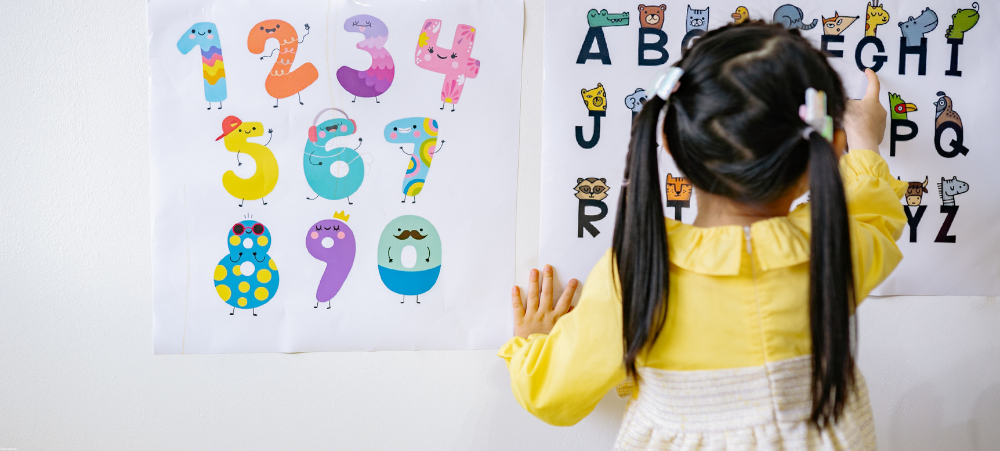
Ditching Maths Myths

The best start parents can give children to ensure they master maths throughout their school careers, is to ensure they banish negative attitudes towards the subject right from the start, an education expert says.

“Parents and caregivers must ensure they don’t pass on their own negative feelings about maths, or any other subject, because they themselves struggled in the past,” says Barbara Eaton, Academic Development Co-ordinator for the Schools Division at ADvTECH, Africa’s largest private education provider.

“Children should be allowed to embark on their maths learning in the secure understanding that they are competent and capable, without any kind of pre-emptive fear for the subject,” she says.

Eaton notes South Africans regularly hear about our country’s dismal performance in international maths and science benchmarking tests.

“Those of us who work at the Pre-Primary level are well aware that the results of the children at prep and college levels will not improve if we do not focus on the correct teaching of maths concepts within the three to six-year age group,” she says.

But she warns that early learning should be age-appropriate and concentrate on ‘hands-on, brains-on’ activities.

“Early mathematical experiences have to be presented in kinaesthetic and concrete ways, leading to semi-abstract activities in Grade 0. We certainly do not favour worksheets for children at this young age,” she says.

Eaton adds that while many young children enter Pre-Primary school with knowledge of counting, numbers and shapes, it is also important to expose them to more challenging content.

“Young children are ready to learn more advanced concepts as long as they are presented in an engaging and developmentally appropriate manner. This does not equate with ‘pushing down’ the curriculum content to younger and younger children, as that could have the opposite of the intended effect.”

Eaton advises parents to take a keen and active part in getting their children excited about maths, and says that the foundations of later maths mastery can be achieved through play-based activities in the early years.

Activities which promote the acquisition of maths concepts include:

  • Singing number songs and rhymes.
  • Counting out everyday items such as plates and cutlery for supper, potatoes for cooking, biscuits for tea.
  • Matching how many times you clap with items such as bottle tops.
  • Baking, which involves counting and measuring of ingredients.
  • Drawing attention to numerals on gates, cars, busses – anywhere in the immediate environment.
  • Sharing out sweets amongst the family or the teddies at the play tea party, which teaches division.
  • Dividing fruit, veg and cakes into pieces and talk about halves and quarters, which teaches the concept of fractions.
  • Working out how many sweets we need if everyone is to get two, which teaches multiplication.
  • Matching, identifying and counting coins, and giving coins to spend on small items in the shop.
  • Comparing the sizes of clothes and shoes that the family members wear and arranging them in ascending and descending order.


“Research tracking American, British and Canadian children found that children who entered pre-school with a strong grasp of numeracy, counting, relative magnitudes and ordinality achieved better maths scores in later years, and that these skills were more predictive of general scholastic achievement than were language, attention or social skills,” says Eaton.

“But parents should not, in an attempt to ensure their child’s future maths mastery, try to get them to learn something now, with difficulty, which they will manage more easily later. Helping your child at this stage does not entail the teaching of isolated maths skills through memorisation, rote or the reliance on worksheets.

“Parents and guardians who want to make a substantial contribution to their children’s performance later in life can ensure they lay a solid and positive foundation in the early years, simply by making maths meaningful and relevant to everyday situations. Quite simply, maths should become child’s play.”

Advtech Group

Leave a Comment

Your email address will not be published. Required fields are marked *

Here’s How Tax Relief for Neurodivergent Kids Actually Works

If you’re raising a neurodivergent child in South Africa, you’re already doing a lot.

Appointments. School meetings. Forms. “Can you just send that report again?” moments. The daily juggling act of home + school + therapy + life.

So when someone says, “You might be able to claim tax relief,” it can feel like one more admin mountain… right when you’re already running on fumes.

Here’s the good news: tax relief is available, and there’s a real framework designed to give families some breathing room.

The bad news is: it’s not always obvious how it works, and the internet is full of conflicting advice.

This guide will help you understand the basics without spiralling.


Tax relief is available in South Africa

South Africa’s tax system includes support for families who carry additional medical and care costs. The main mechanism is the Additional Medical Expenses Tax Credit (AMTC).

It’s not a cash payout. It’s a tax credit that reduces the amount of normal tax you pay.

For many families, it becomes a crucial “safety valve”, especially when you’re paying for the kind of support your child needs to function well in the real world.


Where neurodiversity fits into the SARS framework

SARS doesn’t have a neat category called “neurodivergence.”

Instead, conditions like Autism Spectrum Disorder (ASD), ADHD, and PDA are considered based on their functional impact, in other words, how much they limit day-to-day life.

For tax purposes, a “disability” is defined as a moderate to severe limitation in a person’s ability to function or perform daily activities (including learning, thinking, communicating).

If your child’s challenges create a moderate to severe limitation that is expected to last more than a year, your family may qualify for tax relief.

If the limitations are considered milder, the condition may fall under what SARS calls a “physical impairment.” (Despite the name, this category isn’t limited to physical conditions and can still apply in some neurodevelopmental contexts.) 

Relief may still be available, but often with different thresholds and limits.


The common misunderstanding that trips parents up

One of the biggest myths is:

“If I have the diagnosis, we automatically qualify.”

Not necessarily.

SARS looks at whether the condition remains a significant limitation even after what it calls “maximum correction” (including appropriate therapy, treatment, or medication).

Because every child is different, eligibility is assessed case by case. Two families can have the same diagnosis and still have different outcomes depending on how the condition impacts daily functioning.

Which is frustrating, yes.
But also: it’s why getting clarity early matters.


Why paperwork and medical confirmation matter (even if you hate admin)

The admin requirements can feel like adding weight to an already heavy load.

But they’re also the keys to unlocking tax relief.

A diagnosis label isn’t enough. You need formal medical confirmation from a registered practitioner who is trained to give an opinion on your child’s condition.

The key document is the ITR-DD form (Confirmation of Diagnosis of Disability).

Whether this form is required in your situation can depend on how your child’s needs are classified (which is exactly where many parents get stuck).

Important: you typically don’t submit the form with your annual return, but you must keep it, along with invoices and proof of payments, for at least five years. 

SARS often verifies these claims, so having your paperwork organised from the start protects you later.

Think of it like this: a few clicks to save documents today can save you hours of stress later.


You don’t have to figure it all out today

If this feels complex, you’re not meant to decode it alone in between lunchboxes and meltdowns.

So we created a simple starting point for parents:

Download the tax relief cheat sheet at www.dalza.com/tax-relief-cheat-sheet/
 A clear summary of what you need to know (and what to gather), without the jargon.

Supporting a neurodivergent child requires enough time, energy, and emotional bandwidth as it is. Tax admin shouldn’t be another thing you have to white-knuckle your way through.

Start with the cheat sheet.
Get the lay of the land.
And take it one step at a time.

👉 Download the free tax relief cheat sheet at www.dalza.com/tax-relief-cheat-sheet/


Disclaimer:

This content is provided for general information purposes only. It is not intended as legal, tax, or financial advice. Tax outcomes depend on individual circumstances, and eligibility for tax relief is assessed by SARS on a case-by-case basis. We recommend consulting a registered tax practitioner or qualified professional before submitting any tax claims

Advtech Group
Get a second chance at success

If you’ve recently completed Grade 12, you’ll know that your matric results can lead to many exciting opportunities. Your matric certificate can help you get into the university or course of your choice, it looks great on your CV and it can help you ace that job interview by showing that you have the necessary skills to do the job.

But, what if your results were not what you hoped they would be and all these opportunities seem out of reach? You don’t have to be stuck with your less-than-great grades for the rest of your life. You can get a second chance at success.

Impaq, an innovative education solution provider, can help. You can register to redo some of your Grade 12 subjects in order to improve your results. Plus, you don’t have to be an Impaq learner to qualify. If you went to a public or private high school or received your matric certificate through a distance learning provider, you can still apply to redo your matric subjects with Impaq. The only requirement is that you must have had a sitting for the final examination in order to qualify.

Once you’ve applied and been accepted, Impaq will register you with the South African Comprehensive Assessment Institute (SACAI) to ensure that you receive your new (and improved) National Senior Certificate after passing the NSC Examination for the rewritten subjects.

To see if you qualify, send an email to [email protected]. The final cut-off date for registrations is 15 February 2018.

Advtech Group
Bullying: What parents and schools can do

ARTICLE BY PROF RITA NIEMANN, NALIZE MARAIS, ZENDRÉ SWANEPOEL AND MONIERA MOOSA

Bullying is a great concern for both parents and schools. Here we outline a number of measures that can help them both parties deal with bullying.

Parents

When parents notice that their child is behaving differently – not wanting to go to school, using illness as an excuse, suddenly performing poorly at school or enuresis – and suspect bullying, they need to act immediately.

Firstly, they must determine where this is happing (at school, at a sports club, on social media, etc.) and who the perpetrator(s) are.

Secondly, if the bullying is taking place in an organised environment such as at school or sports club, the authorities need to be informed and requested to step in. They are legally bound to protect the rights of the child.

Thirdly, parents have the responsibility to equip their children to cope by:

  • Instilling the knowledge that children must take a stand and that they have a choice in allowing someone else to victimise them.
  • Assisting children to terminate relationships that are potentially harmful, such as blocking a person on social media.
  • Helping them to identify bullies and the different forms of bullying.
  • Creating a safe space for children to speak about what is happening to them.
  • Emphasising assertive verbal communication if threatened.
  • Building children’s self-concept.
  • Getting the help of a psychologist, if necessary, to counsel the victim.
  • Emphasising that respectful behaviour is always the best option and thus preventing retaliation.
  • Fostering problem-solving and conflict resolution skills with the focus on restoring damaged relationships.
  • Working collaboratively to solve the problem with their children so that they can feel reassured.

Schools

As bullying is a deliberate act to hurt someone, there must be consequences for the bully. Once teachers are aware that a bullying incident has taken place at school, the matter must be dealt with by:

  • Asking the victim to provide the names of the perpetrator(s), as well as the names of friends of the victim, as soon as he/she has calmed down.
  • Counselling the victim and finding out whether he/she has been injured and what effect the bullying or harassment has had on him or her.
  • Cultivating a “no blame” approach towards bullying or harassment.
  • Establishing punitive sanctions for both the bully and for any bystanders.
  • Developing a bullying code of conduct/bullying policy and informing learners of this.
  • Having designated teachers to deal with incidents of bullying.
  • Facilitating mediation and discussions with the victim and the bully, depending on the severity of the bullying.
  • Passing the responsibility to the bully or group of bullies to make sure that the problem is solved.
  • Ensuring that potential bystanders understand that they have a vital role to play during bullying incidents.
  • Letting the victims feel protected after they have reported the incident.
  • Encouraging learners to make suggestions on how they can contribute to alleviating the negative experiences of the victim.
  • Scheduling follow-up meetings to monitor the situation where each party has to share how things are going.
  • Informing the parents of both the bully and the victim about the incident/s.

The principal and teachers have a crucial role to play in directing learners towards becoming responsible citizens. They should create a safe and secure environment, establish a non-violent culture, and be good role models for all learners.

Reference

Niemann, R., Marais, N., Swanepoel, Z. & Moosa, M. 2016. Problem areas in schools In: Jacobs, M. Teaching-learning Dynamics, Johannesburg: Pearsons

Advtech Group
Scroll to Top