A child’s primary school years are some of the most important in terms of their cognitive development. If developmental foundations are not established at this crucial age, then it will become very difficult to harness these skill sets later on in life.
A child’s physical, social and emotional development has a direct impact on the adult they will become. In order to maximise a child’s future well-being, it is vitally important to practice developmental activities at a primary school age. Whilst an effective primary education will give a child a significant developmental boost, children will further benefit from a home environment that also focuses on stimulating these essential skills.
In this article, we will look at the different stages of cognitive development and provide practical ideas to help harness essential skills at each stage.
Cognitive Development
When we refer to development areas we aren’t just talking about academics. Cognitive development refers to how a child thinks, how they understand concepts and their problem-solving abilities. John Piaget’s theory of cognitive development highlights four key stages that a child progresses through in their developmental years.
As a child develops and engages with the world around them, they continually build their knowledge base and adapt these learned concepts to accommodate new information.
Piaget defined the four stages of cognitive development as:
Sensorimotor stage: birth to 2 years
Preoperational stage: ages 2 to 7
Concrete operational stage: ages 7 to 11
Formal operational stage: ages 12 and up
The Sensorimotor Stage
From birth until around the age of two a child undergoes dramatic physical and sensory developmental changes. As infants and toddlers interact with the world around them, they continuously learn new skills and begin to understand how the world works. Most of a child’s experience at this early stage occurs through basic reflexes, their senses and motor responses. From crawling to walking to learning to talk and expressing their emotions, the cognitive development that occurs during the infant to toddler years involves a great deal of noticeable growth.
There are many activities that parents can engage their children in at this early age based on their developmental progress. A six-month-old baby will enjoy different activities to an 18-month-old so it is important to engage in age-appropriate activities that are stimulating to the child.
The Preoperational Stage
Piaget refers to the age of two until around seven as the preoperational stage. In these years, children begin to think symbolically and learn to use words or visuals to represent objects. At this age, a child has not fully developed empathy and they often struggle to see things from the perspective of others. Whilst they are beginning to communicate and comprehend concepts more effectively they still tend to think about things as very “black and white” and struggle to find exceptions to situations.
The most notable and important developmental milestones that occur in this stage are language and imagination. Whilst they may be able to communicate and understand basic concepts at this stage, children between the ages of two and seven may still struggle with basic logic and understanding the idea of constancy.
Piaget referred to the age between seven and eleven years as the concrete operational stage. During this stage, a child’s thinking becomes more logical and organised.
While children are still very concrete and literal in their thinking at this point in their development, they do begin to use logic in their decision making and they begin to develop empathy and consideration for others. Whilst IQ was previously considered as a benchmark in a child’s educational success, studies in recent years have shown that developing a child’s EQ can have a direct correlation to academics and long term success.
Children at this stage of development would benefit from enrolling in activities and courses that stimulate social-emotional learning.
The Formal Operational Stage
From the age of around twelve, a child begins to think more abstractly and is able to apply reason to hypothetical problems. At this age, children also begin to think more about moral, philosophical, ethical, social, and political issues that require theoretical and abstract reasoning. They start seeing multiple potential solutions to problems and think more scientifically about the world around them. This abstract thinking ability allows a child to systematically plan for the future and hypothesise potential outcomes.
Online courses that teach principles of robotics and coding will be beneficial as they teach children how to solve complex problems through trial and error. Children at the operational stage will also benefit from developmental activities like playing board games, baking and volunteering activities.
It’s a qualitative process…
Piaget did not believe that each stage of a child’s development was a quantitative process. In other words, he did not believe that each stage simply added more information to their existing knowledge base. Instead, he believed that the process was qualitative and that there are fundamental changes in how a child thinks. It is not simply a process of adding more information but rather the changing of thought processing patterns and abilities to comprehend the world around them.
How can parents aid in their child’s development?
Many parents might be daunted by the idea of adequately equipping their child during the early development years. It is important to note that whilst most children will develop these essential life skills in a natural progression, there is a direct correlation between education and cognitive development. Ensuring that your child’s education provides a platform for them to learn according to their unique personality and strengths will further aid their cognitive development.
CambriLearn offers a personalised, flexible and self-paced learning solution to suit each child’s individual needs. With over a decade of experience, their online learning platform has been tried and tested by more than 3.5 million students worldwide. Their interactive course content and teaching methods promote optimal knowledge retention and help instil a child’s love for learning - throughout their schooling career.
Latest posts by CambriLearn Online Education (see all)
The recent Milnerton High School incident has pushed a hard truth into the spotlight: for many children, bullying is unfortunately not a once-off event, but a daily reality. Parliamentary oversight members who visited the Milnerton school recently spoke of a “culture of bullying” in many schools across the country, and highlighted the absence of comprehensive anti-bullying policies and adequate psychosocial support – all concerns that resonate with many parents.
At Impaq, we recognise that families should not have to choose between safety and learning. If a child’s wellbeing is at risk, home education provides a recognised pathway while keeping academic standards intact.
“Children deserve to feel protected and confident in their learning environment in order to learn, and not have to worry about bullying or other issues they may face to be able to thrive,” says Louise Schoonwinkel, MD at Optimi Schooling, of which Impaq is a registered trademark. “This is why families explore various options, including home education and online schooling, to provide an environment that is conducive to learning.”
What an alternative route changes practically
A move to home or distance education changes three things at once:
Environment: Learning takes place in the safety of the learner’s home.
Structure: Impaq learners follow CAPS-aligned materials and planners, with moderated assessments and clear reporting
Support: Parents are not left to “figure it out” on their own. They partner with Impaq who provides support every step of the way.
Social development still matters – here’s how it works
A common misconception is that leaving a school campus means losing social growth. In practice, families curate safe social touchpoints such as community sport and arts, structured study groups, volunteering, or faith-based youth programmes. Impaq also celebrate big milestone events, and recently hosted two matric farewells for more than 600 home and online learners.
Coping strategies
Bullying has severe implications for your child’s mental health. If your child is struggling with anxiety issues, due to bullying, some coping strategies can help ease your child’s fears, including:
drawing, painting or writing down their worries,
encouraging exercise,
engaging in meditation,
seeking professional help, and
considering alternative education options like homeschooling.
“The aim isn’t to ‘opt out’ of education and take a child out of school immediately,” Schoonwinkel emphasises. “Rather, we advise families to choose a pathway that protects learning and dignity at the same time. When the environment improves, many families are so happy that they choose to stay and continue with homeschooling, while others choose to re-enter a mainstream school. Both are valid options – it just means that families at least feel they have options, they are not alone, and they don’t have to be stuck in a difficult situation.”
A reassurance to families
“If your child is in distress, you do not have to wait for an incident to occur before making the decision to home educate your child,” Schoonwinkel concludes. “Homeschooling is a credible, practical option, and for many families it has been the turning point. We see learners who chose an alternative mode of education regain stability, rebuild their confidence, and engage deeply with their work.”
Explore alternative options to create a thriving environment for your child. Impaq’s registrations for 2026 are open – reach out to the team for more information.
CambriLearn offers a personalised, flexible and self-paced learning solution to suit each child’s individual needs. With over a decade of experience, their online learning platform has been tried and tested by more than 3.5 million students worldwide. Their interactive course content and teaching methods promote optimal knowledge retention and help instil a child’s love for learning - throughout their schooling career.
Latest posts by CambriLearn Online Education (see all)
At School of Rock Parktown North, we don’t just teach kids how to play instruments, we help them build confidence, creativity, community, and lifelong skills. As the year winds down and festive energy sets in, many of you are probably looking for enriching activities that give you and the kids more than just a hobby. Here’s why the School of Rock experience is a perfect fit for the season!
Beyond Notes: The Many Benefits of Music Education
Music isn’t just fun; it’s transformative. Learning an instrument or singing can improve language development, memory, concentration, and even academic performance.
Improves cognitive and academic skills: Understanding rhythm, structure and patterns in music helps develop spatial and mathematical thinking; which can translate into better performance in school subjects like maths.
Develops discipline, patience and focus: Learning music requires regular practice, persistence, and the ability to work through challenges, which are all skills that carry over into homework, school projects, and everyday life.
Boosts self‑esteem, emotional expression and confidence: Performing music, whether in a band or on stage, gives children the chance to express themselves, overcome nerves, and feel proud of their progress.
Strengthens social skills and teamwork: Playing in a band or group helps children learn to listen, collaborate, and support each other while building friendships and a sense of belonging.
Why School of Rock Parktown North Does It Differently
At School of Rock Parktown North, we believe that learning music should be fun, social, and purposeful. Our model combines individual lessons with band rehearsals and live-performance opportunities, giving kids a real chance to experience what it’s like to be in a rock band.
Performance-based learning: Students stay motivated, focused, and excited to practice because they’re working toward real shows.
Real-world experience: Our instructors are working musicians who teach both the mechanics of music and what it means to perform, collaborate, and connect.
Songs kids love: Rather than starting with strict theory, students learn using the music they enjoy, making the experience personal and meaningful.
Inclusive and supportive community: Beginners and experienced players alike are welcomed. We value progress, effort, and self-expression over perfection.
This festive season, our Holiday Workshops give children a fun, structured way to explore music while school is out. Open to both new and current students during December and January, these workshops offer:
Hands-on experience with instruments, vocals, and group jams
Confidence-boosting exercises and creative challenges
Social connection and teamwork with new friends
Mini performances to end the holidays on a high note
Whether a child is picking up an instrument for the first time or expanding existing skills, our workshops provide inspiration, fun, and confidence through music. Please pop us an email at [email protected] or Whatsapp us on 074 322 2000 for more info and to book a slot!
Corporate Year-End Workshops & Team- building events
School of Rock Parktown North also offers corporate and adult-focused workshops that are perfect for companies looking for a creative way to celebrate the end of the year. These sessions are designed to be fun, team-oriented, and stress-relieving:
Try instruments, vocals, and rhythm exercises in a relaxed, fun setting
Strengthen teamwork, communication, and collaboration
Take a creative break from work and enjoy a stress-free musical experience
These workshops offer a unique, memorable way to close out the year; combining music, collaboration, and a little bit of festive cheer. Reach out at [email protected] or Whatsapp us on 074 322 2000 for more details.
A Great Time to Start (or Re-Start)
With the new year around the corner, there’s no better time to explore what music can offer. Whether you or your child has never touched an instrument, are looking to deepen skills, or want a creative team-building experience, School of Rock Parktown North is ready to welcome you all with open arms.
CambriLearn offers a personalised, flexible and self-paced learning solution to suit each child’s individual needs. With over a decade of experience, their online learning platform has been tried and tested by more than 3.5 million students worldwide. Their interactive course content and teaching methods promote optimal knowledge retention and help instil a child’s love for learning - throughout their schooling career.
Latest posts by CambriLearn Online Education (see all)
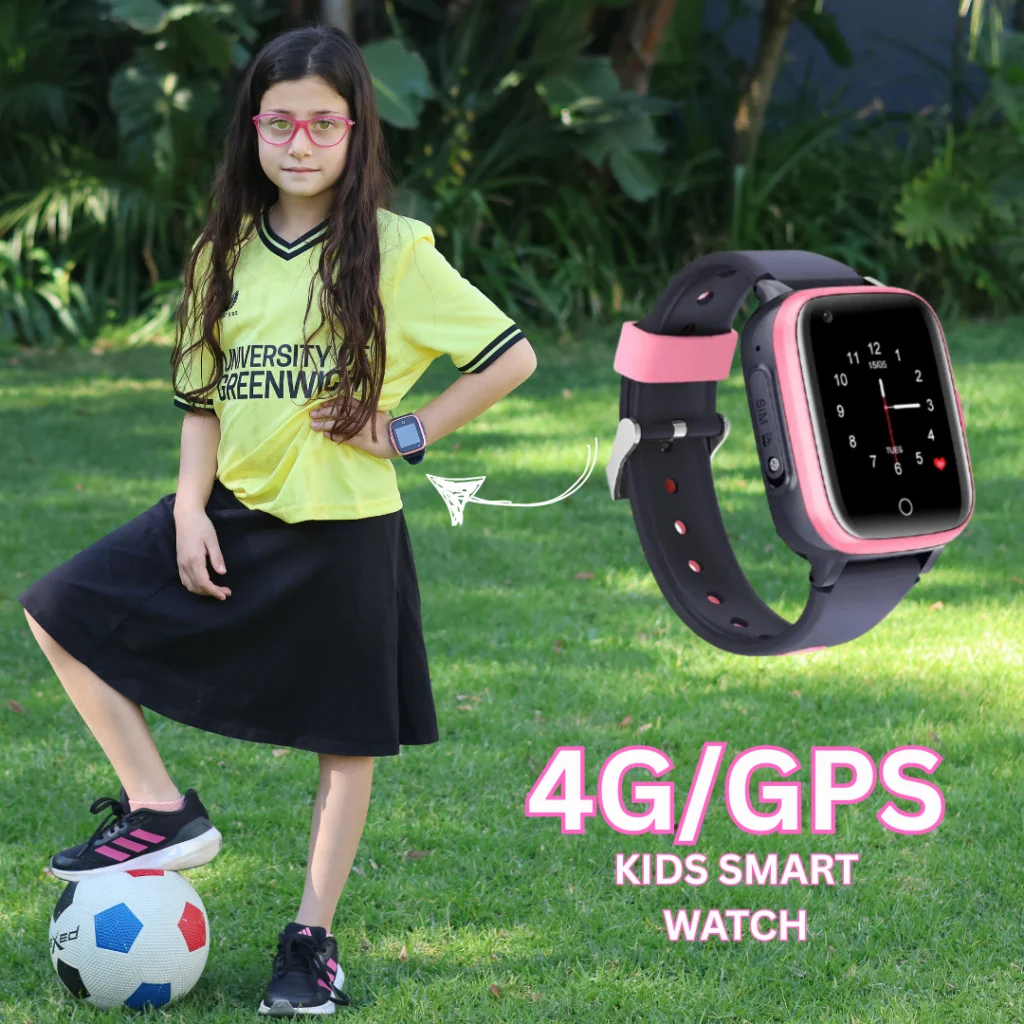
It’s a Saturday morning at a bustling shopping mall in Johannesburg. Little Thando, full of curiosity, wanders off while his mom browses the toy aisle. In seconds, panic sets in — that heart-stopping moment every parent dreads. But unlike most stories, this one ends differently. Thando’s mom opens the Freedom 2 app, taps “Locate”, and within moments, she sees his exact position — just outside a nearby store. Relief floods over her as she spots him, still holding his ice cream, completely unaware of the worry he caused.
In a country like South Africa, where safety is always top of mind, the Freedom 2 isn’t just a gadget — it’s peace of mind on your child’s wrist. With increasing concerns about public safety, this smartwatch gives parents a practical way to stay connected and prevent tragedy before it happens.
✅ Why the Freedom 2 is a Must-Have
If you’re looking to give your child both freedom and safety, the Freedom 2 by Fabulously Fit is a standout. Designed with parents and kids in mind, this smart watch blends advanced technology with kid-friendly features — providing peace of mind for you and fun for them.
1. Stay Connected Anytime, Anywhere
With full 4G support, the Freedom 2 enables 2-way voice calls, video calls, text messaging, and even WhatsApp — letting your child reach you instantly, and you keep tabs on them with ease.
2. Precision GPS Tracking for Added Safety
This smartwatch uses GPS + AGPS + LBS + WiFi to track your child’s position with 5–15 metre accuracy. Set up geo-fences — get alerts when your child enters or leaves a safe zone. Review their route playback. Activate an SOS alert if they need help. All this gives you real-time confidence.
3. Dual Cameras, Smart Tools & Kid-Friendly Features
Your child can snap photos or make video calls with a dual-camera setup. The watch also includes smart tools: WhatsApp, MP4 player, voice recorder, class-schedule tracker, math games — blending safety with learning and fun.
4. Durable Performance & Long Battery Life
Built on Android 4.4 with 2 GB RAM + 4 GB ROM, a Nano-SIM slot for connectivity, and a robust 1 000 mAh polymer battery. It also features a 1.69″ IPS colour touchscreen (240×280 pixels) and modes for vibration, voice or silent notification — ideal for in-class use without distraction.
5. Designed with Kids in Mind
A “No Disturb” mode ensures the watch won’t interrupt learning time. A pedometer and sleep monitor support wellness tracking. Remote monitor and remote shutdown features let you discreetly check that everything’s okay.
🎯 Why It Matters for Your Family
Modern parenting comes with a tough dilemma — you want your child to stay connected and safe, but you don’t want to hand them a smartphone too soon. Too much screen time, access to social media, and unrestricted internet exposure can harm focus, sleep, and emotional wellbeing.
The Freedom 2 offers the perfect balance. It gives parents the ability to call, message, and locate their child instantly — without placing a smartphone in their hands. Your child gets independence and responsibility; you get reassurance and control. It’s connection with boundaries — the healthy middle ground every family needs.
🛍 Get Yours Now
Available in Blue, Pink, and Black, the Freedom 2 is ready to become your child’s everyday companion.
CambriLearn offers a personalised, flexible and self-paced learning solution to suit each child’s individual needs. With over a decade of experience, their online learning platform has been tried and tested by more than 3.5 million students worldwide. Their interactive course content and teaching methods promote optimal knowledge retention and help instil a child’s love for learning - throughout their schooling career.
Latest posts by CambriLearn Online Education (see all)
We use cookies on our website to give you the most relevant experience by remembering your preferences and repeat visits. By clicking “Accept All”, you consent to the use of ALL the cookies. However, you may visit "Cookie Settings" to provide a controlled consent.Accept All
Manage consent
Privacy Overview
This website uses cookies to improve your experience while you navigate through the website. Out of these, the cookies that are categorized as necessary are stored on your browser as they are essential for the working of basic functionalities of the website. We also use third-party cookies that help us analyze and understand how you use this website. These cookies will be stored in your browser only with your consent. You also have the option to opt-out of these cookies. But opting out of some of these cookies may affect your browsing experience.
Necessary cookies are absolutely essential for the website to function properly. These cookies ensure basic functionalities and security features of the website, anonymously.
Cookie
Duration
Description
cookielawinfo-checkbox-advertisement
1 year
The cookie is set by GDPR cookie consent to record the user consent for the cookies in the category "Advertisement".
cookielawinfo-checkbox-analytics
11 months
This cookie is set by GDPR Cookie Consent plugin. The cookie is used to store the user consent for the cookies in the category "Analytics".
cookielawinfo-checkbox-functional
11 months
The cookie is set by GDPR cookie consent to record the user consent for the cookies in the category "Functional".
cookielawinfo-checkbox-necessary
11 months
This cookie is set by GDPR Cookie Consent plugin. The cookies is used to store the user consent for the cookies in the category "Necessary".
cookielawinfo-checkbox-others
11 months
This cookie is set by GDPR Cookie Consent plugin. The cookie is used to store the user consent for the cookies in the category "Other.
cookielawinfo-checkbox-performance
11 months
This cookie is set by GDPR Cookie Consent plugin. The cookie is used to store the user consent for the cookies in the category "Performance".
viewed_cookie_policy
11 months
The cookie is set by the GDPR Cookie Consent plugin and is used to store whether or not user has consented to the use of cookies. It does not store any personal data.
Analytical cookies are used to understand how visitors interact with the website. These cookies help provide information on metrics the number of visitors, bounce rate, traffic source, etc.
Cookie
Duration
Description
_ga
2 years
This cookie is installed by Google Analytics. The cookie is used to calculate visitor, session, campaign data and keep track of site usage for the site's analytics report. The cookies store information anonymously and assign a randomly generated number to identify unique visitors.
_gid
1 day
This cookie is installed by Google Analytics. The cookie is used to store information of how visitors use a website and helps in creating an analytics report of how the website is doing. The data collected including the number visitors, the source where they have come from, and the pages visted in an anonymous form.
Other uncategorized cookies are those that are being analyzed and have not been classified into a category as yet.
Cookie
Duration
Description
_gat_gtag_UA_18530557_4
1 minute
No description
pron_ip
session
No description
pvc_visits[0]
1 day
This cookie is created by post-views-counter. This cookie is used to count the number of visits to a post. It also helps in preventing repeat views of a post by a visitor.
tk_ai
session
Gathers information for WordPress by themselves, first party analytics tool about how WP services are used. A collection of internal metrics for user activity, used to improve user experience.