Can Moms Really Afford to Breastfeed?Let’s face it—new parents already juggle a million things, and the idea of breastfeeding on top of work, finances, and life can feel completely overwhelming. In South Africa, the laws say mums should get support. But do the laws match reality? And can moms genuinely afford to breastfeed?
South African law gives new moms four consecutive months of maternity leave—usually starting around one month before the due date and extending to three months after the birth. It’s illegal to return to work within the first six weeks, unless a healthcare provider says you’re ready.
However—here’s the kicker—employers aren’t required to pay salaries during this time unless it’s in your contract or a company policy. Instead, moms can apply for benefits from the Unemployment Insurance Fund (UIF).[1] UIF payouts range between 38% and 60% of your salary, depending on how much you contributed before leave[2]. Meanwhile, the application process can take 3–8 weeks, and you must reapply every month while on leave.
The law also entitles mothers to two paid 30-minute breastfeeding or expressing breaks per day—on top of lunch or tea breaks—for the first six months of a baby’s life. And employers are encouraged to provide a private, hygienic space for this purpose[3].
But the reality often falls short. Many women return to work within three months due to financial strain. The lack of proper lactation facilities, supportive workplace policies, or even awareness of these rights means many stop breastfeeding entirely. Even worse, domestic and informal workers—who often need the most support—are the least likely to access maternity protections.[4]
South African moms are advised to exclusively breastfeed for six months, in line with WHO guidelines. Yet the statistics tell the real story: only around 32% of babies under six months are exclusively breastfed, averaging less than three months of breastfeeding overall[5].
These low rates are linked to higher risks of malnutrition, diarrhoea, pneumonia, and even infant mortality.
Even in the system’s imperfect current state, here are some practical tips from Sr Londe – independent midwife and Vital Baby’s trusted advisor – to help moms make breastfeeding work:
- Start UIF early – Apply as soon as possible, and if your company delays or doesn’t pay you, get in touch with the Department of Labour or CCMA.
- Talk to your employer – Explain your need for breastfeeding breaks and a private space to express. Sometimes simple understanding can spark supportive changes.
- Plan financially – UIF coverage can be lean; build a budget for lower income, and explore supplements if your employer offers top-ups.
- Build a support network – Teams like family, caregivers, or nearby daycare can make daytime breastfeeding or milk drop-offs possible.
- Make expressing work for you – Learn to express efficiently and store milk smartly—room temp for up to 8 hours, longer if you have a freezer.
Breastfeeding isn’t just about health—it benefits business too. Breastfed babies are generally healthier, meaning less absenteeism, more productivity, and better staff retention. Plus, it contributes to broader goals like gender equality, economic inclusion, and improved child development outcomes.
Here’s the bottom line: Can moms in South Africa afford to breastfeed? Legally, yes—but practically, it’s often an uphill battle. Gaps in pay, awareness, infrastructure, and enforcement mean many moms return to work too soon. But with proactive planning, workplace conversations, and community support, breastfeeding while working is absolutely doable.
[1] https://www.news24.com/Life/What-the-law-says-about-maternity-leave-UIF-and-going-back-to-work-20150826
[2] https://www.bbrief.co.za/2025/08/05/employee-maternity-leave-pay/
[3] https://www.news24.com/Life/What-the-law-says-about-maternity-leave-UIF-and-going-back-to-work-20150826
[4] https://www.saffarazzi.com/news/no-proper-maternity-pay-or-leave-for-domestic-workers-in-south-africa/
[5] https://internationalbreastfeedingjournal.biomedcentral.com/articles/10.1186/s13006-024-00634-z
Latest posts by Milk Galore
(see all)
Post Views: 38,659
From Doubt to Confidence: How a Simple Device Could Have Changed My Breastfeeding JourneyWhen I became a mom for the first time, I thought breastfeeding would just happen naturally. But the reality was different. My baby would scream after almost every feed, and at just two weeks old, a close family member told my mom that she didn’t think my milk was “any good.”
She urged my mom to convince me to take my baby to a nurse, saying, “New moms should think about their baby, not themselves.”
Her words crushed me. I refused to go, but for days I lived in silent doubt, questioning whether I was failing my son. Was my milk not enough? Was I starving him without realising it?
Then came his scheduled follow-up appointment. To my shock (and relief) he had gained more weight than required on nothing but my breastmilk.
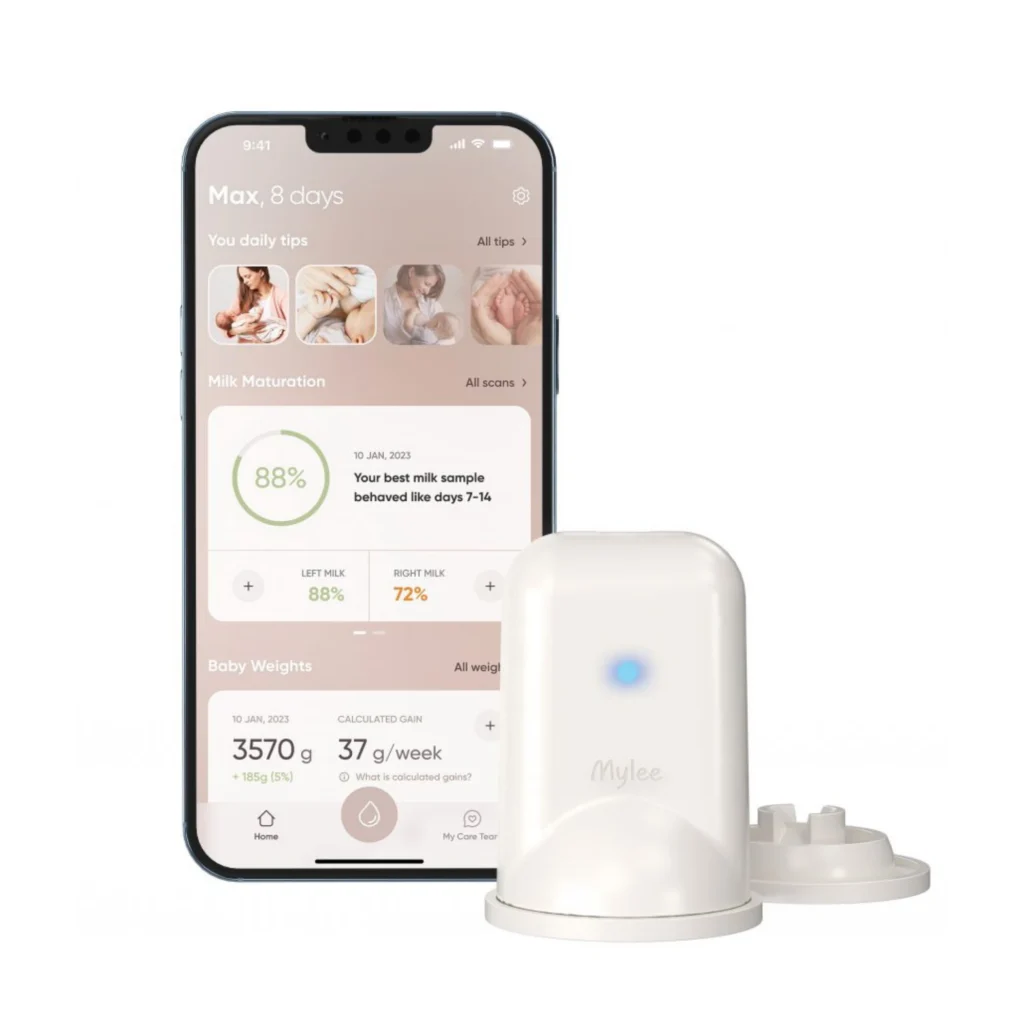
Looking back, I often think: if I’d had the MyLee Milk Sensing Device then, I wouldn’t have wasted those days feeling like a failure. I would have had proof; clear, objective reassurance that my milk was nourishing him. I would have trusted myself more.
And that’s why I feel so passionate about bringing this technology to other moms.
Why Moms Doubt Themselves
I now know I wasn’t alone. Studies show that the most common reason moms stop breastfeeding earlier than they want to is due to milk supply-related concerns. Sometimes supply is absolutely fine, but doubt creeps in, while in other cases there may be genuine risks that are best addressed early. Either way, these concerns are real and deserve both attention and support.
The truth is, the early days matter more than we often realise.
The Crucial First Five Days
Recent research published in Breastfeeding Medicine (July 2025, Academy of Breastfeeding Medicine’s special issue) highlights just how important the first five to six days postpartum are.
This window is when your body goes through secretory activation — the transition from colostrum to mature milk and the process of building volume. If this process is delayed or impaired, it can affect long-term breastfeeding outcomes.
On the flip side, when secretory activation happens on time and milk volume comes in effectively, moms are much more likely to meet their breastfeeding goals.
The problem? Until now, there’s been no simple way for mothers at home to know if their supply is on track.
That’s where the MyLee Milk Sensing Device changes everything. Awarded as the Breastfeeding Support Product of the Year at the 2024 Baby Innovation Awards, MyLee is developed by MyMilk Lab and available locally through Mommy Material. This small handheld device brings cutting-edge lactation monitoring to moms at home. With just a few drops of milk (even colostrum), the device uses unique conductivity-based technology to analyse biomarkers that reflect electrolyte levels, particularly sodium, which research has shown is strongly linked to lactation progress. This provides real-time insights into whether milk production is progressing as it should.
This technology, once only available in research or NICU settings, is now accessible to everyday mothers. Instead of relying on guesswork or worry, moms can finally get answers.
Imagine knowing just days after birth whether your milk is on track. Imagine the confidence of being reassured, or the relief of catching a potential issue early enough to get the right support.
Backed by Global Research
This isn’t just marketing hype. MyLee was highlighted in a 2025 review in Breastfeeding Medicine exploring new point-of-care techniques to support breastfeeding.
Here’s what leading experts are saying:
- “Since the most common reason moms stop breastfeeding earlier than they want to is due to milk supply–related concerns, it’s important to improve screening for the initiation of lactation… Better screening can help identify moms and babies who might need extra support early on, and also reassure those whose milk supply is developing well.”
- “One of the most exciting developments is the use of probes to measure sodium in breast milk — a simple test that can tell clinicians whether a mother’s milk production is on track.”
- “The first five days are crucial for the effective initiation of lactation… creating clear care plans for mothers with lactation risk factors is key to offering better, evidence-based support.”
As Dr. Angela Lang, Director of Clinical Education at Medela, summarises: “By removing the guesswork and providing targeted recommendations, we empower mothers to take control of their lactation journey.”
That empowerment is exactly what MyLee delivers.
A New Era of Personalised Breastfeeding Support
Every mother and every milk supply is unique. Some moms may only need to pump six times a day, while others may need eight. Generic advice doesn’t always fit and can even cause more stress.
MyLee allows breastfeeding professionals to give personalised guidance based on each mom’s unique milk biochemistry. That means targeted recommendations, timely interventions when needed, and reassurance when everything is progressing just fine.
It’s not about adding pressure. It’s about removing doubt. It’s about giving moms confidence.
From NICUs to Living Rooms
Much of the global conversation around milk biomarkers and early monitoring has focused on NICUs and preterm babies, but the truth is that these tools are just as valuable for mothers of full-term, healthy newborns.
Every mom deserves to feel confident in her milk supply. MyLee brings the same science-based insights used in specialised care settings straight into everyday homes.
More Than Just One Device
Breastfeeding is one of the most natural things in the world, but it isn’t always easy. For too many moms, doubt creeps in at the very moment when reassurance is needed most.
The MyLee Milk Sensing Device offers a new way forward; turning uncertainty into confidence, and helping moms trust their bodies again.
Because when mothers feel supported, babies thrive; and that is what truly matters.
Learn more about MyLee and our full range at www.mommymaterial.co.za or join our community on Instagram @mommymaterialsa.
Latest posts by Milk Galore
(see all)
Post Views: 38,659
Tips for Mums & Dads When Transitioning from 1 Child to 2Giving birth to your firstborn child sees you worrying about how and what to do right as you find your feet and transition into first-time parent mode. Welcoming your second child into your new family, you will be backed by prior experience to support you in your new role as family ‘multi-tasker’ as you embrace managing the love, care, feeding, soothing, and sleeping of 2 under 2!
Welcoming in a second child will be different for every family. Each child is born distinctive from their sibling and your role as mother or father becomes a balancing act which may take time to adjust to.
What is true for all second-time parents is that with increased time pressures, there are higher stress levels mothering two children who need round the clock care. Now, instead of taking naps alongside your newborn you will be spending precious time with your toddler.
Happily, in the changing world around us, traditional gender roles are evolving as Dads help more around the home and do a lot to ease motherhood for mum’s post the birthing process. Partners may bring their boardroom logic into crises managing a moment with quick thinking and the most direct solution when your toddler and baby are both demanding – at full volume – to be fed!
Parenting routines and caring for your kids may come first, and taking time for things other than motherhood at this challenging stage can seem unrealistic but like a diamond is pressured into pure sparkling beauty, it is also an opportunity for you as new mums and dads to set routines, prep meals, and delegate responsibilities with the right tools on hand so you can still carve out space in the day to connect with your partner or spouse, take a restorative five minute walk around the block, or journal in your diary.

Philips Avent South Africa share some life tips and home hacks to grounding your new family in a harmonious home routine and setting the perfect scene for both your tiny tykes to grow and thrive:
#1 Home Coming & Family introductions:
Even kids as young as 18 months to 2 years can feel that things are changing. Prepare your firstborn child for your new arrival into the family only when the time is right and you feel ready to do so.
Introduce the idea to your toddler that baby will be someone new to love, and that having a sibling is a privilege and a gift and they can be excited having a new role as an older sibling. Don’t oversell the idea however as you may set them up for rivalry.
#2 Home Help Routine:
Once your newborn has been introduced home, set up your new routines as soon as possible, by aligning feeding and nap times as much as possible to avoid double duty during the day.
Second time Mum Sandy (33) claims her superpowers of adaptation saw her master the art of breastfeeding her newborn and spoon feeding her toddler at the same time. She suggests that for whichever task you avoid or dislike the most, this is the area to adapt and master. “I felt challenged by breastfeeding as I had sore, cracked nipples making it painful, and uncomfortable to feed either of my sons so much so that I would dread feeding times!
 “I was ecstatic when I discovered Philips Avent nipple shields, they protected my scabbed, sensitive nipples so they could recover and I could breastfeed again. Nipple shields made all the difference, thank goodness.”
Breastfeeding your newborn should be your priority, with proper latching and full feeds at correct times. For working mums, you newborn and toddler can still benefit from breastmilk when you master the art of breastmilk pumping to ensure you have milk stored in milk storage bags in the freezer. These can be defrosted for feeds for your newborn by Dad or other caregivers or used for meal top ups of breastmilk for your firstborn toddler.
Having the right tools to soothe and protect your breasts and efficiently pump your breastmilk makes it easier to stay comfortable and continue breastfeeding until the minimum 24-month breastfeeding period has been reached.
#3 Planning & Prepping Meals
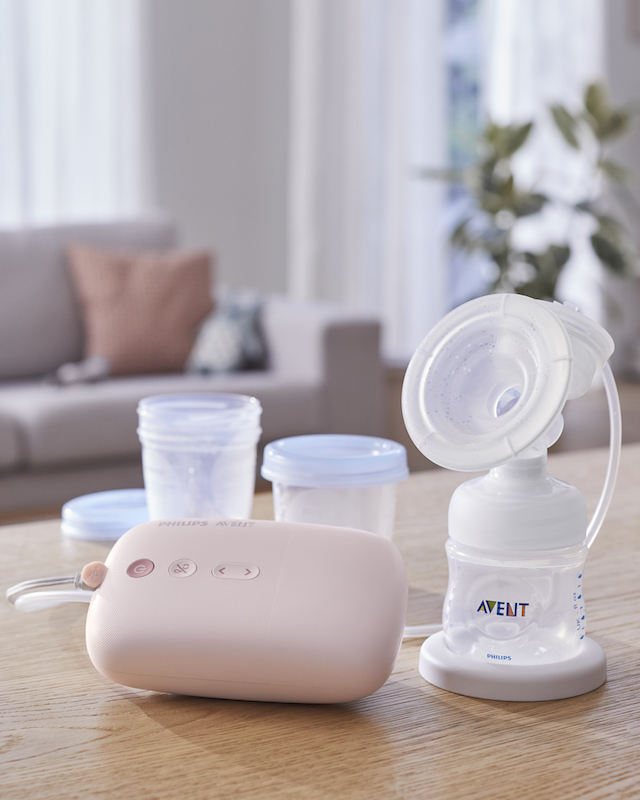
In the new era of breast pumping, both the Philips Avent manual and electric breast pumps are quiet, and you can stay positioned upright allowing you to continue pumping and feeding, providing the necessary elixir of breastmilk that your children require during the day. Small and inconspicuous, both the Philips Avent manual breast pump and the Philips Avent electric breast pump will easily fits into your bag when you are on the go.
 The Philips Avent Natural baby bottle is designed for mums who want to combine breast and bottle feeding, with its soft, breast-shaped teat which encourages a natural latch and mimics the feel of a breast, making the switch between breast and bottle as smooth as possible for you and your baby and other parents and caregivers to step in for supported feeds.
The spiral design of the teat and petals ensure it naturally flexes and doesn’t collapse when your little one is feeding, so your baby can enjoy an uninterrupted feed. More importantly the anti-colic valve in the Philips Avent Natural baby bottle is designed to reduce colic and discomfort by venting air into the bottle and away from your baby’s tummy for 60% less fussing at night.
 Generally, after the first month, babies gain an average of 500g to 1 kilogram per month within the first six months. Breast milk is the ideal first food, but beyond this stage, both milk and solid foods are needed to help your baby grow and continue to gain around 2 kilograms per month.
Many babies are happy to wait until around six months to begin weaning and at this age can learn the skills needed for eating solid food very quickly especially if there is an older brother or sister to mimic at feeding times.
However, babies develop at different rates depending on genetics and gestation in the womb. Meet your regular clinic checkups for weighing and vaccinations and chat to your clinic’s nursing Sister.
Just be sure not to start your baby on foods other than milk before they’re six months old as their kidneys and digestive system won’t be fully developed enough to digest it.
#4 Fun Not Fussy Family Food:
Try to have at least one relaxing meal per day together as a family as this gives kids the opportunity to learn weaning skills and family communication. The core of family life usually takes place in the kitchen and around the table at meals.
Hydration is essential for growth. Children especially need to stay well hydrated as it improves mood, memory, and attention in children, as well as adults, so Moms need to stay hydrated too, especially during breastfeeding.
Make it easy for your toddler to learn how to hydrate himself with a fun sippy cup.
All Philips Avent bottles and cups are compatible excluding the glass bottles and the Grown-up cups/My First Big Kid Cups, so you can mix and match to create the perfect cup, suiting your toddler’s individual development needs.
You should offer your toddler six to eight drinks (around 100-120 ml) per day with meals and snacks. More drinks may be needed in very hot weather and after physical play or activities. The best drinks to give your toddler between and during meals and snacks are water and milk as they do not damage their teeth. You can flavour water with a slice of fresh cucumber or watermelon.
Toddlers and weaning babies often prefer raw to cooked vegetables. Keep some aside while prepping and cooking and offer them to your kids if they get hungry between meals along with small cheeses and tasty dips. It is also a great way to encourage a love of vegetables and establish a healthy diet from the start.
 Ensure you are offering adequate nutrition at mealtimes by blending vegetables into dips, soups and sauces for rice, potatoes, and meat. In the same way you can offer a variety of fruits in milkshakes, smoothies, ice lollies or freshly blended fruits mixed into yoghurt.
Life doesn’t stop with two toddlers on the go and family holiday trips will still be a part of your routine. The Philips Avent travel feeding set for 6+ months includes an integrated weaning spoon and a suction mat to prevent spills. It is the perfect travel companion for any mum on the go offering one large, sectioned feeding dish with lid and two removable, individual dishes with lids that are perfect for snacks or smaller feeding portions, meaning greater convenience for mealtimes.
#5 Hygiene Happy Homes
Sterilising your feeding equipment for the first six months protects your baby from harmful germs until your little one’s immune system has matured and grown stronger. Most health professionals advise sterilising feeding equipment and utensils until baby is between 6 months and one year old, especially if your child’s immunity is impaired due to illness.
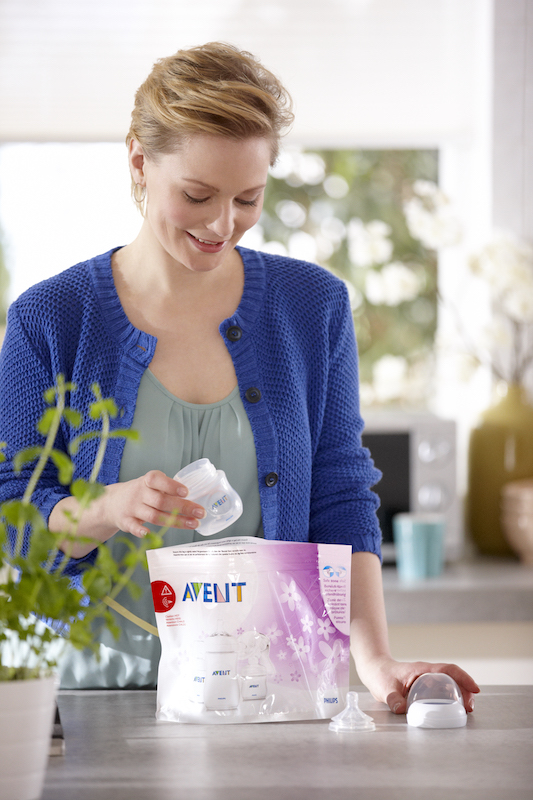
The ultra-fast and convenient three tier Philips Avent Digital Steam Steriliser is big enough for 2 under 2’s bottles, teats and soothers to be stacked and steamed while the Philips Avent Microwave Steam Sterilizer’s lightweight, compact design makes it ideal for use in and out of the home, with the contents remaining sterile for up to 24 hours if the lid is unopened.
 You can also boil feeding equipment in a pot on the stove for at least 10 minutes, making sure all equipment stays submerged. Remember to set a timer so you don’t over boil teats which can get damaged faster with this method. Regularly check that teats and bottles are not torn, cracked or damaged.
#6 Calm & Comfort
One thing your two tots will love doing together is having their own themed soother to calm and pacify them with its time to settle down for a nap.
With a full range of sizes, colours and themes, you may want to start off with the Mini Orthodontic Soother for newborns. Developed by Philips Avent for tiny babies, it supports an infant’s innate non-nutritive sucking response, and can be introduced at the earliest stages to help strengthen their mouth and jaw muscles.
Made to fit newborns perfectly, this small soother acts as an exceptional bridge from hospital to home, and is a soother that fits a newborn mouth perfectly, without touching the nose. Its advanced orthodontic teat with unique wings minimizes pressure on gums and developing teeth. The wings make the teat wider so that the pressure that is caused by baby’s suckling is distributed more evenly.
The Philips Avent Soothie pacifier for toddlers comes in packs of two, is very reasonably priced, and can be purchased in multiple colors. They’re durable, easy to handle, and easy to clean, too. Find the full range of pacifiers including Mini, Classic and FreeFlow soothers to support your young family through their developmental stages.
#7 Final Word
The initial two-toddler phase will fly by, so enjoy the pure unpredictability of life and remember moments of self-care.
When it comes to back to work for Dads and sometimes Mums too, make sure to consider all your childcare options. If you are getting a carer or family member to support you, make sure to introduce them to your routine, demonstrate how to use and sterilise feeding equipment and enjoy the support of an extra pair of helping hands around the home.
Moms populate the world, so remember that makes you a Superhero and you count!
Take your confidence with you with the professional care and support of Philips Avent South Africa for a healthy start and a healthy future for you and the whole family.
Stockists:
Baby City, Woolworths, www.dischem.co.za, Babies R Us or online at www.takealot.com or www.medhealthsup.com
Find the baby+ and pregnancy+ app’s FREE on the Google play or Apple App Store.
Facebook: @philipsaventsouthafrica
Instagram: philipsaventsa
Website: https://www.philips.co.za/c-m-mo/philips-avent
Latest posts by Milk Galore
(see all)
Post Views: 38,659




 “I was ecstatic when I discovered
  The
The  Generally, after the first month, babies gain an average of 500g to 1 kilogram per month within the first six months. Breast milk is the ideal first food, but beyond this stage, both milk and solid foods are needed to help your baby grow and continue to gain around 2 kilograms per month.
 Make it easy for your toddler to learn how to hydrate himself with a fun sippy cup.
 Ensure you are offering adequate nutrition at mealtimes by blending vegetables into dips, soups and sauces for rice, potatoes, and meat. In the same way you can offer a variety of fruits in milkshakes, smoothies, ice lollies or freshly blended fruits mixed into yoghurt.
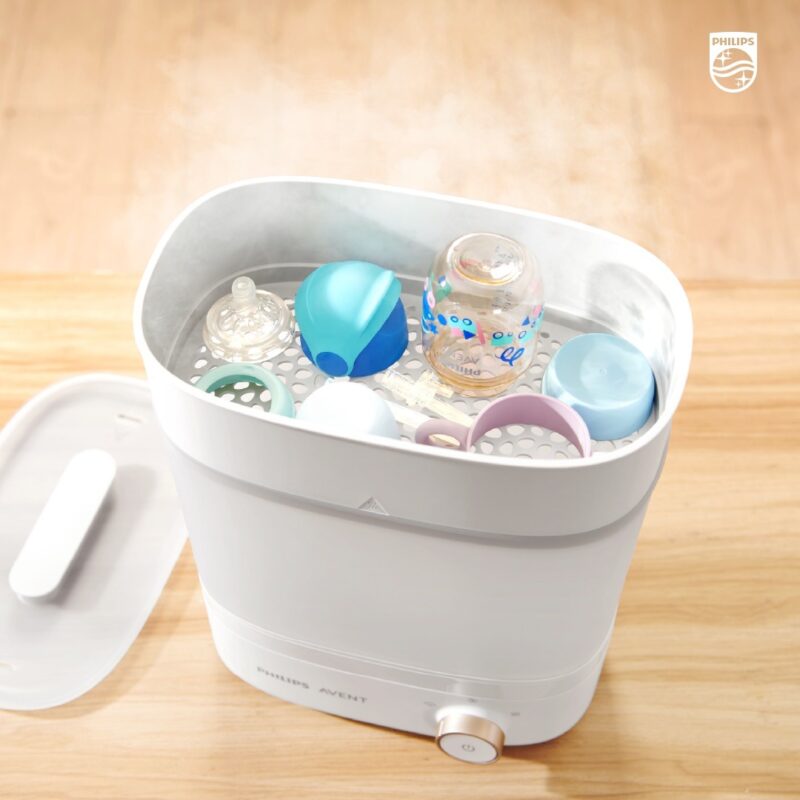 You can also boil feeding equipment in a pot on the stove for at least 10 minutes, making sure all equipment stays submerged. Remember to set a timer so you don’t over boil teats which can get damaged faster with this method. Regularly check that teats and bottles are not torn, cracked or damaged.
 Made to fit newborns perfectly, this small soother acts as an exceptional bridge from hospital to home, and is a soother that fits a newborn mouth perfectly, without touching the nose. Its advanced orthodontic teat with unique wings minimizes pressure on gums and developing teeth. The wings make the teat wider so that the pressure that is caused by baby’s suckling is distributed more evenly.
1 thought on “Milk Galore on why breastmilk is best?”
That is so true. So many new mommy friends have told me that the first 6 months if the most important time for your baby to be breastfed as much as he/she can. Due in 5 weeks so I am hoping I will get more tips on breastfeeding from the site and also from a lactation consultant as well.