
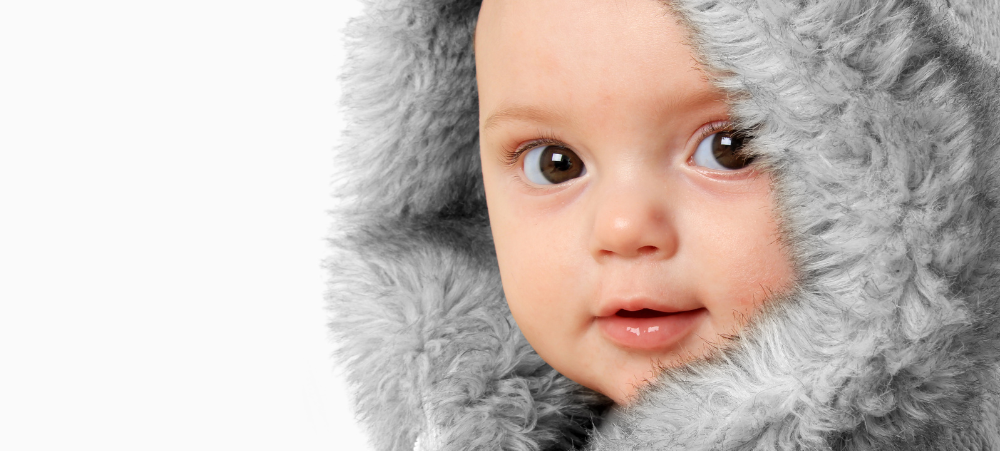
Baby – It’s Getting Cold Outside!

Someone once said about winter  : “All you need are tea and warm socks.” However, when it comes to baby and winter, you’re certainly going to be needing much more!  

In preparing your newborn for winter, start with long-sleeved babygrow that fits really well.  Include socks and make sure that you have a well-fitting warm beanie to keep ears warm as well as mittens to keep baby’s hands covered and protected from the cold.

If you’re taking baby outside, be sure to cover baby’s stroller with a bunting bag and keep baby snuggled in a zip-up sweater or a Snug baby grow with feet and matching beanie, to keep baby warm, available in various colours from Baby and I Melrose.

Essential items to remember are :

  1. Babygrow, babygrow, babygrow!  The top essential for baby during winter
  2. Socks and more socks
  3. Booties
  4. Mittens – be sure to have a good few on hand!  Remember that babies always put their hands in their mouths and you don’t want baby to be wearing wet mittens
  5. Snuggly soft and warm beanie
  6. Swaddle or Sleeping bag

Even though winters here in South Africa aren’t that harsh, we do get some extremely cold days.  For that reason, it’s a good idea to know how cold is too cold for baby?  When your thermometer is reading single figures, or you feel that it’s too cold for yourself to be out and about, then you know it’s too cold for your baby.  Should you need to take baby out, make sure that they are not exposed to the elements for more than a few minutes at time.  

Of course going out requires so much more to be taken along to ensure that you are fully prepared for all eventualities during those cold winter days and nights.  Whether you’re running to the shops or hopping on a plane, all parents will agree that a hands-free easy to carry and comfortable to use baby bag or backpack , is always going to win hands down!  Consider a nappy bag backpack with a generous size to fit everything you need, such as nappies, wipes, a change of clothing and your own items, without weighing you down. The bag should feel comfortable to wear without sacrificing your style. Additional considerations include a changing station or pad, wet bag, easy-to-use zips, pockets (insulated and uninsulated), easy access, size, and overall value.

When dressing baby for the night in winter, we suggest dressing him or her in a swaddle or sleeping bag with a 1.0 TOG or 2.5 TOG rating.  TOG stands for Thermal Overall Grade and is a unit of measurement for insulation and warmth of sleepwear and bedding. Put simply, the lower the TOG rating the lighter the fabric. The higher the rating, the more padded and insulated it is for warmth.

  • 1.0 TOG is suitable for room temperature of 21°C to 24°C
  • 2.5 TOG is suitable for room temperature of 17°C to 23°C

The easiest way to see if baby is too hot or too cold is to feel the nape of baby’s neck which will either be sweaty or feel cold to the touch.  To tell if baby is warm enough, place your hand on baby’s chest.  If it feels comfortable and warm to the touch, then baby is warm enough.  Touching baby’s hands or feet is not ideal for determining whether or not baby is warm enough.

In preparing baby for the night, it can be very tempting to offer a soft warm blanket to help comfort baby for the night.  However, blankets are not recommended until baby reaches at least 12 months old.  This is because blankets can increase the risk of suffocation.  Rather dress baby in one or two layers to sleep.  Make sure that baby’s clothes do not have any strings or ties when putting baby down for the night and never cover baby’s head.  Until baby can roll over by himself, use a swaddle or sleep sack to form one of those layers to ensure that baby is warm enough for the night.

Tips for keeping Baby warm on cold winter nights :

  1. Dress baby as we’ve explained above
  2. Set the room temperature to a comfortable – 20°C to 22°C
  3. Use a swaddle or sleeping bag
  4. Keep wind off baby
  5. Use a firm mattress (always)
  6. Wear baby to keep him or her warm

It is essential for perfect development that baby receives all the important nutrients from powdered milk formula. Baby and I Melrose has the perfect answer to this. The “Cool Twister” reliably cools freshly boiled water to the recommended temperature for food preparation. This is the only way to ensure that all probiotic nutrients are retained. And when your baby is hangry, it has to go fast. With the Cool Twister, you can prepare a bottle in just 80 seconds.

In order to maintain hygiene, cleaning and bathing baby is important.  During the winter months, bathe your baby in lukewarm water on alternate days, particularly in the early days.  On the other days you can just use a wet towel to wipe their body before changing their clothes.  Doing this will reduce the risk of illness as well as help to retain moisture of the skin.  Cold and dry air sucks away all the moisture from baby’s skin which makes it dry and flaky.  A great way to keep the skin moisturized is to massage baby at least twice a day in the winter months.  

So when looking for winter essentials for baby, Baby and I Melrose is the perfect place to look.  We can’t wait to give you a shopping lifestyle experience and to serve you. Baby & I Melrose offers a unique experience as a Baby Boutique in South Africa.  Check out our website https://babyandimelrose.co.za/

Baby and I Melrose
Latest posts by Baby and I Melrose (see all)

Leave a Comment

Your email address will not be published. Required fields are marked *

Why should I breastfeed my baby, and what if this is not an option?

Breastfeeding is important to your baby’s health and is the safest and healthiest thing that you can feed your little one. It is recommended by the American Academy of Pediatrics (AAP) you should feed your baby exclusively with breastmilk for the first six months. Unfortunately, some moms can’t breastfeed due to medical or health reasons.

Read on if you want to know the benefits of breastfeeding, or if you can’t breastfeed your baby, here are some healthy alternatives.

What are the benefits of breastfeeding? 

Breastfeeding is the perfect way to get all the nutrients needed to your baby, as well as being a special bonding experience between mom and child. Breast milk is optimally suited to babies providing all the right nutrients, vitamins and minerals, being easily digestible and helping protect your baby by providing important antibodies.

Baby’s who are breastfed have less ear infections, issues with diarrhea and respiratory issues. Benefits of breastfeeding include lowering your baby’s chance of getting infections and breastmilk can also help lower instances of asthma and eczema, and is thought to lower the risk of diabetes as well.

Not only is breastfeeding good for your baby, but it’s also good for you. It helps your bond with your baby as your body releases the hormone oxytocin, which helps your uterus reduce to its pre-pregnancy size as well as lowers stress levels.

And it’s an added bonus is that breast milk is cost effective and easily available. The only thing lacking from breast milk is vitamin D, and you can supplement this to your little one from birth.

What are alternatives if I can’t breastfeed?

Sadly some moms aren’t able to breastfeed their babies due to not having enough breastmilk supply, being on medication that could damage their baby’s health and, infectious diseases such as HIV. Although it’s hard not to be able to breastfeed, remember this won’t stop you bonding with or providing nutrients for your baby.

The best alternative to your own breast milk is donated breast milk. However, if you are struggling to find adequate supply you can make use of baby formulas.

In South Africa, the South African Breastmilk Reserve and Milk Matters supports breastfeeding moms through the provision of donated milk.  SABR focuses on helping premature babies under the age of 14 days, and Milk Matters supports babies in neonatal intensive care units (NICUs) in the Western Cape.

Baby and I Melrose
Latest posts by Baby and I Melrose (see all)
Do Babies Really Need Sunscreen? The Risks of Overuse and Underuse

When it comes to protecting babies from the sun, many parents wonder if sunscreen is safe and necessary. The truth is, experts advise against using sunscreen on infants under six months old as their skin is thinner and more sensitive, leading to greater absorption of chemicals and a higher risk of irritation and rashes. Babies under six months have a higher surface-area-to-body-weight ratio, which increases their exposure to sunscreen chemicals. Some chemical ingredients, like oxybenzone, may cause allergic reactions or disrupt hormones. Sunscreen can also impede a baby’s ability to sweat and regulate their body temperature. 

Instead, the best protection for young babies is to keep them out of direct sunlight, dress them in lightweight, long-sleeved clothing, and use hats and shade as natural barriers. 

For babies over six months, a gentle, broad-spectrum baby sunscreen with at least SPF 30 can be safely applied. However, using sunscreen should complement, not replace, other sun safety measures, which are vital – especially in our sunny South African climate! 

Karen Van Rensburg, spokesperson for Sanosan, explains, “Parents often struggle with knowing how much sunscreen to use on their babies. It’s important to understand that while sunscreen is a helpful tool, relying solely on it, especially for very young infants, can be risky. Using physical barriers like shade and protective clothing alongside sunscreen provides the safest approach to sun care for babies.”

To keep babies safe, parents should:

  • Avoid sun exposure during peak hours (10 a.m. to 4 p.m.)
  • Use shade and protective clothing as the first defence.
  • For babies over six months, reapply a suitable sunscreen on a regular basis to maintain protection, especially after going in the water, after drying off or after sweating. 
  • Your baby should not stay in the sun too long even with sunscreen because every sunburn damages the skin and is a serious risk to their health. 

This balanced approach highlights that cautious sunscreen use combined with physical protection methods is key to keeping baby skin healthy and safe from sun damage. 

Sanosan Baby Sun Cream SPF 50+ is a top-tier sunscreen designed specifically for delicate baby skin including broad range of UVA+UVB protection SPF 50+. With its pleasant texture, this cream absorbs quickly for easy application and delivers 24 hours of nourishing care, making it suitable for babies, children, and adults alike. With its gentle formula, this sun cream helps maintain skin hydration while protecting against sun damage, allowing for worry-free outdoor playtime. Plus, its microplastic-free, and safe for our oceans!

 Sanosan focuses on natural ingredients and gentle formulas for healthy skin. Using active ingredients specially tailored to your baby’s skin, natural milk protein is the central ingredient in Sanosan and is especially nourishing. More than 90 % of the ingredients are of natural origin such as organic olive oil, and the formulations are biodegradable.

Safety first: all products are clinically tested and are free from parabens, silicones, paraffins, SLS / SLES and phenoxyethanol. For more info visit  sanosan.co.za 

Baby and I Melrose
Latest posts by Baby and I Melrose (see all)
Silent Night? How to Handle Baby Sleep Disruptions During the Holidays

The holiday season is often filled with joyful gatherings, travel, and festive chaos—all of which can disrupt a baby’s usual sleep schedule. Changes in environment, noise levels, and routines can leave parents struggling to soothe a baby who may have trouble settling down. 

Experts recommend maintaining as much of the baby’s regular bedtime routine as possible, even while away from home. Familiar cues like a favourite blanket or toy, consistent feeding times, and calming activities can help ease transitions. When visiting family or traveling, creating a quiet, dark sleep environment can counterbalance the sensory overload.

Sr Londe, independent midwife and Vital Baby’s trusted advisor, shares, “Holiday disruptions are inevitable, but parents can take active steps to support their baby’s sleep. Keeping routines flexible yet consistent, prioritising soothing rituals, and planning for naps can make a significant difference. Remember, a well-rested baby means a happier holiday for everyone.”

Parents can manage holiday baby sleep by:

  • Sticking to bedtime and nap routines as much as possible
  • Bringing familiar sleep aids (blankets, toys)
  • Preparing for extra noise and light with white noise machines or blackout curtains
  • Allowing extra time for naps to prevent over-tiredness

These strategies empower parents to navigate holiday sleep challenges with confidence, maintaining baby’s comfort and well-being amid seasonal festivities. 

Vital Baby is a family-run business with over 45 years of experience in the baby industry. Their mission is to create products that make family time effortless and enjoyable for parents. The Vital Baby range is 100% BPA-free and covers every stage of your baby’s development, from feeding and weaning, to hygiene and soothing. Explore the range online at Vital Baby® (vitalbabyshop.co.za) or find at Clicks and Dischem.   

Baby and I Melrose
Latest posts by Baby and I Melrose (see all)
Scroll to Top